110. Have we been talking about the environment all wrong? With Lucy Siegle


 Apple Podcasts
 Spotify
 YouTube
 Amazon Music
 Castbox
 Podcast Addict
 PocketCasts
 Key Takeaways
- Environmental journalist and broadcaster Lucy Siegle reflects on over 20 years of communicating sustainability on mainstream television shows like The One Show.
- The climate and nature movement made a significant misstep by dividing individual action and systemic change, often making people feel powerless instead of empowered.
- Everyday touchpoints like household recycling and plastic waste serve as crucial gateways to spark broader conversations about the biosphere, climate change, and consumerism.
- Public figures and sustainability professionals must give themselves and others grace, acknowledging that nobody is perfectly green and human interactions with material goods are complex.
- Framing environmental communications requires balancing scientific facts and geophysical processes with relatable, everyday human experiences to maintain audience engagement.
How do you talk about environmental issues without preaching, oversimplifying or making people feel powerless? In this episode, we are joined by environmental journalist and broadcaster Lucy Siegle to explore what she’s learned from more than 20 years communicating sustainability. We discuss whether focusing on systemic change was really a mistake, why recycling can be a gateway to much bigger environmental issues, whether our obsession with plastic has gone too far, and why none of us needs to be perfectly green.
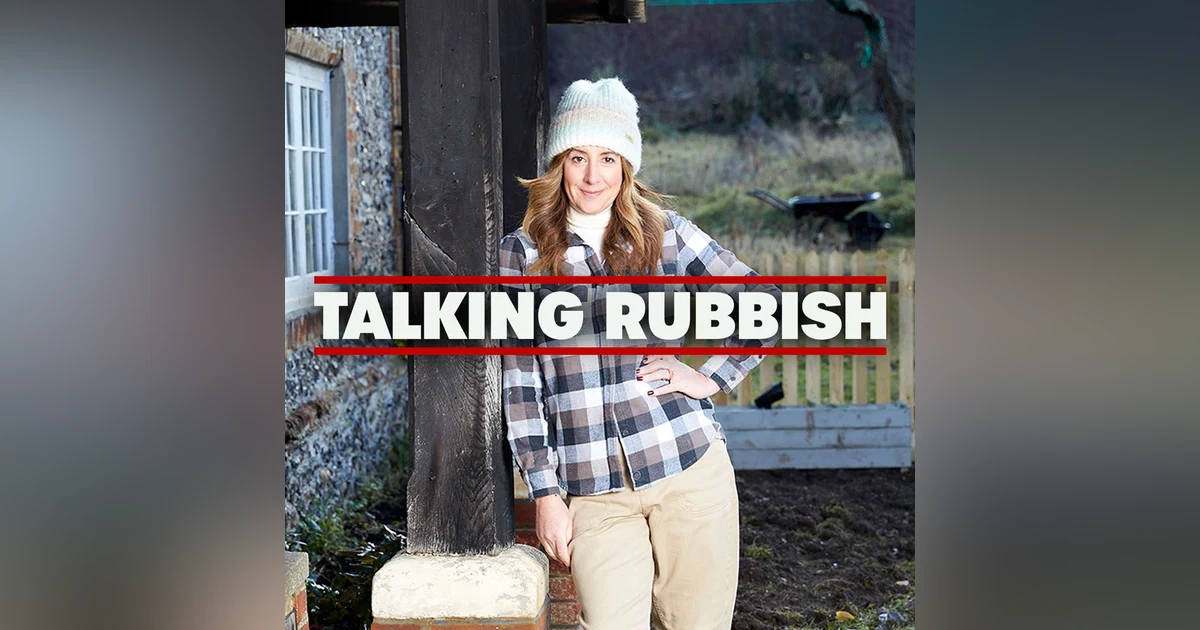
Join hosts James Piper and Robbie Staniforth as they delve into the world of recycling, hopefully having fun along the way. One thing is for sure, they will talk absolute rubbish from start to finish.
Please take a moment to complete the Simpler Recycling tracker
We would love you to join our community on Discord
Special thanks to our sponsor, Ecosurety
To get exclusive videos and clips, follow us on Instagram, TikTok, Threads or Facebook; @rubbishpodcast or YouTube: @talkingrubbishpodcast
Or you can contact James and Robbie with questions or just general rubbish musings using the email address talkingrubbishpodcast@gmail.com or by texting them via WhatsApp on 07356 069 232
Relevant links and reports mentioned in the programme can be found on the Talking Rubbish Linktr.ee
Transcripts and episodes can be found on the Talking Rubbish website
Music licence ID: 6WPY8Q4O2RPFIOTL
Frequently Asked Questions
Who is Lucy Siegle?
Lucy Siegle is a well-known environmental journalist, broadcaster, and author who has reported on sustainability and environmental issues for over 20 years, notably on BBC One's The One Show.
How has environmental communication changed over the last 20 years?
Environmental communication has evolved from sensationalized or bossy segments into a more complex space that frequently wrestles with political polarization, soft censorship, and the balance between individual responsibility and systemic change.
Is focusing on plastic waste a distraction from other environmental issues?
While plastic has become a dominant focus due to massive data and visible pollution like ocean debris, experts argue it acts as an effective gateway or ladder to help the public connect with much larger systemic issues like emissions and fossil fuel consumption.
Why is the debate between individual action and systemic change important?
Telling people that individual household actions don't matter and that everything relies entirely on systemic change can leave individuals feeling helpless and anxious when faced with climate crises, rather than empowered to engage.
James Piper
Hello, welcome to Talking Rubbish, a weekly podcast delving deep into the world of recycling and discussing the truth behind snappy headlines and one-sided stories. I'm Joe Spipert and I'm joined by Robbie Stanaforth, my Far from Rubbish friend. And we are joined today by Lucy Siegel, our Far From Rubbish guest. Robbie. Yes. Before we start our interview, which is going to come much faster than people are used to, because we're moving to the YouTube generation, aren't we?
Robbie Staniforth
Absolutely, yeah.
James Piper
YouTube says you gotta get into the topic within a minute. So that's what we're gonna do today. We're just gonna go straight to the interview with Lucy. Let's hear from Lucy. Okay, great. But before we do that, I just thought I'd let people know because we've got loads of new listeners. We're gaining like well, last time I looked, it was about 200 listeners a week, which is amazing. Okay, welcome to all the new listeners. But that does mean I'm getting an influx in messages going, have you talked about this? And so I just wanted to remind people that on our website we have a directory, and that directory has a list of everything we've covered. Go to talkingrubbishpodcast.com, hit directory at the top, and you'll have a list of everything we've discussed.
Robbie Staniforth
It's an encyclopedia of absolutely everything. Every topic.
James Piper
You missed, you missed bincyclopedia, Robert.
Robbie Staniforth
Oh my encyclopedia, god damn.
James Piper
You've done this for 110 episodes. You should be able to find your puns. So, yes, bincyclopedia over on the website. Hi, Lucy.
SPEAKER_00
Hello, and hello to the YouTube generation.
James Piper
Oh, you I mean, you're a professional. You will know all about this, right?
SPEAKER_00
You need to stop saying listeners because they're viewers now, too.
James Piper
That's true, yeah. That's why we that's why we've got binfluencers, because it just covers both.
SPEAKER_00
Influences are so great. I'm worried that I haven't prepared enough bin puns.
James Piper
We'll find them for you, don't worry. Anytime you say in, we just add a bin. That's our rule. So, Lucy, welcome to Talking Rubbish. I think it is fair to say that you are a commute an expert communicator of recycling and sustainability. You regularly report on the One Show, which for international listeners is and or viewers, is a nightly television show on BBC One and covers topical issues. And you uh regularly write, I think, for mainstream newspapers about environmental issues. And most importantly, I believe you've been a contestant on pointless celebrities. Yes. So you are twice. Twice. Oh my goodness. Well, this has cemented you as the most famous person we've had on Talking Rebecca.
SPEAKER_00
And I've redefined pointlessness both times.
James Piper
Have you? How did you do it? I should have watched the episodes.
SPEAKER_00
I was so bad at it because, like, for me, so basically, if you've not seen the show, you have to say the the least obvious answer. So when you got to the film questions, I there was a there's a question about Matt Damon that haunts me. And I was like, oh, everyone's gonna have seen the talented Mr. Ripley because that's like a massive blockbuster, and apparently it's like an art house film. It made so like all of these things were so skewed in my head because I realized I'm I was so adrift from actual popular culture.
James Piper
I went to go and see Pointless Filmed. It's the only television show I've ever seen filmed. So I turned up to the filming, and the uh the comedian or whoever who was warming up the crowd was like, Okay, so if you've got your books for Richard and Zander to sign, just get hand them over. And all these people handed over books that then they started signing. And I just thought, these are regulars, these guys come to watch Pointless Being Filmed. They must have been before. How do you know?
Robbie Staniforth
How do you know to bring a book?
James Piper
So I was gutted. I was like, I don't have anything for them to sign. That was the that was the bit I was like, I need you remember that. If ever I go and see a TV show filmed in the future, I'm gonna bring whatever the book is for the people to sign who are hosting it because that was a rookie mistake.
SPEAKER_00
You could have uh come to my episode and brought one of my books, turning the tide on plastic.
James Piper
Oh my god, that would have been perfect. What a transition to environmental issues. Look, this this is the kind of professionalism we need, Robbie. I was I was sat here thinking, how are we gonna get from pointless to the environment? And there we go. The transition has happened. That's wonderful. Thank you.
SPEAKER_00
Well, that's what we're known for on the one show is our handbrake segues between segments because you can get recycling sitting alongside um social housing with Lionel Ritchie, which has literally happened to me.
James Piper
And do you have to think does it just happen as a handbrake tent? You just go, look, the audience knows what we're about, we don't have to think about that. Or do you actually have to think, how am I gonna link? You know, it's like only connect. How am I gonna link Lionel Ritchie recycling and social housing?
SPEAKER_00
Wow, you love a game show, don't you? Um well, life is a game show. I I think that um, well, I don't really have to do that because it's the anchors have to do those, and to be honest, they read them off the autoc. And we I think the show has kind of leaned into it. I think when it first started, because it's the 20th anniversary actually, last week.
James Piper
That's incredible. That has flown that 20 years. I know.
SPEAKER_00
I mean, tell me about it. And and when we first started, we were a little bit more like, what is going on? Like, I remember there was a very awkward episode with the Eagles, and some of them didn't quite know where they were. We're kind of having to steer them between these films, but um, I think now we lean into it. The Lionel Ritchie one, I remember so well because actually, I think I had done the film about social housing, and you know, because we go out and we do a VT, we do a report, and then they play that into the studio show. And I was in the studio to explain some extra stuff off the back of it. And Lionel is such a sweet, lovely man. He thought that I had devised and set up the social housing charity. Oh no, leaning across and you're live. I mean, this is live, but he's like, Thank you for your work. And I was like, No, no, no, I'm just like literally, I've just reported on it, and I got paid to them, like I'm not like, but it was really, really hard to get the space, and he just so wanted to honor my work, and I felt terrible because it was other people's work, but he was so nice, yeah.
Robbie Staniforth
But I mean, you weren't trying to pass it on as your own, so you can sleep well at night knowing that was a totally unintended consequence.
SPEAKER_00
Yeah, I mean, I you could see I was struggling, I was the struggle as real. I was like, it's not me.
James Piper
20th anniversary of the one show. That means you've spent more than 20 years communicating environmental issues. What have you learned that you wish you'd knew you knew at the beginning?
SPEAKER_00
Well, I think there's there's lots of different parts to my career, which is politely termed a portfolio career. Um, other people might call it a hot mess. But um I so what I what I've learned is so much actually. Um, I think a lot of us started out, you know, about 20, 25 years ago um talking about these issues and taking up climate and nature issues and trying to bring them to a big, bigger audience. I didn't realise how politicized it would get, how many vested interests would try and take control of the framing. And I think obviously looking back, that I would have been a lot more strategic in how I sort of approach things. I would have taken much stronger control of the authorship of um some of the stories that I did back in the beginning, because um, you know, TV tries to mould you in a certain way. And at the time, it's funny to look back now because it's so like not how things are done now, but everything was a bit like supernanny, and you had to go in and sort of shout at people and root through their bin and tip it on the floor and say, What are you doing? Um I I was never terribly convincing as that character anyway, because um I'm quite conciliatory. Oh, do we really have to go and tip Roger's bin over the floor and say shout at him? Because, you know, but um I would probably be, I probably kind of resist that a little bit more now. Um, and I remember doing a segment for this morning where I was introduced by um Judy Finnegan as a very bossy woman. Oh wow, I don't know if I'm a very bossy woman, or I just feel really strongly that people deserve to know this information. Um, so I probably would I probably would I probably would kind of, yeah, as I say, take control. And actually, people who work with me will probably laugh at that because they think that I take control already. Um and I'm known for sort of gently, politely um uh rewriting a lot of things.
James Piper
And do you think that's been an evolution of television that would would people give you the permission to have more control now than they did? Like if you'd done that 20 years ago, would they have listened to you or would they have said, oh, we're just gonna get someone else? Whereas now maybe have things moved on?
SPEAKER_00
It's a complicated space. I think there's soft censorship in lots of areas now of the media. Um, and I think that um there's a nervousness, isn't there, about certain language and you know, climate action on climate in particular has become quite politicized. So I wouldn't fancy my chances if I was starting again now. Um, I probably got away with a lot. I mean, I remember in the early days that um, you know, we I remember doing something on vegetarianism, for example, and it's it was a very even-handed piece. So there was me and the late Charles Campion, who was a restaurant critic, lovely guy actually, who was a avowed meat eater. And we went to, I think we went to a livestock market somewhere in Yorkshire, and you know, we had a debate, um, but quite a friendly debate. Anyway, afterwards, there was a lot of lobbying by various um funded organisations um for corrections. And the implication always was you should take her off air because she's she's an activist and a campaigner. And there was absolutely no, in fact, I'd actually not been a vegetarian for that long, and my dad worked in the meat industry, so there wasn't any proof at all that I was a campaigner because I actually wasn't. But I remember, you know, having editors that stood up for me and said, you know, this is ridiculous, you need to draw a line under that. And from what I hear now, you know, sometimes these sort of lobbying um things can be quite successful against people. So, you know, you always need whatever generation you are of reporter, you need somebody who's going to look a bit wider than the attack and look at the infrastructure and influence that's trying to um silence environmentalism. And it's a perennial thing. I think you never regret taking control of authorship. And I have had some really, really good, strong, strong pieces and periods of my life when I've really, really felt in control of the story and telling the story that I want to tell.
Robbie Staniforth
And I I I know you've been so close to this for so many years, but what would your objective assessment, if you can make one, be on whether the media in general, we as part of the broader media, this podcast, are getting better at environmental communications, or actually it's just different? You know, you'll have heard the sort of criticisms that there's lots of sort of preachy stuff from from, you know, uh 11,000 feet, people are making judgments on others and it's not that helpful. What what would your response be and your assessment be?
SPEAKER_00
It's a very interesting um point to look at thresholds and hoops. Who sets the thresholds and who makes people jump through hoops and say, your communication's not quite right, you're um not targeting enough people, um, you're not you're not speaking their language. But what I have found, and I think you can say this with a bit of authority when you've been doing something for a quarter of a century. Oh my god, um, you can see that who's trying to make you change course, who's saying that things aren't working, who is discounting the um incredible progress in environmental communications, and quite often that's groups with vested interests. I think there has been one massive fault line, if I'm being completely honest, and one very um problematic point in the climate and nature movement and in communications, if you want to call it a climate and nature movement, which is a sort of umbrella term, which I think is sort of helpful. And for me, that is this um division between individual action and system change. I think that has come home to roost, and I think that was a real issue.
James Piper
Sorry, just to get clear on that, which way do you think it's going?
SPEAKER_00
So, what happened was that um a few years ago, it's a sort of quite a climate bro movement thing. It became sort of sacrilegious to talk about individual action at all, which for me was particularly problematic because I spent most of my career talking to people at home with families, kids, um communities, and the idea that any element of green or sustainable living was rubbish and that everybody should be focused on um systemic change um was a complete own goal. So if we fast forward to what's happened this summer and we look at the wildfires and the drought and the incredibly scary temperatures and how that's affected millions of people's health, how it's had ramifications for people's employment. I mean, imagine working outside, being a roofer, working on roads in those conditions. You know, it's just absolutely horrendous. Um, kids going to school, schools closing, parents having to take time off, you know, the ramifications just go on and on and on. And one of the things that has the same climate pros raising their hands in horror is the fact that people have often flipped from climate change isn't that serious, um, it doesn't affect me, to oh my god, it's here, I can't do anything about it. And I trace some of the blame for that and some of the lack of um traction to the fact that we have told them that it's all about systemic change, and that is out of their hands, and it is out of their hands because if you look at the political system and you look at how people are feeling it's very hard to get any purchase on systemic change, especially in this country at this present time. It's so hard to influence, and I think there was a mistake made. I think that people have misascribed the purpose and the beauty of individual household, family, and community change. It's not always about action in the traditional sense, it's about engagement and connection. When we get into these situations when we are feeling the impact of climate breakdown, nature breakdown, you need some personal skills. You need to have honed your personal skills, you know, because what happens, you get it's all about it becomes all about indiv individual action. So, you know, Andy Burnham is uh um banning, you know, disposable barbecues. You know, you're suddenly being told you can't throw a cigarette stuff out the window. You know, arguably you shouldn't have been doing that anyway, but you know, these are personal responsibility. And if we'd have said, if we'd had a better connection with personal responsibility, people would have felt felt more empowered and they would have felt less to less adrift um and less frightened.
James Piper
We get it quite a lot actually from the hard what I would say is the hardcore environmentalists, you know, they will put up saying why are you so focused on recycling? It's uh you know, it's such a small part of the system. But there's many, plenty of podcasts about the wider system.
Robbie Staniforth
Have you seen Lucy in your time it being a jump-off point, the like tangibility of things like recycling? Because what we found is you start talking about the pros and cons and recyclability of paper versus plastic and things, and that's then the jump-off point for how should I buy my groceries at the supermarket? Which is then a jump-off point for what's actually in my food. And suddenly we've started with just this relatively small, seemingly not trivial, I think that's maybe underselling it a bit, but somewhat trivial topic. And then suddenly it's ba-bounce, ba-bounce, ba-bounce, and you're on to much sort of bigger themes. Is that sort of how it works in your experience of the stories that you've covered?
SPEAKER_00
Definitely, because it's about connection and engagement. And it's um that's why plastic, the plastic crisis, which we used to call the plastic pandemic before the pandemic, was a very easy thing to talk about because people had plastic objects in their hands pretty much every time you were talking to them about it. So it was a very useful reminder, and it didn't really take much for them to make a connection between, you know, the bottle or whatever they've got in their hand and oil. And then you can have a conversation about oil, and then you can have a conversation about emissions, and then you can, you know, it's a it's a ladder, isn't it, that people can kind of understand what is happening. Because if you just give people sort of generic sustainable sustainability advice without connecting it to the to the planet, to the biosphere and the workings of the biosphere, if people don't have that sort of understanding, then a lot of it seems really abstract and weird. So we're always looking for ways in and we're always looking to make these connections through our storytelling because we're describing quite a lot of processes, aren't we? We're describing sort of geophysical processes, we're described describing atmospheric um gas concentrations, which is not the this sort of like most sexy subject. And then we're also describing everyday life, your position on earth, you know, it's kind of amazing. It's it's completely like um enveloping if you've got a brain like me. But for other people who are very preoccupied with other stuff, it it seems like a big imposition. So there's always this trade-off like, how do we get people in? How do we even start these conversations? How do we um sort of knock at the door and then push, push at the door, and then you know, steam through the door and go, hi. It and and and it really, really does make a massive difference. And I got really tired of being told that it didn't.
James Piper
And I'm interested in your views on the plastic dialogue specifically. There is an argument that people became so focused on plastic it was difficult to see anything else. You know, and we took we talked about this, um, we've talked about this a number of times that by demonising plastic, everyone thinks metal aluminium's good. You know, they're not thinking, how do I get bauxite out of the ground? How do I mine it? Where does it come from? You know, what why does it have to be melted at 1400 degrees? I don't see many people tell that story. But what they will do is tell a story about, you know, plastic in the ocean and and the impact that that is having, which is a completely appropriate story to tell. But it but it stops people. It makes people go, okay, I'm not gonna buy plastic, I'm gonna go buy this thing over here. And and rather than the consumerism angle, which is a much more complicated thing and unpopular, please buy less. Is a very, very unpopular message. I'd love to know how you approach that, how you uh whether you whether you feel actually it has leaned too much towards plastic, or whether you think actually that's completely appropriate based on your knowledge and experience, or whether there is an opportunity to go wider with some of these conversations.
SPEAKER_00
On our show, I think we've been very fair and very even-handed, actually. I think it's totally legitimate to look at plastic because the numbers are so huge, and there is a clear thread in geological terms, isn't there? So we talk about the plastocene, so we talk about leaving this layer of plastic across the earth, it's a global issue as well, and I think. Some of the research that was undertaken, I think there were a few things that happened. I think Blue Planet 2 didn't happen in isolation. I think that, and again, I'm probably you know talking rubbish, haha, because I don't work in wildlife natural history programming. But from what I understand is that these focuses are also dependent on academic research and breakthroughs. And I think you know, around that time or immediately before it, you had this sort of golden age of research in that area, uh, postdoctoral research in particular, out in the field. So you suddenly had Jambek, for example, giving actual numbers. You had all of this interesting research on how ocean gyres deposit and deal with plastics and hold plastics and where the plastics were. And I think in terms of comparators between other materials, you had a lot more research on that than you did on aluminium, for example.
James Piper
I guess there's an argument that's a snowball effect, isn't it? Because if people perceive if the public perceive plastic to be the issue, then where people are going to get funding to do their studies is plastic. And we have seen that. You know, people say, I want to do a study on X. And it's like if it contains the word plastic, it is more likely to get funded. And so therefore the study is more likely to happen, therefore you are more likely to report on it.
SPEAKER_00
So, yeah, I mean, that's definitely was suggested to me personally by some academics. Um but, you know, that have that that is the same in all we can't. I mean, you know, culture and life and the the planet and the global in flow of information, um, it does kind of work like that. There is a sort of momentum behind certain things at certain times. I mean, you could sort of say, you know, you could sort of take a sort of cynical disposition and say this is all a big um, you know, moment that's been manufactured, but that's clearly not true because if you look at the sort of um volume, you can see that there's an escalating crisis, whether you call it a crisis or not. So yes, it is true that rather like you know, a field of sunflowers, everything's turning to face this, to face this issue. Um, and we operate in that system and in that vacuum. So, yes, we did we did report on plastics, we found that our audience was very, very interested in it. So it becomes maybe it becomes a sort of self-perpetuating situation to an extent. But the one show in particular only really tackles subjects that its audience is interested in. So that's its kind of mandate, if you like. Um, and I think we did it really, really even-handedly because we always had industry dialogue, we always have different points of view reflected. I think we probably would have made quite a lot of um life cycle analysis points, you know, you know, which I think is what you're probably getting at with the with the is the paper bag better than the, you know, all of that. We go back into that territory. So I feel like we did it in a very sort of responsible fashion. Um sometimes I probably would have wanted to go a bit harder myself, but luckily I'm not in control. In the last couple of weeks, we did a film that that was a sort of highlights reel of the last 20 years of covering plastics. And it's really interesting actually, because what it showed me, and perhaps I've forgotten this a little bit, is that it all starts with the viewers. So one of the things that the viewers really hated in the beginning was that it was really hard for them to recycle and the rules were really confusing. So we've spent a lot of time looking at that and unpicking it. Um, one of the things they hated was just seeing plastic bottles on their favourite beach. You know, we've all been in the position when we've spoken to people who, you know, grown men bursting into tears because their grandchildren are playing amongst syringes and bottles and you know, just really disgusting debris. Um, you know, and it's very, very moving. So those are the kind of things that have always started those lines of inquiry. The other thing that we that I've got to cover and I love covering are um innovations in waste recycling and reuse. You know, we and for the for the show that we just did for the end of that film, we looked at a new innovation in packaging, for example, which you wouldn't normally see on a mainstream magazine show, but they found a way of doing it and they found a way of presenting solutions as well. So that's what I mean. I think we've had a really comprehensive overview. And in terms of, you know, to your sort of point, James, I suppose the art the question is does that crowd out coverage of other things? And it's it's the answer for me, from my perspective, is no, because they only commission stories in my experience that have those ingredients and are really resonating with the viewers. So it's not that they were saying, Oh, right, let's take this off the board and do this instead. Um maybe they do and they just don't tell me. I don't know. But that's not that's not my experience, but I'm not involved in any of that side of it, so I'm just somebody who comes in and presents a few films. But that's been my experience.
Robbie Staniforth
How do you find, you know, you've got a you've got a public profile, we have a much smaller public profile, but we're already starting to like try work out what's the line of being whiter than white, because a lot of what we talk about, and I think one of the clips from our was at our show last week or a couple of weeks ago, was me sort of saying, I remember being a teenager and just putting an AA battery in the bin. Like it's only one little battery, no one really cares. The fact that maybe that battery then caused a fire and is causing fires over the next uh, you know, over the last few years, there's been a huge increase in fires in recycling. We sort of put that out there as a we are not whiter than white, but there is a degree to which a public figure has to practice what they preach, don't they? So how have you managed that over the sort of over the course of your career as your profile has increased? Are you conscious of it?
SPEAKER_00
Very badly. Yeah, I'm very bad at everything. You know, my husband just sent back um some garden netting that I bought off Amazon. And he was like, Why are you buying plastic netting to grow vegetables on? And I said, Because the beans and he was like, No, we're not doing things, we're not doing things that way. And I was like, Wow, okay, that's what we told. Um okay, fine. I have to have interventions all the time. If you put if putting a battery in the bin many years ago um was a worst thing that you did as a teenager, you're you're a better man than I am.
Robbie Staniforth
I've had sleepless nights over that comment since you can tell how affected I was.
James Piper
It was a moment in time where Robbie felt, I wish I was responsible for the edit because he wouldn't have put that through the podcast. I was like, that's going in. I'm just giving him a YouTube intro that it's so good.
SPEAKER_00
You have to give people grace. You know, we gave we give ourselves grace all the time. But you know, it's for example, I was with a lady who's actually a psychologist at something, and she was saying, you know, quite funny, um, you know, kid-related anecdote that they'd basically gone on some amazing trip somewhere, and she'd insisted that her teenagers went on this boat trip as part of it because they would get to see nature firsthand and they didn't really seem that interested in it. And one of them just wanted to get back because she was expecting a delivery from a fast fashion brand, and she was like really disappointed in this, blah blah blah. And I said, Well, actually, one of you remember funny things, don't you? But I was in someone's house once doing a story, and the doorbell rang, and it was a bit annoying because it was in the middle of an interview, so we had to stop and start again. And their kid, their teenage kid, came back with this parcel from a fast fashion brand, and she opened it, and it was um it was a pair of like sparkly shoes that she was waiting for for her debts or something like that. And I was a bit like, oh god, fast fashion. And then she was so excited, and it was just such a beautiful moment of her getting these shoes, and I thought everything about me and everything I know should be against what she's doing. Actually, that just innate like beauty of her having this moment, I just actually find quite moving, and yeah, so that these human interactions with stuff are sometimes precious and sometimes kind of amazing. So you can't condemn every action, everything's about context, isn't it? What make what are the points when you actually think about things? And so there was a in a thing recently where I interviewed a wonderful uh author called Suzanne Simard who wrote um Finding the Mother Tree. And she is a forestry ecologist, and she is Canadian, and she is a really big deal because essentially she re-taught us how forests work. Like we, you know, we always thought it was Darwinian, you know, tree grows, falls, blah, blah, blah, blah. And actually, there's this whole sort of network through mycelium, um, you know, the worldwide woodweb and all of that kind of stuff. And that's, you know, that's mainly from her research. And she said to me that she sat next to an executive for a sustainability executive for a big um global brand recently, and she said to them, Could you tell me categorically that you are not using old growth forests in your cardboard packaging? They're one of the biggest packaging users in the world. And the sustainability executive said, No, I can't. We don't trace it. And I was so horrified just by that, that I was like, okay, that that retailer, that global retailer is done for me. And that's personal. But I was thinking of all the conferences I've been to on um climate, where they this global retailer has stood up and you know, all the things that they're monitoring and all the satellites they've got monitoring this, that, and the other, and they can't tell me that they're not using global, uh, they're not using old growth forests in in their cardboard packaging, please.
James Piper
The difficulty then is it'd be great for you to share that, you know. Uh guys, can we boycott this because but it but that's hard, you know, that's really hard. You don't want to end up down that kind of very negative don't do this route.
SPEAKER_00
But I can make a personal decision, see what I mean. And okay, that that's not very powerful. And this goes back to you know, that that's that's less than a drop in the ocean. It's a pipette in you know, in the in the global ocean system. But um for me, it helps me psychologically because now I know that. What am I gonna do about it? So I think you know, that that sort of brings me back to your very good point about um Robbie, you know, you being being being perfect. Um it's hard to deal with the fact that you've made mistakes when you know when you know a lot, or you know, you know, maybe more, and because your proximity to the issues is has led you to know that you shouldn't be doing something. So I guess you also have to apply that to when I can take action, I have to take action.
James Piper
There's something about us all being better critical thinkers. It's funny, we just had a review actually, which said I'm trying to teach my um, it was from a geography teacher. We haven't read it out yet. It was from a geography teacher who um said, you know, I want my students to be critical thinkers. And as a journalist, you're doing that all the time. So you're doing that with that retailer, and you're now you've you've looked for that. And I guess I'm interested in the balance of a short form TV show where you're trying to get a point across really quickly and as deep as you can go, recognising that it's relatively light entertainment at seven o'clock on a you know, people are watching it around dinner or whatever, and they don't want to go into like this very, very, very technical point. How are you balancing or I guess there's two questions here? Do you recognise that your role is I want to help people be better critical thinkers? And then how do you balance the depth that you are allowed to or should go to to help that happen?
SPEAKER_00
Well, I mean, I don't think that that format is it's not in my gift really to do that because it's a collaborative effort. And if I if I was trying to impose my um desire for people to be better critical thinkers and and do like long speeches, they just cut them anyway, so it wouldn't be different. It's not the right format.
Robbie Staniforth
I'd listen to them, Lucy. It'd be great.
SPEAKER_00
When he gets these long speeches about the brickwork and the blah blah blah. And I'm always like, Oh, I really want to do a Kevin McLeod on this, and everyone's like, Don't you dare. And also the reality of um filming days is that you get like two minutes in a car park at the end of the day to do your amazing sum-up speech. Yeah, and then they cut it, which is right. Um, but and and I should also say that you know, the one show in those kind of film, those formats are such a small part of my work now. Yeah. So I get lots of other time to be a little bit more um um verbose and you know, a bit more Kevin McLeod. But um, but actually, you know, journalism doesn't want that often anyway. You know, I write for magazines when, you know, I've got 800 words to explain, you know, the universe and um and how it works. And people don't want like massive long pieces. And I suppose one of the things that you can do is get better at putting critical thinking into short sentences, which I'm not very gifted at, as you can probably tell. So I think it's funny because now I'm thinking back, like literally one of the things that every producer or director who I've ever worked with said to me, short, short, short.
Robbie Staniforth
I I think the three of us are all working on brevity. So you're not alone there, Lucy.
SPEAKER_00
Well, let's hope that non-brevity comes back and then we'll be really in. But I'm from, you know, I'm from a sort of large-ish um Irish-based family where, you know, talking, chewing, chewing the fat is kind of like what it what we do. So, you know.
James Piper
So am I. This this Celtic beard comes from that.
Robbie Staniforth
In in terms of the chewing the fat stuff, then who we chew the fat with is something we're really interested in. Is there too much preaching to the converted in environmental comms going on?
SPEAKER_00
We're in a different situation now because what I'm very interested in is lived experience. Um uh and one of my um friends, I guess I'm gonna call him friend, um, a guy I met a few years ago, Christopher Sylvester, he um uh was in active addiction for 26 years. He got clean and he set up an environmental, environmentally friendly soap brand called Getting Clean, which is a great brand and has a great subscription model. I'm a subscriber. And um he um talk has told me that, you know, when I say, you know, how come your attempts to get clean didn't work? And he said, because I was often dealing with very well-meaning people, but they were wearing lanyards and they were professionally like coming to me and telling me you need to do this, that, and the other, but they didn't have any lived experience. He said, Whereas when I talk to people in active addiction, I know where they're oh, I've been in their shoes. So I we can really talk to each other and we can create solutions together. And I think this is a very interesting. So he he introduced me to this whole way of thinking about addiction and recovery. And I think we need to apply a similar model for um climate breakdown because more and more of us are now going to be experiencing, have lived experience of climate breakdown. So people who've been in wildfires, um, people who have had loved ones get very ill from heat waves, um, flooding, all of the all of the things that we know about. And there's going to be this whole body of people who are literally carrying evidence and trauma and direct experience. They won't always be traumatized, but that gives us a very different perspective on all of this: who do we bring in the circle, who do we try and reach, who do we target, is going to become a little bit kind of immaterial in a way. So I would really like us to sort of start thinking in terms of that. And I think it's incumbent, and you do this already, you know, you do this really, really well by having these dialogues and making drawing people in and you know, really examining the infrastructure and the capacity and how we're actually approaching these issues. That's what we're here for. So, in terms of is it incumbent upon us to produce like really pithy sentences that attract people to this sport? Probably not anymore. Because actually, what we need to say is, I'm really sorry to hear what happened to you. Here we are with this body of evidence and this way of understanding change and response to what is happening. And we would like you to come and use our services and be involved with us. I feel like that will have an absolute profound impact on communication as well.
Robbie Staniforth
Yeah, and we've certainly found that it's lived experiences, even in the very, very trivial stuff. You know, the anecdotes about what me and James have found when we walked out to our bin at the front of our house is what people are most interested in, and that leans into your exact point. It's about it's not about academics with lanyards, it's about real people, as me and James happen to know lots about the subject, but what we're trying to talk about is the trivial stuff that everyone is going through in a very similar way, shape, or form, and trying to navigate your way as best you can through it. There is no sort of perfect answer to these things, and we will make mistakes along the way, as we've said, but it's about taking your sort of next best step.
SPEAKER_00
Exactly. And that's quite powerful, isn't it? You know, take your next best step because you can do that. Okay, what's my next best step?
James Piper
So coming back to the use of language when we communicate recycling, is there anything that you found particularly helpful in terms of words that you used, or anything that's quite difficult?
SPEAKER_00
Language has become very, very politicized and polarized, and deliberately so. You know, this goes back to framing. It's not an accident that net zero has become a polarized, we haven't just stumbled into it. Um, and for that reason, because I'm quite stubborn, I refuse to um stop using phrases quite often. I mean, you know, net zero is a really interesting one because actually it's a kind of like it's quite cool in a way, because you know, you think of it, what does it, what was it designed to convey as a phrase? Well, basically, it tells you that it's not just reducing emissions over time, like, you know, arbitrarily. We we need to stop net carbon emissions to stay within the planetary boundaries, right? And to create a stable, safe environment for people to go about their everyday business. I think I I I hope I've got this story right, but it was um for Hana Yamine, who's an amazing um uh environmental lawyer and did lots around the Paris Agreement, going through the Paris Agreement and pulling out a sentence and saying we need a we need a shorthand of communicating all of this, and that's what net zero is. So for ages it was a really kind of useful phrase because it kind of encapsulated all of that. But it's become politicized because it was vulnerable, because it's quite um a difficult concept. You need to know quite a few things before you kind of get to it, and there was really no way around that. I mean, I don't know what we can do. I mean, maybe we could pivot to something a little bit more immediate in like stop emission, you know, stop, stop emick stop face. I don't know. I mean, how do you make things popular? So um I think that. What probably I need to accept is that because of the framing and the political attacks on language that we are going to be in cycles where we have to abandon phrases now and again. But I think every time we do, it's um it's a real shame and it sets us back. I mean, in this whole heritage of communications around green, you know, there were some hilarious examples in the beginning when people um, you know, there was a famous one about a car manufacturer who wanted to um um advertise their EV or probably hybrids back in the day, and they um did this whole like campaign around a greener car, and it was just so lacking in red meat. It was so like to the opposite of top gear, too early, that it was just like anyone who wanted to buy a car was not going to be attracted by it. And then there's the famous one about the um the packaging people who what is it called? TetraPack. It's a famous, a famous example when they had some new um supply chain FSC stuff, and and um they did this whole advert, like TV campaign about how the world was burning and and this, you know, blah blah. And it was so depressing and so alarming that it kind of just completely clouded the message of what they were doing, which is really positive. So there's famous, famous examples. So trends change. I mean, but we've also had some amazing campaigns as well. Like one of my favourites, I was thinking about it, is love food, hate waste.
Robbie Staniforth
Yeah, I still quote that one too. That's one of my favourites. It's just it's so simple, isn't it? And that is exactly the behaviour we want to instill in people.
SPEAKER_00
Yes, so it's like four words with a comma in between. I mean, when you started speaking, then I thought you were gonna say, I actually came up with it. Oh, I really want to know. But who did?
Robbie Staniforth
It wasn't me, Lionel. Take the credit, Robbie. Take the credit. I'm too modest, possibly. It may or may not have been me.
SPEAKER_00
It's a rap.
Robbie Staniforth
It's a rap one, yeah. Yeah.
SPEAKER_00
Yeah, but who at rap?
Robbie Staniforth
It must be Or we can find out. We can find out, yeah. We'll find out. I'm sure we'll probably know them.
SPEAKER_00
I think we should just do everything with that with like four words with a comma in between.
Robbie Staniforth
Just one example of of where it's not cutting through, I think, is in the term circular economy. I hear this around conferences all around the place: linear economy, circular economy around recycling, reuse, things going back around a system. As soon as one explains it to you, one gets it. Most of our influencers listening or watching will say, Yeah, I know what the circular economy is. Surely everyone does, don't they? But outside of the bubble, circular economy's got absolutely zero traction because sort of like the politicization of net zero, it's the it's it's sort of going against growth. Saying go to zero, go around a loop is so different to the overall narrative that we've had for at least the last 50 years, probably since human existence, of more, more, more, that's a political message, you can personally have more, we as a society can have more, et cetera, et cetera, et cetera. And I think that's one of the reasons why I don't use the term circular economy that much, even though people say when I use terms like let's be more resource efficient, they say, Oh, that's the old language, no one knows what resource efficient is. And my counter to that is how many people actually understand what a circular economy means.
SPEAKER_00
I mean, I suppose if because it's got economics in it, some people maybe that was part of the thought process. Like people, it's an economy, it's just a different sort of economy, and it's a circle. Like most people know what that is. But yeah, I mean, maybe there's um keep it in, keep it in the circle. I don't know, maybe there's lots of other ways. And I think resource is a great word, actually. And I think a lot of people respond to efficiency. Uh, and and even people with I mean, we're at the stage now where there's so much polarization and um disinformation and stuff around these terms that you have to think about some of the audiences who are very hostile. Like, what do they respond to? Efficiency is probably one of the words they do respond to. So that's probably quite a smart change you've made there.
James Piper
Oh, well, thank you, Madame Robert.
Robbie Staniforth
I didn't I didn't come up with that either.
SPEAKER_00
We've got to come up with something that you've originated with.
Robbie Staniforth
No, it's all it's all recycling here, Lucy.
James Piper
Every guest we get on the show, we like to um ask whether they could offer a gift to a influencer, uh, something that's been useful in your sustainability journey, something you enjoy, and then we will look to uh give that to one of our listeners. Did you have an idea of something we could give away?
SPEAKER_00
The thing that I absolutely love is from Gomi, which is a brightened, Brighton-based company using um recycled flexi plastic, which they bake in an oven. And I've seen them doing it, and it's it's the most gorgeous patina. It's all like swirly with all these different colours in. It's young guys, one I believe is a um design graduate from Brighton, and the other guy who I haven't met is an engineer, didn't go to college, but worked in lots of different um um engineering setups around Brighton because there's still a lot of uh very small manufacturing outlets there. Anyway, he's developed this incredible, quite Heath Robinson-esque um machine that brings in water at the same time and allows the plastic to cool in this incredibly cool way. And they make these power banks, and I think they are just so beautiful, aesthetically beautiful, and I love the story behind them. I love, I mean, who thought that charging a phone could be so cool and so good looking?
Robbie Staniforth
Yeah, that's one of those things where it's like as soon as I hear about products like these, Lucy, I just think, why are we putting virgin primary plastics into any casing of any um charger, battery device, all of those things the government or someone somewhere should be saying, let's mandate this, because it's not only, as you say, I'm sure, so beautiful, but it's also providing a solution to all of this other plastic waste, as you say. That's a brilliant present.
James Piper
Yes, I am very familiar with this brand. I've had email conversations with them maybe five years ago, yes. Uh so it's a great, great suggestion. I actually don't own one, which is great. I should buy one myself. So you always buy one yourself. I always buy two of the gifts. I'm definitely gonna get myself one.
SPEAKER_00
Is that how it works? Is that what you do?
James Piper
Yeah, but I I love uh the microplane of last last episode for me to zest my limes properly without chopping my fingers. That's been a revelation.
SPEAKER_00
That's a very good one, isn't it?
James Piper
One for you, one for me. That's James's. I'm always running out of batteries, so a power bank I do need in my I'm about to go on holiday. I could take a power bank with me. This is perfect.
SPEAKER_00
Even the connector is made from recycled fishing waste or something.
James Piper
Oh wow, amazing. They are very, very interesting, guys. So thank you for that. That's a great suggestion.
SPEAKER_00
Get them on.
James Piper
Well, we should, yes. I'll add them to my list. Thank you. God, if every guest could bring the next guest. Oh, yeah, that would be that. I'd never have to do any work.
Robbie Staniforth
Make your life a lot easier, wouldn't it?
James Piper
So good. If you want to be in the chance of winning a gomi power bank, just head on over to Instagram, follow us at rubbishpodcast, and like the post that announces Lucy's episode. And our final question is if you had an environmental superpower, what would it be and how would you use it?
SPEAKER_00
I would fly over forests and this is real superpower stuff. This is like, you know, yeah, this is good.
James Piper
Okay.
SPEAKER_00
I would fly over forests, areas of old growth forests, and I would breathe some sort of um stabilizing oxygen mix into the air. I'd remove pollution. I'd give I'd give I'd give trees a little boost. A little bit like, I don't know, like them taking a collagen supplement or something like that.
James Piper
Yes, okay. So this isn't you're gonna fly through the air taking the carbon out of the atmosphere, you're gonna fly through the air making the trees better.
SPEAKER_00
Yeah, because they do they're really good at yeah, exactly, they're really good at that. Like, yeah, you know, like that Greta Thunberg um short film that came out a few years ago where um the punchline is it's a tree.
James Piper
Yeah, yeah.
SPEAKER_00
What if we had something that could do this, do this, then yeah, it's a tree. And it always is, it's a tree.
James Piper
Very good. I like it. More trees. More trees, more trees. That's the answer to everything.
SPEAKER_00
Well, trees are suffering a lot at the moment, aren't they? Because you know, they've had all of these diseases, like ash dieback, stuff like that, and now they've got this um, because of the the drought and the heat, they've got this branch drop and stuff like that. And I love trees and I love being around them, and it's just like I don't know, I just hate I hate it when they're suffering in any way.
James Piper
Thank you so much, and thank you for your time, Lucy. It's been great having you on the show. As always, thank you all for listening. Thank you for the reviews and engagement. We absolutely love getting the opportunity to do this podcast each week. Join our Discord, follow us on social media at rubbishpodcast. You can email talkingrubbishpodcast at gmail.com or you can WhatsApp us. Everything we've discussed today can be found on our link tree, and the details to all of those things can be found in the show notes. There is nothing left for me to say other than see you next bind. Bye. Bye.
SPEAKER_00
Bye.
Presenter and author
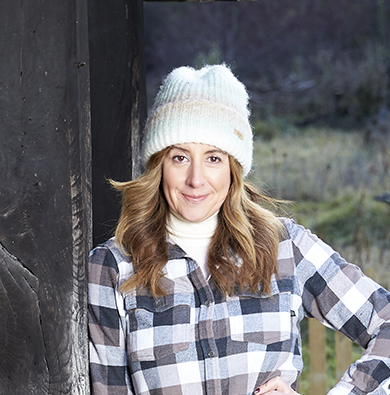
Lucy Siegle is a writer, broadcaster and public speaker who has been at the heart of contemporary conservation and environmentalism for two decades. As a reporter and presenter on BBC1's The One Show alongside newspaper journalism, she is credited with mainstreaming action on plastic and the quest to make fashion a cleaner, fairer industry. She has also fronted TV exposes on plastic recycling and campaigned to make greener living fairer and affordable. She currently writes for The Times and Marie Claire and was formerly a longstanding environmental and ethics writer at the Guardian/Observer. Her substack and social media independent journalism brand, The Siegle Has Landed majors in how to live ethically inside broken systems.
She is author of five books including To Die For: Is Fashion Wearing out the World? (Harper Collins 2011, nominated for the Orwell prize) and Turning the Tide on Plastic: How Humanity (and you) Can Make Our Globe Clean Again (Orion). She co-produced and stars in the Netflix hit documentary, The True Cost.
An accomplished live performer and champion of net zero business and policy, Lucy is in demand as a host, chair and keynote speaker, known for her mix of pragmatism, honesty and optimism. She has vast experience in communications and campaigns. If something doesn’t exist, Lucy will create it! For example, Lucy co-founded the Green Carpet Challenge with Livia Firth, working with designers from Armani to Stella McCartney and the Observer Ethical Awards (these ran for a decade and were much loved across the UK).
Lucy a… Read More