108. Why are we sending so much plastic to Turkey?


 Apple Podcasts
 Spotify
 YouTube
 Amazon Music
 Castbox
 Podcast Addict
 PocketCasts
 Key Takeaways
- The UK exports significant amounts of plastic waste to Turkey, but household flexible plastic makes up a very small fraction of these totals.
- While Turkey has a legitimate recycling industry twice the size of the UK's, importing foreign waste has strained its domestic capacity and led to localized pollution issues.
- Recent investigations in Adana reveal that inadequate wastewater management during the plastic recycling process can lead to significant microplastic pollution in local waterways.
- Both hosts argue that the UK should ultimately shift toward exporting only high-value, pre-processed recycled materials rather than low-grade waste that requires heavy sorting abroad.
- True circular economy practices require countries to take full responsibility for the environmental and social impacts of their waste across its entire lifecycle.
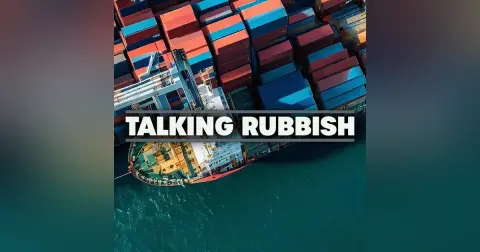
The UK is sending huge amounts of plastic waste to Turkey, but what actually happens to it when it gets there? We dig into the numbers behind the headlines to find out what we're really exporting, why Turkey has become such a major destination, and how much actually comes from our household recycling. It turns out the story isn't simply about waste being dumped overseas. Turkey has a huge recycling industry, but new research from Adana raises a more complicated question; what happens when our plastic is recycled, but the recycling process itself creates pollution?
Plus, are solar eclipse glasses rubbish or not, is washing recycling pointless, how will bread be packaged in our dream shop, and how much toothpaste did Robbie have left in the tube?
Join hosts James Piper and Robbie Staniforth as they delve into the world of recycling, hopefully having fun along the way. One thing is for sure, they will talk absolute rubbish from start to finish.
Please take a moment to complete the Simpler Recycling tracker
We would love you to join our community on Discord
Special thanks to our sponsor, Ecosurety
To get exclusive videos and clips, follow us on Instagram, TikTok, Threads or Facebook; @rubbishpodcast or YouTube: @talkingrubbishpodcast
Or you can contact James and Robbie with questions or just general rubbish musings using the email address talkingrubbishpodcast@gmail.com or by texting them via WhatsApp on 07356 069 232
Relevant links and reports mentioned in the programme can be found on the Talking Rubbish Linktr.ee
Transcripts and episodes can be found on the Talking Rubbish website
Timestamps:
Why are we sending so much plastic to Turkey - 01:32
Additions and corrections - 24:16
Rubbish or Not: solar eclipse glasses - 31:54
Rubbish News - 36:18
Is washing recycling pointless? - 41:10
Green Grocer: bread - 46:59
Residual Rubbish - 52:25
Music licence ID: 6WPY8Q4O2RPFIOTL
Frequently Asked Questions
Why does the UK send plastic waste to Turkey?
Turkey has emerged as a major destination for plastic waste exports due to its lower labour and operating costs, combined with a large established recycling sector that can process imported feedstocks.
Is all UK plastic waste sent to Turkey coming from household recycling?
No, the vast majority of exported plastic is commercial and industrial waste, such as transit shrink wrap, rather than household flexible packaging collected at supermarkets.
What are the environmental concerns regarding plastic waste in Turkey?
Studies in recycling hubs like Adana have highlighted that poor wastewater management during plastic processing can release high levels of microplastics into local waterways used for agricultural irrigation.
James Piper
Hello, welcome to Talking Rubbish, a weekly podcast delving deep into the world of recycling, discussing the truth behind snappy headlines and one-sided stories. In this episode, we will discuss why so much fun waste is sent to Turkey. Are solar eclipse glasses rubbish or not? I have a question about whether it is worth washing our packaging before recycling, and how will bread be packaged in our dream shop? I'm James Piper and I'm joined by Robbie Stanifort, my far from rubbish friend. Hi Robbie. Hey James. How are you today? Very good, thank you. Robbie, I have another reason that food waste collections are so amazing. Okay. I have some family staying over at the moment. Yeah. And last night my mum said she was fed up with the parcel delivery company every we've all experienced every, haven't we? I mean, they just deliver parcels wherever they fancy. Absolutely, yeah. And they were just not delivering the parcels to the right place. And she said they'd left a photo of the parcel at a random house.
SPEAKER_02
Okay.
James Piper
And she'd shared it on her neighbourhood WhatsApp group, saying, Does anyone know where this house is? Her neighbours pointed out this was not quite the mystery she thought it was, because next to the parcel was a food waste bin that had the address all over it. And so very quickly the mystery was solved thanks to the introduction of food waste in Hampshire.
Robbie Staniforth
Yeah, and labelling those bins with your door number and stuff as recommended by the number one binman. So please label your bins, guys.
James Piper
So earlier this month, the Guardian wrote a report about UK plastic waste ending up in Turkey, which loads of people shared with us. So thank you so much for doing that. The question is: is this stuff coming from our council collections or supermarket flexible plastic drop-off points?
Robbie Staniforth
And this is one of those stories that we've seen countless time over the last five years or so. It just keeps cropping up, waste ending up, particularly in Turkey, that seems to be one of these destinations that's really got a massive question mark over it as to whether this is good or the insinuation is very bad.
James Piper
Yeah, so today let's cover why it all ends up in Turkey, how much is actually getting sent there, and then what we think might happen next. And I guess just starting with how much we're sending to Turkey, here are the numbers that The Guardian presented. So in 2025, the UK exported 675,000 tons of plastic. That's just all exports. Oh, okay, fine. Yeah. Of that, so of 675,000 tons, 139,000 of that was sent to Turkey.
Robbie Staniforth
Okay, so a reasonable proportion. You know, it's it's a lot. It's a big export destination, clearly.
James Piper
What's that gonna be? A quarter of what we're sending, something like that. And we are the, from what I can tell, we are the second largest exporter to Turkey after Germany. Okay. So there is no hiding that. We, as in the UK, are sending an enormous amount of waste in Turkey. And in my opinion, it's far too much. Okay. Like it doesn't balance with anyone else. And why is that happening? Because we have not invested in domestic recycling. We are allowing recyclers to close. So export becomes the default solution. The problem is what's happening in Turkey is they are importing a lot of waste to recycle, but it means they can't manage their own waste.
Robbie Staniforth
But I don't think it's a massive leap to suggest that instead of putting in very expensive waste management systems to get clean recycling, ready to recycle material internally, domestically, they're saying, oh, look, here's a bale of already sorted plastic from abroad, whether it be Germany or the UK, that's actually a much better feedstock for my plastic recycling plant than trying to go and dig through the dirt, so to speak, to get plastics from domestically created waste.
James Piper
Just to give the history on this, China closed its doors in around 2018, and when China closed its doors, plastic had to find other markets. And Turkey emerged as one of those markets. Why Turkey? It's in the OECD, which is a really important thing. The EU have started moving to very strict controls on the export of plastic, and they're saying you can only export to OECD countries. So that list is already a bit shorter in terms of where you can export plastic to, and Turkey are on that list. And then the economics, you need to find a country then that has lower operating costs. As in, sorry, you don't need to find a country that has lower the the default for when you're exporting plastic is going to be the commercials, isn't it? It's going to be where is the cheapest place for me to send this, where is the place offering the most value?
Robbie Staniforth
Yeah. Low cost labour, low cost energy, that's the kind of stuff you're looking for.
James Piper
Yeah, and we're splitting our plastic exports in two here because you're unlikely to send really high-quality stuff to the place with lowest cost labour. What you're doing is sending the stuff that needs sorting and work and cleaning. The whole point is that they're going to spend the time cleaning and sorting it. Yeah, more physical effort needs to be put in to make this stuff valuable. Robbie, if you picture waste being sent to Turkey, what does our waste being sent to Turkey? Not not what is the waste, but when it arrives there and something has happened to it, what are you imagining is happening to our waste based on the media reports that we see?
Robbie Staniforth
Uh it's probably going on to the back of a lorry somewhere, being transported into God knows where and God knows what happening to it. I don't I mean, I assume it's like almost on the edge of waste crime or something.
James Piper
Yeah, I think it's quite interesting because whenever I've thought about waste in Turkey and we've talked about it before, I think people default to dumped on a roadside or illegally burnt or whatever it is. And so I was absolutely astonished to read in this, it was a 2022 government report into exporting of waste. The government wrote a report in 2022 that had this line Turkey has a legitimate recycling sector, which is estimated to be twice the size of the UK's recycling sector. Wow. It has that has stuck with me all week. I can't get it out of my head. Okay. Turkey has this enormous recycling industry, twice the size of the UK, but is struggling to recycle its own domestic waste. Yeah, that's crazy. I don't think the problem is Turkey can't recycle. You know, the country does not have the recycling capability. It's that it has built a recycling sector around valuable tradable feedstocks, but domestic waste collection system haven't kept pace.
Robbie Staniforth
Yeah, and uh really it's just about international trade. Absolutely, entrepreneurs have set up there saying, look, the rest of the world has got a problem with their relatively clean compared to our waste. Therefore, let's import the stuff. We've got cheap labour, etc. We can turn it into something valuable. This is a great business model for me in Turkey.
James Piper
And that and that same report said Turkey has tightened controls on businesses importing waste plastic as well as those purchasing waste and selling it domestically. Only businesses that will undertake recycling are now permitted to import plastic waste into Turkey. I mean, this is not from the plastic industry, this is a government document assessing the situation. And I th I really do think this gets lost in the noise. I think because the media will write a report about we found some UK plastic on the side of a road, we forget that Turkey has actually built an enormous recycling system.
Robbie Staniforth
Yeah. And this article was not saying it was found on the side of a road, importantly, was it? That's previous articles.
James Piper
That is really interesting. This article was very focused on the recycling of waste. Yeah. But I th again, I think even if you read it, and I'll put it in our link tree, this Guardian article, if you haven't seen it already, because you've had this build-up over time. Sure, all of our waste in Turkey is mismanaged. It's actually quite hard to read that article and and hear what it's actually saying, which is what happens when our waste is actually recycled. Because it's got all the keywords of plastic, Turkey, export, because it's got all those keywords in, it is actually, you have to really disconnect yourself from your history of media reporting to understand what the article is saying, which is about recycling. Having said all of this, that Turkey has a legitimate recycling industry. I do need to remind people that on this podcast, I have called for a ban on the export of plastic waste. Uh all waste. I've called for a ban of all waste. I don't think we should be exporting anything other than things that have been sorted, cleaned, processed, so that what we're exporting has a high value and that means it's less likely to get lost. I guess the question is if let's say we had that rule in place, let's say we were only allowed to export high-quality pellets, would we still send 139,000 tons to Turkey?
Robbie Staniforth
Yeah, that's the question. Probably not. It would shrink somewhat.
James Piper
Yeah, because as we said, Turkey has a lower labour and operating cost. So the reason we're sending things there is to be sorted and processed and cleaned and washed. If that has already happened, then we don't need to send it to a country with lower labour costs or lower operating costs. We need to send it to a country that's going to give us the most value for the pellets. And I think that is a shift that needs to happen. We shouldn't be sending low-quality stuff to cheaper countries. We should be sending high-quality stuff to countries that are paying us the most money for it.
Robbie Staniforth
And this is what gets lost sometimes in the detail is that often there's a narrative of we're sending the stuff to manufacturing centres. They need the material to make the goods that we then import. Now that is true to some degree, but quite often the manufacturing is much later down the pipe. The very first thing is actually it's not very clean, easy to manage waste. We're sending it there for the first step of cleaning the stuff up and making it valuable. And then they can absorb it into their manufacturing processes and their centre. But that's sort of as a byproduct of the most important thing, which as we've said a couple of times already, is the fact that labour is cheap and that they can put all the effort in that countries like the UK, frankly, aren't prepared to do.
James Piper
I think there's a huge amount of context missing in these articles, like the article The Guardians written. So what the article said is 675,000 tons of plastic is exported, all UK plastic. And if you go into the pack flow reports, which Valpac produced, which say what our waste actually is that's being exported, Robbie, what percentage of that is household flexible plastic packaging? So what percentage of the 675,000 tons of plastic we export is the stuff coming from supermarkets that's being collected, the flexible plastic.
Robbie Staniforth
Of that 600 plus thousand tons flexible plastics, probably a relatively high proportion. Um I'm gonna go with 20%.
James Piper
20%. Okay. The trouble is what you've done there is said flexible plastics. And I'm talking about flexible plastics that are at the supermarket or at our household collections. Because you're right, there is a lot of flexible plastic that is commercial and industrial, which is not ours.
Robbie Staniforth
Oh, okay, fine. But I would I would still assume a very high percentage of household flexible plastics, because we can't process it in the UK or something. Is it 10 or 15%?
James Piper
Okay, so of the 675,000 tonnes, 1.2% is household flexible plastic, so roughly 8,000 tons. Okay. So when you read the UK exported 675,000 tons of plastic waste, do not picture 675,000 tons of crisp packets collected outside Tesco. That is not what the number represents.
Robbie Staniforth
So it's a very small growing fraction, and that's why it gets all the headlines, I'm sure. But let's not equate that with it being the lion's share of what gets exported when it comes to plastics.
James Piper
So it is worth noting there is a lot of commercial and industrial flexible plastic, and this is the stuff that's like your secondary and tertiary packaging, so before it's got to us. So shrink film round a pallet is a really good example. Now, typically, though, this stuff is unprinted, because why do you need to print? Sure. And it's just clear LDP. So it's much higher value than the packaging that gets to us. Sometimes when people say we're exporting UK plastic waste, people pitch their own bins, they look at what they're putting out or what they've taken back to a supermarket, but a huge so much of this is not household waste. So much of this is stuff that hasn't got to us. And according to the PackFlow reports, they sit in a range, the grade range of 70-30 to 98, too. So just to explain what these numbers mean, when we talk about the world of recycling, we use these uh figures like 70-30. And what that means is 70% of the bail is stuff you want, it's target material, and 30% is contamination. And typically our bail will range between 70-30 and 98 to there is a big difference. You can't just take a bale of plastic and say they're all the same. There's a huge difference depending on levels of contamination. And the pack flow reports say that the exports of flexible are driven by lower costs of processing in some overseas destinations such as Turkey, in particular due to the level of manual intervention required to remove non-target items and labels. So, what they're basically saying is the 70-30 end is more likely to go to a place that needs lots of processing, like Turkey. And the 98.2 is more likely to go to places that are offering you a high value for the bale. And they go on to say there is strong demand from mainland European recyclers for the higher quality grades in this range. So we know that's true. And when you're talking about collection back at supermarket, it's going to be more in the 70-30 range because it's contaminated. It's got metalized plastic in it or bits of our food or whatever it is, which you just won't get with commercial and industrial. Now, this article from The Guardian wasn't really about any of that. We've just given some context to kind of Turkey and what it's taking, what kind of waste might be there. The Guardian article actually focuses on Adana, which is a city in the south of Turkey. And this is an area of Turkey where the recyclers have clustered. Around 60% of imported plastic goes to this one city. There's been a lot of protests in Turkey about the amount of recycling happening in this one location. And partly because it's causing a lot of pollution. This is what the article in The Guardian's talking about. So it comes from a study that showed that microplastic levels were as high as 132 times higher downstream of the recycling area compared to upstream. It is probably unsurprising, but extremely difficult to hear that waste that we are exporting to Turkey might end up in this place that then has huge impacts on the environment around it because it's not being managed correctly. There's not the filtration systems needed to filter out the microplastics. And unfortunately, that waterway that then has all those microplastics feeds into a canal that is yet then used to irrigate crops. So you then have all these questions around microplastic entering the food chain and the issues that might happen there.
Robbie Staniforth
And this is where sort of the principles of the whole thing come into play. Whether it's the big 600,000 tons number or way down only 8,000 tons doesn't really matter. The fact that we're sending anything to a place that then when they're washing and recycling this stuff, they're allowing that water to flow out into a river and potentially back into the food chain. It doesn't that the tons don't really matter. It should be zero tolerance to this kind of thing. And this is really why the article is right to kind of highlight when we're saying, I don't drop any litter or wet. How is it getting there? Well, this is a system we're all playing a part in. And unfortunately, this is a common story. You know, we shouldn't be that surprised by it because it is happening in places like Turkey.
James Piper
Yeah, and this was described in a policy briefing I was reading as waste colonialism and environmental injustice. It's consumer waste from developed countries creating chronic pollution in poorly managed areas. That's how it was described. I must admit, I found this particular rabbit hole quite interesting because I think if you ask people what happens to our waste center Turkey, if I went out and asked some people on the street now, typically I'm gonna get a it's burnt or dumped on a roadside. And as we said a bit earlier, this one is arguably a lot more troubling because we're talking about legitimate recycling here. We're talking about what happens if you actually recycle this waste. And by shredding up plastic or I mean, you'd get the same with metal, wood, glass, anything. They're all gonna have some contamination. But in plastic, in this example, by shredding it up and not managing the wastewater coming out of it, you're actually creating as many problems as you would if you were landfilling it in an uncontrolled way because you're just not managing what you've created. And I think we often describe or think of recycling as a clean activity, and it can be, you can filter that water, you can make sure that what's coming out of your plant is controlled. But when we send it to countries that don't have the same controls, then recycling is an unclean activity.
Robbie Staniforth
Yeah, well, from my time visiting plants in South Africa, I could see the huge range in how the plastics are treated. One was the most high-end plant I've ever been to in Cape Town, and you could see that it was just the cleanest PET bottle material coming out. You could see that the waste water, you could probably drink it, it had been filtered so much. But then up in Johannesburg and Pretoria, some of the sites, you can literally see microplastics around the plant just on the floor, in the dirt, in the mud, washing off when the rains come through. And so it just goes to show the range in these developing countries that we think of as yes, they do have a recycling centre, as South Africa does, as Turkey does, but not all recycling is born equal and they don't all adhere to the same sorts of practices. In my mind, when you say recycling, I'm thinking about a heavily regulated environment in the UK with enforcement agencies who come and do all of the permitting and sampling, et cetera, so that you can have your license to operate.
James Piper
The Guardian investigation said 13 British companies sent 52,000 tons of household plastic waste to this particular zone between May 2021 and July 2024. And I guess the question I was then asking myself is if UK exporters are claiming that this material has been properly recycled, what are they doing? What verification are they doing? Are they spending time auditing that recycling plant? Have they checked the wastewater? How often are they checking the wastewater? You know, they're based in the UK. Some of these guys who were exporting plastic waste, I'm going to their website and it's like they're based in a Regis office. So are they really able to do these checks? Are they really able to ask these questions? I mean, experience tells me that these questions are rarely asked. And I do think it's getting stricter. I do think we're going to have to have more controls on the export of our waste. You're going to have to know the waste that you're sending out for fear of you know getting it wrong, getting prosecuted. But but I do think we need to be asking more questions of our waste. And I stand by my point that I would not export waste. I would export processed clean material that has become a new product. And the question I'm always asking is: can the UK create enough high-quality domestic recycling capacity? And should export be restricted to a material that has already been processed? I just think that is the direction of travel. It may take 20 years, 30 years, but I think that is where countries will get to. Because let's say we could prove it was all recycled really well. Let's say all these actions happen and wastewater controls are implemented and everything becomes really good in Turkey. We're still stopping them recycling their own waste by sending all of our waste over there. You know, and morally, how should we feel about that, regardless of how well it's managed?
Robbie Staniforth
Yeah, no, you're exactly right. And it comes back to this term of responsibility. What are the bookends of responsibility? Because at the moment, we're sort of saying, as long as you hit some recycling targets, all of this recycling, by the way, will have counted towards our national recycling targets and hitting them for plastic. And it's about saying whether that is right, that it should count towards it and whether you have taken full responsibility for this waste. And I think because it's so uncertain, even at a place where they have domestic recycling capacity and there is a big hub and center to take the stuff, if actually what they're doing isn't conforming to the equivalent standards that we would expect in our own country. Trans retailers now have to place a huge amount more responsibility on the sourcing of where does this come from? What were the labour rights in the place that this thing was manufactured? We need to be doing much more to think about where does the stuff actually end up and what are the labour rights, what are the environmental protections in the place that we're sending it. And I think that's really what a circular economy is. It's not just applying certain standards to how things are made, it's applying those exact equivalent standards to what happens at the end of their life and how they come back around the circle.
James Piper
So having spent a couple of weeks looking into this and really thinking about it in advance of this episode, The Trash Talk, where have I ended up? I guess I don't think the lesson from the Guardian investigation is don't bother recycling your flexible plastic because it all gets dumped in Turkey. The numbers just do not support that. It's such a small amount of our plastic. Having said that, I don't think we can point to a legitimate recycling facility in Turkey and say, well, it was recycled, job done. Recycling has an environmental impact. It creates wastewater, residues, emissions, microplastics, and those impacts need controlling wherever in the world recycling happens. And I think that's the uncomfortable truth that this story exposes. We've become very good at measuring what leaves the UK and what stays in the UK, but we are less good at where it eventually ends up and what happens once it gets there. And if we've sorted, cleaned, and turned our material into a high quality secondary raw material domestically, that becomes international trade. You're taking something that's valuable and you're you're trading it internationally with the highest bidder, and uh and that ultimately is going to be the best thing for the UK. But sending lower grade waste somewhere because the sorting is cheaper and being unable to guarantee the environmental standards, I'm getting increasingly uncomfortable with that as a concept. And the researchers in Adana say Turkey should eventually ban plastic waste imports so its recycling capacity can deal with its own waste. And I think they're right. And I think the UK should be preparing for exactly the same thing, but from the other direction. Two weeks ago, we did a fridge freezer episode. That generated a lot of comments. People love talking about their fridge freezer. I decided to pick up a couple from YouTube just to share with you. We had Bob Thossel, so thank you very much, Bob, um, saying a big part of why I forget about or don't see the food in my fridge is I have an under-worktop counter fridge. We didn't even discuss that. Oh, okay. And so it's 85 centimetres tall, but Bob is 182 centimetres tall. Oh no. So Bob said, I'm not gonna do the splits or get into a pike position in order to see if the food has fallen to the back. I just wait for it to start smelling, was generally the vibe, I think.
Robbie Staniforth
But you're still gonna have to get in the pike position then when it starts smelling, Bob.
James Piper
What's the solution for Bob? He's gonna have to crouch.
Robbie Staniforth
He's gonna have to stoop down at some point, whether it's when the food's gone off or whether it's to do his daily audit. Yeah.
James Piper
I think like a periscope type situation. Oh, yeah, that would be quite cool. The downward periscope. A few mirrors and a litter picker, Bob, is gonna solve your issue. You can use the litter picker to get to the back. Periscope to look down.
SPEAKER_02
Oh, very good.
James Piper
There we go. Sorted. We also had a comment from McSmithy. Now, I definitely feel quite similar to McSmithy in their views on how to manage the fridge. Thank you. So Monday is bin day, so Sunday is spent going through the fridge, cooking anything that won't last another day. Very good. I love that. I love coming up with like random meals where I just mix everything.
Robbie Staniforth
It's like ready, steady cook, isn't it? You've just got four ingredients and you gotta go for it.
James Piper
That's what it is. That's exactly it. And then McSmithy puts those meals into the freezer. The problem is not the fridge, the problem is the freezer. Now we didn't even talk about the freezer. We're gonna do a whole separate episode on the freezer. But they said they're putting leftover food in the freezer and then forgetting all about it. The labels come off and they can't remember what it is. And over time the texture deteriorates and they don't want to eat it. This week they decided to defrost an unknown and found it was turkey soup. So that's been in there since December because it's from Christmas. Oh gosh. And there's three more pots of it. Oh no. You've got a feel for it. The amount of times I've put something in the freezer, I'm like, I'm going to remember what that is. Me too. Definitely gonna remember. Look at it, it's mince or something. And then you look at it two months later, you're like, what have I cooked? Was that a curry or a bologna sauce? The trouble I have is now I've got a young son, we will tend to cook quite spicy or salty things for us. And then we avoid salt and spice for him. And so, and sometimes I don't label. And so I'll defrost it thinking there's a meal for him.
SPEAKER_02
Oh no.
James Piper
And I taste it and I go, no, that is a spicy version. Do not feed that to a child. So yes, I completely agree the feature is is definitely a uh definitely a difficult situation.
Robbie Staniforth
And Robbie, you had some homework. I did have some homework. Tony wrote in and he said that he had an ingenious solution for getting the last of the toothpaste out of the toothpaste tube. It was a simple and you endorsed this method at the time, sniped the end of the tube. Just the end, just the very end. The end with the cap, the sort of crimp bit at the end, snip it off as little as you can get away with, and then squeeze it out. Now, I personally thought that my method, I'm really I'm mangling this thing up, I'm pushing it out of the cap. I did not believe that you could possibly get any more toothpaste out. And luckily, I was right at the end and have been right at the end of a toothpaste tube for the last few weeks. So I did the experiment. I s I weighed it on my kitchen scales, I snipped off the end, I pushed out some toothpaste, and there was I can confirm that there was probably about three or four toothbrush uh sessions worth, so a couple of days worth of toothpaste left in there, that when I put it back on the scale, the snipped off bit and the toothpaste, it totaled about one gram. Okay. So there is, we can confirm now, and we can give it the official seal of approval, talking rubbish seal of approval to snip the end to get the last few toothbrush sessions worth of paste out of the tube.
James Piper
But I felt your one gram was equivalent to about one percent. So what we can say is you're better than Tony, because Tony got eight percent.
Robbie Staniforth
And that and we all know that was the real competition.
James Piper
That's the real quiz.
Robbie Staniforth
So I got nine, I I can get, I'm gonna put this on my CV. This man can get 99% of toothpaste out of the tube. Yeah.
James Piper
So sorry, Tony, with your 92%, but you did a great job, that you can definitely squeeze more before you snip the end off. And I'm not sure if it's worth it for 1%, but we decided it doesn't really affect the recycling. So if you get three or four days extra toothpaste out of your toothpaste tube, it's probably worth it.
Robbie Staniforth
Yeah, we want to get as all the product we can out, all the uses out.
James Piper
We'd like to take a moment to thank our sponsor, EcoSurety, who are on a mission to rid the world of unnecessary packaging. They help brands navigate the tricky world of extended producer responsibility, but that is not all. They also collaborate on some incredible recycling projects and consumer awareness campaigns for those tough to recycle materials. If you're an organization looking to make smarter packaging choices, check them out at ecosurety.com. And the best thing you can do to Alabaster Grow is to tell your friends and family about it or to leave us a review. And if you leave us a review, you could be Robbie's review of the week.
Robbie Staniforth
And we've got a great one in here from Stacy Katz. It was over email about it. It was over email.
James Piper
Thank you, Stacey.
Robbie Staniforth
I just wanted to let you know how much I enjoy your podcast. I discovered it last week and have already shared it with at least 10 of my co-workers. Great job. I'm the director of recycling operations for Circular Action Alliance, the producer responsibility organization supporting EPR programs in six states. As someone who has spent more than 15 years working to improve recycling systems and find practical solutions, I find your conversations both insightful and refreshing. Thanks for all that you do. Keep sharing, keep laughing, and keep the episodes coming. Smiley face. Thank you, Stacy.
James Piper
And another positive review for your laughter. Great. Thank you, Stacy, for that. Most of all. Now here's the devastating news. Oh. We have some new listeners. Okay. And I am getting mixed reviews. Oh no. What? But I did get an email the other day from someone going, Look, I just need to give you this feedback. I've just started listening. And what's going on with the laugh? And uh I responded to say, Oh, well, thanks for finding us. I'm glad you're a new listener. I think we've taken the feedback on board. And so in the early episodes, definitely there's a lot of laughter. There's a lot of laughter. And then over time, the laughter's gonna get less. So I said, Don't worry, it's gonna get a lot better because you know we laugh less over time. And he said, Oh, well, I'm working backwards. Oh no. I was like, you've got to say, stop listening. Stop listening. It's only gonna get worse. It's gonna get a hell of a lot worse. Do not listen to it anymore. You can follow us on social media at rubbishpodcast. You can email talkingrubbishpodcast at gmail.com or you can WhatsApp us. Also join our Discord, it's the easiest way to engage with us and listeners of the show. And the link to all of those things is in the show notes. Rubbish or not? So I am very sorry how late we are on this. I should have realized, shouldn't I, that they were going to be big. Yeah. But cardboard eclipse glasses. I mean, had I been able to predict the popularity of them, I'd be a millionaire right now. Well, I've been. Because I would have bought thousands of the things. Yeah. So uh I did not realise we'd be talking about this and we're a week out. So hopefully you've still got some in your house, and you're thinking, what do I do with them? I'll wait for talking rubbish to cover it. Did you see? I mean, the queues on the downs down the road from me, we have the downs, which is a big piece of land. Yeah. And everyone congregated there to watch solar eclipse. And someone must have said, I've got some glasses, because this queue formed out of nowhere.
Robbie Staniforth
There's an observatory up there. So I think it was the observatory doing a promo and saying, We've got some to give out. And it was like almost a stampede or whatever of people. I saw the footage too. It was very amusing. Um, hopefully no one was hurt and people got some glasses. But this is one of those single-use or near single-use items that I fell for. Okay. So we got some glasses. We ordered some online a week or two ago. My partner, who's very organized, she should have started the business selling these things. Uh, we ordered them with plenty of time before suddenly the price jumped up uh loads, I believe, uh a few days before.
James Piper
So can I ask if your partner's ordering something in the future, and can you just think, oh, this would be a good rubbish or not? Clearly, it's uh it's gonna be big because me and you are not organized.
Robbie Staniforth
Let me know. Okay. Note to self, note to self. But yes, um, they were brilliant, by the way. It was an amazing view watching it. You know, it was in entrancing for like the full, what was it, hour and a half, two hours of watching. I didn't actually look that closely at them, so I've got them at home. Someone mentioned that there won't be as good an eclipse again until like 2090 or something. Is that true?
James Piper
Do you know when they come to the cloud? Yeah, 2090 is the next I mean, but they're every you know they're like every 18 months. Yeah, sure. But just all around the world and often over the ocean. Yeah. So I don't think we often well, certainly in the UK, the next one will be 2090. So um, if you're an hoarder, now I say this because my father-in-law dug out his 1999 glasses.
unknown
Yeah.
James Piper
That's amazing. Found the 1999 glasses, I'm wearing those for this eclipse. I was like, that is hoarding to the extreme.
Robbie Staniforth
Wow, not so single use in his example. Exactly. Very good. Hold on to them, guys. Okay, right. So I'm so I'm gonna hold on to them. But if you're someone who is a minimalist, say, doesn't like to hoard things for too long, has to get rid of them, then give it to your neighbour who is a hoarder. No, then I think it so it's cardboard predominantly, yeah, and it's a sort of like a a plasticky kind of film that's gives you this the protection, the UV protection or whatever. I think you're gonna have to do some dismantling here. The cardboard bit is or not recyclable, and then the sort of plasticky film bit that just goes in your normal rubbish bin. To get to dismantle it, I think it's quite straightforward because in the manufacturing process it was just, you know, some sealed cardboard. So you've just got a bit of glue on the cardboard sealing it shut. So you just need to pop that open, pull out the plasticky bit. Do you know what that bit's made of? The plastic? Yeah, the film or whatever.
James Piper
I don't know, because I used a colander. Oh, okay, yes. We didn't get hold of any of the colands.
Robbie Staniforth
It meant you got like hundreds of eclipses through the holes of the colander.
James Piper
Yeah, it was very cool.
Robbie Staniforth
I saw a few of those at the place where we went to watch it. But yes, so this is a I don't know, are we gonna call that rubbish or not? It's a 50-50. Rubbish and not.
James Piper
Yes. Okay, cardboard or not, film rubbish. I completely agree. I was kind of intrigued as to how these companies survive, you know, because the short run. Well, they do selling having one big sales week every 18 months. That feels not possible. So I had a little look, and one of the manufacturers is American Paper Optics. They seem to be a major supplier. And I think it's 3D glasses 99% of the time. Okay. And then one incredible week where you sell eclipse glasses. Rubbish news. 24 hours after our fridge episode went out a couple of weeks ago, I received a call from the BBC asking me to go on the radio to talk about fridges. Really? And I thought, great, we've just done an episode on it. Turned out it was nothing to do with our episode and to do with the fact that fridges are not being recycled at the moment.
Robbie Staniforth
Oh yes, I saw this news somewhere. Yeah.
James Piper
Yeah, so we are the UK is running out of space to recycle fridges. And a growing number of councils are now have stopped accepting fridge freezers, and it was BBC Essex that were asking me to go on because they've just said you're not allowed to bring fridge freezers back to the back to the tip, back to the uh recycling centre. And there's loads and loads of councils that are now doing this. And I think it's just worth highlighting that it's another example where it's showing the pressure in the system. So with fridges, you've got to recycle them. They contain quite dangerous gases, potentially greenhouse gases, they need to be recycled properly. So right now we have a perfect storm where we have lots of fridges that are being replaced due to the heat wave. So either they're breaking down or not powerful enough, whatever's happening. We've talked about that in the local mini marts that are just suddenly their fridges are getting kaput. Yes, and that's why we're ending up with an increase in food waste. And then you're combining that with a couple of years of fridge recyclers closing or suffering from fires. So in November last year, uni metals went into liquidation and they recycled 600,000 fridges. In February, we had a fire that closed EMR's fridge recycling facility. In April, we had another fire that closed Wiser Recycling facility. So we just had a couple of years of bad luck, and now we've got heat waves that are breaking our fridges. And so recycling centres now are running out of space to store fridges, and they're not really allowed to store that many of them. They've got environmental permits that say you can only store this many. And so there's been some attempts to alleve the pressure. The environment agency have introduced temporary measures allowing businesses to store fridges in sites that normally wouldn't be allowed to store that many. And the industry has started looking at exporting fridges, um, and there is new UK facilities coming online. Some of those facilities that closed will reopen. But I do think it's another story that exposes the fragility of the recycling industry. Like we talked about with food waste, where we're having more food waste because of heat waves, and then AD plants are full, so there's nowhere for our food waste to go. As we get these disrupting events, so heat waves being one, but there'll be others, it just shows how balanced our recycling system is and how just a quick change can really affect it.
Robbie Staniforth
And my rubbish news this week comes from Cornwall. It's what and we've heard this kind of news story before, so I don't think it's gonna be a huge surprise to you. But down in Cornwall, they're offering recycling tours. You can go and see your local material recycling facility. Uh so on it's Suez actually who are doing it. So I I picked up this news and I thought we haven't talked about this for a little while. You gotta go check out your local recycling centre if you want to learn anything about the kind of process of what's happening to your waste locally.
James Piper
But you're not suggesting people drive from Newcastle to Cornwall to CMF, you're saying seek out your local one.
Robbie Staniforth
Well, unfortunately, it's only on the 12th of September. That's the date. Now, if it was in August, I would be suggesting that the holiday makers should be, if they're going down to Cornwall, using the lovely facilities and recycling while they're down there. Why not pop in at the recycling centre for a visit as part of your holiday? Oh, we're gonna have a lovely holiday.
James Piper
Oh, we're going to the beach. Sort of. Maybe we might do the beach for a day, but I have the best trip planned.
Robbie Staniforth
And and and it's actually in Bodmin. So they'd be saying, Oh, what, we're going to the moors. No, we'll be in the moors, but actually at the recycling centre. What letters are in moors? M R. Yeah, we're going there. Yeah. So anyway, this was uh it's great to see that uh waste management companies in the UK are throwing open their doors because, as we talked about in the trash talk, transparency about what is going on with our waste is super duper important because so many super duper. Super duper. Um, because so many media outlets who are looking for sort of shocking headlines would lead us to believe one thing. But actually, when you visit your local facility, you can see that nobody's in the system acting nefariously, trying to deliberately ruin the planet. On the contrary, what we're trying to do is stop it from being burnt and sent to landfill. And so if you're based down in Cornwall, 12th of September, get yourself signed up to go to Bodmin Recycling Facility.
James Piper
Rubbish question. You squidged, tagged us in a TikTok video. Thank you for this squidge. And it was a video about someone saying that washing recycling is pointless. Ugh. And so we wanted to ask the question Is washing recycling pointless? This person was saying 10 to 17% of your plastic in your recycling bin is actually recycled. So it's a classic TikTok video. It starts with study show. Okay. Okay, share those studies with me. Oh no, I don't have any studies that show this. Anyway, this person said 10 to 17% of plastic in your recycling bin actually gets recycled. So using litres of water, there were no numbers on this, using litres of water to wash plastic that is never recycled is completely pointless. So I think there's an element of truth in this. If only 10% of our plastic was recycled and you were washing 100% of it, then arguably 90% of that water is completely wasted. So I would agree with that. But big butt. Big but. I don't agree with any of those numbers. But and if you want to get really depressed, God, read the comments in this video. I mean, it is a so many people just going, I knew it, I'm not gonna bother recycling that.
Robbie Staniforth
And this is kind of what we're up against. Videos like this that are kind of clickbait and feed into a narrative that someone's already got. But like the 10 to 17%, was it? I've never heard of that number. It feels like it's plucked out of thin air. In terms of the litres of water, it's like, why are you using so much water? Yeah, we've recommended on the podcast previously that if you're doing some washing up, just leave it in at the end and wash your recycling in what would be waste water from your washing up anyway.
James Piper
So the closest I can get to the 10 to 17% is the OECD report that we talked about before, where it talks about 9% of plastic is recycled globally. We talked about that in episode 42. And that number does rise to 17% in 2060. Oh, that's their prediction. Yeah, so this could be where that's come from. There's also the big plastic count, which we've talked about how much we don't like, that does report 17%. So we told you why that's inaccurate before. I think for this, we need to add layers to this video because this guy is from Cambridge and specifically talks about Cambridge Council. So we can get a better recycling percentage than just studies show 10 to 17% because he's talking to the people of Cambridge. So this is my first request. If you're a TikToker who's looking to make clickbait, I mean you're not gonna listen to me, but if you want to listen to me, don't give me global stats when you're talking to the people of Cambridge. And don't give me stats on everything. Because again, this OECD number, I think, is all plastic. So it's including pipes and long term plastics. It doesn't, it's not just packaging. So if you're talking about washing packaging, then your numbers need to be about packaging. And if you're talking about washing packaging in Cambridge, then your numbers need to be about Cambridge. You know, otherwise everyone who's commenting is just completely misinformed. And it takes about five minutes to get the data you're looking for because Cambridge actually has very good recycling and they have a recycling rate of 49.35%, which is far higher than the national average of 43. That's all household waste. That's all household waste, yeah. All materials. So far higher than the average of 44%. And they accept bottles, pots, tubs, and trays, and they do also accept certain flexible plastic. So Cambridge is one of the better councils. And at the moment they say on their website that 100% of their plastic stays in the UK for recycling. Really? So there is no bad news here. They're doing a really good job. We can say for certain the 10 to 17% is not right when you're talking to this very specific audience. But talking about the washing, as you've said, you don't need to do a deep clean. You just need to always be thinking with your recycling of the person handling it next. And is it clean enough that you wouldn't mind grabbing it off a conveyor belt? That's kind of how I always think about it. It's coming along the conveyor belt. Is my waste clean enough that someone's going to be happy grabbing it? Or have I left it in a state that is going to get really moldy and disgusting, they're not going to want to grab it. So you should be scraping off chunks of food, pouring away liquids, giving it a very light rinse. And you do that because the recycling process itself involves industrial cleaning. You don't have to. You just have to make it nice enough that people are not going to think it's contaminated. They're not going to incinerate it, saying, look, that's a contaminated load. Now I found very few studies on whether washing could actually outweigh the environmental benefit of recycling.
Robbie Staniforth
That's what I really wanted to know. Oh, okay, because that's what the insinuation is. It's like this is a terrible use of water and carbon and environmental sort of catastrophe to bother washing your recycling, which most simply isn't.
James Piper
Yeah, most studies tend to focus on reusables, as you would expect, the impact of reusables. So I think all we can do is give a talking rubbish order of washing. First thing you should always do is use leftover washing up water. Yeah. That is environmentally free. You've already used that water. The next thing, if you don't have washing up water to use, is to swill with a little cold water. That's the second best thing you could do. And the third best thing is to put it in an already running dishwasher. I mean, I tend to do this with glass and put a glass jar in. Yeah. I don't do it with bottles, but certainly glass jars will go in as space in a dishwasher. And that is the order. Don't do anything else. Don't run hot water taps, don't use detergents. Just use leftover water or use a little bit of cold water. Or if you need to use hot water, put it in an already running dishwasher. Greengrocer. So Greengrocer is our attempt to create a dream shop. With Robbie picking a product each week that we get to decide how to package. Robbie, what is our product this week?
Robbie Staniforth
I can't believe it's taken us so long to get to what is such a simple staple. Remember, I started with the staples and then I sort of veered away in more recent weeks. But we had honey last week. What you're going to be spreading your honey on this week's bread. Lovely. Excellent.
James Piper
It's funny actually, because bread came up I think earlier this year. Yeah, I totally missed this. Oh, okay. We were tagged in a post on Facebook that was what was the organizer? Uh Wood Wood Oaks Bake House, I think. They tagged us in a post saying we make bread, we don't want to use plastic. What should we package our bread in? And they had a specific caveat of lots of our customers want to freeze half their bread after they've used it. Yeah. And they need plastic to do the freezing.
Robbie Staniforth
Yeah, it's a tricky one that, isn't it? And and I know from experience when I buy good quality, like locally baked bread, we generally eat half the loaf and then cut up the other half and put it in the freezer for toast. So I totally get this customer profile. They're speaking to me effectively. Yeah. And would you put that in like a plastic bag? What would you put it in in the freezer? Generally, we would put it in a plastic or a paper bag. I've put it in a paper bag before in the freezer, yeah. Labeled, so you don't think it's a chili when you bring it. I mean, bread you're not going to get wrong, are you? It doesn't last very long in the freezer, to be fair, because we're having enough toast. But yeah, it's uh it's definitely one of those things that's commonly at the top of the freezer because it just goes off so quick, it goes off too quickly, basically. Yeah.
James Piper
So I will give the advice I gave them on Facebook. So the packaging, bread's a bit of an unusual one because the packaging always touches the food. You know, it's just the way it works. There's no barrier. Yeah. You're just always touching the food. And therefore, you need food grade packaging. It's we talked about this before with like um, what was it? Like celebrations or miniature heroes, you know, those chocolates. Where they've moved to paper, they have to use virgin paper to wrap the chocolates because the paper's touchable chocolate. But bread is just a giant version of that. You're having to use virgin paper. So if you were to use paper, actually you're gonna have a bigger environmental impact because you can't use recycled. Um, so just to be clear on why that happens, recycled paper still has residue and contamination like inks, oils, adhesives, things that were in the paper. So there's just very strict rules on whether that can be used as food grade packaging, which is why you end up with whenever people use recycled paper in this context, they will have a plastic barrier on the insurgency. And so you sometimes see that. It is for this reason I do value the LDP bag around bread. Okay. I do like it, it's clear LDPA, it's nice. And as I've said on this podcast many times, for me, the best opportunity here is to use that as your bag for your flexible plastics on a weekly basis.
Robbie Staniforth
Oh, yes. Create the little nugget of uh plastics.
James Piper
Absolutely. People get bread, some most people get bread on a weekly basis. You then have a bag you can fill with flexible plastics, take it back to the supermarket when you buy a new loaf of bread. If you get into that rhythm, it's a really nice behavioural thing.
Robbie Staniforth
Okay, fine. So we're going for the just straightforward, very commonly found LDPE. But surely we've got to talk about the plastic paper mix that you find in the supermarkets. They're so maddening where you've got this plastic. The window. The window, yeah, it's just so annoying. It's like the worst of both worlds.
James Piper
Yeah, I I mean, we will very rarely, I think, in greengrocers suggest a mixed packaging type. It seems very odd. And so it's one or the other. Paper has to be heavier than the LDPE film and would need to be virgin. The LDP film can be made of recycled material. Now, just to talk about that, it's unlikely that you'll be able to use LDPE that's come from a mechanical recycling process. Because while you can do that with PET because you the bottles are bottles to bottles, it's bottle to bottle, so you know what it was. LDPE is used in such a wide variety of applications. So if it was used to, I don't know, wrap up uh washing powder or something, then you wouldn't want to be using it for bread later down the line. But Kingsmill do currently, I think, use a 30% recycled plastic LDP bag, and that's come from chemical recycling. Oh, okay. Where you chemically recycle plastic, you're taking it back to its building blocks, you remove all of the contaminants. And so you can use recycle content in LDP bags if you're doing chemically recycled plastic. So, what I'm going to say for our dream shop is LDP with a high recycle content. And remember, my rule is it needs to be higher than the legislation says. So Kingsmill have gone for 30% because that is the plastic maximum. Nudge it up, nudge it up, Kingsmill. Exactly. I'm gonna say 50%. Very good. So in our shop, no, let's say 100%. Why not 100%? Dream shop. That's the dream. All right. So we're saying an LDP bag with a hundred percent recycled plastic with a sign printed next to the bags, which says, please use this as your container for flexible plastic each week. Very cool. Residual rubbish. This is the part of the show where we talk about something that has made us feel like an emoji this week. Robbie, there is uh an area of Bristol that you have said to me is the greatest thing Bristol has to offer.
Robbie Staniforth
Oh, I have ignored in my life. I know this is near to you as well. It's not that far away.
James Piper
I know what this is. I know. I'm talking about Henley's Lake. Lovely. So anyone in Bristol who's heard of Henleys Lake will know what I'm talking about. But basically, there is a part of Bristol with this old quarry that is a lake, and you can apply to join a waiting list to become a member, and then if you get membership, you can go to this lake for wild swimming. Absolute oasis. And I'm I basically moved to this house that's quite near to this lake. I'm about five minutes away, five minute walk. I became a member a couple of years ago, and then I never went. That's shocking. In almost every recording we come to, because now you come here, yeah. Every recording, you're like, Why haven't you gone to the lake yet? Why haven't you gone to the lake yet? I don't know. I have finally gone, and and now, I mean, I say gone, I'm going every day.
unknown
Really?
James Piper
I realized the error of my ways, it's amazing. So if we've got any listeners who remember of Hendy's Lake, that's where you're gonna find me. It's so good. A nice early morning swim. I love it. Or late afternoon, any time of day is great. It's nice and cold, it's amazing. So I'm enjoying this, uh I'm enjoying the lake. But what I found was they had a coffee, they have a coffee van there now. Yes, I know it, yeah. Um I say now having never gone before, but I got an email saying we're looking for a coffee supply. So I know that van is only just some. And there's a sign on the coffee van that says ceramic cups are in the kitchen. So there's a kitchen on the site that's like what would you say, 50 footsteps away? Yeah, sure, close. Yeah. So there's the van and there's a kitchen 50 footsteps away, and it says ceramic cups are in the kitchen, and then in brackets, sorry, we don't do single use. Wow. Okay, I've not noticed the sign. Very cool. But the sorry has been bugging me. Like, why are you apologizing for not having single use? I found this very odd. Well, you want them to say tough luck. No, I just want to say it's amazing we don't do single use. Oh, okay. Isn't it great we don't do single use? Why are you apologizing? And so yesterday I had to go up to the lady who worked there and I said, Can I just ask? I do a podcast on Misaki, I'm gonna talk about this sign. Can I just ask why you had to put the word sorry? Because to me, this is a really good thing. Yeah. Why are you apologizing? And she said, people do get annoyed. Really? She said, We have people who are like, What? I have to walk all the way over to the kitchen. I cannot believe it. It's uh 50 steps. Wow. And it has given me this whole I mean, we've always said, and we're gonna talk a lot about reusable packaging in the coming months. Sure. We've always said, make it simple. Yeah, don't put people out of their way. I understand all of that. But if you're a member of a lake and your choices are bring a reusable cup or grab a ceramic cup from a kitchen, I'm amazed that you're getting annoyed that you have to do that.
Robbie Staniforth
Yeah, that's crazy. And as you say, it's like a members club type thing. It's not just a transient place that people go to once and never come again. They get into habits, and that is a great habit to get into. Go get your China mug. So I'm now making it my mission to make them feel good about reusables, and I want to see the sorry disappear. So my residual rubbish comes from a post that was circulating on LinkedIn about a week ago or so, and I just thought this was so brilliant. Basically, someone had disposed of their HP printer. They just like left it out. Okay. Presumably broken, you know, left out on the side, as we do in Bristol, just left out. There was a printed sign. And the printed sign read basically, I have taken your printer home, repaired it, and printed this sign off. Because I need you to pass over the username, your HP login username, because I can't get full functionality of this printer that I've now repaired. And there's a sign of this printed out on a lampp, stuck to a lamppost, which is brilliant. And then written underneath, the person has come in and said, Yes, I've done that now. It was like deactivating the login details. Yeah, deactivating the login details so that this person could like, you know, it wasn't behind a sort of login screen or whatever, and they could get the full functionality. So basically, this person who disposed of a printer just put it out, and maybe someone can repair it or whatever. It's now found its new home. It's fully service serviced, uh fully operational again. And also, this person now has the full functionality to print whatever they need. Very good. Good repair. Yeah, well done to whoever that mystery person was who took the printer home and repaired it.
James Piper
As always, thank you all for listening. Thank you for the reviews and engagement. We absolutely love getting the opportunity to do this podcast each week. Join our Discord, follow us on social media at rubbishpodcast. You can email talkingrubbishpodcast at gmail.com. Everything we have discussed today can be found on our link tree, and the details to all of those things is in the show notes. There is nothing left for me to say other than see you next bin day. Bye. Bye.