17. Disposable vapes finally going up in smoke
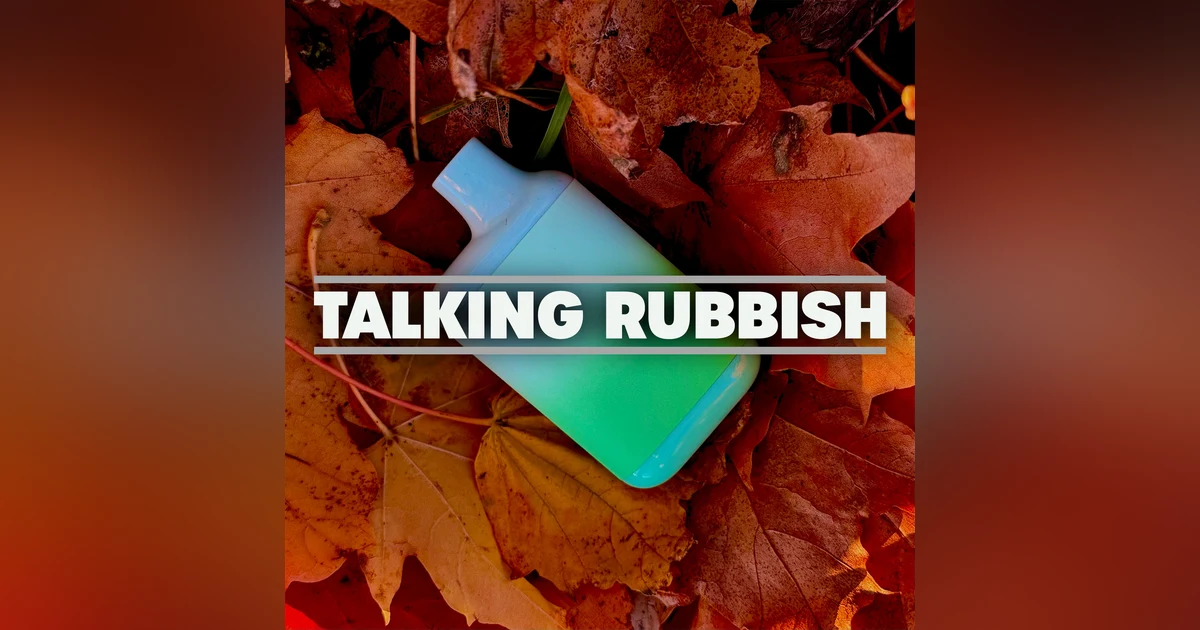

Disposable vapes are set to be banned by June 2025, but with an estimated 150 million still in circulation until then, what happens to these devices once they’re tossed in the bin? In this episode, we dive into the life cycle of a disposable vape and the environmental impact of improper disposal. Plus, we explain what you should do with waste wood, are books rubbish or not, and we have a question about why we need to sort metal if it can be extracted from the incinerator anyway.

 Apple Podcasts
 Spotify
 YouTube
 Amazon Music
 Castbox
 Podcast Addict
 PocketCasts
 Disposable vapes are set to be banned by June 2025, but with an estimated 150 million still in circulation until then, what happens to these devices once they’re tossed in the bin? In this episode, we dive into the life cycle of a disposable vape and the environmental impact of improper disposal. Plus, we explain what you should do with waste wood, are books rubbish or not, and we have a question about why we need to sort metal if it can be extracted from the incinerator anyway.
Join hosts James Piper and Robbie Staniforth as they delve into the world of recycling, hopefully having fun along the way. One thing is for sure, they will talk absolute rubbish from start to finish.
To get exclusive videos and clips, follow them on Instagram, TikTok, X, Threads or Facebook; @rubbishpodcast or YouTube: @talkingrubbishpodcast
Or you can contact James and Robbie with questions or just general rubbish musings using the email address talkingrubbishpodcast@gmail.com or by texting them via WhatsApp
Relevant links and reports mentioned in the programme can be found on the Talking Rubbish Linktr.ee
Transcripts and episodes can be found on the Talking Rubbish website
Music licence ID: 6WPY8Q4O2RPFIOTL
Hello, welcome to Talking Rubbish, a weekly podcast delving deep into the world of recycling and discussing the truth behind snappy headlines and one-sided stories. In this episode, we will explain what happens to wood, discuss disposable vapes, explore whether books are rubbish or not, and I have a listener question all about recycling metal. I'm Jace Piper, author of the rubbish book, and I'm joined by Robbie Stadterforth, my far from rubbish friend. Hey Robbie. Morning, James. Have we had a response on the uh recycling metal question? Nothing yet. This is going to be really exciting for all the listeners because basically, occasionally we have these questions, and I think, oh, we should check the answer with, you know, industry experts on this. And so I came in today, said, Robbie, have we got an answer on the recycling metal question? And he just uttered an expletive.
SPEAKER_00Yeah, that's exactly what I did.
SPEAKER_01And proceeded to start texting. And, you know, just for our listeners, it's currently 7.50 in the morning. Robbie has texted an industry professional about this metal recycling question. And we've got about what, 40 minutes before that response has to have come in?
SPEAKER_00I have every confidence that this is not uh unreasonably and unprofessionally early to message about this topic.
SPEAKER_01This is so exciting. What a live experience for us all. Will Robbie get an answer before the end of the episode? Professional as ever. So before we get started into the episode proper, Robbie, I just wanted to tell you about another podcast. I've had a podcast that's approached me because they wanted to talk about talking rubbish on their podcast. And I said, Well, you know, if you want to talk about talking rubbish, I'm very happy to give you a shout-out in return. Ah, okay. So, you know, so if everyone's happy with me just doing 30 seconds on another podcast, that would be great. So they're called Outrage and Optimism. Uh, it's one of the leading independent climate podcasts and hosted by the team that delivered the Paris Agreement on Climate Change in 2015. Since hearing about them, Robbie, I actually went in and listened to some episodes and they had a really cool series which covered off all these massive topics that I've been thinking about. So they ask questions like, should I fly or should I eat meat or things you and I talk about a lot, actually. And I just uh I found it really interesting listening to their perspective on these things and questions that I'm always thinking about in the climate space. We've got COP29 at the moment, they're going to keep us informed on that and share what's going on behind the scenes. So I was super grateful to another podcast for reaching out, and I thought it'd be worth just mentioning them early doors just as we get started. Is that okay?
SPEAKER_00Yeah, well, I mean, I was a little bit nervous there, James, but at least they're on a very similar topic. I can see why they reached out now, to be fair. Um, I'm sure I'm gonna be listening, so thanks for the recommendation personally.
SPEAKER_01Great. And I think that's about as close to an ad as we're gonna get at this point, Robbie.
SPEAKER_00Is that like I mean, our ad game is is weak at the moment, James, if that's that's it?
SPEAKER_01That's ads. Yeah, a lot of the podcasts I've been listening to have so many ads, Robbie. And we've sort of said we don't really want to do that. But I love it when a podcast approaches us and says, Oh, would you be happy to talk about us on your podcast? We'd love to do that. So if any other podcasts want us to talk about them and they're in our space, we're always happy to do that. And I'm sure our listeners don't mind just a minute of us promoting someone else.
SPEAKER_00Yeah, no, sharing is caring in that regard. Like there's just you know, so much good, rich information out there, and uh yeah, massive fan of podcasts, so great idea.
SPEAKER_01I was chatting to a friend of mine actually uh this week, and we were talking about the paper straws, so uh I've lost I don't know about you, but we're getting to the quantity of episodes now where I'm like, I don't know when we talked about it. Which episode was it? It was the band one, I think. It was the bands, yeah, that's right. I don't know which number that was though. Yeah, sort of like I don't actually remember how old I am nowadays. You know, I'm at the age where I'm like, how old am I? It's the same sort of thing with the episode number. It's like, I think it was 12. Sorry if I got that wrong. So my friend James actually went to the cinema and I was chatting to him, and he said he had to take multiple straws into the film. I was like, what do you mean? And he said, Oh, well, you know, I got a large drink and I took it into the film, and I thought, I'm gonna have this for two hours. So he picked up multiple paper straws because they had to survive the whole two hours. And he was like, You put them in the drink, they're gone within like 10 minutes. I just thought he's a big fan of the pod. He's been listening since day one. The fact that he's doing this and he's like acknowledging it was just quite interesting. And I suspect if he's doing it, others are, and it's just a classic example of why we need packaging that's fit for purpose. Because if you have packaging that isn't fit for purpose, people just use too much of it.
SPEAKER_00Yeah, no, and uh, I mean, maybe this is the uh the time to bring in the reusable because I was chatting with someone yesterday whose wife had just messaged him and said, Oh, I've had a I've had a tooth out. When you come back, bring straws. And so he was about to pop out and find one of those uh metal, you know, the washable, reusable straws uh to take back. Because obviously, as soon as he mentioned that across the table, you could see uh him go ghostly white at the mention of a straw in front of me. Uh, he was very quick to say that he had intended to get a reusable one.
SPEAKER_01Trick with those reusable ones is definitely to get one that's got a brush because uh you need to make sure you're keeping that clean and obviously it's difficult to see what's growing inside. What a great intro.
SPEAKER_00Straws. I had no idea we were coming up with that.
SPEAKER_01I think straws will keep coming back up, I'm sure of it. I'm sure that's not the final straw, Robbie. So additions and corrections. I had a uh I love this email, right? So this was off the back of, I should have checked which episodes these are, but this was off the back of our um microplastic credit card episode. So where we were talking about the bad science around, you know, microplastics and whether we eat a credit cards worth or not. The data was showing it'd be impossible to eat a credit cards worth of microplastic because the reality is we don't see it in our drinking water, which is what the study assumed in terms of size of particles. And we had Will listening into that episode who felt the same and had, I think he's a packaging scientist or packaging technologist, so spends his whole life in packaging, similar to us. And he was saying, he was asking whether we'd seen the study about cutting boards or chopping boards. Now, I have seen this study, so this was about plastic chopping boards, and it gets lots of media coverage. And the way the media were presenting it was every time you chop up food at night, every time you're cooking, little plastic particles are coming off and um going into your food and all that kind of stuff. Exactly. So similar to the credit card microplastic episode, which is why we'll wanted us to talk about it. And if you read the paper, it basically suggests that the lower end of exposure, so the smallest amount of plastic that's coming out of your chopping board, it's about 7.4 grams per person per year. And as Will pointed out, this would mean his 10-year-old IKEA polyethylene chopping board should have disappeared by now. But he said it's only got a couple of scratches in it.
SPEAKER_00Oh my god. That and that was at the lower end. That's the low end.
SPEAKER_01The upper end is 50.7 grams, and 50.7 grams means that his four-person household should have eaten the entire chopping board in less than two years. So again, it's just like the credit card thing. It's like studies come out, the media reports it, and there's just that gap of like, is that realistic? Just think about it, you know. And and interestingly, I brought this up. I was out um last night, and I brought this up because I knew we were gonna talk about it today, and everyone was like, Oh, yeah, I've heard that chopping board thing. Yeah, I've moved to wooden chopping boards, you know, which I don't necessarily think is a bad thing, of course. Wooden shells are also not going to be great for you, but let's not open that kind of worms. Um, but it's fascinating. We all read these studies, we see the headlines, we panic, we change what we're doing, and it's a really interesting call out to kind of how these studies can can be wrong and how we actually have to apply that level of common sense together. But that just doesn't make any sense.
SPEAKER_00Yeah, no, I mean clearly microplastics are bad, but doom mongering and uh sort of overclaiming is not helpful for anyone.
SPEAKER_01We've also had quite a few emails, Robbie, and I'd be interested in your view on this, and then we just need to be careful in the future. So we've had quite a few emails from people who are in Scotland and Wales. Um we've got lots of countries listening. We haven't had kind of people outside of the UK emailing about this point because they're probably not as aware of the nuances. But when we've talked about like simpler recycling, for example, and we've talked about that coming in, lots of people have messaged saying, Well, that's only England, isn't it? Why are we talking about it as if it includes Scotland and Wales? Um I actually wasn't sure.
SPEAKER_00Like, is it only England? It is only England. Yeah, that's right. And actually, call back to maybe the was it the second episode? I had a friend who works for the Foreign and Commonwealth Office, and he picked me up because I said the English government are bringing in singular uh simpler recycling. And he said, There is no such thing as the English government, it's the British government who only look after waste affairs for England, which is like, oh my god, I have such a mouthful. I just said the English government, uh, which I realise is not an actual thing. So he was like, call yourself a policy guy, using terms like English government, but yeah, no, um the people writing in, they are correct, James. Yeah, it is just for England.
SPEAKER_01And you are the only person who calls yourself a policy guy.
SPEAKER_00It's good to that's true. That's true. No one else. I'm trying to get someone else to give me some credibility, but no, just me.
SPEAKER_01No, okay, great. So we need to just be really careful in the future. We need to be clear, and we are I know we're gonna do this with our legislation episodes because we've got planned uh like DRS, deposit return schemes, and that obviously has been a huge topic in terms of the divide between England, Wales, and Scotland. So we can just be a bit more careful in the future when we talk about like simpler recycling. We just need to be clear which um region or which country we're talking about. Sure. Yeah. Thank you all for emailing in. As we said last week, we're getting so many emails, so many comments, but please keep them coming in because we like to build up this nice little bank. And to be honest, we're trying to make sure that we do things in a sort of sensible order so that we don't have to go too far back in our episodes in terms of what we're talking about. So you can follow us on social media, we're at rubbishpodcast, or you can email talkingrubbishpodcast at gmail.com. Rubbish process. Robbie, we completed plastics.
SPEAKER_00Yeah, gosh. I was gonna say it was a bit of a slog, but it wasn't at all. I find that whole plastics thing so interesting. And when you're trying to put it into different sections, you suddenly realize just how complex it is. Yeah, it was useful.
SPEAKER_01Yeah, I really enjoyed it too. Going through all the different types of plastic, the sorting, the recycling. There was just so much to cover, but we need to move off plastic. Um, we'll probably come back. Well, we'll definitely come back to it. There'll be loads of stuff to talk about. But um, let's move on to wood.
SPEAKER_00Oh, callback. We were just moving from plastic to wood with the chopping boards. That was very well timed, James. Oh, well, there you go.
SPEAKER_01Look at that. So let's talk about collection first. We've we've sort of gone through all these different materials talking about collection, sorting, and recycling. But wood is a bit different to all the other materials because it's not really normally collected from the household, and to be honest, it's not really used in packaging. And we'd sort of for us as consumers, we don't really think of it as a packaging stream, I would imagine. Um, so normally, if you wanted to get rid of wood, you just take it to the TIRP or your civil community site, and it's going to be mostly furniture and things like that, I guess. But believe it or not, well, you know this, Robbie, but there is loads of wooden packaging in the UK, absolutely loads of it, in the form of pallets. Um, and there's about 250 million pallets in circulation in the UK alone. It is a big, big packaging stream. And we don't really see it because very rarely, I mean, although actually thinking about it, I was going to order some firewood the other day and they said, Oh, do you want it to come on a pallet? So I guess maybe that would be the one time that I'd get things delivered on a pallet. So I think we'll talk more about pallets next week because they're actually just an interesting topic in themselves. So I think we'll move pallets to the rubbish process next week. So wood that comes out of our houses is normally a lower quality rubby because it's not used in packaging, it's used in furniture. So the reality is it's probably been painted or glued, something like that.
SPEAKER_00I I know myself it's like DIY stuff, uh, definitely in the home is where a lot of it comes from.
SPEAKER_01Yeah, now in the construction industry, it's a bit different because they might be using offcuts. And actually, one of the projects I've got on the go right now is we're um converting a building in Bristol into a bit of an eco-hub. Um we'll be talking about that in the future because I really want to talk about kind of some of the things we've done to make that really cool. One of the things that I can talk about, which is related to wood, is when we were coming to do the signs for the toilet, because we've got six floors. When we were coming to do the signs for the toilets, what we've done is we've cut the sign out of the wood. So if you imagine we've got like a block of wood, like a square, like a chopping board size. Yeah. Callback. So imagine a chopping board of wood. We've cut like a WC symbol, you know, out of that chopping board of wood. And on one floor, you're gonna have the chopping board that's got the hole in it, and on the other floor, you're gonna have the thing we chopped out.
SPEAKER_00Ah, cool. So you're making two signs for the price of one. Exactly. And I'm really proud of that.
SPEAKER_01I think it's great. Yeah, that's a good idea. So that was my little like eco-hub. Who came up with that? Uh, I'm not gonna pretend it was me. It was one of the um one of our very talented designers. So shout out to Interaction, who are based in Bath, who are helping us with this project, and they've done an amazing job. But that is I just love it. It's such a cool little bit of the project. Yeah, let's move off construction. So I've seen lots and lots of offcuts and things like that that are going off for recycling, and that's generally high quality. It's pre before it's been painted, before it's been glued, so that can go off and get recycled quite easily. Um, household wood, once it's been taken to the tip, there's sort of two ways you can manage it. And uh I mean these two ways are pretty much how you then recycle. So if it's good enough, you can recycle it into wood chip. Um, and that could be used in something like MDF. Um, but just to be clear, that would need to be quite clean wood, or it can be used as a fuel and basically used for incineration to put to fuel those furnaces. And I would say that's probably the most likely route for our household wood because the reality is it's probably painted and contaminated and therefore going down that incineration route.
SPEAKER_00Yeah, and they make that biomass burner type fuel, don't they, out of uh out of waste wood. I suppose we need to clarify here, don't we, that we're talking about like plain wood here. We're not talking about trees from the back garden and uh actual trunks. Garden waste. We'll talk about that some other time.
SPEAKER_01Yeah, garden waste is for another day, that's correct.
SPEAKER_00So the recycling target for wood is actually relatively low. Uh the recycling target's down at 42%, and it was um quite a lot lower over the last three years, a few years, it's it's bumped up. And the reason for that is that actually what you don't want is a really high recycling target for wood, uh, particularly pallets, and we'll come on to that next week, because they get reused. So, what you don't want is people scrapping them unnecessarily, you want them to be reused uh as much as possible. And in the last quarter, only 0.3% of uh those waste pallets were exported, so it's kind of a UK-based process, you know, there isn't much uh exporting of wood to be recycled.
SPEAKER_01And does that recycling target, so that 42%, that's household packaging waste, but would that include construction waste as well? It does, yeah, it includes all packaging waste. So that would include pallets and things like that. Yeah, that's right. Great, okay, brilliant. And just a shout out to a project that's very close to us is the Bristol Wood Recycling Project. They're really interesting, and I'm sure local cities have their version of this, but this is the one I'm aware of because our boardroom table in our office actually comes from them. Um, and they they created it out of this big piece of wood that they had. So um, you know, it's always worth checking in with a reuse project, a local reuse project, on whether they want any material. Um, they will look to denail that, take the nails out, and look to give every piece a new lease of life. So it's always worth looking for a local scheme and contacting them.
SPEAKER_00Yeah, planks, scaffold planks you might end up with at home. They're definitely looking for all that kind of stuff.
SPEAKER_01Trash talk. Here we are. Episode, I don't even know what episode we're on now. Episode 17. 17, yeah. 17.
SPEAKER_00Gosh, you're really, you're really struggling with your episode numbers today, James. Episode 17.
SPEAKER_01I'm really, if I'm honest, I'm really tired. I don't want to sleep this time. Oh shame. And it's for that reason that I am so grateful that Robbie has done the research. Guys, I can't tell you how big this is. So you all know, you know that our process is that I do loads of research, I prepare all the notes, Robbie turns up, he hasn't read the notes, and we just have a chat, and it's really good. It works really well, right? And that's our vibe. And people keep feeding back to say that's going well. Well, this week, Robbie. I can't who asked? Did I ask or did you? I can't remember. Robbie offered to do the research for the trash talk.
SPEAKER_00I haven't read the notes. It's about time I started pulling my weight. We should clarify that you've still done all the research for all the other sections. It's just this next topic.
SPEAKER_01I'm really interested in what you're gonna say about this. And what uh do you what do you want to call this section? You know, you have to come up with the title. What do you want it to be?
SPEAKER_00Oh, okay. Well oh, you don't mean like Robbie's takeover?
SPEAKER_01No, I mean the title of the uh yeah, the trash talk.
SPEAKER_00Oh, damn, I didn't realise I had to come up with a title as well. Well, it's about it's about vapes. Uh up in smoke. Oh, up in smoke. See, this is why we have you on the titles, James. Just came straight, straight to it. Can vapes be vaporized? Oh, nice. Um, okay, we'll give that some thought, and you'll see the see the title in the eventual episode. We're talking today about vapes. And why are we talking about vapes? Because in the news this last week or two, there's been uh uh an announcement of a ban across uh England, and that's the Department for Environment, Food, Rural Affairs have come out to say that five million vapes are binned, or or worse, littered every week in the UK. And so for these single-use vapes, they've announced they're gonna ban them. And so we both thought, didn't we, James, this is an interesting topic to get into. I must confess there have been times when I've been known to use a single-use vape, not for a long time, but yes, I have.
SPEAKER_01That's why you've got this section, you're the more experienced of the two.
SPEAKER_00Absolutely. So there we go. So when I saw it, I thought, hey, this is a good chance to remind myself about why I no longer use a single-use vape. I mean, I must admit, it was very rarely, but I have used these devices. Um, so DEFRA's stats say, you know, including people such as myself previously, that 9% of the British public are now buying and using single-use vapes products. Saw that on the BBC website and thought, wow, that's like really, really high, isn't it? I know you see them all the time, and I'm sure all of you will be writing in to let us know how often you see these things littered around the streets, because it it really has changed the composition of litter waste, I must say, especially in busy built-up areas. I I seem to be seeing these things all the time when I'm out cycling or jogging. Um, but yeah, apparently 9% of the British public are buying and using these things, which is crazy, isn't it?
SPEAKER_01It is unbelievable. I mean, uh, you do see so many of them though, and we have colleagues who go out litter picking, don't we? And they often talk about the fact that they see vapes everywhere. So um, and certainly I've I've been doing some litter picking along the river, and you just can you just see them everywhere. So I think great news they're getting banned. Makes loads of sense. And so the ban's coming in from the 1st of June 2025, that's right, isn't it? And retailers that gives them a bit of time basically to sell through stock and not bring in any more. So it's like the plastic ban, it's gonna stop people making this stuff, and then people will sell out their stock.
SPEAKER_00Yeah, that's exactly right. So they don't want them to just be wasted and all immediately recycled before they go on sale, which I don't know, you can have a strong view about whether that's actually better than uh than letting them all be sold. But anyway, they they don't want to disadvantage uh the retailers and the the importers that are selling them at the moment. But if you multiply out that five million per week, that means between now and the ban in June next year, a hundred and fifty million vapes could be used and hopefully binned and not littered, uh, between now and the ban. And we'll come on in a second to talk about um how to bin them because uh it definitely isn't one that you should just be putting in your general waste bin.
SPEAKER_01It does feel like a long time, doesn't it? First of June twenty twenty five. I mean, what are we now? November, it's just like it's a long time to wait. But it is, yeah. I get these things have to flow through. It's just frustrating when when you put it in the context of a hundred and fifty million vapes between now and then. Seeing as I said at the beginning, we need to be careful when we talk about simpler recycling, which country we're talking about. So this is England that have announced the ban. We're expecting Wales to follow suit, that's right, isn't it? And Northern Ireland as well. And Scotland had a ban coming in before us, so the first of April, I think. Yeah, that's right.
SPEAKER_00Yep. That's not a joke.
SPEAKER_01So yeah, first of April, and they're they're lining up now with the UK. So you know, at the moment it's England and Scotland that have lined up to this first of June date, and we're expecting Wales and Northern Ireland to follow suit.
SPEAKER_00So it doesn't apply to these rechargeable or refillable devices that I mentioned earlier. Um, and really it's it is a littering, and you know, these things contain precious metals. We'll come on to that in a sec, but it's absolutely crazy that such a technical device has become a throwaway item in society. You know, it's a really crazy thing to think so much engineering and effort in manufacturing has gone into something that you know costs a five, I don't know what they cost, but five or ten quid, and people are just chucking them in the bin.
SPEAKER_01I was chatting to you just as as we came in and I said, What are we gonna talk about, Robbie? And um and you said vapes. And I said, What I find most interesting about vapes is like for us, we did quite a lot of work on battery recycling. So, you know, when you go into a supermarket or a store and you see a battery recycling bin, well, we Robbie and I were involved in that, and we put, you know, I actually my first job um with EcoSurety with the company we're part of was designing the battery bin. So that was my first job. I had little like um cardboard cutouts of battery bins that I was kind of designing and and sorting out um because I came in in a marketing role. And what I found most interesting is actually getting batteries collected from store and recycled took a lot of legislative pressure. Um, it was quite hard to get stores to put bins in for batteries, but with vapes, that seems to have happened quite voluntarily, and I guess that's just a reflection of the fact that the industry probably knows that if they didn't do something, bans were coming down the track, and uh and the truth is they haven't done enough, so bands are now coming down the track. But it's just an observation how you know how easily and quickly we suddenly saw bins appearing in stores for vapes. And I'm comparing that to kind of my history of batteries and how hard that was.
SPEAKER_00Yeah, and I I really do think that's because you you're right, it's because it was suddenly seen as a huge, you know, 100 and well, whatever, five million uh per week or whatever. It's a serious quantity, and so suddenly it was like we've got to get a hold of this. It's also because they really are a problem in other waste streams, like they're they're full of lithium, um, and they can really they they can cause fires. So it's like get these things, they're dangerous kind of thing.
SPEAKER_01Yeah, and I guess as well, if we think about batteries, you take them home, you use them, you put them in a drawer. That's what most people do, right? We've all got a drawer of dead batteries that we then go, oh, I need to remember to take them back to store. Whereas with vapes, you're you're using them on the go and you're unlikely to make it all the way, you know, especially particularly if it's disposable. I mean, I don't know how how long these things last because I've never used one, but um, I'll turn to the expert. Um they last for me.
SPEAKER_00Gosh, we're really scraping the barrel if I'm the expert. I would say for me, they would last like three, two or three nights out, you know, separate nights out. I mean, that's the only way I can measure it.
SPEAKER_01So likely to likely to run out while you're out and about, and therefore you need that take back solution.
SPEAKER_00Uh 69% of respondents to the government's consultation on this ban uh a year or so ago uh supported the ban. So clearly there was a large majority saying um for it. And in the meantime, you mentioned about those uh take back containers that you see in some of the stalls. Um producers, importers, and retailers are still obligated to cover the costs of takeback and recycling until the ban takes effect. So they are part of the waste electrical regulations, um, which is a producer responsibility regulation. And um even the legal vapes that might be sold after that, they're electronic and electrical devices, and so therefore the producers of them are responsible for the uh waste management costs. But we're gonna see a lot fewer by count, I would think, because they're gonna be longer life devices rather than ones that, as I say, last two or three nights out and then get chucked in a bin somewhere. So there's various issues, environmental and health related, with these vapes, um, that we've covered some of them. But the main thing is there's some precious lithium and copper, particularly, that's just being binned, uh, not ending up in the right place, and could be recycled. So, from a resource uh scarcity element, we need to be getting these materials back. Um, but there's also plastic, lead, and mercury in these devices that could be leaching into the environment. And so when they're littered and over time degrading because they're maybe getting smashed up by people stepping on them and the weather and etc., um, is really bad news for the environment because of the toxic stuff that it's got in there. There's also then the fact that this lithium within it um endangers the public and workers because we've seen battery fires in recycling plants um being traced back to an erroneous vape that's got in the wrong place uh and then been smashed up or crushed by something and it's spontaneously combusted and caused a fire in our mirths.
SPEAKER_01Yeah, battery fires are a massive topic that we need to cover. We're going to come on to battery recycling as part of the process. But um this is a good call out just to say, you know, make sure if you've got something that's got batteries in it, it's being disposed of correctly. If that ends up in recycling or general waste, it could cause problems and it certainly could cause fires. And it's really, really important that that's being managed correctly. So if you've got anything that's got a battery in, make sure you're finding the correct recycling route for it, and we'll come on to that in future episodes.
SPEAKER_00Yeah, no, exactly, James. And so I then thought it's not our home base, but we've got to do something on health because that there's clearly something in there too, not just on the environment. And people using these vapes often are now people who have never smoked, and also young people. So it's illegal to sell to anyone under the age of 18, yet the packaging is kind of colourful, there's sweet flavors, and all of these things are allowed, which are quite tempting, to be frank, for those under 18. So I did a little check, and according to Statista, 18% of under 18s have uh sorry, 17% of under 18s have tried a vape. And so it's sort of like, well, clearly it's not working uh in terms of enforcement um because uh young people are uh are getting into this uh practice of buying these quite low cost, so there's a low barrier to entry as well for for under 18s going to their local shop to try and buy one. Uh and finally, uh, the long-term risks according to the NHS are unknown. So uh what was introduced as a sort of lesser evil than smoking has now become an issue in its own right that they've got research that they're undertaking to work out these long-term risks.
SPEAKER_01So when we come to recycle vapes, Robbie, we're disassembling them by hand. It's slow, it's a difficult process. Um, there's kind of obviously always questions whenever someone's recycling something by hand, there's always questions about economic viability. But ultimately, you can't really smash and shred them up because of that risk of the battery that's inside and the risk of causing a fire. The second you start smashing up things that have lithium in them, it's just a bit risky. So it'll be disassembled. Um, and this is a shout out to the Recycle Your Electricals website, which is definitely worth visiting. Uh, they've got all sorts of things on there where you can find out all your recycling points and how recycling happens. There's a video there about how to recycle vapes, which is definitely worth watching.
SPEAKER_00Yeah, no, absolutely. And and the thing about the recycling is these batteries, particularly, are small, but they're very volumous. And again, according to DEFRA's own statistics on it, uh 40 tons of lithium was discarded in 2022 in the form of these small single-use vapes. But that's actually enough lithium contained within it to power 5,000 electric vehicles. Quite a lot of lithium is going into these things, and it just seems impossible, doesn't it, in your mind's eye, that these tiny things that just seem quite insignificant in a way, when you actually get them together, again, I'll call out that stat because I bothered to research it, and that's five million vapes a week uh get used. You know, when you total them up, it's quite a lot of lithium that's just not being recovered.
SPEAKER_01I guess it's just worth saying as well that you know, I would imagine until very recently, this would have been an impossible conversation because the cost of lithium, the cost of creating batteries just would have made the idea of a disposable electronic product just bizarre. And we're now in a situation where lithium has got cheaper, you know, items have got cheaper, electronics have got cheaper, we're now in a position where electronics can be disposable. And just a callback to you know, the Taylor Swift episode where I'm giving an electronic bracelet with lights in it, and you just think, I've been giving that for free. And that is something that you know 20 years ago just would have been unheard of. And and the reality is as time goes on, uh things like electronics get cheaper and people are more likely to give them away for free. You give something away for free, and people don't value it, so they just throw it away. And the waste that we're creating and the pro the products that we're creating are just unbelievable, I think. And and we need to just recognise what this actually is, which is an electronic device sold for an astonishingly low price, which decreases its value to the user, so they just throw it on the side of a of a road or on a path. And that is just something that would not have happened 10, 20 years ago. And so, you know, this is a bit of a call out for trying to help people remember the value of these materials.
SPEAKER_00Yeah, no, absolutely right. And it's scary that the economics of that stack up, yet the economics of recycling things such as this don't stack up because it's so complicated to disassemble them and take the battery apart and then recover the lithium from the battery. You know, but why are these products coming to market without thinking about how are we going to recycle them, reuse them at the end of their life? So I think I think we're pretty much in support of this ban. Um, so possible responses to the ban. Um, it's enforced by trading standards. Uh so your local uh authorities trading standards uh are the kind of people that you can report it to if you find one of these being sold. Um, it's another on their long list, though, of standards that they need to enforce. And um, they're also the guys trading standards. If you remember, uh, back in episode 18 when we talked about the single-use plastic bans, they enforce those two. So it does make sense that if you're seeing these banned items when you're out and about, it's the same organization that you need to contact locally.
SPEAKER_01We're going to see, I would imagine, lots of products that will try and skirt around this ban. So this idea of kind of rechargeable disposables, which is just terrific in itself. So where you've got part of the product that is rechargeable and part of the product that's disposable, and that might skirt around the ban because you know it's going to be very clear what disposable means and what single use means, but it's mostly going to be, I suspect, about the power supply rather than rather than the vape itself. So if you've got something that's half the power supply, half vape, and half of it's disposable, we might not get around this problem. But I guess the argument there is from a safety perspective, at least the battery is being reused. From a littering perspective, I can't really see the answer.
SPEAKER_00No, that's right, yeah. And and really, is it going to stop people just taking out the capsule and chucking it as they're doing the device, uh the whole device at the moment, and it being littered? So I um in terms of a rise in illegal sales, there was this argument, and there always is with these kinds of things, that if you ban it, will it cause a black market? And so it's yet to be seen, but it's uh there is an expectation that online shops and major retailing platforms will need like takedown procedures to stop these um illicit suppliers when the ban comes into force. So they'll be monitoring that, and again, through trading standards, you can report if there's online platforms um that are still selling you know these illegal products. And I think what we'll see is uh with lots of these things, the ban will come into force and it might not stop on day one, but there'll be a period, potentially a few months, as these things get taken down and people start to understand uh in a more widespread fashion uh about the ban. I checked because I always love to make these kinds of shouts out for Bristol. I checked using my home address um where my nearest uh collection point is. They're still going for the next uh sort of nine months or so, uh six, seven, eight, nine months uh until the first of June. I can't quite do the maths that quickly. Um so I noticed that I had nine drop-off points within a mile of my house, and I thought that's not bad coverage, like nine options within a mile. So I don't use these devices uh any longer and haven't really just to just to clarify for if my mother's listening, I don't use them very much and never really have done. Uh so I don't really need it, but um, it just goes to show you know, on that recycleyourelectricals.org.uk website, you can plumb in your address and do the right thing if you are using those devices over the course of the next few months uh and make sure you recycle them in the right place. Lovely. Thank you, Robbie. Did you enjoy that? That was too stressful for me. I'm not I'm not doing that again, James. It's hard work. Yeah, yeah, yeah, yeah. Tip of the cap to you, mate. Yeah.
SPEAKER_01Um let us know what you think of Robbie's performance uh by commenting on commenting on Spotify or just emailing me. Feel free to say bring James back. If that's what you want. We're getting ever closer to finding out whether Robbie's got a response from our industry expert. Oh, he's shaking his head. I'm wincing. I'm nervous. What we're getting.
SPEAKER_00One of my messages remains unread. Uh no, both remain unread. One remains undelivered, so they must even have their phone off. It's now 8.36. It's still before the Do you know what we're gonna have to do?
SPEAKER_01What we're gonna have to do, we're gonna have to pause the recording for you to make for you to make a phone call. That is what's gonna have to happen. I love this. Guys, I love that you're part of this with us, the live. Can we get a response to the question that we're about to ask after rubbish or not? Okay, here we go. So I was a bit nervous about this rubbish or not because I confessed in a recent episode, what was it, episode 15, I think, the Alex interview, um, which I really enjoyed by the way. I just want to say again that if you haven't listened to episode 15, go back and listen to it, because uh I thought that was such a good interview with Alex. But um, I had to confess that my book was wrong, um, because I'd said in the book that the serial liner might be made of polypropylene, and it's actually made of one of the ethylenes, I think. I've probably got that wrong again. Please don't write in if I got that wrong. And uh while that was happening, we got an email from Kariba who asked whether books are rubbish or not. She said, I have a lot of technical books that are no longer relevant and they are basically worthless. And I thought, I wonder if one of them's the rubbish book now that one of its facts is surely not. Robbie, how can books be recycled and what should you do with them in your home?
SPEAKER_00Books usually can't be recycled at the curbside with other um other products, and that's often because of the glue, but also because the pages are one uniform material, but the like outer is something different, so you need to be separating that outer um from the rest of it. So what, one's cardboard, one's paper. You can't recycle those together? Yeah, it depends on a heart well, it depends on the recycling process, um, to be frank, but they are slightly different, and you're not gonna get someone just chucking books into a pulper, um, for example, into a pulping process, uh, whole books, that is. Um, but they can be recycled at uh dropped off and recycled at recycling centres. I must admit, I haven't done the research on this like I did with the vapes, so I've got no idea.
SPEAKER_01Well, I had a quick look actually using my postcode. Shout out to Recycle Now, I know we've mentioned them a few times, but on Recycle Now, they have a postcode checker where you can put your postcode in and you can check items whether they can be recycled or not, and they have a section on books. Um, so I put my postcode in, I found seven drop-off points within a five-mile radius. So I think you were nine for vapes within a mile, so slightly uh fewer drop-off points, but still pretty good, I'd say seven within five miles. And my nearest was actually a Salvation Army donation centre, which I suspect would resale um the books. Although, as we've noted on the email, these are books that aren't relevant, so I'm not sure what they would do with them. Uh, the second point after the Salvation Army was actually my local recycling centre. So I know they can take books, and and that's probably what I'd do. I'd be taking them back there. Um, it's worth noting if they are relevant and they are interesting books, then I would be passing them on to someone else or donating to a charity shop. So definitely find your nearest reuse and recycling location.
SPEAKER_00Yeah, but books can go round and round. There's there's no reason really for them to be pulped. But do you remember that story? I'm sure it was the M6 Toll where they pulped a load of books that went into the making of the road. Uh, maybe we can uh leave that as a cliffhanger and I'll actually do the research on it. But I'm sure it was like it became part of the foundations of the M6 Toll Road from like whenever that was built like 15 years ago, 20 years ago or something.
SPEAKER_01I seem to recall it having a funny BBC headline. I've just looked it up. Oh god, it's like 20 years ago. Here we go, you ready? M6 Toll built with pulped fiction. That's nice. Oh, yes. Oh, but yes, I do remember this because it was in a um, I think it was in No Such Thing as a Fish, which is a podcast I listened to. Oh, yeah. And they were talking about the fact that the M6 is made from Mills and Boone romantic novels. And uh I think it's got uh so according to this article, it's got two and a half million books were used in the construction of the M6 toll. Oh, well, there we go. Bit of a spoiler to an episode that's coming up. Uh, they use those books, the fibers in the books to keep the kind of road moving, you know, to avoid potholes. You don't want your concrete and your asphalt to be too fixed. So they need to give. They need a bit of fibre to kind of keep it a bit stretchy so that it stops potholes forming. And they do the same with nappies. So when they recycle nappies, it's the fibres and the nappies are used to give that road a bit of a stretch. Um, so again, that's a bit of a spoiler for an episode where we talk about nappy recycling. Rubbish question. So I can see the panic in Robbie's eyes. No text has come through. What are we gonna do, Robbie? Are you gonna go off and make a phone call? What's the plan here?
SPEAKER_00Uh well, James, while I haven't received the message, in fact, they haven't even been read yet, so I'm gonna have to profusely apologize to these people uh for messaging them so early in the morning uh later on today. I have taken the liberty of finding out the information from the website of the people that I've messaged, and they've got literally the answer to the question. I don't quite know why that wasn't my first port of course.
SPEAKER_01What kind of co-host do I have that is like, well, I could use Google, but it's so much better to disturb people at 7.30 in the morning. Oh my god.
SPEAKER_00I'm a people person, you know. I'd I'd I'd rather do messages and phone calls than my own studious research.
SPEAKER_01Anyway, if you want to be a co-host of Talking Rubbish, please send me your CV to any of the social media channels. We've cut we've we've spent so long talking about this question, we haven't even told anyone what the question is. So let's move on to the question. So this is from Chris M. So thank you for the email, Chris. Um Chris Martin, it might be, it could be Chris M. It's cryptic, it might be. And where I live in London, I suspect Chris Martin probably does live in London. Possibly got a house there, yeah. Oh. Okay, let's parachute in the answer. Remember, I'm the scientist. We're on the clocks, Robbie. Come on.
SPEAKER_00Oh, God, you're killing it.
SPEAKER_01There you go. None of that. I mean, this just shows how quick this is like the Taylor Swift songs took me about three seconds to fit in. You know, it's just there. All right. Where I live in London, all our non-recycled waste is incinerated. And I understand the metals are filtered out of incinerator bottom ash. So we talked about this in the metal recycling episode, which I think was like episode seven or eight, something like that. We talked about the fact that we have incinerator bottom ash, which is basically when they when they burn waste, you could at the bottom of it, you're going to get some ash, and you can use magnets to extract the metal. And that counts towards our recycling targets. So Chris's fundamental question is why do we have to recycle metal? What's the point in sorting out metal if the end destination is it's going to get incinerated anyway and extracted? So that's the question. Why do we bother recycling metal if it's just going to get taken out anyway?
SPEAKER_00Yeah, no, that's uh that's a great question. And I thought I knew the answer until I Googled it. Um, but my initial uh guess was incorrect, so I'm not gonna divulge what that was. Um well, it was sort of half right, but here's here's a more um correct answer. It's that the residue that's left at the bottom needs to go then through a secondary process in order to recycle it. So it's basically much more inefficient as a way to recycle aluminium. So you're you're effectively you're burning it twice. Do you see? You're sort of saying, so your comment to me or your guess to me, because I'll reveal your guess, I don't care.
SPEAKER_01Damn your guess to me was that what's coming out at the at the bottom is lower quality. But I couldn't understand that because metal is metal, you know, it's always going to be metal. But that's not the case, it's just that it's extremely inefficient to do all your recycling through that ash process. Much better to sort it out, recycle it once, keep it simple, rather than going through a double process. That makes that makes sense.
SPEAKER_00Exactly. But but also there's then a a third thing, which is that the fines have to be sorted one from another. So they still have to go through the process, it's all jumbled up together. So you've got to get the ferrous, the magnetic stuff, um, from the non-ferrous. And so that's much easier when it's in big cans and you put the steel ones over here and the aluminium ones over there. So it's a very inefficient way of recycling uh metals via um IBA or incinerator bottom ash. Um so it's basically just inefficient through the whole process.
SPEAKER_01Great. You just Robbie just did a little cheer for people at home. I did a celebratory fist pump. You did. That was nice. Well done, Robbie. This has very much been your episode. I like it. Oh, there we go. Robbie's takeover. Robbie's takeover. Maybe that is what we'll call it. Thank you so much, Robbie. It's been great today. I've loved to I'd love chatting with you about all these different topics. And, you know, normally at this point I'd ask for reviews, but I'm a bit nervous doing that on the Robbie episode. What do you reckon? Do you think you can do it?
SPEAKER_00Oh, yeah. But the thing is, we got so many good reviews. Can we get any better reviews? I mean, we can we always want good reviews, don't we?
SPEAKER_01What are you hoping for? Some six stars. Six stars Robbie was the best. We should.
SPEAKER_00I mean, that's what I'm assuming, yeah. Why? Are you worried this is gonna be a one-star?
SPEAKER_01I'm a bit comment. Hold your reviews for a week, guys. You know, we're gonna have it. We'll be back to normal next week, don't worry. Thanks, James. No, I loved it. I thought you were great. Thank you so much for taking the time to research and help me out. I really appreciated it in a week where I was just absolutely swamped. I loved it. Thank you so much for helping. So don't forget you can contact us by following us at social media where we're at rubbishpodcast, or you can email talkingrubbishpodcast at gmail.com. Robbie or I will update the link tree with all the reports from this week's episode. So make sure you check out the link tree on our show notes. And you can also contact us on WhatsApp, which you can get from Facebook and Instagram. So, as always, I'm loving that people have contacted me. The voice notes have increased, Robbie. Oh, really? Okay, yes, the WhatsApp voice notes since Adam did his. Other people have thought, well, that is the easiest way to contact. So I'm getting all these like, hello there, I'm such and such from such and such. Is this a rubbish or not?
SPEAKER_00You know, it's great. So we're getting lots of voice notes. Brilliant that we're working up the back catalogue of stuff to get through. You know, we've got lots and lots of interesting questions. Trying to choose them, I presume, is getting pretty difficult, isn't it, Jane?
SPEAKER_01It is quite difficult, yeah. And I'm sort of yeah, we're just trying to decide what order things go in, what's going to be the best way of explaining stuff. And you know, we've we've always said, look, this is continuing to build, it's a bit of a learning thing for all of us. I think people are recognising that, and you know, let's just keep building our knowledge, let's keep going, and by the end of this, we'll all be recycling experts, which is great. All right, thank you so much, Robbie. Thank you everyone for listening. We will see you next week. Bye. Bye.