59. How we made flexible plastic recycling valuable
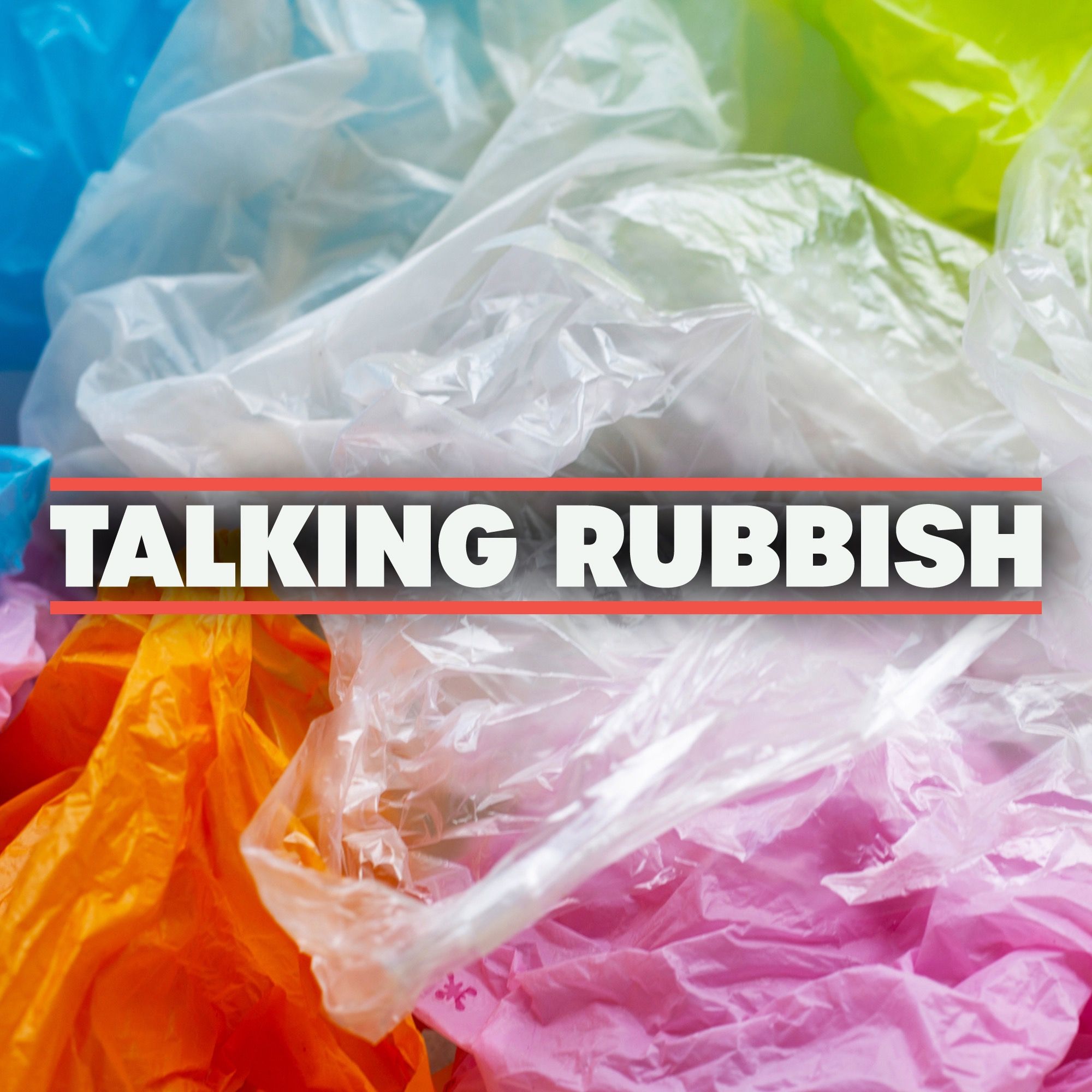
Recycling flexible (or soft) plastics has long been a challenge; costly, labour-intensive, and difficult to scale. In this episode, we explore how major UK brands came together to fund groundbreaking work that helped make supermarket collection of these plastics possible, paving the way for household recycling in the future. James and Robbie, two of the key drivers behind the initiative, take you behind the scenes to share the challenges, breakthroughs, and impact of this collaborative effort. Plus, are sponges rubbish or not, is incineration really better than landfill, and why is James angry at a piece of bubble wrap?

 Apple Podcasts
 Spotify
 YouTube
 Amazon Music
 Castbox
 Podcast Addict
 PocketCasts
 Recycling flexible (or soft) plastics has long been a challenge; costly, labour-intensive, and difficult to scale. In this episode, we explore how major UK brands came together to fund groundbreaking work that helped make supermarket collection of these plastics possible, paving the way for household recycling in the future. James and Robbie, two of the key drivers behind the initiative, take you behind the scenes to share the challenges, breakthroughs, and impact of this collaborative effort. Plus, are sponges rubbish or not, is incineration really better than landfill, and why is James angry at a piece of bubble wrap?
Join hosts James Piper and Robbie Staniforth as they delve into the world of recycling, hopefully having fun along the way. One thing is for sure, they will talk absolute rubbish from start to finish.
Sign our very first pootition: https://you.38degrees.org.uk/p/poo
We would love you to join our community on Discord
Special thanks to our sponsor, Ecosurety
To get exclusive videos and clips, follow us on Instagram, TikTok, X, Threads or Facebook; @rubbishpodcast or YouTube: @talkingrubbishpodcast
Or you can contact James and Robbie with questions or just general rubbish musings using the email address talkingrubbishpodcast@gmail.com or by texting them via WhatsApp
Relevant links and reports mentioned in the programme can be found on the Talking Rubbish Linktr.ee
Transcripts and episodes can be found on the Talking Rubbish website
Timestamps:
Making flexible plastic recycling valuable - 03:01
Additions and corrections - 30:12
Rubbish or Not: sponges and loofahs - 39:10
Rubbish News - 44:04
Is incineration better than landfill? - 47:47
Residual Rubbish - 53:23
Music licence ID: 6WPY8Q4O2RPFIOTL
Hello, welcome to Talking Rubbish, a weekly podcast, delving deep into the world of recycling and discussing the truth behind snappy headlines and one-sided stories. In this episode, we will explain how we made flexible plastic recycling work in the UK. Our sponges, rubbish or not, and I have a question about incineration versus landfill. I'm James Piper, author of the Rubbish Book, and I'm joined by Robbie Standinforth, my far from rubbish friend. Hi Robbie. Hi, James. Hello, BIMFluencers. Aha, BIMFluencers! We've settled on that, have we? Finally. We can make a whole series of naming our listeners, but here we are. A resounding victory. At the time of recording, 86% of the votes was going to BIMFluencers, with the remaining 14% going to wasters. I think we still had people saying, Why do I only have two options? You know, people really wanted all of the options, but we had to we could just do this forever if we weren't careful.
SPEAKER_00We'd just be debating it for the rest of time.
SPEAKER_01Yeah, and what was so funny is obviously we put this poll out, right? We've been talking about this for weeks. People could have come in at any point with stuff. The day that episode went out, so episode 57, and I said we're putting the poll out, suddenly everyone came out of the woodwork with more suggestions. Oh, what better suggestions than we'd had before? Possibly. I mean, I had Rich texting me, not Rich from Leeds, a different Rich, texting me on the morning going, I've just thought of Trashenistas. Whoa, okay, trashonistas. It's a bit of a mouthful though, but it's quite fun. It's pretty good. It's pretty good. And I got a phone call straight away. Lately, Alice must have been one of the first people to listen, because it was very early in the morning. I got a phone call from Alice Rackley from Polytag, who was our interview for episode 25.
SPEAKER_00Oh, great, yeah, Alice.
SPEAKER_01She was saying she'd just listened to the episode, and she wanted to let me know that in the office they refer to our podcast as circulars. Ah, circular laughs. That's very good, yeah. So every week they say, Have you had your dose of circularfs yet? Which I really enjoyed. That's quite nice. I think you're adding to that, Nate. I think the laugh. Definitely, yeah. We love it. Okay, enjoy that circularf. So yeah, we're gonna stick with influence, but thank you everyone who messaged me, and thank you to all our influencers. Here we are. And this episode's actually going out on the 11th of September, I think. And I just thought it was a good moment to mention that we're actually gonna be at RWM next week. So if you don't know what RWM is, it's the biggest conference in the waste management calendar. It's in Birmingham at the NEC. So if you're around, come and say hello. We're gonna be talking, I think, on the 18th of September, so the second day at 11 45.
SPEAKER_00Come see the live show. Are you excited, Robbie? Yeah, can't wait. We've got to get planning. We'll have plenty to say, James.
SPEAKER_01Yeah, I think we're thinking we might do like a review of a year of talking rubbish. Like our favourite story is what we've learned. So if that sounds like something you want to hear, come along. Trash talk. Last week we talked about the economics of waste. And one of the pieces of plastic that really has tricky economics in terms of being worth anything, is flexible plastic. And so I thought this week it would be worth telling the story of the Flexible Plastic Fund, which was our way of increasing the value of flexible plastic in the hope of getting more of it recycled. And you will know, because it's developed very fast, that most supermarkets in the UK will take flexible or soft plastic. But that story has a beginning, and because we were heavily involved in that story, I thought it would be worth us just exploring that. And part of this is because our interview next week is actually with Gareth Morton from EcoSurety, who we both know very well, Robbie.
SPEAKER_00Yeah, work with him closely on a daily basis.
SPEAKER_01And Gareth is also the infamous litter picker who occasionally comes up in interviews where people talk about Gareth's litter picking. He is a self-confessed flexbert.
SPEAKER_00That's good. That's good.
SPEAKER_01I love that flexbert. So yeah, this is gonna be a bit different this episode. I think it's gonna be a bit more personal, a bit more of our story of how we started flexible plastic, my insights into kind of making it happen, basically. And in a couple of days, we're both off to the House of Parliament to broadcast the results of the work we've been doing, right?
SPEAKER_00Yeah, no, it's gonna be really exciting. We're not gonna quite get into the curbside trials of collections in this, but I'm sure Gareth will in the interview.
SPEAKER_01Well, yeah, I think we saved that for Gareth. So what we're gonna do is basically in this episode, we're gonna spend 25 minutes telling the story before it got to Curbside Collections. And this is a story I was heavily involved with, and it's been so much fun just going back over my emails, my archive, and going, when did things happen and what were we doing and how did it all feel?
SPEAKER_00Oh wow, we got a timeline and everything.
SPEAKER_01Yeah, we got a bit of a timeline. Yeah. Oh, great. So the story actually starts a bit before I was part of it. And this was MS, which is Marks and Spencer's, for those not in the UK. Although there are MSs around the world though, Robbie. I mean, I found some while I was travelling, so there's quite a few, I think, in Malaysia. So anyone listening from Malaysia is going to know what MS is. But basically, it's a department store with like a food hall and relatively upmarket, I would say, in the UK. It's quite nice food. It's grown very rapidly over the years. And they sort of developed this thing called Plan A. They were probably, I would say, the first major food hall department store to come out and say sustainability is going to drive everything we do. And they had an excellent team there who delivered a project called Plan A, which was about, you know, working out how they were going to be the most sustainable retailer they could be. And so they've always kind of been pioneers, and they were pioneers when it came to soft plastic or flexible plastic. Just call it flexible for this section, but you know what we mean.
SPEAKER_00Yeah.
SPEAKER_01And they partnered, this was in January 2019, they partnered with Dow Chemicals, who make plastic, amongst other things, and Wastebusters, which is an environmental comms CIC. So they do comms for children in schools, things like that around recycling. And they installed take back bins in 10 MS stores to collect up flexible plastic. And the bins were really cool, they were made from recycled plastic, they were like large black bins that were actually made of recycled, I suspect flexible, but certainly other plastics as well. Made by an organization called Stormboard. So it was a bit of a circular story. You know, we've got these 10 bins, they're made of the stuff you're putting in the bin, and we'd like to start collecting it. One of those was actually in Bristol, so I remember in these early days going and seeing that and taking flexibles back to MS.
SPEAKER_00Oh, okay. You were actually an active participant in those early days.
SPEAKER_01Definitely, yeah, I was very impressed. And I think they were the first. January 2019 was certainly very early to be doing this stuff. So on the 6th of June 2019, so six months later, I actually received an email from Kevin, who listens to this podcast. So hello Kevin, introducing me to Sarah from Dow Chemicals and to this project. So they were saying, look, we've got these 10 bins in 10 MSs, and we're looking at how to commercialize it basically, and we want other retailers to do the same. That was the logic of why they were bringing me in, because I was pretty commercial and I I could think about business models and how we could develop this. And I had contacts at the retailers to go, okay, I think we can grow it.
SPEAKER_00Okay, and Kevin was at MS at the time, so he was thinking, how can we be bigger than just Marks and Spencer's collections?
SPEAKER_01At the time it was called Epic with two Ps. Extended Plastic Partnership for Innovation in Circularity. But I think they just wanted to call it Epic. I never actually asked. They work backwards, maybe. I think so. And the plan, they were like, we know one of the Ps is going to be plastic. That's all we know. So yes, Epic. And the plan was to work with companies who turn plastic into furniture, so including Stormboard. As I said, they were making bins out of this plastic. So there were opportunities to turn it into benches and things like that. Really, it was actually just a group of passionate people who really wanted to collect flexible plastic up and wanted to do it at scale. And when they brought me in, we basically laid out two goals. I had two goals that I brought to the table, which was if we're going to do this, then we need to prove or provide enough evidence that consumers have access to flexible plastic. And if we can prove that, then we could get an OPRL recycling label. Because to get the OPRL recycling label, you needed 75% of the population to have easy access to a bin. So that was the first objective. And the second objective was to convince government to mandate collection from curbside by proving that this material could actually be recycled if you collected it.
SPEAKER_00And that was really the sort of holy grail, wasn't it, to say, look, we can't just keep burning this stuff. We've got to try find something usable to do with it.
SPEAKER_01Yeah, it was fun really exploring that. It was like bringing recyclers in, saying, what could we do with this, really trying to work out where the material could go and how it could get recycled. And at the same time working out how you were going to collect enough of it for it to be viable. It was a really interesting project. As MS were involved, that's where we held our meetings in the canteen at Head Office.
SPEAKER_00Yeah, I remember those. They were so passionate. That's the one thing that I remember is that they were really like trying to explore so many different ideas about how they could actually make a big difference, much bigger than just these ten bins in a sort of pilot that they had.
SPEAKER_01And it was clear that the gap really was the commercials. It was all going to be so expensive if you couldn't justify kind of the recycling at the end of it. And what was the point in collecting all this plastic and not recycling it? So it became clear that was the gap and that was what was needed. So after a few meetings, lots of phone calls, emails, discussion about how it was all going to work, we held a big workshop at MS Offices in September 2019. We brought in some behaviour change experts, so people from the Sheffield University as well. And my goal, as I said, is trying to build this commercial model to make the project viable and find recyclers who would take the flexible plastic. So at the same time in 2019, I was being called into Co-op's head office as they were planning to develop flexible plastic collections. So I kind of had it from both sides. I had this group from MS who were going, we need this to work by growing into other retailers. I had Co-op go and we want to introduce this. And everyone knew, I was talking to both, and it was very clear that Epic was something that could help co-op because we were basically having the same conversations with the same recyclers doing the same thing. I was working with Co-op, as I've said on this podcast before, around what they were going to call it, what the bins were going to look like, and where the waste was going to go. Their collections were eventually launched in 2021. Tesco were also launching at the same time. I was having conversations with Tesco, but it was a bit different. They were doing a bit more of their own thing. They had an excellent team who were developing it. And I think it's fair to say that Tesco were a bit of a pioneer in this space as well. Because what they were doing, MS were saying, well, we'll trial it in 10 stores. What Tesco were doing is saying, actually, we'll try it in most of our stores, if not all of them.
SPEAKER_00Aaron Ross Powell Yeah, all their big super stores. You know, they were thinking the out-of-town ones where people were in a car and would find it relatively easy to put their soft plastics in the back of their car and drive it to their supermarkets.
SPEAKER_01Aaron Ross Powell Of course, because Tesco have lots of stores, they also got lots of engagement. And Tesco very quickly had to switch from small bins to massive cages, which they have today. I know my local, or big Tesco, has like four massive roll cages outside that are constantly filled with flexible. And I think what Tesco found was that it wasn't just customers coming. I think they anticipated customers would come and drop off a bag. What started happening was community groups coming and dropping off the plastic. So they ended up with this way more material than they expected. And I think it probably was quite overwhelming, I think is probably the word they would use.
SPEAKER_00And I've noticed now that the Tesco's are actually bringing those bins inside the store. So at my local Tesco, they're bringing them inside. And I think that's a response to try and make sure that people aren't just quickly pulling up and tossing a bag over the cage. They're putting up a barrier so that these community groups can still take them, but so that they're getting a much better quality of material.
SPEAKER_01It was probably around this time people were unwrapping their produce in the shop. There was that phase where people were like At the checkout. I don't want this plastic, you should have it, I'm going to unwrap at the checkout. So some of this will have been a reaction to look, we can't have that happen, and actually we'll just give you a place to bring it back to when you come back with your shopping. Around October 2019, I remember attending a conference, I think we both did actually, where Tesco were talking, and I think they said they were collecting about one tonne a week, which at the time was a huge volume of flexibles. A lot of the supermarkets will be doing that kind of volume now, if not more. I think in the latest news story I saw for Audi, they were doing like 300 tons a year, is that right?
SPEAKER_00Yeah, that's about right. I mean it's it's really the fact that that's so much packaging because of how light it is. I know a ton doesn't sound a lot, but when it comes to how much flexible plastic will be in there, how many items of groceries will have gone into it, it's a huge amount.
SPEAKER_01So for me, I was building towards the launch of this concept. You know, we basically had retailers starting to do stuff. So Tesco had started to launch, co-op had started to launch, MS had done some trials, and we were building towards actually how do we join all these groups together into one commercial model? For lots of reasons. I mean, the reason for doing this is because we should unify our recycling comms rather than everyone trying to find a recycler, let's do it all through one channel. Let's make sure the funding works so that it's fair for everyone. And really, let's make sure there's transparency in the recycling process. That was that was my key driver to make sure we knew where all the plastic was going and we could then report on it if people asked. And that's where we've got to today, which we'll talk about in a second. But that was that was why we were putting this all together outside of the supermarkets. And at the beginning of 2020, so the 28th of January, we got, I think it was around 100 people together to introduce this concept at the Museum of Brands in London. I love the Museum of Brands. There's something amazing about just kind of standing up talking about the future of how packaging could work surrounded by all this old packaging. It's really, really cool. So, as I say, the plan was to have a group of people, a group of companies who would fund the recycling. So the idea was to get together kind of the brands who put flexibles on the market to fund it to make sure recycling was happening in a transparent way, in a clear way. I'm not going to go too much into the recyclers today, but if you want to hear a bit more, I would go back to episode 13 where we talk about flexibles and we talk about some of the recycling versus incineration. That's definitely worth looking into. But my job was to go and find funding for recyclers in the UK. Some of them are not around today, but I suspect that's a story for another time. There's lots of stories I could tell around flexible recyclers. But that wasn't the only issue. Once we'd launched and we'd started getting traction and we'd started getting brands saying, Oh yeah, we we want to fund this, COVID then hit. And, you know, this was that prime COVID time, 2020, everything sort of ground to a halt. And all these amazing people who'd been working so hard on this project just didn't have time to look at it. They had to go back into their own businesses.
SPEAKER_00Yeah, and that's the reality of like trying to bring a voluntary commitment together that when the going gets tough, people really do need to focus on their business. And this kind of put in the under the microscope the fact that it would start as a voluntary thing, but it needed to become a system that was mandatory, i.e., that eventually all this stuff would be collected from people's homes, because there are there is turbulence in the world and without it becoming mandated, things do just slow down. Luckily, obviously we'll go on to it, things bounce back. But yeah, there was definitely a pause around that time.
SPEAKER_01So during 2020, I suddenly found myself in charge. So having gone from a supporting role of finding the recyclers and dealing with the commercials, I was suddenly in charge and I had to work out what we were doing with this epic thing. And it was fairly obvious that actually it needed a bit of a rebrand and it needed a bit of a kick to explain better what it was, because the word Epic wasn't doing it. And you can tell I was in charge of naming it because it's got the word flexible, not soft plastic.
SPEAKER_00Okay, that's your preference, is it? Definitely.
SPEAKER_01Yeah, I think we talked about that before on the podcast, haven't we? So in October 2020, I rebranded Epic to become the Flexible Plastic Fund. And we went out with a much clearer and simpler mission. COVID had just simplified it completely down. And I realised the simplest thing to do was basically to create a pot of money that could sit in a bank account, a separate bank account to anyone else's bank account, so we could have this separate pot of money that recyclers could claim from when they proved recycling had happened.
SPEAKER_00And that was the key thing proving that recycling has happened rather than just putting bins around the place to collect it. It was about showing that it went all the way through to the end of the process and actually got recycled.
SPEAKER_01Aaron Ross Powell And the logic here was the economics of recycling are so important. We've talked about that before. Just the last couple of episodes have been all about the economics of recycling. And flexibles don't have the same value as like PET or HTPE, or these more rigid equivalents because they're lightweight, they're harder to recycle. What we felt we needed was this fund, this pot of money that could sit there. And if a recycler demonstrated true recycling and transparency, they could claim some money per ton. We were talking about sort of like three to four hundred pounds a ton that they could claim from the fund that would then boost the value of that recycling and make it more viable. And that was that was what we did basically.
SPEAKER_00Aaron Ross Powell And this is more than like a cherry on top. This is actually trying to make it genuinely viable to take this stuff because it needs to be sorted into different piles before you then think about what are you actually going to do with it. So rather than thinking about a cherry on top for the recycler, this is the the mechanism that actually made it viable for them to start tackling this new type of packaging to recycle.
SPEAKER_01Yes. So we decided to start with a million pounds, just because A, it sounds nice, and B, it gave us 3,000 tonnes at about three to four hundred pounds per ton. And we felt that actually three thousand tonnes was as much as the supermarkets could collect at that time in a year. So even if everything met our transparency standards, even if everything was could be proved that it was being recycled, we still felt a million pounds would be enough money to boost the market.
SPEAKER_00It's so funny how the maths comes out and you just go, right, this is the target. Let's raise a million pounds between all these brands, and that'll be enough to make some meaningful progress.
SPEAKER_01Yeah, absolutely. And a million just sounds great, doesn't it? It does, yeah. We brought together Unilever, Pepsi, who make Walker's Crisps, Nestlé, Mars, and Mondalay's, and asked them all to contribute to the million pounds, basically. And they all agreed to it. And they are the biggest flexible plastic producers in the UK, and they really want to see their material recycled, so they saw the value in creating this fund. So in May 2021, we launched the fund. And having launched it and proved commitment and proved that there was a load of money to help recyclers out, in June 2021, so just a month later, we achieved my first goal. That initiative and launching that initiative allowed OPRL to then see alongside all of the supermarket bins, 75% of the population had access to bins because supermarkets have been working really hard on developing and putting bins in store. And the fund allowed people to be sure that recycling was going to happen if they claimed from it. And so OPRL announced that they would create the recycle back at supermarkets label that we've talked about a few times, and you guys will see on your packaging. And to quote the press release at the time, they said based on supermarket and brand plans and supported by the £1 million Flexible Plastic Fund, OPRL has confidence that collections will be widely available across the UK. As I say, to more than 75% of the population. So having achieved the first objective, which I was so excited by, I think in 2022, I was actually struggling to find because the government have rebranded consistent collections to simpler recycling, so it's actually really hard to find the old legislation. But I think in 2022, the government decided to make flexible collections mandatory from households by 2027.
SPEAKER_00Yeah, and this was my baby because this was part of my job being a policy expert was to chat to government officials and the civil servants to show them what the route map was to collect all of this stuff and to show that it genuinely was going to be recycled. Now, the difficulty was that the some of the uh criticisms were that we don't have the infrastructure to recycle it all. But it's chicken and egg because we didn't collect enough to have the infrastructure. To recycle it all. And so what do you do first? You start collecting it and assessing it, which is what we chose to do through these supermarket take back schemes, to then prove that it could have a viable end market, as they say, and be a viable endeavour. And that gave the government enough confidence, as you say. It still hasn't quite come in yet. We've still got another two years to go or year and a half. But yes, it looks super likely that they are going to be mandatory.
SPEAKER_01And so at this point in the timeline, supermarkets are bringing in lots of collection points, and now we have loads. And so we're collecting so much stuff. You know, we've got Sainsbury's, Morrisons, all the supermarkets have switched their carrier bag points into flexible collection points, and we now know that's where we are today. We have this pot of money that potentially could fund that if recyclers are happy to prove that they then recycled that material. I think it's fair to say, because it's quite hard bringing together those five big brands and getting them to agree on something, you know, and I think there's quite a lot that goes into that behind the scenes. I think just to give some insight into that, where there was really healthy conflict and just worth our listeners thinking about, what would you do in this situation? Is you have a pot of money and you've created this million pound pot that you want to pay out if recyclers prove their recycling. Now the media could pick up on one of two stories there. Either your million pound never gets spent because you've made your recycling process so strict that no one can ever claim any money from it because you're not allowing anything to happen to that waste that isn't true recycling. Like a crisp's becoming a crisp packet, and you set up your rules so stringently that the money never gets paid out, and then people say, Well, that's greenwashing because you created a fund and you didn't pay out. Or you make it quite loose because you want to pay out the money, and then you accidentally fund some fraud, and someone finds that the fund has funded fraud. That is a really hard equation to solve because how do you get that balance right? We had brands who wanted the money spent, that was the whole point of it. We didn't want it to be greenwashing. It was the money's got to go and the need to have a very strict recycling process.
SPEAKER_00There were so many media stories at the time. Nothing to do with the flexible plastic fund we were involved in, but generally about flexible plastics being found in the wrong place, in the wrong country, not being recycled as had been claimed. And so there was definitely a lot of nervousness, a good nervousness in a way, to have quite a high barrier for entry for these recyclers to have a big burden of proof before they got paid.
SPEAKER_01Yeah. And I think we got the balance right. I think we did a good job. But it does mean that recyclers took a few years to claim from the fund because basically we set up a system with greenback to track all of this waste and for people to report on all of this waste. We set up a system to do that. And it took a while for recyclers to get to the point where we feel comfortable enough to accredit that waste. And I think our first, in terms of the retailer side, so not the curbside side, which we're going to talk about a bit more in a second, but also next week, from a retailer side, the first people we supported, I think, was Audi in February 2024, and we accredited 87 tonnes of their material, some of which had been collected during 2023. And as I say, at the time they were saying they were collecting about 300 tons a year.
SPEAKER_00And that was just the reality of putting up these barriers and this new system in place that tracked where the material went and how much actually ended up being recycled. Because the reality is that not everything that gets collected ends up being recycled because some of it is contamination that the recycler, in this case, with Aldi, it's J PLAS, is the recycler. They can only make bin liners and crates and trays out of certain polypropylene.
unknownTrevor Burrus, Jr.
SPEAKER_01Polypropylene with crates and trays, and then polyethylene becomes the bin liners. And we talked about Jplass before because they also, I think, take the waste from co-op and they're a UK-based recycler that is heavily invested in flexible plastic, doing amazing work in terms of sorting out what they can recycle, you know, and what can't be recycled will get incinerated. We talked about that in episode 13. But a lot of what we take back to a supermarket is suitable for recycling. We'll talk a bit more about that next week when we talk about the reporting that's coming out of Curbside, because actually a lot of our waste, a lot of our flexibles, is just good plastic that can be recycled. And this project has now evolved. It now is not just five producers, it's not just those five we mentioned, it's now, I think, around 20 of the largest producers of flexible plastic that contribute. The fund has grown from a million to over three million, I think. I must admit that it's at this point in the story where I've launched the million pound fund and we've started it that I decided to go and travel the world and step back from this job. And it's probably the saddest I've ever been to leave something because I just knew it was about to become something amazing.
SPEAKER_00It was just getting exciting when you left. I mean, I'm sure it had been exciting bringing it to kind of fruition and all the work you did to bring all those people together. But then we started to see the results pay off just after you left. Yeah. Classic.
SPEAKER_01And maybe because I left. We'll never know. So, yes, I handed the project over to Robbie and I was off, and we recruited Gareth, who we're going to interview next week. And uh there's so much good stuff that comes from this story that we're gonna talk about next week. So, you know, there had been meetings before I left to discuss curbside collections, but it's fair to say that you guys absolutely skyrocketed it, and I'm really excited to tell part two of this story next week with Gareth when we talk about what happened when we introduced Curbside Collections. So, just to give a bit of a preview to that, the Flexible Plastic Fund, as I said, grew to over three million pounds, partnered with a lot more stakeholders, so companies including Recoup, Suez, Zero Waste Scotland, organisations like DEFRA and RAP, to fund what is now called Flex Collect, which is a program that collects flexible plastic from curbside and today has around 10 local authorities that it works with collecting flexible plastic from a huge quantity of households. And these insights that we're getting now are being shared around the world and helping our own government to develop EPR. So it is absolutely mad to think back to the canteen in MS where we said, how do we make flexible plastic work to today, where flexible plastic is in most supermarkets in the UK, those collection points. Recyclers are actively taking it and recycling it. And as we said before, some of it isn't getting recycled, but there is now a market, there is a route. When it is collected from Curbside en masse in 2027, we will need a hell of a lot more recyclers. And we're not there now, there is a big gap. But we've started that journey, and next week we will tell the complete story of Flex Collect with Gareth. I'm very conscious in this section, I haven't named many people, and that's because there's just so many people to name and thank. And I'm about to just say thanks to a few. Robbie, I think you're gonna say thanks to a few, but we're definitely gonna miss some people off. So, you know, thank you to everyone who's been involved in the Flexible Plastic Fund. I would like to publicly thank Sarah Perard, Laura Fernandez, Kevin Vice, Jessica Palegi, Thomas Webb, Katie Newham. You are all absolutely amazing. And these are the guys who were involved in it right from the start, who brought me into it and just helped me develop the scheme and gave up so much of their time. You were all awesome to work with, absolute rock stars in the recycling industry.
SPEAKER_00And also there's too many still involved to thank, but I'll pick out just a couple. Alison and James at Nestlé, Gareth at PepsiCo, Severine and Helen at Unilever, Kelly and Richard at Mondalays, and of course Liz at Mars too.
SPEAKER_01Additions and corrections. We've had a few additions come in. We've actually got too many. I've had to bump some to next week, so I'll explain that in a second. But the first one was the single-use carrier bag charge. I mean, we basically reported this news too early, Robbie. Oh no. Well we've got something wrong, have we? No, I don't think so. We just said we didn't know what was causing the increase in single-use carrier bags. Well now we know. Okay. So in episode 56, your news was that single-use carrier bag use was increasing, and we couldn't quite understand why, and I was guessing maybe it was Delhi. Well, we've had a look at the data, and it is a rise in online shopping. So if you order shopping online, it might be delivered in a single use carrier bag.
SPEAKER_00Oh gosh, I thought online shopping was going to make it more efficient to get your goods to your door. Seems not.
SPEAKER_01No. Well it's funny, I was talking to one of our influencers the other day actually who said they were ordering meat and they unticked, you know, there was like a box saying, Do you want it delivered in a bag? Like they were doing their weekly shop and th they said, I don't want my shopping delivered in a bag. But the meat that they ordered came in a bag anyway. Which presumably is like a health and safety thing. But even if you don't want a bag, you might get one. So I've been on the radio talking about this since we last met Robbie and since we last talked about this, and it is clear that people do not understand this data. So it's worth going back to episode four, which is a bit of a deep dive in it. Remember, the summary is bags for life that you buy in supermarkets, so the thicker bags are not counted in any of this data. Remember, Waitrays and Tesco have said they don't sell any bags. Well, I saw someone buying a bag in Tesco the other day, so we know that's not true. So this means that there's a huge amount of data missing around carrier bags. And my view is we need that data for the bags for life, really, to know the truth of how much plastic we're using. And I feel most sorry for co-op actually. When I was on the radio, they said, look at this massive increase in co-op bags, and I was like, Well, that's only because co-op used compostable bags, which we use as food caddy liners, so they're useful, and we talked about how good that is before. Those compostable bags count as single-use bags because of their thickness. So they always look like they've sold loads, even though they're compostable. And again, I wish the government would just split that data out a bit. Also in episode 56, we talked about aluminium, and I was talking about an organization called Meadow, and they're a product that they'd launched to basically sell soap and detergents in aluminium cans that had altars that you would keep at home. In that episode, I said a drinks container for aluminium will have carbon impact about two to three times that of a PET bottle. Ooh, okay. Meadow were listening, which is great. Oh yeah. And Ross, who's their chief sustainability officer, got in touch to say it's a actually a little bit different with personal care. And bottles used in personal care can weigh two to four times more per millilitre than beverage containers.
SPEAKER_00Okay. And so what does that then mean in the statistics?
SPEAKER_01Isn't that crazy? That a soap bottle could just be so much thicker that it could be two to four times more plastic per millilitre.
SPEAKER_00Wow. Yeah, I suppose they are thicker than like the average PET drinks bottle, yeah.
SPEAKER_01And this is why we have to be so careful with lifecycle analysis and emissions, because you know, I was comparing drinks containers there. Their argument is, well, if you compare the category, actually it's different. And their research showed that if you use a container two to six times, as in you use the outer two to six times, they can have lower carbon emissions than plastic. Now, of course, that's their own data, so we take that with a pinch of salt. But I do love this kind of message I received because it helps to demonstrate how complicated everything is, and how you can't just go, well, aluminium's worse because of this. Well, it's completely different depending on the format and and what you're using it for and where the aluminium's come from, whether it's recycled content or not, whether it's virgin. It's it's a a really, really complicated thing, a lifecycle analysis.
SPEAKER_00Yeah, you don't seem to be able to just compare apples with apples, do you? It's like never a direct comparison, and you can always have a convenient, one-eyed look at what you're comparing.
SPEAKER_01Finally, Robbie, would you like to apologise to our influencers?
SPEAKER_00Oh no, what have I done wrong?
SPEAKER_01How do you pronounce that massive fast fashion retailer that you talked about in episode 57? Shine. This really made me laugh. So Ellie was listening to our episode, she went, Who the hell is Shine? What's he talking about? And I was like, he's talking about that fast fashion retailer, and she was like, What, shein? Or sheen or however you want to say it, there's loads of ways of saying it. None of them are shine. What? And this became so controversial. I got so many messages on the morning of episode 57, including from Alice Rackley, who was also telling me about circular's. I put this on our Instagram stories to ask people whether they agreed with you it was Shine or Shane or Sheen. And again, 86% of people, which is actually the same amount of people who voted for BINFluencer, 86% of people felt you were wrong. It's not shine. It's not shine. And the funniest thing is in the notes, you put pronounce shine and then in brackets, short for she inside.
unknownOh.
SPEAKER_01How could short for she inside become shine?
SPEAKER_00I think we've just discovered that I've got m minor dyslexia here. I've got my letters all in the wrong place. I know.
SPEAKER_01Is this the moment to get that diagnosis?
SPEAKER_00I don't think I have. That's I'm I'm trying to cover myself off there. That's not true. Shein. Anyway, there we go.
SPEAKER_01That is a big correction. Is it sheen or xien, though? Come on, we're not going to be able to do that. You can have either.
SPEAKER_00Oh, okay. But you just can't have shine.
SPEAKER_01Because it's she inside, I think Xiin's good. Shein, but Sheen is good. So we've done a lot there, we had loads of additions and corrections, and actually I had some stuff back from people who were at the Plastic Treaty discussions as well, who were actually there who gave me some really cool insight. But because we've done too many there, I'm just going to save that for next week. Good teaser. As always, we'd like to take a moment to thank our sponsor, EcoSurety, who are on a mission to rid the world of unnecessary packaging. They help brands navigate the tricky world of extended producer responsibility, but that is not all. They also collaborate on some incredible recycling projects and consumer awareness campaigns for those tough to recycle materials. If you're an organization looking to make smarter packaging choices, check them out at ecosurety.com. And remember, there's two things you can do to really help us grow. You can tell people all about talking rubbish. That is really helpful. And people are listening to you, Robbie. Someone actually put on LinkedIn, I'm obeying Robbie and sharing talking rubbish.
SPEAKER_00Wow, the first person who's ever listened to me.
SPEAKER_01That's great. So thank thank you, Jane, for doing that. And also you can leave us a review. And if you do that, you could become Robbie's review of the week.
SPEAKER_00Ah, great. Well, this one comes from Smokey Da Dog. It's a five-star one. And so uh strapline, informative and fun. Who would have thought there was so much to learn about recycling? As an American living in the UK, it's exciting to see all the ways that recycling is more ingrained in the culture, and this podcast is helping me to get up to speed on a lot of the finer points. Plus, these guys are goofy. And not in a when are you actually going to start talking about the topic type of way? I love it. Goofy. I'm a big fan. I like that as a description. Well, I'm glad we're actually talking about the topic and not annoying people with our goofiness.
SPEAKER_01And if you want to hear more of our goofiness and see us, you can follow us at rubbishpodcast where we put up clips. You can email talkingrubbishpodcast at gmail.com, or you can WhatsApp us. Also join our Discord. It's the easiest way to engage with us and listeners of the show. And the link to all of those things is in the show notes, as is the link to our petition, which is about banning the word composable on dog poo bags, which can't be composted. Please take a second to go and sign that. And Robbie, just while I've got a minute at the end of this, I have come across another podcast that I wanted to share with you called Greening Up My Act.
SPEAKER_00Okay, new one on me. Sounds on brand, though, for us.
SPEAKER_01I think the listeners are gonna love this one, yeah. It's for people who are sceptics of sustainable products. It's a podcast that helps you spot greenwashing in the wild, which we like. It's hosted by the seasoned marketing writers Tiffany Verbeck and Kat Cox. And the sustainability podcast reveals the sneaky tactics brand used so you can avoid getting tricked by green hooey. So it's good, yeah. If you want to explore the truth behind green products, just check out Greening Up My Act.
SPEAKER_00Oh, that's pretty helpful.
SPEAKER_01Rubbish or not. We had Catherine on WhatsApp. Now, Catherine was very specific. She actually asked about shower loofers, you know, the plastic netting that you get. She was asking about that. I've sort of expanded it.
SPEAKER_00The plastic one, not the natural one. Is that going to become an important characteristic of this section?
SPEAKER_01I think it might be, yes. But I've expanded it to include sponges. So it this is the sponges and loofahs section.
SPEAKER_00Okay, fine. This sounds like we're going to be getting into greening up my act territory here. Which is the ethical product you should be using?
SPEAKER_01It's a surprisingly big question, as I've come to learn. So you've mentioned there, Robbie, that there's sort of we talked about plastic, not natural. What do you think? Rubbish or not when we talk about those plastic ones?
SPEAKER_00I mean, you just can't recycle that, so it's got to be rubbish, hasn't it?
SPEAKER_01Yeah, I think likely to be contaminated on all counts, sponges, you know, the green sponges that you get. They're made of a mix of plastics. Like, you know, you get like the rough bit and the soft bit. Yeah. The way they achieve that is just different materials all mixed together, and so and you're using it to clean off food, so it's going to get all contaminated. I'm not convinced you can recycle any synthetic sponge or loofah. It is a bit like the netting around oranges, the ones that are in the shower.
SPEAKER_00Yeah, the ones that are in the shower. Just the plastic one that you use. And don't people even use that orange or lemon or lime netting to make them at home?
SPEAKER_01Yeah, if you're doing that, you can go in your flexible plastic bin at your supermarket. I uh I'm not sure I'd be putting the one from the shower in, but that's just because I don't know what it's made of. Like I know what orange netting is made of and lemon netting. I have no idea what a plastic loofer is made of, and I couldn't find out. You'll never find it on a supermarket bin saying please put in the plastic loofah. So I personally think that probably just belongs in the general bin. Now, when we talk about natural products, it's a bit different. So did you know the loofah is actually a member of the cucumber family?
SPEAKER_00Really? So if you wrap it in plastic, it lasts longer?
SPEAKER_01I'm sure it would today. It's basically dried out cucumber or the a type of cucumber, and then it's cut up. So that's kind of that loofah that you get, you know, the hard it's basically the inside of a dried-up member of the cucumber family. And then if you have a natural sponge, it's likely to be a sea sponge. And I ended up on this whole Reddit thread, it was a vegan thread on Reddit about whether killing an animal to get a sponge is better or worse than plastic. And it is fascinating. Obviously, the vegan guys were like, use plastic, don't kill a sea sponge, because they're animals.
SPEAKER_00And the just stop oil guys were like, No, use the sea sponge. Wow, two environmental groups going loggerheads on this one.
SPEAKER_01Exactly. You go across to the sea sponge websites, and all the reviews are, I'm so glad I'm not getting plastic. It is oh, I'm not going to enter this debate. I'm going to say a phrase that I've wanted to say since episode one of this podcast that I knew eventually would appear, you do you, hun. You do whatever feels right. But your choices are plastic or animal, or you go in the middle and have a loofah, which is a ex cucumber, which probably feels like the best thing.
SPEAKER_00Okay. Ex cucumber it is for me then.
SPEAKER_01Yeah, ex-cucumber. Anyway, if you do choose to kill an animal, a cucumber, or a sponge to avoid plastic, I would suggest a natural one is biodegradable and compostable just like any plant is. So, you know, if you wanted to, I think you could just put that in your home compost bin and that would disappear over time. I do have a bit of an outstanding question with Bristol Waste on whether they can go in food or garden waste. I'm not sure. Maybe garden. It's like a plant, isn't it? You put a cucumber in your food waste. I don't know. So to be confirmed, that will be a future addition and correction, I'm sure. Now there was a news article I found about people freshening up their plastic sponges in the microwave to keep them lasting longer. Don't know if you've ever done this.
SPEAKER_00No, never heard of it.
SPEAKER_01And then this news story was about people causing fires as the sponges weren't damp enough. So I wasn't going to mention this on the podcast because I thought, oh my god, I don't want to be responsible for fires.
SPEAKER_00Yeah, fires in people's microwaves.
SPEAKER_01But then I went in the supermarkets last night to look at their sponges, and on one of the packets it said, put it in the microwave for 30 seconds in a container of water. So really? Yeah. So even though there's a lot of news stories saying don't do this, it will cause fires. If you want to freshen up your sponge and keep it lasting longer, which is probably a good thing, the key is to put it in the microwave for 30 seconds or less and to put it in water so that it is damp and isn't likely to start fire and super. Your sponges when they're in the microwave. Rubbish news. I had some rubbish news that I think follows up nicely from our episode last week, which was about plastic recycling in crisis. Kohlberg Kravis Roberts, who bought Virador for 4.2 billion in March 2020, is trying to sell it for 7 billion.
SPEAKER_00Oh, okay, fine. So it's part of a bigger picture.
SPEAKER_01Yeah, I'm not gonna lie. The news on this makes for very depressing reading. So since the 2020 acquisition, Virador has expanded its incineration operations. And Virador Polymers, the plastic division, has been posting losses for a number of years to the tune of like tens of millions. The energy side had a profit, the recycling side didn't. So what have they done? They've closed down their recycling side. That's going to make their books look much healthier. So when they come to sell, the private equity firm backing them can make as much money as possible. You know, so it's just very disheartening. And actually makes me more emboldened with my views of maybe bringing recycling into public ownership. Because this is the problem. When it's backed by PE firms and investors, they're always going to just chase the money. You know, that's the life of a PE firm. And what they're looking for here is the things that make a profit, not a loss. When really the whole group is making a profit, and if they were just keeping it going as a profitable entity, they could keep the plastic recycling open. But if you're looking to maximize your investment and sell it, then you're going to get rid of the bits that are making a loss. And unfortunately, in this case, that's going to impact UK plastic recycling. Trevor Burrus, Jr.
SPEAKER_00And in their defense, they're just saying, well, look, there's just no money in plastic recycling. So in my news this week, also on plastic recycling of sorts, the plastic packaging tax income for the latest tax year, which was 2023 to 2024, has dipped by 3%. And so some are suggesting that this is good news because there's more recycled content being put into our products and therefore less companies paying the tax. We're not so sure though, are we, James?
SPEAKER_01This is bonkers. At a time where we're reporting that recycling is really hard and plastic recycling is really hard. How can you have a situation where the plastic packaging tax isn't collecting as much? That it just doesn't make any sense.
SPEAKER_00Yeah, and I saw a post on this one saying that 1.6 million tonnes of plastic packaging with 30% or more recycled content would be 500,000 tonnes. So that doesn't exist in the UK, that recycle content source. So it's got to be coming in from abroad. There's also questions around are all of the producers declaring correctly is HMRC following up and auditing everyone, or just UK-based companies that are really easy to look at their books? Remember, there's no test, there's no like material test where you can pick up a piece of plastic packaging and check it's got recycled content. The only way for this to be audited is to go through the books of where you've sourced the plastic. You can't pick up an item. So it is quite a complex issue. And do not believe the hype that just because plastic packaging tax income has dipped by 3%, that things are rosy for plastic. Who would be a recycled content procurement specialist at the moment? Tough times.
SPEAKER_01Are you ready for it? Yeah. Okay. So the message was from Marriott, who I'm assuming is the mum of our emailers. So apologies if I've got that wrong. I wasn't sure of the relationship, but I'm assuming she says they recently went to Bewilderwood, which I think is in Norfolk, and Danny and Emily noticed on the bins it had said that none of the waste goes to landfill. Some of it is sent off to create renewable green energy. And in brackets, this is a 10-year-old recounting this story, so it might be slightly out. But when I Googled it, gaskals deal with their waste, and Google AI said they incinerate the waste which was better than landfill. They would like to ask, is this environmentally best? She then goes on to say, they would actually like to report everyone to Advertising Standards Authority, but they've settled for emailing instead. I love this. False advertising, very good. Ten-year-old influencers that are just like, we're going to the Advertising Standards Authority. This is absolutely what we want to happen because we're talking rubbish. Thank you, Danny and Emily. So this is something we touched on in episode 16, but it's such an awesome rubbish question that I wanted to take a moment just to reflect on it again. Which is better, incineration or landfill? Also, I'm just going to say now I know we've got 10-year-old listeners. I'm really sorry for saying devil's bottom last week. But like the rude version of bottom. We'll do that again. I genuinely didn't think we'd have a 10-year-old fan. So, you know, great to be chatting with you, Danny and Emily. So I think it's really good. We've just done an episode on landfill, which has shown they're more complicated than perhaps people first think. Yeah. I think that's really good. In episode 16, if you remember, we discussed the fact that incineration produces a third less emissions than landfill because landfills break down slowly over time. So if you have waste in a landfill, it will produce a third more emissions than incineration on average, because it's just taking longer. However, this is with a small amount of plastic in the mix. So about 15% of that waste being plastic. If it rose to just 20% plastic, then it would have the same emissions as landfill. So the problem is as this country uses more plastic, it can make incineration worse than landfill quite quickly. So it's a really difficult one to answer because it completely depends on the mix of waste going into the landfill or going into the incinerator.
SPEAKER_00It's like what we said earlier about life cycle analysis all over again. It's really hard to compare the apples and apples unless you've got so much data and information to analyze to decide on whether that's the right decision or not.
SPEAKER_01You've got other things to think about, like incineration saves space, because you're just turning waste into heat and so it's essentially disappearing or becoming ash. So it saves space and it's efficient. You can do it a bit more locally than landfilling, particularly with so few landfills open at the moment, you'd have to be doing a lot more transporting. But one thing we didn't talk about that I've been pondering since we did episode 16 and our landfill episode is losing resource. So one of the downsides to incineration is we're taking something and burning it and it's going away. And actually, I wonder whether there's an opportunity, particularly since I've been doing more research on landfill mining, because I'm quite interested in that now. I wonder if we could store waste. So could we take the plastic out of the stuff that's going off to the incinerator and store just the plastic in a landfill to mine in the future to recycle in the future? That would make the incineration better because you're reducing the percentage of plastic which reduced the emissions. And in the future, you could be mining that plastic only landfill to recycle the plastic as recycling improves in the future. It's just a just a thought that I'm kind of adding into the mix in terms of which I think is better. Maybe a mix of the two.
SPEAKER_00I'm always the advocate for deal with the problem now. Let's find a viable way to get it recycled now. But you're right, James, as we find with all of these closures, it isn't very viable in lots of instances to recycle that plastic. Maybe it will be in the future.
SPEAKER_01Yeah, so to be honest, Danny and Emily, thank you so much for writing in it. And I think you can make a case for both, which is why whenever we talk about landfill versus incineration, we always get a lot of emails from both sides from people who support it or against it. I think generally I prefer incineration as it's making our waste useful. So that's probably the side I land on. Personal preference. I was intrigued as to how much waste Bewilderwood actually recycled. So I did ring Gaskell's who actually said they didn't do it. Oh. Contrary to what the email said. So I then phoned Bewilderwood, who loved the question, Danny and Emily, and put me in touch with Suez, who managed the waste. We have contacts at Suez, and that is also an outstanding question. So hopefully I'll find out soon how much waste is actually recycled from Bewilderwood, because it sounds like a place you like.
SPEAKER_00Oh, more additions and corrections to come on that one then.
SPEAKER_01Yes, and I've got to leave you with how they finished their email, which is absolutely amazing. P.S. We recently had our windows replaced, and Danny asked if they had a waste carrier's licence. Thankfully they did, and he was very pleased he asked. He got this knowledge from your podcast, so thank you. They love your podcast and are keeping us right.
SPEAKER_00Oh, brilliant. And we re-mentioned that last week on uh rubbish news, didn't we? That £600 fine. So well done, Danny, for making sure your uh folks didn't get that fine.
SPEAKER_01I was frustrated this week. So I've mentioned a couple of times, I sometimes get some of my food delivered from Mindful Chef. It's a home delivery meal kit. We've talked about that before. And a few weeks ago, I can't remember which episode it was, I said they'd sent me a Citizens of Soil sample, which was basically some olive oil in a Nopla like plastic pipette. And you ate it? Yes, it was pretty tasty. I decided that was mostly because the oil was tasty. Because that was a free sample in the Mindful Chef kit, it was basically the pipette in a cardboard box. And the cardboard box was seaweed itself, you know, speckled like seaweed. So that was pretty cool. Obviously, Mindful Chef decided this free sample was going so well that they decided to include some of this Citizens of Soil oil in one of their recipes, which is very unusual. When they normally send me recipes, they just assume you have oil, so they don't send you any.
SPEAKER_00Okay.
SPEAKER_01But obviously, with this they have a partnership and they were thinking, oh well, the free sample's gone well. Let's include a recipe that drizzles oil on top, and we'll send another pipette. But because this wasn't a free sample, because it was a crucial part of the recipe, they sent it wrapped in so much bubble wrap. Oh no. It was unbelievable. So you have a pipette that's knoppla, that is not plastic. We've discussed that before.
SPEAKER_00Yeah. And you can still eat the packaging at the end.
SPEAKER_01Yeah, and you can still eat the packaging. In a cardboard box, in four grams of bubble wrap.
SPEAKER_00Oh, you've had the scales out again?
SPEAKER_01I had the scales out, and that is 40% of the product weight in bubble wrap. I mean, you can see the picture there, Robbie. I'll put it on social media, so at rubbish podcast if you want to see it. It is a shocking amount of bubble wrap. Oh, shame. I haven't emailed Pierre yet, but I'm gonna have to email him to see what he thinks about this because I was pretty shocked. Dismay.
SPEAKER_00And my residual rubbish this week comes from my holidays. I went to River Dart Country Park on the outskirts of Dartmoor, I think. And it's won lots of awards, so I had to give him a shout out. This one definitely made me smile here to ear because they had like an eco trail around this whole park that you could go on. We were camping there, so took my daughter. We saw things like solar PV panels and those kind of things. But the one that really stood out from a practical point of view while we were camping is that they had food waste. And this is amazing. Always camping, you try and separate the easy stuff, cans of beer I may or may not have been drinking, bottles of wine I may or may not have been drinking. I think you're getting to see a theme here of what was happening on my holidays, James. But usually food and flexible plastics all just get jumbled up in the same bag, and anything else that's not very straightforward to recycle all goes together when you're camping. It's just too much hassle to separate it all. But I noticed that lots of different pitches of people who must go there regularly, this is the first time I had been there, actually had those caddy liner bags with food waste, and they were tipping them into a very well-used food waste bin. So well done, River Dart Country Park, who are taking simpler recycling very seriously and providing food waste for anyone camping there. I can highly recommend it.
SPEAKER_01Did you put your camping loofer in there? Do you have a loofah when you can't? That feels quite up market.
SPEAKER_00No, that's definitely too upmarket for me, James.
SPEAKER_01But maybe. That is glamping. The definition of glamping is having a loofer when you have a shower. As always, thank you all for listening. Thank you for the reviews and engagement. We love getting this opportunity to do the podcast. And I'm hoping, I don't know, because we're just recording and I don't really how do I describe it? I don't really think while we're recording. You can tell, James. I just keep talking and then I listen back to it and go, oh yeah, I quite enjoyed that. I hope this kind of more personal episode was okay. And you know, I just wanted an opportunity to talk through something that we worked really hard on and that has demonstrated some absolutely amazing results. And I'm super excited to hear the interview with Gareth next week, when I equally won't be thinking, and we will get this opportunity to go through Flex Collect a bit more. So join our Discord, follow us on social media at rubbishpodcast. You can email talkingrubbishpodcast at gmail.com or you can WhatsApp us, and everything we just discussed can be found on our link tree. The details of all of those things are in our show notes.
SPEAKER_00Just one thing from this week. Go tell a friend that there was three percent less tax take through the plastic packaging tax, but actually that's probably not true. So tell them something and then immediately tell them afterwards that it's probably not true. And then say you found out on talking rubbish and that they should be listening directly to it as well. Thank you very much, Robbie.
SPEAKER_01So, all that's left for me to do is say see you next bin day. Bye. Bye.