39. From plastic to paper - a greener move or greenwashed myth?
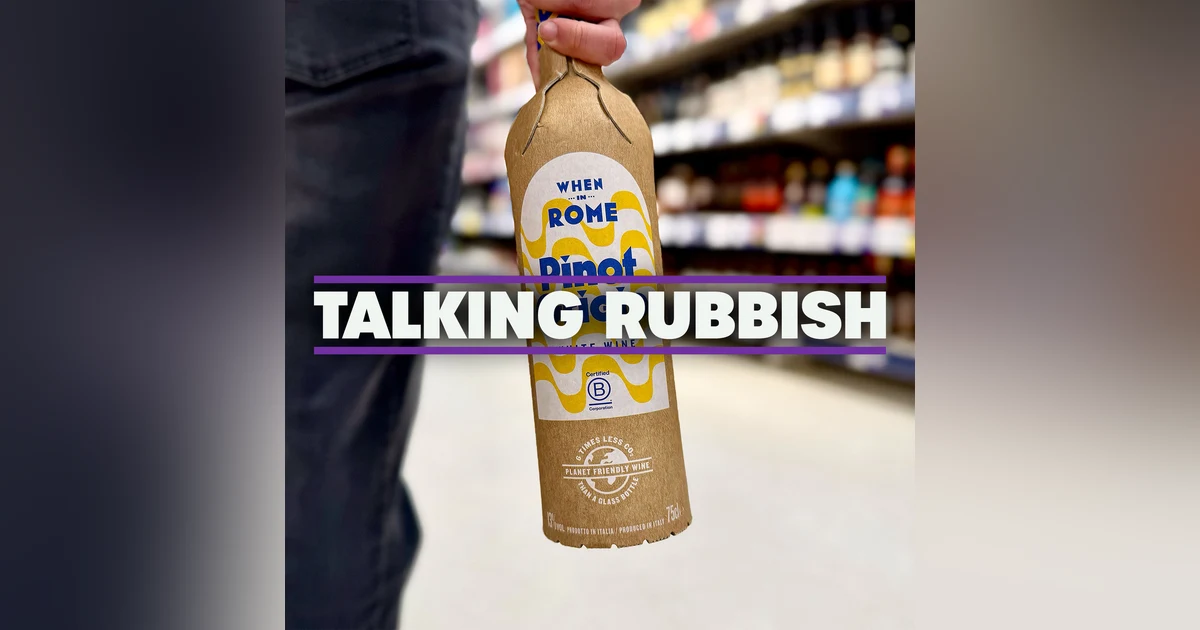

The shift from plastic to paper is gaining momentum as brands look for more sustainable packaging, but is paper really the better option? This episode digs beneath the surface of the paper trend, uncovering hidden environmental concerns like increasing monoculture forests, water use and the carbon impact of paper. Plus, we also dive into how textiles are recycled, whether tracing paper is rubbish or not, and just how much of your average milk bottle is made from recycled plastic.

 Apple Podcasts
 Spotify
 YouTube
 Amazon Music
 Castbox
 Podcast Addict
 PocketCasts
 The shift from plastic to paper is gaining momentum as brands look for more sustainable packaging, but is paper really the better option? This episode digs beneath the surface of the paper trend, uncovering hidden environmental concerns like increasing monoculture forests, water use and the carbon impact of paper. Plus, we also dive into how textiles are recycled, whether tracing paper is rubbish or not, and just how much of your average milk bottle is made from recycled plastic.
Join hosts James Piper and Robbie Staniforth as they delve into the world of recycling, hopefully having fun along the way. One thing is for sure, they will talk absolute rubbish from start to finish.
We would love you to join our community on Discord
Special thanks to our sponsor, Ecosurety
To get exclusive videos and clips, follow us on Instagram, TikTok, X, Threads or Facebook; @rubbishpodcast or YouTube: @talkingrubbishpodcast
Or you can contact James and Robbie with questions or just general rubbish musings using the email address talkingrubbishpodcast@gmail.com or by texting them via WhatsApp
Relevant links and reports mentioned in the programme can be found on the Talking Rubbish Linktr.ee
Transcripts and episodes can be found on the Talking Rubbish website
Timestamps:
How are textiles recycled? - 11:19
Should we be making bottles out of paper? - 20:58
Rubbish or Not: tracing paper - 53:29
How much recycled content is in a plastic milk bottle? - 55:18
Music licence ID: 6WPY8Q4O2RPFIOTL
Hello, welcome to Talking Rubbish, a weekly podcast delving deep into the world of recycling and discussing the truth behind snappy headlines and one-sided stories. In this episode, we will discuss how textiles are recycled, whether bottles should be made out of paper, is tracing paper rubbish or not? And I have a question about the amount of recycled content in a milk bottle. I'm James Piper, author of the rubbish book, and I'm joined by Robbie Stanaforth, my far from rubbish friend. Good morning, Robbie. Morning, James. First up, I want to talk about the Birmingham bin strike. Oh yes, I've heard lots about this in the last couple of weeks. I know, we possibly should have mentioned it quite a while ago, actually, because it's been going for a while, hasn't it?
SPEAKER_01Yeah, no, it's been a few months now, I think.
SPEAKER_02Yeah, I think officially it began on the 11th of March. So you know, about just over a month ago. But I think stuff has been happening since January. And what has happened is basically people are striking, and they're striking because the council wants to remove the waste recycling and collection officer role. Okay. The council came back and said, this is a role that doesn't exist in other councils. Why do we have it? So that's what's happened. You know, there was this kind of promotion that people could presumably get in Birmingham that wasn't available in other councils, so the council decided not to have it anymore. But that led to people not being paid as much. And according to CRWM, there was some confusion about the impact of it. So Unite, again, the trade union was saying £150 people could lose £8,000 a year, but the council said the maximum is £6,000 and it affects just 17 people. So super messy on both sides as to having an impact. The impact this has actually had is on residents of Birmingham because there is now nearly 20,000 tonnes of rubbish uncollected in the city centre or in the across the city.
SPEAKER_01It's crazy. I was in Birmingham just yesterday and yep, I saw a few overflowing bins, surprise, surprise, out on the street in the city centre. I also heard an anecdote of someone, and and this speaks to what we've talked about previously, James, taking their rubbish to their parents or their, I can't remember whether it's parents or in-laws, to just literally because they've got piles of recycling and they desperately don't want to mix it all together. So yeah, uh shipping it across the country, I think from Birmingham down to their parents in the south-east somewhere to recycle it.
SPEAKER_02Such a good point. I'm so glad my mother-in-law doesn't live in Birmingham. She'd be coming down every other day. Oh my goodness. So the council declared a major incident. And that means that the council can now call on other resources. Because one of the biggest problems they had was the picket line, so the people striking were actually preventing trucks getting in and out, and it reduced the trucks to about one vehicle an hour. So actually, what was happening is more waste was being created than could possibly be collected. It obviously increases fly tipping because people see an opportunity to mix with what's on the street and get away with more. So it's got a compounding effect. We know that things like rats have been appearing. Anyway, they've brought in some mobile vehicles. Now this is what was reported. Mobile vehicles. And I was thinking, aren't all vehicles mobile? What's uh Yeah. What does that mean? I don't know. I think what it was was rubbish trucks that they parked in like car parks and said, bring your waste to us. So they became like unofficial tips, you know. It was like bring your waste to these trucks. So ironically, they weren't mobile at all. Like I think you had to be mobile to the vehicle. To get to the vehicle, okay. Yes. Now that proved very popular, people people went and used that. So that was easier than the trucks driving around trying to find all the rubbish. Anyway, I suspect by the time this episode goes out, a deal will have been reached. But it is such a good example of how quickly things can unravel if we don't have strong waste management and like how it's so important that we all have councils that are kind of picking up our waste regularly because in a month you can get to you know 20,000 tons in this example.
SPEAKER_01Yeah, it's such an important job they do, and I know in many other parts of the world you know you take your waste to the end of the street and you have municipal bins, but in the UK we are so used to someone coming to our front door to pick up our recycling and our rubbish that when it suddenly doesn't happen, there is no backup plan really, or at least the backup plan is paper thin. So it just goes to show what a brilliant job all of those recycling officers and operatives do collecting our waste every week.
SPEAKER_02Yes, thank you, councils who pick up all of our rubbish. Additions and corrections. So we had just yesterday actually, Emma on Facebook. Thank you, Emma, who was commenting on our coffee cup social media clips that we put up on Facebook. And she listens to our episodes and she was like, You didn't mention enough about people not using a coffee shop. Oh, exactly. And I think it's a fair criticism. I think we spent the whole time talking about how you could recycle coffee cups or bring your own reusable cup, but of course there is an alternative which is you just make your coffee at home and put it in a thermos. And we didn't really say that enough. So I think there's just a little reminder there that we always need to make sure we're covering every part of the waste hierarchy, you know, and we're talking about reduction and elimination as well as recycling. So that's a fair challenge to us. So we really appreciate that, Emma. Thank you. And just a reminder for everyone that you don't have to use a coffee shop if you wanted to really go down the reduction route, then it's probably better than bringing in your reusable cup to just make your coffee at home. Now I had a question for you, Robbie, about EPR, because the Chancellor has recently gone through her spring statement, and there was something quite curious in it. I know lots of people in the industry were writing about this. They've basically reclassified EPR. So it was a department expenditure limit. Yeah. I don't know what that means. I'm assuming that means basically it it exists to pass on to councils to reduce expenses, which is what it was always meant to be, EPR. They've changed it from that into a tax. Now this feels to me like just a reclassification, just so the government can say they're taking in more tax and make the books balance a bit better. But I'm not sure. Does it matter? Is there is there something here that I'm not seeing?
SPEAKER_01Yeah, well, I think the biggest thing about the change from a department expenditure limit is that a tax isn't ring-fenced. So while it does get set aside within the department from environment, when it goes to the local authorities, they can actually spend the money as they wish. Now, hopefully they will be spending it on waste and recycling, and most likely they will be, because every year they have to submit to the scheme administrator PAC UK, this is how much money we spent on recycling, and therefore how much we need to be remunerated from all of the brands. But technically, it is a tax rather than a separate hypothecated, as the grandiose term is called, or earmarked, pot of money. And I think that's because when it goes to the local authorities, they can just use it how they use all of their other income that is raised from taxes.
SPEAKER_02Never heard you say the word hypothecate before. I've grown a hypothecate in my garden, I think.
SPEAKER_01It just means ring fence. But yeah, this is the big thing. It's very hard to hypothecate taxes so that whatever it's raised for, it gets used on. So for example, the plastic packaging tax, it's obviously raised from plastics industry, but it's not used on recycling more plastics or collecting more plastics or having less plastic litter, it just goes into general taxation and could get used on anything like social care, policing, etc.
SPEAKER_02Got it. I mean it feels like a slippery slope to me. I thought it was just a naming thing, but if it gives people the right to not use it on recycling at a time where councils are co so cash-strapped, that is a concern to me. And I and I guess added to that, they appear to have added an additional £200 million to the cost a year. So, you know, a billion pound over five years just casually dropped in as an addition. I mean, if I was a brand, I'd be pretty annoyed right now because as we've been saying on this podcast, EPR is a really important thing. It's going to drive recycling. And now you're in a position where local authorities can take the money, do what they want with it, and it's going to cost you a lot more.
SPEAKER_01Yeah, and all of those recycling officers don't like it either, because they want the money to keep running the services, but they're going to be in a battle with their peers across all of the other very important public service departments trying to decide where the money gets spent.
SPEAKER_02Yeah, and I guess the final frustration is it was reported that it won't improve recycling before 2030. That's something the government are now saying. Now, I sort of agree with that. I don't think EPR does improve recycling in isolation. I think the two things that truly improve recycling are simpler recycling. So us all collecting the same. We've talked about this a number of times, us having food waste uh weekly, us having cardboard paper separate to the other materials. That will improve recycling, no question. So simpler recycling and the RAM, which is the thing that says whether packaging is good or bad and changes your fees on those. I mean, those two potentially have more of an impact on recycling than just a blunt instrument, which is the fees.
SPEAKER_01Yeah, no, you're exactly right. And we're going to talk about that recyclability assessment methodology and the modulated fees a bit later on when we come to talk about the paperization of packaging. It's a vital instrument, and and uh the spoiler alert is it's not absolutely perfectly designed, but more on that later.
SPEAKER_02As always, we'd like to take a moment to thank our sponsor, EcoSurety, who are on a mission to rid the world of unnecessary packaging. They help brands to navigate the tricky world of extended produce responsibility, which we've just talked about, how tricky it potentially is. And that is not all. They also collaborate on some incredible recycling projects and consumer awareness campaigns, which is why they have offered to support our podcast. If you're an organization looking to make smarter packaging choices, check them out at ecosurety.com. And just as a reminder, we really, really appreciate reviews. They help us to grow. They are just the best thing you can do for us. So we will continue to do this podcast. And all we ask from you guys listening is just to leave us a review, particularly if you're on Spotify or Apple, because those are the two where the reviews really make a difference. But any other platform that you can review on is really useful. So if you could do that, that would be amazing. Thank you. Also join us on Discord where we have a forum where we all get together to talk about all the things rubbish and recycling and share pictures of bins and all sorts of things. You can find the link to our Discord in our show notes. You can also follow us at rubbishpodcast across social media. You can email talkingrubbishpodcast at gmail.com or you can WhatsApp us. And again, all the links to all those things will be in the show notes. So just have a look there if you want to see them. And there's also a link to our link tree where you can find any of the reports that we discuss in today's episode. Robbie, we're wrapping up textiles, I believe. I actually just had a comment on Insta this morning from somebody. Somebody called Wendy. Thank you for commenting. I'm just loading up my phone to see what was commented because it really was this morning. I think it's Wendy saying, uh, we really need EPR in the fashion industry. It's so easy to collect textiles, much harder to do something useful with them, which I think is a really interesting comment just on the conversation we've had recently. Oh, sorry, there was a there was a more button. Let me hit that. Oh, okay. Let me hit that. This is a good point. It gets juicier, does it? Well, it's a nice bit. Yeah, so textiles are a massive waste stream that's out of sight, out of mind. So uh thank you for that comment. That's uh really nice for us to just bring to the episode, just as a reminder that textiles are super important. And you know, EPR in voluntary, like tyres, things we've talked about in the past, is going to be really important. EPR can't just be focused on packaging. I think we would both agree with that. But let's get into how they're recycled and then maybe we could do another episode on kind of how we could do voluntary EPR.
SPEAKER_01Yeah, well, backing up that comment, yes, textiles are really easy to collect, and yes, they are also very difficult to recycle for lots of reasons. They're complicated, as we've talked about in previous episodes. I split this into two key areas. The first one we're gonna look at is natural fibres, and I've got an example of that, and then we're going to look at man-made fibres. I've also got an example there. So, firstly, in terms of natural fibers, really cotton and wool are the two biggies when it comes to textile, and I'm gonna focus on wool because it has been well recycled for years and years. Places in Italy have been doing this since the 19th century. So, wool recycling is a very mature process, and around 6% of wool is mechanically recycled, so you can get recycled content in a wool jumper, you can even get 100% recycled wool jumpers, and there's two ways that they're recycled into closed loop and open loop, and I'm going to explain a little bit about what that is. So, the first thing is all of these clothes are sorted and all of the attachments need to be removed. So things like buttons, zips, anything that's not wool has to get removed from the garment. So, recommendation if you're buying a wool jumper, just get one that pulls over your head and doesn't require a little zip or buttons, etc. Get something with no attachments on because that makes it much easier to recycle. So these are often washed and then shredded to expose those wool fibres, and a process that they call carding, which is basically as I understand it, they align the fibres once it's been shredded into in a like parallel direction to make sure that all the fibers are kind of in a uniform length and thickness and all uh facing in the same direction, and then they use a yarn machine to basically pull at the fibres and spin yarn out of it in exactly the same way as they would spin yarn originally from wool, which is obviously sheared off a sheep or an alpaca and laid out and then pulled and spun into yarn. So it's a very similar process once you've gone through the this shredding and most importantly this carding to kind of align those fibers.
SPEAKER_02I went and saw alpaca wool being made into cloves. Oh, did you? Where was that? Uh it must have been Peru, mustn't it? I I'm trying to think. I went South America. It was definitely South America. And I learnt all about oh, what's it called? It must be vacuna. V-I-C-U-N-A. A type of alpaca that produces wool that is so soft. Oh, really? Did you buy any products? No, it was really, really expensive. And also just like when you're doing a year and a bit around the world, you've got to be so careful what you're packing in your bags.
SPEAKER_01Yeah, okay. I'll pack up my bags. Alpaca my bags. You missed the opportunity then. Damn it. Beat you to it. Yeah, so but so basically it's the same as the process you will have seen, James. It's that you know, you do get clumps of wool basically that are kind of stretched out and then spun into this yarn. And wool mark actually, which is the little logo you see that certifies that it's genuinely a wool product. I think it's global, but it's definitely UK-based. I can imagine the little yarn ball symbol that they use. They also certify recycle products. So when you're going to buy a wool jumper, for example, you can actually check to see whether it's got this sub-branding of the Woolmark logo that says either recycle content inside or fully recycled wool jumper. Uh so that's something that you can look out for. And that's what we'd call a closed loop. So it's basically wool jumpers going back into wool jumpers. But there's also open loop recycling as it's called. And this is things that will go into insulation, wadding. Basically, it's shredded, but because it's such a mix of different types of wool, colours, and fibers, it doesn't get spun back into yarn. It's a lower quality generally. And what that will get used for is to make building insulation, stuffing for things like mattresses and pillows. I'm sure you will have seen a cross section of a mattress in a waste site, and that's basically much better to be using recycled uh natural fibres like cotton and wool rather than you know harvesting and putting it straight in. So moving on, that was natural fibres, and an example there, it's been done for years and years and years, and I do very much recommend that you look out for those recycled wool products. There's also man-made fibres. Now, this is a much more sort of fledgling industry, and coming back to the point made on Insta, that you know it's easy to collect the stuff, it's very hard to do something with it. Polyester now is being recycled in the UK, and this is a type of plastic, uh, has lots of positives to it, uh wicking properties, which helps uh wick away sweat. So lots of sports clothes are using polyester. However, it has huge downsides too, such as it creating microplastics. So it's very important that this stuff gets collected and once sorted and the same process of removing the zips and the buttons and anything that's non-polyester, it can go to a place that I found that opened just last year in Kettering, Northamptonshire in the UK. A place called Project Reclaim is the site, and they're using the same technology that's used to recycle plastic bottles and to granulate them to do the exact same thing through shredding and then granulating polyester textiles, and it's Europe's first textile to textile recycler, and and that's because they use the heat extrusion process to turn these textiles back into pellets, and then those pellets themselves can be heated again and extruded again into long strings, so rather than chopping them as we've explained in previous episodes into little pellets, you just leave them as a long string of plastic, effectively, um polyester, and those then are kind of fluffed up and spun into yarn in the very same way you would uh spin wool or cotton or other materials to make yarn out of it. So it's a very similar process to PET plastic bottle recycling, and it is the same sort of molecule as PET. Which is why lots of clothes include like recycled PET, yeah. That's exactly right. So fleeces quite commonly, like workware fleeces, quite often. The claim is that plastic bottles have gone into making them. And the plastic bottle industry would say, get your hands off our plastic bottles, we want to use them to make new plastic bottles. And so hopefully, with the opening of this plant, more polyester fabrics can be used to create new polyester clothing.
SPEAKER_02And just as a reminder, when we launched this podcast, we were kindly asked to do an e-covert advert. And that e-covert advert was all about rewearing our clothes. And that was one of the biggest things. So they passed me some stats when we were doing that. So every 30 seconds, a hundred items are thrown away prematurely, destined for landfill that could just be in our wardrobe. And if we extended the life of our clothing by just nine months, we could reduce the carbon water and waste footprint of each item by 20 to 30 percent. And one of the things they realized was that washing clothes accelerates the aging process of the clothes. So the best thing to do is to re-wear our clothes before we wash them. So give them a couple of uses, then wash them because that's doing more damage than us wearing them. Trash talk. Today we're asking the question: should we be making bottles out of paper? I think it's fair to say the packaging industry is changing. Things were so simple back in the day. Wine came in glass bottles, crisps came in metallized plastic, and my quality street wrappers used to scrunch at Christmas. I know that Nestle, listen, and I just I know that people get really angry about their quality street wrappers being made into paper. But come on, guys, it's so much better. So much better. Anyway, let's not be angry about paper quality street wrappers. That's good. That is a good move. Anyway, not anymore with the rise of paperization. So this is a bit of a trend, isn't it, Robbie? Packaging is starting to move towards paper, and we're seeing that particularly well in drinks bottles, it's most interesting, I guess. The reason we wanted to talk about this today is because next week we're hoping to put out our episode that we recorded live at the package. Innovations, which we recorded with Diaggio and we talked about their paper bottles. So we thought this would be a good bit of an opener for that discussion to talk about this trend towards packaging moving to paper and whether that's a good thing or not.
SPEAKER_01And do we know if paperization is a word? Or have we just made it into a word?
SPEAKER_02Every time I put it in my notes, it got underlined in red. I don't think it's a word. But in the packaging industry, we all say paperization, don't we? Paperization, yeah. Yeah. So I don't it w it'll get added to the Oxford English dictionary after this, surely.
SPEAKER_01Let's get it in for 2025. Paporisation. It could be in that top five added, couldn't it?
SPEAKER_02So this week we'll just do a bit of a general. I mean, there will be lots of episodes about paperisation, that's for sure. I was emailing some people in the industry who were like, gosh, how many episodes are you going to do about this? And they was like, there will be a lot, but let's start with some basics and then we can do this interview next week with Diageo, and then over time we'll just add it add in a few episodes every so often when we see innovations.
SPEAKER_01Yeah, sure.
SPEAKER_02What have we done so far? Well, in terms of things being made of paper, I guess we've done quite a lot on paper straws, and we've obviously done lots on coffee cups. It's definitely worth having heard those episodes first. But if you haven't listened to them, I guess the general synopsis is to make paper grease-proof, waterproof, hygienic, whatever you need to do, you will need to add a layer. And typically that layer is made of plastic. We're seeing more materials come into the market, but ultimately you need to create a barrier between the paper and whatever you're putting in the paper. And as we said in our interview with Rob, which was episode 35, a polyethylene lining, so a PE lining, keeps the value of the packaging to the recycling industry. Composable aqueous coatings increase the likelihood of incineration and reduce the value. In the recycling industry, what we're trying to do all the time is take a material, recycle it, and create something that's valuable. And the more valuable, the better in terms of investing in collection and sorting and recycling, because it's then disconnected from market dynamics. And we're going to talk about this actually in the rubbish question when we talk about milk bottles. So let's remember this conversation because it's a good example of how when the market moves against you, recycling just shuts down. And so you need to make sure that you're creating something that's valuable. And so if you add a coating that stops that paper being valuable, you know, it means it can't be dyed, means it can't be used as packaging, then there's no point doing it. And so some of these innovations are really interesting. You know, we talked about Knopler in episode 20, where they're making liners out of seaweed. Super interesting, but again, limited to what it can be used for, can't be used in long shelf lives. Everything, every piece of packaging has a downside. You just have to find out what that downside is.
SPEAKER_01Yeah. And and is it fit for the purpose you need, basically? Because yes, they have a downside, but like what applications can they like perfectly perform in?
SPEAKER_02Exactly. So I guess the question is with this trend towards paper packaging, is paper packaging use increasing? Because you would expect that to happen, right? More paper packaging's out there, you'd expect the use to be increasing. Well, the data tells us that that's not really happening. And it sort of is a bit of a bell curve. So I had a little look. Back in 2019, so 2019's sales year, we sold about 3.1 million tonnes of paper in household packaging. In 2020, that went up to 3.2 million. In 2021, that went up to 3.3 million. Now that those 100,000 increases each year is a direct correlation to COVID. We all got more cardboard boxes delivered to our house. We all had home deliveries from restaurants that were suddenly using cups and lots more cardboard. So our houses had a lot more cardboard in them. So we had that kind of a hundred thousand ton increase each year. And then since COVID, so 2022 came back down to 3.2, and 2023 came back down to 3.1. So it goes, you know, 3.1, 3.2, 3.3, and then down again 3.2, 3.1. So it's just a really neat symmetrical bell curve over the last year.
SPEAKER_01So it's come back to what it was in 2019? Basically, yes. Okay.
SPEAKER_02Now that will happen because you'll get some light weighting. So over time, people will lightweight cardboard and they will use less of it and they'll work out how to do that. And so you will see some decreases that way. There's also just a shift towards cheaper plastic. We know that the plastic volumes are increasing. So even though we're all talking about how bad plastic is, we all still buy more of it. And we've talked about that before being a real issue. We'll talk about that again, definitely. You know, some of these paperisation activities are quite niche. If you remember with the quality street box, we were giving that away as a prize and I had to go and find one, and I had to drive halfway across the country to find one because it was only in select Tesco stores. So even though these things get a lot of media coverage, which they do, because people like talking about it, it's actually not that easy to then go and find a paper quality street box. You've got to go quite far. So we do there are these kind of differences in what we experience in the media versus what we can actually buy as consumers. So this brings me on to a study that was done in 2023. And I think we may have mentioned it on the podcast before, but I'll just do a little um summary of it. Basically, it's a study that was published in the Journal of Consumer Research, and it was called Paper Meets Plastic: The Perceived Environmental Friendliness of Product Packaging. And the reason this is very interesting is because it demonstrated that the average shopper believes that paper is the most sustainable choice. Thank you. And this is a problem I've talked about this loads. There's a it's the problem if you demonize a packaging type, right? If you say plastic is bad, automatically what happens without exception is all the other materials must be environmentally friendly. So when we think about an aluminium can versus a plastic bottle, we just think, oh, aluminium must be better because we've demonised that one material. And as we've said many times, it's way more nuanced than that. Every material has its problem. Plastic is the one that's been focused on because plastic's problem is its environmental damage. Now, even yesterday, this was so interesting. We walked into co-op last night to get some groceries, and they had a coffee installation, like a Nescafe, you know, marketing installation at the end of an aisle. And in that installation, now I have no idea why this has happened, they had a refill pack, like a nice Nescafe gold refill pack, 150 grams, so a pouch that you could buy, you know, to fill your glass jar with. For whatever reason, next to each other, they had a paper one and a plastic one.
SPEAKER_01Oh wow. What a plastic?
SPEAKER_02No, no, the same pouch, both pouches. One said paper on it, one said plastic, both said 97% lighter than the jar. Which is weird because I'm not sure they're gonna weigh the same. But anyway, it's not I didn't buy them both. And I just said to Ellie, you know, we're doing this a paperization episode tomorrow. I said, Which one do you would you pick out of these two? And she said, Yeah, I would go for the paper one. And I was thinking, that's interesting, isn't it? I think I would go for the paper one as well. So it's just it was just a complete coincidence that last night I experienced this with two of an identical product, exactly the same format, one made of paper, one made of plastic on the same installation, and I'm still not 100% sure why that happened. Anyway, so this study took 4,103 people through eight experiments to see what they felt was eco, and it was basically the same as what I've just described. You know, they were given paper and plastic and asked which ones were better. And the way that this was done was they were given plastic only, and it was like obvious, clear plastic. Paper and plastic mixed together, so I would think about like a little you know, like when you buy like a pasta box and it's got a little cellophane window or a plastic bow.
SPEAKER_01Oh yes, like spaghetti or whatever, so you can see the quality of the spaghetti.
SPEAKER_02So think like that when I say plastic and paper, and then just a paper one. Now, consumers, when it came to the difference between plastic only and paper and plastic, consumers felt the mix plastic and paper was 42% more eco-friendly.
SPEAKER_01Wow. Than plastic on its own. Than plastic on its own.
SPEAKER_02Now this is weird. Consumers preferred a mix of plastic and paper to just plastic, even when the plastic weight was identical. So we are talking about an item that weighed more. It had more packaging on it. One had just plastic, one had plastic and paper, but the same plastic. And they thought that was more environmentally friendly. And the study found that consumers generally felt paper was good, plastic was bad. The greater the paper, the more environmentally friendly. The way you could counter a plastic-only wrap, the way you could make that better is by putting a minimal packaging sticker on it. So in that instance, it was better than plastic and paper together. So if you had just a plastic wrap that had a minimal packaging sticker on it, that then was perceived to be better than the plastic with a paper outer. Wow. And they found that consumers were willing to pay 16% more if paper is added to the packaging.
SPEAKER_01Whoa, brands would be very interested in that. So no wonder there's this paperization going around.
SPEAKER_02I suspect that there are some people who have read this study and thought, oh, maybe we should move to paper. Yeah. So where does all our paper come from? I mean, paper does actually grow on trees, right? So that's good. Literally. So according to the Environmental Paper Network, three billion trees are failed each year to meet our global packaging demand. It's huge. That's a lot of trees. Yeah, and the Grocer had a really helpful article on this, so thank you to the Grocer. And I think it was written by David Burroughs, so thank you to him as well for writing that. I know he's very interested in paperization. They had packaging statistics from Tesco actually, which kind of actually went away from the overall trend that I mentioned at the start. So the Tesco statistics showed that paper packaging was up seven and a half percent and plastic was down four point two percent.
SPEAKER_01Okay, and is that that's part of their sort of pledges or whatever to try and reduce plastic because customers don't you know want less plastic being placed on the market, I assume. It's not a coincidence.
SPEAKER_02It's not a coincidence. I mean Tesco are very sensible in terms of they came out, didn't they, with their traffic light system and said these packagings are good, this packaging's bad, and they did look at infrastructure, recycling infrastructure, all those things. We haven't really talked about that before. So but I don't think they'd naturally be driving kind of inappropriate packaging, but certainly there has been a trend towards more paper within the supermarket. Now, as I said, we're not necessarily seeing that in the overall data, and that would be down to that big spike of like Amazon deliveries during COVID versus non-Amazon deliveries when we get home. So even though we're seeing that increase in the supermarket, the overall mix of our household packaging is pretty steady. And speaking of another supermarket, in 2018, Iceland, so not the country, the supermarket, it's a UK, one of our supermarkets in the UK, typically known for their kind of frozen produce, but they do lots of fresh stuff as well. Now, Iceland are really interesting because they tend to do these massive statements. We are going to insert massive statement here. So one of their ones was in 2018, they pledged to remove plastic from their own label packaging, and they wanted this done by the end of 2023.
SPEAKER_01Wow, that was a huge commitment. And I remember them making it at the time and people saying, How the heck are they gonna do this?
SPEAKER_02I remember it. There was a lot of just technically this is impossible. And they I mean I spoke to them at the time, they felt that by making that pledge, innovation would come. You know, it was like if we say we're gonna eliminate plastic, then innovation will come. And I think that's a fair assumption, a fair statement to make. But we also know it's really hard to do. And around COVID, they actually backtracked on this, and so again, they're now I think at about a 51% reduction in plastic packaging, which is very, very impressive. Um, and they have stopped using difficult to recycle materials they've said on their website, so things like black plastic, polystyrene, and PVC. So again, really good, but it's 51% reduction, not 100%. And the truth is it's really hard to get out of plastic. Now I'm glad they were honest about this, because I don't know if one of my uh marketing kind of wary stories comes from Iceland, because in 2019 they committed to remove palm oil from own brand, and there were 17 items that looked like they were gonna miss the deadline, so they just removed their brand. They didn't remove the palm oil, they removed the brand and said, Well, this isn't an Iceland-owned brand anymore. Oh what they kept selling the product, but just not they just removed the Iceland logo and said it's no longer owned brand. And so I was always concerned they were gonna do the same for plastic, so I'm glad they didn't do that.
SPEAKER_01Oh gosh, that's naughty.
SPEAKER_02They again they roll back on the palm oil commitment because of the cost of sunflower oil, which rose by a thousand percent due to the war in Ukraine. I'm in two minds about this. I love it when a supermarket makes a bold commitment, says we're gonna do this. Inevitably, if you're black and white and you say we're not gonna sell this anymore, something happens like the war. Price of sunflower oil increases a thousand percent, and you go, God, we've got to go back to palm oil. And it would be much better to massively reduce the amount of palm oil you buy and to invest in those sustainable alternatives without this kind of black and white approach. But that's my opinion on that. And another interesting example of paperization is Morrisons, who in 2022 switched their milk bottles from plastic to tetrapack cartons. I'm sure we both have loads of thoughts on this, and I think we're gonna save that for either a milk episode or a tetraepisode. I don't know which one it's gonna be, but I think we'll save our views on that. So let's talk about the carbon differences between paper and plastic, Robbie, because I came across this company, Hura. I don't know if you've heard of them, I think they're European, they're a plant-based meat company, and so they make, you know, this fake meat that has has grown quite significantly as a market. Now, interestingly, they use a 92% RPET tray with plastic film and a cardboard sleeve, and they found that a plastic RPET tray, so recycled PET tray, had 40% fewer emissions than a cardboard tray with a plastic lid.
SPEAKER_01Really? Wow, okay. So they're putting recycled plastic ahead of recycled cardboard with a plastic lid.
SPEAKER_02Correct. Yeah, and it was 40% fewer emissions, which feels quite counterintuitive, but it is true. I mean, paper uses a lot of carbon in its production. And if we talk about that, Abel and Cole, who I know we've mentioned on the podcast, we may have even mentioned this initiative, they use polypropylene bottles for their refillable milk. And those bottles can be used 16 times. And they had a look at it and they decided polypropylene was the best way to go because it only needs four uses to beat a single-use bottle. But for glass to achieve the same, it would require 15 uses. So again, we've got examples of companies that have gone actually from a carbon perspective, the best thing for me to do is to use plastic. Paper typically will not be plastic from a carbon perspective. And it's got other issues. Huge water usage. Can you guess how many litres of water it takes to make a single sheet of A4?
SPEAKER_01Uh how many litres? A litre, half a pint, half a litre.
SPEAKER_02Yeah, I should have said millilitres, shouldn't I? I did this yesterday. I asked Ellie this question, she said 350. I was like, oh it's not that high. Ten litres. Ten litres of water to make a single sheet of A4. Ten litres! So five big bottles of coke.
SPEAKER_01God, if you look at the volume of water compared to a measly size of A4 paper, that's ridiculous.
SPEAKER_02I know. Now the truth is most of the water is in the tree growth and it goes back to the environment. And after being used at a mill, it also goes back to the environment. So I did find a stat that said 93% of water used in paper production is returned to the environment. But still 7% isn't, and that is a lot of water. So the BBC had a really interesting article from Uruguay. There was a paper mill out there, a UPM paper mill, and there was a drought on at the time, I think. So like the general public didn't have access to water. And the paper mill, the local paper mill, was taking 129 million litres of water a day from the local river.
SPEAKER_01Oh gosh, I'm sure they were happy about that.
SPEAKER_02Well, there was a lot of protesting. So i issues with paper, we talked about water use. You've also got monoculture forests. So the fact that we have to grow forests of one type of tree to make paper. And, you know, from a biodiversity environment perspective, that's not great. There were a number of organisations that got together, people like the Environmental Paper Network, Fern, Zero Waste Europe, Rethink Plastics. And I found this quote on Fern's website, so I'll read it directly. The pulp and paper industry has negatively shaped forestry and is likely to harm future forests too. It has also left a trail of human suffering as monoculture plantations suffocate communities living near them, from devastating forest fires in Portugal due to the drying effect of eucalyptus plantations to intimidation and violence towards indigenous peoples in Chile. From Finland's collapsing carbon sink to Sweden replacing diverse forests with monoculture tree plantations and the ravaging of Indonesia's carbon-rich peat lands. So we've got a number of issues going on with paper. We've also got food safety regulations, which make using recycled paper very tricky. And if we remember back to episode 22, which was our Christmas episode, we talked a lot about food contact and recycle content and food contact are super tricky. And with cardboard, you have to have a layer to prevent the cardboard coming into contact with the food. And so when you don't have a layer, like in the Quality Street Wrappers, that has to be virgin paper cardboard. You can't use recycle content. So we've got those three main issues with paper alongside the carbon. Now the recycling industry, so let's talk about recycling, that's what we do, isn't it? The recycling industry runs on percentages, right?
SPEAKER_01Yeah.
SPEAKER_02So the reason a paper mill says you can have a bit of grease in your pizza box and recycle it is not because they want grease. It's because it makes up a relatively small fraction of our waste stream. We don't eat pizzas every day. Well, some people might, but I don't eat pizzas every day, not anymore. And so it's something you eat once in a while, a little bit of grease. In the balance, it's going to be quite small compared to like boxes you might have, or if you think about your recycling weekly, the cardboard lined with grease is going to be quite minimal.
SPEAKER_01Yeah, sure. Because you've got a whole load of other boxes, cardboard boxes, cereal boxes, etc., that are going in that uh do not have grease on them all.
SPEAKER_02Exactly. And it's the same with things like sandwich packs, tape, envelopes, you know, there's little plastic windows on an envelope. These are relatively small bits of plastic that are not going to cause huge issues. They make up such a small percentage of the waste stream. I found a stat actually from the Confederation of Paper Industries that reckon UK mills deal with 120,000 tons of challenging materials, which is about 2% of the total. So about 2% of a total is stuff that they don't really want, but 98% is the stuff they want. And because we're dealing in these percentages, it sort of doesn't matter, which is why the paper industry says, yeah, we can take pizza boxes, we can take tricky things. When you start introducing paperization en masse, when you say we're going to move all these plastic items into paper and we're going to line them with plastic, that percentage shifts. And so we would expect that 2% to start increasing. The difficult materials that recyclers have to deal with will start increasing. And as that increases, the balance changes. And suddenly we've got paper mills going, well, whoa, whoa, we've got too much plastic lined paper now, so we now can't take pizza boxes. You know, and that is the worry that if paper takes over our packaging system, our recycling system, then you haven't got as much of the clean cardboard that they're looking for, and you've got more of the lined cardboard that they're not looking for. Does that make sense?
SPEAKER_01Yeah, no, it does. Yeah, it will totally change the mix, won't it, and make it much more difficult for those UK mills. That 2% of contaminants is gonna rise.
SPEAKER_02Yeah, no, I've been a bit negative here, haven't I? I think. I think I've been too negative on paper. Look, I think there's lots of good examples. And and actually I saw a really interesting innovation yesterday. Loads happened to be yesterday to do with paper. I'm not making this up, it allows me to be a little bit more. Just another day in the life. But the reason we were in co-op looking at Nescafe was we were buying some new dishwasher tablets because the old ones are finished, and on the back it didn't say recycle at supermarkets, which is what I would expect a plastic pouch to say. And I suddenly realised it was made of paper. You know, and so our dishwasher tablet packaging was made of paper, and the only instruction was rip the zip off because the zip at the top was plastic. See to tear off the plastic zip at the top and the rest of it was paper. There is good stuff happening out there, but I I really, really don't think we should pretend that paper is this kind of amazing alternative to plastic. As we've highlighted, there are some concerns with using paper in the way that it is currently being used, as in to replace plastic. That is a concern. Things like cardboard boxes, you know, that's the most sensible way of getting home deliveries to our house. And things like cereal, but all those things are super sensible uses of cardboard and paper. Starting to move out of a low carbon material into a slightly higher carbon material that also causes environmental issues is a concern when we should just all be reducing the amount of packaging that we use. Yeah, totally agree. So, Robbie, let's get into the exciting world of legislation. You've Promised a bit of EPR, let's talk about it.
SPEAKER_01Yeah, as you mentioned earlier, not all paper is the same. So under EPR, there are different categories of paper products, two distinct categories. And this is the kind of thing that the average person is probably not going to be able to tell the difference between the two. Some of them are obvious, like the paper and card categories, that's one category. It's brown boxes, cereal boxes, egg boxes, those cardboard sleeves. These are probably very easy to distinguish. But as you mentioned earlier, James, in that research, sometimes there is other layers, plastic or in other instances, aluminium added to paper that make it seem to the average person from the outside that it's a paper carton, for example. But actually these are called fibre-based composites. So a fibre-based composite is its own material and it's a catch-all term for a myriad of different things. But basically, it's any fibre-based product that has more than 5% of it, which isn't fibre. So good examples of this is liquid cartons that we'll talk about at another time, you know, things that are used for like plant milks, soups, etc., but also things like the sandwich skillet that has the plastic liner, you know, the triangles that you buy in the meal deal over here in the UK. And when we come to look at the fees for EPR, for extended producer responsibility, the fiber-based composite ones are a lot more expensive, the fees, than just normal paper and card. But because it's a weight-based system, these fiber-based composite products that weigh a lot less than, say, a glass bottle or a glass jar, for example, will actually pay a lot less per unit item. And I've got a really good example. This was going around on social media, so it was so interesting that you mentioned about those coffee granules and the coffee pouches, because I had a look at this the other day. Remember, the most efficient way to drink coffee, back way back in episode two of Talking Rubbish, we talked about those coffee granules. Well, it's these coffee granules that are causing a bit of a stir when it comes to paperization. So a person went into a supermarket and there was a glass jar next to one of these fibre-based composite pouches. So paper with a plastic lining on the inside. And it said a refill pouch. So it was basically this fibre-based composite pouch of coffee granules that you could pour into your glass jar that you hoped to be able to do.
SPEAKER_02Yeah, so the same as the one I saw yesterday.
SPEAKER_01Exactly the same. There wasn't a plastic alternative though, in this example. And so the 150 gram glass jar, that's how much product was in it, it weighed 150 grams of product, that worked out at £51.70 per kilo, which was cheaper than the £125 refill pouch that you could buy that was next to it, which was £52.80 per kilo. So what ended up happening was that the consumer in the shop felt cheated. And even though it said refill and pouch and was a paper version of previously a glass product, they said, nope, I'm gonna buy the glass jar because overall it's actually the product itself is cheaper.
SPEAKER_02And we've had that. I mean, we had that with our Christmas episode when we said actually we think a pouch is best, but lots of people wrote in to say, but the pouch is more expensive than the tub on a per chocolate basis. And we know that. And I guess that's frustrating, isn't it? That brands and retailers aren't seeing the opportunity to go, well, this is the more environmentally friendly way of doing it. Let's discount that. It's frustrating that they don't do that.
SPEAKER_01That's exactly right. And the new legislation that means retailers have to show the price per gram or per litre per kilogram really does help consumers weed out what the price of things are because you know there's different weights and different products. And so the savvy shoppers are all over this in terms of how do you actually forget the packaging and the environmental credentials, how do you, in a cost of living crisis, make sure you're spending as little as possible on products. But anyway, this so this glass jar was effectively cheaper than this fibre-based composite refill pouch. But this could all change because last week the government released their estimates of these fees when it comes to modulating based on is it bad packaging that's unrecyclable that will be classified as red and and there will be more expensive, or is it a highly recyclable piece of packaging and therefore it's classified as green and is much cheaper? So I got someone to do some quick calcs for me. These weren't mine, it was actually a colleague who helped me out, and the jar of coffee, so this is the glass jar itself, actually weighs 300 grams. The fiber-based composite pouch itself, so forget about the product inside, weighs 20 grams. So what we worked out is that even if this fiber-based composite pouch is classified as red, really bad, unrecyclable packaging, and the jar is classified as green because it's recyclable glass packaging, because of the weight difference, that 300 grams versus 20 grams, the jar would actually end up being ten times more expensive than the pouch for the producer of the packaging to place it onto the market through these EPR fees. So, what we're gonna see is a huge shift towards lighter weight packaging for products. So Jacob Dow Eggberts, Nestlé, all those big coffee granule brands, they're going to be thinking very carefully about what they package their goods in in future because those very heavy glass jars look like they're going to be stung with much higher payments. So this would lend in to the trend of paperization. And we might actually, as a consequence of this new law that's come in, the first fees will be paid in October this year. We might start to see more products move to the lighter weight paper, particularly from glass.
SPEAKER_02It's unbelievable. Yeah, so we are definitely going to see that price shift. Anyway, just coming on to drinks bottles, so just to wrap up this section before we talk to Diage next week, I came across a company called Pabako. I'm sorry if I'm not saying that right, P-A-B-O-C-O. And they make wood fiber bottles. And what was interesting about them is they seem to be releasing generations of bottles. And they said that a five gram PF, P E F, which is like a bio PET. Oh, okay. So let's not get into that because we're going to run out of time, but five grams of plastic, basically, bioplastic, puts its carbon footprint on a par with a refillable glass bottle. So that they said was going to be their third generation bottle. So they've been working through getting the plastic smaller and smaller, they're trying to get down to five grams. On their website, they talk about a bottle that they've achieved so far is 85% paper and 15% HDPE. Now they say that's recyclable. I personally think that's too much plastic. So you know, for something to be recyclable within our existing paper system, really, 10% plastic is the max. So all these bottle companies now are trending towards how do we reduce the plastic liner right down because we need to get it to 10% or less. But it does show that the innovation is happening because they've got these generations of bottles. Now that then led me on to absolute vodka, who have a bottle which is 57% paper and 43% plastic.
SPEAKER_01Oh gosh.
SPEAKER_02How's that helpful? We are stretching way beyond my 10% that is allowed to claim it's recyclable. So the reason things like sandwich packs are recyclable, because they are, and we'll talk about that another day, is because they've got less than 10% plastic in them. Things like this absolute vodka bottle, which is 43% plastic, no way. And they've put on the website it is recyclable. I then dug a bit deeper, and they actually say this on their website. Simply put your empty paper bottle into the curbside paper and card recycling bin or in a public recycling bin for paper, as you would with your regular card packaging such as cereal boxes. Okay? So Yeah, just stick it in your card bin. Yes, which I don't agree with. Next line, if you've purchased a bottle and are not in the Greater Manchester area and don't want to keep it as a collector's item, please reach out to us in order for us to make sure the bottle is properly recycled. So they must have a specific kind of agreement with the recycler that they'll take and pick out these bottles. Because I suspect for those bottles to be recycled, as we're going to hear from Diaggio next week, they will need to be hand-sorted, and so they will have a specific agreement with Greater Manchester, which presumably is where they're selling these. So I completely disagree with them that this is a recyclable bottle. What this is is a recyclable bottle where they're selling it because they've spent a lot of money on a recycler handpicking it.
SPEAKER_01That's crazy. It's enough to drive you to drink. Yes, but in what type of bottle? Who knows?
SPEAKER_02Rubbish or not. And as always, I love our listeners' questions and I love our listeners' rubbish or nots because they think of things that I've never thought about. And this is one of those examples where we had Paul on Discord asking us about tracing paper. I was like, I've never. I mean, I don't use tracing paper very often nowadays. I used to. Yeah.
SPEAKER_01Tracing paper. As a kid you would use it, wouldn't you? Yeah, that's right. Yeah. Copying your favourite artwork.
SPEAKER_02Well do you reckon, Robbie? Do you think it's like normal paper? Can it be recycled?
SPEAKER_01I'm thinking back to those paper hats at Christmas time that I thought were recyclable, but actually turned out they weren't.
SPEAKER_02Yeah, but that's like crate paper. That's not like tracing paper.
SPEAKER_01I know, but I'm trying to think of different types of paper to help me out with this. I'm gonna say it's recyclable.
SPEAKER_02Okay, great. So I um reached out to Roger from Biffer, whose name came up loads in the paperisation work, lots of interviews with him about the trend towards paperization. Thank you, Roger, for helping us out. He felt that tracing paper is absolutely fine, and traditional uncoated tracing paper that we all know and love is definitely fully recyclable. It also benefits from having low contamination because you're unlikely to use it for food. So it wouldn't have the contamination risk that might come with other types of paper. So even though it's opaque and it would behave exactly like normal paper in a paper bill and it would flow towards the paper bales. So yeah, definitely recyclable.
SPEAKER_01So tracing paper is totally different to like baking paper, because sometimes I've used baking paper with my daughter for tracing.
SPEAKER_02Yeah, and the concern with like baking paper is that contamination risk, you're gonna get food on it, you'd you've likely used it for cooking. So they don't really want that. But yeah, different. I mean, it I suspect it's a similar type of paper, but tracing paper just comes without the contamination risk. Rubbish question. So a while back on TikTok, I put up one of our social media clips, and again, reminder, we're at rubbish podcast across all social media, and we had a comment from somebody on one of our milk bottle clips, which was what percentage of a milk bottle is recycled content? I'm now wondering if I should have saved this for the milk episode. Oh that I promised earlier. Anyway, maybe we need it. I'll bring it back for the milk episode. But um yeah, recycle content in milk bottles has been rising rapidly, and we're actually at about 40% recycle content average across milk bottles.
SPEAKER_01Okay, that's sort of higher than I thought.
SPEAKER_02Milk bottles are particularly fascinating because we did in the UK have a very big recycler called closed loop recycling. I went to visit them back in the day, it must have been about like 2013, 2014, something like that. And the sad news here is in 2015 they actually went into administration and ultimately the assets were sold to Veolia, I believe. And they were producing 80% of the recycled plastic that was used in milk bottles.
SPEAKER_01And this is high-density polyethylene, isn't it? It's HDPE. HDP.
SPEAKER_02So they were doing 80% of UK recycled HDPE basically for milk bottles. The trouble they had was that price was so linked to the price of virgin plastic. As it is today, you know, recycle content, recycle plastic, the price of it is linked to how much it would cost me just to get plastic that hasn't been used before. And what was happening at the time in 2015 is the price of plastic crashed and came so low, and they had to bring the price of that recycled plastic down as well, and that just completely destroyed their business model. They either had to track that price, which meant they didn't make enough money, or they were just way too expensive for anyone to use it. And what their CEO at the time was saying, Chris Dow, he was saying we need to legislate this. We need to say that milk bottle companies have to use 30% recycle content rather than it being voluntary, because then when the price of plastic crashes, people will still have to buy our recycle content. Trevor Burrus, Jr.
SPEAKER_01Yeah, it's like creating that demand for the recycle content, a permanent demand.
SPEAKER_02Trevor Burrus, Jr.: Yeah, now governments hate doing that because they don't want to mandate something, and obviously it would mean that they could raise their prices and people would still have to buy it, particularly if you're doing 80% of the market. So that was the challenge. In the end, the government didn't legislate for that. And they're now doing it through the EPR mechanism and through plastic packaging tax. Trevor Burrus, Jr.
SPEAKER_01Yeah, plastic packaging tax. You know, i i he was sort of right in a way. He was just a bit ahead of his time. Instead of coming in in 2015, it was more, you know, 2022. Too late to save them, though.
SPEAKER_02Yeah, that's right. And uh and I guess the sad thing was Chris had come out and said it would cost 0.1p per two-pint milk bottle to secure the future of the company. So this was tiny amounts of money to us as consumers that would have meant we kept this recycler. Now, as I said, the assets were sold to Vealia, so and HTP recycling has stayed high and we've gone from 30% up to 40%. But I think that still needs to increase significantly. We need to increase the amount of recycle content in easy to recycle materials like milk bottles. Robbie, that was fun, wasn't it? Yeah. Talked a lot about paper.
SPEAKER_01It was one of those things where you could just keep going on and on about examples of how paper is being used instead of other materials just at the moment. But hopefully we'll get into it in future episodes.
SPEAKER_02Thank you all for listening. As always, remember please, if you can, to leave us a review, we would be so grateful. That's the biggest thing you can do to help us out. So just leave us a review on Spotify or Apple or wherever you're listening. Follow us on social media at rubbishpodcast. Email us talkingrubbishpodcast at gmail.com, and anything we've discussed today will be in the link tree, which will be in our show notes. And within our show notes, you'll also find all the links to our socials and ways to contact us. Thank you so much for listening. Thank you for engaging. We are loving all the messages we continue to get and all the Discord conversations that are going on. Thank you all for being part of our little recycling community. We're so grateful, and we will see you next week. Bye. Bye.