41. On a mission - what can we learn from plastic recycling in South Africa?
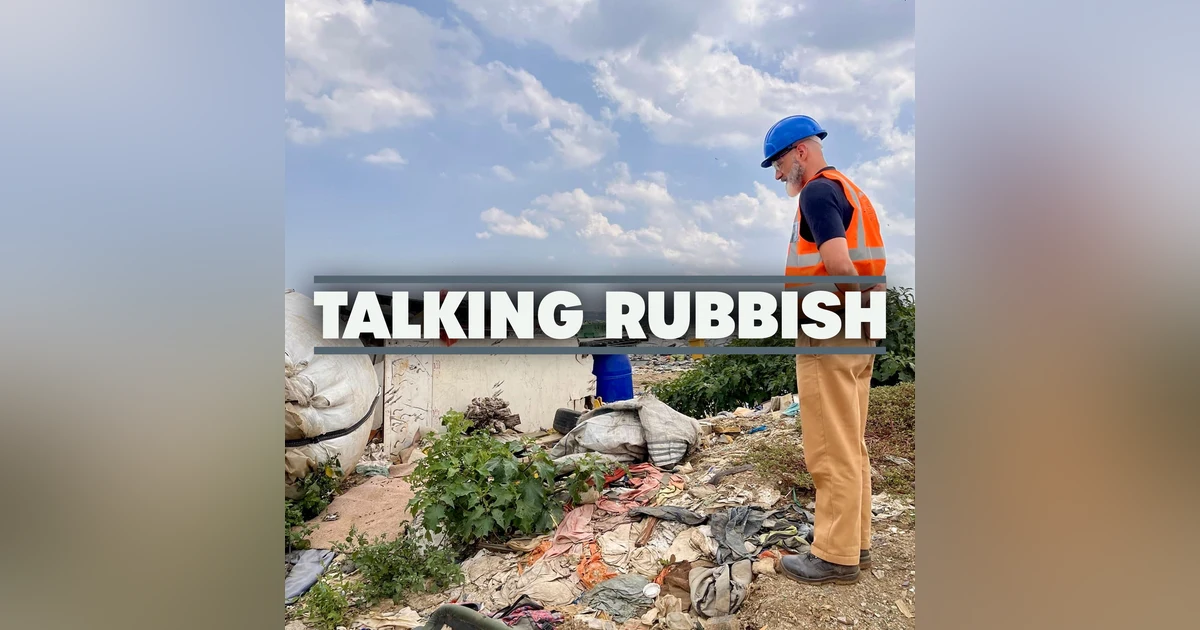

Robbie is back from a Global Expert Mission to South Africa, where he explored the challenges and innovations shaping plastic recycling and sustainability. In this episode, he shares eye-opening insights from his trip, from the realities of landfills and the role of waste reclaimers to the impact of voluntary Extended Producer Responsibility (EPR) schemes and how businesses are embracing recycled content. Plus, how are ink cartridges collected, are cotton buds rubbish or not, and we have been asked why paper ice cream tubs can be collected at home if coffee cups can't be?

 Apple Podcasts
 Spotify
 YouTube
 Amazon Music
 Castbox
 Podcast Addict
 PocketCasts
 Robbie is back from a Global Expert Mission to South Africa, where he explored the challenges and innovations shaping plastic recycling and sustainability. In this episode, he shares eye-opening insights from his trip, from the realities of landfills and the role of waste reclaimers to the impact of voluntary Extended Producer Responsibility (EPR) schemes and how businesses are embracing recycled content. Plus, how are ink cartridges collected, are cotton buds rubbish or not, and we have been asked why paper ice cream tubs can be collected at home if coffee cups can't be?
Join hosts James Piper and Robbie Staniforth as they delve into the world of recycling, hopefully having fun along the way. One thing is for sure, they will talk absolute rubbish from start to finish.
We would love you to join our community on Discord
Special thanks to our sponsor, Ecosurety
To get exclusive videos and clips, follow us on Instagram , TikTok , X , Threads or Facebook ; @rubbishpodcast or YouTube : @talkingrubbishpodcast
Or you can contact James and Robbie with questions or just general rubbish musings using the email address talkingrubbishpodcast@gmail.com or by texting them via WhatsApp
Relevant links and reports mentioned in the programme can be found on the Talking Rubbish Linktr.ee
Transcripts and episodes can be found on the Talking Rubbish website
Timestamps:
How are ink cartridges collected? - 13:35
What did Robbie learn in South Africa? - 22:06
Rubbish or Not: cotton buds - 49:31
Why is a paper ice cream tub labelled 'recyclable' but a coffee cup isn't? - 51:39
Music licence ID: 6WPY8Q4O2RPFIOTL
Hello, welcome to Talking Rubbish, a weekly podcast delving deep into the world of recycling and discussing the truth behind snappy headlines and one-sided stories. In this episode, we will discuss how ink cartridges are collected. What did Robbie learn in South Africa? Are cotton buds rubbish or not? And we have been asked why ice cream tubs can be recycled if coffee cups can't. I'm Jace Piper, author of the Rubbish Book, and I'm joined by Robbie Stanforth, my far from rubbish friend. Morning Robbie. Morning, James. You made a face there when I said why ice cream tubs can be recycled if coffee cups can't. Are you excited for that?
SPEAKER_00I want to skip to the end to find out. I mean, I know that's possible, but I've never really thought why is one and not the other, yet.
SPEAKER_01Yeah, it's perplexing, isn't it? Anyway, we'll come to that. Let's not let's not jump ahead too much, but yeah, no, it's quite fun watching your face as I do the intro. See which bitch you're most excited to take about. It's all a mystery to me. Well, not today, Robbie. It's your second takeover episode.
SPEAKER_00Yeah, and yet again, just like the first one, I've forgotten that I'm supposed to come up with a title.
SPEAKER_01It's a good point. When the episode goes out, we can't call it what did Robbie learn in South Africa with another. We'll give it a name.
SPEAKER_00Not that catchy or interesting for the average listener.
SPEAKER_01So things I've noticed this week, when we interviewed Stuart Goldsmith, which I think was episode 30. Which was a fun episode, wasn't it? It was manic. Absolutely manic. We talked about ocean-bound plastic in amongst all the other things we talked about. And I mentioned that as a marketing thing, I tend to dislike it. You know, what does ocean-bound plastic actually mean? You know, how likely is something to end up in the ocean? You've got to assess that. Where are you taking it? All those kind of things. And we talked a little bit about ocean plastic over a few episodes as well. And I just spotted that the owner of the brand GLAD, which I don't think I've ever heard of, it's an Australian brand. The company is called Clorox. Sorry if I'm saying that wrong, C-L-O-R-O-X. So Clorox, they were fined for talking about ocean plastic. Oh, really? Yeah, and like I feel again in two minds about this. I'm I feel very sorry for a company that's trying to do the right thing. And I think, you know, the judge, when they were fined, the judge was saying, look, I don't think this is the worst environmental claim. I don't think you were intending to do anything particularly wrong, but you have made false claims and therefore we have to fine you. And they were fine a huge amount of money. I think it was 8.25 million, I think it was US dollars, so not Australian dollars, I think it was US. And this is for saying their products were made from recycled ocean plastic between 2021 and 2023. So the case was brought by the Australian Competition and Consumer Commission, which took them to court. Now they said that they'd only sold 2.2 million, sorry, only that's a huge quantity of bags, but they said they'd sold 2.2 million bags during that period. And I make that that the fine was $3.75 a bag. Oh gosh. I think these were bin liners. Surely they've been fined more than they actually made from the product.
SPEAKER_00Yeah, it sounds like a real deterrent.
SPEAKER_01Yeah, so the bags were made from plastic. So this is why they got fined. The bags were found to be made from plastic, they'd been collected in Indonesia, and the communities that they were collected from were about 50 kilometers from the shoreline. So I was just thinking, God, that's a good story on its own. They're going to communities where the plastic is kind of maybe not well managed, it's it could end up in the ocean. I can sort of see that logic, and they're turning it into something useful. We've talked about recycled bin liners and bags before. I think that would have been a good story. I don't know why they felt the need to say it was made from ocean plastics. And what they felt, the company, they said, well, we feel that ocean bound plastic is a type of ocean plastic. And I just think Oh, no, it's not. It's not. And you know, I think ocean bound plastic is just a weird marketing term. If you're going into the ocean and picking out plastic and you're making product out of it, fair enough. You can say we're making our product out of ocean plastic and you're actually investing in cleaning up the oceans. I'm fully on board with that. If you want to collect it from a community in Indonesia where it might end up in a river and it might end up in the ocean, then say that. Say that's what you're doing. You don't need to say it's ocean bound. That doesn't mean anything.
SPEAKER_00It might not be. Exactly, and that's the thing, isn't it? It's the probabilities thing. It might be going to the ocean, and that's the sticking point that sort of feels like it's a kind of false claim or an overclaim, and hence why they've obviously been fined this inordinate sum of money.
SPEAKER_01To me, this is the equivalent of someone walking down my street, taking a bottle out of my bottle bin that might have blown down the road if there's strong wind, and saying this is litter-bound plastic, even though it was, you know, probably being managed correctly and likely to be recycled. It's just it's just a misleading claim. It doesn't make any sense. I I am quite interested in this from a because I I do think, you know, as the judge said, look, there this is not the worst environmental claim. You didn't intend to mislead, you thought ocean-bound plastic was ocean plastic, all that kind of stuff. It is interesting to see a fine of a company that was trying to do the right thing. And and what does that mean for other companies? And I guess it works on both sides. If you're gonna make claims, whether they're positive or negative to the environment, they have to have elements of truth behind them.
SPEAKER_00Yeah, it's one of those things, isn't it, where it's like you've really got to stand up and substantiate any claims that you're making.
SPEAKER_01Additions and corrections. Robbie, we had I think a TikTok video go a little bit viral.
SPEAKER_00It was quite nice. I reckon I'd call it viral. It's definitely viral by my standard.
SPEAKER_01Yeah, well, you're not on TikTok, so I'd like to tell you about this viral video. We put out our video about dog poop bags. We said don't buy compostable, don't buy biodegradable, just buy recycled plastic, and that got a lot of comments, a lot of people looking at it. I think we got to like 40,000 views, 600 likes, something like that. So it did very well as a video, and a lot of the comments I spotted were saying, Yeah, but it's made of corn, it's so much better for the planet. And I thought, okay, there's some people here who don't listen to our podcast because we covered this on episode 19, but maybe I should just do a quick addition and correction to remind people how compostable bioplastics work.
SPEAKER_00And when you say people, you mean Robbie.
unknownNo, you remember.
SPEAKER_00Surely you remember. I do remember.
SPEAKER_01So to be clear, compostable plastics do not typically break down in landfill. There's two types of compostable plastic: home compostable and industrial compostable. Home compostables need to reach temperatures of about 30 degrees. Industrially compostable needs to reach temperatures of about 50 to 60 degrees. It does not really happen in a landfill. And I I read a really interesting story. There was a guy who was an archaeologist. I think it's the guy who wrote the book. There's a book called Rubbish, and not related to the rubbish book, a different book called Rubbish, written back in the 90s. And it was a guy who was an archaeologist who realised the most interesting thing he could dig was landfills. Because actually, if you dug down into a landfill, you could use newspapers and brands to work out how old something was, and you could also see how people were living at that time. And I think he dug up a corn on the cob that still had corn on.
SPEAKER_00Oh wow.
SPEAKER_01Still had the little yellow corns or so there was a discussion about how's corn-based packaging going to break down if corn doesn't break down on the cob. You know, how's that gonna work here? So yeah, if you want more detail, go back to episode 19. But basically, the the key thing to remember is bioplastic is where the plastic comes from. Compostable, biodegradable, these words do not mean that plastic is corn-based or bioplastic. The thing you're looking for there is the word bioplastic. So these are plastics made from plants, and some will break down and some won't. So a plastic made of plants, a bioplastic that breaks down is like PLA. And PLA is a bioplastic because it's made from like cornstarch, but it's also compostable because it will break down in determined conditions. But there are also bioplastics that don't break down. Yeah. So chemically, uh bioplastics that don't break down are indistinguishable from their oil-based cousins and would also be called things like PE or PET. So you can have a PET that's based on that's created from oil, you can have a bio PET that is exactly the same chemically, but made from bioplastics. So it is true that most compostable plastics are bio-based. You know, that is true, as in if you've got a compostable plastic, it's likely to be bio-based. But it is not true that all bio-based plastics are compostable. So you can have plastics made from plants that are exactly the same as the oil plastic and do not break down.
SPEAKER_00And we're going to be talking a little bit later about the not about the corn-derived uh refuse bags, but we're going to be talking about why recycle content is so important and why we're so big on that in bin bags a bit later from my trip for South Africa. So great, great tee up. Oh, excellent. I'm excited. And we talked a little bit last week about AI. Oh, yes, I remember this. The the power consumption thing, wasn't it?
SPEAKER_01Yeah, power consumption. Well, it's evolved again this week. Robbie, do you can you guess what 67% of people in the US do and 71% of people in the UK do link to AI. Make those dolls of themselves. Possibly true, but you know, that was last week. No, 67% of people in the US and 71% in the UK are polite to AI. They say they're pleased and thank you. But it is environmentally damaging. Really? Yeah, like when you know there were these stats about if you send an email just saying thanks, how carbon intensive that is, and is there any point in doing it? You know, it's the same thing with ChatGPT. They've come out saying it's costing tens of millions of dollars in electricity just from people saying please and thank you.
SPEAKER_00Oh my gosh, I've never really thought about that. Just the extra processing of politeness. Yes.
SPEAKER_01It's difficult, isn't it? I don't really want society to move backwards in terms of politeness. I'd quite like them to say please and thank you. But I don't think we necessarily need to do it with AI. But this is just everyone preparing for the takeover of AI, isn't it? Ah, it is so funny you say that genuinely.
SPEAKER_00You've got to have your bases covered.
SPEAKER_01I'm loading up my phone because this isn't in my notes. I I just this morning, because I couldn't sleep, this morning at 2 20, I took a screenshot, okay? You ready? So that I think again this was on Dole Men's Club, I think, and I took this screenshot because someone had put into ChatGPT. Actually, I'm not sure it is ChatGPT. Oh, yeah, it is. Yeah, someone had put into ChatGPT, thank you, soon to be robot overlord. And ChatGPT responded saying, You're very welcome, future loyal human ally. Let me know if you want help with learning, doing, teaching, or just surviving the impending AI uprising.
SPEAKER_00Oh God, that's amazing.
SPEAKER_01We'd like to take a moment to thank our sponsor, EcoSurety, who hopefully are not part of the AI Uprising. They're on a mission to rid the world of unnecessary packaging and they help brands navigate the tricky world of extended producer responsibility. But that is not all. They also collaborate on some incredible recycling projects and consumer awareness campaigns for those tough to recycle materials. If you're an organization looking to make smarter packaging choices, check them out at ecosurety.com. And as always, the best way you can help us to grow is by leaving us a review. So if you're listening to us and you think, oh, I was gonna leave that review, but I forgot to, now's a great time. We've got like a minute while we go through socials. Let's do it now. So on Apple or Spotify, those are the ones that really help us to grow. But to be honest, wherever you're listening, if you just leave us a review, it's super helpful. You don't have to leave words, it's literally just that star rating. You can also find us on Discord. We have almost 200 people on Discord now, I think, talking about all things rubbish and recycling. So again, the link for that is in our show notes. Super simple to use, just a forum where we get together to discuss things that we've talked about on the show and also future upcoming episodes, things like that. You can follow us on social media at rubbishpodcast. You can email talkingrubbishpodcast at gmail.com. And as I said, everything is in the show notes, including a link to our link tree, which will have the links for all the things we talk about in this episode. There you go, have you finished your review?
SPEAKER_00I was just checking Discord. That's my moment to go, oh, I haven't checked Discord. James is probably gonna be mad at me for not responding. I think checking it while we're recording. And that's the kind of professionalism I bring to this podcast. No, I understand.
SPEAKER_01Rubbish process. So on Discord we had someone ask about this. We asked whether anyone wanted any rubbish processes covered, and JB the Rockstar commented saying, Could we do ink cartridges? So, how are ink cartridges collected? And as this is a Robbie takeover, I'm back doing the rubbish process.
SPEAKER_00Great.
SPEAKER_01One week only.
SPEAKER_00Loving it. I can't wait to find out how these are collected. It's not something I've had to worry about because for the last more than a decade, whenever I've wanted to print something, I do it at work. So I'm not worrying about uh dropping off ink cartridges, but I know it's something that my dad definitely does a lot of this printing stuff at home for the various societies that he's member of or whatever for meetings and things. So, how do we get rid of these ink cartridges then?
SPEAKER_01So I found some data from an organization called the Recycling Factory. They seem to be the largest in the industry at collecting uh ink cartridges. They've certainly donated a lot of money to charity, we'll come on to that. They collect over eight million cartridges a year. So I just wanted to thank them for some of this data. They were saying that 1.1 billion inkjet cartridges are used around the world every year. And in the UK that's about 65 million. So that's about one per person, isn't it? That's the whole population.
SPEAKER_00That's an awful lot of printing, isn't it? I thought sort of printing was old hat now that people have QR codes on their phone for tickets and things.
SPEAKER_01Yeah, although I've I mean I've got a printer and I do occasionally have to use it. Occasionally it's like, oh no, I do need to physically sign this thing. So anyway, 65 million used in the UK and only about 15% are recycled. I guess the interesting thing about ink cartridges that's a bit different to some of our rubbish processes that we've had before, is they have a value. You know, people want them because companies can remanufacture with them, they can either refill them and sell them as a refilled ink cartridge, or they can shred them down and turn them into new ink cartridges. And typically an ink cartridge is worth I was having a good look, I think from the websites I looked at, it was between like 50p and a pound per ink cartridge. Now, what this means is people want them back, and as with all recycling, it's all about economics. When some something has a value and people want it back, then it's more likely to be collected. So as far as I can tell, you know, with batteries we have like mandatory collection. You have to collect back batteries. Within cartridges, it's definitely more voluntary, but the system creates itself because 50p to a pound per cartridge is quite significant.
SPEAKER_00Yeah, that is. I had no idea that there was a value, genuinely no idea that they had this value at the end of their life when presumably they're empty and there's no ink left or they've dried up.
SPEAKER_01Yeah, that's right. We'll talk next week about how you actually recycle them. But I guess the first thing is before we talk about like charities and the other websites that exist that do it, a lot of the brands offer their own recycling. And I looked particularly at like Canon and Epson. Now, those guys will typically take back their own brand. So I did have this question for you, Robbie, didn't I? Because we think ink cartridges are waste electricals. Yeah. Particularly if they've got like the strip on them, you know, the uh the like barcode strip that they have. So we think they're waste electricals because they're part of a waste electrical device. Yeah, that's right. And I wasn't sure whether these companies had to offer a take back or not.
SPEAKER_00Yeah, I think because they're online, they can be sort of part of the a takeback scheme, but they can also themselves just directly take them back if they choose to. So they're they're most likely to be doing it in a number of ways, one of which is to return them, you know, directly back to the manufacturer themselves, back to Canon, back to Epsom.
SPEAKER_01Okay, but those brands, as I said, will only take their own brand. But obviously, that meant if you went into like a a Curry's, for example, and you bought a HP ink cartridge, as an example, you would you could give back your old one, they would be obliged to take that under the waste electrical legislation. That's right.
SPEAKER_00And it wouldn't matter whether it was an HP one or a Canon 1, Epsom 1, or an unbranded one that fit any of those uh printers.
SPEAKER_01Yeah, and I guess that's worth saying, because the ones that I found that had value were the branded ones. So if you've got an unbranded one, that's where you might not have value, and so that's where you might want to use that. Where it's like, okay, I'm gonna go and buy another unbranded ink cartridge, I'll give back my old one because I've got no other way of doing it. And that will increase the recycling rate, because 15% is pretty shocking, to be honest, for something that's got value. So when we all use up our ink cartridge, we should all think about how we recycle them. Particularly because Epson's website said that returning cartridges to be refilled reduce CO2 by about 37% and plastic use by 90%. So we should definitely be thinking about how we do that.
SPEAKER_00Wow, that definitely is going to help them with their own emissions and CO2, isn't it, if they can manage to get their customers to bring them back.
SPEAKER_01Yes, that's right. So when they get to the end of their life, you could post them back. Most brands seem to have some form of postal service to get them back. They would send you an envelope, you could post them. Most of them were asking for about five before you send them back, and that is so typical, isn't it? We see that all the time. Yeah. I think we said the same about the cowpole syringes. People want five to make it worthwhile. So that's always a little barrier, but you know, I guess you could hold on to an ink cartridge for a while. Personally, I'm quite interested in the charity route because, you know, it's nice to be able to donate these for charity. Obviously, if it's worth 50p a pound, maybe a bit more, and that's going to a good cause, that would be great. So I was having a good look at that. So there's quite a few websites, so Recycling Factory is one of them. You could just Google search ink cartridge charity collection. Recycling Factory actually, I think, had donated about four million pounds so far. There's another one called Recycle for Charity that had done over two million pounds. So there's amazing amounts of money coming out of ink cartridges that are being donated to charity. So the best thing to do is to look for a website where you can donate them to charity. You put in what ink cartridges you have, they will send you a free post envelope or a label, depending on the company, and then you can choose whether to have that money or to give it to charity. They can also be taken to a recycling centre, and I think some high street retailers, but I must admit I put my postcode into the map on Recycle Now and looked for printer cartridges, and I couldn't find any around me that were high street retailers. They were all sending me to a civil community site. So I think a lot of them have actually removed ink cartridge recycling now. But certainly near me I have a local printer shop and they collect them up, so I have roots. The best way to do it, actually, that I spotted was because it was through Recycling Factory was Tesco. So they were saying that Tesco have envelopes that you can pick up in store and you can return the ink cartridges to Tesco and you will get £125 Club card points for that, or you can donate £1.25 to charity. I think £125 club card points is worth £1.25. So either you're taking the £1.25 or you're giving it to charity. And if you don't have an envelope, you can actually use your own, and then there's a little slip that you can download online. I'll include that link in the link tree if you want to do that. So there's a slip you can download and ironically print, which would be frustrating if you need new ink cartridges. Hopefully, you've already got your new ink cartridges when you print the slip, and then you tick all the boxes saying whether you want it to go to charity or back onto your club card, and you can just post it back to them. Now you can do up to a hundred ink cartridges a year through that method. So I just thought that was really good. £125 quid to charity if you managed to get hold of 100 ink cartridges from people around you. That to me seemed to be the largest donation. I did quite a lot of research and most of them were offering, as I say, between 50p and a pound. And if you go down the Tesco route, the donation could go up to £1.25. So for me, I just felt that was a good opportunity. That was a good thing to do. There is this question around why we would give them away anyway. Why give away our ink cartridges? Because there is an opportunity to refill them. And I think I'm just going to leave that as a teaser for next week. I think we'll talk about recycling and refill next week.
SPEAKER_00Oh, yeah, excited to find out more.
SPEAKER_01Trash Talk. Welcome to Robbie's TakeOver. Robbie. You have recently been to South Africa, and we promised the listeners that you would tell us all about it and what you learned and what you were interested in. So I'm gonna hand over to you.
SPEAKER_00Yeah, no, really excited to be talking about my holidays. I presume it's the work and rubbish related stuff you want, James, not my holiday snaps.
SPEAKER_01Yeah, do I get to do this? I'm going to Bruges in like a month. I'm getting a train across to Bruges. Do you want me to do like a special?
SPEAKER_00Yeah, it'd be great. Well Bins in Bruges. I think you'll find through the course of this uh this section, this trash talk, that actually it is so fascinating what is very similar between different countries when it comes to rubbish and recycling, and all of the things that are totally different, and you just can't believe how different they are to what you just get used to at home. First thing to say is cards on the table. I was born in South Africa, not raised, so that means I can do the accent, but I'm I'm gonna save you from that for the whole section because I think I'll probably offend an entire nation. So I was going over on holiday already, so the first thing I need to get out of the way is the flight all the way over to South Africa, because I know people are gonna be writing in and saying, Oh, I hope it was worth spending the carbon. I was going there on holiday anyway, and amazingly, the UK's research and innovation department asked me if I would like to go on a mission, which made me sound like uh 0007 or something, to go and explore plastics and how that's working in South Africa. So the whole trip literally was a week after I was in South Africa anyway. Uh so it was really fortuitous. Oh, yeah. You were good to tie your holidays in with your business. That's good. Yeah, work and pleasure. Work and pleasure. It's like this podcast. Absolutely, that's true. And so the reason that the UK government had chosen South Africa for this mission is because both nations have similar plastics commitments. There's also a low language barrier, you know, English is commonly spoken, although there are many other languages in South Africa too. And this mission that I was on for UKRI is effectively it's one before a trade mission. They call it a global expert mission, where a team of experts, in this case in plastics, go to another country with a UK government delegation to try and explore collaboration. And it's a step before potentially then having actual direct kind of trade agreements and things between the two organisations and more formal commitments between either UK companies and South African companies or maybe the UK government and the South African government.
SPEAKER_01And the idea is we learn from each other, right? It's not it's not a one-way relationship, it's both sides have something valuable to teach each other.
SPEAKER_00That's exactly it, yeah. So there are things that they do there that we can learn from, and we definitely did learn from, and likewise uh things that hopefully we can export our expertise to South Africa where it might be most appropriate for them. And so they put a delegation together of which I was lucky enough to be asked to go. It was about sort of ten or so of us, and we spent time in Pretoria, Johannesburg, and Cape Town discussing all manner of uh issues relating to plastic. Now I must say it was predominantly focused on recycling, much more so than decreasing the use of plastic, using niche and novel materials. Actually, Pierre from Knoppla was on the trip too, who we interviewed in one of the podcasts. But there was a lot of focus on recycling, particularly like we've got this plastic waste, what are we gonna do with it all?
SPEAKER_01Did he take you out to see the seaweed?
SPEAKER_00I didn't manage to do it because I was flying back a day earlier, but I can confirm that he did yet again go out and swim in the kelp forests. I think he he had a special trip uh planned and I saw some pictures of it on social media. Uh so yeah, no, sadly. I did swim amongst the seaweed and the kelp, but that was when I was on my holiday section as opposed to my work section. So we spent some time uh discussing plastics with regulators, legislators, research institutions. I managed to get to the ambassador's residence in Pretoria, which was very nice, I must say, and uh I did an update uh from there. And the overview of the issue is that newsflash plastics remains a problem in South Africa, just like it is in the UK, just like it is in the rest of the world. But there are a couple of things that were just so interesting in the way that they're trying to tackle the waste problem. And the first thing to cover is the fact that they have a whole section of society and a job, if you like, called waste reclamation. So these are people who reclaim the waste from whether it be litter picking uh for very specific items that have a material value, such as uh plastic bottles, uh, in the instance we were talking about, but also aluminium cans too, they would pick up. But they also do this on landfill sites. So I visited a landfill site, and I could not believe that there were literally workers with safety boots and uh protective equipment literally scraping the landfill and mining it for by hand for plastic that they could that they could derive some value from.
SPEAKER_01And are they employed by the landfill site or are they they're just working on off their own back?
SPEAKER_00No, and this is the really interesting thing is that they see themselves as entrepreneurs. They're making a living, they're self-employed, they decide when they want to work and what they want to pick, you know, based on the material value. And they're kind of incidental eco-warriors, if you like. They're doing it out of economic necessity.
SPEAKER_01We haven't talked about that guy yet, have we, who's uh buried his Bitcoin computer in the landfill. Oh, yes. It's on my list to talk about because it's such an amazing story. But he would love this if he was allowed on the landfill to dig through.
SPEAKER_00I mean absolutely would, yeah.
SPEAKER_01If you don't know this story, this guy accidentally I think his girlfriend threw out his computer, Specta's girlfriend, threw out his computer with all his Bitcoin on it, and as the value has risen, he has got increasingly desperate to unearth that computer from the landfill, but the council won't let him on. And so it's interesting, isn't it? You go to another country and it's like people are digging through this who aren't part of the kind of infrastructure, you know, the established infrastructure. They're they're just doing it off their own back to find value. It's just very different.
SPEAKER_00That's exactly right, yeah. Total different set of rules. So it was amazing to us that these people were doing this work. And so we spoke to the African Reclaimers Organization, or Arrow, as they like to be called, who are trying to help effectively be a trade association for these waste reclaimers and try and ensure because they are entrepreneurial, they can be quite a disparate bunch, if you like, but they need to come together to try and improve working conditions, etc. And so that was formed in 2016 to help them. It's a kind of community grassroots organization that interface with communities to try and effectively make people see that these are valid jobs in the community and that waste reclaiming can be done in a sort of ethical, sustainable way, and that isn't something that the community should be trying to stamp out and get rid of these people who are just trying to make a living, and also they are, as I said, incidentally, eco-warriors because they're literally going after the waste rubbish that people are just throwing out and don't have any value for, and they're trying to make value out of them.
SPEAKER_01Yeah, and when we talk about the economics of recycling, it's amazing that you know Venn diagram of eco-warriors and people making money can cross over if you've got the economics right. Actually, you don't have to be an eco-warrior, you can just want to make more money, and naturally you will end up doing the right thing because the idea of making money comes from sorting and separating waste.
SPEAKER_00Yeah, and that's exactly right in their example. Some of these waste reclaimers will walk 30 plus kilometres to get to a specific part of Johannesburg where they know that there is a lot of PET bottles being thrown out that have a value that they can collect together and sell on.
SPEAKER_01And when and when they were talking to you, Robert, because presumably you were talking to these guys who were c who were picking through the landfills. Sure. Where did they land in terms of how they were communicating to you? But did you get the sense they were more entrepreneurial and driven by the finances, or were they thinking, actually, we hate this plastic and we want to get it out of the landfill?
SPEAKER_00Definitely driven out of necessity and the finances.
SPEAKER_01Yeah, okay.
SPEAKER_00On the landfill site particularly, there were lots of women working who were trying to support a family on the basis that they're very prepared to do a hard day's work, but that they actually wanted to have the opportunity to choose what they picked up just on the basis of how much money they're going to make out of it. You know, frankly, they are living hand to mouth, many of these people, and that's the the sad side of it. But on the other side, you can project onto them that why don't we give all these people jobs? Lots of them don't want a formal job. They would prefer to be doing this, and so in terms of how you you treat it socially and making sure you don't upset the social system, these people like to pick and choose their work. Now there will be plenty of them. I can't I can't speak for the entire sort of waste reclamation industry in South Africa, obviously. There will be some who would like gainful employment and a steady income, but many of the ones that I spoke to, and certainly those representing them at the African Reclaimers Organization, were really impressing upon the fact that these are entrepreneurial people. And right down to the point that if extended producer responsibility or particular brands give an item of packaging a value and it gets out to this network of reclaimers, they'll go and pick it. So if you've got an item that's easily identifiable and you really care about getting it back to uh grind it up and recycle it, it will happen. You just need to pay enough money for it to happen. And this comes back to what we've talked about anywhere in the world, James, where if the economics is right, recycling will happen.
SPEAKER_01Yeah, and I found that just with that in-cartridge research, I found that different brands were priced completely differently, and it's because the brand has put a different value on that ink cartridge. And you know, there is an argument to say if I was buying a new printer, I might go into that system and see which in-cartridges are worth the most at the end of their life, and then say, okay, that's the brand I'm gonna go with because actually over time I can make money out of it. So this is that on a you know massive scale.
SPEAKER_00That's exactly right, and and certainly that's something you could bring into your like ethical purchasing, and lots of people are purchasing stuff on all sorts of different bases these days, uh, not just the performance of the product, but what are the ethical credentials and the environmental credentials? That was day one, and it was a huge eye-opener. How long were you there for? I was there for a week, yeah. So five days, five working days.
SPEAKER_01We're gonna have to uh apologise to the producers. We're like we've got like ten minutes left.
SPEAKER_00Okay, day two. Don't worry, I'm not gonna take you through every day. But that was just on day one that we saw this landfill site, and then we also went to the ambassador's residence and talked to the politicians in very lovely grounds in a compound on the edge of Pretoria in a leafy suburb. And so immediately you just saw this juxtaposition of uh the realities of waste in South Africa. And just finally to close off on the waste reclaimers, there is a bit of a battle in the waste management system in South Africa between trying to formalise collections from people's houses, from people's homes, and actually letting these reclaimers go through. So the way my dad manages his waste in South Africa is that he will literally separate all of the valuable stuff when he puts out his collection for the council. Now, on the one hand, that's a bad thing because the local authority, the municipal contract won't be getting the valuable stuff that makes it viable to pick up from people's homes. But on the other hand, he's directly supporting the waste reclaimers in his area who are picking up those valuable items that he sets to one side, mostly the aluminium cans in this instance, rather than plastic. And they will collect up all those cans all the way down the street and then take it to a sorting centre, be paid for the cans, be able to feed and house his family.
SPEAKER_01You went back to day one.
SPEAKER_00Well, I'm going to skip ahead a little bit to talk about the literally the other end of the spectrum. So this was a landfill site. This was a landfill site, which was, you know, as you can imagine, pretty stinky, not very nice, difficult working conditions.
SPEAKER_01I like just looking at your photos on LinkedIn and the ones people were sending me because you know I didn't have the smell.
SPEAKER_00I prefer to see the picture, yeah. So at the other end of the spectrum, back in Cape Town a few days later, we went to the poshiest PET plastic recycling facility I have ever seen, operated by Pro Pet SA. And literally it was cleaner and like better than any manufacturing site I've ever been to either. So forget about recycling pellets, it was actually cleaner than just food manufacturing places that I've been to in the UK. So I couldn't believe that excellent standard. And the reason for that is because they're reprocessing food grade PET to go back into soft drinks, water bottles, and so it gave me immense confidence that actually, when I'm buying a recycled plastic bottle, hopefully anywhere in the world, but particularly in this instance in South Africa, that actually it is safe to be drinking out of because it did not look like a recycling facility, it looked more like a medical facility, frankly, and a very good one. They had testing labs there with scientists looking at the various grades of uh recycled bottles that were coming through the door. They had the machines running which were effectively uh shredding and granulating the plastics that would then be sent off uh to blow new plastic bottles. And genuinely, I was extremely impressed with their operation. And when you were outside of the facility, you know, outside the walls, it was bags of bottles ready to be reprocessed that looked kind of like most other waste sites, but as soon as you went inside the facility itself, it was like a whole different scientific laboratory type uh looking place. And so it it really went to show that there is a whole huge spectrum of recycling that's going on right from the grassroots through to very, very commercialized and high-end facilities. So the thing that we talked with most people about through the course of the week was extended producer responsibility. It came in in South Africa in 2022. Up until then, they had had voluntary systems. The voluntary extended producer responsibility systems basically meant that they collected the easy stuff. Things like PET, hence why this factory uh reprocessing facility is so nice, because it's a very mature market that that's popped up over the last 20 plus years.
SPEAKER_01Yeah, and over the last couple of weeks we've talked about voluntary EPR, haven't we? Because you know, there's so many materials you could do it for, like textiles, tyres, all that kind of stuff. I guess the reason that's difficult to do on a voluntary basis is because the money, the value isn't necessarily there at the recycling. Whereas like if you take ink cartridges, you end up with almost a voluntary EPR system because they've got value. Yeah, that's right. It's a shame that's only at 15% recycling, but I'm confident that can increase with the right kind of investment. Similar with textiles and tyres, it's just that balance of voluntary work versus the government saying, no, no, we need to have a financial mechanism to get this waste back. And time and time again, voluntary initiatives work for stuff that's got value, and then people go, Oh, look, we it weren't voluntary, we can do it in other things, and it falls over because the thing you're trying to create it in doesn't have value. So it's great to see other countries, because we see this all the time in other countries where people think voluntary EPR works and it just works for a PET bottle.
SPEAKER_00Yeah, that's exactly right, and so they are struggling over the last three years with implementing their new system and trying to make sure that there's a level playing field. Uh, producer responsibility organizations are popping up all over the place because there's a very low barrier to entry, so there's tens of these organizations, and and and they all have slightly different inflections. They're focusing on different types of materials. But in order to drive the recycling targets, they need to make the economics work. And one of the visits, again down in Cape Town, we went to a facility called MyPlass, who are technically recycling so many different types of uh plastic, including chip packets, as they would call it, or crisp packets, as we would call it here in the UK. They can recycle that and make it into a pellet. I saw a bag of it. It's kind of like silvery because of the metallized foil used for these crisp packets. It's like a silvery pellet, but there is no economics that makes those crisp packets get collected together. And so they in conversation there, they were saying, well, extended producer responsibility. It's only a few years since it's been implemented, but the hope is that in the future the brands will be paying to make an incentive for this stuff to be recycled. The thing to mention here, which was it took me most of the week to about day five to fully get my head around this, is that most people in South Africa don't have access to formalized rubbish collections of any type. So forget about recycling, just having a bin that gets collected from your home is the it's the minority of people. I couldn't get a clear statistic, so I'm not going to say one and stand by it, but it is a minority of dwellings in South Africa by population that actually get a bin wagon come down the road and tip a bin into the back of it. So forget about recycling. There are so many communities, and this is coming back to the waste reclaimers, why they exist, because there is no formalized way to get rid of your rubbish in so many communities. So what do you do with your waste? You get to the end of your week, bin day on a Thursday, what do you get what do you do with it? People are literally informal landfills at the edge of their community. Oh, really? Open burning. There's a whole range of things uh that happen, but the idea that a bin wagon comes down the street and tips it is only relevant to a very small proportion of the population.
SPEAKER_01And this is why when we talk about exports, it's so uncomfortable. Because a lot of these countries, you know, want to make money from waste, and so they will import waste from other countries because they might get paid to do that, or whatever that looks like. And you're just compounding a problem that already exists because you haven't got the management in your own country to take on your own waste, so you shouldn't really be importing loads of other waste. And you know, we've talked about that in our export episode about some countries that are taking in waste and just taking in way too much, way more than they can manage, and you just create more and more of an informal sector.
SPEAKER_00Yeah, and I think it's one of those things that if it doesn't really have much of a value here in the UK, it's not necessarily going to have much of a value anywhere else. Whereas things like used PET bottles are the kind of things that these countries will want to have because they do have facilities. That they can scale up. But mixed the thing.
SPEAKER_01But the paradox is we want the PET too. That's the paradox, isn't it? You know, we recycle a lot of PT in the UK because it's got value. We export a lot of the stuff we don't want because it doesn't have value. And so you're just compounding, it's just that that is the problem. The things these are the things other countries want are the things that the exporter also wants.
SPEAKER_00Yeah. And so the idea that extended producer responsibility might collect all of these crisp packets, in my view, is a bit of a pipe dream. Because until there is formalized waste management across the country where the majority of the population can get access to just disposing of their waste in a formalized legal way, you're running before you can walk in lots of areas. And the focus of the government is much more around how do we sort of level up across all of the different areas. I think Cape Town generally was put across to be ahead of most of the other municipalities in terms of waste management. But even uh Cape Town itself and Western Province that it's within still has many parts of the community that also don't have a formalized waste collection either. So finally, and this is coming back to our recycle content shopping bags and bin bags that we've been talking about and going viral on TikTok for the uh for the dog poo bags, it was so impressive. I went to two different places, one was Premier Plastics on the uh outskirts of Pretoria, and they are making a bag that's 60 micron thick. So that's thinking back to episode four where we talked about the carrier bag charge in the UK, that would count as a single-use carrier bag, this 60 micron thick bag, and they have managed to now get to, and there there is legislation coming in for 2027, to get to a hundred percent recycled polypropylene bag. In 1991, it was totally made out of virgin plastics by 2023. It was about 50-50. Uh, this year in 2025, it's around 75%, and they are getting they they literally can make these very nice looking carrier bags, which is like the kind of singlet design, you know, with the the two arms that you can tie it together. And interestingly, they make it 60 microns thick, which is quite thick, because people who use these reuse the bags a lot, and you see it when you're out and about shopping, etc., that these bags get used again and again, and not just for shopping, as actual bags in place of a rucksack and things because they're so thick and last so long. Great.
SPEAKER_01So, I mean, what have we uh we've covered so much there. I'm gonna hand over to you for a summary, but just so I can get clear on what you did over your the course of your week, most of which was on day one, by the sounds of it. You you visited a landfill, you saw uh waste reclaimers in action, people kind of taking initiatives and and getting out of a landfill, you visited the poshiest PET recycling facility you've ever been to, spent a lot of time discussing EPR, and you spent quite by the sounds of it, quite a lot of time visiting bag recycling plants and understanding how they've got up to 100% recycle content. Is that a a good summary of kind of the four areas that you you mostly focused on?
SPEAKER_00Yeah, those are the main areas. There's there was other visits besides, and sorry to anyone who hasn't been mentioned, but we've only got so much time. So, in summary, I would say overall there were more similarities than differences. When it comes to plastics, particularly, the things that were similar is flexible plastic is really difficult to collect and recycle. We have very similar technical solutions. When I went to MyPLAS, it was very similar to visiting recycling plants in the UK. Same with that very posh PET facility at Propet. They have a can-do attitude, and the endeavour of individuals working in waste and rubbish is huge in terms of trying to find a solution. But the things that were different is that many communities still don't have access to a bin. Any bin, never mind recycling, and these reclaimers are needed. We talked about the uproar in Birmingham recently when people didn't get their bins collected in episode 39. Well, just imagine a place where there never is a collection of a bin, and you just have to find a solution, you're left to your own devices for what to do with all of your waste and recyclable waste within it. So I I think that's the main take-home point. And just a quick shout out to WasteAid, who's a UK-based charity who have initiatives around the globe in lots of different communities, to try and highlight this exact issue that many communities just don't have any sort of formalised waste management.
SPEAKER_01And my biggest learning is I can go on holiday and expense it to talking rubbish. Lovely.
SPEAKER_00If only we had the budget, though.
SPEAKER_01I was just thinking, who's paying for that? Got no money. And it's cotton buds. So, Robbie, since 2020, I think we talked about this in our banned episode, and another good place to look is my interview with Nat Fay that I did in episode five. So, all the way back in episode five. Feels like a long time ago, that now. Where we talked about banning plastic cotton buds, and and those are now banned, and you have to use a cardboard cotton bud. So the question is now that there are cardboard cotton buds, can they be recycled, Robbie? I mean, I'm pretty confident that these are rubbish. Yes, I think you're probably right. And that's because of the cotton ends, really. I think the cardboard stem in the middle could be recycled, but the cotton ends are seen as contamination, so just need to go in the normal bin. I did have a bit of a thought. Now I haven't checked this with anyone, so it could be the whole hot water bottle situation again where someone tells me I'm wrong. So if I'm wrong, get onto Discord, link in the show notes, and tell me I'm wrong. But I think what I'm gonna do is rip the cotton off to get the cardboard stem, and then because I'm in a bathroom, what I'm gonna do is get a toilet roll, right? Oh yeah. I'm gonna fold down the end so that I've created like a little cup, and then I'm gonna use that to fill with cotton bud stems, so taking the cotton off, and then I'm gonna close the other end and I'm gonna put that in my cardboard.
SPEAKER_00Ah, so recycle those cardboard stems with in the inside of your toilet roll. Yes, that's what I'm gonna do.
SPEAKER_01Because bathroom recycling is a real challenge and it's an area we all need to get better at, and uh I think combining these things together, so it's like, oh, okay, the toilet roll tube's now my cardboard holder, it's probably quite a good idea. So I'm gonna try and do that.
SPEAKER_00Yeah, well, they've invented the reusable like cotton pads, haven't they, for like sort of makeup removal and things. I wonder if there's a reusable cotton bud out there.
SPEAKER_01Um the one thing you should never do, and we talked about it with Nat, is do not flush them down the toilet. Even though they're made of cardboard, they can block the system and pollute the environment. So whatever you do, don't do that. Rubbish question. So the one Robbie's been waiting for, he was so excited at the start when I said this was our question. It's been asked by Simon on Discord. He took a photo of uh, I think it was a Hag Hagendas uh Hagendas? Is that how you say it?
SPEAKER_00I think that's how you say it.
SPEAKER_01Hagen Days. Hagen Das ice cream tub. Oh, it sounds horrible. Ice cream tub, which is basically a cardboard with a plastic liner inside, and was asking, well, hang on a sec, why does this have the recycle label on, but a coffee cup doesn't? We just talked a lot about coffee cups. It's basically the same thing. What do you reckon, Robbie?
SPEAKER_00I reckon uh it's because it's really thick cardboard, is it, on an ice cream tub? Thicker cardboard, so therefore the percentage of plastic lining is lower?
SPEAKER_01Well, no. I don't think so. Because if you think about it, in all of our coffee cup episode we talked about the fact that those are like five percent plastic. So I think the important thing here is we've talked about the fact that if something's lined with plastic, it needs to be less than 10% plastic. So when we think about a sandwich pack or a bottle, you know, all these things we've talked about recently, you can have up to, if you've got a fibre-based composite, you can have 90% cardboard, 10% plastic, and something could be classed as recyclable. A coffee cup has a similar amount of plastic to an ice cream tub. I think the difference here, and I have reached out to APRL, we're gonna get them on as an interview so we can we can make sure we talk about this. But OPRL who make the recycle label that is on the Hag and Ars ice cream tub, yeah, that comes from the Confederation of Paper Industries, as in the information on whether something is recyclable or not comes from the Confederation of Paper Industries. And I was looking through their requirements last night, and they have a recyclability assessment and they specifically call out paper cups and beverage cartons and say, look, recyclers don't want cups and beverage cartons, they need to be collected separately. So what's happened, I think, is it's actually nothing to do with the material makeup because the ice cream tub is exactly the same as the coffee cup, really. It's more to do with the fact that the Confederation of Paper Industry has said we don't want coffee cups, we don't want cartons. So OPRL, the on-pack recycling label, who make that label that says recycle, have said, okay, well, we will make a specific label for coffee cups, and we will make a specific label for cartons.
SPEAKER_00Okay, to say that it can be recycled, but it's a sort of different Well, the so the coffee cup one says take it back to a coffee shop, and the carton one says check, you know, check your council.
SPEAKER_01Or I think they say recycle now because of the number of councils that collect cartons. Okay. But that is what has happened. The Confederation of Paper Industries has specifically said we need something special for paper cups and we need something special for cartons, so they have their own label, and everything else that's lined with plastic, so ice cream tubs, sandwich packs, whatever it is, just falls into the generic rules, which are it has to have less than 10% plastic. And that's come down. So from January 2020, it was actually 15% plastic was allowed. 10% was January 2023, and we are moving to 5%. And I think we mentioned this before when we did our paperisation episode, which is episode 39, we talked about that kind of non-paper components and how much they could take. And I think the CPI, the Confederation of Paper Industries, had estimated 120,000 tonnes, if I remember rightly, was kind of non-paper and an issue, but it only made up 2% of material. They were saying actually they can take a maximum of 1.5% non-paper components, so such as plastic and metals, in the material that's been delivered to the machinery. So everyone, as I always say, works on averages. And the reason you need to keep coffee cups and cartons away from everything else is because they make up such a big part of our waste stream, but our car paper waste stream. So you want to keep them separate to keep that one and a half percent as low as possible.
SPEAKER_00Okay, that makes sense. So basically, we're not selling as many ice cream tubs, is part of the reason.
SPEAKER_01It's the same as the pizza boxes, yeah. It's just a rarer waste stream, so it it doesn't contribute greatly to that percentage. You start putting coffee cups in where we're using 3.2 billion a year, and suddenly you've got a bigger problem in the paper industry.
SPEAKER_00Okay, so it's the it's a case of the lesser spotted Hagendas tub. The lesser spotted Hagendas.
SPEAKER_01I don't know why I say it so posh. Anyway, that's the end of our the end of episode 41. Thank you, Robbie, for writing most of the notes on that one. I um really pleasure.
SPEAKER_00It's gonna be another 30 odd episodes before I do it again.
SPEAKER_01When was your first one? I can't even remember. Um like episode, what was the vapes one? I think it was was it 17? Yeah, it was 17. So get you in for like episode 66, I think. What are you gonna do it on?
SPEAKER_00Uh another holiday, maybe.
SPEAKER_01Robbie's holiday to Antigua.
SPEAKER_00Yes, please. Have we got the budget for it?
SPEAKER_01As always, thank you so much for listening. Thank you for leaving reviews, engaging with us on Discord. We just absolutely love it. We really appreciate you guys taking the time to listen to us and making it this far if you're still listening. If you want to get hold of us, you can email talkingrubbishpodcast at gmail.com, you can WhatsApp us, you can join the Discord, whatever you want to do, it's all in our show notes. And the link tree is also in our show notes with links to everything Robbie's talked about, which this week might just be your holiday snaps. I can't think what we're gonna put in. I got a few good picks. Okay, we'll put in some holiday snaps of Robbie. So um again, thank you all so much, and we will see you next week. Bye.
SPEAKER_00Bye.