19. Breaking down compostable plastic
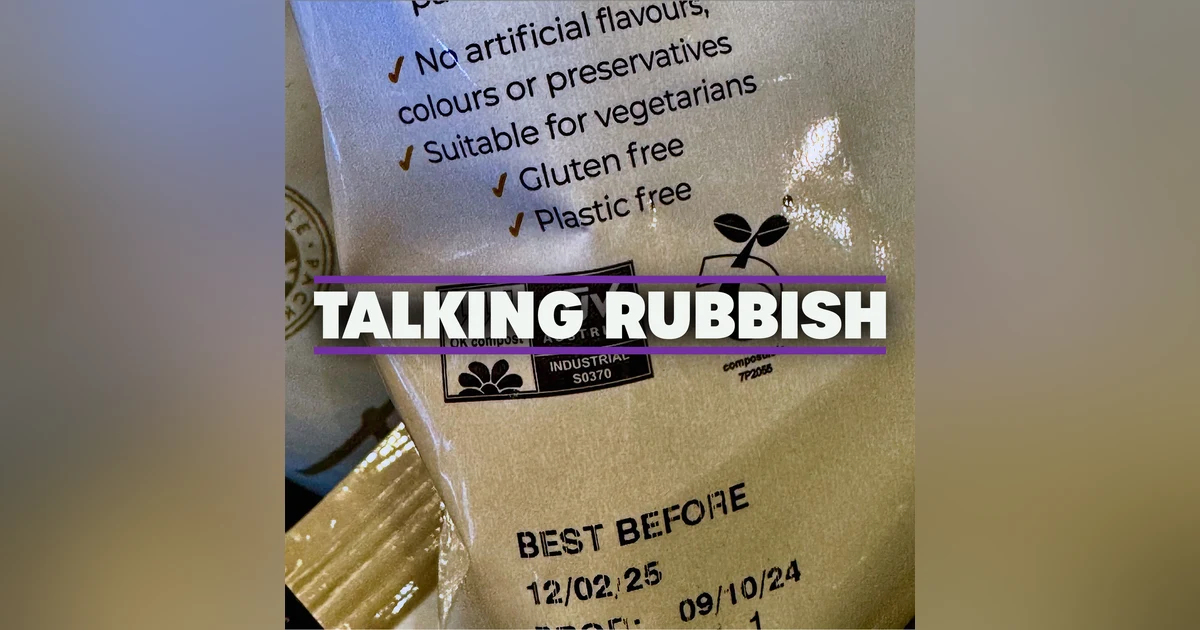

Compostable plastic has grown significantly in the past few years as producers of packaging attempt to move away from conventional plastics. Why is this material so hard to collect and recycle? Plus, we explore how electrical items are collected, are rubber bands rubbish or not, and we have a question about what to do with beer bottle lids.

 Apple Podcasts
 Spotify
 YouTube
 Amazon Music
 Castbox
 Podcast Addict
 PocketCasts
 Compostable plastic has grown significantly in the past few years as producers of packaging attempt to move away from conventional plastics. Why is this material so hard to collect and recycle? Plus, we explore how electrical items are collected, are rubber bands rubbish or not, and we have a question about what to do with beer bottle lids.
Join hosts James Piper and Robbie Staniforth as they delve into the world of recycling, hopefully having fun along the way. One thing is for sure, they will talk absolute rubbish from start to finish.
To get exclusive videos and clips, follow them on Instagram, TikTok, X, Threads or Facebook; @rubbishpodcast or YouTube: @talkingrubbishpodcast
Or you can contact James and Robbie with questions or just general rubbish musings using the email address talkingrubbishpodcast@gmail.com or by texting them via WhatsApp
Relevant links and reports mentioned in the programme can be found on the Talking Rubbish Linktr.ee
Transcripts and episodes can be found on the Talking Rubbish website
Music licence ID: 6WPY8Q4O2RPFIOTL
Hello, welcome to Talking Rubbish, a weekly podcast delving deep into the world of recycling and discussing the truth behind snappy headlines and one-sided stories. In this episode, we will explore how electricals are collected, deep dive into compostable plastic, are rubber bands rubbish or not, and we have a listener question about what to do with the lids on beer bottles. I'm James Piper, author of the rubbish book, and I'm joined by Robbie Stanafhorf, my far from rubbish friend.
SPEAKER_00Hi Robbie. Hi, James. How are you doing today? Yeah, very good. Pretty chipper this morning.
SPEAKER_01Good, good. I went shopping yesterday. A shopping mission, I would call it. You know all about this. So um so regular listeners will know. Whenever we have a guest on for an interview, we give away a little gift. And the first episode, we gave away the uh books from Natalie Fay. So that was very kind. She generously donated us all of her books and signed them. And we gave those away to Neil. I I hand delivered those because Neil was in Bristol. So that was that was very nice. Got to meet him. Oh, very good.
SPEAKER_00I he must have read at least one or two of those by now as well. Hope you're enjoying them, Neil.
SPEAKER_01I wonder if he started with mine or Natalie's. I wonder I wonder which all. Right in, Neil, let us know. Our second interview, we gave away a Bauer kitchen starter kit, and that went to Deborah, and she sent me a picture of that in her kitchen. So that was really nice. Very cool. Yes, and so for Alex's, we got a record and a book from Alex, and you had just been to an event where you'd been given like quality street bit and cardboard instead of place plastic, right?
SPEAKER_00Yeah, that's right. The new cardboard tub that they're selling uh at various shops around the country.
SPEAKER_01Yeah, and we wanted to give that away. Someone from Northern Ireland won that called Alan. And I'm due to post that, or I was due to post that last week.
SPEAKER_00Yeah, difficult to hand deliver that from Bristol.
SPEAKER_01Yes, and unfortunately we moved office and the Quality Street tub went missing.
SPEAKER_00Yeah, the mystery. In the office move, it conveniently went missing.
SPEAKER_01And you have chocolate round your mouth.
SPEAKER_00No, I don't. That is a lie.
SPEAKER_01Put the video on social. Um anyway, so I drove to I mean, the things we do, honestly, I could not, I could not bear the thought of sending a plastic tub having committed to the cardboard tub. So I drove to every Tesco in Bristol, and none of them had it. And I gave up. And I came back to you and I said, Robbie, look, I need a list from Caitlin from Nestle of where they're selling this. And it transpires that they're selling these cardboard tubs in 60 stores.
SPEAKER_00Oh, that's quite a lot, isn't it?
SPEAKER_01Yeah, well, it is a lot, but I was extremely frustrated because I don't think any of them are in Bristol. So you then sent me the list, and it just so happened that one of them was in Banbury, which is where I was yesterday for a meeting. So I was like, amazing, I'm gonna go into the Banbury Tesco store. And to be fair, because I was ready to criticize this and say it was just a flash in a pan and they don't really exist. Actually, Banbury had loads. So I managed to get a I man I got two just in case we lose another one and proceeded to start eating it last night.
SPEAKER_00Losing inverted commas. Yeah. Oh, that's brilliant. And you sent me the photo last night, and there was lots of celebrations of a pallet full of quality street.
SPEAKER_01Yeah, so Alan, when you get your prize, which is coming very soon, in fact, you'll have it by now when this episode goes out. I just uh would like you know that I literally have driven across the country trying to get that for you. I also noticed a news story this week, Robbie, and I'm intrigued. So I'm gonna do a little d quiz for you, okay? What is this news story talking about? Are you ready? Here's the first line Plastic bottles are reviled for polluting the oceans, leaching chemicals into drinks, and being a source of microplastics in the human body. What material is this news story talking about? Plastic, clearly. Yes, so this is a story all about cardboard, uh as you would expect. So yeah, this is a news story this week in The Guardian, um about wind yes, about winter making recycling harder. Okay, so this is about how in winter, because it's wetter, the cardboard that we put out gets damp and and clo claggy and difficult to recycle. And D.S. Smith have put out a report saying an extra 5,000 tons is sent to landfill and incineration between November and March because of basically contaminated cardboard. Okay. The paper and cardboard contamination can increase up to 40%. Genuinely, the Guardian article on this report starts with plastic bottles are revarded for polluting the ocean, leaching chemicals into drinks at being a source of microplastics in the human body. Then it goes, they even cause problems with recycling. When plastic bottles are mixed with cardboard in recycling bins in the wet winter months, the sodden cardboard wraps around the bottles and trays, causing havoc at recycling plants.
SPEAKER_00What? Yeah. That's crazy. So they've turned a story about cardboard contamination into plastics the problem. Is that what you're saying?
SPEAKER_01Yeah. Why are we doing reporting in this way? You know, what is this? I suppose that's how you get the clicks, isn't it? Yes, no one's gonna really shout about cardboard getting wet because we all know that's what happens. But like in wind in Bristol, obviously we don't have this issue because the reality is my cardboard is separate from my plastic. So this story is just a non-story. The main story is actually cardboards getting sent for incineration in landfill.
SPEAKER_00Yeah, in Bristol it's also in a covered bag, so it doesn't get wet anyway.
SPEAKER_01So I would like to do a trash talk about this. Um, you know, about the actual differences between winter and summer and what they do to recycling rates and all those kind of things. I just thought for the intro, it's a great call out to oh my goodness, I can't believe that's the story. Additions and corrections. So we had quite a few comments this week on our incineration episode, or in the last couple of weeks, I should say. We had Paul on our Instagram commenting, I think Paul works for a local authorities, commented on a few of our episodes. So thank you very much, Paul, for giving us the local authority insight. And you know, I think some criticism, I guess, of our view that lock-in is a problem. So local authorities being locked into contracts and those contracts being quite long and having having to supply a certain amount of material. Um, and actually, Paul's view was look, local authorities are doing their best, they're trying to drive up recycling, they're not hindered by these contracts. And I was speaking to Lee yesterday, actually, for the Charters Institute of Waste Management just to get his view on this, and he felt that actually lock-in in the way that the BBC described is quite an old-fashioned view, um, which I thought was quite funny. I like to think I'm too young to have old-fashioned views, but maybe I'm not.
SPEAKER_00With every passing year, James, you become a stalwart of the industry. That's right. The shadow of the young, dynamic person you used to be.
SPEAKER_01So I think we should just bring balance to this. I mean, I think the reality is some local authorities are locked into long contracts, some local authorities are required to send a certain amount of waste to incineration. I know the BBC reported that in 2010 Stoke on Trent had a claim made against them of 300 grand for not sending enough waste to an incinerator. So we do know that happens. But Paul's quite right that actually the main bulk of waste going to incineration is going to be commercial waste, business waste, you know, where there are very low recycling rates. And we will talk about that another time. I've I've explained that that is a key thing for us to talk about business to business. But you know, I think it's worth bringing some balance to say, look, this isn't just every council's locked in, every council's struggling, some will have decisions about whether they use incineration or not. But it this problem does exist.
SPEAKER_00Yeah, no, totally agreed. And and uh hopefully things will change in the future and it won't be such a prevalent problem. But it really the main take-home point is that changes of what we do with our waste do need to take place thinking about what's going to happen in 10 years' time, 15 years' time, 20 years' time, not what's good for now and next week.
SPEAKER_01Yeah, that's right. And we also had a few emails. I've I haven't got names because actually there were so many people who emailed about this, but talking about like the calorific value of waste, which we didn't really cover. So the fact that, for example, plastic, we talked about like plastic versus food waste in terms of emissions, but actually plastic will burn a lot hotter because of its calorific value, it will burn hotter than food waste, and so there is also part of the another part of the equation, unfortunately, which is you know, how efficient is it at actually incinerating and generating electricity and different materials will have different calorific values, different temperatures that they burn at. And so uh, you know, it they there could be an argument that actually having more plastic while releasing more emissions could actually be more efficient as an incinerated material. So that's something we'll have to look into and see if we can do a bit more of an update on that. A couple of weeks ago we did a little uh shout out to another podcast, and and uh a another podcast heard that and asked whether we could talk about them. So again, I just thought it'd be nice to just have 30 seconds on another show. So last time we talked about outrage and optimism, which I have continued to enjoy. Uh this week we'd just like to talk about a podcast called Green Flags. Now I had a listen this morning, their first episode is just out, and I had a little listen this morning, and it's aimed at Gen Z, Robbie. And I mean, wow I felt that. I was like, Did you? I f I felt old-fashioned.
SPEAKER_00Well, there we go. Oh, I'm definitely gonna give that a listen because that'll be a sort of cultural experience. So, what's Gen Z then? What ages are they?
SPEAKER_01I think it's for your daughter, where it's ages 12 to 27.
SPEAKER_00Oh, okay, yeah, she's about there, yeah.
SPEAKER_01But I did genuinely really enjoy it. Um I think it's a really interesting take on sustainability. So, what they're doing is um they're trying to target audiences that are new to climate and sustainability conversations. It's actually been created by Puma, um, the sports brand. It's very much a mix of like football, fashion, and sustainability. Oh cool. And like a little bit of Taskmaster. You know how much I like Taskmasters. Oh, okay. Um, so there's a trio of hosts, they set sustainability challenges each week. So they have to repair, revive, revamp clothes to make outfits out of plastic bags and generating electricity from potatoes, things like that to inspire and educate listeners on the impact of everyday decisions. So the episode this morning, which was their first one, for example, they were um awarded points based on how they got into the studio that day. So how did they travel there? Um, and they didn't know that was going to happen, so they hadn't thought about it, which was great. And then we have a conversation.
SPEAKER_00Wow, it sounds like a good one.
SPEAKER_01Yeah, I enjoyed it, um, even though it wasn't targeted at me. So I think if you're listening to us thinking, hey, I'm new to the world of sustainability, I'm Gen Z, I think you'd really, really enjoy it. So have a listen and let us know what you think.
SPEAKER_00Unfortunately, it's more likely that someone's thinking about my kids all like that. I'll recommend it to them.
SPEAKER_01Well, that's great. So it's called Green Flags. And if you want to contact us on social media, we're at rubbishpodcast. Our email is talkingrubbishpodcast at gmail.com. As always, you can get our link tree in our show notes and you can contact us via WhatsApp, which is definitely the quickest way of getting hold of me. And uh our WhatsApp is available on Facebook or Instagram. Rubbish process. I think we've sort of completed packaging, Robbie. We've uh we've done, let's just remind ourselves, because you know, as we've heard in our survey, people sort of drop in and out. So just to remind anyone who's kind of tuning in for the first time, we've gone through cardboard, glass, aluminium, steel, plastic, and wood. And we've done the sorting and recycling of each of those materials. Now we're going to start moving out of packaging, talk about things like electricals and batteries. So let's start with how are electricals collected.
SPEAKER_00Yeah, no, it was great to look into this because it's something we've both um worked on professionally uh over the years, but much less so in the last few years. So it was nice to think back to what exactly goes on with uh electrical collections. Interestingly, for the small stuff, you know, there's basically for electricals, there's big stuff and there's small stuff to try and keep it quite simple. Some local authorities, the more progressive ones, shout out to Bristol, as always. Um, you can actually get rid or um put out for recycling uh small electrical items. So things like toasters, kettles, lamps, radios, CD players, um, all of those, all you need to do is put it into an untied carrier bag and uh put it into your black recycling box, and those will get picked up. Now that black recycling box usually has glass and paper in, so you put them in a carrier bag so that they're separate from those. And I think there's similar schemes across some of the other local authorities, but uh it's one of those things that actually I think is quite a rarity to get a collection of small electrical items from the home. And these are the kind of things that people will definitely have draws of these devices.
SPEAKER_01One of the things that I find really interesting about waste electricals is this retailer take back scheme. So whenever correct me if I'm wrong, whenever a retailer sells waste electricals, they are legally obligated to take back a similar electrical item. So if I was to it doesn't have to be the same brand. So if I was buying a toaster from Curries, I could bring in my old toaster and they'd have to take it back.
SPEAKER_00That's exactly right. Yeah, a like-for-like take back they they have to do. And that's all retailers and distributors as they're called. So that would include like online marketplaces, things like that. How would you do it online? Oh, very good question. So, what happens is the online pl pay into a distributor-takeback scheme, which actually means that they just redirect you to a local authority to go and drop it off. So unfortunately, there isn't as big and as widespread a collection network as you might think, because uh online retailers don't send you a box to send your old one back or anything like that to post it back.
SPEAKER_01So if I buy a TV from Amazon, let's say, um, which as you'll know from last week I did not do. But if I buy a TV from Amazon, um I then say to them, I want to bring back my old one, they're gonna redirect me to uh a site that they have helped fund. That's yeah, that's exactly right. Yep. Okay. And are there stores that do that as well, or is that just for online now? That's just for online now, yeah. So stores have to take it. Yeah, that's right. I always find it funny when I see ads, I see ads all the time where people are going, you know, we'll take back your old electricals. It's like, well, yeah, you're legally required to. That's not a that's not a USP. Everyone has to do that.
SPEAKER_00And there are some retailers who were more progressive and they actually started when they were delivering electricals to your house, like say, your new uh fridge freezer or your new washing machine, they would take the old one away. Now, that's because they're there anyway with a massive van, so it's easy to take the old one back. And so sometimes they would charge you, you know, a five pound fee or ten pound fee to do it. But what they were thinking is this, even though it's a defunct washing machine, it's a big old lump of metal, and that is gonna be valuable and worth something when it gets recycled. So some retailers uh have been doing this for a very long time.
SPEAKER_01And are they allowed to charge I thought they were allowed to charge like a collection fee or something. They're not allowed to charge for the recycling cost, but they can charge a collection fee, is that right? That was exactly right. Yeah. So if you you wouldn't have that in store, they wouldn't be allowed to charge anything in store. But if someone's delivering a TV to you and you say, Can you take the old one? They could charge you like 25 quid collection fee, but they couldn't charge you for the recycling.
SPEAKER_00Yeah, exactly. Which is a little bit cheeky because they're in there anyway, delivering the other one. So is there more of a fee incurred? Possibly. You know, they've got to bother to lug something out to the van instead of just walk out your house. But yeah, that that that's how it works. And then, but what's been introduced um relatively recently is that what's called very small um electrical items, so that's uh items that are less than 25 centimeters on their longest side. So hopefully you can picture that 30 centimetre ruler from school and just take five centimeters off it. And so anything that that that's uh smaller than that, retailers need to take back any of those items, even if they're not selling one. So this isn't that like-for-like thing. You could just walk in with your toothbrush, which is probably shorter than 25 centimeters, I would say, and walk into a retailer that sells electrical equipment and they need to take it back. Now there is a like threshold in terms of the size of the retailer because you can't have small, little electrical shops um offering this service, and it's um uh retailers with a sales area for electronic items that's bigger than 400 square meters. So they're relatively big stores. Um, I I can't give you that in terms of football fields, but uh I mean smaller than a football field for starters, uh but yeah, uh relatively big stores.
SPEAKER_01Okay, so small items, big stores, you can just bring them back without um without having to buy anything. Exactly. Okay, that's really interesting. I did not know that. That's really interesting. Yeah, okay. So let's just summarise all those different collection things. So what we're saying here is some councils collect, and it's worth looking at, some councils collect small things, and Bristol is one of those, so it's worth looking for your council to see whether they collect electrical items. Obviously, that's gonna be relatively small electrical items. The bigger stuff you're gonna want to take to council sites, the the tip. We need to keep alternating between the tip and civic immunity sites. Should we just stick with tip?
SPEAKER_00Yeah, well, I think you're gonna get a lot of criticisms for tip because no longer are we just tipping stuff to go in landfill. We're actually depositing it to be recycled.
SPEAKER_01Yeah, but then they'll hate they'll hate dump even more. So yeah, dump's worse. Tip, dump, civic immunity site. Place for rubbish. Yeah. Um so you could take your electricals back there, of course. But but one of the best things that has been introduced is this retailer take back. So if it's a very small item and you're going to a very large store, they will take it back without you having to buy anything. If you're buying something else, they have to take back an equivalent item. So if you're buying a toaster, they have to take back your old toaster. And anyone who says they don't have to do that, you direct them to talking rubbish. This episode, episode 19, and we'll put them right, because they legally do have to do that. Um, and if you're getting a delivery to your house, then they can charge you a small collection fee for that, but it has to just cover collection. It can't cover recycling. And if you're buying online, they're gonna direct you to a tip dump civic community site, whatever we're calling it. Trash talk. Robbie, today's trash talk is compostable plastic. Ah, well pronounced. So let's go through compostable plastic. Now we're laughing because well we're not laughing, Robbie's fuming. It's Saturday. And I know what you're all thinking. Loyal listeners will be going, what? They record on a Thursday. It's James's bin day. Well, unfortunately, we have recorded this whole section on Thursday. I listened back to it, and I realized I just kept saying compostable packaging, not compostable plastic. And I just could not face the emails that we were gonna get of people going, hang on a second, cardboard is compostable and recyclable. You know, the same issue as the coffee cup, and it's just habit. I say compostable packaging, and I just thought I'm gonna get so many organizations telling me off that actually the better thing to do is to drag Robbie back on a Saturday.
SPEAKER_00Thank you, James. Yeah, no, absolute pleasure to be in here. Although it has uh it has given me the opportunity to have a you know early start to a Saturday morning, which I love. Good for both of us, I think.
SPEAKER_01I'm uh we're up and out. We're up and out. Yes. And uh obviously that meant we had to put on the same clothes that we were wearing on Thursday. So Ecova will be delighted. We got the clothes off the laundry chair. Correct. Yeah. Mine was sat on the laundry chair and they're back on.
SPEAKER_00Yeah, although in a continuity era, those who watch any of our clips on YouTube have had a slight beard trim since then. So and I was thinking my beard, my beard will be about three millimetres longer. It's got to be an avid fan to catch that.
SPEAKER_01Yes. Right, Robert, you have to call me out, and everyone, just if you hear compostable packaging, you know we're talking about compostable plastic. Plastic, yeah. Okay, so let's start with a glossary, because we have promised this compostable packaging. You've done it already!
SPEAKER_02We have.
SPEAKER_01Oh my goodness, this is gonna be so hard. This is like 20 minutes of me getting this wrong. Right. We have promised a compostable plastic episode for such a long time. Yeah, it's been a long time coming. And next week, episode 20, we're interviewing Pierre, who is the founder of Not Pla or co-co-founder of Not Plata. And they are a super interesting company because they use seaweed to make packaging that technically and legally, crucially, isn't plastic. They use that as a liner in materials. We're gonna talk to him next week. Hopefully, we'll get the opportunity to learn loads about seaweed packaging. But before we talk about that, before we talk about composable plastic, we sort of need to know what it is. Yeah. It's worth just doing a bit of a glossary, I think, to explain the three different types of kind of terms that sit under here. Because they're the trouble we have in this industry is people do tend to interchange terms. They tend to just sort of use terms quite flippantly, and actually that's no good for us as consumers. We need we need everything to be locked down and we need to know what everything means.
SPEAKER_00Yeah, if there's a bit of confusion with technical people, then by the time it gets to the average person through the mainstream media. Yeah, it's a total nightmare. Nobody knows what anything means. So, yeah, it's important to get these terms right.
SPEAKER_01Okay, so the first term is bioplastic. And bioplastic, we've we've said quite a lot on this podcast, you hear it quite a lot. Bioplastic just means where the plastic comes from, it just means the source of plastic. And if you've listened to this podcast a few times, you'll have heard me talk about like solar being a form of electricity. You know, solar is where it comes from, electricity is the output. And it's sort of the same with bioplastic. Plastic is the output, it's gonna look, feel, chemically, legally be plastic. It's just come from a different source. And so bioplastic is a bio-based material different to conventional oil, and is basically means they're getting their plastic from a plant. So like a cornstarch-based plastic or something like that, they're they're taking a material from nature and turning it into plastic from a chemical perspective.
SPEAKER_00Yeah, that's spot on. And I think that cornstarch plastic is the one that I know quite well from um when we did buy single-use nappies, it was definitely it came it said bioplastic containing bioplastic in the nappy. And uh yeah, it was it said on the back cornstarch. So it was like all the plastic in that particular nappy was from a bio-based source. Great.
SPEAKER_01And we're gonna talk about bioplastic as a separate episode because one of the problems with bioplastic, as we've talked about a little bit, is this is where people say plastic free. So you buy a bag of crisp and it says there's no plastic in this, and it's like there is. There's just a bioplastic. It's still legally and chemically a plastic. So anyway, we need to we'll have a round about that another day. Not that's not for a Saturday morning, is it, Robbie?
SPEAKER_00It might be able to say crude oil-free more accurately, but yeah. Yes. But but crucially on the bioplastic is that it does not mean biodegradable, which brings us on to the next term.
SPEAKER_01Correct. So the next term is biodegradable, nicely set up. And biodegradable is anything that is capable of decomposing into natural substances. Now, again, this gets a bit sticky and we'll need an episode of its own because and I'm gonna be careful on this one because I'm I feel very passionately about this, but I know there's people in the industry who will say, no, you know, people don't use this term wrong. But the reality is biodegradable is quite a catch-all term. It doesn't really have a standard by which something has to break down, so it doesn't have like a length of time. It doesn't say this thing has to break down within two years or whatever. And the problem with that is that means technically, from a scientific perspective, everything is biodegradable. Everything. Everything. If I leave my iPhone out long enough, eventually it's gonna just start breaking down into, you know, over I don't know, hundreds of thousands of years, it's gonna break back down into its chemicals. You know, it's just everything is made of something that's found on Earth, right? And so, you know, eventually everything biodegrades. Yeah, okay. And that's the problem. It's like uh so uh obviously it's not that extreme. I don't think Apple out there saying, hey, our iPhone's biodegradable, but there are extremes examples of plastics that are just normal oil-based plastics that in theory you could say, well, that's biodegradable because eventually it's going to break back down into its composite parts. And it and because there's no time limit on the word biodegradable, that has huge risks in terms of how that term is used. And you know, you could have people who put biodegradable on their packaging or their plastic, even if that's not the case, even if like from a sensible standpoint it's not going to break down in a in a reasonable time.
SPEAKER_00Yeah, sure. And and and really what we're they're talking about is just in in the case of plastic, is just particles getting smaller and smaller and smaller. And there's a big range, isn't there, how long plastic takes, just conventional plastic takes to biodegrade. Some saying fifty years up to like a thousand years, but it will eventually degrade in the natural environment over time. Yeah. It's a difficult term, but you can see why people want to use it, because it's sort of true. Things do degrade.
SPEAKER_01Yeah, and there's lots of things that sit under biodegradable. So oxodegradable is one of those. We're gonna have a whole episode dedicated to oxodegradable, my personal favourite hated item. That's a bugbear, is it? Oxodegradable. It's just awful. Anyway, we'll let's build that up. We'll talk about that in the future rather than rather than trying to describe that now. So oxo-degradable is like a subcategory of biodegradable, and compostable is also a subcategory of biodegradable. Okay? So compostable is where you start saying, well, actually, there is a standard, and things do have to break down over a certain period of time. We both did kind of independent research for this. So I wanted to thank the British Plastic Federation, who have lots of interesting information for some of the things that I found. And I believe you wanted to thank you.
SPEAKER_00Yeah, so the Bio-based and biodegradable industries association. So thanks to Jen from the BBIA there. Um, because actually she just directed me to a glossary of terms on their website, which is just so helpful to try and disentangle all of these terms.
SPEAKER_01So when we talk about compostable plastic, there's two types. So there's home compostable and industrially compostable. And there's some key differences between those two. But if we start with industrially compostable, so industrially compostable has a standard, as I talked about. That standard is BSEN 13432. You don't need to remember that. It's just a stand a standard that compostable packaging has to meet. And basically, that standard is it has some key criteria in it. So it has criteria around disintegration, biodegradability, low levels of metals, and the packaging can't affect the quality of the compost that it's in. So or that it's creating. So those are the criteria. I mean, we could go right into a detail in them, it's probably not worth it, but the reality, like the easiest thing to remember is the disintegration one, because basically you're taking a packaging sample, you're mixing it with organic waste, so soil or or things that were going to make compost. Um you mix it for 12 or you you have it sat there for 12 weeks, and after 12 meet weeks, no more than 10% of the material fragments are allowed to be larger than two millimetres.
SPEAKER_00So so it's got to be small. It's got to have broken down, exactly. Most of it has to have broken down into very small pieces, less than two mil. Okay, that makes sense.
SPEAKER_01Exactly. You then have some biodegradability tests. So that's within 12 weeks, everything has to be smaller than two millimeters, or 90% of it has to be smaller than two millimetres. You then have a biodegradability test, which is you you basically have to be left with water, carbon dioxide, and biomass. That's what it has to have turned into. And within six months, that sample has to generate a certain amount of kind of carbon dioxide, water, and biomass. So I'm not going to go into the detail on that. It's just it's just worth saying that 12 weeks it has to all get smaller than two millimeters, or 90% of it has to get smaller than two millimeters. And within six months, 90% of it needs to have broken down into that water, carbon dioxide, and biomass.
SPEAKER_00Okay, so you you actually want carbon dioxide in this because it's proof that there is a natural process going on and carbon dioxide being released. So often we talk about tests where you don't want carbon dioxide, but interestingly, this is a natural process and it will give off carbon dioxide. That's sort of seen as a good thing.
SPEAKER_01Yes. And that and as I said, there can't be a negative effect on the composting process. So the material must have similar kind of pH, salinity, all those kinds of things, nitrogen, phosphorus. So whatever's whatever's in the compost shouldn't shouldn't be affected by the fact that you've put a piece of plastic in there. And we talked about the uh I've mentioned the low levels of heavy metals as well. So there's upper limits on things like zinc, copper, nickel, cadmium, lead, mercury, chromium. I could keep going on. Lots and lots of metals.
SPEAKER_00Okay.
SPEAKER_01So all these tests are kind of put together and they get a piece of plastic sent to them from a company that wants to put compostable plastic on the market, send it to a lab. The lab tests that it's breaking down effectively. And if it passes that requirement, it can have compostable packages.
SPEAKER_00Okay. So that's when it gets that logo and says this is certified. And presumably, independent laboratory tests, we're quite we think it's relatively strict in terms of the pass fail rate. And the BSEN bit is a British standard adapted from a European standard. So do we think this has got quite a lot of credibility then? I mean, I I certainly think it has.
SPEAKER_01Yeah, definitely. And they'll publish, well, this material met the criteria, and then people can use that material. So you know, you're sort of you're doing this lab testing on a quite regular basis. It's only valid for three years, then it gets renewed. So there's loads of rules on on how it's used and how it's tested. Um and you mentioned a logo there, Robbie. So basically what you're looking for here, as I and actually I saw it last night. I'm glad we're re-recording because I saw it last night on um on some of those co-op uh carrier bags, we needed some more food waste bags. So I went to co-op to get some and I noticed it had the seedling logo on it. So if you want to see an example of it, you can see it in a co-op on their bags. But the seedling logo is basically like a circle, like a strip that's kind of formed a strip of paper that's formed a circle with like a leaf coming out of the top of it. Um so what we will do is on our Instagram we have a story highlight called Labels. I will put this label in there. So if you're interested in what it looks like, just go to at rubbishpodcast on Instagram and I will make sure that that label has been added to that story highlight.
SPEAKER_00Okay, and that's what the seedling logo means.
SPEAKER_01Yes, it just means compostable. Yes. Now the seedling logo is industrially compostable. We'll talk about the difference between these in a second. But just to be clear, that test that I just described is just industrial composting. Okay, so that you can't use that at home. Yeah. Um, if it's got the seedling logo, it will not degrade in your home compost. It needs to go off for industrial compost, and we'll talk about that in a second. Home composting is slightly different. And my understanding is that in the UK there's actually not a standard for home composting. So that's really frustrating because we've got this industrial compost, and we'll talk about the flaws around that, around why that might not be good for us in the UK. Then when it comes to home composting, which is the thing we probably could do, most of us, and those of us with gardens and with compost bins, we could do this. Sure. There is actually no standard in the UK. And so what tends to happen is there is a Belgian standard that's quite widely recognised as uh workable and could be applicable because basically you're just looking for a logo, and whether you're in Belgium or the UK, it still means it's home compostable. So you're looking for this logo, and the Belgian logo has on it the easiest way to look for it is it has the word okay. So it has okay compost with kind of three arrows pointing at the okay compost, and then sideways alongside that is written the word home. Yeah. And again, I will look for some of this this week and I will take a photo and put that on our story highlights. So okay compost home is the specification that means that home composting could happen.
SPEAKER_00Sure. And it's a it's a funny old logo, isn't it? It's quite a strange one, actually. But we uh presumably we're trusting the Belgian standard, aren't we? They've got similar climate to the UK, and so if something's composting over there in Belgium, it's gonna be pretty universal across to the UK.
SPEAKER_01Yeah, that's right. And I think the standards are being developed because I also found a French and Australian standard, which I think are newer. So, you know, eventually the UK will have a standard. But I think most companies in the UK, if they want to create packaging that's home compostable, my experience is they will tend to use this Belgian one because at the end of the day, home composting is harder than industrial composting. So if a company manages to get their plastic to home compost, then they're gonna want to shout about it. So they're gonna want that they're gonna want that logo. Now, if a company sends you a piece of plastic and it just says home composting on it, it doesn't have a logo, I would bet quite a lot of money that it will not break down.
SPEAKER_00Oh, really? What you just think that they they haven't done the work to test that it definitely can be broken down and they're just saying, well, it's it'll it'll hopefully uh break down at some point, let's just put compostable on it.
SPEAKER_01Yeah, let's put home compostable. So yeah, just so what that means is because home compostable is harder and companies will want to talk about it, sure. If the packaging just says compostable on sorry, if the plastic just says compostable on it, then it's industrially compostable because they would be putting home compostable if it could. Okay, yeah. If they put home compostable but just the words home compostable, I would be skeptical and put personally I'd put it in my compost bin and just see what happens.
SPEAKER_00Yeah.
SPEAKER_01Um if it's got the home compostable symbol on, then it's w is very likely to break down correctly. Now, just to explain the differences between the two, industrial composting basically happens at around 58 degrees C. So that breakdown within six months, 12 weeks and six months that I talked about with industrial composting, that happens at 58 degrees C. The okay compost home certification, instead of being at 58 degrees, happens between 20 and 30 degrees. And it's given twice the amount of time. So rather than six months, it's given a year to break down.
SPEAKER_00Okay, so it's a lower temperature. So the test says, hey, it is just going to take a bit longer, but it still needs to get to that uh same level of carbon dioxide being emitted, that 90% thing. It's just over a year instead of six months. Exactly. That's it. Okay.
SPEAKER_01So hopefully that all makes sense. Let's just do a really quick summary of all of that. Compostible plastic is a type of plastic that will break down if it meets certain standards. Those standards are monitored by a seedling logo in the case of industrial composting, which is a circle with a leaf coming out of it, and okay, compost home if it's home compostable, which is a logo that we will put on our Instagram, it's quite hard to describe. It's a rectangle basically. And though if it's industrially compostable, then the packaging will break down over six months at 58 degrees C. And if it's home compostable, the packaging will break down in a year at 20 to 30 degrees C. If you just see the words compostable or home compostable without the logos, that potentially means those pieces of plastic do not meet those standards and may not break down in most time frames. Remember, what we're talking about here is plastic, because the the reason we're back here recording is because I said compostable packaging, which was complicated because things like cardboard are both recyclable and compostable. Okay.
SPEAKER_00So we've been pulled up on that one before.
SPEAKER_01That's why we're back re-recording. I can't face the abuse. Uh let's get it right. Let's get it right. Exactly. This podcast lives and dies by its accuracy. Um, so compostable plastic, which is what we're talking about here. Here's some of the challenges, right? There's quite a lot of challenges with it, um, and quite a lot of things that are worth talking about. So compostable plastic and recycling are not compatible. Now, when I put this out before, someone did say, oh, there might be one that does it, but in the main, compostable and recycling are not compostable. Sorry, not compatible.
SPEAKER_00I think it's a fair generalization.
SPEAKER_01Yes, and it's because compostable plastic is designed to break down. It's designed to, in a certain temperature with a lack of oxygen and all those things, it's designed to break down. And so you put that in your recycling mix, and when it gets recycled, it's just going to start degrading or it might start degrading. And so the material that you create at the other end, if you have some compostable LDPE and you then recycle that back into film, it is likely to then cause problems in the quality of the material that comes out the other end.
SPEAKER_00Sure. But they're looking for recyclable material that keeps its structure over time, aren't they? They want to like keep those pellets going round and around made into another type of plastic. If it's degrading over time, or composting, we should say, over time, then uh that's not ideal.
SPEAKER_01Exactly. So compostable plastic might cause recycled plastic to break down. So you don't put it in the recycling bin. If something has compostable plastic written on it, do not put it in your recycling bin.
SPEAKER_00Sure. And that's whether it's got a logo on or not. If it's not got the logo, we don't quite know, but you definitely don't want it messing up the plastic recycling stream.
SPEAKER_01Exactly. So technically, its best chance of getting composted, I guess, is the food waste bin, because that's going to go through a process that could cause that plastic to break down. The problem with that is the councils see it as contamination. So the councils collect your food waste, they see a bit of plastic in there and they think, well, we don't know if this is truly compostable. So actually, we'll just get rid of it. And so the councils remove it and it gets sent for incineration.
SPEAKER_00Yeah, and we've had those questions before, haven't we, to say that's how do different councils do it? They all have a slightly different process with their food waste, and some even mix with garden waste. And so it's quite hard to give a universal message on what you should be doing with this compostable plastic because uh some councils don't mind it, some definitely don't want it. I mean, that's the main problem with compostable.
SPEAKER_01It's basically the plastic has developed faster than the collection methods.
SPEAKER_00Yeah.
SPEAKER_01And the material has developed so fast but hasn't got a route to end of life.
SPEAKER_00Yeah, and the waste management infrastructure just hasn't kept pace with all of these new polymers uh that are being created in in form of compostable packaging. But you can see why they're doing it, can't you? Because of if you're i i I don't know, you know, lots of people will have opinions on just stop oil, but the premise of decreasing the reliance on oil, you can see why people are moving away into all sorts of different types of non-conventional plastics, such as a compostable version.
SPEAKER_01Absolutely. But obviously, we talked about biobase before. You can make a recyclable plastic out of biomaterial, which then satisfies both. You can recycle it and it comes from a renewable source. But compostable plastic does have a place, and I guess if you were um like for example, we talked about coffee pods on episode two. If you were gonna buy coffee pods and you weren't going to engage with a recycling scheme, you weren't gonna engage with podback, and you were like, nah, I'm just gonna throw them in the bin, you might as well buy compostable coffee pods. You know, and the one I'm familiar with is grind, and grind are certified home compostable.
SPEAKER_00So Oh, okay. I didn't realise that. I thought they were only industrial. So you can actually put those coffee pods in your home composting bin or whatever, if you've got a garden and according to their website.
SPEAKER_01I mean, I'm gonna try this because I like to test. So I'll buy some grind coffee pods, I'll use them, um, and I'll put them in my compost bin and I will let you know whether they break down.
SPEAKER_00Yeah, so so certainly there are some uses then here and there, and and the caddy liner, for example, to increase the amount of food waste recycled. In the future, you sort of feel like there are uses for this type of compostable plastic, but they're probably quite limited. Is that fair to say?
SPEAKER_01Well, coffee pods, for example, are a great example because you have coffee grounds in the pod, that's going to contribute positively to compost and what and the output that comes out of it. So they're a great example. I think festivals, closed events, you know, massive use case for compostable. Because if you're in a festival, let's say Glastonbury, having gone to Glastonbury many years ago, you know, you don't leave the site. And so you could obviously people bring their own stuff, which is slightly complicated, but you could say, Well, look, don't bring anything, for example, and you could say every stall and store and everything in this site uses compostable plastic, and all our bins are bins that will go off for composting. Now you're in a closed environment, you can control that. So it definitely has an it definitely has a place and it definitely has opportunities. The problem is when you start introducing compostable plastic into an established recycling system, it's really confusing because people can't put it in their recycling bin, they can't put it in their food waste bin, so it just goes in their general bin and it will not become compost, you know, in an incineration process. Obviously, it's just going to disappear. And I guess this brings me to my the final point here, which is remember that compostable plastic is single use. You know, by definition, something that you use once and you dispose of, whether it becomes compost, whether it gets incinerated, whatever, it can't be recycled. And so compostable plastic is single use. And I think people sometimes forget that we get caught up in this, like, oh, it must be better for the environment because it's doing this thing and this thing is positive, but you are still buying packaging that's single use. So there's this big argument if you take grind home compostable coffee pods, it's like, which is better? Buying a coffee pod that I use once and contributes to my compost, which is a positive thing, or buying an aluminium coffee pod from Nespresso, which is what I do currently, which I know is made from 80% recycled material, and I know will get recycled and will become and the aluminium is lossless essentially. You you you have a hundred percent recycling process. I actually can't tell you which is better. You know, I don't know which is better. I because the reality is it depends on your metric. If your metric is I want something that has a life cycle over and over again, then buying a pod that is recycled is better. If your metric is actually I just want a material that's contributing positively to the planet and at the end of its life, it doesn't have to be shipped around somewhere, it doesn't have to be recycled, then Compost is better. I guess that just comes down to personal preference. But we just have to remember that it is single-use material.
SPEAKER_00I think the only slight asterisk on that is this term recycling. And we don't have time to go into it today, but we'll talk about it in future episodes. But composting industrially or home composting is equivalent to recycling. So in European definitions, it is recycling. It's just not the kind of recycling that the average person would know, the the mechanical or chemical recycling that goes round and round in the same material. It gets recycled into compost. That's the output product, not a more conventional product like another whatever PET bottle.
SPEAKER_01Yeah, that's a good call out. And I I should just end by saying that recycling is not you know, we're making it sound really good there compared to compost, and that's not the intention. You know, at the end of the day, recycling is also recycling a single-use product and turning it into something else. Exactly.
SPEAKER_00Great. Do you think we did better second time round, Robbie? I think so. Well, I was at least a little bit clearer as we were going through than last time. Um it does set us up really nicely for that interview with Pierre, though. I think it's gonna be so interesting to hear what he's got to say because their material next week is not plastic, which like blew my mind when we when we talked about it. So looking forward to getting into the detail of that.
SPEAKER_01Rubbish or not. So we had an email from Gabrielle. Thank you very much for your email, who was mentioning that most of her vegetables are loose from markets, which means apart from cucumber and lettuce, there's no plastic in sight. Oh, very good. Very good. However, there is a plethora. Oh, I've never used that. I don't think we've used the word plethora on this podcast before the world. Keep it simple. Keep it simple. That's where we operate best. So, however, there is a plethora of rubber bands around the herbs, radishes, leeks, beetroots, all those kind of things. They always have rubber bands. So what is a committed recycler to do with them, Robbie?
SPEAKER_00Well, I think uh first of all that uh we need to talk about what it is, um, because it's from the rubber tree, isn't it? Yeah, rubber latex from a tree. Yeah, absolutely. Yeah, and it it's uh broken ones are obviously rubbish, so you can't reuse them. So I think the first thing to say is if they're not broken, and I know I've got loads of these in a drawer and I use them all the time to uh reseal food packets that you've opened. You know, quite often I'm tipping my rice from unfortunately a single-use plastic uh bag into a glass jar or something, and I need to reseal the last bit because it doesn't all quite go in my kilner jar or whatever. So sealing food packets. Um a good one that uh that we saw was uh use them on the corner of chopping boards to stop them sliding. What a great idea that is, uh, because quite often they're um uh they're slippy and they kind of slide off the side. On a similar theme, uh you can use them on the end of hangers to stop clothes sliding off, uh, or the end of a spoon to stop it falling off the saucepan. So endless uses for rubber bands. Yeah.
SPEAKER_01I love them. My cat loves them, she loves trying to eat them. Um I guess you said though, if they're broken, you can't really reuse them. Uh, one option is to tie them together and and and recreate a rubber band. You know, you could do that with a couple of broken ones or or just a single broken one. So that is possible. I mean, this country has a bit of an obsession with rubber bands. It's quite funny when you start doing research on this because there's so many stories about people, particularly with the Royal Mail. The Royal Mail used a huge quantity of rubber bands. And in 2011, so it's a bit dated, there was a BBC article about postal workers getting through two million rubber bands per day. Whoa. And they actually moved to red colour rubber bands so that they could identify which were theirs as opposed to the brown ones. Yeah. Um, and they spent almost five million pounds on four billion rubber bands. I mean, it's just astonishing. Wow, I didn't know it was such a big market. Yeah, it was like a rubber band for every 28 letters, I think. So, like, it's just huge. And I still think that is the case, although uh what was happening is people were collecting them when they found them littered, turning them into like balls of rubber bands, and then posting that back to Royal Mail. So in anger.
SPEAKER_00Um the classic rubber band ball, that was always fun at school, wasn't it, when you got hold of that?
SPEAKER_01Yeah, I think I read uh there was a charity, I can't remember which charity it was, a litter charity, uh maybe Keep Britain Tidy, that posted 13,000 rubber bands back to Royal Mail. So um good protest. Yes, absolutely. And one of the famous myths, and I I have been guilty of this in the past because I did not know it was a myth, um, was that uh you could put rubber bands in a post box. So I always thought there's this famous thing, isn't there, that I don't know if people will have said that. That's a myth. It's a myth. Oh. I thought you could just take rubber bands and put them in a post box and then Royal Mail would reuse them. And the reason this happened is because the Royal Mail Twitter feed actually posted out saying they posted, actually tweeted, tweeted saying you could do this, saying put rubber bands in the post box, we'll reuse them. That tweet was swiftly deleted, and Royal Mail actually on their website say, please do not put rubber bands in the letterbox. And I honestly thought that was something you were allowed to do. You would just put them in the letterbox, Royal Mail would reuse them. That is not the case. So if you believe that, unfortunately, it is a myth.
SPEAKER_00Yeah. Ah, that's good to solve that one. So what are we saying then? Reuse them if you can. If not, and you don't really need it to be bunched together, maybe leave it with the retailer. Like take the band off as you're purchasing the goods and sort of maybe they can reuse it or something if you can't at home.
SPEAKER_01Yeah, that's right. And as a last resort, they just go in the rubbish bin. Rubbish question. So our rubbish question this week is from John. John got in contact via WhatsApp. Thank you very much, John. And John was asking what we should do with beer bottle lids. So metal beer bottle lids. Um, I guess this includes things like screw tops on wine. Uh I felt this was a bit of a fine line between a rubbish or not or rubbish question. I was like, this is probably rubbish or not, but we have covered it before, we covered it in episode one, yeah. And we all know that they're recyclable, but I thought actually it might be worth us just going through a bit more of a okay, well, what would we actually do with a beer bottle cap? Because the challenge with them is they're small, and we mentioned in episode one that anything smaller than a tennis ball is really difficult to recycle. So what are you doing with your beer bottle cap, Robbie?
SPEAKER_00I alternate between two things. So that that's the truth, and I don't really quite know which is the better of the two. So if it's one of those uh beer bottle caps, and sometimes they're twist top, but they're sort of a single use. You can't reseal the beer bottle or whatever. You know the ones I mean, you you pop it off with the beer bottle opener. Sometimes I put it back on the glass, it you know, if it can be popped back on and I haven't like sort of squeezed it too much and elongated the shape, I pop it back on the glass beer bottle when it's finished, put it into the glass recycling, and hope when uh the glass gets smashed up and the metals get separated, the fines get separated, uh, that it gets recycled. If I've elongated it too much, you know, it it took a lot of pressure to get the cap off in the first place. I have a little tray, aluminium tray from uh cooking, uh like you know, when you get those uh uh roast meat trays, the metal tray, uh like chicken in a bag type uh thing. I keep one of those in my kitchen and I put all the caps, all the metal caps, including those aluminium foil uh milk bottle lids, into that foil tray, and then eventually when it gets filled up, I sort of squish it all, make sure that it's bigger than a tennis ball size, and put it in my recycling. Now I realize that that's kind of mixed recycling then because they're not aluminium lids, they're steel caps, uh, mostly steel caps. So, but I sort of think that's better than just tossing them into my normal general waste bin. What do you do, James? What do you think is right?
SPEAKER_01Yeah, very good. I mean, I typically will put them back on the bottle because we know that they can get separated when the glass is smashed up and get recycled, and I think that's what we advised in episode one. Um, another thing you could do is uh just similar to your aluminium tray, is you could actually uh I mean, we know my love of baked beans, that's come up before. You could wash out a baked bean tin and just have that on the side and fill that with bottle caps. Um, and then I would just put a bit of aluminium foil round that.
unknownYeah.
SPEAKER_01And used aluminium foil and then put down my metal recycling, and then once that gets shredded up, they'll use magnets already currents to separate those two different types of metals. Um, and you will have kept it big enough for that to go through a recycling process.
SPEAKER_00I've just remembered a third thing that I sometimes do. Now you've mentioned that steel can. Uh sometimes I drop them into the steel can and then uh just just press the top of the steel can slut so it flattens it so the bottles lids can't come out, and then I put that in my steel recycling.
SPEAKER_01Excellent. Okay, well we've got we've covered a lot today. Yeah, absolutely. Yeah, I really enjoyed that. Thank you, Robbie, and uh thank you to everyone for listening. As always, we really, really appreciate it. And um just a call out again for reviews, we really value people reviewing our podcast on Apple, Spotify, or wherever you get your podcast, if it has a review section, please do that. Um, also, we've got a bit of a call out at the moment for telling your friends about us. So if you're enjoying this, if you're thinking, God, I've got a mate who really needs to understand about combustible packaging.
SPEAKER_00Um you've got a housemate or partner who's just not doing it right. Passive aggressively share us with them. Oh yeah. Or aggressively. You could just listen to this.
SPEAKER_01Shout at them. Um, it it really is great to see the listener numbers increase each week. We love it so much, and we and the interactions we're having with everyone, we appreciate them. So if you want to contact me at all, it's definitely me, not Robbie. If you want to contact me, um you can email us at talkingrubbishpodcast at gmail.com. You can follow us on all the socials at rubbishpodcast. Uh, you can access our WhatsApp, which will be on Instagram or Facebook, and our link tree is in the show notes. So there's loads of ways of contacting us, and you can uh and we really do appreciate it. So uh thank you so much for listening. Episode 19. I just can't believe it.
SPEAKER_00We're just we're we're rattling through them now.
SPEAKER_01I know we're getting so used to this, just meeting once a week and having a chat. I love it. And you if we have weeks off, which we do occasionally, not very often, you always tell me you miss it, Robbie. I do, yeah, I do, yeah. Highlight of the week. Thank you so much for listening, and we will see you next week. Bye. Bye.