94. From Kindle to kindling - how Big Tech creates waste
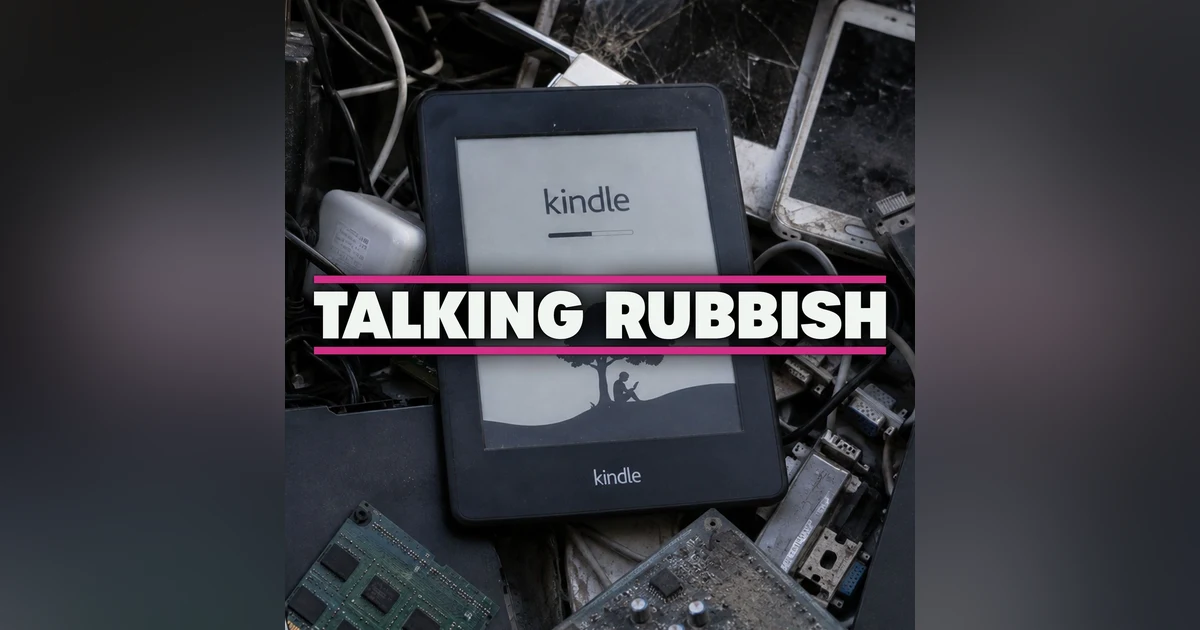
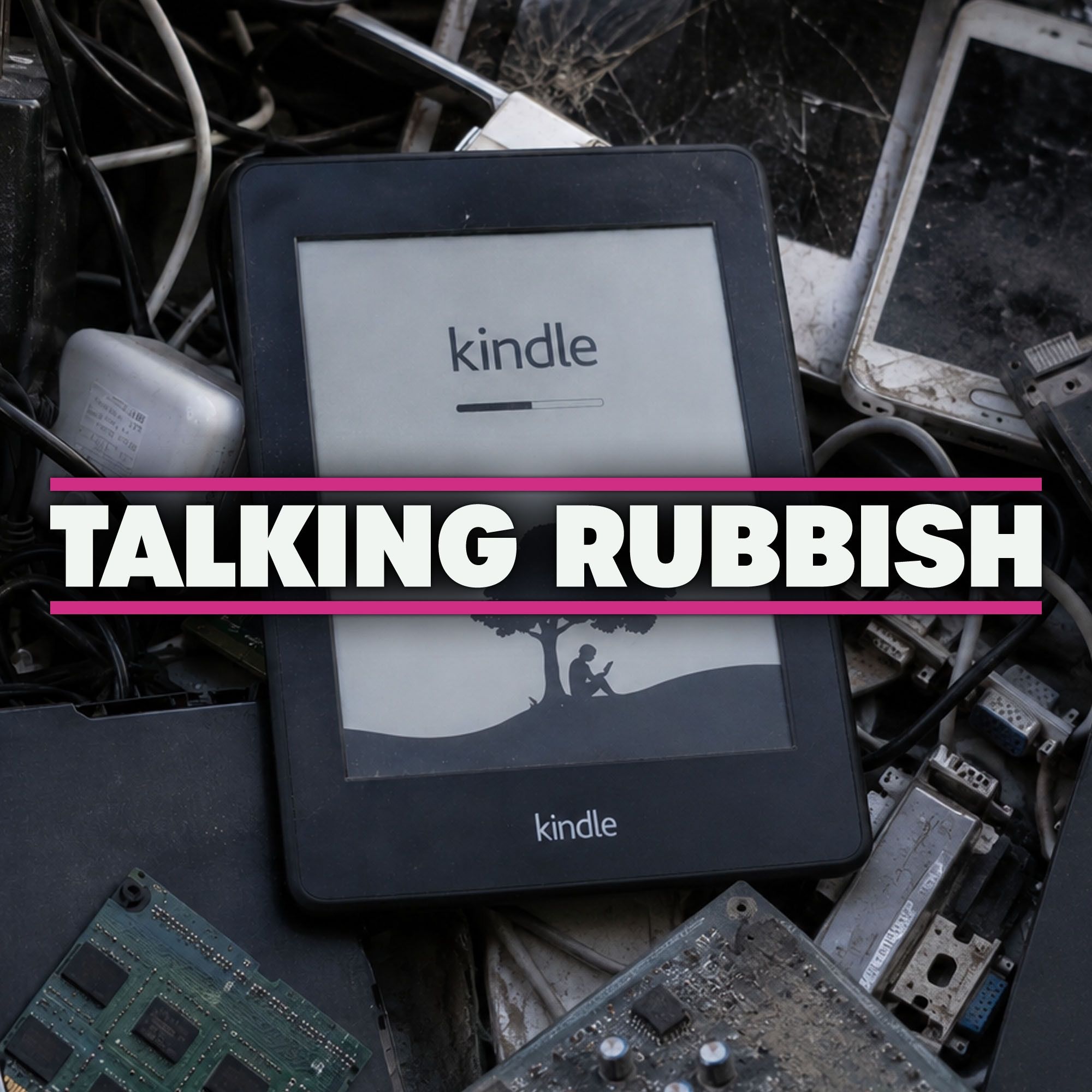
Amazon has announced that some older Kindles will soon lose support, turning devices that still physically work into obsolete products. It’s the latest example of a growing trend in tech, where companies phase out support and push consumers toward upgrades, creating mountains of unnecessary e-waste in the process. In this episode, we explore examples of planned obsolescence, the environmental impact of disposable tech, and what it could mean for consumers in the future. Plus, is wallpaper rubbish or not, will mass running events have to charge a bottle deposit, and why is James making friends at his local recycling centre?

 Apple Podcasts
 Spotify
 YouTube
 Amazon Music
 Castbox
 Podcast Addict
 PocketCasts
 Key Takeaways
- Understand how tech companies, like Amazon with Kindles, deliberately make devices obsolete to drive sales, contributing to e-waste.
- Recognize planned obsolescence as a tactic leading to unnecessary electronic waste and environmental damage.
- Explore the environmental impact of disposable tech, from resource depletion to hazardous materials.
- Discover practical steps you can take to reduce your personal e-waste footprint.
- Learn about innovative solutions and consumer power to combat the e-waste crisis.
Amazon has announced that some older Kindles will soon lose support, turning devices that still physically work into obsolete products. It’s the latest example of a growing trend in tech, where companies phase out support and push consumers toward upgrades, creating mountains of unnecessary e-waste in the process. In this episode, we explore examples of planned obsolescence, the environmental impact of disposable tech, and what it could mean for consumers in the future. Plus, is wallpaper rubbish or not, will mass running events have to charge a bottle deposit, and why is James making friends at his local recycling centre?
Join hosts James Piper and Robbie Staniforth as they delve into the world of recycling, hopefully having fun along the way. One thing is for sure, they will talk absolute rubbish from start to finish.
We would like to have an evening Talking Rubbish to celebrate our 100th episode. It will be in central Bristol on the evening of the 25th June, to let us know if you can make it, book your place on Eventbrite
Please take a moment to complete the Simpler Recycling tracker
We would love you to join our community on Discord
Special thanks to our sponsor, Ecosurety
To get exclusive videos and clips, follow us on Instagram, TikTok, Threads or Facebook; @rubbishpodcast or YouTube: @talkingrubbishpodcast
Or you can contact James and Robbie with questions or just general rubbish musings using the email address talkingrubbishpodcast@gmail.com or by texting them via WhatsApp on 07356 069 232
Relevant links and reports mentioned in the programme can be found on the Talking Rubbish Linktr.ee
Transcripts and episodes can be found on the Talking Rubbish website
Timestamps:
From Kindle to kindling - how Big Tech creates waste? - 03:17
Additions and corrections - 33:44
Rubbish or Not: wallpaper - 41:32
Rubbish News - 43:52
Will mass running events have to charge a bottle deposit? - 47:54
Residual Rubbish - 53:35
Music licence ID: 6WPY8Q4O2RPFIOTL
Frequently Asked Questions
How does Big Tech contribute to the e-waste crisis?
Big Tech contributes through planned obsolescence, phasing out support for older devices, and encouraging frequent upgrades, turning functional electronics into waste.
What are examples of Big Tech creating e-waste?
Amazon's Kindle support discontinuation is a prime example, making still-working devices obsolete and pushing consumers to buy new ones.
What are the environmental consequences of disposable tech?
Disposable tech generates vast amounts of e-waste, often containing toxic materials that pollute the environment, alongside significant resource and energy consumption during manufacturing.
How can I reduce my Big Tech e-waste?
Opt for durable devices, utilize repair services, support companies with better longevity policies, and recycle electronics responsibly.
James Piper: Hello. Welcome to Talking Rubbish, a weekly podcast delving deep into the world of recycling and discussing the truth behind snappy headlines and one sided storeys. In this episode we will discuss how Amazon killing the Kindle creates e waste. Is wallpaper rubbish or not? And I have a question about how the London Marathon will deal with deposit return schemes. I'm Jace Piper, author of the Rubbish Book and I'm joined by Robustaniforth, my far from rubbish friend. Morning, Robbie.
Robbie Staniforth: Hiya, James.
James Piper: How are you today?
Robbie Staniforth: Really good.
James Piper: Oh, great.
Robbie Staniforth: Always good, Always good.
James Piper: That's good. That's great. I'm not even gonna say that's good. It's amazing. We're pumped, Robby. Talking Rubbish Recycled Content is going from strength to strength. It's doing so well.
Robbie Staniforth: I've even been listening myself trying to remember the odd thing that I've said in the past about certain items and whether they're rubbish or not, because we've done so many now that that it's actually quite hard to remember exactly which side we fell down on. One or two of them.
James Piper: Yeah. One thing I noticed is that Castbox, and I don't use Castbox, but it's one of the podcast players was suddenly getting a huge volume of listeners. It was. For a while, it was our number one place people were listening to us. It jumped up to like a thousand subscribers. This is on Recycled Content, not the yellow. Not this podcast, not the Yellow Umbrella podcast. And I was trying to work out why that had happened and it appeared we were featured on the homepage of Carsbox for a while. So I just went there and saw it and we were on the homepage. 52% of our downloads so far are from Carsbox on Recycled Content. And if you compare that to this podcast, this podcast gets 3% of its downloads on there. So that just shows you what being featured does. It's amazing.
Robbie Staniforth: Oh, wow. Well, thank you, Castbox, for featuring us.
James Piper: Yes, thank you. So I don't know how we did it.
Robbie Staniforth: No idea.
James Piper: But what it means is we might be getting new listeners because we've got a completely different listener base for Recycled Content to this one. So I reckon there's people who are listening to the little clips and they go, oh, I might go and listen to that, that longer podcast. So if you've done that, welcome and we hope you're enjoying it. Do you know what's fifth in the list for Recycled Content? So Cast Box is first, then I think it's Apple, fifth in the list.
Robbie Staniforth: Presumably YouTube and Spotify are the next two so Podbean.
James Piper: Okay, very good. Oh, you know your players. It's something that actually doesn't even appear in og. Talking Rubbish. It doesn't appear on our list of things people listen on. And it is Alexa.
Robbie Staniforth: Ah. Whoa.
James Piper: Okay, I'm imagining people are hovering over their recycle bin with a. I don't know, what item are we gonna pick?
Robbie Staniforth: Toothpick.
James Piper: Blister pack. Toothpick. Toothpick's good. They're hovering over their bin with a toothpick going. I can't remember. Alexa. Oh, sorry. If anyone's got Alexa in the background, that's gonna start it running, isn't it? Okay. Personally, you're an Alexa. Guys, Alexa play. Talking Rubbish. Recycled content. And then what I've just done is massively boosted our Alexa numbers. Robbie. Playing out across the land right now. Trash door on this podcast and on Recycled Content, we would like you to recycle your electricals correctly. However, there are times where you wish you wouldn't have to. And Amazon have created one of those occasions.
Robbie Staniforth: Wow. Okay, so we're moving straight from the praise of Alexa to dissing them in this section.
James Piper: Yeah. Oh, no, don't move us down. Sorry, Amazon overlords. Sorry, we can't find Talking Rubbish. Oh, goodness. From next Wednesday, as this episode goes live, which is 20 May 2026. All Kindle models released before 2013. So the Kindle is their electronic E. Don't call it electronic ebook. What does the E stand for? Kindle is their ebook. And any that are made before 2013 will stop being supported by Amazon and will basically have their store switched off. So you won't be able to download any new books. So you can read all your old books, but you won't be able to download any new ones. This is around 2 million devices, potentially creating over 600 tonnes of electrical waste.
Robbie Staniforth: Wow, that is a lot.
James Piper: It is a lot. Yeah. And it's not the first and it won't be the last example of tech becoming unusable over time. One of the thoughts I had was ebooks became more and more popular and I'm trying to think when they became really popular. So. So this is like 2 million devices, but I'd imagine if you went into like, 2013, 2014, 2015, the numbers would increase quite rapidly. And so over the next few years, they'll start switching off other models and the numbers will get bigger and bigger. This is a problem that compounds. It's not just now. I guess it's something that we're experiencing in Tech everywhere. So we thought we'd look today at a few examples and the impact these decisions that brands are making have on our waste electricals. Just as a bit of a kind of hook to keep you going till the end, I will give you a hack that I think might keep your old Kindle running if you want it to.
Robbie Staniforth: Oh, whoa, Great teaser. Okay, I don't have one of these devices but I would like to know how to advise people because I'm sure I'll get lots of questions about it after this episode goes out. So I'm looking forward to that.
James Piper: Now what Amazon is saying is keeping the older Kindles running is becoming a security issue. Now I just want to clarify, it's not so much cyber criminals wanting to know how far you are through something like Lord of the Rings. Can you imagine what can we do with this data? James is 53% of the way through two towers.
Robbie Staniforth: I think they got bad things to do with their time on there.
James Piper: Depends on what you're reading. How to security proof my house. And then they'll be like, he hasn't got there yet. But as these Amazon devices, you are probably using your Amazon credentials to log in and that is why the security can become an issue. So even though you think, oh, it's just an ebook, who's going to care? Why are cybercriminals going to care? You are connected to a store that's got your login details on, so it makes sense that they want to keep that safe. And this is what happens with tech, right? Devices built for a different time are not able to run newer and more data hungry software. And so we are all constantly upgrading our devices to keep them efficient and safe. I know we've talked about Tesla a lot, but Tesla had this where they sold cars on the premise that they could self drive. You know this is like 10 years ago, Tesla was saying we're going to have self driving cars. They've got this computer software in, they've got this hardware that allows them to self drive. And then they built more and more sophisticated self driving technology and realised the hardware they put in couldn't run the software they'd built to do the self driving. So even though they'd sort of tried to future proof the car by putting hardware in it that they thought would run it, by the time they actually started rolling it out, they realised that actually the software was going to be way too big. And so they recalled the cars back in to get upgraded hardware to run them new software. And so within the, within The Tesla forums, it was like, what hardware are you running? People would be asking as to how good your self driving technology was. And when I say self driving, I mean the very primitive version we have in the UK and a much more sophisticated version in the us.
Robbie Staniforth: Yeah, okay, so, but that wasn't deliberate, like inbuilt obsolescence as the phrase goes. That was just they thought they had the tech in it, but then it proved to be wrong and they did the right thing by recalling them and upgrading them or whatever.
James Piper: That's right. And creating a load of waste, I'm sure. But I'm sure they set out for recycling or reuse. Right. They must have done. So we throw away a lot of electricals according to Material Focus, we throw away about 1.6 million tonnes of electronic waste each year in the UK and only about a third of it is collected properly, you know, through the waste electricals collection systems, which is you take it back to a store, you take it to the civic amenity site, your recycling centre and recycle your electricals. Say that we buy over 500 million fast tech items each year and we bin. So we buy 500 million and we bin 471 million.
Robbie Staniforth: And I think that's a great example of where the count of something, thinking back to the big plastic count last week is so important, isn't it? Because it's actually probably washing machines getting recycled that are very heavy and quite easy to recycle compared to smaller items is probably slightly skewing the statistics. And this is a great example of where account is important. We're talking about these tiny little electricals that seem incidental but actually add up to quite a lot of precious materials just not being recycled.
James Piper: Yeah, it's a really good point. Now, I wouldn't class an E reader as fast tech, obviously, but what the numbers tell us is we do have this drive to replace things, you know, we'll buy something and replace it. And so 500 million to 471 million. You're basically buying, throwing away, buying, throwing away. And companies in terms of replacement do this all the time when they retire their old tech. They say, don't worry though, it's fine that we're getting rid of this old Kindle because we'll give you a discount on a new one. And companies do this over and over again and that's how they try and reassure customers that it's all okay and you're allowed to buy a new one because we're giving you a discount on it. And so this replacement strategy is baked into this kind of planned obsolescence or products becoming obsolete. If Amazon is no exception to this, if you wanted to upgrade to the newer Kindle hardware, at the moment they are offering a 20% discount on the new Kindle and an ebook credit which is to the value of the Kindle you're trading in. So the email I saw was like $20. I don't know what it is in pounds, but there was a code that went out with the email saying your Kindle is going to stop working. You could put that code in, you would get 20% off the new device and an ebook credit for your new device.
Robbie Staniforth: And do you know if you had to send in your old one that that's not. You just had to prove you had one. Do you? Because I get these kind of emails all the time.
James Piper: Yeah, Amazon know you have one because of your registered. So I wasn't sure because I did have an older Kindle and I thought maybe I have one before 2013, but I didn't get the email so I assume I didn't. So Amazon will know your device, you don't have to send it back to them because they're bricking it. It will stop working from next Wednesday so they don't need you to send it back. They know it's not going to work. And to be fair to them, I understand that supporting 13 year old hardware forever isn't realistic. Right. I get that products would be so much more expensive if you had to bake in and we'll support it forever into the price. We'll have this team that's constantly rolling out security updates, constantly thinking about it, but maybe we should pay a bit more for our electricals and maybe the law should force companies to continue supporting it. So I can understand that companies want to deliver us electronics in the cheapest way possible because that's how they make the most sales. But I do think there should be a law somewhere and we'll talk about the legalities towards the end of this trash talk, but you should offer this much support for this length of time and build that into your price of the product.
Robbie Staniforth: Yeah, I agree. It's like isn't it just ridiculous that you've bought something, you own it and now it just doesn't do the one thing that I bought it for and it becomes totally useless. So regardless of the kind of timescale, the fact that you own an item that is intrinsically reliant on someone else, somewhere, some company somewhere doing something so you can continue to Use it. It's quite sort of dumbfounding and maddening, I'm sure, for many of those people who are quite happy with their, frankly, very long lasting and in most cases a very good device that's lasted all this time.
James Piper: That's a very philosophical question. Do you own it? Because I think something that has happened with tech is more and more it is designed as a rental model. You know, do we really own our mobile phone? If you're replacing it every two years and you're on a contract for the two years that you have it, do you really own these devices? If companies can switch them off overnight? If companies can say, I'm just going to remove access to a store, yes, you might have bought it, but do you own the content that's on it? I think a lot of tech now would be considered as a rental model if we actually looked at it properly and how it functions. Books specifically have this problem, ebooks, and they have this thing called digital rights management, they call it CRM. So if I buy a book, Robbie, if I go out now and buy a book, finish reading it, I can just pass it on to you, right? I can say, that was a really good book, Robbie, have a read of this. And I actually encourage this in the front of my book because I acknowledge that books are really difficult to recycle. So I have like a page at the front where you can write your name and you pass it on and then they write their name. I remember that, you know, there's like a lot of spaces just to put names in to encourage people to pass it on. Digital's a bit different, you know, I can only pass a real book on once and then you can pass it on once. But it takes time, we've got to read it, right? Takes a lot of time for us to do it. But obviously, when you're into digital, I can pass it to millions of people. I could just download a copy, email it to millions of people at once with no loss of quality, no degradation. The book isn't getting ripped because it's on my computer. And so when digital was taking off, companies had to solve for this. They had to say, actually, we need to make it so that people can't just give away our book. And so they created this thing, digital rights management, which basically means you're only ever borrowing the thing you're buying. You are being given a licence to the book from Amazon in this example. And Amazon is saying, we're giving you this licence, but we can revoke that licence at Any time. We can revoke this book at any time.
Robbie Staniforth: Is that what it really says?
James Piper: Well, I can give you an example, because in 2009, Amazon actually remotely deleted copies of. Are you ready for the irony of these books?
Robbie Staniforth: Yeah.
James Piper: Copies of animal farm and 1984. It's the most Orwellian thing. They remotely deleted copies of those books from Amazon Kindles after refunding the purchase price. But just to prove that you didn't own the book, they just deleted it. Now, they didn't do it for that reason. They actually revealed the reason behind it was because they. They were unauthorised reproductions of the books. And so they actually didn't have the rights to sell them in the first place. I'm not entirely sure how it happened. I think it was sold on Amazon, you know, like, they have Marketplace and stuff. So maybe it was like someone else had essentially photocopied in the digital world, you know, photocopied the books, put them in the store. People have bought them. But, God, what an irony that the books that they reached into our Kindles and deleted.
Robbie Staniforth: Yeah. Was that real life mirroring fiction?
James Piper: Yeah. So I guess that's just a good example of us not really owning the content that we're buying. And it's the same. I mean, how many of us have been. And this certainly happened to me a lot. You've been watching Netflix and you're halfway through a series and then suddenly it disappears and it's moved to a different streaming platform and you're like, what? I was halfway through that. Yeah, that has happened to me a lot.
Robbie Staniforth: The more common one, actually, I find, is they say it's going next week, and then it's like, no, we can't go out for dinner tonight. We've got to stay in and watch the last two episodes of X. Netflix.
James Piper: Yeah, absolutely. And we're all getting used to this. Like, we're getting used to not owning things. It was quite funny because when we moved house, I've got, you know, I have a fairly substantial DVD collection that I bought over my teenage years. And when we were moving house, there was this big discussion about whether we take it with us or not. I decided to put it in envelopes and remove. Reduce the size of it significantly to just the discs. But I'm delighted that I've got that because occasionally I want to watch a film and it's not on any streaming service, and I'm like, oh, I've got it on dvd. I'll just go get that. I'm going to start getting frustrated when the PlayStation stop putting disc drives in, which I suspect is the next one, because it's going to become harder to watch them. But it is amazing how often I turn to that hardware and go, God, I'm glad I've got that. Yes, we've talked a bit about the Kindle, but Amazon are not the only company doing this. There are many examples. Just this year, Netflix has ended Support for over 87 million older devices. Now, this was a bit of a snappy headline that's got a bit. Basically they stopped supporting the PS3 and everyone went, oh, well, there were this many PS3s sold. And he's like, yeah, but how many people are actually using a PS3? Sure I am, for my DVD collection. But it was a bit of a misleading headline. But they did switch off support for these older PlayStations. Google discontinued some of the older Nest thermostats, so they couldn't be connected to the app. After just three years on the market, Spotify discontinued an item called Car Thing, which I hadn't really come across. Basically Spotify created a screen for your car which controlled Spotify. So basically to make your car a bit techy, it literally was on sale, I mean, three years from start to finish. But I think the public sale was like just one year within that. And originally they said no refunds and it's not going to work and we're not going to give you any refunds. And they did change that position after backlash and a class action lawsuit being filed. So very nice of them to change that position. But it did take quite a lot, I think, for them to say, actually we'll give you a refund. But imagine that there were people who bought this product and then a month later it didn't work. They were saying no refunds.
Robbie Staniforth: Yeah, but James, just be a little bit careful. We're calling out all of these podcast streaming platforms. Sorry.
James Piper: To our Spotify overlords as well. Carl, you watch our Apple numbers boost. How can we criticise Apple? Apple actually did the opposite. Do you know about this? Apple? Apple one day put U2's album.
Robbie Staniforth: Oh yes.
James Piper: On everyone's like phone and ipod.
Robbie Staniforth: Yeah.
James Piper: And that was a real. That was really scary. In terms of what you can just add an album. I didn't ask for, didn't pay for, don't want to my phone or ipod. It was very scary. And so they did the opposite of removing books. But it got everyone just as worried. Cause it was. It just showed what. That I don't own the thing. That I thought I owned. Okay, that's all of them. We've annoyed Spotify, Apple, Amazon, podbean, we're coming for you. Right. I think we should give two personal examples that have impacted us, Robbie. So I, I came up with Sonos because for me, I think this is worse than Amazon. This example, I think this is from a corporate stupidity perspective.
Robbie Staniforth: Oh, really?
James Piper: This is up there. Sue me if you want to. Sonos, because I think this is crazy and I love Sonos. I have them all over my house. I think they're great. But this single act was so irritating and frustrating. So what they did was they really wanted you to upgrade your hardware. Okay, Now, Sonos, for anyone who doesn't know, make speakers. And the appeal of those speakers is that they can, they all connect. So I can just say to Spotify, play this song and I can play it throughout my house or just in individual rooms or whatever. They're all just connected into a. Into a network of speakers. In 2019, Sonos launched a programme they called the Trade Up Programme. So they wanted you to upgrade to their latest speakers. Now, they had forever sort of put themselves as like, it doesn't matter. When you buy the speakers, they'll all
Robbie Staniforth: connect to each other, okay, no matter what generation. And small ones, big ones, they all work together.
James Piper: Yeah, they did actually break that promise in 2022. They created a new app. And the new app didn't work with the old devices, but that's a different problem. That's not this Trade up programme. So with this trade up programme, they said, we will give you 30% off when you upgrade to a new speaker. But you had to press a button in the app that killed your old speaker. So what they did was they said if you want to buy a new speaker, put in the serial number, the code of the one you want to kill, you buy a new one and you get a 30% discount. But the 30% discount only becomes active if you press a button in your speaker in your app that kills the old speaker. And they called it recycle mode.
Robbie Staniforth: Oh, my word. What an absolute own goal that is.
James Piper: And so what they said was, oh, well, we don't want everyone posting speakers back to us to prove that they've been recycled, et cetera, et cetera. But they stopped you selling it to a. Selling it on a marketplace, giving it to a friend, you know, they stopped you doing anything with it. They literally killed a perfectly good product with a button in an app that allowed you to get 30% off a new product.
Robbie Staniforth: That's crazy. And it could have just been used in like Bluetooth mode, presumably as a standalone speaker for the rest of its life or whatever. For years and years and years.
James Piper: Yeah, but it's dead, it's bricked. It literally can't do anything. It was crazy. Unbelievable. After a few months of some serious backlash, as you would expect, they did u turn on this and you can now get a discount without having to do anything to your old device. So if you put in the serial number of your old device, you can get a discount discount on a new one up to 30%. And you can sell that on, you can give it to a friend, you can keep it, it doesn't matter. They're just saying because you're a loyal customer, you can buy a new speaker, basically. So what they said in a statement is customers still receive a 30% discount on new Sonos products, but they can now choose what to do with their old device, continue to use it, give it to a friend, donate it to charity, responsibly, recycle it at the local e waste facility, or send it back to Sonos via prepaid shipping label. They fixed it and I'm happy. But the fact that a boardroom thought it's a good idea for us to create intentionally ways just to sell more products is so frustrating.
Robbie Staniforth: Just goes to show what some of the motivations are within these companies, doesn't it? So my example, and I don't wish to blame you here, James, but was a product that you recommended to me and if I'm honest, it has served me well. I've had it for nearly 10 years now. It must be. Must be sort of eight or nine years. And it's a bike called Vanmoof, which is the correct pronunciation.
James Piper: Say it again. Funmoof is here. I thought it was van. I knew it wasn't VanMoof. I've been saying Van Moaf, but you're saying FanMoof.
Robbie Staniforth: It's an F sound because it's Dutch. But anyway, let's. VanMoof is what most people in the UK call it. It's a Dutch bike with lots of tech and electronics inside it. Had this bike, as I say, for nearly 10 years, James. You had one. I took one ride on it and was like, I gotta get myself one of these. My daughter had recently been born and needed an E bike so I could get up the Bristol Hills with her on the back. And it's a very cool bike. Cool security features like integrated kick lock for security and alarm tracking, and also a free replacement service because they were so confident in their security features that if it got stolen, they would replace it for you. And mine did once get stolen and they did replace it for me. So I am living proof that that was great service. And it's also got really brilliant smart features in the app. You can unlock it, you can change speed, it's got integrated lights you can turn off and on using your phone, change the assistance level that it gives you going up those tough Bristol hills. But it's probably a bit too clever for its own good, is what I must say. And the issue came actually, to be fair, to VanMoof, when they file for bankruptcy. And it was then bought out by McLaren, which was great news. So there was a small window of about six months to a year or so where there was no company to go and speak to if you had any issues. So it was great that a subsidiary of McLaren bought it out. However, the bike is still working, but they no longer support any of the parts, they no longer offer any online support from the company. So they've published all the articles for this bike. It's the S2 model, and I think they're up to about the S6 model by now. So, unfortunately, if it breaks down, it's going to be a very niche and novel activity trying to find someone to get this thing repaired and keep an electronic bike on the road. And the one big feature that was a huge selling point of it was the tracking previously that just came because there was a SIM card within the bike that operated on the 2G network so that you could find out, like Apple, find my phone type thing, you could find where the SIM was, but unfortunately it became permanently defunct and irreversible. A bit like that button you mentioned earlier on the Sonos, if you didn't pay a subscription for it. Buy. Just last week, actually, and I forgot to go and buy this subscription. So now don't let the criminals know. But I don't actually have tracking on this very clever bike anymore. So maybe I'm being a bit pedantic. It has served me nearly a decade and it's been a great bike. But it is one of those things where because of the high technology and support costs involved in it, just eventually it becomes the function.
James Piper: Do you remember mine was stolen in the city centre and. And it had that tracking feature on. So basically you go into the app, you say it's been stolen and it suddenly loads up a map going, this is where it is. And it was in a construction site.
Robbie Staniforth: Oh, really? Oh, Yes, I remember this.
James Piper: And there was the beep in the middle of this construction site, Right? And in the middle of the construction site was just a white van on its own. It was just like nothing had actually been constructed on this construction site, just been demolished. So it was. Imagine just a square that's got nothing in it except a white van dead in the middle, exactly where my bike is. I saw a police car, so I called the guy, called the police officer over and said, look, I'm really sorry to do this to you, but my bike's been nicked. You can see on this map that it's in the centre of this construction site and there's just a white van there. It must be in the back of that van. Would you mind just going and having a look? Police officer drives into the construction site, goes and chats to the white van driver, who proceeds to open his wide van. And I can see there's nothing in it. Oh, that's weird. And my bike. My bike's gone. So I got home and I was really, really confused and I got onto Google Maps to have a look at this construction site, realised there was an underground car park under it.
Robbie Staniforth: Oh, no.
James Piper: My bike was in that underground car park.
Robbie Staniforth: Oh, darn. And this poor white van driver was like, what? I haven't stolen anyone's bike.
James Piper: Yeah. Meanwhile, below the ground, someone had anyway, never saw it again. But they did replace it. You're right, that was a very good, but not a great business model for them. They went into administration. But a very good business model for me and you who got our replacement bikes. Great example, Robbie. So remember, everyone, I'm not a lawyer, but I did say I'd quickly chat about the legalities of this. I think what's happening is there is a distinction between physical products and their digital stores or environments that they're in. So there is a lot of protection for us as consumers on physical products. So I'm not sure Spotify had a good case in terms of their screen because that was a physical product that was stopping working. But Amazon is saying, well, you can still read your old books. We haven't turned that off. We're just turning off your ability to read new books and a lot of that. The environment and the software is covered by T's and C's. So I wanted to see what Amazon says in their T's and C's for the Kindle. And there is a line that says, says availability of Kindle content. The catalogue of Kindle content on the Kindle store, including Any subscription content is constantly changing and new Kindle content may be added and existing Kindle content removed at any time. So I think they cover themselves with the T's and C's that they're allowed to do this. And UK law does not currently guarantee lifetime support for any for tech products. But I do think there is increasing pressure for minimum support periods which as I said at the start, I would fully support.
Robbie Staniforth: Yeah, given the amount of times you said the words Kindle content, they're definitely clear about it.
James Piper: Okay, I promised at the start I would tell you how I think you can keep your Kindle running. And this is a thing called side loading.
Robbie Staniforth: Ah, okay, here we go.
James Piper: Okay, so what you do, and I haven't tried this because I haven't got an old enough Kindle, but this is what I think you can do. You stick the Kindle in aeroplane mode. You want to get off the servers because Amazon like to delete side loaded things. So you just want to get offline. It's not going to work anyway, so you might as well just keep it in aeroplane mode. Then you need content you actually own. So there's a couple of websites here, ebook.com and smashwords, the ones I found where you can find books that are DRM free. So they don't have that digital rights management and major publishers typically will always be drm. So this is going to be self published books, but there's loads of them. I went on to Smashwords, download a couple of books last night, then you download the file to your computer and you connect your Kindle to your computer via USB and then you'll need to access it with some software. So Calibre is one of the open source tools you can use and that'll transfer the Ebit ebook into your Kindle and it'll form part of your library so you can download new books without the store. But my recommendation is get it into aeroplane mode, plug it into your computer, download a book online and transfer it in.
Robbie Staniforth: Okay. Wow. And this is all perfectly legal. James, you're not.
James Piper: Yeah, side loading's fine. I mean, at best you're removing a warranty of a device that doesn't work anyway. I think it's fine. Of course you could skip the ebook altogether and just go for apps. And if you go somewhere like bookshop.com and use their app on a tablet, for example, then you're generating money for local bookshops. So that might be a better solution. Ditch the ebook and move to a different device, your phone or tablet and download from a place that's giving back to local bookshops.
Robbie Staniforth: Yeah, great idea. I mean, it's such a shame. Weren't the original Kindles just a great example of something that proved to be slow tech? I remember thinking it was a fad, like people wouldn't move from books, but look how prevalent they are now, and they were perfectly designed for the job. And these other features of the newer ones seem to be ones that aren't necessarily really needed, at least by everyone. And I wonder if there'll be a swing back to lower tech and more reliable goods. I saw the other day the Kodak Charmerer. Have you heard of this?
James Piper: I hadn't until you mentioned it, but I'm going to give you some info on it, but you go for it first.
Robbie Staniforth: Oh, wow. Okay. Well, it's a 1.6 megapixel camera with no zoom, no editing, no undo, and it's sold out in minutes. Apparently it's like a sort of keychain retro thing that you can carry around with you. Hopefully it's not a fad. You know, it is a small and relatively cheap device, but it just goes to show that maybe that's a sign of things to come. In a world where we've spent decades seeking perfection and automation and editing our lives or whatever through very smart cameras on our phones and stuff, maybe there'll be a swing back to more simplified and cherished devices that don't rely on lots of software and things like that to keep them running.
James Piper: Yeah, it's great that it's a low tech device. What's the other thing that current products are doing, Robbie, that annoys us on this podcast?
Robbie Staniforth: Oh, gosh, now you're asking me.
James Piper: You got anything you can think of that really winds us up? We've done two episodes on it. Perhaps.
Robbie Staniforth: Oh, gosh, now you're really putting me under pressure. No idea.
James Piper: Okay, if you go on the Kodak Charmer website, let me read the headline for you. The cameras are sold in blind boxes.
Robbie Staniforth: Oh, no.
James Piper: Whether it's a party gift, a collectible item, or a shared surprise among friends, it adds an element of surprise and fun. With seven uniquely vintage designs, including one secret edition, every unboxing is a mystery awaiting to be revealed. So even when we think, oh, great, we got a low tech device, they still screw us with the blind box.
Robbie Staniforth: Oh, man, that's so annoying.
James Piper: Yes, the secret edition features a transparent shell that shows off the camera's inner workings and the probability of drawing. The secret edition is 1 in 48. There you go.
Robbie Staniforth: Oh, no, man.
James Piper: So what's the takeaway from all this? Robbie should visit websites before he starts promoting low tech products, and that's definitely one of them. But also, it's not really about Kindles. It's about this quiet shift in what it means to own something. More and more, the things we buy are not really ours. They're temporary, conditional, dependent on a brand deciding they're still worth supporting. And when that support ends, I think products just become waste. Perfectly functional devices just get turned into waste. 600 tonnes in this one case. And if we went through and did all the tonnage of the Sonos and the how many codec cameras you have to buy to get the special one and all those things, you would work out how much waste is actually being created. That just doesn't need to be. As with all things, it only works because we accept it. It only works because we buy stuff. We. We upgrade, we replace, we move on. And maybe we shouldn't. Maybe we should ask better questions. How long will this thing I'm buying last? Can I repair it? Do I actually own it? You know, the most sustainable device is one that you're going to keep using. And if companies don't design for that, then it's on us to push back. Additions and corrections. A while back, the. The Scottish were pretty annoyed at me as they'd misunderstood a discussion we had on battery fires. And now I'm not sure I'm welcome in Ireland, following similarly strong views on DDRs in episode 92. So we're going to have a DRS heavy additions and corrections. Let's just talk about Drs, Robbie.
Robbie Staniforth: Okay?
James Piper: And to the Irish, I'm so sorry. I'm actually going to Dublin in a week for a wedding as this episode goes out. So I really, really need the Irish to forgive me because I'm heading at least with Scotland. I wasn't planning on going, so I was like, well, I'll let that die down a bit. But, yeah, the Irish are fuming about my views on drs. With that in mind, I want to be really clear about what we said. We were talking about the difference in finances between epr, extended Producer responsibility and drs. And DRS means at the moment, it is cheaper to use plastic and aluminium in DRS than glass in epr. And if we don't engage with the scheme and get up to a 95% return rate, that situation is made worse. As in the difference in cost between EPR and DRS is made worse by unclaimed Deposit, as I said in the episode, and I stand by, in year one of the IRIS scheme, unclaimed deposits could have funded the whole system. And I just want to be clear, that is not me saying the Irish scheme is rubbish. It is not me saying return rates are not going to get better because I said they would. But it is true that there is a pile of cash unclaimed that could make the difference between EPR and DRS bigger if they decide to use it to lower producer fees. And I fear this will be true in the uk. I fear for a couple of years in the ramp up money will be compounding and generated on a much bigger scale than we're seeing in Ireland that doesn't have a home because at any point someone could claim their deposit. So you've got to keep it in a bank account and over time it's earning interest and you're using that interest to fund the scheme and then that is lowering producer fees and that makes glass in an even worse situation. And we've actually seen some moves in drs, haven't we, in the last few weeks, just as some additions. So in Ireland, the deposit is 15 cents for single serve bottles and cans and 25 cents for larger formats. But the UK has just announced that there will be a 20p flat fee on everything.
Robbie Staniforth: Yeah. No matter what the size.
James Piper: Yeah. Now this means, and this is one of aluminium industry's criticisms of it, if you're buying a pack of 24 cans of soft drink, the deposit on top of the purchase price, which when I looked Yesterday was about £8. So you're buying, you're spending £8 on a pack of 24 cans of soft drink, you're going to pay four £80 on top of that as your deposit, which of course you will get back if you return it. But as we said in our DRS episode many, many months ago, this is going to drive more plastic because people will buy a few 2 litre bottles rather than a pack of 24 cans. I do think people will look for value and so I don't disagree with a 20p flat fee. I think it keeps it much simpler. I think it's. It just makes sense to just have it as a flat fee. But it will drive people to buy bigger formats in plastic than smaller formats in aluminium. I'm confident of that. And what they've also done as well as the 20p flat fee, is talked about packaging needing to be a certain size to get into the reverse vending machine. Just after I'd read this, I Went to my local shop and they, at the end of the aisle, had a load of Biggies, which is the giant version of Buzzballs that we talked about. We talked about in our Buzzboard episode things. Yes, we discussed this back in episode 57. They're massive. They're like the size of a football, these biggies. They're 1.75 litres, so they're in scope for DRS. They're made of pet, so they're definitely in scope for drs. They won't get in a reverse vending machine. They look like a football. So this got me thinking, does exchange for change? The people in charge or the government have the power to dictate our packaging. Are they going to be able to say to Buzzball, you're not allowed to put that on the market. You now need to change your packaging? So I turn to policy advisor extraordinaire Robert Staniforth for the answer.
Robbie Staniforth: Well, yeah, so I've been doing a bit of digging on this and you're right that they won't meet the most of the reverse vending machine specs. In fact, I think any of them. So they'll have to be returned via manual returns, like over the counter. So there is going to be an option to return some of these things manually. So wherever you turn up with your biggies, should you be drinking that kind of thing, you need to go to a place where they allow you to manually return it, because alongside other items too, that don't fit the spec of the machine, but are between 150 millilitres and 3 litres, they absolutely do have to have the deposit. They're not exempt, they will be part of the system, but they will be manual. And so no exchange for change. And the government don't have any existing powers to try and ban them per se. But there is a general assumption that many of the retailers will simply start to delist some of these, these products because they become inconvenient. You have customers returning to the store saying, here's me Biggie, where do you want it? And it's a bit of a nightmare for the cashiers or whatever to take it over the counter. And so, as it stands, they absolutely are in scope of the scheme, but they must be collected by retailers who have to accept them at return points, even if it's not via these reverse vending machines. So it's definitely a problem that's coming down the track for the likes of Buzzballs. And they're going to be having to think about a different, probably clever way of marketing their drinks. If they want to continue to be listed at these supermarkets,
James Piper: We'd like to take a moment to thank our sponsor, Eco Surety, who are on a mission to rid the world of unnecessary packaging. They help brands navigate the tricky world of extended producer responsibility. But that is not all. They also collaborate on some incredible recycling projects and consumer awareness campaigns for those tough to recycle materials. If you're an organisation looking to make smarter packaging choices, cheque them out@ecosurity.com Best thing you can do to help our podcast grow is to tell your friends and family about it or to leave us a review. And if you leave us a review, you could be Robbie's review of the week.
Robbie Staniforth: And so this one came in from shy on email, straight into the bin box.
James Piper: And before you say the review, Robbie, I just need binfluencers to put themselves in my shoes. So for a number of weeks now, including today, I think I have been giving legal disclaimers to a lot of my comments saying, look, I don't know what I'm talking about, I'm not a lawyer, please don't sue me. The only people I've actively asked to sue me, I think are Sonos today day. So now binfluencers have that context. Let's hear the email.
Robbie Staniforth: Not sure if I should thank you or sue you.
James Piper: Oh, God. Oh, my God. I thought this is the end. I read that line. I thought, we're gonna have to stop the podcast. I think that was the subject line, that.
Robbie Staniforth: That was the header. Yeah. Anyway, it goes on to say thank you, as I have learned so much from your excellent podcast, and sue you for potentially turning me into that dinner party bore who starts every conversation with, I was listening to this podcast about rubbish.
James Piper: I don't think they have a case. I think we're fine. Thank you so much for that email. I really enjoyed it. I laughed a lot. I panicked a bit. It was great. You can Follow us at RubbishPodcast. You can email reviews or otherwise talkingrubbishpodcastmail.com or you can WhatsApp us also join our discord. It's the easiest way to engage with us and listeners of a show and the link to all those is in the show notes. Rubbish or not, I was at my local recycling centre at the weekend, which will also form the basis of my residual rubbish today. It's amazing. You spend five minutes at the recycling centre. Not allowed to say dump anymore, am I? But you're going to spend five minutes at your local recycling centre. You're like, oh, I've got all the content I need for a whole episode.
Robbie Staniforth: Maybe I should be hanging out there a little more.
James Piper: It's great. Well, someone had turned up with a load of like DIY waste. They'd obviously been stripping a room out in their house and one of the things that included was wallpaper. And they were asking someone where the wallpaper should go and I thought, well, seeing as this guy's asking, maybe other influencers would want to know too. So, Robbie, is wallpaper rubbish or not?
Robbie Staniforth: Right, well, I feel like you're trying to catch me out here, so I'm going to put in my own disclaimer or clarification that if you're talking about used wallpaper, then I think it's just. It's too mixed up with other substances. It can't be recycled. It's. There's paper with glue, quite a lot of it. It's probably in tiny little pieces or at least some of it is. Good luck to you to if you can get them off in an entire sheet of this stuff. And I honestly don't think that this paper mills are going to want this stuff because the glue to paper ratio is very. So I'm gonna confidently say if we're talking about used wallpaper that it's rubbish.
James Piper: I agree. The GTP ratio is too high.
Robbie Staniforth: GTP ratio, I like that.
James Piper: Could be glued to plastic though. We need like a better way of it.
Robbie Staniforth: Yeah, yeah, not quite clear enough. But I'm sure the paper mills would like us to be highlighting the fact that the GTP ratio is something people should be considering.
James Piper: And of course you mentioned unused stuff. I guess if you've got any extra unused wallpaper, like you've just bought too much for the space, I would be looking to use that in some craft projects or advertising online. You never know, someone might just want a little off cut and it might be really helpful for them. So advertising that on a swap site or social media or something. Rubbish news. My news this week was shared by DJ Blag on Discord. Thank you for this. And sometimes I do pick my news just because I like a pun. That's in news Storey. And that is exactly what has happened here. So this was the news that the Lib Dems are pledging 5,000 pounds in rewards to people who provide tip offs about illegal waste. Now, I need to be clear, it says up to £5,000 with no detail on how they're going to calculate this. So I suspect not many people will get the big. The big money I think you'd have to find an Oxfordshire fly tip for that and then get the people prosecuted and get them thrown into prison and you might see £5,000. But still, it's a moment to show us their intent, that they are very keen to sort out the fly tipping issue. And as we know, fly tipping incidents are on the up. They're up by 9% to about 1.26 million, I think. And there are already a few schemes in place where you can get rewards for. For getting people prosecuted.
Robbie Staniforth: Yeah.
James Piper: So Merton Council, which I think is somewhere in London, will pay you £100 if your report results in a fine. You can get £500 in Easthampshire. I didn't get anything for my reports a couple of weeks ago. Nothing. I did four reports. This could have been two grand in East Hampshire. One of them had someone's address on it. I mean I literally could have. That's, that's just giving someone the waste criminal.
Robbie Staniforth: You could have even done the prosecution yourself.
James Piper: Now here's the pun. Are you ready, Robbie? This is the best pun I think will ever be said on talking rubbish. And we've said some puns. Greenwich, who offer 100 pound in rewards, call suspected fly tippers people of binterest. And as I said on Discord, I have never wanted anything more than to be called a person of binterest.
Robbie Staniforth: Very good. Not in this context though.
James Piper: No, no, in this context, just a binteresting person. Okay, I'll just be a binteresting person. That's better than person of bint. Interesting.
Robbie Staniforth: So I've got an update, some news from the Birmingham bin strike. So why have I got it? It could be over. But anyway, at time of recording, Birmingham City Council and Unite have agreed a deal which could be put to a vote. So it still needs to be approved by Unite members, just to be very clear. And it follows more than a year of industrial action which began on 6 January 2025 when 300 and fifty workers staged this series of one day walkouts which then eventually became this all out strike on 11 March. However, because of these local elections and it's currently Labour run, it's prevented voting in terms of the council voting on this to make a final decision because of pre poll restrictions, the Purda period, before the pre election period and during elections, it's a policy change. So the vote can't take place at the council. We think as soon as the council sits again and they are able to vote, it's very likely that they'll vote in favour and that it will be over very quickly. Now, the full specifications of the deal are not quite clear yet. Again, they can't publish those. They're confidential at the moment because it could be seen as political sort of point scoring during the election. Period. Period. But suffice to say, I think we can be pretty confident that both sides will claim victory because that's what always happens when these strikes end. So I'm sure we'll give an update just to say, yes, it has ended as soon as we can, but thank God it's nearly over. I was in Birmingham just this week and I must say, it's strange coming in on the train knowing that all of these bins and all of this recycling is just not taking place for an entire year.
James Piper: Famous question. I watched the London Marathon a couple of weeks ago. I've. I've entered it for next year. Robbie. Have you. Are we doing the. Are we doing a talking rubbish entry? Is this the plan?
Robbie Staniforth: Oh, my God. You're gonna have to give me a much more of a sales pitch than that.
James Piper: I think we decided I was gonna be dressed as an aluminium can. You were gonna be dressed as a plastic bottle. We're gonna raise money for waste aid. Hey, if we get it in, that's what we got to do.
Robbie Staniforth: I just cannot imagine myself running a marathon. I. I think 10k is about the longest I've ever done and that was a struggle.
James Piper: Well, we'll call it walking rubbish.
Robbie Staniforth: Very good. Okay. With a pun, you can get me in. Very good, very good.
James Piper: I watch people grabbing bottles to take a drink and then throw them down onto the road. And I was thinking, how is this going to work in a deposit return scheme? Scheme. So again, another deposit return scheme question that I'm hoping my policy expert can answer.
Robbie Staniforth: Yeah, well, this is one that's pretty straightforward. I reached out to someone who will remain anonymous. More to come on anonymity in the next section. Actually, they say that it will definitely have to have a deposit. The only exemption, and we talked about sizes and shapes and things not being a valid. Valid exemption is if there's a closed loop event where it's genuinely the material can't get outside of the event. Now, we don't know the exact definitions of that and how it will work in practise, but the London Marathon, you can just quit halfway through and walk off with a plastic bottle. So it's not a closed loop event in any way, shape or form. The organisers will definitely have to. To be charged A deposit for the bottle by the producers of the bottle, wherever they're getting them from, whoever the supplier is. Now, how, if and how they charge it to the runners to say everyone is going to be supplied with at least three bottles of water or five bottles of water, and therefore we're going to bake it into your entrance fee is up to them. They don't have to pass it on as the organisers to the people, people taking part in the event, but they are going to be paying it themselves up front. So they need to decide are they going to stump up and swallow the cost of this? Now, it's not free to enter it, so I imagine they can quite easily bake this into the entrance fee because they have so many people every year trying to enter into the event. So I think it might be a moot point. But definitely seeing the plastic lining the street was a big concern and worry. Just the optics of it. I know it was cleared up very quickly, but it just looked terrible. And we have a mutual friend, don't we, James, who took part in the marathon. He actually ran it ridiculously quickly. It was like under three hours.
James Piper: He did it in two hours, 50 something. And I said, that is ridiculous. And he went, yeah, I had to go slow because of the heat. That is not walking rubbish.
Robbie Staniforth: He did say that what wasn't shown was the gamification of throwing the bottle of water into a giant bin further down the road. And apparently the audience, the spectators lining the streets, would see a runner with a bottle coming towards the bin and they would do the O if you managed to throw it in the bin. And so he was too tired to remember whether he got them all in. I think think he thinks that he did. So there was a bit of taking care of one's own rubbish, but certainly the pictures did show many, many people probably in dire straits. I know I would be if I was the one running the marathon or even walking it, unfortunately, just tossing them on the side of the street. And I don't think the deposit return scheme is going to be a panacea that magically sorts this issue out.
James Piper: So London Marathon did actually give a few interesting comments here, just because you don't need to take bottled water. So if we do get in next year, Robbie, remember this, there will be water refill stations at the start finish and at five locations along the course. So they encourage you to bring your own hydration vest or running bottle and just fill up at the refill stations. If you do choose to get bottles, then Buxton make the water bottles or made the water bottles this year. They're made of 100% recycled plastic, excluding the cap and label, which is the usual exclusion. They are collected separately and returned to Buxton to be recycled into new bottles. And these are actually smaller bottles. They're 250 London Marathon events which is designed to help water, save water and plastic by not having them too full.
Robbie Staniforth: Oh, because people only want a small sip while they're running.
James Piper: Multiple times. Yeah, yeah, okay. But again, because you want it multiple times, like they've put what, seven refill stations in? So let's say you take seven, you're much better off bringing your own bottle. They also provide Leukos Aid which are also made from 100% recycled plastic and are also collected separately. And they use compostable cups at the Lucas Aid energy drink stations. And again those cups are collected and sent for industri composting, which is the only time we like composting in a closed loop event where you can guarantee that it will be composted. But yes, thank you so much for that information, Robbie. And that is actually super interesting that they are going to have to pay the deposit somewhere in the chain. I suspect they won't be passing it on because how will we get our sub 2 hour time if we're having to throw a 20p at someone? It's just not going to. Residual rubbish. This is something that has happened to us this week that has made us feel like an emoji. As I said in my Rubbish or Not. This weekend it involved a trip to the recycling centre to recycle a load of cardboard and some plastic. And I was very, very impressed. So this was the Bristol Avonmouth Recycling Centre and they've introduced a new role which I'm going to call the General Waste checker. Oh, it was so good. So they had new signage everywhere. So this was around the general bin saying massive letters, the word stu stop and then it said underneath in smaller letters, recycling going to waste. So stop recycling going to waste. General waste here gets incinerated. We only accept sorted non recyclable items as general waste. Your bags will be checked and everything else can be taken to the correct bay. And this guy was amazing. He was looking through everyone's bags going, okay, that goes in Bay 10, that goes in Bay 5, that goes in Bay 2. And luckily I got it mostly right. I think there was one thing he sent me off to go and recycle that I didn't think could be, but he thought it could be, but he Was amazing. So I have emailed Bristol Waste to find out if there is an increase in recycling, decrease in general waste from introducing this role. Presumably the costs of having someone do this are offset by the reduced or increased money coming in from recycling. Reduced fees for incineration. So very, very impressive. I really hope they've got this at every site and I really hope other councils roll this out because it was working so well. And this is how I overheard the guy with the wallpaper, because he was asking the guy, can I put this wallpaper in here?
Robbie Staniforth: Okay. Oh, very good. Isn't it just great when you see people in the recycling industry taking pride in their work and just demonstrating expertise? That goes here, this goes there. Brilliant. My emotion this week is. Is dumbfounded, actually. A shrug perhaps. We've talked about anonymity a little bit earlier when I was mentioning about the deposit return scheme and the marathon. There is is a mystery out there. Who is the Waste Whisperer? So this is a leading recycling publication. Let's recycle. Who have a new writer now, this first article was suspiciously similar to comments you've made on this very podcast, James, particularly in relation to drs that's come up a few times today. But also they mentioned that their partner thinks they have, have and qu, I quote, an unhealthy interest in bins. Now, I'm pretty certain if I spoke to Ellie, that's exactly what she would say. They also mention a dislike of litter and vapes and nitrous oxide canisters, all topics that are regularly covered on the podcast. And this is the compelling proof, I believe, James, they also sign off with I have a feeling not everyone will agree with. So please tell me what I've gotten wrong, what I have gotten right, and most of all, tell me why, which is literally the additions and corrections section of this podcast. So, James, and I've been asked this directly, privately, are you the Waste Whisperer?
James Piper: No, Now I read it and all, as I was reading, I thought, am I the Waste Whisperer? It's my comments. It's literally. I mean, I could have written it, right? I read it and thought it was me, but I don't have time to write up as well as do a podcast. So it's definitely not me. But yes, it is someone who has quite. I would agree with you. Suspiciously similar views to me.
Robbie Staniforth: Okay, well, that was a compelling denial.
James Piper: It's definitely not me. Is it you?
Robbie Staniforth: I'll be keeping an eye out for the next article to see just how closely it matches your views.
James Piper: Again, is it you, though?
Robbie Staniforth: No, it's definitely not me either. It's not me, folks, but very good. Yeah, The Waste Whisperer.
James Piper: It's like Bridgerton, isn't it? Who's Lady Whistledown? It's the same, but way more boring.
Robbie Staniforth: Okay, I'm. I'm looking James in his eyes now. Do you promise it's not you?
James Piper: I promise it's not me. Okay, I promise. It's funny you should say their partner mentioning they have an unhealthy interest in bins, because I was actually entering us into an award last night, Robbie.
Robbie Staniforth: Oh.
James Piper: Which I will talk about if we get shortlisted, but who knows? I mean, I just thought I'd enter us into a podcast award. And I said, ellie, could you just read the award entry? It was Bin day. Of course. Just, I promised. This happened in this way. But just as she read the line that I'd written in the award submission, which was, you know, we make bin day the best day of the week. I went, oh, bloody h***, it's bin day. She did. It was like late at night. I was like, oh, bloody h***, I gotta put the bins out. She went, are you joking? You've literally just written, it's the best day of the week. Oh, that's amazing.
Robbie Staniforth: Well, there we go. Bimfluencer. Even we at times have to really lean in and put that effort into making sure we do the right thing
James Piper: with recycling, particularly at 11 o' clock when you put your dressing gown and slippers on. As always, thank you all for listening. Thank you for the reviews and engagement. We love getting the opportunity to do this podcast. Join our Discord Follow us on social media Obbish podcast. You can email talkingrubbishpodcastmail.com or you can WhatsApp us. Everything we have discussed today can also be found on our link tree. And the details to all of those things can be found in our show notes. There is nothing left for me say, other than see you next bin Day.
Robbie Staniforth: Bye, bye.