90. Inside Netflix's 'The Plastic Detox' - the story beyond the screen, with Eric Isaac

Last month, Netflix released The Plastic Detox, which we reviewed in Episode 86, and it left us with a lot of questions. One of the film’s featured participants, Eric Isaac, got in touch to let us know he could help fill in the gaps. So instead of a back-and-forth over email, we invited him onto the show. Join us this week as we go behind the scenes of this groundbreaking documentary, unpacking what the couples really did to remove plastic from their lives, what didn’t make the final cut, and the realities of trying to live plastic-free.

 Apple Podcasts
 Spotify
 YouTube
 Amazon Music
 Castbox
 Podcast Addict
 PocketCasts
 Last month, Netflix released The Plastic Detox, which we reviewed in Episode 86, and it left us with a lot of questions. One of the film’s featured participants, Eric Isaac, got in touch to let us know he could help fill in the gaps. So instead of a back-and-forth over email, we invited him onto the show. Join us this week as we go behind the scenes of this groundbreaking documentary, unpacking what the couples really did to remove plastic from their lives, what didn’t make the final cut, and the realities of trying to live plastic-free.
Join hosts James Piper and Robbie Staniforth as they delve into the world of recycling, hopefully having fun along the way. One thing is for sure, they will talk absolute rubbish from start to finish.
Please take a moment to complete the Simpler Recycling tracker
We would love you to join our community on Discord
Special thanks to our sponsor, Ecosurety
To get exclusive videos and clips, follow us on Instagram, TikTok, Threads or Facebook; @rubbishpodcast or YouTube: @talkingrubbishpodcast
Or you can contact James and Robbie with questions or just general rubbish musings using the email address talkingrubbishpodcast@gmail.com or by texting them via WhatsApp on 07356 069 232
Relevant links and reports mentioned in the programme can be found on the Talking Rubbish Linktr.ee
Transcripts and episodes can be found on the Talking Rubbish website
Music licence ID: 6WPY8Q4O2RPFIOTL
Hello, welcome to Talking Rubbish, a weekly podcast diving deep into the world of recycling, discussing the truth behind snappy headlines and what it's added stories. I'm James Piper, author of the Rubbish Book. I'm joined by Rob B. Stanetfor, my Far from Rubbish friend. And we are joined today by Eric Isaac, our far from rubbish guest. Good morning, Robbie.
SPEAKER_00Hey James. How are you today? Yeah, very good. Excited to be getting behind the curtain here. Some behind the scenes look. I watched the plastic detox again last night in preparation. Oh no, you've done more homework than me. I've only seen it once, but hopefully my recall doesn't let me down.
SPEAKER_01Yeah, why let old habits die hard? There's no point you suddenly doing loads of prep. Loads has happened recently, hasn't it? You know, we did that confession on my Yeti reusable cup, the fact that I hadn't rebought it back in episode 88. Well, I've bought a new Yeti cup, Robbie. I I know you said your advice was find a reusable, but I had to just buy one. And I'm wearing my new belt that I also got from episode 88. So it's amazing. How's that water purifier?
SPEAKER_00Has not been installed yet, actually, sadly. But um it's still knocking about somewhere. Hopefully, I'll re-gift it to someone who really needs an in-line, plumbed-in water purifier.
SPEAKER_01Who doesn't need that? What a Christmas present. Anyway, I had a funny story about my Yeti actually, because obviously, look, brand new, bought it over the weekend. We're recording this just after the weekend. And I went into Costa this morning on my way in, proudly displaying my reusable cup. And I was very impressed. The lady serving me um actually took the time. I handed her the reusable, she went, a reusable cup, wonderful. She was really, really nice about it. And then she said, Do you have a Costa loyalty card? Which I don't, because I, you know, I I frequent a lot of coffee shops.
SPEAKER_00You're not loyal.
SPEAKER_01I can't decide which one to be loyal to. And um and she said, A reusable coffee cup, wonderful. And then she said, You should join our loyalty programme because you get double beans for bringing your own cup. So instead of having to buy ten coffees, you only have to buy five to get a free coffee if you use your reusable cup. Nice. We know Costa, listen. You'll be very pleased with this, Costa. I thought it was a great advert for you, you know. Very, very pro. This conversation happened, and the lady serving me was Italian, and the guy behind me was obviously practicing his Italian. And so he started talking in Italian to order his coffee, and she looked a bit confused. She was like, I can't quite work out what you're trying to say. And he was like, I'm trying to say I don't have a reusable cup. And then she was sort of like translating it back into Italian. It was amazing to watch. I thought I've started a whole conversation in Italian here with my reusable cup.
SPEAKER_00And you had no idea what anything was being spoken about though.
SPEAKER_01Not a clue, no. But it'll prompt this guy to get a reusable cup if it improves his Italian, because he'll be able to say, I have my reusable cup. Very good. Additions and corrections. So this edition has been in our notes for about 10 weeks, we'll be, I think. And every time we get to it, we've done a long trash talk, and I think we're never gonna make our way through this entire analysis of this particular product. But today's the day I was like, we'll do it straight up, straight off the bat. I didn't know I'd have a long conversation about reusable cups, but we're gonna delve deep into a clock that is supplies by MS. A clock you don't want that is on the front of a biscuit tin. So all the way back in our Christmas episode, which would have been quite relevant when I first put this in our notes, we discussed MS putting batteries in our packaging and our frustration with that. Now, some people did message me to say that wasn't actually too bad. We had uh Tidy Happy Calm on Discord who said that their mum was gifted one of the boxes for Christmas, one of the ones with batteries in it, and it brought her a lot of joy over the Christmas season. Um, and she they suspect that their mum will use it as a decoration for future years. And if not, tidy happy calm will meticulously dismantle it for it to be recycled. So that's good. But how do we justify a tin of Jaffa cakes that has a working clock built into the tin lid? Not necessary. Not necessary. Batteries and packaging are bad. I have a like a little pantry cupboard where I keep biscuits. The last thing I need when I open that cupboard is to see what the time is.
SPEAKER_00It's midnight and you're at the biscuit tin again.
SPEAKER_01That's what the oven's for. I don't need a clock on my biscuit tin. Anyway, I thought I'd break this down. So I had a look at Jaffa Cakes because basically this biscuit tin, it's not even biscuits, it's cakes, I think. What's a Jaffa cake? A biscuit or a cake?
SPEAKER_00Oh, I don't know. Wasn't there a big hoo-ha about the definition of it?
SPEAKER_01Yeah, there was a big VAT issue on this because I think you don't pay VAT on a cake, but you do on a biscuit. I think that's true. So Jaffa Cakes would have been wanting to say it was a cake. And the way they did that, the definition of a cake, just completely on a tangent, is it dries over time, whereas a biscuit gets softer over time. And that was how they proved that Jaffa cakes were indeed a cake. Not just by name.
SPEAKER_00Very good.
SPEAKER_01So Jaffa cakes in a box that I looked in had 12 cakes within there.
SPEAKER_00Yeah.
SPEAKER_01Within that was 16.8 grams of cardboard, 1.4 grams of plastic wrap around it, and 130 grams of Jaffa cakes. In the MS clock tin, it was 13.5 grams of plastic, 339 grams of tin, a 13.8 gram battery, and 369.6 grams of cake. We can forget all of that, and just to analyse each material type, there is four times as much plastic per cake in the MS tin because they put the biscuits in a hard plastic tray, whereas Jaffa cakes just use a flexible wrap. And if we compare cardboard to tin as the outer packaging, the tin, including the battery, is ten times heavier than the cardboard Jaffa cake box. Oh God. It's amazing, isn't it? Same product, completely different approach. And the tin costs £12, which works out at 36p per cake, compared to branded Jaffa cakes, which were 15p. So that clock is adding a lot of cost, I think.
SPEAKER_00It's a heck of a price premium to pay just to get a bit of a bit of time with your Jaffa cake.
SPEAKER_01And the most frustrating part that and I look, I'm gonna pause here to say I do feel we always pick on MS, but they do insist on using batteries in their packaging. I can't why are they doing this? I don't know. Why are they doing this? That's mad. I wonder if Eric knows what MS is. We'll have to ask him when he comes in. Do we have MS in the in the US? People in the US will have tuned in for this just to hear Eric and they'll be like, The hell is this?
SPEAKER_00It's the posh food retailer, we should probably say. Mainstream posh grocery retailer.
unknownYes.
SPEAKER_01Friend of the podcast. We do, I mean, generally I do enjoy shopping there, but they do have a tendency to use weird packaging. So they get mentioned a lot. I guess the worst thing about this is the beauty of a tin is that you can reuse it, right? So when it's finished, you can put all your sewing kit in or whatever you want, and that's the beauty of a tin versus cardboard. But if you've put a battery pack on the back of the lid of that tin for your clock, the internal dimensions are so much smaller, you can't fit anything in it. Come on, guys. I know MS, listen, please, please stop putting batteries in packaging. It makes it red in the RAM, something else Eric won't know about. It's just bad. So let's just stop doing that, please. No more batteries. We don't need a clock in my pantry cupboard.
SPEAKER_00And we don't want James to be so pedantic about tins ever again. No, that was a lot of weights I read out there.
SPEAKER_01We'd like to take a moment to thank our sponsor, EcoSurety, who are on a mission to rid the world of unnecessary packaging. They help brands navigate the tricky world of extended producer responsibility, but that is not all. They also collaborate on some incredible recycling projects and consumer awareness campaigns for those tough to recycle materials. If you're an organization looking to make smarter packaging choices, check them out at ecosurety.com. The best thing you can do to help our podcast to grow is to tell your friends and family about it or to leave us a review. And if you leave us a review, you could be Robbie's review of the week.
SPEAKER_00And this one comes in from Lizzie on Spotify. It was a couple of weeks ago now, but we're working out so many reviews, we're working our way through them. What a brilliant podcast you have created. I've had a reputation in my family for being recycling obsessed. So they all laughed when I said I had found your podcast at Christmas. But even they are enjoying the facts I now regularly share with them. You make the topic so interesting and easy to understand. I'm so sad to have caught up on the back catalogue, but excited to be listening in real time now. I've learned so much and love the extra things I can do to be the best recycler I can.
SPEAKER_01What a lovely review. Thank you, Lizzie. And even if you've caught up on the back catalogue, well, Talking Rubbish Recycle Content is releasing an episode every day, which I know is the back catalogue, but there's a whole new intro and outro to it. So feel free to head over to listen to that. And you can follow us on social media at rubbishpodcast. You can email talkingrubbishpodcast at gmail.com or you can WhatsApp us, also join our Discord. It's the easiest way to engage with us and listeners of the show. The link to all of those things is in the show notes. I am delighted with our guest today, Robbie. It's so exciting. So we uh I just I know I mentioned in episode 88, but there might be people who have just tuned in for Eric's episode. So we watched the plastic detox. We reviewed it for episode 86. That evening, Eric sent me a message saying, Hey, I'm one of the guys who was on it. Do you want to talk about these questions you have? And I said, Yes, I do. I've got loads of questions, but there's no point in us just talking over WhatsApp. Why don't you come on the show? So, Eric, welcome to Talking Rubbish.
SPEAKER_02Thank you both for having me. This is so cool.
SPEAKER_01Oh, we're very, very excited. And how did you find the podcast? I'm intrigued actually. Were you looking for plastic detox stuff when the documentary came out?
SPEAKER_02Yeah, I I um I had a Google notification that someone had posted something about it. And I saw your podcast pop up and I was like, this is like I didn't realize what it was, I just saw talking rubbish, and I was like, what a cool podcast. I wonder if this is about like trash and recycling. Turns out it was. So now I'm listening to a podcast from the UK about recycling.
SPEAKER_01That's great. And we have sort of gone outside of just recycling recently. We've been doing all sorts of things, electric cars and mystery boxes and palm oil was last week. I mean, we need to get back into recycling, Robbie.
SPEAKER_00Yeah, let's let's get back to home base. And and definitely some of this uh interview today is gonna definitely get into the use of plastic and home base for us on the use of plastic in the home and recycling of it. Absolutely.
SPEAKER_01So, first things first, congratulations on your new arrival. Because I'm hoping, I mean, uh maybe I should have said spoiler alert. I'm hoping people have watched the plastic detox before listening to this, but you are one of three couples uh that had success from the from the project, so or from the experiment, I should say. So congratulations. How are you finding it?
SPEAKER_02It's good. I I forgot what sleep is like. Um and it's cool. He he uh he cries full time, he poops part-time, but he's lovely, and it's just it feels surreal, honestly, yeah. Um, to have him here. We actually watched the film with him like in our arms, which was amazing, really surreal because we were like reliving all that stuff that we were talking about. Um, but now he's here.
SPEAKER_01So and in terms of timing, he's only what like a month and a half old, is that right? They were sort of very quick at the end to say these were the delivery dates, and it was quite recent.
SPEAKER_02Yeah, he uh he was born uh in February and he's seven weeks old, I think seven and a half now. Seven and a half weeks. I know that's not like you know, splitting hairs there.
SPEAKER_00You you know they're young when you're measuring it in weeks, though. That's the one thing we can say, Eric. So now you're gonna have to go and listen to episode 21 of Talking Rubbish. How sustainable is having a baby?
SPEAKER_02No, I will absolutely go and do that. Um thank you for shouting that out.
SPEAKER_01That was uh that was because I just had a baby, so mine is now depending on whether you're a round up or round down, because I'm into the months, I'm not into the weeks, and Ellie likes to round down and I like to round up. So he's 15 and a half months, so I say 16, Ellie says 15. So I don't know what that says about us in terms of glass half full, glass half empty, but I feel there's something there. What made you apply for a show like plastic detox? Presumably you there's a long application process that I kind of want to get into, but what was that? What was your interest in it?
SPEAKER_02We were dealing with infertility for about two years, and um somewhere in the middle of the second year, my wife's OB was like, Oh, he should go and do like a semen analysis. And so I went and I did that, and it turned out that that was a pretty significant factor. So I actually went to three different uh urologists, which is where you get that test in the States done. Um, could tell me what it was, but it's really awkward doing that test in person. So one of them sent me with a at-home test. Um, and when you do that, you have to you know you have to fill out all your information. And I got an email from that company, which is fellow, uh, to participate in a study, and I I read it, um, and I saw the IRB, which is like the review board from a university, had actually approved this study or whatever this was gonna be. And I'm a professor, so I've I've worked with those, I've I've had to do that. And so I was like, okay, this is legit. What are the benefits? And it turned out it came with a bunch of free testing. So from there, we got an invite to do a zoom call with a director, Louis Saihoyos. Um, and that's I mean, that's that's how I got involved. It kind of kind of just arrived. It was really weird. Like I'd never wanted to be a part of something like this or dreamed of being a part of something like this, but I'm happy I am.
SPEAKER_01Yeah, that's great. We actually had a influencer uh write in saying they had applied to be on it, and they almost got on the show. They decided not to, actually. There was a contractual question mark, I think, um, that they had sort of meant they weren't that comfortable with going on it. But uh, but it was interesting to hear from people who who didn't go on the show but were also approached again through those infertility clinics. Um, so clearly that's how they were looking for people.
SPEAKER_00We definitely sort of had this theory and the like selection of the participants in the show that they might have somehow skewed towards people who used a lot of plastic. Because we saw things like single-use plastic cups in the home that like we would never use that. None of our friends in UK homes you'd ever see that. So we I definitely personally wasn't sure whether that was like normal behavior or not. So before you were selected and then got through to the plastic detox, what would you say? You're like, are you the average user of plastic? Did you have those single-use plastic coffee cups at home?
SPEAKER_02No, I I definitely didn't. Um, I that that wasn't us. Um, we I mean, I tend to use glass and just normal coffee cups, but I think that the the scene you're talking about, I think a lot of people in the US are so go, go, go in the morning that it's easier to just, I guess, like use a Keurig or something like that and just you know get out of the of the house, you know. But we I if I had to describe my relationship with plastic, I would call it like casual and not committed or something like that. I guess we had like an open relationship, we were pretty toxic, um plastic and I. And then I went to therapy with Dr. Swan and she was like, Oh, you gotta get rid of your toxic exes, and you know, I kind of just got that out of my life. But uh to be quite honest, I didn't think much about plastic. I don't think people in the US, uh at least people that I know generally think that much about it, but pro or con. Um, maybe if you asked me, like, oh, okay, what do you what do you think about plastic? I I'd be I'd be pretty neutral up about it. It wasn't in the questionnaire from what I remember. It was more about infertility. That's the way the film was was pitched to me. I guess that when I think about plastic, I think of like cheap, cheap single-use items. Um, so it's not something that I prioritize, but it was everywhere in my house. And I guess until you had the eyes to see it, you just you wouldn't see it.
SPEAKER_00Yeah, so when when they looked through the house, you did genuinely feel like, oh, there is that I'm making changes. You might not have been a super high user of plastic, it might have been a bit more incidental. But you were like, no, no, they did, we did actually change our lives, kind of thing.
SPEAKER_02Yeah, it was definitely uh a lot. I mean, um it changed how I was shopping, it changed the way I look at products, it changed the way that I behave in grocery stores and and yeah, so it it changed the way that I I operate in those spaces, but yeah, I didn't realize how much of it was in the house. It's not like all my products are made of plastic. It's that in the US we don't have the same protections that they have in the EU and I guess in the UK um for for consumer products. That was really what what was edited out of my life, I would say.
SPEAKER_01And I think one of my um on the rewatch last night actually, I I uh I turned to Ellie and said something. I was like, oh, I missed this the first time round because Dr. Swan says um you know plastic is the tip of the iceberg, I think she said. And I I was thinking by definit or plastic packaging is the tip of the iceberg, and I was thinking, well, by definition, that means that all the other stuff is actually much bigger, right? Because the tip of the iceberg means it's the small part. And yet, you know, you would for be forgiven for watching a documentary and not having a focus on plastic, because that's what it did. But they're talking about fragrances and uh hairspray and all sorts of things that contain these chemicals in the US. I guess it it's just interesting. I'd love to know how much of the discussion that you were having behind the scenes as you were preparing this was like, I need to change how I buy my daily products at the grocery store or my weekly products, versus I need to change how I live my life. You know, I need to stop having air fresheners here, I need to stop using hairspray, whatever, whatever those the equivalent was for you. Yeah. Was the focus on the tip of the iceberg, or do you think actually the documentary got much deeper than that?
SPEAKER_02So I think the documentary got much deeper than that. Uh Shauna came to see us in Miami twice for two weekends. Um, and the whole time it was just education and really hands-on education. It was shopping, it was shopping from our homes, like on Amazon or delivery things. Um, it was sitting at our tables, it was raiding our pantry and our laundry room. Um, and I think that there's a lot of feelings online about I wish I knew what these people did. Because the documentary does a really good job of saying, like, here's the problem, exposures, antiquarceptors, here's the hope. But like, how do you get from A to B, right? And so I guess I can just work through it. We did about an hour of filming in our local supermarket. This is not like a green supermarket, this is just a regular supermarket where Shauna actually helped us plan a meal, um, explain how chemicals get into food and into personal care products. Um, and there was a huge section on that. She taught us about BPAs, about phthalates. Um, she talked a lot about PFAS, which I noticed you guys noticed the same way I did, that was completely cut. Um, and it's wild because it changed the way I shopped for food, right? Because before I would like look at a piece of chicken and be like, ah, looks like chicken. Let's buy it. And now I look at the packaging and you know, is it an acid and like a soft plastic container, things like that. Um and you know, yeah, so there was also a lot about clothing that we did, which is in the film, but not through the lens of the couples, it's through the lens of California Clothing Company, which we actually got a box from them. It was really cool and and great clothing. There was personal care products, so I'm you know, I'm a 35-year-old guy, so it's like five items for me. It's like deodorant, toothpaste, shampoo, and conditioner is like one. Um, and she walked us through how to use different apps to check the actual ingredients list, because a lot of this stuff, if you're not from a chemistry background, you don't know what this is, you just know it sounds bad. Um, so like clear you, EWG, Think Dirty. I got into Oasis, which is an American retail app where they actually do lab testing. So even though this product might say it only has five ingredients, they will actually lab test it to see what's in it, and there's a lot of misinformation on the back of those things, which is quite interesting as well. Um she went into our laundry area, uh, bed sheets, um she went into our bathroom, we changed like our vinyl shower curtain. And oh, and water was a big thing too, because the water in the US you can drink and you you will not get sick in terms of like a bacteria or a virus, but the amount of you know, endocrine disruptors, but also PFAS, also like heavy metals that's in that. So we started distilling our water, then reverse osmosising our water, um, and then and then like halfway through, they would test our urine for BPA and phthalates um like every morning, and then see how we were exposed, and then we do a test at night. And what we noticed for Julie and and I was that mine would go down throughout the day and hers would go up throughout the day, but she works in healthcare. So she's exposed to a lot of phthalates through her job helping people not die. So so yes, now she works from home. Um so she she actually literally changed her whole career because of that. So that's what we did, at least for what I can understand.
SPEAKER_01That's super interesting. Thank you for sharing that with us. Um I have lots of questions. Uh, first of all, I'll start at the end. She changed her career because of the documentary.
SPEAKER_02Well, she changed where she works. She's still a nurse practitioner, so like it's an advanced nurse, like a primary care provider. But she just works from home now. Um, but it was because of the film because you know, when you work in a hospital or a clinical session. You can't just be like, I'm gonna use my own soap. You have to get that approved, and you need to make sure you're not exposing people. So the soaps would have fragrance, or um, I mean, and that's something you can control. If you're talking about an IV bag or you're talking about like a catheter to put in someone's artery or vein or something like that, that's not something you can be like, hey hospital, order you know, a bunch of different things. But if she works from home, she's just sitting on a chair on a laptop. Um she was able to reduce her exposure a lot. This was after the the film is when that change happened.
SPEAKER_01Yeah, episode 43, that's when we discussed phthalates and we were very focused on the medical side of it, on IV bags, the tubes and things that are used to make it because phthalates ultimately make PVC flexible, and and the primary use for that in the UK is in healthcare. So we sort of thought about it in our episode from the patient perspective, not the medical practitioner perspective. They're inviting chemicals in that they they don't want, they haven't asked for as part of their job. And that's that's super interesting.
SPEAKER_00Yeah. Yeah, I I thought it was really and you talking about those apps and things uh puts into that sort of stark contrast the like European kind of consumer goods experience and the American one. So whereas Europe have got lots of these mandated restrictions and things, and you you're sort of as a European, uh regardless of not being in the EU, we are European in our sort of sensibilities and outlook and our legislation in many ways.
SPEAKER_01And geographically, wherever And geographically, of course, yeah.
SPEAKER_02In every possible way, you're European.
SPEAKER_00In every way.
SPEAKER_02In every way.
SPEAKER_00There's a tiny little bit of water between us, and we've got our own island though. No, I'm joking. We sort of rely to a quite a high extent on the state for the kind of restriction of chemicals, uh, the various regulations that we have, that there aren't quite comparable ones in the US, and we commented on that and and have um had lots of exchanges online that I've seen on the same sort of basis. Whereas what you're saying is it's not that um everyone's exposed to chemicals and there's nothing you can do about it because the state doesn't care to restrict them. It's actually you need to sort of take voluntary action yourself and not expect the state to step in and actually do your bit to sort of upskill educate yourself on these things. And what you're saying, I think, Eric, is that that is possible. The information is out there, it's not like beyond the wit of man to try be uh sort of reduce one's exposure to these chemicals. Was that your experience? Once you get into it, you sort of understand it quite quickly.
SPEAKER_02Yeah, I mean it in in 12 hours we got it. Um it didn't it took longer than that to implement everything, right? Because you have to get rid of all this stuff, and you'll think you got everything in your kitchen, but a week later you're like, oh my gosh, this spatula, I don't know, something, right? But yeah, the the information is out there. It's a it's terrible that it's on individuals in the US to protect themselves from that. I don't think it should be that way. But it it is possible. Um, and we're not like you know, my wife and I's background is not in any of this stuff. We're as average as you can possibly be um as American consumers. Um but yeah, I mean it it's it's totally possible. I think that's probably the most hopeful part of the film for American viewers, because I find that most of the the the documentaries and films I've watched about the climate are like very negative um and that there's nothing you can do, you know, like what are you gonna do to stop this big existential issue? Fair enough, right? But this is really framed around no, you can take voluntary action and responsibility for your health, and you should. Um it's not your fault that you're exposed to these things, but you definitely can make a change. I mean, if if I can do it, literally anybody can do it.
SPEAKER_01And do you think the documentary could have been more solution focused? Because I I think there's an argument to say it started with that, you know, we're gonna help these six couples, sort of started trailing off into more of the just problems with plastic, you know, problems with recycling and all those things. And as I said in the episode, and as you've alluded to with people commenting to you, it almost would have been better to be a series and have a whole episode of like, and this is what you as a consumer can do, rather than going like a just a quick image of you getting a wooden spatula rather than a plastic one. Do you think there would have been because it sounds like it was filmed, merit in spending a bit more time on educating people about solutions?
SPEAKER_02Oh, absolutely. I think that is um you know, if there's something that was that I wish was in there, it would be the whole education piece and and the couples' journeys, right? Because I think the more human, the more health-related we can frame environmental issues, the more people from the outside get invested. And I think people do care about their health, and they do relate to six couples trying to get pregnant, certainly if you're trying to conceive, right? I teach undergraduate students at Florida International University, and I can tell you a hundred percent of my 400 students only cared about that. They all watched it because they saw me saying stupid, silly things I would never say in class. Um, and that is all they cared about. And what I like about 18-year-olds and the way that they kind of operate is they don't have you know, like you know how we kind of perform sometimes? They don't do that, they don't have the capacity to do that. So their base reaction is what I think actually moves the needle for most people. So yeah, I wish they I wish they would have included more of that. And and to be fair, we are doing that online on the back end. Part of what the reason why I reached out to you guys was like, oh well, I can tell people what I did. Um and and hopefully that helps folks in the US and in the UK or whatever, you know, wherever your listeners are. Um because yeah, it was it's a huge opportunity to to educate people.
SPEAKER_01How do you feel about people throwing out all of these products? I always have this jarring thing of like, I'm gonna get more environmentally friendly by throwing out my entire house, and then I'm gonna buy a wooden version of my entire house. And while that makes loads of sense in terms of reducing the chemicals, obviously you're not then going, I'm gonna go donate all this stuff, because the whole point is it's now become a hazard to you. So donating it to someone else is just making things worse. And as Robbie observed, lots of stuff ended up in the general bin. And I guess we have this problem in the UK where there was a report done about black plastic, and we discussed it in one of our episodes because actually the re to get the exposure to the chemicals out of the black plastic was unbelievable. You had to basically boil your black spatula for 15 minutes in oil, which no one ever does when they cook, to just get 10% of your daily exposure of this chemical, right? So exposure is what we're a bit obsessed with on this podcast, and we're going to do more about that how you actually hit these limits. But all of the reporting was throw out your black spatula and get a wooden one. And lots of people did it. And I felt that was quite irresponsible because ultimately you're throwing out something that's got its own carbon that hasn't reached its full potential because it's not broken, and you're replacing it with something else. Was there any discussion about that as a group? But did you have any of those discussions with Shawna about is it good to throw out all our stuff?
SPEAKER_02No, I can tell you up front, no one had that conversation. I will say that the scene, because I watched your episode. Um, the scene that you commented on, I know for a fact that so beh behind what you see, there's like 10 people filming this thing. Um and that's why it was just thrown into a general bin. Um it there that couple is in California, I think, if it was um Monique and Bruno. And so I think they have a more robust recycling setup than we do in Florida. Um, but yeah, I I don't think that was discussed much. I know that recycling was talked about a little bit, but because the filming really focused on exposure, it was more like, oh, there's PFAS and toilet paper, especially if it's recycled toilet paper, right? Because they might be recycling receipts into there or something like that. That was really the focus on it. We are like light years behind the UK in terms of recycling. I do just have one general recycling bin, and I can tell you in Miami-Dade County, I think that it's like 9% of it actually gets recycled, and the rest of it sits in this giant warehouse which lit on fire like a year and a half ago. It was a big deal. Um, yeah, not not good.
SPEAKER_00Um but yeah, I it is something to think about. Um so it wasn't part of the discussion, it was just we've got to get rid of these kind of things, and and and that's the necessity, the the sort of necessary evil, if you like, to enrich your lives with chemical-free, toxin-free, plastic-free uh equivalents. It was just sort of haul it off to one side and and and get rid and start again.
SPEAKER_02Yeah, I I think so. And and I think really it's because of the fertility piece, because there's there's a time limit on that, right? Um, specifically from like my wife's contribution. Um we can't just keep trying for like 10 or 12 years, because then it's never gonna happen. I think that maybe to be charitable, and I do want to be charitable to the people who made the film and funded it, because it is amazing, but I think it was more about creating informed consumers who don't buy those products in the first place. I think that was the aim. Because in the US, that is probably the best solution we have. Um and and that's and that's sad, right? Because there is a bigger conversation to have around like the footprint of one of these items. And you know how you know, like you said, uh there'll be a sensationalized study about black plastic, everyone will throw it out, which is probably like an unforeseen consequence of this study. The people publishing it probably didn't want that to happen. And now, uh, because of the way science works, or because people just react to sensationalized headlines, they realize, oh, I'd have to deep fry my spatula and then consume the oil and consume the actual now deep fried and probably crispy spatula to have a portion of that exposure, right? Um, and that's and that's really it's hard when you're making films because this is all this is all actually filmed in 2024 for the most part. You know, at the time, that's I don't know when that report came about, but when I heard about it, it was in it was January 25th of 2024, which was my birthday actually, but the day we filmed.
SPEAKER_01So so that's when you started filming that was gonna be one of my questions. You started filming in January 2024, and then how long was the filming? Like a few months.
SPEAKER_02It was a few months. Um it was 12 weeks, so you know, a a little bit a little bit over like three months.
SPEAKER_01Oh god, I I can't do the maths back. Getting pregnant would have been nine months before March, um, or February, sorry, you said, so July sort of time. Um 2025. But that's July 25. So like a year and a bit after the documentary finished rapping, that's sort of when three of the couples uh got pregnant. Yeah, yeah, because obviously that's not discussed on the documentary, the timeline. Um, and we observed that the three pregnancies were quite close to each other, so that sugg suggested something. But this whole 70-day, 12-week experiment, I mean, it's a year and a half later, so presumably the feeling is it could take a bit longer for those chemicals to have an impact, or do you think it's just chance that three couples got pregnant at similar times?
SPEAKER_02I think it is chance, um, to be honest with you. But so the effects are in the film. My sperm count went from seven to 77. Um, and on the back end of this, and this isn't discussed in the film, I went and did another analysis like the same week with enough time to like regenerate your sperm. I guess that's something that I don't know, never thought we'd be talking that rubbish. But like yeah, so I got a third party test at a local clinic, and it was the same, if not higher, right? So um, and I think part of that, Shauna talked about this, and this also was not in the final cut of the film. Um, these things affect people's reproductive systems differently. Um, if you produce sperm, it takes 70 days. Women are just born with all the eggs they'll ever have, and so if there's DNA fragmentation or there's other issues, it it doesn't get better for them. It's like one of the many ways it's harder for women than it is for men. Um so I think that that played a big part in it. And this we we talked about it in the filming, but we we were able to get pregnant naturally once before the the film, um, and it led to a a miscarriage like you know a third to halfway through. And um and and I think it was because of the health of the egg and the sperm, right? Um so overall, did the intervention work? Yeah, I think it did because my sperm count went up and I kept everything the same, like the exact same. Um, because my background is in doing research and running these experiments, so I was controlling for extraneous variables to be super scientific with people who probably don't know that I'm a professor and just think I'm some dumb religious guy.
SPEAKER_01So that's great.
SPEAKER_02I certainly am a dumb religious guy, so don't worry about it.
SPEAKER_00You can be both.
SPEAKER_01You can be both anything you want, guys. It's a hell of a Venn diagram. Um and your and so your daily habits uh have they permanently changed? Uh is there anything that you kind of oh no, we've regressed, we we're still using the coffee pots or something like that. Has anything been too hard to give up?
SPEAKER_02No, we've we've given up everything. I I did talk about this in a guardian piece. There's two things I didn't give up, and my wife and I will like look at each other and be like we'll say to each other, like, oh Shauna, Shauna doesn't like this. I love it. So I think compared, maybe, maybe we're above average for most Americans in this. Uh compared to, I guess below average, we don't eat out as much as other couples do uh that we know, but we still eat out, right? So we were encouraged to not eat out at all during the film, and I totally broke that rule. I still ate out once a week. In the beginning, it was just avoiding plastics and things cooked in plastics to the best I could. And then later on, when I learned about like paper exposures, because you're like, oh, it's in a paper plate, it's gonna be safe. No, um, there's there's PFAS. And so that's that's something we still do. And then I I play I play Warhammer and that's plastic, so Shana Shana roasted me about that.
SPEAKER_01Um, but outside of that, really this would have been me with Lego, I would have been absolutely destroyed. They would have said no, no Lego for three months. No, no, we're not doing that.
SPEAKER_02Yeah, I I have one right here we built, so I feel you.
SPEAKER_01Oh, yes, nice.
SPEAKER_02Um, but yeah, I mean, outside of that, and on the diet thing, because a lot of people have said this, like on LinkedIn and stuff, I made a post. I we kept our diet the exact same in terms of the macros. So on Saturdays, we have like the holy trinity of unholy or unhealthy food. We have a giant whole milk like cappuccino with uh Cuban croquetta, which is like ham in like breading that's deep fried. And normally I'll have like an orange juice, which is like extremely high sugar. And so all we did was we kept the macros and the food groups the same. We just ate organic to eliminate glyphosate. We really cared about the packaging, and then once I discovered the Oasis app, I was able to look up like actual milk brands that may or may not have Dallas or PPA or any sort of other chemicals in it. But the macros were the same. Like I'm just as fat as I was in terms of uh well, I lost weight in the film, but I think it was because of plastics because I really tried to eat the same amount of calories and other things.
SPEAKER_01That's those obesogens, Robbie. Your favorite word in the documentary.
SPEAKER_00There's a whole new word. Yeah. Obesogens.
SPEAKER_01You've mentioned PFAS a couple of times. Do you think that's a missed opportunity? Because I think I think we said in our podcast it wasn't mentioned, and then someone did email me to say actually it was mentioned at 42 minutes something. I was like, wow, I completely missed it. So um do you think actually the focus on plastic rather than chemicals, while it makes sense from a viewing figure perspective, misses out a chunk of the discussion.
SPEAKER_02Yeah, but I I see the the function doing that, right? So for for me, I I thought it was an infertility thing from the beginning. And then I watched the film and it's like, oh, it's so much more. And my my first response was like, Oh, I don't know about this. And then I I kind of saw what they were going on about and and what they've what they were trying to do with it. I think the aim of this film is not to appeal to people like me today or people like y'all, it's to appeal to regular average people who don't know or care about plastic. And when you look at it through that lens, you have to frame it as the plastic detox. But as you all said in your podcast, it's and Shauna even says it in the film, it's not plastics, it's the chemicals used to make plastics useful. Um, and and so in terms of PFAS from like a educator, um an advocate for folks who are affected by these things, yeah, I think it's a missed opportunity. But from uh let's get this done and actually get people aware of it, like referring back to my my 18-year-old students, I think that I I totally understand the decision to to cut that. But it was a major part of what Shauna would talk to me about, at least from what I recall. And she might have something different to say, but my wife will verify what I said, and so will my dogs.
SPEAKER_01So Yeah, all they've been saying since is PFAS. And with that in mind, those chemical things, you know, we had a discussion, I think it was a couple of weeks ago, we had a Bibluencer write in who said actually he felt it was irresponsible for this documentary to be aired outside of America. It's quite a strong comment, right? But so much of it is US focused. You've got BPA in your receipts, which we don't have, they're banned, um, as we as we talked about a couple of weeks ago. You've got uh phthalate, uh BPA, all of these chemicals that are going round your system that ultimately have been banned in other countries. Okay, there's still residuals and we might still import stuff, and there's all sorts of issues that happen. But but I think there is an argument to say this is this documentary has real context for Americans who need to learn about this stuff and then either make changes or campaign for their government to ban it. But outside of the US, you know, as a UK individual watching it and I made a mistake when we did our plastic detox review because I talked about BPA and receipts, and then I get influencers writing and going, no, that's banned. So even I'm regurgitating the information from the documentary as if it's true, but it's actually only true in America. Do you think it's important enough to go round the world regardless of context, or do you think it's actually really important that documentaries like this are shown in the areas where they are relevant?
SPEAKER_02I go to the UK every summer for a study abroad. I had no idea that BPA was banned in receipts. Um I also my my response to that person would be something like, Well, the world is bigger than Europe, right? So it was filmed in 33 countries uh or more, uh maybe 60 countries or something like that, translated in 33 languages. I'm not sure of the stats, don't quote me on that. But no, I I think, yeah, I mean maybe it's irresponsible. But I think for people in in Brazil and in India and in like I'm Caribbean and Middle Eastern, I know for a fact these things are not banned there. So thank God it's going out to everyone around the world. Um, and you know, I I wish that we had laws like like you all did. Um, I I don't know what else to say. I quit my job, I'm going to law school so that I can go and advocate for these things like in the institutions that regulate the United States, you know. Um, so yeah, I I mean I don't know. Is it responsible? Is it not?
SPEAKER_01Did you actually quit your job and go to law school?
SPEAKER_02Yeah, absolutely. I'm leaving the university during the whole detox. I'm studying for the law school admission test in the US.
SPEAKER_01That's because of the documentary, or that's just something you were doing anyway.
SPEAKER_02No, that's because of the documentary. Um, let's okay. I I didn't know the documentary would be made because it's like the end of 2020. It's it's the end of like April, May 2024, or June. And then it's like, oh, it's gonna come out this year, or it's gonna come out next year, and it doesn't, it comes out in 2026. So I start studying for the L set around that time, and I if you look at all my application materials, it's all about like, well, you know, I I realized that there was stuff in my house that was poisoning me. I didn't consent to this. Um, we had a miscarriage because of maybe partially because of it. I did say maybe, but you know, yeah, that's that's what I'm doing. And there's two sides to that, right? There's companies who are knowingly poisoning people. Um, there's some there's a lot of them who don't, to be fair to them. And then there's like the sin of omission of of regulators who just completely fail to do this because there's no social momentum in the US behind this at all. Like no one cares. So yeah, I'd like to be the person who kind of merges story and statuate, if you want to put those things together and doing that. And it's actually a good time to do it in the US, despite what a lot of environmental advocates in the US think. Because they're all thinking let's go federal, let's go federal, let's go federal. And then the current administration in both sections actually overturn what's called the Chevron deference. So if there's no statuate from the legislature, like the executive branch can't make these rules, so the EPA and different people like that, it gets kicked back to the states. But the good part about that is it's really easy to win a state like California and just have them ban all this stuff, and that would be like the sixth largest economy in the world. And do you really think manufacturers are gonna be like, oh, let's have a California compliant thing and then an Alabama compliant thing? So I think it's a huge opportunity, actually. So, yes, roundabout way of saying, Yeah, I'm going to law school because of this.
SPEAKER_01That is so inspiring. Yeah.
SPEAKER_02Yeah. Um, I never thought I would I would do that, but yeah.
SPEAKER_01So, Eric, everything in the documentary is you making a change. But of course, we as you know, we're advocates of banning harmful harmful chemicals rather than forcing people to make a change. How much responsibility do you think lies with the individuals versus the corporations?
SPEAKER_02I mean, to answer that, if I were God and it was judgment day, I would hold the corporations and the government regulators 100% responsible. Like, I'm not even asking questions after it's all over, just pointing fingers, like you guys know what you did, step over here. It'd be like hotter than global warming, it'd be more violent than what they do to rainforests and reefs and savannas. That's why I'm not God, right? Like they go to hell premium. But to be serious, I place the blame, fault, liability, whatever you want to call it, on the government and corporations in the US 100%. And it's looking into it now, right? Because I'm pursuing law, I have to know the whole story. It's a really vicious cycle. Corporations, a lot of times, know what they're making is actually poison. They know the risks because. Some awkward scientist who's producing it, and then some even more awkward lawyer is telling them about the potential torts liability they might have. And I think it's wrong and it should be illegal to knowingly poison people for profit. So that's half the story. That's like they're committing the act of poisoning people for profit, right? Then government regulators, the other half of it is they omit their responsibility. They fail to make these chemicals illegal. They they fail to protect the people that elect them and pay for them. So in Europe and in the UK, from what I understand, there's a burden to prove that something is safe before it goes into market to some extent. I might be misunderstanding that. In the US, it's the opposite. I live in Florida and I found that a bunch of my friends in the UK have been to Orlando to go to Disney and to go to Universal. And so roller coasters were a thing that I grew up riding all the time. The way that US regulations work around chemicals is kind of like if Universal or Disney built a roller coaster, let people ride it without safety testing it, and then had like in roller coaster tycoon, like a bunch of people fly off and die, and then afterwards be like, oh, you know what? Turns out we should run some tests. And then only after that you might get legislation, which is not even going to be legislation, it's going to be like a precedent in a court that this person hurt someone with lead in their product, right? A part of that is why I sold my house and I'm going to law school, you know. So whose fault is it? It's corporations, government, 100%. Now, whose responsibility is it to be healthy? You know, I think that there's a little bit of responsibility people have to take personally in the US from now until these regulations one day, God willing, happen, right? For me, it was like I want to have a kid. Um, and when you come from a background like I came from, like you just want to be a dad because you didn't have one. And so that meant ending all this toxic trespass, right? And once I got educated, at that point, it's my responsibility to do what's best for me and my family's health. And I think that that's, you know, and we can talk more about this. Like, I think the environmental world doesn't realize how far the average person is from their message, right? And it makes me sad because the most vocal critics of this film are not oil people. No one listens to them anyway, they're lame. It's it's actually environmentalist people. And what makes me sad is is, you know, I think that they misunderstand who this film is for. This film isn't for people who are already know this. This film isn't for you. This film is for idiots like me who didn't know and were facing something terrible and might have the opportunity to apply this education to actually change their life and see some good outcomes.
SPEAKER_00In terms of what you've seen and experienced so far, and given you're you know made a whole life change, what bits of it give you hope then? You you mentioned about the fact that at a state level that could lead to much bigger changes across the country. What did you find from it that actually was hopeful?
SPEAKER_02Um, I guess there's two things. Can I talk about what scares me and then what gives me hope?
SPEAKER_00Is that is that yes you may. Yeah, we can have a glass half full and empty. Yeah. That's the order we like it.
SPEAKER_02Start with scares, then I'm very much a people person. I'm not like most other professors, um, and and I don't know, I'm just getting into law, but from what I know about lawyers. Um so I I've had the opportunity to go to a bunch of really cool events. I went to the NYU Climate Conference, um, Plastic Solutions Symposium. I went anonymously, no one knew who I was. I've gotten to talk to EWS, EWN, I've talked to so many cool people. And so the 5% that scares me to death is how exclusive and almost puritanical the environmental space can be. Um, that terrifies me. It's unhelpful. In the film, I'm baptizing a kid, and I've gotten like open disdain and contempt because of my faith. I will say this is a minority of people, it's probably less than 5% of people, but I think everyone needs to distance themselves from these people from an outsider coming in perspective, right? And the reason for this is if your goal is to make change happen in the world, you can't change or help people you have open contempt for. They'll detect it. I picked it up immediately when I was introduced to people. I was introduced as a pastor, which I never let people introduce me that way, but I did in these spaces. And and I think that, you know, part of that is like if you don't engage religious people, the world is screwed because like half of all people are Christian and Muslim, over half of people. So we need to figure out that piece of advocacy, right? And it's it's way worse online, right? Like in this film, I take responsibility for myself, which you all identified. I do what no Americans do and actually care about these things. I got a lot of comments about me and about other people in the film, and I've talked to some of the other couples. I was called uh, and this is all from environmentalist people, which is interesting. I was called a pro-natalist. I'm gonna be honest with you, I didn't know what the hell that is. I was like, yeah, I'm not sure.
SPEAKER_00I don't know what that means.
SPEAKER_02That's like the people who want to have like 25 kids, like Nick Cannon, and I'm not Nick Cannon at all. Um, Elon Musk is another person that's like this, right? Talk about the sustainability of children. Um, other comments I saw from this vocal 5% of people is like uh shaming the infertile couples for wanting children because of overpopulation. Literally, there's a comment that's like, I hope I hope the number goes up to 100% for infertile uh people in the world. That's crazy.
SPEAKER_01If you're seen as environmental in America, that could be quite an extreme version of our environmentalism where you have to do everything. You can't just say I'm environmental, so I'm gonna be a really good recycler and I'm gonna take less flights. You have to say, I'm gonna be a good recycler, take less flights, and also have no children. And so is that is that the logic that they're applying quite an extreme view in terms of what environmental environmentalism is.
SPEAKER_02Yeah, it's almost like uh I I researched fundamentalist cults, it's like the same posture, except instead of like priest robes, it's like a lab coat, and and it's it's probably a lab coat made of plastic, ironically. Um, but yeah, it's it's that. And I think that we need to be if you want this to appeal to the masses, which is why I think a lot of people responded negatively to the film, because it's kind of like we're taking this good news we have and we're sharing it with everybody, but this is ours and we do it right. I think we we need to drop that a little bit because uh the six couples who did this are crazy, and one weekend they changed their whole life. 99% of people are not gonna do that. It's gonna happen really slowly, and you're gonna start to get rid of things, and you're gonna wait until the you know black plastic spatula is deep fried ten times, right? Before you change it for a wooden one, or you know, like you might you might be able to detox your house before you do sustainability, or some people might do sustainability before they detox. That's okay. Some people might not realize for 10 years that they're taking too many flights. Okay. Like, some people might not buy any V because they can't. That's that's alright. There's a there's a person I worked with, and he always taught me, because I, you know, when I was young, I really wanted to see results in the spaces I was in. And I was going for a 10, and I was going for a 10, and I was going for a 10 out of 10 every time. But what my mentor told me was like, it's okay to go from a two to a three over two years. It's okay to go from a three to a three point five over a year, as long as you're growing. And I think that's the posture we need to adopt. Because if not, you're just gonna scare people, right? That's what scares me. That's being honest, it's that it's that that thing.
SPEAKER_01It's that saying, isn't it? We don't need a handful of people doing things perfectly, we need millions of people doing it imperfectly. It's really important that and and we've always tried to sit on that side of it where and it's interesting, you know, people we do a podcast on recycling and sustainability, so people assume uh we are really sustainable people. And actually, I think Robbie's way more sustainable than me. He's talked about his passata jars, his corks, he's had all sorts of things going on in his house move. But for me, I'm pretty average. You know, I lost my reusable cup, and it's taken me whatever, like four months to replace it. Uh sometimes people lump us into that, like you have to be perfect because you host a podcast about sustainability. And I'm like, Angie, I think our podcast on sustainability is way more interesting because I'm an average person and I just give a view on some things that I find really interesting and hope other people find them interesting. And I don't try and preach, Robbie's the preacher of the two of us, definitely. And and we just try and have fun with it. But it is funny how people put you on a pedestal, like when I said I'd used AI to help me create something for our podcast, and we got lots of messages saying you shouldn't use AI. You're a sustainability person.
SPEAKER_02Right. And I think that that's what I liked about when I listened to your review. That was the first episode I listened to from Talking Rubbish, was you all didn't come off across puritanical, which is why I reached out to you. Because there's other podcasts I've heard and other reviewers I've heard, and it's been like you guys had critiques and you guys had feedback, but it was fair and it wasn't like you weren't trying to shame anybody. You weren't like, oh my gosh, look at how environmentally holier than thou we are. That was like 0% detected. And I think that's as we move forward, pursuing justice and pursuing health and pursuing sustainability, and all the words, right? That posture matters more. I that posture matters more, honestly, and the scientists are gonna hate this, but whatever nerds. Um, like that matters more than getting all the facts right. Because at least you have the opportunity for growth and you have the opportunity to change people's minds versus like just ramming facts down your throat like you know, like other people do online. Like that just turns people off. And and again, when I talk to my students, they they absolutely despise that to a point where I have to say this. I'm going to law school, my students know. I am not doing it as like an activist. That's like a bad word in in the US. And I'm not an environmental activist, I'm just a normal person. And and once I say that, they're like, oh, all right, he just likes plants. And I'm like, well, no, it's more I do like plants. I had but but no, it's it's more than that, dude. Like, I think what gives me hope to answer Robbie's question is that 95% of people I've met in this space, which I'm totally foreign to, are absolutely incredible. And so if you're affected by this, like I was with infertility, some disaster, an exposure, if you're just a person who's passionate about what goes in your bin or about sustainability, um, the good news is you're not alone and you're surrounded by a lot of really good people in this space. And I've met so many people who are like heroic and incredible, just in the filming. Like, unironically, some of the best people I've ever met in my life are in this space. They work hard, often for free, with no promise of money, um, to help people they don't know who are on the other side of the aisle politically, religiously, name your intersection, right? To help the planet. 95% of people are not puritanical, they're normal. There's two people I'd like to shout out. Um, they're executive producers on the film. They're Jocelyn Duffy and Laura Wagner. I consider them friends, they follow up with us often. Laura came down to Miami like last week for her brother's wedding, and uh, she told me why she did this talk, what that was like for her over the past seven years. And at the end of it, I just hugged her and I was like, the world doesn't deserve people this good and and this pure. And you see it in the film, right? Like Shauna is incredible, but people don't see the human cost of in 2021. Think back to then, to promote this to the common person. A researcher from Columbia University went on Joe Rogan. You know what all of her colleagues probably talked about her? But she did it to help people who probably think she's an environmental weirdo, right? Even though she's like the coolest person ever. And so I think like to me, that's impressive, and that's what got me involved. Like, that's seeing that as like, okay, that's good work. I want to join this work, let me go to law school, and I'm not good at math and science, but I can argue my pants off. So, like, you know, like let's let's get this done, right? Like, that is what you're not alone, and there's so many good people in this space. I think you two are included in that because it's just I didn't know there was a UK podcast called Talking Rubbish until it popped up and it was like it was like, oh, you should you should look at this. Um, they mention you know the film and stuff. So I listened to it and I was like, wow, this is this is awesome. And you don't have to be doing this. That's the that's the crazy thing. There's a million other things you could be doing. You could be growing plants, you could be James can finally buy his reusable cup that he lost, but you're you're sitting in a studio recording this and interviewing some weirdo from Miami. Like that's incredible.
SPEAKER_01We have to pinch ourselves at times too. When we started this and we had three listeners, whatever it was. Yeah, it was um It was like, God, I hope one day we can say we made a difference. And there are a couple of times where you just go, that's really cool. And having you reach out to us was one of those moments because it is really cool. So thank you for doing that. On our podcast, we like to offer influencers the opportunity to win a gift that a guest has recommended. Eric, have you had a chance to think about this? This is Fellow, it's a coffee brand.
SPEAKER_02This is a ceramic, uh, totally PFAS, totally everything free um cup. I used it two days ago and have not washed it. Um, so this is from my favorite coffee brand ever. I'm a huge fan of Third Wave. But I and I think they sell in the UK. Um I looked it up. Um with I used I used a VPN. I don't know if I'll get canceled. Make sure you you look up Fellow Coffee because the other fellow is actually the semen analysis kit that got me involved in this whole thing.
SPEAKER_01Um and whatever you do, don't mix up the two. Yes.
SPEAKER_00I will be taking my coffee black for the rest of my life.
SPEAKER_01So if you want the opportunity to win that, head on over to our Instagram, follow at rubbishpodcast, and like the episode picture. And our final question that we ask every guest is if you had an environmental superpower, what would it be and how would you use it?
SPEAKER_02All right, so my superpower would be I can fight plastic, like at any level. If there's plastic in something, I can square up and start a fight with it and just run fades on plastic. So you can imagine like me 2 a.m. in my house, just like shadow boxing a Fiji water bottle, like you've been in my bloodstream just talking crazy, bro. Um and how would I use it like productively, right? I would go to factories and start fights with like raw materials. I'd be like, oh, you just bullied my balls. Now I'm gonna b bully your balls. Come here, you nurle. And then I would just fight the plastic nurdles. Um, I'd have a walk-up song, probably like Barbie Girl by Aqua. Um and um, and I don't know, I think it'd be cool, man. Like it would be weird enough that people would start asking questions. Like, imagine you hear there's a grown man fighting a plastic, like a whole pile of plastic Tupperware in Florida. You're gonna Google it, and then you'll see the headlines like Florida Man assaults plastic packaging, claims it started talking smack. Um Florida Man hospitalized after a unanimous decision goes to Ziploc bags. Like that would raise awareness, you know, so people would think about it.
SPEAKER_01I'm just worried about your walk-on song because I'd imagine Barbie Girl is like the anthem for the plastic. So you know, it'll be it'll be quite pumped by the Barbie girl. That's just plastic through and through. Eric, thank you so much for joining us today on Talking Rubbish. We really well, we really appreciate you reaching out and really appreciate your contribution to our discussions around the plastic detox. Thank you for giving us your time. And as always, thank you all for listening. Thank you for the reviews and engagement. We love getting the opportunity to do this podcast. Join our Discord, follow us on social media at rubbishpodcast. You can email talkingrubbishpodcast at gmail.com or you can WhatsApp us. Everything we've discussed today can be found on our link tree. The details to all those things can be found in our show notes. There is nothing left for me to say other than see you next Monday. Bye. Bye bye.
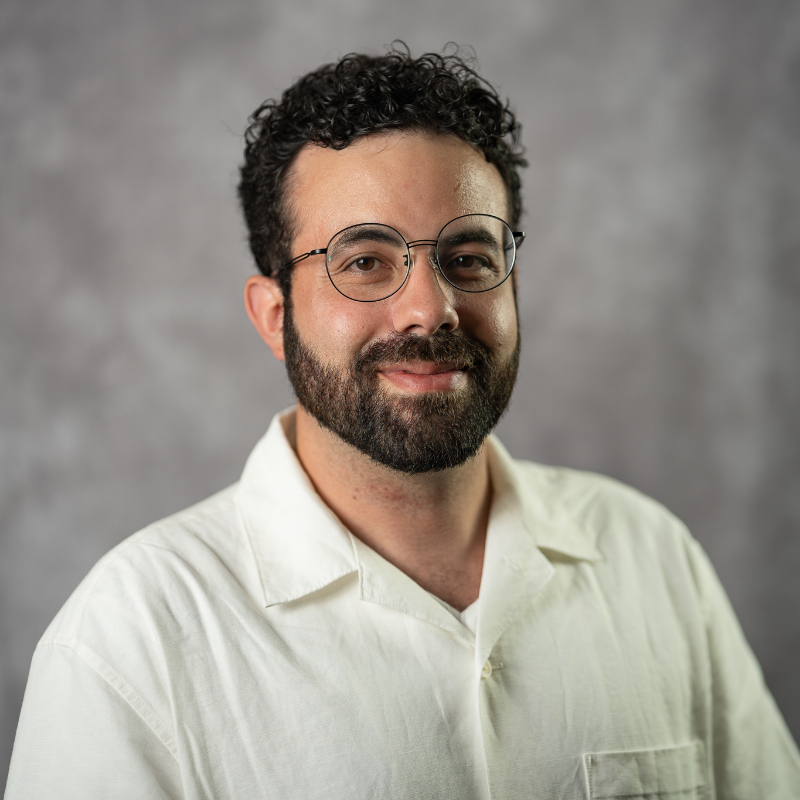
Eric Isaac appears in the documentary The Plastic Detox, where his personal experience with toxic exposure and its impact on fertility brings urgency to questions of regulation, industry responsibility, and public health.
He is an Assistant Teaching Professor at Florida International University, where he teaches across Religious Studies, Honors, and Pre-Law, and serves as Undergraduate Program Director and Chair of the Christian Studies certificate. His work sits at the intersection of environmental health, power, and public accountability, with a focus on how institutional failures shape real-world harm.