95. The tech that could end overpackaged boxes, with Jude Pullen
It’s a familiar frustration, ordering something small, only for it to arrive in a box far bigger than it needs; wasteful and seemingly impossible to avoid. This week, we’re joined by Jude Pullen, a man on a mission to change that. Join us as we explore why companies so often get packaging wrong, uncovering the logistical challenges behind every delivery, and discover how Jude is using a blend of creativity and engineering to tackle this surprisingly complex problem.

 Apple Podcasts
 Spotify
 YouTube
 Amazon Music
 Castbox
 Podcast Addict
 PocketCasts
 It’s a familiar frustration, ordering something small, only for it to arrive in a box far bigger than it needs; wasteful and seemingly impossible to avoid. This week, we’re joined by Jude Pullen, a man on a mission to change that. Join us as we explore why companies so often get packaging wrong, uncovering the logistical challenges behind every delivery, and discover how Jude is using a blend of creativity and engineering to tackle this surprisingly complex problem.
Join hosts James Piper and Robbie Staniforth as they delve into the world of recycling, hopefully having fun along the way. One thing is for sure, they will talk absolute rubbish from start to finish.
We would like to have an evening Talking Rubbish to celebrate our 100th episode. It will be in central Bristol on the evening of the 25th June, to let us know if you can make it, book your place on Eventbrite
Please take a moment to complete the Simpler Recycling tracker
We would love you to join our community on Discord
Special thanks to our sponsor, Ecosurety
To get exclusive videos and clips, follow us on Instagram, TikTok, Threads or Facebook; @rubbishpodcast or YouTube: @talkingrubbishpodcast
Or you can contact James and Robbie with questions or just general rubbish musings using the email address talkingrubbishpodcast@gmail.com or by texting them via WhatsApp on 07356 069 232
Relevant links and reports mentioned in the programme can be found on the Talking Rubbish Linktr.ee
Transcripts and episodes can be found on the Talking Rubbish website
Music licence ID: 6WPY8Q4O2RPFIOTL
James Piper: Hello, welcome to Talking Rubbish, a weekly podcast delving deep into the world of recycling and discussing the truth behind snappy headlines and one sided storeys. I'm James Piper, author of the Rubbish Book and I'm joined by Robbie Staniforth, my Far From Rubbish friend. And we are joined today by Jude Pullen, our Far From Rubbish guest. Good morning, Robbie.
Robbie Staniforth: Hey, James. Really excited to be speaking with Jude, who was recommended to me. We didn't actually meet in person, unfortunately, at one of the trade shows a coup of months ago, but a few different people said you've got to have Jude on. So high expectations.
James Piper: Yeah. And the more I've researched, the more excited I've got. So it's going to be great. Jude's going to talk to us today about reducing packaging. So we've talked about it a couple of times on this podcast that like when you get a product that's been over packaged and how annoying that can be and Jude's on a mission to stop that happening.
Robbie Staniforth: Yeah, had one just last week, you know where the outer box, it was a tiny pair of surfing wetsuit gloves actually, and it probably took up about 3, 5 to 10% of the large box that it was sent in. And guess what? It came from Patagonia directly. And they're supposed to be the good guys.
James Piper: Oh no, they need Jews.
Robbie Staniforth: Well, we'll get into that in a sec, I'm sure.
James Piper: Yes, but before we do that, let's do additions and corrections. We had an email from Chris, who? I think it's Chris. Chris. I'm sorry if I've got this wrong, but you have sent me two emails using a different name both times, but gonna go with the latest email which is Chris. It's either Pasco or Chris. And I'm sort of wondering if one's a surname, one's a first name. But anyway, we had an email from someone who may be using the alias Chris, who had agreed with us on our views on Electric Vehicles, which was episode 87. And then swiftly U turned and disagreed with us on our views on palm oil on episode 89.
Robbie Staniforth: Wow. Okay, well at least we're getting a reaction from him.
James Piper: I know, such a rollercoaster couple of weeks. I'm sure there are lots of people who tune in and go, oh yeah, I completely agree with, with these guys. Only to listen next episode and go, I completely disagree with these guys. It's just, it's just the nature of us giving our personal opinion on topics, isn't it? We can't expect everyone to agree all the time. I'm sure there's loads of people who don't agree with my views on Drs, and that's great. Debate's good. It's what we're all about. In the interest of transparency, I thought I would share just a portion of Chris or Pasco's email. He said, as with most things and it's related to palm oil, you have to follow the money. Palm oil is cheap, so profits are good when using it. And yes, I'm edging to the view that profit making, AKA capitalism, is the evil force behind most climate and environmental damage. And as ever, a thorough and nuanced view is available@ethicalconsumer.org, whom I would thoroughly recommend. So thank you very much for that, Chris. We appreciate it. I guess the summary of the palm oil episode is that we said, look, if you're going to buy a product with palm oil in, make sure it's sustainable palm oil. And if you're going to buy a product that doesn't have palm oil in, then you need to understand the environmental impact of what they are using in place of palm oil. And this whole discussion about palm oil using a lot less land than its replacements, so you've got to spend a bit more time assessing it. So at the time when I was preparing the episode, I did actually spend some time looking@ethicalconsumer.org Ah, okay.
Robbie Staniforth: A step ahead here, James. Clearly, of the recommendation, I. Yeah, it's difficult.
James Piper: When you search palm oil in Google, you inevitably end up on all of these different websites. And I sort of felt their view actually was very similar to the WWF who we spent most of our time discussing. Because what ethical consumer says is that they have taken the view that avoiding palm oil altogether or choosing products with the very best sustainable certifications are both reasonable responses to a very complex set of issues. So they're basically saying the same thing. Either pick certified sustainable palm oil that you really understand, or avoid it altogether. I do stand by the fact that demonising one product in this instance palm oil, has a tendency to promote the others without actually reducing use. And so when people say, oh, I got my water in an aluminium can, aren't I sustainable? It's because the media has fed them this narrative around plastic and actually we should just have tap water. We have touched on that a number of times, but I just wanted to summarise that we're not that far apart. Even though you did say that you disagreed with us on palm oil, I don't think we're that Far apart. Buy less, guys. And if you're going to buy stuff, make sure it's certified or avoids the product that you want to avoid, but understand what you're switching to. And we actually had Alice on Discord, very similar about palm oil, saying she felt the episode had missed a point. We use much more palm oil because of hyper consumerism and there are many products that we really don't need or that are wasted. And completely agree, you know, we need to do more on consumerism and how product demand is increasing and how we reduce that. And I think that's tied in really nicely to our interview with Jude today, who's all about reducing the packaging that we actually get through our door. Yeah.
Robbie Staniforth: Hopefully we'll find out from Jude about packaging minimization and exactly how you can make the very best decision when it comes to packaging up products and make the right sustainable choices for whatever it is you choose to ultimately buy, whether it does or doesn't have this sustainable palm oil in or not.
James Piper: And this is a great opportunity for me to create a new motto. I mean, maybe someone's coined this motto before, but I was like, this is going to be my motto from now on. Buy less then buy best. And what is best? Whatever has the least impact. So if you're talking about palm oil, choose between sustainable palm oil or an alternative product that you understand the impact of and then you will meet my newly created motto of buy less less then buy best.
Robbie Staniforth: And so I've got a quick, hopefully helpful addition from back on episode 88. Do you remember we were talking about floss picks?
James Piper: Ah yes. I have seen so many of those recently. I went for a walk Vella yesterday and I was like, floss pick, floss pick, floss pick. There were just so many on the. Out on the road. Yeah.
Robbie Staniforth: Funnily enough, I've also now I'm tuned into it. So I've been seeing these floss picks everywhere and remember we said they're 100 rubbish. You're not going to be able to recycle one of those things. But I stood in my bathroom the other day, I was brushing my teeth and I was staring at my partner's rechargeable water flossing machine. And I thought, why the heck did I not mention this option when we were talking about floss picks in the episode? So I actually went back to the episode to listen. I was like, surely I must have mentioned this thing. And I hadn't. She's had this thing for over a year. So it's a little. It is an electronic device, but you just refill it with water. You know, you don't need to change any of the parts or whatever. There's no string, as you find with those floss picks. And it's a great thing for doing the flossing that's recommended obviously by dentists. And you were talking about those incidental toothbrushes that you use, those little bristly brushes that go between your teeth. So I thought I would helpfully add this addition of the water flossing machine, which means you're not having to use single use products. And if you do use those single use products, please don't throw them on the floor. At least put them in the rubbish bin.
James Piper: We'd like to take a moment to thank our sponsor, Eco Surety, who are on a mission to rid the world of unnecessary packaging. They help brands navigate the tricky world of extended producer responsibility. But that is not all. They also collaborate on some incredible recycling projects and consumer awareness campaigns for those tough to recycle materials. If you're an organisation looking to make smarter packaging choices, cheque them out@ecosurity.com Best thing you could do to help our podcast grows, to tell your friends and family about it. Or you can leave us a review and if you do that, you could be Robbie's review of the week.
Robbie Staniforth: So this one comes through on Apple Podcasts. It's not actually a five star rating, this one, James, it's an eight bananas rating.
James Piper: Yes, that's correct.
Robbie Staniforth: Is that better or worse?
James Piper: We shall discuss.
Robbie Staniforth: So this one comes in from Makti. Brilliant show. Loving the podcast as a fellow recycling nerd. Still learning loads. So keep up the good work. Eight and then eight banana emojis.
James Piper: Eight banana emojis, yeah. Now, I had no idea why we were being scored eight bananas. Absolutely not a clue. And then yesterday, and this is so genuine yesterday, I become a bit upset. I haven't watched I'm a Celebrity, but I've become a little bit obsessed with this kind of fallout has happened on the I'm a Celebrity South Africa thing. I mean, we don't have time to go into the detail, but basically some celebs are fighting and Anton Dec were kind of mediating this fight, right? And they Antideck have a podcast which I haven't listened to before, and they put up an episode called, you know what really Happened on the I'm a Celeb Live final. And I thought, okay, well, I want to know. I've never, I haven't watched any. I'm a Celeb. But I'm like, I want to know what was happening on the live TV show. So I tuned in to Antideck's podcast for the first time ever. This is yesterday, I promise you. I'd put this review in as our review of the week. And I thought, I have no idea what eight bananas are. I'm going to go onto the show and say, I have no idea why bananas are. And I scrolled, as I often do when I find a new podcast to their reviews. First review I saw 7 bananas can only give this 7 bananas until video is added to Apple Podcasts. That's the first review I saw for Anton Deck Press Show More. Every single person is rating it out of eight bananas.
Jude Pullen: Really?
James Piper: I love it. Eight bananas. Really funny. Eight bananas. And I'm like, this is where the bananas things comes from. Makti, who's reviewed us, must listen to Antideck. And I think Antideck on the. I don't know. I've tried to find out, but I haven't had enough time to truly find out. I think on Saturday night takeaway, they just. Every time something was good, they went, we give it eight bananas. It's carried over into their podcast and somehow it's carried over to our podcast. And I was delighted to solve the mystery of why we have been given eight bananas.
Robbie Staniforth: So we think eight bananas is the top rating. It's not. Out of 10.
James Piper: I think it's the top rating.
Robbie Staniforth: Okay.
James Piper: Correct.
Robbie Staniforth: Oh, great.
James Piper: So thank you very much, Makti, who must be a fan of Ant and Deck. Or maybe it is, or Ant or Deck. And you can follow us at Rubbish Podcast on social media. You can email talking rubbishpodcastmail.com or you can WhatsApp us also join our Discord. It's the easiest way to engage with us and listeners of the show. And the link to all of those things is in the show notes. Every five episodes of Talking Rubbish, we get to interview someone we find really interesting. And I think it is worth saying we genuinely just find people that we think are interesting. Loads of people emailing us to come on the show, which is lovely, and they all get added to a nice long list. But so far it has just been people that Robbie and I have found interesting. And Jude is no exception. So. Hey, Jude, how are you today?
Jude Pullen: I'm excellent, yeah. Really nice to be involved in this. And it's been a bit of a sort of circuitous route from starting off talking about AI to moving into packaging, to presenting at Birmingham nec. And I presume that's probably where you got some of the recommendations. But I should probably say for your learned and scholarly listeners that I'm not anywhere near as much of an expert in these sorts of things as you. And that's actually a bit of a trademark of how I work as a freelance sort of inventor consultant in that I just like working in lots of different sort of fields and professions that take my interest. So similar to you, I work on stuff that I think is really interesting and I think packaging waste is really interesting. So that's why it's great to be here with great community.
James Piper: Well, we love packaging waste as you
Robbie Staniforth: know, we hate it. We hate packaging waste.
Jude Pullen: This is true.
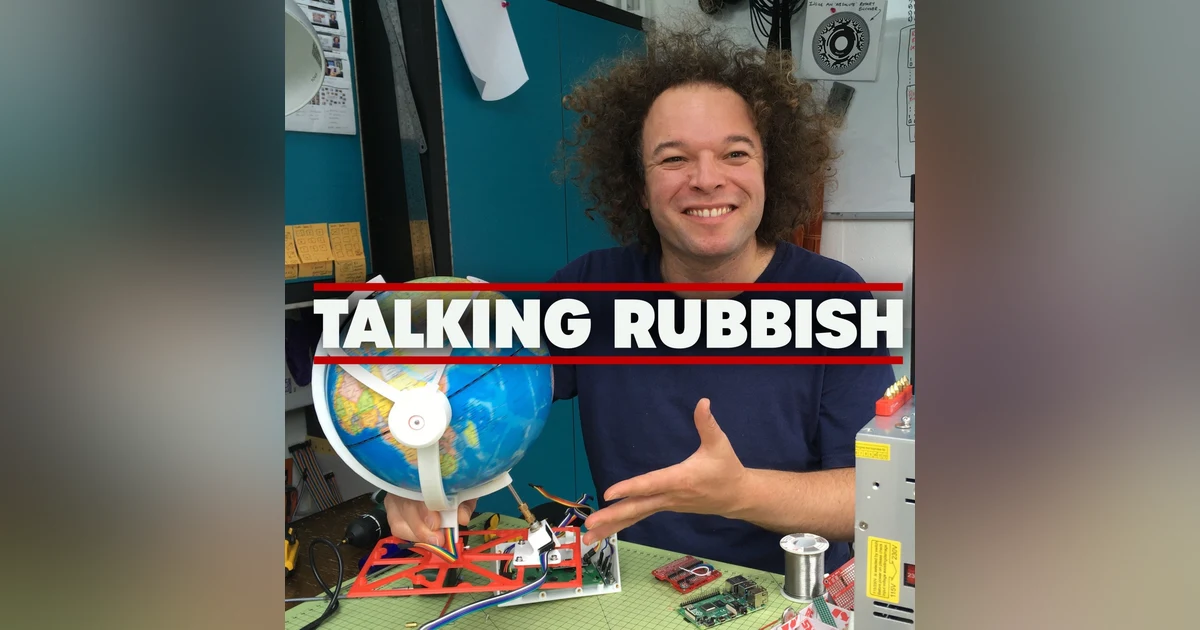
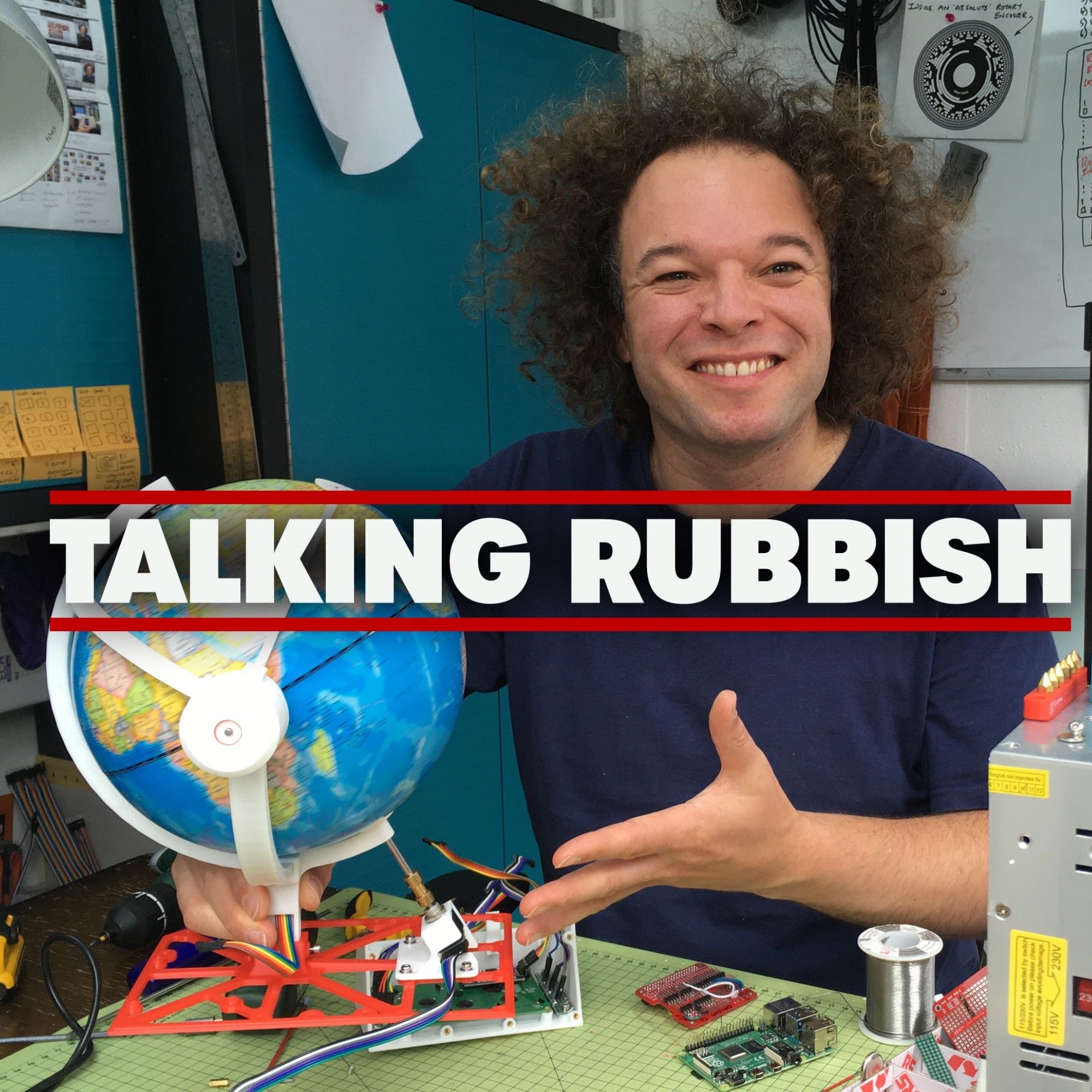
James Piper: It keeps us busy. They Robby, without it what would we do? And I'm going to start by something non packaging because I have previously in my life had several moments where I've thought I need a 3D printer. Okay, so that's happened a few times. But nothing has made me want a 3D printer more than Radio Globe. So Jude, can you describe Radio Globe to our influencers?
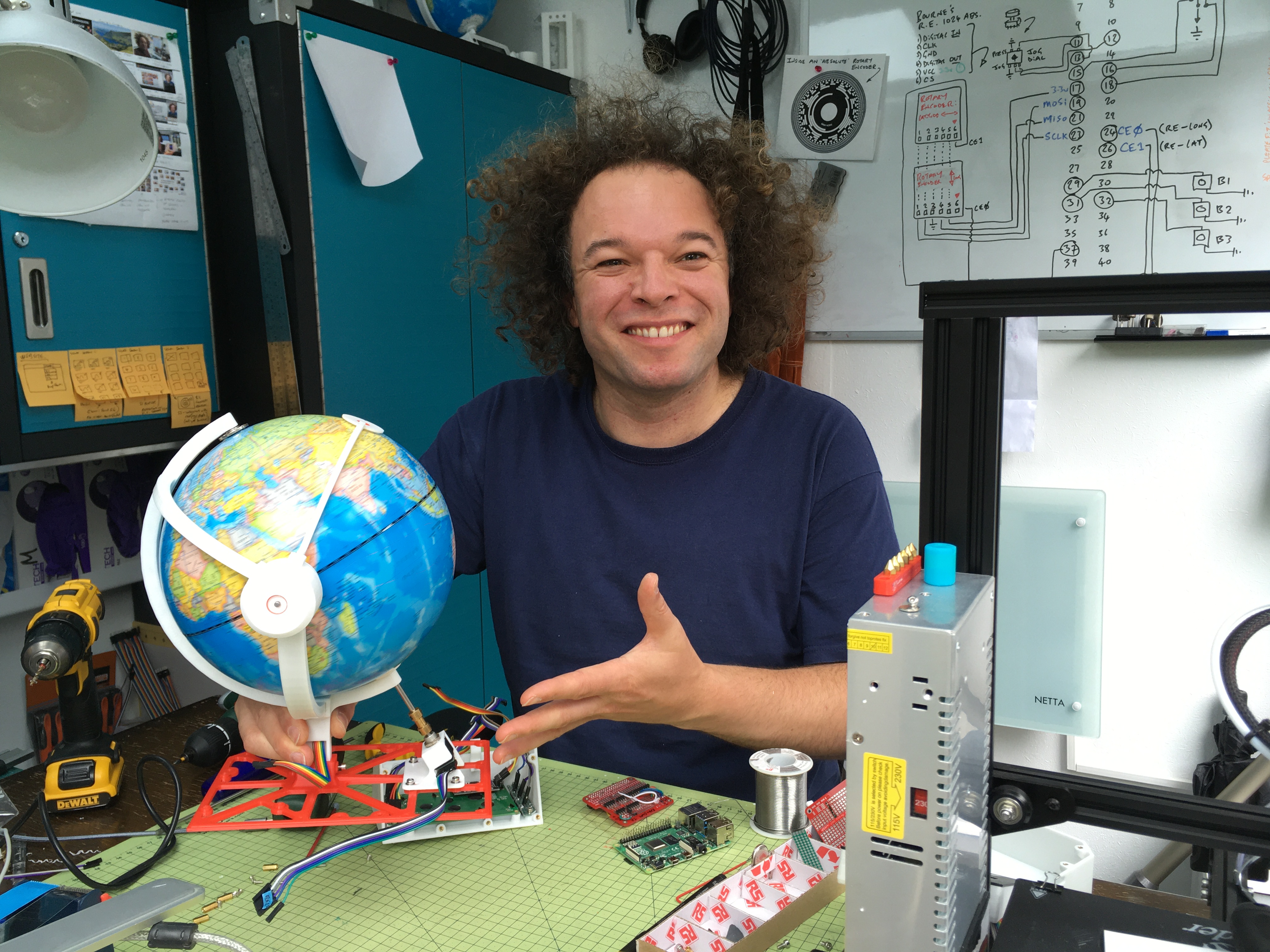
Jude Pullen: Assuming that we're doing this all for podcasts and it isn't visual, otherwise I would pick it up and showing you. Right, but basically this is a like one of those old fashioned globes that you have that you can spin round, only this one has a little pointer on it, a reticule and it's like a crosshairs and when you line it up on any city in the world of around 15,000 stations of web radio will pop up relative to that city. So basically you can sort of travel the world and with honestly the processing power of a Raspberry PI. It's extraordinary how quickly it'll just dial in to radio in anywhere in the world really. That's published it online. So yeah, the sort of the concept fascinated me but it also is an excuse for me to sort of tinker and learn about hardware and software. And I hasten to add, it wouldn't be possible without two wonderful software engineers, Don Robson and Pete Milne. And again that's very much a hallmark of how I work of the I'm often an instigator but I need other people to help me finish things. And certainly what we're going to be talking about today, we'll get into exactly that same formula.
James Piper: Great. Does it make you want a 3D printer, Robbie?
Robbie Staniforth: That's very cool. I mean I'm into globes just in general. Like they're beautiful objects, aren't they? So one that has this kind of purpose would definitely take it to the next level. But I'll let you buy the printer and I'll just pop around yours. James. The Sharing economy.
James Piper: Someone tagged us in a video the other day of people shredding up plastic pet plastic bottles, turning it into filament and turning those into litter pickers. I really liked. I mean, I'm generally of the view that a pet bottle should become a new pet bottle, but hey, if you're going to turn it into a litter picker, that's the next best thing, isn't it? To pick up pet bottles or whether
Jude Pullen: you, whether it would be an interesting thing. I reckon somewhere in your listeners they would be able to grind up some recycled bottles and produce a radio globe specially for your podcast. So you are, it's open source.
James Piper: You.
Jude Pullen: You can access all the files for free. So you could make a talking rubbish radio globe.
James Piper: Oh my goodness. So with the globe instead of cities, we could just cover the globe in like episode artwork and then you could just hunt. Oh, Robbie, we're right.
Jude Pullen: So all the listeners that you've interviewed, you could populate the world.
James Piper: Yeah, I'm committing to doing this. I'm just gonna pause the podcast now to order myself a 3D printer and we're gonna do this. We're gonna cover the globe in episode artwork. That looks so good. Oh my goodness. Okay, I'm gonna do it. I love it. Thank you. And then we'll just have to get little stickers so that every time we add a new episode, I can stick on a new, you know, a new episode artwork. That's so good. How do you go from something like that? Which as far as I gather was a Covid project, you know. Cause we were all going a bit, are getting a bit lonely and there's an opportunity just to hear voices from around the world, which is a really nice way of presenting this project. How do you go from that to I want to help people package things more effectively, I guess.
Jude Pullen: You know, this is maybe going to sound pre rehearsed and in some ways I've thought about it a lot and it's kind of the strap line on my website of the human storey in tech. So it's weird. If you go on LinkedIn, you'll find me describing myself as a, you know, creative technologist, which I think is a loose enough term that I can do whatever I want. Basically that's a bit creative with technology. But the differentiator is I'm not really interested in just producing some PowerPoints or a report. The prototyping part means I want to basically be able to sort of birth some idea in a physical form. Because for me, the most exciting thing, which is why I love the Radio Globe, is, is. Is seeing other people interact with it and indeed other people remix it and build it in their own way. There's almost something a bit Darwinian about watching you put something out open source and other people just take it in completely different directions. So, again, I realise this is podcast, so I won't get lost in visuals here, but I had a guy from the Netherlands completely redesign it from the ground up, and so he actually sent me one, amazingly, a guy called Frank. And that sort of thing just completely blows me away that you will get this reaction that is completely different to sort of the usual corporate dynamic. But I think that's actually something where I think it can mislead companies sometimes. They think, oh, well, open source is just about giving things away for free. We're here to make money. That sounds at odds with. With a sort of credible business model. But I've been very lucky that I've been working with Design Spark, which is part of the multinational RS Group that ships a lot of electronics and other industrial things to all sorts of different companies. And they've almost sort of treated me a bit like a sort of a patron of the technological arts, you could say, in that I've built air quality monitors, I've built flood alerts, and most recently, and I should hasten to add, all of this is open source, and most recently working with Nvidia to basically see whether we can use AI to essentially reduce packaging waste. And if your listeners can imagine a box, as they've probably experienced at home, they order something and it's absolutely tiny and it's in a huge box. And for me, as a sort of designer and engineer, I wasn't happy with just saying this sucks. I was thinking, well, why? Even if you have a very negative view of some of these big box distributors, surely they're not crazy enough to just waste money without any sort of logical reason? So that, for me was the interesting rabbit hole, was the human storey of why packaging is bad. And that in parallel was to also say, I'm extremely sensitive and in agreement with a lot of the environmental criticisms of AI. And maybe I'm giving away the punchline here, but hopefully, you know, listeners will stick through it, is that I think we did a really honourable service to using as little Nvidia compute as possible. So weirdly, it's sort of. I know it sounds at odds with Nvidia selling hardware and all this lot, but actually not at all, because we're capable of running a multinationals inventory of components on basically a 200 pound microcomputer, doing some AI. But for me, the proudest achievement is we're doing the absolute least amount of CO2 burning, creating computes, but getting a meaningful result that can help not just the planet, it involves keeping people's jobs, but it's also actually reducing packaging waste, which I think if you can't speak to a company to say you're definitely going to make profit, then reducing waste is the next best way to be credible. So I would say, you know, if this is a sort of exact summary of the project, I've worked in sustainable design since 2020 and I've only ever seen the way you get traction is by combining the virtue with the value. So you have to be able to articulate more often than not the financial value. But yes, of course, there's brand equity and all those good things, but it still needs to affect the bottom line,
James Piper: the P and L. And just to summarise the project, because I think there's a third strand to that which is, you see, you've got virtue, value and then policy. And it'd be great for Robbie to give us a view on the policy of this as well, because we're getting to a point where this isn't voluntary. But just to give a quick summary to the project, you've described it as Tetris. You know, you. You have a number of products to put in a box and a human can make a decision of what size box do I need to fit these products and humans, I guess, have a tendency to go, I'll go slightly bigger because I don't want to have to redo this work. Whereas a computer can say, no, mathematically, this is what you can fit in the box and therefore this is the size of box that you could use. Is that a fair summary of the project?
Jude Pullen: That is completely fair. And I think one of the sort of existential and eth, you know, things that's been running through the. I mean, I've written almost close to 100,000 words now for the Design Spark blog on, you know, various things around technology. And one of the things I keep coming back to is, you know, essentially the Luddites revolution, right? And for anyone who's unfamiliar with that, people smashing up all the sort of looms and weaving technology in the Industrial Revolution wasn't because they hated technology, it's just that they didn't want to starve to Death, which I think is a completely reasonable rebellion. And so I think, you know, I actually noticed Grayson Perry skewer this point on a recent documentary of Grayson Perry Sees the Future, which I think is a reasonably good overview for anyone new to AI. And he makes the point that perhaps this is the first time in history that the middle classes have actually felt like Luddites as opposed to the working classes. And so maybe that's why we have this palpable fear permeating all the sort of the journals and you know, media outlets is because it's not just the great unwashed, you know, in quotes, it's actually affecting the next level up in societal structures. And so I think that is for me, one of the things that often gets referenced in industrial work is the 4DS. So dull, difficult, dangerous and dirty work. And I think you can obviously debate some of those, but I don't shed any tears for removing dangerous and dirty. We can decide whether difficult is fun and some people might actually find dull work is less cognitive load. So you can debate those things. And I think this project is essentially trying to make the human experience better by removing some of the guesswork. In other words, difficulty. But I think the most obvious play is to make sure that you're involving the humans in the transformation rather than just saying we're here to have robots take your jobs. Because a. I think that's a total fallacy. It just never plays out that way. And I think the media would do well to not necessarily doomstoke, as they say about these things and give a slightly more nuanced view. But most certainly, I think any company not asking these questions about AI and how it can give a benefit not just to their workforce but also to the environment now just seems like the best opportunity in a generation without sort of plugging the Nvidia system too much. But it's just genuinely mind bending that you're running stuff that is outrageously impressive in terms of compute for 200 quid. This is stuff that 10 years ago, probably only the military could afford. Do you know what I mean? And yet we're able to just tinker with this and build something over the course of three months, as we did on this project.
Robbie Staniforth: I was very impressed when we were preparing for this and you were talking about going in and being on the shop floor and just understanding the trials and tribulations that lead to in inverted commas over packaged goods. Is it as simple as we say of just a human is erring on the side of caution and Choosing a bigger box than needed. What's the reason that we're ending up occasionally and not always, but occasionally getting stuff delivered in a box that's just simply too big. What is the reason for that?
Jude Pullen: Well, I think, I think sort of, you know, obviously for the supply chain heads, they'll have already guessed this, but, you know, having worked in these sorts of jobs growing up myself, it's always a bit of a sort of, you know, two way street, right? So you're going to have a person working at a packing station, they're going to have a load of different sized boxes all flat packed and they got to make them up, or if not a machine makes them up, at some point you're going to look at a box and go, ooh, that might be a bit of a tight fit and I'm going to feel a bit of a Charlie and waste time if I build something and find it too small. So as your point, Robbie, you err on the side of caution. And there was actually a rather perfect example when ordering the Jetson Nano, which is the little bit of hardware it actually came from rs. RS doesn't mind me shaming them slightly, but it actually came in a box that was like too big. And the next size box down, genuinely, it did fit, but it had 1.5 millimetres clearance. Now, no human would be able to just eyeball 1.5 millimetres and be like, yeah, that's going to fit, right? And so this is a 200 plus, you know, with some peripherals, bit of care. You don't really want to just jam it into the box and it turns up all like, you know, looking maltreated, you know, so the packer, I think the human did the most reasonable thing within the bounds of human eyeball tolerancing, right? And that's where our system can just say, hey, guess what, it'll totally fit in that box. I know it's tight, but it will. And that's as simple as just when the pack is presented with it on the, on the little piece of printout paper or on the screen, it'll just say, this will go in a B1 box or a C3 box or all of these little categories that you get. The other side of it is, is that when you order something online, you actually have, in terms of AI compute a vast amount of time between when you click purchase and when someone puts them in a box. Now, when we're on, you know, Google or whatever, we're seeing results come up in like 0.5 of a second. You've got like half an hour minimum, you know, which is which, in an AI compute world is an absolute aeons to get the job done of this little Tetris, you know, programme. And so we're actually using the fact that not only are we doing the compute in what is downtime effectively, and so that's really efficient so that we don't boil the ocean in terms of CO2, we can run very elegant, minimalist, but also strategically timed AI. But also, the other point is, if you're working at this packaging station, what happens when you start the day with 100 B1 boxes and you get through them? Well, hang on a minute, someone hasn't restocked them, so you're going to have to put it in a B2, the next size up. And so now you're actually able to go, well, back up a minute. If you realise that you can work out the day's orders up front, you can actually control all of that stock management in terms of making sure that that person never runs out of a particular box size. So this doesn't even become a problem. And that may sound like, to some of our viewers who've never worked in a warehouse or whatever, they think, oh, surely that just sounds obvious. Why would you not do that? And you're like, this is like telling a chef, like, there's a little bit of dirt on the floor, why didn't you clean it up? And it's like, have you worked in a kitchen? Come on now. It's really hectic, it's really crazy. You've got to be reasonable about the pressures of the job. And again, I always want to be unequivocal on this is I am on the side of the people working in these environments. I think, you know, genuinely, I was amazed at how upbeat and friendly and happy the workforce was at rs, but I've also worked in those positions. It's full on. You know, you're pounding out hundreds of these things in a day. Let's not pretend that you have time to sort of pontificate and get out a little tape measure. You don't. So this whole thing of having the AI do the cognitive load and just make it easier for you, I think that's helping the human. I don't think that's about replacing the human. Is it inevitably going to be in like, you know, 20, 20 years time or whatever? It's all roboticized? Yeah, of course it is. Those things are going to move in those sorts of directions. But I think the idea that, you know, Dare I say, you know, I don't want to get distracted with a discussion of Elon Musk or Sam Altman, but the amount of hype that somehow these things are just going to like happen tomorrow, like really, it's just, it's just, it's just such bare faced hype that whenever you work in an actual boots on the floor situation, that there's just, it's going to take decades to do all of this as much as IoT or any of these big tech transformations. So I would honestly say to people, you know, worried about their jobs in AI, I think take an interest and actually what's been really exciting is seeing people get enthusiastic about the change and wanting to be part of it, not feeling kicked to the kerb. So yeah, for me, I wouldn't want to do a project where I just thought I was running roughshod over livelihoods that's completely antithetical.
James Piper: And how does it work in terms of bringing it to the real world? Because you're talking about companies that have tens of thousands, hundreds of thousands of product lines. How is the system working out how big something is before you start calculating what can get in a box?
Jude Pullen: So that's where this gets really interesting and you have to really speak to the people who are doing the job. Because what you realise is, you know, let's say that a screwdriver pack is coming down the line and you know, it says it's XYZ Dimension is this. And you look at it and you go, hang on a minute, that's wrong. And you go, well, why is it wrong? Whose fault is it? Is it the RS in this case didn't enter it incorrectly? It's actually probably something more convoluted that. Well, actually the company that made the screwdrivers change the packaging because they hired a really nice branding agency and they made it, you know, whatever, 10% smaller, great. Or they added a different dimension so it's 10% thinner but 5% longer. And that completely messes everything up. But whose responsibility that is of data? Truth is a very sort of complex and gnarly problem. Because that's the thing, everybody thinks that there's just this great big one unifying Excel spreadsheet in the sky and there isn't. There's thousands of data cluttered around all over the place. So whenever you hear people saying like, oh, the AI transformation and all this lot, go speak to the person who's called the Chief Data Officer or something of that title and they'll just, you know, be looking Bloodshot eyed with a lot of grey hair going, I'm trying to herd cats in terms of data. And that's not me sort of going like, oh, RS hasn't got its act together. This is, this is. Every company on the planet is figuring out how to get data truth. And you know, I can say that with some authority in that I've been out to a data IQ conference which is with some of the biggest brands in the world, and they were most certainly all saying the same thing, that this is incredibly difficult to get an absolute truth. And so the reason we also were excited to design this thing is that it's also about building in a corrective feedback loop that we can say, hang on a minute, we did have a problem, here's the correction, update the system. So that is also the need to sort of purge the errors, which I might add, nothing to do with humans, it's just system architecture, you know, which is going to take a long time for everyone to figure that stuff out.
James Piper: Yeah, I once went to a company that supplies building equipment and we were doing their data on packaging and looking at how much packaging they use and they had been using a kind of approved ready reckoner. So an approved system where they would say we've sold a plank of wood and the system would have in it based on that this plank of wood has this much packaging. I said, look, just give me a day in your warehouse to test some of these theories that you have. Because as an example, they said that every blank of wood they sold came in a cardboard box. So I went into the warehouse and went to their plank of wood aisle and said, well, they've all just got a label, a sticker with a barcode, soon to be QR code. You're saying they've all got a cobble box. And so I redid all of their data. You know, I went through all the top lines of data, redid it all, worked out how much packaging they had and the saving was unbelievable. I won't give the detail, but it was huge in terms of the amount of packaging they thought they were using as a company and the truth. So much so that their board had to call me in to say, we're not willing to report this to the Environment Agency because it's so different and it's going to cause questions. And I said, yeah, it's going to cause questions, but here's all the reasons why it's right. And I personally think you should just pay a lot less than you are paying. And when the Environment Agency Come and ask questions. Actually we've got all of the background here to show why that's happened but ultimately it's about. And we find this all the time in the work we do every day because we do a lot of this with Ecosurity, this data stuff. Ultimately it's about spending time understanding a specific client rather than trying to, you know, get into this world of we, we can just mass balance this, we can just get one company and, and extrapolate that across lots of companies. It doesn't really work like that because companies are so different in how they do stuff.
Robbie Staniforth: In the packaging and packaging waste regulation there's a couple of key changes that are coming up with. The first is a ban on misleading packaging. And I think this, I mean it's crazy that this is allowed at the moment. So these kind of techniques that give that false impression of volume, you know, beefing up the product, making it look bigger than it is and things like double walls or false bottoms or unnecessary layers, these are going to be restricted. So but that's not really, I don't think what we're talking about so much here, the deliberate sort of over packaging of these goods. But then there's two steps in what they're talking about in the, the minimum sort of necessary space. So from later on this year, 12th of August, operators must minimise and they don't. The definition of minimise and the minimum necessary space is going to be one that's open to conjecture and I'm sure environmental enforcement agencies across Europe are going to be scratching their heads to work out what this is. But they need to use the minim necessary for the product protection, the functionality and the hygiene reasons. But it's really that date of the 1st of January, 2030 that everyone's looking towards. So we've got, what's that, three and a bit years now where there'll be this 50% void fill cap I think you would call it, and that's for all E commerce and transport packaging. And so that void cap basically will include these filler materials like air cushions, paper, foam. I presume these are the things are they that you're trying to get rid of and just make the box fit exactly right or am I wrong? Is there still a place for things like these cushions and ends and things like that?
Jude Pullen: Not only are we reducing the materiality of the box that it's being shipped in, but if you don't need as much packaging filler. So scrunched up paper, beads, whatever it is that you're using Then that's saving you money on the fillers. And then you're saving money on the fact that, you know, your courier, your distributor, DHL or UPS or whatever, you're not paying as much because it's a smaller, lighter item. And then to your point, you're not being fined because the thing isn't extravagant. So all of those things are, you know, let's just say for easy maths, let's say all of those is like a 5% savings. Suddenly you realise that's adding up to maybe 15, 20%. And so of course the avoiding penalties is a sort of moot point of did we save money or did we make money? It depends how you want to frame. But I feel that to your point, what I think is referred to in the industry is PPWR legislation, which is exactly the thing with the. You're mentioning with void fill. The general statistic I heard from RS's head of packaging, Liam Dowdes, was that it's basically aimed at 50% you shouldn't have. And so we ended up having a few whimsical but actually kind of good provocations about saying, does this mean crisps are dead? Does this mean Easter eggs are going to have to have a radical transformation? But on a more serious note, this is a really useful galvanising nudge for companies to reappraise their systems. And if you were going to have to do a logistics data Systems overhaul before, 2030 is a very good time to do it. And how you want to find out where the most meaningful places are to start in your company are quite interesting. I would also just say, speaking as someone who enjoys, you know, innovation in a creative pursuit of interesting things, I happen to have just got a saucepan recently and technically it's a saute pan. So it's kind of almost like a tennis racket really. So it's got quite a long handle and obviously the flat saucepan bit. And it occurred to me, ah, this is probably not going to be compliant in 2030. Does this mean that it's going to ship with a screw on handle that has some clever little widget or nut that you screw it in as a user with a screwdriver and then it goes ka chunk and then it locks in and it won't come off again? Or what are we going to do? Because obviously shipping a tennis racket versus a circle with the handle inside that radically changes your packaging footprint. It changes how many you can put on a Euro pallet, it changes how many you can put in a you know, a shipping container and of course it changes the experience with the user. We've now got this, like, IKEA situation, whereas usually when I bought a saucepan, I've never had to, like, Akira, fire it. Do you know what I mean? And in case anyone, I should just explain that the IKEA effect is a term dubbed in psychology to say that if you have assembled something, you tend to put more value and ascribe more meaning emotionally to it. So you're more likely to care for it, maintain it, not waste it. Basically, I do believe in this thing of sometimes you have to put an idea and a provocation out there, but at the same time back it up with capability and showing that you can connect with the right people. I don't want to miss a trick that we can maybe talk about how we did this, but I'd have to also bring in my, to the best of my ability, the credit to Brian Schwab, who's a good friend of mine at Lego, who does all sorts of clever, clever things with technology.
James Piper: So many things to talk about that let's not delve into Lego. That's going to be a massive mistake for me.
Robbie Staniforth: James will be here all day.
James Piper: Yes, IKEA is an interesting one though, because I heard a fact yesterday, completely unrelated to what we're discussing, but just an interesting fact, that if you're right handed, you like putting together IKEA furniture because of the way your muscles work, and if you're left handed, you like taking it apart because your major muscle is being used, depending on which way you're rotating that screwdriver. And so as a lefty, I love taking apart furniture, but I do find it harder to put it together. And I was reflecting on it and that's why IKEA has been in my mind for the past 24 hours. Jude, you mentioned that you could go into detail on how you did it. So how did you do it?
Jude Pullen: I did actually do quite a bit of research and on the blog series, you know, I even mentioned visiting the Dine Museum and seeing a recent graduate, Eva Yin, who had been using 2D AI systems to work with textiles to figure out how many of the little patterned pieces for a garment can fit on a roll of fabric. Obviously paying attention to the fact that fabric has a directionality to it, a warp and a weft. And so that sort of gave me confidence that, well, if we can do that in 2D, we can probably do it in 3D, but it's probably going to be more complex. So trying to sort of say this as concisely as I can to what Brian was doing at a much more complex level. And we did a YouTube video to explain the details for anyone who's interested. But essentially what we were doing is something called heuristics, which in the industry, the tech industry, essentially means trial and error. And interestingly, in pedagogy and child development, heuristics also means trial and error. So if you've watched your kid trying to figure out something, putting blocks in one of those little boxes, square peg and round hole type, you know, conundrums, then essentially we're doing exactly that with the AI. The AI is going, I've got these dimensions, let's try it this way. Did it work? No. Try it again, try it again, try it again, try it again. And so you actually see Brian's screen of going, tried this failed. New line, tried this, failed. Da da da da da. The trick in terms of the environmentalism is to say, how can we make that as efficient as possible? And so some of the things we were doing didn't use AI at all, they simply just used basic logic. So we said, if you've got a big long broom pole, don't worry about putting that in a box with something that's like a tiny little bag of screws, or if you did realise that you're going to be able to put it in there for free because there's going to be some slack in whatever box you're using. So we tried to write things that were just what you'd call common sense to a human, but actually you realise as soon as you work with AI, it is like teaching a baby there is no common sense. It will put a hammer with light bulbs unless you tell it why that's a bad idea, that a big heavy thing might smash against a fragile thing. You need to create rules that say, don't put magnets with things that don't like magnets, don't put extremely heavy things or extremely fragile things, don't put things that have solvents in with things that would be very problematic in terms of shipping, even things like batteries. You might make an intelligent decision to say, well, let's put all the battery stuff in this order in this package, because then customs will deal with it in A one and then we can put all the other non battery stuff and it will fly through and get through customs without any problems. Whereas if you just put it higgledy piggledy, you might end up checking everything because it all has a battery in it that needs to be checked so all of that stuff seems like no brainer. Why wouldn't you do it? I can't believe they're not doing it. But we were trying to basically say, let's not overlook the cleverness of human thinking when we design these systems. Don't just use dumb brute force, as it's referred to, of just assuming that the AI is the most genius thing in the world. Actually, humans have incredible knowledge and what we need to do is codify that. So, again, to your point, Robbie, and indeed James as well, it's all about going back to the floor and talking to people and getting their opinion because they are infinitely knowledgeable. Whereas, you know, it's not being deliberately, you know, sort of flamboyant. But genuinely, the AI is like training a baby. It knows nothing. So you have to, you know, within three months, you have to focus on something which is credible, that you can get it to do a decent job without trying to teach it the entire human experience of packaging logistics, which is just impossible.
James Piper: Yeah, that's super interesting. Trial and error is definitely my parenting style. We went to a zoo the other day and we saw a bear and the bear was in water. The bear got out of the water and shook, you know, shook the water off. And I said to my son, oh, look, a bear. And I shook my head. And now anytime he sees he's really good at signing, right? Except for bear, which is now shaking his head. And I picked him up from nursery the other day and they went, God, he really hates bears. I said, he doesn't, he doesn't. It's just I've accidentally taught him to shake his head when you say bear. And they were like, oh, we just thought he really hated bears. Cause he's constantly saying no every time he sees one.
Robbie Staniforth: So if the AI is really dumb at the beginning, what we hear, Jude, is that it just gets better and better over time. So you've put all of that work up front, the logic around don't put hammers with light bulbs. I like that example. Did you find that over time, you know, what was it learning? Is it learning as it goes and improving over time? And is it able to do that itself? Or are you still relying on humans to then say, this did work, that didn't work, and to correct it? So to what degree, I suppose, is it self learning versus having to be managed by a human now that you've got it up and running?
Jude Pullen: What you're sort of describing at that latter point was where the computer is essentially able to understand what should we say the North Star is and iterate and keep self improving. That I would say is an extremely complex and should we say top tier level of what we would describe as sort of AI. But I think we're actually trying to do something unapologetically much more simple. So we're trying to do rules and pre filters and then we're trying to say can you do a bit of heuristics? But actually to use the Pareto rule, the 8020 rule, we're trying to do 80% rules and 20% AI heuristics because that's the in quotes expensive bit. And also the good thing about rules is you don't need to spin up an AI engine because the rule about hammers and light bulbs is true today as it is tomorrow, as it is in a hundred years. You know, with the exception of unless you make a plastic LED one. But you take my point. And so where I'm kind of going with a lot of the AI is I think almost like the thing that I've realised when speaking to a company at various levels is never underestimate how much ambiguity and confusion there is around this term AI. And often one of the points I sort of bring home is that I'm sure some of the purists would disagree with me, but I actually grew up in Cumbria in the 80s and they built a supermarket and they had automatic doors which didn't slide. They would actually open like doors. And it absolutely befuddled a lot of the older generation who would approach the door and then nearly get hit in the face with it. And these doors would go at a good clip, you know, they could do you damage if you were a pensioner or something. And my point is that even something as like, how could you not understand an automatic door? I mean, you can't have that conversation with a teenager today. But that's what all technology feels like. You have to have that humility to realise everything new is weird and scary to someone. And I would still describe that automatic door as AI. It is something given a task which it performs with an artificial intelligence, which is, I see a moving thing, I will open this door. It is not intelligent enough to say, should I open it a little differently? Because that person is 65 as opposed to that person is actually a 20 year old pushing a trolley at speed at me, I better open it real quick. That is a different level of artificial intelligence. And what we're often describing when we vent our frustrations with technology is that we haven't fit the level of capability to the situation. Right. So that's why we get angry. Not because things aren't sufficiently intelligent, it's that we have a mismatched expectations. I mean, case in point, people have all these home assistants like Google Home and Alexa. To give the point of Alexa, which has a female name and responds with the tonality of a voice of an educated 30something woman. It isn't a 30something educated woman. Right. You can ask it maths questions which savants could answer, and at the same time you could ask it something that a five year old could answer and it can't. And so the point is, even Alexa's voice is somewhat misleading. It's not intentionally trying to mislead. I'm sure it's just a marketing thing about all sorts of research about what sort of voices we find friendly and less scary. But it actually mismanages a lot of the interaction. Whereas I think, weirdly, the reason mine hasn't gone off is we've renamed them to be like computer and stuff like this. Because actually, I think calling it computer sets your expectations much better. And because I've got a young son, I want him to think, this isn't a woman. For a multitude of feminist and humanist reasons. I want him to be like, this is a computer. This is not how I would subconsciously speak to a human, let alone a woman. And so I think all of these things. Sorry, I appreciate we're going off on a rabbit hole here, but I think even when you're sort of coming back to working on a factory floor, not confusing people with what the reality of the AI's capability is, is really important. So you were starting to verge into sort of general intelligence. We're calling it a Tetris machine. Because that doesn't sound very smart. It sounds, I should use my words carefully here, it sounds clever, but it doesn't sound smart. Right. It sounds that it's got clever processing y stuff, but it's not holistically understanding the world. And so I think the more you can reassure people that that is actually the ground truth of most AI things that we're to be working on the next five to 10 years, then suddenly this idea that you're going to lose your job overnight, you're just like, I think we can relax. That thing is dumb as a bag of spanners. And you're kind of like, it is, it's dumb as a bag of spanners. Unless you want to undo a lot of nuts, in which case spanners are great. And I think that's kind of how we're seeing it is that little £200, you know, worth of hardware is absolutely awesome at rearranging stuff in a box, but it cannot give you a recipe for quesadillas. It cannot tell you when you should pick up your kids from school and take them to whatever club. And that's the point. It's not trying to be a general AI, it's not trying to be agentic AI, it's not generative, it's not self reinforced learning, it's none of that. It's a Tetrisa. And I kind of think the dumber sounding name that you can give it, I think we'd probably all get along with these projects a little bit better with a sigh of relief that that's what it's doing. And so I think maybe that's a good point. The Alexa point is what we want to avoid and we want to be calling it a thingamajigger, basically. It does a certain thing really well, but don't be asking it about politics and philosophy. It's not what it was designed to do.
James Piper: When we were setting up this session, we talked about Amazon and we mentioned, and I said, let's give some examples around Amazon. I think, you know, they were talking about not using packaging on 12% of their product and they were talking about packaging only in bags rather than boxes. And I said, how does this kind of fit into that system? And I think rightly you came back and challenged me and said, well, this isn't for Amazon, this is for everyone else. And I'm quite interested in how you see that. How do you. You've created something here that's open source, that people can use, any company can use event size. Was that intentional when you were. Rather than going to Amazon and saying, let's solve that, they're already working on that. How do you get everyone else into this space?
Jude Pullen: So yeah, that's a really great point about the open source nature of a lot of the work I do is that firstly, I don't presume to know everything that I could know about where a project's going to go to and evolve into. And so for me it's been really exciting with Radio Globe to see other people remix it. And again, it actually feels like this is something that I would like companies like Amazon, as you mentioned it, to take it into their R and D teams and go, oh, this is very basic, this is very trivial stuff. But actually maybe there's a couple of things we did in there that were kind of clever and they think, oh, great, we could use that to improve our systems. And as far as I'm concerned, Rising Tide lifts all boats.
James Piper: On this podcast we like to offer the opportunity for our listeners to win a gift. So one of our binfluencers to get a gift and we like the guest to recommend said gift. Jude, do you have something that you would like to recommend to one of our binfluencers?
Jude Pullen: So, yeah, it's funny, the. The gift that I think I would like to sort of recommend is in some ways I think appropriate for this whole lobbying to basically reduce waste. And I ended up creating this game, board game called Goats vs. Llamas with a guy, a guy I met on LinkedIn. And basically what you do is you download some PDFs with all these great designs and illustrations, you stick them on all the boxes which you've acquired through all of your purchases online, you cut them out, you glue gun it together and you basically build this Aztec temple with lots of booby traps and crazy stuff. And the point is we sort of dubbed it downloadable play because you don't actually need to buy a game necessarily that has been, you know, designed in California, manufactured in China and then shipped all the way back to the uk. You could just make this and use it by upcycling the boxes you got at home. So I think that would be my gift. I don't know whether that doesn't qualify because technically it's free.
James Piper: It makes my life a lot easier. So every bimfluencer has just won that. So if you want to download Goats vs. Llamas, I presume they just search that in their chosen search engine and they will find the instructions to download and print the board game. That's awesome. Thank you, Jude. That's a great one. And the second question we like to ask everyone is if you had an environmental superpower, what would it be and how would you use it?
Jude Pullen: So I deliberated on this for a long time and I think I'm showing my so engineering Dr. Spock nerd quality here of going, hang on a minute. All these fables where someone's, you know, wish, you know, King Midas wished he could turn everything into gold. They always have a kicker, which is their downfall and undoing. So I worried that essentially if I said something like, you know, we would stop consuming, then the trouble is with that wish is that I realised we haven't actually got a convenient replacement that would make our society function. So I guess actually what I felt was almost the interesting counterpoint, which is Maybe less sexy and less bombastic is rather than just saying, should we have instant utopia tomorrow? I think the superpower would be to help people and indeed companies, reduce their wastefulness in whatever guise it is by, let's just say, you know, 5 to 10% every year. Because I think that's the bit that means people aren't upended. They don't instantly lose their jobs. And it's everything that I've been saying is that I think it's almost a bit like health. The incremental gains you do consistently are actually what get us there, rather than a sort of crash diet, which we give up and go out in a sort of flaming disaster. So I think, weirdly, that would be my gift is credible incremental change at the most ambitious level that we can get, which I think, weirdly is probably 10% change. But I think if you look at the cumulative interest over the years, not just in terms of economics, but also the personal and societal change, I think that would be a pretty cool superpower to influence. And indeed, maybe I'm doing a minuscule version of that superpower in the work I do with companies. So that's why I sort of think maybe this would be fun to see more of.
Robbie Staniforth: Oh, that's brilliant. So it's like the environmental superpower is like an evolutionary type 1, rather than a big revolutionary power that suddenly changes everything overnight. That's very well thought out, I must say.
Jude Pullen: Yeah, I got too into it. But yeah, I mean, obviously it, you know, the one you'd want is world peace and harmony and everything. So, yes, if that doesn't look like a genie in the bottle with a kicker, then, yeah, do that. But I think in prosaic, real world terms, I think, and I think that's actually what we could do, you know, as society is the incremental interest of sort of improvement. So, yeah.
James Piper: Jude, thank you so much for coming up to the podcast and giving us all of your expertise and thoughts. It's really helpful. And I know overpacking is something that gets people talking, so I'm sure us delving a bit deeper into that, as well as the episodes we've done in the past, is hopefully quite useful to people. And as always, thank you all for listening. Thank you for the reviews and engagement. We love getting the opportunity to do this podcast. Join our discord. Follow us on social media obbishpodcast. You can email talkingrubbishpodcastmail.com or you can WhatsApp us. And everything we have discussed today can also be found on our link tree. The details to all those things can be found in our show notes. There is nothing left for me to say other than see you next bin day. Bye bye bye.
Creative Technologist
Jude Pullen is an award-winning Creative Technologist, Chartered Engineer, and Physical Prototyping Expert, widely recognised for his inventive approach to solving complex challenges. Featured as an inventor on BBC Two’s "Big Life Fix" documentary, he is known for his ability to combine high-level strategy with hands-on prototyping to bring bold, innovative ideas to life. His expertise lies in making concepts tangible to validate and accelerate business opportunities, and his clients range from major organisations like the RS, NVIDIA, NHS, Dyson, LEGO, and IKEA; to dynamic start-ups, like Sugru and Mayku; and leading institutions such as Imperial College, UCL, and the Design Council.
Often described as a ‘diplomatic rebel’ and a ‘powerhouse’, Jude’s unique approach focuses on ‘finding the story in technology’ – using this narrative to shape ideas, build momentum, and drive projects forward even in their earliest stages. His skill in explaining complex ideas with clarity, whether to C-Suite executives or children, has earned him the Alexander Graham-Bryce "Imagineering" Award from the Institute of Mechanical Engineers – a testament to his talent for breaking down intricate concepts into understandable, inspiring narratives.
Jude’s collaborative work often blurs the line between technology and art, resulting in boundary-pushing projects that challenge societal norms and explore the ethics of innovation. His high-risk, high-pressure ventures have been recognised in "FastCo's “World Changing Ideas” and have won numerous industry… Read More