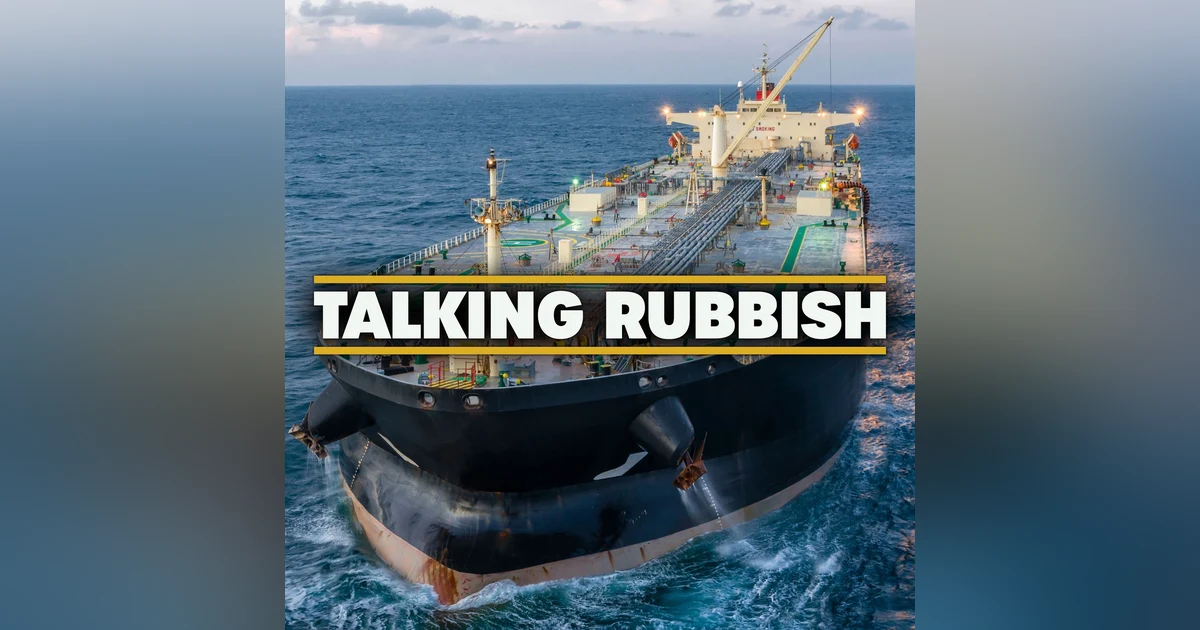
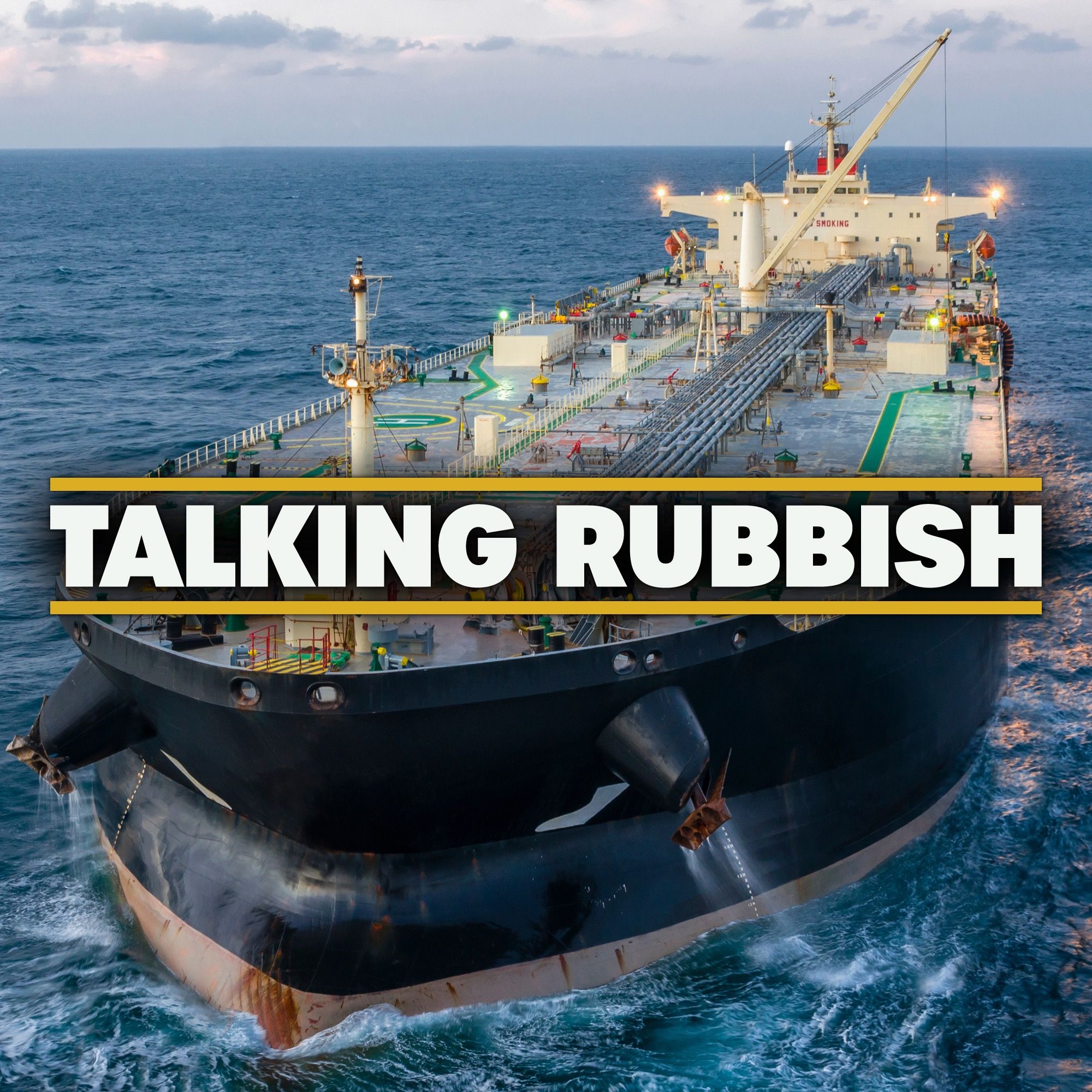
92. How the war in Iran is reshaping the plastic market
This week, we dive into a crucial topic: the effects of the Iran war on plastic production and recycling. As oil prices rise, recycled plastic is becoming more competitive, offering a potential silver lining for sustainability. Join us as we explore the economic implications and the future of recycling in our latest episode. Don't miss out on this insightful discussion!

 Apple Podcasts
 Spotify
 YouTube
 Amazon Music
 Castbox
 Podcast Addict
 PocketCasts
 Since February, the war in Iran has forced the closure of the Strait of Hormuz, disrupting global oil flows and sending shockwaves through industries worldwide. But amid the turmoil, an unexpected consequence has emerged, recycled plastic is becoming more attractive to major brands. In this episode, we explore how the conflict is reshaping the economics of plastic, and what that could mean for the products we buy in the years ahead. Plus, are nasal spray bottles rubbish or not, is litter-picked waste ever classed as fly-tipping, and why does Robbie think episode 3 was worse than episode 90.
Join hosts James Piper and Robbie Staniforth as they delve into the world of recycling, hopefully having fun along the way. One thing is for sure, they will talk absolute rubbish from start to finish.
We would like to have an evening Talking Rubbish to celebrate our 100th episode. It will be in central Bristol on the evening of the 25th June, to let us know if you can make it, book your place on Eventbrite
Please take a moment to complete the Simpler Recycling tracker
We would love you to join our community on Discord
Special thanks to our sponsor, Ecosurety
To get exclusive videos and clips, follow us on Instagram, TikTok, Threads or Facebook; @rubbishpodcast or YouTube: @talkingrubbishpodcast
Or you can contact James and Robbie with questions or just general rubbish musings using the email address talkingrubbishpodcast@gmail.com or by texting them via WhatsApp on 07356 069 232
Relevant links and reports mentioned in the programme can be found on the Talking Rubbish Linktr.ee
Transcripts and episodes can be found on the Talking Rubbish website
Timestamps:
How the war in Iran is reshaping the plastic market? - 01:54
Additions and corrections - 26:19
Rubbish or Not: nasal spray bottles - 39:49
Rubbish News - 44:29
Can litter picked waste ever be classed as fly-tipping? - 50:11
Residual Rubbish - 54:13
Music licence ID: 6WPY8Q4O2RPFIOTL
James Piper: Hello. Welcome to Talking Rubbish, a weekly podcast delving deep into the world of recycling and discussing the truth behind snappy headlines and one sided storeys. In this episode we will discuss how the Iran war might be affecting plastic. Are nasal inhalers rubbish or not? And I have a question about whether litter picking piles could ever be considered as a fly tip. I'm James Piper, author of the Rubbish Book and I'm joined by Robbie Staniforth, my far from rubbish friend. Hi, Robbie.
Robbie Staniforth: Hey, James.
James Piper: Long time no see. We've had a. We've had a couple of weeks off. You've been on holiday?
Robbie Staniforth: Yeah. People won't realise this, but thanks to your really wonderful scheduling, we've managed to have two weeks off. But the episodes have still been coming around like nothing's happened.
James Piper: We manage it, guys, we can still take holidays. The thing I've realised though is, and the mistake I've made is I need to sync up my holidays with you.
Robbie Staniforth: You need to go away yourself.
James Piper: Yeah, I've just been listening to the rest of politics and Rory was. And so Alistair's just doing it with some guests and I'm like, I don't know, I prefer Robbie to be here. So I think I just need to be booking my holidays with you. Not with you, but at the same time as you so that we can both be away. And that will make the scheduling way easier. But yes, we haven't missed a week. I'm determined to not miss a week. Let's see if we can continue it. How was your holiday?
Robbie Staniforth: Yeah, it was great. Had a wonderful time. Was in Zimbabwe at Vic Falls for a week and then spent a week in South Africa as well. Lots of game, Dr. Not too much rubbish, actually. Certainly in the parks, very few. And far between was the litter that I saw. Although outside of the game parks, I must say, on roadside verges and things, there was a lot of packaging around in places it shouldn't be, but no, fantastic time and glad to have had a couple of weeks off. Unbeknown to the binfluencers,
James Piper: On 28th of February 2026, the United States and Israel launched airstrikes on Iran, kickstarting a war that has led to the closure of the Strait of Hormuz, a key transit route for oil. And with 20 to 25% of seaborne oil passing through it each year, I thought it was worth us, Robbie, discussing what this might do to plastic.
Robbie Staniforth: Yeah, I think it is definitely worth discussing, but confession alert. I've been burying my head in the sand a little bit on what's going on in the Strait of Hormuz, because I am one of those people who just feels a bit helpless. Certainly, though it's interesting to know because oil does dictate a lot of our economy and you've talked about this so many times over the years of the podcast that that impacts recycling so much.
James Piper: And I actually didn't think we were going to cover this and then because we did the petrol prices back in episode 87, so I thought we've done enough on oil prices. But it just became increasingly apparent that actually there were a few interesting things for us to talk about here, particularly how brands respond to issues, what it might mean for the future, packaging changes that may or may not happen because of it, because oil is the primary ingredient for a lot of plastic that we use. And, yeah, I think it is worth us doing a deep dive into this. So I should just say this episode is being recorded as the ceasefire is ending and to be honest, we don't really know what's going to happen at all by the time this goes out. The situation could be the same, the war could be over, the war could have escalated, who knows? So we're sort of trying to come away from the politics of this and more just into the market that's happening. And to be honest, the market things that might stick around even if the war ended tomorrow, there's some things that have happened in the market that will take some time, I think, to. To wash out.
Robbie Staniforth: And just this morning I was in a meeting with someone and they asked me this almost identical question. It wasn't quite the same, but they were basically saying, for flexible plastic packaging, how does the outlook look for the future and the increase in recycled packaging? And I was talking about the fact that oil prices have a massive impact on the economics of plastics recycling. And so straight away they said, well, oil prices being high, what does that do? And I was a bit dumbfounded in the long term as to what that would mean, but certainly in the short term we can talk about it in the context of what's happening at the moment.
James Piper: And you were like, can you call me tomorrow? Because I'm about to do this podcast where James has done loads of research, really, if you could just give me 24 hours, I'll come back to you.
Robbie Staniforth: I'm typing an email as you talk.
James Piper: So before we get into the detail, I mean, the summary, really, and the thing you could say to your client is one unintended consequence of the war is that recycled plastic suddenly looks much more Competitive. That's the headline from today. That's what we need to discuss and get into. But before we get into that detail, it is just worth sharing a bit more information on how plastic is actually made, because we have historically on this podcast said it's made oil or made from oil. And that is true. But there are nuances to that and they're quite important in the context of this market. Majority of plastic worldwide is made from oil. Specifically, it's made from a fraction called naphtha. And to make naphtha, you take crude oil and you heat it. And if you just think of, like a giant cylinder that you're putting your oil into and you've got a flame at the bottom, essentially, or a furnace at the bottom, as you move up that cylinder, it's getting cooler. So at the bottom of a cylinder it's going to be really hot, at the top it's going to be a lot cooler. And at different points you can extract, because you know the temperature at different points you can extract different bits from the oil and that's the fractions of oil. And so naphtha comes out at around 70 degrees C. So at 170 degrees C, you're getting like jet fuel. Around 120 degrees C you get car fuel. And then at 70, you're getting nap. There's actually much bigger temperature ranges than that. And, like, things cross over. So car fuel and naphtha do cross over at different temperatures, but in the main, that's what's happening. As the oil is getting cooler towards the top of the cylinder, you're taking out more and more useful things. That's why we say, like, plastic is a byproduct of the oil industry, because you're extracting different fractions at different points and plastic is just one of those fractions, or the ingredients that make plastic is just one of those fractions.
Robbie Staniforth: And the amount used for plastic, in terms of total litres of oil or grammes of plastic created, is tiny when you compare it to the amount used in jet fuel for aviation or car fuel in the automotive industry.
James Piper: Yeah. And all of this is coming out of the Iran war, Obviously, that's. They're saying we're going to have jet fuel shortages and we're going to have petrol shortages and we're going to have plastic shortages. They are the same base ingredient, but they are all kind of linked to this, you know, this process that you're removing different fractions at, and then what happens is you crack the naphtha, so you put it through A process at a very high temperature to crack it, which then creates the monomers, so that's the ethylene or propylene, and then you join them together to form polyethylene, polypropylene, and the joining is called polymerization, and that is how you make plastic. When an oil particle falls in love.
Robbie Staniforth: Not quite the birds and the bees, but, yeah, good explanation.
James Piper: And that's it. However, increasingly now, this is the bit that's interesting in this context. Increasingly, particularly with polyethylene, natural gas is being used instead of oil. And so you can go through a very similar process with natural gas, where you're taking out ethane, you're turning that into ethylene, which then turns it to polyethylene. A lot of natural gas comes from fracking, and a lot of fracking happens in America. I have seen people coin the term, which I love. If you make packaging out of fracking, you call it frackaging.
Robbie Staniforth: Oh, gosh. Someone needs to rebrand that, though. I don't want to have anything to do with frackaging. That sounds like packaging you don't want.
James Piper: Yeah. Well, in the uk, we obviously have. We have very negative views towards fracking, don't we? And I think it's stopped now. There were certainly. I think there were two sites left, but they've now closed. Whereas the us, I think, particularly under this particular president that we have at the moment, is definitely encouraging fracking. And so more natural gas is coming from the us. Why does that matter? Because other countries are relying on oil feedstocks to make their plastic, and the US has an advantage in things like the Iran war because it has the feedstocks to feed the plastic industry. You'll hear on other political podcasts, and not this one, that the US has started a war that they can recover quite quickly from or insulate themselves from. Globally, other people are suffering much more, and I think the uk. Recently there was a study where they said the UK is going to be one of the biggest casualties of this war because of its reliance on imports or exports, or there's loads and loads of economic reasons for that. Essentially, a chunk of global supply of oil has gone missing by closing the Strait of Hormuz and with the supply constrained, but demand remaining steady because we're all still buying product, inevitably, the price of plastic is rising. Dow Chemicals and Exxon Mobil, who are two of the biggest manufacturers of plastic, and I'm going to be honest, I suspect most plastic manufacturers. But these are the two who have been public or private or their customers have gone public with their prices, they've both been hiking up the price of plastic. So Dow had planned to increase the price of polyethylene resin by $0.15 per pound in April 2026. But instead they decided to increase it by $0.30 per pound. So doubling the increase with a further $0.20 planned in May of this year. So very soon, possibly as this episode's going out, ExxonMobil had planned a $0.20 increase per pound and changed it to $0.30. So if we just say over the next couple of months plastic has risen by 50 cents per pound, it's confusing for us, isn't it?
Robbie Staniforth: Yeah, I definitely don't work in pounds. So what would that be in equivalent to tonnes then?
James Piper: If you just take the 50 cents per pound, that is about $1000 per tonne. Polyethylene in March was roughly 1500 dollars and by May it could be 2 and a half thousand.
Robbie Staniforth: Oh wow, that's a significant jump.
James Piper: Yeah, like 60% increase in price just because of the shortage of oil.
Robbie Staniforth: Okay, so in the basic analysis, dare I say it, the crude oil analysis, it is going to lead to surely higher plastic prices and therefore recycled plastic looking at least more viable.
James Piper: Yeah, you're right. I mean for the first time in a long time there are now instances where recycled plastic is cheaper than virgin plastic. I don't want to make anything sound positive here from the Iran war, but I guess the silver lining is some of these subsidies that have happened to virgin plastic, some of these driving down of costs that have made virgin plastic so much cheaper than recycled plastic is getting reversed by a shortage of the base ingredient to make plastic. Recycled plastic doesn't replace virgin overnight. That's not how it works. Supply is limited, the quality matters. You got things like food grade material where you might have to use virgin. We're making it sound really simple and it's not that simple. I think what we can say is that recycled plastic and virgin plastic used to have a big differential in price. That differential has gone for most grades, most materials. We are starting to see a world where people really want to get their hands on recycled plastic because it is cheaper than virgin plastic. The British plastics Federation surveyed 104 companies around this and 58% of them reported a severe or significant impact on their business operations. And 98% had experienced increases in raw materials or operational costs since the start of the war, with 68% expecting the situation to worsen over the next couple of months.
Robbie Staniforth: Yeah, and so while nobody wants to see a War. And the reason for this price change notwithstanding, it does bear out that logic that we've expressed previously in the podcast that shows because oil prices generally are low, have been low over the last decades, that has limited the attractiveness of using recycled content, of using recycled plastics in new products. And so while we're definitely not advocating for the reasons behind this hike in oil, and therefore hike in plastic, virgin plastic prices, it does go to show that the economics are as important as we've previously expressed.
James Piper: That's absolutely right. And over the last couple of decades that I've worked in this space, I have seen significant demand for recycled plastic. A handful of times. You know, this sort of situation and it's historically mostly I'm trying to think about. When I've seen it, it's mostly around the negative view of plastic. Something comes out of the press, plastic's bad, we should be recycling more. And suddenly you start to see brands G around, how do I get more recycled plastic? And I remember when Coca Cola announced they were going to use 100% recycled PET in their bottles in the UK, suddenly I got calls from so many drinks companies saying, do you know anywhere I can get some recycled plastic? I want to increase the percentage. And we had similar things around the plastic packaging tax where that was being introduced and you had to use 30% recycled content. Suddenly everyone realised it was in their interest to find recycle plastic. But I can't remember a time like this where cost and material security with a key driver, where it was like, we actually can't make enough packaging if we're not careful here. We have to find recycled plastic to just get enough product to consumers. I can't think of a time that that's happened to us.
Robbie Staniforth: Yeah, no, I agree. And in a sort of dystopian future, if you like, where primary materials are scarce, that's of course where things like mining through our existing rubbish become so important, that is looking to reuse and recycle the things that have already been created in the first place, rather than pulling it out of the ground, it having taken thousands and thousands of years to have been created in the first place.
James Piper: I guess what this means is brands that prioritise sustainability and invested in recycled plastic ultimately are now in a better place than brands who prioritise cost and said, we're just not going to use recycled plastic. And as we said in a previous episode, the differential between virgin and recycled plastic was so great that it was actually cheaper to pay the plastic packaging tax and use 100% virgin than it was to introduce 30% recycled content. This kind of closing, narrowing of the price, getting the price closer together, suddenly means the companies that did put recycled content in, even when it didn't make any sense financially, are reaping the benefits. Now the next obvious question is, will this stick? Will brands who are now searching for recycled content saying, I need it just for the security of my business, to make sure I can get enough product to consumers, will they continue this after the war is over and prices settle again?
Robbie Staniforth: Yeah, I suppose every time that there's an event like this that causes them to think at a board level, these organisations to think about where their packaging comes from, what the sustainability of their supply chain looks like, how exposed they are to external risks such as this, the more likely it is that these very large companies are going to start to diversify where they get their plastic from and try and put in longer term contracts so that they do have sustainable long term sources of plastics for their products.
James Piper: And I think it's quite similar to what we're experiencing just from countries in that I think the actions of one individual in America have scared countries into going, oh my God, we've got to invest in defence because we can't rely on America like we once did. And it's sort of the same with plastic where I think brands will reflect on this and say, actually we have to invest in our packaging, we have to invest in recycled content. Because what has happened is we, it has been shown that one individual can make a huge difference to your entire business model. And that I would imagine if you're in a brand, and neither of us are in brands probably, so we don't entirely know. But I would imagine if you're a brand, that's quite a scary thing to be saying to your boardroom that actually it doesn't take much for someone to have a massive impact on your ability to sell product. Yeah.
Robbie Staniforth: And lots of the businesses that we do interact with, they have quite small profit margins. And suddenly Talking about what 60% price hike in plastic and the input costs of your packaging suddenly makes some product lines probably look unviable compared to previous years when the oil price was more settled. So it's not just a case of huge companies having a bit of a dent in their products and their profitability, it's actually, is this a viable product line to continue to carry or not?
James Piper: And as I mentioned at the start, this is something that the US will benefit from because they have the feedstocks to create plastic, because they're doing it in a different way. And according to Reuters, there is at the moment a rise in US plastic sales with US companies and, I'll quote, seeing super normal profits. And this is the trouble. The US has these feedstocks to export to replace some of that lost plastic, but ultimately we're feeding that machine brands suddenly, then say, yes, yes, like, let's. Let's increase the profitability of those US companies. It makes it more likely that we might see shocks in the future because the US realises how much power it has in this space. And this isn't just plastic, we should say it's additives, it's the chemicals that we talked about in the previous few episodes. Flame retardants, plasticizers. All of this is increasing in price as costs of freight and transportation rise because of rising oil prices, and some of those have increased by as much as 50%. And according to Bloomberg International Ink Company, which makes it inks and coatings, said it will raise the prices for solvent ink products by 13% and coating products by 10% from May 1. So we think about packaging. You know, as a lay person, you just think about packaging, right? You just think a plastic bottle or a plastic tub, but you don't necessarily think about the inks, the printing, the plasticizers that are added to it, the stabilisers. All of those things are also increasing in price.
Robbie Staniforth: Yeah, of course. All of these price rises, though, can dampen the consumer demand. Like from an environmental perspective, lower consumption can reduce waste, although obviously nobody wants households paying more. But we'll probably be a bit more considered and cautious about where we're spending our money. So there is potential that this might lead to reduced material actually ending up at recyclers, causing the price of recycled plastic to rise, because less of it is occurring in the cycle. Now, that would be a vicious cycle, but it's actually quite hard to predict the degree to which, because it's more expensive to buy products, that people might decrease consumer spending. And there's lots more, much more intelligent people doing the economic forecasting on that kind of thing. But it is definitely the logic is true, the kitchen logic, if you like, that as prices rise for things and people spend less, then it will kick into this cycle that there's less recycled material available.
James Piper: Yeah. And of course, there's so many variables to this. Like we would talk about glass recycling, weren't we? And you start having to lay in the World cup, for example, and how much we're all going to drink over the summer and whether that's going to have an impact. So there's just so many variables to consumer spending. But it is a really good point that that cycle could exist where you buy less product and then there's less entering the recycling stream. And another casualty of the war, beyond the things we add to our packaging and the plastic itself is CO2. And this is where the government is getting a bit nervous because CO2 is used in so many of our products. So it's used in the farming industry to stun animals. It is used in packaging of fresh produce, so things like salad bags will contain CO2 because it extends the shelf life, it holds bacteria growth, so extend shelf life. And of course it's important for things like fizzy drinks and beer. So CO2 is really, really important in the product and packaging industry. To overcome the shortages, the perceived shortages, the government has invested 100 million pounds to reopen a plant in the UK that was closed in September 2025. Now it is for this reason. I actually don't think there's going to be any problems here. So the media picked up on this because the government were basically running scen of what might happen if the war continued to June as part of those scenarios. They were like, what happens if CO2 levels get really low and then this plant we've invested in breaks down and then. And they imagine a worst case. And they said we could run out of CO2 in the supply chain. Unfortunately, that worst case was leaked to the media who then ran it as if it was a likely outcome, which it just isn't. And on the same day Tesco came out to say they weren't worried, which I suspect was a Tesco. Could you just come out and say it's all okay? Yeah, but it was, I mean, other than being potential scaremongering. So we need to be clear that you don't need to go out and buy a soda stream just yet to keep your house CO2'd although I still
Robbie Staniforth: have mine already, so no need to go out. I just need to keep my bottles topped up. Maybe I'll see a little increase in my refillable bottles that are delivered locally. I'll keep an eye out for it.
James Piper: Yeah, absolutely. It might be more expensive. Yeah. And it's a great example of how knock on effects can happen. There's huge knock on effects in the whole supply chain here. One of the things we're noticing is this trend towards different packaging as well, lighter packaging. We sort of touched on it last week when we talked about epr. There's also this layer of The Iran war. And there was an interesting news article around a rise in paperization, a rise in people buying paper based packaging because they want to move away from plastic. We're unlikely to see, I think moves into heavier material like glass because obviously with an oil price rising, you're also increasing the price of petrol and diesel. So if you move into a heavier material, you're just sending your cost increase somewhere else really. So it's that kind of paperization that I think we're seeing more and more of where people are saying, I just want a packaging that isn't primarily oil based. Okay, it's got some coatings, some liners, but it's mostly paper, it's lightweight. So I'm not spending loads of money on, on shipping it around the world. I think that's where we're going to see a bit of a shift.
Robbie Staniforth: So as always with these kind of things, you think there's likely to be winners and losers then? But who, who's really winning from all of this?
James Piper: Well, as we said, the winners are going to be the US exporters. Any domestic recyclers who are near to their end markets that will be, that will be useful because they'll be able to ship at a lower cost paper, fibre, packaging, definitely in certain material types and categories. I mean, in terms of losers, unfortunately you've got to put Europe into that because of the cost of energy. The cost of running these plants in Europe is so high. Anyone who's import dependent, and I would put the UK in that category, in lots of ways we are import dependent. Any smaller packaging firms who have really very small margins, it's going to be quite difficult to overcome some of these price increases, I think. Yeah, those are, that's probably my winners and losers, I think. Do you have anything to add on that or is that, is that a fair summary?
Robbie Staniforth: Yeah, I suppose ultimately, if you're a country that's reliant on these resin imports and you don't have a sustainable source of plastic either, whether it be from primary plastic or from recycled plastic, you're likely to have an issue as a consequence of this. These are significant price rises in the production of plastic, but also in the fuel costs to produce anything that you're manufacturing, frankly.
James Piper: So to wrap this trash talk up, the strange reality is an oil shock may not reduce plastic use at all. It just simply might change who makes it, what it's made from, and whether recycled plastic is finally treated as something that is strategic rather than just doing it for the good of the planet. You're actually doing it because you've got a strategic financial or economic reason for doing it. For years, I would say recycled content has been seen as a sustainability nice to have. And yes, there are some taxes that sort of make it work better. But again, it's cheaper to have virgin than it is to have recycled. So you have to do it really for good reasons rather than just financial ones. However, with virgin plastic becoming expensive or certainly unreliable, this now has become a business decision and resilience, local supply, long term recycling contracts all have real value. Whatever you think of the Coca Cola company, you know, they invested a lot in recycling and getting recycled feedstocks and I'm sure and I haven't spoke them, so I don't know, but I would imagine they have have a good buffering from these kind of issues. Because of that investment and support early on, I think more and more brands will be thinking in that way from a sustainability perspective. That can only be a good thing. You know, that is the one small silver lining that comes out of something that, you know, I certainly don't politically agree with. Of course, some of this may fade if prices fall and the trade routes reopen. And history does suggest companies like to return to old habits. But I do think in this instance it will leave a bit of a mark. I do think the fact that one individual has caught caused this, you know, with his team, but ultimately one individual has caused this. It will scare brands into thinking actually we need to future proof. And I think supply chain weaknesses have been been exposed as a result of this process. I mean the real lesson really is not just driving costs down to create an ultra cheap material that then doesn't have the backing for when a shock hits it. Additions and corrections. We had Sarah on discord. So this was following our discussion about Fever Tree in episode 89. So we would talk about the fact that Fever Tree were challenging their EPR bill and they were complaining that their profits had been reduced because of their EPR bill.
Robbie Staniforth: Yeah. And they were basically saying we just can't afford to be doing this and we won't be.
James Piper: Yeah. So Sarah provided some very interesting insight which we didn't talk about in the episode, which we should have talked about because it is something that is happening across the board. And just to be clear, she doesn't know the situation about Fever Tree. So this is not an accusation against Fever Tree, it's just an observation of the market and how it's playing.
Robbie Staniforth: Okay, good disclaimer. Good disclaimer.
James Piper: Yes. So Sarah seems to work for a company within the hospitality industry and all of her suppliers of glass bottled drinks are passing the EPR cost to them
Robbie Staniforth: in the hospitality industry. So they're actually footing the bill, not the likes of Fever Trip.
James Piper: Exactly. She's saying, when we get our bill from the. The companies we're buying our drinks from, there's a very clear, explicit breakdown of this is the EPR bill that we're passing on to you. Pub or club or whatever it is, really.
Robbie Staniforth: So there's actually a line for it on the invoice or whatever she said
James Piper: on discord, it was 15 to 20p per wine bottle and 6 to 10p per beer bottle. Just to be clear, she has not checked Fever Tree specifically. So I just would like that disclaimer. This is not about Fever Tree, but it is about the communication that we're seeing from these brands because some of them are going quite public. Our costs are affected, our profit, it means we're not surviving, etc. Etc. Etc. When actually that isn't really what is happening in the market, that people are passing it down the supply chain. And so it shouldn't really be impacting profits, I don't think.
Robbie Staniforth: Gosh. And this is another shock to pubs and bars, who we always hear in the news that they're closing at a fast rate because it's just not as viable a business model as it used to be because of various rising costs, business rates and the likes of being tied to breweries, et cetera.
James Piper: Yeah. So Sarah said, look, we're paying epr, which is supporting council waste costs and we're paying for our waste disposal and the brands are the ones complaining to the media. I'm just going to be super clear here that this is one person's view on Discord, which I think is really important for us to share. It may not represent what every brand is doing, but doing loads of legal disclaimers at the moment, just feel like I've really got to cover us. So we don't know if this is everyone, but I have certainly seen brands say, look, we're going to have to pass the cost onto consumers. And how do you pass the cost onto consumers, where you do it through your supply chain? This appears to be true alongside what people have said they're going to do publicly, but it does mean as a brand, it's a bit disingenuous if you're writing to the papers saying, this has really affected our profitability, we would have been profitable without it because you're actually passing the cost on and now we hit the translations and pronunciation section because really. Oh, no, they called out quite a lot of my translations and punch pronunciations. Oh, yeah, Pronunciations wrong then. And episode 88 was by far my worst, and I acknowledge that. I apologise for it. One of them is not subtle because we said it throughout the episode. But basically we spent all of episode 88's trash talking about King Colis.
Robbie Staniforth: Oh, yes. Yeah.
James Piper: And that was because that's what I'd heard a lot of English people say on Tick Tock when I'd been doing my research.
Robbie Staniforth: Yeah, you've been watching the videos of them reviewing King Colis.
James Piper: Exactly. But I said they were based in France and if I'd spoken to my French friends, they would have told me that it's King Coley.
Robbie Staniforth: So you need to get your French pronunciations right.
James Piper: Exactly. And according to Timbo Pinot on Discord Coli means parcel in French, which makes loads of sense that it's called King Parcel.
Robbie Staniforth: King Koli. Okay, so. Or we could have just called it King Parcel.
James Piper: King Parcel, Yeah. King Coley. I apologise to listeners binfluencers who perhaps would like me to be 100% accurate. Might as well carry on with translations. So back in episode 88, I mentioned that we'd had a email in or a Discord, I can't quite remember, actually, from someone who owned a cero waste shop. And I said, it's S E R O. And then it occurred to me, as no one's written in about this, but as I was listening to the episode, I thought, I bet Ciro S E R O is zero in Welsh because it's a zero waste shop in Wales.
Robbie Staniforth: Okay. And is it?
James Piper: It is, yeah. No one's written about this, but I did a Google Translate and I was like, I should have picked up on that. Lesson learned. I need to Google Translate everything into it. And in this instance, it was a pesky zed. It was a S for Z situation. And so this is leading me nicely into the Z section.
Robbie Staniforth: Yeah, we've got a Z section.
James Piper: Judith in Discord wrote in, again, episode 88. This is all the single episode.
Robbie Staniforth: Oh, no.
James Piper: And this was. I mean, she wrote in minutes after it had gone live. This was like. We really wound Judith up. So I'm sorry for this, Judith. And that's because I was talking about us being on German tv.
Robbie Staniforth: Oh, yeah.
James Piper: And I said, robbie, they're coming to film us and it's zdf. And she said, we are English, we are not American. We Say zdf.
Robbie Staniforth: So that was your American. So you're having problems with your French pronunciations, your Welsh pronunciations and occasionally you're slipping out of Britishisms into Americanisms.
James Piper: Yeah. Now I'm going to give myself a blanket pass here because when I was younger, during some very language formative years, between the ages of 7 and 9, I lived in North Carolina. So yes, I have had this problem a lot in my life. Like it took me ages to work out, out. And I still struggle a little bit whether advert or commercial is right. I can never remember which one's which. And I actually text Ellie this morning and I had. We're talking about paint colours for a room. We're painting and I text grey and I couldn't remember if it was grey with an A or an E. So I have this all the time, this issue.
Robbie Staniforth: Oh, okay.
James Piper: So if ever you hear me say something you think that's the American version of is just. It's a cross I have to bear. They actually complete side note here, nothing to do with recycling. When they. So you know I'm a big fan of Tim Minchin.
Robbie Staniforth: Oh, yes. Yeah, I do.
James Piper: Yeah. And he wrote the musical Matilda which you.
Robbie Staniforth: Oh yes.
James Piper: You can watch the film, see it
Robbie Staniforth: at the Hippodrome in a few months time.
James Piper: Very good. Right, well, small spoiler if you haven't seen it before. They have a song where they go through the Alphabet.
Robbie Staniforth: Yeah. No it won't.
James Piper: Yeah. And the letters of the Alphabet are all hidden in the song.
Robbie Staniforth: Yeah.
James Piper: And in. And when he wrote it, he's Australian, Tim mentioned. So when he wrote it, he. The end of it is like just you wait for Phys Ed and fizz Ed. Physical education. Phys Ed is the Zed.
Robbie Staniforth: Yeah.
James Piper: When they put Matilda over in America, they didn't know how to do it. You can't say, you can't say fizzy. And if you say fizz Ed, they don't know that that's what Zed is.
Robbie Staniforth: So what did they do?
James Piper: I think they kept it. I think they kept his head. But if you do look, I did look up Broadway Matilda and I seem to see quite a few complaints about how fast the English goes, you know, because he's, he's a bit of a master of language, as Tim mentioned. And you know, I think it was probably a bit much to try and I think they left it in as phys Ed. I actually can't remember, but he, he had this issue with the Zed.
Robbie Staniforth: There's no escaping tragedy. Exactly.
James Piper: Very good. He Also wrote Groundhog Day. Tim Minchin, after he did Matilda, he wrote Groundhog Day, which I've seen a couple of times, the musical Amaz. And it was cancelled. You can't see it now, but, oh
Robbie Staniforth: no, I'd like that.
James Piper: But it's really, really good. And they took it over to Broadway. And one of my favourite facts is that Bill Murray went to see it and then he went to go see it again the next day because he liked it so much.
Robbie Staniforth: Whoa.
James Piper: That is our imitating life, isn't it? He experienced his very own Groundhog Day. Watching Groundhog Day, We'd like to take a moment to thank our sponsor, Eco Surety, who are on a mission to rid the world of unnecessary packaging. They help brands navigate the tricky world of extended producer responsibility. But that is not all. They also collaborate on some incredible recycling projects and consumer awareness campaigns for those tough to recycle materials. If you're an organisation looking to make smarter packaging choices, cheque them out@ecosurity.com and the best thing you can do to help our podcast to grow is to let your friends and family know about it. And you could also leave us a review. And if you leave us a review, you could be Robbie's review of the week.
Robbie Staniforth: And this one is one from Apple. It's a local one from Bristolh and a five star review. It was particularly about episode 90, I think.
James Piper: Yeah, it's literally titled episode 90, Love Heart.
Robbie Staniforth: I know, but. But what's the 90?
James Piper: That's a love heart emoji.
Robbie Staniforth: Oh, that's a lover. I thought it was. Episode 90 is not as good as three.
James Piper: I feel like we might leave this in. So just, just in case we do leave this in, let me just explain this to the Bimfields. The heading is episode 90 with then A. Yeah, less than sign and a three to form a heart. Yeah, because that's all you can do in Apple if you're wanting to do an emoji. And just to be clear, Robbie thought it said episode 90 less than 3.
Robbie Staniforth: I didn't realise it was a old school emoji that using the text. Okay, I'm so sorry, Bristolh, for not picking that one up. Anyway, the review goes on to say, what an episode. Inspiring, educational and just simply brilliant. Having started listening in in the very early days, I've always meant to write a review, but it was this episode which compelled me to actually do it. I listen to your episodes in my daily lunchtime walks around the Harbourside in Bristol. And what embarrassment befell me when I laughed out loud at Robbie's comment on taking his coffee black from now on. I had to stop a sit down to gather myself before continuing to walk. You guys brighten up my day. No end. Thank you. P.S. pretty sure I've walked past Robbie before whilst actually listening to the podcast. Keep up the great work and please consider doing some sort of event webinar or recording with a live audience. For us average bimfluencers who aren't part of the sustainability industry but would love some live interaction, it's a great review.
James Piper: There's a lot to unpack.
Robbie Staniforth: There is a lot in it.
James Piper: I also, as you can hear in the episode, laughed out loud at Robbie's comment about taking his coffee black for now. And here's a little bit of behind the scenes. I laughed so hard and we had to pause recording so I could just compose myself that I actually forgot, forgot to say, and if you want to win that prize, follow us on Instagram like the post. And so I had to cut it out of Ellie's episode and just insert it in and insert it in. And that's why I go from insane laughter to a very, very serious. And if you want to win that prize, and it's so unnatural, and it's literally because I laughed so much, I completely forgot to record the lines that I need to record each week. Week.
Robbie Staniforth: Glad I put you off your composure.
James Piper: I enjoyed it a lot. Robbie, what do we think? I mean, someone is walking past you, listening to the podcast. What do you, you know, you want them to stop you, don't you?
Robbie Staniforth: They gotta tap me on the shoulder and say, hey, Robbie, I'm listening to you. That would be so good.
James Piper: Yeah. I've only had it once and it. It's made my. Well, it's made my career.
Robbie Staniforth: It's made my life. So next time, please do come say hello.
James Piper: Now. They ended this by saying, please do some sort of event. I think we should. I think, you know, we've had this in our minds for a while, this kind of idea of an evening of talking rubbish where we book out a pub or a restaurant or something, we all get together and I've been thinking we're gonna do some in Bristol, some in London. But this review has made me think, look, let's just do it, Robbie. So what we're thinking is when episode 100 comes out, which is the 25th of June, so in like a month and a half from this episode going out, we think we should have a drink, celebrate. So 25th of June, the Evening of I think we'll book out a pub in Bristol or a restaurant or something, depending on how many people it is. We'll just book a space and people can just drop in and we can celebrate getting to episode 100. You up for that?
Robbie Staniforth: Yeah, sounds great. Are you going to respond to every good review with just saying? Yeah, we'll probably do that.
James Piper: Hey, if people ask me just to organise a drink, I'm game. You can include that in your reviews. Definitely. We think we'll do it in central Bristol. We haven't quite worked it out yet, but in the episode show notes of this episode, I will put probably an eventbrite or something that you can just book a place in and then we'll know rough numbers and we'll be able to give you guys a venue and we could have an evening talking rubbish.
Robbie Staniforth: And if you want to get me a coffee, I take it black, thanks.
James Piper: And you can follow us at Rubbish podcast. You can email talkingrubbishpodcastmail.com or you can WhatsApp us also join our discord. It's the easiest way to engage with us and listeners of the show. And the link to all of those things is in the notes. Rubbish or not. Happy hay fever season, Robbie. Oh, to all those who celebrate.
Robbie Staniforth: Oh, no. Is the pollen count high particularly?
James Piper: It has got bad recently. Yeah, it has got bad very recently.
Robbie Staniforth: Yeah.
James Piper: My father in law messaged me this saying, what do we do with nasal sprays? So your Beckonase or equivalent, whatever it is, own brand, whatever you use does it obviously doesn't have to just be hay fever related. But I feel as we are in the season, this is where this waste is likely to come from. Robbie, rubbish or not?
Robbie Staniforth: So it's Beckonase, that's a brand of this kind of nasal inhaler thing. I thought you had misspelt melt bacon A which was a bacon flavoured mayonnaise.
James Piper: I had this exact problem this morning because I was looking for my Pyrenees this morning and Ellie said, do you mean a Peri Peri sauce and a mayonnaise? No, no, that is also a brand. So this is a very live debate in my hand. So yes, you have beckoned.
Robbie Staniforth: They all sound like.
James Piper: I know, they all end with A's. Beckonase, Pyrenees and Clarinaise. I think the three big ones, they basically just take the tablet. So like Claritin or okay, Perritin and they go end it with A's because that means it's for the nose. That seems to be how it works.
Robbie Staniforth: Clarinaise sounds like a mix between the Clarins face cream and mayonnaise, which. What? Slap mayonnaise on. Maybe that's how I get my head to be a bit shiny again after the mattifier. So stuff using Clarines anyway. What was the question?
James Piper: Rubbish or not? Same as every week.
Robbie Staniforth: It's hard plastic. It's very small, though, aren't they? I must say, I don't suffer from hay fever, so I'm not sure. I think I know they're similar to the like cold and flu ones. Are they where you get nasal sprays in terms of what they look like? So I'm going to say rubbish because they're too small.
James Piper: Okay, you're right. For the wrong reasons. So often the way. It's a really interesting. But I'm about to blow this wide open. By the way, this is my.
Robbie Staniforth: No, you sniff. You sniff, not blow. You're using it all wrong.
James Piper: This is the one that I think is. Is most controversial so far of all the rubbish or knots we've done before. Because I went into Boots yesterday to have a little look and Boots own brand, and I'm not accusing Boots, I'm sure if I went in superdrug, I'd see the same thing. Boots own brand have an OPRL which says recycle the bottle.
Robbie Staniforth: Okay.
James Piper: Clarinaise also have OPRL that says recycle the bottle. The others, and I didn't cheque them all, but the others that I know of beckon a's Piri Piri days, they don't have an oprl. Okay. And I thought, how can this be recyclable? Because it's gonna have a spring in. It must have a spring in.
Robbie Staniforth: Oh, because of the, like, pump action on it.
James Piper: Yeah, yeah, yeah, yeah. And to me, it's exactly the same as hand soap. A hand soap pump, which is definitely not recyclable because of the spring. So I emailed OPRL to say, what do we think? They came back to say that if there was a spring in it, it wouldn't be recyclable.
Robbie Staniforth: Okay.
James Piper: So I cut one up last night just to cheque. And because you can't take them apart, you literally have to cut them in half. And there is definitely a spring in all of these products. And they certainly Clarines and Boots own brand are using the wrong aprl. They should say recycle. So either you buy one that knows it can't be recycled, so they don't put anything on. On the cardboard box, which is most of them, or you buy one that says recycle, but in all instances, I think this is a unrecyclable product. And OPRL are now getting in contact with the relevant brands. Clarines is Bayer, I believe, and Boots own brand is made by Gal Farm Healthcare Ltd. So I've sort of dubbed them in. Unfortunately, it was an accident.
Robbie Staniforth: Yeah, with good. I wouldn't worry too much about that. So there we go. They are rubbish. But not because they're small, because of that spring
James Piper: rubbish news.
Robbie Staniforth: Robbie.
James Piper: What do a goldfish called Algernon, a dog called Oscar and a cow called Bo have in common?
Robbie Staniforth: They're all animals.
James Piper: I knew you were gonna say that. I was like, my son can now sign all three. I should have kept this question for when we appear on lateral, shouldn't we? You know my dream of appearing on lateral. I should have held this question back. This would have been a good one. All three of them have been registered as waste carriers.
Robbie Staniforth: Oh, yes.
James Piper: Received a waste carrier's licence. This always gets headlines every time someone does it. I mean, it's happened over the years. I think the goldfish was first.
Robbie Staniforth: First. I remember the dog called Oscar, so I should have got this.
James Piper: Actually, Mike did that from Eunomia. So we know.
Robbie Staniforth: Yeah, yeah, I remember that happening.
James Piper: Yeah. That was a Bristol based dog that became a waste carrier. So, yeah, always gets headlines. And it definitely does show a deeper issue that it is far too easy to register as a waste carrier and the process of checking applications is clearly too light. If animals, some of them deceased, I think. I think the goldfish and dog might have been deceased, but the cow is alive. Look, I'm going to say, I think people misunderstand what the waste carrier system is and certainly reporters misrepresent it. It is a record of who you are, name, address, email that you then give to a customer in the form of a code. And if something happens to your waste, in theory, you could give that code on and they go, hey, we know your name and address, right? That's all it is. It's a. Essentially a self reporting tool. There's no test, there's no formal application. You don't have to be good at carrying waste, you just. Just get accredited so that someone knows who you are. In the event that you've given that code to someone and then you've mishandled the waste. Of course, that does mean you could register a cow as someone now has done and get a waste carrier's licence number and the EA will then realise that that subsequent fly tip is Unenforceable, because the waste carrier licence belonged to a cow. So I do question why there's no verification. Why wouldn't you just have like a driving licence or passport thing? You know, just. Can you just prove your name and address? That would be really helpful.
Robbie Staniforth: Yeah, just cheque the name.
James Piper: The cow was the Country Land and Association who did this and they did actually make a second registration under the name Lori Load, which didn't get the same headlines as the cow, but they did both, just in case, you know, both puns are good. I do think in the main, these tests on the system are good because they get headlines people recognise. Actually, it's not a perfect system and there is definitely dragging feet on the reforms here. We've talked a little bit about the waste crime reforms. There's definitely a bit of feet dragging. There are lots of reforms coming in this space to make it harder for waste criminals and probably for farmyard animals to be registered and we'll do a full episode on those reforms in the future. But I just thought this was a light storey, but one that has a bit of a deeper meaning in terms of this system.
Robbie Staniforth: My news this week comes from Wales and the deposit return scheme because the Welsh government have rejected the application from the deposit management organisation Exchange for Change, who are going to basically manage the system for beverage container deposits in England, Scotland and Northern Ireland. They've rejected them as the scheme administrator in Wales. Now, they are an independent, not for profit organisation, so they obviously passed all of those parts of the criteria. They were also the only application in Wales and so. So lots of people have been dumbfounded as to why they were rejected and Welsh government have reopened and they're inviting further applications closing on 2 June to become the deposit management organisation in Wales. Now, there's been lots of disappointment voiced by industry, not just about the Exchange for Change not getting this appointment, but also about how Wales needs to be interoperable with the rest of the uk. Glass is an issue because Welsh government have said that glass was always included and then the other nations chose to take it out and they're just holding the line with what the original decision was and ultimately want to see refillable and reusable glass being used in Wales. But it's definitely thrown a bit of doubt into how the system's going to be interoperable across all four UK nations, and we'll wait and see what happens. Hopefully Exchange for Change will change their submission and reapply and it's very possible that they might get it at the second time of asking and I'm now scratching my head wondering who else might apply to be the deposit management organisation for Wales. It certainly would be quite complicated if it's a totally different, different organisation.
James Piper: It's an unbelievable situation, isn't it, having one applicant that you then reject. I think it's difficult to see how this doesn't lead to delays. It feels to me like Wales are prioritising glass and reuse. Exchange for Change are coming in with a very practical look. This is how it's going to work. We're going to have RVMs, we're going to collect back stuff and Wales want to be more ambitious and I. It is really hard to see how this scheme will be interoperable between the different nations and I'm worried this golf is too big and actually Exchange for Change recognise the practicalities of how difficult it is to run two very different schemes that work together. So they've applied on the basis that they need an interoperable scheme and have been rejected. So it's, yeah, going to be interesting to see where this heads. It's crazy. Rubbish question. This was a question that Kate asked on LinkedIn, which was not directed at us, Robbie. But I do know that Kate listens and I spotted it while scrolling and I just commented saying, I'm gonna add this to the podcast. It's a wonderful question for us to discuss. So when you lit a pick at the end, you might leave some bags for someone to collect, like the council or a waste management company to collect. And the question was, does this ever tip into do fly tipping?
Robbie Staniforth: Ah, yeah. So those bags that you collect up and they ask you to put them in a certain location and the council will come and pick them up. Or a waste management company, I don't think they can be, can they? Classed as fly tipping. The bags are sometimes have markings on them, so that would make it obvious that it isn't litter. But I think other times you can just use a clear plastic bag. I don't think they ever want black plastic bags though. That's always suspicious looking when you see a pile of several of them on.
James Piper: Yeah, I think right answer for the right reason, Robbie. I think, oh, wow, that's rare. Yeah, this happened to me. I joined a litter pick with a charity and we went along the Avon Gorge litter picking and at the end they left the bags on the roadside and the organiser said, oh, I've arranged for Bristol ways to collect them and I must admit I felt so uncomfortable leaving them. It was like completely against My nature to just leave a pile of bags on the side of a road. But, but they were marked and, and clearly that is what Bristol expected us to do. So if we look at the definition of fly tipping, it is the illegal deposit of any waste that does not have a licence to accept it. And the key word here is illegal. I think it is fair to say a litter pick is really just a rearrangement of existing litter into a pile, you know, impact and so it never crosses into that illegal definition. That would class it as fly tipping. But there are really important things we should do as individuals to avoid just creating a fly tipping magnet, you know, because I guess one of the challenges is if you put a load of bags on the roadside, fly tippers think, oh, I'll just add to that. We've all seen that where fly tips get bigger and bigger. So there's a few things that you can do to avoid that. So definitely visiting your local council website as your first point of call and see if they offer litter picking equipment, hire and collection arrangements. So I went on the Bristol waste website. They have five steps to a successful litter pick. Decide where to pick, complete a health and safety checklist, book out litter picking kit and they provide grabbers, high vis vest recycling and refuse bags. They then have a place to share the results, to report how much was picked so they can track litter. And finally they say to dispose of the waste, you can either take it home for curbside collection or book a collection from them and they will collect it up on a weekday. The only advice I had for them, and this is a bit linked to my residual rubbish as well, was they would just like tell us roughly where the waste is going to be, you know, and they did say the more specific the better. But they were like street name postcode. And if you don't quite know where you are, like I was with the Avon Gorge, that's quite hard. And I just felt this was a perfect use for what three were. You know, the app that divides up the world into little grids, like, yeah, that was my recommendation. I felt the same about my residual rubbish where I was reporting fly tips. I think as long as you've told someone where you're leaving the waste, it can't be counted as a fly tip. And going through the post, there were some really good comments. As you said, don't use black bags, use coloured bags and the councils will usually provide them so that they know it is litter picked waste. Don't create a litter picking magic knit and stickers were really popular. So there were lots of litter picking groups that had stickers made up. So the one I saw said litter champions have helped in this area. Stick that on the bag. I guess my feeling was that's additional resource to create stickers and stick them on a bag. That feels a bit like wasted resource. So I personally would just take a Sharpie to it, I think, and just put litter picker was here or something.
Robbie Staniforth: Yeah, litter picked rubbish or something. Yeah, exactly. Oh, wow. I'm looking forward to residual rubbish now. What's that all about?
James Piper: Residual rubbish? This is something that has happened to us this week that has made us feel like an emoji. And as I just said, this is the fly tip section, so welcome to Fly Tips of the Week. This week I experienced three fly tips, all of which I reported to the council, but I would like to go through them in order of my favourites. So top three fly tips in at three. Waiting for a bus was a truckload of waste dumped at a bus stop, including but not limited to three fridge, freezers, a bed, a TV, a desk, a chair and 15 rubbish bags all piled next to a bus stop.
Robbie Staniforth: It's mad. That must have come out of someone's house. Like one house cleared and just left by a bus stop.
James Piper: It was unbelievable. So that was number three. Number two was a fly tip that sadly included two empty Lego boxes.
Robbie Staniforth: Oh, they were empty. You did cheque.
James Piper: And quite big, this one, I would say, you know, like smaller than the bus fly tip, but pretty big. And unfortunately for the person who dumped it, a lot of envelopes with their address on it and someone had actually scrawled on a box on top number 11 for the police report. So they obviously hadn't reported it, but they just scrawled on the box the address and said, oh, my word for the police report. So, yes, both of those fly tips, number three and number two we're, were dumped next to a sign that said 50,000 pound fine for fly tipping.
Robbie Staniforth: Wow. So it must be hot spots for people just dumping rubbish.
James Piper: Yes. So I'm not going to say I feel sorry for the people at number 11, but, you know, fly tipping with your address on next to your house. I mean, it literally was like 20 footsteps away from their house. It was probably not the best idea, not use your fly tip at all. And my personal favourite fly tip of the week, and I'm sure we've all seen this, was in a woodland where someone had dumped a broken TV unit and then stuck a bit of paper on it and said, said Free to take with a smiley face.
Robbie Staniforth: Oh, my word.
James Piper: And even if you stick a little sign on it saying Free to take, it's still fly tipping. And so I love that that person's walked away thinking, I'm being so generous, leaving that nice broken unit in the middle of the woods. I reported all three of them and to be fair to Bristol Waste, within two days they were all gone, which was very, very impressive. And they kept me up to date. They kept emailing me going, we've cleared it, We've it. Done, done it. It was great.
Robbie Staniforth: Hey, they must know your email address, I'm sure. Priority customer.
James Piper: Well done, Bristol Waste for cleaning them up so fast. And I am just so sorry you have to do it. I think it's very unfair. Now that woodland one, as I said, was cleared, so the TV unit with Free to take written on it was cleared. The next day, another one appeared, broken like box again. Someone had stuck a sign on it saying, free, Free. I carry a Sharpie with me at all times now. And I scribbled out three and put, no, it's fly tipping. And that is what I will continue to do. Reported that one and again it was cleared the next day.
Robbie Staniforth: And my residual rubbish this week was, I suppose, an intrigued emoji from my holiday. And this section is called Site Tours while on holiday because my partner's father, Paul, it was his 70th, so we were out in Zimbabwe in Victoria Falls looking at the falls themselves. But he organised a field trip for me at Ellie Collection, which is a plastics recycler and litter picker, you'll be pleased to hear. So a chap called Prince showed me around their site where effectively they're picking up litter, plastic litter, and turning it into like an aggregate substitute. And in fact, fact, just down the road, a local skate park had used some of this embedded plastics in the concrete they had made the. The skate park out of. And you could see lots of kids whizzing around on their skateboards around there. So it was really interesting to see in a developing economy a very novel approach and quite crude in some ways, approach to a litter problem, a plastic problem and a recycling waste infrastructure problem. And they are growing very quickly and looking forward to making more of this aggregate substitute product. He did also. This is Paul, my partner's father, get me a special birthday cake made, which was absolutely unbelievable. It had. It was talking rubbish themed, it had these elephants from this Ellie Collection site visit around and the cake maker had made all sorts of different items of packaging and rubbish and recycling to top this cake. It was a carrot cake. Absolutely delicious. So this is a big thank you to the cake maker in Zimbabwe. And maybe we've definitely got one listener in Zimbabwe because Paul listens most weeks, but maybe now we'll be getting a few more.
James Piper: And as always, thank you all for listening. Thank you for the reviews and engagement. We love getting the opportunity to do this podcast each week. Join our Discord Follow us on Social Media Obbish podcast. You can email talkingrubbishpodcastmail.com or you WhatsApp us and everything we've discussed today can also be found on our link tree. The details of all those things can be found in our show notes. There is nothing left for me to say other than See you next bin day.
Robbie Staniforth: Bye bye.