50. The truth about climate change, with Mike Berners-Lee
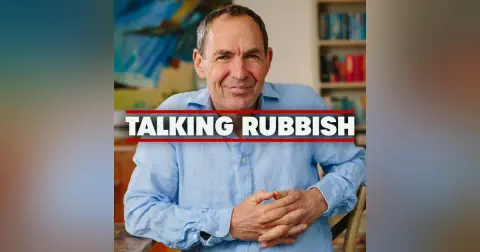
We’re thrilled to mark our 50th episode with a very special guest: renowned climate expert and communicator, Mike Berners-Lee. In this milestone conversation, we dive into his latest book, A Climate of Truth, which challenges governments, the media, and all of us to confront climate issues with honesty, urgency, and clarity. His call for truth-telling deeply aligns with our own mission of promoting transparent and impactful sustainability. Join us for this thought-provoking discussion, and let’s make the next 50 episodes even more powerful, together.

 Apple Podcasts
 Spotify
 YouTube
 Amazon Music
 Castbox
 Podcast Addict
 PocketCasts
 We’re thrilled to mark our 50th episode with a very special guest: renowned climate expert and communicator, Mike Berners-Lee. In this milestone conversation, we dive into his latest book, A Climate of Truth, which challenges governments, the media, and all of us to confront climate issues with honesty, urgency, and clarity. His call for truth-telling deeply aligns with our own mission of promoting transparent and impactful sustainability. Join us for this thought-provoking discussion, and let’s make the next 50 episodes even more powerful, together.
Join hosts James Piper and Robbie Staniforth as they delve into the world of recycling, hopefully having fun along the way. One thing is for sure, they will talk absolute rubbish from start to finish.
To vote for James and Robbie in the Resource Hot 100, please use the links below:
Robbie and James
(see, I am not competitive, I put Robbie's link first!)
Sign our very first petition: https://you.38degrees.org.uk/p/poo
We would love you to join our community on Discord
Special thanks to our sponsor, Ecosurety
To get exclusive videos and clips, follow us on Instagram, TikTok, X, Threads or Facebook; @rubbishpodcast or YouTube: @talkingrubbishpodcast
Or you can contact James and Robbie with questions or just general rubbish musings using the email address talkingrubbishpodcast@gmail.com or by texting them via WhatsApp
Relevant links and reports mentioned in the programme can be found on the Talking Rubbish Linktr.ee
Transcripts and episodes can be found on the Talking Rubbish website
Music licence ID: 6WPY8Q4O2RPFIOTL
Every Thursday since September has been my favourite commute day because that was when I discovered Talking Rubbish podcast. Getting to know more about recycling processes has been really useful for my day-to-day life and my work in sustainability. I think I am one of those slightly mad people on the train who chuckles along because I do think Robbie has got the most infectious chuckles. Congratulations on reaching the 50th episode, and I'm really looking forward to hearing the next 50 and hopefully many more.
SPEAKER_06Hello, welcome to Talking Rubbish, a weekly podcast delving deep into the world of recycling and discussing the truth behind snappy headlines and one-sided stories. I'm James Piper, author of the Rubbish Book, and I'm joined by Robbie Stanetforth, my far from rubbish friend. And in our very exciting 50th episode, we are joined by Mike Berners-Lee, our Far from Rubbish guest. Hi Robbie. Hi James. Good morning. It's episode 50. I can't believe it. And listeners will have noticed there was something happened before my hello. And that's because I asked some of our lovely listeners, I asked people who had interacted with us on WhatsApp if they could send us voice notes with things that they've potentially changed because they've heard the podcast.
SPEAKER_09Yeah, thanks so much for writing in, for talking in.
SPEAKER_06Talking in, yeah. Lots of people talking rubbish this week. It is so exciting, reaching episode 50. Robbie, did you think we get this far?
SPEAKER_09I must admit I was very sceptical at the beginning, but increasingly getting more confident over time. Yeah, so much uh love for the podcast so far.
SPEAKER_06Yeah, it's been, and we've been at conferences this week, haven't we? It's been so much fun talking to people who are just so they just love the podcast. It's great. People are like, oh, keep doing it, please keep doing it. So we're just honestly, news keeps coming, we will keep talking as long as people listen.
SPEAKER_09The best one I got this week, I was at the Oval Cricket Ground, and someone said to me that they usually listen to us while mowing the lawn. So don't be surprised if when I start talking, he suddenly runs out and starts mowing the massive cricket field out there, which I thought was very amusing.
SPEAKER_06Amazing. And just because it's episode 50, and because you know, we put time into this podcast, we just thought we'd mention that it is that time of the year where the resource hot 100 comes out.
SPEAKER_09AKA competition time.
SPEAKER_06I know, but I'm not liking this competition. I love it. Oh god. I said so okay. So what's happened this week? I said before, like last year, the Resource Hot 100 had closed by the time we start our podcast, right?
SPEAKER_09I think it had, yes.
SPEAKER_06And I said this year I felt confident about winning because I control our social media.
SPEAKER_09Oh yeah, I'm gonna go back and find that clip.
SPEAKER_06So then I proceeded to on Instagram this week put up loads of pictures of me with my link and one tiny picture of you with your link. Oh, come on, James. Yeah, and then I start getting messages from people saying, because you've done that, I'm only voting for Robbie.
SPEAKER_09Oh yes, it backfired. Oh, this is great news.
SPEAKER_06It's a nightmare. It's a nightmare. So I'm I'm removing the competitive element and saying maybe we should just both get votes.
SPEAKER_09Oh, okay. Okay.
SPEAKER_06So I'll put in the show notes of this episode, I will put both of our links to the resource hot 100. And if you if you're listening to us thinking, look, I really like what James and Robbie do, I'd like them to feature in that list. For those who don't know the list, what's the resource hot 100, Robbie?
SPEAKER_09It's a list of all the top professionals in the environment in the UK. I think it's a UK limited list as far as I'm aware, who are working on waste, rubbish, resources. Certainly, uh, it's not just about recycling, it's also about reuse and having a more circular economy, too. So it's a list of a top hundred people.
SPEAKER_06Yes. So if you think Robbie and I deserve to be on there, I'll put the links in the show notes, and we would love a vote. It's listener voted, but not listener voted, it's public voted, and for us, it's listener voted.
SPEAKER_01Hello, talking rubbish. Greetings from Estonia. Two things I do differently thanks to your podcast. Number one, I pay attention to the amount of recycled material content in plastics when I buy them. For example, for my bed. Number two. I wash my hands and containers which go to the recycling facility using the water which is left over from the regular wash. Thanks for a great podcast.
SPEAKER_06Additions and corrections. So this week I had Philip on Discord. Thank you, Philip, who was mentioning he took a picture of his train ticket, and we talked about train tickets in episode 24. And just to remind people, because I'm using it more now as well, on our website we have a directory where you can see all the things we've talked about. And often someone will say, I know you talked about train tickets, and I have to quickly go to the directory to remember when we did it. So if you go to our website on the top banner, it says directory, that's all the things we've discussed. We talked about train tickets in episode 24, and Philip had put up a picture saying, I just travelled on the train and I was given a pure paper ticket where the info was printed on a QR code which replaced the strip that you would scan at the barriers. And I think we said before it was the strip that made train tickets really hard to recycle. So, Robbie, paper with a QR code. Is this a very quick rubbish or not? What do you think?
SPEAKER_09It's absolutely or not. It's recyclable, and I have on my person right now Philip's train ticket. Have you? I saw him yesterday and he handed it over to me. Really? This I saw this person in real life and he gave me the train ticket. That's amazing. And we uh we did the little sort of tear test that you can do to check it is just paper that can be recycled. We did the little scratch test to make sure it wasn't, what's the word, laser printed, and which it wasn't. So, yes, this is definitely an or not, it's recyclable. Great. So thanks, Philip. Thanks for coming to say hello as well. Uh it was good to uh meet you and see you. And yeah, I now he didn't need the train ticket, it was a single, so he just said, and you can have the train ticket if you like. That's great.
SPEAKER_06Yeah, I agree with you. And I'm surprised we didn't talk about it at the time, actually, because there were quite a few rail companies when I did my research who said they're moving to these paper ones so they can be recycled.
SPEAKER_09So Yeah, that's brilliant. And and it's less paper as well, with these tickets because that they're a less sort of they're uh they're not as heavy a gauge as the old cardboard one. That's it.
SPEAKER_06And just a week ago I was at a grey parrot event. Uh, we talked about grey parrot before on this podcast when we particularly when we did like our polytag stuff, because they do a similar thing in that they're tracking our waste, but they use AI. So the idea is that they will put a camera in a Smurf, and then that camera will have waste going under it, and the camera is working out what the item is using AI. And they were launching a product called Deep Nest, which is basically taking that data and then applying a brand layer to it. So rather than just saying aluminium can, it will now say aluminium can Pepsi or Aluminium Can Coca-Cola, and so that gives everyone more data. And it I I was lucky enough to be on a panel talking about it, super excited by it. I guess the interesting thing that comes from that, in my opinion, is that you will be able to gather data on whether a campaign is working or not. If you know a drinks company decided to invest quite heavily in a recycling campaign, lots of marketing and advertising, and they started seeing a massive increase in their cans going through to that recycling plant, then we could say to the other drinks companies, look, that's what's working. And so you can start skewing campaigns on recycling and messaging on recycling based on what you're getting back at the recycling plant. I think it also, in an advanced EPR world, so in 10 years' time, you could be in a position where brands have a specific EPR cost based on their recycling levels. And I think that is the future of EPR, where it's a big pot of money, but instead of saying aluminium cans cost this, it'll be Coca-Cola aluminium cans cost this, and Pepsi aluminium cans cost this because they've got different recycling rates, so therefore they have different costs.
SPEAKER_09Yeah, let's hope the technology can be made, you know, affordable as soon as possible so that we can transition to this new future, because it'd be really exciting to have brands individually responsible for what they put on there, not sort of collectively responsible, which is what the system is at the moment. Yeah, super exciting.
SPEAKER_06But I do think if you were transitioning to that world of EPR, the brand might say, Well, I'll fund the camera because actually I can save loads of money. So if the government started giving that direction of travel, actually it's the brands that should be paying for this. And I interestingly, when I was on the panel, we were asked about kind of export waste, and one of my feelings was, you know, when you read a Greenpeace report, what Greenpeace tend to do is they say 17% of our plastic's recycled, and they say 30% is exported, and they never say, and of that stuff that's exported business, how much is recycled. They just don't count export as recycling. And I basically said to the brands in the room, you have no defence to that. You know, if Greenpeace want to say that all our export isn't being recycled, you can't prove otherwise. And you need this kind of tech and this data to say, actually, we've had a look at the export and quite a lot of it's being recycled.
SPEAKER_09Yeah, no, so if you want to put a uh camera in a smurf, that isn't a uh home security system using a garden gnome. It's actually uh doing AI in one of these material recycling facilities.
SPEAKER_06I can't believe I'm the one that gets called out for my dad jokes. Like, what the hell? You're way worse than me. You've got the laugh that makes people want to pull their ears off, and the dad jokes. I really hope people have listened to last week's episode, otherwise they're gonna think I'm really mean.
SPEAKER_09Yeah, you are really mean.
SPEAKER_06Hi, Ethel. Um of course I just spent my whole time trying to break this AI camera, uh, because that's just that's just fun. And so I put my hand under it and it popped up saying latex glove.
unknownOh wow.
SPEAKER_09That really is shiny skin you have there, James. You're absolutely glowing.
SPEAKER_02Hi, David Robbie. Um, absolutely love the podcast. Something I've done differently since listening is I now take my soft plastics back to the supermarket. I used to do it, then I'd gone off it after reading the report from Everyday Plastics that said it all gets incinerated, but you convinced me to go back to bagging it up and taking it to store. Keep up the good work. Cheers.
SPEAKER_06We'd like to take a moment to thank our sponsor, EcoSurity, who are on a mission to rid the world of unnecessary packaging. They help brands navigate the tricky world of extended producer responsibility, but that is not all. They also collaborate on some incredible recycling projects and consumer awareness campaigns for those tough to recycle materials. If you're an organisation looking to make smarter packaging choices, check them out at ecosurety.com. And as always, you can follow us on social media at rubbishpodcast. You can email talkingrubbishpodcast at gmail.com, you can join our Discord, which is the best way to get in contact with us and communicate with our listeners. Or you can find anything we talk about in our episodes on our link tree. All of those things can be found in our show notes. So if you just go into the episode you're listening to, have a look in the notes, you'll find links to everything. And we also love getting reviews, it's the thing that helps us grow the most. So if you're listening on a platform that allows you to review, please do so. Please leave us a review, let us know what you think of the show. And Robbie gets to do a review of the week. So you can get read out on the show if you leave us a review.
SPEAKER_09And for Robbie's review of the week, you know me, James. I like to shirk my responsibilities wherever I possibly can. This is true. So thank you to all the listeners who instead of writing in to tell us what changes they've made as a result of uh listening to the podcast over the last 50 episodes, they instead chose to give us very nice reviews. So instead of Robbie's review of the week and me reading one out, let's insert one here.
SPEAKER_04Hi, James and Robbie. I can't even tell you how many times I've recommended this podcast to marketing and sales teams. It's an absolute must listen. The Talking Rubbish podcast is such an effective way of showing that nothing impacting and waste is ever as straightforward as it looks. Every decision has a consequence, and more often than not, there just isn't any one right answer. Um, I've worked in the industry and I've been around this stuff for years, but what the podcast really drives home is two big truths. First, that change is the only constant, and second, that every day is a learning day. Huge thanks to you both for the tenacity and wisdom to make this podcast actually happen. You're helping move the conversation forward in a space that desperately needs clarity and nuance. Keep doing what you're doing. We're listening.
SPEAKER_06Oh, but that is a lovely review. Thank you so much. And uh, you know, it's just so nice that listeners have recorded little notes for us. So, yeah, as I said at the beginning, and you may have had a couple by now, we'll just pepper them through the episode, just like little clips that people have sent us of things they're doing differently because of talking rubbish. That's really what we care about. You know, we care about making a difference, we care about people understanding how to recycle better, and so everything we do is is driven towards that. And it's it was so nice getting. In fact, we've probably got too many to air, but it's so nice getting so many from listeners who are saying, Oh, yeah, I know now what to do with a disposable barbecue. No one's actually voice noted that one. A train ticket. A train ticket. We could get that in the future. Oh, yes, thank you, Philip. Great. So let's hand over to our interview, Mike Bernersley. It's a super special episode 50. I'm a massive fan of his books. I love them. So, just as a reminder, if if people haven't heard of him, he's written some incredible books called uh things like There's No Planet B, uh Climate of Truth is his latest one. My personal favourite is How Bad Are Bananas, which was the carbon footprint of everything. Um, I get that out all the time, and I just love reading that one because it's just a super digestible. Oh, how much carbon does it take to send an email? Well, it's all in there.
SPEAKER_09Yeah, no, bananas are digestible, mate.
SPEAKER_06Let's have more dad jokes. Madam Robbie.
SPEAKER_03Hello, talking rubbish, it's Rich here from Leeds. Firstly, I just wanted to say thank you very much for an amazing podcast series. It's both entertaining and informative. Now, ever since listening to your podcasts, I've made some quite significant changes. One being all of my tin foil I now ball up into a tennis ball size before I drop it in the recycling bin. And also I wash and deliver all of my empty cat food pouches to pets at home for recycling. Congratulations on reaching 50 episodes. I'm looking forward to the next 50. All the best, take care, and keep on recycling.
SPEAKER_06So today we are joined by Mike Berners-Lee, author of many, many inspirational books, and someone I am delighted we've managed to get onto the podcast. And Mike, you have a new book called A Climate of Truth, which I've just finished. And again, uh just evolving my thinking, particularly about climate change, the polycrisis, all these things. Mike, it's great to have you on the show. Thank you for coming on to Talking Rubbish.
SPEAKER_08Great to be here.
SPEAKER_06And I guess I'm just interested in what made you write a climate of truth.
SPEAKER_08Well, I've been working on climate and wider sustainable issues for 20 years or so now, I suppose. And we're not getting anywhere. So, for example, we've had 29 climate cops now to try and respond to the crystal clear science that climate change is a big deal and it needs dealing with at the global level. And throughout that time, the rate at which we're putting greenhouse gases up into the atmosphere has just gone up and up and up. In fact, you can look at the carbon curve and it's just it's just going up. And you can put a marker in for 1995 when we had COP1, and you can't see any difference that it's made. Not at all at the global level. And to be clear, what I mean by the rate at which we're putting greenhouse gases up into the atmosphere is going up. What I mean is that every year we're making the climate worse by a larger amount than we made it worse by the year before. We are accelerating into the problem. So, you know, the the climate scientists are tearing their hair out now, you know, about things that we don't talk about much, cascading tipping points, the idea that we might be tipping ourselves into a fundamentally unstable situation from which there's nothing we can do about it, right? The climate is just going to make a step change, whatever we do, and possibly becoming very uncomfortable for humans to live in. And it's not just climate, you know, there's biodiversity loss and there's pollution, not these plastics, and all these other things going on. So that's what, you know, the polycrisis that we're heading towards. But it's easy for people in my sort of situation to just keep going at the same old thing, saying, well, we must try harder to make some progress. And actually, we need to do something different from that, right? If what you're doing's not working, right, this has not been working for 30 years, we have to stand back from the problem and say, well, why isn't it working? What are the reasons behind the reasons why we're not getting anywhere? Can we uncover a point of leverage which, if we can just unlock this thing that's been fundamentally stopping everything, then for the first time we can start making some progress. So that's what a climate of truth is about.
SPEAKER_06Amazing, thank you. And now I guess polycrisis is a relatively new term for me. Could you just define that so that our listeners understand exactly what we're talking about? Sure.
SPEAKER_08Polycrisis means it's more than one thing that's going wrong, right? We talk a lot about climate. We talk less about biodiversity loss, but that's just as serious for humanity. You know, related to that, we have rising pollution in certain areas, not least plastics, right? So the growth curve on plastics is far steeper than the growth curve on fossil fuel or other greenhouse gases. And these plastics are more permanent, even more permanent than greenhouse gases, and they are in every organ, just about, of every person listening to this podcast, and they contain 16,000 chemicals, of which a good few of them are known to be endocrine disruptors. In other words, they mess up with our hormone system, they're getting in the way of our fertility, they're giving rise to causes of cancer. So all these things kind of going on together. Meanwhile, we have a rising population, so it's a collection of things going wrong. Why are all these things going wrong? Well, at the end of the book, I call it a metacrisis in the sense that it's going on at a deeper level and a more fundamental level. And at the fundamental level, what's happened is we've become an incredibly powerful species, right? We've entered this era, some people call it the Anthropocene, in which it's humans that are the biggest thing affecting the ecosystem. And we're the biggest thing affecting the ecosystem by a long, long way now. And we haven't yet adapted to that new context, right? We have a way of thinking about economics that's built to expand, right? It was it dates back to the days where if we wanted more space, we just went out and took it. If we wanted a bigger energy supply, we just go and get it. If we experimented and made a mess, that was okay. Just leave it a few years, the planet will put itself back together again. Those days are over. And we haven't yet adapted to this new context. We need to be so much more careful and wise in our decision making and in the things that we do than we've ever needed to be before. And the absolute flat out crisis that we're in now is that we're in the Anthropocene, we haven't worked out how to live in it yet, we've had a few decades of being able to live as if we're not in it, and we've sort of got away with it, and those days are over, right? We are hurtling towards what will be you know, I don't want I hope the I don't want to be depressing all podcasts, but let's just say it like it is, right? We are hurtling towards what will be extremely uncomfortable if we don't get on top of it. Yeah.
SPEAKER_09So just dialing it back a little bit, Mike, can you just describe a little bit of how you got to where you are as one of the sort of preeminent researchers for these various books that you've written?
SPEAKER_08Well, by accident, really. You know, 20 years ago, or a bit more than that, I was just doing general organization development consulting vaguely around sustainable and social issues. And climate was becoming a you know a bigger and bigger deal, and I was thinking, well, look, okay, uh, you know, maybe I should turn my attention to that. I I started getting very critical of the environmental consultants because I felt they weren't able to sell in the change. You know, it was clear what we needed to be doing, and they weren't selling in the change. So I thought, oh well, I'll have a go. And I thought I won't do any carbon numbers, I'll just let the people who do carbon numbers do that, and I'll do the general consulting. And then I just found you couldn't get the carbon numbers from anywhere, right? Nobody could. What was going on in the supply chain of a company? Nobody could tell you. What was the carbon footprint of a product? Nobody could tell you properly. So I ended up doing this whole big numbers game, to my surprise, really. And that's how How Bad a Bananas, here we are, there it is. That's how how bad a banana's came. Out because it seemed like you know, the world's slowly waking up to climate change. As we do that, we're gonna need the carbon numbers so that we can manage the issues. And it felt like that might be a really helpful thing to unlocking the problem. And now things have changed, and you can get much better carbon numbers. It's still a bit of a mess, but you know, and we can do more to sort that out. But it's clear that that's not the problem, that's not the most critical thing. So the next book I wrote with Duncan Clark called The Burning Question was trying to look at the global system dynamics of climate change, saying, look, you know, there's some there are some things here that really got to be understood, things like rebound effects. Why is it that when one person cuts and has a low carbon lifestyle, why don't you see one person's worth of little dent in the global carbon curve? Right? And the same when a company does the right thing, or the same when a country does the right thing. Why is it that we know all these piecemeal actions, some of them on quite big scales, that are doing the right thing, and yet at the global level, you just see what was then an exponential, mathematically exponential rising curve. It's like something's going on in the system dynamics here. There's a rebound effect. In other words, when one part of the balloon gets squeezed down, it actually encourages the rest of the balloon to expand and take up the slack. So it tells us we've got to interrupt this at the global system level. So that's what the next book was about. And then they kind of, that's all very well, but then it, you know, we're still not getting anywhere. And I came to the view that it wasn't useful to talk about climate on its own anymore. We have to treat it as part of this wider systemic thing we're in the Anthropocene. And it's got food issues and pollution issues and all these things together, and we need to, they're all inescapably linked. And they are linked to how we think about economics, how we think about how we run our society, the values that we have, how materialistic we're feeling, all this kind of stuff. So that led me to write There's No Planet B. And then, but most recently, A Climate of Truth, I've written because, you know, I'm just trying to drill harder into why aren't we getting anywhere? And it boils down to fundamental dishonesty, right? If you look at why the cops have failed, it's because right from the beginning, they have been corrupted by very cynical, very sophisticated, very well-funded efforts from the fossil fuel industry to make sure that they don't get anywhere. And they've been entirely successful. You know, the policymakers go along to those cops, they are allowed to say and do whatever they like as long as it won't succeed in leaving the fossil fuel in the ground, right? And then not only that, and this makes it even worse, they are allowed to tell a wishful story about how, well, we didn't quite make the progress we we wanted to, but at least something came out of it. And that's that's actually not true, right? The worst thing that can happen is you get nowhere and you pretend you've got somewhere. And that's what these cops are doing.
SPEAKER_09And are you seeing similar things with the Global Plastics Treaty then? Because interesting you say that, because that was something that seemed to crystallize quite a lot around the plastics treaty. What exactly was happening there in your view?
SPEAKER_08Yeah, totally the same. Yeah, we have the plastics industry that sleeves absolutely rolled up, allowing the policymakers to say and do whatever they like as long as it won't stop the slow down the rate of plastics production. So a complete load of nonsense gets talked. If you go onto the Plastics Europe website, you know, you you see all this stuff about how we're going to increase recycling rates and that's the solution to the plastics pollution problem. What a load of nonsense. You know, global plastic recycling is 9%. 9%. You know, if you drill into that 9%, you find that a good a good load of it isn't anything like what you would imagine it to be, right? So it's complete nonsense that that's the way forward. The way forward is to have less plastic, is to use less plastic. I mean, of course it's a good idea to recycle it where we can, but it's just no way you can put the you can put it all back in the box where it came from. It just never, ever happens. And I mean, you know, the amount, the the growth rate on plastic, just to emphasize this a little bit, right? Every 15 years or so, we are doubling the rate at which we produce plastic. And we're also, roughly speaking, every 15 years, doubling the amount of plastic that exists in the world, doubling the amount that exists in the oceans, doubling the amount that exists in our soils, doubling amount the amount that exists in our own bodies. Right? I look back at the sort of curve of total amount of plastic in the world. When I was born in 1964, there was practically no plastic in the world. My kids were exposed to masses more plastic than I was, and their kids are gonna be exposed to, you know, something like four times as much plastic as my kids were exposed to. You know, and we don't know what to do about it. We're arguably even more addicted to it than we are to fossil fuel. So we're gonna hear a lot more about plastic in the years to come.
SPEAKER_09Yeah, and James and I were smiling at that 9% figure because we did a whole episode explaining to listeners about the reality of where that comes from.
SPEAKER_06Yeah, and it's a really good point to raise that, Robbie, that we did an episode. And I guess, Mike, I'm quite interested in your view on just to give a bit of background to the episodes we've done and and what we and where we are, we're we are all about finding the truth. Good. And so Climate of Truth resonated with me massively. Sometimes the truth is difficult, particularly with plastic. And I think one of the challenges we have in this world is we lump plastic together as a word. You know, everyone just says plastic's bad, and and there will be some applications where plastic is good, and there will be some applications where it's bad, and the challenge that I think plastic has compared to any other material is the wide variety of use cases. So, you know, aluminium typically is a can, steel typically is a tin can, cardboard is normally a box. And so it's quite easy, first of all, to recycle something that's predictable. And I guess just coming back to your thoughts around like chemicals in plastics, for example, we did an episode about um phthalates and specifically the ones that uh they've written reports about that cause heart disease. And a lot of it is used in medical environments, a lot of it is used to make PVC flexible, you talk about that in your book. And the NHS are basically saying, well, look, the other materials that could replace this are just less tested. They could be just as bad. And if we move back to glass, more people will die because their tissues will get ruptured. And so you end up with this quite complicated story. And I'm interested in how we turn that narrative from just plastic is bad to these are the areas where it's bad, these are the areas where it's good, and ultimately we just need to consume less.
SPEAKER_08Well, it's like a nice whiskey. You know, it's you you have it, you have it on very special occasions. With all these things, you know, often we have we have to trade off uh the the goods against the bads a little bit. But when we're pouring tons of plastic into disposable packaging for ready meals or whatever, that's clearly very high volume for very little benefit, and it's you know it's avoidable. And we do it just because it's convenient and it's and it's lazy. And you know, that's that's what we've got to get away from. And I mean, my simple stats on on those chemicals are that there's something like 16,000 chemicals used one way and another for plastics, of which about half have been tested for human health concerns, of which about half, that's 4,000, are found sure enough to be of health concern to humans, of which about a tenth have been regulated against. That's about 400. And of those 400, there's really no guarantee that they're not actually finding their way into the plastics that we're using every day. So it's a really, you know, it's the thing about plastics is A, they're more scary in their own right than most people have got their heads around. But the other thing about them is that they are such a clear example of our kind of lack of wisdom in the Anthropocene. You know, we have this way of doing life that we invent something and it's useful and it's fun and it and it gives us a competitive advantage in our market economy. Whoever first uses plastics, they've found a way of becoming more profitable. And that because somebody did it, everybody has to do it. And the next thing you know, we're all doing it, and isn't it wonderful? And it's only 50 years down the line that we're really starting to say, oh, well, what are the impacts of these plastics? Well, how do we get rid of them? What happens to them when they land up on a beach in a far-off place that you've never ever, you know, you'd never ever believe that there was any pollution on their beach, and then you get the microscope out and look at the sand and you find it actually it's full of microplastics, and it's finding its way into every organ of every animal that's anywhere near that ecosystem, and it's just absolutely everywhere. And then you go, Oh God, what have we done? Oh, wish we'd thought about that more carefully 50 years ago. And that's it's just such a, you know, we do that all the time as a species at the moment. We just do not have the wisdom to go with our power, and we've got to get it now, otherwise we're in trouble. So, you know, that's the kind of that's the serious wake-up. And, you know, just to be slightly optimistic, it's not proven that we can't do that waking up. But my goodness, we do have to wake up. So if there's anybody listening to this who thinks, oh, it's all right, it doesn't really affect me. My life can carry on broadly as normal. I can do what the radio tells me a suggest that I should do every morning when I turn it on, which is broadly carry on with life as normal. Then the challenge I'm making to that is that is not the context. And if you try living like that for another 20 years, you're gonna get a very nasty surprise.
SPEAKER_05Two things that we've I have changed since I've been listening to the podcast. Uh, first one is we uh we use a lot of uh blister packs, we get through a lot of blister blister packs in this house, uh, and we now recycle them through uh through boots. Uh and the other thing we've uh really started doing is recycling our flexible plastics. Uh I now put them in a in a separate bag under the sink, and then when we go to the supermarket, we go and stick them in the big uh green bin outside the supermarket. So absolutely brilliant stuff. Love the pods, highly entertaining. Um keep up the great work. Cheers.
SPEAKER_06We've spent a lot of time thinking about reusable packaging systems, and I come up against cost, cost, cost commercials, commercials, commercials all the time. And I was so frustrated last week. Uh, we talked about that on the episode a couple of weeks ago. Robbie and I were presenting at a conference, and we attended a talk on climate change to what was definitely an audience of people who cared. They were nodding, they were smiling, they were saying we need to reduce carbon. That was the whole thing. 25% of that audience had a single-use coffee cup. You know, how can we change minds if people who are, you know, already converted aren't doing what they should be doing?
SPEAKER_08Well, we need to challenge it at every at every corner, which maybe gets a bit exhausting, but we do need to do that. I mean, I had the same experience recently. I did I was on stage doing a talk with um well, Tony Juniper and I have both written books actually, in quite similar veins. I focus on truth as the as the big point of leverage, and he focuses on inequality as the big point of leverage. And I read her book and said, you know, I'm totally with him. Inequality is huge in all this. And he read my book and said, Yeah, maybe I should have written a bit more about truth. So we you know, we've written these two quite parallel books. Anyway, we found ourselves on stage and we're both really thirsty, and sure enough, there in front of us was two plastic beakers.
SPEAKER_07It's like these things are so it became so symbolically loaded. So we put up with the whole the whole show for an hour, not taking a sip of water, because it's just like we can't now, because it's become, but you know, when you make that message, you know, you do actually change the dial a bit.
SPEAKER_08And I, you know, that was at a you know a Cambridge College hosting this thing, and I don't think they'll do that next time, right? Because it was embarrassing for everybody. And I think if you at that conference, I'm guessing, you probably mentioned the cups, and hopefully in such a way that it became an issue that now everyone's thinking about. We've got to wake up. What I'm saying to every audience I talk to now is that we've got to be brave, right? But we have to be prepared to stand up and challenge things that aren't right in the meetings we're in, in the conversations we're in, in the behaviors we see, in the media that we see, our friends, colleagues, and family reading, because we are sleepwalking into a terrible situation, and we don't need to, but that's where we'll end up if we carry on being as lazy about this as we have been. You know, we've been treating sustainability as that lovely little thing that you do on the sideline, maybe if you can be bothered, and you know, the wake-up we're gonna get if we carry on like that is gonna be so unpleasant that we're far better off heading it off now.
SPEAKER_09Yeah, I think inspired by that actually, um that thing of being more bold in uh in the way that we talk about things. There's this problem though with trying to get to the truth so that one can be bold enough to make these statements, and that's certainly something that myself and James have found on the podcast of who do you believe, what do you believe, you know, where does mainstream media fit in all of this? Because that's a lot of what we spend our time doing is actually scratching, and it doesn't take that much. I mean, I say that James does all the work to scratch behind the surface, so I've got no idea how much digging he's actually doing. But but to get behind the headlines and actually see the reality of the truth so that one can then be bold enough to state broadly, this is what we should be doing, this activity that's happening is just wrong and we need to move away from it. How do you sort of get to the truth so that you can be so bold?
SPEAKER_08So the issues are complicated, right? And the truth, as what I mean by the truth, is the truth as best we can understand it, right? Because some of this is emerging. There's there's scientific uncertainty, for example, around plastics, you know, how bad are they for human health? You know, the detail of that is is still emerging, and there's there's claim and counterclaim to some extent around that. So, what do I mean by being truthful? When you're being truthful, you are giving other people the best view of reality as you understand it, that you are practically able to give, right? And when you're being deceitful, you are, by whatever means, you are trying to make other people believe something about the world that you yourself don't believe, right? So in my book, A Climate of Truth, because I do think you know, to cut to the quick, you know, truth is central to this, right? We've got to have a radical step trains on standards of honesty, right? And it's hard to work out often when someone or some source is being truthful or not, and you can't do it blow by blow. So the listener to this podcast, we've said a few things, let's say, about plastics. Well, the listener on this podcast probably hasn't got the time and resource to go into every single line that we've said and work out whether it's true or not. So they need to work out whether they trust us or not, right? And they need to have some well-founded basis for making that decision. And I give some guidelines in my book about how you might go about that. It's not perfect, but you might want to understand things about vested interests and track records and motivations and so on and competences to work out whether we, you know, whether we are a source of information that is worth going with or not. And let's take the media, for example, or let's take politicians, uh, actually. It's hard to work out whether Grant Shaps, when he goes on, this is an example from my book, goes on the radio saying, oh, our UK energy prices will go through the roof if we don't open up new oil and gas reserves in licenses in the North Sea, right? Well, that's a load of rubbish, right? Our oil and gas prices are barely reflected at all by whatever we do in the North Sea. That's not just not how the pricing works. Right now, he knows that. He's either spectacularly incompetent, and I really do mean spectacularly incompetent for the for the role he's in, or he knows it's a load of rubbish, right? But it takes him 10 minutes to say that on the radio, and it takes a bunch of academics at Carbon Brief or whoever, you know, days to put together a paper carefully, you know, carefully showing how that's a load of rubbish, but they don't get to go on radio for telling millions of people that it was a load of rubbish, right? So they still haven't put it back in the box. So it's so much easier to spread deceit than it is to pull it back in the box. So, in that context, how do you create a climate of truth? Well, if you find that a politician has deliberately misled you on an issue, it tells you you can't trust them ever about anything at all. It tells you in one hit that they are not on your side. If they were on your side, they wouldn't do it to you, right? So, and you've got to have a long memory on this. So, if a politician, you know, who's been sacked in his previous career for dishonesty, for example, you know, gets elected as a as an MP, that's a disaster. That shouldn't happen. That's a showstopper. If he then becomes a prime minister, it's a total showstopper, right? And anyone who votes for them is just saying, please abuse me, right? So we've got to have we've got to raise the bar like that. And there's it goes further than that. And it tells you you can't trust any of their colleagues who aren't calling them out on this, right? So my book is not party political, right? But I do pull out some examples, and just to be specific, right, in the run-up to the last election, one political party in particular was saying things that had minister after minister saying things that they knew weren't true in a daily, every day on the radio. Telling we had a prime minister telling Keir Starmer he was being bankrolled by just stop oil, right? It was a complete load of rubbish. Just Op Oil didn't have two beans to rub together, and they wouldn't have spent it on Keir Starmer if they did that, right? And he didn't correct the record when this was pointed out to him, and neither did any of his colleagues challenge it. So all this kind of thing was going on all the time, and that tells you that every single person in that party was unfit for office. We have to raise the bar on this. Same goes for our media. You know, we've got media, traditional and social media, that is owned by nefarious billionaires with a track record of manipulating election results for their own vested interest. Well, get out of that media. Unless you want to be abused, get out of that media. That media is not acting in your interest. Even if you like the TV page or the cookery page or the crossword, you know, it's or you think it's funny, you are being manipulated if you're in that media. And the same goes for the businesses that we spend money on or store our money with. I mean, so yeah, we and we've got to be bold and call this stuff out.
SPEAKER_06Yeah, and you talk about examples where politicians can get cancelled or celebrities can get cancelled, and you know, very rarely is that for lying to the public. And I think one of your observations is actually that should be as cancellable as anything else. You know, that should be something that people are held to account for.
SPEAKER_08We have a principle that we don't like abuse. So if you're a TV personality, let's say, and you're found to have gone and groped somebody, then that's abuse. We the public have collectively decided that's disgusting, we're not having it, you know, and that's the end of that person's career. And it's also the end of the career probably of anyone who is found in a clear-cut way to have stayed quiet in the knowledge that it was going on, right? Well, that's physical abuse, but if you look at the impact of deception, right, in a different way, that is just you know, you know, that is just as serious, right? The impact of telling people, you know, I don't want to get into whether Brexit was a good idea or not, but it's clear-cut that it was missold, right? Things were written on the side of a bus that were designed to make people believe things about Brexit that were not believed by the people who wrote those things on the side of the bus, right? That is abusive deceit. And millions and millions of people are experiencing the consequences of the Brexit dream as it was described, you know, not being the same as as what we've experienced, not being the same as what the people who pushed for that Brexit believed it would be like either, right? So that's abuse. That's really, really serious. There are people who are finding it's really affecting their lives in a pretty serious way now. Well, you know, why on earth would you ever think of voting for somebody who's being part of that kind of deception?
SPEAKER_06And one of the lines in your book that I loved is we have disproportionate and ever-increasing power in an ever more fragile world. And I think that is such a nice summary of you know why it's so important that we tell the truth.
SPEAKER_08Yeah, it's it's a it's an evolutionary challenge for humanity, right? So you might say, you know, and I've even had uh comes, I've had Rory Stewart say this to me, you know, well, there's always been lying in politics, and if you took away every politician who who lied, there wouldn't be anybody left, and so on. Well, you know, well, maybe maybe he's right, maybe there has always been some lying in politics, but we can't get away with it now, right? That the quality of decision making that we need is so high, it's so complex, that we just cannot afford the spanner in the works of somebody in the decision making mix saying things that they don't believe are true. I mean, let's take the example of a coal mine, the idea of whether or not we were going to open up a new coal mine on the on the west coast of Cumbria, quite near where I live. I mean, all the arguments for that coal mine were fundamentally dishonest, right? They said it was going to be carbon neutral. That's a load of Rubbish, right? You could sort of climb through a loophole and vaguely claim that if you if you don't include the using of the coal, then or maybe, but it's such a loophole, right? They claimed that if you open up this coal mine, it doesn't matter, there won't be more coal produced in the world because other coal mines around the world will close down in an equal way to not change the total amount of coal that's produced. I mean, what a load of rubbish that, you know, and this was countered by economists, and you know, and they still stuck with it. And they said, you know, a rack of other things that were just so balmy. The whole argument for that mine, it sounds it sounds plausible when you're just tuning into the radio and you hear two sides of an argument, you can make it sound plausible. But when you unpick the arguments a bit, you find they are so bogus and they were known to be bogus by the people who pushed for them. And when you find that that's happening, that tells you you cannot trust that source ever again. You know, and unfortunately, if uh the media channel is not helping you to understand that, then it tells you that your media source is not a good source of information.
SPEAKER_09Yeah, and I sort of wonder that that skill of kind of discernment, you know, being more discerning, I'm certainly starting to see in teaching and in my child's education around online safety and things, they're they're literally rather than sort of teaching exactly how you utilize the device and da-da-da-da-da, they're kind of teaching you how to discern between something that's genuine and a friend, and something that's not, something that's a real person and something that's generated and and and and AI. And I wonder what are your thoughts on whether that should give one hope that discernment is getting better over time, rather than how I sort of feel a little bit that it's got a lot worse over the last couple of decades. What are your thoughts on that one?
SPEAKER_08Well, I think in some ways it has sort of got worse, and that gives us something to react against. And I think there are really hopeful seeds coming through. You know, there is like a race going on between the sophistication of brainwashing, if I can call it that, and you know, which is it is sophisticated these days, and the you know, our capacity for critical thinking to sift things out. So, and I think that race is absolutely going on with our kids. So I think you know, anyone who's got kids could do a lot worse than, or who teaches kids could do a lot worse than sitting them down in front of a load of adverts and asking, what is this advert trying to make you think and want? Why are they trying to make you do it? You know, what is the motivation behind this advert? What are the techniques that they are using to try and make you think and want those things? And is this in your best interests? So to develop that kind of routine thinking, because we want our kids to go out into the world with some protection against this stuff, right? They're going to be told that they have to be dissatisfied unless they've bought these trainers and these new phones and this smart car and this blah blah blah blah blah blah blah blah blah. It's a load of rubbish. There's a really good initiative, Good Life Schools project, that is specifically trying to develop this kind of critical thinking and show kids that if they want to have well-being, it's not about scraping around for the smartest pair of trainers or whatever. We can actually dematerialize out of all this stuff and we can reject those advertising messages and all the rest of it. And it's not just through advertising, you know, we're getting this consumerist mindset through most of the mainstream media and along with this idea of pursuit of GDP growth, and it's all a load of rubbish, right? There's so much about how we are living today that is just a house of cards and it's completely unfit for the situation we're in. And if we're but we're getting those messages sent to us all the time, and it takes a lot of strength not to get sucked along with it. It's almost irresistible. So we've got to be careful about the information sources that we put ourselves in front of.
SPEAKER_06And I guess we've got to recognise our power as people. Like I think it's, I don't know why, but I'm thinking of a bug's life, you know, when the ants are versus the grasshoppers and they suddenly realize how many of the ants there are and they can compete. You know, it's like, look, we've got to vote with our feet, we've got to decide who we want to support, who we don't want to support. And and I think, you know, people have to do that on an individual basis. This world of social media that has evolved has led everyone, well not everyone, but has led a significant percentage of the population to just look at headlines, to get their information in six to ten seconds, you know, and that is really hard. And that's why we do a podcast, because we get to talk to people for an hour and we get to think a bit more deeply than just here's the headline, which is really great, and we love doing that. But I I think we need to become better critical thinkers, we need to spend more time delving into the truth behind things and then making decisions about what we're going to do as individuals to improve that.
SPEAKER_08I would encourage people to go for less information but higher quality.
SPEAKER_06Okay, interesting.
SPEAKER_08Right? It's it's usually not important to be up to the minute on what today's news is, it's much more important to have a you know, a really good source of digested information for what happened last week. You know, that if you want to understand the world.
SPEAKER_09Yeah, the nowness is not such an important factor. It's just clickbait.
SPEAKER_06And come to a higher level, I guess. Is uh you know, think about the world as a whole rather than you know your bit in it, which is very because we get that a lot, don't we, when we talk about climate change. People say, Oh yeah, but the UK's only one to two percent of you know the issues that we should be focused on China or India or all these countries where you know it's a much bigger issue, and and ultimately if we don't sort ourselves out, then what right does anyone else have to sort out as well?
SPEAKER_08There are so many arguments that are put out there, one way or another, to try to take us to the position of not doing anything. And one of them is it's all hopeless, one of them is we're too feeble to make a difference, you know. One of them used to be climate change isn't even a thing anyway. I mean, there's this still we've still got this argument, oh it'll cost too much money to deal with climate. This idea of, you know, we can't possibly do this stuff with plastics because it's more expensive, we can't afford it. Well, you know, okay, that you know, that argument might stack up in a very, you know, in a very if you take a very narrow view, a very business as usual view, that totally fails to stand back and recognise the seriousness of the problem. But the minute you do that, it it might be worth it.
SPEAKER_06Yeah, and I mean, I just take disposable vapes as an example, which is an extreme frustration. You know, they've banned disposable vapes, so what's happened? They've introduced rechargeable vapes that are basically disposable vapes with a USB charge point, and the retailers are selling them for the same price and just making less money. And it's mad. So if you introduce legislation to try and fix this stuff, people find a loophole. And it's actually even bolder than that. And if we take coffee cups, one of my big frustrations is there's no single-use cup charge. You put a single-use cup charge in, and suddenly you drive reuse systems because you can afford to collect, wash, and redistribute cups. And we're just missing that government-led and ultimately people-led thinking of how we can change systems, and it relies on kind of us going, look, actually, we have to make a bit less money, and GDP has to fall a bit because ultimately we're reinvesting it in somewhere else.
SPEAKER_08Well, there's a whole values reset that you know is just needed. Well, I think one of the questions we've all got to ask is how superficial are the problems? How much can we deal with them by putting some sticky plasters on the top, like increasing recycling rates, developing a new kind of plastic? You know, how much is you know, and those things might be important in one level, but are they going to fundamentally deal with the polycrisis? Or do we need to go under the surface of it, into how our economics is operating, how our you know, how our politics is being is being run, the levels of inequality that we've got in our society, those kinds of questions, and our attitude to consumerism and and things like that. You know, and maybe you know, my take would be yes, we absolutely need to get to that level. And my take again would be actually we need to go deeper. We need to look at the values that we cultivate in our society, and specifically, you know, the three that we have to have now. Where we, in other words, I'm just being pragmatic about this. We have to cultivate these values because without them we can't thrive. And the first one is we need to have much more respect for the environment. We need to consider ourselves as part of the environment, not just the environment is something that we use. And that's quite a difficult thing to do if you kind of live in a city and you've always lived in a city and there isn't much national environment around you, you know, on its own. That that's quite a tough one for many of us. The second one is we have to have a universal respect for all humans, right? Whether they are in Gaza or Israel or America, Ukraine, the UK, Russia, a human is a human, and we have to treat every human with equal fundamental dignity, and regardless of how rich they are. So, you know, that's that's a doable thing. It's a value we can cultivate. But if we want, if we want all people to be treated as equal value, we are gonna have to stand up and fight for it because there are right now growing narratives that all over the world, and not even in this country as well, that maybe that are trying to suggest that maybe some people are fundamentally more valuable than others. And if we don't like that, we're gonna have to reject it hard because otherwise we're gonna lose, you know, we're gonna lose this idea that all people are equally valuable. So that's the second one. And the third one is this respect for truth, right? We have to hang on to the truth as an absolute insistence. Anything that anybody who is deceitful around the truth, and in my book, there's a whole taxonomy of deceit. There's so many different ways of being deceitful, so many different ways of trying to persuade people into thinking things that you don't currently believe, right? If you find a single instance of somebody doing that to you, it tells you you just can't trust them. You know, I when I was writing the book, I remembered a time when my uh I told a little lie to my mum when I was a kid about whether I'd had a bath or not that night. And she said, uh, you know, yeah, the thing is, Michael, you know, the thing about if you ever lie to me is that I will never know if I can trust you again. And it's like, oh my God, that's big.
SPEAKER_07Totally awful, right?
SPEAKER_08That's big, right? Now we we've all got to have that. We've got to have that sense. We you know, we've got to let people realize that if they ever do it, that is the end of their political careers. And at the moment, we're not exacting a price for dishonesty, and we've just got to start doing it.
SPEAKER_06Thank you so much, Mike. I mean, it's been fascinating talking to you today. I knew it would be, I'd, you know, just based on your books. Very conscious we have discussed overconsumption and consumerism, but I'm also conscious that this podcast always likes to give away a gift whenever we have a guest on. So I feel bad asking this question.
SPEAKER_09But um It better not be fast fashion, James.
unknownYeah.
SPEAKER_06Yeah, as I say, whenever we have a guest on, we offer listeners the opportunity to win something that's meaningful to the guest. I was just wondering if you had an idea of what we could give away.
SPEAKER_08Well, look, I'll let you make the final call on this. Because I just thought about this for a couple of minutes. And I was thinking, oh, you know, obviously all my books are meaningful to me, and I'd be happy to send signed copies of them all. Uh and you could have the box set for books. Uh, but that feels a bit egotistical. Uh so the next thing I thought of was a book that I really like. Uh that I've ah I've lent my copy so many times I've had to buy it about five times. A book by Satish Kumar, No Destination, telling the story of his travel around round the world with no money, delivering packets of tea to the superpowers against nuclear arms. You know, I you know, and other things he's done as well. It's just a very inspirational book about a quality of life.
SPEAKER_06Amazing. Well, I might take you up on you the copies of your book because I just think they're great, but I will add in that fifth book as well. So if you want the opportunity to win that, just follow us at rubbishpodcast on Instagram and just like the post that talks about Mike's episode, and then you'll be entered into the draw for that. So thank you so much, Mike. And we ask just to wrap up, we ask every guest the same question, which is if you had an environmental superpower, what would it be and how would you use it?
SPEAKER_08Okay, so we need to get much better at getting the people in powerful positions, at selecting more suitable people into positions of power, politics, media, and business. So I would have just a detector. I'll just call it a kindness and honesty detector, so that you can spot the people who are fundamentally fit to be, for example, politicians. So we don't talk anything like enough about those qualities. They are the two must-have things, kindness and honesty.
SPEAKER_06Nice. I like that you took the positive spin as opposed to a uh the other end of that detective, and it could have been. Yes. Uh and I guess it you would want it to stretch beyond politicians. You know, you'd want to be scanning your newspaper before you bought it and say, is this a is this going to be a kind read or is this going to be quite difficult and heavily skewed? So you'd want it throughout your life. Yeah.
SPEAKER_08Yeah. Who's the chief executive of this business that I'm buying a product for?
SPEAKER_06Yeah, very good. Thank you so much. Oh, well, Mike, it's been great to have you on Talking Rubbish. We really appreciate it as we celebrate our 50th episode, almost a year, Robbie.
SPEAKER_09Feels longer to me. No, that was brilliant, Mike. It was so inspirational to hear some really interesting thoughts around. And one of the things I'm definitely going to take home and have a discussion with my daughter around maybe I won't call it discernment. That might be a bit boring, but chatting through how she can tell the difference between A and B, I think is such a vital parenting tip. So I've taken that, if nothing else.
SPEAKER_08Totally.
SPEAKER_06Thank you so much, Mike. And as always, if you want to follow us, we're on social media at rubbishpodcast. You can email talkingrubbishpodcast at gmail.com. You can WhatsApp us. We've got a Discord if you want to connect with our listeners. Again, all the links of those things are in our show notes. So for now, all that's left for me to do is say goodbye and see you next bin day. Bye. Bye. Bye.
SPEAKER_10The main thing I would say I've done differently is a really small thing, but receipts, I thought they were normal paper and went in the recycling bin until I heard your episode about it. I also got myself a holy shrink for my flexible plastics, which I absolutely love. Thank you.
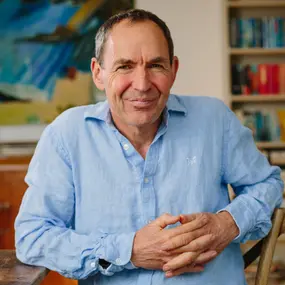
Author
Mike consults, thinks, writes and researches on sustainability and responses to 21st century problems. He is the author of acclaimed books, including A Climate of Truth, There is No Planet B, and How Bad Are Bananas? The carbon footprint of everything.
As the founder and director of Small World Consulting Ltd, he helps organisations of all sizes and sectors to address the challenges of the Anthropocene. He is a professor at Lancaster University, where his research includes supply chain carbon modelling, sustainable food systems and the environmental impact of ICT.
He has made numerous speaking, radio and television broadcast appearances to promote public awareness of sustainability and climate change issues. In February 2025, he was awarded the Planet Earth Award by the Alliance of World Scientists for his work on seeking solutions to environmental challenges.