82. Is there a teaspoon of microplastics in our brains?
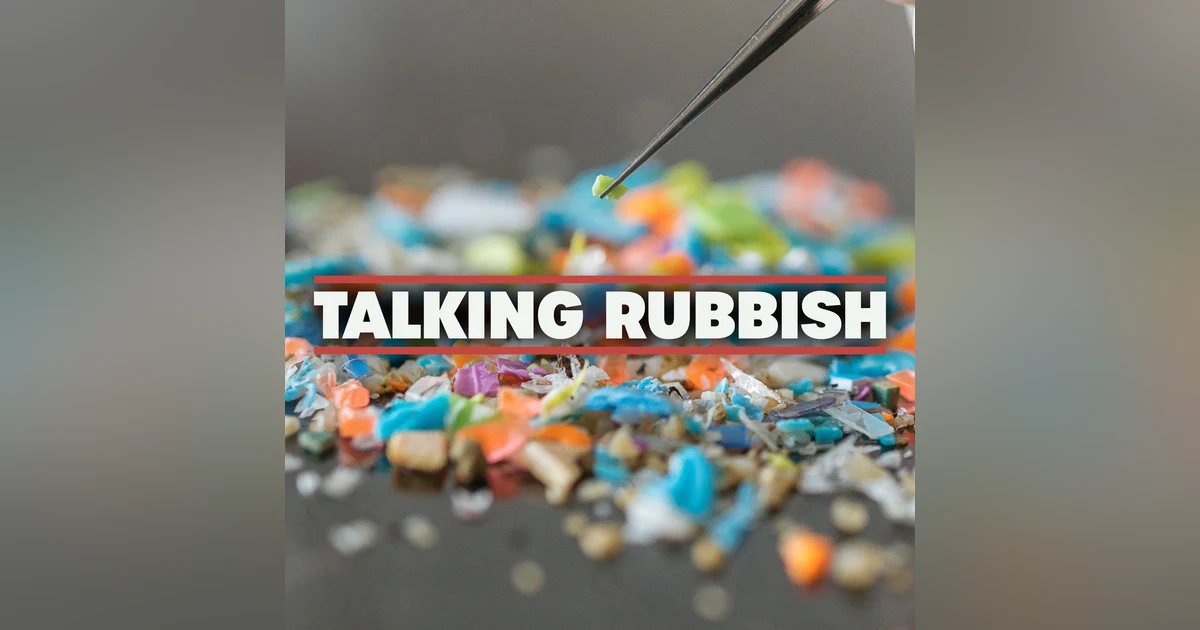
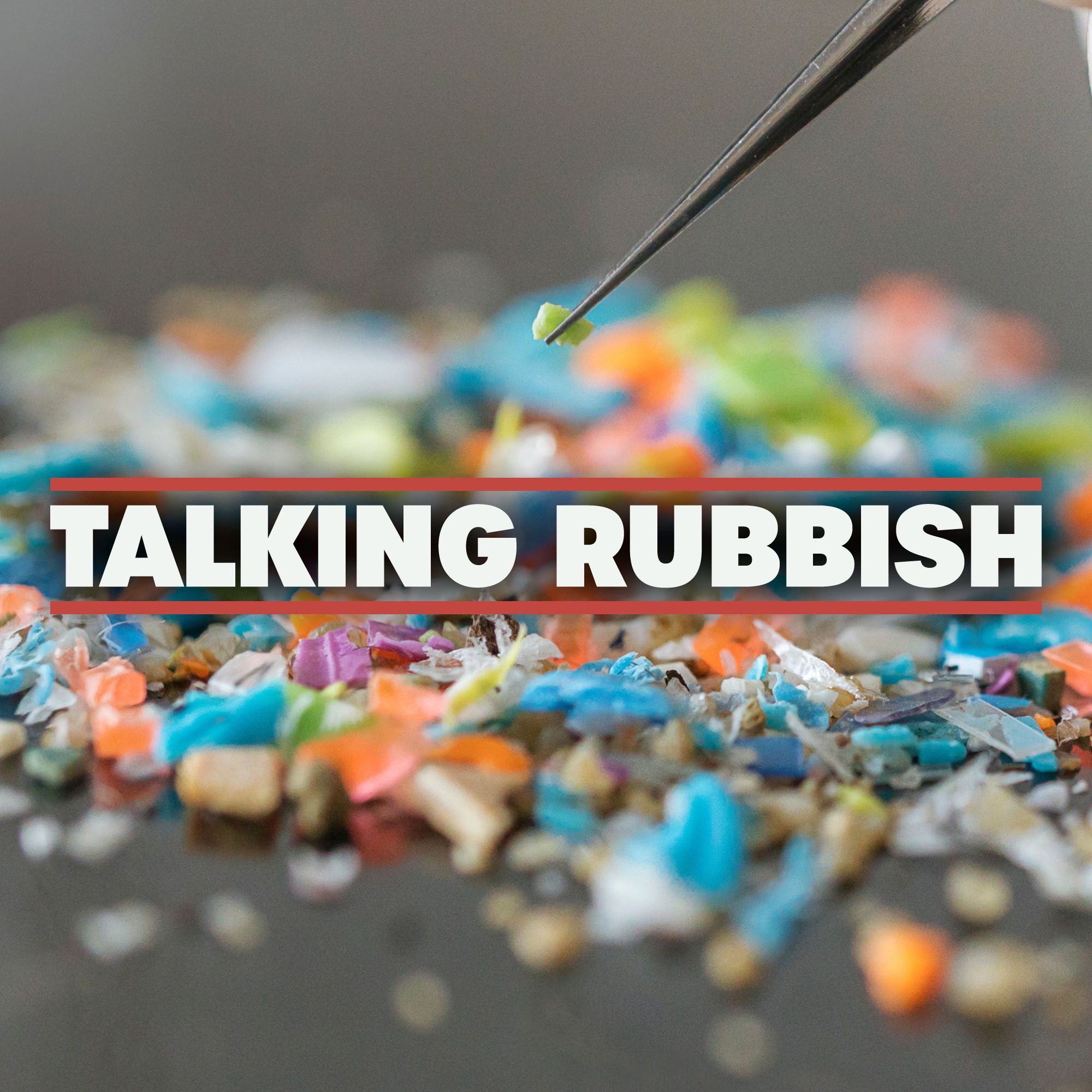
Last year, a study made startling headlines around the world with the claim that the average person carries the equivalent of a plastic teaspoon of microplastics in their brain. But how accurate is that finding, and if it’s questionable, why did the authors present it with such confidence? This week, we explore the challenges scientists face when measuring microplastics and nanoplastics in the human body, and why even peer-reviewed research published in the world’s most respected journals can sometimes get it wrong. Plus, are pumps on things like hand soap rubbish or not, does EPR penalise colour in plastic, and why is Robbie's window full of rubbish?

 Apple Podcasts
 Spotify
 YouTube
 Amazon Music
 Castbox
 Podcast Addict
 PocketCasts
 Last year, a study made startling headlines around the world with the claim that the average person carries the equivalent of a plastic teaspoon of microplastics in their brain. But how accurate is that finding, and if it’s questionable, why did the authors present it with such confidence? This week, we explore the challenges scientists face when measuring microplastics and nanoplastics in the human body, and why even peer-reviewed research published in the world’s most respected journals can sometimes get it wrong. Plus, are pumps on things like hand soap rubbish or not, does EPR penalise colour in plastic, and why is Robbie's window full of rubbish?
Join hosts James Piper and Robbie Staniforth as they delve into the world of recycling, hopefully having fun along the way. One thing is for sure, they will talk absolute rubbish from start to finish.
We would love you to join our community on Discord
Special thanks to our sponsor, Ecosurety
To get exclusive videos and clips, follow us on Instagram, TikTok, X, Threads or Facebook; @rubbishpodcast or YouTube: @talkingrubbishpodcast
Or you can contact James and Robbie with questions or just general rubbish musings using the email address talkingrubbishpodcast@gmail.com or by texting them via WhatsApp on 07356 069 232
Relevant links and reports mentioned in the programme can be found on the Talking Rubbish Linktr.ee
Transcripts and episodes can be found on the Talking Rubbish website
Timestamps:
Why microplastics are so hard to measure - 1:35
Additions and corrections - 27:45
Rubbish or Not: pumps - 36:22
Rubbish News - 41:06
Does EPR penalise colour in plastic? - 46:20
Residual Rubbish - 53:25
Music licence ID: 6WPY8Q4O2RPFIOTL
Hello, welcome to Talking Rubbish, a weekly podcast delving deep into the world of recycling and discussing the truth behind snappy headlines and one-sided stories. In this episode, we will discuss why microplastic studies are often wrong. Uh pumps on things like hand soap, rubbish or not, and I have a question about how colours are reported in EPR. I'm James Piper, author of the rubbish book. I'm John Piper of the Stanford, my far from rubbish friend. Good morning, Robbie. Hey James. Hello, how are you today? Yeah, very good, thank you. Good. Robbie, I have a question. Are we boring?
SPEAKER_01If you have to ask the question, the answer's probably yes.
SPEAKER_00I mean, social media has continuously been saying I've just got a thick skin for that. But you know how when you go on websites, like adverts are targeted at you? Yes. Yeah. Yeah, and I often get Lego. That's my usual. Of course. Recently, it's been changing. I've noticed an increase in ads that have the headline, How to Become an Interesting Person. Really? I wonder how it's picking that up. It is an ad for an app that helps you learn from books to become an interesting person. And I think it must have decided that all my Google searches on various bin collections and what goes in a bin and photos of bins and all those things has finally caught up to me, and advertising has decided I would benefit from an app to be more interesting.
SPEAKER_01All of this nerdy research, they're like, this guy's got to get out more.
SPEAKER_00Trash talk. Our trash talk today is about microplastic studies. And we've talked before about the microplastic in the brain study, and we said we'd do a bit of an episode on that, but we'd also do a bit of a critique on it. And I guess this is looking at overall microplastic studies and potential issues that could happen with them. So this is another James Debunk's health microplastic episode. Is that a category? Yeah, and Robbie listens in amazement. So in episode 11, we discussed whether we consume a credit card's weight worth of microplastic a week, which we don't, and why glass bottles contain more microplastic than plastic bottles, which was episode 51. So we've done a couple of episodes on microplastics. I would say they are usually debunking the headline, right? That's sort of where we tend to trend on a microplastic study.
SPEAKER_01Yeah, like getting the truth behind the snappy headline very often. Uh studies that have inferred maybe slightly too much, and we're trying to debunk all of these uh doom mongering uh statistics and things.
SPEAKER_00I think one of the reasons for that, and kind of a theme of today's episodes, is measuring micro and nanoplastics is really hard. So you've always got to make a bit of a leap to okay, I've measured this and this is what I think it means, but you're not 100% sure. And we saw that by using the wrong data in the microplastics credit card study, and we saw the glass bottle one. Again, there was lots of questions around whether what they were actually seeing was microplastic, it's part of paint, there's all sorts of questions there. And I think where we're where we're coming from today is the reporting around microplastics in our bodies. There have been studies that have shown microplastics in blood, lungs, placenta, liver, kidneys, heart, spleen, and famously an entire plastic spoon's worth in our brain. Which I should say is a ridiculous stat because plastic spoons have been banned in the UK, so you can't even weigh one. You're better off going with something you can actually buy and weigh and understand. But I understand they want a plastic cutlery.
SPEAKER_01Must be an old headline from before the band came in or something.
SPEAKER_00It's not. It really isn't. They just it just is snappy, isn't it? Oh, what could I liken this to that's made of plastic? I'll pick a spoon, but it doesn't exist. It's not an old headline. This is from last year. As you say, Robbie, in the interest of cutting through the headlines, we're here to tell you there is more behind these claims than first appears. And I guess I want to start by I'm going to partially congratulate The Guardian. They did have a bit of a kind of sensationalist headline, but the actual content of their report, which I'll put in our link tree, was very good. They reported that these studies have errors. And that is quite unusual. The Guardian have typically focused on microplastics being a disaster. And one of the first lines in the report is, we have previously reported on this and we're sort of questioning our reporting. Fair play to The Guardian for kind of saying, hey, actually, we've been part of this problem. We probably should spend a bit more time thinking about studies before we report them. This article for The Guardian was published in January, and within that article, they said researchers told The Guardian of their concern that the race to publish results, in some cases by groups with limited analytical expertise, has led to rushed results and routine scientific checks sometimes being overlooked.
SPEAKER_01And is this specifically for microplastics? This isn't just generally the rush to publish results. They're talking about microplastic studies.
SPEAKER_00They are specifically talking about studies where microplastics have been found in the body. Okay. Because that is really hard to measure. We're going to come on to it. But I guess before we start, we need to define what a microplastic is. It's a piece of plastic that ranges in size from 0.001 millimeters up to five millimeters. Anything smaller than that is a nanoplastic.
SPEAKER_01Yeah, it that means that it goes from something that's microscopic, you're just not going to be able to see, all the way through to half a centimeter, which you can definitely see with the naked eye, and you could be able to observe. Now, obviously, within the body, it's going to be quite hard to observe it with the naked eye. Um, but they are actually quite large, some of these pieces of plastics. The idea that they're all absolutely teeny tiny microplastics that you could never see is a bit of a myth. Lots of them are big enough for one to see with the human eye.
SPEAKER_00Get ready for my residual rubbish where we talk about glitter, which is a microplastic. So you're exactly right. And I think we'll come back to nanoplastics, because there's a there's an important distinction between nanoplastics and microplastics. We'll come come on to that towards the end. But I guess the first thing is how do you measure things that you can't see? How are you going to measure pieces of plastic this small? And the best technique to use is called, and I'm assuming it's Pi because it stands for pyrolysis. So PY, Pi, G C M S. So that is basically pyrolysis, gas chromatography, mass spectrometry. So it's three things you can do: pyrolysis, gas chromatography, mass spectrometry, and they've given it an uncatchy acronym, Pi, G C M S. Okay, you've already lost me. Why haven't they called it PGM? Pyrolysis hasn't even been an acronym to P, it's PY. So essentially, those three stages, what you're doing is you're taking a sample, you're heating it through pyrolysis, which is breaking down your sample in a vacuum, and then those smaller molecules that you've made, you use gas chromatography to separate them out. You use mass spectrometry to basically create a signature of what you found. It's not really relevant for this to focus too much on any of that, except to say that mass spectrometry and gas chromatography had been used for a long, long time. So they were developed in the 1950s to identify what was in a compound, and it was used in things like drug detection and to analyze flavors in food. So these are, I mean, these are things I did when I was a biology student, gas chromatography and mass spectrometry. You're taking an unknown compound and creating a signature of what's in it. What they did was they then added pyrolysis to that to make it specific for plastics. So the process of signaturing compounds have been done for ages in forensics and things like that. Adding pyrolysis to it at the start meant that you could take plastics, break down the plastics, and then do the signaturing.
SPEAKER_01Okay, and that's the complication that suddenly means you can't be absolutely certain of the results because it's kind of a new analysis method. Is that fair to say?
SPEAKER_00Uh I'm gonna go with unreliable rather than a new analysis method. And uh let's talk about it. Let's talk about these specific studies. But hopefully, does that make sense? I'll just pause there to make sure it makes sense in terms of the signaturing and how that all works. Yeah, that totally makes sense. Okay, that's good. Right. So that's all we need to know about the science behind it. Yeah, and I guess it's just worth noting for plastic, there are actually limited detection tools, and I think scientists have sort of lent on Pi GCMS as the best tool to use to identify plastic, it's the most reliable. But there isn't really like an amazing alternative, so you're sort of stuck with it. And if we come to this microplastic in the brain study, because that's the one we'll focus on today, but all of them have this issue. The microplastic in the brain study was published in Nature. It is a peer-reviewed study. So this is like the best of the best. You know, it's published in a well-recognised journal, peer-reviewed. They took brain samples from human corpses and measured plastic concentrations. They did also take it from the liver and the kidney, but in the liver and kidney, they did not detect an increase in plastic. So it did not make headline news, and they didn't really write about it much in the report. They focused heavily on the brain because what they did was they took brains from 2016 and 2024, and in that time they showed a massive increase in the plastic. So it was 47% up if you compared the brain from 2016 and 2024. So that obviously generated the headlines, you know, microplastics accumulate in the brain, because what they were suggesting is there is more plastic in the environment in 2024 than there was in 2016. And the fact that we have found more in the brain means that it is building up in the brain.
SPEAKER_01And they didn't say anything about the liver and the kidney in the reporting, whether this be the guardian or wherever the story was published. Is that what we're saying? There's no caveating.
SPEAKER_00It never made the headline. I certainly I haven't trawled through enough of the reports to say for certain whether it was ignored, but certainly in the study they were leaning way more into the one that had shown an increase. 47% up between 2016 and 2024. That's really important. Another important thing they discovered was that 75% of the plastic they found was polyethylene. Polyethylene builds up more than polypropylene then. That was sort of their suggestion. Or there's more in the environment, or it's more likely to get into our bodies. Yeah, it's one of the things that didn't make sense. Why was there so much polyethylene? Polyethylene makes up about 35% of the market. So why would 75% be what you find in the brain? Now, market share doesn't map perfectly to exposure, of course, because we are might be more likely, for example, to drink out of a PET bottle. So we're more likely to have PET because that's food grade, we're drinking out of it, compared to like a shampoo bottle that might be PP, that we're not really using very much of. So, you know, market share of plastic doesn't really track to how much you're likely to find in the body. But it's not bad. You wa it's quite a leap to go from 35% market share to 75% of what you find in the brain. It is surprising. And I'm not convinced polyethylene is more likely than any other plastic to find its way in the brain. So I sort of started asking myself, well, what is happening here? What could possibly be causing that? And we have to go back to this tool. So Pi G C MS, which is the best way of detect detecting plastic, but it has lots of issues. And one of those issues is that it can mistake fat for polyethylene.
SPEAKER_01Oh, really? Okay, that sounds a big problem because you're gonna have plenty of fat around the place in the human body, I would have thought so.
SPEAKER_00Especially in our brains. Our brains are 60% fat um when they're dry by dry weight.
SPEAKER_01Speak for yourself. Speak for yourself, James.
SPEAKER_00Mine's all muscle. So what these studies do, human tissue, and I wish I had a better word for this, is digested before the analysis. So they digest the human tissue down, but some will remain. You know, you will get contamination. So even if you were doing this in a vacuum, in a contaminant-free environment, just the nature of the thing you're working on, the tissue sample, means you have some residue that you're introducing, some contamination. And because high GCMS reads fat as polyethylene, you can see why that would create an increase in the amount of polyethylene that you would expect. Because what you'd be left with is some fat from the brain that happened post-digestion, that would come out in your signature and be read as polyethylene. And it's just true that current methods to clean up the samples, to remove the fats are not good enough at the moment. Scientists who, for whatever reason, when they write these studies, be it funding because they might get funding from people who want to say plastic is really bad, or societal pressure, because they will feel a huge amount of pressure to show that this is a problem, because that's what we're all expecting. I believe that they go into these studies wanting to demonstrate high levels of plastic. So they tend to avoid contamination. They tend to avoid talking about contamination. And I would argue they're incentivized to create conclusions that are headline and grabbing.
SPEAKER_01And I think whether that's conscious or subconscious, you're right. There is this societal pressure. The Guardian have admitted it themselves, haven't they, that in this rush to um produce these reports, they're just willing to lap it up because society wants to read about these kinds of things.
SPEAKER_00And you can actually almost feel the surprise from the scientists in the report itself. They said micro and nanoplastics in these organs primarily consist of polyethylene with lesser and significant concentrations of other polymers. So they call it out. They say, oh, look, there's so much polyethylene, that's weird. But they do not say anywhere that there is the risk of contamination. Because I've gone through it to try and find is there anywhere that they say fats and polyethylene can get confused. And what they say, and I'm going to quote the study directly, PYGC MS is an informative and reliable method to determine plastic concentrations in liquid and solid tissue samples with ample assurance of accuracy, quality, and rigor.
SPEAKER_01Oh dear. Okay, so there's no reassurance about the fat and the confusion with PE. And it is just PE that it gets confused with fat. It's not other types of plastics that might be confused.
SPEAKER_00I believe it's just PE, yeah. It's just the nature of where it lands on that max spectrometer and the signature that it creates. So that sort of covers why you might see 75% polyethylene. What it doesn't cover necessarily is why you might see a massive increase between 2016 and 2024. So are we still talking about accumulation? But then you start thinking about obesity rates. And these brains are taken from New Mexico. That's where they did the study. So I had a look at obesity rates in New Mexico between 2016 and 2024. And obesity in that time rose in adults from 28.3% to 34.5%. So there is actually more fat in the brain. And then if you end up with more contamination, which you mistake for PE, you could easily get to the conclusion that plastic in the brain is accumulating.
SPEAKER_01Okay, wow. So it it could be one or the other or a combination of both things. It's kind of unclear.
SPEAKER_00It's likely to be everything. That's the truth. As you say, if you've got fat contamination causing polyethylene readings to be wrong, then obesity could be a challenge. Obviously, the testing itself is a challenge, but we are exposed to more plastic, and plastic does get into our bodies. Now, most of it is expelled, but some of it will retain in our bodies. And the more plastic you're exposed to, the more is in your body. So all of these things are true. The challenge from my perspective is if you have studies that are so boldly saying you have a teaspoon's worth of microplastic in your brain, as in a plastic spoon, not plastic on a spoon. You literally have a teaspoon's worth of microplastic in your brain, and everyone panics and worries and gets scared, and then that's found to be false. People will reverse so quickly into I don't have to worry about microplastics. It was a lie. That study was a lie. And it's much better for us to be conservative and tell the truth in studies and work out where the contamination is and talk about that and say, look, this is the risk. Because then you don't have to do this reversal a few years later, which causes everyone to stop worrying.
SPEAKER_01Definitely with the credit cards worth of microplastics thing, you're either probably on one side of the fence or the other, aren't you? You still believe it, even though we debunked it a fair few episodes ago now, and you're running with that old false piece of information. Or you listen to our episode and you potentially thought, oh no, it's not true. And even though we mentioned that there is still plastic accumulating in the human body now and in that episode too, people have sort of conveniently forgot that. They've just thought, it's not as bad as a credit card's worth. So, you know, we're scot-free here. We don't have to worry so much.
SPEAKER_00Now, this microplastics in the brain study is not the only one that's got an issue. The Guardian had found seven studies that had been challenged by researchers, and a recent analysis actually listed 18 studies that it said had not considered that human tissue can produce measurements easily confused with the signal given by plastic. And it's not just that contamination misunderstanding of the results. There are lots of analytical issues with a lot of these studies. I found examples of not checking for contamination. I found some duplicated microscopy photos, you know, where they were doubling up because they'd basically use the same photo again and again. Lack of equipment testing before they started, so lack of calibration. There were just so many basic analytical issues with a lot of these studies that we have to question their conclusions. And there was a paper from January 2025 which was published by the University of Queensland in Australia. And what they did was they assessed blood where they knew the quantities of plastic. So they controlled how much plastic was in the blood at different points. And the results of the Pi GCMS differed from the known quantities. My understanding is from reading the report, they detected PE and PVC even though they knew it wasn't in the blood.
SPEAKER_01Really? Okay. So they obviously just used a blood sample fed in some of these microplastics at a controlled rate, or not, as the case may be, and then still managed to find them appearing. That's absolutely crazy. And sort of in a way, compelling, not for the fact that there are no microplastics going around our bodies, but for the fact that the science is very imperfect.
SPEAKER_00Microplastic or not is a wonderful future section for our podcast. So they concluded that Pi GCMS is currently not a suitable analysis method for PE and PVC in biological matrices due to the presence of interference and non-specific pyrolysis products. So they're basically saying there's lots of contamination. The lead researcher, Dr. Cassandra Rowt, sorry if I'm saying your name wrong, told The Guardian, I have not seen evidence that particles between three and thirty micrometers can cross into the bloodstream. From what we know about actual exposure in our everyday lives, it is not biologically plausible that that mass of plastic would actually end up in these organs. It's really the nano-sized plastic particles that can cross biological barriers and that we are expecting inside humans. So coming back to nanoplastics that we talked about at the beginning, it's about smaller than 0.001 millimeters. What she's saying is nanoplastics are the things that can get into your organs. So nanoplastics can get into your brain, your liver, your kidneys, etc. etc. That is the thing that can cross the biological barrier. We cannot detect nanoplastics. There is no tool, not even a tool that's going to create contamination, that can currently detect nanoplastics. So she's saying there is no way that you're getting this volume of plastic in your brain because it literally can't be read. It can't be detected.
SPEAKER_01Okay. And what? There's there's no hope for being able to detect these nanoplastics then and really get to the truth of how much is bioaccumulating inside us.
SPEAKER_00It was interesting. I saw a post last night about criticism about Wisgardian article. And to be fair to them, there's some bits I agree with, as in they the headline was something like, you know, bombshell study destroys microplastic studies, or whatever it was. You know, it was quite a sensationalist headline. And a lot of the anti-plastic NGOs and organizations are very angry about Isguardian headline and they feel that it is misrepresenting the truth. I guess there's an observation there that's quite interesting that the anti-plastic NGOs don't mind when the cessationalist headline is our brain is full of microplastics. They only mind when it's against their beliefs. And I think, you know, one thing I really like about what we're doing and who we are is we're trying to be as balanced as possible. So if it's a cessationalist headline, either pro-plastic or anti-plastic, we always want to look into it and find out what the truth is and end up in the middle somewhere because that's the balance. So I'm not saying in any of this, microplastics, nanoplastics are good and we shouldn't worry about them. I'm not saying any of that. What I'm saying is the quantities that have been detected cannot be true. And I think that is worth calling out. And there are many strong and compelling data presented about the impacts of microplastics and nanoplastics on human health. You know, this is a misleading headline. I'm just reading through some of these comments that were on LinkedIn. There are thousands of scientifically sound studies demonstrating that not only are there micro and nanoplastics in the bodies, but they are also disrupting biological processes and causing harm. So just to give the other side to this, there are obviously lots of studies saying, look, plastic would cause us an issue. The chemicals in plastic, if they get into our body, would cause a problem. The question is, are they getting into our body? We don't know. Nobody knows. And anyone who says they do, we have to meet them with a high level of skepticism. I just wanted to make sure we get that balance in there because it's not like we're saying Don't worry about this. It's just I can't cope with things that g get us really scared. But if we're just all really scared, you sort of feel powerless, you feel like there's nothing you can do about it. Whereas if it's actually we don't know, and there's decisions you can make in your life, like not microwaving with plastic, for example, or you know, not using plastic utensils, which isn't something I necessarily agree with, but people might say they want to do, it reduces your risk, right? Of course it does, because the less plastic you're using in your cooking, the lower the risk. That's got to be true. But we don't know what that risk is. That's the important bit.
SPEAKER_01Yeah, and I suppose if you just take it from a sort of very puritanical standpoint and go through your life and audit it and limit the amount of plastics that you're exposed to, that's probably the best you can do, regardless of what the science says. Um, it's just like mitigating any risk. If you can avoid it altogether, or to the best of your means, you are limiting um the risk.
SPEAKER_00I mean, people are definitely worried about how much plastic's in their body. It continually comes up when I talk to friends. If you say you're doing a recycling podcast, it's the first thing people say, Oh, have you talked about the microplastics in the brain? We have now. You know, we have treatments to clean the blood, which costs thousands of pounds. And we're gonna have a whole episode dedicated to that. Don't you worry, it's absolutely ridiculous. I guess the only thing I would say at this point is there is no evidence that this works if you're considering doing it. And perversely, the plastic tools that they use to clean your blood could leave you with more plastic, but let's not we'll do a whole episode on it. It's the most ridiculous thing ever. Look, we definitely have plastics in our bodies, and as plastic increases in use, so the potential for plastic in us also increases. I just think the studies aren't good enough and no one knows how much. And it would be much better and not very attention-grabbing, unfortunately, for someone to say, we know there's plastic in our bodies, we don't know how much, but this is our concern and this is what we should be doing about it. Because the second you go with the sensation list, there's a teaspoon in your brain, and someone disproves it, you've convinced the population but they don't have to worry about it.
SPEAKER_01Yeah, I think it's actually it's strange how when it gets debunked, it's totally counter to the overall effort. And whether you're being reductive on the one side or the other, it's all quite unhelpful. Easy for us to say we have like half an hour or so to talk about these kinds of things in a slightly more digestible and balanced way than the average reporter who's just got to do a thousand words, or the average social media post that's literally got a couple of sentences to just draw out some in inverted commas fact. What we really find from all of these reports is you do have to look at who's funded the piece of research, because there's plenty of people in the oil and gas industry who have been proven to fund over the years very pro-plastic, pro-recycling of plastic studies to show that it's not as bad as people think and a great material, etc., etc. But likewise, in the other direction, whether it's direct funding from anti-plastic NGOs and things or not, or whether it's just through the societal pressure, as we mentioned earlier, there are plenty of studies that have also been commissioned to go and prove there are problems with plastic. And so I'm left thinking at times, both sides are kind of as bad as each other, really. What we actually need is as much scientific rigour and peer reviewing as possible before it gets to pop culture and the average headline.
SPEAKER_00I think it's worth us ending with the words from a German study that actually reviewed the studies on microplastics between 2014 and 2024. And I think it does a really good job of cutting through the headlines. So I'm just going to read this exactly as it was written in the report. Are you going to translate it for us? I only know one sentence of German, as you famously know, which is, excuse my pronunciation, Darfisch meiniacke Austrian. Because when I was a kid, I went to a school where you had to wear blazers, and the only way you were allowed to remove your jacket, remove your blazer in a hot day, is to say in German, please can I remove my jacket? And so if I go to Germany and I'm wearing a jacket and it's a hot day, I'm sorted. Of course, I don't actually have to ask anyone's permission to remove my jacket. So it's literally the most useless German I have. Occasionally I'll go into a board meeting and say, Dafischmaniac ausion and impress everyone, right? So irrelevant to the microplastics story. The current state of knowledge suggests that the risk to consumers from microplastics is relatively low, given that the majority of particles do not become bioavailable. And the overall quantities taken up are likely insufficient to trigger health effects. Research is required in particular into mechanisms of action in order to establish a link between particle exposure and possible effects. There is also a need for robust, validated analytical methods capable of reliably quantifying microplastics in biological matrices. At the same time, the public perception of microplastics is characterized by an increasing awareness of the topic, comparatively limited knowledge, and high concern regarding the health effects. The prevailing discrepancy between the state of knowledge and public perception should be taken into account when communicating on this topic.
SPEAKER_01Absolutely. I did have a look. I was even looking online as well, because I couldn't find them in my local supermarket. But I couldn't find a leading UK supermarket that has these crisps.
SPEAKER_00So back in episode 80, Robbie literally perplexed me by saying that crispets were see-through. You know, when you just think, have I missed something? Am I like and you're trying to rack your brain, you're thinking, maybe there are, and I've just missed this, but it makes no sense because you don't want the sun to get to them. It makes no sense. Because I did ask influencers to get in contact if they were aware of any see-through crisp packets. And we did have Moira on Discord who said, This is not the UK, but my dad lives in Spain and buys these crisps and included a picture. It is a clear plastic bag in a paper sleeve. She said the pros are that it's easy to recycle both. There's no residue on the paper. I think the sleeve just sits, you know, the crisps sit in the sleeve. Uh, the plastic is colour-free. The cons, there's two lots of packaging for one product. Is that better than a coloured and printed bag having two different bits? And as we've said in studies before, the paper makes you think it's more environmentally friendly. As long as you cover up plastic, having paper on the outside makes a significant percentage of people think something is eco.
SPEAKER_01Thank you so much for writing in with that, Moira, because this is exactly the packet of crisps I pictured in my mind. I didn't realise it had the paper sleeve though. I don't remember that.
SPEAKER_00It's just your Spanish heritage, is it?
SPEAKER_01Northern I was in northern Spain for my summer holidays just last year, and it's exactly this packet of crisps that uh we have a picture of that is what I was thinking about. I thought it was the UK, so my bad.
SPEAKER_00I think if I play back the transcript, you said walkers, didn't you?
SPEAKER_01I did not say walkers. No, absolutely no way. You can get clear bags of crisps, is what I said. Which I which has been proved correct. It has not been proved correct. It's got paper on the outside. It's a clear bag with crisps, you can see at the top. The fact that I forgot it had a paper sleeve. Well, that's sort of by the by. That's not very interesting for the influencers.
SPEAKER_00I'm just looking at the transcript. You did say I'm about to go into Tesco in a minute to prove it to you. You didn't say I'm about to fly to Spain to prove it to you. Okay, I forgot.
SPEAKER_01I'm a man of international travel. I forget where I am sometimes.
SPEAKER_00I can't say you're a man of international travel on this podcast. By train. Because it brings me to my next edition and correction, which is a WhatsApp from Mazzy. So thank you so much for this, Mazzy, who really challenged us, quite appropriately, I think. Also, episode 80.
SPEAKER_01Yeah.
SPEAKER_00I said I had used AI to calculate laugh density. And we had a very fair WhatsApp from Mazzy challenging us on this, saying, I've been a fan of your podcast, having only found it about a month ago, and look forward to catching up on the backlog. It has inspired me to take personal responsibility and I've been more meticulous with my waste management. But, and this is a big butt, you mentioned using AI in episode 80, and I had to stop and reach out. Why? How? It baffles me that the hosts of a podcast about rubbish and recycling can say they use AI. And so blasé, as if they're totally ignorant to the environmental, social, and other issues it brings. It's a great challenge. I it is. I listened back to it and also thought, why did I not say I shouldn't really be using AI for this? Why did I not qualify it in some way? And it is a really good point. We've discussed the negative aspects of AI in a couple of episodes, so 28 and 40. I was thinking about this last night because it's a tricky old world, isn't it? I mean, you can't avoid it. I searched something in Google and it's like, here's your AI summary. I guess you could use different search engines, but they're going to start introducing AI as well, and it will end up being such a core part of our life. But I do appreciate in this instance, there was not a need for me to use it other than to defend my co-host, which some people, some people might say is an honourable task. Absolutely justified. I did actually have Susan email me yesterday as well saying, Poor Robbie. I love Robbie's laugh. My husband doesn't. And I'm like, oh my god, you're causing marital issues, Robbie.
unknownOh no.
SPEAKER_00So thank you for that, Susan. Um look, just to reassure, I think I do want to say, because I'm not sure I've said it on the podcast before, I try really hard to avoid AI when creating this podcast. We plan the episodes ourselves, and I'm lucky that my experience means I know where to look. So if I'm thinking I'm going to do an episode on this, I don't have to go to AI and say, where am I going to find this? I know where to look. But it is tough. You know, it is extremely tempting to go into Chat GPT and say, script a half-hour trash talk on this. But instead, I spend 15 hours a week working on this podcast and thinking it through and really working quite hard to avoid AI so that it remains really authentic. It's interesting. We're going to do an episode on AI. We have to on the sustainability of it. That efficiency versus cost of not using it. So let's say this was an essential task, which we all agree it wasn't. It's a bit of fun, probably a waste of power. So but let's say it was an essential task. It would take me four days to listen to our 80 episodes. And that comes with a cost, right? Food, drink, the power that I'm using. There is a cost to all of that, to me doing that work, to going, I'm going to spend four days. It took AI six minutes to do that work. And it would be interesting to do that calculation. What is the carbon cost of six minutes of AI versus four days of powering James? It's quite an interesting question that I think, you know, might kickstart our AI episode that we will do in the future. But I just wanted to say thank you, Mazzy, for reaching out to us and challenging us. It's really good. And I I wish in episode 80 I had said I really didn't need to do this and probably shouldn't have done. So at least there was an acknowledgement from us. We'd like to take a moment to thank our sponsor, EcoSurety, who are on a mission to rid the world of unnecessary packaging. They help brands navigate the tricky world of extended producer responsibility, but that is not all. They also collaborate on some incredible recycling projects and consumer awareness campaigns for those tough to recycle materials. If you're an organization looking to make smarter packaging choices, check them out at ecosurety.com. And if you would like to help our podcast to grow, which we would be very, very grateful for, just let your friends and family know about us and also leave us a review. And if you leave us a review, you could be Robbie's review of the week.
SPEAKER_01Oh, this is a great one that came from Corky5. I I can't read the word corky without thinking about the night manager. And is it Hugh Laurie, uh, whose sidekick is Corky old boy, quirky.
SPEAKER_00And it's interesting because Corky5, for regular listeners who are very attentive, may recognise that name because they have left us a podcast review before. And this has happened a couple of times where someone has left us a review when they've discovered the podcast. They've got, I really like this podcast. Then they listen to all our episodes and they rewrite their review with their thoughts. And I really enjoyed Corky5's second review so much that they are in the rare camp of double Robbie's review of the week.
SPEAKER_01Wow, okay. Thank you, Corky5. Warning may cause sudden recycling obsession. I have powered through 77 episodes since November 2025, and talking rubbish has officially rewired my brain. I now wash my recycling in leftover suds, hoard soft plastics, read every label twice, and I'm getting more frustrated that I cannot yet give the council my food waste. It's fun, informative, and somehow has made rubbish the highlight of my week. My only complaint, I am now stuck waiting a whole week for the next episode. Sad face. A full-blown five-star show. Listen at your own risk. You may become a better human.
SPEAKER_00It's a lovely review. That's how you get a double review. You do that for the second one. It's great. Thank you so much, Corky5. And you can follow us at rubbishpodcast. You can email talkingrubbishpodcast at gmail.com or you can WhatsApp us. Also join our Discord. It's the easiest way to engage with us and listeners of the show. And the link to all those things can be found in the show notes. Rubbish or not. Now this is our first two-parter rubbish or not. Okay. Yes. Because first of all, there's a lot to say about both of them. They could almost be a trash talk. But today we are talking about pumps that you find on hand soap. And next week we will talk about triggers, which are the ones you get on like anti-back spray that you use on your kitchen surface. But because they're slightly different and because they've got different histories and stories, I thought we would start with hand pumps. So this is what you get in your soap in your bathroom where you push it down and it springs back up again. Robbie, giving you a little clue there, hand pumps, are they rubbish or not?
SPEAKER_01I think the pump is rubbish because it has to have some sort of little metal spring in it and it's not all plastic. Although now I'm already starting to think, have they changed that design and managed to get rid of the metal spring? No, I'm gonna stick with my first thought. The pump is rubbish.
SPEAKER_00Okay, I think in the main, you're correct. And I've been walking around supermarkets checking this because I know that PG did develop and work on a pump that would spring back up with a plastic spring rather than a metal one. But I don't think it's been rolled out. You know, I went and looked at Kerx in the UK and it says do not recycle the pump on it. And this is why a lot of manufacturers have started doing like refill bottles where you get a bottle without the pump on it and then you can switch it over and put the pump on. So the metal spring definitely can cause contamination. This is one of those where you sort of have to trade off because if you replace that metal spring with a plastic spring, I don't think it lasts as long.
SPEAKER_01Yeah, that's true. And certainly in our house, we do have those pumps around for hand soap, you know, in all the bathrooms or whatever. And because we use the refillable bottles, you know, that we put the liquid into the bottle, the fact that it's got a metal spring isn't that big a problem because they've been in situ for years.
SPEAKER_00Exactly. And a lot of these websites, so uh we've got schmole in our house, smol, is that how you say it? They say on their website, you know, lifetime pump. I mean, it's not a lifetime carex race rates theirs for 10,000 uses. But the best thing to do is definitely to buy one once and then to buy refill bottles or refill pouches if you want to fill your bottle up, but basically to not replace the pump, because you can use that for up to 10,000 uses. And people get very frustrated when they don't work. So Lottie Link on Discord was complaining about one they had had with neat, which I think had broken. And then you've got a thing that just has to go in the general bin, which is a real shame when it's quite a complex mechanism that you would hope could be used a lot more. I did reach out to OPRL to find out what, because it's do not recycle on the ones that have a metal spring. And I was wondering about if you have like an all-plastic one where they've replaced the metal spring with plastic, would OPRL allow you to say recyclable? And uh Alice came back to me to say it depends on the polymers that are in the pump and the polymers that are in the bottle and whether the consumer can separate those two things. So whether there's consistency in the plastic types between the pump and the bottle, basically. Robbie, would you like some interesting history on the hand pump completely unrelated to recycling? Oh, that sounds great. Lovely. Okay. So a man called Robert R. Taylor started a company called Village Bath Products in 1964. He was a challenger to the big brands, so PG, Johnson ⁇ Johnson's, the big brands of the time and now. And in the 1970s, he developed a product called Soft Soap, which is a big brand today, uh, very big, very big in the US. Now, liquid soap had been a thing since 1865, but not in the household, because people hadn't really put it in a container that could work at home. They were putting it in like wall-mounted things, you know, very commercial, not household. And so Robert Taylor decided that he would put his hand soap in a bottle with a pump that could be used at home. Pumps were a thing, but they weren't used for soap. The idea wasn't original enough to patent. The pumps already existed. You couldn't patent and I'm gonna put soap in it. At the time, there was only, I believe, one company producing the quantity of pumps he needed. He decided this product would be big enough and make him millions. So he bought every single pump. He bought a hundred million of them. Really? Bear in mind this is spending more money than the company was making at the time. He bought a hundred million of them, which kept the supplier so busy they couldn't supply pumps to anyone else and they could only work on his contract. And that meant that SoftSape cornered the market because the big companies literally couldn't release a rival because there were no hand pumps on the market.
SPEAKER_01That's very clever.
SPEAKER_00That's good, isn't it? So that's hand pumps. Next week we will do triggers. Rubbish news. My news this week is that the UK are stepping up the fight against forever chemicals. So we're largely talking about PFAS here, uh, which is a group of chemicals we covered in our paper straws episode, which was episode 32. But we do need to do a full trash talk on PFAS because they just keep coming up. They're basically used to make things waterproof and oil resistant. So you tend to find them when plastic is replaced with paper, because one of plastic's properties is that it's moisture resistant and oil resistant. And so when you replace it with paper, like with straws, you've got to put something in it that keeps the straw alive long enough. I guess lots of us would agree that paper straws don't really work, but they work longer than if it was just paper. And so that's why you find PFAS in them. But they do accumulate in the environment, these chemicals, and they can be toxic. And so the EU is looking to ban them in non-essential uses in the coming years, and the UK is trying to align more with the EU on this. So they've released a plan that is to increase the knowledge of where PFAS turn up, to un so that's the products that they can be found in, to understand how that use can then be reduced, and then to look for alternatives. And they're looking to increase water sampling in Scotland and Wales by 50%. And in England, they're looking for hot spots where PFAS is accumulating. PFAS is used in lots of places. Clothing, frying pans, dishwasher, rinse age, you know, anything you need to kind of be hydrophobic or to move water oil away from it. I guess one observation, as I've said a couple of times, is they are used quite regularly, I would say, in the paper and cardboard industry when you're trying to replace plastic. But you wouldn't know it from the reporting. It was super fascinating. So the BBC article on this did not mention paper or cardboard once. Not one mention, nothing on straws, nothing. I looked up an article on phthalates, which is a chemical added to plastic, so as a comparison, that can also be used in lots of applications. And just in that one article, there were 38 mentions of the word plastic. And the headline is all about plastic. It's just really interesting, isn't it? They don't say forever chemicals linked to paper, but they would definitely say phthalates linked to plastic. It's just a really interesting observation on the way the world likes to talk about different chemicals that are applied to materials that we use.
SPEAKER_01And my news this week is actually fake news. But don't worry, James, it's fake news that I'm gonna debunk. And this comes from bins spotted in Sheffield where there was some payment confusion. So a viral video was on TikTok and it was widely seen that claimed new bins in Sheffield's Fargate area required a card payment to open it, to actually use the bin. And the person in the video said, These new bins in Sheffield, you have to pay by card. You've got a tap to pay for this thing. And so it these bins themselves, I looked at the video, it's one of those like under. Ground bunker ones that you often see in Europe. So there's the bin above ground, and it goes into a sort of locker below ground or bunker, so it's got more volume in terms of what can be put in it. But the bin aperture is totally shut, and there's a little pad which could be misconstrued as a payment device that you can tap to open the bin. There were three bins. It was very closely aligned with simpler recycling, you'll be glad to hear after last week's episode. So there was one bin for plastic packaging, food tins and cans, glass bottles and jars, another one for paper and card, and another one for general waste. Unfortunately, there wasn't that fourth bin for food waste. Um, but generally pretty good in terms of separating all the materials. But Sheffield City Council had to release a statement to say these bins do not require payment cards. Users can access the bin with FOBS. They're actually for local residents and businesses in the area, so commercial premises and um one of the residential uh blocks of flats. And so they're for their use only, even though they're on like a public street. They have to demarcate some space for those people to use these bins, and that's why they're not for uh general litter. Now, the person in the video saying you get a 400-pound fine if you leave litter on the floor by the bin, and was, you know, obviously aghast that there was no bin for them to use. But then they swung the camera around and showed other people using litter bins within a five-second walk of where they were. So it was a bit of a much-ado about nothing, a storm in a teacup, um, so to speak. But it was quite funny how quickly everyone dives in to say, as soon as the idea of paying to recycle something or paying to get rid of your waste is on the cards, people were clearly very angry about it.
SPEAKER_00I'm shocked by this story. I'm more shocked that you're on TikTok. When did this happen?
SPEAKER_01I saw the article and clipped the TikTok video. I am not on TikTok.
SPEAKER_00It's fake news that you're on TikTok. Okay. Robbie, I'm handing over to you as our policy expert. Does EPR, or RAM we should say, penalise you? So this is the red amber green traffic light system. Does it penalise you for colours in plastic?
SPEAKER_01Yeah, well, it sort of is probably the answer to the question, but not to as high a degree as one would think following our conversation uh with Stephen a couple of episodes back, uh, where we talked about colour. This recyclability assessment methodology, or the RAM, as we call it, was first developed by UNOMIA quite a long way back, and it looked to replicate a lot of what was going on in Europe at the time, uh, or in the EU, I should say. And colour was a very big factor. However, the final version of this RAM that was developed by PA Consulting for PAC UK, the scheme administrator, actually reduced the amount. They started again, really, with how the methodology was designed, but there are some examples of where colour is an issue and could potentially turn the grading of recyclability from either green to amber or from amber to red. And so it comes mostly for plastic, particularly, in the carbon black is one of the big issues, and that's something we talked to Stephen about. At the sortation stage, it has to be classified as red for both flexible and rigid plastics, all different types, if it the master batch contains carbon black in it. So lots of colours there. If it's got black, it has to be red, um, effectively. But also there, interestingly, when I dug a bit deeper into this, colour was also an issue at what's called the application stage, by which we mean it can still be recycled, you know, so it's still recyclable, but it drastically reduces the quality of the recycler produced. And that was something that Stephen talked about, the fact that clearer colours you can demand uh a higher material value for. So for plastic rigids, PET bottles that are dark blue, dark green, or brown that's applied to the plastic itself rather than inks around it, instead of getting the green rating, highly recyclable, gets moved down, downgraded to amber if it's got those things in. Whereas for the PET tray, colour doesn't matter at all.
SPEAKER_00It doesn't figure. I'm guessing that's because, as we talked about, was it last week, we talked about PET trays and C P E T being used for ready meals. And that actually being functional. Um, you know, in order for something to go in the oven, it has to be C P E T. C P T isn't particularly attractive, so they add colour to it. Whereas a PET bottle, it's it's more the branding. I guess with a PET tray, you're allowed colour because it's required as part of the function of it.
SPEAKER_01Yeah, they're mostly used in colour, whereas the PET bottles, they're trying desperately to keep as clear as possible to be used in uh new drinks bottles. Then on high density polyethylene HTPE, again, if it's light blue, green has a light tint or opaque colours that are applied to the plastic, it gets downgraded from green, highly recyclable, to amber. Now, already I imagine BIMFluencers are thinking who decides on what is light blue or dark blue or opaque colours? The reality, and the pun is intended, is that it's unclear. Um much more muddy waters there in terms of who decides. And it will end up being an argument between the producer who's using that type of plastic and grading it for recyclability and the regulator to define whether they think it really is damaging um recycling processes. So just finally, then on um plastic rigids, polypropylene, um, opaque colours excluding white. Um, if they're applied to the plastic itself, then it gets downgraded, as I say, from green to amber. However, I looked through the flexible plastics and there was nothing mentioned about colour. So coming back to our discussion earlier about the clear bag of crisps, it doesn't really matter. All of the flexible issues are around things like uh the labels that are used, the chemicals that are used, if it's multimaterial, that there's no colour um problems there.
SPEAKER_00I guess that's because most flexible plastic is printed on. If we think about crisps, that's a print rather than a colour reflexible. I'm struggling to think of any flexible that would have colour in it.
SPEAKER_01Yeah, well, if you think about commercial wrapping that goes around palettes and things, you sometimes have a blue version of that rather than a white version. But yes, you're right, it's not very common, so it's not in there. I did expand this one out from plastic because I was then looking for colours in this methodology and looked for glass and whether there were any issues there. And there there is. They allow and say it's fine for any glass that's clear flint, green, blue, or amber or the brown colour. So all of those get a green, uh, highly recyclable rating. However, if it's not one of those colours, so clear or flint, green, blue, or the amber brown colour, then it will be downgraded from green recyclability to amber. And I was I can't think of any examples. I'm thinking of the spectrum of the rainbow of pink or purple or yellow. I can't really think of any colours of glass that are readily available that wouldn't be defined as recyclable.
SPEAKER_00Well, I thought of um the Cornish brand, but they they definitely have a big presence in Bristol. Dead Man's Fingers, it's a rum brand. Yes, that rum, yeah. They make bottles that I think are colourful. I wasn't 100% sure if it was a wrap or the bottle itself, but I have a bottle at home. So I had a quick look this morning. And the bottle up but the bottle I have is like a black bottle, and that's definitely coloured glass. They also do pink, yellow, blue, all of those colours. I'm pretty confident that they actually colour the glass. I don't think it's a wrap.
SPEAKER_01Ah, so that might mean they get the amber rating, except for the blue one, of course. So the Bombay Sapphire is sacrosant, that still gets the green rating. Um so blue's allowed, but yeah, definitely not if it's uh a dark black.
SPEAKER_00Yeah, but this is a dark blue. This isn't like Bombay Sapphire blue, it's not see-through, it's like royal blue. But you can't see through it. It'd be interesting to see where that lands, because is it the colour or the clarity of it? To be determined. Residual rubbish. This is something that has happened to us this week that has made us feel like an emoji. I sort of gave the game away earlier. I was gonna say, what is the thing we hate on this podcast as much as Buzzballs, Robbie? And the answer is Glitter. Glitter. And my son has now started nursery, and I cannot believe how much glitter they use. He has a little tray, and at the end of every day, he's so excited for me to open the little tray and get out his artwork. And most days there is a piece of art in there that's just covered in glitter. Yesterday I opened it and they went, he did some Chinese writing today because it had been to celebrate the Chinese New Year, and I thought he's like one. He's doing Chinese letters, it's very, very advanced. I'm very impressed. But remember, glitter is just a microplastic with a jazzy name, but it will never biodegrade. How, how is it going to biodegrade? It's stuck to paper with glue. I can you imagine if glitter was marketed as a shiny microplastic, it would have been banned. It would have been banned so quickly. But because they say glitter, everyone's like, oh, it's it's nice. I found a nursery chain called Top Days, yeah, who in 2017 banned glitter. Very good. And I am now working on my nursery chain, and I'm sending them an email today to say, look, can we ban it? You know, I really, really think it's not adding any value to anyone. These kids are like one to four. They don't need glitter. There's so many other options. So I'll keep you all posted on if I succeed, but an email going in today. Oh, brilliant.
SPEAKER_01Well, if you do succeed, we might get a few more listeners too. Brilliant. My residual rubbish this week is definitely something that made me smile because we're taking part in a window wonderland, which is basically making a window display in the kind of first week of February, so that just to brighten people's lives up in the dark winter months, etc., and you can light up your front window, basically making it look kind of like a shop display. And this was where the hoarding of all of the rubbish in our house was so worthwhile. Now, I'm not keeping like manky old bits of packaging and things. I do recycle every week. But things like packing items, boxes, bags, wrapping paper, tissue paper, paper bags, we always just keep because it's useful for arts and craft type stuff in the household. So this year there was a water theme, and we decided at the last minute to take part. So myself, my partner, my daughter, we spent one evening trying to create this display earlier on this week. And so we used the sort of greeny blue delivereroo bags. You probably know that colour. We chop those up and they become part of the sea for this water themed display. We had some bubble wrap and we use that for, well, bubbles in the sea, uh, the sea foam, and old offcuts of material we managed to make a mermaid uh out of. We even found my daughter's very small boogie board that she never uses anymore, which is just a scene of tropical fish. So we propped that up in the front window. So my emotion this week was very happy, because we're hoping to move house soon, that we finally used up some of this stuff for a worthwhile cause and people can donate to charity off the back of it. And I'm gonna be looking at other people's window displays too and trying to decide have they bought this stuff or have they just reused something that they've got.
SPEAKER_00Very nice. I'm gonna have to come around and see this. I love the Winter Wonderland windows. I used to walk around and see my neighbours doing it. It was great. As always, thank you all for listening. Thank you for the reviews and engagement. We love getting the opportunity to do this podcast. Join our Discord, follow us on social media at rubbishpodcast. You can email talkingrubbishpodcast at gmail.com or you can WhatsApp us. And everything we've discussed today can also be found in our link tree. The details to all of those things can be found in our show notes. There is nothing left for me to say other than see you next Wind Day. Bye. Bye.