106. Why your fridge is making you waste food


 Apple Podcasts
 Spotify
 YouTube
 Amazon Music
 Castbox
 Podcast Addict
 PocketCasts
 Key Takeaways
- Fridges have evolved to be larger and deeper over time, which subconsciously encourages us to buy more food than we can realistically eat.
- Approximately 58% of all wasted food comes directly from households, highlighting that consumer habits are a major driver of global food waste.
- Food waste in fridges generally happens in three main areas: the danger zone at the back of shelves, the action zone with fast-perishing items, and the hidden vegetable drawer.
- Smart fridges with built-in cameras often fail to solve food waste, instead tracking consumption habits in a way that can inadvertently drive more consumerism and purchasing.
- The most sustainable fridge isn't necessarily empty or high-tech; it is simply one where every item inside has a clear plan for consumption.
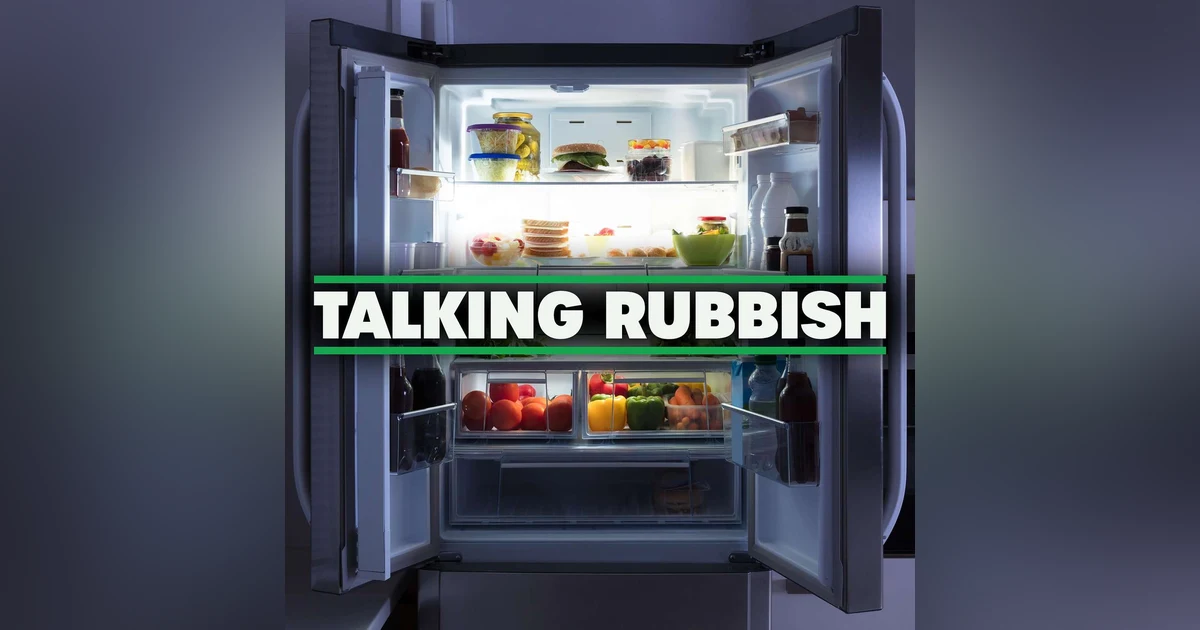
Could your fridge actually be causing food waste? This week, we explore the psychology behind the modern fridge, why bigger shelves and hidden drawers can encourage us to buy more than we need, and how simply forgetting what's at the back may be responsible for more waste than food actually going off. We also discuss whether smart fridges are really the answer, or just another gadget promising to solve the wrong problem.
Plus, are cable ties rubbish or not, should we just ban flexible plastic, how will cereal be packaged in our dream shop, and how can a reusable cup spiral into an embarrassing lie?
Join hosts James Piper and Robbie Staniforth as they delve into the world of recycling, hopefully having fun along the way. One thing is for sure, they will talk absolute rubbish from start to finish.
Please take a moment to complete the Simpler Recycling tracker
We would love you to join our community on Discord
Special thanks to our sponsor, Ecosurety
To get exclusive videos and clips, follow us on Instagram, TikTok, Threads or Facebook; @rubbishpodcast or YouTube: @talkingrubbishpodcast
Or you can contact James and Robbie with questions or just general rubbish musings using the email address talkingrubbishpodcast@gmail.com or by texting them via WhatsApp on 07356 069 232
Relevant links and reports mentioned in the programme can be found on the Talking Rubbish Linktr.ee
Transcripts and episodes can be found on the Talking Rubbish website
Timestamps:
Why your fridge is making you waste food - 02:01
Additions and corrections - 26:31
Rubbish or Not: cable ties - 33:06
Rubbish News - 36:26
Should we just ban flexible plastic? - 42:23
Green Grocer: cereal - 46:55
Residual Rubbish - 52:19
Music licence ID: 6WPY8Q4O2RPFIOTL
Frequently Asked Questions
Can fridges actually cause food waste?
Yes, modern fridges with deep shelves and hidden drawers encourage us to over-purchase food and store items out of sight, leading to them being forgotten and wasted.
How much food waste comes from households?
Studies show that about 58% of wasted food originates in households, rather than earlier in the supply chain like farming or retail.
Are smart fridges good for reducing food waste?
Not necessarily. While they offer features like inventory tracking and recipe suggestions, many smart fridges risk driving consumerism by automatically logging items for re-order rather than strictly preventing waste.
What is the best way to reduce food waste in the fridge?
The most effective approach is mindful planning—only buying what you need, keeping items visible, and ensuring everything inside the fridge has a designated meal plan.
James Piper
Hello, welcome to Talking Rubbish, a weekly podcast going deep into the world of recycling and discussing the truth behind snappy headlines and unsided stories. In this episode, we will discuss whether fridges create food waste, are cable ties rubbish or not, and the question about whether we should just ditch flexible plastic all together, and how will cereal be packaged in our dream shop. I'm James Piper and I'm joined by Robbie Stanley Fourth, my far from rubbish friend. Hey James. Exciting news from Rubbish HQ. Very, very exciting news. Back in episode 103, we mentioned that we had been long listed for three British podcast awards. And I said I would keep everyone posted if we made the shortlist.
Robbie Staniforth
It was a brave shout at the time to say that we'd keep people posted. Because if we hadn't made any of the shortlist, it would have been a little bit disappointing.
James Piper
Yes, and I you said how nice would it be to be shortlisted in just one of them? So we've been long listed in education, impact, and lifestyle. And just to put this in perspective, because we weren't in the world of podcasting two years ago. We didn't know the British podcast awards, but these are the bigger. This is like the Oscars of the podcast world. The BAFTAs. In Britain. Yes, you're right. It's the BAFTAs. Of the podcasting world, yes. BAFTAs of the podcasting world. That's exactly what it is. And we were very excited that we might get shortlisted in one. Yeah. Well, it transpires. We've got shortlisted in all three. It's amazing. It's unbelievable. So education, lifestyle, and impact awards. We went from the long list of the shortlist. And now, 1st of October, find out if we've won. I bought our tickets this week. Oh, you did? Brilliant.
Robbie Staniforth
Oh exciting. Tuxedo on.
James Piper
I don't know. It looked very casual. Podcasters are casual.
Robbie Staniforth
Oh, so I've got to go a bit cooler than a tuxedo.
James Piper
The t-shirts, the uniform, the talking rubbish uniform.
Robbie Staniforth
Maybe I should just rock the tuxedo anyway. Surprise people.
James Piper
Trash talk. Today we are asking the question: could fridges create more food waste?
Robbie Staniforth
Yeah, which is an incredible question to me, because how can it? It's preserving food.
James Piper
And just as a reminder, we were going to do this episode a couple of weeks ago before we interviewed Tessa. But then because Defra delayed flexible plastic, we decided actually we'd move it to the week after Tessa. So I guess this is complementary to what she was saying about the increase in food waste and how we should all reduce it. But it actually comes from our episode 100 celebration because we had this gathering of influencers. Oh, yes. Yeah, I remember this. Which begs the question: what is the collective noun for a group of influencers? Well, it's not a murder, is it? It's a landfill. A waste transfer station. Anyway, we had this group of influencers at episode 100, which was really great. And the very first person I spoke to was Emma, who's doing a PhD on food waste. And she said, Oh my goodness, you want to talk about fridges.
Robbie Staniforth
Ah, yes. Okay. You had a long chat with her about this whole topic. I I think I caught the tail end of it and was like, wow, she was doing a whole PhD or study or something, masters in it.
James Piper
Whole PhD on fridges. And so thank you so much, Emma. If anyone wants to check out Emma's work, it's foodwastories.com, is the website. So if you want to read more, head on over there. But seeing as it has been nearly a hundred episodes since we did anything on food waste, because it was it was episode nine that we last talked about cucumbers. I mean, we all we always talk about food waste, but we haven't done a dedicated trash talk since episode nine. It's time probably for us to do a bit of an update on the stats. So, as always, thank you so much to Rap for producing these figures. They do amazing work on food waste, and they've done some reports since we last talked about this. 25 to 30 percent of food produced is lost or wasted, which works out 1.3 billion tonnes a year.
Robbie Staniforth
Every time I hear it, I'm amazed. And I know the stat.
SPEAKER_00
I've heard the stat a few times, and it's like still like really, but this is good, useful stuff. Why is it getting wasted?
James Piper
And if you took all that land that's being used to produce that waste, it would be the second largest country after Russia, so it'd be bigger than China.
Robbie Staniforth
Yeah, that's crazy. That is, yeah, absolutely massive. And I've got one of those maps on my wall at home, you know, in the downstairs toilet that has all of the countries by size, you know, and it sort of goes in descending order to the very teeniest, tiniest one in the bottom right-hand corner. And I'm always amazed at how much Russia, China, America are bigger than the next ones coming, or whatever. They're absolutely huge. And to think that food waste is between all of those is crazy.
James Piper
You're gonna have to like pin a banana skin under Russia just to remind you where food waste was. Very good, yeah. But one of the things I always thought was, yeah, but so much of that food waste must come from retail, from the operations, you know, it's not coming from home. But actually, when you get into the stats, of that number, 58% of that food that's wasted comes from the household.
Robbie Staniforth
That's crazy. I would have definitely thought the majority was somewhere in the supply chain, whether it be, you know, in the farm or through the production facilities or whatever. But of course, they're probably tuned to within an inch of their life to try and be really productive because of the economics of the whole thing. They're trying to make as much money as they can out of the food and all of the leftovers they're going to be putting into stocks and things on a commercial scale to try and make money. It's then when you get it into the home that actually people are wasting food. And certainly I know from my own food waste caddy that there's definitely things that go in there that could have been eaten. It's not just peelings and things that sort of you you wouldn't use, say bones, etc.
James Piper
I guess the key to remember is that even when you're recycling food, you have still wasted all the resources to get it to you. And so much of a product's impact is the bit we don't see before it gets to us. Yeah. So we should never feel good about wasting stuff. You know, we should never think, oh well, at least I'm recycling it because 90% of its impact happened before it even got into our house.
Robbie Staniforth
Yeah, and we spend a lot of time talking about how the food is packaged on the shelf for that very final bit of the journey. That's an absolute drop in the ocean compared to all of the other impacts before it got to that final being packaged for us to take off the shelf stage.
James Piper
And having said all that, you should recycle it. So if you do have food waste, do recycle it. And we've said this before, but councils will save money from you recycling food. And and this has got more extreme than the last time we reported it because the gate fees at MERFs have changed and energy from waste and landfill is now up, and anaerobic digestion has been falling. So the gap between the two is huge. So when you send something off for incineration, I think we said incineration land for about £120 a ton. When you send something off for anaerobic digestion, that's come down from £24 to about £13 per ton. And so it is way better for local authorities if you recycle your food, it's so much cheaper. And there's actually 10 local authorities that have reported getting paid for their food. Yes, Tessa mentioned that, didn't you? Now Tessa mentioned it negatively. Yeah, she's somebody who's been too cheap, yeah. It's too cheap. Yeah, and that's really interesting. So because Tessa is obviously running a business and she has to be sustainable and all those things, and and we didn't talk too much about the commercials of the business last week, but clearly they have to make money. It must be a challenge going up against anaerobic digestion that is so cheap. And so I do think redistribution needs that extra yeah, but you're doing it for the right reasons rather than you know you're doing it to save money. There is a slight uh tweak to this because AD, the cost of AD is actually increasing at the moment. So I think it's gone from 13 to about 15. So it's not that significant, but it is increasing. And the reason for that is because the heat wave has caused fridges in retailers to break.
Robbie Staniforth
Yes, I've seen lots of them when I'm out and about in town. Certainly the Tesco's extra very close to our office in in town, like very often the fridge has gone down.
James Piper
Yeah, I was in there yesterday, no sandwiches, nothing. There we go.
Robbie Staniforth
Again, yeah, amazing.
James Piper
And so um uh the environment agency are reporting a big increase in food waste from retailers, which is then getting sent off to anaerobic digestion. And what's happened is we are now I mean, it shows the imbalance that we have at the moment, the lack of capacity that we have for anaerobic digestion, because just that, that relatively small increase compared to what we're creating at home, has filled anaerobic digestion plants. Yeah, sure. And so now they're at capacity, they can charge more. Yep. And so the prices are actually rising at the moment. But it's really interesting byproducts of the heat wave and shows actually how risky, like simpler recycling is because if you do suddenly collect feed waste from every household, you actually don't have anywhere for it to go. And so we need to build more anaerobic digestion capacity. So I don't think it's a bad thing that the gate fees are rising for anaerobic digestion, because in theory that will cause more people to invest and build recycling facilities.
Robbie Staniforth
Yeah, we're back to the old sort of chicken and egg stuff around collecting for collecting it versus reprocessing it. But certainly the take-home point is definitely don't worry too much about all of the economics. If you can't use olio to try and redistribute the food that you're not going to eat at home, you've got a leftover broccoli and you're about to go on holiday or whatever, and you can't sort of put it on the app and give it to a neighbour, then you definitely should be putting it in the food waste. It's going to help the council immeasurably it being in that container instead of the black bag waste.
James Piper
Definitely. And uh one of my favourite things that came out of the rap uh work is this food waste survey that they did, which they published in March. And what they what they basically did was they asked UK citizens, they asked a representative collection of UK citizens, do you waste less food than the average? Yes, I do waste less than the average. Absolutely. Interesting. Now, I also would say I waste less food than the average. In this study, 80% of people said they waste less food than the average. It just mathematically doesn't work because it's based on numbers. So you would so it has to be that 50% waste less and 50% waste more. So 80% of people think they are better than the average. They then showed them a picture of the average food waste per week and said, What do you think now? And that actually rose to 83%. So seeing a picture made people feel even more I definitely don't waste that much. Exactly. So everyone's going, It wasn't me, Gov. Exactly. And we get this all the time with surveys where people go, I'm better than the average. I do think there is a thing that people don't realise how much food waste they generate. And definitely we have seen that time and time again, where I put out a post saying, you know, it's great that food waste has come in, and people go, Well, I don't have any food waste. And then you start saying, Well, what do you do with your eggshells? What do you do with your bones? And oh, I don't think of that as food waste. You know, it's all part of the food waste story, and so yeah, it's just it's a I love that stat so much that uh on average people just think they're better.
Robbie Staniforth
Yeah, and I think I am probably I I now really after Tess's interview last week and thinking about it, I probably am one of those people who's overestimating how good I am with food waste. And certainly my partner would say, and she's actually much better at like not wasting food, buying small shops for exactly what you're going to eat, whereas I'm guilty of some of the stuff Tess talks about, Tessa talked about, which is going to the shop a bit hungry and just thinking, you know, buying several meals worth, uh, getting caught out by the yellow stickered items and buying three or four things that are all going off on that day. And it's like there's not enough time in the day to be eating all of this stuff. So yeah, I'm probably part of that 80 or or up to 83% when I saw a picture of my own food waste. I wish I had the picture here. I should have printed out and been like, what do you think now?
James Piper
It's like yeah, it's terrible. So let's talk about fridges. And it's not That was very Alan Partridge.
SPEAKER_00
That was so good. That was amazing.
James Piper
Let's talk about fridges. What they do is they make it possible to buy more than we can see, yeah, and to buy more than we can remember or realistically eat.
Robbie Staniforth
And what you're just saying that shopping habits have changed as a consequence.
James Piper
Well, there's a couple of things that have happened. So the simple answer is that deep shelves and drawers are causing a problem. Uh-huh. Fridges have got deeper over time and bigger. And I actually thought we were moving more to like American-style fridges as a nation, but I'm not sure that's just double, double door type things. Yeah, and I was asking Emma that question, but she said, Well, the trouble is a lot of our houses, well, not the trouble, the good thing is a lot of our houses have like a fixed width for the fridge. So unless you're removing your whole kitchen and redesigning it, most people can't go for those double bigger fridges. Um, so we definitely do have like the standard whip fridge, and and but but what has happened is the tech has improved as they've got deeper and deeper and the shelves have got bigger. And then there is a real psychological aspect to filling your fridge up, to keeping it full. And when you look back at the adverts from the 1940s and 1950s that were selling fridges, like and you look at the headlines, you can see how that psychology developed. So you've got things like uh one of the headlines was look, a third more refrigerated food storage. And the next one was, Grandma, you've got everything. You know, it was this whole mentality of fridges allow you to have variety. Fridges allow you to cook whatever you want whenever you want. Yes. But to but in order to cook whatever you want whenever you want, you need to make sure your fridge is well stocked.
Robbie Staniforth
Sure. So it's like appealing to that super aspirational part of our psyche that's going, look, when the grandchildren come around, they're gonna see they can have whatever they want, a huge variety of things in the fridge.
James Piper
And that 1940s, 1950s mentality just carries over. And I certainly, I mean, I don't have a lot in my fridge at any one time. I've said before I use meal delivery kits, so I have like a one drawer where all the things go into. But other than condiments, my fridge is normally relatively empty, and I think people would think, God, he's starving himself when they come around to visit. Whereas I'll go round to my friends' house who have fridges full to the brim of stuff, and I think you can't possibly eat all this. And I do end up, if I'm completely honest, with that like pang of jealousy of like, oh, this is this is quite nice. Look at all these things. It's like being in the supermarket, you can have whatever you want. Exactly. And there is that little like jealousy thing that I'm like, it's weird. Why do I care that my fridge doesn't have anything in? Because that's great, I'm not creating food waste. But it is weird when friends come over that I'm thinking, gosh, I bet they expect me to have more food than this.
Robbie Staniforth
Yeah, I think that's absolutely true. And thinking to go when I go to my parents' house, and often I'm going at a time when they know I'm visiting with my daughter and partner, maybe, and maybe my sisters are there too. So they will have stocked up maybe a bit more than their average. But I know that feeling of going to my folks' house still, you know, as a 42-year-old man and opening the fridge or freezer, and just like, it's just bountiful, like so much stuff, with too many options almost.
James Piper
Yeah, I was reading one of Emma's papers last night, actually, which was it had the concept of a fridge map. So, what she'd done was she'd asked people to put post-it notes where they had created waste. So anytime they threw away something, she said, put a post-it note in the fridge and then send me pictures of where your post-it notes are because then I can see the areas.
SPEAKER_00
Oh, it's really interesting.
James Piper
It's really interesting, yeah. It created three zones. Okay. So the first zone she called the danger zone. Oh, okay. Okay, so this was the back of shelves and especially at the top. And we've all done this, haven't we? Put a dip or something at the back. The hummus.
Robbie Staniforth
That's where the two-day hummus is going with no lid, isn't it? I've got one in my fridge. Right. Yeah, it's been open for five or six days. It's definitely in the danger zone. Yes.
James Piper
Now then there's the action zone, which is very visible, front of shelves. Yeah. But in the action zone, you tend to put things that go off quite quickly. So meat, dairy, things that become dangerous when they go off. So you're creating food waste in the danger zone by not seeing stuff. You're creating food waste in the action zone by not using it fast enough. Okay, fine. And then finally, the third zone is the vegetable drawer. Okay. Perishable items that are sold in bulk in an invisible space.
Robbie Staniforth
Oh gosh. So this is the like soggy carrot, is it? It's the soggy carrot. Oh yeah. Definitely got one or two of those in the fridge at the moment. Got to make stock. Just make stock. Make stock, yeah. It's easy. Take stock, make stock. Yeah. Make a soup.
James Piper
As long as it's not mouldy.
Robbie Staniforth
Yeah, no, when they go a bit soft. You can still cook with them, definitely, but you do want to do something that's a a soup or I like crunchy carrots, so I couldn't be cooking them to have as a side.
James Piper
So yeah, we've got this problem with fridges in that we buy too much. We don't plan well enough because we're like, oh, the fridge will drive. We can just put it all in the fridge or freezer. When you say we, do you just mean universal collective? I'm not commenting on you specifically. What's that in your ear? Is that my partner in your ear there, James? And what else do you want me to say too? But also, I just liked the way Emma was talking about food waste and the way we create food waste because she was saying the trouble is it's housework. To avoid food waste is a chore. It's housework. And none of us think of it like that. You know, we think of cooking as the housework, but we don't think of avoiding food waste as like an activity that we have to do. Sure. It requires effort.
SPEAKER_03
Yeah.
James Piper
And the fridge becomes a blocker to that housework. You know, where you might have like, I've got to empty the bins or I've got to um wash up. That's all very visible to us. So it forms part of our daily chores. Yeah. But food waste doesn't. We open the fridge, we go, we're cooking with that, we close the fridge. We're not actively monitoring, you know, what's going to go off, what can I cook that's going to stop that. So obviously, some people do, I'm generalising. But I think in the main, for us to waste, you know, a thousand pounds worth of food per household, we are not necessarily doing that extra work. And this happens across recycling all the time. That to be a good recycler, you have to really treat it as housework and you have to spend time on it and you have to think about it. And I I found this study, it was a super interesting study, that said that to recycle a ton of waste in your house, you have to do 185 hours of work. Oh my gosh. Isn't that unbelievable? Because that is a lot of labour. Yeah, just because we do it every week and we don't really think how how much time am I actually putting into what is a relatively lightweight activity. Yeah. You know, if you consider that recycling plants are doing a ton every whatever it is, few minutes, you know, maybe an hour, if a recycling plant's doing a ton in such frequency at home, it's taking us 185 hours to feed that ton to them.
Robbie Staniforth
Yeah, that's absolutely crazy. And it's it's all about, I suppose, the mental load of like taking the audit and stuff and thinking about it, however, whatever system you deploy, you've got to be conscious and it takes up some brain space that you want to be using for other things. I do wonder though, if I can somehow modify the habit that I have of opening the fridge, not quite seeing anything that I like or want, and closing the fridge. And then I sort of walk around and about 10 minutes later I open the fridge, it's still the same stuff in there, and there's nothing particular that I want. And then I close the fridge again.
James Piper
What's the energy wastage of that? Because yeah, I mean, I'm exactly with that. And my mum listens to this podcast, she'll be laughing. As kids, this is all we ever did. We get over school, open the fridge. Oh, nothing in there, close the fridge. Every five minutes you'd be opening the fridge. Nothing changes.
Robbie Staniforth
So now I need to change that. And this is how you enforce a habit, isn't it? By actually just slightly modifying something you do anyway, and make it turning it from something that's not a great habit into a good one. So maybe now I can just consciously, when I'm opening that fridge, just do the little oop, yep, we've got carrots in the drawer. They're in the what was it, the danger zone. No, the drawer is the it's just the vegetable drawer. Just the vegetable drawer.
James Piper
Okay, give that a name. Should have a danger zone, the action zone, but didn't name the vegetable drawer. I'd be calling it the like, I don't know.
Robbie Staniforth
Hidden zone. Hidden zone, yeah. The dang the danger zone is kind of the hidden zone, though, isn't it, as well? But uh the thing about the veg vegetable drawer is it's just so deep. Well, mine are definitely way deeper on this fridge I've got at the moment than the last one I had. And so you can absolutely lose things at the bottom and the back for sure.
James Piper
I've talked a little bit about meal delivery kits, but we need to do a whole episode on this. Yeah. Because there's because the trade off is obviously you get more packaging. So I have very little food waste on a weekly basis because everything's portioned out. Yeah. But you've got the cardboard. But I've got like a Yeah. Yeah, like this week one of the recipes called for an egg and I end up with a massive cardboard box with a single egg in it. You know, and it's like I've got eggs. It's my pet hey, I wish meal delivery kits allowed you to say I've already got this item. Yeah. Don't send me that.
Robbie Staniforth
And whether you give me twenty P off the total cost or not, I don't care. I just don't want this thing. Extra packaging, extra food.
James Piper
I know that's a logistical nightmare, but it is that's my one real pet hate of meal delivery kits. But anyway, we'll talk about that another day. I guess one of the responses to this, if I, you know, the manufacturers of fridges will say, hey, but we're moving to smart fridges, which allow you to solve these issues. And so I just thought I'd quickly touch on what the smart fridge is promising, because what they're basically doing is putting cameras in your fridge that allow you to see what's going in there, what's coming out. And they have things like apps to remind you when the food is going out of date, and they can even suggest recipes. So I guess in principle it would solve a lot of these issues because as you put in a tomato, it goes, okay, I've logged that tomato, let's make a pasta sauce or whatever. But when you when you actually get into that tech, I mean it's very much in its infancy. And I personally think one of the big issues is actually that replacement piece because let's say you put into your fridge, I don't know, ten apples, and your fridge sees you put ten apples in, and then you eat one of them, and nine of them go to waste, and you remove the nine. Yeah. And they're wasted. Well, your fridge has just gone, well, you ate those ten apples really fast. Yeah. Or really slow in this instance. But you ate those ten apples, let's buy ten more. Okay. And a lot of these fridges have like the technical ability to like reorder stuff or add it to your shopping list. Or and it's it is actually not solving the food waste issue. It is driving consumerism. Yeah, sure. Dressed up as sustainability. Yeah. And and it doesn't really work. And like the use by date things you have to manually enter the use by date. So I mean, you might as well just keep an Excel spreadsheet where you just write down all your products. Yeah.
Robbie Staniforth
That's what you want to do. If you're going to be that fastidious with it and put in that much effort, you don't actually really need the tech. Just doing the audit by the fridge open that I just suggested is probably enough to have avoided the food waste at least.
James Piper
And obviously, we have lots of critics of AI who listen to this podcast. But this for me, if I was going to use AI, this is quite a good use case. Here's all my ingredients. What would you make with it? Yeah. You know, and and I don't need my fridge to do that. I can just do that. Do that, yeah, on your phone. You know, I don't need the fridge to do that. So I think the trouble is a lot of these fridge manufacturers are trying to solve a problem. Well, they're trying to solve the problem, but actually potentially making it worse because the fridge isn't clever enough to know this was food waste versus this was stuff you actually used. And any of the features that might save it, like recipes or use by dates, aren't really solved by the smart fridge, they're solved by other things that have just been wedged into the fridge.
Robbie Staniforth
Yeah. And you they're also in the business of trying to sell you a fridge before your last one breaks. You know, they're just trying to get new features into a thing so you upgrade, and then what do you do with your old one that's still perfectly working? Hopefully give it away to charity or sell it, resell it, but that's just feeding the whole system of consumerism, isn't it?
James Piper
Absolutely. And of course, once you're into smarter tech, you have to upgrade more and more because it's like, oh, that camera is 1080p, we're now 4K, you know. God, I never thought I'd be like looking at the definition of my camera in my case. In my fridge. So just to wrap up this trash talk, I guess what we're saying is advertising has spent decades telling us a good fridge is a full fridge.
SPEAKER_03
Yeah.
James Piper
And uh the spaciousness has become something to aspire to. And we've I mean, I look, none of this trash talk is gonna be a revelation to anyone. It's all really straightforward common sense stuff. But what we're urging people to do is to plan, is to go, okay, I'm gonna make sure I'm using everything that's in my fridge. I'm not going to fill it. I don't feel like I need to. And remove kind of the status symbol aspect of having a full fridge. Food waste isn't really about food going bad, it's about food being forgotten. I don't think the most sustainable fridge is even an empty one or the smartest one. I just think it's one where everything inside it has a plan. Additions and corrections. As we record this podcast, it can be quite hard to make sure we've covered all the bases. You know, we're having to think quite live. What am I got? What am I saying? How is it going to come across? And sometimes we miss things.
Robbie Staniforth
And are you saying I've missed too many gags? Is this gonna be come on, Robbie? There were some obvious jokes here that you totally missed.
James Piper
Yeah, you're good, you're good. But uh but I did miss a blindingly obvious solution to my free Starbucks coffee issue of episode 104. Oh, yes. So if you remember, I'd said I've got six free coffees at Starbucks because I refused to get them because I'm scared that they're gonna say, Can you upgrade to large? And I've got a small reusable gap. Socially awkward, such a ridiculous situation. My sister did text me going, I'll take your free coffee. So, you know, no shame. But Jamie on Spotify commented saying, Why don't you just drink in? I say, it's a great solution. Why don't you just sit down for 10 minutes and have a coffee, James? Yes, I uh you know, there isn't there is a gap here that I am aware of because I never sit in a coffee shop, but it is a good solution. I wouldn't have to use my reusable cup. I could get ceramic, I could have a large coffee, it would work. And now I have free six uh now I have six to use. I can do it. So drinking might be the answer. This is actually very funny. It reminded me a lot of um, you know, uh you know Natalie Faye, who was our uh interview in episode five. The first time I met her, we she texted me saying, Let's meet in a coffee shop. And I thought, gosh, this person I'm meeting, I can't have single-use packaging. Yes. She's reuse. The refill queen or whatever, yeah. Absolutely. I thought, I can't do that. So I proudly said to Ellie on my way out, I said, I'm off for a coffee with Nat Faye, I'll take my reusable cup. And I was so proud of myself. So smug. So smug. This was in the early days when I was rubbish at remembering the reusable cup. And and off we went to his coffee shop. And we were stood in the queue, and I got to the cashier and I said, I'd like a flat white, please, in this, and produced um this reusable cup. And she went, Oh, I'll have the flat white too. But we're dining in, so I'll just have it in a ceramic.
SPEAKER_00
And she was probably thinking, Who is this weirdo?
James Piper
She was like we're meeting for two hours in there. Anyway, so then I had to go down this elaborate because I was like, Oh god, I look like an absolute weirdo. Oh, yeah. So I went down this. So I just even though we're meeting for two hours, I'll probably still have some left over and I'm used to drinking it cold. And I'm making up this story. Like, I mean, she's she's probably listening to this now again. I didn't know any of it. So I'm making up this story. Like, and so then I then through the whole meeting I have to drink so slowly to to uphold the light. I hate cold coffee.
SPEAKER_00
Oh, turned your coffee into an iced coffee, just trying to forge your way through this big blunder you've made.
James Piper
That's so good. And we also had a WhatsApp from Jeanette, um, and she was expressing her disappointment in us that our green grocer in episode 102, which was the toothpaste greengrocer, failed to mention alternatives like toothpaste tablets. The tablets, yes. Now, this is a fair criticism, but if I'm completely honest, it is a casualty of me having to ensure our episodes are an hour long because we did actually talk about this.
Robbie Staniforth
Yeah, I'm sort of now thinking I knew it was gonna be the tablets. We talked about it, yeah, but we had to cut it out. What we basically decided for and I hope we don't cut this.
James Piper
Otherwise, we're just we're gonna be in a loop of overrunning forever. Let's not cut this. Okay, so we decided for Greengrocer, because we're creating a shop for the masses, we would take the product that is most sold. Okay. So if toothpaste is mostly in a tube form, we're using that. The alternatives are for a trash talk. So I think we will end up doing a trash talk on like uh reusable toothpaste tubes and all sorts of things and and tablets, I'm sure.
Robbie Staniforth
And concentrates and stuff like that, where you actually get a small and you can add the water yourself at home, and it's a like efficient way to buy stuff, isn't it?
James Piper
Yeah, so we should do like a trash talk on that stuff, or a rubbish or not, or something else. But Greengrocer will always focus on the mainstream and we and we will only focus on the packaging, not the product itself. We'd like to take a moment to thank our sponsor, EcoSurety, who are on a mission to rid the world of unnecessary packaging. They help brands navigate the tricky world of extended producer responsibility, but that is not all. They also collaborate on some incredible recycling projects and consumer awareness campaigns for those tough to recycle materials. If you're an organization looking to make smarter packaging choices, check them out at ecosurety.com. And if you want to help our podcast to grow, which we have been doing. So thank you very much. Yeah, we've had some real growth in the last few months. Oh great. It's been amazing. But if you want to help our podcast grow, the best thing to do is to tell your friends and family about it, or you can leave us a review. And if you leave us a review, you can be Robbie's review of the week.
Robbie Staniforth
So this one's a five-star on Apple, one of our most common ones. It's from Jackie A Lawler. Jackie A. Lawler, I think. So educational. I am passionate about recycling, and I can always do better. I have started from the beginning of the podcast and I am learning so much. James and Robbie's enthusiasm is infectious, and their passion and expertise shines through so brightly that I want to immediately do better. The series is fun as well as educational, and I really recommend it. The guests are brilliant too. Thank you, guys.
James Piper
Great review.
Robbie Staniforth
Yeah, it was so nice, isn't it? Educational, we're in that category for the podcast awards.
James Piper
If anyone wants to use lifestyle or impactful in their reviews, it's gonna help the judges. It's gotta help. It can only help. And you can follow us at rubbishpodcast, you can email talkingrubbishpodcast at gmail.com or you can WhatsApp us. Also join our Discord, it's the easiest way to engage with us and listeners of the show. And the link to all of those things is in the show notes. Oh, yeah. So Ellen asked about this, but also I've just been to a mini festival, and the mini festival had like it was over on um the Downs here in Bristol. Okay, yeah. And they have uh like fencing all around it, and then they've attached things to the fence, the Harris fences. Using cable ties. And everyone had been complaining that when they clear up this place, they just leave the cable ties on the ground.
Robbie Staniforth
Oh no. Rubbish or not? You can't recycle these at home for sure. There we go. I'm pretty certain. So I'm gonna say rubbish um at home. Now, the truth is that they are hard plastics, so just like most hard plastics, there will be the technical capability if it gets to the right plant for the thing to be shredded and turned into flake. So hard plastics recycling, probably at your local council site, they will probably take them, particularly if you've got a whole bulk load of them that you just toss into the hard plastic recycling. But no, this is definitely rubbish. So I wouldn't be recommending this goes in with your plastics packaging recycling.
James Piper
I've got an absolutely grim cable tie here for that cover. I don't know. Ellie found it on the walk home the other day, and it is like covered in paint, and I'm just covering my seat in paint as I hold it. Oh, it's been painted over. So I'm gonna chuck it on the wall now before I get the paint everywhere.
Robbie Staniforth
That was temporarily holding a gutter up, I think. Something like that, maybe. And it got painted over. That's my guess.
James Piper
Oh well, that's come from my house. I put a gutter up. Are you serious? From my builders. I'm gonna have to check where Ellie's gonna say she found it in our guard. We've just put a new gutter up. So it's my builders. Leave it for some of them watch this. Detective Stanny Ford strikes again. It is the grey paint that we've used for our gutters. Wow, there you go. Um, and I had an electric bike delivered the other day because all this talk of electric bikes that you and I had before, I really want to get my son on a bike, it's gonna be loads of fun. So I bought an electric bike, and it came with, and I've never seen, and maybe everyone's seen this, and I'm just being an idiot, but it came with reusable cable ties.
Robbie Staniforth
I knew you were gonna say that because mine also did way back to the city. But we bought the six or seven years ago. So they've been using these reusable cable ties, and I still have my reusable cable ties from the bike seven years ago that I got, and I'm you know, occasionally like using them. I remember I used them once to attach a bed frame to the sort of sides, you know, when one of the screws got pushed through. I was remaking it. I used it for that, but then eventually that bed died and I took it off, and now it's in the drawer of reusable things with the rest of my screws and things like that. So I know exactly the cable ties you're talking about. They're astonishing.
James Piper
You just kind of put them in, and then it's got like a little lever you pull and it releases the cable ties. So simple.
Robbie Staniforth
Why aren't we all using reusable? Yeah, it's it's actually crazy that they're still allowed to sell these cable ties. But to be fair to government, gosh, what would that legislation look like? We are outlawing single-use cable ties.
James Piper
Rubbish news. What a week for buzzballs.
Robbie Staniforth
Crazy. Dude, just been I've been on holiday this week, and I did flick open LinkedIn yesterday. Literally, the first five posts I saw were about buzzballs, and I think most of them had tagged me into it. Yeah.
James Piper
Our LinkedIn has been taken over by Buzzballs. But the the background to this, for people who don't know, is the BBC listened to our podcast. Yes, of course. Yeah. Ro from the BBC got in contact and said, I've heard you talk about buzzballs and not being and not being recycled. I'd like to write a story on this.
Robbie Staniforth
Yep.
James Piper
She interviewed me for a couple of hours. The article was released last Saturday, probably two Saturdays ago, as this is going out. And it became one of the most read news stories of the day. Ever all anyone was talking about. What? Buzzballs can't be recycled? It was on Radio One they were talking about it. It was just unbelievable. And I'm I'm a hundred percent confident from our podcast because I know the journalist listens, and one of her questions was, you guys are the only people saying they're not recyclable. Why do you think this is? So if we're the only people saying it, we must have been the inspiration. Yeah, no, for sure. Yeah. And we know I hate these things. Yes, that's why I put one next to your head for the video. It's great. Every day, every time I watch the video back, I have a little smile, but there's a buzz call next to you. And so just to remind people, it's the metal plastic fusing together. It's probably going, it's either not going to get sorted because it'll be recognized as contamination, so sent off for incineration. And if it's sorted into the plastic stream, which could happen because it's PET, then the metal's going to damage the machinery at the other end. So it's just rubbish, literally rubbish, fusing packaging types together for no reason. And the BBC clearly have a lot more power than us. You know, we know that. Absolutely. Yeah. Because one of their frustrations and ours was the inaccuracy on the BuzzBall website. So specifically, and we talked about it in our episode, they said you can use TerraCycle to recycle them, but that TerraCycle was only in the US. Yeah. Which is crazy. We'd complained about it. The BBC then complained to Buzzbulls about it, and Buzzbulls listened to the BBC and took it straight down. Oh, great. I'm counting this as a win. Yeah, for sure. Once removed.
SPEAKER_03
Once removed, yeah.
James Piper
What I need to do is say things on this podcast that then get picked up by a major media corporation. And then action change happens.
Robbie Staniforth
Yeah, but this does definitely feel like the Pringles thing. So it's great. You know, Pringles, it took a long time, but because there was such furore about different types of plastics and paper being fused together, different bits of packaging, making the whole thing unrecyclable. It eventually changed the design. And now you buy Pringles off the shelf. It looks the same to the average person, but they're recyclable. Let's hope this for the same thing on buzzballs.
James Piper
And Tim, one of our influencers, actually took them apart in his workshop. I know you've got to do that. Yes, I saw that.
Robbie Staniforth
Oh my goodness. Gosh, that was so fun. Yeah, like literally trying to unfuse the metal cap of this buzzball. It's ridiculous.
James Piper
And he said, Who needs Terracycle when you have Timmercycle? Very good. Gosh, I wish I was called Tim. What a great pun. What a great pun.
Robbie Staniforth
And my rubbish news this week comes out of political announcement. We try not to delve too much into politics in this podcast, but it is true that we've had 10 environment ministers in 10 years. I'm not going to ask you to name them all, because frankly, I can only remember about two or three of them myself.
James Piper
No, I tell you I just didn't think. Therese Coffey. No, she's. Yes, Therese Coffee. Yeah, she was one of the things.
Robbie Staniforth
Therese Coffey. Okay. Um there's one who's a big name. He was in education as well. Yeah, very good. Michael Gabe was big. And one was even a Prime Minister for a while, a very short period of time there.
SPEAKER_03
That's true.
unknown
Yeah.
Robbie Staniforth
Yeah, she was, yeah. 2014 to 2016. Anyway, this is news that Dame and Angela Eagle has got the top job. So she's overseeing things at the Department for Environment. But actually, I wanted to talk more so about Emma Hardy, who has inherited uh Mary Cray's job, and she's the minister for circular economy and waste crime. So definitely going to be someone that we're interested in talking to at some point because things like fly tips, uh, littering, etc., all falls under that um waste crime. She's been a junior minister in the Department for Environment for a few years now, so she's probably hopefully going to get across her brief very quickly. And one of the first announcements is that they will the UK government will be announcing its delayed circular economy growth plan very soon. Now, I'm not sure how soon is soon, but we've been waiting for this thing since October last year. Um they those who follow such things will remember that they put together this circular economy task force of some of the great and good of industry, whether it be in reuse or consumer electronics, recycling, to try and come up with a plan to transition to a more circular economy. Most of the policies on circular economy have been packaging EPR and DRS, which frankly is simply not enough. And I know lots of people who are on that task force are quite frustrated because they put in lots of unpaid hours to try and put together this plan, and it's basically been shelved for not far off a year now, nine, ten months or whatever. So we hope to see that plan soon. A big welcome to Emma Hardy and to Angela Eagle.
James Piper
Rubbish question. Someone on YouTube commented on our flexible plastic episode to say, is it time to accept that some materials aren't viable to recycle despite best endeavours, and that we need a fundamental packaging shift? Surely the Cartons example that we gave shows that even by providing the feedstock, it doesn't guarantee an end market. If materials had value, the market would have invested and created a viable market slash end product since the announcement of simpler recycling almost 10 years ago. A really good question, basically saying why do we use flexible plastic? If even if we collect it, it's not viable to recycle it. And I agree with that. I as we said in the episode, it is not economical to recycle flexible plastic. It never will be. It's so expensive. Yeah. The challenge is if you replace if you say, look, we're gonna ban flexible plastic, there's two ways that can go. Either you're gonna create packaging that is very recyclable. So more aluminium, more glass, heavier packaging. The whole reason we use pouches is because they're lightweight, super efficient, really quite effective pieces of packaging. But there's that paradox of the heavier and more difficult something is to create, yeah, the more likely it is to be recycled. Because why would you uh why would you spend loads of money getting it out of the ground if you can just melt it over here? You've invested a lot up front or whatever, so you want to recoup it. Yeah, and so flexibles, they're so cheap to create that people. People don't then invest in the recycling. So one route is we go down much heavier packaging, much higher carbon impact. That's a big risk. The alternative is we create newer materials like compostable packaging.
SPEAKER_03
Yeah.
James Piper
But compostable packaging by definition is single use. You can't, you know, the whole point of it is that it disappears at the end of its life. And that's going to have a similar carbon profile in terms of its creation. So what I like about flexibles is that they can be recycled. They can go through a process to be turned into something. That's what I like about it. But I recognise that the that it is not economical to do that. So what you have to do is you have to put that cost up front. You have to say to people using it, you've chosen a packaging type that's a tenth of the cost of the alternative. Sure. But therefore, we're going to charge you X up front to bring it into parity with the cost. But all that additional cost that we're giving you is going to be put into the infrastructure at the end of its life. We shouldn't be allowed, in my opinion, brands shouldn't be allowed to just choose the cheapest packaging. That has this paradox of the cheaper it is, the less likely it's going to be recycled. Sure. They should, through EPR, have a massive increase in cost to cover the waste management and end of life of that product.
Robbie Staniforth
And that's the principles of why extended producer responsibility has been introduced in the UK and why we have these modulated fees that PAC UK, as the scheme administrator, can kind of preside over these financial decisions ultimately. They are like, how are we going to effectively levy these kinds of products? Because they're very difficult to recycle, and we know that we need to build infrastructure to recycle it and to make it economically viable. Now, the one caveat is that the government sort of always said, even when we started by saying fees are going to be modulated based on recyclability alone, you know, that was the only factor. Even when they made that announcement way back when, they said, in future, we will evolve the system to take account of other environmental impacts that are important too, because it's not just all about can you recycle this single use bit of packaging at the end of its life? It's also, as you mentioned, how heavy is the thing? How much carbon intensity is it to make it in the first place? How carbon intensive is it to recycle the stuff? So there's lots more environmental factors, but that just adds complexity on top of complexity, and you've got to have someone somewhere, and I think it is PAC UK, who needs to handle the complexity. Because you can't just leave it to brands to kind of decide what's good, what's bad, what's indifferent. You need the sort of rule makers to sit over it.
James Piper
Green Grocer. So this is the part of the show where we decide how to package products in our dream shop.
Robbie Staniforth
Yes. So this week we're gonna go with another one of the staples. You know, I love the staples. We've got so many to get through. And this staple actually isn't one that I have very regularly, but just this week we were a little bit low on food. Probably good, not because of food waste, because I'm buying a little bit, shopping a little bit lighter already after our interview with Tessa last week. And so I had a bowl of cereal. And I know you picked up that um Philip was talking about it on LinkedIn, so I thought, right, this is top of mind. Let's do how would we package cereal in our dream shop.
James Piper
Okay, so historically, obviously, boxes with an HTTP bag in. I say historically and currently. They you know they all both. For a while now, yeah. And um the problem I have with cereal, or the problem I have with that box bag combo, it's just the airspace. It's just they're big boxes with them bags that are sort of what two-thirds full. Yep. And the box has gaps. And and really they're doing that because they don't want the cereal to get crushed.
Robbie Staniforth
Yep. So that's one of the It's not just to oversell. It's important to state that because some people who don't understand about the product inside would be thinking they're just doing it to make it seem like you get more for your money. Yeah. Maybe they are doing that a little bit, but actually, you're right. It's so that it doesn't become dust by the time you get it home.
James Piper
And the box has historically and currently been a very impressive marketing tool. You know, there's a lot of space for you to print on. Beautiful printed boxes. Printing full colour in those boxes. The aim of that packaging, really, other than just to stop it getting crushed, is to keep out moisture, oxygen, and light. Cereal, obviously, most of us will know, goes stale really fast if it's just in the open environment.
Robbie Staniforth
You leave that packet open on the side, come back the next day, you've got some very sort of chewy cereal to come with.
James Piper
Yeah, so that that packaging type is basically a carton, but without the plastic glued to the carton. Oh, yes, yes. That's what it is if you think about it. It's achieving both it's achieving the same outcome. Now, the risk here is that all of our greengrocers will just be me going back to a pouch. That's the risk. Next week we'll have to think of an item that can't be put in a pouch. Okay, so you're heading pouch-wise, are you? I like a monomaterial pouch, as everyone knows. Like and it and it could be by it should be bio-based, but I uh but I think a monomaterial pouch. Yeah. And it I think most of them at the moment are plastic again. You might be able to get into like paper similar to the coffee. Yeah. I'm not sure.
Robbie Staniforth
With a very thin layer, yeah. I'm not totally certain on that front.
James Piper
Yeah, but a lot of granola now comes in a pouch.
Robbie Staniforth
That's also got space to make the product look good on those granola pouches. They look very high-end.
James Piper
I do wonder if they've done that because it doesn't actually matter so much if granola gets crushed. And that's why we've ended up in this situation where you've got like normal cereal which you want to keep intact. Yeah. But granola is sort of a bit of a mix of lots of stuff anyway. Yeah. So even if that was getting damaged, that would be.
Robbie Staniforth
Perhaps the nice syrupy bits in there like give it a bit more stability, the glue.
James Piper
So, as part of our dream shop, I'm imagining that transportation is okay for us. And we're willing to spend a bit of extra time kind of lining it up on a pallet so that we don't have this crushing issue. Yeah. But yeah, I'm thinking pouch with maybe a ziploc seal, but like the one we talked about before where you pinch it. Okay. Because that won't affect the recyclability. Yeah. Not the actual zip.
Robbie Staniforth
What about the size then? The small boxes, you know, the variety packs.
James Piper
I love. Don't you just love the zip?
Robbie Staniforth
They were so fun on holiday, but do we really need them?
James Piper
I think the good thing about the variety pack is you never get food waste. Okay, yes. You're like, you're picking the flavour you want. The downside of them is no one ever picks the cornflakes. Absolutely, yeah. They're just after the frosties, the ricicles, the sugar ones. So that's the risk. I'm assuming everyone knows what we're talking about, where you buy like an eight-pack of mini boxes. I did see someone on LinkedIn, and I can't remember who it was, so I'm so sorry for this. It's just in my memory. Someone had said they're brilliant on holiday because you can just pour the milk straight into them. Whoa, into the. And they were saying it's great. We took them to the beach. Oh, wow. People just poured the milk straight into the packaging.
Robbie Staniforth
Yeah, because it's moisture resistant. So the moisture will stay inside the plastic packet inside the little box.
James Piper
We're going to get people writing in saying, don't directly out of plastic. So I don't want to, you know, I'm just responding to what someone has said on LinkedIn. But yeah, I don't want to be a complete bore. So I'm I'm going to, I'm not going to allow it in the dream shop, the mini variety. Because I think we are trying to create the best. So we will have a row of pouches with cereal in that have been carefully transported. Yeah. Hopefully paper, if we can do that, like we did with the coffee. But I should and you should be able to, but I think at the moment they've all focused on plastic. Make sure we've got recycled, take it back to supermarket, printed all over it. And then somewhere I will allow people to buy mini variety boxes, but not in our dream shop. But I won't ban them entirely because I think they're just great fun, aren't they? Head head next door if you want that stuff. Exactly. To the sub-dream shop. Residual rubbish. Um, I don't believe in manifestation. I don't believe in this whole like if you think about something, things happen to you. Okay. But I do appear to have manifested something. Having said that. Yes. Well, we have had a bit of a run, haven't we, of dead animals? Um it's been a great run. In episode 98, we discussed what to do if you find a dead animal in your garden. A week later, you then have the council knocking on your door going, Where is it?
SPEAKER_03
We hear about the fox.
James Piper
And then Molly emailed saying she had a dead bird at her workplace. That's right. So we've just had lots of dead animals. This is a problem I have never had to deal with. I can't, I don't think I've ever had like oh, I'm consciously dealing with a dead animal in my life. Yeah, no, okay, a pet. Yeah, maybe. So we used to have lots of hamsters as a kid. And uh if we liked the hamster when they were buried, because they were little, you know, they were like dwarf hamsters. Yeah. When they were buried, we used to save up ink cartridge boxes to bury them in as their coffins. And if we liked them, they got a colour ink cartridge box if we didn't like them because they'd get with us.
SPEAKER_00
So weird. What a tradition.
James Piper
This one bit me a lot in their life. Get the black and white inkart.
SPEAKER_00
It's funny those things you do as a kid.
James Piper
Carbon black. It was a real like premonition to my life of how much I was gonna hate carbon black as a problem. Oh god, it's so funny. Anyway, and other than hamsters, I haven't had to deal too much with like dead animals in my life. But due to the heat, I have tended to keep my windows open in the house. And after our recording last week, because I rang you, after our recording last week, I went into the house and there was a sparrow.
Robbie Staniforth
I remember you're like, we're trying to have a phone conversation, and you're like, sorry, Robbie, I appear to have a sparrow hawk in my house.
James Piper
Now, if you're watching on video, I'll put a picture of this sparrow because it was beautiful. I'll put a picture of him up on the recording right now. Um, I have some beams in my house, you know, these old wooden beams. And it just, I think, quite enjoyed sitting on the beam. Okay, perched on it like a tree or whatever. So I thought, God, I'm gonna join the dead animal club here. Because I how am I gonna get this sparrow hawk out? Like a lot of the windows, the windows where he was were all closed. Okay. So I was brave. I sort of slowly went upstairs, I opened all the windows while I was in the room with him. It took about four hours for me to get him out. But eventually I managed it. I got him out. Were you shooing? Were you sort of like I was well, not shoeing, I was just encouraging gently. I was like, you want to go outside, look at the breeze. But I think he quite liked being up on what was essentially a perch. Yeah, sure. In the shade. All I had was my family texting going, How often do they poo? Oh no. Not that often, but enough to be annoying, is my answer to that. So sparrow hawk leaves. I go downstairs, there's a sparrow. So I know I didn't tell you this because we didn't have a phone call. So I'm like, well, this is why the sparrow hawk was in. Shoo the sparrow out. At this point, I think, God, I'm running an avenue. We've been like having to go to every room in my house going, is there a bird in here? Because I'm I'm absolutely convinced now that birds are like, we quite like it in here. Oh wow. A couple of days ago, I uh went into my bedroom, dead sparrow in there.
SPEAKER_00
Oh no.
James Piper
I don't know why. I don't know, I don't know if it's the same sparrow that I shooed up before. I don't know if he was like, I'm going back in. I liked it. He was dead. It was very sad. But I knew what to do because Molly had said, go to Defra, tell them about the dead bird, and then they'll come and collect it. And you didn't have any spare printer cartridge boxes.
unknown
Yeah.
James Piper
I've been used printing for ages. Anyway, put it on Dephra's website. Ellie's like, can we just get rid of the sparrow? I'm like, Ellie, we have a job. We have to tell Defra. Told Dephra about the Sparrow. They said we're not interested in this sparrow. Clearly, it's just died from being in your house. Yeah, sure. Defra not interested. Double bag with Sparrow, it's gone out with the not the resignation, it's gone out with the reason. The general waste this week.
Robbie Staniforth
Okay, fine. Sparrow gone. And my residual rubbish this week comes from a repair gone wrong. Okay. Does that sound like something I would do? Yes.
James Piper
Well, they'll be pleased that you actually attempted it as opposed to your fan, which you just tossed.
Robbie Staniforth
So we bought a one of those foamy surfboards for my daughter. We were going on a surf trip um last week and we bought it a few weeks back. It was a student, it was clearly like a student at the end of June. They're getting rid of all their stuff because they're moving house or whatever, and they're like, Why have I got this surfboard? So buy this surfboard very cheaply, uh, secondhand, for only the cost of hiring one for an hour. So it's like, well, even if we only use it once, it's better than paying the higher cost. But the top of it was ripped. So I very fastidiously did some research about how to sort of what to do to kind of patch this board so it was watertight for going into the sea. Google told me to buy this uh marine grade silicon, you know, with a silicon gun and you patch the holes, which I did, and that worked very nicely, um, actually. And to buy these traction pads, so they're like kind of grippy and they're self-adhesive. It's the kind of thing you'd see on boat steps, you know, when you go uh do your diving and stuff, they they kind of make it grippy on the steps. I put laid this out, pressed it all on, left it 24 hours to dry, went on the surf trip within about five minutes. All of these traction pads had just ripped off in the sea. And obviously, they came off in a in a solid, you know, kind of square. So I was swimming off them, going, I can't leave microplastics, it's gonna turn to microplastics. Swimming after it, and I managed to gather these three traction pads that I'd stuck on up. But it was one of those things, really frustrating things, where yet again I've tried to do the right thing and to repair something, and I followed all of the instructions, but clearly it just didn't have good enough glue, and the salt water just ripped this stuff off. So it's very annoying. But it did get me thinking, I know there's been talk a few years back now about removing the VAT on repairs to make it effectively 20% cheaper to go and get something repaired. And so, in this new future or whatever, this circular economy, not sure what this report from the Circular Economy Task Force is going to say, but I would absolutely love it if they just removed that on repairs, value-added tax on repairs. Because what it would then mean is someone like me, instead of having a go myself and totally failing yet again, I could go take it to my local repair shop. And it's a very fashionable-born, popular thing with the TV programme, and actually get some professionals to do it, and it not cost me an arm and a leg.
James Piper
As always, thank you all for listening. Thank you for the reviews and engagement. We absolutely love getting the opportunity to do this podcast each week. Join our Discord, follow us on social media at rubbishpodcast. You can email talkingrubbishpodcast at gmail.com or you can WhatsApp us. And everything we have discussed today can also be found on our link tree, and the details to all of those things is in the show notes. There is nothing left for me to say other than see you next bind day. Bye. Bye.