113. Why can't we just make deposit return digital?


 Apple Podcasts
 Spotify
 YouTube
 Amazon Music
 Castbox
 Podcast Addict
 PocketCasts
 Key Takeaways
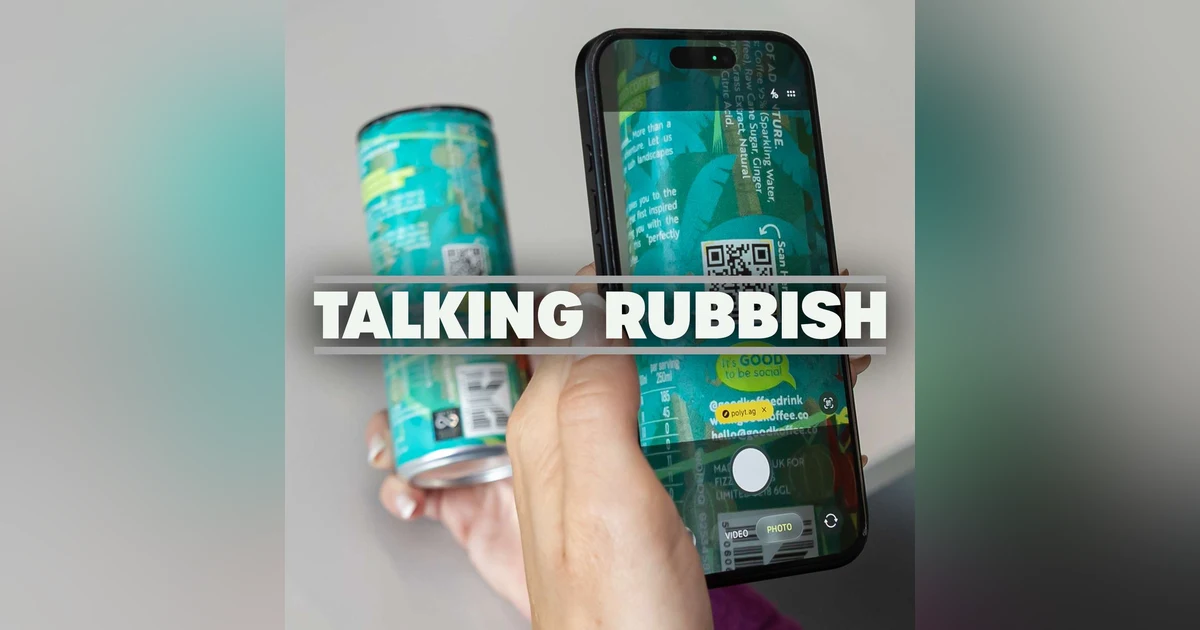
- Digital deposit return systems (DRS) allow consumers to scan unique QR codes on bottles and cans at home, depositing them into standard curbside bins without needing to visit a reverse vending machine.
- While digital DRS could save billions in infrastructure costs like reverse vending machine setup and retail handling fees, verifying every step of the chain introduces complex fraud and tracking challenges.
- Trials like the one in Brecon, Wales, showed that when given options, 58% of consumers preferred returning containers via curbside recycling rather than manual returns or vending machines.
- Unique serialization of packaging is becoming a reality as barcodes transition to QR codes, meaning unique digital identifiers for every single container will not run out of mathematical combinations.
- The UK government has decided against implementing digital deposit return immediately because the societal impacts, fraud prevention checks, and verification technologies are not yet mature enough at a national scale.
What if you could get your 20p deposit back without ever leaving the house? This week, we explore digital deposit return and why the seemingly simple idea of scanning a bottle or can and putting it in your recycling bin gets complicated very quickly. We look at the challenges of making DRS digital, the trials already taking place around the world, and whether the UK could be building one of the last generations of manual deposit return systems.
Plus, are swimming caps rubbish or not, what happens to old household bins, how will stock be packaged in our dream shop, and why is James unusually angry at Lego?
Join hosts James Piper and Robbie Staniforth as they delve into the world of recycling, hopefully having fun along the way. One thing is for sure, they will talk absolute rubbish from start to finish.
Please take a moment to complete the Simpler Recycling tracker
We would love you to join our community on Discord
Special thanks to our sponsor, Ecosurety
To get exclusive videos and clips, follow us on Instagram, TikTok, Threads or Facebook; @rubbishpodcast or YouTube: @talkingrubbishpodcast
Or you can contact James and Robbie with questions or just general rubbish musings using the email address talkingrubbishpodcast@gmail.com or by texting them via WhatsApp on 07356 069 232
Relevant links and reports mentioned in the programme can be found on the Talking Rubbish Linktr.ee
Transcripts and episodes can be found on the Talking Rubbish website
Timestamps:
Why can't we just make deposit return digital? - 00:58
Additions and corrections - 28:02
Rubbish or Not: swimming caps - 34:38
Rubbish News - 39:09
What happens to old household bins? - 45:43
Green Grocer: stock - 48:01
Residual Rubbish - 55:40
Music licence ID: 6WPY8Q4O2RPFIOTL
Frequently Asked Questions
What is a digital deposit return system?
A digital deposit return system allows consumers to scan a unique QR code on a drinks container using a smartphone app and place it directly into their curbside recycling bin to reclaim their deposit without leaving home.
Why hasn't the UK implemented digital deposit return?
The UK is currently proceeding with a manual deposit return scheme because digital systems require complex tracking to prevent fraud, ensure deposits aren't claimed twice, and verify that scanned items actually reach the recycling bin.
Could we run out of unique QR codes for digital deposit return?
No, advances in QR code standards allow for virtually limitless unique serializations—far exceeding the number of bottles and cans produced globally for trillions of years.
Hello, welcome to Talking Rubbish, a weekly podcast LV into the world of recycling and discussing the truth behind snappy headlines and one-sided stories. In this episode, we will discuss the issues and opportunities of digital TRS. Are swim caps rubbish or not? I have a question about what will happen to the old Bristol bins, and how will stock be packaged in our dream shop. I'm James Paper and I'm joined by Robbie Stanley Fourth, my far from rubbish friend. Good morning, Robbie. Morning, James. How are you today? I'm very well, and you? Very good, thank you. This is nice, this polite back and forth that we have.
Robbie StaniforthVery British, yeah.
James PiperVery good. I've got used to it now. We've just finished our live podcast show.
Robbie StaniforthYes.
James PiperIt was good, wasn't it? Yeah, very fun. Talking about when packaging promotions go wrong, and we will be doing that episode next week. So if you miss the live show, you'll hear it as a trash talk next week. You lucky things. Trash Talk. So welcome to the final part of our unplanned DRS trilogy. Unintentionally created. We overran on part one, which created part two. And then once we'd done a part two, I thought, hey, there's actually a part three. We've missed something else. Yes. Something we promised for a while. Digital DRS. So the question for today is what is digital DRS and why is it so hard to implement, not only in the UK, but in any country? It's a very, very tricky thing to bring in.
Robbie StaniforthYeah, and I think digital DRS means different things to different people in terms of the level of technology deployed, what kinds of things the digital element of the system does and doesn't do. So we'll have to step our way through the various elements of what makes a deposit return system a digital version of.
James PiperA couple of weeks ago, I discussed my issues returning bottles and cans in Ireland because when I went to go and find a reverse vending machine, I couldn't find one that would accept bottles and cans, and no one was offering a manual return. So instead, what would have happened in a true digital DRS system is I would have scanned a QR code on the bottle and cans and put it in the normal curbside recycling bin. And that QR code would have unlocked the deposit. And there's a question as to where the deposit gets unlocked, which we'll come on to. But it would have meant I wouldn't have had to leave the house basically. I would have just put it into standard curbside.
Robbie StaniforthYeah, and I mean ultimately if that was the case, it just means it's that bit easier to get your money back, isn't it? That for the consumer, that's sort of, and the citizen, that's what you think of.
James PiperWhen you're uh creating a DRS and you want to return a deposit, there's three things you're looking for. Is this an eligible container? So in the UK, that's going to be it's not glass, it's plastic or aluminium. Is it eligible for a deposit? Has the deposit already been claimed? And has the container actually been returned? And it is those three things that are quite easily solved by an RVM by a reverse vending machine, because when you put it in, it's going, I recognize this container, I can tell the deposit hasn't been claimed because I'm taking it. So as an RVM, I'm not going to give it back. So it can't have been claimed. And the container's been returned because I can see it and it's about to go in the bin. So it's quite easy to do that when you're in store. Much harder to do that when you're at home because there's loads of areas that could trip over. Um, like the deposit. Let's say I scan a deposit in my house, put it out for my curbside, and someone walks up the street at night trying to find containers that haven't had their deposit scanned. You know, how do you make sure that's not scanned a second time? Or if it is that the deposit doesn't work. And what if I scan a container and then don't put it in the bin and don't return it? So it is much harder to clarify those three things when you start talking about digital TRS. Just thinking though through those three things. Eligible container, what you have to do to make that work is you have to make each QR code unique to the container.
Robbie StaniforthYeah, and so that means sequential marking and distribution of individual unique codes across all of the producers who are in scope of the DRS. You've got to make sure that Coca-Cola aren't using the exact same code as Pepsi on an individual bottle, which requires a lot of central management in terms of the actual data itself.
James PiperAnd it's that serialized code that then allows you to make sure the deposit isn't claimed twice because you can because it's not going, oh, this is the Coke Zero 500 mil code, it's going, this is the Coke Zero 500ml code that James bought, that James has put in his bin. So you can have that like very specific this container has been scanned.
Robbie StaniforthSo effectively the code becomes immediately defunct the moment that you scan it and redeem your deposit.
James PiperYes. Now the third one is quite interesting. Has the container been returned? Because ultimately you have to decide what level of fraud risk you're willing to have in your system. Because there's three ways you can do it, right? I could scan a bottle, put it in my bin, and get my 20p back immediately. I could scan it, the council could scan it when they put it on the truck, and then I get my 20p back. Oh, okay. The two-factor authentication. Two-factor. Or you can have three-factor authentication where it's me, the council, and the MERF or and the recycling facility. And it can get very complicated very fast. So, for example, if the council are crushing bottles and cans, you probably need that scan earlier. You know, you need it before it gets on the truck. Because once it's on the truck and crushed, you're not going to be able to read it at a MERF.
Robbie StaniforthYeah, as we know from our walk around the Bristol um MERFs and transfer stations, it's not that easy to read a code on the side of a container once it's gone in the collection trucks from people's homes.
James PiperBecause digital DRS allows us to do our recycling at home, so its biggest perk, its biggest selling point is that you don't have to install all these expensive reverse vending machines. It can create a significant saving against existing um DRS.
Robbie StaniforthReally, even though it's got a lot more sort of technology and underlying things, like the reverse vending machines are that expensive that it could actually be cheaper to have a digital system.
James PiperYeah, I had a look through the government's forecasting and they were saying just the cost of the reverse vending machines, so just that first year cost of putting reverse vending machines in. So this doesn't include installation, housing, maintenance, handling. The total for just the machines was £574 million. Oh no, no.
Robbie StaniforthNo wonder they wanted to be exempt from the EPR fees. That is quite a big upfront cost cost.
James PiperYeah, that's why you end up with this 1.6 versus 1 billion kind of annual cost because you have the reverse vending machines at the start. When you include the other stuff like housing installation, maintenance, it goes up to about, I think it was 800 million, maybe 900 million. Yeah. So, and then they're saying, oh, then those machines will need replacing, you know, yeah. Every X years, and then you've got maintenance every year. So it's not a one-off cost. There are ongoing costs with DRS. And actually, Resource Futures, who are based in Bristol, did a report comparing traditional DRS with digital DRS.
SPEAKER_02Oh, okay.
James PiperAnd they modelled a saving of 3.4 billion pounds over 11 years.
Robbie StaniforthAnd that's probably on the basis that there are high setup costs at the beginning, you know, to get things going, but then that pays back in the long term because you don't have all of these vending machines, reverse vending machines that need to be maintained and permanently a high cost to the system over time. You've it's more of a big upfront setup cost, but then it's much cheaper to run as an operational ongoing cost.
James PiperAnd I guess it's not just reverse vending machines, you have like the shop handling fees that would disappear. There's loads of there's loads of costs that disappear. Okay. And you go through kind of the modelling, it's like, well, you wouldn't have that, you wouldn't have that, you wouldn't have that. And I guess the biggest perk is you're utilising existing infrastructure and and consumer behaviour. We're not having to change anything, and people have got used to QR codes. I guess the question is why are we not doing it? And we'll come on to some of the problems. But when I was um I'd I was preparing this episode and I was having a chat with someone yesterday, and they said, but won't we run out of QR codes?
Robbie StaniforthOh, yes. I mean, that is the kind of thing that I would also think.
James PiperYes, if every bottle and can has to have its own QR code, won't we run out? Luckily, I'd already gone away and done the maths. So uh just a quick reminder back in episode 93, we discussed the fact that the barcode is moving from our standard stripey barcode to a QR code. And that's happening over the next couple of years across all packaging. That's not just drinks containers. And there is an opportunity for that to be serialized so that every single packaging item has a different QR code. So at the risk of opening ourselves up to appearing on more or less, I've done some maths, but I'm not that convinced by my maths.
Robbie StaniforthAre the BBC gonna be is it gonna stand up to the BBC's test?
James PiperI don't know. People say, so if you Google uh how many QR codes could there possibly be, people say there are more possible QR codes than atoms in the universe. Oh wow, okay, that's what that's what will come up if you Google it. It's technically true, but massively undersells it. I think you could give every atom in the universe its own universe, then give every atom in those universes another universe, and you could do that 90 times, and you would get to the amount of Q, or close to the amount of QR codes that are currently available to us with the QR code size that we currently have. So all you do to make it bigger is you make the QR code a bit bigger. And then suddenly that number gets exponentially bigger again. But I am pretty confident I was trying to work it out because there's two trillion bottles and cans sold worldwide a year. And I was like, how many years would this number last? Oh my word, okay. The calculator could not even begin to calculate. I couldn't even get the first number in to then work out how many years it was. It's going to be well trillions, trillions, trillions of years. To the end of time. I probably based on when the sun might explode. I suspect that's probably true. So we're never going to run out of unique QR codes.
Robbie StaniforthOkay. Wow. So that means that provided that they've got the technology and the inline sort of printing or whatever to issue the codes, which obviously is a cost, you know, a new cost because they're just permanently printing exactly the same things on all of these uh soft drinks at the moment, it is then viable. You know, that's not a barrier in any way, shape, or form for billions of years by the signs of it.
James PiperCorrect. So just to be clear on what digital DRS is, the manufacturer prints a code on the bottle that's unique. The retailer sells the bottle, which activates the deposit. We'll talk about that in a bit. Um, the customer scans it on their phone and the council collects their bottle, the bottle as normal. You resolve my biggest complaint around DRS, which is that it is implementing a very, very expensive system into a curbside system that is already working well. So digital DRS solves how I feel about DRS. To balance this out, of course, last week we said um DRS in the way that it's being done does create a cleaner stream of material, though. And digital DRS would not resolve that problem. You would be putting it in your curbside. Sure. So you'd still have the losses from it being contaminated. You would need to implement more AI at MERFs to get a higher quality of material out. Now that is the direction of travel, you know, cleaner material coming out of MERFs, better sorting. That is where the world is heading. So that's not as big a problem as it would have been maybe 20 years ago. But it is true that a DRS, a tr a traditional DRS, will get a higher quality of material. I guess the question to ask before we come into why it's difficult is is it actually feasible? Uh could you actually do it? Has anyone done it? And I think it's worth highlighting a couple of examples. Wales has actually already tried it. In Brecon, they created a trial called Scan Recycle Reward, which covered 4,300 households. It ran from July to November 2023. And the trial allowed people to claim a 10p reward per drinks container using four different return options: curbside, reverse vending machine, community bins, or a manual return to a store. 18,794 rewards were claimed across 454 people who actually took part. And I guess the interesting thing for our discussion here is of the four options you could have had to return your containers, 58% of containers came back through curbside. And actually, second was manual returns at 21%. So reverse vending machine was the third most popular way of returning at 18%. So that's tells us that people are more likely, I think, to choose a curbside option if that was available to stick with their existing.
Robbie StaniforthYeah, I think that's fair. I went to see the presentation at the end of that trial, and I remember they had they obviously couldn't charge a deposit. That would just be too complicated to do on a small scale. So what they were giving was a reward. But it was equivalent to you claiming back your deposit, etc. You know, it valorized these containers that previously didn't have a value to the average person, and they did it by putting little stickers, it was just little stickers onto bottles or whatever. Uh, it was a very cool way of doing it. And I think their results do stand up. If you're trying to prove do people want an easy life or not, they will choose an easy life to get the deposit back. If it is less friction to just stay home and recycle rather than have to embed it in a different behaviour when you go shopping, when you, you know, go to work, drop off your containers, however, people choose to do it, then people will just choose the easiest option.
James PiperYour point around it not being a deposit, the Brecken Trail is really important. Only 10% of eligible households took part. They only 10% downloaded the app and actually made a scan. Wow, okay. And that's because it's a 10p reward. If it had been a much higher reward, like a pound, you would have had a much higher engagement rate. Equally, if it had been a deposit that you'd paid up front, I suspect you would have had a much higher engagement rate. So they're not like for like. Yeah, sure. Um there has actually been a small trial that was done where there was a genuine deposit where people did pay up front. And this was in Dublin in 2021. 122 households paid a 25 cent deposit on specially coded milk bottles, and they returned 655 out of 700 of them. Wow. So a return rate of 94%. Now, again, it's only 700 bottles, so we have to be so careful with this stuff. But it shows the difference when you those two trials show the difference between a reward and a true deposit.
Robbie StaniforthYeah, I think that's fair to a degree. If you've it's that I've lost something, I want to reclaim it, versus just not wanting to engage in these reward systems. There's reward systems everywhere, aren't there? Club card points, etc., etc. And there are those people who are avid fans of them and they always engage, and then there are others who are just like, my life's complicated and busy enough as it is, I can't be bothered to engage in yet another reward system. The fact it's about recycling is irrelevant. It's the fact it's a reward system, probably.
James PiperI wonder as well if there's that tracking piece, you know, people often will say, I don't want a club card because I don't want Tesco to know what I'm buying and therefore to send ads to me. You know, it's that the world of hyper-personalization, isn't it, that we're heading towards that some people will resist. There's a big difference between taking a bottle back to a machine that doesn't know who you are, that has no information about you, and just gives you a receipt with a cash value compared to an app which has your card details, everything about you, your address, because it has to know where it's collecting the bottles from, etc. etc. People may feel less comfortable with that. As far as I can establish, there isn't a single country in the world currently operating a digital DRS at national scale. There have been trials in lots of countries and some impressive trials, but nobody has actually demonstrated the complete system. When we were asked to talk about DRS, uh digital DRS, and we've been asked to talk about it a lot, people often bring up Goa in India. And this is because Goa has gone live a little bit with digital DRS. So what they have done is the government has said you need to put serialized codes on all containers. So the government has mandated and made it law for containers to have unique codes. The reason I don't class it as a true digital DRS is when I went on all the government websites, Girl websites, um, they was it's suggested they're still using reverse vending machines, they're still using the tech that I would consider to be traditional DRS. Sure. But on the containers, they have created a system that I guess in the future could unlock at-home collections.
Robbie StaniforthAnd that is brilliant for fraud prevention. You know, it's a long time ago, but there were stories of uh traditional reverse vending machines and traditional deposit return schemes where people would scan the code, redeem the deposit, open up the machine out the back, pick out the bottle again, re-scan it. I that's a sort of old fable now. I don't think it really happens widespread because reverse vending machines have advanced. But there was a point in time, you know, and not that long ago, through the 90s, where this kind of malpractice happened and it meant that m too many deposits were being redeemed. Of course, they have ways of tracking that. Suddenly there's thousands of pounds claimed at this one little sh store. But what they're doing there in Goa would definitely stop any of that kind of practice. So it's a great step forward in terms of fraud prevention.
James PiperSo we've shown it's possible. There are people mandating these kinds of things, and trials have happened. Why is digital DRS not part of the UK plan? So I think it's worth just walking through some of the issues and probably just imagining a bottle going through the system. First of all, someone has to make the bottle. So a brand has to put on it a unique code, and we've talked about this many times. There are issues with that. Doing that at production speed is not easy. All these brands, all these drink brands have optimized to the point where they can make as many bottles as possible. And if you're doing individual codes, that process has to slow down a little bit, and that optimization starts to disappear. So brands will naturally resist anything that's going to slow down production speeds. And you've got like small producers that don't even own their filling lines, they're pack they're um using alternative packers. I don't think they have that kind of control to be able to digitize this. So you're suddenly relying on third parties instead of the brands themselves. Like imported drinks, what happens to drinks that have come from Europe? You know, are they suddenly going to have a code for every single country that's implemented digital DRS? Is it going to be a worldwide code that works worldwide?
Robbie StaniforthYeah, I think international cooperation is definitely a barrier to work towards these being a global thing. Although maybe we could like go to one nation, pay the lowest possible deposit, and then redeem a big old deposit from a different one. Not sure that's a a viable criminal activity, to be honest.
James PiperSo let's say we've solved all of that. The bottles and cans arrive at Tesco and now we're gonna buy them. You cannot have the QR code activated until we've bought it. Because otherwise, people could just go up and down the shelves scanning all the QR codes claiming the deposits. So you can't activate the QR code. So it has to be activated when Tesco scan it through their till. So how do you do a multi-pack? How do you do 24 cans in a box? You can't scan 24 cans, they're covered up by the box. So now on the box, you have a QR code that unlocks the 24 cans, which is possible, but to do that, your production line has to be hyper-accurate. You have to make sure that the 24 cans that went in the box correspond to the code that's on the box.
Robbie StaniforthOh my gosh, yeah, okay.
James PiperThat is so complicated.
Robbie StaniforthYeah, I'm starting to see some barriers here. And presumably the software to activate the code at the checkout, in this case in Tesco, then has to correspond. You know, it's a whole new system to activate the code.
James PiperAbsolutely. Every supermarket has to have the same system, which we know is already difficult, you know, as people move from barcodes to QR codes. So I think some of these things could be resolved in the future when everyone's all packaging is QR codes, you can start resolving some of these issues. But what the supermarket does is a very big one. So now I've bought the drink, it's been scanned, it's been activated, I've now drunk it. I scan it with my phone and put it in my recycling bin. So, what about someone who doesn't have a smartphone? You know, what about making things work natively for people who don't engage with technology? So now you need another route, and this is where you might have a reverse. Vending machine or manual return point for people who aren't engaging with technology or don't want a smartphone. So now you've got the cost that you're trying to save coming in anyway, because you have to offer an alternative to a smartphone.
Robbie StaniforthAnd on top of the fact that people might not have smartphones, what about on-the-go recycling? Because that's the thing that a digital DRS needs to really solve for. Because what I am hopeful about in the traditional DRS that we're going to get in the UK is that when I'm out and about, I've had my meal, deal, drink, whatever it is I choose, I can find somewhere to redeem the deposit and definitely, definitely, definitely recycle it. I do have a lot of skepticism sometimes of those bins that you see on the go where you throw it in the recycling aperture and then you realize it's just one big bin bag for both the landfilled rubbish or uh energy from waste rubbish and the recycling. So it will definitely make on the go recycling a lot better, having these collection points everywhere.
James PiperSo you so we haven't eliminated the need for collection points because that's going to be an important part of offering an alternative and on the go. When do I get my 20p back when I scan it? We talked about this a little bit at the beginning. There is a compliance issue of I could scan a bottle, put it in the wrong bin, get my 20p back. And Brecon found that actually 90 they found 97.6% compliance. So what was scanned, 97.6% of it was then put in the recycling bin correctly. But that means 2.4% wasn't. And if you were to scale up that 2.4% in the UK, that's 60 million pounds worth of deposits that has disappeared, you know, that hasn't been put in the correct recycling bin. So what you have to do, as we said at the start, is have these checks where people are scanning at the recycling centre to say, yes, this person put the bottle in the bin, and I I've seen it again later down the line. Of course, that means if it gets lost, crushed, disappears, you've got a very disgruntled customer who didn't get their 20p back. Of course, there is an argument to say we might be trying to solve a problem there that doesn't need solving, because if you're saving 3.4 billion in infrastructure or whatever it was, maybe we could accept 60 million pounds worth of errors. You know, maybe we just go, actually, that's just part of the system. It's going to be what, 600 million over 10 years? We're saving 3.4 billion by having digital DRS. So a lot of the questions with digital DRS is what level of fraud or errors are you willing to accept to counter the savings that you're making by not having conventional DRS?
Robbie StaniforthYeah, I personally think there's not going to be that many people who are just sat on the sofa at home scanning their bottles to get their deposit and then just tipping it in any old bin. I've got more faith in humanity than that. Although there might be a few nefarious actors who think that that's for whatever reason nihilistic or anarchic to do. But I think that's going to be sort of quite few and far between. I think it's the the bigger area is when you're trying to scan it and you can't find the right bin when you're out and about. What happens, you just scan it and say, I've put it into a bin, and and you can't find the bin. And and I know they solve that by having the code on the on the go bins themselves. So you're sort of scanning the bin, you're scanning the bottle, bin in bottle. If you're there, it probably will go into the bin. But I think there is definitely still some barriers to actually making it that much easier.
James PiperYeah, I'm hoping people can notice what has happened here. We've started this trash talk with scan a bottle with your phone, put it in a recycling bin. And we're gradually building an entirely new digital verification system throughout the waste chain. We have made it very complicated. This what should be or what feels like a very simple approach has lots and lots of risk and pitfalls if we get it wrong. Printing a QR code is easy. Building a system that knows that this individual bottle was manufactured, sold, had a deposit paid, was scammed by the right consumer, was genuinely collected for recycling, hasn't already been redeemed, and should now trigger a 20p payment. That's the difficult bit. It's also quite difficult to say.
Robbie StaniforthNo, it it's um it's great. And I think uh what they're doing in Goa by introducing the sequential marking and the individual codes would be a great way to just start making steps, but a lot of this requires an awful amount more thought before you just straight away go live with the digital DRS. And the reason that the government have pushed back and said that they're not going for a digital DRS in the UK is because it just frankly isn't quite ready. There's it's not just it's not about the maturity of the technology, it's about the maturity of the thought behind it and the societal impact that it will have. A little bit more research and thinking needs to go into this before you can say that it's genuinely viable. I'm really hopeful that we will have an easier deposit return scheme with more options for how you redeem your deposit, that's for sure. And a digital scheme can do that. So I'm quite hopeful about it. But I do feel like a lot more of it needs to be sort of sense-checked.
James PiperWe are building a DRS system now in the UK that's very manual in a world that is going increasingly digital, and we are seeing countries start to take digital DRS seriously. I do wonder whether we will be the last generation of manual DRS or one of the last generation of manual DRS, just as packaging infrastructure becomes digital. And this was related to the port of tyne plastic nurdle spill. Yes, yep. So Jamie said, starting without with no knowledge, is a shipping container just filled with loose nurdles? It feels like a quick and easy fix would be to put them in boxes or sacks within the container. So this was that a crane had fallen over, broken open, ripped open a container, a billion nerdles had fallen into the North Sea. If they were in bags and boxes, surely a billion wouldn't have fallen, is the question. So how are nurdles transported? Yeah. This could have been a rubbish question, actually.
Robbie StaniforthI've got no idea. But if this crane has fallen and smashed one of these massive metal shipping containers and whipped it off the side of a boat and, you know, destroyed it, surely it'll rip through cardboard boxes as well.
James PiperYeah, I guess there's an element of if it was like um, you know, Hessian sacks or something or bags, it might the bag might fall in.
Robbie StaniforthYeah, okay. Yeah, maybe.
James PiperI actually don't know how the port of time was transported my nerdles. So there are two ways. They could be transported in individual bags in the shipping container or bulk bags. There is another method I've got a feeling they were using. Now, the reason I feel this because I saw it on BBC News. I was watching BBC News, I saw this a picture flash up of the container. I have not been able to find this video since, but I'm sure what I saw was a lined shipping container. So what they do sometimes is they will put plastic, a giant plastic bag in a shipping container, which they will fill. Now, I remember when this world was open to me, because one of my earliest meetings with a client was with a client whose entire business model was making these liners for wine. Because when you transport wine by a shipping container, if it's like still got to be aged or it's like a cheaper wine, the way you might transport it is literally to turn the shipping container into a wine box by putting a big bag on the inside and filling it with wine and then closing it off. And I think that is how these nurdles were transported in Port of Tine. So that rip will have just ripped the liner that was in the container. But yes, I mean, a solution is potentially to put things in bags and boxes. Yeah, I think it's got legs. Last week's greengrocer was Heinz Ketchup, and I cannot believe we talked about ketchup, and I missed my favourite packaging story. Oh. The Heinz Label of Truth campaign. You're aware of this? Oh, this is about colours, isn't it? It is about colours, yes. In March 2023, Heinz cracked down on ketchup fraud, people filling bottles with non-Hines ketchup. So this was you bought a bottle of Heinz ketchup, you finish it, wash it out, you fill it with cheaper ketchup. Yeah. And then people think it's Heinz, but it's not.
Robbie StaniforthLots of greasy spoon calfs fall foul of this one, don't they?
James PiperI can tell. I can tell in a heartbeat whether it's Heinz or not. You do a taste test on me, Robbie. You know how people often say I'd pass a taste test, and then they don't? Yeah. I would pass that taste test. I can tell. So this campaign was in Turkey. Um, it's sort of it was presented to us as if it was in the UK, but it wasn't. It was in Turkey. And what they did was they identified the pantone of Heinz Ketchup, which it just out of interest is 7626C. Okay. So that's the colour code that Heinz Ketchup is. And then they made the edge of the Heinz Ketchup label the same colour. So that if people were using cheaper ketchup with a different colour, you could really easily see because it would it would contrast with the label.
Robbie StaniforthYeah, what a great use of the packaging, you know, to stop ketchup fraud. I love it.
James PiperWe'd like to take a moment to thank our sponsor, EcoSurety, who are on a mission to rid the world of unnecessary packaging. They help brands navigate the tricky world of extended producer responsibility, but that is not all. They also collaborate on some incredible recycling projects and consumer awareness campaigns for those tough to recycle materials. If you're an organization looking to make smarter packaging choices, check them out at ecosurity.com. Best thing you can do to help our podcast growers to tell your friends and family about it, or you can leave us a review. And if you leave us a review, you could be Robbie's review of the week.
Robbie StaniforthAnd this one comes through from Sarah on email. Old school. Please just send us an email. It's really easy. Uh so thanks for this one, Sarah. I've been binge listening to all of the episodes while working in the garden over spring and summer. I'm up to date, and like others, I'm utterly bereft. Thursdays can't come round quick enough. The podcast is so educational, easy to listen to, and amusing while covering a very serious and often misunderstood topic. I thought I was pretty good with my recycling, and I'm an avid pause-on plastic, check out the charity, dog walking litter picker. But I've gone a step up. Thank you. Please keep up the good work. Binde Monday, doorstep soft plastics collections, yes, but no glass. So I was really surprised by this and immediately had to rack my brain for which local authorities collect soft plastic. And so we know that because of the Flex Collect project. I think this person is. I know where she's from. Somewhere in the red. Do you?
James PiperYeah. Really? She said in her email she did I haven't included it in the case. I don't want to make my guess. I think it's somewhere in the reading area. Reading is not correct. You've done what you always do, and forgotten Scotland exists.
Robbie StaniforthOh no.
James PiperSo it is from Fife. Fife. Fife introduced soft plastic. I mean, we were a bit involved. I I met with Fife Council when they were introducing soft plastic, so I was very aware. Did not realize they didn't do glass. So Reading.
Robbie StaniforthI don't think Reading do glass, but maybe I'm wrong. Interesting. Maybe I'm wrong. Write in and tell me. I'm sure one corner of Reading doesn't do glass.
James PiperYou can follow us on social media at rubbishpodcast. You can email talkingrubbishpodcast at gmail.com or you can WhatsApp us. Also join our Discord. It's the easiest way to engage with us and listeners of a show. The link to all of those things is in the show notes. This was a rubbish or not from Stephen or Discord. Thank you, Stephen, asking about swimming hats. And he said his kids do swimming lessons, and to signify which class and ability they are in, they are given a different coloured swimming cap.
SPEAKER_02Yes.
James PiperThey get a new hat every six months or so. And we now have a full rainbow of swimming hats that are going to be unused. We tried to give them back, but the swimming pool don't want them back to reuse them. Is this a hot water bottle situation or is there a better use for them?
Robbie StaniforthOh gosh, yeah. My daughter did these swimming lessons and probably went through three or four of them as she went up the grade. So I recognise this problem.
James PiperWhy don't the pool take them back?
Robbie StaniforthI know, it's mad.
James PiperJust wash them out.
Robbie StaniforthDo you know what I did? What? I just slipped it in. I washed it out and just slipped it back into the pile without looking. And there's your answer, Stephen.
James PiperThat's good.
Robbie StaniforthBut that was my only solution because I wasn't going to have these hats lying around the house. Assuming you don't want to act fraudulently, rubby, rubbish or not. Um this sounded familiar to me. We've not done this one before. What did we do? Goggle. Did we do goggles or something?
James PiperYou did a rubbish news a while ago. Oh. About a company. I can't remember who it was. Yes. There was an organization you'd found that would recycle swimming stuff, and you did it as a rubbish news. We have never done it. Oh, okay.
Robbie StaniforthThat's why it rings a bell. So yeah, so yes, you can there are certain leisure centres, this one that I can't remember from the news story, that took back the caps and they turned them into bits of furniture for the swimming pool itself. So on that basis, it's sort of looking like or not, but you have to go to quite long lengths to actually recycle it. So, in response to the question, yes, it is a bit of a water bottle situation that you can't easily recycle this at home. It is not plastic, that's for sure. Uh, in the traditional sense of what you would get collected from your curbside.
James PiperYeah, I mean, uh, swimming caps are mostly made of silicon now. Uh, you can get like latex fabric ones, but most of them are silicon. And obviously, we talked last week about the Heinz ketchup bottle having issues because of its silicon valve, and swimming caps would be no different. I I don't really think there's a route to recycle them, certainly not from curbside. I don't think anyone accepts silicon. And even back at Household Waste Recycling Centres, they don't really want silicon. So there is a scheme that I think is the scheme you referenced, Robbie, called Leisure Loop. I think that's a bell, yeah. And they have specifically designed a scheme to collect all swimming pool stuff. So anything that conventional recycling systems um can't recycle. So, as an example, they will take swimming caps, goggles, flip-flops, armbands, pool noodles, kickboards, flippers. Oh, that's great. Yeah, really, really good. It was started. I had a little look at their website. I think it was, I haven't made a note of this, but I think it was two lifeguards who were getting frustrated, and then they set up this organisation back in 2021. I think when you talked about it, it was actually quite small. But I went on their website yesterday and the map is very impressive. So in uh Bristol, there were two. You could take it back to the Bradley Stoke Leisure Centre or the University of Bristol uh sports facility. As you say, the material sorted, shredded, cleaned, and it's sent off to Protomax, which is the company that I think owns Stormboard or they make Stormboard. Uh so they will make boards out of that. That uh an example they gave is they used it to build a changing room. So, yeah, as you say, to build places within the swimming pool. So a lot of facilities or some facilities will have these leisure loop take back boxes, so it's definitely worth having a look for those. But yeah, I mean that look, these things are designed to be so durable that even if you didn't have a Leisure Loop, I don't really know why you couldn't just go into Olio or Gumtree and just give it away. Like a good charity. I don't know, do charities take swimming caps? I'd be giving it away, I think, through a website.
Robbie StaniforthI think so too. And and you can probably speak to your local Leisure Center and say, have you heard of Leisure Loop? Why don't you join? And then you've solved the problem for yourself when you're getting these caps coming through, but also everyone else and everyone else's kids who are getting the swimming lessons. So put a little bit of pressure on the leisure centre, I see.
James PiperIn 2018, RAP launched the UK Plastic Pack with targets for 2025, and one of those targets was for supermarkets to sell 30% of their fresh produce loose without packaging. Apparently, one supermarket has managed it. One supermarket sells 30% of their fresh produce loose without packaging. So, Robbie, out of the supermarkets that signed up to the Plastic Pact, which are Audi, Asda, Co-op, Liddle, MS, Morrison, Sainsbury's, Tesco, and Waitrose, which one has achieved the goal of 30% of their fruit and veg being sold loose?
Robbie StaniforthI'm mentally walking around each of those supermarkets quickly. Okay, we'll be back with you in 10 minutes. Morrisons. Is that a guess? Wrong.
James PiperThat was a guess. Yeah. It is Morrison's. Hey! Very good. According to the Environmental Investigation Agency, Morrisons are the only one who have achieved it. I was struggling a little bit with some of the detail because what it actually appears to be is that Morrisons are the only one reporting it.
Robbie StaniforthOh, okay. So the others might have done it, but not reporting it.
James PiperYes, but there is an argument to say that if you'd done it, you would report it. Yeah, that is that argument. So the Environmental Investigator Investigation Agency had done some spot checks and decided that Morrisons were the only one doing it. They wrote to all the supermarkets who came back and said well, who didn't say anything. They didn't contest the findings. Sure. So you've got to assume that it is probably true that Morrisons are the only one doing it. I I must admit, I mean, I I very rarely do a big shop. Very rarely. But if I do, I'll pop into we've got an ASDA down the road from me. I might pop into there. And I am always amazed at how little I can buy loose compared to like co-op or Tesco. You know, I've got local co-op or Tesco down the road from me. I can buy most things loose from there. The weightros across the way as well. Again, I can buy lots of things loose there. When I go to ASDA, I am always a massive ASDA, I'm always astonished that everything is wrapped in plastic.
Robbie StaniforthYeah, it just seems to get harder when generally their the food is cheaper and bulk, you know, mass scale. For some reason, it comes packaged. Whereas in smaller format stores, they seem to find it easier to do it loose. I'm I'm not quite sure what's going on.
James PiperAnd it it is so bizarre because it has been proven that supermarkets will save money if they sell it unpackaged. So it will be cheaper, and customers don't want it. It's one of those weird things where it's like it's costing supermarkets more money to put it in packaging and customers don't want it. You would think supermarkets would very quickly move away from it, but that doesn't appear to be the case. I I think there is probably an argument that they sell more if it's in packaging, but of course that creates more food waste.
Robbie StaniforthYeah. So I definitely buy more carrots as a consequence of them not being loose. For example, it's a massive old bag of carrots when only you want one or two, isn't it?
James PiperYou're like, I'm gonna need to add some hummus to this weekly shop. That's exactly carrots.
Robbie StaniforthYeah, that's exactly it. Yeah. Yeah.
James PiperSo they sell more and maybe that's what happens. And you've got to use the hummus within two days. So it is it's very frustrating, particularly because Rap, who coordinated this, themselves have been publishing reports over the last couple of years showing which fruit and veg could be sold unwrapped. But it does appear that voluntary commitments are not working. So maybe it is time to go the French route, where since 2022 packaging is banned on fresh fruit and veg that weighs less than one and a half kilos.
Robbie StaniforthUh and my story this week comes from an anonymous tip-off. No, it wasn't an anonymous tip-off because this is just in the public domain. This comes from a news story that sales are going well for Woolworths, not the UK retailers. There's no defunct. And also not the premium supermarket that I love in South Africa that's also Woolworths. I'm talking about the Australian grocery chain who's taken a bit of market share off coals. Why am I talking about this? And what what does it have to do with rubbish? It's because they've created some collectibles that you get if you spend $30 in their supermarket. Oh no. So these things are called ushies. They're like a pen sort of topper, basically. Um, they're made from a 97% recycled material, but are definitely not recyclable. Um they have this collaboration with Disney, Marvel, Star Wars, so the kind of the the Disney pantheon of uh characters. And so they've created this collectible thing. They come in a blind box. So obviously, trying to collect all of these things means that there's trading. They've been banned from schools. And uh Woolworths even came out and said, I don't think it was Woolworths, actually, I think it was the supplier who makes them, came out and said in this news article, Oh, this is great. You know you're onto a good thing when they've been banned from schools. And I'm just sort of reading this thing thinking, oh my gosh, why are we giving away tat that will become future landfill? This is like such an unnecessary item to try and get you to use Woolworth's grocery store instead of Kohl's. Can't we come up with better campaigns than just generating something that's gonna become what was called by some environmental campaigners future landfill? And I quite like that uh that phrasing of it because these things aren't gonna be cherished forever, it's a short-term fad. And so this was a bad news story from the week. And just to finish off and rub salt in the wounds, coals have had a bit of a dip in their sort of market share in their sales, and they are planning to retaliate by having a collectible scheme of their own, which is just like, oh my gosh. So, any we know that lots of the UK supermarkets, uh, people who work at the UK supermarkets listen to our podcast. Please, please, please do not think about going down this route and introducing a reward scheme for every £30 spent where you get a novelty piece of plastic figurine for your pencil top because they are just a total waste of time.
James PiperRubbish question. Last week, Robert, you talked about Bristol getting its new bins, and I was wondering what happens with the old ones. Partly because after we recorded, I emailed Bristol Waste to say what happens to the old ones.
Robbie StaniforthSo that's what you wondered.
James PiperYeah, and then I walked down into my village where they had a pile of bins. They'd stack them all up on the roadside, on the, you know, on the pavement. Okay. Ready for collection. So I was looking at this massive pile. I'll put a photo in on the video. I was thinking it was a massive pile of bins, thinking, what is gonna happen to all of those? So thank you very much to Hannah from Bristol Waste, who let me know what they're gonna do with the old bins. Great. Um, so they're being collected by the crews, they're then taken to the depots, and then basically we have green boxes, which you said last week are becoming red bags. Yes. So the green boxes they're crushing and baling them themselves, so on site. And the bales are being sent to a UK-based reprocessor where they're getting recycled into new recycling boxes.
Robbie StaniforthOkay, and they're crushing and baling them, presumably to make it more viable to transport to this place, you know, and and easier rather than the empty containers themselves stacked up.
James PiperNow, at the same time, they are replacing blue bags with blue bags. Are they really? So we could have a long discussion about why you might do that. But they're changing it partly to comply with simpler recycling because they're bringing the cardboard and paper together. Oh, yes, they've already said that, but it probably doesn't say it on the bag. Yes, so they're and and to be honest, these bags, a lot of them will be quite old, they need replacing, so they're just doing that en masse. So the ones that are in good enough uh NIC to be used again, they're going to be kept for as emergency spares to be reused, so that's good. And so they'll be available at the um recycling centres, and the rest are sent to a European company to be pelletised and recycled into new recycling containers. It is good to know the old ones will become new recycling containers, even though there is a strong argument with this like do you really want to take something that's still working, still in good yeah, and replace it with something else? There is an argument for that.
Robbie StaniforthHonestly, those bins have done so much hard work over their lifetime recycling tons and tons of waste or whatever. So I I think it is just relieving to hear that they get recycled.
James PiperGreengrocer. So this is the part of the show where we decide a product and the best packaging to put it in. Robbie, what is our product this week in our supermarket?
Robbie StaniforthSo this week we're gonna go for something that's often you make when you're trying to be very resourceful at the end of potentially cooking some meats, making a stock.
James PiperOkay. Yeah. This is interesting, isn't it? Because there are so many ways of packaging stock. I could give you the classic stock cube individually wrapped inside a cardboard box, stock powder in a tub, little jelly stock pots. Oh, yeah. I could sell you liquid cartons, liquid stock. There's so many options. There is, yeah. I hadn't really thought about there being so many options. Let's cut out a load of them by saying we are not going to transport liquid in our dream shop. Okay. In this specific I mean, we will transport liquid in other ways because we decided toothpaste. But in this example, I think we don't transport liquid.
Robbie StaniforthSo we're not uh exposing uh powdered ketchup then. We're not going to go back and revise.
James PiperI will know. I will know if our supermarket is not selling lines. No, we're just talking about uh stock powder or cubes, I think. Because the second you'll start transporting liquid, I mean the environmental impact of that. Take a because pots sell their stock now in a can. So we talked about this before, haven't we? This like 500 mil aluminium can with stock in it. You're shipping what, around 500 grams, give or take, compared to a six gram Oxo cube. You know, we are not going to sell something that is a hundred times the weight when we have a tap at home that we can just add the water to.
Robbie StaniforthYeah.
James PiperOkay. Yeah, agree with that, definitely. So we're between a powder and a jelly. Now, jelly obviously has a bit of liquid, but way less. Okay. It's concentrated. I would argue they are slightly nicer to use. Oh, you like a jelly.
Robbie StaniforthI can see, I can see it in your eyes that that's would be your preferred option for the cooking element.
James PiperI think for cooking I would pick a jelly, but for green grasser, I'm not that comfortable because there's still some water going on. So I think we can discount jelly. So we're now down to the powder or the cube.
Robbie StaniforthOkay, individually wrapped. Come on. Surely we can't go down something that's individually wrapped.
James PiperWe'll come on to this. But let's start with the humble stock cube. So OXO uh has been around since 1899 and they introduced the stock cube in 1910. That packaging around OXO is really interesting around an OXO cube because it's basically a little bag. Now, everyone might know this, but if you crush the stock up. Yeah. What you just crush it before opening the bag. Crush it before opening the bag, which is what I tend to do anyway. You will notice that the foil around it is actually a sealed bag. Oh, okay. Yeah.
Robbie StaniforthI've noticed it's sealed. So what? You you can open it like a little crisp packet.
James PiperYes. No! Yeah, of course.
Robbie StaniforthReally? Okay, I didn't realise that. I didn't know it was sealed at both ends. I didn't know you could do that, did it?
James PiperIt's sealed at both ends? It looks like a little back, yeah. It's great. I think they're brilliant. The problem is that wrapper is a multimaterial, it's not just foil. It's a multimaterial, and it does actually say on it not recyclable. It's not just the OPRL label, not remote.
Robbie StaniforthGosh, I always put that in my ball of foil that I'm trying to make a tennis ball size.
James PiperShouldn't be doing it. Trying to keep moisture and light out, obviously, because the second you get moisture in there, it ruins the stock. So it will have multiple layers, and uh they have the OPRL labeled don't recycle on it. Okay. Yeah. So what Noor did was they moved to paper wrappers, and you will have experienced this in their stock cube, which is slightly different to the Oxide one, it's not as powdery.
SPEAKER_02Yep.
James PiperThey use a paper wrapper. Sort of makes it look I was looking at it last night thinking it looks like a Starburst. Yeah. It's like that kind of thing. Starburst wrapper, yeah. It's got the colour. And that in 2024 they introduced these paper wrappers and they announced at the time it would save eight tons of plastic every year. So I think we say, so far, stock cube with paper wrapper. Now then I came across a product I've never bought before. Made by OXO called stock powder. Stock powder? Yes. Okay. Which comes in a lot of it. Not to be confused with gravy granules. Stock powder. Exactly, but basically sold the same way as gravy granules. So in like a paper tub like that. And as I said, the one I found was made by OXO. They say it's a 91% paper tub. So that would be recyclable, because you want less than 10% of non-paper. So that would be fine. Not something I've ever used, so I had to literally last night at whatever time it was, half nine, I turned to Ellie and went, I've got to go to the shop and find some stock powder. First shop I went in, they didn't have any. Oh. They were out of stock. I've been waiting to say that. I thought, am I gonna say that, Jake? I've got to. Very good. I apologise. You got me outlined to sinker. Then I went to Morrison's, and Morrison's did have some. Did you get any unpacked fruit and veg while you were there? I should have done, shouldn't I? Oh my god. The drama I had when I got home, it was late at night, whatever time it was when I got home, 10 o'clock, something like that. And I was like, I've got to weigh this. And so I poured the stock powder out into a bowl, weighed the packaging. It was like it was 21.8 grams. Then I had to get the stock back in, so I went and got a funnel, poured the stock back in. The stock wasn't really going through the funnel, so I had to sort of like mess around with it. And then I spilt stock everywhere. So I ended up with this just real drama at 10.30 at night. Looked on the side of the pack and it said 91% paper based on a weight of tub being 21.8 grams. So written on the side of the pack was the weight of the right weight. I just weighed. I was absolutely curious. The question is, Robbie, which do you think is going to come out better? Because you've said yourself, individually wrapped.
unknownYeah.
James PiperSo which is going to weigh less on a per serving basis? Oh, weigh less. A paper tub or a gnore paper wrapper.
Robbie StaniforthOh, those paper wrappers are so light, and the outer box is also really light too. I think the gnore will actually be lighter.
James PiperStock powder was 21.8 grams for 25 portions, so that's approximately 0.9 grams of paper per serving. Wow, 0.9 grams. Not a lot of paper. Not a lot of paper. The stock cube is 1.25 grams of paper per serving, including the box. Oh, okay. Oh yeah, including the box, yeah. So there is more in a nor stock cube than there is in stock powder. However, the stock cube says makes 450 mil of stock. And a serving for the stock powder is 100 mil. Oh. So if you multiplied them up and did weight, you know, a like for like comparison as you would use it. Yeah. Because but because I tend to break stock cubes up. Yeah. If I'm only making 200 mil, I just use half a stock cube. Unless you're cooking for a whole lot of powder is actually three times the amount of packaging on a like-for-like basis. Okay. So into greengrocer goes the stock cube wrapped in paper. Wow, okay. I'm really surprised at that. This is easily the most in-depth greengrocer I've ever done. I knew as I was writing it, I was like, this is a level of geekiness that I can't believe I'm in Morrison's at 10 o'clock by a stop there. That was my thought last night. Residual rubbish. Back in Ellie's episode, which was all the way back in episode 75, we gave away a Lego recycling truck. Yes. Is that is it that one? Yes. That truck, that is not the one I gave away. The one I gave away went to Jordan, but of course I bought two. So when I was building that recycling truck ready for this wall for the studio, the set comes with a paper bin and a glass bin, and then some paper items and some glass items. Because it's a recycling truck. Yeah. The glass bin has a green, a clear and a green bottle to put into it. Okay. The paper bin has pe had pieces that represent toilet roll holders, you know, the toilet roll cardboard tube.
SPEAKER_02Yep.
James PiperSome junk mail and two paper coffee cups. Oh. My favourite company in the world is Wish Cycling.
Robbie StaniforthWow.
James PiperIn the instructions, there was a picture. Put the paper coffee cups in the paper recycling bin.
Robbie StaniforthNaughty, naughty.
James PiperSo it made me feel very amused, to be honest. I wasn't even frustrated. I had a good laugh about it and said, really, I cannot believe they've given me two paper coffee cups and no general bin to put them in. I've actually written to Lego.
SPEAKER_02Of course you have.
James PiperAsk them their opinions on this, but have not yet heard back. So there will be an additional correction maybe next week, maybe the week after, with what Lego think to this strange, strange issue that they've created.
Robbie StaniforthMy residual rubbish this week is that I've been fly tipping. Oh, not again. Not again, Robbie.
James PiperDid you get put in prison like last time?
Robbie StaniforthJust to be clear, I've never fly tipped before. That was a joke. Um so I'm cutting the lawn. Finally, the lawns are growing again after the rains and the dry period. Not had to mow my lawn for like three or four months. Got my grass clippings, but unfortunately, the very kind communal green waste bin that we have, provided by one of my neighbours, but everyone's available to use it, was not around. So grass clippings is like natural, you know, nature. Uh it will obviously degrade, but you know, biodegrade. So I walked the 20 seconds to my local park and tipped my grass clippings into a bush.
James PiperOkay.
Robbie StaniforthIs this fly tipping? Without giving it a second thought. I didn't give it a second thought. I've never thought about it, yeah. So my question is, is this fly tipping? No. I was literally lying in bed later that night thinking, was that okay?
James PiperNo, I think you have been fly tipping. Yeah, I can't see why dumping it.
Robbie StaniforthIt's my waste, isn't it? Rather than just sort of general detritus or whatever.
James PiperThere's a strong argument that you're adding nutrients to the soil.
Robbie StaniforthThat's what I thought at the time. Well, that's what I thought.
James PiperAre you if you just pour it in a pile?
Robbie StaniforthI don't know. That's what I thought. I sort of was like, oh, this is not a problem. I've got a very small garden, so I'm sure people will say, Why didn't you just put it in a compost pile in your own garden? That's what you should be doing. And they are right. That is what I should be doing. But I don't have a composter yet. I haven't quite got the garden set up. I'm nothing if not honest.
James PiperAs always, thank you all for listening. Thank you for the reviews and engagement. We absolutely love getting the opportunity to do this podcast each week. Join our Discord. Follow us on social media at rubbishpodcast. You can email talkingrubbishpodcast at gmail.com or you can WhatsApp us. Everything we have discussed today can be found on Linktree, and the details to all those things can be found in the show notes. There is nothing left for me to say other than see you next bin day. Bye.
SPEAKER_02Bye.