119. The film trying to wake us up to climate change


 Apple Podcasts

 Spotify

 YouTube

 Amazon Music

 Castbox

 Podcast Addict

 PocketCasts
Key Takeaways
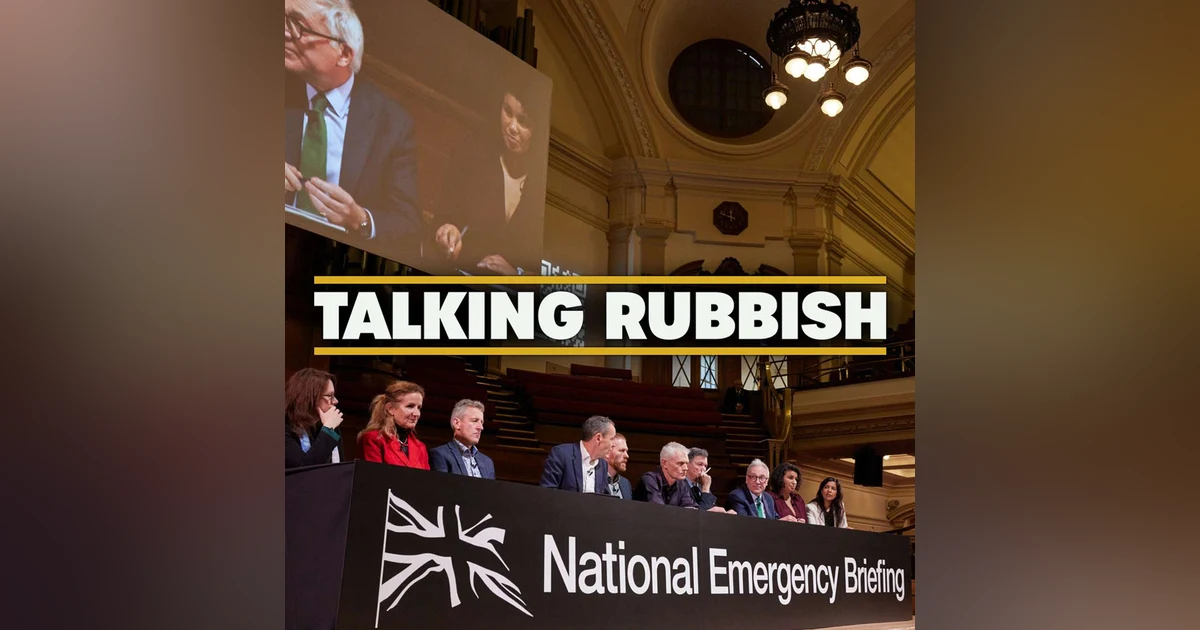
- The National Emergency Briefing is a powerful 50-minute film featuring nine experts outlining the severe climate and nature crisis to prompt government and political action.
- While the film's accuracy is heavily supported by advisory committees, its focus tends toward worst-case scenarios rather than acknowledging existing adaptation measures.
- Individual actions like family planning and reducing long-haul flights received surprisingly little attention in the film compared to a heavy focus on high-level political and societal change.
- Public screenings aim to build community emotion and discussion, successfully helping drive a petition past 100,000 signatures to spark a parliamentary debate.
- Balancing urgent, shocking messaging with hopeful, actionable steps remains a major challenge in motivating the broader public without causing overwhelming climate anxiety.
Can a 50 minute film change the way we think about climate change? This week, we explore the National Emergency Briefing, a powerful new film bringing together nine experts to explain the scale of the climate and nature crisis. But is focusing on worst-case scenarios the best way to inspire action? Are we overlooking the role of individual choices? And can a film shown at community screenings really reach beyond those who already care about climate change?
Plus, are WKD blue kegs rubbish or not, what is the glitter in haircare products, how will carrier bags be used in our dream shop, and have we annoyed Denbighshire council?
Join hosts James Piper and Robbie Staniforth as they delve into the world of recycling, hopefully having fun along the way. One thing is for sure, they will talk absolute rubbish from start to finish.
Please take a moment to complete the Simpler Recycling tracker
We would love you to join our community on Discord
Special thanks to our sponsor, Ecosurety
To get exclusive videos and clips, follow us on Instagram, TikTok, Threads or Facebook; @rubbishpodcast or YouTube: @talkingrubbishpodcast
Or you can contact James and Robbie with questions or just general rubbish musings using the email address talkingrubbishpodcast@gmail.com or by texting them via WhatsApp on 07356 069 232
Relevant links and reports mentioned in the programme can be found on the Talking Rubbish Linktr.ee
Transcripts and episodes can be found on the Talking Rubbish website
Timestamps:
The film trying to wake us up to climate change - 01:31
Additions and corrections - 25:09
Rubbish or Not: WKD blue kegs - 32:14
Rubbish News - 38:24
What is the glitter found in haircare products? - 44:15
Green Grocer: carrier bags - 48:38
Residual Rubbish - 54:02
Music licence ID: 6WPY8Q4O2RPFIOTL
Frequently Asked Questions
What is the National Emergency Briefing?
It is a 50-minute documentary featuring nine experts speaking on various aspects of the climate and nature crisis, designed to urge the government to hold a live televised national emergency briefing.
Are the claims made in the National Emergency Briefing accurate?
Yes, independent fact-checking by organizations like the Bristol Advisory Committee on Climate Change found that the vast majority of claims presented in the film have a high level of scientific confidence.
How can the public engage with the National Emergency Briefing?
People can attend local community screenings held across the country to watch the film and participate in post-screening emotional check-ins and discussions.
James Piper
Hello, welcome to Talk in Rubbish, a weekly podcast helping deep into the world of recycling and discussing the truth behind snappy headlines and one-sided stories. In this episode, we will discuss the National Emergency Briefing. RWKD Kegs Rubbish or Not, I have a question about glitter and beauty products and how will carrier bags be used in our dream shop. I'm James Piper and I'm joined by Robbie Stanaforth. I'm far from Rubbish Friend. Good morning, Robbie. Hey James. How are you today? Very well, thank you. I am keeping a watchful eye on these bins outside my house.
Robbie Staniforth
What?
James Piper
They're still there. They are still there. So just as a reminder, Bristol Waste have replaced all of our bins in the city. Have yours been replaced yet?
Robbie Staniforth
All done, collected up, gone, forgotten memory of like weeks ago now.
James Piper
They did this on the 1st of October, and I know that because it was the day of the British Podcast Awards. And I remember thinking if we have to do a speech, I'm gonna say, I knew there was a good omen because I came out of my house this morning to new bins, and I thought, that is a surefire sign that we're gonna win a British podcast award. Which we did. It felt like a good omen. Now they've been there over a month. I think it's getting ridiculous. So I am formally launching bin watch every week until those bins disappear. I'll be providing an update. It could be the shortest running feature Talking Rebus has ever done, or it could go on until the end of the end of the podcast.
Robbie Staniforth
When does it become council fly tipping? After what week? It's a great question.
James Piper
On the 27th of November 2025, nine so almost a year actually. Yeah, new yeah. It's crazy. That's gone so fast. It's unbelievable. Sorry, just to completely derail us in the first. How many words have we got through? Five?
Robbie Staniforth
Nobody even knows what you're talking about.
James Piper
Yeah, good point.
Robbie Staniforth
So shocked it was a year ago.
James Piper
Good point. Let's carry on. On the 27th of November 2025, nine experts presented to 1,200 politicians and leaders. This was chaired by Mike Berners-Lee of episode 50 Fame. They each spoke for 10 minutes on their area of expertise, weather, climate, energy, food, nature, health, security, economics, and finally tipping points. And collectively, this became the National Emergency Briefing. It's basically a briefing to politicians and leaders to say we need to sort out the issues around climate change. And it has a it has a few goals, but its primary goal is to get the government to hold a live emergency briefing. And it would be on the climate and nature crisis. And it needs to be introduced by the Prime Minister. So if you want to think about it equivalent, it would be like the COVID briefings that we had.
Robbie Staniforth
Okay. Wow, that's the level of significance they want it to be held in. That's what they want it to be, yeah.
James Piper
So each of these nine experts stood up, spoke for 10 minutes, and what they decided to do was turn that into a 50-minute film, just hosted by Chris Packham. Um, and it's got lots of celebrities and members of the public just responding to some of the comments. And these screenings are being aired around the country. So there's been over 4,000 that have been held so far, and there's 1,500 still to come. And just to show the scale of this, I decided to look at today. So as this episode goes out on the 5th of November 2026, just today there will be 33 screenings, including one at 6 p.m. in Budapest. So if you're based in Budapest, that's the furthest one I could find that's airing today. All the others seem to be in the UK. Um, so the reason we're talking about this is because I was invited to a showing a couple of weeks ago. Uh, I have to say, I found the film very powerful. I thought it was persuasive, and I actually really enjoyed the discussion afterwards. So one of the reasons they're doing this as screenings, public screenings, is so that people can come together and have a discussion afterwards, and we'll have a chat about whether that's a good thing or not. But the actual screening itself and the discussion I personally found very useful.
Robbie Staniforth
Really? I'm the kind of guy who hates those discussions after screenings. You know, I like roundtables and sort of, you know, we're on a podcast, so clearly I like talking. But I always find after a film, like, what did you think to the film as the opening question? Like, oh my god, I don't want to be put on the spot. But you actually find it interesting and engaging in terms of people's contributions and thoughts on it.
James Piper
Yeah, it's less what did you think of the film and more how are you feeling, and discussing that with the group and trying to download what you've experienced as you've been watching the film. So it's it's less about critiquing the film. Okay, sure. Though inevitably that's where I end up. It's much more about kind of the emotion around it. Yeah, okay. And what I really liked about it is it just connects everything together. I think then by having these nine topics, you talk about climate change in a slightly different way. You know, we often think about climate change as an as a community, I think, as kind of planet gets warmer, ice melts, sea levels rise. When actually, if you lay out the economics, the health, the um food, all these things that are going to be impacted by climate change, it's much deeper than just sea levels rise. It's much deeper than that. So, yes, it will have the stat, but you know, a quarter of households might be flooded or experience extreme flooding and all those kind of stats that come out usually. But having an expert on national security stand up and say, actually, I'm genuinely worried about safety and security of this and the politics of it is more interesting, I think, than a usual debate around climate change.
Robbie Staniforth
Yeah, it definitely flips the script because I just think about environmental adaptation, drought, severe weather events, etc. I'm not really thinking about food scarcity because there's a few years of a bad crop and that kind of thing that suddenly becomes a direct societal impact to everyone, not just the people that live in those affected areas. It affects everything across the whole of society.
James Piper
So I'm not going to go into detail about the film itself, because I would urge people to go and see it. I think it's and and also just so people know, we're interviewing Nick Aldridge next week as our as our next interview. And he is one of the founders of a national emergency briefing. So we'll be able to get into a lot more detail, I'm sure. And I'd love to, you know, going over the background of how it started would be really useful with Nick. Just to talk about kind of its accuracy and how if you do go and see a screening, how you should feel about whether it's accurate or not. Um, many, many organizations have been fact-checking the claims by the experts. Um, I think the biggest fact-checking actually has come from Bristol, from what I can see. There is a uh Bristol Advisory Committee on Climate Change that has written a document going through every single claim and saying whether it is true or not, basically.
Robbie Staniforth
Okay.
James Piper
Um now what it found is almost everything that was said was true. So I think uh from memory, it was like 82 claims that they looked at. 63 of them they said had a high level of confidence of being true, and the remainder were a medium level. We didn't say anything, they had a low level of confidence. So it I think in terms of accuracy, the film is is very good. But one thing they noted, and I think, and I noted the same thing, many of the positions in the film are the worst case scenario. I actually think it's quite important to talk about what you think might happen rather than the worst case. And if you are presenting the worst case, you have to tell people that's what you're presenting and not present it as fact. Because if you present the worst case as a almost a guarantee, if we don't make changes, then it's quite easy for a climate sceptic to come in and say, Well, I can tell that's not true. And I think one of the things the Bristol Um Advisory Committee on Climate Change noted was actually there's already quite a lot of mitigation and adaptation measures that are already in place that will mean the worst case is is quite an unlikely scenario now.
Robbie Staniforth
Okay, so things have actually started to happen that will hopefully water down those disaster scenarios and absolute sort of the the doom mongering end of things.
James Piper
Yeah, the film touched on it like um it talked about like electric car uptake and how that's been much higher than anyone ever forecast. Does that make the worst case less likely? And when you add all those things together, solar panels, heat pumps, things the government may or may not incentivize over the coming years, I think you get to a point where the worst case should be described as that and not, as I say, presented as fact.
Robbie Staniforth
But to be fair, they're just using a tactic that's well established in the media to s to say things that are noteworthy. You know, and if you're saying you're just using the medium case scenario and that doesn't put enough sort of urgency into the situation, then people would say, well, this isn't necessarily an emergency. Why have you put the word emergency in there? It's just gonna get slightly worse than what we've got now. Whereas painting the picture of an emergency does require, look, if things go really badly in these next few years and we don't do anything about it, it genuinely could be these absolute worst cases. And yes, you're right. Uh hopefully that doesn't happen and there's mitigations already in place then. But, you know, it does stand up that it could still happen, couldn't it?
James Piper
Yeah, I do understand that point, but honestly, I I ended up on the blog of a conservative MP. I can't remember his name, um, but he's the new forest MP, and he'd been to see the film. And, you know, his arguments are basically this it's like what they're presenting isn't likely, you know, it's uncriticised, there's not an there's not another side to it. They've chosen their speakers essentially, and they've chosen people who are quite passionately talking about worst-case scenarios. You've got celebrities responding to it, going, This is a disaster. And so emotionally you are taken on a journey, but it's a really, really important journey. So I don't want to downplay it at all. But if your goal is to get MPs to agree to a televised uh briefing, you need a lot of MPs backing you. If you open the door for MPs who don't believe it's as serious as they're making out, you run the risk of it not achieving the aim that you're setting out.
Robbie Staniforth
And when we spoke to legendary broadcaster Lucy Siegel on an hundred episode 110, I think it was, this was exactly what we were talking about. How do you get the messaging right? And it doesn't always need to be hopeful messaging. Sometimes it can be shocking because what could happen is genuinely shocking. But how do you tread the line to win the argument effectively? And that's what they're trying to do, isn't it? Win the argument that this is significant enough to require sort of emergency status rather than just let it slowly over time kind of drift and no one actually taking direct action.
James Piper
I must admit, while I was watching that, I spent time thinking about Lucy actually in that interview because she had been quite vocal about the fact that there is a difference between individual and societal action. And she was pointing out that the dialogue around climate change and environmental initiatives has shifted more to societal change than individual action. And individual action has almost been kind of pushed down as like, well, don't bother, it's too small, there's nothing you can do about it. And I and that came through in the film for me. I thought there was very little about the choices we make as individuals. Now I'm gonna start with by just saying these are obviously extremely complicated and personal subjects, um, and obviously governments have far more influence over emissions than any one individual. So I understand that. But I was very surprised how little time was spent exploring individual behaviour. So I would say in our house, one of our biggest environmental discussions is how many children we're gonna have. You know, because we know that having a child is one of the biggest carbon activities you can do. And so now we've got our second on the way. It's a conversation we have a lot. You know, do you stop at two? Do you go for three? Where where are we on that on that curve? And and it it's mostly an environmental discussion. It's mostly what kind of carbon emissions do I want to bring into the planet? And so I found the lack of conversation around worldwide population, individual family sizes to be quite a gap. Resource use is such a big issue, and how many people are on the planet is such a big part of climate change. And for me, I would like to hear more about those kinds of things. Uh equally, the other thing I found quite stark was uh take things like um, and this is something again, Ellie and I talk a lot about like long haul flights, holidays. Are we gonna do staycations? Are we gonna go away? How much flying do we want to do? It's so conscious to us because we did this trip around the world, yeah, sure. Which we carbon offset, but um, but I was always conscious that we were doing a lot of flying and I was very unhappy about that. Um, and I again I was surprised they're not saying, Look, actually, we'd we'd really like people to do one long haul flight maximum a year. That would be a good thing to do. It could have left me with some personal actions. Um, and this flying thing is so funny because my son, my son has been quite ill recently. Um, just you know, October bugs, whatever it is. Okay, yeah. Just not himself. Um, and we, as we've been kind of bringing him up, we've done a reasonably good job of avoiding screens. Like we we just don't put the telly on really when he's around, we just try and avoid them where possible, um, which is really ironic because this room is full of screens. But um, so when he gets older and he's a podcaster, he's screwed. But we try and avoid screens, and uh but he was just so upset and so ill, and I was trying to distract him, and he's become absolutely obsessed with aeroplanes. Oh, really? Obsessed, his eyesight, he can just uh he just shouts from his pram airplane. I'm like, oh my god, where? Where is there an airplane? And he'll see this tiny dot in the sky. It's absolutely incredible. And um, so he's become obsessed with airplanes, and he got so unwell that I just said, look, do you want to watch some aeroplanes? And I put them on the TV, just literally a you know, a video of planes taking off and landing. Oh, really? Yeah. So that was a mistake because now every time he's in the room, he goes, Airplanes and points at the TV.
Robbie Staniforth
Oh, okay.
James Piper
Okay, so I just have to go, no, we're not watching any more TV. You know, it was only while you were ill, kind of thing.
Robbie Staniforth
Okay.
James Piper
By complete coincidence, Ellie's work were holding a national emergency briefing last week. Oh, so I went to see one a couple of weeks ago. Ellie went to go see one last week. So I was in charge. He was so upset. I couldn't, it was like a combination of illness and Ellie not being around. He was so upset again. And so I just ended up in this position, which I just thought the irony was so wonderful. Ellie's at a national emergency briefing learning about climate change. I'm at home with my son who's going, Can I watch a hundred planes tape up and land, please? That's amazing. And I'm having to explain to a 22-month-old that we have to reduce our flying, even if it's virtual. We have to not watch TV because mummy's at a national emergency briefing learning about why this is so bad.
Robbie Staniforth
Son, in all scenarios, we need to reduce the number of flights. Exactly.
James Piper
And I guess a summary of all of that, you know, just I've picked a couple of examples, population and flying. Summary of all of that is it it felt so directed at MPs and politicians. And yes, there was a real education for you as the public. And I again I urge everyone to go see it, but you can see what they're trying to do. It's like this is an education piece to get MPs interested in the topic, to get MPs to push the government to do a national emergency briefing, which then is then when we take the public bit to the next level. I didn't leave thinking I'm gonna fly less, I'm gonna eat less meats, I'm gonna do all these things. I left thinking I need to sign a petition to tell MPs that this is a really important issue.
SPEAKER_01
Uh-huh.
James Piper
So you can just see the area that they're focusing on. And I signed that petition. The petition has now crossed 100,000 signatures and has been scheduled for a parliamentary debate, uh, which I believe is on the 16th of November. So as this is going out, it's just going to be a week or so after that you'll be able to watch that debate live.
Robbie Staniforth
Okay, well, in lots of ways, we need to take it on face value. You know, if that was the uh aim, you know, to get it debated in parliament, to get people to sign a petition, and that's really the sole purpose of the film, to get uh the government talking about society change and mitigations that they need to make rather than individual action, which of which there's lots of different schemes and media out there for individual action, then you have to say it's really successful. And again, those people that spoke to me about it clearly are the kind of people who got to the end of the film and were like, right, what do they need me to do about this? I'm willing to do whatever it takes. And if all it takes is just to digitally sign a petition, you're not really asking very much of the audience member, are you? So no wonder they got so many signatures, because it's like, well, at least I can do this thing. I just worry it'll stall.
James Piper
I worry you'll have the parliamentary debate, it'll I don't know how popular it's gonna be, how many people are gonna be there, and you end up in a position where it's like, oh, okay, what do we do next?
Robbie Staniforth
It sounds to me, I've not seen the film, but it's not intended to make you hopeful. It's intended to make you upset, annoyed, anxious, angry, and wanting genuine change. And sometimes you do need those emotions rather than just pure hope alone in order to stand for something, sign this petition, and for change to really happen. I do kind of worry though about the general anxiety that these kinds of things often can cause. Because if you're not left with a hopeful message about things aren't great, but at least I can do something, then quite often you're left just going home to worry about it. And and the people that I've spoken to about this film are genuinely just telling me how affecting it is and how worried they are about the situation.
James Piper
Let's talk about this screening thing, because the nature of forcing, I'm using quotation marks, but forcing people to watch it as a screening does, I think, self-select the audience. Who's gonna give up an evening to go and watch a 50-minute film that is likely to make them anxious, quite difficult to watch, quite intense, but the people who are likely to watch it are probably the people who already care. When we launched this podcast, we had exactly this conversation where we said, How do we get beyond the green and keen? You know, because there are so many people who care about recycling who will value our podcast, definitely. But I really want to get into like the mainstream, the people who just sort of care a bit, don't really care, but actually they'll give up an hour to listen to us talk rubbish. Yeah, you know, that was my aim. I think we've started getting into that mainstream. Yeah, I think the nature of the setup of the national emergency briefing makes it harder to get into the mainstream.
Robbie Staniforth
Yeah, I mean, if I want to devote nearly an hour of my time to being anxious and wondering what the result's gonna be, I'll watch traitors. Getting time to go see a screening of something enjoyable is difficult in my life. I don't go to the cinema very much to watch some entertaining film for a couple of hours. The idea of taking time out of my busy schedule in the evenings with childcare commitments, etc., etc., to go and watch this. It's just I am interested. If it's easy for me, I would watch it at home for absolute sure. I'm interested enough to watch this thing. Am I interested enough to plan an evening out to go and see it? Well, clearly the answer is no, because I've been told about it plenty and I still haven't gone to see it. So the proof is in the pudding to some degree, isn't it?
James Piper
But there's 33 showings tonight. Do you could go and find you get a Budapest?
Robbie Staniforth
That'd be nice. Get a flight to Budapest.
James Piper
Funny, isn't it? You talk about entertainment. I've actually been thinking about this a lot uh since the release of Digger. Oh, yes, it's the Tom Cruise film, isn't it? Yes. So this is a new film starring Tom Cruise. Um I haven't seen it. No, I find it quite difficult to get to the cinema at the moment with my young child. But the synopsis is it's basically about an oil tycoon and an impending climate catastrophe. And just to put this in perspective, Netflix actually turned down this film because they thought it was too similar to Don't Look Up.
Robbie Staniforth
Oh, yes, I know that one. I enjoyed that a lot. Lots of people have seen Don't Look Up.
James Piper
So you know the vibe if you know this is too similar to that film.
Robbie Staniforth
Okay.
James Piper
This is now being described as one of the biggest flops um in cinema history. It's going to be, it's going to lose, it's projected to lose around $245 million. Oh my word. And it's got Tom Cruise in. Yeah. He is a draw to the cinema. And I just think that's so interesting. And to quote Marina Hyde on The Restors Entertainment, one of the one of my favourite podcasts, she said, in America, you've got to understand the eco message is not going to get you enough seats filled in cinemas.
Robbie Staniforth
Yeah. Well, there we go. It's as simple as that, isn't it?
James Piper
So how do you get people to engage with a subject that they might find frightening, uncomfortable, or simply not entertaining? And as you say, that is the challenge the National Emergency Briefing faces. And if I think to this event in Bath I went to, I was actually invited to be on a panel. I was invited to speak.
Robbie Staniforth
Oh, no wonder you enjoyed talking about it afterwards.
James Piper
Well, I didn't. That's the point. So I, you know, I was invited to go and speak, and we got to the end, and I enjoyed the discussion so much that people were having around me that I actually said to the organizers, look, it'd be really weird if you now chuck us up on a panel. Yeah. Because everyone's having a really good discussion. Yeah. So should we just leave everyone to have a really good discussion? I'll just come in as and when. But let's not suddenly do a panel which is going to completely derail this.
SPEAKER_01
Yeah.
James Piper
So we just let the discussion naturally go, which was really nice. Oh, okay. But I'm using the word discussion carefully. It was not a debate. You know, I was the only person who had any criticism of the film. Around the lack of individual action, all those things. It was just watching a room full of people who who I suspect, if you'd asked them before the film had started, how are you gonna feel at the end? What are you gonna say? It felt like we'd already prepared their answers. Okay. Because it wasn't it was almost impossible to get people to debate what they'd just witnessed.
Robbie Staniforth
Well, and it they probably arrived, and and maybe some of the sentiment, my characterising this correctly, is I thought it was bad. Now I know it's really bad type thing.
James Piper
I sort of got the vibe that group were coming in already thinking it was really bad. I don't know actually, that's not fair because I don't know. But I didn't get this kind of wow, it's worse than I thought. I got this, you've just validated.
Robbie Staniforth
Oh, okay. I I always thought it was really, really bad, and now I've got some evidence to back it up. Exactly. Yeah, okay, fine.
James Piper
And I'd love to know if any of those people are able then to talk to their friends who maybe are more sceptical and get them to go and see a screening. I'm not sure if they're surveying this or not, but I'd love to know, you know, before you came, were you a climate sceptic? I'd love to know kind of how many people have come along who maybe aren't in the I'm already converted camp. I mean, just to summarize, I think it's a brilliant initiative. I'm very, very excited to interview next week to get all the information on the behind the scenes. But obviously, our job at Talking Rebus is just kind of to see things, experience them, and then report back what we feel. And I think I've been honest about how I felt about seeing it. I absolutely have some criticisms. You know, I'd make the film available to everyone online. Um, I try harder to reach people who aren't already engaged with climate change, and I'd give people practical things they can do alongside the calling for political action. But these are just criticisms of how the how we're communicating the problem, not whether the problem exists. Even this MP in the New Forest said, Climate change is here, I'm really worried about it. I think this is the wrong approach. So even the sceptics of the film are saying, actually, I understand that climate change is here. And we know that we don't have every answer. Implementing changes, the the political changes that are required to curb some of the worst case scenarios on climate change are so complicated and they can be very expensive. But I think what I'm encouraged by, and what the film did do quite well, is tell you what the solutions might look like, you know, explain that actually it's not as expensive as people think to shift to net zero because yes, while there's an upfront cost, very quickly it levels out. And we've seen that, just the price of gas and oil. You know, if we were entirely renewable, we wouldn't be held to the cartels that are driving up the price of gas and oil, right? I can completely see why the story is more complicated and why you want to create quite a simple message that just gets the politicians looking at it more seriously. I do feel that if we can get the government to communicate the risks that we are facing clearly, honestly, and regularly, rather than a one-off, then I think the national emergency briefing will have achieved something. Robbie, what have we done? I don't know. In episode 112, we discussed which council could offer you the most bins. And we discussed Denbyshire.
Robbie Staniforth
Yep.
James Piper
We said it's got a 12-bin offering. Crucially, and this is really important, most of these bins are voluntary. Yes. And we said this at the time. We said you can opt in. There's some like standard, simpler recycling bins, paper and cardboards, you've got glass metal plastic, you've got the trolley box system, so it doesn't take up too much space. And then if you wanted to, you could have like nappy recycling, which, oh my goodness, I would love. For me, they were tackling it absolutely the right way. And we were just talking about it as like a what council could you get the most bins if you wanted to? I think it is fair to say I put this clip out on our social media, maybe it was over a month ago now. It went a little viral. Um, it's got over 200,000 views, which I would consider to be quite viral. And I believe someone at the Times has seen it because they have written a story in the last week about Denver Show and how furious its residents are that they have 12 bins in their recycling. And then that got picked up by so many people. So it was on Channel 5, uh Radio 5 Live, loads of people picked up on it. And I just can't, I mean, the coincidence is too big, I think. Why would you pick up on this story months after it has happened? So I feel guilty of putting that out there because you know, the Times headline was the council making residents put out 12 separate bins and just focused on how angry everyone is, and you had to get right to the last paragraph before you saw a response from the council, which is you don't need to have 12 bins if you don't want to.
Robbie Staniforth
Oh gosh. So the media department at Denvershire Council, you are not flavour of the month from there.
James Piper
So sorry if it's our fault. I do feel like it's a bit of a random story just for the times to pluck out. I'm pretty certain we had something to do with that.
Robbie Staniforth
Sorry, sorry to anyone who was involved there at Denbershire Council.
James Piper
I can tell you, Denburshire Council were quite slow on the media yesterday because I was getting invited onto all these things. I was invited onto Channel 5, Radio 5 Live, and but it was it was like panic invites. It was like, Can you come on in the next half hour? Okay. Yes. And then one by one they went, Don't worry, the council's got back to us. Don't worry, the council's got back to us, don't worry, the council. And so the councillors went on to say what I've just said. We're not actually forcing anyone to have 12 pins, but oh my goodness. It meant I watched the channel five thing because I thought I might be on it, and it was just very angry people being very angry. Oh, that's okay. I don't know how to feel about that. Additions, corrections, and rage bait. And back in episode 113, Robbie, you confessed to fly tipping your garden waist.
Robbie Staniforth
Oh yes, I did. Would you like to remind us? Uh yeah, so basically, lawn clippings. There's a communal green bin that we have for my street. It had gone missing. I think probably someone had it in their back garden. So I had grass clippings out of the mower, wasn't sure what to do with them, got a very small garden, small patch of grass, and I've got a park, literally a stone's or a grass clippings throw from my front door. So I tipped it into uh one of the sort of like um beds or whatever and thought it'll mulch down. And then suddenly, upon getting back home and going to sleep that night, was like, was that fly tipping?
James Piper
So Cornish Gemma on Spotify asked if you would be podcasting from inside prison uh following your inevitable incarceration. But more seriously, we did have very strong views on this that I wanted to share. Okay. Um, because we do need to explain how bad this actually was.
Robbie Staniforth
A wrapping on the knuckles is required.
James Piper
A little bit, yeah, because and there were some interesting things I hadn't even thought about. So uh Tarka Merle on Spotify said, please do not dump garden waste in parks and countryside. Not only can you accidentally introduce invasive non-native species, but you also alter the ecology of the area you dump in. High nutrient levels in the soil cause growth of species which love that, like nettles, which can then outcompete other species. There are so many other potential knock-on impacts to like eutrophication of nearby water bodies. This is not okay.
Robbie Staniforth
Wow.
James Piper
Exclamation mark.
Robbie Staniforth
Even if I know that my species of grass is the same as the park's grass. Do you? No, I don't know. Probably. Wrapped on the knuckles. I sort of thought myself that this was not quite right.
James Piper
I know, and you have been chastised. Uh it goes on. Chris Chase on Instagram. This is definitely fly tipping. The rotting grass clippings have a really high nutrient content that will affect the soil at the base of the shrubs that the cuttings were dumped under. There is also the potential of accidentally introducing an invasive garden plant such as Japanese knotweed. This is good to clip, as in our clips, not your clippings. This clip is good. Uh, but it would be great to follow this up with an edit explaining this is not good environmental behaviour. Here you go. Here's that edit. I may put this on social media. Splice it in. Fair play for being open and honest about it and for challenging it, but please don't do it again.
Robbie Staniforth
Yeah, I think that's absolutely fair, and I have not done it since. Yes, I have not done it since. For a second there. No, that's true.
James Piper
Um, this is what additions and corrections are for, Robert.
Robbie Staniforth
Absolutely.
James Piper
We fix our mistakes. And you know, normally my mistakes are quite trivial. Yours? You're creating a whole invasive Japanese knotweed park.
Robbie Staniforth
Just to be clear, in case I ever need to sell my house in the next five to ten years, I do not have Japanese knotweed. No, you put it all in the park.
James Piper
We'd like to take a moment to thank our sponsor, EcoSurety, who are on a mission to rid the world of unnecessary packaging. They help brands navigate the tricky world of extended producer responsibility, but that is not all. They also collaborate on some incredible recycling projects and consumer awareness campaigns for those tough to recycle materials. If you're an organization looking to make smart or packaging choices, check them out at ecosurety.com. Best thing you can do to help our podcast to grow is to tell your friends and family about it, or you can leave us a review. And if you leave us a review, you could be Robbie's review of the week.
Robbie Staniforth
We've got a local review this week, it would seem. Uh, five stars on Apple. And the headline is Brill. Great podcast, really informative and fun. Plus, I like all the Bristol info. So there we go, someone local who's really enjoying it. Do you think they're specifically talking about your park?
James Piper
Is that the Bristol info they're enjoying? Don't put grass clippings in a Bristol park. You can follow us on social media at rubbishpodcast. You can email talkingrubbishpodcast at gmail.com or you can WhatsApp us. Also join our Discord, it's the easiest way to engage with us and listeners of the show. The link to all of those things is in the show notes. Rubbish or not? Robbie, when was the last time you had a WKD blue?
Robbie Staniforth
Oh my word, a very, very long time ago. Possibly 20 years ago, that would make me 22. No, probably more than that. More than two decades ago. Fascinating drink, isn't it?
James Piper
The blue is a flavour. Yeah, what? What flavour is it? Blue? I used to work behind the bar of a Weberspoons. Oh yes. And when I was trained, I'll always remember this, they said if anyone ever orders a WKD blue, you must ID them. Their view, I don't think this is Weberspoon's policy. I don't want to be sued by Weberspoon, but certainly it was the policy of the guy who trained me. His view was that no self-respecting adult will ever order a WKD blue.
Robbie Staniforth
And so basically, you should not be selling WKD blue because it's the panda pops of alcoholic beverages, I think, was the general view.
James Piper
In order to prepare for the Christmas party season, WKD have unveiled the big blue keg.
Robbie Staniforth
Yes.
James Piper
A five-litre keg that we'll be launching in Asda in November. And I think this makes it the first rubbish or not we've done where I cannot get the product because it hasn't been released yet. Oh wow. So there is a gap on the rubbish or not wall.
Robbie Staniforth
What are we gonna do with five litres of WKD?
James Piper
Well, someone's gonna have to drink it. We can't keep up the wall form. We're gonna have over Christmas, I'll just have a sip of tea or something. So, Robbie, the WKD blue keg, rubbish or not?
Robbie Staniforth
Well, this one, when I saw it come up, um I had to go and speak to the guys at Metal Matters.
James Piper
Oh, well done.
Robbie Staniforth
Yes. So that's um Ali Pro, they run a campaign called Metal Matters. Because I was assuming that it was steel, so I sent the photo over and said, Hey, look at this product, what do you think? Is it gonna be rubbish or not? Because it's scrap metal. So instantly I was like, this is recyclable. You know, people love scrap. If there's one thing you know that can be recycled, it's any sort of metal, because it just gets into mixed metals and actually very high recycling rates for metals because it's having to be mined in the first place, which is a very expensive activity. So even low-grade metals get smelted and returned into something. And they confirmed, so this was Tom Giddings at AliPro, that yes, it is definitely a recyclable format, provided that it is metal. Because I think there are some cans, and you couldn't quite tell from the picture that I sent him that it wasn't plastic. So it looks like metal to us and therefore is recyclable. And I did a little bit of Googling around it, and I do think it's metal, but I can't see anything from WKD saying that it's metal.
James Piper
Okay, well, we'll do an addition and correction if we're wrong, but I also think it's steel. Yeah. Well, that's reassuring because I went on some of the websites of people who sell these kegs. European Molt said mini kegs are like baked bean cans and can be separated with magnets. And the original small beer company says they're fully approved for recycling across the UK and just go in your household bin. I'm not convinced. I think you have to check individual councils because I think the sorting of this keg.
SPEAKER_01
Yeah.
James Piper
They didn't say anything about the sorting match matters. They said it can it'll be sorted okay.
Robbie Staniforth
Yes, it will be sorted okay with magnets. Now, provided that you can. I mean, a five-litre keg, that'll go in most people's bins. You know, it will fit.
James Piper
I don't think Bristol waste will take it though. I'm gonna I mean well, I'm not gonna try because it needs to go on the rubber show not wall. Now I need to buy two. We need to drink 10 litres of dry things. Are we gonna do a 10 litre? Because I reckon if I put that in my recycling bin, they won't take it. Okay. I mean, I'm gonna have to try. Because they do a kept tour. I just do not, I think they'll look at that and go, nah, that's completely not what we want. And actually, I looked at Gloucestershire and they were less optimistic about the household collection. They said it can be recycled, but in scrap metal at the household recycling centre.
Robbie Staniforth
Okay, so need specialist recycling. So I think you have to check by council. But can't you use it as like um screenwash or water coolant or something?
James Piper
We're gonna get sued.
Robbie Staniforth
I don't want to get sued. Come on, it's delicious. It's the colour. It's just the colour I'm commenting on. Nothing to do with the taste. Oh my god.
James Piper
We're not commenting on the quality of the product, whether you should drink it, whether you're a self-respecting adult or not. I just don't want anything to do with that. We're just talking about the keg. And really, it's the size that's the issue. We've always talked about the fact that with packaging, you want it to look predictable. You want a can to look like a can, a bottle to look like a bottle.
Robbie Staniforth
A keg to look like a can.
James Piper
Yeah, I know a keg looks like a keg. But there's not enough of them on the market. It's like a toothpaste, right? There's not enough of them on the market for Murphs to know what to do with them to screen them properly. Okay. So they've always said with toothpaste tubes, when we all put them in the recycling bin, they will invest in proper screening of toothpaste tubes because there'll be enough of them going through the system to justify the investment. That is not true of kegs. You know, there are not enough of them for them to go, okay, I see this every day, thousands a day I know what to do with it.
Robbie Staniforth
That's it. Forget these single-use beverage containers for the DRS. Everyone should be drinking liquids out of a five-litre keg. And then trying to chuck it in a DRS machine at me.
James Piper
What if you had a three-litre keg? It would be in DRS. It would be in DRS.
Robbie Staniforth
Manual return, probably, because it's in weird shape.
James Piper
This podcast is all about increasing the likelihood of things being recycled. Personally, I would take it back to my household waste recycling centre and put it in the metal bed because what you are doing there is increasing the likelihood of that thing being recycled.
Robbie Staniforth
Yeah, sure. The biggest issue I've got with it is like the plastic tap and the plastic lining inside it or whatever. So it is just quite burnt off. It will, but it is quite complicated packaging. It's much more complicated than just buying the glass bottles for the city.
James Piper
One of these keg companies said, Oh, that's good it's got the plastic tap because that'll fuel the furnace. It's a marketing gump then. Whoa, okay.
Robbie Staniforth
I've got to speak to that marketing person. They are very good at the job.
James Piper
I can't remember who it was, but one of the companies I was looking at said, Oh, it's great we've got this plastic tap on us. No, that's not how this works. Rubbish news. I'm sorry everyone, but we are temporarily travelling back into the world of DRS.
Robbie Staniforth
Oh gosh, we just mentioned it as well.
James Piper
And thank you very much to Chris who emailed me this uh Ugov poll yesterday on DRS, which I thought was really interesting. So UGov have carried out a poll to find out the public's perception of DRS. Uh, it was a representative sample of 2,048 adults.
Robbie Staniforth
All called James Piper.
James Piper
Who shop at supermarkets. Definitely not. Because you look at these results, it's not me. And all of them shop at a supermarket. So to pull out interesting results that prove it's not me, 61% of people who were surveyed have never heard of a DRS. Wow. Okay. Gosh, that's high. I know. Just imagine if there was a podcast out there that had done a deep dive into a system across five episodes that could teach 61% of people. That'd be perfect. It will be actually very interesting to watch how our listener numbers change because I did see a big bump in our PPWR episodes when PPWR went live. Oh, okay. It went live on the 12th of August. Suddenly I saw our videos and uh episode just skyrocket in numbers. Okay. It'll be interesting to see if the DRS series of five also gets a bump next year. Um maybe we should start promoting it. But yes, if you've got friends who are in that 61% who don't understand DRS, have never heard of it. This is, by the way, sorry, that was 61%, have never heard of it. Yeah. Not don't understand what it is, they've never heard of it. Yeah, it's like, what's that? I think the stat I found most concerning was 71% say they are likely to engage with it, likely to return a drinks container. Now, this was presented as good news. You govern like, even though there's low awareness, there's high uptake at 71%. I am very, very nervous about that number. I thought I'd compare it to Ireland, who did a survey just before theirs went live and had 95% of people saying they would return. Okay. And they are getting a return rate of about 86%, I think. Not in DRS, actually, a lower return rate in DRS, like 75% of DRS. So I actually think for exchange for change, this survey would be a big red flag of like why is the possible uptake so low?
Robbie Staniforth
Yeah. I I think when we spoke to Julian, though, in episode 115 about this, he did say still a year to go, people don't need to know everything about it until like the few weeks before.
James Piper
And so the surveyors explain to them what it was.
Robbie Staniforth
Well, I think but that's not how people change their minds about things, is it? Just be told about it once and go, yeah, I'll do that. Like if they've been communicated more broadly around the scheme and they've got exchange for change in the national media talking about why this is good for you and da-da-da-da-da, that should increase, shouldn't it? Just being told something isn't immediately gonna make you go snap decision, yeah, I'll do that, or not do that, and that's entrenched forevermore. The more you know about something, the more adoption you'll get. I'm worried about 71%. I mean, but let's see. And my news this week comes from Jason Momoa. Not mentioned before on the podcast, although we've mentioned a few films today. There's a bit of a f cinema theme of today's podcast. And the reason is because he's got a water, bottled water company, which I had knew nothing about. And before you asked, yes, it is linked to Aquaman. So there is a trident on one of the water bottles. That was the first thing I thought was like, this has got to be something to do with water. Anyway, it launched in 2019 off the back of him being on an uh aeroplane flight and seeing all of the drinks, the beers, the soft drinks were all in aluminium cans, but the water was still in plastic bottles. Seeing lots about plastic in the ocean at the time, and obviously starring as Aquaman around that period, he was concerned, you know, like why are we using water, you know, bottle water in plastic? So he launched a company called Mananalu, which shifted it from plastic bottles to aluminium cans and bottles. However, it's still just single-use packaging. And so our frustration with that kind of thing is, you know, there's different cans, there's different bottles, but it's the problem is actually single use. The news is that they've closed down that operation altogether, they'll no longer be selling these aluminium bottles and cans. And the reason that they've done this is because they've implemented a new system and it's been launched on one of the Hawaiian Islands to purify and sanitize and refill water bottles in line at hotels themselves. So they're shifting their whole business model using this boomerang bottling system from single-use to refillable water bottles and actually using local water that gets purified, etc. And so this is such great news. And I wish Jason Momo and the company all of the best because this is really difficult, especially when you've had a successful brand. He was being sold in uh Costco, um, not Trader Joe's, what's the other one? Whole Foods in um America. So clearly, you know, it was a well established um water brand, hydration brand, and they've flipped the model on its head and realized to actually have an impact, we need to move from. From cleanup, which is using aluminium cans and cleaning up the plastic bottles out of the ocean, to actually preventing the pollution and the single-use packaging from being used in the first place.
James Piper
Rubbish question. Last weekend, Ellie was due to a go to Westernbert Arboretum. Oh, very nice. Yes, with her friend Harriet. And I was in two minds about whether to go or not. With I'm so busy at the moment. I thought if I get an afternoon free, I'd be able to catch up. But then Harriet texts Ellie saying, if James comes, I need to pick his brains about microplastics in shampoo. I'm not going to pass up on content, Robbie. That is content. So I decided to go.
Robbie Staniforth
So the thing that swung it was, oh, I've got a chance to do some work while I'm at the arboretum looking at these beautiful leaves.
James Piper
All I'd be doing at home is scripting the podcast. I might as well do it while I'm out in an arboretum. And now, Harriet, just to give a bit of background to Harriet, she's very environmentally conscious. She's normally really good at this stuff, but she was dashing through a train station and grabbed a bottle of L'Oreal. I'm going to get this wrong, glycolic or glycolic, I'm not entirely sure. Gloss leave-in serum. Okay? Okay. Now we are not going to be best placed to talk about what this product does.
Robbie Staniforth
Target demographic slightly off here. Yes.
James Piper
It would make your beard very shiny, I think. But it is a leave-in serum, but they do a shampoo conditioner equivalent. I'm calling it shampoo just to keep life easy. Short. So we're talking about microcontrollers. Because I know what a shampoo is. But look, before everyone writes in, I know it's not a shampoo. Now, when Harriet got home, she looked at this bottle and realised it was all glittery, like all sparkly inside in the liquid. Um, and she was worried about washing it down the sink. Glitter. And she thought of you immediately. So she thought, what the hell is this glitter? What is it in my shampoo? And she could not work out what had been added to the shampoo, and she didn't know whether it could go down the drain or not.
unknown
Okay.
James Piper
So I thought I'd have a look at it. Do we need glittery? Do we need our products to look glittery?
Robbie Staniforth
People love glitter, James. I'm sorry to say. I know you don't, and nor do your wooden floors, but still, still sparkling.
James Piper
Looking at the ingredient list, we get a clue of what the product is. I believe it is synthetic mica. And mica is a silicate mineral which shines. Yeah, mica, yeah. I know of it. Yeah. It's just a shiny natural material, and they make a synthetic version, and it is deemed to be not plastic. It's a synthetic mica.
Robbie Staniforth
It's amazing. This is taking me back to my GCSE geography lessons and the geology we were doing.
James Piper
I found a 2021 study because I was intrigued. I was like, is this bad to put down the sink? That's what she's asking. I now know what it is. I found a 2021 study called All That Glitters Is Litter.
Robbie Staniforth
Oh, gosh. Great title for you.
James Piper
And that compared synthetic mica with plastic glitter, natural mica, and cellulose-based glitter. The researchers added these materials to freshwater environments and monitored what happened over 36 days. They did find that synthetic mica, alongside the others, actually, affected the growth of duckweed, which is a small floating plant. It affected its root growth. And the roots were half as long as those that grew in water without glitter. Wow. However, a second study was done in 2023, which found very little evidence that synthetic mica harm duckweed. They found the same for conventional plastic too. So plastic glitter also didn't affect the growth of duckweed. So we've got mixed scientific studies here. One that said yes, it does affect it, one that says it doesn't. I couldn't work out. I guess the question I kept coming back to is what is this mica actually doing in the product? What is it doing? Because it doesn't appear. And L'Oreal, feel free to write in if I've got anything wrong here. Doesn't appear to do anything other than because you're leaving it in. I guess if you leave something in your hair that looks like glitter, it's going to make it look a bit more shiny. Okay. But not glittery particularly. It doesn't like it in. No, and the liquid itself is shiny. That's what it's doing. So I feel like because the product already contains something that's going to make your hair shiny, it's just to make it look better on shelf, I think.
Robbie Staniforth
Okay. So it makes it look more like that sort of pearlescent oily shine type thing. Is it that kind of thing?
James Piper
Yeah, so I've landed on it. If I had two products that work just as well and one didn't contain these little particles, I know which one I'd choose. Yeah, for sure. Greengrocer is part of the show where we're designing our dream shop. Robbie, what is our product this week? What so much product?
Robbie Staniforth
It's not so much product, but it's absolutely vital for a greengrocer to have one, that's for sure.
James Piper
Absolutely.
Robbie Staniforth
It's carrier bags. How should you be carrying your groceries home?
James Piper
One of our earliest discussions, we did it in episode four. And longtime listeners might know what I'm about to say, but for new listeners, I'd like to get this out of the way early. I think the carrier bag charge, the 10p carrier bag charge we have in the UK, is one of the most misleading environmental stories out there. The government introduced a 10p charge on single-use carrier bags. It was 5p originally in 2015, rose to 10p in 2021. And the newspapers report that since that charge came in, carrier bag use has gone down 97%. But as we explained in episode four, and if you haven't listened to it and you're a new listener, I'll explain now. The government, when they set up this legislation, said, don't report to us how many bags for life you sell. They essentially banned single-use bags by putting a 10p charge on and made everyone go to bags for life, which they charge for, you know, as a product, essentially, and they are not reported. Okay. It's so bad and so misleading. Every year when they release the study and the newspapers write about this drop in carrier bag use, I get annoyed and I have to I feel I have to do a LinkedIn post every year to say this is a lie. But it's it's I can't I can't come up with an equivalent. I always every time we talk about this, I try and think of an equivalent. But imagine banning a product. I guess it's it's the equivalent of vapes, isn't it? So you ban single-use vapes, everyone moves to reusable. And then you say, God, no one's vaping anymore. That's what this is. Yeah. That's what this is. No one's vaping anymore.
Robbie Staniforth
No one's vaping.
James Piper
Well, is that we only ask people to report on the single-use vapes. And look, all vaping has stopped. Like, it would be such a mad thing for the media to report that no one's vaping. Even though you walk around town and see everyone vaping, even though I walk in shop and see everyone buying bags, it it somehow the media get to say no one sold a bag this year. It's crazy.
Robbie Staniforth
A great way to to fiddle the stats is to stop counting. Yeah. If you stop counting, it definitely decreases. Absolutely.
James Piper
And so the co-op did a load of reporting on this back in the day when this first happened. Bag to rights. Bag to rights, that's a big thing. Well-named report. And they said, well, a single-use carrot bag weighs six grams, a bag for life weighs 29 grams. And when you look at the numbers people are buying, actually, people were buying fewer bags for life, but they were still forgetting their bags and buying bags for life. And they estimated that the plastic use was up 440% compared to before the charge. So plastic use, not bag sales, plastic use. So we are not all of this is a very longer debate of me saying we are not providing a bag for life in our dream shop.
Robbie Staniforth
Wow, we're just going to use a normal, thin, single-use plastic bag. Well, we're not doing that either. That would be so unbelievably unpopular. I think that would be the end of our podcast.
James Piper
But we are now between plastic and paper.
Robbie Staniforth
We will allow people to remember their bags and bring them into the grocery shop, but we're not forcing them to take these bags.
James Piper
Of course. I'm running on the assumption that lots of people have bags in their car, in their cupboards, and they will bring them into our green grocery shop. I mean, that is a thought that we just don't give bags.
Robbie Staniforth
Yeah. We could do that.
James Piper
No, I think you've got to have a solution for it. Okay. So paper, I started thinking about because I think MS and Morrison's, I believe, are now paper bags. Interestingly, um we got, I'm not gonna say the guy's name, he'll know who he is. So we did our EPR episode um a couple of weeks ago.
SPEAKER_01
Yeah.
James Piper
And one of our influencers emailed the CEO of MS, like CCing me in, saying, Why are you being so down on EPR, basically? Really cool. I love a bit of activism. I love that we're being CC'd in. Maybe Stuart, the CEO of MS, is listening to our podcast now. And they responded saying, amongst other things, we've replaced plastic carrier bags with paper bags, which offer the same benefits without the environmental impact. Well, that's a lie. That is an absolute lie. There is a study on this from the Environment Agency that says you need to use a paper bag three times more than a single-use bag to match its environmental credential.
Robbie Staniforth
Oh, really? Okay, three times. Yeah.
James Piper
Now, I don't know about you, but anytime I've gone to get a paper bag, if I buy more than like five items, they say, Well, make sure you carry it from the bottom because it'll rip. Yes. You know, they are unlikely to be used. And bear in mind it's three times more. So if you use a single-use bag, again a misnomer, but if you use your plastic single-use bag three or four times, you have to use your paper one nine to twelve times. Sure. It sounds to me like you were heading towards a plastic bag. We are, but we're gonna go with the old reliable, the co-op compostable bag. Oh, yes. Because if there's one thing that's better than a single-use bag, it's a single-use bag that has a second purpose, which in this instance is lining your food waste caddy.
Robbie Staniforth
Instead of having to buy those caddy liners, which I do, you know, buy these as a product in a roll on its own, that can be part of how you're getting your groceries home.
James Piper
Residual rubbish. This is something that has happened to us that has made us feel like an emoji. We were recently at an event where the talking point at the event was the cool can. I honestly don't know how to feel about it. If you so when we talk about emojis, if you loaded up all the iPhone face emojis and you picked one at random, I can guarantee it's how I feel about the cool can. Okay. Because I just can't decide if it's gonna work.
Robbie Staniforth
Oh, okay.
James Piper
It's so this is basically a can. It looks like a 500 milliliter can. So like the big ones. Like a large one.
Robbie Staniforth
Slim, yeah.
James Piper
It's got a can inside. So it's two cans. There's an outer 500mm can, and then a smaller can on the inside that's 70% smaller. So let's say roughly 350 mil. And then between those two cans is a powder, like a salt-based powder, that acts as a cooling agent. You then get a device which you fill with water. So that can be reused over and over again. It's just fill of water. Okay. You screw it onto the bottom, press a button, the water distributes into the can, mixes with the powder, instantly cools the can.
Robbie Staniforth
Okay.
James Piper
And within 60 seconds, the can will get 10 to 15 degrees colder. Wow. It's amazing. This is this is why there's such a range of emotion emotions. So if the random emoji you picked is like dismay, anger, or sadness, it's because you need a lot more aluminium to make it work. You're gonna need like three times the amount of aluminium compared to a standard can. And there's now some powder that is gonna enter the recycling process that presumably is just gonna get burnt up in the aluminium recycling, but you're adding additional resource.
Robbie Staniforth
Yeah.
James Piper
So that's your if you landed on a dismayed emoji, if you landed on a happy emoji or a positive emoji, it's because I like one thing I really like about it is you could remove point of sale refrigeration. This would allow you to cool at the point where you actually want it to be cool rather than keeping it cool all the time. So you could remove a point of sale fridge unit, and as you're buying your can in the supermarket, you could just put it on one of these devices and walk out with it cold. So if you were buying a meal deal. So it wouldn't work for like a multi-pack, but you know, an individual purchase a bunch. And the devices were usable, you just fill it with water. So this is all good stuff. The truth is, I don't hate it. I don't hate this. I thought I was going to that heard cool can, said I'm gonna go and talk to them, thought I'm gonna absolutely hate this product. I was surprised how much I liked it. Now the team that have developed it was saying where it's gonna be really useful is festivals. And this is where I see an absolute winner. You know, you have a load of units plumbed in, the things distributed in the water, plumbed in, ready to go. You just buy a beer, put it on the machine, it's cool within 60 seconds. You could see how that would work, targeting it at festivals, maybe a supermarket meal deal. I think my concern is if if they go to every other company, which is we want to make as many sales as possible, they're probably gonna start targeting your garden party, you know, and saying, Oh, you should have one in your garden because why do you want to walk into the fridge? And if you already have a fridge running, I think that's where I'm gonna start moving into the more negative side of the emojis. So I think it will very much depend on how this company chooses to sell the product.
Robbie Staniforth
So from Cool in 60 Seconds to Fast and Furious, I've been recently watching the Fast and Furious franchise. I'm only up to the third one, I think. Was that Tokyo Drift? I've I'd seen the original years and years ago when it first came out. I've not seen any of the rest of them. Okay. So we decided not really. And this is why. Okay. So many cars get destroyed during the film. And I'm literally watching it thinking, what do they do? It's another car destroyed. It's gonna have to be recycled. I know that cars are widely recycled, they're obviously made of highly recyclable parts and things, the plastic bumpers, but also the metal that's contained within with inside them. And but I'm literally watching this film, trying to enjoy it because it's supposed to be extremely light-hearted entertainment. But I'm just the emoji probably is like the nervous one, you know, the the the kind of showing your teeth and grimacing with a sort of sweating emoji or something, because I'm just on the edge of my seat thinking, when is the next car gonna get destroyed and lead to recycling? So I don't think this was the intention of the producers for how to make us feel, uh, which is probably the exact opposite of the uh national emergency briefing, who did want us to feel a little bit on edge about it. But yeah, basically can't enjoy Fast and Furious films because of this podcast. Because you get furious fast.
James Piper
As always, thank you all for listening. Thank you for the reviews and engagement. We absolutely love getting the opportunity to do this podcast each week. Join our Discord, follow us on social media at rubbishpodcast. You can email talkingrubbishpodcast at gmail.com or you can WhatsApp us. And everything we have discussed today can be found in our link tree, and the details to all those things can be found in the show notes. There is nothing left for me to say other than see you next bin day. Bye. Bye.