112. Why the UK Deposit Return Scheme is free for brands


 Apple Podcasts
 Spotify
 YouTube
 Amazon Music
 Castbox
 Podcast Addict
 PocketCasts
 Key Takeaways
- The UK Deposit Return Scheme (DRS) may be entirely free of producer fees for drinks brands during its first 15 months of operation.
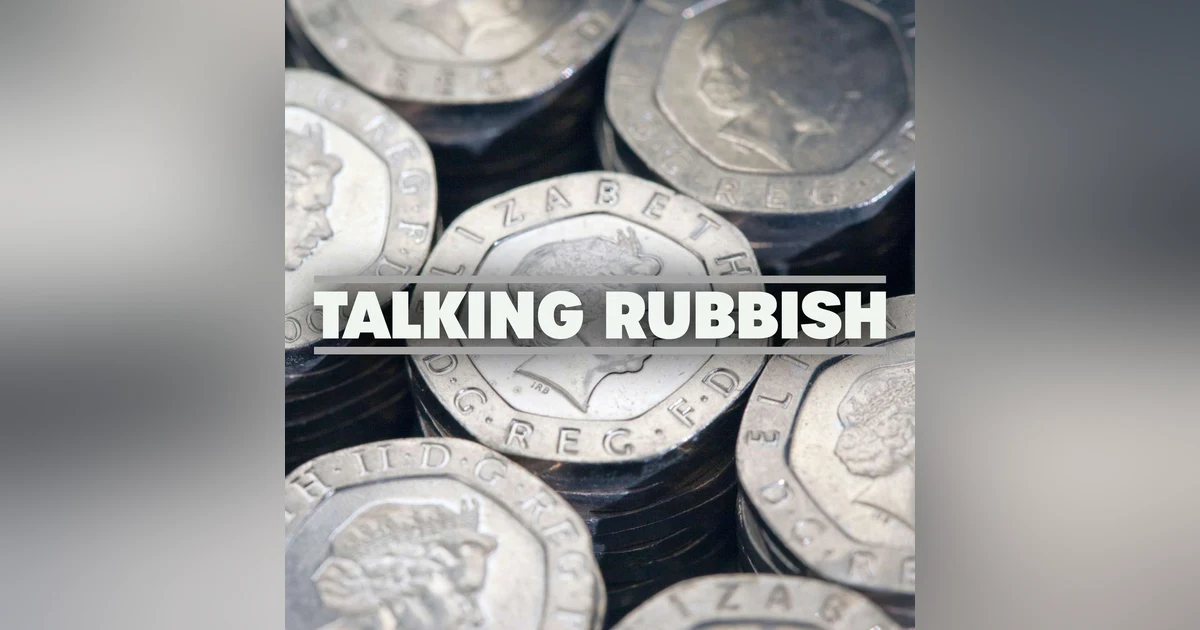
- Unclaimed 20p deposits and the high value of recycled materials are projected to generate enough revenue to completely cover the initial running costs of the UK Deposit Return Scheme.
- Lower initial return rates ironically create a higher surplus of funds for the scheme because unredeemed deposits dwarf the income generated from producer fees.
- Glass manufacturers face an uneven playing field, bearing hefty Extended Producer Responsibility (EPR) costs while plastic and aluminium enjoy zero-fee grace periods under the DRS rollout.
- While the UK Deposit Return Scheme will undoubtedly capture cleaner materials and reduce litter in rural areas, it risks increasing bin raiding and litter management costs in city centres.
Why might the UK’s Deposit Return Scheme be free for drinks brands for its first 15 months? We dig into the surprising finances behind DRS, from producer fees and the value of recycled material to the huge sums generated by unclaimed 20p deposits. Using Ireland’s scheme and the UK Government’s own forecasts, we ask who will really pay for DRS, why lower return rates can actually make the system more money, and whether there’s an uncomfortable tension at the heart of how the scheme is funded.
Plus, is Smint packaging rubbish or not, which council provides the highest quantity of bins, how will tomato ketchup be packaged in our dream shop, and why are James and Robbie excited about reusable packaging?
Join hosts James Piper and Robbie Staniforth as they delve into the world of recycling, hopefully having fun along the way. One thing is for sure, they will talk absolute rubbish from start to finish.
To see James and Robbie live at London Packaging Week, get your free ticket here.
Please take a moment to complete the Simpler Recycling tracker
We would love you to join our community on Discord
Special thanks to our sponsor, Ecosurety
To get exclusive videos and clips, follow us on Instagram, TikTok, Threads or Facebook; @rubbishpodcast or YouTube: @talkingrubbishpodcast
Or you can contact James and Robbie with questions or just general rubbish musings using the email address talkingrubbishpodcast@gmail.com or by texting them via WhatsApp on 07356 069 232
Relevant links and reports mentioned in the programme can be found on the Talking Rubbish Linktr.ee
Transcripts and episodes can be found on the Talking Rubbish website
Timestamps:
Why the UK Deposit Return Scheme is free for brands - 01:00
Additions and corrections - 30:45
Rubbish or Not: Smint container - 35:53
Rubbish News - 40:37
Which council provides the highest quantity of bins? - 44:49
Green Grocer: tomato ketchup - 50:31
Residual Rubbish - 55:54
Music licence ID: 6WPY8Q4O2RPFIOTL
Frequently Asked Questions
Why is the UK Deposit Return Scheme free for brands?
The UK Deposit Return Scheme will be free for drinks brands for its first 15 months because the system is heavily funded by unredeemed 20p deposits and the sale of high-value recycled materials, covering the operating costs without needing producer fees.
Who actually pays for the UK Deposit Return Scheme?
Consumers ultimately fund the system through unredeemed deposits left behind when bottles and cans are not returned to stores, alongside local councils losing material revenue and brands lending initial setup capital.
What return rate targets has the UK government set for DRS?
The government expects industry to achieve a 70% return rate in 2028, rising to 80% in 2029, and reaching a 90% return rate by 2030.
How does the Deposit Return Scheme impact the glass industry?
Because plastic and aluminium benefit from grace periods and zero-fee structures under the DRS rollout, glass manufacturers face disproportionately high costs under separate EPR rules, putting them at a financial disadvantage.
James Piper
Hello, welcome to Talking Rubbish, a weekly podcast going deep into the world of recycling and discussing the truth behind snappy headlines and one-sided stories. In this episode, we will discuss why DRS might be free for brands. Is it mint packaging rubbish or not? I have a question about which council gives us the most bins and how will ketchup be packaged in our dream shop. I'm James Piper and I'm joined by Robbie Stanley for my father from Rubbish Friend.
Robbie Staniforth
Good morning, Robbie. Hey James. How are you today? I'm very well, and how are you? I'm very well, thank you.
SPEAKER_02
We prepared to go again on DRS?
Robbie Staniforth
Oh yes. There's so much more to cover, isn't there?
James Piper
Yes, the surprising series. I think we did it last week. Realised we'd overrun. Yeah. Thought let's do a part two. We might even do a part three next week. We might do digital DRS next week. So sorry if you're all getting DRS'd out. So much to cover. It's really good. Rash talk. Our topic today is the finances of DRS and why it might now be free for drinks brands in the UK for the first year. We've got to be clear. It's not forever.
Robbie Staniforth
Not forever, yeah.
James Piper
But for the first 15 months, it might be free of charge.
Robbie Staniforth
And this free of charge thing isn't just clickbait, as we'll find. It's actually going to be free. They've made an announcement saying that there are no fees, but we'll get into that in a sec.
James Piper
Before we get into that, let's sort of remind ourselves of how the finances of DRS work. So in terms of flow of money, the most obvious is the deposit.
Robbie Staniforth
It's a 20p deposit that will play as consumers of drinks packaging, whether it's aluminium, plastic, or even steel, they're all in scope of the DRS, and we'll get that 20p deposit back when we take the container back to a store and return it for the deposit.
James Piper
And it is here that the media tend to trip over themselves because they like to say you're about to get paid for recycling. And that is far from the truth. You have paid. The way you get paid is by litter picking, collecting up other people's that they've paid. So there is an element of truth in that. But the idea that most of us are being funded to recycle is not true. No, you're just getting your money back. So just to be clear, and something we're going to talk about a lot today, is if you don't bring that bottle and can back and it gets lost, and we talked last week about it getting lost in like a big belly bin, then this is called an unredeemed deposit.
Robbie Staniforth
The container might still be recycled. It's just that you didn't claim your deposit. You put it in your local authority collection at home. The aluminium can goes off and gets recycled, but the deposit never gets redeemed. So it goes unclaimed.
James Piper
That's the deposit. And then as we said last week, retailers get paid for taking back cans and bottles, which covers them doing the process of returning. And so that could be for a reverse vending machine or a manual return. And in the UK, it's going to be 3p per container for a manual return. And then 1.3 or 5p if it's done through a machine. So you get 5p, I think, for the first it was something like 225,000 and then 1.3p after that. Just as you get into economies of scale, you don't need to have a higher fee for more and more containers.
Robbie Staniforth
Yeah, sure. And that's obviously covering the cost and inconvenience that retailers and convenience stores will go through in taking these things back. That's not free. You know, they've got to take up space in their shop, etc., to either keep manual return crates or put in these reverse vending machines.
James Piper
Exactly. And then there's the value of the recycler, and we're going to come back to that. So you've got deposits and whether they're claimed or not. You've got the retailers getting some funding, and you've got the value of the material that you're actually collecting. So the final thing is producer fees, and this is the money paid per container by the likes of Coca-Cola and Pepsi to run the scheme.
Robbie Staniforth
Because the logic is they're the ones who are using the packaging, so they should be paying to finance this whole system rather than anyone else, you know, and that's the polluter pays principle that we see in EPR, and it's the same for the deposit return scheme, or should be.
James Piper
It should be. Now, if you think about it, you have a total scheme cost, and that could be made up of unredeemed deposits or producer fees. And the challenge is, or the challenge for DRS, is that deposits are definitely going to get charged. So unredeemed deposits are definitely going to happen, and producer fees are therefore the balance. Does that make sense? Yeah. So you don't have it the other way around. It's not like producer fees start it and then you go, oh, we'll claim deposits to cover the gap from producer fees. It's the other way around. Producer fees cover the gap from the deposits. So, of course, what that means is unredeemed deposits can end up funding the system. And to show that in practice, we talked about Ireland before in episode, I think it was 91, but since then they have updated their accounts. So we now have their 2025 accounts, so we can give more live info. So when we look at the Irish accounts, the cost of collection and recycling was 64.1 million euros. So that's 64 million euros in physically collecting up the bottles, cans, and getting them recycled. And then they had administrative costs of 21 million on top of that. So that's the staff and uh the running of the system. Wow, that's quite a high operating cost, as well. A third of the cost is operating costs. Yeah, I think it'll be different in the UK because you're gonna have such a big scheme, but it's not like you increase staff numbers accordingly. Total cost, roughly of 85 million across the administrative fees and the costs of collection and recycling. In the same year, they received 35 million in producer fees, 29 million selling material. So producer fees and selling material were about the same. And the unredeemed deposits totaled 60 million euros. Oh wow, dwarf the other two then. The biggest by far is unredeemed deposits. So once again, same as 2024, we are in a position where if you just took the value of the recyclet and the unredeemed deposits, you would cover the costs of the scheme, including the administrative costs. So the the Irish scheme is now running at a surplus of 34 million euros, which is basically the same as the 35 million producing fees coming in. If everyone returns their cans and bottles, so if they had a hundred percent return rate, brands would have paid twice what they paid last year. So they would have had to pay 70 million instead of 35. And I guess that I'm alluding to the fact that therefore there is a slight disincentive or a big disincentive to the brands who don't want to pay lots of money, they don't really want a high return rate. Now, they do because they understand the damage, you know, they understand the reputational damage of not having a good DRS.
Robbie Staniforth
Yeah.
James Piper
So I'm not suggesting anyone is behaving like this. But if you're a little craft beer business where two, three P on a container makes a huge difference to your margins, are you really incentivized to market the DRS? Are you really incentivized to encourage people to go back to deposit machines? I'm not sure.
Robbie Staniforth
Yeah, and there's also something to be said for how much influence do they actually have on driving return rates anyway. It's all up to the deposit management organization to run an efficient system that gets the containers back. What the brands think about it doesn't really matter. The fact is that the system is set up in a way that means it's cheaper if you don't get as much back.
James Piper
It's as simple as that. Yeah, and we're gonna talk about this a lot today. So, but it is worth saying the Irish scheme is relatively small numbers, you know, 85 million euros to run. Just England and Northern Ireland is forecast to be about a billion pounds a year with a 1.6 billion first year, because you've got lots of setup costs. So 1.6 billion in the first year, 1 billion, 1 billion ongoing costs. And the government's own impact assessment. So the government did an impact assessment when they were signing off DRS, and that's where I got a lot of these figures from, assumed that in the the first complete year, which would be 2028, there will be 1.358 billion pounds of unredeemed deposits.
Robbie Staniforth
Wow, okay, because that's just the reality of when things get started. It takes time for people to return their containers. They aren't used to the system, they keep doing the old practices that they've always done of putting it in the bin or whatever, the recycling bin at home. And then, hey, presto, one billion pounds is revenue is generated or whatever.
James Piper
Yeah, well, you have 1.358 coming from unredeemed deposits, you'll have a significant amount coming from material value. The numbers will look very similar to Ireland in that when you add up material value and unredeemed deposits, you've funded the entire system. You don't need to charge producers anything. And it is for this reason that Exchange for Change, and Exchange for Change is the organization that has been set up to manage deposit return schemes. They have decided that for the first 15 months of DRS in the UK, producers will not have a producer fee.
Robbie Staniforth
Yeah, and this is basically you can sort of see what they're saying that there is enough money in the system that we don't need to charge a producer fee. But on the other hand, it sends out a slightly strange signal right at the beginning of the DRS going live to say that producers are not paying a fee.
James Piper
I mean, it's as simple as that. It's a very odd situation. I don't think one of the media are quite grasping. So in January this year, The Sun had a headline, like they often do, that said retailers are about to pay Brits to return bottles and cans. The classic headline. This is funded by us. Like we need to be clear on that and we need to be honest about that. Unredeemed deposits will fund the system for the first few years. Not Coca-Cola, not Pepsi, not the craft beer companies. Their producer fee is 0.00p for the first 15 months. I am being facetious. Yeah, if you were Coca-Cola or Pepsi listening to us, you'd probably be quite annoyed. Because they, of course, have lots of costs, but they're not direct costs. So they have to pay to change their packaging labels to suddenly include or deposit return label. They have to, they have to make physical changes to their packaging to make sure it can go through a machine. Um there's running costs right now for exchange for change. So we they've got like 50 staff, I think, in exchange for change that need funding because there's no money coming in right now. So these brands will be footing some of that bill. So they are doing a great job in terms of funding the initial up and running. And to be honest, that was what got them out of EPR in the first place, because they said, Well, we can't be an EPR because we're going to be funding DRS. Now, whether they will want that money back or not, I'm not sure anyone really knows. But they are certainly lending money to the system right now. But however you look at it, EPR is an extremely large bill for everyone who isn't in drinks and glass. We'll come on to that. EPR is an extremely large bill, and DRS is a very small bill at the moment.
Robbie Staniforth
Yeah, and it's it comes back to how these systems intermesh with one another and what that means for drinks brands and what you choose to put your drinks into. Of course, the brands would argue that if there was a producer fee, we would just bake it into the cost of the soft drinks anyway. So, as citizens, as consumers of drinks, in all scenarios we're going to be paying. The problem is, in one scenario, it's a very small cost per unit that's maybe baked into the cost of a soft drink. Whereas in this unredeemed deposit scenario, it is actually individuals who have gone to a shop, given them the extra 20p, and then for whatever reason, they've not gone back and reclaimed those 20ps, and that has all totaled up. So we will have a society where those who are really keen to get their money back won't fund the system, and those for whatever reason who aren't able to, can't, not bothered, apathy potentially, those are the ones who will be funding the system for the first year and a bit.
James Piper
There is a difference between EPR and DRS that does make the kind of free 0.00P fee work. Because with EPR, you have uh thresholds. So you have like a 25-ton threshold, which means that the smallest packaging companies don't pay into EPR. In DRS, because it's a whole system change and because the government wants any drinks container to have a deposit, even if you're a small artisan craft beer company, you've still got to charge a deposit, you've still got associated fees. And that could uh to be honest, DRS damages those small companies way more than your large brands. And so it is consultation that Exchange for Change have done that has led to this 0.00 P. And I suspect some of it is coming from the small brands saying, look, we just need a bit of time to get up and running, and we need time to get used to this. And so there is a good reason for not doing it, but um, but I think it is still a little galling when you when just when you compare EPR and DRS, how different they have now become.
Robbie Staniforth
Yeah, no, I agree. And it it's it's a sort of it's a funny one, isn't it? Because the press release from Exchange for Change on this zero fee came out and said, Look, inflation pressures, we don't want to push more costs into potentially the the costs of goods that we pay as citizens. So which sort of stands up. But then the other side of it is we canvassed our members and asked them if they wanted to pay any money, and they said, No, we don't want to pay any money. It's sort of like, well, if EPR was set up in that way, I'm sure plenty of people would also say no, I'd rather not pay.
James Piper
It'd be a very weird thing. You wouldn't get away with it, would you? You couldn't, because you're not. I don't think I'd like to pay for recycling. Oh, okay. It's quite weird how DRS just allows these things, but anyway.
Robbie Staniforth
Yeah, no, fortunately, within the DRS example, there obviously are other ways to finance it, like these unredeemed deposits. You just don't get that in other areas of recycling.
James Piper
I think it's worth quoting my prediction from episode 91, just to just a bit of ego boosting for me here, because the transcript from episode 91, I went and had a look, said unclaimed deposits could fund the entire thing, so producers don't have to pay anything. That's the fear, right? And I just want to labour that point. That's the fear, right? Yes. Because what we were talking about is that is the fear to the glass industry. And it is the glass industry who I think have been uncharacteristically silent about this zero fee. I haven't seen much publicly.
Robbie Staniforth
Privately, I've heard a few comments.
James Piper
I haven't I couldn't find anything from them. Yeah.
Robbie Staniforth
No, privately I've I've I know they're disgruntled.
James Piper
Yes, absolutely. Because just to be clear on this, aluminium cans and plastic bottles have had a couple of years where they haven't had to pay into EPR because you're in one or the other. You either pay EPR or you pay DRS. And because DRS comes later than EPR, it's essentially a gap, a financial gap. Now you've said the first 15 months of DRS have no fees. So that's like three, four years where a plastic bottle has had zero cost attributed to its recycling or an aluminium can. Zero cost attributed to its recycling. Meanwhile, glass in EPR is paying something like five to tenp per container. So this is a you can understand why if you're in the glass industry, this is just an another frustration on top of frustrations you already had, that plastic and cat plastic and metal are getting a free pass. And their argument has long been that this government policy will drive more and more plastic bottles. And surely the aim of the country is to get out of plastic. Now I have been very vocal on this podcast about how I disagree with the glass industry because glass is perfect for reuse. They have the they have a great opportunity to beat all the other materials by just taking back, washing, refilling, and only paying their EPR fee once. But I appreciate the difficulty setting that up. But I can say I'm sure it's very frustrating to be in a position where your competitors, your packaging competitor, essentially isn't paying anything and you are paying a huge amount per container.
Robbie Staniforth
Yeah, and the reality is the uh costs involved in choosing to put your drinks into a glass container are increasing. And that is hard to refute and would of course seem unfair to anybody who's in that portion of the industry.
James Piper
So after the 15 months, the forecasted fees are 2.3 pence for plastic and 0.6 pence for aluminium. Um, that just reflects the value of the aluminium versus plastic to the recycling industry. That's why you get that difference. And that's from January 2029. So even when those fees come in, it's still significantly cheaper than glass on a per container basis. And again, that'll be there's weight issues in there, there's the carbon of getting that product. So those numbers, if I was to line up those three materials and say, what should the fees on each of them be for recycling? I would probably come to similar numbers. You know, I'd make glass the most expensive, plastic the middle, and aluminium the cheapest. And to be honest, they spread pretty nicely across those three. So I don't think there's anything wrong with those fees, but uh but I don't work in the industry, in the glass industry won't have a very personal link to that, and I can understand why that would be really hard.
Robbie Staniforth
Yeah, and there's a timing thing as well. You know, they've had a couple of years of it already, and there's still a couple of years of it to go. What industry is left by the time you get to 2029 is what they will be thinking. You know, it's quite hard to knuckle down and just get through the tough times with higher costs than potentially some of the other materials.
James Piper
I think their biggest argument is what's going to happen is we will import and export more glass and we will lose UK manufacturing because our energy costs are so expensive, we're not subsidising glass in the correct way to keep the UK manufacturing. So at the moment, then the messaging is very protectionist, isn't it? It's very we want to keep UK glass. I don't think we'll lose glass. I think but we may end up importing a lot of it because we've lost our industry that was manufacturing it. So that's a different, a different issue. DRS ends up in this very weird situation where the lower the return rate, the better financially. So to curb that, what you have to do is have governments that set out recycling targets. You have to have governments that say, you're not allowed to gamify this, you're not allowed to discourage people from returning bottles, because actually we want them back. So the government has laid out targets that it is expecting industry to meet. So 70% return rate in 2028, an 80% return rate in 2029, and a 90% return rate in 2030. I have no idea how this is going to be policed or enforced or what the penalties are going to be. I don't think anyone knows at this point. But it is good that government have said these are our expectations in terms of launching a DRS, this is what we want to see, and therefore that will stop some of this gamification of like, actually, I don't want to tell people about a deposit return scheme because it's going to cost me a lot more money if people return their bottles and cans.
Robbie Staniforth
Yeah, and if you think about those working within exchange for change, they really believe in this system. A hundred percent. You know, there'll be it's a brand new organization that's been stood up. They've got a they're on a mission to recycle more containers and make this whole thing worthwhile, frankly. We've talked previously about the fact that containers are a very high recycling rate compared to many of the other packaging formats and other um segments of grocery retail or whatever. So they will really be on a mission to do it. And also they've got personal reputations. You know, they're missing targets that does not look good for a CEO where the mission is to recycle containers. So I've got every faith that Exchange for Change will be doing all they can to try and hit those targets. At the same time, the drinks companies themselves may or may not be as equally invested. You know, there will be a plethora of different views. Trying to say that companies in inverted commas all think that DRS is universally good or bad, or unredeemed deposits are good or bad, is very problematic because lots of corporations, big ones, but also the small drinks manufacturers you talked about, they'll have different opinions about how quickly they want those recycling rates to increase.
James Piper
I think something to just talk about and be clear on is the difference between producer fees and deposit. So one unreturned plastic bottle generates twenty P, right? If you don't return it, that's twenty P into the scheme. If the producer fee is around two point three P for a plastic bottle, then The customer not returning it is worth nine times the producer fee. And this has always been this is the problem worldwide with DRS. You have to make the deposit high so customers are encouraged to return. According to the government who were modelling DRS, 12 billion plastic bottles are used each year and 14 billion cans.
SPEAKER_02
I was quite surprised it was more cans than bottles. Yeah, a lot of cans.
Robbie Staniforth
Are you surprised by that? I was surprised by it too. I also saw the figure and like thought, wow, we really do prefer drinks in cans than in bottles.
James Piper
I guess you would buy a multi-pack of cans. Ah, yes. And you'd buy a big bottle. So you'd probably end up with more plastic by weight. Yes, maybe. But in terms of quantity, you would come up with more cans. I just thought that was very interesting. If you multiply those numbers up, that is 5.2 billion pounds of deposits that are going to move through exchange for change in the first each year. Now that is five times the cost of the scheme. So just on those headline numbers, the maths is really simple. An 80% return rate, which is the target for 2029, leaves over a billion pounds in unredeemed deposits. So at 80% return rate, you can cover the cost of the system. And then producer fees will just always be zero. And that's before you even get to the value of the material. So we are in a position when we have to be getting a 90-95% return rate to get the brands to experience the burden compared to EPR. I mean, this is assuming, of course, we want the brands to feel some burden because there were, as you say, there is an argument to say, well, they will pass the cost to us anyway. So it doesn't matter where it sits. If it's an unredeemed deposit, it's with us. If it's being passed to us, it's with us. It's just a billion pound system each year that someone's got to fund that wasn't there in 2025, right?
Robbie Staniforth
Yeah, it's one of those where you're sort of damned if you do, you're damned if you don't. But as an individual, you know, what action can you take on this to resolve it? Return your container for a deposit, get your 20ps back, and then you won't be complicit in this system that means low recycling rates finance and drive this whole new implementation?
James Piper
It would be remiss of us to talk about the finances of the system, but not to talk about the value of material. So it is widely acknowledged, and we agree, that DRS collects cleaner material. And so it has a higher value. That's one of the biggest selling points of DRS, that you're taking what is a high-value material, PET bottles, aluminium cans, and you're keeping them away from all the food contamination in our litter bins and all the issues in our litter bins. It collects cleaner materials. So the government forecasting was that the value of the material will increase by 5% compared to what it's worth today, because it'll be cleaner, less contamination.
SPEAKER_02
Not sure they had buzzballs in mind when they were thinking about this.
James Piper
Because of course, buzzballs will lower the value of that material, as we said before, but um that wasn't big when they did the modelling a couple of years ago.
Robbie Staniforth
So they're gonna be trying to pick out these buzzballs from all of the PET bottles.
James Piper
It's gonna have additional costs, yeah, absolutely. Hadn't thought about that. But we can say for certain the clean streams of plastic and metal with less sorting will be worth more. So 5% is probably a reasonable um increase. And then they modelled that at 277.5 million pounds in year one, which rises to about 350 million as the scheme grows. So the value of material is about 350 million once the scheme's embedded. I think it is worth just highlighting that that value, or most of that value, because obviously they've increased that slightly because of the cleanliness, but most of that value currently sits with our councils. So our councils are losing that income. Yeah. So what we are doing, and and there's a good reason for doing it, but what we're doing when we introduce DRS is implementing a new system that didn't exist before, that cost a billion pounds, which is taking the 300 million, 350 million worth of value from our councils and putting it in that pot. It's taking money from us as consumers in deposits we haven't claimed back and putting it in that pot. And it's going, oh, that covers the overall cost of a scheme. And then some, you know, you're gonna end up with a lot of surplus for the first couple of years because that's a very high amount of um material value, very high levels of unredeemed deposits. There's gonna be big surpluses for the first couple of years. It'll then start steadying out. But it is not the system the sun are describing. It is not you're gonna get paid for recycling. It is costing us. It is costing us in unredeemed deposits, valued councils, and ultimately what it's not costing is the brands. Because they don't they're the last people to pay. They're the people who top up the gap. And if there's no gap, they don't have anything to top up.
Robbie Staniforth
Yeah, and this is part of the reason why um people thought there would be backlash from brands saying they didn't want to do it, but some major brands realized about seven, eight, nine years ago that actually done right, and by right they mean in the way you have just described, that actually this is a much better way of doing things for their product segment than being bundled in with EPR um with the rest of the packaging formats.
James Piper
It is a great model for the big drinks brand. You have control of your material, you uh the system owns your material, not councils. It's great for you in terms of getting a clean stream of PET, clean stream of aluminium, making money from it, having unredeemed deposits, and somehow the public being happy with that. I find that that's the weirdest thing to me, that the public are like, oh, this is great. Why haven't we got a DRS? And then there's another thing, you know, the initial modelling, so this modeling the government did said there would be benefits to councils. So don't worry about that 350 million you're losing, because there's benefits of 25.4 million in litter cost reduction. So because there will be less litter, you won't have to clean as much. You'll save 25 million pounds, all of you uh all of you councils who are losing 300 million. Oh, fantastic. I hear, I could sort of hear in your tone there might be a but. Well, let me give you that butt, Robbie, because we talked about Ireland last week and I had a look, and there was a news article in RTE about Dublin City Council, which said that bin raiding was costing Dublin 500,000 euros extra each year from people going three bins and littering. And from what I can tell, that 500,000 is double what they were paying. So they were paying 500,000, now they're paying a million. Oh wow, okay. So I do not believe the litter reduction. I believe people will litter pick. I believe in our in our countryside, people will do more litter picking and there will be fewer bottles and cans. I 100% think that is what will happen. I think in our city centres, we will see an increase in littering costs. I should balance all of this by just saying, look, none of this means I think DRS is a bad idea. Would I implement it in 2026 when we have good curbside? No, I have been very clear on that. As we talked about last week, DRS has been incredibly successful at getting containers back in countries that have introduced it. Higher return rates do mean less litter of the containers themselves, more bottles and cans being recycled, and much cleaner streams of high-value material. So we can't really criticize any of that. And there is another way of looking at unredeemed deposits, which is if money has to come from somewhere, why not take it from people who have chosen not to engage with the recycling system? Yeah. You know, if you're, as you say, it's sort of better that than going to the brands who then just increase the cost of the product. It's almost better to just have a percentage of the population that don't engage with DRS that end up funding it. Which has left me with this slightly uncomfortable question to wrap this trash talk up with. We've designed a recycling system where achieving environmental objectives reduces one of its biggest sources of income. And does the financial model create a tension between maximising returns and maximising unredeemed deposits? Additions and corrections. A lot of fridge chat over on Discord following our episode on fridges. We definitely need to do this freezer thing because everyone has talked about their freezer as well. But um, I wanted to highlight Moira's fridge because I think Moira has solved the fridge issue, the hidden food problem. So, you know, we were talking about like how you have these areas of the fridge that are hidden, you miss things. Moira has basically taken her fridge, taken some electric tape, some black electric tape, and on the front of the fridge, has used the tape to divide up the front in the same way that it's divided on the inside. You know, created shelves basically on the front of the fridge. Wow. And then uses a dry white marker to write down what's in there. What's in there? So she does not have to waste energy opening the fridge. It's like a map of the fridge. It's a map of the fridge. It's brilliant. It's so good. I think this is the solution to our fridge problem. I think I might start doing this. Although the trouble is I have an integrated fridge with a cupboard, so Ellie's gonna be absolutely fuming if I start drawing on that cupboard. I need to stick a whiteboard to it. Yeah, well, maybe. And unfortunately, we head back to DRS. I'm sorry, everyone. We just got out of it.
Robbie Staniforth
Just can't get off that DRS.
James Piper
We've got it next week as well. I know. One thing we discussed last week was around this potential loophole. So in Ireland, they had this situation where if a reverse vending machine was full or broken, so wasn't accepting, you didn't have to do a manual return. And it's just the way the Irish scheme was set up. Basically, it was set up to be as as simple as possible so they could get it out really quickly. The UK is taking a different approach and being a bit more onerous. And they have differentiated, so rather than saying a shop has to have a return point, they are saying a shop is a return point. So there's a slight, subtle difference there in that if you just put in your legislation you must have a machine, then when it breaks, you don't have to take back. If you say in the legislation you are a point for people to return, then if your machine is broken, you have to offer a manual return.
Robbie Staniforth
Okay, so there's got to be a backup.
James Piper
We'd like to take a moment to thank our sponsor of EcoSurety, who are on a mission to rid the world of unnecessary packaging. They help brands navigate the tricky world of extended produce responsibility, but that is not all. They also collaborate on some incredible recycling projects and consumer awareness campaigns for those tough to recycle materials. If you're an organization looking to make smarter packaging choices, check them out at ecosurety.com. The best thing you can do to help our podcast to grow is to tell your friends and family about it or to leave us a review. And if you leave us a review, you could be Robbie's review of the week.
Robbie Staniforth
So these reviews are still coming on in, James. You were nervous at a time. I'm I'm get I'm getting a review check from you before I go into this one.
James Piper
It's a very, very good point. I have to thank everyone because we did get a few reviews in when I asked, and I was very grateful for that. Now we are inevitably going to get to this position again where we run out of reviews. So it is always helpful. If you're sat there thinking, I just I'm meaning to do a review, but I'll do it another day. Today's the day. As you're listening to this, just log in. Apple, Apple's really useful. Apple, Apple's a bit complicated how it does it, as like a star thing. Hit the star thing, and then below it it says write a review. That's where you can leave us some words. Spotify, you can leave us a comment. You can email WhatsApp. You can hit the thing in our show notes that says get in contact with us. There is no excuse. You can leave a review, and it's really helpful if I have a load of them ready to go. So, yes, thank you for raising it, Robbie. Hopefully that's okay for everyone to leave us one now.
Robbie Staniforth
So, this is one from Apple. It comes from Ugly Bertie. It was a five-star. I found my rubbish people. I feel like I found my people. I share so many of the same frustrations as our lovely hosts, and it's oddly satisfying to hear them rant about the exact things that drive me up the wall, too. I'm a geography teacher in Scotland, and I spend a lot of time encouraging young people to think critically about what they buy, how they consume, and what happens to things after they're thrown away. The future of the planet can often feel like doom and gloom, but these kids genuinely give me hope. They're asking great questions and making thoughtful, sustainable choices. Thank you for creating a podcast that's funny, relatable, and reminds me that I'm not the only one shouting into the void. Keep up the fantastic work. It's great. It's so good, isn't it? And so hopeful about the kids. I hope he's sharing the podcast with the kids as well, and maybe we'll get some reviews from them too.
James Piper
And you can follow us on social media at rubbishpodcast. You can email talkingrubbishpodcast at gmail.com or you can WhatsApp us. Also join our Discord. It's the easiest way to engage with us and listeners of the show. And the link to all those things is in the show notes. Today's rubbish or not is the packaging around Smint. Very niche. For those unfamiliar with this product, it is essentially the same as a sweetener dispenser. So yeah. I don't know if people are familiar with sweetener. It is like the same, right? You push the top, it pushes down a bit of plastic, which creates a hole at the bottom where the thing then falls out. So it's a way of individually dispensing. Smints. A little pill. And the reason this came up is because Ellie offered me a smint the other day. And then I. Simple as that. And I looked at it and thought, what is this packaging? And then there was something on the back that really fascinated me. So I thought, Robbie, rubbish or not?
Robbie Staniforth
My worry is that it's small. Okay. So the upside is that it's made of a rigid plastic that I think is probably recyclable. And when you go to rigid plastic recyclers, they'd be like, yeah, if that gets to me like that in a mixed bale of plastics, I'm sure it'll be fine. But it's quite small. So I'm not sure it would get through. I can't remember exactly what the max the minimum diameter or minimum side that's four centimetres on two sides, isn't it? Yeah, I think it probably is on one side. Well, definitely is on one side, but not quite two. It's probably only about two centimetres in two of the sides, yeah.
James Piper
I agree with you. Remember our tennis ball rule? This is way smaller than the tennis ball, too small. It is not just the size though. Separating this thing is like so much fun and then putting it back together. It's like a click, isn't it? It's a satisfying back. I'll just put it back together. Oh pull it apart. Oh, so good. Now, it's rigid plastic. They are not the same rigid plastic. They're different polymers. They're different polymers. Oh, really? I think. Now I'm going to explain my working. So on the back, it says polypropylene is one of these polymers. Yeah. And the other is polystyrene.
Robbie Staniforth
Whoa. Rigid lessyrine. Spotted rigid polystyrene.
James Piper
Now I think the internal bit, the bit that's actually got the mechanism, is polypropylene. The clue for that was it has PP stamped on it. Which means that this outer bit is probably the polystyrene. There's a few clues to that. It's quite shiny, very rigid, quite shiny. That's typical of polystyrene.
SPEAKER_03
Okay.
James Piper
So they are using a polypropylene inner, polystyrene outer, and councils do not collect polystyrene. Okay, so I'm going with rubbish.
unknown
Rubbish.
James Piper
For size and because it's polystyrene. And just to be clear, this is red in the RAM, I think, times two. In our traffic light of recyclability, it would be red because it's too small, and it would be red because it's polystyrene.
Robbie Staniforth
Very cool, highly engineered packaging that's a pleasure to use and a pleasure to dismantle. But unfortunately, you gotta make this stuff recyclable.
James Piper
I think it might be the same for sweetener packaging as well. You can check what plastic is made of, but some of the ones I found online also had polystyrene outers. It's just to give it a what you want is a flexible inner to do your spring mechanism because there's no spring in it, it's just plastic to bounce it back up. Um, so that bit's quite cool. So you want like a bendy plastic on the inside, which is why you use polypropylene, and a rigid on the outside to keep that mechanism working. So that's why you end up with two different polymer types. But yeah, double red on the RAM, bit of a nightmare. Wow, really rubbish. This is where I struggle with this packaging. Smint introduced the plastic dispenser in the UK in 1995. Okay. In 2009, apologies for the ASMR going on. In 2009, they launched the larger Smint in a tin, and today you can still buy both formats. So we've got this tiny multi-polymer plastic dispenser that's basically designed to fail the recyclability assessment, alongside a product that is being sold in a completely different format, which is a metal tin, which could definitely be recycled because it will come out of the bottom ash if it doesn't make it through the sorting process. So this plastic feels exactly like the kind of container that we should be designing out.
Robbie Staniforth
And maybe it will just because of that red RAM rating, it will just become too expensive to be viable, and we'll all be using the metal packaging. I must admit, I am slightly sad because it is a cool little bit of packaging, isn't it? But if it's not recyclable, sorry.
James Piper
We don't call anything unrecyclable cool rubby. Anyway, do you want to smell? Yeah, please. Rubbish news. Over the past few weeks, I think it's fair to say we have occasionally alluded to our work in reusable packaging. So I am pleased that this week my rubbish news is the launch of a project that we have both been working on. Yes. Very exciting. So basically, I have been, we have been obsessed with trying to get reusable packaging into a space with no deposits, no app, just trust. Just I believe if I give you a reusable piece of packaging, you will give it back to me. And so, and also just a really important point on reuse, not having the option of single use. Because the thing that causes all reusable projects to fall over is if you give people the choice. So we have done it. We've launched in UE, and we've been working on this for a couple of years. We're live at the University West of England, almost in every cafe. I think we have two left to get who will hopefully come on board in the next few months.
Robbie Staniforth
We're not going to name and shame yet.
James Piper
Yes, I might do. When we get to our trash talk, maybe we will. But we will name the positives. We are in Costa and Subway and all of the university cafes and things like the student union bar. It's a m it genuinely is amazing. I was up there a couple of days ago. I went into Subway, I got a drink, and Subway gave it to me in a reusable cup. It's so good to be in a brand and then see them use a cup that is not their brand because that's, you know, that takes a bit of effort and takes a bit of work, and I'm just really happy we've been able to do it. So the deal is you if you're a student at UE or you're visiting UI, uh you can order a drink from there, you can order a drink from any of those sites, you will get given it in a reusable cup. There's no cost to you. There's around 80 bins on the campus, so all around the campus, we put 80 reusable cup bins. Either the cups are purple, the bins are purple. So in messaging that will please Lucy Siegel, who seemed to like forward messages with a comma in the middle, our messaging is purple cup, purple bin. Couldn't be simpler.
Robbie Staniforth
Yeah, absolutely frictionless, I'm sure. Our faith in humanity will be repaid when those purple cups go into those purple bins.
James Piper
I'm gonna give it a month or two to get the return rates to a level where we can report back, and then I think we'll do a whole trash talk looking at whether it's working or not.
Robbie Staniforth
So my rubbish news this week also has an element of personal involvement because the PRN prices have been skyrocketing across uh particularly plastic, but also there's worries around steel and wood for the recycling of packaging. So a packaging recycling note is the thing that people buy. We've talked about them in p previous episodes that producers need to pay alongside their EPR fees in order to finance recycling. However, this year, because of big changes in the system, the government have reported that they are considering what to do if we can't meet the recycling targets this year. Now, as soon as you hear the news, we might not hit a recycling target, of course you start to worry. But it's not because we're doing any less recycling, it's because of these big changes to export rules that have been reported that mean effectively recycling that took Place or will take place in 2026 will count towards 27's target, not 2026's target. So we've got a year where basically things that get exported over a 10-month period instead of a 12-month period will start to count. So this is all technical information that the government are wrangling with, and I've been working with them directly on what to do. But the news this week is that they will be looking to intervene and slightly modify those targets. But my message is don't be worried. It's not an indication that the country's going backwards in terms of how much gets recycled. It's a slight um policy foible of a big change that they made that we now need to correct.
James Piper
Rubbish question. The question today is which local authority provides the highest quantity of bins? So this came from, and you know I say to you, Robbie, I listen to every recycling podcast. Yes. It is true. I listen to all the podcasts related to recycling, certainly in the UK. Oh, great. And one of those that has started up quite recently is called Behind the Bins with Kate and Tim. Yep. And I know Kate certainly listens to this podcast. I think Tim does as well. So Tim does a question each week, and the question they asked was which local authority has the highest quantity of bins. Tim gave a number. Kate said, which local authority is that? Tim said, Well, I haven't written it down. And so when Kate shared this clip on LinkedIn, she said, if you want a highly professional and well-researched podcast, maybe try talking rubbish. And I thought, perfect. I'm then gonna have to bounce the question. So I will now take the question and I will actually say who the local authority is. So between us, we've covered it quite well, I think.
Robbie Staniforth
Okay, so they're part of our Biniverse.
James Piper
Binniverse, yeah. So in terms of rules, because we have to have rules for this kind of thing, I felt it could include optional bins. So because there's some things you could engage with if you choose to, if you like sign up, then I felt it could include some of those bins. Okay, like this is the highest quantity of bins you could choose to have that your council provides. Okay, so the council has to provide the bin. As in, the council has to offer on their website a service, and then I counted it.
Robbie Staniforth
Wow, I can't say that.
James Piper
So not TerraCycle, for example.
Robbie Staniforth
Sure, yeah. So so private sort of waste management collections that you may choose to get yourself.
James Piper
We need to be clear here. Some of them are private waste collections, but the bin and service is provided through the council. So there are some in Wales where they have voluntary bin collections. Uh they have like a bin that the council will give you, but you have to arrange the collection yourself. Now that I'm counting. There's a clue that it's in Wales. Okay. Well, well, yeah. Whale, whale, well. Um yes. I inevitably thought it would be in Wales. Okay. But my starting point was I wonder if there's a council that has both flex collector and podback.
Robbie Staniforth
Oh, yes. So that's two provided.
James Piper
But from the local authority, yeah. So podback again, it couldn't be like podback with bags.
Robbie Staniforth
They're bags, but we're counting those as bins. We're saying containers, yeah.
James Piper
But it had to be a local authority collection, not take it back to a household waste recycling centre. Fine, yeah. As far as I am aware, there is only one council in England that offer both Flex Collector and Podback, and that is Cheltenham. Yeah.
SPEAKER_02
Oh, you knew that.
James Piper
I did know that, yeah. So when I looked at Cheltenham's bins, they had a general, a food, a green box, a blue bag, garden waste, and then flex collector and podback. Now I make that seven. I felt I could do a lot more than seven. If I headed over the border into Wales, I would get more than seven.
Robbie Staniforth
So seven was your start of four. Ten that you're looking for from Wales.
James Piper
You think ten? Okay. So my start in Wales was looking at podback and whether there are any Welsh councils using Podback, because I thought that would give them the edge. And there is one local authority in Wales that uses Podback that does local authority collections, and that is Conwy. Okay, didn't know that. Conwee, yeah. Now, in Wales they use this trolley system that you've talked about before, where you have a box stacked on a box, stacked on a box, stacked on a box. The trolley box. It's an amazing system. It's literally called the trolley box, isn't it?
SPEAKER_03
Yeah.
James Piper
Um, and in Conwee, if you take all of their trolleys and pod back, they have you ready to count a box for paper, a box for plastic and metal, a box for glass bottles and jars, a food waste bin, a cardboard bin, a battery bag, a textile bag, a small electronics bag, a pod back bag, a general bin, and an absorbent products collection. Wow, eleven. So absorbent products is like a good example with like nappies where the council would provide the bag and then you would arrange a collection from a private company. But I'm allowing that because the council provides the bag.
Robbie Staniforth
Okay, so it's more than 10. So we're on eleven. Eleven.
James Piper
Can I go higher? No. I felt I could go, I felt I would find a twelve. Okay. Because Conway said, well, we don't collect flexible plastic. I thought the gap is gonna be someone who collects flexible plastic. And that brings me to Denbyshire. Are you ready? Yeah. Ready to count? I think we're gonna get twelve. A paper box, a box for metals, plastic, and cartons, a box for glass, a blue bag for cardboard, an orange caddy for food waste, a wheelie bin for general waste, a box for small electricals, a pink battery clip-on box, a black caddy with a purple lid for absorbent hygiene products, garden waste, a textiles bag, and on Monday this week, 14th of September, as in a few days ago, they have introduced a 12-week trial of flexible plastics, providing bags to half the participants. So for half the households in Denbyshire, they now have 12 bins. 12 bins? That's absolutely amazing. And it's just happened because they only just launched flexible plastic. So the question is: can anyone beat it? I have not gone through all the council websites. I've sort of logically hit councils that I think are right. Okay. If anyone has the opportunity for their council to provide 13 bins, please let me know.
Robbie Staniforth
Green Roser. So this week we're moving away from bread. We've been talking about bread lots over the last few weeks. And we're gonna decide one that I think we've actually taken quite a long time to get to because this is a classic where there are definitely two, if not more, obvious options for how one would package it, and it's tomato ketchup.
James Piper
I mean, with ketchup, we're talking about plastic and glass, aren't we? No sachets. No sachets. We've already said they will never be single serve in Greengrocer. People know my views on sachets that I carry a ketchup bottle around with me to avoid sachets. Yeah. Which do you think is worse at wasting product, glass or plastic? So you know when you get a bit at the end, bit of residual. What do you think is the worst? Glass. Glass. I'm going for, yeah. Okay, very wrong. Um, it actually I found a research paper. I found a research paper that looked at this and wastage in a plastic bottle ranged from 13 to 28%. So somewhere in that range. And it was 3.85% for glass.
Robbie Staniforth
Okay, and that's because people presumably turn the glass bottle upside down and take the very last bit from inside the lid. No, I think it's also just the ridges.
James Piper
If you think about the shape of a plastic bottle compared to a glass, there's crevices for plat for ketchup to hide in in a plastic bottle.
Robbie Staniforth
Yeah, the shoulder is sort of like 90 degrees, whereas in a glass bottle it's much more sort of curved or whatever.
James Piper
So we should all do I mean, uh our greengrocer, first of all, is going to have to say, look, we've got to reduce wastage by keeping that little residual in your bottle. When you're making a spag bowl or something, just put a bit of water in, shake it up, yeah.
Robbie Staniforth
Well that's what I'm doing with my plastic one, which was kind of why I thought it's less wastage, but I was again thinking about myself as a normal person, which is always wrong.
James Piper
And it is worth saying that this same paper that talked about wastage said even with that level of wastage, so 13 to 28% for plastic and 3-ish percent for glass, glass came out worst as a life cycle analysis overall. Really? Because even though you're wasting that product, the impact of creating a glass bottle is so high that the life cycle analysis showed that plastic was the best option.
Robbie Staniforth
Just energy costs and things like that.
James Piper
So if you can do plastic bottles where you rinse it out and make sure there's no wastage, that's the best pro packaging that you can have. The Heinz ketchup bottles are made of PET.
unknown
Yeah.
James Piper
So the lid is made of polypropylene. The bottle is basically like a drinks bottle. I think that surprises some people. People often think Heinz bottles are made of polypropylene, but they're actually PET. Okay. Which means they can include recycle content. Yeah, so I'm going to ignore any flexible pouches here. I'm going to ignore glass. And but partly that's because of the flow of ketchup. You know, they always say like hit the 57 on the glass bottle. Have you heard this before? No. You haven't heard this? Okay. They've embossed a 57 on the glass bottle.
Robbie Staniforth
Yeah.
James Piper
And they say that that is the place to hit it to get it out of the glass bottle.
Robbie Staniforth
To make it j you know come out.
James Piper
It's the side. Okay. So you're holding the glass bottle, you hit the 57 on the which is on like the neck, and it causes the ketchup to come out. But whereas a plastic bottle, a squeezy plastic bottle, you control the flow with the ketchup. Yeah. You can't really do that with a flexible pouch, which is why I'm going to avoid that, because wasted product is going to be a significant environmental impact here. Now, one of the issues with a plastic bottle has been the lid. For Heinz, as I say, the bottle's a PET, the lid's a PP, and they used to have a silicon insert valve. Yeah, I know that valve for sure. Which caused it to be unrecyclable. Yep. And they worked almost for eight years. Yeah. And in 2022, they solved it, and the caps are now monomaterial. They are just a single material, so polypropylene throughout the lid. And they estimated that change would save a billion lids from being sent to landfill globally.
Robbie Staniforth
Yeah, and I can confirm that those new lids are pretty good. The flow control is even better than the silicon, in my personal view.
James Piper
Now, last month Heinz did actually do something that made me think we could improve the lid even more. They created the love lid. Did you see this? The love lid, no.
SPEAKER_03
Yes.
James Piper
So what this was was a lid where you could rotate it and you could choose how much ketchup came out of the lid. And so you could say, I love ketchup, I like ketchup, you know, and it would I think there were three settings and it would give you more or less.
Robbie Staniforth
It's like the settings on your sprinkler or whatever. Big flow or just a little bit. And they were giving this away.
James Piper
I mean, I could I tried to get hold of one so we could have this conversation. I didn't get one. They sold out very quickly.
Robbie Staniforth
Okay. Um I'll get on the phone to my contact at Heinz and get you on, James.
James Piper
That would be great. But the frustration here is the that's a great lid because you're controlling the flow to make sure you get exactly the right amount of ketchup.
SPEAKER_03
Yeah.
James Piper
But you have to take off your old lid to put the love lid on. So uh as in if you want to use it ongoing. So I think for our dream shop, what we're gonna do is ketchup bottles that have just a seal, no lid, and then a lid you keep at home that controls the flow. So, like a Carex, you know, refill situation, we're gonna do that with our ketchup. We're gonna give everyone a love lid that allows them to get exactly the right amount of ketchup based on how much they like it. Sure. And we're gonna give everyone a bottle that doesn't have a lid in the supermarket. Residual rubbish. Last week we talked about my trip to Dublin, and whilst I was there, I went into a shop called Duns, and they had a product that really caught my eye called Soup S O O P.
Robbie Staniforth
Oh, that's why it caught your eye. I was like, Do you just like soup juice?
James Piper
Oh no, the packaging caught my eye. Okay. This was launched in January 2025, and I think it's exclusively sold in Duns, so I was very lucky to see this product. It's made in Ireland, and it is soup with a plastic container, so like a normal soup. Yeah. But the lid is a plastic lid with a massive spout, like huge spout, so that you can drink the soup straight from the packaging. The history they said on their website, they said our founder John Casey was on a flight to London when he noticed something interesting: the newly designed coffee cup lids. He gave a few experimental tilts and didn't spill a drop, and a thought popped into his head, if coffee can travel this well, why not soup? Now, there is something I quite like about this, because how often when you come to do lunchtime are you like, oh, I just gotta have a sandwich? Yeah, sure. So there is something I quite like about the idea of transportable soup. But then the problem comes that you're probably looking to heat it up. Oh, yes. And so you take it back to your office or home to heat it up where you probably have a bowl. So I don't know, maybe they have I mean, I'm sure they had microwaves in done. So maybe you could have had that situation where it's like you heat it up in the store, you know, like occasionally you get with a Rustler's burger or something. But I do feel like for the masses, this is possibly solving a problem that didn't exist because I think most people are going to eat soup where there's a bowl. But the amount of I wish I didn't buy one, unfortunately. I should have bought one to weigh it because the amount of plastic on this lid to make this mechanism work was quite unbelievable.
Robbie Staniforth
And my residual rubbish this week comes from new bins. Oh yes. We're getting new bins. I'm very excited. So in November, Bristol Waste are going to be delivering new bins to people's homes. On my walk yesterday, I saw everyone getting them. Some people have got them. Yeah.
James Piper
I thought it was November. Yeah, down the road from me. Oh, we haven't got ours yet. No, it's now. Oh no. Yeah, I went for a walk yesterday. I uh don't have the new bin. But they haven't delivered it to you yet. No, but down the road from me, everyone had their new bin.
Robbie Staniforth
Okay, so rather embarrassingly, on the very first episode of Talking Rubbish, I talked people through our bins in Bristol. We're gonna do like a George Lucas Star Wars and re-record it, reboot it in. The reboot remastered episode one. So anyway, it was responding to feedback. It's sort of like one of those um woven bags. And the council have introduced it because of litter blowing out of the tubs that we previously had. So, what it's doing is it's replacing the green tub that effectively people were complaining that cans and bottles that went into it blew away down the street, caused a lot of litter, and actually having these sort of sealed lids on top of this uh sack effectively is a much more efficient way of doing it. Will hopefully mean that there's less litter around, and also they're not slightly bigger, they're quite a lot bigger so that you can recycle more at home.
James Piper
As always, thank you all for listening. Thank you for the reviews and engagement. We love getting the opportunity to do this podcast each week. Join our Discord, follow us on social media at rubbishpodcast. You can email talkingrubbishpodcast at gmail.com or you can WhatsApp us. And everything we have discussed today can also be found on our link tree. The details to all those things can be found in the show notes. There is nothing left for me to say other than see you next bin day. Bye. Bye.