116. When packaging promotions go horribly wrong


 Apple Podcasts
 Spotify
 YouTube
 Amazon Music
 Castbox
 Podcast Addict
 PocketCasts
 Key Takeaways
- Packaging promotions can quickly turn into massive financial and legal disasters if not thoroughly tested and thought through.
- Coca-Cola's 1990 'Magican' campaign failed because the putrid-smelling liquid used to separate hidden cash leaked, leading to product recalls and threatened lawsuits.
- Pepsi faced severe backlash and legal battles—including protests resulting in deaths—after a bottle cap printing error created millions of winning numbers instead of just two.
- McDonald's Monopoly promotion suffered a massive security breach when a head of security for the contracting company stole $24 million worth of winning game pieces over more than a decade.
- Unintended consequences of promotional packaging highlight just how difficult it is for brands to undo a marketing campaign once it is released into the real world.
What happens when packaging promotions go horribly wrong? This week, James and Robbie explore some of the most spectacular marketing disasters in history. From Coca-Cola’s spring-loaded MagiCans and BrewDog’s not-so-solid gold cans to the Pepsi fighter jet that ended up in court, a bottle cap competition with devastating consequences, and the extraordinary fraud behind McDonald’s Monopoly. It turns out that once a promotion is out in the world, things can go very wrong, and putting them right isn't always easy.
Plus, are award trophies rubbish or not, does a lot of sorting put people off recycling, how will instant noodles be packaged in our dream shop, and why is James going to always carry a pack of Smints with him?
Join hosts James Piper and Robbie Staniforth as they delve into the world of recycling, hopefully having fun along the way. One thing is for sure, they will talk absolute rubbish from start to finish.
Please take a moment to complete the Simpler Recycling tracker
We would love you to join our community on Discord
Special thanks to our sponsor, Ecosurety
To get exclusive videos and clips, follow us on Instagram, TikTok, Threads or Facebook; @rubbishpodcast or YouTube: @talkingrubbishpodcast
Or you can contact James and Robbie with questions or just general rubbish musings using the email address talkingrubbishpodcast@gmail.com or by texting them via WhatsApp on 07356 069 232
Relevant links and reports mentioned in the programme can be found on the Talking Rubbish Linktr.ee
Transcripts and episodes can be found on the Talking Rubbish website
Timestamps:
When packaging promotions go horribly wrong - 02:44
Additions and corrections - 26:50
Rubbish or Not: award trophies - 33:35
Rubbish News - 37:47
Does a lot of sorting put people off recycling? - 43:51
Green Grocer: instant noodles - 49:40
Residual Rubbish - 54:14
Music licence ID: 6WPY8Q4O2RPFIOTL
Frequently Asked Questions
What happened to Coca-Cola's MagiCans promotion?
Launched in 1990 to give away cash prizes in cans, the MagiCans failed because the internal mechanism leaked unpalatable chlorinated water into the money compartment, forcing Coca-Cola to cancel the campaign after just 24 days.
Did the customer actually win the Harrier jet from the Pepsi commercial?
No, Pepsi won the court case because the commercial featuring a military jet for seven million points was ruled an obvious joke that no reasonable person would take literally.
How did the fraud work in McDonald's Monopoly game?
A head of security for the marketing firm running the game stole high-value winning game pieces from tamper-evident packaging in airport bathrooms and distributed them to a network of co-conspirators to claim the cash prizes.
James Piper
Hello, welcome to Talking Rubbish, a weekly podcast helping deep into the world of recycling, discussing the truth behind snappy headlines and one-sided stories. In this episode, we will explore packaging promotions that went very wrong. Are awards trophies rubbish or not? I have a question about sorting our waste and how will instant noodles be packaged in our dream shop. I'm James Piper and I'm joined by Robbie Stanaport, my far rubbish friend. Good morning, Robbie. Hey James. How are you today? Yes, very, very well. Feeling much better. How are you? I'm okay. A bit a bit ill, a bit tired, but I'll be alright. Okay. Fleetingly. Yes. Hopefully my voice sounds normal. I'm not sure. Yeah, I think it does. Okay, okay then. That's all that matters when it comes to a podcast. Yes. And bags under my eyes. That matters for our new visual podcast. No, no bags. Oh. Wow. Okay, this is good. When you last came to my house, did you happen to notice all of the bins outside?
Robbie Staniforth
Yes, I did. It was an absolute stack. I was like, these are definitely not all James's bins.
James Piper
I have become a influencer in so many ways. We talked before about Bristol getting new bins.
Robbie Staniforth
Yes.
James Piper
And they've been piling up the old bins at various locations for people to cut for the um waste contractors to collect to send them off for recycling. Turns out outside my house is where they've piled them all. I've got 25 households worth of bins outside my house at the moment.
Robbie Staniforth
It was one of the key hotspots, all of these green things stacked on e on each other. And actually, as I was travelling to your house on my bicycle, um I saw the truck that was picking them up. So it's like a white van that goes behind the normal rubbish truck, and they're literally doling out the new bags and then putting in the old bins at the same time.
James Piper
Oh, fantastic. Okay, great. Well, well, so this could have been disastrous yesterday. Ellie had a parcel delivered. Okay. And they said we've left it in a safe place in your recycling bin, as they so often do. Oh no. They just put it in the pile of 25 bins. I was like, thank goodness we were home. If we were on holiday, it would have been collected that parcel.
Robbie Staniforth
Shame. Okay, but fortunately you did get the parcel.
James Piper
Yes. But that's not even like it's on our street. Like for a delivery company to think this is a safe, secure location. It's not in our house. It's not our recycling bins. It is a pile of 25 green bins and 25 blue bags piled up as on my house, and a delivery company looked at that and thought, that is a safe, secure location for us to drop this parcel into.
Robbie Staniforth
Delivery driver probably just knew you were well keen on recycling. So it's like, yeah, this guy probably does have 20 plus bins.
James Piper
Trash talk. Long promised and underdelivered so far, is the packaging promotions trash talk. So we did this live, what, like a month ago now? Yeah, it is a while ago. But today we are finally going all Willy Wonka and discussing packaging promotions that ended in disaster. So let's start this trash talk with packaging that actually brought me to this topic because what had happened is I was doing some research for one of our episodes. I can't actually remember which episode, it would have been a few months ago, and I came across a Coca-Cola can from 1990 called the Magican. The Magic Can, yes. What Coca-Cola wanted to do was they wanted to give away cash prizes and they wanted to put physical cash in cans. And the prizes were going to range from $1 to $500 with a total giveaway of value of about $4 million. And it was literally an American banknote. Uh I believe so, yeah. Which is quite hard to put in a can of liquid. It's hard to get out, too. Your money's gonna get quite soggy. And that's why that's why they created the Magic Can. So the Magican is basically separating the cash from the liquid. And you need to keep having liquid in there because you don't want a situation where someone could just walk into a store, shake it, go, there's no liquid in this. Ah, yes. Therefore, it must have cash. So you've got to have something in there to represent the liquid. Wouldn't be allowed in DRS, I don't think. Oh, yeah. Because you couldn't have like part of the deposit return scheme is your can and bottle have to be empty. So the machines will test whether they're heavier than a can or bottle and reject them if they've got liquid in. So if you have a compartment sealed that you can't get access to of liquid, then it's gonna get rejected. So these packaging promotions, they're never gonna happen again. So I don't know if I've explained that very well, but basically the can is in two parts. You've got a plant that's got liquid in it, kind of contained to the side that you can't get access to. When you open it, the idea was that it would spring up and there would be this thing that sprung out and the cash would reveal itself. But you wouldn't be able to tell until you'd opened it. And because they didn't want people accessing the liquid and it wasn't Coca-Cola, they put chlorinated water with ammonium sulfate as the liquid. So the idea being the ammonium sulfate made it smell terrible, and the chlorinated water would taste terrible just to stop people drinking it.
Robbie Staniforth
It's so mad when you told me this the first time. I could not believe that Coca-Cola, with their prized recipe, would ever put a putrid liquid into one of their cans.
James Piper
Surely that is not on brand. So, unfortunately, as I'm sure people can imagine, the mechanism that was meant to pop up just didn't always pop up. And sometimes the seal itself was faulty, which led to the liquid entering the can. So you just had this situation where you're creating something that's so technically complicated that when you've decided to do, I think they were aiming to do something like 750,000 uh magic ans, obviously some of them are gonna fail. And so the seal that stores the liquid you're not meant to drink is gonna leak into the cash. And I think most of the complaints were about soggy cash. Um and equally the pop-up mechanism not working just makes people think they've got a really rubbish can of coke. Yeah. Very weird.
Robbie Staniforth
I can imagine the designers working on this promotional, the marketeers, got very, very excited initially about what a great idea, you know, give away cash. We'll get people buying cans of coke because they want to try and win this cash. But literally, it does not pass the sniff test, does it? This idea.
James Piper
Very literally it's gonna smell awful. And on the 8th of May 1990, a boy called Zachary Gendron opened a magic can and unfortunately the can exploded. Oh no. I know. And he decided he would take a taste of the liquid, even though it smelled disgusting and was gonna taste horrible. He spat it out, uh, but his parents decided to contact the police, who in turn contacted state health officials. Now it was deemed that the amount of chlorine was less than you would get in a swimming pool, and it wasn't harmful, but it was obviously a big risk for Coca-Cola's brand.
Robbie Staniforth
Yeah, in such a litigious country as the USA, that is a huge risk, you know, people kind of bringing claims to Coca-Cola.
James Piper
Yes, and the litigious thing was actually very important because what Coca-Cola then ended up doing was they said, okay, we're going to take out TV and newspaper ads throughout America to tell people not to drink the liquid in a magic can. Now what they wrote was please don't try to drink from a magic can, it contains chlorinated water which should not be accessible and is not meant for drinking. But by writing that in the ad, it got lawyers quite excited because they were basically admitting that if the liquid leaked, it was Coca-Cola's fault. You know, they were saying if it's not accessible that you somehow have made it accessible by uh through a faulty packaging, it's now your fault and you should be able to be sued. And alongside this, not only did they write that, but also the line, that line was the ninth paragraph in a 10th 10 paragraph ad. Wow. So there was also this argument that you know lawyers would like to make that's well, yes, you've said it, but you haven't been clear enough for the average consumer.
Robbie Staniforth
God, and those marketeers must have spent a lot of time unpicking all of that hard work to develop the can once they realized that there were potential lawsuits on the horizon.
James Piper
Yeah, so this ended up I mean, basically, Coca-Cola decided to cancel the campaign. It lasted just 24 days, it was cancelled one week after they took out the ads. And instead of the 750,000 cans they planned to distribute, they only distributed about 200,000.
Robbie Staniforth
Okay, fine. So that is definitely in the category of one that went wrong. Although all publicity is good publicity. I wonder whether they did have a sales bump in Coca-Cola with this, with newspaper ads flying around and things. I think it'd make me think twice about drinking Coca-Cola. Speaking of cans, aluminium cans in your example, but we've talked previously very briefly about gold cans that got brewdog in trouble and their founder making some very grand pronouncements about the chance to win a solid gold can. Now, was it solid? I don't think so.
James Piper
That's exactly it. Yeah. He said on Twitter, so this was James Watt, said on Twitter at the time, that Brewdog were offering solid gold cans. And should people find one, they would be valued at £15,000. Which is just crazy.
Robbie Staniforth
Because if you go into a supermarket, and I don't know whether these were sold loose or in a multi-pack or whatever, but whether you pick up that multi-pack or single can, it's gonna be a lot heavier than just some beer in a can, isn't it?
James Piper
Yeah, you're gonna be carrying out of a supermarket tipped over slightly. And uh interestingly, it was quite easy to debunk this because uh they said the cans were worth 15,000. But if it was a solid gold can, it would have been worth about 350,000 pounds. Wow. Yeah, it was very different to reality. And when people won them, they got them independently valued, and the valuations actually came in at 500, not 15,000. And we've talked about this on the podcast before that brewdog said some of the value comes from the exclusivity of it. So the can was actually only worth 500 pounds, but they felt because they were only giving away 50 of them, they were worth more money. It's a collector's item.
Robbie Staniforth
It's like, well, sort of if you say so, yeah, but you actually have advertised this not as a collector's item, it's uh because it's made of gold. And so the confusion was between him saying, probably going round the side of his marketing team, solid gold, when actually what the campaign was is that it was gold plate or a gold uh packaged can or whatever.
James Piper
Yeah, you had two issues. Him saying it was solid gold, and then the other issue that it wasn't actually worth £15,000. And so James Watt, I believe, offered the winners £15,000 cash if they sent the can back to him, and 40 of the 50 winners did exactly that. Yeah, because it's like I'm not gonna get that much for it in any other way. Although the 10 that are left are probably worth more than 15,000 now because they really are. Of course, when we talk about drinks companies, it's not just Coca-Cola and Brewdog. Pepsi have had their fair share of issues. If you haven't watched it, I would fully recommend a documentary that we are about to spoil called Pepsi Where's My Jet.
Robbie Staniforth
I've had this spoiled for me already, obviously, when we talked about it live, but I've still not gone and seen it yet.
James Piper
I was surprised actually, this documentary, Pepsi Where's My Jet, and also McMillian's, which we're going to talk about in a second, which was the McDonald's situation. I expected everyone at our live show, or quite a few people at our live show, to have seen these documentaries, but actually none of them had. So we just need to do a bit of a spoiler warning because it turns out these documentaries aren't quite as far reaching as perhaps I first thought. Um, so we'll do a spoiler warning that we're about to spoil Pepsi Where's My Jet. Um, but basically, this was a 21-year-old who took Pepsi to court for not honouring an advert which said you could exchange Pepsi points for an AV 8B Harrier 2 jet. And what Pepsi had done, this was a mid-1990s promotion where you collected Pepsi points, and they allowed you to boost your points for 10 cents each. So you would get points by collecting up uh packaging, by collecting up, I think it was on the ring pulls, but you would collect up Pepsi points, and then if you didn't have enough, you could pay 10 cents a point. And they had this jokey ad that went out that was like, here's some of the things you can win with your points. And they had this bit where this Harrier jet landed in a school playground and it said seven million points. And Pepsi, I mean, it was fairly obvious it was a joke. It was a a jet you couldn't buy, a military jet that was seven million points. But John Leonard looked at this and thought, hang on a second, if you're selling points at 10 cents, I can get this for $700,000. And I think this jet was worth about $37 million. So this was a very good deal for John Leonard. That's a decent markup, that, isn't it?
Robbie Staniforth
Millions.
James Piper
Now ultimately, and obviously watch the documentary for the detail, but ultimately Pepsi won the case because it was fairly obvious that the jet was a joke. You couldn't buy the jet, and it was clearly something Pepsi never intended anyone to be able to claim. But I must admit, I do enjoy the story, and and I guess kind of the unintended consequence of not thinking your promotion through. Someone's going to find the loophole.
Robbie Staniforth
Yeah, the moral of the story is just quite simply do the maths and think about what you put out there and the fact that some people take things very, very literally.
James Piper
Absolutely. Believe it or not, this wasn't actually Pepsi's biggest promotional disaster. Just a few years before, a mistake involving bottle caps caused considerably more trouble than the fighter jet. Um, and this is actually a very, very tragic story because a few people did die as a result of this. It's pretty tragic. This was in 1992 in the Philippines. What Pepsi did was they printed numbers under bottle caps that ranged from one to 999. And then each day a jackpot number was announced, and I believe this was on the TV. So every night on the TV, sort of like we would watch the lottery, Pepsi would announce the winning number for that day.
Robbie Staniforth
And people would be sat there with their bottle caps, basically, like their lottery numbers, like going, hopefully my number comes up. I've drank a Pepsi today, and or a couple of Pepsi's, here are the selection of numbers that me and my family have got. We hope we win something.
James Piper
Exactly. And there were meant to be two winners a day. So Pepsi could obviously control that by going by printing a certain number of codes, and they were so of the one to 999, some of those codes will have only been printed twice, and then those would become the winners. On the 25th of May 1992, Pepsi announced the winner as number 349, and the prize was a million pesos, which is worth about $40,000 at the time. So very, very significant amount of money. Unfortunately, I think what had happened, it's quite difficult to give a detail, but what I think happened was Pepsi had found the competition to be so successful that they extended it by five weeks. And when they extended it, I think they then were printing new numbers but sort of hadn't cross-referenced to the ones that had been there in the previous part of the campaign. And and their logic, I think, was that the newer numbers they came with like a new security code. So it wasn't just the number, you got the number and then the security code underneath, and the security code matching to the number is what gave you the winning prize. So I think their logic, either intentionally or unintentionally, was numbers might come up that have come up before, but it won't have the security code underneath. So it's not valid.
Robbie Staniforth
Yeah. You'll say, yes, you did get you did have the right number, but this the sub-number, the security code, means this isn't a winner.
James Piper
But that doesn't mean a lot, you know, to people who have been storing their bottle caps who think they've won. And number 349 was announced, which had been printed on 800,000 caps. Oh my god, 800,000 was it? And so the prize that Pepsi technically, I guess, in theory owed was $32 billion. Oh my word, that's such a massive mistake. It's a massive mistake. And just an impossibility. It's a massive mistake. And obviously, Pepsi, in the subsequent legal hearings, relied quite heavily on this security code, said, look, we made it clear that these aren't these aren't valid claims. But that didn't really matter to people who thought they'd won. And so the company offered 500 pesos, which was about $18 to everyone. Nearly 500,000 took them up on that offer. So we're down to about 300,000 that had caps that they felt were valid. 22,000 of those, 300,000 decided to take legal action. And this is where some violence occurred and lots and lots of protests. And that led to the deaths of at least five people. So they had like situations where people, I think working for Pepsi and bottling plants, were having like homemade grenades thrown in, like just clashes, you know, police clashes, protests, all sorts of things that led to the death of at least five people. And the people who took legal action did get more pet did get a higher payout. So they got 10,000 pesos, about $380. Um, but for you know, in terms of one of the worst disasters involving packaging, it's got to be this Pepsi story.
Robbie Staniforth
Yeah, and it just shows you've got to really put so much thought, and I know the the people bemoan the like compliance officers who have to sign off um various, you know, green light, all of these campaigns, but that's why they're so vitally important, because the consequences can be massive if you get these kind of things wrong.
James Piper
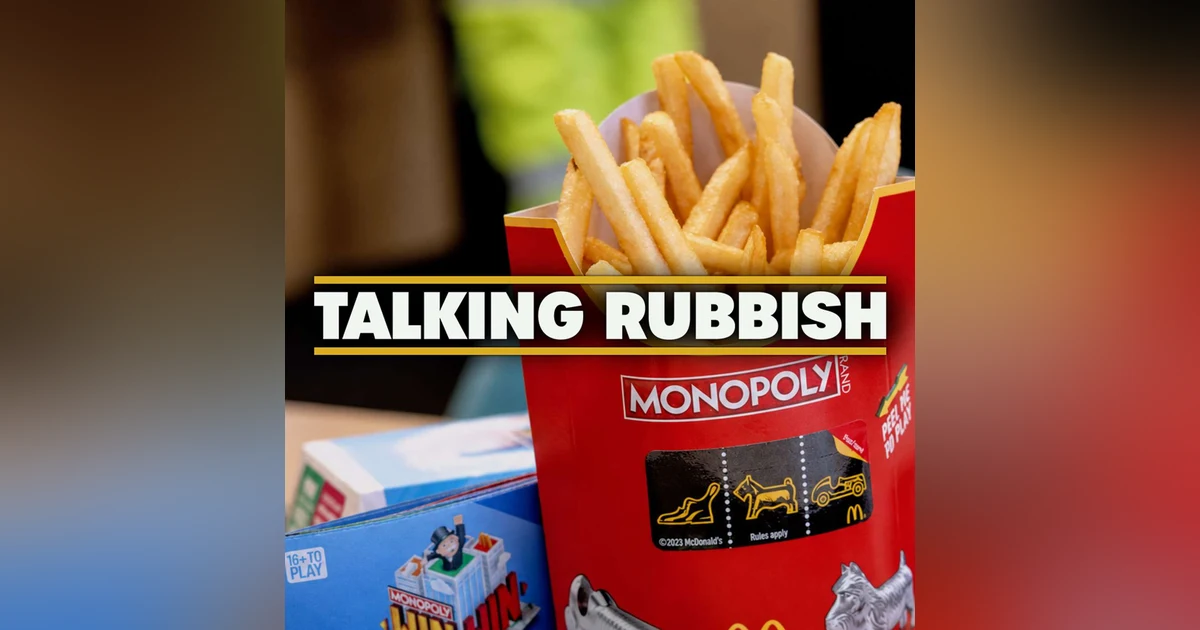
So we said earlier there was a documentary called Pepsi Where's My Jet and mentioned McMillian's, another documentary I was surprised very few people had seen at the live show. This is a story about McDonald's, and it's a documentary from 2020 that I would fully recommend. And again, we're gonna spoil it a little bit, so feel free to pause us, go and watch it, come back to us at some point, or skip ahead maybe five minutes, and you might miss it. Because I really do recommend this documentary. Just to give a summary, between 1989 and 2001, somebody managed to steal $24 million from McDonald's Monopoly, the McDonald's Monopoly game, and it took the FBI years to work out how it had been done.
Robbie Staniforth
It's absolutely crazy because this is one of those big promotions that's still going in the UK at least, and you see it come around like most years, and to understand that behind that someone's managed to commit a huge amount of fraud is crazy.
James Piper
It is amazing that it flew under the radar and kind of didn't become a big story because $24 million is a huge amount of money, and it also means in the US, I don't think there were any legitimate McDonald's monopoly winners. And the re I mean, the reason it didn't get reported very much is because I think the kind of reporting that could have happened around it and when the investigation was happening was quite close to 9-11, and so a lot of the media obviously was focused on 9-11 and not this story. And actually, the person who made the documentary only discovered it because he saw a Reddit thread back in 2012, which was one of those Today I Learned Reddit threads. Oh, yes. And it was like today I learnt there was no legitimate winner of McDonald's Monopoly. And this guy saw that in 2012 and thought, is that true? And did some digging and then ended up making the documentary about it all.
Robbie Staniforth
And the reason, you know, not not to spoil it too much, but the reason is because it wasn't just one person claiming the money all the time. It was about having people be complicit with them in the fraud, and therefore it seems like there's lots of winners from around the country, etc., when actually it's all being sort of cooked up by one person.
James Piper
Yeah, so just to quickly explain McDonald's Monopoly for people who don't know, you basically get game pieces on food and drink packaging. There are multiple to collect, and it's like Monopoly. So you get your streets with maybe three properties on it. If you collect all three properties, you win the prize. And in each of those groupings, there is one rare piece. Yeah. So if there's three properties, one of them will be rare, two of them will be common. And that's how they control how many winners there are.
Robbie Staniforth
Yeah, and that's obviously deliberately designed so that they don't fall foul of some of the things that happen to, for example, Pepsi with the caps, and suddenly find there's this huge prize fund that they can't manage to uh to service. These things, these little rare tokens, become very, very valuable. You know, just them in themselves need a huge amount of security around them to make sure that fraud doesn't get committed.
James Piper
And it wasn't actually a McDonald's employee, it was a guy called Jerome Jacobson who worked as head of security for Simon Marketing. And Simon Marketing had been hired by McDonald's to run this promotion. And basically his job was to apply the game pieces to randomly selected meal items. So he would travel the country to different factories, warehouses, manufacturing sites, and it would have assigned a piece of packaging for him to put the rare sticker on. And it was all completely randomly distributed. So he was traveling the country with these very rare stickers in basically packages that had a tamper seal label. And he was always chaperoned by I think it was a lady because he always asked for the same lady, which Was quite an important part of the story. Basically, whenever they got to a place, I think it typically happened in airports. And it was important that it was a lady, and it was important that he always asked for the same person because he would typically make the switch in a bathroom. So he would say, Oh, I need to go to the toilet, he'd take the case with him that had all the packages in, which had the rare items, and he'd be able to go into the toilet. And what he would do is take out the high-value items and replace them with low-value items. So then when they got to the place where they had to stick it onto the onto the packaging, he was sticking on a low-value sticker, not a high value one. So she'd watched him the whole time, except obviously in the toilet. Now, the key here is how did he get past the tamper seal? And it was because the supplier of the tamper seals, unfortunately, or fortunately for Jerome, sent him a pack of tamper seals. So he was able to take them off the package in the bathroom and replace the tamper seal. So to her it looked like it hadn't been opened, but in reality, it had. Got me thinking, these winning stickers, would they be classed as packaging under EPR and the bus?
Robbie Staniforth
Part of the product, aren't they? Part of the packaging. They're stuck on, aren't they? Yeah, they would. I reckon they would be, yeah.
James Piper
Okay. But part of what and they would be weighed with the component, you know, whatever they're stuck on to.
Robbie Staniforth
Yeah, I presume they're like a paper sticker and it would go as part of the paper weight on one of those fries boxes or whatever.
James Piper
It's funny, when you start uh getting into these stories like the McDonald's story, I I basically did a live um talk a few months ago, and I said, Oh, we're thinking of doing an episode on packaging promotions. And it was amazing the cue that formed at the end of people going, Oh, I've got a packaging promotions story. Someone came up to me and said, Oh, I have a story that's like a competition, so like the McDonald's thing. Um, so I haven't been able to independently verify this. It's just a guy whose dad led the internal investigation at the company. But basically, it was a biscuit manufacturer, and they were preparing a promotion on custard creams, and they'd made these promotional packets that were like, you can claim a ceramic biscuit tin basket. Ah, yes, I remember this one. They had a farmer down the road, a pig farmer, who took all of their old food and stock and used it to feed his pigs. And what they found was suddenly the farmer and their wife started started claiming a lot of the ceramic biscuit tins. And so they were like, Why are these being claimed when we've stopped this promotion? And they tracked it back to the farmer and the wife who had been given these biscuits to feed their pigs and had decided, oh, there's some wrappers here that we've been given that are a promotion, we should claim these biscuit tins.
Robbie Staniforth
Okay, so the end stock, the dead stock, came back to bite them when the promotions got cashed in. But what was the pig farmer doing with all these ceramic tins?
James Piper
I don't know, but can you imagine a more British story than you go into a rest of the pig farmer is surrounded by ceramic biscuit tins and got them from his biscuits? I mean, it's such a nice, quaint British story, isn't it? And what I I mean, what I love about all these stories, or what I find interesting about all these stories, and particularly when it comes to packaging, is how hard it is to undo something that you've started. If you haven't thought through all of the risks, you just can't undo it. Your packaging is out there, you know, and now you have to work out how to damage control.
Robbie Staniforth
Yeah, those recalls or unpicking of an advert or press releases to say, no, no, we didn't mean that, or we meant something slightly different to what we first said, is so unbelievably problematic for marketing companies out there. So I think it's one of those things that one would hope gets better over time, but in the thirst to drive sales, I wouldn't be so sure that we won't see a few in the future, too. It does very much seem like soft drinks are the guilty culprits when it comes to a lot of this stuff.
James Piper
And this will provide us content for talking rubbish for many years to come. So that's not a bad thing. Additions and corrections. Big addition and correction today. But both an addition and correction. Okay. Should we start with the correction? Go on then. So this is related to the lowest amount of packaging you could have in a supermarket meal deal. Oh, yes. Yes. We talked about this a couple of weeks ago. The fruit. I forgot about the fruit unpackaged. The fruit is the snack, absolutely. So correction, and it is a big correction. It almost makes me feel like I should give back the British Podcast Awards. I don't feel worthy to keep it because and and no one's called me out on this. It's me that has done this. Okay. I said that moji was a good one. Yeah, the little drink. Yeah. I said the little drink was smaller than four centimetres and so on recycling. Oh no. And I was so confident because I even said, like, oh, it's different to Smint. And then I panicked. I was basically posting this clip on social media and I thought, I didn't actually measure. And so I took the Smint container with me and I held the Moji up to the Smint container, realised they're both basically the same size. Oh no. I don't know why they don't have the OPRL recycle label. This darn four centimeters keeps tripping us up, doesn't it? Yes, but now I'm forever solved, right? Because I've realized I don't need to carry a ruler with me. I just always need to carry a Smint packet. Because Smint is exactly four centimetres by six centimetres. Okay. So I'm just going to keep one in my pocket, and that's going to be my measuring. There we go. Minty fresh breath. Does it pass the Smint test? We'll be saying. Does it pass the Smint test? But I couldn't believe it. I've done it again, and I'm so sorry to everyone who expects us to uphold the highest level of accuracy. I was gutted myself. But now I will just carry a Smint container around with me at all times. So in theory, the moji would weigh less, the plastic in it will weigh less than the own brand. But this brings us on to the addition. Okay. Because the drinks have been solved for us. I posted our assessment on social media. As a reminder, we got to 26 grams. So the snack was packaging free because it was a loose apple. The wrap, which was the main, was 11 grams of packaging. And the aluminium can was 15 grams of packaging. And then someone said, but what about a caprisson pouch? Oh yeah, pouch. So this was on TikTok. It was, I mean, just to be confusing, it was someone whose username was me. So it wasn't me. This was from me. It was from me, but it wasn't me. And they said, What about the caprissan pouch? And I thought, I hadn't even considered it. So I went and got a caprissan pouch. I'd weighed that match 11 grams. So we have gone from 26 grams to 22 grams.
Robbie Staniforth
Okay.
James Piper
But then, and this is big, I think this is really big. A few people, and I think Mrs. Smith, 290122, was the first. Okay. Said included in the meal deal is hot drinks. So if you go to like a Tesco or another supermarket that has the Costa machine, you can get a hot drink within the meal deal and you could bring a reusable cup in. Really? I didn't know that. Neither did I. Wow.
Robbie Staniforth
That's game changing. I know. It's blown this wide open. I'm trying to think if my local little Tesco has a Costa machine in it and whether I can enact this plan this very week.
James Piper
Mine does and my co co-op does down the road. Now I guess the question is do we count a reusable cup as packaging free? Because I guess in theory you would take the weight of it and divide it by how many times you've used it. But I think in this instance, for the purposes of was my meal deal single use packaging free, I think we can say we've got the snack down to zero, the loose fruit, and we've now got the drink down to zero because we have a hot drink with our reusable cup.
Robbie Staniforth
Okay, so we're laying down the challenge. Try and find us um packaged free main in a meal deal.
James Piper
Main is now the problem. Now I'm gonna spend the week trying to do this, but if anyone else has any ideas, feel free. But I'm gonna try and spend the week because I reckon maybe there's something you could have from like the deli counter that counts as a main where I could just say, can you just put it in my hand?
Robbie Staniforth
Can you put it in this Tupperware that I've brought with me? Yeah.
James Piper
Oh yeah, that's it.
Robbie Staniforth
Like a samosa or something that is main hand.
James Piper
There must be like a in a big Tesco or a big cop or a big Astra or Saint Super's or Morrison's, you know, all supermarkets are available. There must be someone who has a main in the meal deal where I could put it in Tupperware.
Robbie Staniforth
But it specifically has to be a mainstream grocery supermarket meal deal. We can't now blur out to meal deals where there's cooked food and things. We're talking about mainstream mead meal deals at grocery retailers. Correct.
James Piper
But I'm so happy I post on social media because we've got down from 26 grams to 11 at the moment with the main pending. Wow, that's very low resource use. Fantastic. We'd like to take a moment to thank our sponsor, EcoSurety, who are on a mission to rid the world of unnecessary packaging. They help brands navigate the tricky world of extended producer responsibility, but that is not all. They also collaborate on some incredible recycling projects and consumer awareness campaigns for those tough to recycle materials. If you're an organization looking to make smarter packaging choices, check them out at ecosurety.com. And the best thing you can do to help our podcast to grow is to tell your friends and family about it, or you can leave us a review. And if you leave us a review, you can be Robbie's review of the week.
Robbie Staniforth
And this one comes in from on Apple, five stars. Reagan N is the person. I absolutely love this podcast. This is Reagan N, by the way, just in case you can see that. You do too. I do too. I do too. Exactly. I absolutely love this podcast. James and Robbie managed to make recycling genuinely interesting while explaining what actually happens to our waste and challenging a lot of assumptions we make about what can and cannot be recycled. I've been listening for a few months and I'm now working my way through the back catalogue. As a fairly obsessive recycler myself, I thought I already knew quite a lot, but I'm learning something new with almost every episode. Informative, entertaining, and genuinely important. Highly recommend if you've ever wondered what actually happens after you put something in the bin.
James Piper
It's a very nice review. It's a very nice review. Thank you so much. And you can follow us on social media at rubbishpodcast. You can email talkingrubbishpodcast at gmail.com or you can WhatsApp us. Also join our Discord. It's the easiest way to engage with us and listeners of the show. And the link to all of those things is in the show notes. Very topical. And specifically, the British Podcast Awards trophies. I think it's just worth saying, don't you just love our influencers? They see us win an award, and obviously they congratulate, but then they also say, and are the trophy's rubbish or not? And then there's okay, we have to delve into that. That's great. I did some digging, and the British Podcast Award trophy is made by a company in the UK called EFX, which is based in Stratford upon Avon. Okay. I got in contact with you.
Robbie Staniforth
Oh, very good. EFX have been hearing no end of questions from you about these awards. I have no idea what it's made from. Some sort of bit of metal and bit of plastic, but it's so heavy it can't be just. I mean, it's a very dense plastic. Okay, so what's it made of? So, well, before I get into that, what's your gut feel on rubbish or not? Rubbish. There's no way you're separating those elements and I don't know, melting it down to something. What happened to a good old-fashioned, like just gold award? Yes.
James Piper
Probably a little expensive, as James Watt found out. So thank you very much to D at EFX for answering my questions. So there's black acrylic on the front and back. Okay, so that's acrylic, right? That's acrylic. And then the centre section is polished nickel nickel plated aluminium and then covered in whatever the material, like the rose gold for bronze and gold for gold, and then uh it was nickel for uh the silver. Now the front panel, so I don't know if people haven't seen this, it's like it's a sandwich, basically. Two black um pieces with then the metal bit in the middle. Think of a meal deal. Think of a meal deal. Although we got a wrap in the meal deal. Oh, yeah.
SPEAKER_02
So don't think of our meal deal.
James Piper
So the black acrylic on the front is actually a hundred percent recycled uh material. Oh, okay. And then Dee went, and the back panel is not recycled material because it's 20 millimeters deep. And I was thinking, what's that got to do with anything? Why why does 20 millimeters deep mean that it's not recycled material? And uh Dee came back to say 100% recycled sheets are only available between five and ten millimetres.
SPEAKER_02
Okay.
James Piper
So my first bit of advice to EFX is let's make the back panel a bit thinner. And then we can use a hundred percent recycled material throughout. Yeah, that's a good idea. Yeah, but I thought that was quite interesting. Okay, cool. And then the metal is aluminium and then plated, and the aluminium is up to 79% recycled material. So the trophies themselves actually are largely made of recycled material.
Robbie Staniforth
Well, that's a great way to absorb all these all this recycled content. You know, we talk about the fact that you need to make products and things out of recycled material because it can't all go round back into packaging in a circular loop or whatever.
James Piper
It's mixed material, unlikely to be suitable for household recycling, as you've said. However, on EFX's websites, they say if you want if you don't want your trophy, what? I know, imagine. Who? Well, this is probably where they offer it. If you don't want your trophy, you can send it back to them for recycling. Okay. I can't believe anyone's taking them up on that.
Robbie Staniforth
No, but I mean, presumably they put it together, they'll know how to dismantle it and put it into their scraps that they have from production waste. They'll just stick it in there, probably.
James Piper
And they did say that um every bit can be recycled, and they said that actually Haymarket, who own the British Podcast Awards, do send them any trophies that haven't been collected at the end of the year for recycling. Oh, okay. So to summarise, I think you are right that it is rubbish, but it is nice to know that there is a route, and probably the best thing to do is to look at who manufactures your trophy and medal, find out who that is, like I've done, and they might offer a route for recycling later down the line if you wanted to get rid of it. Rubbish news. My news this week is kindly provided by Defra and the EA, who invited me to go to Hodeswood yesterday. Oh yes, you've been on a field trip. I have, which was the woodland in Kent where there was a massive. And I'm using the word fly tip, I don't mean fly tip, because I arrived and the first thing they said to me was, this isn't really a fly tip, it's organized waste crime. Okay. But I was like, but what do I call that? I can't call it I went to visit organised waste crime. I went to visit this huge fly tip that was in the woodlands. It was unbelievable. And the promise from Deferit and EA was that I would spend my day in a muddy field because they've completed the cleanup of this fly tip. So it's just a muddy field. Really? So there's nothing to see, and you were looking at photos of what it once was or something. That's basically what happened. I drove three hours to stand in a muddy field to drive three hours home again. But I, you know, the things I do for BIMFluencers, I've got to go and see this stuff. And to be honest, there was something about just standing in this spot where you knew 40,000 tons of waste had been that is now clean. That was quite amazing. It really was amazing just to think, okay, and they were showing me like tree lines ago, and the waste was up to here, you know, because it was like 15 feet deep in some places. It it is astonishing. And they cleaned it relatively quickly, actually, as in once they got started. I think it was something like 180 days to clear 40,000 tons of waste, which is massive.
Robbie Staniforth
One of these sites that you see just seems impossible to restore the land to anything vaguely like it was before. But then to be stood there thinking, oh, this was once an informal landfill site is very cool.
James Piper
I'll tell you what was really special is like you we were walking around and there were like deer tracks in the floor, and a bird landed on this little pond that was there, and then a heron appeared. Wildlife is coming back to it as well. It's not just you've cleared it, it's actually you've cleared it and it's now becoming a useful space again, which was really, really nice. And uh just getting to spend some time with people, because I think we've been critical in the past, but and sometimes fairly, sometimes maybe not, about the how long it takes to clear up these sites and and you know the prosecutions that come out of them, I think are just ridiculous. And I stand by those comments. But spending a bit of time with Andy uh yesterday, who's the MD of Acumen, who are the company that cleaned it up, um, and they're also clearing up the Kidlington site, the one that's um became very big in the news. I just really got that sense of why it takes so much time and money. You know, this site that they were dumping 40,000 tons of waste at is a site of special scientific interest. So just take that as an example. You've got to get natural England to sign off every part of the clear up. Okay. And because you want to get cracking, you do it over six phases. So it's like you make six separate applications to get approval to clear up. And I'm just thinking, this bureaucracy is mad when you're making a site better. You know, I I think there should be this rule. If you've got a site that's been damaged and you're fixing the damage, can we just skip over all the bureaucracy? Can we just make it better and then deal with that later? I guess there's an argument of like who defines what better is, you know, which would be quite complicated. But I really did feel like I could feel the frustration or the difficulty that had happened in clearing the site and how long these things take and how frustrating it is that the media take a very simple approach of why can't it just be done tomorrow? When when you actually look at it, there's a huge amount of detail.
Robbie Staniforth
My news this week comes from Cornwall because bin trucks are being used to collect the bins, collect the rubbish. That's what they do. Yeah. But also to map mobile phone signal.
SPEAKER_02
Oh wow, okay.
Robbie Staniforth
So they've been having real problems, the council, you know, contacting the drivers and things during their rounds, mapping where there's potentially spots of fly tipping, etc., because the mobile phone signal is so bad in rural parts of Cornwall due to the various kind of rugged topography and stuff. But they have decided with Biffa, their waste management company, that what they would do is on the food waste trucks, they would put this little specially designed box, which basically has a mobile phone inside it. It's sort of about the size of a kind of laptop or so, maybe a little bit bigger. And that goes round mapping, constantly pinging to try and get a signal to see where there are um black spots. And what it's resulted in is the council putting pressure on the big four, so that's Vodafone, O2, EE, and three, the mobile networks, to try and upgrade the signal for residents, you know. So this is the council using the bin trucks to try and hopefully improve the life of residents in Cornwall, but also for the council itself and Biffa, the waste management company who's trying to run their round. And um, if you've ever seen um the trucks, you know, they're logging things all the time where the bins and there's real-time data about picking up bins and things like that. So it's like a briefcase-sized box that goes in the trucks. Hopefully, it will lead to better phone signal and therefore better service provision for recycling in Cornwall and certainly uh food waste provision. The problem is that the mobile phone companies have sort of battered it back a little bit. So Mobile UK, who represent um those four companies, have said, well, actually, it's a bit of a planning challenge, and they're sort of pointing fingers at central government saying that more needs to be done to fund infrastructure around mobile phone networks and also, you know, planning laws, not too dissimilar to the bureaucracy we see in cleaning up fly tips. It's similar when you're trying to put up phone masks and things.
James Piper
Rubbish question. So, today's question comes from our question we answered a few weeks ago about women. Which council could you have the most bins with? And we talked about Denvershire having 12 bins. Okay, so this is a question about a rubbish question. Sort of. It's getting matter. Sort of. And whenever we post things on social media, people ask us questions, and I think actually that's really interesting to answer. Posted a little clip of this on social media, and someone called R909312 said, I don't know much about your podcast, and this is my first introduction. But what are your thoughts on scenarios like this where the overwhelming burden is passed to the household as opposed to managed by the local authority? It seems counterproductive to the overall goal as it becomes more work than most would be willing to do. So basically saying, if you have 12 bins, it's going to put people off sorting because there's too much sorting going on.
Robbie Staniforth
How many bins is too many bins? Shouldn't council be doing it more to make it easy for you in the home is sort of what they're hinting at.
James Piper
And a very thoughtful question, I thought. So my response was, thank you so much. This is a great question. I'm going to add it to our list to cover on the podcast. Hope you get a chance to listen for the answer. And they responded saying, I'll be honest, it's not my bag, no pun intended, but all the best. So let me I mean, let me tell you, if they'd intended that pun, they would be so welcome here.
Robbie Staniforth
They would be very the pun intended means they probably aren't a binfluence.
James Piper
No. So R909312, whether you like it or not, Robbie and I will discuss your thought, well thought out question and you won't hear the answer. So I guess Robbie, what's your view? Does too much sorting, if we give people too many bins, do you think there is a point where it puts people off doing their recycling?
Robbie Staniforth
There has to be a finite capacity, doesn't there? You cannot just go to infinity in terms of how many bins you can have.
James Piper
So if you had 12, let's take the Denbyshire example, do you think that would increase recycling or decrease it? Because people I just can't engage with. Overall.
Robbie Staniforth
Yeah. No, I think it would generally increase because there would be enough people to engage with it that people don't just, you know, turn off from the whole thing. I think there would be of the 12, there may be four or five that are the lesser used bin, so to speak, and that certain people won't engage with.
James Piper
I don't think anyone has actually come up with a universal kind of optimum number of bins. There's so many variables. But but I think it is constantly that balancing act of co-mingled increases contamination and decreases what you what recycling you can do. And too many bins definitely does put people off. But you but I think what matters the most is actually the friction created by the system. So storage space is a good example. Where are you going to store the bins? How far away are the containers from your house or or from you from your waste if you're out on the go? What's the frequency of collections? Are the categories that you the categories of bins are they intuitive? There is no easy answer here. I tried to find some studies. There was a 2024 review that looked at 213,000 households. It looked at streams ranging between two and eight, but in itself couldn't identify an optimum number because all the different measures were so different. They were basically reviewing all the existing studies that had been done and found there was no real way of working out an optimum number of bins. But there was a really interesting 2025 study coming from Israel where they experimented with 481 households and they they sorted them between one and six streams. And willingness to sort did not actually fall as more bins were added. So it actually increased the willingness to sort by 17% every bin that was added. But increasing the walking time to the bin by three minutes cut willingness to participate by about half.
Robbie Staniforth
Yeah, and thinking about my own personal experience, what I'm actually doing is I in the home am co-mingling.
James Piper
Okay, yes.
Robbie Staniforth
Everything is co-mingled in one recycling bin. In your house. In my house, inside the house, underneath the sink, and I've got a food waste bin, which obviously is s sits on its own. And then taking that co-mingle, and it could I could outside be sorting it into two bins. It could be ten. It could be, it could literally be fifteen, twenty, and it would make no difference to me in terms of convenience, um, because there's space to be throwing it into all of these different containers. So I think it is I totally agree with this study that it's actually about convenience. And what's convenient for me inside the home is to just bung it all in recycling, and it's all clean and stuffy, it's not like dirty and smelly because I give it a quick swill and all the rest of it. So that when I do go to do every two or three days, take it outside to sort, I genuinely could have many bins out there.
James Piper
This discussion happened with us talking about whales. So closer to home in Cardiff, there was actually a 4,000 household trial where they switched from that co-mingled uh bin that you've been talking about, you know, putting everything into one bin into source-separator multi-stream system. So basically doing what the rest of Wales do, which is separating everything out. And they found contamination fell from 30% to 6%. Wow. And they increased successful recycling from 70 to 90%. Yeah. So there definitely is a limit to what people will take, but I think it is more about making it really convenient to recycle, putting your bins near your house, having storage for them, all those kind of things is way more important than the number of streams you have. Greengrocer is the part of the show where we're developing a green supermarket, trying to come up with the best packaging for various grocery items. Um, Robbie, what is our item for this week?
Robbie Staniforth
I love noodles. Okay. Yes, I really do love noodles. We've got an Oriental supermarket very close to home. It's actually where I drop my daughter off for dance every week. So I'm regularly going up and down the aisles looking at the variety of instant noodles. They all come in quite similar packaging, and you can imagine the sort of flexible plastic version, but it did get me thinking there's all these different types of noodles. What is the best packaging format for them?
James Piper
And part of the reason I thought this would be a good one today is because we reflected on the lowest packaging in the meal deal in our additions and corrections. Oh, yes. And at the same time, I was thinking, what's the highest amount of packaging? And I noted that the pot noodle in lots of supermarkets now has been added as a snack for the meal deal. Oh. So I think if you were going for heaviest packaging, you probably would have a pot noodle snack because that's quite a heavy pot at about 40 grams included in this hash. I would have thought that was a maim. But I suppose I mean, if you want I mean, lots of people were commenting on our social media saying getting an apple is not value for money. And I'm like, yeah, yeah, we weren't trying to do value for money. If you want value for money, it probably is the pot noodle is your snack. But um, yeah, lots of people judging us for our 22p fruit, saying, why would you do this? And so when I was looking at this meal deal thing and I was looking at pot noodle, I noted that pot noodle had recently completely gone against their branding and introduced a flexible pouch like noodle block. So, you know, like you get with like super noodles or one of the equivalents where you have a block. Potnoodle now can also be purchased in a block. Completely ruining the name pot noodle. It's not called block noodle. It's not called block noodle, yeah. It's still called pot noodle. Weird, isn't it? That's strange, yeah. So it got me thinking, which would our dream shop have? Would it have the pot or the flexible wrap?
Robbie Staniforth
The the um the bowl, you know, sort of like the pot is the one that I see. Those look the most premium in this oriental supermarket, and I'm always tempted to get those. But I'm generally using these uh pouches um to or the blocks or whatever to make a meal. You know, I'm not just eating instant noodles, I'm like jazzing it up with some you know, vegetables and things, stir fry that I'm cooking with the noodles, but I just prefer it because it's got those nice little sauces and things in them rather than just buying the standard egg noodles. So the bowl is also potentially an option.
James Piper
Okay, but that's like a pot, yeah. It's sort of like a pot, yeah. PP, most of them are polypropylene. Uh, the one I weighed is actually a sober noodles, not a pot noodles. So we've got all sorts of branding issues going on here. But there was a it was basically about 40 grams for the pot, and the flexible around the block for particularly the pot noodle one, because that's the one I went out to go and buy just before we've recorded this, was five grams. So the difference is huge. 40 grams for a pot, five grams for a sash for the the wrapper. And the other thing is the block, the new pot noodle block, is actually two servings, uh, which is a real problem for me because I've just opened it to weigh the packaging and I was gonna have it for lunch. And I've looked at it and I'm like, oh, it's two servings. Double lunch. Ellie's not here. So I don't know what Do you want a pot noodle after this? Lovely. Okay, there we go. We've solved it. It's the classic talking rubbish dilemma. Do you go for the low weight, trickier to recycle flexible, which is like two and a half grams per serving, or do you go for the high weight, very recyclable polypropylene pot? And it's worth considering that the pot serves a purpose. It is also your cooking and eating vessel. Whereas the wrap, the block, I now have to cook on the hob and put in a bowl. And so that requires some washing up.
Robbie Staniforth
Yeah, I know. But the thing is, that pot noodle thing is basically single-use crockery. Yeah. And that just doesn't feel right, does it?
James Piper
Single-use crockery. Weird. Okay, so are we gonna land? Are we happy to land on the very lightweight, roughly five grams, take it back to supermarket, flexible, and we would prefer our instant noodles in block form rather than pot form? I think we are, yeah. Residual rubbish. This is something that has happened to us this week that's made us feel like an emoji. I got a targeted ad on Instagram for the mouse phone case. If you come across mouse, I mean I get targeted Instagram from them all the time. They're the guys who basically make phone cases where they chuck the phone off a crane and go, look, the phone didn't break. Yes, okay, that's mouse.
Robbie Staniforth
Right, yes, I've seen those.
James Piper
And it is amazing. And if you think about them as a company, they are probably responsible for reducing a lot of e-waste. Yeah, sure. Apple are launching the iPhone Duo on the 23rd of October. And this is a this is Apple's first foldable phone, right? So it's got two screens that they unfold. It's called the duo, is it the folding, yep. And Mouse were explaining how difficult it is for phone case manufacturers to make a case for a foldable phone. Okay. You've got to cover the outer screens, the underscreens, but you've also got to make it functional. So it is quite hard to make a phone case for a phone like this. For sure. And because it's so hard, Mouse said we're actually not going to be ready. On launch day, we're not going to have our case ready to go. So, what we're going to do is if you buy a phone case from us, we're going to send you a recycled plastic case now to temporarily use before the real phone case arrives. What?
unknown
I know.
James Piper
Really? Isn't this mad? And they took this as like a positive thing. So everyone's commenting going, wow, this is great, so generous of you. And I'm like, You're going to end up with two phone cases. You're going to end up with a phone case you don't want.
Robbie Staniforth
Like a rubbish one that they've done so far and then the actual one.
James Piper
Yeah, I mean, let's not I don't know how rubbish it is. I don't want to slander them. It's not going to be as good as the one they will end up creating. That is correct. And so this is a great deal. I mean, the people in the meal deal who are saying, why would you buy fruit at the meal deal will be very happy they got two phone cases for the price of one. But for us, a podcast obsessed with consumerism and not buying more than we need, it is very odd to uh take the position that you will send a second phone case because your first one, the proper one, isn't ready in time.
Robbie Staniforth
I've never heard of anything like that as a marketing spiel or whatever. We care about your phone so much, we're going to send you a temporary one while you wait for the better one to be designed and manufactured.
James Piper
It's such a contradiction from a company that definitely could take a stance of we reduce e-waste, we're in it for the environment, which I don't think they mean. They just talk about making the best phone cases.
Robbie Staniforth
Yeah.
James Piper
But they could take that stance of we are an environmental company. Sort of disintegrates a little bit if your answer to not being ready when the phone comes out is to send extra material.
Robbie Staniforth
Yeah, I suppose maybe we're not the target demographic. We would be like, protect your phone, don't create e-waste. Maybe that doesn't sell phone cases.
James Piper
Apparently, I am literally the target demographic because I have got so many target ad ads from them over the years. I must be in their system as target demographic.
Robbie Staniforth
Oh, well, there we go. And my residual rubbish this week comes from a colleague of mine who I work with at EcoSurety. I didn't actually ask her if I could mention her name, so I won't, just in case she didn't want the shout out. But we were at a company event uh last week, and she mentioned to me an app called Trash Nothing. It's along a similar line to Oleo, but more focused on stuff. It's basically the ads for when you want to get rid of something for free. In Bristol, we often put it on a wall. Sometimes you put it for free on things like Facebook Marketplace. Generally, you wouldn't use apps like eBay and Vinted, because those are really generally to sell stuff rather than give it away for free. So this Trash Nothing app, amazing. It's uh where you can list for free all of the items you want to get rid of rather than putting them in the bin. And you would be surprised what gets listed, because I downloaded the app last week, what gets listed and what goes. Almost everything. It just eventually goes because someone somewhere has a use for it or is willing uh to pick it up, including lots of thrifters who will upcycle things into better stuff at some point. And what I hadn't realized when we were having this conversation is that it's by Fregel, who is launched a website. It must be, I don't know, maybe 20 years ago now, because I remember that company, Fregel, and that was before everyone probably had a mobile phone in their pocket, or at least not one that you could uh browse the internet easily and have apps on. So they're still going. I hadn't heard of them for years and years and years. It was great to hear about this. So my residual rubbish this week is that I've been looking into making sure that I very easily get rid of the stuff I don't need anymore. Often is quite low value, not worth selling. But someone, you know, you must often pick up things. It's like someone somewhere must have a use for this. I it's I'm going to make one pound listing it online. It's not worth it, but I do want someone to have it. So trash nothing is a recommendation.
James Piper
Very good. Thank you very much. And as always, thank you all for listening. Thank you for the reviews and engagement. We absolutely love getting the opportunity to do this podcast each week. Join our Discord, follow us on social media at rubbishpodcast. You can email talkingrubbishpodcast at gmail.com or you can WhatsApp us. And everything we have discussed today can also be found on our Linktree. And the details to all of those things is in the show notes. There is nothing left for me to say other than see you next Monday. Bye. Bye.