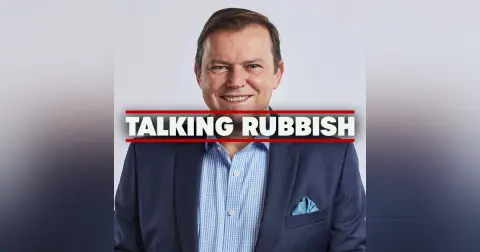
115. Inside the UK’s Deposit Return Scheme with Julian Hunt


 Apple Podcasts
 Spotify
 YouTube
 Amazon Music
 Castbox
 Podcast Addict
 PocketCasts
 Key Takeaways
- James and Robbie celebrate winning a gold award for education and a bronze for impact at the prestigious British Podcast Awards.
- Julian Hunt from Exchange for Change joins the podcast to discuss the upcoming implementation of the UK's Deposit Return Scheme (DRS) launching in October 2027.
- The DRS aims to tackle high volumes of packaging waste and low high-grade recycling yields by laser-focusing on beverage bottles and cans.
- Setting the deposit level at 20p was chosen as a balanced sweet spot to incentivize consumer behavior change without overburdening households during challenging economic times.
- Exchange for Change is working closely with industry stakeholders and utilizing retail handling fees to ensure a robust and accessible network of return points across the UK.
After four episodes digging into deposit return schemes, we sit down with Julian Hunt from Exchange for Change to put some of our biggest questions directly to the organisation delivering the UK’s DRS. We discuss why drinks containers were chosen, whether DRS really reduces litter, how the 20p deposit was set, what happens to reverse vending machines at end of life, who is actually paying to get the scheme off the ground, and whether local authorities could lose out as valuable cans and bottles leave kerbside collections. James also pitches his four-glasses-of-wine solution to DRS funding, and Julian tells us just how confident he is that everything will be ready for launch in October 2027.
Join hosts James Piper and Robbie Staniforth as they delve into the world of recycling, hopefully having fun along the way. One thing is for sure, they will talk absolute rubbish from start to finish.
Please take a moment to complete the Simpler Recycling tracker
We would love you to join our community on Discord
Special thanks to our sponsor, Ecosurety
To get exclusive videos and clips, follow us on Instagram, TikTok, Threads or Facebook; @rubbishpodcast or YouTube: @talkingrubbishpodcast
Or you can contact James and Robbie with questions or just general rubbish musings using the email address talkingrubbishpodcast@gmail.com or by texting them via WhatsApp on 07356 069 232
Relevant links and reports mentioned in the programme can be found on the Talking Rubbish Linktr.ee
Transcripts and episodes can be found on the Talking Rubbish website
Music licence ID: 6WPY8Q4O2RPFIOTL
Frequently Asked Questions
What is Exchange for Change?
Exchange for Change is the deposit management organization sitting at the heart of the Deposit Return Schemes launching across all four nations of the United Kingdom in October 2027.
Why was a 20p deposit level chosen for the UK's DRS?
The 20p deposit level was decided after extensive research and consultation to provide a sufficient financial incentive to drive consumer behavior change and reduce litter, while avoiding a severe financial burden on households.
What is the primary goal of the UK's Deposit Return Scheme?
The primary goal is to drastically improve the quality and quantity of collected materials—specifically PET plastics and aluminum cans—to ensure they are recycled back into new beverage containers and to significantly reduce visible packaging litter.
Hello, welcome to Talking Rubbish, a weekly award-winning podcast. Delving deep into the world of recycling and discussing the truth behind snappy headlines and one-sided stories. I'm James Piper and I'm joined by Robbie Stanley, my far from rubbish friend. And we are joined today by Julian Hunt, our far from rubbish guest.
Robbie StaniforthGood morning, Robbie. Morning, James. What a different intro. Yeah? Did you notice a difference? We've got some key extra words in that. Yes. What would those words be, Robert? Award winning!
unknownOh my god!
James PiperOkay, like how do we hold these up so the camera can see them?
unknownWoo woo woo.
James PiperHonestly, we are just too excited to know that.
Robbie StaniforthYeah, I cannot believe it. So we were at the British Podcast Awards and we won not one but two awards.
James PiperYes, they are slightly different sizes because we won a gold for education, which is this one here. And a bronze for impact. Yes. Now this it was just unbelievable. So let's just do a bit of a look. This was this is a big awards ceremony. I think we talked about the fact that we'd been shortlisted a couple of times. Genuinely didn't think we were going to win anything. Because and especially because as we arrived, so it's in the 02, we arrived. First person we see, Peter Crouch.
Robbie StaniforthYeah.
James PiperThen Sarah Davies. Yeah. Then Chris Stark, someone I grew up with on Radio One. Um, who else did we see? We saw Alan Carr. Alan Carr, yeah, it was crazy. So you're just thinking, we are so out of our depth, it's unreal.
Robbie StaniforthThat's literally exactly what we were out of our depth. Our eyes were popping out of its sockets, like going, Oh my god, what are we doing here?
James PiperSo we were quite early on with education. That was one of the first. And I have never been so nervous in my life. And it got to education where they do bronze, silver, gold for each one. Yeah. And bronze wasn't us. Nope. Silver wasn't us. Absolutely not. And I was getting progressively more nervous. And then they went, and the gold award goes to talking rubbish. And honestly, my mind just blanked out.
Robbie StaniforthI couldn't tell you what happens after that. It was a total blur. My heart was definitely pounding. And also because as we made our way up to the stage, I knew it was Michelle Hussein, the like legendary British broadcaster who was about to give us this award. And it was like, what am I doing on stage with this person from the telly?
James PiperIt was amazing. So we had this moment where we got a photo. I don't remember any of it. No, we were taken round to the back where we had to do like a media interview to for them to put some stuff out on socials. And while we were at the back, there was a TV screen showing the other awards being given. And I was like, probably, we've just got a bronze in. I don't even know what we got a bronze in. But our faces are on the TV again. And we're not out there because they weren't giving out the bronze and silvers on stage. So I don't think we needed to be out there.
Robbie StaniforthIt was crazy. And I must say, the the fact that it was the first one of the three we were up for that we won was great. You know, in the order. A big relief. Because otherwise it would have been like, oh, we didn't win the first. Oh no. It would have got even more nervous and tense than we already were. It was the very first one that we were up for that came out talking rubbish. And in that green room, wasn't Alan Carr just so funny. He like came out of his interview, was just absolutely hilarious.
James PiperDid he?
unknownYeah.
Robbie StaniforthI didn't even notice it. He came out of the room. He came out of the room and went, oh, they're awful in there.
unknownOh.
Robbie StaniforthYou were gonna hate it, don't you remember?
James PiperIt clearly is all a blur. Oh my god, it's all a blur. It's all a blur. And we had a few th a few things have happened subsequently because it just, I mean, you just think, God, that can't get any better. Because it this is genuinely the biggest award in podcasting. Certainly in the UK, you know, and considering our audience is a UK audience, our podcast is UK, for us, this is the biggest award. It's just amazing to be surrounded by all these celebrities, but they're celebrity podcasts. It was very odd. But there were a few things that went full circle. So I happened to see Dan there from No Such Thing as a Fish. And when Robbie and I first started this podcast, we went to go and see No Such Thing as a Fish Live. Yes. And we met them after, just they were doing like a meet and greet, and we went, We just started this podcast on recycling. Because we didn't couldn't think of anything else to tell them. So we just shouted that at them. And they were like, Oh, right, that's interesting. And they were very polite about it. And then to see Dan and be like, Dan, I saw you two years ago when we first started, and uh, we just shouted this at you, and now we've just won gold, and he's like, We must get a photo. So he was so I went and found you, and we got this photo. It's amazing to compare the two-year-aga when we just started to the pinnacle of our podcasting career, which happened in front of him.
Robbie StaniforthThings have changed so much in those two years. We had no idea what we were doing. We were like three or four episodes in when we first spoke to them, and then now it's like, whoa, we're at the awards with some of our favourite podcasters, and that wasn't the only famous podcaster we met, was it?
James PiperNo, absolutely not. So I am a massive fan, and I may have talked about it before, of the Ellis and John podcast, and have been for a while, and I've been binging a lot of episodes in the last few months. And so I was starstruck to see that Dave, producer Dave, was there. And he's a key part of Ellis and John's podcast. For anyone who knows it, they'll know what I'm talking about. And I thought, I've got to go and say hello to this man. I have to meet him because I have just listened to so much of their podcast. So I went over, I managed to grab him and say hello in between other people talking to him. And he was so nice and lovely. So just amazing and genuine and really supportive, and really just he I think the theme from lots of people was like, if you've just won a gold, you must be part of like a big podcast, you must be part of a production company or something like that. So everyone just sort of had the same question, which is how do you do this? is three guys essentially, because it's you, me, and Greg who sorts our audio out and does a great job with the audio. Lots of people surprised that we'd won this award um on a shoestring, should we say?
Robbie StaniforthYeah, well, the first question was always so who's your production team? Who are your inlet sponsors? Then we go, uh it's EcoSurety, a little known compliance company. They sort of can't believe it.
James PiperYeah, thank you to EcoSurety, as always. Um Yeah, so Dave said, Oh my goodness, I must I'm gonna mention you on the show. We're I'm off to record the show tomorrow. I'm gonna mention you on Ellis and John. And I was like, Okay, that would be absolutely incredible. It's genuinely one of my favourite podcasts. And lo and behold, episode went out the next day, and he said, I've got to mention talking rubbish, and he gave us an amazing shout-out.
Robbie StaniforthYeah, it's recycling but amusing.
James PiperThat'll do. That'll do. I was really, it was just amazing. So we had no such thing as a fish, we had that, and then finally I on LinkedIn I noticed someone had tagged us in a post, and it was one of the judges, Bobby, who said following the judging, she wanted to shout out Talking Rubbish as her favourite like podcast that she judged of all the categories she judged. She was like, the one I've enjoyed the most is Talking Rubbish, and I've become a influencer. And so we're testing that theory by saying, Thank you so much, Bobby, if you're listening to this.
Robbie StaniforthWe really appreciate it. Absolutely amazing. Yeah, and it was just one of those evenings where total whirlwind, genuinely, even though we were nominated in three categories, we did not think we were gonna win given the kind of company we were keeping. But it was great to be there, celebrate with our friends and family. It was just such a great night, and yeah, totally glowing. But what we're gonna do with the trophies, where are they gonna go?
James PiperWell, from next week, they'll be up on the shelf, won't they? We're gonna have to put them pride of place in the shelf. I think I'll have the gold, you have the bronze. That feels about right, doesn't it?
Robbie StaniforthThat feels like the right division of labour.
James PiperHi Julian, thanks for joining us on Talking Rubbish. It's great to have you here. So we've sort of we were talking about you last week as a representative of Exchange for Change uh discussing DRS with us, which is just awesome because we're at the end of what has become this very unintentional five-episode arc around DRS.
SPEAKER_01And I get the feeling, guys, we probably should schedule in some regular updates um as we go through this journey with you know, next year's gonna be gonna be busy.
James PiperNext year's gonna be very busy. So, do you want to give a quick intro and then we'll we'll come into some of the questions we have following four episodes and kind of the things we've picked up over the last four episodes that I'm sure we'd love to get a view on from you?
SPEAKER_01Yeah, well, thanks. Well, look, um so Julian Hunt and I uh I have a day job. I mean, for the last uh uh 13 years or so, I've been working at uh Coca-Cola Euro Pacific Partners, and they're the main bottling franchise partner for the Coca-Cola company. So they're the people who make, sell, distribute Coca-Cola products um here in Great Britain. So obviously being very close through all that time to the debates on packaging, waste, recycling, um, because they're very, very pertinent to uh to my day job. However, for the last year, I've really spent all of my time helping, um, in fact, it's longer than me, but line the time flies. So for the last sort of 18 months or so, I've been really focused on helping to um with many industry colleagues to form, launch, and then stand up Exchange for Change. And for those that don't know, Exchange for Change is the what's called the deposit management organization. So it's the the body that sits at the heart of the deposit return schemes that are now going to launch in October next year in uh all four nations of the United Kingdom.
James PiperI guess it's not a secret that I uh struggle with DRS. I think you know, in an established curbside system, I think there may be better places to spend our money. Obviously, you feel differently because you are putting a lot of time and effort into making it happen. What do you think I've misunderstood or got wrong?
SPEAKER_01Well, it's a deep philosophical uh question, I guess, guys, to lob at me from from the start, isn't it? Um but I I suppose I'd synthesize that maybe and say uh why why do we think we need DRS? Um and you know, for up for everybody in the industry, it's nearly, I guess it's nearly 10 years now that this has been a live debate as you know, successive governments have looked to address the challenges around waste, recycling, litter, low-carbon economy, all of these things interlinked. So, you know, why would you you bring it in? I guess I mean I'll I'll step away from my my exchange for change role and just kind of give a kind of personal anecdote to that, which is a bit a bit out of date now. But why did I become a supporter of of DRS? And I guess I go back about nearly 10 years ago um and was looking at all the data around what was happening within recycling. And yes, you know, we had some quite impressive uh published in you know recycling levels of just under 60% for things like plastics and plastic bottles. But when I really started to dig into that data and look at well, what was what was actually happening to those bottles? Because that was really 60% being recovered. What was actually happening to those containers? And I kind of got to a bit of unaudited data that said about 8% were going back actually into making food grade PT for the for the industry that I was part of. And that was a bit of a eureka moment for me of thinking, God, that that can't be right, and that can't be the way forwards here. And then linked to that, there was turmoil around the PRN system. Costs were going up rapidly. A plus achange, there, I think, at the moment, particularly again with with plastics, and that didn't seem to be the right system. And then there were quality issues for companies like the one I was in at the time trying to increase the amount of recycler it was using again, particularly in PT containers, the quality and the quantity still wasn't great. And even now, talking to one operator a couple of weeks ago, they were saying when they buy feedstock, they're still getting yields at best of 70%. So there's still a lot of waste in the system. So answering the question, that's a very long-winded answer. Apologies, but uh, why DRS? I think because it really tackles so many issues. It delivers high quality, high quantities of really good materials that will ultimately get recycled back into new beverage containers. We know it tackles the issue of waste and litter, particularly visible litter. It's a really good solution for that. And we hope it supports and drives the circular economy within the context of you know, we're moving to a new system of extended producer responsibility. And DRS, I think, needs to be seen in that context. It's a form of DR of EPR, and it has to be seen in the context of all the other structural big changes that are going on in terms of how we um collect and process waste.
James PiperI guess the le the question that leads on from that, other than litter, which I'd like to come back to, um, because obviously that's something we've discussed in our um in our experiences in Ireland. What if we only bought packaged bottles and cans, I would agree that you know, let's focus on getting those back in the best possible way, and DRS would 100% be the way to do that. I guess the the comment or conversation we've had is we buy lots of different types of packaging, and arguably the PET stream is and the aluminium stream are potentially the easiest to get out of a Murph or out of a facility. So wouldn't it be better to flip that on its head and do a DRS on the stuff that's contaminating the waste stream now? So if you did DRS on flexibles, you'd be pulling out some of the contamination and putting that in a dedicated stream. And what's left would be your bottles and cans, which are really easy to sort and really easy to recycle. So I guess from the point of view of a drinks company or exchange for change, I can completely understand why you would take the view that, hey, this is the best thing. But that is quite focused in on a product when you and take the glass industry as an example. You know, they're saying, well, we can't just look at plastic and allo plastic bottles and aluminium cans in isolation because it puts you in a different financial position compared to EPR. Um, and that's something we've discussed loads and loads of times. But I guess I'm interested in your view on that, on whether you would spend your time getting the thing that's collected 60-70% of the time up to 95, or whether you would focus on the thing that's collected 5% of the time and try and get that up to 95%.
SPEAKER_01A great question, but I guess directed at the wrong guy, if I'm completely honest, just to kind of bat that one away, because uh ultimately those policy discussions happened many, many years ago. Um, and you know, the big policy interventions were agreed on taking a while but are now coming to bear, aren't they? Which is uh the move towards extended producer responsibility, the um the moves towards consistent recycling, obviously the food waste has coming has come in as well, uh, and then the launch of DRS to tackle um bottles and cans, beverage bottles and cans. Um I guess there are two links to your to your question though, James, would be firstly this point of yes, we are collecting through through households, you know, high levels of uh containers, um but you know, certainly for the plastics, is is the quality there to ensure that you're really driving true circularity? And then secondly, for both forms of container, I think it was DEFRA data that says that you know there's about six and a half billion that are not being collected, they are either being lost or being littered, and so DRS is trying to kind of and will, I believe, tackle both of those those issues simultaneously. So, you know, it's driving circularity and addressing litter, which we all know from endless surveys is is a real concern for citizens and a real frustration.
Robbie StaniforthYeah, and I suppose coming on to the like philosophical differences when it comes to EPR, and as you're right, DRS should be considered as a version of extended producer responsibility. I suppose it depends whether you sit on the sort of macro greater good side of EPR, like the whole system, or whether you favor something that's more akin to a lesser-used acronym, which is individual producer responsibility, and each brand individually understanding where they can take the most responsibility and direct their funds into solving their own biggest waste problem, which uh, you know, with a with a former hat on, uh Julian, it is clear that plastic bottles and plastic bottle littering, waste, uh the degrees of quality of recycling is the biggest thing for a certain section of industry, the drinks manufacturers. And I don't think there's a right and wrong answer to it. It it's a spectrum, isn't it, of the degree to which you think an individual brand or an individual industry should have their own EPR system, in this case DRS, to sort of get their own house in order. Eventually you will have these concentric circles that emanate out, and ultimately it's all packaging somewhere across the whole of the world, but it's kind of where you bookend the whole system. And I think often having been in these policy discussions, it's quite hard to tackle everything all at once, as EPR is trying to do in the in the grand scheme of things, whereas DRS is really just laser focused on one thing. And and I think the the quality point is well made, Julian, if if it is in fact only in the tens of percentages of actual bottles going back into bottles. And we've definitely heard this from other drinks brands, they just can't get hold of enough PET to put back in their drinks bottles. And you think, well, hang on, that's the one that's really well collected, and isn't it quite easy to put it in a drinks bottle? So there's a disconnect somewhere, isn't there?
James PiperSo, Jillian, just circling back to litter, because that was a um a comment you've raised. I guess I was looking into the Irish skin because my experience of it was an increase in litter, not of containers, of course, but of other litter. And I guess a theme of some of the things we're discussing is when you look at DRS, it's quite easy to say, well, it will do this to containers and forget what it does to everything else. And specifically in Dublin, where they have this issue around small, you know, bins with small apertures and people reaching in and pulling out containers, they're obviously pulling out other things. And and Dublin have said they've got a litter issue from DRS. I guess when I look through the impact modeling that the government have done, they're suggesting there will be a reduction in litter costs. So I'm intrigued to see if you agree with that and where where cities might be affected by things like DRS.
SPEAKER_01No, I was I was really interested in the programme you did, James, um, when you were in Dublin. Um and I'm sorry you didn't have a great experience. I've I've had a couple of trips to to the Republic and seen the opposite, actually, of some really good operators. Their machines all work, everything's seamless, consumers love it, engage with it.
James PiperI will just say Robbie's just had a LinkedIn comment on talking rubbish saying, I'm just back from Ireland and everyone loved DRS. So I was like, I myself, you know, we are getting comments saying my experience was the opposite. So it is worth acknowledging that definitely. And I'm really pleased you've raised that because of course one person's experience is not sure, is not the reality for everyone. But um, but you know, it uh uh it was frustrating to be in a position where I was like, I really want to report back on this positively because I was conscious that I was coming at DRS quite negatively and to not have that experience. But I do uh acknowledge that other people have very different holidays to me. So I'm glad it's worked for you.
SPEAKER_01You had a nice holiday despite that.
James PiperI did, it was lovely.
SPEAKER_01But I think the point you made um, you know, is a really is a really critical one, and it's certainly one an issue that's on our, I guess you call it our watch list of of things that we need to be very conscious of and a good learning, not just from Ireland, but but elsewhere. I guess the the challenge being it's a very visible issue and problem, but how serious is it in the overall context? How big is it? I genuinely don't know, and I don't think there's any research out there at the moment that can help put it into a into a context. And we shouldn't, I think, I would say this, wouldn't I, but I think we shouldn't lose sight of the of the big picture, which is um I think it was Reloop did some research uh recently that said, you know, their experience looking at schemes um around the world is that you get a 50 to 60 percent reduction in all litter um linked to beverage packaging, you know, usually within the first year, and then in really established schemes, you know, it can go up to 80 or 90 percent after a couple of years. And certainly I think that is the experience at a bit higher level in in the Republic of Ireland at the moment. You know, they definitely saw a very visible decline in overall litter linked to beverage packaging, but there are these these other issues that that do need uh to be addressed as well. And then I guess slightly tangentially, but I do think it's important. The the other thing that we've we've done in the UK context is given a lot of thought to the deposit level, and if we've got time, we can probably. Back to this in more detail, but thinking that at 20p uh a container, this is hitting a good spot that will encourage people not to want to put their containers in um in the street bins when they're on the go. So it's sort of oh you know, very quickly people realise there is not going to be a lot of containers in those those bins because it's worth people's time and effort to take them back with them, to put leave them in the car, to take them home on the train, uh, because the the intrinsic value of the container uh is sufficient to want to drive that as well.
Robbie StaniforthSo, was that one of your biggest decisions? Because it's the one that me and James have debated on the podcast a bit, but also just privately for probably about a decade, like setting that 20p fee. How did you go about modelling and deciding that that's the right amount? Is there lots of science to it? Or ultimately, is it a sort of judgment call basing on looking at other fees across the world? Can you give us an idea of how the heck you made that decision?
SPEAKER_01Um yeah, not easily, it's the honest answer. Um, but it did involve uh, you know, a lot of consultation um with the industry, and that was both with the investing member community, but also more broadly, um, through we've we've established something we call the industry advisory group. So that's I think at last count's 50 plus trade bodies that represent all the sectors directly and indirectly impacted by DRS. So not materials sectors, not waste management sectors, but you know, retailers, wholesalers, hospitality producers, small brewers, etc., making sure everybody's there and can have a voice. So a lot of consultation on the proposal, um, a lot of research, market research done, consumer research done. And really what you're trying to do is is find the right, the right spot. And I've I've heard some of the conversations you you've had on the podcast as well. I mean, it's a very complicated, um, very complicated topic to get right. And not everybody thinks we've got this right. Some are very concerned within industry it's too high. Others, I think like you guys think it should be higher to really drive change. Um, but what you're trying to find is the right, the right level that will be sufficient incentive to drive, support, the behaviour change that you need, whilst also being cognizant that it has to be set at a level that doesn't become a barrier to families in what we know is a very challenging economic environment this year. We know next year will be even more acute, I fear, and beyond. And also setting at a level that you can't you can't change it. It's very difficult to change. Um, so you want to make sure that there's stability there for uh the first you know years of the scheme and it's driving the right change. Um, so we had a long look at whether it should be variable. So, do you have different levels for bigger packs, smaller packs? Um, and the decision in the end was taken to have one deposit level, and we felt that would A drive the behaviours, B was sufficiently high enough that it would be uh work for many years, um, and would not be so high as to be a real a real pain point for for consumers. But yeah, very challenging topic, one of many. We've also done a lot of work to make sure we've set a retail handling fee. So that's for the the operators who have to take back the returns. There have to be fees for them to manage that process, and that had to be set in a way that was really fair for all operators of all sizes. Um, and then we've and I I know you guys have covered this in depth as well, uh, had um recently the big consultation on the producer fee structures for the scheme, uh, not just for the next first year of launch but the first five years. How does it all look to give some uh kind of I think some uh reassurance about the direction of travel for those fees so people start a business planning there?
James PiperAnd you mentioned there that you wouldn't change the deposit. I'm really interested in that because we talked last week um about Oregon and the fact that they have they saw a decline in their return rate over time because the fee just gets stuck at five cents and with inflation it just gets worth less and less and less. Um, and of course, you end up with the same thing here. If if you if you fix it at 20p, how often does that need to change to keep that behaviour?
SPEAKER_01Um, our our expectation is that the the deposit level has been set at a sufficiently high level that that isn't going to need to be a topic for many years, if I'm honest, James. But clearly we'll keep everything under review because don't forget, in the background, there are some pretty stiff um legislative targets that we have to meet on behalf of industry. So it's um it's 70%, 80%, 90%. So within the first three years, we have to ramp up to the 90%. And clearly, the deposit level is a key tool um to help facilitate that and drive that behaviour change, along with making sure we've got a fantastic network so it's as easy as possible for consumers to use the scheme and a great marketing campaign that really helps educate and inspire and motivate all consumers uh to do the right thing. So there's lots of things that we can play with within there, but we think we've we've future-proofed it as best we can because it is a very hard thing to change and nobody wants to do that.
Robbie StaniforthAnd on this retailer handler handling fee, how do you keep their feet to the fire so that people don't have the kind of experience James had in Ireland? You know, how do we make sure that it actually genuinely is really easy to bring back these containers? What work are you doing to make sure there's enough points, the points are open, that you don't end up with what was it, a bag of containers that you just had to hang on a bin and let someone else claim the deposit as James had to? What kind of things can we expect from the system across the UK?
SPEAKER_01Yeah, great question. And there's always like lots of different themes within the answer. So bear bear with if I get a bit long-winded apologies. But I think the first thing is um making sure that uh back to this uh the handling fee. So this is the fee that goes back to the return point operators to compensate them for having to act as return points, um, and making sure that um for us was work for all sizes of stores. So uh again, I think you've covered it. We've got kind of three tiers. So there's what's called a manual fee, um, which comes in at 3p. And then there is a fee of 5p, which is for the first few hundred thousand containers through an automated return point, and then there was a slightly lower fee, uh 1.3, I think it is, which is for the um for bigger, bigger stores with higher throughput. So after the 225,000, it then goes down to 1.3p. But we think that, and again, subject to reviews as we're going to launch, really helps provide a fair um uh fair payment back to those return point operators, both big stores and small stores operating in this space.
James PiperAnd Julian, we had a comment on YouTube last week, which was someone saying uh they hadn't thought about it before, which it was on an episode a couple of weeks ago where we were talking about the finances of reverse vending machines, and they were saying there's a lot of e-waste that's going to be generated from these reverse vending machines. Now, we haven't actually put a date on that, but I think in the modelling, it was something like every 10 years there was a refresh of the reverse vending machines. The life cycle of, I mean, first of all, who takes responsibility for making sure they're recycled at the end of their life? And then is their life cycle justified with the increase in cans and bottles? Is that something exchange for change have looked at, or is it just hey, it's default system, that's how we do it. We create a lot of e-waste essentially from old reverse vending machines?
SPEAKER_01I'd be completely candid. No, so it's a really great point. And I'll probably take that back to the uh to the base um and put on our watch list. Um, but you know, the the kit is is going in. The there are some really great uh manufacturers out there who have a lot of experience, um, certainly around Europe, but but uh globally as well, um, putting in the equipment. Um, and I I think I would expect them to have in place the right plans for you know how to to recycle that equipment as and when it needs upgrading or updating um through its through its life. But um, yeah, it's a it's a great question. And I I would wouldn't mind saying I have an answer to it.
James PiperOkay, cool. Well, there we go. There's something. I think um, you know, we're just back from or we were at RWM what, three weeks ago, whatever it was. It is astonishing how many people are now selling reverse vending machines.
Robbie StaniforthOh, yes, gosh, everywhere. Yeah, I didn't quite make it, but James came back saying there were reverse vending machines on every standard.
James PiperEveryone is selling reverse vending. I mean, obviously it's a big industry, but it is such an important part in the selection or the advice we should be giving retailers. If you're gonna put a machine in, make sure they've got a plan for end of life. It's exactly what's happening with solar panels now. You know, people put them up on the roof. I won't worry about that for 25 years. And by the time you come to look at it, your manufacturer's gone bust, the installer's gone bust, whatever it is, and you've got no plan. And it and now you get all these people popping up who are setting up solar panel recycling. And I just think, God, why does nobody think about this at the start? And I know why, because there's no point setting up a recycling facility for something that's going to come into the market in 25 years. But because we're talking about something that is across Europe, that has been established in Europe for decades, I'd like to think that it would be quite easy to set up a proper reverse vending machine takeback and do some proper life cycle on this is worth having, this is worth creating this additional waste stream, I'm gonna say, but I don't mean that. But at some point they reach the end of their life and they are the waste stream.
Robbie StaniforthUm so the producer fee, um, there being a zero fee for the first 15 months, and then I think you've come out with how much the fee will be in future. We sort of grandly pronounced, and I think it was around the media in general, that you know, that means that producers aren't directly paying up front, uh, even though I appreciate, um, as you mentioned in your intro that you paid to stand up the organization in the first place, and that the sort of there's a deferred payment or payment holiday, and actually it's going to be those low collection rates in the first few years that's gonna end up funding the scheme. Is that a fair assessment to make, or have we missed something there?
SPEAKER_01I think it's a maybe a slightly cynical interpretation of what the reality is, Robbie.
Robbie StaniforthThat's not usually something that's leveled at me as cynic, but no, that's maybe fair.
SPEAKER_01Um but uh but I think um look, let's let's remember that don't take things in isolation. So you've got retailers getting ready now in their stores, um, buying kit, changing their stores, getting ready. You've got producers, big and small, whether they're investing members or not, having to now think through in great detail um the changes they need to make to their packs, buying new labels, you know, changing their artwork, etc., the costs there. And then there are the actual costs going in to making sure the scheme is ready for October uh 2027. And that's you know, both directly by the by the industry investing in to exchange for changing with our with our partners in the waste sector and logistics, etc. So, you know, you're looking at the best part of 800 to a billion will have been invested to get us ready for the launch of a fantastic scheme on the 1st of October next year. So yeah, there is a lot happening, it's probably not visible, but there is a lot of investment happening across the whole industry over the next, well, thus far and over the next 12 months to make sure that we have the best possible scheme ready and in place for October the 1st next year. And then we've talked about it already. We have the um the deposits will come into effect on PACs from from that month, um, not the best time of year uh in the run-up to Christmas, but a whole raft of other really important family and uh religious festivals that all happen in that that time of time of year. Um, and so there will be the deposit level coming in, which is a big impact for consumers. Um, and then we you know we were looking at the the first five years of the life and the kind of producer fees that would be needed. There are still a lot of variables there, and what businesses were really saying to us is that it would be helpful to have a bit of a consistent view so that we're ready to plan properly. So that's why we we agreed through the consultation that the producer fees would come in, as you said, from 15 months from launch. But that means we can be absolutely clear what those final fees will be six months before they start being charged, which is the start of a financial year, which is probably a bit easier for businesses to manage as well. So I think there are lots of a lot of factors in there, but um, don't think for a for a second that anybody's having a free ride or anything like that. That you know, this is a big commitment from all aspects of industry to make sure we're ready to go live, which you know, and you've you've said this and acknowledged this, it's going to be one of the biggest, arguably very disruptive, I hope in a positive way, but biggest and most disruptive um recycling schemes uh to be launched um across the UK.
Robbie StaniforthWell, looking on the bright side, it's great to hear that there are significant fees that have already gone in, you know, not through a producer fee mechanism, but through other sort of start-up funding and things, because that's what people need to hear when they are cynically thinking, are they really going to be ready? There's one year to go, zero fees, where's the money going to come from to make this happen? So, so on uh to be optimistic about it, um, that sounds really great. And the second thing, if extended producer responsibility affected companies had the certainty of what the fees might be in 15 months, two years, three years, they would absolutely bite your hand off for it, wouldn't they? You know, the problem at the moment with extended producer responsibility is you don't really quite know, and you have to model yourself how those fees are actually going to evolve over time, and that's no good for business continuity planning and et cetera. So I can really see the upsides there. That's kind of a fair point and relieving to hear.
James PiperUh it's a conversation we had. So just to be clear, you've talked about the 800 million to a billion, which is really helpful, and that's your startup costs. I mean, that's being covered by very few producers. That's being covered by a few large brands, not the small producers, because they're not in the scheme yet, as it were. It's very few producers who are sort of in control of those purse strings. We did ask the question a couple of weeks ago, which you may be able to answer around, is that money that's actually just being given and written off, or is that money that the few large producers will expect back at some point? Because those are slightly different things, right? If altruistically big producers are giving money, then hey, I agree with being completely cynical. If it's no, no, at some point we want that back and it'll be over a period of time, then it's slightly different, isn't it?
SPEAKER_01Yeah, and um I think just to reiterate, it's really important. We we we talk about producers because obviously the scheme, it's the producers who are responsible within the um uh within the various regulations, but but also I just feel I need to emphasize um it is the return point operators as well, so essentially retailers but also hospitality. But for now, certainly retailers. And for them, this is a this is a big investment that is happening in uh in this in their outlets, in securing the equipment they need, in getting ready, changing stores, etc. So that's what that's where that figure comes from. It's a combination of everything that's happening right across right across the piece. And then, you know, for those return point operators, obviously the retail handling fee should over time help to um to compensate for that upfront investment, but but obviously it's still an upfront investment that needs to be needs to be found in what are very challenging and competitive times. And then for producers, again, the investments being made now will be used to offset against future fees. So, yeah, not completely altruistic, very business focused decision, but making sure that the scheme is funded so that it can be ready to launch the scheme for everybody and everybody's benefit come October the first.
Robbie StaniforthI think understanding the economics is really useful because otherwise, people who are on the edge of this, and certainly the influencers who are listening to the show, ask us like they assume it's a big pot of money, all the money gets put in the pot of money, the money gets divvied out to the interested parties who have to do their various things. What you're explaining there is it's not as simple as that. There's some upfront investment that you just have to do, and the only thing that's going to give you certainty in making that investment for the certain retailer handling fees and the smaller retailers is the fact that the legislation will be in place, they believe in the published fees that they will get, and they can then model how the money comes back. So this is a great example of when the theory hits the actual real-world operations of these schemes, some of the trade-offs and the way that it comes to fruition, which we haven't seen in any other change to uh the waste policy, uh, waste systems in the UK. And that's why this genuinely is a very special case. Yes, it's a small amount of formats, but done successfully, it might prove a model for how we uh change the waste system more broadly that is still underperforming in general when we just look at recycling rates that continue to stagnate, particularly for packaging.
SPEAKER_01I I think I I agree with that completely. This has been quite a unique experience for me. I've been in and around the industry for more years, and I care to remember in and around packaging debates for way too long. My first job, as some people know, was as a reporter on a magazine called Packaging Week, writing about the Gruna Punkt in Germany and all the changes that were happening. So I've been around all of this, these debates, for a very, very long time. And I have to say, this feels really unique and very, very different, where all parts of industry are really moving in step with each other to deliver a scheme that is huge, and we hope it's going to change things for the better. And you know, not forgetting that why is there is regulations in place, and the role for exchange for change at the heart of it is to help industry um deliver its regulatory requirements. And you know, our role is we we talk a lot about being by industry for industry. Our role is to make sure we deliver that scheme efficiently and effectively and do the best job we can on behalf of all industry members because we get it right from day one, it's gonna work for consumers, and that's the other piece of this jigsaw. It's got to work for consumers from day one, and we've got to help them change behaviour, some big ask. But we think if we can get everything in place with the support of industry, then that will help us get to the best start possible next October. So stop being so cynical, James.
James PiperOkay, but I just need to be cynical for one moment because I do have another question, which is um can I Julian, can I tell you my four wine idea? So I had I had four wines the other day at a dinner party, and then I had this idea for DRS, and I was worried I'd forget it because four wines is quite a lot for me. So I wrote it in my notepad and I woke up in the morning, looked at my notepad, and thought, well, that's a great suggestion. And then I forgot to mention it in our DRS episode. So I thought I'll ask Julian what he thinks of it. Because, of course, one of the criticisms of DRS at the moment, uh coming from Murphs, you know, we've had recent reporting that MERFs are saying delay DRS, cancel DRS, because it's going to take away a load of value from us. And we've said, I think in the impact assessment it talks about 300, 350 million of value that is coming from local authorities to the DMO. Okay, and obviously the value to the DMO is much higher because it's cleaner material, so there's a difference there. But but in principle, my understanding is, and feel free to correct me, is that's what's going to happen. You know, money is coming out of our bins, uh, value is coming out of our bins. And at the same time, you've got people paying into EPR who aren't in the drinks industry who are paying quite a large uh fee for their for their containers. So if we talk about glass, it's you know, the 5P is often bandied around per container. And I compare that to a can or plastic bottle of a small brand, so someone not necessarily fronting up the initial investment, who may have zero P for 15 months. And it got me thinking this is my full wine idea. Here we go. What if the DMO or somebody said this is what the EPR fees would have been for cans and plastic? And so, had you been an EPR, this is what the EPR would fees would have been. And we're gonna put that in a pot and make that available to local authorities to cover the lost funding. You know, so rather than this kind of mechanism that exists at the moment, which is we look at the balance of unredeemed deposits and material value, and we say, what's left? And that's what goes to the producer, which it in some ways is fair. I'm not criticizing that. You know, we've talked about why that happens and why that's fair. But of course, in a world where local authorities are now saying actually this doesn't work for us, there's an opportunity to provide some additional funding to local authorities by keeping the producer fees in, even when the unredeemed deposits are high or the material value is high. Now, I don't think any DRS has really done that. They haven't said, well, look, we're going to keep all three fees pretty similar to cover the differences because there aren't many DRS schemes that have been implemented in like quite as big a curbside as we have. Um, so I'm just interested in your take on that, whether I look, I get it might be challenging, quite challenging to say, yeah, put additional cost in. I get that. But I'm interested in how you feel about this local authority thing and whether there are other ways of solving that. That must have been a great dinner party. I think the people who won't went right on that down at the end of the day. The people who were there would have said it was very geeky. But the people who were there were all in waste and very happy to be geeking out on waste. So it was all good, but you are right that had that been a family or friends dinner party, I think they would have shut me down before I'd got to that point.
SPEAKER_01Um quite a tricky one to answer, isn't it? I think um we again, you know, the when the policies were set out as part of the overall look at the whole structure, particularly for England, but but also in the devolved nations as well, um, with the need to move to a broader system of EPR, one of the conscious decisions that was taken was that for the for the two years where industry was being asked to um establish the deposit return scheme infrastructure and be ready for that, it wouldn't be right to ask them to pay pay twice. You know, when when the policy policies were developed, they were developed in the round to make sure that they worked and complemented each other, or you know, simpler recycling, the move to EPR generally, DRS is a subset of that, etc. etc. Um, so I think you know there is a lot happening there with producers. Um and yeah, for sure the scheme will um have the materials. At the moment, we we're having there'll be another consultation with industry uh to look again at the pricing strategy for that. So that'd be in the early days of the scheme, that is just baled feedstock that would be available. Producers in the regulation have the right of first refusal to buy that and to provide to their recyclers of choice if they want, um, but that will give um a benefit to the scheme. But hopefully, in the round, others you know are compensated through all the other initiatives that are in place.
Robbie StaniforthMaybe this is a question I should ask you after you've had four glasses of wine, Julian. That is when the best ideas happen. As soon as you put down the recording, the the cork on the bottle goes. Um, but but I've heard this sometimes um in policy circles when these new um new things come up, new policies come into play, that people say, you know, everyone has a gripe somewhere. Fees too high, fees too low. Uh, it doesn't advantage me and takes my material away. I don't see the opportunity in the new system. And there's not that many around who are sort of saying, yes, this is gonna be really brilliant, because everyone's thinking about the status quo and this is bad for me, fear of loss, that kind of stuff. I've often heard the phrase that if everyone's unhappy, you're probably doing something right. Because if any one corner is over happy and the others are much less happy, then clearly you're weighting it in one direction. And from what I see, you know, what does that apply to DRS or do you have a different view about how we should think about the winners and losers, whether it be MERFs or or other people in the system?
SPEAKER_01I look, this is such a big um, a big change that's coming. It's it's understandable that everybody's gonna have a view. I think from our role at exchange for change, um, our focus is very clear. It's on it's on producers of beverages and then it's on the businesses that will become return points, return point operators, which essentially is retailers, but but also um may well be hospitality outlets uh as well. Um, and you know that's where our focus is in making sure the scheme works best for them. And and I think we're trying to do things in an inclusive way, trying to engage um in a proactive way. And picking up on a conversation we're having earlier, trying to be really transparent about what we're doing, when we're doing it, and why decisions are made. Now, that doesn't mean that some of the really complicated and tricky um decisions that we've made have have you know been welcomed by everybody. That would that would be naive and wrong of me to suggest that. But I hope people feel that we've tried to do make decisions in the right way to get to the right outcome so that this will be the most effective and efficient scheme for the industry that we we ultimately do represent to make sure it delivers those those targets that are set in the regulations.
James PiperI think just to balance this out, my kind of uh black and white view on DRS is should we have a DRS or not? I think once you've decided to have a DRS, you're doing everything about as right as you can. You know, you've got a 20p deposit, which is I I think probably enough. Maybe I would have got a bit higher. You've got reverse vending machines going into lots and lots of supermarkets, lots and lots of stores for people to find them. There's lots and lots of good stuff in here. I think, you know, but uh I my comment has always been would I implement a DRS in 2027? And I'm really excited, I'm genuinely really excited about what the first three years hold. And I honestly, if we hit those 70, 80, 90, no one will be happier than me because ultimately I care so much about recycling clean stream materials.
Robbie StaniforthI will be happier because I'll be happy and also saying nah nah nah nah nah to James.
James PiperYeah, no, you will be happier actually. That is good. Okay, yes, you'll be happier than me. But I will stand by my view that you know I I'm I'm more than happy to change my mind. But I think you know there are many, many packaging forms, and I think the danger that everyone gets into with DRS is they try and replicate what other countries have done rather than going, well, maybe there's a different material stream we could do this for that might have a bigger impact. You know, maybe it won't, but uh, but I don't think those discussions even ever happen because people's starting point is, well, everyone else does it for drinks, so we'll do it for drinks. So October 2027, Julian, how are we feeling about it? I've said I'm going to eat my hat if we hit that deadline, only because I think it's such an ambitious project. And these things always take longer than people anticipate. But at the same time, I know how much money's going into it and how much people care about hitting that deadline. So how are you feeling? Do I need to find a put a particularly edible hat at this point?
SPEAKER_01Well, if you buy the edible hat, James, I'll buy the nice bottle of red wine to wash it down when we can maybe find it. I I've said to a few a few events in the in the past few weeks, you know, it is my plan on on launch day to be in a high street or in a supermarket car park or in a convenience store, buying a product, enjoying it, and it would obviously be have to be a Coca-Cola product, I guess, uh, enjoying it, uh, and then putting it back into the reverse vending machine and everything working seamlessly. That that for me, as a consumer, as well as a director of Exchange for Change, that is what success looks like. And consumers, you know, don't need to care. Why should they? What is happening behind that simple transaction? So the IT systems are all working, uh, the machines obviously are all working, the network to collect the logistics network to collect um all the bottles and cans is already, the processing counting centres are already, everybody's registered on time. So, yes, there is a lot to do, but I really feel uh I think confident that we will be 100% ready uh on the 1st of October. And the reason I pause and reflect is there is still a lot to do. You know, everybody knows there is a heck of a lot to do and get ready so that we are fully uh you know in the right state to implement on the 1st of October. But you know, I just repeat, you know, at the beginning of January last year we had no team. We've now got, I think, some incredibly talented operators who really understand the things we're dealing with and are moving at incredible speed and with incredible resilience to put together this incredible jigsaw and make sure it all makes sense to our producers and our retailers. Uh, we've got great support from across the industry. Um, obviously, we've got policymakers um wanting this to be a success. And, you know, we've not talked about it yet, but obviously the decision by Wales um to appoint Exchange for Change as the DMO for Wales was a brilliant move. That was a fantastic moment. It means you know there will be an interoperable scheme now for the core materials of uh of uh aluminium steel cans and PT. And that's another great step forward uh that will really, I think, help with the success of the scheme next year.
Robbie StaniforthJust on that Wales point and the interoperability, how do you foresee that playing out over the next few years? From an exchange for change point of view, it was clear that sort of reuse and glass were two big things in Wales that they want to explore and the way that they've written their legislation. In all reality, can you explain how glass and Wales will work as as far as Exchange for Change are concerned?
SPEAKER_01Um I I think that may well be uh the the subject of another another appearance on the podcast, probably if I want to. And I'm not trying to deflect it, but you know, we were appointed um to run the scheme in Wales uh just at the end of the summer. Um so it did there are lots of live conversations now with the officials. Um the first bit is to get the interoperability elements around obviously cans and PET um to make sure that's all uh going to work seamlessly. Uh, and then there'll be a dialogue over the coming weeks, months uh around the point around glass and how that will be implemented. But yeah, that'll be complicated and and and uh require a lot of conversations with industry as well to get in the right place for that. But uh, you know, I think the team at Exchange for Change are absolutely focused on, you know, using their uh all reasonable endeavours to make sure we're ready, certainly for Cans and PT, but you know, ready for October the 1st across the UK.
Robbie StaniforthOkay, we'll put a pin in that. You could be our first repeat guest on Talking Rubbish, that'd be great. So we'll come back on that one.
James PiperWhenever we get a guest on Talking Rubbish, we like to offer a listener a gift, something that the uh guest uh finds useful in their daily life around sustainability, and then we go and get that for a listener. Julian, do you have something you would like to recommend to a listener?
SPEAKER_01In my what spare time I I have left at the moment, um I am a keen uh keen walker and I love walking, particularly in Dorset, where I've come to appreciate actually the wider work of the National Trust. We often think of them as big houses and castles and you know old buildings, etc. But they obviously maintain all of that coastline down there in Dorset and do an incredible job. So um, I think an explorer pass for one of your listeners. And per specifically for me, with my interest in sustainability, I think what the National Trust have done down near Studland, for instance, for instance, is absolutely fascinating. We've seen, I think four years ago there were the fires caused by yet another bloody disposable barbecues that ravaged all of the land up by the beaches there. And then they'd be managing coastal erosion, climate change, trying to work through what is the best solution there and taking away man-made um defenses and letting nature take its course, which has a bit of flack for them, but has been absolutely fascinating to watch as uh somebody who walks up and down there quite a lot. So, yeah, hopefully someone who enjoy getting a few days at the National Trust.
James PiperI love that gift. That's great. Thank you. It's quite special for me as well, unusually special because I um when my uh when Ellie gave birth to our uh our son, that was the present I got us as a family was National Trust membership. Because I was like, it's gonna be amazing, isn't it? Like we've got we've got a new baby. And that and we spent a lot of time on Ellie's maternity going and finding houses local to us that we could go and explore. So we we have done that. So um, yeah, with the second year in February, I've got to top a national trust membership. I'll keep my ears out from all the other guests. I'll be like, does she want to give me power bank?
Robbie StaniforthSo, what do I need to do to begin with a chance of winning it then? Or can I not give birth to one of my children?
James PiperUh Robbie, we are not allowed to enter the competitions, but I will, in order for someone to win it, if you just follow us on Instagram, we are at rubbishpodcast and like the post that announces Julian's episode, we will pick someone at random to win the Explorer pass for the National Trust. Thank you so much. That's a great gift. And finally, if you had an environmental superpower, what would it be and how would you use it?
SPEAKER_01So I don't know if this is too much in the uh Marvel comic genre, but if I had a superpower, I would definitely love to be able to zap all of those ignorant bastards who chuck lit fag ends out of their cars and vans when they're driving on the road. I see it still happening far too much, and particularly with the summer that we've been through, just unbelievable, really. So, yeah, some way of making them pay for that misdemeanor would be a wonderful superpower to have and be omnipresent with it as well.
unknownYeah.
Robbie StaniforthOh, that's very good. So not only is it plastics in those tips, but it's also a fire hazard, too. So on two accounts, they're really doing the environment absolutely no good. That's kind of fair enough.
James PiperYeah, completely agree. Julian, thank you so much for joining talking about this. I think there's so much we could talk about. Robbie's acknowledged we could probably spend a day on this. That is definitely true. So you are likely to be our first return guest, I suspect, as more happens in this space. We're gonna give people a bit of a break from DRX for a while, but um, but you know, as we get closer to October next year, it'd be great, great for us to discuss this in a bit more detail. And as always, thank you all for listening. Thank you for the reviews and engagement. We absolutely love getting the opportunity to do this podcast each week. Join our Discord, follow us on social media at rubbishpodcast. You can email talkingrubbishpodcast at gmail.com or you can WhatsApp us. And everything we've discussed today can also be found on our link tree, and the details to all those things is in the show notes. There is nothing left for me to say other than see you next bin day. Bye. Bye. Bye bye.