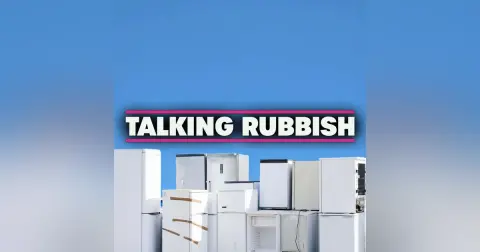
121. Why we can't recycle our fridges

 Apple Podcasts

 Spotify

 YouTube

 Amazon Music

 Castbox

 Podcast Addict

 PocketCasts
Key Takeaways
- A growing fridge recycling crisis in the UK has led 26 local authorities to suspend the collection of fridges and freezers due to a severe shortage in specialist recycling capacity.
- Fridges require specialist treatment at Approved Authorised Treatment Facilities (AATFs) because they contain potent greenhouse gases like isobutane and older ozone-depleting CFCs within their cooling systems and insulation foam.
- The UK throws away between two and three million fridges and freezers annually, but the current recycling infrastructure lacks the capacity and surplus fat to handle sudden disruptions.
- A combination of summer heatwaves—which make appliances break down more frequently and cause recycling plants to struggle above 30 degrees—and major plant closures or fires created a bottleneck in the waste management system.
- Exporting fridges is extremely difficult and heavily regulated because they are classified as hazardous waste, forcing many local authorities and councils to rely on temporary storage instead.
- While new recycling facilities are scheduled to come online in the coming years, experts suggest the root of the problem also lies in product durability, throwaway economics, and the need to improve appliance repairability.
Why are 26 local authorities across the UK no longer accepting fridges and freezers for recycling? This week, we're exploring the growing fridge recycling crisis, starting with how fridges actually work and why they need specialist treatment in the first place. We look at the recycling facilities that have closed, how heatwaves have made the situation worse, and meet Bertha, a machine capable of recycling 100 fridges an hour. With millions of fridges being thrown away every year, have we created a recycling system with no room for things to go wrong?
Plus, are vitamin tablet bottles rubbish or not, are microplastics banned in haircare products, how will beer be packaged in our dream shop, and why did Nobottle live up to its name?
Join hosts James Piper and Robbie Staniforth as they delve into the world of recycling, hopefully having fun along the way. One thing is for sure, they will talk absolute rubbish from start to finish.
Please take a moment to complete the Simpler Recycling tracker
We would love you to join our community on Discord
Special thanks to our sponsor, Ecosurety
To get exclusive videos and clips, follow us on Instagram, TikTok, Threads or Facebook; @rubbishpodcast or YouTube: @talkingrubbishpodcast
Or you can contact James and Robbie with questions or just general rubbish musings using the email address talkingrubbishpodcast@gmail.com or by texting them via WhatsApp on 07356 069 232
Relevant links and reports mentioned in the programme can be found on the Talking Rubbish Linktr.ee
Transcripts and episodes can be found on the Talking Rubbish website
Timestamps:
Why are our fridges not being recycled - 01:30
Additions and corrections - 28:15
Rubbish or Not: vitamin tablet bottles - 34:19
Rubbish News - 38:36
Is glitter banned in haircare products? - 44:03
Green Grocer: beer - 47:13
Residual Rubbish - 52:36
Music licence ID: 6WPY8Q4O2RPFIOTL
Frequently Asked Questions
Why are some UK local authorities no longer accepting fridges and freezers for recycling?
A shortage of specialist fridge recycling capacity, driven by recent plant closures, fires, and extreme weather, has forced some local authorities to suspend collections and stockpile appliances.
Why can't fridges and freezers be recycled at standard recycling plants?
Fridges require specialist treatment at Approved Authorised Treatment Facilities to safely capture and neutralize hazardous greenhouse gases and ozone-depleting substances found in both their cooling pipes and insulation foam.
How do refrigerators actually work to create cold air?
Fridges do not create cold; instead, they remove heat. A liquid refrigerant circulates through pipes, and as it rapidly changes from a liquid to a low-pressure gas, it absorbs thermal energy from the surrounding environment.
Why is it difficult to export old fridges to other countries for recycling?
Fridges are legally classified as hazardous waste due to the gases they contain, requiring strict permits, international rules, and proof that the destination facility has specialized recycling capabilities.
Hello, welcome to Talking Rubbish, a weekly podcast delving deep into the world of recycling and discussing the truth behind snappy headlines that have one sided stories. In this episode, we will explore why fridges aren't being recycled. Are vitamin bottles rubbish or not? I have a question about microplastics in cosmetics. And how will beer be packaged in our dream shop? I'm James Piper and I'm joined by Robbie Stanafour, my far from rubbish friend. Good morning, Robbie.
Robbie StaniforthMorning, James.
James PiperHow are you today?
Robbie StaniforthVery, very well.
James PiperAnd just like that, bin watch is over.
Robbie StaniforthOh, yes. I didn't even notice.
James PiperYes.
Robbie StaniforthOh gosh. I missed that.
James PiperSo I should say thank you to Bristol Waste. Uh slightly alarmed they know where I live. I don't know. Maybe they maybe they've just cleared up all the bins, but they sent me an email going, those should be collected now.
Robbie StaniforthOh, okay.
James PiperAnd they did say, Oh, you should have told us. And I I felt, you know, the trouble with this podcast is we have to let the podcast do the talking. We can't give people a preemptive alert of what we're going to discuss.
Robbie StaniforthYeah, I think that would be abuse of power, James.
James PiperYes, with great power comes great responsibility. So thank you so much for ways. I mean, it genuinely is amazing. They
unknownsent
James Piperme an email saying we've swapped 175,000 bins in two months. Wow. Sorry, 175,000 households. So it's more than that in terms of the number of bins. It's amazing.
Robbie StaniforthImpressive. Yeah.
James PiperSo big congrats to them on the project. I'm glad it's finished, and I'm exceptionally glad there are not 25 households worth of bins outside my house. Trash tour. Today we're asking the question: why are our fridges and freezers not being recycled? Now, this is something that has come up before. I think it was my rubbish news in episode 108.
Robbie StaniforthOkay.
James PiperIt became more relevant for me because on Monday this week I was asked to go on to BBC Essex to discuss this exact issue. And within an hour of that, completely separately and independently, I had an email from a PR company which had the subject, let's fix the fridge recycling capacity gap together. And it made me think, okay, that's two things in one hour. That's when trash talk happens.
Robbie StaniforthIt must be something that people are talking about.
James PiperYes. So let's have a look into it and discuss it in a bit more detail than we did in the rubbish news. This is a massive issue in the UK. We're at the situation where 26 local authorities have now suspended the collection of fridges and freezers.
Robbie StaniforthYeah, it's crazy. So if you go to your council and say, I need to get rid of my fridge freezer, they will redirect you or say, please bear with us, there's a problem further down the chain in actually recycling them and they're stockpiling up. And that means we have to close the front gate and say we're not taking anymore, which is pretty drastic. It is very rare these kinds of things actually happen with household waste. I know this is big household waste, but it is something that the average person is looking to get rid of.
James PiperAnd this isn't necessarily a collection issue. It's to do with there not being enough specialist recycling capacity to deal with them. And we'll come into this in quite a lot of detail. But basically, just to start us off, we throw away somewhere between two and three million fridges and freezers a year.
Robbie StaniforthWow. Okay, that's a lot more than I would have expected.
James PiperI agree. Like what's the population? 70 million? How many households? 20 something.
Robbie StaniforthYeah.
James PiperThat's almost 10% of households throwing away a fridge freezer each year. What's your average lifespan of a fridge freezer?
Robbie StaniforthYeah, probably is eight to ten years. So that
James Piperwould be 10%. I think before we get into the detail of the problem, when we talk about recycling fridges, we first need to understand how they work. Do you know how fridge works, Robbie?
Robbie StaniforthNot really.
James PiperOkay.
Robbie StaniforthSomething about a heat exchange.
James PiperLovely. Understand that. If you went into like a fridge repair shop and said something's wrong with the heat exchanger, I think they'd sort you out.
Robbie StaniforthThey'd probably think this guy knows what he's talking about, and then say something technical to me, and I'd be like, immediately, no, I need to tap out of this conversation.
James PiperIs it your condenser or your compressor? Well, the I think the simplest thing, the simplest way to explain it is you cannot create cold.
Robbie StaniforthYou cannot create cold.
James PiperWhat cold is is the absence of heat. And this is similar to like you can't create darkness. Darkness is the absence of light.
Robbie StaniforthAh, okay, yeah. Making it black. But what about a black pen? That makes it dark, doesn't it?
James PiperNot true. Oh gosh. I have no idea. We're not talking about light or dark, we're talking about heat and cold. I think
Robbie Staniforththe black pen is just making there an absence of light, isn't it? It's not making dark.
James PiperOkay. You've solved your own riddle.
Robbie StaniforthYeah.
James PiperSo to make something cold, you have to take away heat.
Robbie StaniforthYes. Okay. To
James Pipermake something dark, you take away light. To make something cold, you take away heat. Now I have an experiment that none of us should try at home because I think to do this experiment, you might actually be making climate change worse.
Robbie StaniforthOh wow. Okay. So definitely. After the past two
James Piperepisodes we've had. Yes.
Robbie StaniforthDon't
James Piperannoy Nick. Don't start releasing butane into the atmosphere. But there is a little experiment you can watch on YouTube if you want to, where if you take butane, so um like compressed butane, so this would be like lighter fluid.
Robbie StaniforthYeah, sure.
James PiperIf you took it and you put it into a bowl of water and you sprayed it into that bowl of water, what's going to happen is the butane is moving from liquid to gas very fast. And as it moves from liquid to gas, it takes the energy from the water as it turns into a gas. So if you release but liquid butane into water, it causes the water to freeze very quickly.
Robbie StaniforthLike almost instantly, almost
James Piperinstantly.
Robbie StaniforthOh wow.
James PiperBecause what it's doing is just saying, okay, I need to use a lot of energy to turn from liquid to gas.
Robbie StaniforthYeah.
James PiperAnd the only thing around me is water. So I'll take all the energy out of the water and I and it causes it to freeze. And that is, and again, don't do it because you'll be releasing gases that we shouldn't be releasing. But search it on YouTube if you want to. Fridges work in a similar way. So inside the fridge is a refrigerant like butane. Um I think it's isobutane in modern fridges. And what they do is that liquid, they compress it and it's a liquid, and then they'll release it into a low pressure, so along a pipe. And as it releases that pressure, it will become a gas. And as it becomes a gas, it will take the energy from around it and it ends up cooling down what's around it, creating refrigeration.
Robbie StaniforthOkay, wow, there we go. So it's not just simply blowing cold at something.
James PiperIt's not blowing cold. That's definitely not what happens. And so once you've then released the gas and it's become a gas, you squeeze it back down again using a compressor, and then you put it through a condenser, and then that condenser turns it back into a liquid, and then you release it again back into a gas. So the process is cyclical. You're using the same isobutane over and over again, just turning it from a liquid to a gas. As you turn it from a liquid to a gas, it draws the energy from around it, and then it turns back into a liquid through a compressor.
Robbie StaniforthAnd the electricity is basically running both these compressors and the condenser. That's why it needs to be plugged in and what the power source is basically doing.
James PiperYes. And the light in the door.
Robbie StaniforthOf course. Those are the two main things. You wouldn't be able to see a single thing in my fridge. There'd be lots of food waste without that light.
James PiperYes. But these gases are why we have to recycle fridges properly. Because in an older fridge, the gas that they're using is ozone depleting. It's a greenhouse gas.
Robbie StaniforthA chlorofluorocarbon.
James PiperChlorofluorocarbon, very good.
Robbie StaniforthCFCs, you don't hear that much anymore. Very good.
James PiperSo that's what's in older fridges, but also they use um CFCs to blow the insulation foam in a fridge as well.
Robbie StaniforthOh.
James PiperSo you've got it in the pipes in the gas, but you've also got it in the foam insulation. So there's two places that you'll find CFCs in older fridges. We do still, in newer ones, as I say, they're using isobutane, which is a greenhouse gas, I believe, but it is uh like it has a lower climate impact, so it's less risky. Newer fridges are definitely better, but in all instances, no matter the age of fridge, it has to be recycled properly.
Robbie StaniforthYeah, sure. And that's why this is such a significant issue, because you absolutely do not want the average person just thinking this is a load of scrap metal. It's not. It needs specialist treatment.
James PiperAnd what they do is they'll be extracting the gas. And then if it's like an older fridge, they'll probably incinerate that gas so that it doesn't get released. Um, if it's a newer fridge, they might use it, they might reuse it, clean it up, reuse it. But what you need to do is make sure it's not getting released into the atmosphere, because obviously we're talking about greenhouse gases here. And so there by law, this isn't just like a nice to have, by law, fridges have to be dismantled at specialist recycling facilities, which we call AATFs.
Robbie StaniforthAbsolutely, yeah. Approved, authorised treatment facilities.
James PiperVery good. I've never understood why it's an authorized, approved, approved, authorized. They mean the same thing.
Robbie StaniforthYeah, it's strange. Yeah. There was a time when there was ATFs which couldn't quite do as much as an AATF. So that's the reason for it.
James PiperOh, there you go. I didn't know that. That's really interesting. Okay. Well, it's really interesting to me.
Robbie StaniforthReally interesting to a population size of one.
James PiperWe were on a call prepping a live event yesterday, weren't we? Oh, yes,
Robbie Staniforthyeah.
James PiperI said, and obviously we'll start talking about DRS and EPR and da da da. And the lady on the call went, uh, I just need to remind everyone that the people on the the live event will not have a clue what you're talking about when it comes to acronyms.
Robbie StaniforthDo not use any of those acronyms, yeah.
James PiperIt's gonna be a long talk if we have to spell everything out. Okay. And Robbie, I'm sure you know this. Who is one of the largest recyclers of fridges in the UK?
Robbie StaniforthIsn't it the electrical retailer AO?
James PiperVery good. Yes.
Robbie StaniforthIt is always a surprising fact. I remember when I first learnt it like five or ten years ago, you're sort of like, oh well, that sounds pretty good. That a retailer who's selling electrical goods is actually also a big recycler.
James PiperKnown for their song AO, let's
Robbie Staniforthgo.
James PiperThat's how people in the UK are going to know them. They say they are the only retailer in the UK with their own recycling plant.
Robbie StaniforthOkay.
James PiperAnd I have always been impressed with this. I think it's it's an interesting thing because I feel like it's a direction of travel for the UK. As we get things like EPR, DRS, what we're going to end up with is retailers and brands having more control of our recycling than they used to, or wanting more control of our recycling. And one of the reasons AO set up is to control their own waste electricals evidence to make sure they were complying with waste electricals laws, but doing it themselves. And it just feels like packaging, batteries, all of these legislations are pushing brands in the direction of control your own material.
Robbie StaniforthFor most companies, it's very difficult because they don't have the size and the scale or whatever. But for AO, who are selling huge amounts of electrical appliances, they can actually have the scale to create a plant. And they're also based in Telford, where I grew up. So they're like quite a big employer locally or and definitely well known in the business community locally. Telford isn't really known for very much, to be frank, other than the Iron Bridge. And it was like, oh, there's actually big recyclers in Telford.
James PiperAnd they are big, they are a very big recycler. In September this year, they recycled their 10 millionth appliance, which, if anyone's wondering, was a washing machine. And they wrapped it in gold. It was very beautiful in the picture. It was just like wrapped in gold, looked amazing. 10 millionth ITAN. And at the moment, they are recycling about half a million fridges a year, which they say is 20% of the UK's total recycling capacity. Okay. Which saw two to three million being thrown away, half a million, twenty percent. That feels about right. And what they do with this material, obviously, they're reusing what they can. Um, but they actually now they've invested in a plastic extruder, which sits next to the waste electrical facility. And the plastic that comes out of the fridges is actually used to make bathroom extractor fans.
Robbie StaniforthOh, very cool. Okay, so they make molded plastic products out of the recycling coming out of fridges. That's very cool.
James PiperAnd they have a recycling machine. Do you know the name of the recycling machine?
Robbie StaniforthNo, I don't.
James PiperShe's called Bertha.
Robbie StaniforthBertha. Big Bertha.
James PiperAnd she is 80 tons of metal herself. And she eats, their words, not mine, 100 fridges an hour.
Robbie StaniforthWow. Okay. That does sound pretty impressive. Just
James Piperchuck the fridges in, she'll be chomping away, breaking it all up, capturing the gas, capturing the foam, and recycling 100 an hour.
Robbie StaniforthYeah, I must admit, I've never visited. So if they want to reach out to arrange a field trip, I'm often in Telford visiting my folks. I could very quickly spin up there, uh up the road to see uh Big Bertha in action.
James PiperYeah, we've got contacts at AO. We should go and do a live, a live talking rubbish from there. That would be great. I'd love to see it. So AO said in June and August this year they had the busiest months they've ever had in terms of recycling, which is very linked to our trash talk today. So why has AO seen such a big rise? Two reasons closures of fridge recycling plants and heat waves.
Robbie StaniforthYeah, it's two huge things. And it's like a double whammy to state the bleedingly obvious. When it gets hot, fridges themselves struggle to work because they're doing a lot of work in those condensers, in that heat exchange I was talking about. They're working hard to keep things cool, but also the plants themselves struggle to run when it's very hot. So it's this double whammy of the fridges themselves are breaking, and also the plants are struggling to operate at full capacity when it is that hot.
James PiperYeah, AO said um sites struggle to operate above 30 degrees, like all sites, all fridge recycling sites, and uh they uh their main job was keeping Bertha cool uh during the heat wave. Uh, because if they don't do that, she can't safely remove the pollutants from the appliances. And so they were looking at how to invest in cooling, you know, presumably air conditioning.
Robbie StaniforthOh, the irony.
James PiperI know. Just open all the fridges. I had that exact thought. I was like, you've got to you've got to put lots of cooling in to recycle the cooling stuff. This feels weird.
Robbie StaniforthYeah, there must be something very clever they can do with all that gas they're harvesting for sure.
James PiperThat's a really good idea. They could put heat exchange all round the facility. Robbie, you're the technical engineer. You get there and tell them how to make that heat exchange work.
Robbie StaniforthJust give me a call, Ao.
James PiperSo, yes, heat waves double whammy, definitely. And then in terms of closures, there have been three major closures in fridge recycling plants. Oh, is
Robbie Staniforthit as many as that? I thought it was just one major one. Okay, wow.
James PiperYeah, so UniMetals, um, which was based in Newport, closed at the end of 2025.
Robbie StaniforthYes. And
James Piperthat was an actual closure, as in going into administration. Um, they recycled 600,000 fridges, so about the same as AO in terms of what they were doing annually.
Robbie StaniforthA biggie.
James PiperAnd then two other sites have had fires. So EMR in the West Midlands in February of this year, and Wiser Recycling, uh, which is in Thetford, which was in April this year. And I guess a summary is it is impossible to replace lost sites quickly. You are talking about the need for specialist recycling when it comes to fridge freezers. You can't just run that back up when you need to.
Robbie StaniforthYeah, I mean, it's like one of those things we've talked many times on the podcast about how difficult it is to build a plastic recycler. What they're doing there is a lot simpler and dare I say at lower risk than just suddenly spinning up a new fridge plant.
James PiperDid you know this has happened before?
Robbie StaniforthNo.
James PiperIn the late 1990s, early 2000s.
Robbie StaniforthOh, the fridge mountain.
James PiperYes, so you do know.
Robbie StaniforthI do know, yes. It's suddenly twigged. Very
James Piperfridge mounted. It's sort of called the fridge mounted, but then there were loads of them. Yes, again, similar to what we're experiencing.
Robbie StaniforthThe fridge mountain range, I like to think of them as.
James PiperThe EU introduced new rules. Um, and these were the rules that we live with today. You know, basically make sure the gases don't get released when you're recycling fridges and freezers. And so they introduced rules to make sure gases were extracted safely. And unfortunately, we didn't have any capacity to recycle fridges in this country.
Robbie StaniforthSo to a high enough degree of safety and technical spec kind of thing.
James PiperYeah, my understanding is we had two sites that could meet the EU requirements, which between them could do 8,000 fridges a week.
Robbie StaniforthOkay.
James PiperSo when you're talking about what we're doing three million a year we're getting through, is that going to be per week? This is maths I should never be doing live. 300,000, 50,000, 50,000 a week. Yeah. I think it's 50,000. Uh so 50,000 a week that we're doing now, that we're throwing away now, and at the time we could only recycle 8,000 a week. So that just shows how far we've come. Quick fact: the fridge mountain in Stratford has become part of the Olympic park. So really? Yeah, well, not literally. I mean, they got rid of the fridges.
Robbie StaniforthOh, okay. The
James Piperarea that was fridge mountain is now part of the Olympic Park.
Robbie StaniforthOh, okay. Sorry. I thought I thought you were about to say the Winter Olympics built the ski jump off.
James PiperThe ski jump is just a million fridges.
Robbie StaniforthAt least they can keep it cold.
James PiperSo there was a report at the time that blamed the government for being too slow to recognise the EU rules. I mean, the government said, well, we didn't understand what the EU were asking, and no one was clarifying it for us. And it's like, well, every other country managed it. So I'm not sure. I'm not sure I'm agreeing with the government on this one at the time. Um, I guess the question is who's to blame this time, Robbie?
Robbie StaniforthUm, well, it's not me, if that's who you're pointing the finger at. I I think this is one of those things where there is lots of converging things that have created a perfect storm, but ultimately exposes the sort of lack of backup plan that almost all recycling in the UK has. We've seen this with just steel recycling and Tartar in South Wales. They close the plant and then it's like there's nowhere else for it to go. We'll just have to export it somewhere. And you see that there's just no fat in the system to have backup plans and alternative places to send recycling. And when big plants close or have fires temporarily close, etc., suddenly the whole system falls down. And I think that's what's at play.
James PiperYeah, I think you're right. I think there is an argument, and and this is true of lots of our recycling, but there is an argument that fridge recycling specifically got too concentrated, is too concentrated. Very, very few recyclers are doing almost exactly the right number of fridges. Because that's the problem. You don't want that surplus, that fat that you've talked about.
Robbie StaniforthYeah. So
James Piperif you've got if you know you're gonna have three million fridges, you put in recyclers for three million fridges. And arguably what the government could have done is learnt its lesson from the 90s, early 2000s and said, well, actually, we're gonna subsidize some extra.
Robbie StaniforthYeah. You
James Piperknow, we're gonna subsidize four million fridges worth so that if a couple go down, we're safe. And that hasn't happened, and it's very, very difficult to replace them, as we said, and very difficult to export as well, which we'll come on to.
Robbie StaniforthAnd this comes to the existential question of who's responsible for delivering recycling capacity? Is it just businesses and you let the market decide, in which case, don't be surprised if no one's running at 80% capacity to take a bit extra? Um, or is there some underlying need for governments to say, we're looking across this whole infrastructure and we realise that we actually need at least a backup plan, even if it isn't a backup plant.
James PiperSo, as I say, this is true of lots of recycling, this kind of okay, it's gone down, we need to find additional capacity. Um, and you realise quite quickly how concentrated recycling is, particularly plastic. We've seen plastic recyclers close down left, right, and centre, and you're like, okay, there's nowhere for us to send our plastic now. But what we do with plastic is we export it. Now, it is harder to export a fridge, and that is because it is legally classed as hazardous waste, which instantly makes it far harder to transport. You need permits, international rules, you need to have proof that where you're sending it to has the specialised facilities to do the recycling. And what councils and the government have opted to do instead, rather and some are exporting, definitely, and that is a route that people are looking at, but they realize it's probably cheaper because it's really expensive to export. It's probably cheaper just to store the fridges until more recycling capacity comes online.
Robbie StaniforthYeah, and it's sort of ironic in a way that like it's good that we have things like transfrontier shipment TFS rules that mean it's not easy to just quickly bung a load of fridges in a container and send them abroad. But that very barrier kind of means there isn't an easy backup plan because when I was um speaking to someone involved in the waste electricals recycling system, they were saying it is literally months to try and get fridges moved and suddenly open up new export routes. Uh, Germany's one of the destinations um that some fridges have been sent to, but it's not an instant thing. You know, it's literally they've had to wait for months, and it only started really properly happening last month.
James PiperYou can see the opting for storage when you look at like Bristol Waste website, for example. That's the first one I'm going to turn to. It's a Bristol resident. And it currently says hard work from Bristol Waste Company and Bristol City Council has resulted in additional capacity for storing waste items until they can be processed appropriately. However, we know this will not solve the national recycling issue. And in the event that it is no longer safe and legal for us to accept any more fridges, we will close this service. The public. And I think something they're kind of alluding to, but they don't say, is the environmental issue of storing things like fridges. You've got two problems. I mean, the first is you've got valuable metals and plastics that are unavailable for recycling. And that's obviously an issue. We want to get materials flowing through. But second, and more importantly, I would say stored or damaged appliances risk releasing those refrigerations and insulating gases. If you're choosing to store them for a long period of time, you are increasing the risk that something is going to go wrong.
Robbie StaniforthYeah, it's the kind of thing when you have this hazardous type stuff. You want them going through the waste management system, recycling system as quickly as is possible. You just don't want them lying around. Now, this is intentional to leave them lying around because it's kind of this necessity and the mountain is being built up again.
James PiperLuckily, there is some hope on the horizon. Uh Enver uh kind of Enver's what everyone's putting their hopes in, I think.
Robbie StaniforthYeah, this is great brand positioning for Enver, isn't it? Everyone's like, we can't wait for Enver.
James PiperUh they have a new facility opening in February 2027, which overall will process around 35,000 tonnes of waste electricals. So that's not just fridges and freezers, but 35,000 tonnes is a very significant site. Um, and then in September this year they announced they were investing a further nine and a half million to open a brand new site which is going to do 8,000 tonnes of fridges and freezers. Uh, but that won't open until 2028. Now I think 8,000 tons of fridges and freezers is roughly 200,000 fridges, freezers. So again, they're replacing some of what we've lost. And that should bring significant capacity. So you can sort of see what's happening. The government is saying, well, we've got these green shoots, we can see some things coming in. Maybe
Robbie Staniforthmore
James Piperrecycling is going to happen. So we will allow more people to store more fridges because it's it's not really viable to export them in any great quantity. And so we're just storing fridges at the moment, and every council is just collecting them up. And now we're in a position where councils aren't collecting them, some councils, so now residents are storing them, and we just end up with this chain that is just on pause, really, isn't it?
Robbie StaniforthYeah, no, and the government really are sort of saying that we just need to get over the hump. The question is, is that hump going to turn into a mountain?
James PiperIt makes me think, are we looking at the wrong side of the equation? You know, are we saying actually we need more and more recycling capacity when we could be fixing these fridges? You know, and what what why aren't we talking about the repairability of a fridge? How easy it is to get into it and fix it, how likely we are to do that. Are they so cheap that actually it's easier for us to throw away the old one, buy a new one? I just have this question around why we're throwing away so many, you know, two to three million a year. I do question how many of those actually need to be thrown away. We now have regulations in the UK requiring manufacturers to make spare parts available. You know, so for up to 10 years after the model sold stops being sold, you should still be able to get most of the parts for your fridge. I don't know how many people would just automatically, oh my fridge is broken, I better find a way of fixing it.
Robbie StaniforthConstantly on our group chat, there's Does anyone know an ex-repair person? That could be a fridge, freezer, washing machine, etc. There appears to be demand for it, but you're right, the economics don't necessarily stand up the same as it would for other things in your house that are like fixed installations that you would never dream of replacing. You know, I'm thinking about uh things like sinks and basins and toilets and radiators. They stay in your house for tens of years, maybe 40, 50 years in the case of things like radiators. Whereas the fridge over time is becoming less of a kind of fixed installation that you have for the entirety of the house's life, and suddenly something that's more replaceable, akin to a TV and maybe not as fast electronics as um certain small devices, but definitely the trend appears to be to be getting a new fridge more regularly than one used to.
James PiperI had it with our dishwasher. We bought um this house and the the dishwasher was integrated and it wasn't working. And I paid a guy, I don't know, it's like £100 to come out and look at it, diagnose it. We started fixing it. And he just looked at it and said, look, the parts for this are gonna be two, three hundred pounds, it's gonna be easier for you to buy a new one. And that was his default. Like that was what he was going round communicating to people. Oh, I'll sell you a new dishwasher, fridge, whatever it is, you know, because this old one's not working or not worth fixing. And I just think if we could find a way of making that cheaper or subsidized or whatever, you know, the repairing,
Robbie Staniforthyeah.
James PiperWe become a repairing nation. Let's say the government said, look, we will support repair. We will give, we will make repairs half price.
Robbie StaniforthYeah.
James PiperI'm not saying this is viable. I'm just saying, can you imagine? Then you go, okay, we haven't got two million fridges, we've got a million because it's cheaper to repair than it is to replace.
Robbie StaniforthAnd one of those policy measures that's been mooted over the last few years is um taking the vat off repairs. Oh,
James Piperyes. You
Robbie Staniforthknow, just saying just drop the 20% VAT on repairs. But for fridges specifically, the issue is, you know, I have fixed my oven, the fan at the back of my oven in my old house. I went in, pulled it out, and it's just two wires, found the replacement online, and I would back myself to do that. But to actually get into the back of the fridge, although I may seem like an expert in how fridges work, I'm not sure I would trust myself to go and repair it myself. And they are complicated things, aren't they? And there's a reason why they are quite expensive to service.
James PiperAbsolutely. I wouldn't trust you either. Um, and just to wrap us up, I think there is something that feels wrong about the fact that we're just finding places to store fridges while we wait for Big Bertha to chom them up. We do need a recycling system that works, but you know, I do question whether the solution is not to build more machines that can chom a hundred fridges an hour, but in fact, it is to make sure we don't have to feed them as many fridges in the first place. I have been on the hunt for a WKD blue keg since episode 119.
Robbie StaniforthOkay. Have you found one?
James PiperNo.
Robbie StaniforthAh.
James PiperI saw some people on Instagram saying we found them in the wild. So I went to a few Asda's yesterday because I was like, I know they're gonna sell them in Asda. Desperate to get one in time for Christmas so that I can have it on the rubbish or not wall. It's actually quite, you know, affecting me that we've got this gap on the wall with something that we've talked about that hasn't gone up. I'm gonna have to make sure in future I never do a rubbish or not for something I can't get hold of.
Robbie StaniforthYeah. Um
James Piperit's
Robbie Staniforthyour completer finisher, yeah. Your collector's uh
James PiperAbsolutely. But I will get it, of course. But while I've been looking for this WKD blue, it's in the same section as your favourite Robbie, buzzballs.
Robbie StaniforthOh god.
James PiperAnd my eyes are always drawn to the buzzball.
Robbie StaniforthThey're clever, aren't they?
James PiperOh, yeah, their marketing is very good.
Robbie StaniforthSo clever.
James PiperYes, but we hate them. Um but one thing I have noticed that was interesting and I thought worthy of an addition is they have definitely changed their packaging. We used to dislike them for two reasons. The obvious one, the fact that you fused metal and plastic, but also that they'd be using coloured plastic.
Robbie StaniforthYes.
James PiperAnd that one over your shoulder is a red plastic straw.
Robbie StaniforthStrawberry Rita.
James PiperYeah. If you were to buy that today, it would be clear plastic but with a red wrap. And they have moved from coloured plastic to a clear plastic with a wrap around it that does the colour.
Robbie StaniforthAnd are you supposed to rip the wrap off?
James PiperWell, this is the thing. So, as a reminder, you can check out episode 72 if you want to know why this is a problem, because it is to wrap, to put a full wrap around something is not good for recycling.
Robbie StaniforthIs that red of the wrap really adding anything? Why does the drink not look the colour they want it to and just let it speak for itself behind the clear bottle? I think some of them
James Piperare quite odd, they're not the colour but that strawberry reader, I don't think, is red.
Robbie StaniforthOh, okay. Well I
James Pipercould be wrong. I don't I actually don't having never drunk a buzzball in my life, I actually have no idea. But I think some of them aren't the colour that you want them to do.
Robbie StaniforthThey're just clear or sort of in innocuous looking, maybe. Do we think a bit of red dye in the drink is better than a whole wrap? We'll maybe discuss that in another episode.
James PiperAnd a relevant update from Bristol Waste, linked to our recent episodes on clothing and textiles. I had an email from Bristol Waste, this and it it's regarding two changes to the recycling. So they've been listening to our episodes. Okay. They wanted to inform you of two changes. One will be part of our rubbish or not, so I will leave it for that. But the other is very relevant to our global discussion because Bristol Waste have stopped taking textiles from curbside.
Robbie StaniforthOh, wow. What altogether?
James PiperAll together.
Robbie StaniforthOh wow, that is new news to me.
James PiperYes. They said they were getting too much contamination and uh wet textiles back from being out in the rain.
Robbie StaniforthOkay.
James PiperAnd they decided to stop accepting it. They still take them at the household waste recycling centre. But um, yeah.
Robbie StaniforthSo that's why when my neighbour had put some out, they didn't. Your
James Piperpoor neighbour.
Robbie StaniforthMy poor neighbour, I'm giving them duff advice left, right, and centre.
James PiperThey didn't go because it was oil stained, but they probably also didn't go because they're not accepting textiles anymore.
Robbie StaniforthOkay.
James PiperAnd obviously, this is a really local discussion um for us, but it is a really good reminder to keep checking councils' websites because they do change what they will collect. We'd like to take a moment to thank our sponsor, EcoSurety, who are on a mission to rid the world of unnecessary packaging. They help brands navigate the tricky world of extended producer responsibility, but that is not all. They also collaborate on some incredible recycling projects and consumer awareness campaigns for those tough to recycle materials. If you're an organisation looking to make smarter packaging choices, check them out at ecosurety.com. And the best thing you can do to help our podcast to grow is to tell your friends and family about it, or you can leave us a review. And if you leave us a review, you could be Robbie's review of the week.
Robbie StaniforthAnd we've got another one here, five stars on Apple, and it comes from Nottingham, I think. The whole the whole city of Nottingham, one would hope, spelt with uh slightly different characters. But thanks very much for this one, Nottingham. What a fantastic podcast. As someone who has spent over 20 years working in the printer cartridge industry and has a real passion for the circular economy, I absolutely love listening to Talking Rubbish. James and Robbie have a brilliant way of making complicated environmental subjects interesting, educational, and entertaining. Their knowledge, honest discussions, and brilliant sense of humor make every episode a pleasure to listen to. What I particularly love is that I always come away having learnt something new. They challenge misconceptions, ask important questions, and help people understand what really happens to the things we throw away. Education and awareness are so important if we're going to create a truly circular economy. And these two are doing a fantastic job of making those conversations accessible to everyone. A huge congratulations to James and Robbie on winning two British Podcast Awards. So incredibly well deserved. It's wonderful to see their hard work, passion, and dedication recognized. I honestly couldn't think of two more deserving winners. Keep up the brilliant work, James and Robbie. You're making a real difference. One rubbish conversation at a time. Highly recommend.
James PiperIt's a great review. It's a long review.
Robbie StaniforthIt's a long and comprehensive one. I was nearly tearing up.
James PiperEveryone in Nottingham just added a word, I think, based on the length of
Robbie Staniforthit. The whole population of Nottingham contributed to that one. No, it was really kind. Thank you very much.
James PiperThank you so much for that. You can follow us on social media at rubbishpodcast. You can email talkingrubbishpodcast at gmail.com or you can WhatsApp us. Also join our Discord. It's the easiest way to engage with us and listeners of the show. And the link to all of those things is in the show notes. This was a message on our website from Jackie. Thank you very much for this, Jackie. Asking whether plastic bottles and specifically the ones that contain supplements, so vitamin supplements like cod liver oil or magnesium capsules, whether they're recyclable and whether they're included in UK curbside collections.
Robbie StaniforthOkay, so those those small-ish bottles.
James PiperYes. Rubby or rubbish or not.
Robbie StaniforthUh so I think we've got to get the smint pack out, don't we? To make sure that they're definitely four centimetres on two sides. I think they mostly are, these medicine bottles, because they're they're slightly bigger than the very small paracetamol ones. So
James Pipereven if they aren't, though, I think I'd still put them in my recycling. Can you? You're talking about RAM when you talk about four centimetres, which obviously is what the recyclers are geared towards. You know, the whole point is that it can be sorted. But I still think even if something is smaller than four centimetres, as a member of the public, I would try and recycle it.
Robbie StaniforthYeah, and the key thing is what plastic is it made from, which is a recyclable plastic.
James PiperDo you want to have a guess?
Robbie StaniforthI mean, it's either PE or PP, isn't it? So I'm gonna go with PP.
James PiperIt's actually both. So depending on which one you buy, I went and had a look, and the cod liver oil that I found in Co-op is HTPE.
Robbie StaniforthOkay.
James PiperAnd my local pharmacies all had bottles that were made of polypropylene. So depending on where you buy your vitamins, it's either gonna be PET, polypropylene, or HTPE. All three of those are widely recycled in the UK. So I don't think there's any question here. I think you would make sure they're empty, maybe give them a quick rinse if you needed to, although you're unlikely to need to if it's just tablets.
Robbie StaniforthYeah.
James PiperPut the lid back on, make sure you keep your lid on, and then put them straight into the recycling. It got me wondering why Jackie had asked this. But actually, I went digging through council websites and it got quite interesting because some councils, including West Lancashire, explicitly say on their websites that vitamin and supplement pots can go in your household recycling. But Telford and Rekin, Telford came up earlier.
Robbie StaniforthWhoa, there we go. Okay.
James PiperBig on the fridge recycling says the opposite. They specifically tell residents that plastic medicine and vitamin bottles cannot go into curbside recycling because of the composition of the plastic.
Robbie StaniforthOkay, so big on fridge recycling, not so big on medicine bottle recycling.
James PiperI reckon AO would turn into extractor fans for bathrooms if required. But yeah, this really surprised me because obviously, under simpler recycling, so if we dig out our simpler recycling knowledge, so this was a piece of legislation went live earlier this year to make recycling collections more consistent across the country. It says from the 31st of March 2026, by default, all councils must collect in the plastic stream PET, PP, or HDP plastic bottles. So I do not understand why councils are saying they will not collect them because they have to.
Robbie StaniforthYeah, this seems really strange. There's um a waste stream commonly called pots, tubs, and trays, plastic waste stream that can be all those three different polymer types that we mentioned. They're really commonly collected, commonly recycled. Actually, actively there are recyclers looking for more of them because they are recyclable to feed their plants. So this is one definitely that we should be saying is absolutely not rubbish, is or not, and is highly recyclable.
James PiperAnd this came up before because Bristol were not collecting plant pots. We had this discussion about plant pots. We said, well, under simpler recycling, you have to collect them. And this was the other thing I got in the email yesterday from Bristol Waste. Not only that they're not collecting textiles, but they do now collect plant pots. Oh, that was very exciting. Non-black plant pots. I think they you don't have to collect the black ones.
Robbie StaniforthOkay, so we got an addition in there as well in our rubbish or lot.
James PiperWe did. The whole point of simpler recycling is to end this postcode lottery where one council says you can recycle something and the other council says you can't. In this instance, I think there are some councils doing the wrong thing and they should be saying it's recyclable. So this is definitely or not. Rubbish news. From lots of medicine bottles to no bottle.
Robbie StaniforthA
James Piperplace in Northamptonshire.
Robbie StaniforthOh, yes. I I don't know what this story is, but I saw a picture of a road sign saying no bottle the other day.
James PiperGreat. Okay,
Robbie Staniforthso you're gonna tell me what it actually is.
James PiperI'll let you know, yes. Um, do you want to guess, first of all, how many people live in no bottle?
Robbie StaniforthUh it's gotta be a few hundred. Two hundred.
James PiperI think it's thirty.
Robbie StaniforthThirty, wow! 30 people. Amazing.
James PiperSo they all gathered round the other day for a shot, a ginger shot from Innocent Smoothies.
Robbie StaniforthOh, okay.
James PiperSo Innocent chose No Bottle for obvious reasons as a place to trial no bottle. And what they did was they got some knot plur packaging, the little pods. Oh
Robbie Staniforthyes.
James PiperSo these are pods that look a bit like laundry pods, uh, but unlike laundry pods, and I need to stress that, do not eat laundry pods. Um, unlike laundry pods, you can eat them so you get the shot of ginger, but you also can eat the knot plastic, the seaweed that's wrapped around it. One detail I particularly like was as you say, they put up a temporary sign saying, Welcome to no bottle, home to the first innocent shots with no bottle, and the sign itself was made with seaweed.
Robbie StaniforthOh, that's very
James Piperjust the wraps, it was also the sign.
Robbie StaniforthYeah, and just recently Knoppler got a shout out by Prince William
James Piperon uh Graham Norton.
Robbie StaniforthYes, they did, yeah, so they're in the news everywhere.
James PiperYeah, congratulations to those guys, it's amazing. I had a moment of excitement because the media reports kept saying that the residence of no bottle includes composer, songwriter, and music producer Steve Anderson.
Robbie StaniforthOkay, not familiar to me.
James PiperWell, there is a very, very famous music producer called Steven Anderson who has produced lots of hits, including, and I spent a long time looking for this, Drunk by Kylie Minogue, and the album Two Shots by Matt Dusk.
Robbie StaniforthGet out of time.
James PiperI was so excited at the concept that I might be saying the man who produced Drunk Two Shots had two ginger shots wrapped in Knoppla. But after an unbelievable amount of stalking online, I feel these two Steven Andersons might be different people.
Robbie StaniforthOh no. It's a different writer. But I'd done
James Piperall this research and I was like, well, I'll just imagine they're the same person, but I don't think they are. I think the Steven Anderson who lives in uh no bottle is very different from Steven Anderson who produced those hits.
Robbie StaniforthOh, that's a shame. I'm sure Knoppla's media team would have been all over that to get him drinking two shots if it hadn't been true.
James PiperEveryone sort of was all over it because they kept saying, and no bottle resident Steven Anderson, and they had a quote from him who is a music producer, and you Wikipedia Steven Anderson. I mean, he's a very famous music producer. So it was a bit ambiguous as to which Steven Anderson they were talking about.
Robbie StaniforthOh, very good. And my rubbish news this week comes uh another victory for getting behind the snappy headlines and getting to the truth. Not particularly snappy headlines, more environmental claims. Because just in the last week or two, Danon have agreed to change the way that they advertise recycle content on their bottles. And this follows Coca-Cola and Nestlé Waters, who also made uh commitments recently to stop things like explicitly saying recycle me again, let's meet again, and this is 100% recycle content when it's not. So it seems like a small thing, but it's really important that there's honest discussion and dialogue with us as consumers, as citizens out there consuming these products, about what do they really mean when they're making these environmental claims. And there's no uh surprise that this has happened in the EU in terms of um who's forced Danon's hand to try and change some of their uh environmental messaging. So they're gonna make clear that 100% recycle content refers only to the bottles itself. Sounds very familiar from the other brands, and excludes the caps and labels, unless they can be substantiated for those things. And also not to count the production scrap in counting towards the PET bottle recycling content levels. Now, all of this stuff, when I was reading the news, I was sort of like, why have they not already committed to this? And this was the most interesting thing about the news is just because you hear two leading brands like Coca-Cola and Nestlé Water sign up to something doesn't mean that they're all playing by exactly the same rules instantly. So this is going to be roll on, and the next um water company, um soft drink company, I'm sure will be making those misleading claims and be brought to heel um to change them. But it also follows Danon having more than a wrap on the knuckles in France uh for some misleading claims on their Volvic bottle, where a citizen consumer rights group uh effectively said challenged them in the courts, and they were awarded 75,000 euros in damages because of some misleading claims. It's a very small victory, but it's great to see that it continues in the headlines to allow these brands to ensure that they're really saying the right things. About the recycled products that they're using.
James PiperRubbish question. In episode 119, we discussed a serum that contained synthetic mica that looked like glitter. So this prompted lots of people to ask about a microplastic ban because there is a microplastic ban in hair care products, and people were a bit confused as to why we didn't mention that as part of this kind of glitter in hair care serum. I wanted to answer that, and it's the truth is it's a little complicated. And it's because, so we have talked before about microplastics being banned in hair care.
Robbie StaniforthYes,
James Piperpersonal care products. But there is a specific rule that it has to be in, or it should be, in wash-off cosmetics and personal care products. And we were talking about a leave-in serum. A
Robbie Staniforthleave-in serum, that's right. Yeah, that makes it all shiny.
James PiperSo technically, they can have glitter in that product.
Robbie StaniforthOkay.
James PiperStart from the top there. In 2018, the UK government introduced a ban on microbeads and wash-off cosmetics and personal care products. And their definition was it's smaller than five millimeters in one dimension. So it would cover things like glitter. It was basically focused on like exfoliance. You know, where you used to have shampoos and shower gels that had like little beads in that they claimed were exfoliating, I'm sure they were doing something. Those have now been banned. Now, this is actually an area of focus for the EU, which actually introduced a much broader restriction on intentionally added microplastics in 2023. But what they didn't want to do was ban everything immediately. So they have in 2023 they banned micro beads, so larger microplastics and those that have intentionally been added for exfoliation, so similar to the UK, but they were a bit after. The UK was first. In 2027, it will include microplastics that have been added to rinse-off products, so it will get basically smaller plastics. In 2029, it will cover leave-on products, so like the serum we're talking about here. And in 2035, it will be all microplastics in makeup, lipstick, nail products, basically everything else.
Robbie StaniforthOkay, so but on this specific one that we mentioned last week, it will be 2029 before it gets banned by the EU. And we're not sure in the UK if ever it will be in scope of those regulations because there's no plan at the moment to broaden it out from uh wash-off products to leave-in.
James PiperNot that I've seen, no. And the uh the whole point of this was to stop plastics going down the sink, basically. So even though the EU introduced this ban in 2023, some cosmetics can legally contain microplastics for another nine years. Now, in this instance, they weren't plastic. I believe they're synthetic mica, but that would bypass the ban. So, to be honest, I think a lot of companies have just gone, well, if we can't add glitter to shampoo and conditioner, why would we add it to our leave-in serum? There's no point sourcing it. So we'll find an alternative that isn't banned. So that if we want to put that in our shampoo and conditioner, we can do that as well. So I think this ban actually has done quite a lot of good, even though in this very specific instance we were talking about last week, it doesn't quite cover the product we were talking about. Greengrosser, this is part of the show where we're trying to design a dream shop.
Robbie StaniforthYes. And this is a long time coming. Because it's probably something that's in my other than months when I abstain, which I do have the odd month and a year, it's probably in my recycling most weeks. Beer packaging.
James PiperAnd which one is in your recycling? Aluminium cans or glass bottles?
Robbie StaniforthOh, probably more often the can, actually, because of I drink the stuff that the microbreweries make and they have cans generally rather than bottles.
James PiperYes. And I think most people will expect us to pick aluminium can because that is what we say when we talk about a meal deal.
Robbie StaniforthYeah.
James PiperSo we'd pick an aluminium can over a plastic bottle. But this is the first time I do think we need to talk about refill. When we first started Green Grace, we said we're not going to ever say refill because purely because everything's going to be refill.
Robbie StaniforthYeah.
James PiperRight? If you're trying to design dream packaging and you were happy with refill being the solution, you'd just put everything in glass and you'd have it running around a refill system. But I think we have to be realistic about what can be refilled, what can't. Beer in lots and lots of countries, particularly ones with DRS, have shown that refilled glass bottles with beer in them can be done very successfully.
Robbie StaniforthYeah, and even countries that don't have deposit return schemes like uh South Africa, there is a returnable glass bottle where you get like 25 cents back for every one returned. And it's not in a formalized, legislated deposit return system. It's for the large format, the sort of quart bottle, the quite large bottle. And so if it can work there, it can surely work in our greengrocer.
James PiperNow, the question I kept coming back to when I was thinking about this is where are we going to send those bottles? So let's say we put everything in glass. We then need to send those glass bottles somewhere afterwards. So they're going to get washed. Do you and you have two choices? Do you send them back to the manufacturer or do you send them directly to the brand?
Robbie StaniforthAh, okay.
James PiperIt does make a difference, I think, because the challenge with doing refill, I guess, is the manufacturers of glass might start going into administration because they're saying, well, hang on a sec, our sales have gone down because you're refilling glass bottles.
Robbie StaniforthSure.
James PiperSo then we have no new glass bottles entering the system. So you almost want to keep the manufacturers in business by saying we're going to send you the old glass bottles, and then you can send them onto the brands and charge a fee, and I'll get a bit of money for sending them to you, and you'll get more money because you haven't had to manufacture them.
Robbie StaniforthYeah.
James PiperAnd the brands essentially don't ever know if it's like a reused bottle or a brand new one. If you send it directly to the brand, then you're bypassing that so there's less travel time for those bottles. So I can't quite decide which is better.
Robbie StaniforthAnd it's also that the brands are buying those bottles quality controlled by the bottle supplier. So it's logical that they're the ones to get the bottle back, quality control it, wash it, check it's ready to continue on into the system before passing it to the brand to be filled or the co-packer, whoever puts the beer into the bottle. So I think you're right that it is about changing the business model of the glass beer bottle suppliers who at the moment are just uh sending and selling single-use glass, quite thin, um, just thick enough to last one trip into a beer bottle that's probably a heavier gauge and probably a little bit more expensive up front, but it will hopefully go around the system many, many times. And I've heard from those glass bottle manufacturers in the past, they're very willing to sell a more heavy bottle heavy gauge bottle. They just need the demand from the brands to do it.
James PiperOne thing we definitely need to do is standardize it. So in our green grocer, we will have a range of sizes, you know, depending on you've talked about a larger beer, smaller beer. But I want every 330mm bottle to be exactly the same. Because I think that's the only way you make refill work. If some people choose to use brown, some people choose to use green, some people clear, all the shapes are different, then you're adding in such complexity in terms of oh, this is a Corona bottle, this is a Budweiser bottle. What you need to do is say, actually, everyone's using the same bottle. We're gonna pull them all together. Now, glass bottles have punt marks on. Um, so if you look at the bottom of a glass bottle, you will see a symbol and a number, and the symbol tells you who made it, and the number tells you which facility. So I had a look at some Corona bottles last night, and they had an upside down omega symbol and a 62. And the upside down Omega, Omega or Omega?
Robbie StaniforthYeah. I've
James Piperused both. The upside down omega tells me it's Rdar group, and the 62 means it was made in Wheatley in the UK. So I can trace that bottle back. And that's gonna be important, that pump mark, because basically we're gonna end up with bottles all looking the same. Then we'll have a camera system where we can go, oh, that was an R Dar group, Wheatley bottle, we'll send it back to them.
Robbie StaniforthOh, amazing.
James PiperIs how we're gonna make glass refill work.
Robbie StaniforthOh, that's very, very exciting. Okay, so I'm gonna be switching to glass bottles soon. How do I get these microbreweries into this reuse system? That's probably for another day.
James PiperResidual rubbish. This is something that has happened to us this week that has made us feel like an emoji. Robbie, I visited your old stomping ground at the weekend. Oh,
Robbie StaniforthTelford.
James PiperIKEA.
Robbie StaniforthAh, my other stomping ground.
James PiperRobbie used to work in IKEA for people who don't know. I got to the kitchen display. Oh. You'll have to tell me if this was the same in your day and whether this is normal.
Robbie StaniforthYeah.
James PiperI got to the kitchen display, and on one of the kitchen tables was a fake laptop. You know how they dress these scenes to look like your actual house.
Robbie StaniforthOh, okay. So you're doing your sort of like you've got your kitchen recipe up on a laptop on your counter or something.
James PiperYes, that's what I expected to see. So they had this fake laptop on the kitchen table. Printed on the screen of the laptop was the Bristol Council website page for bins and recycling. Get it on this laptop. I turned to Ellie and went, Well, that's my residual rubbish for this week. Why has this laptop got bins and recycling?
Robbie StaniforthVery cool.
James PiperThat is exactly the kind of thing you would have done as their sustainability manager.
Robbie StaniforthIt definitely is. And I didn't come up with that idea, no.
James PiperIt's such a subtle thing, though, isn't it? You're walking around IKEA imagining your life in these various kitchens and they've got bins and recycling on the laptop. It's like a subtle reminder to go and check that bit of the website to find out they no longer recycle textiles.
Robbie StaniforthAbsolutely, yeah. And it's a subtle reminder to think about when you're designing your kitchen to make sure you've got your recyclability solution sorted.
James PiperYeah, I was so excited to see it. That's my emoji this week. Now I want to know: is this standard across all IKEAs? And do they have their local one? Because ours was Bristol, it was an exact replica of that website. So if any influencers are going to IKEA in any other city, can you go round the kitchens and see if they've got a recycling website up? Because I really want to know if this is like a standard thing that IKEA's introduced.
Robbie StaniforthYeah, I can imagine there's someone very keen in the Bristol IKEA store who's gone rogue and put it on there. But yeah, very creative. That's cool. I'm also excited this week, but also with a nerdy face. I think you probably could have had a nerd face on that. And that's excited about the prospect of a weekend away with friends from school.
James PiperOkay.
Robbie StaniforthAnd what am I excited about?
James PiperThe bins.
Robbie StaniforthThe bins, absolutely. So we're going to a holiday home, 15 of us who I went to college with. So these friends of 20 plus years now. And obviously, when you're away in a big group, that generates quite a lot of waste. Dare I say it, the kind of items that we discussed in Greengrocer will probably be created.
James PiperYes.
Robbie StaniforthAnd so, um, but that's the easy stuff. I'm sure we'll find solutions for aluminium cans and glass bottles. Unfortunately, they're unlikely to be reusable ones, but we'll make sure the recycling is right there. But the thing I'm most excited about is food waste, because now that's the one thing that often was a struggle going to holiday homes. This is the first holiday home I've gone to after simpler recycling's been introduced. Everywhere should have food waste collections in the UK, and we know that a few places don't. So, first of all, I'm excited to see whether there is a food waste collection at this holiday home. And secondly, I'm going to be taking my own compostable bags.
James PiperNice.
Robbie StaniforthAnd also my own caddy just in case. I've got a spare one. So food waste recycling will commence, whether they like it or not, uh, for these lads in a uh holiday home this week. I'll report back next week. Hopefully, I have a good experience.
James PiperVery good. Well, have a nice holiday.
Robbie StaniforthThank you.
James PiperAnd as always, thank you all for listening. Thank you for the reviews and engagement. We love getting the opportunity to do this podcast each week. Join our Discord, follow us on social media at rubbishpodcast. You can email talkingrubbishpodcast at gmail.com or you can WhatsApp us. And everything we've discussed today can also be found on our link tree, and the details to all those things can be found in the show notes. There is nothing left for me to say other than see you next bin day. Bye.
Robbie StaniforthBye.