118. Are we turning charity shops into rubbish dumps?


 Apple Podcasts

 Spotify

 YouTube

 Amazon Music

 Castbox

 Podcast Addict

 PocketCasts
Key Takeaways
- The UK throws away approximately 1.4 million tonnes of textiles each year, but charity shops are increasingly struggling to handle low-quality fast fashion donations they cannot sell.
- A useful golden rule for charity shop donations is to only give items you would be happy to buy back or give to a friend.
- Dealing with unsellable donations costs charity shops millions annually in waste management, storage, and staff time, sometimes leading to significant net losses.
- The rise of online resale apps has helped recirculate higher-value clothing, but it has inadvertently left charity shops with lower-quality garments and an oversupply of unusable rags.
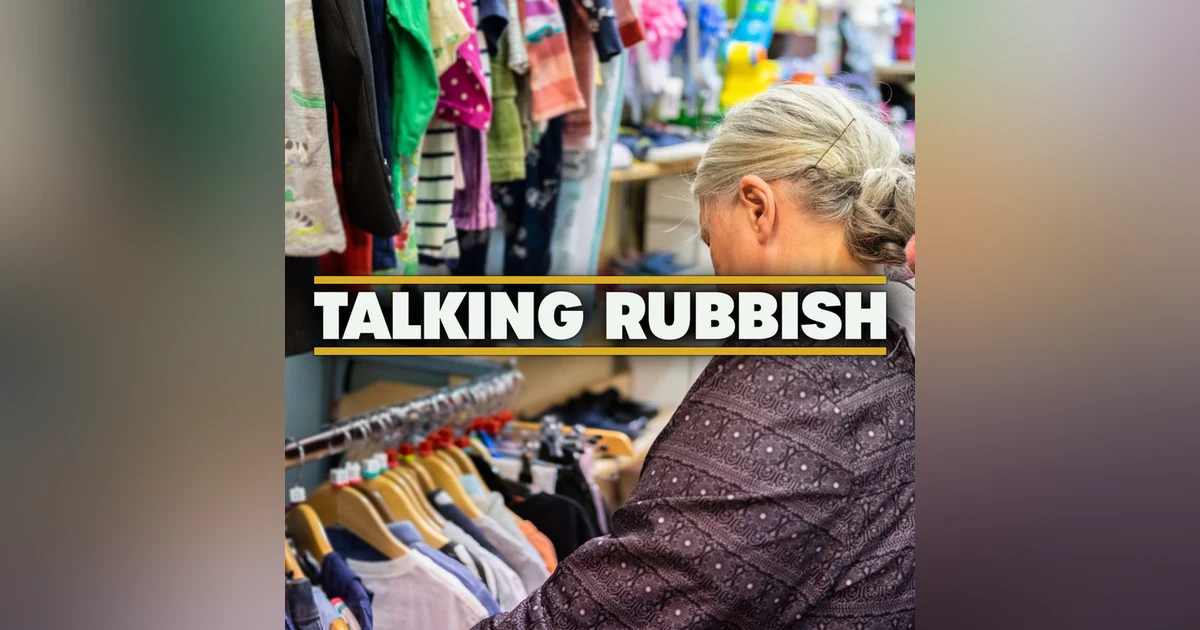
Every year, we throw away around 1.4 million tonnes of textiles in the UK, but only a fraction find their way back into our wardrobes. With fast fashion driving down the quality of donations and resale apps taking the best items, charity shops are increasingly struggling to deal with donated clothes they simply can't sell. Are our good intentions actually costing charities money, and what should we be doing differently?
Plus, are fake spider webs rubbish or not, does it really take 185 hours to recycle a tonne of waste at home, how will Halloween sweets be packaged in our dream shop, and why is a 15 minute delay driving Robbie to single use packaging?
Join hosts James Piper and Robbie Staniforth as they delve into the world of recycling, hopefully having fun along the way. One thing is for sure, they will talk absolute rubbish from start to finish.
Please take a moment to complete the Simpler Recycling tracker
We would love you to join our community on Discord
Special thanks to our sponsor, Ecosurety
To get exclusive videos and clips, follow us on Instagram, TikTok, Threads or Facebook; @rubbishpodcast or YouTube: @talkingrubbishpodcast
Or you can contact James and Robbie with questions or just general rubbish musings using the email address talkingrubbishpodcast@gmail.com or by texting them via WhatsApp on 07356 069 232
Relevant links and reports mentioned in the programme can be found on the Talking Rubbish Linktr.ee
Transcripts and episodes can be found on the Talking Rubbish website
Timestamps:
Are we turning charity shops into rubbish dumps? - 01:37
Additions and corrections - 24:57
Rubbish or Not: fake spider webs - 31:11
Rubbish News - 35:26
Does it really take 185 hours to recycle a tonne of waste at home? - 40:37
Green Grocer: Halloween sweets - 48:05
Residual Rubbish - 55:30
Music licence ID: 6WPY8Q4O2RPFIOTL
Frequently Asked Questions
Are we turning charity shops into rubbish dumps?
Yes, an increasing volume of fast-fashion and low-quality clothing donations are unsellable, forcing charity shops to spend thousands of pounds annually on disposing of unwanted items.
What is a good rule of thumb for donating to charity shops?
You should only donate items that you would be happy to purchase yourself or give directly to a friend.
How much clothing do we throw away in the UK?
The UK throws away approximately 1.4 million tonnes of textiles each year, with only a fraction being successfully resold through charity shops.
Hello, welcome to Talking Rubbish, your weekly podcast delving deep into the world of recycling and discussing the truth behind snappy headlines and one-sided stories. In this episode, we will discuss why charity shops might not want our clothes. Are fake spiders' webs rubbish or not? I have a question about how long it actually takes us to do our recycling and how will Halloween chocolates be packaged in our dream shop. I'm Joe's Piper and I'm joined by Robbie Staniforth, my father from rubbish friend. Good morning, Robbie.
Robbie StaniforthMorning, James. How are you today? Yeah, very good, thank you. I sensed a twitch from you as I said fake spiders' webs. Yeah. I was suddenly like, what actually is it made of? It's like candy flossy stuff. So I've already got my mind whirring on what actually is it.
James PiperYes, well, happy Halloween. This goes out on the 29th of October, so gave us an opportunity to think through some Halloween-y stuff. You trickle treating this year?
Robbie StaniforthYes, my daughter's very keen. Uh an outfit will be being made shortly. Cheshire Cat, she's going as, which I thought was an interesting one.
James PiperHave you are you going to be distributing sweets as well at the same time?
Robbie StaniforthI think so. Yeah. I think we'll be in with the pot of sweets. She'll be knocking on the doors down the road. We've got lots of kids in the neighbourhood, so we're expecting a busy night. Nice. And what sweets have you gone for? I think it will be sort of this along the celebrations type theme.
James PiperBut we have time to influence your decision. Oh, okay. Yes, we do. Yes, we absolutely do. Well, let's get to Greengrocer as quickly as we can to resolve this for you. Trash talk. A while back, my local charity shop had a sign in their window and it said, last year we spent £2,108 disposing of unsellable donations. And this could have funded one and a half days of care for a patient. And it is becoming quite clear that this is a story that is increasingly being told across the UK as the value of our donations fall and charity shops struggle.
Robbie StaniforthYeah, I mean, this is such a familiar story. Just earlier on this week, I saw my neighbour at the front of our house and they said, What do I do with old clothes? My first thought was donate them. And she was like, No, no, no, not those old clothes. I'm talking about like oily t-shirts that I've been using to fix my bicycle and like totally unusable things like holy socks and things. And then I was immediately sort of like, Well, definitely don't put them in charity banks and charity shops, and fortunately you can um dispose of them uh at the curbside in Bristol, but that's not the same for everyone, and that's probably the reason why people just bundle all their textiles together and drop it off at the front of a shop and hope for the best.
James PiperYou just said Bristol take rags. I don't think that's true. I think when we did the oven gloves the other day, we said they'll only take clean clothes and reusable clothes, not rags.
Robbie StaniforthOh yes. So that's why my neighbour asked me. She was saying I've been putting it out with my recycling, you know, in the open untied bag and they're not taking it. That's a schoolboy era. Oh my god.
James PiperReminder, Robbie, listen to your own podcast. It's useful. Or at least encourage others to listen. So before we get into detail, just to set this trash talk up, in Rap's 2024 Textile Market Report, they basically revealed that the number of new clothes we buy is about the same as the amount of clothes we're throwing away. We buy approximately 1.4 million tons of clothes and we throw away approximately 1.4 million tons of clothes. Out with the old, in with the new. It's astonishing how much is thrown away, 1.4 million tons. But obviously it's not the same clothes. Yes. But yes, I think we're seeing an increase in how much is being thrown away because of fast fashion, because clothes are lasting us uh a shorter amount of time. So let me ask you this question. How much of that 1.4 million tonnes do you think is actually sold back to the public? So through charity shops? Do you want to have a guess at how much you think is sold back? I don't know.
Robbie StaniforthMaybe I'm live in a bubble, but I sort of think quite a lot is recirculating, like half, maybe?
James PiperHalf? Okay. It's a lot less than that. It's about 275,000 tonnes. And the rest is exported or managed as waste. And half is not sold to a charity shop. It's thrown in the general waste bin. Oh, really? Yeah. Each person in the UK throws away approximately 35 items of unwanted textiles into the general bin.
Robbie StaniforthSo at least my neighbour's not doing that. You know, they knew to tap me on the shoulder. Unfortunately, what they didn't realise is I'd probably be useless for the advice. I ended up saying, take it to the local recycling centre, and hopefully they've got somewhere to put your rags and things.
James PiperThere was this discussion. We had this on Discord actually just after we'd recorded Oven Gloves. Before it even went out as an episode, someone said actually the challenge is people default to rags, and they have to be a certain quality too. Oh, like you're oily, you don't gave the example of the oily one. I probably just would toss that. Yeah. You know, and so there is a tier of textiles. It's like if it's really bad, as in if you don't feel like it could be reused, shredded up and reused, then it probably should go in the bin, get sent off for incineration. If you think this is high quality enough that I would buy it again, then you should donate it. And somewhere in the middle it goes off as rags. But we shouldn't be sending everything off to rags, and we certainly shouldn't be sending everything off to donations.
Robbie StaniforthOkay, yeah. It's that grading that makes it really complicated, isn't it? Because you as a householder just with some waste textiles has got to try and make a decision about the quality, and everyone's gonna have a different interpretation of what that is.
James PiperExactly. But as we'll come on to, getting the charity shops to do the grading for us is very costly for them. You know, because you're taking up floor space, you're taking out staff time. We'll come on to that. I mean, I have to say, I personally don't buy that many new clothes. I've got things in my wardrobe and cupboards for many, many years. But um, I have lost weight in the last few years, and so I have found a need to actually update my wardrobe, and that's been quite interesting thinking what to do with the old stuff. Luckily, most of that has been able to be donated because it's not like it's worn, it's just I don't fit it anymore. Yeah, it's not worn out or whatever. Yeah, the biggest problem for me is socks. I mean, I'm aver because I'm trying to lose weight, I average like 21,000 steps a day, and I get through socks so fast. So I've been trying to work out what to do with them.
Robbie StaniforthReally, you just wear through and you've got loads of holy socks and shoes.
James PiperBut the socks specifically, I found a website, uh, it was London Socks Company, I think, and they will take old socks. They do like an annual amnesty, take old socks. If they're good enough, they they give them to people to use. Um I think I just think the homeless from memory, and if they're not good enough, they send them off for recycling. So I have found an outlet for my socks. But um, that's the it's unbelievable. I don't buy many clothes, but socks. I'm like, oh my goodness, I buy them constantly.
Robbie StaniforthThis is brilliant. A man who walks so much he wears through his socks.
James PiperWe have this 1.4 million tons, like almost 300,000 tons sold through charity shops in the UK, about half going off to waste. The remainder is exported. Um, and we export a lot of textiles. We export more textiles than we sell in charity shops. I think it was about 400,000 tons that's exported. Rap was suggesting a lot of what was exported was used clothes rather than rags. Um, and I think that's because when it's exported, it hasn't been sorted at that point. A lot of it is exported for sorting. So, particularly the UAE, it's like flexible plastic. Flexible plastic, it's unviable at this point. If you're if you're just looking at the commercials, it's unviable to sort it in the UK with minimum wages, high cost of living, all that kind of stuff. So you send it abroad for sorting, you look for the good plastic. Same sort of thing with the clothes, you're grading it abroad. That's why so much is exported. Um, and you could see that actually when you look at charity shops and the costs that we're going to come on to, you'll see that like it's unviable for them to take rags and sort rags. It just doesn't work. Particularly at this point where we have an increase in volumes of low quality items combined with high labour cost, which gives low returns, we're seeing more and more exporting of our textiles. So coming back to charity shops, some of them report only being able to sell a quarter of what they receive. Really? Yeah. Oh my gosh. I I uh that was reported in the Guardian. I actually couldn't believe that number. So um I decided to go and speak to my charity shops. In the village, we have five uh five charity shops. We actually have seven, but some of them are doubled up. There's like a book one and a clothing one. Oh, okay. I'm calling it five brands. I mean, it's a small village, it's an unbelievable quantity of charity shops. I love them. It was a great chance for you to do some of your primary research. Yeah, there's a lot of primary research in this episode, you'll be pleased to hear. So I went and asked them whether they were experiencing that problem. And yeah, a few of them told me that they could only sell about 25% of what they take in.
Robbie StaniforthWow. So basically, people are passing on actual rubbish if 75% of it can't be used.
James PiperI know, and so what you're talking about there is uh that grading that we referred to. Hey, charity shops are doing that work for us. If they can only sell 25%, obviously they have to sort it and decide what grade it is. And I've sort of alluded to the cost of this. Well, this came from a study in the University of Southampton. They looked into this, how much it would cost to deal with donations that you weren't able to sell. Um, they picked a single store, so this is not representative of the UK. Um, it's just a single store, but it's a useful anecdote for us to go, okay, we can sort of see the impact of it. They went through staff time, waste collection, storage. Crucially, they included like lost potential sales, because they were like, well, if your staff time is spent dealing with unsold waste, what could they be doing as an alternative? And that's a that's a really important part of the cost. They estimated that the cost of dealing with for this store for one year, the cost of dealing with unsaleable donations was £22,784. Wow. And income that they got from the rag, from selling the rags, was £5,694. So it led to a net loss of about £17,000 on stuff that was unsellable. So you have to sell a hell of a lot more to be an organization that has a surplus in the year.
Robbie StaniforthYeah, it's crazily out of kilter. And I wonder if people who are dropping off these black bags with textiles in them are thinking someone else can make the decision rather than me. Um I'm not sure some of these are marginal cases, but I'll just defer the decision. It's a victimless crime kind of thing, rather than actually thinking, look, this is a good quality, high-cost item that can be reused and resold, and the charity can benefit from it. I I hazard to guess that lots of people are just busy lives in a rush, bundle up all the textiles in one go and just drop it off somewhere else, and it's no longer my problem.
James PiperThere's a really easy golden rule that we can deliver here. Only donate something you would be happy to go back and buy. It's so simple. That is how you donate correctly to a charity shop. If you are willing to go back in in a week and spend money on that item, let's say you wanted it, which you probably don't because you just donated, but you know, use your imagination, then it is okay to donate. And if we all donated to that rule, it would transform the finances for charity shops. There's other rules like don't leave it outside overnight in the rain and all the usual stuff that we've talked about before, but I think primarily donate when a charity shop wants you to donate. Lots of, in fact, all the ones in my village say we're not accepting donations at the moment. Really? Yeah, because they're just full. So it's a really strange situation where charity shops are saying, actually, we don't need any more. If we'd just given them good stuff in the first place, then they'd be selling that much faster, they'd have more space, they'd be making more money. It's so much better for the charity for us to have done the grading and the sorting. And Farah, which has 39 charity shops in London, has a very similar rule to my golden rule, which is if you'd be happy to give it to a friend, we'd be delighted to receive it.
Robbie StaniforthAh, yeah, that's a good way of thinking about it, because obviously, as you said before, you obviously wouldn't be happy to have it because you're getting rid of it. But would you, a friend that fits it, or maybe it's more their style, would you be happy to pass it on to them, or would you be a bit embarrassed with like, why are you giving me this armpit stained t-shirt, Robbie?
James PiperYeah, that's exactly it. We're in this situation where the quality of donations is falling. Robbie, do you want to give us your thoughts on why the quality of donations might be falling over time? Why we're seeing that increase of unsellable goods.
Robbie StaniforthIs it because the good stuff gets hoovered up elsewhere and the charities are just left with the worst stuff that's very invaluable? Because if you've got a Gucci jacket or something, you're looking to sell it on or gift it, it's only really the low-quality stuff that people are trying to get rid of.
James PiperI think that's exactly it. And according to the media, the rise of vintage and other such apps. And the argument is that over COVID, we all became so used to eShopping, it became so computer literate. You know, suddenly, I mean, QR codes, right, weren't really a thing pre-COVID. Now look at us, we're all using QR codes. It's the same sort of thing for vintage, Depop, all these um apps you've already mentioned. We've got used to reselling our clothes. And of course, there's a massive positive to that because the public are discovering the value of reuse. You know, as an all as a podcast that's obsessed with reuse, there's a massive positive to people going, hey, there's value in this jacket. I'm gonna resell it. But it does come at the cost of then what is left for the charity shops and what is left for the things we are willing to donate for free.
Robbie StaniforthAnd they really do then become waste management organisations rather than reuse shops themselves.
James PiperAnd we're seeing that fall in value throughout the textiles industry. So The Guardian was actually reporting about rag value, and they were saying that 10 years ago you would get 60p a kilo, and today you're lucky to get 10p a kilo.
Robbie StaniforthOkay, and that's just because what's in the rags is a load of rubbish that's lower quality or whatever.
James PiperYeah, I think the rise in fast fashion is creating lower quality uh clothing, and therefore some of it we look at it and we go, actually, that's unsellable because that doesn't last as long. Put it into the rag collection, you end up with an oversupply of rags. That then do depletes the price. And particularly as you've got like export costs increasing with shipping containers, all sorts of things. If most of our rags today are exported, then you're gonna have that increase in cost.
Robbie StaniforthYeah, so the the rags are just so available that they don't have to pay that 60p. It's like 10p is fine, because I can get rags anywhere.
James PiperBut that dramatically changes the finances of charity shops. And what what they are receiving is not high quality, the rags are not worth as much, the stuff they're selling is not worth as much. Just end up with this spiral. And all of this is happening at a time where charity shops are already facing enormous financial pressure. Uh the British Heart Foundation has announced its plans to close 150 of its 650 stores. Cancer Research, I think, is closing around 200.
Robbie StaniforthYeah, and I mean, I can testify when I go into charity shops, I often now don't really see the same bargains that I once did, the same high-quality items when I go on Gloucester Road and stick my nose into charity shops. Sort of 10, 15 years ago, when I first started doing that, you would actually see all sorts of like really high quality stuff that you're sort of like eyes pop out of the socket thinking, I cannot believe I'm gonna get this like high grade leather jacket for 10 pounds. Whereas now you sort of look at the stuff and it's quite low quality in terms of the like m manufacturing quality. I'm not talking about brands here, I'm just you look at the stitching and the seams and the things, the stuff that's getting sold on in those charity shops has definitely taken a dip. And I think it is because the good stuff gets hoovered up elsewhere and it just makes it unviable for them.
James PiperThis is a great feature. Let us know your best bargain from a charity shop. Like someone, feel free to write in and let us know what you found in a charity shop, and we can share some of the amazing things charity shops sell us. I think that would be worth doing. Um, and I think something I I found a blog post actually that was really interesting talking about the charity shops closing and how actually that is a societal failure. You know, charity shops have a tendency to replace shops that have already shut on our high street.
Robbie StaniforthYeah.
James PiperAnd they become social hubs. People can meet and chat and you know, find bargains in this instance. And we have 10,000 charity shops in the UK. They're generating uh 300 million pounds in profit, roughly, or surplus. I doubt they would say profit, but 300 million pounds surplus. But that is just part of the story. There was a report um back in 2022 looking at the social value that charities represent, like how the value of how we feel donating to charities, or people volunteering in them, you know, how they feel, and all of that sort of stuff, and and the the happiness index, I guess. And they valued that societal benefit at £75 billion. Wow. Billion, not million. 300 million surplus, 75 billion societal uh value.
Robbie StaniforthYeah, and I think that's fair. You know, there is definitely social value in doing good, meeting points. Um, it's all just couched and framed around trying to be helpful in uh a retail environment where generally it's all about profits and just making money.
James PiperI guess as I was uh writing this trash talk, I couldn't help myself but compare it with packaging. Because I think it's really interesting that with packaging, we really struggle to get people to recycle. Um, even when I tell people the cost benefits like recycle your food waste because it's so much cheaper to send it off for anaerobic digestion or composting than incineration, or the environmental and social good, it is sometimes, and I'm not talking to the listeners of talking rubbish here, but it is sometimes like getting blood from a stone. With products and with textiles, you can't stop people attempting to do good with it. You know, they don't there is an element of guilt that doesn't exist with packaging. And I think my hypothesis is that with packaging, we feel like it's being pushed on us by the brands. Yeah. We don't have a choice, even though we do. We could go to a refill shop or a you know a packaging-free shop. We don't have a choice. I didn't answer it in this packaging, therefore it's someone else's responsibility. I get that all the time on social media. When you buy a hundred items a week on Vinted, you feel extremely guilty about what you're buying. So you think, well, I'll justify that by giving it away at the end of its life. I'll justify that by giving it a second life.
Robbie StaniforthAnd I think one of the big issues is the wish cycling element of it. Because as my neighbour, you know, discussed, it just feels wrong to put it in the black bin. And yes, some of them are oily rags that probably won't even go to the rag trade, and they probably do need to go in the black bin. But there's this the guilt, if you see what I mean, about this was once a much-loved t-shirt. This was once a much-loved beanie. I just can't bring myself to put it into the bin after having spent £20 eight years ago on the item itself. You know, that that and that it's that kind of psychology that means people are actually, you know, if we were to think sort of optimistically and positively about it, it's like hopefully this stuff I'm putting in a black bag, some of it will be salvageable. I'll just stuff it all in and put it on the doorstep, and hopefully they can wade through and get the stuff that's useful and just get rid of the rest. Not understanding the implications and the cost of someone having to go and do that effectively for you. And you should be doing it yourself and taking some personal responsibility, but that requires you to have a great understanding of what's valuable and what's not to the charity shops, what's uh a rag that you could take to your local recycling centre versus what is just something that will never have a second life and has to go into a general waste bin.
James PiperI think that point actually brings us really nicely back to that paper from the University of Southampton because they identified three practical priorities to improve the charitable sector.
Robbie StaniforthOkay.
James PiperUm, and their top one, which is basically what you're referring to, is better communication about what makes a useful donation. Okay. And I think that is key, isn't it? Like we've got to say, look, if you would buy it again or give it to a friend, donate it to a charity shop. If it's a rag that you feel could be shredded up, but reused as a textile somewhere else, then donate it to rags, donate it to that, you know, the textile banks or whoever is accepting rags. But if you're looking at it thinking, God, even shredded up, this would be a bit of a mess. You know, it's a complex mix of materials like my oven gloves.
Robbie StaniforthYeah.
James PiperYou might be doing more harm than good recycling it. So their top one was better communication about what makes a useful donation. Uh, their second one, uh, which was actually really important, was consistent recording of quantities sold, reused, recycled, and discarded. They found that charity shops had very disparate ways of recording what was good, what was bad. So none of them. Knew what the cost was. None of them knew how much how expensive it was to deal with rags. And actually, if they knew that, they'd be more clear on what they can take. They found, I don't know if this was the University of Southampton Southampton or something else I read, but there was this discussion about how even if they had a sign in the window saying we're not taking donations anymore, most of the time a charity shop will still take donations because the people working there are volunteers who don't want confrontation and they don't want to and they're like, Yeah, okay, we'll take it from you. And suddenly you found you've got even more stuff that you can't sell. And so there is a lot really for us to be doing to grade our clothes and also to then respect the fact that these charity shops, you know, are essentially run by volunteers who are just trying to do a good job, and we need to help them by respecting kind of what they've what they've asked for. And then the final thing was uh that the University of Southampton recommended was to develop additional reuse opportunities. And for me, this I think could really help. So having charity partnerships at household waste recycling centres rather than people naturally darting off to their charity shop, even though it's really easy for me with my five in the village, I go, well, actually, I'll take it to the household waste recycling centre where they have a partnership with a charity because they've got more space, they've got more staff. It's not good, I mean, they uh household waste recycling centres might be getting annoyed at me here because they might say, Well, hang on, we don't have the money either. But um, but I do think there's an opportunity, like you've said to your neighbour, take it to the waste recycling centre, talk to someone, say, Look, do you want this? And that's gonna be your best thing to do, right? To spend a bit of time asking people whether they want it.
Robbie StaniforthYeah, that's a brilliant idea. I mean, you go I go there all the time and ask things like hard, rigid plastics, you know, uh items rather than packaging, can this go into the plastic bin? They're super helpful at recycling centres of telling you what you can and can't do. Upgrading them to actually be able to take your bag and sort of go, what goes in which bin? Is this a rag or is this genuinely got to go in the general waste because it's just never gonna find its second life?
James PiperAnd we get it all the time on talking rubbish, people messaging us going, I really want to recycle this thing. And it was just like it's not worth anything to anyone. Like, we just have to accept that. We have to design that out, you know, by putting strict DPR fees in if it's packaging, by making it really expensive to put it on the market. But really, we shouldn't feel guilty if someone has sold us something that isn't recyclable. We just need to learn and then not buy it again. I definitely don't think the answer is to stop donating. Quite the opposite. Charity shops are an amazing example of reuse working at scale, and we should be doing everything we can to support them. I think it's about saying, actually, occasionally I won't sell this thing on vintage, I'll donate it, even though I know it's a higher value item. That will help shift the averages. Giving something to charity doesn't automatically make it a charitable act. Sometimes it just makes it somebody else's rubbish. Additions and corrections. Back in episode 109, we talked about harmonised labelling in the EU, which was due to become mandatory from August 2028. So this was where we talked about all the labels that may end up in our packaging coming from the EU. We're moving to those pictograms rather than recycle, don't recycle. Well, August 2028 is definitely not going to happen. Because there's something we sort of touched on in the episode, but we didn't mention fully, which is that the European Commission, the way this is all going to work, the European Commission has to publish an implementing act, and that has to come into force. And basically, that implementing act sets out what the labels are going to look like and how they're going to work. And then the rules are that businesses get 24 months from the date that that act goes into force before it becomes mandatory. So we know it's not going to be August 2028 because they haven't published the implementing act. So the 24 months hasn't started yet. And I noted this week that the Commission's updated timetable. So if you go on the EU Commission, you look for harmonised labelling. They've got a timetable that says now that it will come out on the second quarter of 2027. So that means, and this is why it's a small correction to our episode, that means August 2028 is not going to happen. We are more likely to see second quarter of 2029 when it comes in. And that's assuming it doesn't get delayed again.
Robbie StaniforthYeah, six to twelve months later by the science of it.
James PiperNow I thought this was an interesting correction, not least because we have to correct it, but also because it's a useful reminder, but actually on the EU Commission website, they have a get notified thing on each page. Oh. And it's definitely worth creating an account. If you're if you're one if you're a business wanting to know about all this stuff, that the only reason I saw this is because I've got these notifications. So if you've got something you're interested in, find that relevant page on the EU Commission website, and then you can put at the bottom, get notified, and then they'll send you an email if they make any changes. Yeah, that's super helpful. And back in episode 113, why have I said it like that? I never said it like that. Back in episode 113, which was about digital DRS, uh, we had a long discussion about digital DRS, and we had a few people get in contact saying you've missed some of the advantages. Um, and one of those people was Ian on Discord. Ah, Ian, we haven't heard from him for a little while. He wanted to highlight three advantages that digital DRS bring that maybe we missed. So I think we sort of touched on this one, but the fact that recycling bins can go anywhere and don't need power. You know, if you're if you're doing a digital DRS so you're scanning your bottle as you put it in the bin, then and you're on the go, your bin can be anywhere.
Robbie StaniforthIt just needs a little QR code, not an actual sort of digital hookup.
James PiperYeah, so you would scan the bottle and then scan the bin that you're putting it into, and that would join up to give you your digital deposit. It's important because it means you don't just have to have reverse vending machines in stores where they have access to power. One of the things we missed was that the scope of items collected is so much bigger. So, and this is my big complaint about DRS that we're so focused on bottled and cats, bottles and cans that we forget everything else. So, with digital DRS, you could put it on fast food containers, milk bottles, anything you wanted really, beverage, cartons, the things that are out of scope for DRS at the moment. You could just go, oh, because we've got a digital system, actually we can just release different products as we go. Yeah, I like the sound of that. And finally, he's talking about the level of deposit. We talked about this a lot with Julian and in the episodes that they're going to set it at 20p, and then it's really hard to change it. Well, with a digital DRS, you can keep the deposit level flexible. You can go, oh, this isn't working, let's increase it, or oh, we can have it a bit lower, let's decrease it. It allows you to do that, which is something you definitely don't get to do with a fixed DRS system. So thank you to Ian for those additions to our digital DRS episode. We'd like to take a minute to thank our sponsor, EcoSurety, who are on a mission to rid the world of unnecessary packaging. They help brands navigate the tricky world of extended producer responsibility, but that is not all. They also collaborate on some incredible recycling projects and consumer awareness campaigns for those tough to recycle materials. If you're an organization looking to make smarter packaging choices, check them out at ecosurety.com. And the best thing you can do to help our podcast grow is to tell your friends and family about it, or you can leave us a review. And if you leave us a review, you could be Robbie's review of the week.
Robbie StaniforthAnd so this is a five-star via Apple from CHR13S, which I think is Chris S. I'm guessing. Less rubbish, more reason. As a paper packaging engineer, I find the Talking Rubbish podcast fantastic. It's not just for those working in the industry, but for anyone interested in sustainability and the challenges we face. As with many sustainability topics, it's easy to feel overwhelmed and burnt out trying to understand and address the issues. At times, it can feel like meaningful change is impossible. However, James and Robbie strike a fantastic balance. Their approach is both informative and reassuring, making complex subjects accessible without adding to the noise. It's an independent, fair, and balanced approach to each topic, encouraging discussion and understanding. We need stronger voices for positive change, and I hope theirs continues to grow louder as this entertaining and insightful podcast reaches an even bigger audience. Highly recommend for anyone working in packaging sustainability or anyone simply wanting to understand the packaging challenges we face. What a lovely review. So comprehensive and complimentary. I'm really glad we're making a difference for you, Chris, because this is music to our ears, isn't it?
James PiperIt's really good. Thank you, Chris. And you can follow us on social media at rubbishpodcast. You can email talkinrubbishpodcast at gmail.com or you can WhatsApp us. Also join our Discord. It's the easiest way to engage with us and listeners of the show. And the link to all those things is in the show notes. Rubbish or not. Robbie, with Halloween coming up, I thought we'd look at something you might start to see appear outside houses, and that is fake spider webs. Oh great, you've got one. Which I didn't think were a big deal. And then I thought, where am I going to buy one from? Walked down to my local Tesco's and they sold them. So I thought, oh, maybe these are being sold everywhere.
Robbie StaniforthMaybe everyone does have them. Pretty stringy, isn't it? I honestly think, and unless you've got a like reusable. Is this the kind of thing you keep forever and just it goes up and down every year? Gosh, it's it's quite thin and low quality. You're not keeping that in your Halloween box in the loft or whatever along your crisp side your uh Christmas decorations.
James PiperYeah, I think once you've put it in a hedge, when you take it out, half the hedge is gonna come with it.
Robbie StaniforthYeah. I mean it's very soft. Yes. Very soft and nice, actually.
James PiperSo this is stretchy white material that people pull apart, cover their hedges, trees, and front doors with. What do you think, Robbie? Rubbish or not?
Robbie StaniforthI think that's rubbish. It's great that we were talking about textiles just earlier in the trash talk. I don't think that's gonna go to shoddy or uh it's definitely not resaleable, so don't give this to your local charity shop. It is a version of textiles.
James PiperI think it's probably one material though. I think you're right. I think this is the example of the third grade. Sorry, going in the general bin.
Robbie StaniforthYeah, I'm pretty certain this is rubbish.
James PiperAs I said, uh it's one from Tesco. Uh, according to the packaging, it's made in China by Rayland Industrial. Couldn't find anything about them because their website was down. But um, generally this stuff is made of polyester. So, as you say, it's a type of textile, it's just a mass of incredibly fine synthetic fibers. When you've got fibers like this that have been deliberately made to be fine, if you were to try to recycle that, it's going to get tangled in machinery. I may have said it before. My I remember visiting Murphs in the back in the day, and the thing they used to contend with the most was VHS tape. Oh yes. Like it was unbelievable. And this is like 20, what would this have been? 2015, 2016, you know, VHS is long gone. But obviously people having clear-outs of like old houses or whatever, and like Murphs just dangling off every machine with piece of VHS tape that come unspooled out of the plastic case and just gets everywhere. I mean, this is that sort of stuff. So once you've stretched the material out, you've and you've got to remember as well where you're putting it. As I say, you're putting it at a hedge, a tree. And this time of year, the leaves are gonna come off, bugs are gonna get caught in it. Like, it's just not going to be a nice material at the end of the Halloween period. So I agree with you that it's general waste. But I raise it because there is another problem with these decorations. Wildlife rescue centres have reported finding birds, bats, insects, all sorts tangled up in these artificial webs. And like the RSPB recommends against them. They say, look, if you're going to have them, keep them inside. And a quick Google search will show you many, many organizations asking for them to be banned.
Robbie StaniforthOkay, so our top tip is how do you cultivate a garden, a front garden? Because it's when people come up and knock on your door, isn't it? You sort of want it to look Halloweeny on the way. How do we encourage actual spiders to make webs at the front of one's house?
James PiperExactly. Buy some actual spiders, release them in your garden, hope for the best. I mean, I've got loads of webs in my garden.
Robbie StaniforthYeah, I've got loads of mine too. It's that time of year. Maybe you should invest in the lighting to show the existing spiders' webs that are in one's front garden this time of year.
James PiperSo I'm gonna give the same advice that RSPB give, which is if you're gonna buy it, which I would recommend you don't, but if you're going to buy it, keep it indoors, in your windows so people can see it from the outside, but you you're not causing a risk to wildlife. We spend years telling people to keep plastic out of the environment. And then every October, some people, I'm not gonna say everyone, some people deliberately stretch it across their hedges and trees. It's very odd, isn't it? I mean, polyester is just a type of plastic. It's PET spun into fibers. Fake spider webs, rubbish in so many ways. Rubbish news. My news this week has had literally come to us this morning because as we're recording, the government have just approved production at the Jackdaw gas field. Um, so I thought it was worth raising as rubbish news because it is pretty live. Although I suspect we will do a trash talk on this um in the coming weeks because it is actually there's lots of detail here. And I should start this by saying I am not an expert, and this is breaking news. Just before we started recording, this was announced. So I thought I'll change what I was going to talk about, but I am running a bit live on this one. So just for people who don't know, Jagd is a gas field 150 miles east of Aberdeen. Uh sort of on the border, I think, of the UK and Norway within the North Sea. When it's up and running properly, it will provide about 2% of the gas we need, uh, which is enough to power 1.4 million homes. And environmental campaigners who are against it say it could produce 35.8 million tonnes of carbon emissions over 11 years. Again, without being my area of expertise, I'm not gonna say I'm critical of this or or for it or anything like that. But what I will say is the government keeps saying it's about jobs. So I wanted to know, Robbie, how many jobs do you think it will actually create on the Jackdoor platform itself? How many I think it's actually how many beds are there on the Jack Door platform, which sort of tells us how many people can be there.
Robbie StaniforthGod, I've got absolutely no idea. Is it in the I mean it sound it sounds like it's producing a lot in the hundreds?
James PiperIt's 27.
unknownWhat?
James PiperIt's largely an unmanned an unmanned platform. The operator has said there might be 300 jobs, but they're kind of associated jobs, so not actually on the platform itself. They're just associated with the fact that it's now gone live. But I don't I don't think this is big enough for the government to be saying, oh, we're doing this because it's good for jobs. I mean, that just is not true. What it actually is about is securing our supply. You know, we are importing a lot of oil and gas, we need more in the UK, that's the argument from the government. It is a tricky one, and this is why it deserves its own trash talk, because I really do need time to think about it properly. There is often this debate about should a country lead the way in green energy or should they say, well, hang on a sec, if America's not doing it, why should we? You know, and if we're having to import all this stuff from America because we're not generating it ourselves, isn't it better to generate it ourselves? And that is where it gets a bit more complicated because when you take into account producing gas domestically, it can have a much lower carbon footprint than importing it. So there is actually potentially a carbon saving from doing this, even though the environmental campaigners are right that it does generate additional carbon. My final thing I will say is we did do a live talk at Earthfest um sort of when we first started, probably a couple of years ago. Oh, yeah. And there was a a talk just before us, which was some very, very passionate campaigners who were massively against uh Jack Daw and Rosebank, which is the other one uh that the government are considering. Um, and I felt the speakers were extremely compelling around why this might be a bad idea. And today they will be finding this news very difficult.
Robbie StaniforthUm my news uh comes in from Australia. Um, and it's a cautionary tale, uh, this one of needing to strike while the iron's hot when it comes to the world of policy and improving packaging recycling policy. Because Labour, the government over there have quietly shelved the mandate for more recycled material in packaging. They had announced back in 2023 that they were effectively going to bring in a version of producer responsibility that meant one needed to include recycled content but also make packaging more recyclable. They were running in parallel to the UK, and I went over there a couple of years ago, and this was part of my remit, was to sort of show that you need policy to underpin the investment in recycling and things. But in an email to stakeholders, it said the minister is looking at the pursuit of reforms in a way that balances environmental outcomes with the broader needs of the economy, with the government looking closely at its policies to ensure it does not exacerbate cost of living pressures. And so that's the big problem with this. And we've the reason I pulled this one out is because it's so similar to what has happened and the dialogue in the UK. Fortunately, the government pushed through its reforms in 2024 before those fighting against it could sort of say, look, cost of living pressures, this is going to cost people. We've talked about this uh just last week in our trash talk when we mentioned about what the Conservatives were looking at. And so, unfortunately for Australia, there was political will there back in 2023. They didn't quite get the legislation through, and suddenly things change and political will turns, and now they're going backwards, unfortunately, when it comes to recycling policies, and this is going to be a big problem for making recycling viable.
James PiperRubbish question. We are officially in a game of podcast tennis with behind the bins. Oh, okay, are we? You tell me. It's a podcast all about uh recycling and household bins, and they keep commenting on our episodes, and I always feel the need to respond. So thank you, Kate and Tim, for yet another thing I have to respond to. Uh, they mentioned a stat we brought up in episode 106. 106? You're doing it again. What's wrong with me today? In episode 106, which was that it takes the average household 185 hours to recycle a ton of waste. And Tim started doing some mental arithmetic live in their episode, and he was like, that can't be right. So I did what any sane person would do in the face of such a challenge and timed how long it took me to do my recycling this week. Oh, very good. Okay, and what did you find? Well, so first of all, this stat, 185 hours to recycle a ton of waste, just to be clear, that's the household. That's how long it takes us to recycle a ton, comes from a it's quite an old study, 2002, called Households Recycling Efforts. And it's from Norway. And in terms of weight, they used 221 kilograms of material collected annually. That's what they felt. The average Norwegian was recycling each year. So it would take about four years to recycle a ton of waste. 221 a year, four years to get to a ton. They estimated from surveys that it took the average person 28 minutes each week to wash, sort, and recycle their packaging. And so slight complexity here, but they did it per adult. They estimated a household was 1.7 adults. Okay. So they turned that into 48 minutes a week. So basically they were saying 221 kilos a year and 48 minutes a week to do all the sorting, washing and recycling. And it was broken down in washing was nine minutes. Sorting, which included things like dismantling cardboard boxes, was 13 minutes, and then taking it to a recycling point was six minutes. And it's that last one that we probably don't have in the UK or I don't have because sounds like they're taking it to a communal point rather than curbside.
Robbie StaniforthAnd it would have had DRS back in twenty two, so that's also taking your bottles to the supermarket, isn't it?
James PiperUh yes, that's a good point. I don't know if they included bottles and cans in this. I was wondering if they'd excluded them, but maybe they did include them, and that's why you're getting a six-minute average. I suspect we're going to be able to shave off some time on that kind of six-minute recycling point. Now it does include food waste, which I think skews the weight massively. You know, about 221 kilos, a lot of it is going to be food waste. And people have a tendency to lie in surveys, so we can assume the minutes are probably wrong as well. So I just decided to do my own weights, as I said. Okay.
Robbie StaniforthUm more primary research coming up.
James PiperYep, got my scales out, weighed my packaging. This week I have recycled 4.649 kilos of recycling, uh, which gives me an annual figure of about 242 kilos. So not far off the 221 kilos used in the study. Interesting. I've had a heavy week. I had some friends over and I cooked some beans, um, which I do normally cook bold beans, but not every week. And I used Two jars instead of one. So I have ended up with kind of a disproportionate glass week. I've had more beer than usual because I had friends over. I've had more bold beans. So three and a half kilos of that 4.6 is food and glass. Okay, fine. Now this was actually, for me personally, I found this a really good exercise to experience actually how lightweight plastic is. Because all my plastic for the week, which basically filled three quarters of a gusto box, if people know what that size is, that's why I was using to contain it while I weighed it. All of my plastic this week weighed the same as one glass bottle, one glass wine bottle. Yeah. It does put it in perspective, doesn't it? It really did. I uh you know I know plastic is lightweight, but this kind of, oh let's just package everything in glass, is like I don't think people quite comprehend how much that would weigh and how different that would look.
Robbie StaniforthIt's because of the volume, isn't it? You know, you see so much plastic in the bin by volume that you equate it to weight. But actually, when you put the stuff on a scale in a gusto box, you realise, oh my gosh, it's only the weight of one wine bottle. It's crazy.
James PiperUm, so I think uh having gone through it, rinsing out my packaging probably did take about 10 minutes. Um, and it's about 15 minutes each week that I take putting it out, folding it up, getting all the cardboard down, all that kind of stuff. So I'm not far off the 28 minutes of a study. I'm probably 25 minutes shaving some time off on that recycling. I would say, I hope Ellie's not listening to this, but I would say I do the majority of the recycling. I'm sure she does quite a lot of washing. So I'm gonna give Ellie five minutes of washing. So as a household, I'm gonna say we're at 30 minutes a week. Okay. Um so at that rate, so just over four and a half kilos a week, which is high because of the glass this week. That's unusual for me. It will take me 215 weeks to recycle a ton, which is just over four years. And at 30 minutes a week, I'm at 108 hours to recycle a ton. So less than the 185 hours in the study. Okay, there we go. The variable here is the weight that you recycle. It takes the same amount of time to recycle a wine bottle as it does to recycle a plastic bottle. But those are gonna have massive differences in terms of how fast you recycle a ton. Yeah, sure. I think it and particularly like food waste. If you didn't recycle food waste in your household, it's gonna take you ages to reach a ton. You're gonna be way over 185 hours. So I did feel like the 185 hours was probably a good average because I consider myself to be quite a good recycler to really focus in on recycling everything I can, and I'm at 108 hours. And there's gonna be some households that don't engage with food waste, don't recycle everything. It's gonna take them ages to recycle a ton, and they might be at two, three hundred hours before they get to a ton.
Robbie StaniforthJust not sure it's a useful stat, is it? It's a bit like our big plastic count. Don't destroy my work. It's a bit like our big plastic count, isn't it? When it comes to the amount of time it takes you to recycle, you should be couching it in terms of the number of items that you recycle. Like that's the interesting bit. You know, in the average week, you're recycling maybe 50 items. I'm making it up off the top of my head, I haven't done any primary research. But how long does it take you to recycle those 50 items? And whether it's a glass jar or a plastic tub, it doesn't really matter. And I think that's probably the the next stat that will be socialized. It sounds like the work is due an update given it was from 2002. So maybe we can release our own primary research, James, and own that stat.
James PiperYou can peer review my research I've just done, and then we can get it out of there. Put it in nature or something. I'm sure they'd love it. So, yes, thank you behind the bins for mentioning this stat and encouraging the question. I was happy to see that I spend 25 minutes on my recycling, that was good to learn. Um, although I have spent a lot longer this week weighing all my rubbish to settle a debate with another recycling podcast. Greengrocer Halloween. I felt we had to do Halloween sweets. And as someone who spent quite a few years growing up in America, Halloween was a massive part of my childhood. Imagine this, right? I'm an American kid. I've got an American accent. I'm there between seven and nine, roughly. Those are the ages I'm there. So, like formative Halloween years, collecting huge quantities of sweets, having the best time, you know, getting very ill from the amount of sweets I'm eating. Come home, realize the UK doesn't do Halloween. Somewhere in my teenagers, um, my dad was living in Portsmouth, and I'll always remember the first Halloween we spent there. And it was quite a student street he lived on. And uh we went trickle treating and I knocked on this student door. There's some kid here, he's trickle treating. Just find something. They brought me out a chicken and mushroom pot noodle. Snack in the meal deal. But assuming not everyone wants pot noodle, how are we going to wrap up our Halloween sweets?
Robbie StaniforthYeah, gosh, I've not given this very much thought.
James PiperLike we should say chocolates as well. I've said I'm gonna say Halloween candy using my American wording, because we've got to cover sweets and chocolate.
Robbie StaniforthYes, okay, candy. Um I think there's gotta be a way to steer clear of plastic here, isn't it? It could be a lot of little flexible plastic sweet tubes, is what I'm imagining, all those chocolates that I mentioned at the top, like celebrations box. That's sort of the easy one. You probably do want packaged, you do want the items packaged though, don't you, for hygiene reasons. I don't know.
James PiperEllie and I had a long debate about this last night. Because again, my American upbringing was like, I just remember putting my hands in a bowl of jelly beans. Well, candy corn was the big one, you know. And you would just fill your Halloween like plastic pumpkin up with candy corn, and I was thinking, feels like in a post-COVID era we shouldn't be doing that. Yeah. But is that socially acceptable? I don't know. I guess there's an allergy risk. Yeah. You know, you sort of want the allergens listed on the label. Kids aren't known for particularly clean hands either, really. And how many sweets would they take? Again, another debate Ellie and I had. Okay. So is it better to give them one individually wrapped item than giving them a bowl that they could go and take ten out? You know, that was the question. They just want the feeling of it being lots, don't they? So I decided to whittle it down to four options, and I've weighed these options for you. Oh, wow. Just after the scare was out last night, I was like, might as well just go and buy loads of Halloween suites. So the four options I decided were your plastic wrap, you know, your standard plastic wrapped suite. Yeah. Unwrapped, I have weighed, just for the point of debate. Okay. Because I wasn't sure if you were going to allow it or not. Okay. It sounds like you're not going to allow it. The big bag. The big bag. Yeah, the big bag, yeah. Um I've done cardboard boxes, so like Smartes. Yeah. Oh, that's a good one. And paper wrap, like the Quality Street. Because Quality Street now are wrapped in paper. We've discussed that at our Christmas episodes, right?
Robbie StaniforthYes.
James PiperOkay. If you individually wrap with plastic, so I use Twix fun size as my example, and I've included the outer pack per packaging item. It came to 0.84 grams of plastic. So that's individually wrapped plastic. Loose, and I went with Haribo. The reason I went with Haribo is because they had like a stamp on the packaging that said Halloween approved or something. So I thought if Robbie's going to allow an unwrapped suite, it's got to have Halloween-approved.
Robbie StaniforthIt's got to be a Halloween-approved one.
James PiperOr something like that. It was like monster approved, I can't quite remember that. I think they were referring to the fact that it's like for the kids rather than this is trickle treat approved. Okay. You know, if you went loose, so we were at 0.84 grams with the Twix, we're at 0.36 grams with the Harrowbo. And that assumes three sweets. So that assumes you're taking three because I don't feel you can control it to one. Yeah. Cobble boxes with the Smarties were the heaviest by far at 1.97 grams. Paper wrap, so a quality street. Now we have discussed this on our Christmas episodes. The thing we prefer with Quality Street is a refill pouch, not a tub. So I have used a refill pouch as my example for the weighing because the tub is really heavy and massively distorts it. So you want to be buying the flexible refill pouch, and if you do that, the paper wrapped Quality Street comes in at 0.5 grams. Okay. So basically Smarties box, huge amount of cardboard but easily recyclable. Quality street paper wrapper is the lowest if you want to put wrapping around it. But unwrapped is definitely the lowest in total. I'm going with unwrapped. Oh my goodness. I didn't think we'd break the hygiene allergen issue.
Robbie StaniforthI'm gonna I'm uh I'm gonna be putting it into a tub.
James PiperGiving the children disposable gloves to take the packaging out.
Robbie StaniforthVery heavy rubber disposable gloves. I haven't weighed those. No, um so two options. We have uh the the bathroom is right at the front door, you know, for in my house. Can make children wash hands. Okay. If it's neighbourhood kids that I know, you know, I'm not just gonna be inviting random kids into my house. It's gonna be kids I know. Yeah. So I can make them wash their hands if I'm worried about it. Second option is if you look at the kid and think you need to wash your hands. You need to wash your hands. And I know the kid. I'm not gonna mention any names, but I know the kids I'm thinking about.
James PiperReally like this. So greengrocer requires so just to be clear, I don't I I'm gonna stop you here because I think this is untenable. I think we are talking about setting up a grocery shop. Not what does Robbie do in his house. So we would have to get all the customers of the greengrocer to agree to open their toilet. To have a sink near the front door. I'm gonna just I don't think this is a I think I think we should go with the paper wrap.
Robbie StaniforthWe agreed at Christmas. My second idea was you have like um you know those kind of big uh jugs that are almost like bowl-like, but they've got the sort of the lip. Yeah. And you you can with the handle, you can sort of pour out, shake out the sweets, if you see what I mean, into their literal. Probably are gonna give away more than three, but come on, you're being charitable Halloween and it's reducing the packaging as well.
James PiperBut again, as a grocer, you need to stipulate that all your customers also buy a jug. Um okay, I'm uh I mean Should we just go? Were you were you happy with unwrapped? No, no, I well well, I was as a kid, but I've transformed since COVID. I think this is the first one where we're gonna have Greengrocer Robbie's sale section and Greengrocer James's sales section, and you can have unwrapped. Great. And and you can sell to parents who are willing to sign up to your ludicrous amount of rules, which is toilet nearby, a jug to pour out. And I will have paper wrapped by the Quality Street because uh and encouraging people to recycle their paper in envelopes after because it's quite small.
Robbie StaniforthYes. Okay.
James PiperJob done. That's the most ludicrous green gracer we've ever done. Happy Halloween. Residual rubbish. I mentioned last week the Googling I do for this podcast has led to quite an eclectic mix of targeted ads on social media. But there was one I was very grateful to receive from an organization, you may have heard of them, called Team Repair. Have you heard of Team Repair? No, Team Repair, don't know them. Excellent. Well, you're gonna really like this. Okay. And you're gonna want to do this for your daughter because I'm now at the point where I'm like seeing all these amazing things, thinking, can't wait for my son to be a bit older so we can do this stuff. And I'm like, don't wish away his childhood. Don't wish away his childhood. But also, this is going to be amazing. So it's called Team Repair, and it's one of those business ideas that you just think, oh god, I wish I'd thought of it. I wish I'd thought of it, because it is just so simple and amazing. So they are a subscription that sends kids broken gadgets every three months. Oh they're sort of when I say broken, they're like an escape room is broken and you've got to put things back together. It's like all carefully constructed and planned. And but they will send you a broken gadget for your child to repair. And while they're repairing, they're learning how it all works. So, like the first one I think is like a handheld games console. And so that you get a screen that's detached from the games console, and then it will do like a video on how pixels work and how the screen works while you're repairing it. And you put it all back together, and then you send it back to them, they dismantle it and they send it to another kid. And so you've just got these gadgets just constantly in circulation every three months to different kids. And I just think this is such a good business model.
Robbie StaniforthThat is so brilliant. So rather than just like the classic building toy, it's like a repairing toy. Yes. And so, in that example of fixing the screen, you can sort of like play with it for a couple of weeks and then invariably, as kids do, and you'll start to see this very soon, James, just get bored of it and it stays in a drawer or whatever. Actually, post it back so someone else can use it. Exactly. What a great idea.
James PiperThe other items were things like they had a wind-up torch and a remote control car, and they'll be and there's learnings like all the time of how things are made, how they work, and they I even have a wait list for a grown-up version, which I have joined because I really want to take part in this.
Robbie StaniforthI was just about to suggest our business idea could be an adult version, but they've already thought about that. I know. Darn it. And my residual rubbish this week comes sponsored by the phrase pride comes before a fall. I was chatting with uh one of our colleagues and common listener and influencer Rich. Oh, yes, and uh he was saying to me that Milk and Moore are stopping doing the refillable glass milk bottle. Now I d that's not my residual rubbish. I don't know exactly how and when and what they're doing to stop it. But I very smugly said, well, I don't use those milk delivery services anymore because I go and I refill mine in store. We've got a refill shop within a two-minute walk of my front door, and so that's how I'm getting my milk. And it's open until half eight at night. So even if it's quite late on, I can still go and get my milk. That very evening, I returned home to discover we had no milk at quarter to nine. So literally the moment, and this is one for, and hopefully BINFluencers will understand. We try our best not to claim that we're whiter than white. We demonstrate that we aren't whiter than white. So, tail between my legs, I walked to the local corner shop and bought a very small bottle of HDPE milk for my tea that evening. And I was just thinking, this is exactly why one shouldn't be so smug about their sustainable consumption habits.
James PiperAs always, thank you all for listening. Thank you for the reviews and engagement. We love getting the opportunity to do this podcast each week. Join our Discord, follow us on social media at rubbishpodcast. You can email talkingrubbishpodcast at gmail.com or you can WhatsApp us. And everything we have discussed today can be found on our link tree, and the details to all those things can be found in the show notes. There is nothing left for me to say other than see you next bin day. Bye. Bye.