54. Sachets - the true cost of convenience
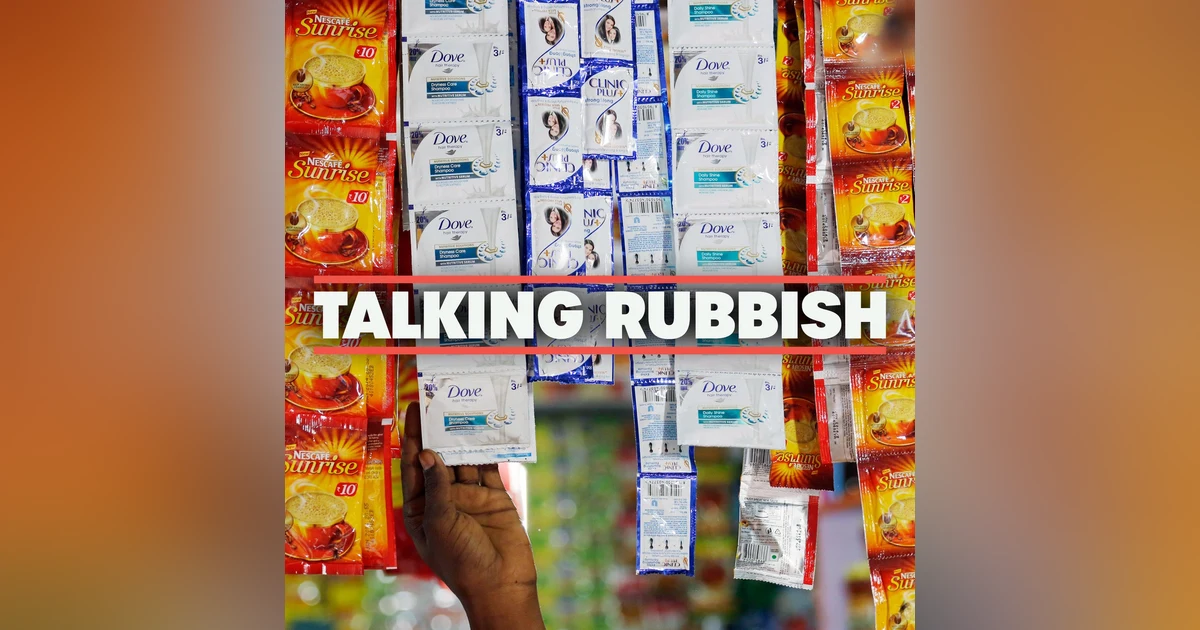
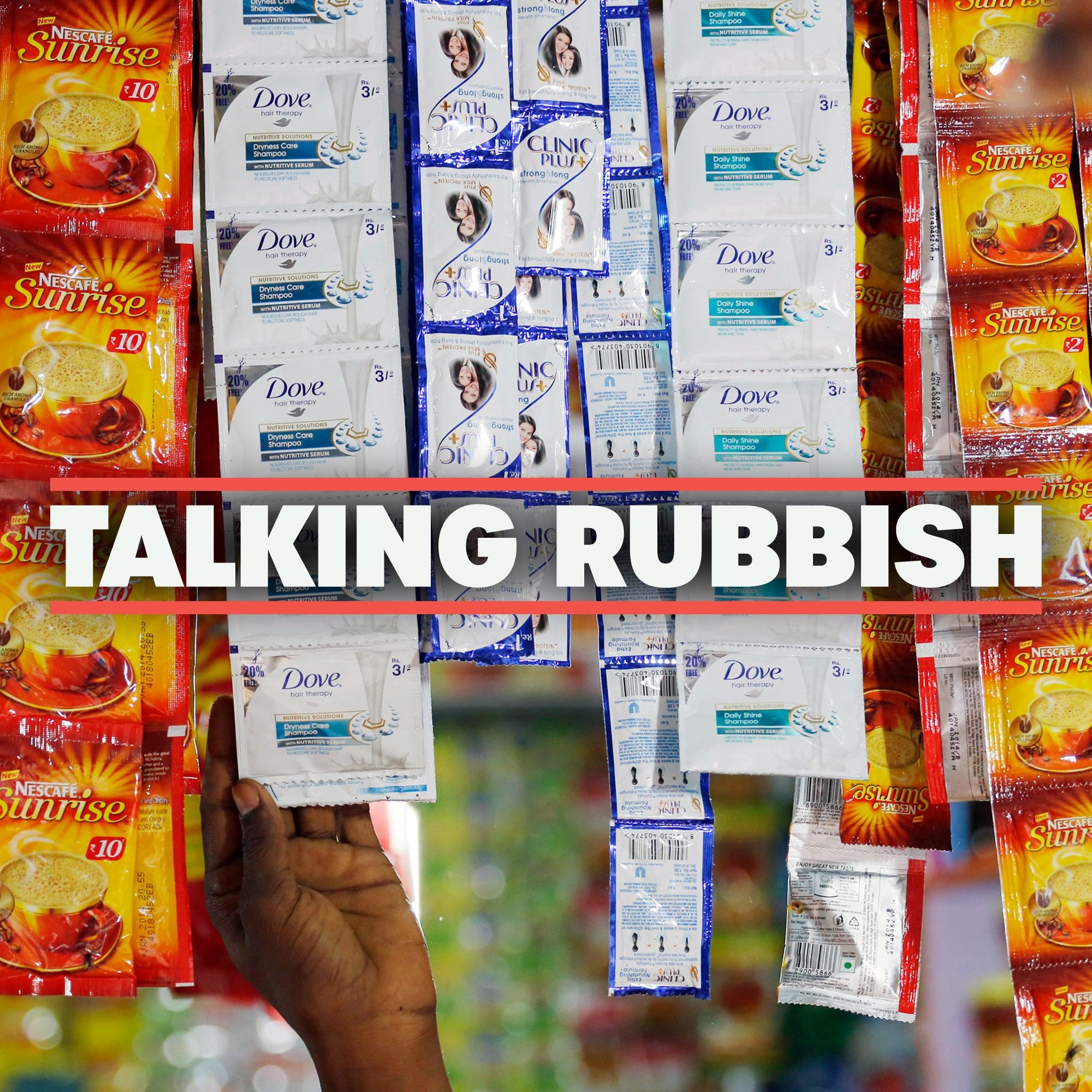
In the UK, sachets might seem like a small, insignificant problem but across the world, they're anything but. In countries like India, sachets are the primary packaging for a wide range of everyday products. Globally, an estimated 855 billion are used every year. This week, we delve into the surprising history of the sachet, how it became a major contributor to global plastic waste, and whether there’s any case to be made in its defence. Plus, is Play-Doh rubbish or not, what should we do when we encounter bad recycling labelling, and why do Robbie's ice cubes taste of chicken soup?

 Apple Podcasts
 Spotify
 YouTube
 Amazon Music
 Castbox
 Podcast Addict
 PocketCasts
 In the UK, sachets might seem like a small, insignificant problem but across the world, they're anything but. In countries like India, sachets are the primary packaging for a wide range of everyday products. Globally, an estimated 855 billion are used every year. This week, we delve into the surprising history of the sachet, how it became a major contributor to global plastic waste, and whether there’s any case to be made in its defence. Plus, is Play-Doh rubbish or not, what should we do when we encounter bad recycling labelling, and why do Robbie's ice cubes taste of chicken soup?
Join hosts James Piper and Robbie Staniforth as they delve into the world of recycling, hopefully having fun along the way. One thing is for sure, they will talk absolute rubbish from start to finish.
Sign our very first pootition: https://you.38degrees.org.uk/p/poo
We would love you to join our community on Discord
Special thanks to our sponsor, Ecosurety
To get exclusive videos and clips, follow us on Instagram, TikTok, X, Threads or Facebook; @rubbishpodcast or YouTube: @talkingrubbishpodcast
Or you can contact James and Robbie with questions or just general rubbish musings using the email address talkingrubbishpodcast@gmail.com or by texting them via WhatsApp
Relevant links and reports mentioned in the programme can be found on the Talking Rubbish Linktr.ee
Transcripts and episodes can be found on the Talking Rubbish website
Timestamps:
Sachets - 2:31
Additions and corrections - 29:42
Rubbish or Not: Play-Doh - 36:17
Rubbish News - 39:44
What should we do when we encounter bad recycling labelling? - 44:20
Residual Rubbish - 47:15
Cover image: Bloomberg via Getty Images
Music licence ID: 6WPY8Q4O2RPFIOTL
Hello, welcome to Talking Rubbish, a weekly podcast delving deep into the world of recycling and discussing the truth behind snappy headlines and one-sided stories. In this episode, we will discuss the history of the humble sachet. Is Play-Doh rubbish or not? And I have a question about labelling on flexible plastic. I'm James Piperall for The Rubbish Book, and I'm joined by Robbie Stanaforth, my father from rubbish friend. Good morning, Robbie. Hi, James. How are you today?
SPEAKER_00Yeah, very good, thank you. Excited for another episode looking at sachets, tiny little things.
SPEAKER_02Yeah. Very annoying though, aren't they? Yeah, they are. We'll have lots of thoughts on sachets, I'm sure. Before we start that, I've been getting a lot of messages from listeners this week, which is lovely. Thank you all for writing in on your various devices. It's been great fun talking to lots of people. And I've been listening to other podcasts, and a lot of them have names for their listeners.
SPEAKER_00Yeah, no, creating the community with a like some sort of label or tag or whatever. My favourite is the 92%ers, and that's what they call the sort of Kelsey Brothers. It's an American footballing podcast. And it's a real like I'm not even going to explain the joke, but it's an in-joke that people love. Okay, nice.
SPEAKER_02Basically, we had a message this week that said regular listener, and then in brackets, or should that be like Trash Talker?
SPEAKER_00Ah, okay.
SPEAKER_02And I thought Trash Talkers very nice.
SPEAKER_00Yeah, Trash Talkers on brand.
SPEAKER_02Yes. But it is only one part of the show. So I've been thinking all week, what could we call our listeners? And I've landed on wasters.
SPEAKER_00Ah, wasters, yeah. That sounds good. But there is a lot of talk just generally in the sort of recycling and waste management community where I've heard that term before. People call themselves wasters, members of the Chartered Institute of Waste Management. Like I'm a lifelong waster, I've heard people say, kind of thing. But maybe that's good. We can just steal the phrase, pinch the phrase, borrow it. Maybe that's the kinder way of looking at it.
SPEAKER_02Okay, so why don't people let us know in the comments? Because at the moment, wasters winning, I think, in my mind.
SPEAKER_00I think wasters is winning. It's good, isn't it?
SPEAKER_02But let us know. If you're on Spotify, comment on Spotify. If you're on Discord, send us a Discord. Let us know what you want to be called. Because we can't just keep saying listeners. We've got this whole community. We've got like 250 people on Discord chatting to us. We need to give them a name. Trash talk. So as we have said before, occasionally we think a product deserves more than a rubbish or not. That's true, isn't it? Yeah. Like coffee pods, that deserved a bit more. We've had a few episodes now where we've gone through different products. I can't think of a product more deserving of 25 minutes of our time, Robbie, than the sachets.
SPEAKER_00Oh, yeah. I mean, they are frustrating things, aren't they? You pull into the motorway services, they don't seem to work very well. You're trying to rip the things open, and also all of the plastic, of course.
SPEAKER_02855 billion sachets used a year globally.
SPEAKER_00Oh my god.
SPEAKER_02It's so many, isn't it? It's insane. And according to Greenpeace, Unilever alone might sell 1700 sachets around the world every single second.
SPEAKER_00Wow, that is just crazy, really shocking. I'm sure. Didn't we come up with the wrap it round the moon twice or something? I'm sure there must be something like that out there.
SPEAKER_02I read a thing, I think it must be a year. It was in the Greenpeace before, enough sachets to wrap around the world a hundred times. Whoa, okay. So that's just Unilever. Now this is gonna show me up, okay? So there's two reasons I did this. I said on a previous episode that I had started carrying round a Heinz tomato ketchup bottle. I remember you saying this. Because I was fed up with sachets. Because occasionally, if I'm out on the road for business, I will stop at a Starbucks for a sausage BAP, and they've stopped using Heinz ketchup, they've moved to their own.
SPEAKER_00Whoa, it's due to ketchup snobbery. That's amazing.
SPEAKER_02It's not just the sachet, it is also my complete snobbery on ketchup.
SPEAKER_00It's gotta be Heinz.
SPEAKER_02So yeah, I guess the question today is is there a world where sachets could be the better option? Are they ever good? Why are we covering sachets today? As long time listeners, is that gonna be wasters? As long time wasters will know. Longtime wasters will know, yeah, nice. It is better than listeners. Listeners is so generic. So, as long time wasters will know, we do an interview every five episodes, and we've done that religiously since we started. And next week we are interviewing Sabra Chowdhury, who wrote the book Consumed. And I was honoured to be invited to the launch party of this book, and I've met Sabra a couple of times now. The only reason we know each other is through this podcast. So we'll talk a little bit about that next week. But um, she was a listener to the podcast who reached out to me and we've met up a couple of times. And really, this book Consumed explores how brands got us using plastic. And chapter nine is all about sachets, and so I'm sure she'll have lots of opinions about sachets, so I thought it was worth us going through it.
SPEAKER_00Okay, yeah. So this really is all about why did sachets come into being? Because I suppose when you think about it, there's lots of different reasons, and we'll jump through some of those.
SPEAKER_02We're going to focus a little bit on India in the first part of this trash talk, and that is for a good reason. Did you know that sachets were actually invented in India? No, I did not know that. By a man called Chinni Krishnan. He figured out how to make sachets that could hold liquid. The way he did this, right, as inventions normally happen, you take something, some household object, and you turn it into something else, right? And he literally cut a hose pipe up and closed it with a machine that was used to seal PVC folders. So he just wanted a little thing to hold some liquid in.
SPEAKER_00Okay, so he like just crimped it himself, kind of thing, with a using a machine and a hose pipe. Nice.
SPEAKER_02And the reason he did this, and the reason this happened in India, is because his dream was to help people in poverty, so people who couldn't afford a complete serving of, you know, a whole bottle of something to buy individual portions. And so his whole thing was quite altruistic. It was like, we want to help people be able to afford everyday products. And because at the time people in India were paid daily or weekly, not necessarily in one big lump sum, so they could afford something like a bottle that's going to last a whole month or two months. Because they were looking for daily items, the sachet was the key to that. It allowed you to serve something in a single portion.
SPEAKER_00Yeah, and this is definitely something that's still live in other continents like Africa, you know, outside of India and things, where you know, you can buy peanut butter by the daily serving because people have jobs that are paid literally in cash at the end of the job, at the end of the day, kind of thing, and and people are living day-to-day still. So, yes, this was back in the 70s, this idea, but it still proliferates around the world today. That the the reality of how people still continue to live.
SPEAKER_02Absolutely, and I experienced a lot of this actually. I think in the Philippines it's got a name. So in the Philippines it's called the Tingy culture, which is this idea that you're buying things in single serving, not necessarily in sachets, but tingy culture just means I'm going around doing my shopping, but my shopping is daily servings, things I'm looking for every day. And just to frame this discussion, let's just think about India. In 1990, the average Indian used 0.7 kilograms of plastic a year. Just 0.7 kilograms. Now, the world average at the time in 1990 was 12 kilos, and the US was 100 kilos. So India was nearly 200 times less in terms of plastic compared to the US.
SPEAKER_00Wow, okay, that's a huge disparity.
SPEAKER_02And it tells us a lot about the culture in India. The culture in India at the time and lots of places was one of reuse and recycling. Product and packaging had value, and they didn't want to waste it. So old tins were used to store herbs and spices, cloves were turned into curtains and cushions. It was this mentality of save what you can, don't let valuable resources go to waste. And ultimately, a lot of that culture changed with the introduction of Western consumer goods. And by 1997, the plastic use had increased from 0.7 kilos, so in just seven years, up to two kilos. And in Mumbai, that was actually six kilos. Now, this doesn't sound like a lot compared to the 100 kilos per person in America, but you've got to bear in mind we're talking about a country that at the time in 1997 had a billion people, and today this is nearly one and a half billion. So every gram of plastic that you change is multiplied up in a huge way.
SPEAKER_00Yeah, and that's just it's also just so quick, isn't it? Within just a short span of what is that, seven years, it's suddenly gone from 0.7 all the way up to a couple of kilos. It's like more than doubled in just a few years. It's suddenly rocketed.
SPEAKER_02It is very fast. And it became clear to companies and brands that they needed to make shampoos and detergents more affordable. So daily items, sachets became the answer. You could serve a single portion. There were lots of reasons for having sachets, you'd you'd hang them off the ceiling so they didn't take up floor space. They printed really vibrant colours on them so it would attract people into the store. You'd be have it hanging out the store, and people go, Oh, I'm gonna go in there because the sun's glinting off those sachets. You know, so it became this kind of brand recognition piece as well. So brands and consumer brands saw this massive opportunity to grow their product significantly by putting it in sachets.
SPEAKER_00And I suppose it's one of those things where the frustration is that they were already had these products. It wasn't like a bar of soap didn't exist to wash clothes, etc., or wash hair body. It was just a a shift so that companies could sell liquids in higher volumes to a bigger marketplace.
SPEAKER_02And shopkeepers were already divvying up product. I mean, that this is worth noting, and we'll come to it a couple of times. You know, shopkeepers were already cutting up bars of soap and they had big vats of detergent which they were, you know, pouring into little portions. Sachets were not needed to achieve this goal of like single serve portions, but companies could make a lot more money selling it in a sachet because on a per gram basis they were making huge amounts more.
SPEAKER_00And there must have been a huge sales job into the shopkeepers to say, look, it's more convenient, it's already divvied up for you, you just have to hang it up in your shop. And I'm sure it did, sell like hotcakes. You know, they've been, in a way, extremely successful at the job that they were trying to do, which was convert a whole community of people into a different way of consuming.
SPEAKER_02Yeah, and a lot of these brands actually hired local people to go around selling the product for them. It was likened in Sabra's book to like Avon salespeople. You know, they used to go round knocking on the door saying Avon calling or whatever it was.
SPEAKER_00Yeah, and it's like the new trend is to sell the sachet.
SPEAKER_02It was basically that, yeah. People were going because they were they were unsure about it, you know. It was like, how does this work? Why would I do it? And it proved to be something quite interesting that people really latched onto. And really that led to quite a lot of competition in the market. So you had at the time Unilever and Protrangable and others fighting for market share. Uh, Unilever had a product called Sun Silk, and PG were bringing in Pantent. Sabra had a quote in her book from someone at Unilever who said, It became a competitive slug fest. You couldn't switch on the TV without seeing one of our ads. And that competition led to a big price war amongst lots and lots of companies, and they brought down the price significantly and fast and suddenly unlocked Sachets to a huge quantity of people, you know, hundreds of millions of people who previously couldn't afford them. And by 2004, sachets actually made up 90% of shampoo sales in rural India and 70% in the cities.
SPEAKER_00Wow, that's interesting. So, in like rural areas, it was a bigger kind of seller they were quicker to convert into this totally new way of buying shampoos and detergents.
SPEAKER_02There was this wealth gap. You had people who bought sachets because that was what they could afford, and then you had more wealthy people who potentially lived in the cities or or just on the outskirts of the cities, who saw it as an opportunity to try different products and to go, well, actually, I'll just get a range of products and then I can change my shampoo every day. And it was really interesting how sachets, wealthy people were still buying them for, but for a different reason. So that's why it led to this huge percentage of people buying them. And over time the sachet has developed into a combination of plastic and metal. We'll talk a little bit about what they're made of. And they actually became, and I suspect still are, a cheaper packaging material than bottles on a like-for-like weight basis. So, you know, in terms of grams of product, sachets were cheaper than bottles. And so that proliferation, not only was it kind of important for customers because that was the what they how they could afford the product, it was also good for the brands because they were they were making a lot more money. And the metalization, so adding metal to the plastic, allowed them to contain a lot more things, you know, like ketchup and food, and it wasn't just shampoo and detergent, suddenly lots of things were coming in sachet form.
SPEAKER_00Okay, so it could be food safe because the ceiling was higher tech, etc.
SPEAKER_02Exactly. And in 2021, nearly 40 billion shampoo sachets were sold.
SPEAKER_00Wow, so it's by far like across the world that's how products are being vended. You know, we may well think in the UK, like, oh, you don't really see many sachets of shampoo, so therefore it's not a big issue. But actually across the globe, it's probably, dare I say it, a more common way to get hold of products.
SPEAKER_02100%. Yeah, definitely. And I think it's really good to make that observation because as you say, we don't see it very often. When would we see a sachet with shampoo in it, you know, in a on a magazine or like a free sample or something like that? We very rarely do we see that. You know, we have listeners in India, that would be a surprise to people in India who are just so used to that method of delivery. And so there is this, particularly as you've said, Africa and Asia, these are continents that have developed with this kind of sachet mentality, and it and it's going to be quite hard to break that, I think. And when we talk about the recycling of them, because we should talk about the recycling of them, I guess they are the ultimate single-use item, aren't they? There's literally no opportunity for reuse.
SPEAKER_00Yeah, you're literally ripping it open and immediately discarding it.
SPEAKER_02Yeah, once you've squeezed out that product, what could you possibly do with it? And typically they are made of polyethylene or polypropylene, so one of the plastics, polyethylene, polypropylene. They could also be made of paper.
SPEAKER_00Now, if you think of like salt and sugar sachets, oh yeah, dry goods, yeah, could be anything that doesn't need sort of avoid moisture or whatever.
SPEAKER_02Yeah, you're in a coffee shop, you get a thing of sugar, that's technically a sachet. Um, so paper, but the second you need to avoid moisture, oxygen, and light, you make it multi-layered. And so to contain things like food, like ketchup, mayonnaise, all those things, it has to be metalised. So it'll be a it'll be a mix of that plastic, aluminium foil, and sometimes there's paper, but mostly it's plastic and foil. So they're small, you know, they're way smaller than a tennis ball, they'd be red on the ram for the because they're too small. They're multi-layer, so they're also red on the ram because they contain they're plastic film that contain aluminium. So just generally, there's nothing good about them from a recycling perspective. They don't have much value, if any value, and are way too easily littered, in my opinion.
SPEAKER_00They will blow away in the breeze quite quickly.
SPEAKER_02Yeah, absolutely. And I guess the biggest issue here is that they appeal to poorer communities. So companies have focused them in areas that can't afford multiple servings in one go. That's why they've grown. And these areas are at the same time, and possibly for the same reason, less likely to have waste management because they are areas of poverty. So you've got a problem that's got two really bad things going on. We need the sachets because you couldn't afford to buy a whole bottle, or because you didn't want to buy a whole bottle, and we don't have waste management in those areas. So now they're clogging up rivers, they're getting into the sea, all those things that we've talked about before. It's the wrong product in the wrong place with the wrong infrastructure.
SPEAKER_00Yeah, totally agree. And I also wonder about the fact that they are small might lead to that mentality that they're incidental. You know, littering them or not thinking about what to do at the end of its life. It's oh, it's it's only small. But going back to your earlier statistic or whatever, 40 billion shampoo sachets is not small. And and that is probably one of the other reasons that that people don't quite get how important it is to resolve this issue.
SPEAKER_02It's like my receipt thing. You know, I get torn down is probably too much, but you know, commented on on social media because I'm putting up a thing saying, Look, I don't want a receipt. And everyone's going, just get a receipt, throw in a bin, it doesn't matter. So 11.2 billion of them are used in the UK each year. It does matter. If we all said no receipts, and we all just accepted that the proof of purchases in our banking app and all that stuff, and yes, you would take a receipt if you had something you were likely to return, but if you're just buying a meal deal that you're about to eat, why do you need one? It's incredible the quantity of people that come out and say, it doesn't matter, it's just a receipt. Yeah, it's only small. It is one of 11.2 billion receipts. And if I can do my bit and I can encourage others to do their bit, it does make a difference. And it's the same with sachets. You might think it's only small, it doesn't matter. I'll just take one or I'll just take two. It does make a difference. Now, in the UK, from a recycling perspective, you can actually put them in the soft plastic recycling schemes in supermarkets. I went on their websites and checked that sachets were one of the things they would accept back, and they will. My view is this is exactly the kind of material that will end up getting incinerated and not recycled. It is food contaminated, multi-layer, probably likely to be incinerated. But I also think it is really good to get into the habit of collecting up flexible plastic of all sorts and bringing it back to supermarkets. So that would not put me off. I'd still put it in my flexible bin and I'd still take it back because I think getting into the habit is a good thing.
SPEAKER_00Yeah, and it's got half a chance of ending up being turned into a park bench if you bother to take it back. It's got absolutely no chance if you just put it in your general waste bin at home and it gets burnt.
SPEAKER_02100% agree. For more on our views on flexible plastic, have a listen to the episode, which I believe is episode 13. So this difficulty collecting and recycling them has led to countries starting to ban them. And we've got several bans going on that are worth calling out. So in Sri Lanka, they have banned sachets containing less than 20 grams of product. Traditional ketchup or mayonnaise sachets about 10 grams of product. Indonesia is working to ban sachets with less than 50 grams of product by 2030. There have been proposed bans in India and the Philippines, but these consistently get abandoned due to industry pressure. You know, as you can imagine, based on the start of this conversation, there are lots of brands who don't particularly want to see a ban in India. They are planned to be banned in the EU from 2030. There is no commitment from the UK to do that, but I would not be surprised if we don't follow suit. So by 2030, we may not have sachets. And Bali has just announced that they are banning the production of sachets from 2026. So I think they can still import them. I think they can still sell them, but they won't be allowed to produce them on the island.
SPEAKER_00Yeah, and there's been campaigns in the UK, a plastic planet, I think it was, who did the sort of sack the sachet, that was the term or whatever the motto of the campaign. And what they were trying to do was get them banned with the straws and stirrers and things. Unfortunately, that never actually ended up coming to pass. But I think it's one of those things that will come back as and when the EU start to ban these things. We'll probably just start to see less of them anyway, similar to the tethered bottle cap. UK never actually did anything about it, but because the EU did, lots of companies just switched the way they were tethering bottle caps to soft drinks, etc. I think we'll probably see a decrease in the amount of sachets in the UK as a consequence of EU law. And then who knows, maybe the UK government will do something too.
SPEAKER_02And Unilever, who are one of the largest producers of sachets, I would suspect. I think that's true. And certainly still sad. A lot of product within sachets actually had a section on their website called Why Do You Continue to Sell Plastic Sachets? So it was like an FAQ section. And there's a couple of points that are worth calling out here. So they are planning on moving to sachets that are made from one type of plastic instead of multiple layers. It is worth noting that I found a video where a Unilever executive did actually call multi-layer plastics evil.
SPEAKER_00Whoa, okay. That's some serious. They really are moving to uh to a single uh single type of plastic. I think that executive was leaving.
SPEAKER_02I think that was like one of the final talks she gave. So um, yeah, there you go. There's a video on that. I'll put that in our link tree. And they are looking at paper. So again, see paperization, which is episode 39. Episode 39, if you want to get our views on paperization. They are going to have a plastic liner, assuming they're containing things that have liquid. So that could be worse. But you know, that's one thing they're looking at moving to paper. That's fairly standard across industry at the moment. And they had a line saying they've committed to help collect and process more plastic packaging than they sell. And in India, they're four years ahead of that plan, and they collect and process more than a hundred percent of the plastic packaging they sell. This is going to be a little bit offsety. You know, it's like we just go and buy some credits that we've recycled, but the vision is good. You know, I like the idea of funding the collection and recycling of more than you sell.
SPEAKER_00Yeah, don't be confused by that statistic. They're not collecting up more than a hundred percent of the actual sachets that they sell. It's other types of plastics that they'll be recycling. Oh, yeah, it's not going to be sachets, that is true.
SPEAKER_02I was trying to work out if there's ever a case for the sachets. Are they ever good? And one of the questions I thought might be worth answering is do you get less plastic? You know, is there so much product in a sachet, and the sachet is so lightweight that actually, if you were to multiply that up to a bottle level, do you get less plastic? And I saw the opportunity. I took it, I got my coffee scales out again, Robbie.
SPEAKER_00Oh, great. It's been at least a dozen or more episodes, maybe 20 plus since you've last had those scales out. Some primary research on the podcast.
SPEAKER_02Great. It has been quite a long time, and I um I went into my local because I was like, I need to get hold of a sachet, right? I don't just have them lying around. And I knew my local petrol station, they sell like um hot food, and I knew they had sachets on the side.
SPEAKER_00Okay. Unbranded ketchup, was it? No, this is Heinz. This was Heinz, okay. So you were prepared to buy it.
SPEAKER_02Yeah, this is a this is a posh petrol station. Yeah. No, but sachets free. So I went in to grab a sachet and then I thought, I really look like I'm shoplifting like really badly. So I had to start buying products. You never go into a shop and just buy Lou Roll, do you? You always have to go, I've got to buy something else.
SPEAKER_00Oh, that's amazing. So what? You bought a bacon sandwich and then had to eat a bacon sandwich. No, no, I had to. Oh, you just bought something irrelevant, a packet of crisps. Yeah, I bought a pan, I bought a pant of blueberries, and they're just like this guy's having blueberries and ketchup. You must have looked absolutely psychotic.
SPEAKER_02Yeah, I really did. So anyway, I went in and got the sachet. I went in and got the sachet, I emptied it, I put it on the scales. And long story short, I don't want to bore you with the numbers. If you multiply up the amount of ketchup to a bottle level that's in a sachet, if you exclusively got your ketchup from sachets, you would use twice the amount of plastic compared to buying a bottle.
SPEAKER_00Okay, so it's not more efficient in terms of the uh plastic to product coefficient?
SPEAKER_02No, and I know that sounds really obvious, but sometimes you do get weird things like coffee pods where you have less coffee than the bean to cup. Sometimes it is a bit odd, but no, in this instance it would be worse to have the sachet.
SPEAKER_00So it is more plastic.
SPEAKER_02So, what are the positives for sachets? So it's not a plastic use. You would be using a lot more plastic if you bought your stuff in in sachets. Obviously, there's this affordability piece, we spent a lot of time talking about that. One thing that did consistently come up when my research is product wastage. So parents in India particularly liked sachets because it stopped kids wasting product. It was a single serve. If you gave them a bottle, they'd just squeeze out loads and loads of shower gel or shampoo or whatever it is, the equivalent detergent. And so a sachet allowed people to have a single serving. Now, this is a really interesting thing because I bet that does reduce food waste, it reduces detergent waste, shampoo waste. Obviously, there are, I'm not going to speak for myself here, but there are some people who may say, Can I have two sachets of ketchup, please? Because actually, one isn't enough. I'm not suggesting that's what I do. You've got your bottle of ketchup, so you just have as much as you like. We had this with the coffee pots where people said, Yeah, but you have to use two coffee pots. So I'm not missing that on the ketchup. It's like there is the potential for people to use more because they may ask for two sachets instead of one. But certainly it is something that came up in these communities where they didn't have a lot of money and they were they were watching money. Sachets were a very good way of controlling how much product you were using.
SPEAKER_00And that's classic anywhere in the world, not just India. Like kids putting too much ketchup on their plate is a global problem. You have to teach them about portion control.
SPEAKER_02Yes. And product protection is also key. So this type of material is crucial, particularly in areas like India where it's hot, humid, storage conditions are not ideal. A sachet is actually a good way of protecting product from being wasted. So when we talk about them cutting up bars of soap and you know di uh divvying it out of a big vat, ultimately the question is can it be stored for a long time in that format, or is it better in a sachet and better not to have wastage? So if I was trying to give if I was on the defence for sachets, those would be my two things that I'd be thinking about product wastage and product protection. Just to summarise this section, sachets just have a bit of a rubbish history. They are brought to areas of poverty and they replace local and in my opinion better distribution mechanisms. And I suspect this will be a theme for our conversation next week. There are organizations and brands, and this is a bit of a summary of Sabra's book, there are so many organizations and brands who capitalise on convenience. People want a convenient lifestyle, and brands go, hey, I can deliver that. And actually, that little bit of inconvenience that we might have to experience might massively reduce the amount of packaging we use. They are not recycled in any meaningful way due to their size and composition, and in my opinion, they're completely avoidable. I'm going to give a little shout out to coffee number one here, because I've switched to them for my occasional sausage bat, my very occasional sausage bat. I think coffee number one is owned by Cafe Nero, I think that's true, and they're kind of throughout the south of England, but started in Cardiff, headquartered in Bristol, I think. They, but if you order a sausage sandwich from them, they will say, Do you want ketchup or brown sauce? And it comes out of a bottle. They just squeeze it directly in. And that, for me, is so simple, so easy, and makes a huge difference in terms of my psychological experience of buying a product.
SPEAKER_00Yeah, no, fantastic.
SPEAKER_02Top work, coffee number one. And let me end with a quote from Paul Polman, who was the CEO of Unilever between 2009 and 2018. He wrote in Fortune magazine, despite our best efforts, and Lord knows we tried, packaging this small and with such little value has proved impossible to collect at scale, let alone recycle. We need to get rid of harmful sachets for good. So for additions this week, I actually found social media quite helpful after my after my difficulties over the last couple of weeks.
SPEAKER_00You've had a better week on social media. That's good to hear, James.
SPEAKER_02It's still been pretty negative. But yes, we did get some nice suggestions. So I posted about the reverse stealing from episode 52, which is where we talked about when you buy a meal deal, you may not want the drink. I mean, again, people completely misunderstood the point of that. I wish they would click through and find out we're a recycling podcast because I'd said in Matt Clear, we'd had the waster write in who said, I want water, I don't want to buy a drink. And everyone's going, Yeah, but the meal deal includes water. No, no, they don't want to buy, they want tap water, they don't want to buy a bottle. Anyway, so we ended up with a lot of comments saying, But they sell water. Oh my gosh. But but we did get lots of comments saying, Why not buy the drink? And instead of giving it back to the supermarket, which is just going to confuse everyone, put it in the food bank box.
SPEAKER_00Ah, great idea.
SPEAKER_02Or give it to someone homeless outside, you know, and just say, Look, can I get you a drink on the way out? Great idea. That's what I'm gonna do. I'm not gonna reverse steal. I'm gonna be uh either putting it in the food ban box or if there's someone outside who needs a drink, I will give it to them. Last week, Robbie, you mentioned you were going to check your soda stream for a gap in the thread. Now all week. All week, and that this is not a joke, is it? All week I've been saying, You can check your soda stream, Robbie? You gonna check your soda stream?
SPEAKER_00I think probably half a dozen times you reminded me, I would say. Yes, and did you check your soda stream? No. So what have you had to do? I had to Google the picture about 20 minutes or so ago, and I did find that yes, as we thought, there is a gap in the thread to let out the carbonation. It's sort of a slightly offset gap, so it's a little bit different, I think, to how they are on the average soft drink bottle. But our theory was correct that you need that gap in the thread, as we talked about last week, in order to release the pressure when you open the cap.
SPEAKER_02Thank you so much, Robbie. And back in episode 51, I listed all the media outlets who had not reported the microplastic in glass story. Now, separate to this, on three occasions I have mentioned that The Guardian have reported stories with suspicious timing to our episodes. Oh yes! I just want to say, I love this, by the way. I love assuming this is true, and we do have a listener from The Guardian. First of all, I love that they listen and go, oh, maybe we should report on that. Because hey, that's helping. We're getting the word out there.
SPEAKER_00Yeah, they should.
SPEAKER_02Also, it's really nice that our wasters or listeners, we haven't quite decided we're calling wasters, but I'm gonna go wasters. It's really nice that our wasters are writing in going, the Guardian have reported. Oh what they let us know. Yeah, so thank you all so much. So, of course, I must now take the Guardian off our list of media outlets who have not reported the plastic and glass story, because four days after our episode and a month after the press release and everyone else, so maybe it's just tight. Maybe they just had it on their desk for a month. That could be true. I don't want to cast any aspersions. But four days after our episode, they did report it. So thank you very much. Assuming the Guardian are listening, thank you for reporting what I think is quite an important story. If the Guardian aren't listening and it's just a coincidence, I apologize, but it doesn't matter because they're not listening.
SPEAKER_00And I'm sorry to that reporter who's gonna get hauled into their editor's office and with them accusing them of just recycling talking rubbish.
SPEAKER_02They did review us, we like them. And finally, Waisters, I am chasing the Starbucks Cup. So I know I said a few weeks ago, it's probably like a month ago now, that I was gonna do a follow-up on the Starbucks Cup. The company is still trying to work out the best date for me to go over. At some point, it will get suspicious that I haven't been invited in. I have mentioned that I have quite a few questions, but I am definitely gonna go in and we'll have some news on that. So just if anyone's thinking he still hasn't report back on the Starbucks Cup, that is because a few people were on holiday and I'm struggling to get that meeting. So hopefully we'll have that very soon. We'd like to take a moment to thank our sponsor, EcoSurety, who are on a mission to rid the world of unnecessary packaging. They help brands navigate the tricky world of extended producer responsibility, but that is not all. They also collaborate on some incredible recycling projects and consumer awareness campaigns for those tough to recycle materials. If you're an organization looking to make smarter packaging choices, check them out at ecosurety.com. And as always, the best way to help us grow is to leave us a review. You can do that primarily on Spotify or Apple, that's where it's most helpful. And should you leave a review on Apple that has writing on it, you might make it into Robbie's Review of the Week.
SPEAKER_00This one comes in from English Philip. Not clear whether that's a surname or uh his country of birth, but it's another five-star review, and this is a great title for the review. Great explanations.
SPEAKER_02Ah, it's so good.
SPEAKER_00It's so good. That I think that's the best title we've had so far, isn't it? Very good. Thank you, English Philip. As a copywriter who's worked on big campaigns for composting and recycling, I know how difficult it is to make rubbish interesting enough for people to care about. But James and Robbie have done it. They know their stuff, but they make the topic engaging and even funny, occasionally. I'm adding occasionally, by the way, just to be clear.
SPEAKER_01You can't adjust people's reviews, Robbie. You have to You have to read the Mavs written.
SPEAKER_00Sorry, it's just the I the very idea that actually people find this funny is amusing to me. Um their explanations are clear and simple to understand. Before long, you start changing your behaviour and noticing what you're buying and throwing away. A superb show. Thanks so much, English Philip.
SPEAKER_02So kind. Thank you, English Philip. You can follow us at rubbish podcasts. You can email talkingrubbishpodcast at gmail.com or you can WhatsApp us. Also join our Discord. It's the easiest way to engage with us and wasters of the show. Does that work? Wasters of the show. The link to all those things are in the show notes, as is the link to our putition, which is about banning the word compostable and dog poo bags, which can't be composted. Please take a second to go and sign that. Rubbish or knot. This was a great rubbish or knot. Occasionally you get one you think, oh, I've never thought of that. And I don't think anyone's ever thought of that. There's no website for it.
SPEAKER_00I've not thought of this one, to be fair.
SPEAKER_02This was a request from Helen on WhatsApp. Thank you so much, Helen. And remember, if you want to send us rubbish or knots, you can do that on Discord, WhatsApp, wherever, and we keep an eye out and we add them to our list. But this one is particularly good. It's play-doh. So I think this is one of those. Like, what do you think, Robbie? Rubbish or not? And then I'll tell you what I think.
SPEAKER_00Just clearly like rubbish. I I didn't even give it too much more thought. It's like, where would you put play-doh to recycle it?
SPEAKER_02This is exactly how I felt. It's one of those where you immediately say rubbish, and then you think a bit deeper and you go, or is it food waste? Can you put it in your food waste caddy? And I remember going to friends' houses as a kid and their parents making us play-doh out of flour and water. I think why can't that go in food waste?
SPEAKER_00It's just basically uncooked bread. Okay, I was thinking of the more sort of plasticky stuff that you buy, not the homemade stuff. So, yeah, maybe the homemade stuff is or not.
SPEAKER_02I think you're right. Let's talk about the brand first. So it's created by Noah McVicar in the 1930s, and Noah worked for a soap manufacturer. It was originally meant to be a product that could actually clean coal residue from wallpaper. That's what Play-Doh started as. Wow. And once coal started producing and wallpaper became washable, they suddenly realised you didn't need that. And so Noah's nephew Joe decided to turn it into a child's toy. And many years later, the current owner is Hasbro, maker of board games and all sorts of things. And they say on their website, the recipe is still a mixture of water, salt, and flour.
SPEAKER_00Get out of town. 100%. Yeah. Wow, okay.
SPEAKER_02I think it's a bit tricky because they add preservatives to keep it fresh, um, to stop it, you know, so that if you leave it out, it doesn't get too too hard and unusable. So they do add preservatives, and I think that's what would make it trickier to break down. So my feeling is the branded stuff, because it's a secret recipe, and I don't really know what preservatives are in it, I think I would be tempted to keep it out of the food waste. I did find some Reddits where people had put it in their compost bin and it had broken down.
SPEAKER_00Oh, really? Okay. It is possible. So if you're willing to do the experiment at home, then by all means go ahead in a careful environment. But I don't think your council's gonna thank you for putting like the the branded play-doh in your food waste caddy at home.
SPEAKER_02No. However, as we said, homemade play-doh, different story. When every recipe I found for homemade play-doh was just flour, salt, water, some oil, and maybe a bit of food colouring. I would definitely put that in the food waste bin. What what's gonna cause a problem there? It could go in the food waste bin. So I think rubbish and not, depending on what you're buying, but I definitely think more complicated than you first think. Now, bonus tip if you want to keep your homemade play-doh fresh, you can keep it in ziploc bags, or what I do, or what I'm going to do when my son is old enough for homemade play-doh, keep it in old yogurt containers. It's a good use for those yogurt containers. You're basically, you've got something the size of a standard play-doh tub. You could just use a yogurt container to keep it fresh and use it for longer.
SPEAKER_00What a great question. Thanks, Helen, on WhatsApp. Thank you so much, Helen.
SPEAKER_02Rubbish news. My news this week is that OPRL are looking to add the recycle label to cartons from the 1st of April 2026. So this is to align with simpler recycling, which we talked about a lot. This is going to require councils to collect certain things by law. And by then, councils will need to be collecting cartons. And so OPRL are just aligning to the requirements that the law is going to put in place. Currently, cartons are collected from 69% of councils, and we need 75% for a recycle label. So this is why it's coming in in the future when the law comes in. Today we've talked about sachets. In the future, we're going to talk about cartons. The issue here is that lots of councils collect them. That does not mean they are recycled. And we'll do a whole trash talk on cartons to go through this. So this includes things like TetraPak. It's just, it's one of those products that is widely collected, extremely complicated to recycle because it's similar to a sachet. It's cardboard with plastic and often aluminium. It needs additional pulping. It needs to go to a specialist facility like a coffee cup. So I was intrigued because I couldn't, I wanted to know roughly how many are recycled and where they get recycled. So I reached out to Ben from ACUK. Thank you very much, Ben, for helping me out. And he confirmed that there is currently one dedicated recycling mill which is near to Halifax, which ACUK I think helped co-fund. And the facility has the capacity to recycle 25,000 tonnes of cardboard into new product, and that covers about 40% of the market. Okay. So at best, if they were running at full capacity, we would be able to recycle 40% of cartons. So we know that if 69% of councils are collecting them and everyone puts them out, they're not all getting recycled because we don't have that capacity in the UK. There is definitely an opportunity to increase that. He said that the site still has significant additional capacity, so it's not recycling 40% of the market. And so we need to develop this further. And the first step is going to be councils collecting it, which then leads to investment for them to be recycled. But we will do a proper trash talk on this. I just wanted to highlight that from 2026, 1st of April, your cartons will have a recycle label on them.
SPEAKER_00And this week my rubbish news comes from Wee Island Dairy, which is a dairy farm up in the north of Scotland, who have, and this is one's been circulating around social media for the last few weeks, and they had posted that they are moving away from selling milk to other dairy products basically because of this new extended producer responsibility fees that are going to go onto their glass bottles. And their gripe is that because glass is so much heavier than plastic, it makes it prohibitively expensive to continue to sell in glass bottles. And in terms of what emotion this stirred up in me, it was definitely frustration because they've just slightly misunderstood how the law works. And they thought that you would pay for every trip that the glass bottle makes, which in fact is not true. So it's been circulating saying people are going to be moving out of reusable glass bottles into even more plastic milk bottles because of this law. I don't think that is actually the case. I did some very quick calcs that I'm not going to take you through now that say because the EPR fee only gets charged at the point that the bottle is first made and first placed onto the market, the difference between the two fees means if you use a glass bottle six times, it goes back to the dairy, it gets refilled, it gets washed, etc., it gets redistributed. After about six times, it will reach parity with the standard HDP plastic milk bottle. So this is one of those not quite fake news, but it was like a misunderstanding of how the Law work. So I'm dispelling this rubbish news on talking rubbish this week.
SPEAKER_02And I think we need to do an episode, a trash talk on milk, because we've had a big discussion on Discord this week about kind of glass versus plastic milk bottles. Definitely worth us just going through that in a bit more detail. So it's on the list, as with lots of things. Rubbish question. For a rubbish question this week, we had an email from Teenie. Thank you, Teeny, for this email. She said she's been listening to us for a while and was wondering if we can help with something. Her husband bought some granola in a plastic stand-up pouch bag, and on the back, next to the Mobius loop, it says 100% recyclable from home. This is a plastic pouch. I emailed the local manufacturer to ask how to recycle it and what it was made of, explaining that I have a particular interest in recycling, and as I'm sure most of our wasters do, and was fairly sure my local council, Suffolk, did not recycle flexible plastic. The council replied the bags are recyclable from home by most councils, but as the policies and rules vary so much from county to county, each one's description does vary. The packaging is definitely made of recyclable plastic, as the manufacturer says it can be recycled either at home or in major supermarkets, she added. So we're sure it's made of recyclable plastic. It's a bit weird, isn't it? That local manufacturers like, yeah, just put it in the recycling. I can't imagine a world where this is acceptable.
SPEAKER_00I think that's just wrong, really. Like the a very, very small percentage still of councils actually collect this stuff. To say it's recyclable from home is just a bit disingenuous. I think it's it's a handful. It's less than 10%, I think, of all councils across the whole of the UK are collecting this stuff. So it that will happen in 2027, but it's definitely a bit sort of horse before cart, and they're going a bit early with that claim that it's recyclable from home.
SPEAKER_02Yeah, and I thought this email was worth sharing as this is a problem we come across a lot. Local company doing their own thing and not understanding how important the correct comms are. Very simply, this messaging is wrong. The recycle label, as we said earlier, is reserved for items collected in more than 75% of councils. And at this point, before that law comes in, flexible plastic should always have a recycle with bags at large supermarkets or equivalent. I just wanted to note, she also ended the email by saying, I think I could report them to trading standards, but really I'd like to persuade them to change the text because they're a small company. I agree. So I actually sent them an email to say, look, guys, you know, feel free to contact me if you want to know more, but this is what I would put on the bag. And I know we mentioned trading standards last week, but I just thought I'd mention trading standards are for the size of packaging that we talked about last week. And it's actually the ASA, which is the um oh Robbie, what is it again?
SPEAKER_00Advertising Standards Authority.
SPEAKER_02Sure. I don't have time to go back through. It might be. I'm certain. The ASA and their green claims code that you would be addressing this to. But I agree, in the case of a small company, it's better just to nudge them in the right direction. This is something that has happened to us this week that has made us feel like an emoji. That's what we've evolved this into. I've noticed a bit of a trend on social media recently around something per follower. Have you seen this? Like someone sets up an account saying, I will do this for every follower that I get.
SPEAKER_00Ah, yeah, that's a clever way to get engagement. We haven't done this though, have we, James? No, no, we haven't. But you're not suggesting that I do, are you?
SPEAKER_02No, but a young boy named Sam has set up an account called I Will Pick Up a Piece of Litter for Every Follower I Get. Ah, very good. Great idea. Decided he would pick up a piece of litter for every follower he gained on Insta. I think the uh handle is litter per follower. Let's talk through his first three days of this adventure. Day one, zero followers. But he decided to pick up 50 pieces of litter anyway.
SPEAKER_00Oh, well done, Sam.
SPEAKER_02Day two, 27 followers. So he picked up 27 pieces of litter. Day three, twenty five thousand followers.
SPEAKER_00Oh, he's got his work cut out for him. Poor Sam.
SPEAKER_02That is a piece of litter once every three and a half seconds for 24 hours with no school, no sleep.
SPEAKER_00Oh my word.
SPEAKER_02Very quickly, I think Sam realised this was an unsustainable mission and decided to switch to a hundred pieces of litter a day for a hundred days. He now has. Are you ready for this? He now has, as of time of recording, hang on, let me get this live. He now has 786,000 followers.
SPEAKER_00That's amazing. Look how much interest there is in the world for having less litter. Like people are just thinking this is amazing.
SPEAKER_02And I make that roughly a piece of litter every tenth of a second. So I feel like it was a good move to change to 100 pieces of litter a day for 100 days. Now there are two things I really love about this. Sam is encouraging others to join in. And at the end of each video, he actually sorts the waste to be sent for recycling. And that extra step that, Sam, if you're listening to this, and we'll share this on social, so hopefully you'll see it. That is an extra step that I absolutely love. You take the time to sort the litter to show people that it's got value, the different things you're collecting, you send it off for recycling. Well done, Sam. It's amazing.
SPEAKER_00Top work, Sam, yeah. Maybe he can build an army to help him. You know, this could be a business idea.
SPEAKER_02Yeah, well, I think that is what's happened. I think he was like, look, if I do a hundred piece of litter and I get thousands of other people to do a hundred bits of litter, then I still achieve my mission, but I can go to school and sleep, which I think is probably quite important. At Sam's age, it's probably quite important to keep doing those things.
SPEAKER_00And my residual rubbish is something that something personal that happened to me this week, and that's that there have been arguments in the household, it's been very hot recently. The ice trays that we have are just awful. They just aren't very good. So they are hard plastic, not sure what type of plastic actually, but a hard plastic with like the rubbery bottom.
SPEAKER_02Yeah, we have the same ones. I've been freezing my son's food.
SPEAKER_00Yeah, so you can kind of like poke out the bottom so it comes out. But every time we're absolutely thwacking these things against the kitchen counter trying to get the ice out. So it's been a discussion in the household for the last week or so. We then ate some itsu chicken soup dumplings. You know, those little sort of dumplings, they're kind of round parcel type things. And my daughter, once we finished, looked at the packaging and it looked like an ice cube tray, six sort of slots for water, and it would make quite a big ice cube, like the sort of size ice cube that you put in a nice glass of whiskey or something, so it looked quite cool. So we did it. With that nice chicken soup taste.
SPEAKER_02Like that's what you want in your fine whiskey, just uh eau de poulet.
SPEAKER_00Absolutely. So we thoroughly washed it out, James, obviously, and then filled it up. And I can confirm it's been through the freezer twice now, and we've popped out the things. It just functions much better than this ice tray we've been moaning about. So our new ice tray is through informal packaging reuse. Now I don't know how long it's going to last. It wasn't designed for that process. It might start ripping apart with a few more popping out of ice cubes. But it did make me think about, you know, people use glass jar, reuse glass jars, don't they? Put their dry goods in them and stuff. I know I I've got them at home. And this was just another informal packaging reuse idea that turned out very well. And the thing that I was most impressed about was that my daughter came up with the idea. So it's pr it's a proud dad moment, too.
SPEAKER_02Well done to your daughter. She'll be listening, so congratulations. That's a really nice suggestion, really nice idea. And as always, thank you all for listening, and thank you for the reviews and engagement. We love getting the opportunity to talk to all our wasters, assuming that is the name we land on. Join our Discord, follow us on social media at rubbishpodcast. You can email talkingrubbishpodcast at gmail.com or you can WhatsApp us. And everything I just mentioned can be found in our show notes, as can everything that we discussed today through our link tree. The details of all of those things, as I say, just click through on the episode, you'll see it in the show notes. All that's left for me to say is see you next bin day. Bye. Bye.