87. Is expensive petrol driving people to electric cars?

 Apple Podcasts
 Spotify
 YouTube
 Amazon Music
 Castbox
 Podcast Addict
 PocketCasts
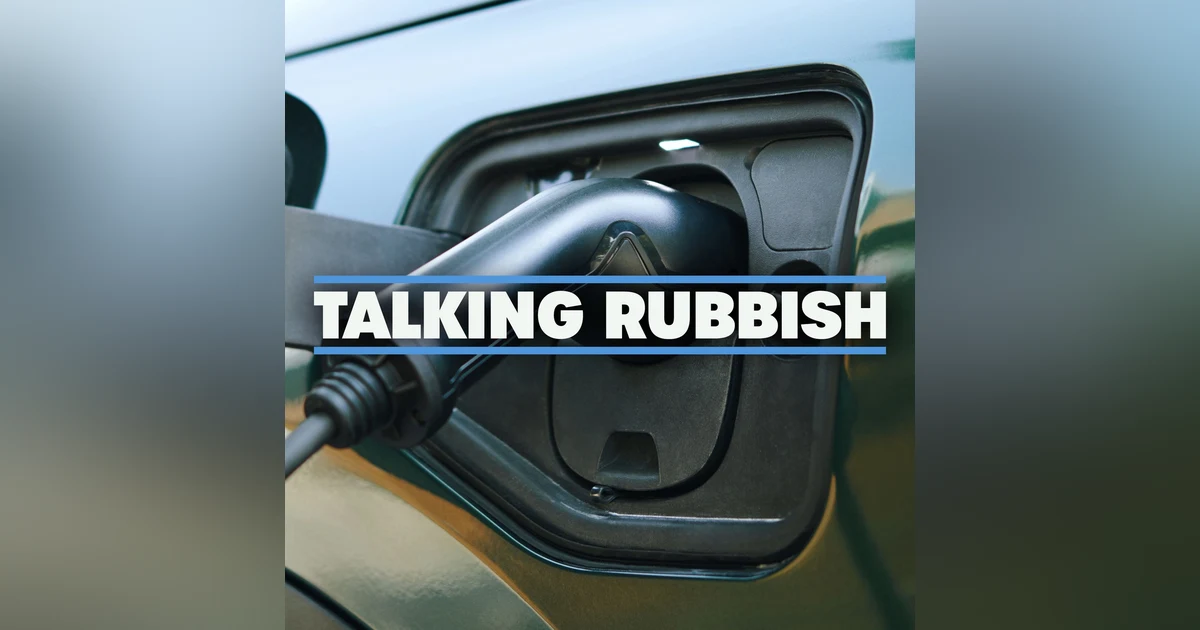
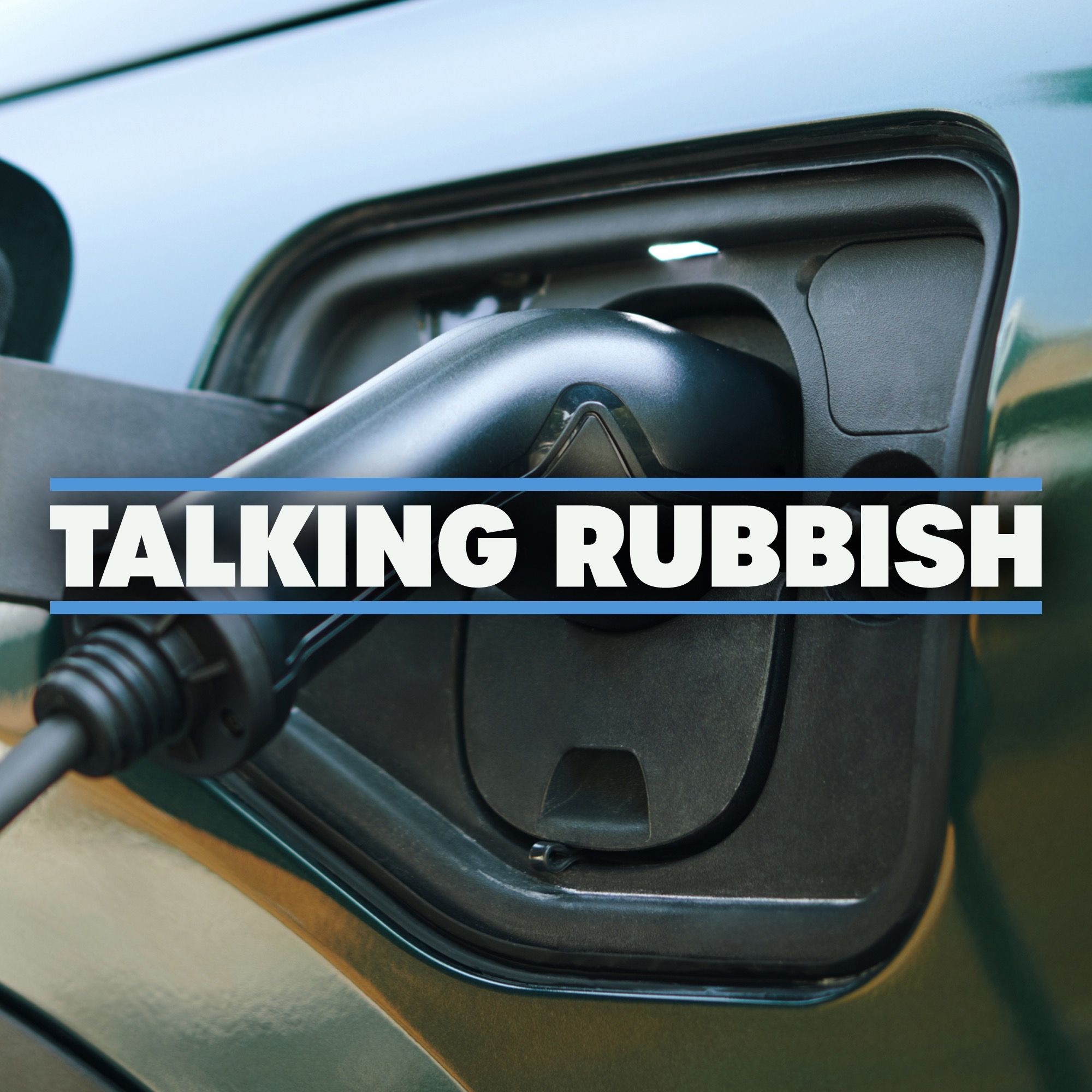
 As tensions rise in Iran, global oil prices are climbing, with potential knock-on effects for everyday costs. From higher petrol and diesel prices to wider economic pressures, the impact is becoming more noticeable. But could this moment mark a tipping point for electric vehicles? In this episode, we dive into the realities of EV ownership; unpacking range anxiety, upfront and long-term costs, and the true environmental footprint. Are electric cars really the greener, smarter alternative to traditional engines, or is the picture more complicated than it seems? Plus, are ice packs rubbish or not, is a hand dryer better than paper towels, and why might the new owners of Robbie's house be unhappy with him?
Join hosts James Piper and Robbie Staniforth as they delve into the world of recycling, hopefully having fun along the way. One thing is for sure, they will talk absolute rubbish from start to finish.
Please take a moment to complete the Simpler Recycling tracker
We would love you to join our community on Discord
Special thanks to our sponsor, Ecosurety
To get exclusive videos and clips, follow us on Instagram, TikTok, X, Threads or Facebook; @rubbishpodcast or YouTube: @talkingrubbishpodcast
Or you can contact James and Robbie with questions or just general rubbish musings using the email address talkingrubbishpodcast@gmail.com or by texting them via WhatsApp on 07356 069 232
Relevant links and reports mentioned in the programme can be found on the Talking Rubbish Linktr.ee
Transcripts and episodes can be found on the Talking Rubbish website
Timestamps:
Is expensive petrol driving people to electric cars? - 2:17
Additions and corrections - 30:42
Rubbish or Not: ice packs - 35:28
Rubbish News - 36:54
Is it better to use a hand dryer or paper towels? - 50:09
Residual Rubbish - 53:59
Music licence ID: 6WPY8Q4O2RPFIOTL
Hello, welcome to Talking Rubbish, a weekly podcast going deep into the world of recycling, and discussing the truth behind snappy headlines and on cycling stories. In this episode, we will discuss whether rising oil prices drive people to buy an electric car. Are ice packs rubbish or not? And I have a question about how we should dry our hands. I'm James Piper, author of the Rubbish Book, and I'm joined by Robbie Standard for my bar from rubbish friends.
SPEAKER_00Hi Robbie. Hello. How are you today? Yeah, I'm good. But there's one thing on my mind. We were out for dinner together last night, which is a rare thing. And the key question is, did you remember to put your bin out? I did.
SPEAKER_01This was a joke in the table, wasn't it? Because um it was getting quite late. There were a few of us having dinner, it was lovely. And uh everyone was like, Oh, should we go for one more drink? And everyone was saying yes. And I was like, I can't, I've got to go home. My wife texts me and said she hasn't managed to put the bins out. So uh that's what happened. Yeah, I got home. I I walked home, got home at like, I don't know, half eleven or something, and there I was putting the bins out. I was more worried for my neighbours, you know, as the binfluencer on my street, but someone else had taken up the mantle because the bins were out, everyone else's bins were out.
SPEAKER_00And I'm worried about your neighbours with you making all that noise at half past eleven at night. I hope you were very quiet in putting them out.
SPEAKER_01As I said on 85, they're very used to it at midnight when I remember to put the bins out. Half eleven was early, if anything. Just as a reminder, we've launched Talking Rubbish Recycle Content. It's been out for over a week now. And uh, we'd love it if you guys could go and take a listen to some of the clips. Definitely follow and subscribe. It's the easiest way to help us move up the rankings and to leave a review if you can. That would be amazing. Even if you've left a review on this Talking Rubbish podcast, what are we gonna call this one? The Yellow Podcast. You can go over to the Green Podcast and review that as well. But yes, we've had fun with that the first week, so I hope you guys are enjoying it. And as we said last time, we are going to be releasing an episode every single day. So if you just want a few minutes of us each today, then you can go over to the Green Podcast and have a listen to the latest episode.
SPEAKER_00Can't wait till we catch up. I might have half a chance of remembering what I said in the past.
SPEAKER_01For political reasons, I don't think we should discuss another recycling podcast. Oil prices are on the rise. And two weeks ago, oil prices hit $120 a barrel. The last time prices were this high was for a similar reason when Russia invaded Ukraine, and obviously we're now talking about the conflict in Iran. Every time fuel prices spike, something interesting happens. People start looking seriously at electric cars. And so today we wanted to ask a simple question. When petrol or diesel prices rise, do electric car sales rise too? And Robbie, when I mentioned this topic to you, we did debate, didn't we? Are we moving too far outside of our wheelhouse? You know, we're broadening the scope of talking rubbish a little bit.
SPEAKER_00Yeah, no, definitely at the edge of my knowledge. However, it is one of those really important environmental topics that's going around and definitely adjacent. And certainly oil prices is something we talk about all the time in the context of recycled plastic. But of course, it really does affect many other environmental factors to the way the average person lives their life.
SPEAKER_01And as an electric car owner, I mean, I love talking about them. I'm a very, very passionate EV owner. So we'll go into some of the detail. There is so much misinformation about EVs, particularly if you don't drive one. So it's definitely in our sweet spot of working out the truth combined with that sustainability focus. And I just generally believe our trash talks should be quite wide-reaching. We've done quite a lot of greenwashing and all sorts of things outside of packaging. I think we should just keep doing that.
SPEAKER_00Yeah, agreed. And so for full disclosure, I don't drive an EV, I drive a petrol car. And I'm hoping we won't get into any reference of my driving style, any sort of critique.
SPEAKER_01Right. Well, I didn't know you were going to bring this up, but I feel like I should. I have to tell the BIMPUNCERs that I last time I got in the car with you, I genuinely feared for my life. You have a driving style. How did you describe it to me? You said I drive like a teenager.
SPEAKER_00Yeah, like a teenager who's just passed their test. Excited to get there in a hurry.
SPEAKER_01Excited to get everywhere in a hurry. Oh my goodness, I get car sick at the thought of being in a car that's swerving too much. And uh you are you are a very, very, very different driver to me. That's where I'll leave it. That's the polite thing to say. On to the topic. Every $10 increase in the price of oil typically adds around seven pence per litre at the pump. Although it does take around two weeks typically for that to show up in petrol stations. I suspect it takes a lot more weeks to come down after the prices drop. It's one of those, isn't it? And of course, it's not just cars rising oil prices push up inflation as well because transporting goods around becomes way more expensive. Before this episode, so earlier this week, I did ask our influencers on Instagram whether they drove an electric car. 29% said yes and 71% said no. About 5% of cars at the moment on UK roads are electric. So the market share is actually much higher. It's like I think it's around 25% now of cars that are bought are electric are purely electric. But in terms of actual cars on the road, it's about 5%. So that does suggest that our audience of influencers might skew a little higher than the average in terms of electric car ownership. Of course, it's a small poll and you might be more likely to answer if you own one. So maybe that isn't true.
SPEAKER_00And if you're listening to a recycling podcast talking about sustainability topics, you're probably more likely to own an electric car too.
SPEAKER_01Absolutely. So let's start with the cost of running an electric car versus an ice car. So have you heard the term ice before, Robbie? Do I need to explain? I haven't, actually. I hadn't. Oh, well, it's that you know that car you drive that nearly killed me? That is an ICE car. That's an internal combustion engine car.
unknownOkay.
SPEAKER_01Yes. That's what the EV guys call it. So ICE versus EV. And of course, we could talk about hybrid cars, but today we're just going to focus on pure electric.
SPEAKER_00Uh-uh, no hybrid. That's the one that I'm thinking might be my next car. So maybe that gives us an excuse to revisit this topic at some point in the future.
SPEAKER_01So my situation now is that I have a driveway at home, which was not always the case. For the first five years of electric car ownership, I lived in a Victorian terrace, with about 99% of my charging happening from public charging points. The ones at service stations and shopping centres, that's what I was using 99% of the time. The other 1% was me laying a cable across the pavement. You know, if I got a car parking space outside my house, I could just run the cable to the car, put a little mat over it so pedestrians could walk over, and there you go, the car was charging from home. And weren't you fraught that someone would trip over where there's a blame, there's a claim? No, I got a bright yellow mat. It was very obvious. I think it was okay. So for the purposes of this discussion, let's assume you are buying one with access to home charging. Now, interestingly, this does take out nearly half of households. I think it's about 45% of households that don't have access to a driveway that would allow them to charge from home. At the moment, around 18 to 90% of EV owners have the ability to charge at home. So definitely there is this skew towards I've got a driveway, I can buy an EV. I don't have a driveway, I'm not going to buy an EV.
SPEAKER_00Okay, and we're talking rubbish is a living representative example of that 50-50 split because you have a driveway and I don't.
SPEAKER_01Yeah, but if you'd asked me a couple of years ago, I didn't have a driveway, I did have an EV. And so I was in that 10% of EV owners who didn't have a driveway. Who was just hoping it would all be alright.
SPEAKER_00And if you ask me next week, I will have a driveway.
SPEAKER_01Oh yes. Yes, the big move due any moment. We often hear about range anxiety or people feeling like an electric car wouldn't work for them. According to Ugov, 69% of Britons drive less than 20 miles a day. And I've never understood this. You know, all these people who say, What? I'd be so worried about having an electric car. And then you say to them, How often are you driving more than 300 miles without taking a break? Oh, I've never done that. Okay. So you can charge, you know, you can stop the lunch and charge up. And now the charges are so fast the public charges that you wouldn't even have that worry. So I do think in the main, we as Britons drive much less. I mean, I know Ellie's parents actually have like uh what they have an ice car and electric car, electric car for the short journeys, ice car for the longer journeys, and you find that most of your journeys are short journeys.
SPEAKER_00Yeah, no, that I can see that being true. And to be honest, taking a break is good practice anyway when you're driving that kind of distance. But you're not it's about whether you have a charge at the other end, isn't it? It's doing the 200 miles and then it's always on the way back. I sort of feel like people are most worried.
SPEAKER_01But how often are you doing 200 miles? Almost never. Exactly. People worry about these journeys they never make, you know, and it's it's quite interesting, isn't it? But James, what if I did want to drive to Scotland on a whim just one day from Bristol? I've done it many times in my electric car. It's definitely possible. You just have to plan. It's good to plan. The way I think about it is I have a fuel pump at home, right? That's what's happening with my car. I'm plugging it in at night and I'm waking up and it's full. That is amazing. And that is to me the biggest perk. I literally have the equivalent of a fuel pump on my driveway. But I I get it's not for everyone. I get you, you know, to experience that, you have to have a driveway, I understand. So, in terms of costs, I have octopus intelligent at home, which means I can plug in my car at any time. So as soon as I return home, even if it's like three in the afternoon, peak. When's peak? Just after East Enders, that's what they say, isn't it? When everyone turns on their kettle. So, like, let's say I turn up, I plug it in at 7 p.m. or 8 p.m., octopus will not start charging it until the grid is ready and has cheap electricity. So octopus makes a decision. If if no one's using electricity and the grid has some surplus, it'll start sending charge to my car. But it will only ever charge me the cheapest rate. And this is really clever because this actually helps solve grid capacity. Lots of people talk about, oh well, if everyone had an electric car, we'd have to have loads more electricity capacity because we'd be charging so much. But that isn't true because the cars can decide when to charge and they can share that load. And there's been analysis that actually full EV adoption across the country would increase the grid demand by only 10 to 15%. And that's because the cars can decide when to charge.
SPEAKER_00So it's the car deciding, not the octopus that plugs it in for you.
SPEAKER_01I can see you've written in the notes octopus gag. Did you uh you've literally just written that. You've mentored it. You typed in octopus gag. You thought that was good? I enjoyed that. There's a couple of times we listen back to this, isn't there, Robbie, where I laugh at your jokes, and there's a couple of times where only you laugh at your joke, and then you say, you say, why didn't you laugh at my joke? And I I say, I I just don't think it was good.
SPEAKER_00Octopus is an energy company for those international listeners.
SPEAKER_01Thank you, Robbie. Back to cost, ignoring standing charges as you're going to pay those whether you have an electric car or not. Overnight I'm paying 7p per kilowatt hour to charge my car. Okay, so we don't need to remember the 7p other than that sounds pretty cheap. Charging a car from empty to full would cost me about £5. That sounds very cheap. It's pretty good. And out of that I'm getting £315 miles. So if I was to do that with a petrol car, £315 miles, it would be about £47. So the difference between an EV that's kind of charging overnight, not the public charge points, because they are way more expensive. And they're more expensive than petrol. So we've got to balance this out. But assuming you are an average driver doing your 20 miles a day, you would be able to charge your car for £5 every time you needed to compared to £47 in petrol. So at the average mileage of a UK driver, which is about 7,000 miles a year, the saving would be £938 a year. Wow, that's like a significant household saving, isn't it? It is, and I think it does actually justify the upfront cost as well. The challenge with electric cars is obviously they're more expensive than ice cars, and the average electric car is about 20% more expensive. But that gap is narrowing very fast. And according to Auto Trader, there are now 37 EV models that retail below 30 grand, which is coming in line with the average of an ice car.
SPEAKER_00Wow.
SPEAKER_01Okay. So things are starting to change there. Definitely. And because leases are coming to an end, there's a lot more used cars that are cheaper. You know, we're getting to a point where three-year leases, five-year leases are ending, and those were decent cars because we've kind of gone through that initial technology shift. And you can now pick up a used EV for under £15,000. And that is definitely in line with an average used car price, whether it's ICE or EV. We're at a point where actually the cost differential is not that big, but the saving potentially is around £1,000 a year if you're just an average UK driver. Obviously, if you're driving on business all the time, you're doing £40,000, £50,000 a year, it's not necessarily going to be for you. We shouldn't pretend they're for everyone. But if you are an average UK citizen, at this point in the story, you can be saving £1,000 a year and you could pick up a car for a similar price to a normal petrol or diesel car. And that used car price is quite important because depreciation is actually one of the biggest real costs of owning an EV. EV depreciation is very volatile. I remember this because there were lots of Tesla used salespeople. So lots of reputable people. The one I remember was Richard Simmons, I think. Richard Simmons had all these used cars. And then Tesla one day just dropped the price of all the cars by five grand. Like the new cars. And these guys had to just go back to the drawing board and go, what can we now sell these used ones for? And because the market was emerging and because Tesla had these very expensive cars, actually, very quickly they could go, we're just going to knock the price off all these cars to drive sales. And it really disrupts the used car market. It really, really disrupts it quite quickly. And I guess that's the downside to these electric cars. If you're buying one from new, you're going to have depreciation very, very quickly as technology improves, the price cuts from the manufacturers, the large numbers of ex-lease vehicles entering the market. I mean, really the best thing to do is to go out, buy a secondhand car that's already had that depreciation baked into it, and then to run it to save a thousand pounds a year.
SPEAKER_00So this is where there might be an opportunity for me then. As a person who's never owned a new car, or even nearly new car, to be honest. The newest car I've ever owned was still over 10 years old when I bought it. Um but maybe that's where I come in after this three to five years of depreciation, I can clean up and get one of these electric cars, just like I've traditionally been using, doing with a uh ice car.
SPEAKER_01Now the payback of an electric car is actually quite difficult to calculate because there's so many variables, there's such a huge range of cars. The best I could find was an article that actually came from Australia and some really interesting numbers. So it assumes no grants, no government grants on electric cars, and that you were driving an average of 9,000 miles a year, which is slightly more than the average Britain does. They do about 7,000. But essentially they found at £1 per litre, in terms of the cost of petrol or diesel, the payback of the car was five years. At £1.30, the payback was four years, and at £1.50 it was three years. So those are just easy numbers for us to remember. But that doesn't include, like in the UK, we have a newly announced EV tax, which is going to add three P per mile from 2028. And that'll drop that £938 saving to closer to £700.
SPEAKER_00Yeah, no, that's true. And we're not including that new expensive vehicle supplement that's part of the new tax regime because it kind of applies equally to these ICE cars or EVs. The only difference, really, that £420 a year you might pay is that for EV cars it only is on cars over £50,000, whereas for ICE it's over £40,000.
SPEAKER_01It was actually very good. My initial years of ownership of this car, it was great because there was no tax to pay, and now they've introduced this and I've got a significant tax bill each year with the car tax. So yeah, it's a good thing to raise. Having said that, the government have reinstated a £3,750 grant on cars, less than £37,000. So if you are buying a new EV and it's less than £37,000, you don't have to pay that expensive vehicle supplement tax. And you've got the grant kicking in. So that is a time where you might consider buying new if you were buying something less than £37,000 because that depreciation is not going to be as significant once the government grant's been applied. It will also have a higher value on the secondhand market because people won't want to pay that expensive vehicle supplement. Now there are obviously additional cost considerations. Insurance is typically higher. Servicing is cheaper. I mean, it is basically a big remote control car. It's a motor with four wheels attached to it. That's all an EV is. You think about the parts, technically it's the four moving wheels and a battery, and then everything else is just built on top. Tesla is so advanced with this, they will literally tell you when your car needs a service. And I have no, I can't even think when my when I last went to get my car serviced because it has not told me it needs it. Um, and it just saves so much money in terms of you know routine maintenance. You just there's nothing to do. The most, the hardest thing to do is to fill the washing fluid on the windscreen wipers, uh, which reminds me I do actually need to fill that because it has gone. As I said, you might have to charge outside the home. That's when things start getting expensive. I'm not going to go into huge details on that because we could just drown in numbers at this point. But instead, I think we should answer that fundamental question we started with. Does a rising oil price cause an increase in EV sales? And there are loads and loads of studies that exist that do show a trend towards consumers purchasing more fuel efficient vehicles as petrol prices rise. So if we go back in our history, when we have these points where petrol prices rise, people then look for new cars that are fuel efficient. But that doesn't tell us the EV story. That is purely the I'm looking for a more efficient car.
SPEAKER_00Well, I've definitely got a confession alert here because when fuel prices go up, I'm not thinking necessarily about driving more fuel efficiently. No further comments on my driving style, please, James. I'm not thinking about changing to an EV car, but when the fuel prices go up, my laziness goes down. So as you know, I walk and cycle mostly, but I do occasionally drive just five minutes to the gym when I could cycle in three, run in six, or walk in about 15. So when the price goes up for fuel, it does make me think I need to make sure I'm not so lazy getting in my car and I should really be walking. The other thing that affects it is, of course, the weather and my general fitness motivation too. But as soon as I start seeing it in the news and at the pump, I'm like, what am I doing? It's only five minutes. Stop using my petrol car. I don't need to. I think it's a really good point.
SPEAKER_01I think I haven't experienced this because obviously I'm charging up and it's kind of a known cost. It's fixed. It's always 7p because that's what octopus have done with the tariff that I've got. Now it might change, of course, but it should always be known. And I guess that's slightly different. I I know how much it costs to charge my car, and I don't have to worry about fluctuating prices. But I love walking, so very rarely does my car get used anyway. Now, speaking about oil prices, petrol prices, a 2022 study from California did find a change in petrol. Well, this is California, so we should say gas prices has four to six times the effect on EV demand as a similar increase in electric prices. Okay, so if gas prices go up, it is four to six times more likely to make you want an EV than if you were to increase electricity prices to the same level. In 2025, there was a study from China which assessed 36 cities across the country between 2017 and 2022, and they found an increase in the price of petrol. So I'm going to convert this to pence. It's about 11 pence per litre. So an increase in the price of petrol by 11 pence per litre would cause a 4.67% surge in EV sales. And most recently, a study in January 2026 from a team in Denmark who looked at four Nordic countries, so Denmark, Finland, Norway, and Sweden, they compared the registrations of ice cars and electric cars to the price of petrol between 2019 and 2022. And they found that a 1% increase in petrol prices caused a 0.85% rise in EV sales. And they also found, which was really interesting, that rising electricity prices did not put people off buying an EV. That's
SPEAKER_00Strange. I suppose like people are less acutely aware of the running costs through electricity as they are having to fork out money directly at the fuel pump and it comes up as a 50 plus pound um transaction. And so you're like, oh my God, this was 44 pounds last week and now it's 50 pounds. Uh what am I gonna do?
SPEAKER_01I think that's exactly it. And also we're measuring things by like kilowatt hour. So it's like, well, what does that mean? You know, 7p per kilowatt hour, what does it mean? Well, all it means is I've got a 75 kilowatt battery, so I can multiply 75 by 7p, you know, basically, and that's how I get to my five pounds. That's really how it works. It's quite a lot to explain that to someone, it's much easier and they're not noticing it in their electricity bill, which is also powering their house. They're not going, oh, that bit was the car, that bit was my house. In this example, the complexity of the bill definitely means that people don't really notice it as much as, oh, as you say, I see the price at the pump and I'm paying for it. Now we do need to be a little careful with these studies because a lot of EV studies typically come from countries that really like EVs. So the Nordic countries, I think Norway was the first country where EV sales surpassed ice cars. And China has huge, a huge investment in EVs and charge points, and they've taken away a lot of the barriers to entry for people in terms of buying an EV. It is a bit easier to imagine why these countries would be more likely to buy an electric car in in times where petroling and petrol prices are increasing. And the Nordic study, they use the fact that the Ukraine war was destabilizing oil prices as an opportunity to test the thesis. And I just believe there might be other reasons that people adopt an EV in times of crisis. You know, I have I have solar, for example, on my roof that essentially gets me off grid. If there was a power cut, my house is still powered. And while I don't wish for a power cut, I am dreaming of the day that I test it. Because I haven't ever tested it. And I sort of I've got this fairy tale in my mind where all the neighbours are going to come round, we're all going to have a beer, the lights will be on, and everyone will say, I'm glad you had that solar, James, and then we can have a long discussion about the benefits of solar panels. But because I haven't had a power cut since installing them, my dream has not yet turned into a reality. But one day I think that will happen. And I did it for environmental reasons, but obviously there may be people who are saying, actually, in wartime, as we are now, without wishing to get into all the politics around it, I might want to be off-grid a bit more. I might not want to be as reliant on these services. And it is actually one of the reasons that governments are pushing electrification. You know, oil is a globally traded and vulnerable commodity. And we are finding out quite rapidly that the UK is not really prepared for taking control. And so governments are quite keen for us all to electrify our houses, electrify our cars, because then they're less reliant on things that are outside of their control. In the first week of the conflict in Iran, petrol prices rose around 5p per litre and diesel was about 9p per litre. Now, if we just take that petrol figure, that's a 3.6% increase in price. So in the Nordic study, that should mean a rise in EV sales of about 3%. And in the Chinese study, you would expect about 2.3% increase. So the evidence that we have suggests that this rise in petrol or diesel prices that we're seeing will lead people to buy more electric cars. And at this current price of petrol, that Australian report would say a payback of a more expensive EV of just three years.
SPEAKER_00Wow, okay. So that definitely changes the dynamics on things. And I mean, it's pretty compelling, isn't it? Wouldn't you say that it does have an impact?
SPEAKER_01Yeah, I should say when we say that payback of three years, because I think that's quite complicated, we're just talking about the premium that an EV is compared to an ice car. You know, so if I'm saving £1,000 a year or maybe £1,500 if the petrol price has gone up, essentially that's four and a half grand over three years, which is the difference between an ice and an EV. So we're not literally saying payback as in you paid for your car. We're just saying it brings back down that gap between EV and difference. Exactly. And if petrol prices hit close to two pounds a litre again, as they did in 2022, that gap becomes absolutely enormous between running a petrol and running an EV car. So we've done a bit about costs there. What about the environmental impact of an EV? We all have that friend who says mining lithium is so damaging and the manufacturer then produces way more greenhouse gas emissions. So they're just never better. I'm sure people have seen that image of a car being charged up with a generator that's plugged into the power station, which is emitting loads of fumes, and people are saying this, they're pretending this is good. Well, I had a little look, and the International Council of Clean Transportation had a report on this from 2021. So I'll put this in our link tree. And essentially what they were saying is in Europe, EVs that are registered today will have nearly 70% fewer emissions over their life than a comparable petrol car. 70%. And if the grid decarbonizes, which it is, this will rise up to 75%. And if you were fully renewable, which my car is, you know, as in every charge my car's getting is from my solar panels, that comes to 81%.
SPEAKER_00Wow, that's sort of irrefutable, isn't it? This whole argument that um they're more environmentally damaging because of the batteries.
SPEAKER_01Yeah, the batteries have issues, definitely. And we'll talk I think look, we're gonna have to we're we're running out of time rapidly, so I'm we're gonna have to talk about lithium batteries another time. And that should be a whole trash talk in itself, because there's all sorts of ways of getting lithium, and you don't have to mine it in the same way that you have to mine other things like oil or drill for oil. Um you can get it from salt flats and all sorts of places, and lithium will be a really interesting commodity in the future. But I think it is worth just pausing and reflecting on what I am saying there is if I had a petrol car instead of an EV, my emissions would be five times higher over the life of that car. And people often say to me, but what about the battery? You're relying on something, and they've got in their minds, you know, a phone where you plug it in on day one, it's like, well, this battery lasts for two days, and then a few weeks later it's like, oh, the battery's lasting a day, and then a year later it's like, oh god, the battery and that planned obsolescence that comes into batteries. I just haven't experienced that with EVs. Obviously, I'm a big advocate, but the truth is that my EVs that I've run, you know, I've had for five, six, seven years since 2017, albeit I've got a I've had two, so it's a bit complicated. But my first one I had for like six years, and I would say I didn't notice a difference in performance from the day I bought it to the day I handed it back. I did not notice a significant change in the batteries. And studies have shown that most EV batteries will lose 1% of capacity a year, so it's just barely noticeable. Most still retain 89 to 90% of their capacity after 150,000 miles. And the real-world data shows that battery failure rates are below 2%.
SPEAKER_00My ICE vehicles definitely failed more than 2% of the time. Absolutely. This is true.
SPEAKER_01It's like we have said many times on this podcast, people focus on an EV failure or an EV fire because it's newsworthy, because it gets the conversation going. People love to complain about it and they say, look, that EV was on fire on the side of a motorway, they're so dangerous. And study after study after study has shown that ice cars are more likely to break down, more likely to catch flames, more likely to cause problems, but that's not newsworthy because that happens every day. So it is a big frustration to people who want to get around that misinformation of EVs that actually they're not more likely to catch in flames, they're not more likely to cause a problem. So to wrap us up, does a rising oil price increase EV sales? Well, the evidence from multiple countries suggests it really does. But they are not for everyone. I'm not going to pretend they're for everyone. I'm not sure I would still have one if I continued in my Victorian terrace because it was pretty challenging. So we need more street charging infrastructure. You know, the idea of turning lampposts into chargers is a no-brainer to me. But for now, I would not have an EV if I was regularly away from home, regularly doing more than 200 miles. It just wouldn't work for me. But assuming you have a home with a driveway where you could put in a charge point or you have workplace charging and your daily driving is less than 200 miles, I think it's entirely achievable. And we're going to have to get used to it because in 2030, the government is still committing to a ban in the sale of new petrol and diesel cars, which I'm sure people can tell I fully support. The evidence is pretty clear. When petrol prices rise, interest in electric cars rise too. They are not perfect, they're not right for everyone, but the direction of travel, no pun intended, is fairly obvious. Additions and corrections. I was very, very sad to see a couple of weeks ago the listed building in Glasgow that caught fire. I'm sure you saw this news, Robbie. Yeah. A fire that started in a vape shop. I saw lots of people commenting at the time saying, why the hell do we need vape shops? And I could not agree more. As someone who has a couple in our village, it's like, why have we got these things? Like, if I really wanted a vape, I could just get one from a supermarket. Why do we have entire shops dedicated to vapes? But anyway, that's obviously a personal view because I don't vape. And I'm sure if you do vape, you might be very happy that you get a whole shop dedicated to them. But unfortunately, in this instance, it did destroy dozens of businesses and close down Scotland's busiest railway station. And let me tell you what you don't want at a time like this. You do not want a video which you posted in December 2025 on social media about a fire in a Suez recycling plant in 2022 that starts with me saying there is someone in Scotland who put a battery in the bin without thinking about it and caused 30 million pounds worth of damage. Because what feels like the whole of Scotland will make it go viral again at this point and think you are talking about the Glasgow fire when you talk about the person putting a battery in a bin. And then they will use some very, very interesting language, including telling you that you are no longer welcome in Scotland because you are an English person who is spreading misinformation and you don't know what you're talking about. Oh no.
SPEAKER_00So they just totally got the wrong end of the stick and thought you were talking about that fire when it was a previous fire.
SPEAKER_01Oh my goodness. This is a call to action. If you're on social media, look at the dates on your videos, people. Don't assume that just because you're seeing a video, because loads of Scottish people are commenting on it, it is now new information. So uh yes, unfortunately, sometimes an unlucky podcaster can accidentally look like they are commenting on the news when they're really not. They're talking about something that happened in 2022. We haven't really talked about this clip that I posted of the Suez fire. It was actually viewed 1.2 million times. It's one of our most viewed clips and attracted over a thousand comments. And this video was essentially us saying, look, don't throw away batteries, they can cause fires. So let me just pick out some of the comments. And this is representative of all the comments we received. If the fire was me, I wouldn't even care. Millions of batteries go in the bin every year. So what? I put all my batteries in the bin and I don't care. The only silver lining I think that comes out of this vape fire in Glasgow is that it might help raise awareness about the dangers of vapes and batteries. Because honestly, I get very depressed by some of these comments on these videos where to me it's a no-brainer. Don't put your batteries in the bin. To the great British public, it's an opportunity to get angry about how the state is controlling you. Robbie, a couple of episodes ago, you mentioned corks and you mentioned your impending house move and how you were going to take them to Majestic. So I have a question for you. Do you still have them?
SPEAKER_00Yes, I do. I haven't managed to make the trip yet. Why are you calling me out on it? No, no, this is great. I'm putting them in the wrong place.
SPEAKER_01No, no, this is great. This morning I had a message on Instagram from Pat asking if we could donate them to her cork board project. She sent me a picture. Essentially, on her wall, she has a large board with corks stuck onto it, and there's like a gap in the corner where there's no corks. Oh, cool. She would she was wondering if we could donate our corks to the project. Oh, that sounds brilliant.
SPEAKER_00Yeah, okay. That was the kind of thing that I hope to have the time to do, but can't. So I'm very, very happy to post them off to Pat and donate them to a great cause.
SPEAKER_01Pat, the corks are on their way to you. I'm going to get those in the post straight away. Robbie, I need to come and collect them from you. If any influencers hear me or Robbie mention something we're attempting to recycle and you want it for a craft project, please get in contact. Because this is so much better. You know, moving up the waste hierarchy, getting some reuse rather than recycling. We're very happy to do it. I'm very happy to pay for the postage.
SPEAKER_00Brilliant. Yeah, much better use than me sending them back to Majestic Wines.
SPEAKER_01And finally, we're coming up to Simpler Recycling. This is going out on March 26th, this episode. Simpler Recycling is the 31st of March. And we said we would try and have a form for BIMFluencers to fill in to tell us what their council's doing. So I'm going to put that in the show notes. There'll be a link to what is probably a Google form. I haven't quite done it yet, where you can put in your council and what bins you have, what colours of bins, all those things. We're going to just start compiling a database so that we can call out councils that aren't following simpler recycling. But also it's really interesting for us to see what color bins people are using and how it all works. And having a database of it's going to be really helpful. So if you've got a second to fill out that form, that would be great. We'd like to take a moment to thank our sponsor, EcoSurety, who are on a mission to rid the world of unnecessary packaging. They help brands navigate the tricky world of extended producer responsibility, but that is not all. They also collaborate on some incredible recycling projects and consumer awareness campaigns for those tough to recycle materials. If you're an organization looking to make smarter packaging choices, check them out at ecosurity.com. And the best thing you can do to help pub podcasts grow is to tell your friends and family about it. Thank you to everyone who's doing that. You can also leave us a review. And if you do that, you can be Robbie's review of the week.
SPEAKER_00And this one comes through, it's a five-star on Apple again, uh, from Joy672. And the headline is Jingle Wiggle. I listen to your brilliant content doing my weekly bathroom clean. Nancy Burt whistle homemade cleaning potions, of course. This podcast gives me hope that there are an increasing number of people and businesses in the world that care about sustainability. Also, love the jingle music and always have a little wiggle to it. Keep up the good work.
SPEAKER_01I was about to talk for you then, Robbie. I don't know what you do. I always wiggle to the jingle. What do you do? Definitely.
SPEAKER_00Yeah, absolutely the same. Yeah, definitely a little jiggle.
SPEAKER_01And you can follow us at rubbishpodcast. You can email talkingrubbishpodcast at gmail.com or you can WhatsApp us. Also join our Discord. It's the easiest way to engage with us and listeners of the show. And the link to all of those things is in the show notes. Good wiggling Robbie, very good. Okay, rubbish or not. Today's rubbish or not is accidentally similar to our trash talk because once again we are talking about ice, but this time not internal combustion engines. We are talking about ice packs. Now, I know what you're thinking. Surely they are just water and plastic. No, no, no, no. You also get ice packs with biodegradable gels. And I have experienced this. I don't know if you have, Robbie, but I've said before I get some of my meals with delivery kits. Still planning on doing an episode on that in the future. I was with Mindful Chef, who were using essentially an ice pack that was like a plastic bag with a biodegradable gel in it. Just moved to Gusto, who were using a plastic wrap with just water in it, and then they surround that in paper. And we had John on Discord asking us exactly about this. It's biodegradable gel. He found it in his son's recycling he was doing for him. That's that's good, isn't it? I think parents come around and do your recycling for you. Mum, are you listening? I mean, she is. It's on a Wednesday night. Would have helped me out last night, wouldn't it? You know, I wouldn't have had to leave the dinner. Yeah, could have stayed at the pub a bit longer. So thank you, John, for asking about this, because I have similar questions. What do we do with this biodegradable gel? Now the pack John had was from the Fish Society. And I think companies, I couldn't quite get a definitive answer, but I think companies use gel rather than just water, as it gives a slower melt. And so if they're sending things in the post, it's going to melt less, it's going to create less condensation, it's going to be less likely to ruin the box. I think this is why Gusto have to wrap theirs in paper, because that stops it ruining the box. It ruins the paper first. So of course our first piece of advice is to reuse them, chuck them in the freezer and reuse them. But assuming you want to recycle them, Robbie, let's rubbish or not this. One component at a time. Gousto ice pack, I've got the paper outer. What are we doing with that?
SPEAKER_00That's definitely fine. That can go in the recycling.
SPEAKER_01Okay, the plastic wrap on both the Gusto and Mindful Chef.
SPEAKER_00Yeah, I think that's uh soft plasti, flexible plastics. You can take that back to a supermarket, and very soon next year, you'll be able to get it collected from home too.
SPEAKER_01Yes, I think that I think it is just LDPE, so yeah, that's nice and simple. The water from the Gousto ice pack can go down the drain. It can, it's just water. I actually use it to water my plants and make it useful. Very good. Finally, the gel, the biodegradable gel from Mindful Chef or John's Fish Society ice pack.
SPEAKER_00And this is where my second confession of the week comes in. Okay. Because I disposed of one of these just this week. Did you? I did. Because we're moving house. So we've been reusing one of these packs over many, many weeks and years actually. We've probably had it over a year now. And we put it back in the freezer and we use it whenever we're taking a cooler box out or whatever. So I'm a bit worried now because I just assume that that gel stuff would break down. Me and my daughter, we snipped the edge of the packet, we poured the gel down the sink with hot water, and then we recycled the outer, you know, the LDPE sort of soft plastics. And now you've sort of brought it up as a rubbish or not. I'm thinking, I didn't really check what that gel was.
SPEAKER_01Don't tell me it's going to have clogged up the pipes. And they do also pour it down the sink. So John wrote to them, uh the Fish Society, and they said, I can confirm there are no chemicals in the gel ice pack, and they are 100% recyclable. The composition of the gel is water and a plant-based thickener, so these can be disposed of either down the drain or safely spread over the garden. Oh, my relief is palpable. I should have checked. Take your relief away immediately, Robbie, because I think the Fish Society is lying. Oh no! Well, they are definitely lying. No chemicals. What do you think water is? H2O, my friend. There are chemicals all over this. Anyway. Come on, you're getting them on a technicality there, Jim. But I also do think they are incorrect. These gels are labelled non-toxic and safe for landfill. But in my opinion, these terms mask a way more complex product. And the gels do contain polymers of some description. They call it thickener, but it is a polymer, which is a fancy way of saying plastic. And some of these are plant-based plastics, some of them are biodegradable using quotation marks, but they do not easily break down in the environment. And their carbon footprint begins right at the production stage. And there's a company called Hydropack that showed that gel packs compared to water packs generate 36% more CO2 equivalent. Okay, so before you've even started, just the manufacture of them, you're 36% up in terms of carbon. And I do not believe they can go down the sink. Sorry. Oh no. So I did reach out to my friend in the water industry who is very helpful over the last few weeks. So thank you very much to my anonymous water friend. Uh she said. Oh no, the three Ps. The three P's, yes.
SPEAKER_00She's been so helpful recently. No, I should have remembered the three P's. Gel isn't it doesn't begin with a P.
SPEAKER_01No. Interestingly, we did have a lot of comments on that saying, what about puke? And she did say, ah, yes, that's the unofficial fourth P. But she has responded to me today to say, look, gels do not flow like water and they can clump and stick inside the pipes. And in the sewer, these clumps of gel will stick and not dissolve. Most gels are made from superabsorbent polymers like you get in a nappy, and they swell and hold water, which makes them more likely to clog and accumulate in the drain.
SPEAKER_00Oh, what a nightmare. Thank God a moving house.
SPEAKER_01That is a great, great response. Your poor buyers. I hope they don't listen to this podcast.
SPEAKER_00I was gonna leave a card on the table for them saying, listen to this.
SPEAKER_01My feeling is the best thing to do with these ice pack gels is to put them in the bin. I would not be putting them down the sink, even if it says drain safe. I do not think they are. And I think you are just passing the problem on to the water companies or the new owner of your house in the case of now. What I found most interesting doing this research is Mindful Chef's website actually said they vary the number of ice packs depending on the temperature on delivery day. Isn't that interesting? And I have noticed that. Some days I'll get two, some days one, and I never really considered it, and they are looking at the weather. And when it snows, you get none. Oh, you still get one, I can promise you that. Completely unnecessary, you're right. You should just give me an open box. It's you know, self ice packing. Rubbish news. My news this week is that a lady from Guernsey has been handed a fine for binning batteries, and the original fine for this was £11,500. Whoa, that's big money. It is big money, yes. Crystal Ogler threw away 23 AA batteries. They were inside children's toys. She said it was by accident because she didn't know they were in the toys. It was during a house move. Robbie, you have mentioned one or two times on this podcast that you're about to move house. Have you got any confessions here that are going to cost you 11 and a half grand?
SPEAKER_00Oh my word. I've already done enough confessions. Surely there aren't any more. No, I don't have any. I did have AA batteries to dispose of, but they're actually going with me during the house move in a uh little Tupperware container. We're just going to keep going. I've not got time to get to the shop to drop them off.
SPEAKER_01Very good. So she was using a private company called Island Waste, because she's on Guernsey. You know, waste management on islands is pretty tricky. Yeah, we are going to do an episode later this year, I think, on recycling on islands because it is quite challenging. Don't we have to go to the Bahamas for that one as well? Yes. I believe. Yes, there's some serious research. I'm just waiting for the best weather. Um, because I think that's the best time to look at recycling when it's sunny, so you can you can see what you're doing. Yes, so Island Waste originally imposed a £500 fine per battery. Now, I have to stress, as I said in my headline, originally the fine was £11.5 because they did reduce this to a thousand pounds. So I do think the media were a little bit headline grabby on this, you know, all of them were like she's been charged eleven and a half grand. They actually reduced it to a thousand pounds, but it's still a thousand pounds for not putting your waste in the correct bin.
SPEAKER_00Yeah, but if she had changed her car from a petrol vehicle to an electric one, she could save that in a year. So maybe she's got a thousand pounds going spare.
SPEAKER_01There you go. So she ordered a one-ton waste bag. Um, and she knew batteries weren't allowed in it, she just forgot they were in the toys. And I went to Island Ways website, and I must admit, there on the homepage in red was batteries start fires. Now I wondered if they'd added this because of all the press. So I did go to the internet Wayback Machine to have a look. And actually, their website has had this. Certainly in 2024 it was there. Um, this red banner that said do not put batteries in the bag. So I definitely think the thing they could be better at explaining was that it's £500 per battery. You have to go into the T's and C's to find that. It just says £500 fine. But I do think for a long, long time they have had on their homepage, look, if you're ordering a bag from us, you can't put a battery in it. Do you want to know what other things in their T's and C's would cost you £500, Robbie, in a fine? £500 per item, is this? Yes, per item. Although, yeah, some of these are hard to do per item, but yes, £500 per item. Okay, go on then. Uh asbestos, medical waste, flares, gas bottles, solar panels, and fertiliser would all cost you £500.
SPEAKER_00Wow. Bootleg jeans cost you uh £500.
SPEAKER_01I think they mean the other flares. Uh but Vapes had a POA. I enjoyed this. It was like Vapes, POA. And I was thinking, okay, I know that's price on asking, but this is a document that's penalties and fines. So I did wonder if maybe there was penalty on attempting. It's kind of but we won't tell you what it is. You get to find out when you att when you attempt it. So as I just try put one in and see. So as I said in additions and corrections, I do think the world is just waking up to the dangers of batteries, and we're hopefully doing our little bit to make people more aware. But I am sure that councils wish they could charge these kind of fines because this is the kind of thing we need to help people realize that it is a serious issue.
SPEAKER_00And my news this week comes from a bordering suburb to me in Bristol. And it's a topic we've mentioned a few times in episode 47, but in a few others too. It's all about communal bins and this issue of shared responsibility being no one's responsibility. Um so this comes from St. Paul's, which is uh a suburb of Bristol, and the residents have called it a nightmare, branding it an open rubbish dump, uh, these locals, and they're demanding action on these communal bins that are attracting not just fly tipping next to the bins, but also vermin with the various things left next to them. And anyone who's attended St. Paul's Carnival will be familiar with these bins. They're out on the street, they're not behind a locked gate or anything like that. They're these large communal bins. And it's really for space convenience. It's not because it's flats necessarily. Some of these are serving houses too, but there just isn't quite enough room for everybody to have their own set of boxes or bins. And so they introduced these communal bins in 2011, Bristol City Council, and then later replaced them with mini recycling centres so that some of the bins were for recycling, some was for general waste. But the problem is people are just putting bags on top of them or next door to them, and they're attracting pests. So this um community residents association has written to the council and they're asking them to do something about these communal bins. So the councils responded and said they're exploring whether the landlords, because lots of the properties are rental property, could be required to provide bin storage uh on their properties instead of relying on these street bins. But they it's only going to be summer before these proposals go in front of councillors. So unfortunately, these residents are gonna have to put up with it a bit longer. And it really does bring into sharp focus after speaking with Ashley a couple of weeks ago about the bin rounds and things, just how difficult it is for some people not just to get their recycling done, but also to do it in a clean way that isn't gonna attract fly tipping and vermin. So I definitely feel very sorry for this community.
SPEAKER_01Rubbish question. This was a question on Discord from A.me Buck. Is Amy Amy Buck? Not entirely sure how to say it's Ame Buck. Question sparked from a choice I had to make in a public bathroom. Where's this going? So we've done should I flush all bin uh toilet tissue? If I'm using it to blow my nose, we've done that. Now we have our second toilet-related discussion. What is the more eco option? Using a few paper towels to dry my hands or using a hand dryer for 20 seconds? Brackets, ignoring the most eco option, which is just wiping it on your jeans. I definitely uh do that quite often. Thank you for this question, A meebuck. It's really, really complicated. Uh let me give you some examples of how complicated we can make this. Is it recycled paper towels or virgin paper? How many sheets are you using? You've gone with a few in your question. How many is that? Uh renewable energy, is that powering the hand dryer? How powerful is the hand dryer? It's so complicated. However, most studies do come to the conclusion that believe it or not, hand dryers are more sustainable than paper tasks. Really? Wow. And typically this is a high-speed hand dryer because usage, usage time, is actually the major factor, not the power of the hand dryer. So according to a study, it's a quite an old study, but from 2011, less than 10 seconds, the high-speed hand dryer will always win. Even if you're just comparing it to a single paper towel. Less than 10 seconds, a high-speed hand dryer wins. If you're using it for a more time, more than 10 seconds, the paper towel towel starts becoming better.
SPEAKER_00Okay, so it depends on the quality of the hand dryer in the public toilets that you're using.
SPEAKER_01Using a few paper towels is not better than 20 seconds of the hand dryer because 10 seconds is better than one sheet. So 20 seconds, two sheets, 20 seconds, a few sheets, the 20-second hand dryer is going to be better. However, this brings me to what I think is the best talk ever given by a man called Joe Smith. His TED talk is four minutes of him washing his hands. Yes, I know this one. I love this video. I roll out often. It has 3.8 million views on YouTube when I looked at it this morning. He basically gets half the audience to shout shake and half the audience to shout fold. His entire TED talk is him washing his hands, shaking them 12 times. And he says why 12. He gives a few examples, but his favourite is that it's the biggest number with one syllable, which I love. It's easy to say. It is easy to say, 12. He shakes his hand 12 times, folds a single paper towel in two, and then shows that his hands are dry. Honestly, this one video is in my mind every time I go to the toilet. Every single time I think, shake 12 times, use one paper towel. And that, while not better than using a hand dryer for 10 seconds, feels better to me, so it's what I personally do.
SPEAKER_00Oh, it's brilliant. Yeah, at least you're just using one sheet. And my favorite from that video, because I also think about it when I'm drying my hands, is the term he uses for why you fold it over. It's because of intertertial displacement. That's always stuck in my mind. I do like the use of uh the English language there. Intertertial displacement. No idea what it means.
SPEAKER_01I'll put this video in our lane tree because it is definitely worth watching if you haven't seen it. But basically, that's your choice. Try and use a hand dryer for less than 10 seconds, that will always be better. If you're using a slower hand dryer or you're using it for more than 10 seconds, then use one sheet of paper. Residual rubbish. This is something that has happened to us this week that has made us feel like an emoji. And I was very happy this week because, like a huge number of people in the UK, I have been watching Small Profits on the BBC. Have you seen this one yet, Robbie?
SPEAKER_00No, I haven't actually. Although I have heard lots of talk about it, you know, it's a biggie.
SPEAKER_01It's very good. It's directed by Mackenzie Crook, and it's sort of like um detectorists. Have you ever seen that? You would love a detect detectorist.
SPEAKER_00Yeah, no, I've seen some of those. I haven't seen all of it though, but yes. So it's Keenan Investigates. It's that guy, yeah.
SPEAKER_01Yes, Mackenzie Crook. So, episode one. This is the first episode of a show. From 14 minutes, four seconds in, there is a scene in the staff room, and there is this green sign, you know, behind the main character stuck on the wall. Very clear in the close-up shots. Couldn't take my eyes off it because this green sign said on it, please recycle and reuse when possible. Oh wow. That's amazing. Yeah, because it's a staff room. It felt completely natural, but it did feel like a call to action to the viewer. You know, you've got the main character having a conversation, and literally the thing next to him is please recycle and reuse when possible. I mean, this could be an addition and correction because it made me think about our episode with Steph, which was episode 70, all about how you can hide the subliminal messaging into TV. Of course, I didn't think it was particularly subliminal because I couldn't stop looking at it.
SPEAKER_00Absolutely not subliminal. But it's not marketing, it's just positive environmental messaging. This is brilliant. It's not sort of advertising a company. This is great. It was really good.
SPEAKER_01So well done to the BBC and Small Profits for this lovely bit of messaging.
SPEAKER_00And my residual rubbish this week is probably a cardboard box symbol with a heart emoji. You know, those heart eyes emoji. I reckon it's that one. So two emojis, the cardboard box and the heart eyes. I see. Binfluencers might have spotted a major theme in my life over the last few podcasts and certainly over this podcast's I'm Moving House tomorrow.
SPEAKER_01You should have mentioned it. Oh gosh.
SPEAKER_00I don't think anyone will know. And but it's really brought into sharp focus how important packaging, or more accurately, packing materials are. Because if I had moved to totally refill reusable packaging for all of the things that I buy from the supermarket, what would I be wrapping up my crockery and breakables in when I'm doing this house move? So all this single-use packaging I've been collecting over the last few years and things, thinking, oh, that piece of paper's useful or that bubble wrap or whatever, has finally come into use. And of course, packaging is for the containment, protection, handling, delivery, and presentation of goods. Not so worried about the presentation of the goods, but definitely the containment and protection in this house move. And so I've kept, I mean, maybe the cardboard box emoji is not that accurate because actually we're using quite a lot of reusable shopping bags. You know, those big IKEA bags, for example, and the plastic crates with the lids on that we've got around the house. Although I did have to buy some parcel tape, so there are going to be some cardboard boxes used, and they're going to help to contain all this stuff. And then in terms of protection, so handy having this bubble wrap to wrap around the crockery. We've even got some packing paper, you know, that comes when you get online deliveries and things, and I'm stuffing those to fill out the airspace in these boxes uh to make sure that things don't rattle around. So maybe I'll change that cardboard box emoji to the recycling logo emoji, you know, the Mobius loop, because we're more reusing them than cardboard boxes. But yes, this is gonna be the last time I mention the house move. Wish me luck.
SPEAKER_01Good luck. It's tomorrow for us. Um, so I do wish you the best of luck. You will have moved by the time this goes out. But I think the thing you've neglected to tell the influencers and neglected to mention in the many, many mentions of your house move is you're only moving about two streets, aren't you?
unknownYeah.
SPEAKER_01I think without well placed trampoline, you could you can avoid packaging entirely and just open the windows and a decent chuck. As always, thank you all for listening. Thank you for the reviews and engagement. We just love getting the opportunity to do this podcast. Join our Discord, follow us on social media at rubbishpodcast. You can email talkingrubbishpodcast at gmail.com, or you can WhatsApp us, and everything we have discussed today can also be found on our link tree, and the details to all of those things can be found in our show notes. There is nothing left for me to say other than see you next bin day. Bye.
SPEAKER_02Bye.