89. Is palm oil really that bad?
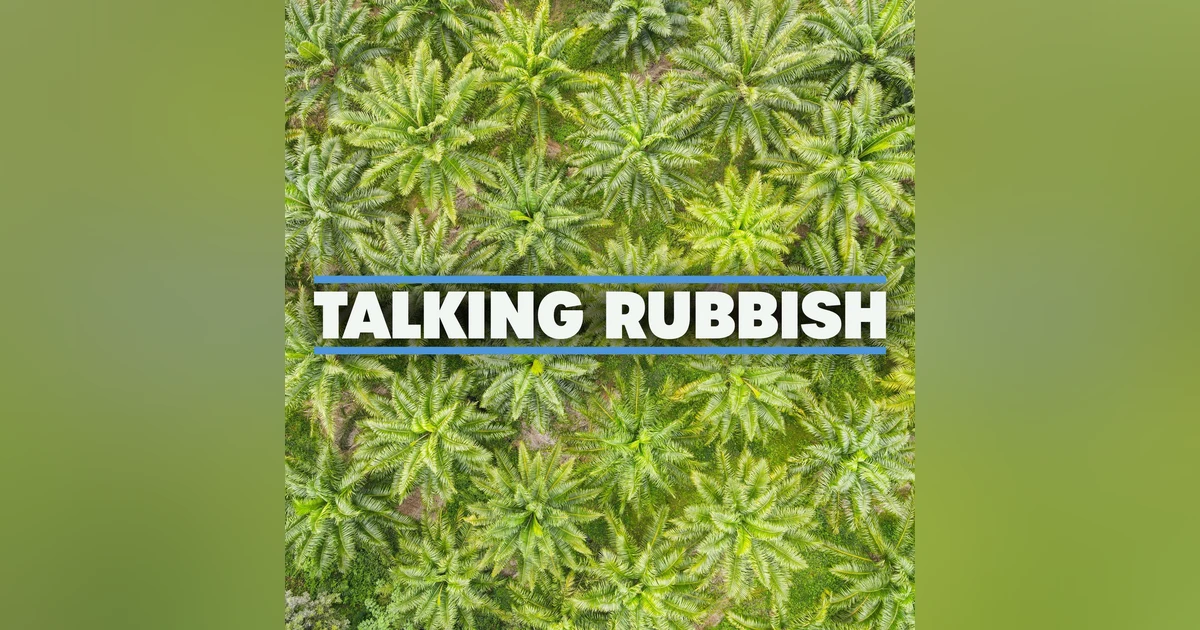
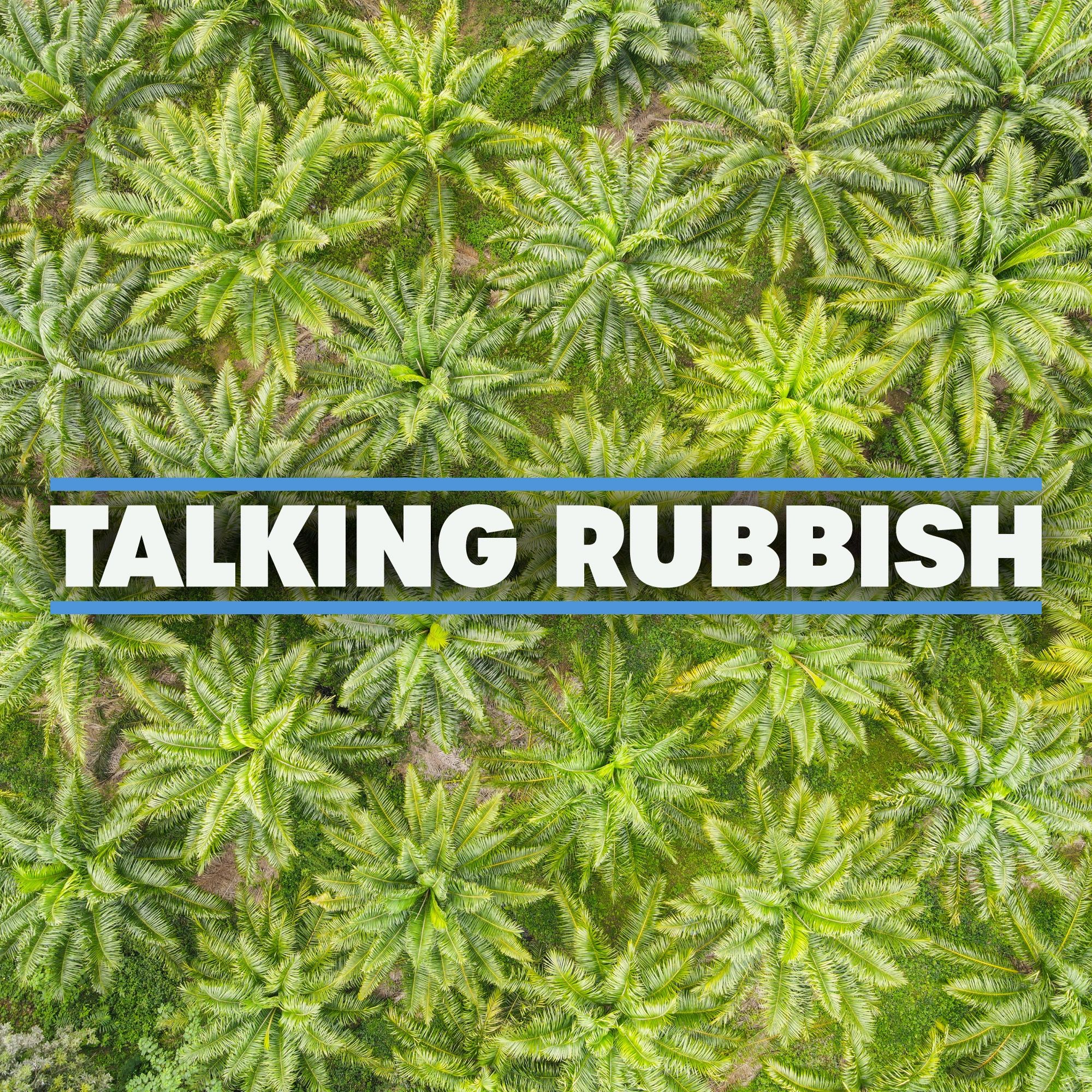
Palm oil has a notoriously bad reputation; mention it, and you’ll likely hear strong criticism, particularly if you manage the social media of a podcast that very recently discussed Cadbury’s Easter egg packaging. But is the story really that simple? In this episode, we take a closer look at palm oil; what’s driving its environmental impact, why it’s so widely used, and what can realistically be done about it. Plus, are plastic air fresheners rubbish or not, why are cardboard cartons going in the plastic bin, and why might a paid tier of Talking Rubbish get us in trouble?

 Apple Podcasts
 Spotify
 YouTube
 Amazon Music
 Castbox
 Podcast Addict
 PocketCasts
 Palm oil has a notoriously bad reputation; mention it, and you’ll likely hear strong criticism, particularly if you manage the social media of a podcast that very recently discussed Cadbury’s Easter egg packaging. But is the story really that simple? In this episode, we take a closer look at palm oil; what’s driving its environmental impact, why it’s so widely used, and what can realistically be done about it. Plus, are plastic air fresheners rubbish or not, why are cardboard cartons going in the plastic bin, and why might a paid tier of Talking Rubbish get us in trouble?
Join hosts James Piper and Robbie Staniforth as they delve into the world of recycling, hopefully having fun along the way. One thing is for sure, they will talk absolute rubbish from start to finish.
Please take a moment to complete the Simpler Recycling tracker
We would love you to join our community on Discord
Special thanks to our sponsor, Ecosurety
To get exclusive videos and clips, follow us on Instagram, TikTok, Threads or Facebook; @rubbishpodcast or YouTube: @talkingrubbishpodcast
Or you can contact James and Robbie with questions or just general rubbish musings using the email address talkingrubbishpodcast@gmail.com or by texting them via WhatsApp on 07356 069 232
Relevant links and reports mentioned in the programme can be found on the Talking Rubbish Linktr.ee
Transcripts and episodes can be found on the Talking Rubbish website
Timestamps:
Is palm oil really that bad? - 02:10
Additions and corrections - 31:22
Rubbish or Not: plastic air fresheners - 38:54
Rubbish News - 42:46
Why are cardboard cartons going in the plastic bin? - 47:29
Residual Rubbish - 50:58
Music licence ID: 6WPY8Q4O2RPFIOTL
Hello, welcome to Talking Rubbish, a weekly podcast delving deep into the world of recycling and discussing the truth behind snappy headlines and one-sided stories. In this episode, we will discuss palm oil. Are plastic air fresheners rubbish or not? And I have a question about why paper cartons are going in the plastic bin. I'm James Pipe, author of the rubbish book, and I'm joined by Robbie Stanley Forth, my far from rubbish friend.
SPEAKER_00Good morning, Robbie. Hey James. How are you today? Yeah, very good. Excited to find out all about palm oil. Not really something I've delved deep into before.
SPEAKER_01Yes, it's gonna be good, I think. It's an interesting topic that people get quite black and white about. You know, palm oil's bad, and there's a lot more to it, as with all the things we cover on Talking Rubbish. And just to give a little behind the scenes, we're a bit warmed up right now, aren't we? Because we've just done 10 minutes of recording for episode 88, which is the episode you guys will have heard last week. And that's because I listened back to it and I just thought, this is our highest chance of being sued. We are I'm making a lot of assumptions about this game. And so this was the people buying undelivered parcels. And when I listened back to it, I was very bold in some of my views, and I just thought, I really, really don't want to be sued. Not at this stage in the game, not just before episode 100. So it's cleaner if you and I just record. And so there's like 10 minutes of that episode, different sections that are slightly softer than the original one. I was thinking, I wonder if we should do like a paid tier of our podcast where you get like the unedited lawsuit edition of Talking Rubbish, the unfiltered James and Robbie. The director's cut, the original. Exactly. So yeah, anytime you hear me go, I think that I think has probably been added in.
SPEAKER_00Well, okay, we're gonna have to try our best not to be too slanderous about palm oil today. Hopefully, we've got no one in the uh crosshairs this week.
SPEAKER_01Today we are talking about palm oil, an ingredient in a huge number of products that we buy. And depending on who you ask, it's either an environmental disaster or a miracle product. It's one of those where it could be either thing, depending on how you look at it. And in episode 86, we discussed Easter egg packaging, and I posted a clip of that on socials. And unfortunately, while I was preparing the clip for social media, I thought, I need some pictures of Easter eggs because it would be nice to put some visuals to this. And obviously, we would just talk about the sizes. So I just went into Sainsbury's and took some pictures of Easter eggs, you know, a small one, a medium-sized one, and a big one. I just happened to have picked Cadbury's. That opened the floodgates to everyone commenting, going, I can't believe you didn't mention palm oil. And I was thinking, well, I didn't, because AJ Lewis, who asked the question, because it was a rubbish question, said, What's the best Easter egg packaging? Not what's the best Easter egg. But of course, when you're trying to get it down to a 30-second social media clip, you don't quite get into that level of detail. And unfortunately, palm oil is found in Cadbury's products in the UK, and as I say, could cause lots of environmental issues. So let's talk about it.
SPEAKER_00Yeah, it's kind of funny to think of this crop as like bad, you know, palm oil derivative, because it's I'm assuming going into this that it's something to do with our management of how we use palm oil that's the problem, rather than it being a bad plant.
SPEAKER_01Yeah, it's like so many things that are they're criticized for environmental reasons. It's generally the fact that it is used so much, and that is where plastic gets a bad rep. It's the fact that it is so prevalent in our society, and we rely on it in lots of ways, that then when you come to the end of life or you come to manufacturing it, there are ways to unpick it and say, well, there's too much of it and we should reduce it. But you always have to ask yourself, what are you going to replace it with? Because there's one of two choices, right? To reducing palm oil or plastic, you buy something that doesn't contain palm oil, or you buy less. And if you buy less, you're always going to be b better environmentally, there's no question. If you buy the same stuff you were always buying, so you buy five Easter eggs because you were you were going to buy five Easter eggs, it's just you've chosen one that doesn't use palm oil, potentially that could be worse. And and that's what we're going to deep dive into today. The WWF, which is the World Wide Fund for Nature, claims that palm oil is used in 50% of products in our supermarket, so packaged products in our supermarket. Um, this is a stat that is widely cited, but like so many stats out there, I don't think it's true. And we're going to talk a little bit about that in a few minutes.
SPEAKER_00I mean, it's incredible. 50% of packaged products in a supermarket, that seems unbelievably high, doesn't it? I mean, I don't really know what it's used for and why it would be in so many products that we consume every day. But I suppose this is the reason why it's such a big topic, though, because it is so prevalent. But 50% does seem really, really high.
SPEAKER_01And it is incredibly useful. I mean, it's used in a lot of toiletries like soaps, things like that. Um, it's used in chocolate, particularly, which is why we came up with the Easter eggs. But wherever you need a vegetable oil, really, and it's got specific properties that make it the most useful vegetable oil for certain applications. It comes from the fruit of oil palm trees, and 78 million tons was used in 2022, a number that, according to a 2016 study, could jump to somewhere between 250 and 500 million tons by 2050. According to studies, a growing commodity. People are making more and more of it and using more and more of it in our products. And that's again down to its usefulness. Now, these trees, the oil palm trees, are native to Africa, but they were brought to Southeast Asia over 100 years ago. And that was just as an ornamental tree crop. That wasn't for any practical reasons.
SPEAKER_00Oh, really?
SPEAKER_01Yeah, and that's why they were brought to Southeast Asia. Now, Indonesia and Malaysia make up 85% of global supply of palm oil. Um, there are 42 other countries that produce it, but 85% is going through Indonesia and Malaysia. And the reason there's 42 countries and not like 200, because it's such a valuable crop, why wouldn't everyone grow it? Is because it needs to grow in tropical climates that are close to the equator.
SPEAKER_00Ah, so it must have come from that central belt in Africa, then, the sort of rainforest regions. I was thinking it might need a drier climate when you first mentioned Africa.
SPEAKER_01Yeah, and that's why deforestation is such an issue, because the deforestation that's happening is typically rainforests. It's the forests that grow in tropical regions rather than temperate regions. It's got other issues as well around labour exploitation. You know, you've got smallhold farms versus big corporations that are buying the palm oil, so you've got all sorts of issues like we have with loads of our products. That's why things like Fair Trade started and why Tony's Chocoloni, we looked at all the issues in the chocolate supply chain. And there is this real economic dependence in Indonesia and Malaysia. Because Indonesia and Malaysia produce 85% of the palm oil, and it's an ingredient that is used in so many products. Indonesia and Malaysia rely on us buying palm oil. The reason it is used in so many things is because it keeps things spreadable, it gives products a longer shelf life, it is odorless, colourless, and can be used at a high temperature for things that are fried. It's basically the ultimate crop. It can do everything. And the reason it's widely used in chocolate is because it is semi-solid at room temperature, so it stops chocolate melting too quickly.
SPEAKER_00Well, funnily enough, I took a complementary chocolate from a local hotel, locally made chocolate. I wasn't going to eat it immediately, put it in my pocket and found it melted like within half an hour very quickly, probably from my body heat or whatever. So perhaps it could have done with a bit of palm oil in it to uh keep it more solid. Although, to be fair, I probably could have just avoided the whole thing by putting it in my bag instead of my pocket, to be honest.
SPEAKER_01I don't think that line is the clip I'm going to use on our social media this week, because I think you will absolutely be destroyed. Can you imagine that? Me putting on social media. Could have done with a bit of palm oil, actually. After the week I've had, you don't need it. You do not need You're saving my bacon there, James. Thank you. I'll leave it in the podcast though. Hope you all enjoyed that line. Um in 2022, Europe was responsible for importing about 10% of palm oil that had been produced. So we are a big, you know, Europe is a big part of this and needs to be very conscious of what it's purchasing. And in other parts of the world and many parts of the world, it is used as a cooking oil. So typically in the UK, we use olive oil as our cooking oil or a vegetable oil. Vegetable oil is rapeseed for us, typically. So those are the two uh crops that we're using in our cooking. We don't use palm oil as a cooking oil. And deforestation, alongside the other issues, the labour issues, transparency issues, deforestation is the big issue because where palm oil plantations are being developed, as I say, is typically rainforest region and they are cutting down natural forests. And rainforest, I mean you could be talking about 300 species of I think tree, 300 species of tree per hectare, and you're replacing it with monoculture plantations. We discussed this a little bit in episode 39, because this is sort of what happens with cardboard and paper, albeit I think at a different scale and in different regions. But paper and cardboard typically requires you to have monoculture forests so that when you chop them down, you know what paper and cardboard you're making at the end, you know it's going to be consistent. That is not a great thing for wildlife and for forestry. We want to be as varied as possible. So cutting down rainforests to make monoculture forests is definitely a big issue. One of the questions I had was, well, why do they cut down forests rather than using empty land? A lot of these places have lots of empty land. And I'm pretty confident this is because actually it maximises profits. If you're deforesting a place, you can sell the timber that you've cut down. So you're getting double profit. You're selling the timber you've cut down, and you've got better soil to plant in because it's already had growth in it, so it's soil that's going to work better. I think it's quite appealing to cut down trees first and then plant your monoculture palm oil palm trees. A lot of this forest is not just rainforest, but it's also peatland. And as we're discussing a proud dog forest discussion, disturbing peat releases the carbon that's stored in it. So again, you're getting all sorts of issues from deforesting to plant oil palm trees.
SPEAKER_00Oh my god. Forestry problems and peatland problems. That sounds like an absolute carbon-releasing nightmare, to be fair.
SPEAKER_01It is definitely not great. And palm oil production has contributed to an estimated 5% of tropical deforestation, and globally it is about 2.3%, according to the European Commission. Those numbers to me actually didn't sound that high. And we're going to come onto that in a second. But I did experience this deforestation and sort of made, I'm going to admit, to made a massive mistake if I'm completely transparent. Ellie and I visited Borneo as part of our travels. I think we were in Malaysian Borneo at the time. We visited a proboscis monkey sanctuary. I didn't really think anything of it. We were in this taxi and the taxi driver said, Oh, I can take you to all the best places, and you've sort of arrived in a city you haven't researched, you go, okay, just take me where you would recommend. It was weird. We like we walked into the sanctuary and we were like the only people there. Hardly anyone there. It was it was super odd. And they said, feeding time, you know, we're feeding the monkeys, and they started feeding them bread. And I thought, this is so weird. Yeah, just bread. Every other place we've been to, every other sanctuary, it's like fruit and you know, natural things. And here they were feeding them bread. It was weird. We had a travel Instagram, and so we wrote up, we said today we visited these three places and we found the sanctuary a little bit odd. And we started getting all these messages from people saying, you do realize that that sanctuary has been set up by people who have been cutting down the trees for palm oil and displacing the monkeys. And instead of going, Oh, we've displaced them, we need to do something about that. Their answer is to build a sanctuary that is not great for the monkeys and charge people to go in and see it. And so it's again that double profit situation. It's like, oh, we're cutting down the trees to make palm oil, and we've now got effectively a zoo where we can keep these monkeys super cheap, we're just gonna feed them bread. And that and I started realizing the reason nobody was there is because I think people had responded to say, do not go and visit this place. You know, and I've always been super conscious of this stuff. Like when I went to Thailand, it's I'm not going to go and see any elephant sanctuaries. You know, I'm always really, really conscious of not seeing these things. And unfortunately, this one slipped through the net because we had this, you know, we just arrived and Miss Driver took us around to these places. But we did update our Instagram post to say, look, we're not deleting this post because we want to be transparent, but we are updating it to say, please don't go and visit this place.
SPEAKER_00Yeah, no, it sounds like there was a mass boycott that you weren't quite made aware of.
SPEAKER_01So, how prevalent is it? Because at the top I mentioned that the WWF have said it's in 50% of packaged products. And I question that stat. And that stat is on their websites, on lots of people's websites, and it originated from what I can tell in 2006, but I can't find where the data's come from. I got there's no source to that information. It just says 50% of the products you buy probably contain palm oil. There was a study that was done in October 2025, which was published by the Institute of Physics that assessed 1,600 products across three stores. They had Sainsbury's in the UK, Albert Hain in the Netherlands, and Woolworths in Australia. They had originally planned to include Walmart in the US, but unfortunately, there was a lack of information on ingredients lists that meant they would not be able to work out whether there was palm oil in the product or not. I'll pause there to let you all read between the lines on that one. We are very fortunate within the EU, you have to label palm oil as what it is. Now, that doesn't mean you label it as palm oil, we'll come on to that in a second, but you can't just write vegetable oil. Just looking at Sainsbury's, because obviously we're based in the UK, so we should look at the UK one, they sampled 340 products and they found palm oil listed in 16% of products. Interestingly, it was far lower, I think, in Australia. It was more like 3% in Australia. It was very, very low. And so when you look at all three supermarkets as an average, palm oil was found in 7.9% of products, and it was sixth on the list of identified vegetable oils. So it was not the number one product.
SPEAKER_00Okay, so other vegetable oils are more prevalent than palm oil.
SPEAKER_01Yes. So uh palm oil was behind maize, rapeseed, soya, sunflower, and cacao. But as I said, there is an issue with naming. So in 2014, the EU required companies to call out palm oil in the ingredient list. So you can't just call it vegetable oil, which I think is what they're doing in the US. I think that's why they couldn't include Walmart. But products derived from palm oil go by many names. I'm just going to give you a couple of examples. So glyceryl, stearate, stearic acid, sodium kernelate, they are all derivatives of the oil palm tree. And so when you take into account the fact that it could be hiding under another name, the study reported that the best estimate was 18%. So up from 7.9%, up to 18%. So at a kind of worst case, taking into account all the different names that palm oil could have. And bear in mind some of that will be things that might not be palm oil, they might be a different plant. It doesn't have to be palm oil. So it's sort of a best guess. 18% of packaged products could contain palm oil. So far lower than the 50% that sort of goes around.
SPEAKER_00It's difficult to know, isn't it? Because if that first figure, that 50% came from 2006 and we can't really find the data of where it came from. And then this study, which is very recent actually, October last year, it's like in that 20 years, has it decreased because of all of the kind of worries about palm oil, certainly over the last decade? Or I mean, it doesn't feel like many companies have actually decreased the amount of palm oil they use. When I've looked at kind of actions and activities that supermarkets are targeting around this and brands, it's mostly around making palm oil sustainably sourced rather than actually targeting dropping their use of palm oil altogether by volume or whatever.
SPEAKER_01Yeah, and where companies have tried to remove palm oil, typically it's been harder than they expected. So we did talk before in that paper episode, uh paperization episode about Iceland, who in 2018 announced they would phase out palm oil in their own brand products and then found it easier to remove their logo than the palm oil. So they said, hey, we have removed it from all our own brand products because these products over here are not our brand products because we've removed our logo. So that was a bit misleading. We discussed that before. You do have um companies like Lush have moved away from palm oil. They've created a whole new soap base, which is made from cocoa butter, coconut oil, castor oil mixed with sodium hydroxide. That was how they got as close as they could to what palm oil does. And that created they make all of that in-house. So um they guarantee that there's no palm oil in their product. So companies have moved away from palm oil, but I agree with you that I think in the main it has increased. And when you look at the quantities that are produced on an annual basis, it goes up every year. I do think that 50% is just an incorrect stat.
SPEAKER_00Yeah, it's maybe where the where it's ending up in products that's the kind of mystery. And you can see it's very hard to track.
SPEAKER_01So so far, I mean, we've made palm oil sound like an absolute environmental villain. But here is the problem. It is far more nuanced than that. And it might actually be the least bad option that we have. And I guess because it is this, I'm going to use quotations, miracle ingredient, in that it performs so many functions so well, so it can be used in so many things, its success ultimately is its downfall. The fact that it is used in so many things. And plastic sort of gets a similar rep where you use it in everything, and then everyone goes, hang on, we can't recycle this because you've used it as a crisp packet or you've used it as chocolate wrapper or whatever. And if we perhaps hadn't used it in every application and we'd used metal or glass instead, and we'd develop new types of plastic that don't use oil and all those kinds of things that we've discussed so many times in the podcast, maybe it would be better. But because there was so much available from the oil industry and there was so much plastic that you could get hold of and make, it just appears everywhere. And palm oil sort of in the same category that if you mention palm oil to people, as I have done or seen on social media, instantly people's reaction is negative. But what it does is grows better than any other crop. It is an unbelievably efficient crop. It produces more oil per land area than any other vegetable oil. And according to the WWF, and this is for me, the most important number of this trash talk is this one palm oil supplies 40% of the world's demand for vegetable oil on six percent of the land that is used to produce vegetable oils. So forty per cent of the vegetable oils are palm, but it uses just six percent of land. To get the same amount of oil from any other crop, you would need something between, depending on what crop it was, four and ten times the amount of land.
SPEAKER_00Yeah, it's that argument about land efficiency versus habitat loss and deforestation, isn't it? It's such a tricky thing to balance.
SPEAKER_01And that's why this is really hard to answer, because what is better? Cutting down one acre of rainforest to plant palm oil in the tropical environment, or planting ten acres of a different crop in a temperate environment where you're not having to chop down rainforest because, hey, you can just grow it in the EU. Um, so like olive oil or something like that, where you can just grow it not in a rainforest, which is better. I do think it's actually impossible to answer that question because there are too many variables. And we don't really know what would happen if you switched out palm oil because it's used in so many products that if we were to replace it with a different vegetable oil, we don't actually know what that would look like because production just continues to increase. It's not like they've gone, we're banning palm oil, so let's try something else. Palm oil is increasing each year and will continue to increase. We have to recognise that millions of livelihoods depend on it. And boycotts, if we choose to boycott palm oil, all we're doing is hurting farmers. You know, we're not hurting the massive corporation that decided to use palm oil. We're affecting people who have developed these plantations and are growing uh oil palm plants. So for me, I am taking my cue here as to which is better from the fact that NGOs, including the WWF, feel that sustainable palm oil is the solution, but not cutting it out. They recognize that if you were to cut palm oil out, you might increase deforestation, you might increase land use. And actually that will help. Other negative effects, and it is much better to create a sustainable palm oil.
SPEAKER_00Oh, really? So that's obviously why brands and companies are talking about their sustainability commitments in terms of the sourcing of their palm oil rather than these like tonnage or percentage reduction in use commitment. So actually shifting to something that's got better provenance, presumably, in terms of where the land that was used to manage it and grow it and also the people involved in the supply chain.
SPEAKER_01And this has probably been around much longer than people appreciate because it was actually set up in 2004. And this is the round table for sustainable palm oil, known as the RSPO. So we'll just call it the RSPO. It's a global non-profit who want to create standards for sustainable palm oil. So they have 6,200 members across 105 countries. Members include people like the producers of palm oil, traders, the brands, the retailers. And what they are doing is setting up a system where they're trying to eliminate corruption, they want to create fair wages, they want to remove deforestation. They do not want deforestation on primary forests. So a lot of people who are signing up to the RSPO are saying, well, we're just going to use existing plantations or land that doesn't have forest on it. And then a producer of palm oil can then get independently audited and they are allowed to then issue certified sustainable palm oil. Most companies, most Western companies, now purchase palm oil that is certified. The challenge is we've got this situation where brands and retailers aren't willing to pay a premium for it, aren't willing to pay more money for it. And so you've got people who are making sustainable palm oil just selling it as unlabeled palm oil to the wider market because actually there's no price differential. So in a way, that's a good thing. There's more sustainable palm oil than perhaps it suggests, but it's also a bit odd.
SPEAKER_00It's a strange mechanism, isn't it? Because it feels like what should happen is there should just be minimum mandatory standards for creating palm oil. And you don't need to have it labelled as sustainable or not type thing. You actually just need to prove in all scenarios, whenever anyone's ever using palm oil in a product, that it's met these minimum standards of obviously, as you mentioned earlier, not having cut down primary forest, paying fair wages, making sure there's no corruption in the production of it.
SPEAKER_01The RSPO have been criticized for having weak enforcement. So they do allow systems like MassBalance. MassBalance in this instance is just going to reduce transparency when you're being audited. It's not going to be as transparent. It's not fully traceable. So it's imperfect, but I think right now it's the best system we have. And I think for me there's something about the scale of the problem. When you have a product like this that is used in so many things with so many companies, so many brands, actually a huge number of people gather round the solution. So it is encouraging to me that the RSPO have 6,000 members. And if we were to move to a different oil that perhaps didn't perform as well, needed more land, you wouldn't have all these people gathering round it to try and fix it because it wasn't such a big problem. And so then that oil would become the big problem. And then you'd have to start again with the solutions. So in a way, I sort of feel it's quite important to gather around the existing problem and try and solve it rather than moving to something that hasn't become a problem yet but will in the future.
SPEAKER_00Yeah, it's quite a pragmatic solution, isn't it? Saying that, look, this is very efficient. There are so many good sides to using this product. We need to just totally limit and hopefully mitigate altogether any of the downsides.
SPEAKER_01Because the RSPO doesn't provide a huge amount of transparency, or or enough transparency, I'm going to say, NGOs helpfully have dug further into the detail. And the WWF have a palm oil scorecard, which I found very helpful, and I'll put it in our link tree because it's definitely worth a read. They basically give companies a score out of 24. In the latest report, they approached 285 companies, but sadly, only 45% actually gave answers to their questions. So only 45% were included in the scorecard. Of the ones that responded, 91% have a commitment in place to source 100% certified palm oil, which is great. 13%, though, don't have a time frame to do this. They've just said they are going to do it. And 59% of them are already doing it.
SPEAKER_00So it's a bit of a mixed bag then, really, isn't it, from what the report shows and they're deep diving into this issue from their survey? It feels like there's definitely still work to be done.
SPEAKER_01Definitely. And it's clear that not every you know, not every company is scoring well here, even if they've responded to the survey. So they get points for how much palm oil they buy that's certified, do they report it all? Are they going beyond their own supply chain? Are they members of RSPO? Do they invest in on-the-ground projects? There's loads and loads of categories to get your 24 points. In the UK, Tesco, Unilever, Asda, and Greg's all scored very well. So that was good to see. Tesco were actually the second best in the whole list behind Audi in Germany, which I wasn't sure if that also covered Audi in the UK. I'm not 100% because there are other Audi's in the list in other countries. So I'm not 100% sure. But Tesco scored 19.75 out of 24. Uh, the lowest UK entry on the list was Fresneri International with a score of 6.85, and these guys make Hagandas. So that's that company, amongst other ice cream brands. Feel quite bad calling them out because loads didn't respond, and I'm not calling them out. So I do feel a bit bad about that. At least these guys responded. But um, but I think if I give the highest in the UK, people will expect me to also give the lowest in the UK. Seeing as we started out in Cadbury's, which is owned by Mondeley, I thought it was worth sharing their scores. So they score 13.53 out of 24. They are very average. Um, but when I dug into this, they actually scored very high on everything except purchasing their palm oil. And this is an example of, as a lay person, the scorecard not working for me, because 100% of their palm oil is certified that they buy. Everything was green in that section. Everything said, yeah, you're doing great. But then they scored really low in this section. So there was no like obvious, and this is why they score low. I suspect, if I had to guess, it's something to do with how they report the palm oil, because if you just do a quick Google for Mondalay and palm oil, you will see lots of examples of deforestation linked to them buying palm oil, and they have committed not to have deforestation. So it feels like there's something in the auditing and transparency where they're saying, look, all the palm oil we buy doesn't cause any deforestation. Again, a quick Google suggests that actually there's people who are tracking palm oil that they're getting that is linked to deforestation. So I found it quite weird though to have a scorecard where everything in a section is green and then at the end it just goes, and you're red. Yeah, it just doesn't make any sense. So to wrap this section up, palm oil is a great example of an almost miracle product. You know, it does so many things, it works so well, and unfortunately, that prevalence and that use is what has meant that it is in so many of our products that we now are able to demonize it. We have to remember that boycotting these things and just saying, I'm not going to buy anything with palm oil has a real-world economic impact on people who make a living growing it. Unfortunately, because of land use, the replacements could be much worse. And so we can't look at it in isolation. We can't look at it as black and white. What we need to do as consumers is look for RSPO certified products to go through things like the scorecard with our favorite suppliers to go, okay, I'm only going to work with the suppliers that score high on the scorecard or brands or retailers that score high on the scorecard. Look for brands that are transparent and support them. If you're going to switch to palm oil free, have an understanding of what oil they're using as a replacement, where they're sourcing that from, what commitments they've made to that being sustainable. Because that's my biggest fear that palm oil right now has this whole certified sustainable system behind it. Yes, it's not perfect, but it does have it. And the other oils that replace palm oil sort of get a free pass because everyone says, well, at least it's not palm oil.
SPEAKER_00Yeah, just by default it must be good, which is probably not the case.
SPEAKER_01I was encouraged delving into this because it's clear that scientists are trying to work on a solution. And as we said earlier, one of the problems with palm oil is it grows in tropical regions, not temperate, and that's why Malaysia and Indonesia are such big producers. Well, scientists are actually trying to take the properties of palm oil, those unique properties, and try and put them in plants that grow in those milder environments. And that feels to me like a possible win-win solution because you're taking a product that people rely on because of its properties and trying to get it to grow in areas that mean you won't have to cut down rainforest. Palm oil is not just a good or bad story. Cutting it out does feel right in the same way that cutting plastic out feels right. But we always urge people on this podcast to look at the alternatives and work out what the impact of those are before just blindly saying something is bad or good. And the real solution isn't avoiding palm oil, it's demanding better palm oil. Additions and corrections. Completely by chance, I've had a very interesting week chatting to people from various solar companies. I went to a sustainability meetup, and there was someone who works for a solar company, and my neighbour also owns a solar company, and both told me the same thing, which was they had a very quiet January and February, and then March has boomed. I guess I'm raising this as an addition because I think it reinforces my view from a couple of episodes ago that people might choose to electrify their life for reasons beyond sustainability. You know, what's happened in March? The Iran wars happened in March. Suddenly everyone wants solar because there's a risk to gas prices and there's a risk to um being reliant on things outside of our country. So suddenly you're looking at the sun and thinking, actually, maybe that's the best source of my energy. Um I did wonder if it might be down to the recent sunshine we've experienced. But they said, look, most people do recognize that you need to install solar before the sun to get the benefit. There's no point booking it in on the hottest day of the year. And uh this was reinforced again because I saw a news article on the BBC where they'd interviewed Greg Jackson, who owns Octopus, and he was saying there'd been a 50% rise in solar panel sales since oil prices had risen, a 30% rise in heat pump sales, and inquiries about EVs were up more than a third. So this reinforces our message that was in episode 86. We believe that rising oil prices and just uncertainty, global uncertainty, will drive some of these more sustainable power sources. And Greg Jackson did say this is unlikely to be a coincidence as orders are normally steady month on month. So unlikely just to be because we've had a bit of sunshine. On episode 86, which was our plastic detox episode, where we talked about the Netflix plastic detox documentary, where quite a few people message us. We have lots of influencers who are in the space, work for brands and retailers, are in the space of material testing, and we have lots of influencers who are in the kind of alternative packaging space who say actually plastic bad and we shouldn't be adding chemicals to it. As always, the truth is probably somewhere in the middle, but I thought it would be quite interesting just to share the two sides, because both happened in sort of one day. So we had Fox on Discord who said they wanted to be clear that the amount of testing that is expected from brand owners on the food safety of packaging is huge. And they wanted to share, look, I have to do lots of it, or I had to do lots of it in my past. So there is a significant amount of migration testing to show that while a number of dangerous chemicals are present in various types of packaging, the possibility of these transferring into the product at a level where it would be anywhere near the limits for safety are incredibly low. And this is something we talk about on this podcast all the time: exposure and risk. It's like air pollution. You know, we accept a level of risk in our air pollution, but it needs to be below certain levels. We expect that of our packaging as well. And Fox had spent a lot of time testing food contact materials to show that under a number of extreme scenarios, all of the packaging for most reputable companies is well below any safety limits that have been set.
SPEAKER_00Well, that's pretty reassuring to hear.
SPEAKER_01Yes. But then we had Pierre email us from Knoppla, always helpful, and I really appreciated his email, to say that actually some of the things we missed that are possibly quite interesting for us to look into. And I'm not sure what Fox would say to these. I mean, there's almost this like debate between the two that's worth having because it's it's interesting. Pierre was talking about the fact that the current testing for food contact chemicals just addresses genotoxicity. So whether something damages the DNA. But researchers at the Food Packaging Forum have looked at a better toxicity framework. So they call it the six clusters of disease, I think. So cancer, cardiovascular disease, neurological disorders, metabolic and endocrine disease, immune disorders and reproductive disorders. So they're saying actually there's not enough testing into all the things that packaging could harm with. There's a they're looking at one thing, which is does it damage the DNA? And actually, there's loads of things that could be affected by our packaging and by the chemicals we use, and we need better testing. There's that argument that Fox is making, which is, I did lots of testing while I worked for a brand, and we passed and there was no issues. And then this question Pierre's asking, which is, are the tests good enough? Are the questions that are being asked good enough?
SPEAKER_00Yeah, and it's as the science into human health just gets better, isn't it? You can start seeing how they would expand the testing to look at more areas where there might potentially be harmful effects.
SPEAKER_01Pierre also gave me a view on like cocktail effects. Chemicals in isolation might not have an effect on us. But when you mix a load of chemicals together, they have a different effect. So if you're doing tests on does this phthalate harm at this level, it might say no. You might do the test and it might say no. But if you combined it with BPA or you combined it with a different chemical and you found that actually those two things did cause harm, well, that's something you can't really test for, because how can you test all the variants, all the variability that exists in that? It gets out of control very quickly. And so there is this question about how you test mixes of chemicals of different chemicals and whether they have a bigger issue. So just some really nice builds on our plastic detox episode. And to be honest, it has made me feel that we need to get into this. We need to talk more about the exposure and the emerging science around how chemicals could be impacting us. But thank you to both Fox on Discord for providing your experience and to Pierre on email for providing yours. We'd like to take a moment to thank our sponsor, EcoSurety, who are on a mission to rid the world of unnecessary packaging. They help brands navigate the tricky world of extended producer responsibility, but that is not all. They also collaborate on some incredible recycling projects and consumer awareness campaigns for those tough to recycle materials. If you're an organization looking to make smarter packaging choices, check them out at ecosurety.com. Best thing you can do to help our podcast to grow is to tell your friends and family about it. And you could also leave a review. And if you do that, you could be Roll Beast Review of the Week.
SPEAKER_00And this one, I must say, is extremely pun dense. There are so many good puns in this. I'm very much looking forward to reading it out. So thank you, Jennifer Bridge, who gave us a five-star review on Apple. Absolutely rubbish in the best possible way. The hosts have an absolute rubbish heap of charisma. Their chemistry is never trashy, and they refuse to let the conversation go stale. Some might think a podcast called Talking Rubbish would be full of wasted potential. But honestly, this show is pure gold. The kind you find at the bottom of the sorting facility. The discussions are so engaging, I've started listening on my commute, my lunch break, and yes, while taking the bins out. The production quality is spotless, the topics are meaty, the banter is sharp, and there's zero residual waste in the editing. Every minute counts. If you haven't managed to subscribe yet, it's anything but a load of rubbish. Well, technically it is a lot of rubbish, and that's exactly why it's brilliant. 10 out of 10.
SPEAKER_01It's a great review. Thank you so much, Jennifer. You can follow us at rubbishpodcast, you can email talkingrubbishpodcast at gmail.com or you can WhatsApp us. Also join our Discord, it's the easiest way to engage with us and listeners of the show. The link to all of those things is in the show notes. A few weeks ago we discussed glass plug-in air fresheners. I believe that was episode 86. And that got me thinking, what about the non-electrical plastic ones? Robbie, do you know what I'm talking about here?
SPEAKER_00Yeah, the the little sort of plastic thing with then a like a vent on it and something behind it, like generally a a ball or something that's giving off the scent. Is that it?
SPEAKER_01Yeah, so the one I bought, it's like for breeze, and it's a it looks a bit like a fan, you know, as you say, like a plastic oval with air vents on it. Inside is a packet um with with liquid in, and then at the back is a little lever that you push, and it sort of presses up against the packet and releases the scent. So that's how that's how it works. Robbie, rubbish or not?
SPEAKER_00Oh, I'm gonna say rubbish. It's a mix of loads of different types of things, isn't it? This packaged pouch with liquids in, although maybe obviously the liquid will hopefully all be gone by the time you dispose of it. Although, I mean the hard plastic is probably a type of hard plastic that can be recycled, but I think because you'd have to disassemble it and rip it apart, that's probably a bit too much to ask of the average person, so therefore this product is rubbish.
SPEAKER_01Yeah, if you'd asked me with no research, I would have guessed that you could recycle it because the packet inside it is just a small part of the product and it's quite hard plastic on the outside. And I, to be honest, thought the packet on the inside might be removable. I've never bought these before. So I thought you could just open the case, take out the packet on the inside, but they don't really want you doing that because if you get the liquid everywhere, I mean you're gonna stink for weeks. So I don't think I think they want it all enclosed. And so I did a bit of digging and I found on the Fabriz listing on Amazon for this product, the team from Fabriz had actually answered an FAQ where someone had said, is this recyclable? And they said the Fabriz bathroom air freshener first cannot be refilled. And although the packaging is recyclable, the device itself currently is not, as it would have to be disassembled, and we do not recommend that. So exactly what you thought. So I bought one and I wanted to see how hard it would be to disassemble. So it's a hard outer plastic with a packet of liquid inside, as you say. You can see the packet, you know, it's sort of like it the liquid is part of the thing you see. I could not get this thing apart. I had to get a screwdriver to pry it open, but I did. I did manage to do it with a screwdriver. Um, I can't tell what the plastic at the hard outer shell is made from. I think if you really wanted to, you could pry it open with a screwdriver, take out the packet, and recycle the outer packaging, uh the outer product. I can't see why you couldn't do that. I don't entirely know what plastic it is. If it was like a hard plastic, like a toy like ABS, then obviously you couldn't. But um, I'm not entirely sure to be honest. So I think I agree with you that this is just rubbish. If we if you have to take a screwdriver to it, and we don't even know what plastic it is, unfortunately, I'm gonna class it as rubbish. Now in America, there is actually a Fabriz terror cycle program. So if you're listening from America, you do have a route to recycling. But from what I can see, there is nothing available in the UK.
SPEAKER_00And I think this is definitely one of those products where some sort of a shift from a single-use product to a reusable alternative that you might pour the liquid in. It seems like the most logical thing to be doing. Or even if you've got a nice lavender bush, just trim the lavender bush and make yourself a little posy of drying lavender and you've already got your air freshener.
SPEAKER_01Oh, you could tell you've moved house. Where are you living? You've got a lavender bush in your garden. I need to come round. You would not have said that in your old house. Rubbish news. My news this week is that FeverTree are challenging the Environment Agency on their EPR bill, believing they should not have to pay a portion of it. They basically are saying that glass bottles sold in pubs and restaurants should be classed as non-household packaging. And they feel this is in line with the UK government's position in relation to other packaging regulations. Robbie, just give us a quick steer on non-household packaging and why this might be a problem.
SPEAKER_00Yeah, but it's a bit of a misinoma, this non-household packaging. It's meant to be for things like uh pallets and shrink wrap and outer cardboard boxes that would never end up finding it into the average person's home. But obviously, when you talk about household packaging, some of things do end up in your home. Some of them don't. They end up in these pubs and restaurants. So glass bottles of tonic, for example, may or may not end up in your bin at home, depending on where you bought it, whether you bought it down in the supermarket and took it home to have a gin and tonic, or whether you're in a pub ordering it. And I think really what they're saying here is that there needs to be a better definition. I'm not really sure where else they've seen a different position. From the government in other packaging regulations. So I'm not sure where that came from.
SPEAKER_01It's a really interesting point, this, because basically they're contesting £2.8 million, which, as I say, will be the portion of their EPR bill linked to pubs and restaurants. The market share piece is where this gets interesting because their profits before tax were basically 30 million pounds. So it's this philosophical question of should 10% of your profit fund the end of life of your product? And what FivaTree are basically saying is, yeah, but we'll we're willing to fund our portion of the council's costs, because that's what EPR is meant to do. And pubs and restaurants don't come into the council costs. They are completely separate. They are uh and we know that they won't enter the council waste stream because that bottle is not given to the public to take home with them. It's given to be consumed in the pub or restaurant, and then they will deal with it. It's quite it's a really, really interesting point because obviously if they win this and they agree that actually if you sell in pubs and restaurants, it's not household packaging. It's going to increase everyone else's market share. So if you have a bottle company that makes a soft drink, for example, a glass bottle company making a soft drink, they will suddenly have a much higher EPR bill because the companies that are in pubs and restaurants or sell more in pubs and restaurants because they're making something that goes with alcohol, they're going to have a reduced bill. And it's going to be really interesting to see where this lands and see what is decided. I think it's quite difficult to contest your existing bill because the regulations are quite clear. And I'm saying this not as a lawyer, I'm not giving advice. I'm just saying the regulations I think are quite clear on restaurants and pubs, but their argument is, but this isn't in the spirit of the regulations, literally. So um, so let's let's focus on getting those redefined. So it'd be interesting to see how this lands.
SPEAKER_00Yeah, I'm sure that 2.8 million will be just the tonic for them.
SPEAKER_01Oh, very, very nice.
SPEAKER_00So, my news, I'm heading to southern Africa in the next couple of weeks. So I thought I'd drop some international news uh from that part of the world. Actually, the article was forwarded to me by my dad. So at 42 years old, I'm still getting my dad to help me with my homework. Um, this comes from Bathurst, which is Eastern Cape, so that's in South Africa. It's a company called Leafline, and what they're doing is using pineapple leaves to create reusable biodegradable sanitary products, which is really interesting stuff. Why is this news? Well, they've been supported by a government program called the Global Export Passport Program to try and expand internationally. So they're creating these toxin-free adult and baby nappies. They're going to move into uh sanitary products too, and it's made from these KN pineapple leaves, which apparently is a stronger fibre than cotton, which I was reading and found pretty amazing. We all know how often cotton's used. This is great to see a product innovation following on from our episode 21, which we talked about how sustainable is having a baby, and nappies definitely came up in that one. And we talked about single-use products there. These are still some of them are single-use, but some of them are reusable ones that are washable, and you're basically using a pineapple leaves that would usually just be going to waste uh for a great product.
SPEAKER_01You were asking me this question over WhatsApp, I think, or you were mentioning over WhatsApp, give for us to cover, um, which is about paper cartons. So this is like TetraPak, you know, your juice cartons, those kind of things. They look like cardboard on the outside. When you look through the government guidance on simpler recycling, the government is recommending that they go in the plastic recycling bin. And I was listening back to some of our old episodes, obviously preparing talking rubbish recycle content, which has meant I've had to listen back to our old episodes. And on the one where we talked about Pringles tubes, we mentioned composite packaging and how this would help you decide what bin something goes in. So you you look for the predominant material. So if you take a crisp packet, for example, it's aluminium-lined plastic, but plastic is what you see and feel, so it goes in the plastic bin. Uh that well, it goes back to supermarkets, flexible bin. So you're looking for the predominant material. If it looks and feels like cardboard, put it in the cardboard bin. Ignore the liners. But cartons appear to be doing the exact opposite to what we've always thought you should do. And it feels very weird. As someone who has recycled cartons for years in the cardboard bin, if Bristol started saying, Can you put them in the plastic bin, I would find that very odd. Robbie, why are the government recommending the paper cartons, cartons with paper on the outside, go in the plastic bin?
SPEAKER_00Yeah, well, when I dug into this, I thought there might be lots of split views and some people wanting it in the paper bin and some people wanting it in the plastic bin. But it seems like industry is fairly universally coordinated in agreeing with the government that these cartons should go in the plastic bin. And the reason for that is because it makes it much easier to sort it from the plastic. You can really easily identify these containers. Plant milk's very popular at the moment. They're often sold in these like liquid carton boards. So basically, it's that exact reason that it can be easily sorted away from the plastic and that it's very different to the plastic, is the reason for it. Um, paper and card industries in general want everything separate for their stream so that they've got a real clean material of fibers to go in their recycling plants. They don't want contamination from food and drink residues, they don't want that bit of posata in the bottom of your liquid carton board packaging that makes things less recyclable. Likewise, it does have layers, as you say, and there is some plastic in it, but that's not the reason it's going in the plastic bin, just so that the influencers understand it. It's because the carton looks very different from plastic, and when it goes along a sorting line, um, you can have containers sorting the plastic bottles, tubs, trays, etc., from the cartons.
SPEAKER_01And so this will take a while to flow through to every council, just these things always do. So this is just a reminder to check your local council. Bristol still asks for cartons to go in the cardboard bin, because that's how it's always been, and they're not changing that at this point. And what they do, I think, or certainly when I last visited Bristol, they were manually sorting out the cartons from the cardboard stream. I suspect that's still the case. You need to check whether your council has updated their guidance to follow what the government would quite like to happen, which is this consistency. But I think it's going to take some time before that flows to every council. Residual rubbish. This is something that has happened to us this week that has made us feel like an emoji. This week I noticed the appearance of Coca-Cola superfan cans.
SPEAKER_00Okay, what are these?
SPEAKER_01Superfan cans. It's to do with football. So, you know, not my wheelhouse, but very much targeted at football fans, specifically the Premier League, based on the prizes that you can win within these cans.
SPEAKER_00Okay.
SPEAKER_01But basically, they're larger cans, they're 500 mil. Coca-Cola, Coke Zero, and Diet Coke cans. The reason it made me laugh, the reason it I had this laughing emoji, is because I looked at it and I thought, that is way too much drink for one person's drink. And then I thought, but I would happily buy a plastic PET bottle with 500ml in it. Why does it feel so weird as a can? And I've decided, I've been pondering this all week, I've decided it's because I think of 500ml cans as very much a lager beer drink. That's their standard, you know. Yep. Your lager drink is 500mm, your soft drink is 330 mil. That's the way the world works. And I guess it's just an observation. Uh how changing packaging, and it may just be me that feels this, I don't know. But changing packaging has really thrown me looking at these 500mm cans. I can't bring myself to get one because I just think it's way too much drink. But I would, on a very hot day where I was thirsty, buy a 500mm bottle without thinking about it.
SPEAKER_00Yeah, absolutely. And you would buy the 500mm can on a very hot day too, if you're relaxing in the sun with a beer. But it you just wouldn't with a coke. It's so strange.
SPEAKER_01It's very, very weird. Yeah. This is the call out. If anyone else feels like this, let us know in the comments or email us or message us, however, you want to do it. I am intrigued to know whether I'm just the oddball that feels this or whether other people have seen these kinds of coke and gone. God, that's a lot of coke.
SPEAKER_00Well, I've not seen it myself, but I'm definitely with you, James. So it's a hundred percent of talking rubbish co-hosts think this is strange.
SPEAKER_01I'll take you to Tesco straight after recording, I'll show you.
SPEAKER_00So my emotion this week was definitely relieved and sort of grateful, relieved and grateful. So maybe like the smiling with the bead of sweat and the clasped hands together, sort of praying, thankfully. Um, because it was a big week in the world of packaging this last week. All in all, government are showing that they're still super engaged on the topic of packaging, recycling, and making it better, not least of all because they're having to go through the legal processes with fever tree, but for other reasons besides. The producer responsibility organization, so this is like the all of the companies, the producers of packaging gathering together to create this PRO has finally been appointed. So this is like great news, and I'm really hoping that it will help coordinate industry who are paying these extended producer responsibility fees to actually help in assisting with making a much better system for packaging recycling in the UK, particularly around reprocessing plants and things and actually truly recycling stuff, not just financing collections of recycling. And linked to that, the government also this week released the packaging recycling note consultation, which again is another mechanism we've talked about in previous episodes where brands can directly support reprocessing and recycling those people, those companies who are pressing the button on the machine and granulating the plastics or smelting down, melting down, turning into colour, the glass, uh smelting all the aluminium and making those aluminium ingots. And so this is really exciting news that the government have um released more information and are actually trying to push further and further and not just saying, oh, that's old news. We did that five years ago. Now we're just gonna let the system settle.
SPEAKER_01As always, thank you all for listening. Thank you for the reviews and engagement. We absolutely love getting the opportunity to do this podcast each week. Join our Discord, follow us on social media at rubbishpodcast. You can email talkingrubbishpodcast at gmail.com or you can WhatsApp us, and everything we've discussed today can also be found on our link tree. The details of all of those things can be found in our show notes. There is nothing left for me to say other than see you next binding. Bye.
SPEAKER_00Bye.