93. The death of the barcode - a win for sustainability?
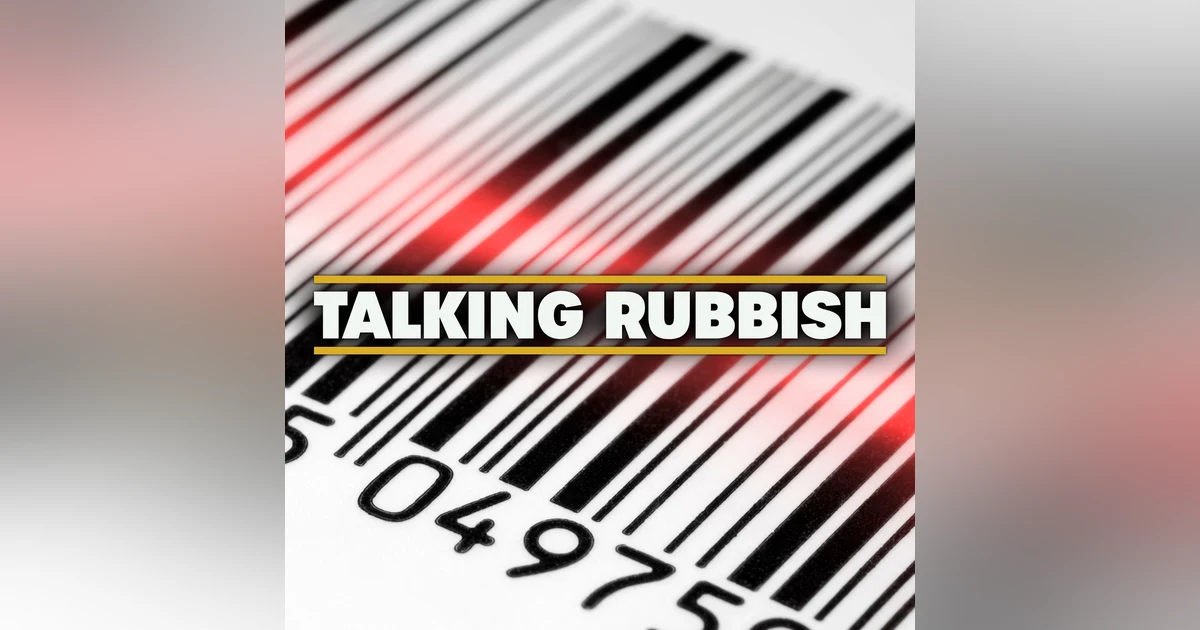
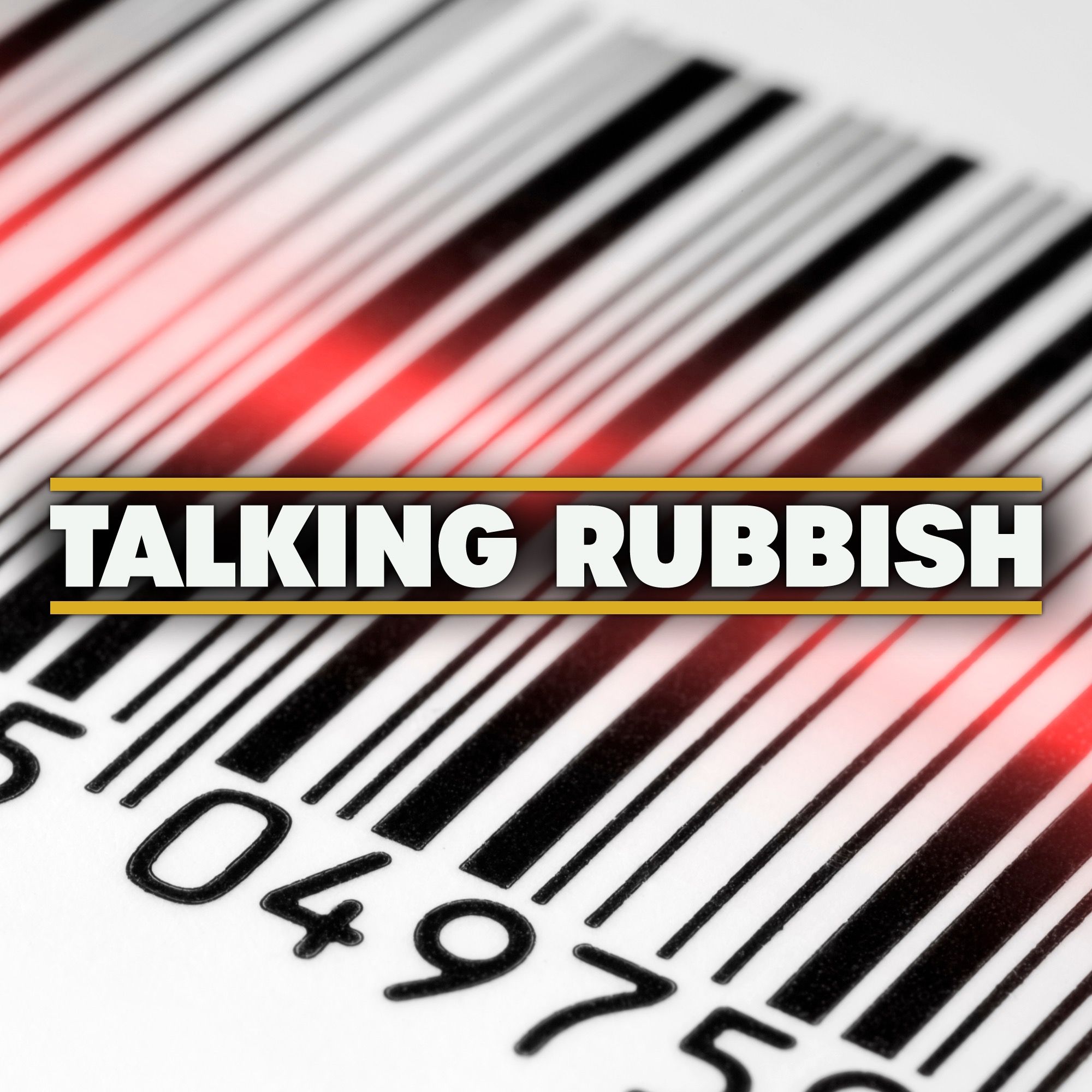
Are you curious about the future of barcodes and how they might impact recycling? In our latest episode, we delve into the fascinating transition from traditional barcodes to QR codes and what this means for sustainability. Join us as we also discuss the fate of cooking oil and celebrate the legacy of David Attenborough. Tune in now to learn how these changes could influence your everyday choices and contribute to a greener future!

 Apple Podcasts
 Spotify
 YouTube
 Amazon Music
 Castbox
 Podcast Addict
 PocketCasts
 A quiet revolution is underway in our supermarkets, the familiar barcode is being replaced by QR codes. But this isn’t just a tech upgrade. These next-generation codes could transform how we shop, unlocking detailed product information, improving recycling, and even helping to reduce food waste. As every scan reveals more data, this shift raises a bigger question: are we ready for a future where the things we buy know more about us than ever before? Plus, is cooking oil rubbish or not, will EU rules mean single use air fresheners are banned, and why is Robbie taking inspiration from Kamikatsu?
Join hosts James Piper and Robbie Staniforth as they delve into the world of recycling, hopefully having fun along the way. One thing is for sure, they will talk absolute rubbish from start to finish.
We would like to have an evening Talking Rubbish to celebrate our 100th episode. It will be in central Bristol on the evening of the 25th June, to let us know if you can make it, book your place on Eventbrite
Please take a moment to complete the Simpler Recycling tracker
We would love you to join our community on Discord
Special thanks to our sponsor, Ecosurety
To get exclusive videos and clips, follow us on Instagram, TikTok, Threads or Facebook; @rubbishpodcast or YouTube: @talkingrubbishpodcast
Or you can contact James and Robbie with questions or just general rubbish musings using the email address talkingrubbishpodcast@gmail.com or by texting them via WhatsApp on 07356 069 232
Relevant links and reports mentioned in the programme can be found on the Talking Rubbish Linktr.ee
Transcripts and episodes can be found on the Talking Rubbish website
Timestamps:
Is this the end of the barcode? - 03:21
Additions and corrections - 30:07
Rubbish or Not: cooking oil - 35:54
Rubbish News - 41:20
Will single use air fresheners be banned under PPWR? - 51:12
Residual Rubbish - 53:54
Music licence ID: 6WPY8Q4O2RPFIOTL
James Piper: Hello. Welcome to Talking Rubbish, our weekly podcast delving deep into the world of recycling and discussing the truth behind snappy headlines and one sided storeys. In this episode we will discuss the possible end of the humble barcode. Is cooking oil rubbish or not? And I have a question about what packaging might disappear under EU regulations. I'm James Piper, author of the Rubbish Book, and I'm joined by Robbie Staniforth, my far from rubbish friend. Good morning, Robbie.
Robbie Staniforth: Hey, James.
James Piper: As this episode goes out, I think it's the 7th of May if I've got my calculations right. And that means tomorrow is Sir David Attenborough's birthday.
Robbie Staniforth: Ah, Happy birthday, Sir David.
James Piper: BBC Bristol rang me up yesterday and so the BBC are doing this thing. It's David Attenborough's 100th birthday. We're getting people.
Robbie Staniforth: Oh, this is his hundredth birthday.
James Piper: Oh, this is the big. Yeah.
Robbie Staniforth: Oh, I sort of wondered why you were mentioning someone's birthday. Okay, this is the big one. Oh, great.
James Piper: I think the whole BBC is doing this thing. Different stations are looking to interview people who David Attenborough's been an influence on their life. And the lady said, I seem to remember you saying he was a big influence on your life. I don't, I don't remember saying that. But yes, it is true. So I'm going to BBC Bristol tomorrow to the studio to do like a little happy birthday. I'll wear a party hat, I'll bring some streamers and I'll celebrate. You know, it's great. I'll just quickly explain why David Attenborough means so much to me because he genuinely does. When I was a kid, I just, I could not stop watching his programmes. Planet Earth was like the big one for me. I'll always have this memory where some divers are in a cave and they go from like salt water to fresh water and it looks like they're flying. Cause the water has a line, you know, where the salt and fresh water meet. And so they go up from this kind of, I assume from the saltwater into the freshwater. I can't remember which way around it is. And it just looks like they're just flying into the air. And that I have, that is such an etched in memory from planet Earth. I then with my money that I was earning from my jobs at the time, which ironically involved a lot of packaging, I was packaging up Reader's Digests was my job at the time. I saved up my money to buy David Attenborough DVDs, to buy lots of DVDs, but I specifically wanted the Life collection, which was like a collection of all his old DVDs, and it was really expensive. I'm sure it was like £100 or something.
Robbie Staniforth: Hundreds of pounds. Yeah, I bet it was.
James Piper: This is when I was younger. It was really expensive. I saved up and bought this thing and I decided through all this that I was going to study biology at university. And then on my graduation, there were rumours swirling about an honorary graduate who might attend the ceremony. So at my graduation ceremony, there he was. David Attenborough. No. Yeah.
Robbie Staniforth: Really?
James Piper: Yeah.
Robbie Staniforth: Oh, you never told me that before.
James Piper: Isn't that amazing? I think it was the 11th of July 2008. I think that's the date. Yeah. I got up on stage to get my certificate and literally was probably two feet away from the guy who had inspired me to go to university, so.
Robbie Staniforth: Oh, that's so lucky. Did you get a chance to tell him?
James Piper: I. No, I don't remember. There are times where I don't actually think this happened. You know, like how you've got a memory where you're like, it definitely happened. Occasionally I have to ring my mum and go, he was definitely there, wasn't he? A very special moment. It's a tiny, tiny part in David Attenborough's life, but to me, so meaningful. So, happy birthday. Trash talk. Today we're asking the question, is this the end of the barcode? And I promise you, this is way more interesting than it sounds.
Robbie Staniforth: It's just a little sort of zebra print on the side of packaging, isn't it? What's interesting about it?
James Piper: Oh, Robbie, Robbie, Robbie, Robbie. Get ready to have your mind blown. So, yes, every item we buy in the store depends on this tiny invention. Without it, supermarkets would collapse. One thing that I think surprises people, and it's obvious when you think about it, but we don't ever talk about it, is just like fingerprints or snowflakes. No two barcodes are the same around the world. So every single product has a unique barcode number. It has to be like that because imagine if your foot gloves and your socks had the same barcode number on it would bring down the whole retail industry. Right? You've got to have.
Robbie Staniforth: You wouldn't know what to do with yourself.
James Piper: Exactly. You've got to have it so that when you scan that barcode, the system, the global system, knows that this is the product that we assigned that barcode number to. And I think it's fair to say we see them every day, but I think most of us probably just ignore them. Is that right?
Robbie Staniforth: Yeah, definitely. The only time I pay attention to the barcodes is sometimes where at the top of them there's a bit of art. It like gets extended into the product. Have you ever seen these? I think it's either Lidl or Aldi. They kind of make them look like landscape of trees by extending out above where the kind of the lines are. I don't know whether I'm explaining that.
James Piper: That's exactly it. And do you have a. Have you got any specific ones? Because I've actually got. There was a book. See, I'm. I'm very prepared. There was a board.
Robbie Staniforth: Oh, God, you're a step ahead.
James Piper: A Bored Panda webpage with the top. You ready for this? 192 barcodes. Can you imagine? It's like sometimes you go to a website, it says top 10 or top 5. Top 192 barcodes. Do you look through all of them? I just went to the top five. Do you want the top five? Go on then. Okay. So they had a spaghetti visual. So spaghetti that was turning into the barcode. So you had like strands of spaghetti on a children's book. They had like rain coming out of a cloud and the rain formed the barcode. There was shaving cream where the razor is chopping off the top of the barcode. So like little stubbly bits are coming off it.
Robbie Staniforth: Oh, cool.
James Piper: There was an accordion, the centre of an accordion and tree roots. Those were the top five barcode visuals.
Robbie Staniforth: Okay. I think it's the tree roots. That must be what's implanted in my mind then.
James Piper: So the barcode was patented in 1952. It first appeared on a product in Ohio in 1975. 4. This is a great pub quiz question. It's such a great pub quiz question. But I learned it many years ago and have never forgotten it because I know one day it's going to come up. Robbie, what was that first product in Ohio in 1974? What was the first product that had a barcode on it?
Robbie Staniforth: Gosh, this is like bar of soap, maybe.
James Piper: Oh, nice. Well, because of the barcode, you could have called it Barcode of Soap.
Robbie Staniforth: I'm always thinking about a pun.
James Piper: It was not a barcode of soap. It was Wrigley's Chewing Gum. A pack of Wrigley's Chewing Gum. Five years later it reached the uk. Do you want to guess what product it first came to in the uk?
Robbie Staniforth: A breath mint. That's the uk. That's the upper class UK version of chewing gum.
James Piper: I think chewing gum is already the upper Class version of bubble gum, isn't it? Like, I would have thought America was bubble gum. We were chewing them. I'll give you a clue that it's very British tea. It was a packet of tea bags. Correct.
Robbie Staniforth: Oh, really?
James Piper: Yes. And the barcode didn't just speed up the tills, it created this modern supermarket. You had faster checkout lines, stock control, you know, inventories of products. You knew how much was in a store at any time because essentially you were scanning it out, which is very different to someone manually tapping it in that you would have done before it allowed for the birth of the modern supermarket, you know, which ultimately created a lot of our consumerism and increase in packaging that we experienced today. So there is an argument to say that everything we've talked about in the podcast stems from the barcode. It created things like loyalty schemes, club cards and Nectar and all those things. They're all driven by barcodes because they need to know what you've bought. How do they actually work? Do you know how they work?
Robbie Staniforth: I. I don't know. Why? It's got numbers underneath it. Is it reading those numbers somehow? You mentioned that they're all unique. I thought it was just like sort of Morse code or something with black and white lines for dots and dashes.
James Piper: It's not Morse code, but the concept is Morse code. You are correct. There is a 13 digit number beneath the barcode and the black and white lines just recreate that 13 digit number. So if you learn the patterns for all the numbers, you could read a barcode. Oh, okay.
Robbie Staniforth: So a couple of dashes and white and black dashes of different thicknesses would make up a single letter.
James Piper: Would make up a number.
Robbie Staniforth: A number.
James Piper: Yeah, that's right. And okay, there we go. There was this myth that perpetuated that the first three numbers of a barcode tell you which country the product is from. And this actually comes from a period of time, I should say. Sorry. This is true. The first three numbers of a barcode do tell you a country, particularly in the. In the eu. But it's not where the product is from, it's where the barcode number was assigned. And it stems from a time where US consumers were really worried about products coming from China. Ironically, this was due to chemicals in the pack in the product. So let's reflect back on the plastic detox if we want to get America's current view on chemicals in their products. But at the time they were worried about products coming from China. And so people said Barcodes that start 690 to 695 are products that come from China. And it is true that China's country code is something between 690 and 695, but it is not where the product is manufactured, it is where the barcode is assigned. So I went and had a look at some of the board games I had in my house and they all had three digit codes at the start that said they came from the US or uk. All of them said Made in China at the bottom. The US were attempting to use these three digit codes at the start, the barcodes, to avoid certain products. And that just isn't what that barcode is telling you. It's telling you where the barcode was assigned, which I think more likely than not is going to be the country that it's sold in. Because you're basically going, I've made this product in China, bring it into the uk, assign me a barcode for the
Robbie Staniforth: UK and where the packaging is designed, probably. And you're assigning the barcode to comply with labelling regulations in the country it's being sold in.
James Piper: Exactly, yeah. But you can look up online the country codes and it is true that barcode certainly sold in the eu. There's a slightly different system in the US where they may or may not have those country codes. But certainly if you're in the UK right now, most products you buy the barcode, the first three digits will be the country code. There is a interesting fact that comes from this, that all books Barcodes start with a 978.
Robbie Staniforth: Wow, okay.
James Piper: Doesn't matter where you buy it, doesn't matter where in the world grab a book. The BarCode will start 978 if it uses the EAN system, which is the
Robbie Staniforth: E. Why is that then?
James Piper: Because books, particularly when they were assigning books barcodes, they were like, well, we've already got the ISBN number, we don't need a barcode. And so they said, well, what we'll do is we'll take the ISBN number and add the country code to the front. Essentially they didn't want to go and get barcode numbers. They already had a unique identifier, the ISBN number. They didn't want to create a new number. But you said, well, we don't actually need lots of different countries, we'll just have a single country. We'll call it. Well, what they ended up calling it was Bookland.
Robbie Staniforth: No ghetto.
James Piper: If you look up online now, the country codes for barcodes 978 is the country code for Bookland. There is actually also a 979, I think, for sheet music. But 978 is a country code for a fictitious country called Bookland. And I promise you, every book on your bookshelf now, if you go and look at them, the barcode will start with a 9, 7, 8, including my book. I went and checked last night, my book starts with a 978.
Robbie Staniforth: Oh, well, there we go. Bookland. What a great place. I told you.
James Piper: This is interesting. Are you interested? How are you feeling so far?
Robbie Staniforth: Can I just say, I'm not going to go online and look at all of the country codes, but I am definitely going to go and look at these top 192 barcodes, the artwork for sure.
James Piper: I'll put them in our link tree and I guarantee there are influencers right now who are at their bookshelves. 978. 978. He's right, it's 978. So worldwide barcode numbers are actually issued by an organisation called GS1. And GS1 is a neutral, not for profit, established to make sure that each barcode that is issued is completely unique. So obviously, if you've decided worldwide barcodes need to be unique, then you need an organisation to assign you a barcode number. Right. And to hold it in their system. So that's what GS1.
Robbie Staniforth: Do I know something about GS1.
James Piper: Do you? Tell me.
Robbie Staniforth: I don't know. You've probably got this in your facts anyway. It's not an acronym, it's not an initialism. It comes from one Global Standard, which is what they wanted to create. So it's this weird thing where it's not Global Standard one, It's like the idea of one Global standard and they decided to express that as GS one day. That is.
James Piper: That is genuinely interesting. I did not. I didn't even look at this. Great.
Robbie Staniforth: Got one.
James Piper: That's brilliant. No, that's really, really good. I think there's up to like 30 different barcode systems, Right. I'm talking primarily about what we experience in the EU, which is a system called EAN. There's another system in the US I think, called UPC and there's like 28 others. What we will experience mostly in the EU and the UK is going to be this EAN system, which is a 13 digit barcode. It's the one you will recognise. I mean, they all look the same, you wouldn't really know. It's just some of them don't use country codes like I described. So there's slight differences in them. A 13 digit EAN barcode can be presented 10 trillion different ways because it's got 13 digits. And that means that every person on earth could invent 1204 products and have a unique barcode for each of them.
Robbie Staniforth: Wow. And you've created one with your book, so you've still got a fair few 1203 to go.
James Piper: Yes, exactly. And I have no ideas.
Robbie Staniforth: So what about your board games? It could be.
James Piper: Yes. Is this the time to mention Packering? Oh, gosh. Pack Ring has never been mentioned on this podcast before, has it?
Robbie Staniforth: No.
James Piper: When I first started at Eco Surety, I was like, we need some way of explaining to people how packaging compliance works. And I created essentially, Monopoly. I didn't create it, it was Monopoly. And it was so funny. It was like the Chance cards were EA audits where you had to answer an EA question, an Environment Agency question, and if you got it wrong, you got sent straight to jail. Then to get out of jail, you had to pay like the average prosecution for a company of your size. And it was like. It was a really good way of teaching how the packaging regulations work. As far as I'm aware, it was played once. I made the whole thing. I'll put a picture up on our Instagram if this stays in the podcast. It was played once because people got so annoyed at the rising PRN prices, but it was never played again. I don't even know where it is.
Robbie Staniforth: It was a great idea. Unfortunately, it had a target market of approximately 25 people in the UK.
James Piper: It was never meant to be sold. It was great. So, seeing as there's 10 trillion barcodes and we're not running out of barcodes, why are we changing to the QR code, which was the whole point of this discussion, that the stripy barcode is disappearing and being replaced with the COVID Hero QR code and the answer is data. So whilst a standard barcode holds 13 digits, a QR code can hold 7089 digits.
Robbie Staniforth: Oh, my word. So that 10 trillion different ways to be expressed is going to be a even bigger number that we can't comprehend.
James Piper: Yeah, I wouldn't. I can't even think about it. Yeah, it's like that thing about the pack of cards, isn't it? If you shuffle a deck of cards properly, as in, if you just randomly shuffle them, the arrangement of cards has never been seen before. Did you know that?
Robbie Staniforth: No, I didn't know.
James Piper: Oh, that's a really good fact, isn't it? It's true. Like there's. If there's a YouTube video, you can look up on how big that number is. But 52 factorial, which is the arrangement of 52 cards, is a huge number. So 7089 is a really huge number.
Robbie Staniforth: Really huge number.
James Piper: The reason we're talking about this is because a couple of weeks ago Tesco switched its own brand sausages to QR codes. I'm going to be careful here because they said they're the first major supermarkets yet, but I'm pretty sure Ricardo have been doing it for a while. But Tesco switched their own brand sausages to QR codes and they did keep the old barcode for people who don't like change. And there are lots of people who don't like change because GB News wrote about this and the comment section on GB News is always worth a read on this one. But what it does mean is you now have something you can scan. This is a. The QR code means it's a two way street. So rather than just having a barcode which is just for the store, now you've got a QR code that can be scanned at the tills but also scanned by your phone.
Robbie Staniforth: Okay, so you can do more with it.
James Piper: Exactly. And I scanned the sausages and it took me to a webpage on Tesco that was specifically for those sausages. Now it wasn't in this instance. It actually just took me to the page with the sausages on. But if you look at the web address as you scan it, it's got the barcode number in the web address. So they in future will be able to say this packet of sausages, this range, this batch, this barcode, rather than it just being something static and it is this, that actually is why it's relevant to our podcast alongside just being a really interesting packaging thing because it can help reduce food waste. Because essentially with the QR code holding more data, it means that instead of going, this is a barcode for my line of sausages from now till I stop selling them. So the barcode's always the same. So like my book, my book has the same barcode on every single copy of my book, whether it was the first printing, the second printing, third printing, I think that's as far as we've got. It could say the QR code could hold all that data. It could say this is the batch. So rather than here's eight premium sausages or whatever it is, this is eight premium sausages that were made last Tuesday in this factory with this quality control, etc. Etc.
Robbie Staniforth: So it's not Each individual pack of sausages that gets its own unique QR code, but it could be more than every sausage ever made in that type of packaging format. Is that what you're saying? Like, you can do it by batch, having the same QR code?
James Piper: You could. I mean, you could probably do it uniquely, but I don't think companies are intending to do that. I don't think. I mean, I don't know.
Robbie Staniforth: Yeah, the printing surely would be a nightmare, wouldn't it, to like.
James Piper: Although Polytag, who we're going to discuss in a second, do do individual product QR codes, don't they? They are looking at a unique code for every product because that's how you would make things like digital DRS work. So if you wanted to do a DRS with an app, rather than having to take it back to store, each product would need its own QR code. So you could definitely do that. But I think the trend is going to be towards batch numbers. And as I said, that could reduce food waste for two reasons. Because if there's a recall at the moment, what they do is they say, we need to recall this product. And they do occasionally put out the batch number or something for you to look at at home, but in store, they're just removing that product from the shelves now they can just remove the affected products. So they could say it's this specific batch that was made on this day, et cetera, et cetera. These are the QR codes and they can roll that out so that you can scan it at home and it will come up the website saying, this has been recalled. Now, you can't do that with the barcode, but you can now do that with a QR code, they could block the sale. So if. If you had a product that was out of date, for example, and it accidentally been left on the shelf, the system will know it's out of date. So when you go to scan it at the till, it won't scan, it won't go through.
Robbie Staniforth: Ah, it can do an alert or something. Yeah.
James Piper: Which would have been really useful for me in Christmas 2019 when I did manage to buy a load of food from an unnamed supermarket for Christmas Day. That was out of date when I bought it and I didn't notice, really. I'm not going to name this food market because it was really bad, but, yes, that was very frustrating to find a load of food had gone off that I hadn't quite appreciated. Yeah. And with product recalls, there were 141 product recalls in 2025 alone. Allergen labelling errors was the number one reason, followed by listeria. And the tonnage is obviously going to vary depending on the size of the recall. But this is going to be thousands of tonnes of food waste because when they decided to do a recall, they're just destroying the products. No one's think recycling and going, oh, we need to make sure we're saving all this packaging. I think being able to get more specific with your product recalls or things that are out of date, or providing alerts to consumers for offers because you know you've got some product that is about to go out of date, for example, the QR code just allows you to have that much bigger experience for the customer.
Robbie Staniforth: Well, that's all well and good, but more importantly, what kind of artwork can you do with a QR code?
James Piper: So you're gonna need some hardware that's a square. What could you do? I've given this no thought. It's both the Mona Lisa and the QR code for sausages. Da Vinci would be proud. I'm sure there's a way. Anyway, of course, one thing that a QR code allows us to do that a traditional barcode can't do is give us live recycling data. We've previously talked about, you know, oprl, which is the label that's on the packaging that says recycle or don't recycle. But that's very static. Static. It's just an image. And as QR codes become more prevalent, there are opportunities to turn that recycling data into something that's live. It could be like GPS specific. So if you're in a certain county that recycles something and a different county that doesn't recycle that thing, people could see different information. So you could scan it in one county that says recycle, another county that says don't recycle. And that would improve recycling rates because people would have way more confidence in how things can or should be recycled. Which means food waste is one thing that gets reduced. But there is the potential as well for recycling to increase with more live recycling information. Of course. One of the things this does is it opens up privacy concerns. As the comments section on GB News will tell you, the old barcode only talked to the till. Right? So none of us think about it, really. We don't think, hey, that's been assigned to us. With a QR code, it can be assigned to you. And if you're using a loyalty scheme as you buy it, then they're going to link the product to You. Right. And specifically. And that's good for you. So that they can alert you if it's out of date or if there's a recall or something like that. That's not a bad thing. But if you scan the QR code in store as I did yesterday with these sausages, then the company is going to get the time of the scan the location. That could be via IP address or gps, what device you're using, how often you've scanned QR codes and effectively your packaging becomes a marketing point for you. Now for brands and retailers, that's really good. But obviously for consumers that could open up privacy concerns. So I guess it's just worth saying you don't need to scan the QR code. That's optional. And if you do choose to do it, like with a loyalty scheme, you're feeding into the marketing of the organisation.
Robbie Staniforth: Okay, so here's one for you. Confession alert. Last night I bought two bottles of wine. The same type of wine. I didn't drink them both. Sorry, I should get that in early.
James Piper: Our cork artist is going to be really exciting that you're stocking up again.
Robbie Staniforth: Two bottles of the same wine. I scanned the same barcode twice at the self service checkout. I just used one bottle and I didn't scan them each individually, do you see? So it saved me the trouble of doing that with a QR code. Can I still do that or will it noisily shout at me the till and say you've scanned one thing twice and the other thing not at all.
James Piper: I think it'd be okay because the QR codes are batch numbers.
Robbie Staniforth: Oh, okay, fine.
James Piper: But if they were individualised QR codes. Yeah. You wouldn't be able to do that. So if that's the trend, I mean, I guess what we're saying is QR codes open up that possibility, whether brands or retailers do it or not. I'm not sure.
Robbie Staniforth: So I can't save myself 0.5 seconds at the self service checkout.
James Piper: Maybe not. None of these marketing things means QR codes are sinister. But what it does mean is packaging has stopped becoming passive. It's not just the thing we have as part of our product purchase. It's become a much bigger marketing tool for brands and retailers. Because you could scan a pack of sausages, for example, and then not buy it. What's the retailer going to do that? Oh, I wonder why that person scanned it. What did that web page look like? What did it tell them on the web page that they, they then didn't like oh, they went and bought a different pack of sausages straight after.
Robbie Staniforth: Yeah, they like 80% pork, not a 50%.
James Piper: Exactly. It's suddenly opens up a world of opportunity for the brand and retailer to learn about their customers more than just a loyalty scheme. But as a consumer we do need to be aware of those things and aware that we are becoming part of this increasing data hungry universe. And if we cast our mind Back to episode 25 where we had a discussion with Alice Rackley from PolyTag, the queen of QR codes or dot matrices. Alice just kindly did have a look over my notes today, so I just need to thank her for that just to make sure I got everything right. She also sent me some videos actually of her in Tesco scanning different products, which was really interesting just to see it in action. I'll apologise in advance when I recreate those videos for our social media. I'm sorry Alice, but you know, it genuinely is an interesting thing to do. PolyTag have two products, they have this hidden data matrix printed with invisible UV ink. You can learn more about that in episode 25 and 24 and that gets revealed at the MRF at the recycler. And then they also had this visible QR for the customer, which is what we'll talk about today. And they're working with GS1 to make those QR codes a reality. So if we take friend of the podcast Luke Lucas Aid, they have had QR codes on their bottle for a while. It's funny you talk about art on QR codes because you can actually tell what type of QR code it is because the older ones, the ones they've had on for a while that are not unique to the product or the batch, have like a bottle shape within the QR code.
Robbie Staniforth: Oh, in the very middle. Yeah, I've seen that kind of thing. Yeah.
James Piper: So the old ones with the bottles you can scan to get some information about Lucas Aid, but they will not scan at the till. The new ones you can scan and get some information about Lucas Aid, but they will scan at the till and you can use that QR code. So at the moment, if you go into Tesco, I think there's three products now where their QR code will scan at the till and that's their own brand sausages, of which I think there's eight products within that range. But you'll see it, it's got a QR code on the front of the pack. There's Lucas Aid. The newer ones that don't have a bottle shape in the QR code. And I think Highland Spring as well will have a QR code. And those QR codes will actually scan through the till, which is a big shift from just a QR code that, you know, we scan with our phone. And as I said, Tesco, I think, said they're the first major retailer to do it. But define major retailer, because as far as I know, Ocado have QR codes on over 300 products now. And so they are very ahead of the curve on this and they're starting to get data in terms of how people are scanning them. And just while we're on Polytag and the work they've been doing in this area, one of the interesting things they've done is released a white paper called the Green Plus Framework, which is worth searching if you want to have a look at it. And what this is, if we go back to episode 91 where we talked about EPR and the cost of EPR, they're arguing that actually if there's a brand that's pushing recycling, they should have a lower modulated fee than a brand that isn't getting recycled. So at the moment that modulated fee is a fixed number. And they're saying actually with the adoption of QR codes and other data points, we will know what percentage of Coca Cola is recycled versus Pepsi. So you could have a specific modulated fee for a brand that wasn't achieving a high recycling rate. It's quite an interesting white paper. Definitely look it up. Green plus framework. So where is all this going? Well, really, we're getting to the, as I say, the end of this trash talk and the end of the barcode, because GS1 have set out a project called Ambition Sunrise 2027, which is when they anticipate that the retail industry will be able to scan QR codes at the point of sale. Now, Tesco, already ahead of this, they're proving the technology right now in 2026. But I predict that from next year, all the retailers will have the ability to scan QR codes and you will therefore start seeing manufacturers updating the printing on pack. Now, this will take a few years to roll out across all our products or all the main products. But I do think quite quickly, in the same way that we sort of all remember signing, or maybe not all of us, but I remember signing for purchases. Then suddenly it was chip and pin. Now it's like contactless pay. That's all transitioned quite fast. If you actually think about it, it's going to be a similar thing that the barcode gets confined to history. We will all forget that the barcode existed when we've got QR codes where we can get specific product information by scanning it.
Robbie Staniforth: Yeah, most people would definitely feel very strange about having to sign their signature at the checkout for something now wouldn't they? Perhaps in 10 years time, children would find it quite strange that you wouldn't know all of this infinite detail about each individual packaged product.
James Piper: So to wrap this trash Talk up, for 50 years, the barcode has quietly run the global economy. Now packaging is becoming smarter, trackable and more personalised. And so next time you hear that beep at the checkout, you might be listening to the end of an era. Additions and corrections. I have noticed a massive rise of people in our social media saying in quotes, everything just goes to landfill anyway. So if I just. And it is normally experts, and I'm definitely using quotations on that, so they go, I've, I've been in the industry for years and everything just goes to landfill. I can tell you haven't been in the industry for years because if you think everything goes to landfill, you are not up to date. And so if I just pick someone on YouTube here, I'm not going to name them because their username was their actual name. Here's what they said. UK recycling is 100% a croc. I've seen at least 15 different counties that send out collection lorries but dump everything into landfill. Zero percent recycling. I could give you about 20 of these right now.
Robbie Staniforth: Oh, my word. Crazy.
James Piper: So I thought it was worth us just quickly reflecting on the latest data, which is 24, 25 to look at how much goes to recycling, incineration and landfill. Because we've been using the data from the year prior whenever we've talked about it. Let's have a look. There was just over 20 million tonnes of household waste that was dealt with by local authorities. 9.6 million tonnes of that household waste was recycled. 12.3 million is therefore in the residual, which gives us a recycling rate of about 44%. The incineration rate was about 50%, which leaves just under 6% heading off to landfill. So if you ever see a comment from a social media waste expert, as I often do, and they say everything gets sent to landfill, I can promise you this isn't true. Only 6% of our waste is heading in that direction. This is household land construction business. Slightly different, but in terms of waste from our household, 6%, it's crazy.
Robbie Staniforth: The statistics are there. What do they think that the Statistics are just made up. That would mean hundreds of counties all colluding to lie about how much is recycled and not, not one single person would be a whistleblower on that. Seems straight.
James Piper: This is going to come up again on my rubbish news in about three minutes, so get ready for that. The other thing I've noticed, which is a very small correction and a very historic correction, but just funny that I've spotted this doing talking rubbish. Recycled Content has allowed me to go back and hear us from the past, Robbie, which is extremely cringe and horrible. But we had a conversation back in episode 31 of this podcast about the green dot com, which is the symbol with two intertwined arrows that is completely meaningless in the UK. That conversation became episode 71 of recycled content. And as I was listening back to it, I heard myself say, the green dot is on most packaging. I can't think of any packaging you won't find it on. Now, for recycled content, I do a photo for every episode. So every night I'm going and finding a photo for tomorrow's episode because we do it every day. Yeah. Cue me running around my house trying to find a green dot to photograph and all I can hear in my ears is, I can't think of any packaging you won't find it on. Could I find one nowhere? Oh, my goodness, I was so wrong. Eventually I found it on a shampoo bottle. So I'm like in the shower going, yes, I found one. It does seem to be a category that is prevalent on, you know, toiletries and bathroom stuff. There does seem to be more green dots there than in your kitchen. It's amazing. It's like the Mandela effect. I hadn't quite. To me, there's a green dot on everything. It's only when you then try and look for one, you're like, oh, no. Actually, lots of brands have taken it off.
Robbie Staniforth: Yeah. And good on them for doing so. Because it is meaningless here in the
James Piper: uk, it becomes a bit of an obsession. You're like, there must be more, I imagine. I remember them being on everything. We'd like to take a moment to thank our sponsor, Eco Surety, who are on a mission to rid the world of unnecessary packaging. They help brands navigate the tricky world of extended producer responsibility. But that is not all. They also collaborate on some incredible recycling projects and consumer awareness campaigns for those tough to recycle materials. If you're an organisation looking to make smarter packaging choices, cheque them out@ecosurity.com Best thing you can do to help our podcast to grow is to let your friends and family know about it, but also to leave us a review. And if you leave us a review, you could be Robbie's review of the week.
Robbie Staniforth: And this one is another five star on Apple from Greengal 6 making waste interesting for the unbelievable not waste nerds. I've worked in and been passionate about waste for years, but these podcasts are both fun, accessible and everyone can learn something regardless of their knowledge or experience. Keep up the good work and great chat. Stroke banter please. You're doing a great job and hopefully gathering listeners all the time. Thanks for keeping me company whilst out walking too.
James Piper: Oh you're most welcome greengal6. Thank you for the review. It's lovely and you can follow us on social media Obbish podcast. You can email talking rubbishpodcastmail.com or you can WhatsApp us also join our Discord. It's the easiest way to engage with us and listeners of the show. The link to all of those things is in the show notes. Just a quick reminder, we are getting ever closer to episode 100, which comes out on the 25th of June, and Robbie and I mentioned last week that we'd like to do a little live gathering. I'm not sure what it's going to be yet, restaurant, something like that, but just gather people together in Bristol who want to celebrate episode 100. So we're going to do that on the day that episode 100 is released, which is the 25th of June. So in the show notes for this episode you'll see a little eventbrite link where you can let us know if you want to attend and if you do, then we can work out a venue once we've got an idea of numbers. So if you want to meet up with me and Robbie and have an evening talking rubbish, fill in that eventbrite. Rubbish or not, our palm oil discussion back in episode 89 inspired me to think about the rest of my cooking oil as I've as I've been cooking recently. And I was thinking, what do we do with cooking oil at the end of its life? Is it rubbish or not?
Robbie Staniforth: Oh my word, I wish I'd have had time to think about this one. I should have read the notes. Right, Cooking oil. Can I just first of all, while I'm giving myself time to think about
James Piper: this, this is an excellent store that you're doing here.
Robbie Staniforth: Say that I use lots of different types of cooking oil. I'm one of those people who has the like sesame.
James Piper: Yes.
Robbie Staniforth: Coconut oil.
James Piper: Yeah.
Robbie Staniforth: Ground nut oil.
James Piper: Yeah.
Robbie Staniforth: Obviously various types of olive oil.
James Piper: Yeah.
Robbie Staniforth: And then just basic kind of. Usually sunflower rather than vegetable oil for. For basic cooking.
James Piper: And now if I remember your quote, not to take you out of context, Robbie, but you said could have used a bit of palm oil. So I suspect you've got a bottle of that in the cupboard as well.
Robbie Staniforth: I have no. No palm oil in my cupboard. Let it be known.
James Piper: Right. Have you stalled enough? Have you got an idea?
Robbie Staniforth: I've stalled enough.
James Piper: Okay.
Robbie Staniforth: What I do with it is sometimes I reuse it.
James Piper: Okay.
Robbie Staniforth: So there's. There's an option there. This is still me stalling, James. And then ultimately, what do I do with waste cooking oil? It all gets eaten. I can't think of a time when you've just got oil in the bottom of a pan of it.
James Piper: I need to come around and see you cook. What? You never have. You never have leftover cooking oil.
Robbie Staniforth: It just goes, well, I'm not deep frying anything. So, like, where is the, like, loads of cooking oil? It just gets washed out of the pan. It's like tight. Incidental.
James Piper: Well, it gets washed out of the pan. Oh, here we go. Okay, so first advice. Never pour it down the sink.
Robbie Staniforth: I'm not pouring.
James Piper: How do you wash it down?
Robbie Staniforth: It's. Yeah, but it's basically not there. I can.
James Piper: So do you ever cook bacon? Do you ever cook?
Robbie Staniforth: Oh, yeah.
James Piper: Trying to think what would create oil. Like, you've Chorizo. Yeah, but strike me as a chorizo man.
Robbie Staniforth: I'm a chorizo man. But all of those things are like fat that then turn solid at room temperature. So I just leave it and scrape it into the.
James Piper: Yes.
Robbie Staniforth: Food waste.
James Piper: This is it. Great advice, Robbie. Okay. Oil and fat are basically the same thing. This is the most chaotic rubbish or not we've ever done. Okay, so first things first. When he said wash it, he didn't mean it. Don't listen to him. Never pour it down the sink. It's not one of the three Ps. Paper pee poo, which is now the official motto of talking rubbish. Paper pee poo. That's it. It can go in the food waste in small amounts as Robbie has just described. I. E. With your usual cooking, Robbie. Not a vat of it.
Robbie Staniforth: Okay, great. That's what I'm doing.
James Piper: For normal people who cook, they will have some oil left over after they cook. They don't just drink it. And there are powders that you can find online that you can add to oil to solidify it. Now, this is more if you're deep frying. There are definitely people. I used to have a lodger in my house who used to cook with such quantities of oil. Finish cooking and there'd be oil all over the walls and the tile. How much oil is this guy using? I'm like you, I don't use very much, but I do recognise that fat and oil at the end of the cooking process are basically the same thing. So one of the products I found is called Fry Away. I think they appeared on Shark Tank in America. And this is a powder you add to oil while it's hot and then as it cools down, it turns it into like a gel that you can just peel off and put in the bin. I have really struggled to find what this product actually is. And they are not transparent with the ingredients. They just say it's 100% plant based. And I'm like, plant based can mean a lot of things. And there are some people who say it's like stearic acid. Let's say you do deep fry, you have lots of oil. If you're using a powder to solidify it, I wouldn't be adding that to my food waste. I just put that in the rubbish bin. But it would be good if you are throwing it in the rubbish bin. If you've got that much oil and you're thinking this isn't suitable for food waste, then I would solidify it because it's going to prevent leaks and contamination in your bin in.
Robbie Staniforth: So, yeah, oil getting everywhere.
James Piper: Exactly, yeah. But you could do this in other ways. As you've talked about, it does normally solidify at room temperature. You could add a bit of flour to thicken it. You could freeze the oil. Now, this is good advice for all liquids. What we should really do is freeze it and take it out of the freezer like the night before bin day, and put it in our bin bags then. And it will stay frozen overnight as long as it's not too hot. And that's much better because you're not going to cause leaks, you're not going to cause bin juice everywhere. And by the time the collectors come and get it, it can defrost with them and that won't cause them any issues, but it'll mean for your household it was better. Yeah. So anything liquid, I just then chuck it in a pot or something, freeze it up and then put it out the night before midnight. Main thing is, do not pour down the sink bit of food bit in the food waste to be absolutely fine. And that's normally what we would advise, let it cool to room temperature, put it in the food waste. Best option if you have a lot of oil actually, is to put it in a bottle. And even if you don't have a lot of oil and you just create a bottle over time, you can take it to your local recycling centre, assuming they accept used cooking oil, and there it gets converted into high quality biofuel for the power industry. So if you're using a lot of oil, that is the best thing to do. Rubbish News. Between the 9th and 15th of March, nearly 70,000 people counted the plastic in their lives and reported it back to the big plastic count. Robbie, have you ever taken part in a big plastic count?
Robbie Staniforth: No, it's not something I've done, although I've seen it come out over the years and read the results with interest.
James Piper: Yeah. So they've released the report on what they found and basically they reported that these 70,000 people had counted one and a half million pieces of plastic. And then they've extrapolated that up to say, well, the UK gets through 82 billion pieces of packaging each year, so very, very scary number. And they say that 82% of that comes from our food and Dr. And as a result of this report, they've asked for three things that they would like to see happen. So removing plastic from uncut fruit and vegetables by 2030. So that's the plastic packaging. Stop the construction of new waste incinerators and introduce a phased ban on UK waste exports. Long term influencers will realise that we're pretty aligned to those things. I think. I completely agree with phasing out waste exports and we should be exporting something that's got valuable so that it's less likely to disappear and go to the wrong place. I do think we've got enough incinerators for banning the construction of new waste incinerators. The fruit and veg packaging, one I can agree with. As long as we cheque in on food waste, make sure we're not just blanket removing it, we're kind of looking at fruit and veg that doesn't need plastic and then removing it. Completely agree with that. So far so good. So I do just want to say, you know Dan and the team who put this together, it's a huge amount of work. I'm incredibly grateful for the work they do because it does raise awareness and I think we'll get Dan on the podcast one day. I did ask him this year, but we couldn't quite line up the dates. The big plastic camp with when we do our interviews, but hopefully next year we'll be able to get Dan on to talk about this. I do think it's important, however, as our job is to cut through the snappy headlines. I do feel I've got to give some views on the things I don't particularly like about this campaign and that I would like to see improved. If you're happy and just want to not take criticisms of the big plastic count, just fast forward like three minutes. If you're happy for me to go through the detail on some of the things I think that could be improved, then stay listening. So there's two things I find quite challenging. In the past, this has been run in collaboration with Greenpeace and I think there's some habits around, kind of, how do we get a headline that I don't particularly like and some, I'm going to say, bending of the truth to create a narrative that plastic is worse than it is. And I wouldn't mind so much, except I get tagged in social media all the time on Greenpeace videos saying, did you know that only X percent of our plastic is recycled? And it. It comes from this work, it comes from the big plastic can. And so they try and find the number that makes recycling look really bad so that they can put it in their videos and they can put it out on social media, they can get headlines with it. So the headline percentages they gave are that 16% of our plastic is recycled, 59% is burnt and 9% landfilled. So there is a missing 16% there, which they say is export. So the first thing they do that I don't particularly agree with is they have a pie chart that says 16% is recycled, 16% is exported, therefore only 16% is recycled. So they don't count export as recycling. Now, of course, there will be some export that is mismanaged. We know that that is a problem. There will also be some domestic, some stuff that stays in the UK that's badly managed. But I do think it's disingenuous to say that export is not recycling. And so, just to give you the line from the report, so I'm not misrepresenting this, only 16% of UK plastic waste is actually recycled, 16% exported abroad, where the final fate is often unknown. But if we take that logic, plastic is one of the best materials, because in the latest figures, 71% of our cardboard is exported, 74% of our aluminium, 81% of our steel. So if you're not counting export as recycling, you sort of have to do that with all the materials. Which means the only thing that beats plastic is glass.
Robbie Staniforth: Yeah, it's actually really interesting context to throw onto it that. But really we do rely in the UK on exports quite heavily to get our stuff recycled, especially across sending it to Europe.
James Piper: And the export is improving all the time. Increasingly we know what's happening. There are more and more restrictions on how you export and the reporting that needs to be done. So it's quite easy to get into the detail. And as I said, in addition to some corrections, the government published these figures. I don't think it's the role of organisations like Greenpeace or the big plastic Count to tell us how much recycling is happening using quite a small data set. 70,000 people is a lot, but it is quite a small data set compared to the population. It's not really their role to say this is how much is recycled, this is how much incinerated. Because we have official figures that cover the whole country for that. And yes, there will be errors in that, but the errors will be far less than extrapolating a subgroup of people who perhaps are more keen on being against plastics. They might buy less of it, for example. So it's not that useful for data, in my opinion. The other thing they do that we talked about before and that, that I find extremely frustrating, is they don't look at weight, they look at count. That's why count's in the name. So they say, for example, a plastic bottle and a crisp packet are the same. And so if you had 50 crisp packets and 50 bottles in a week, they would say half of its incinerators, half of it's recycled because a bottle is widely recycled and a crisp packet isn't. But of course, in the world of recycling, we actually work in weights and tonnages and the bottle's weigh heavier, so we shouldn't do things by count. That's how you create these numbers that are very different. So you get to like 59% is burnt official figure, or 9% is landfilled compared to the official 6%. You get that because you're counting instead of weighing. And my final thing is I just think the role of a big plastic count should be to assess how much plastic we're actually using. Right, that's, that's the thing it can do that no one else can do. It can go well. Actually, that's not true because we get put on the market figures, but it gives us that consumer angle to it. And so we really. The counting of it allows us to go with plastic is increasing each year. Now, the reason they don't give those headlines is because every time they have done this count, they've seen the number of plastic items decrease. Yeah. So in 2022 they reported 96 billion, 2024, 90 billion, and this year, 82 billion. And you can bet if the data went the other way, that would be where they put the headline. But because it doesn't, they focus a lot on the recycling incineration, in my opinion, in an. In an inaccurate way, it's just a missed opportunity, isn't it? You know, and I mean this in the nicest way, because any small doing an amazing thing should be commended and putting so much time and effort behind it, you've got to be commended for that. And Dan knows my views, the team knows my views. You know, I'm trying to help. I really think it's important to match what the rest of the industry does. So focus on weight to not to look into export and work out how much of that is recycled and not just class it all is not recycled. I would really like it to be called the big packaging count, to be honest, because the second you call it the big plastic count, first of all, you're missing loads of data. Is the plastic decreasing because people are buying metal or glass? Let's find out. Well, but also you focus everyone in on plastic and as we've said many times on this podcast, we don't want anything that makes plastic look bad and everything else look good. We should be focusing on making everything else also look bad so that people just buy less.
Robbie Staniforth: So my news this week came through in the context of actually certain parts of Australia getting more bins and just like we've been talking about in the uk, extra bins and things. But actually the way the article was written, the bit that I found most interesting was not how many bins and what are they going to do with it in Australia compared to the uk. It was actually about a place in Japan called Kamikatsu. Now, this place has 1400 residents that all take their waste to a local recycling centre. That's how they do their recycling and their ultimate goal is to be zero waste. And their meticulous sorting contributes to an 80% recycling rate. So I remember sort of hearing about this place in Japan, but this was actually a storey that explained what they were doing. They've got collection bins for almost everything. Toothbrushes, wooden chopsticks, mirrors, mercury thermometers, button batteries, ballpoint pens, disposable chopsticks. Amazing. Now, how they actually recycle them was the bit that I couldn't find out. So I then went down a wormhole outside of this news article to try and work out how exactly are they recycling the mercury thermometers and ballpoint pens, for example. But I take it on face value, they are collecting these and they are refusing to say this is rubbish, and just putting it in the bin and they're saying, or not, and taking it to this recycling centre. A great thing is that the reusable items, so some of these things, like the chopsticks, potentially, maybe the mirrors can be reused and they're reused in this kurukuru shop where anyone can take them home. So it's. It's. I don't think it's really a shop. I think it's more of a redistribution method where you can just go and pick out something for free. And so it's brilliant, that. And inspiring, I suppose, that a community, albeit a small community, of a couple thousand residents, can make these amazing efforts to increase the recycling rate. We celebrate recycling rates of 40, 50, 60%. These guys are way up at 80%. And I just thought it was a really inspiring storey.
James Piper: Rubbish question. Simon H commented on episode 89 on Spotify, and this was about air fresheners. We were talking about plastic and glass air fresheners and we'd complained because they felt like they should be something that could be reusable, refillable, and they're all quite single use. And he was asking whether they might disappear from the market soon as EU bans on single use packaging come in. Now, what he's referring to here is ppwr, which is the Packaging and Packaging Waste Regulation, which is an EU law. And. And I just think we need to do a whole episode on it, probably. There's so much in it, isn't there?
Robbie Staniforth: Gosh, yeah, there's so much. And it's phased over so many different times. It comes in on 12 August 2026, but actually certain things get banned and restrictions come in at certain different times. So it's not just as simple as we've had with things like simpler recycling in the uk, where we're all supposed to get a new food waste bin on a certain day. It's. It's got lots of complicated, different instruments within it. So, yes, we definitely need to do something on it.
James Piper: Yeah, we'll probably do that nearer August, just before it's going live. But we should answer this air freshener question while it's live. So will things like Air fresheners that are single use but could be reusable, will they be banned under ppwr?
Robbie Staniforth: I just don't think that this is going to fall into one of the categories that they're looking at restrictions on single use packaging for. So I was thinking about this overnight and I know there's a toiletries one, like in hotels and things like that, where single use packaging is going to be banned for certain formats, but I think an air freshener like just at your home is not one of the targeted ones.
James Piper: Yeah. And they're looking at reuse rules as well. But again, those are transport group products and beverage containers. I agree with you. I think the single use packaging bits are more focused on like toiletries, like those little soaps or shampoo bottles or whatever it is. And then the reuse is specifically focused on things that aren't air fresheners. And I think one of the things that probably tells us it's not included more than anything else is I suspect it's not classed as packaging. So PPWR is focused on packaging, but because the container is instrumental to delivering the scent to us, I think the actual air freshener itself is classed as a product.
Robbie Staniforth: Yeah. The packaging is just the cardboard box you get it in when you, you first buy the product or whatever. Yeah.
James Piper: It's the same reason as coffee pods aren't really classed as packaging at the moment, because they're instrumental for delivering the coffee to us. It's the same sort of thing, isn't it? Residual rubbish. This is something that has happened to us this week that has made us feel like an emoji. Last week I discussed fly tips and yesterday I was walking past a charity shop shop and I saw what I think is another fly tip. This is not an intentional fly tip. It is someone who has left some bags outside the charity shop overnight. Now, people might not think of this as a fly tip, but the charity had a sign in the window saying, we are not accepting donations.
Robbie Staniforth: Ah, okay. So you see this all the time, these bags outside a charity shop?
James Piper: Yeah. I think it's a fly tip. You're making the product unusable by leaving it outside, potentially in the rain, and certainly leaving it overnight. I suspect it's not great product because I think if you've got great product, you're like, I don't want that to be damaged or go to waste, so I'll make sure I take it into the shop. I do think there is probably. I mean, I haven't asked a charity shop, but I bet if I Did they would say, there is a correlation between quality of product and whether someone takes the time to come in during the day, or whether they drop it off in the dead of night unseen. And this particular charity shop had a sign in the window that said, every week around 210 kilos of donated items can't be sold. This could be reduced by over 60, 65%, they were saying. And the unsaid thing there is if it was higher quality product that wasn't left out overnight. And they had another sign that said, last year we spent £2,108 disposing of unsellable donations and this could have funded one and a half days of care for a patient. These are quite visual and visceral things for us to think through and be like, actually, am I part of the problem there? But I do think leaving items outside of a charity shop, who doesn't want them, is definitely fly tipping. And again, it's very similar to the one last week of like, I'm going to dump this unit which is broken, and I'm going have a sign on it saying free to take. And that makes me a good Samaritan rather than a fly tipper. And I think actually this is very similar. You think you're a good Samaritan because you're giving to charity, but actually you are just fly tipping. One of the things I like to do if I donate products to charity is when I go in, they say, oh, can we have your address so we can claim gift aid? And then often they will send me an email saying, we sold your product. This is the gift aid we claimed, which I think is really great. And you can't do that if you're just leaving out overnight. If you're donating to charity, make sure it's a quality product that you would rebuy so therefore they can resell. And make sure you're dropping off during the day and giving gift aid details if you, if you pay tax and can gift aid, because that's going to give the charity so much more. I guess all of this is just to say I can't tell if I'm more tuned into it because of the podcast, but with this and last week, I am definitely seeing a massive increase in people not taking responsibility for their own rubbish. Gosh, we need this to change because I can't do this in residual rubbish every week.
Robbie Staniforth: Well, my, my emotion this week was hopeful, maybe a praying emoji, grateful kind of thing. And it's because my local community, as you know, I'm in a new place now, have been for a few months now. When do I stop calling it new? Anyway, we have communal bins and we're trying to become like Kamikatsu because there is a new bin that's appeared. While I was on holiday, I made a mention on our group chat that I take flexible plastics to the supermarket. I think I might have mentioned this on the podcast before, I'm not sure. And that maybe we should be doing that. The bin has arrived. Someone has repurposed one of their, like, Ikea bins or whatever to and put a sign on it saying soft plastics. Actually, not flexible plastics. But anyway, I think we all in the community understand what is mean by that, but it's in a locked kind of communal bin shed. Quite a big area, actually, where we sort lots of different things. We're in Bristol, obviously, so we're sorting our cans from our glass, from our cardboard, etc. And so I literally returned back from holiday and I was like, oh, wow. It isn't just me on the street who cares about things like recycling. Someone else has actually taken up the mantle in my absence and created this bin. I had a look in and it was definitely all flexible plastics that could all go back to a supermarket market. And I just feel like my street is definitely ready for mandatory collections this time next year. We've already got the bin. We've made one ourselves before the council's given us an option. So I'm feeling very hopeful about the world of better recycling.
James Piper: A lovely, positive way to end. Thank you, Robbie. As always, thank you all for listening. Thank you for the reviews and engagement. We love getting the opportunity to do this podcast. Join our discord. Follow us on social media at Rubbish Podcast. You can email talking rubbish podcast gmail.com or WhatsApp us. Everything we have discussed today can be found on our link tree and the details to all those things can be found in our show notes. There is nothing left for me to say other than see you next bin day. Bye, bye.