40. Is paper the new glass, with Will Connolly from Diageo
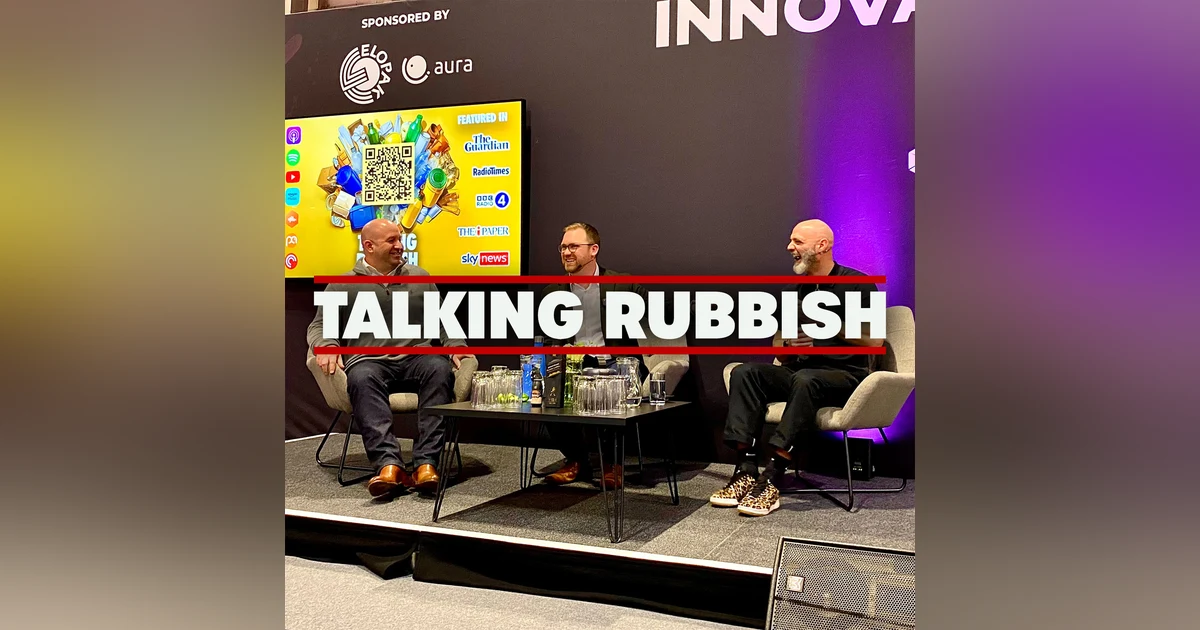

Our first ever live episode, recorded at the NEC in Birmingham during Packaging Innovations! In this special episode, James and Robbie are joined by Will Connolly from Diageo, the creative force behind the paper-based packaging for iconic brands like Johnnie Walker and Baileys. Together, we dive deeper into the world of paperisation, exploring why paper bottles are gaining momentum, the challenges of sorting and recycling them, and what it will take to move from niche experiments to mainstream adoption.

 Apple Podcasts
 Spotify
 YouTube
 Amazon Music
 Castbox
 Podcast Addict
 PocketCasts
 Our first ever live episode, recorded at the NEC in Birmingham during Packaging Innovations! In this special episode, James and Robbie are joined by Will Connolly from Diageo, the creative force behind the paper-based packaging for iconic brands like Johnnie Walker and Baileys. Together, we dive deeper into the world of paperisation, exploring why paper bottles are gaining momentum, the challenges of sorting and recycling them, and what it will take to move from niche experiments to mainstream adoption.
Join hosts James Piper and Robbie Staniforth as they delve into the world of recycling, hopefully having fun along the way. One thing is for sure, they will talk absolute rubbish from start to finish.
We would love you to join our community on Discord
Special thanks to our sponsor, Ecosurety
To get exclusive videos and clips, follow us on Instagram, TikTok, X, Threads or Facebook; @rubbishpodcast or YouTube: @talkingrubbishpodcast
Or you can contact James and Robbie with questions or just general rubbish musings using the email address talkingrubbishpodcast@gmail.com or by texting them via WhatsApp
Relevant links and reports mentioned in the programme can be found on the Talking Rubbish Linktr.ee
Transcripts and episodes can be found on the Talking Rubbish website
Music licence ID: 6WPY8Q4O2RPFIOTL
Hello, welcome to Talking Rubbish, a weekly podcast delving deep into the world of recycling and discussing the truth behind snappy headlines and one-sided stories. I'm James Piper, author of the Rubbish Book, and I'm joined by Robbie Stanforth, my far from rubbish friend. And we are joined by Will Connolly from Diaggio, our far from rubbish guest. Hello, Robbie. Hey James. We got a bit of a weird one today, haven't we? Yeah, no, it's strange this, yeah. We thought we would finally put out our live episode. And that means we need to record a little introduction. So this is like the shortest recording we've ever done. We're just doing 10 minutes. It's lovely.
SPEAKER_01It's exciting. Although our producers will probably say it was actually 20 minutes that they had to cut down to 10. When did we actually do the live recording? How many months ago?
SPEAKER_02I was trying to think. I think it was back in February, a couple of months ago, I think. Was it January? I can't remember.
SPEAKER_01So long ago. So many episodes have passed since, but finally, episode 40 getting to release it. So what's the plan here?
SPEAKER_02We're going to have a bit of an introduction where we do our usual stuff. We talk about things we've noticed and additions and corrections. Then we're going to cut seamlessly to the live episode. Is that the plan?
SPEAKER_01Well, the plan is not to have an guest awkwardly watching us record the introduction. So I'm actually quite happy about this.
SPEAKER_02No, Bill's here. Can you not see him? Now, one thing we haven't done, which we normally do with a guest, is we didn't, because we were on the stage, we didn't get an opportunity to ask them about their gift. So what they would like to give to a listener. Oh yes. I think we're gonna have to think about that while we do this intro, and maybe we'll do that at the end of the episode. So if you want to find out what gift you could potentially win, just get to the end of the episode.
SPEAKER_01If you're just here for the prizes, skip to the end.
SPEAKER_02Chapters are available on Apple. So first thing, Robbie, that I've noticed this week is this trend. Like we've got we're coming out of quite a few trends now with AI, aren't we? Oh yeah. Like I I don't know if you saw the the studio Ghibli art. Did you see that?
SPEAKER_01Yes, I did see that. It was going around on all social media. As you know, LinkedIn's the only one I really look at, and it even made it on there.
SPEAKER_02Yeah, there was lots of LinkedIn. And then more recently we've had this AI dole trend, you know, this trend of getting yourself up in a blister pack and looking like a dole. And I did think about doing it for you and me, Robbie. I thought let's do a little talking rubbish back. And then I started doing some research into the sustainability of this, and I thought actually, it's not on brand at all for us to do this. Really? Why is that? Well, before I get into it, I should also say I feel pretty guilty, because certainly over the last few episodes, I've noticed me saying, Oh, and I asked ChatGPT this, and I've been doing it without a care in the world. And as I started thinking, I wonder what the data usage of this and the cooling of the servers and all that kind of stuff. And I just thought I should not be using Chat GPT for this podcast. So I think uh I think that's going to end. Really? Why? Well, as I said, basically you're using a lot of power. And there was a professor actually, a professor called Gina Neff, who's a professor at Queen Mary University. And she said that ChatGPT consumes more electricity than 117 countries.
SPEAKER_01Get out of town. Really?
SPEAKER_02Yeah, 117 countries consume less electricity than ChatGPT. And we're only at the start of AI, aren't we?
SPEAKER_01Yeah.
SPEAKER_02And then they need water to cool it down as well. And I was reading lots of stats on the water. Um I think so I'm sure I read, I haven't got this in my notes, so sorry I've got it wrong, but it was something like ChatGPT three. So I think we're now on four, but ChatGT ChatGPT three uh evaporated the equivalent of 700,000 litres of water in cooling the cooling the servers.
SPEAKER_01Wow. Okay. So n it's not like the kind of volume that warms a few municipal swimming pools, it's actually a significant amount of water.
SPEAKER_02Yeah, absolutely. I follow someone called Jenny Garbus on LinkedIn, so thank you to Jenny for um spotting this, but she wrote about Chat GPT using lots of data and said that it's about 10 to 15 times a traditional Google search. So every chat GPT search is about 10 to 15 times worse than a Google search. Okay, so we should be using it more judiciously. Yes, I think so. I think so. Now I noticed a couple of things. So some weird things happening because of this dull trend. So um you can generate about three images on the free version of ChatGPT. It sort of restricts you, I've I've read. And the trouble with that is if you're if you're thinking, oh, I just want to edit my picture a bit, I want to make it look a bit better, I want to do it a few more times, it uh very quickly you've used up your three uh three ones.
SPEAKER_01Yeah.
SPEAKER_02And so what you're gonna do then is subscribe because you want a better picture. And then you're thinking, well, I'm subscribing, so I might as well use it more. Ah yes. So there's like this trouble with these tiers is once you've if you have a trend like this which causes people to use it more, then they will subscribe and that will cause them to then use it even more than they would normally. Sort of like if you've got Amazon Prime, you're like, Oh, I should order lots from Amazon because I'm paying for Prime, I might as well get the most of it.
SPEAKER_01It's the perfect capitalist consumption model.
SPEAKER_02Yeah, absolutely. And if you don't believe that this is causing an issue, Sam Altman, who's the founder of ChatGPT, actually tweeted, it's super fun seeing people love images in ChatGPT, but our GPUs are melting. We are going to have to introduce limits.
SPEAKER_01Oh wow. So even they are saying actually we just didn't realise how much of a mega trend this would be, and it's uh it's causing them operational problems. Jeez.
SPEAKER_02There was also a really interesting story out of Bristol, again, just looking through the local news, but this can this can definitely be try turned into something national as well, but obviously the data is Bristol. And they were saying that fly tipping is up about 25%. So yeah, so I think there were 7,780 incidents in three months of last year, and it's up n nearly 2,000 compared to the same period. Now the reason they gave is that people are feeling better off. During a height of a cost of living crisis, sort of last year, people are more likely to try and sell stuff or to keep things, to repair them. And when that stops happening and the cost of living crisis starts easing off, people feel better off and fly tipping increases. I could imagine this.
SPEAKER_01So people are just getting new like fridges or whatever, so they dump their old fridge, get a new fridge. It's just again consumption-based stuff, is it?
SPEAKER_02Well, this is what they're saying, and yeah, they're saying nationally, when the cost of living crisis was fully on. I'm not sure I like the phrase fully on.
SPEAKER_01Fully on cost of living crisis doesn't sound great to me. I'm quoting.
SPEAKER_02So when the cost of living crisis was fully on, there was a 20% drop in fly tipping. Additions and corrections. So here we are with our first episode that we recorded live. We recorded at an event, and I'm pleased to say we've been asked to do it again. Wow.
SPEAKER_01And they haven't even heard it, so they're taking a big old risk.
SPEAKER_02Yeah, we've actually been asked to do it a couple of times, I think, but uh but definitely one that I can talk about at this point. So we've been asked to do a live episode at Earthfest on the 7th of June. And Earthfest is at King's Cross, so it's at the King's Cross area, I think. I think it's like near the station, around the station. Um, but they take over lots of different parts of King's Cross, and there's loads of different stages, loads of different talks. This year they actually have Dr. Jane Goodall as one of the speakers, and she's you know one of my absolute heroes, so I'm very excited.
SPEAKER_01Oh, so we're gonna get to meet her, are we?
SPEAKER_02I don't know. Can we ask? Maybe. Maybe we can. Let's try. So it's Saturday, 7th of June, in King's Cross, and it gives us such a good opportunity because we were thinking, what are we gonna do if we do a live episode in London? Well, as we've said in episode 38, uh London has a particular challenge with recycling, particularly Tower Hamlets, has a particular challenge with recycling because of flats. So we were thinking we could finally do an episode on flat recycling.
SPEAKER_01You up for that, Robbie? Yeah, definitely up for it. It's not gonna be pretty though, because it's pretty difficult flat recycling. So, yeah, come along to uh watch us talk about uh flat recycling in London.
SPEAKER_02Yeah, so if you want to get a ticket to that, it's free, I think, because we're on the Saturday, which is free. So you just need to pre-register on their website. I'll put their website into our show notes. But super excited to get to do another one of these. We've also had a discussion on Discord. So following our pet episode, which I think was episode 37, we had different opinions coming in, and I knew this would happen once we said that you could start giving your dog food waste, we would get lots of different opinions on whether that was a good thing or not, because we know it's quite controversial. You know, it is controversial to suggest going beyond just pet food. And we had uh someone called Trin message us on Discord. Now, Trin is a vet working at a pet food company and definitely wanted to question that advice. And in the interest of openness, we want to share everything, whether it supports what we've said or not, and I think that's really important. So she felt that or I guess the crux of her post was that we always need to ensure we're giving our pets a nutritionally nutritionally balanced diet and giving them, quotes, random scraps risks that.
SPEAKER_01Ah, okay. So if you um if you end up generating a lot of carrot tops and you're just constantly feeding your pet carrot tops, that's no good because they're getting they're over-indexed in certain vitamins and minerals and not got enough of others. Is that what she's saying?
SPEAKER_02I think so, yeah. Although I think carrots are generally seen as quite a good thing. Um I don't want to get in trouble again. I feel like Yeah, so just give them all the carrots. No, I'm not saying that at all.
SPEAKER_01I'm trying to lay a trap for you here, James. So it just keeps rumbling on.
SPEAKER_02So I think we just need to reiterate that we said up to 10% could be certain leftover veg. And if you I think we should just reiterate, if your pet is on a specialist or prescribed diet, please don't do any of that without consulting a vet. But assuming your pet is on a normal diet, then I think as long as you're only going up to about 10%, and as long as you're checking that the veg that they're eating is safe, then I think it's fine. And Philly, who helped us out with the episode, actually really helpfully put up an image on Discord of the seasonal eating for dogs. So each season and what veg is available and which is suitable for your dog. So if you want to see that image, uh head on over to our Discord and you can find that. It's under the section for episode 37.
SPEAKER_01Oh, brilliant. So we've started a uh uh a standoff in the uh veterin community. That's great, James. Is that is that great? Is that what we set out to do? That's what we want. We want to get the conversation happening. And if it's a conversation for your pets, then great.
SPEAKER_02So, yes, as always, with your pet, if you're thinking about your pet specifically, then it's probably worth checking with a vet what you can and can't do, and probably don't get your veteran veterinary advice from two recycling geeks. As always, we'd like to take a moment to thank our sponsor, EcoSurety, who are on a mission to rid the world of unnecessary packaging. They help brands navigate the tricky world of extended produce responsibility, but that is not all. They also collaborate on some incredible recycling projects and consumer awareness campaigns for those tough to recycle materials. So if you're an organization looking to make smarter packaging choices, check them out at ecosurety.com. And as always, the thing we would love the most and the thing that really keeps us growing and really helps us out is leaving us reviews. So if you're listening to this on a platform that allows you to leave reviews, we would be super grateful if you could do that. You can also head on over to our Discord, the link of which is in our show notes. And that's sort of our platform where we all get together. It's a bit of a forum where we all get together to chat about all things recycling. So anything that's come up on the show, anything you want to see on the show, it all happens over on Discord. So again, the link is in the show notes. Head on over there to join that community. Beyond that, we're also on social media, which is at rubbishpodcast across all social platforms. Our email is talkingrubbishpodcast at gmail.com. And everything that we talk about today will be in our show notes. I put all the links for anything we discuss on the podcast in our link tree, and again, the link for that is in the show notes.
SPEAKER_01Uh, you know, the other thing I want to shout out, James, is the directory on the website. It's becoming so unbelievably useful. I've had various people ask me about certain topics over the last few months, and I've just gone to that directory on the website, and it literally catalogues all of the different topics. You there's a search on it, and you can find out about, say, for instance, broken glass, or should I feed my dog scraps uh for the pet episode. Uh so yeah, please guys, feel free to use it. It's a great resource. Um, it's just called the directory, and it's on the website.
SPEAKER_02So prepare yourself for a difference in sound, because I suspect recording at the NEC is a little bit different to our little booths that we have, Robbie.
SPEAKER_01Yeah.
SPEAKER_02I suspect. I'm really sorry if it's bad, but hopefully you enjoy it, and hopefully, there's lots of nuggets of information it's worth pursuing. And remember, you've got to get to the end to hear what prize we're giving away anyway. So it's time to hear our live recording, recorded at the NEC at Packaging Innovations, where Robbie and I chatted to Will Connolly from DiAgio all about paper bottles.
SPEAKER_01Welcome, Will. Uh, great to have you here. Mostly because people confuse myself and James sometimes with packaging designers that we know very little about, the truth be told. We know about some packaging, recycling, and we have a cursory knowledge of recycling, but it's great to have an actual scientist who knows some of this stuff and has designed some of these innovative products, uh, looking at how we can make them more uh recyclable. Um, but I know, James, you you first uh interacted with Will about the chopping boards, didn't you?
SPEAKER_02Yes, thank you, Robin. Um so yeah, when in episode, I think it was episode 11, we talked about microplastics, and we talked about do we need some credit cards worth of microplastics? And just in case you haven't listened to that episode, we don't. We don't need credit cards worth of microplastics in a week. It's about 10,000 years, but you know, there's a reason why that summons is quite weird, so it's definitely worth listening to that episode. And that led Will to email me to say the weirdest one is chopping boards. I don't know if you guys have seen the study on chopping boards, but um they did this study and said microplastics are released every time you chop something on a chopping board. And it led everyone to kind of get wooden chopping boards and all that kind of stuff. And uh, Will, you you emailed to say, based on the data, it was about 7.4 grams per person per year, and you'd calculated that your 10-year-old IKEA polyethylene chopping board would have disappeared by now. So the fact that it just had a few scratches suggested it might not be the correct study. So there is some really interesting stuff in delving into science and going, but just logically, can that be true? And let's just talk about that and see see if we can explore those different themes. So we've got episodes like that, and that's how we first came across you, Will. Um, so uh I guess my first question is what are the environmental factors that you're most concerned about? And I guess how has it changed over the years?
SPEAKER_00In my role with Diaggio at the moment, um, Diaggio, relatively unusually for an FMCG company, but relatively common for beverage alcohol, almost all of our um packaging footprint is glass. So about 85% of our packaging footprint is glass. The rest is made up of a little bit of aluminium, some paper, and a very small amount of PET plastic. So within that space, that means therefore that because glass typically has a relatively high carbon footprint per pack compared to other uh patching formats that we can get to, carbon really is the central focus of what we're interested in. You know, most FMCGs typically have a bit of a dual pull between waste and complex recycling, especially with plastics on one side and carbon on the other. And very often the solutions to those two things pull in opposite directions. Fortunately, because we have mostly glass, which is generally quickly well recyclable, we might touch a little bit later on about where there are some challenges in in this, but because we are that single focus, we're able to focus mostly on carbon. So most of what I'm concerned about at the moment is carbon associated with those packs. We do look at kind of more standard uh targets with regard to recycling and recycling content and stuff like that, but it's relatively easy for us compared to most other FMCGs. So we've got a fairly singular focus in that case. What's changed, I think, in the last few years, probably those two major interests between carbon and waste haven't changed in in the time that I've been working on sustainability within packaging. I've been doing packaging for 25 years and about two weeks now. Um a lot of that has been spent on on um recyclability and and other sustainability aspects. So those two key factors remain the same. But what's really changed from inside the industry is is our knowledge, our access to things like simple LCA tools that means that we can do quick, easy LTAs when we're making early decisions on projects, rather than going out and spending £50,000 on an ISO-certified LTA at the end of the project when everything's perfect. So you can do quick checks, and also the availability of really good recycling tools nowadays, you know, big up, you know, the prep tools, the OPRL equivalents and so forth, which means that we know much better where the gremlins are within recycling. So instead of just saying, oh, it's PET, it's gonna be fine, or it's glass, it's gonna be fine, we can look into the details of the designs and make choices much more effectively with regard to recycling. So the big change is we know the problems more. We're still trying to save the same, solve the same problems that.
SPEAKER_01Yeah, and when it comes to recyclability, it's all just getting a little bit more complicated than just is it a PET bottle or not? And is that something that you have genuinely observed? Is that over the last couple of years or long longer time for it?
SPEAKER_00I think my knowledge has gone up a little alongside that developed process as we learn about each individual type of pack. But there are some simple ones, obviously things like aluminium cans and things like that. People know, yeah, that's going to recycle, that's going to be fairly easy. But it comes down to the knowledge of the exact shape, the way it rolls on the belts, how labels interact with it, these kinds of things. And so, you know, as we move along, we have uh increasing levels of partnership with people that will do these kind of tests for us, but also the tools initially to make you know kind of paper exercises before we we go out to that point.
SPEAKER_02I guess we're here to talk about paper bottles, we've got some in front of us. I must admit, we had we had a meeting, didn't we, just to discuss what we were going to talk about, and I was like, this can't be a good thing. You know, putting I like I'm a big fan of glass, I'm a big fan of refill, we're gonna talk about some of that. And paper bottles to me were a bit like it just feels a bit, I don't know, gimmicky. And then we both got given it, and I was like, I quite enjoy getting my drink delivered in it. So I've kind of I've been converted in some ways, but obviously there's big questions around using paper versus glass, big questions around recyclability that we're gonna get into that'll be really interesting. Why did you decide to put drink in paper bottles?
SPEAKER_00The history of why we got involved in paper bottles actually predates my time in Diaggio pretty significantly, and some of the folks that are involved in that are still fairly major players within the industry, but it comes from a completely different direction to sustainability, actually. It comes from external events, you know, um music festivals and so forth, where glass was getting banned. We won't be able to bring glass bottles onto the site, and increasingly it was looking like plastic bottles were also going to get banned, and therefore we were sort of starting to run out of things that we could actually put our products into, and thinking that paper might be an interesting option for that. So that was that was actually the same thing.
SPEAKER_01Glass was just a hazard, was it? It was just you can't have them, they get smashed, they're difficult. Uh uh, big music go news and correct.
SPEAKER_00So it was nothing to do with sustainability at that time, it was about access to these kinds of events. So we thought, okay, there's an interesting opportunity here to make a different format that we can take into these events. Since then, though, um, since we've understood a little bit more about our carbon footprint, and as I mentioned, glass being a significant part of it means that packaging is a particularly large part of our overall footprint. So it's about a third of our total corporate footprint, including scope three. Um, so it's a it's an important point. So as we started to understand a little bit more about what our carbon footprint is and focus on the carbon associated with packaging, this started to become a nice opportunity. And we saw it as a way of potentially jumping the gun and getting to a lot lower carbon footprint. So glass is a brilliant material. You know, I'm kind of material agnostic. I'm I'm I'm not pro-paper, I'm not pro-plastic, but or not pro-blast. Glass is a superb material for certain things. Anyway, it's got a fantastic um inert barrier to chemicals. So for long-term storage of products, glass is pretty much unbeatable. It's excellent for for refilling, uh, it's got nice feel to it, it's got a really great heritage to it. I mean, we've been putting whiskey in in glass bottles for 200 years now for a good reason. Um, but it carries that relatively significant carbon footprint because it's weight. Weight for weight, so it's gram for gram, glass and paper typically have about the same carbon footprint. But because you can make a bottle so much lighter in paper than you can in glass, you end up with a lower carbon footprint associated with it.
SPEAKER_01So it's essentially the lightness rather than the raw material. So take us through the raw material. Like, is it what's the inner? Um, how does it work? Is it does it come in this shape? You know, how what's the core talk us through?
SPEAKER_00So w we're actually supporting quite a range of different manufacturing methods at the m at the moment for paper bottles. Um at least three. I will say that the number is higher than three. We're public with three different manufacturing methods.
SPEAKER_01It's not privileged information I'm asking you to share.
SPEAKER_00But you know so the the method of manufacture for the outer paper varies everything from spiral landing through to uh wet moulding to in this particular case, the one you're holding there, the Johnny Walker bottle, which is a dry moulded process that was developed. Uh we partnered with PA Consulting and uh Pulpac to develop this relatively novel dry moulding process. So in this particular case, it comes from a um I think a bit like like candy floss of fibre. Candy floss of fibre. And then it goes from a relatively magic process, let's say at high high, high, high, high pressure in order to squeeze it into that bottle shape. Again, it's sort of blown, is it then, or or squeezed or squeezed, squeezed. I think is probably the most accurate description of that. And that forms the main outer bottle. And then, of course, we need a liner within that. Um, whiskey is notorious for going straight through the sides of paper. Unfortunately, so we will always need a secondary liner within that that structure. Um, I mean, whiskey, particularly actually, because it's you know, ethanol is a superb solvent, it would like to get through any barrier that you try to put in its way. And also, products like whiskey have hundreds of volatile chemicals in there, the flavour compounds that have been gathered after you know 10 years or more in a in a cask in Scotland. So we need to keep those in very carefully. So it's pretty difficult to get that barrier absolutely right. But the barrier in this particular case that you're holding there is a piece of plastic that's been formed onto the inside. And I want to be absolutely explicit that that this particular form is plastic, it has a plastic liner inside it. Uh, we're not trying to get away from that position whatsoever. However, obviously we're trying to get that plastic liner down as thin as possible, as little as possible. I would certainly challenge any uh suggestion that this is just a plastic bottle with a paper external on it. It very much is not, in that the the plastic weight inside is closer to that of a bag in box type structure. It's actually thinner in many cases than a bag in box structure.
SPEAKER_01Like for wine, you're talking about those things. Precise things, yes, exactly.
SPEAKER_00Exactly. So we're not even close to being a plastic bottle inside there. You know, you can kind of blow it up like a balloon and so forth.
SPEAKER_01It is a is it is a layer rather than its own structure.
SPEAKER_00Yes, it's exactly it's it's nowhere close to being a structurally sound bottle in itself.
SPEAKER_01Okay.
SPEAKER_00Um, I mean I think the the Bailey's bottle that we have in front of us there is something like 1.9 grams of plastic in that bottle. I think I'd struggle to make a 1.9 gram bottle uh that was also a relatively luxury item. Um so we're we're we're targeting minimum 90% fibre within all these bottles. We're trying to get higher and higher. Obviously, every percent that you reduce from that 90% is is pretty hard work to get there. We'd love to get to 95 because that will put us green on some of the recycling systems and get us in Germany into their highest fraction of quality. But 90% fibre certainly means that we all go through most standard paper recycling streams already.
SPEAKER_01Yeah. And you you mentioned Germany there, so you look at this globally, is it uh it's a global factor, isn't it?
SPEAKER_00But very much so. I mean I think we're we're a little bit Eurocentric at the moment, simply because the development teams are based in Europe. But also, you Europe has by far the most developed recycling systems, and the nation of lots and lots of small countries with different systems, it's also one of the most complicated. I mean, the US is similar in that it has a different system everywhere you go, yeah, but but Europe, because of different systems, two different countries, um it means that there's a lot of different things that we need to take into account when we test that recycling. So we've been testing, you know, UK, France, uh the Netherlands, Spain, Germany, and so forth to look at the different recycling systems and understand how they go through these different processes.
SPEAKER_02Okay, so let's talk about the recycling because on it it says, I can't find it now, designed for recycling, which is a really interesting choice of words. Um, so I'm gonna come to you about that. But you know, while I agree that you know 90% paper means there is a recycling, uh, a recyclable product in terms of the paper stream, I guess it'd be interesting to delve into what happens to the plastic that's inside it. So um, so yeah, why did you choose design for recycling as your words?
SPEAKER_00It's a very conscious choice to not overclaim at this stage. I I I'm somewhat opposed to statements like 100% recyclable, because nearly nothing is truly 100% recyclable, down to the polymer lining on the inside of aluminium cans or even the cold end coating on the outside of the glass bottle. That doesn't get recycled, it gets burnt off at the time. It's very light, but it it means that these are not 100% recyclable. So we're trying to avoid these kind of kind of statements, especially as we know that there are some gremlins in the works here with regard to recycling. So, as I mentioned, the the reprocessing of these bottles, the the level of fibre that we have in them means that they can go to a standard paper mill. There's a standard set of tests, a SEPI test, that that proves that that it can get recycled as standard paper. And because of the amount of of uh fibre material in there, it will go to a standard mill and be recycled with standard paper. Where we have the challenge at the moment is in the sorting process. And the sort is different from different country to different places and so forth. Where we have um selective um recycling, so so source-separated recycling, where there's basically a cardboard bin that's separate to all the others, we generally don't have a problem. Okay.
SPEAKER_01So if it is As in you can instruct, put that in a cardboard bin.
SPEAKER_00If it goes in the cardboard bin and then goes from a cardboard bin to the paper recycler, we don't have a problem. Okay. Germany has a has an in-between sort there as well, where they separate different fractions of quality of material. At the moment, we are going into the slightly lower fraction of that, but it's still a recyclable level. We'd like to get into the higher one. Um but in countries like England, specifically, I don't say the UK, in England, specifically, where we have um co-mingled recycling, where we have uh paper mixed in with aluminium and plastic and all these kinds of elements, we start to see an issue associated with the sorting of these kind of packs. And that the reason for that is that the way it's separated in most cases, there'll be experts out there, I'm sure, that know far more about this than me, but I've I've watched it multiple times on the belts of recyclers, is that it's mostly the this ballistic sorting process where 2D paper type materials come off the top of the of the belt, float slightly, and get collected that way, whereas 3D materials will drop straight off the end of the belt and and then be sorted into their different material streams. These bottles are quite strong. They're relatively luxury products, they're quite heavy as as paper products go, and they don't typically get crushed. They do sometimes, um, but they don't get crushed sufficiently regularly in the normal processes to make them 2D enough when they hit the top of that belt. And therefore, very often they then drop down and get collected with the rest of the 3D items. And after that point, it's it's kind of entirely random, depending on the particular design of the Murph, whether there's a separate fibre sort after that or not. Um I would note that I mean relevant to the previous talk, very often small, high-quality cardboard boxes would suffer from a very similar problem. If they don't get crushed, they will also behave as as 3D. The big difference there though is that of course many MERFs have um some level of human intervention. There is a little bit of manual sort on top of these kinds of things, and people recognise a cardboard box and they pull it out and they put it in the right place. At the moment, no one knows what that is. Unless most of the people working at MERFs read packaging weekly on a regular basis, they won't necessarily know what it is. So we've got a little bit of a chicken and egg situation there as well, that until we get to a reasonable volume situation, the Murphs aren't necessarily going to be looking for this kind of material. Um but once once we do, they would be interested. There's also lots and lots of um potential technology solutions out there. I know the other week you were interviewed Alice from PolyTag. So you know, UV barcodes and things like that, and paper, of course, is a wonderful canvas for printing on. So holy grail or UV barcodes or any of these kind of selection processes with within the sort process could could could solve that. Um I mean I'm just talking to DEFRA earlier. Obviously, England is moving more to a source-separated, simpler recycling situation, which will largely solve it solve the problems for this particular one. So the point the reason we said design for recycling is we don't want to overclaim, we don't want to say that it does something that it doesn't, because the answer is it does get recycled in some countries, and in some countries it doesn't at the moment. So it's something for us to work on to improve that.
SPEAKER_02Don't worry, guys, I'm gonna ask the question of what happens to the plastic. I noticed that is but um but before I ask that, I guess I was just thinking, as you were talking there, you were saying, you know, one of the challenges is MERFs haven't seen this material before. I'm trying to then square that with the fact that you've said, well, this is for events, you know, it's got quite a short shelf life, if I remember rightly.
SPEAKER_00It was originally for events. But the the discovery of the opportunity for carbon of this, so so that particular bottle, as I say, it's pretty heavyweight, it's it's a fairly luxury item. It's 120 grams or so total, but that still brings us in at about half the carbon of the original glass bottle. And that original glass bottle, the Johnny Walker black bottle, it's about 380 grams, something like that, which is super light uh uh as a glass bottle goes, but we're we're able to drop that carbon very significantly already associated with that. Yeah, and say uh the shelf length of the bottle, sorry. I've got sidetracked that so it's carbon that's really driving this. So the intention of uh of these is to use it probably as a main primary pack. It could be effective within refill as a secondary pack for people to refill at home or something like that, but we the intention is not to have this just limited to events. You know, realistically, for this to have an impact on our total carbon footprint, we need to make this at the tens of percent of our total footprint, which is in the order of hundreds of millions of bottles. Okay. So it really does need to be a scale item. At the moment, the shelf life is not where we need it to be for global launches. Part of the issue with that is actually it's our own problem in that because our products are pretty much you know indestructible. You know, alcoholic um spirits don't tend to go off. You put them in a glass bottle and they last forever. So our distribution chains and so forth are pretty slow at the moment. Getting stuff out to Australia can take a very, very, very long time indeed. But at the moment, the the shelf life's on these are we're heading towards a year, potentially six months comfortably, where we know that the product quality is indistinguishable from when held in glass. But we need to get that out further to maybe 18 months for Bailey, something like that, two years before we can start to look at this as a global launch. But yeah, each week we're improving that.
SPEAKER_02You've got a product that you need to have tens of percent of in terms of your product portfolio for it to be viable from a carbon perspective and to be picked out of the MERF and for MERFs to recognise it, because they won't recognise that as paper at the moment in the fast-moving conveyor belt. I guess the challenge then is if you've got a short shelf life product, um you can't. I don't drink a bottle of whiskey in six months. Sometimes I do, sometimes I don't. So I can see where that would be. Yeah, if it was a slightly different spirit. But anyway, um, so if you were uh so I can see that events, pubs, those areas that are going to get through that bottle fast would be a perfect candidate for this. But that being tens of percent of the market, you know, could be quite interesting.
SPEAKER_00On-trade is a very, very significant part of our overall market. If it varies by percentage from country to country, so I don't want to go into a single number because it would be accurate by definition depending on where where you are, but it is a very significant part. And and pubs move through things fairly swiftly. I mean, where we've tried this so far is uh at our own bar in Edinburgh that gets through about 40 bottles a week, so they're a little bit quicker than than you are in in terms of their consumption, so we were able to control that much better, but yeah, next steps are very likely to be engaged with things where you can control that shelf life rather better before we start stepping out into things. The other thing is that it isn't necessarily for whiskies, you know, within our portfolio, you know, we're looking at you know um even non-alcohol gins and these those sorts of things that typically have maybe a six-month shelf life on them at the at the moment. So there's lots of opportunities of other things that move faster than whiskey. Okay, so what happens to the plastic on the inside? Right now, it will get separated out at the repulping uh stage and will get taken into the filters and then go off to energy recovery or something like that.
SPEAKER_01And and it's exactly the same, presumably, as other composite packagings. You know, our listeners will be familiar with Pringles tubes, these kinds of things, carbon, particles, exactly.
SPEAKER_00Correct. In this particular case as well, because the liner isn't actually bound to the outer paper, it it comes off extremely easily. Oh, okay.
SPEAKER_01Actually, you pop it and it will be alive.
SPEAKER_00A consumer could uh separate it if if they choose to. We're choosing not to communicate that at the moment because we don't want to uh make things too complicated. Uh you don't want a situation where you're saying, well, if you do this, then maybe this, then this, then this, this. We want it to go into the paper stream at the moment. So we're not we're not going down that stream at the moment, but it separates very easily and will go off to energy recovery. So to be absolutely clear, that material will get lost at the moment. You want to be we want to be clear about that. But in my head, there is a balance to be struck. So recycling is not a perfect world, very much so. You know, uh anything that gets recycled at 90 plus percent is in a pretty good state in the same way. And then if we think about the total losses from different materials, so if you think about a 400 gram glass bottle, say, in a good situation, glass is getting recycled at what, 75%, something like that? So you're losing 100 grams of glass per bottle. Okay. That whole thing weighs 100 grams. So if we're losing a few percent, you know, a few grams of of plastic within that structure, overall your total losses in the recycling world are going to be less than they were in the original glass bottle.
SPEAKER_02There's a really interesting equation that happens here because we've had this conversation a lot, haven't we? We had it, uh we did like a Christmas episode where we talked about um the best way to buy chocolates, right? And we had this big debate about do you buy a tub every year, or do you buy a tub one year, keep the tub, and then buy pouches when the pouches can't be recycled? Or harder to recycle? Harder to recycle. Pouches can be recycled, they're harder to recycle, they're typically metalised if they've got perfectiony in them. So it's this question of like when we I actually got my scales out, I weighed them, I can't remember the ways, you'll have to listen to the episode. This is such a promo for experiencing Christmas in February. Um, and you know, we weighed all these things and we said, actually, the pouch was so much lighter than the tub that it made loads of sense to just keep a tub and refill it with a pouch every Christmas. And we sort of had the same conversation here where it's like we're losing the plastic. Interesting conversation, I'm sure, to be had, but we're gonna run out of time about like what then happens to plastic in the wastewater, whether it ends up becoming microplastic, whether it gets incinerated, done episodes, and on doing episodes on all this stuff, um, and we're gonna run out of time. But you know, losing plastic out of a process is always a bit of a concern, particularly from a media perspective. But I think when you're talking about the waste that you're talking about, actually, if you're comparing it to a plastic bottle, you can see why this would be better in the same way as the chocolate tubs. I guess from a glass perspective, we we talk a lot about refill, don't we? Yes. So I would be thinking there would be an opportunity.
SPEAKER_01I don't know how I would refill my uh my whiskey, but you know, have you looked at that as an alternative to but in the same sort of scenario, isn't it? You're thinking if you're trialing it in your Edinburgh pub, is it easier to be turning around and washing those very quickly turned over bottles than lots of people start thinking about refillers? Oh, I've got the hassle of I take it home, I drink a bottle of whiskey over the course of two years, and then I've got to work out where to go back. Well, no, actually, what this was designed for, this paper bottle, is the kind of application where you'll just wash and refill, wash and refill, wash and refill. Seems like it could be a good application. Is that sort of hypothesis correct, or do you say it's not as simple as that, Robbie?
SPEAKER_00The key point when you talk about refill is is what do you mean by by refill? Because there's lots and lots of different models associated with refill.
SPEAKER_02I think I mean like you know fibre broadband comes into my house, it's quite like a whiskey tap directly into my house that I can definitely fill my bottles.
SPEAKER_00So if you think about that kind of format, so we're obviously heavily looking at refill. Yeah, we'd love to stay in glass, it's a wonderful material. So if we can get to refill situations, that would be very, very helpful. Uh, we've just done a big trial before Christmas uh with a with a process called Everpour in pubs around Dublin with Sminov um that is a kind of keg refill system. So they're basically refilling their own glass bottles from a keg in the pub. Really efficient and works in that particular scenario. One of the big challenges we have, however, with regard to refill when you're thinking about consumer refill, is that refill typically works best in a relatively small geographic space where things aren't traveling very far to get refilled and you don't need very many out there to kind of fill your supply chain. A very significant proportion of our products are denomination origin, so they're protected origin products. You know, tequila needs to be made in Mexico but also bottled in Mexico. Some elements of Scotch whiskey also need to be bottled in Scotland. So it'd actually be illegal for us to be refilling products outside of the country of origin in those particular cases. So we're limited by regulation associated with those products. And actually, those regulations you can see why they're doing it. They're trying to protect the authenticity of that product.
SPEAKER_01Yeah, that is a noble endeavour, but what I'm hearing is a s a Scotch refill scheme could be viable.
SPEAKER_00Depending on what it was. So it wouldn't be viable from a large VAT into your systems. Where it could be is things like paper bottles when you think about e-com or something like that. So you have your lovely, beautiful glass bottle at home that you keep for 20 years, and you get sent a super lightweight paper bottle through the post to refill that with it. Okay, okay, that's interesting.
SPEAKER_01It's assembling to the pouch and the the chocolate tongue types of love.
SPEAKER_00Exactly. Whereas I don't think a whiskey pouch would exactly be fitting the brand's.
SPEAKER_01I wouldn't quite go with the brand, yeah. We're gonna struggle to get that past the marketing team.
SPEAKER_02Exactly. And um comms, I'm always fascinated by comms because I I mean, obviously you guys, I don't know if you've all had one of these, but it is like quite rigid and it Yeah, yeah. It's when we get listeners writing in about Pringles. It's hard to work out what it was.
SPEAKER_01Yeah, when we get listeners writing in about Pringles, you are gonna break it now, aren't you?
SPEAKER_02Where do I put this? I know it's got a bit of plastic, I know it's got some metal. Which bin does it go in? Obviously, as packaging professionals, as lots of us are, we might know about composite packaging and to look for the the primary product type. I guess I'm interested to know how you're gonna communicate with this of paper and how the customer experiences it, what it's gonna feel like.
SPEAKER_00That's a really interesting point. In the I think there's there's two elements of it. There's there's kind of standardized um labelling that you'd associate with it. So so definitely as you go to the different countries, there'll you know there'll be specific same things saying, put it into the paper bin, that kind of element. But there's also a lot more than that. We know that most people don't actually read those kinds of labels. So there's an element of communication through more haptic sensorial uh elements that we are yet to understand where we need to go. You know, we we keep using the phrase, you know, quacks like a duck is a duck. And and in this particular case, it you know, it's a paper bottle, it needs to feel like a paper bottle. But that's slightly at odds with the kind of luxury element of a high-quality whiskey with this particular case. One nice thing about paper though is that depending on the production technique that you can use for it, you can get some really nice tactile surface finishes. Yeah. So you can potentially give the look that you want, but also make it feel a little bit warm, a little bit soft, these kinds of things and communicate that it is paper. This particular one, as you say, I'm not sure many people would know it was paper when that when they picked it up. So there's work to be done there in communicating.
SPEAKER_01Which is a good thing and a bad thing, you know, it's sort of things a luxury, bad thing for understanding what the recycling is.
SPEAKER_00Exactly. So we need to work out how to communicate what it is more effectively. Because when I when I first came across this particular technology, shown a piece of it looked like a little UFO in the base of the PA labs. And I've yeah, I've been doing material science for 30 plus years of various kinds. I picked it up, I I wouldn't have been able to tell you what it was made out of.
SPEAKER_01Yeah.
SPEAKER_00I thought it was plastic, but then you ripped it over.
SPEAKER_02Yeah. We always end our interviews that we do on our episodes with a question. Did you get the question this morning? I did. Okay, great, that's good.
SPEAKER_01Yeah, I was frantically texting. We forgot to prep Will for his question.
SPEAKER_02For people who have listened to our podcast, we're famously underprepared. Robbie more say than me, me particularly. Here we are. Um, so if you had an environmental superpower, what would it be and how would you use it?
SPEAKER_00So I think I might have mentioned, but I'll keep mentioning it. I'm a material scientist. I will always fly the flag for material science as a really interesting option that has so many applications to different things. So, as I mentioned, no one material is the perfect material for packaging. And certainly different materials have different skills and abilities, and you know, where they're useful in different places. So I think if I was if I had a superpower. It would be the ability to make materials have the properties that I want them to have. So imagine if I could make a material that had the you know inert barrier of glass. Yeah. You know, the the the kind of strength and reproducibility of steel and aluminium. Uh the ease of processing into shapes and the low density of plastic, and the kind of biosourced carbon elements of paper. Put them all together, and my life would be an awful lot easier. I think that's probably the truth.
SPEAKER_02Yeah, and I had this uh I've given away the IP on this idea on one of my episodes, but give it away again. Yeah, I'm giving away again to a larger audience. And uh say I have this idea that you could do top chunks for packaging. Because you're like, isn't it amazing how nothing's perfect and we get into this world where people think some think there must be this amazing packaging material out there? And I'm like, if there was, yeah, all Tesco would sell, right? So everything we buy would just be one piece of packaging. There is no perfect packaging. Some things are lightweight, some things are health hazards, some things, you know, there's just too many together, they're really hard to recycle.
SPEAKER_00But my magic one will be easily reprocessed as well.
SPEAKER_02It's good. Thank you so much for joining us, man. We really enjoyed that. I hope everyone got something out of that session. Really enjoyed it. Hope you listen to the podcast if you haven't already. We had loads of fun making it. And honestly, like uh six months ago we started, I turned to Robin said, Can you ever imagine if the conference invites us to do a live episode? And here we are. Having a very nerve-wracking experience. So we like just sitting up the desk with microphones, but this is so great to see everyone. Thank you all for coming out to listen. Thank you for the engagement.
SPEAKER_01And finally, so that we can get a round of applause, let's thank Will, our guest.
SPEAKER_02So that's the end of our first live episode. Now, we did record it back in February and we haven't actually heard it because it hasn't been edited at the point that we're recording this outro. So I am gonna assume, Robbie, that we were pretty good.
SPEAKER_01I am 99% certain that that was absolutely brilliant. One of our best.
SPEAKER_02I'm I wonder if I shouted too much. We'll find out. I like to the trouble with being in a room of people is I tend to try and enunciate for the person at the back, which is great for the room, rubbish for a podcast.
SPEAKER_01Okay, well, I'm sure everyone's been listening out for that right into us if James was shouting too much.
SPEAKER_02Let's see how the producers managed to make it sound. Anyway, the things I do remember discussing with Will, like do we think paper bottles should be a thing? I think is the general you know, we had a bit of a discussion about paperization on episode 39. What are we thinking? I mean, I just think the trouble with all of these niche activities is their niche. And recyclers need things that aren't niche. They need to know what's coming in, they need to know how to sort it, they need to know how to recycle it. And a few bottles at an event is not going to tip the scales. So if you were going to do this, you would need to replace all of your glass bottles. And then you've got a massive discussion about whether that's good from a carbon perspective.
SPEAKER_01Yeah, I mean, cool in terms of innovation and really interesting to talk to him about it. But I think lots of these things for drinks and stuff, just shifting to a reuse or a refill model seems to be the logical next step, even for some of those premium drinks that he was talking about. So I hope they can find a way to, in the next decade or so, to actually move more of them into refillable, reusable bottles rather than any single-use item, whether it be paper or otherwise.
SPEAKER_02Trevor Burrus, Jr.: Yeah, and I think for me, like that that I've got cupboards full of spirits. I don't know about you, but I've got cupboards full of spirits that I've had for years. And the idea that in a paper bottle it would only last six months, it just means that it feels like it could never be mainstream.
SPEAKER_01Yeah, no, I agree. And and probably encourages fast consumption of alcohol, which I'm not sure is a great thing either.
SPEAKER_02Anyway, we will discuss paperisation a lot, I'm sure. This is just you know, we've done a bit of an intro episode 39. Hopefully you've had a chance to listen to that. We've had a bit of a detailed conversation with Will about a specific category type and it will come up again and again. So fear not, we will continue to give our opinions on whether things should be made out of paper as different innovations happen. As we mentioned at the start of the episode, we did not get an opportunity to ask Will about a gift, because we were live. We couldn't offer it to someone in the audience, and we had asked him whether we could have a paper bottle.
SPEAKER_01We did actually. We genuinely thought that would be a good idea. Someone get a bottle of whiskey and a paper bottle, but he was very, very protective over those bottles.
SPEAKER_02But those things are so niche he can't get hold of them.
SPEAKER_01That's quite a bit of a problem. So what are we gonna give away then?
SPEAKER_02Um Well, I was thinking about this. You know, we talked in episode 31 about widgets in Guinness and DiAgio own Guinness. And you talked a lot about your nitrosurge cans, and I was wondering whether we should give away one of those nitrosurge what's it called? Like devices.
SPEAKER_01Nitrosurge device. Yeah. I mean the thing is we're only gonna get very niche people entering into this competition. You've got to be a big fan of Guinness, don't you?
SPEAKER_02Oh, what a lovely gift.
SPEAKER_01Oh, lovely gift.
SPEAKER_02You know, it's a free gift. I think I think people will love it. I think they'll go for it. So um so we'll get one of those nitrosurge devices. We're not gonna give away alcohol, otherwise, we're gonna end up in all sorts of licensing things. Oh no. We're just gonna give away the device, and then either you can use it or you can give it away to someone who really enjoys Guinness.
SPEAKER_01But whoever ends up using it has to promise to keep and cherish the device for decades so that it's worth having manufactured. That's that's what you've got to promise when you enter the competition. Okay, nice. A little contract as you enter.
SPEAKER_02Okay, I'll start. Um so if you want to be in with the chance of winning that, head on over to our Instagram, follow us at rubbishpodcast, and like the photo link to this episode, and we will randomly draw a winner from those likes. Okay, back to normal next week, Robbie.
SPEAKER_01Yeah, looking forward to it. These live episodes are good, but do not fear listeners, they'll only be the occasional one. Yes, we'll try and record Earthfest, though. That'll be good. Oh, yeah.
SPEAKER_02People really want us to talk about flats.
SPEAKER_01Yeah, that that's been big on across all of the socials and on Discord. Come on, what are we gonna do to improve recycling rates of flats? Hopefully, we've got some answers for them by the 7th of June.
SPEAKER_02Oh, yeah, we'll have some good data on that anyway. Thank you all so much for listening. Thank you for reviewing us and supporting us. We are super grateful. And just to all the engagement we get, we absolutely love it. So follow us over on Discord, get involved with the discussion, and we will see you next week. Bye. Bye.

Senior Principal Scientist - Diageo
A materials scientist by training, Will has spent over 20 years developing packaging solutions for FMCG companies including P&G, Coty, and Britvic, working on brands as diverse as Ariel, Gucci, and Pepsi. Now at Diageo into an upstream role his focus is on the creation of novel packaging formats to drive long-term sustainability. Current key projects include the development of barrier systems to support implementation of paper bottles through consortium groups, and establishment of future programs for alternative materials.