62. Why toothpaste tubes can finally be recycled
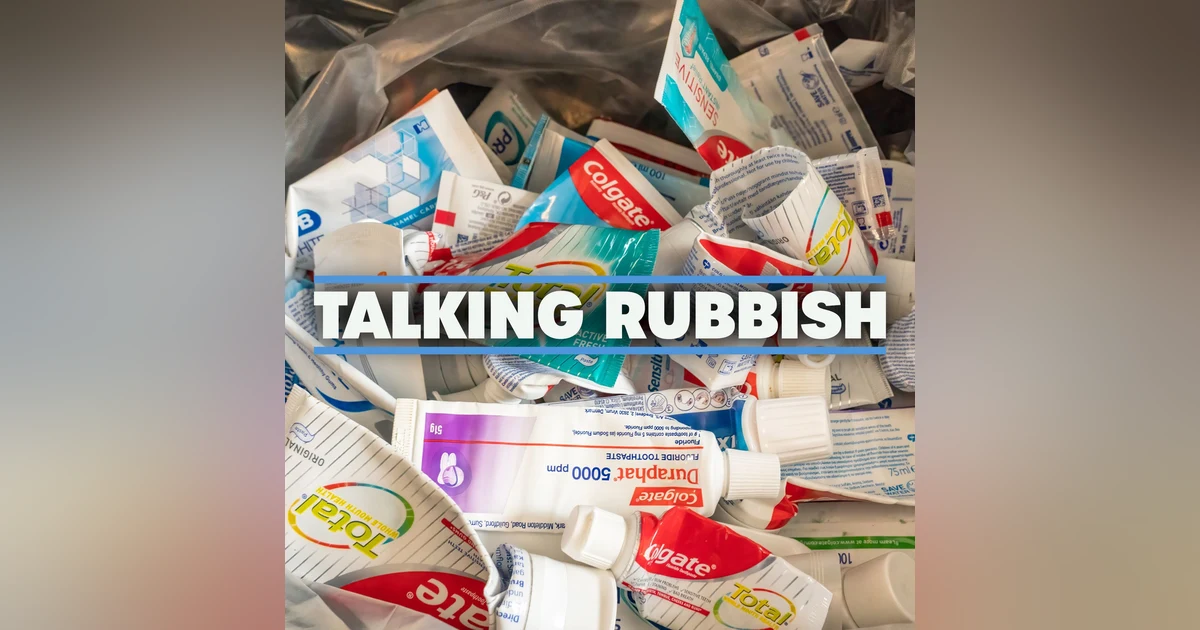
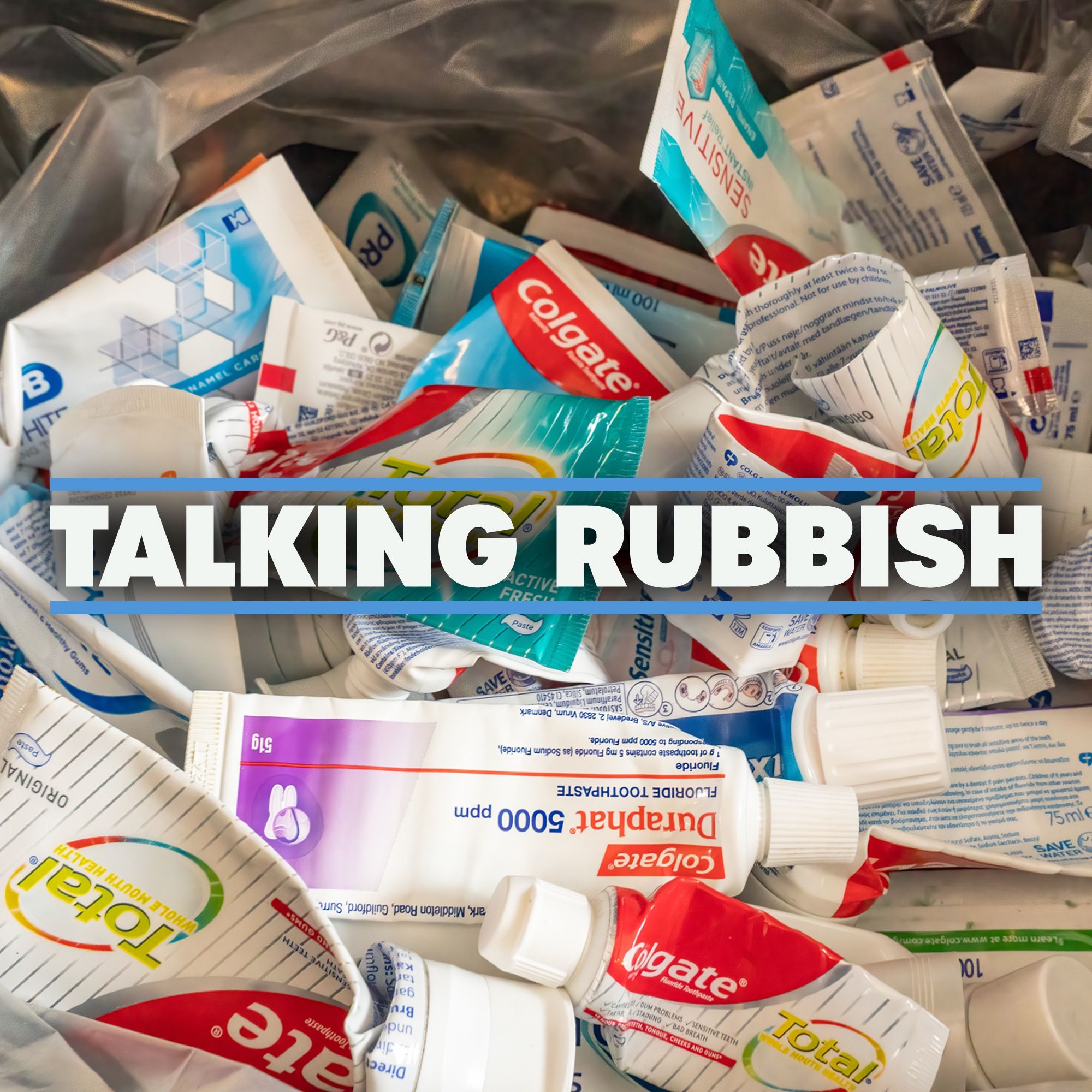
In a seismic shift that really damages the credibility of 'The Rubbish Book', toothpaste tubes can now be recycled. But what changed to make an entire product category recyclable, and what could this mean for other similar products in the future? In this episode, we squeeze out every last detail, from collection and sorting to recycling innovations and the consumer messaging that makes it all work. Plus, are Capri-Sun pouches rubbish or not, how does a lack of on-the-go bins affect recycling rates, and what is the best thing James has ever done?

 Apple Podcasts
 Spotify
 YouTube
 Amazon Music
 Castbox
 Podcast Addict
 PocketCasts
 In a seismic shift that really damages the credibility of 'The Rubbish Book', toothpaste tubes can now be recycled. But what changed to make an entire product category recyclable, and what could this mean for other similar products in the future? In this episode, we squeeze out every last detail, from collection and sorting to recycling innovations and the consumer messaging that makes it all work. Plus, are Capri-Sun pouches rubbish or not, how does a lack of on-the-go bins affect recycling rates, and what is the best thing James has ever done?
Join hosts James Piper and Robbie Staniforth as they delve into the world of recycling, hopefully having fun along the way. One thing is for sure, they will talk absolute rubbish from start to finish.
Sign our very first pootition: https://you.38degrees.org.uk/p/poo
We would love you to join our community on Discord
Special thanks to our sponsor, Ecosurety
To get exclusive videos and clips, follow us on Instagram, TikTok, X, Threads or Facebook; @rubbishpodcast or YouTube: @talkingrubbishpodcast
Or you can contact James and Robbie with questions or just general rubbish musings using the email address talkingrubbishpodcast@gmail.com or by texting them via WhatsApp
Relevant links and reports mentioned in the programme can be found on the Talking Rubbish Linktr.ee
Transcripts and episodes can be found on the Talking Rubbish website
Timestamps:
Why toothpaste tubes can finally be recycled - 01:41
Additions and corrections - 30:08
Rubbish or Not: Capri-Sun pouch - 38:59
Rubbish News - 42:14
How does a lack of on-the-go bins affect recycling rates? - 46:15
Residual Rubbish - 50:19
Music licence ID: 6WPY8Q4O2RPFIOTL
Hello, welcome to Talking Rubbish, a weekly podcast delving deep into the world of recycling and discussing the truth behind snappy headlines and one-sided stories. In this episode, we will discuss how toothpaste tubes have become recyclable. Are Capri Sun pouches rubbish or not? And I have a question about recycling on the go. I'm James Piper, author of the rubbish book, and I'm joined by Robbie Standerforth, my far from rubbish friend. Hi Robbie. Hey James. Happy Bim Dabe Influencers. I hope you're all doing well. We promise toothpaste tubes and we are delivering.
SPEAKER_00Oh yes, finally. The much anticipated.
SPEAKER_01What's the pun here? Squeezing it in. Uh it's gotta be a this is the crest of recycling knowledge. I haven't written these down. I haven't thought them through an advance. This is very live punage. I've got nothing else.
SPEAKER_00I've got nothing. I made no contribution whatsoever. It's maybe a bit too early in the morning for me. Oh, that's all right.
SPEAKER_01Robbie, we're just back from our live show at RWM. It was amazing, wasn't it? So much fun.
SPEAKER_00Well, it was really fun. Can't believe the size of the audience and just the engagement and stuff. It was really great to be doing it live.
SPEAKER_01So nice to get to talk through a year of talking rubbish and really get into the detail of what we think is working. And, you know, so much of that is down to you guys. So thank you so much for listening, for sharing, for reviewing. It's all about the community and the team of influencers, and we thank you so much for that. And my news today means we have to give an extra special thank you to you all. But we will get into that later. In the meantime, let's talk toothpaste. Plastic tubes that you squeeze cannot be recycled.
SPEAKER_00That's a famous quote, isn't it?
SPEAKER_01This is an excerpt of the rubbish book by James Piper when referring to toothpaste tubes. It is possibly for this reason that I should go down the Alan Partridge route and just pulp the lot of them. Is that recycling, Robbie?
SPEAKER_00Not quite sure, yeah. I think there is still some life in them yet, but what are you saying that that quote makes the whole book defunct?
SPEAKER_01It's one of a few. Because throughout the book, it says toothpaste tubes are not recyclable. And positively, I would say, for the industry, but frustratingly for my credibility, the toothpaste industry has got together to make them recyclable. And I'm not writing another book. I can't do it. This is what the podcast is for.
SPEAKER_00Is it true that this is the first time ever you were disappointed about an item that was unrecyclable becoming recyclable?
SPEAKER_01Possibly. Very, very possibly. As you guys know, I love a product episode. I love it when we get to talk through a specific product and toothpaste tubes, as Robbie acknowledged last week, have leapfrogged the toilet roll episode. But at least we're in the same room at the house. We're in the bathroom, Robbie, still.
SPEAKER_00Oh yes, that's where a lot of recycling goes wrong, isn't it?
SPEAKER_01Yes, and this is partly inspired because last week it was Recycle Week, and one of the items wrapped by highlighting were toothpaste tubes, and it just prompted me to go, oh, you know what? That's a really nice story to tell because it's a great example, as I said last week, of industry coming together and saying, we want to fix this, we want to make it work.
SPEAKER_00And I thought 25 minutes on toothpaste, fair play, we can talk about anything.
SPEAKER_01Absolutely. So, yes, a freshly minted trash talk. God, it's getting bad. That is really bad. Grasping, grasping. I keep trying to think, how can sensody dine be a pun? There must be a way, but I've got nothing, absolutely nothing. Anyway, it is for good reason that the toothpaste tube industry came together because according to the British Dental Journal, 300 million toothpaste tubes are thrown away each year in the UK, and globally this is around 20 billion. Wow. It feels high to me. What is it, five toothpaste tubes per person? Yeah. I'm trying to think what I get through in a year.
SPEAKER_00Like I reckon four or five per year, I'm going with.
SPEAKER_01Per person or per household.
SPEAKER_00Per household.
SPEAKER_01Yeah, exactly. This is per person. Wow. Okay. Yeah, it feels very high. Anyway, it might be true. My question, Robbie, to you is um do you, like me, have a household that has different brands?
SPEAKER_00Yes, we do.
SPEAKER_01You know, Ellie is a Colgate lady and I am a sensodyne man.
SPEAKER_00Yes, no, we do. Yeah, there's some sensitive teeth in the household. I'm oral B. Actually, let me say I'm just not fussy. I go with the one that's on the deal or whatever, which currently is Oral B. That's probably a more accurate description.
SPEAKER_01Okay. Nice.
SPEAKER_00But yeah, 20 billion, that's ridiculous.
SPEAKER_01It is a lot.
SPEAKER_00Forget the Watergate scandal. That's the Colgate scandal.
SPEAKER_01And we should be thanking Rap for some of this information because they've done loads of great work on toothpaste tubes. I think what was happening is the toothpaste industry was saying, hey, we want to change, we want to make our toothpaste tubes recyclable. As we will come on to, the next bit of that is proving they can be recycled. And you need an organization like RAP, someone independent, to go and do the tests on whether these things can be recycled to then feed back to the toothpaste industry. So I'm not sure RAP actually did like the design of the toothpaste tubes. What they did is the toothpaste companies were saying, if we change, can you prove that our item is now recyclable?
SPEAKER_00Okay, like a sort of verification from a trusted advisor.
SPEAKER_01Exactly. So thank you to Rap and particularly Adam who shared the reports with me and a fascinating webinar that you did on the subject. It was really, really good and lots of really interesting stuff in there. So we're reporting some of that today. And toothpaste shoes have historically been the second most wish cycled item in the UK. So just a reminder, wish cycling means putting something in your bin that can't be recycled, but God, you are hoping it can be. That is wish cycling.
SPEAKER_00I'm wondering if I've been doing this over the years, I have I always put it in the rubbish bin up until very recently when things changed. I think I've probably wish cycled this before I knew, definitely. Yeah.
SPEAKER_01Okay, you've put it in the recycling. Yeah. I mean, mine's always been in the rubbish because I just referred to the rubbish book, which is now incorrect. Yeah, that you're not alone, rubber. 30% of households have been putting toothpaste tubes in the recycling bin in the hope they will get recycled. And in the words of Alan Partridge, it feels like the Alan Partridge episode, right?
SPEAKER_00Back of that.
SPEAKER_01They will have the last laugh. I can't can't do it. Can't do the action. Yeah, they might have the last laugh because it has changed. It is now a recyclable item, and we wanted to talk about how that's happened. So, in the historically, there's been terror cycle schemes in the UK, and local authorities in general have recommended putting them in the general bin. That's where we've been up till very, very recently. And now we're trying to change everyone's behaviour to get them recycled. And that is a real challenge to take something that you've always told people to put in the general bin and go, oh, now they're recyclable. That's a hard message to tell.
SPEAKER_00Yeah, and I think sometimes people worry or wonder, was I lied to in the first place? And they were always recycled, and people don't know the advice that they're giving. It's like, no, no, something's actually changed and they once weren't recyclable, now they are. It's a kind of good news story that very easily can get cold water pulled all over it because you just don't quite understand this nuanced message of the various types of plastics that have changed in order to make it now recyclable.
SPEAKER_01Yeah, I completely agree, Robbie. And we talked recently about different industries that have come together to make change. So drinks cans moving to aluminium. I think we talked before about brick that used to be in steel, and now they're all in aluminium, so cans typically all aluminium now. Yogurt pots, as we said last week, have moved away from polystyrene towards more PP or PT, so polypropylene or PT. And increasingly pouches and flexibles are made of monomaterial, and there will be more of that in today's rubbish or not as well, which is exciting. So the industry has moved away from multi-layer films to monolayer plastics. And I think we just need to explain what we mean by monomaterial or monolayer.
SPEAKER_00In my mind, it's just one thing, but it's actually a little bit more complicated than that. It's not just one material only, is it?
SPEAKER_01No, because you need a barrier. You know, it's like a coffee cup. You've got your paper router, you've got your plastic liner, you need something to stop, in this case, the flavour going off, you know, the mint disappearing or the toothpaste degrading. You've got to have something that protects the toothpaste. And typically polyethylene or plastics will allow moisture and air in, and they, you know, that will degrade that toothpaste. And so what you need is a barrier. You need something that's going to hold the moisture and air out of it. And so what they used to do is have polyethylene outer, that's the bit we would see, with aluminium bonded to it. And so on the inside of a toothpaste tube, you would have aluminium, just a very thin layer.
SPEAKER_00Can't be recycled as aluminium, can't be recycled as plastic. Too hard to separate the one from the other or too complicated and expensive.
SPEAKER_01Correct. It's basically a buzzball.
SPEAKER_00What? Plastic and aluminium. Do not say that, James.
SPEAKER_01I saw a buzzball on my walk-in today. I thought of you, Robbie. Every time I see one, I think of Robbie's anger about buzz balls. I hate these things. It went very viral on TikTok, that little clip. People love to hate it with you.
SPEAKER_00I definitely don't hate these old toothpaste tubes as much as I hate those buzz balls, that's for sure.
SPEAKER_01Even though they're basically the same thing. So what the toothpaste tube companies did is they moved away from the aluminium layer. So they still have a polyethylene outer, but they use what's called an EVOH barrier. EVOH just stands for ethylene vinyl alcohol. Now it is compatible with PE. It's compatible with polyethylene. And the reason for that is because the E in EVOH is ethylene. And the E in PE is also ethylene. So they are basically compatible chemicals. They work together, they recycle in a similar way. They are one polymer family. And so some people call that monomaterial. Okay, it's not really monomaterial. They are two different things, PE and EVOH, but because they're the same family, they work together. So you can refer to them as like a single material.
SPEAKER_00Okay, fine. That's like a common phrase then, the monolayer or monomaterial. It's like a sort of shorthand for can be recycled together. Doesn't necessarily mean it is distinctly only one chemical that this thing is made from. Exactly.
SPEAKER_01I mean when you've got a barrier, there's always going to be something that's slightly different about the barrier and the outer. Otherwise, you don't have a barrier. And so the difference here is, as I say, they've got this kind of symbiotic chemical that can work together. So it's fine for the recycling process. Now, around 90% of toothpaste tubes in the UK will now be this structure. So a polyethylene outer with an EVOH in it. That is how much of the industry has moved.
SPEAKER_00You're not about to tell me that oral B is part of the 10%.
SPEAKER_01No, all the major brands have moved. The 10%, if it is even true now because it's moved so fast, the 10% will be things like own brand toothpaste from a supermarket that hasn't quite moved across. All of the major manufacturers have moved.
SPEAKER_00Okay, so all those brands you see on the shelves, you'll be confident. But presumably you can turn around and see that it is now recyclable. I'm sure they'll have messaging on the back, will they? Now recyclable.
SPEAKER_01Let's talk about it, Robbie. Yeah, that's great. So the question is why does this mean we can change our approach and recycle a toothpaste tube? Now I can't believe we've got to episode 62 and not mentioned this before. But Ian, friend of the podcast, big friend of the podcast, he hasn't come up in ages. Yeah, gosh, it's Ian's talked about almost every week back in the day. Ian always used to tell me there are five tests for recyclability. And I always remember them when I'm thinking through is this good or bad. So the five tests are Is it recyclable? Is that one of them? That's the summary of the equation. The five inputs to is it recyclable are is it collected for recycling? Is it capable of being sorted? Here's the one for you, Robbie. Is it capable of being recycled or reprocessed into something new? Is it financially viable? And can the customer recognise it as recyclable?
SPEAKER_00Oh, that's an interesting last one, isn't it?
SPEAKER_01Yeah, what does the customer experience? What does the customer see? And I think every time we do a product episode, we should always just do a quick check on the five tests because it's really good for us to embed that. I remember them, I find it very useful. It's part of the reason why things like compostables can be so complicated because typically they will fall down on one or two of those tests. And certainly oxo-degradable falls down on quite a few of those tests. So I don't think there's a better way to structure this trash talk. So let's go through toothpaste trees, let's go through the five tests. So the first one is is it collected for recycling?
SPEAKER_00Well, I suppose does it just get collected with the other hard plastics?
SPEAKER_01It's complicated. I guess the first thing is just let's have a quick reminder of simpler recycling first, because this is legislation that's coming in scarily soon, right, Robin?
SPEAKER_00So it comes in March next year, and all households will have consistent collections, which means they'll have four bins: a paper and card bin, another bin for glass, metal, and plastic, a food bin, and then finally the general waste bin.
SPEAKER_01And we have always talked about simply recycling in the broadest terms. So for example, you said they're glass, metal, and plastic bin, but there are rules on what plastic has to be collected. And from March 2026, toothpaste tubes will come under that rule because one of the things that has to be collected in the plastic bin is monomaterial PE or PP. So under the legislation, councils will have to take toothpaste tubes. Local authorities today are very varied on their advice. I would guess most local authorities are not promoting toothpaste tubes as recyclable. Some are, and there's quite a lot of media coverage. If you search it online, you can find lots of councils that are saying you can now put it in the recycling. But I had a look on Bristol's website, so my council website for whether I could put them out, and it just doesn't mention tubes at all. It doesn't have them in the acceptable or non-acceptable bin.
SPEAKER_00Okay, so just no call out, no information yet. But maybe that will change for next year when it's very clear that people are able to recycle them. Councils have to put on that service for the average person.
SPEAKER_01It is quite strange they don't mention tubes at all. You know, cosmetic tubes, toothpaste tubes, tomato puree. None of it is mentioned. So happy bin day, everyone. It is bin day. I've been holding back a sensodyne tube, which I put out last night. Oh. Let's do the test. Let's see if Bristol waste collect it. I'm actually really, really excited to get home now. We are recording this at 7 30am, so I reckon it is being collected right now. Or not being collected, as the case may be. I'm almost tempted to ring Ellie. I'm so excited because they do curbside sort at Bristol, so they will ignore it if they don't think it can be recycled. So, guys, get ready for the most awesome edition next week. Come on, Bristol, you can take my toothpaste tube. Let's find out. So I guess the summary of Is it collected for recycling, just the first of the five, is yes, it will be with simpler recycling, and yes, it should be now with local authorities. And you would just put it in your plastic bin. Not all local authorities will take it now, but certainly they will from March 2026.
SPEAKER_00Yeah, and if you've got a rigid plastic collection at the moment, as we have in Bristol, you're probably quite sound in your thinking to put it in the recycling bin as you have done this morning.
SPEAKER_01Yeah, well, let's see what happens. That's so exciting.
SPEAKER_00I was a bit overconfident there. I'm now already thinking I might have to row back on it.
SPEAKER_01Let's find out next week. We'll let you know. So the second of the test is is it capable of being sorted? And this is where Rat really got involved because they put the toothpaste tubes through their paces in terms of putting them through a Smurf or a Perth or plastic recovery facility and testing whether they would get sorted correctly. They tested it with different levels of fullness. So a very full toothpaste tube, one that hadn't been squeezed out at all, some that were half empty, and some that were fully squeezed.
SPEAKER_00Well, and that's in case people just didn't like the taste of certain brands, so they just recycled it full. I don't know why they did a full one. Pass it on to your neighbour. They might like spearmint flavour.
SPEAKER_01So there are two things that affect sorting, typically size and weight, because people use air jets and all sorts of things to sort. Weight has an impact, and because people use trommons and things like sieves, basically, the size will have a big impact. So what Rap observed is smaller tubes will not make it through the process. So these are like your travel size ones. We're about to go to Boston, aren't we? Probably more on that soon. And you know, I'm thinking about those travel size toothpaste tubes, they're five to ten millilitres. They will not make it through the recycling process.
SPEAKER_00Okay, so do not buy those travel tubes. You can now take enough on the plane, can't you? Like in terms of your minimum amount of liquids you're allowed to get one big enough, 50 milliliters or above, that will actually be recycled when you get back home.
SPEAKER_01Yeah, that's the rule. 50 mil and above is good. Anything smaller is going to be tricky.
SPEAKER_00I love it when we get into this consumer advice stuff, James. Get on a high horse about what size toothpaste you should be buying.
SPEAKER_01I genuinely think would rarely advise buying travel size stuff. You know, I appreciate you may need to if you've got that hundred mil restriction, which as you say is starting to disappear now, Robbie, but that is going to affect recycling. So we do need to consider buying bigger items, bigger packaging. Weight definitely affects tubes and they will not get sorted with too much residue in them. So RAP found that actually emptiness did impact recovery rate. The average was 60% that were getting recovered, but the emptier they were, the greater the recovery rate. And it was coming up at like 90% recovery, as in 90% were being sorted correctly if they were fully empty.
SPEAKER_00Okay. And is that because they're getting blown off the conveyor belt into the right spot? And if they're too heavy, they sink to the bottom and just go with all the rest of the fines or whatever, yeah.
SPEAKER_01Exactly. They'll be treated as general waste, not plastic, if they're too heavy, yeah. And just my advice as well on this is to keep them flat. I think we gave the same advice with tomato puree tubes, which was back in episode 33. Generally, recyclers want things that are predictable. They want a toothpaste tube to look like a toothpaste tube. And if you start kind of scrolling it up and making it really small, it might get sorted. They did actually find that rolling them up was probably okay from a sorting process. But my advice is make things look like they did at the start. So just flatten it back out and put it out in your recycling flat. So that was number two or five. Is it capable of being sorted? So number three was is it capable of being recycled into something new? The plastic does have a value, but it is jazz coloured plastic. And jazz plastic becomes grey or darker. It's actually really funny we're doing this because I saw someone where was I? Someone was carrying a Greg's coffee cup the other day. A Greg's, you know, single-use coffee cup. And on the top was a grey lid. And I was quite interested in this grey lid, because you don't often see coffee cups that have a grey lid, typically it's black or white. And I had a look on the top of it and it says RPET on it, so recycled PET. And the reason it's grey is because, you know, when you start combining lots of colours of recycled material, eventually it forms a grey. You guys will know this if you mix lots of paints together, you know, you end up with like a brown or a grey or a black, depending on what you're mixing. It's basically what happens with plastic.
SPEAKER_00Yeah, and I suppose if you can make a marketing tool out of it, I can visualize exactly what you're saying about that Greg's cup, then it's quite good marketing, isn't it? Finding an end market for all of this coloured plastics that's been shredded up and needs to find a new home in a new product.
SPEAKER_01Exactly. So if enough volume was coming through, you could sort by colour, you know. But recyclers need to invest in that technology, they need to invest in camera updates, system updates, picking updates to sort an item. And typically recyclers will only do that when they've got a lot coming through. And the problem with toothpaste tubes is there are a lot of them, but because most of us don't know they can be recycled, they're not getting to the recycler. So the recyclers are not investing in sorting them by colour. So again, if we all started recycling our toothpaste tubes, if you share this podcast far and wide and everyone suddenly starts recycling them, then recyclers will invest in the technology to sort them by colour, and we can do something a bit more with them. At the moment, they will just enter that kind of mass of mixed colour plastic which we call jazz, and that will become things like pipes. You know, you can think of grey, black pipes and boards. That's a good market for jazz plastic. Number four in Ian's list of five uh tests for recyclability is is it financially viable? Now I'm about to be quite controversial on this one.
SPEAKER_00Okay. You really love the economics of these things, don't you?
SPEAKER_01I do, but I think This item has gone from the most important to the least important. So historically, if you'd listed out these five things, I'd always say to Ian, but that's the most important one that it's financially viable. But I think with legislation coming in, actually things are defaulting to be financially viable. So I know we've just talked in recent weeks about economics, and I know that we've complained about the fact that there's not enough money in recycling. And Ian is definitely going to contact me to tell me I'm wrong. But if I just take a second to explain, EPR is coming in, which is extended producer responsibility. EPR funds the collection of our waste, and simpler recycling is then how councils collect. So we are in a position where simpler recycling means that councils will have to collect toothpaste juice. They don't have a choice. That will be part of their messaging. EPR is then funding it, so it's being funded by the brands. And incineration and landfill are becoming a very expensive route for our our waste. Landfill tax is increasing, incineration is increasing, but costs are increasing because of ETS. My view is it's the cheapest route, it's the lesser of all the evils. And I guess this is all semantics, because that does make it financially viable by default. If it's the best way for our waste to go, then it is financially viable, right?
SPEAKER_00Yeah, and I think it's been financially viable to collect rigid plastics for many years now. And it's difficult. That's not to say it's there's loads of money being made in it, but these toothpaste tubes will just go in with all of those other rigid monomaterial plastics that are getting collected. The more that gets collected en masse, the more economically viable it becomes to do something useful with them. So it's just leaning in and adding on top of the pots, tubs, and trays of plastic that are already quite widely recycled and will be even more widely recycled with simpler recycling along with those toothpaste tubes.
SPEAKER_01Yeah, you're absolutely right, Robbie. And I guess my comment here is it's more that recycling, I think, will start becoming the default because simpler recycling will force councils to collect it, EPR will fund it, and everything else is getting more expensive. And it will be more this question will not be, is it financially viable? This question is, is it financially viable not to recycle it? Yes. Yeah, exactly. You know, which is a subtly different thing. It's all semantics because it by default is financially viable. But it's a subtle difference that actually I think recycling starts to become the default for waste because everything else is too expensive.
SPEAKER_00Aaron Powell And in order for it to become the default, that brings us on crucially to that final fifth test.
SPEAKER_01Does the customer recognize it as recyclable?
SPEAKER_0030% do, because they've historically been getting it wrong. As you said at the beginning, they're putting it in the wrong bin. They thought it was recyclable all along, I should say.
SPEAKER_01Aaron Ross Powell Exactly. And the customers are largely going to respond to recycling labels. And in January this year, OPRL updated their guidance to allow monomaterial toothpaste tubes to have the recycle label. That means most toothpaste tubes, 90% of them, should now have a label on there that says recyclable.
SPEAKER_00And look, they've all lent in to moving to this monomaterial solution that can be recycled. They're definitely going to want to communicate to customers that it's recyclable. And that's why I think I have seen a few different toothpaste shoes, probably about a year or so now ago, doing now recyclable type campaigns on top of the actual just label itself that gives the consumer information. It's also a call out on the box to say, look, this has become recyclable to try and make it seem like a change has been made and take a new course of action to the average consumer.
SPEAKER_01Exactly. And I went in my shops last night to check that messaging. I mean, I was a bit frustrated because Colgate had a really nice kind of outer box, you know, containing lots of toothpaste tubes that had on the front, as she was saying, now recyclable, scan here for more info, and there was a QR code.
SPEAKER_00Oh wow, that's a great effort.
SPEAKER_01Yeah, but that QR code was not working. Didn't take me anywhere. So uh that was a bit frustrating. But other than that, you know, it was quite clear, the green all over the box, it was quite clear that that's recyclable. Sensordyne's quite funny. If you get a second, go into a shop and have a look at Sensordyne because they aren't using OPRL, which is kind of the standard label that we've all got used to. That one that you see with the chasing arrows, the three arrows that go round. They've created their own recycle label, which is completely acceptable, but obviously a bit confusing because we all get used to a specific format. And honestly, it's like an AI-generated version of the three arrows. It's like a weird self-made chasing arrows thing. It's very, very odd. And it's also on Aquafresh. So Senstein and Aquifresh, when you go to the store next, have a look at them. They've got a very, very weird like OPRL rip-off label.
SPEAKER_00The prompt was probably make the three chasing arrows recycling symbol without infringing on anyone else's copyright.
SPEAKER_01Exactly. It's really good. It's just mad anyway, but there we are. We'll all get used to that. And it does say on the back of all of them that tubes are now recyclable. So I do think this on packed labelling would mean that consumers could recognise a toothpaste tube as recyclable. But as I said at the start, after years of saying no, don't recycle and accusing people of wish cycling, this is a hell of a handbrake turn for people.
SPEAKER_00Yeah, it might take a bit of time for people to get used to it. But let's hope with that simpler recycling coming in next March, that suddenly there will be more universal campaigns about what can and can't be recycled. And I bet you that toothpaste will be part of that.
SPEAKER_01Completely agree. So just to summarise, toothpaste tubes meet the five tests. And to get toothpaste tubes recycled, the big players had to come together and redesign their packaging. So Hallion, which is the owner of Aquifresh and Sunstein, Colgate, Palm Olive, Unilever, and PG all transitioned from multi-laminates to monomaterial tubes across their entire range. And now around 90% of toothpaste tubes are considered monomaterial, which we now know isn't quite monomaterial, but sort of meets the chemical definition. So therefore, toothpaste tubes are now deemed to be recyclable and from March 2026. They will be collected from every local authority. In the meantime, check with your local authority whether they will collect them, and I will report back on Bristol next week. I guess that's the only area they fall down that some local authorities will refuse them, even though they could be recycled. It's just in that classic territory of a local authority saying, no, we won't collect them. And that would change with simpler recycling. But for the next few months, next seven months, they may not get collected. I guess crucially there is no investment needed at the recycling end, which is great news. It's just plastic, it gets sorted as plastic. There's nothing that's needed to make this work. Sometimes that, you know, like coffee pods, you would need to add additional investment to sort something that small. You don't need to do that with toothpaste tubes. So if you want them to be recycled, my advice is avoid travel size slash small tubes. Don't roll them up when you throw them away, keep them flat, and just treat them as any other curbside plastic. Now, Robbie, I would like to end with an interesting fact that I heard on No Such Thing as a Fish, which I have saved for the toothpaste tube episode. Yeah. On No Such Thing as a Fish, they said toothpaste tube sales might have dropped by 50% since the late nineties. Can you guess why?
SPEAKER_00Oh gosh, what's happened since the late nineties? People have got older. Is it something to do with false teeth?
SPEAKER_01No. I like that then. The turkey teeth. It's like we know we can just replace them if needed, so let's not bother brushing. No, no, it's not that. It is the rise in the sale of electric toothbrushes. And electric toothbrushes have a smaller head than manual toothbrushes, and you will put less toothpaste on, and it has caused a drop in sales of toothpaste by about 50%.
SPEAKER_00Ah, amazing. So we're being more efficient and thrifty with our toothpaste.
SPEAKER_01Yeah, so maybe that 300 million isn't right anymore. We'll have to have a look at the British Dental Association when they decided that number was true. Addition to corrections. We've had such awesome feedback on our flexible plastic episodes. People seem to really enjoy the behind-the-scenes stuff.
SPEAKER_00Ah, okay. What really happened?
SPEAKER_01Yeah, we'll look at doing some more of that in the future. And thank you everyone for your feedback. It's been really helpful. Not all our work has been exciting, Robbie, is sorting flexible plastics out, but we've got some nuggets we could pick out. I'd love to do a deep dive into our on-the-go recycling work, which funnily enough is very linked to our rubbish question today.
SPEAKER_00Yeah, it's exciting when we see those bins around the place. Yeah, we must do that at some point.
SPEAKER_01Yeah, thank you everyone for getting in touch. And EPR has been hitting the headlines this week in a way I would never have imagined. And this could be rubbish news, I guess. It sort of is news, but it's a link to EPR, so we'll link it to the EPR episode. But John Lewis and Waitros have announced that they lost 88 million pounds in the first half of the year, despite a 6% rise in sales. And they are blaming two things for that loss national insurance increases, which the government have introduced, and extended producer responsibility. It's crazy, isn't it? Gosh. I know. It's so weird to click into a very mainstream news headline and see them try and explain extended producer responsibility. They should just navigate people to our episodes on this. Yes, John Ears and Wittress have said that each of those legislations are costing them about £30 million. There is, of course, more to this. So I had a look at the numbers. The revenue for the group is 6.2 billion. So, you know, a 30 million packaging taxes. Well, depending on how you feel about it, could be considered quite reasonable and that kind of revenue. They had within their accounts just over 50 million writing off older assets and around 200 million investing in new stores. So, I mean, they could choose to slow down some of those investments and they would be profitable. But look, these new taxes are what gets the headlines, which I completely understand. They're new, so they're going to have an impact. And no news outlet wants to talk about restructuring delivery hubs, I don't think. Absolutely not. Quite keen to talk about tax and how the government is screwing everything up. I guess my view is it's difficult to know how to feel about this. The point of EPR is to be painful. If it's too cheap, then people won't change their packaging. And remember, EPR is cheaper if you put recyclable packaging on the market, and it's more expensive if you put non-recyclable packaging on the market. And one of the criticisms of it is, and one of my criticisms of it, is things like coffee cups are so cheap under EPR that actually it's quite hard to get that industry motivated to change them. And so you've got to have quite expensive fees for someone to take it seriously and for directors to go, okay, how do I reduce this bill? And for John Lewis Waitress, that's £30 million. So that will allow them to invest in potentially better packaging, it will allow them to invest in different things because it's an expensive cost. So, you know, you look through the comments on these news articles and everyone's like, the UK government is screwing up, even though, you know, and Labour are screwing everything up, even though EPR has been in the offing under all the Conservative government. So it's actually not a Labour initiative. They've just seen it through. I guess I don't want to see, you know, British institutions like John Lewis and Waitrose struggling because of EPR, but equally I recognise the need for a little bit of pain to make our packaging better.
SPEAKER_00And they're definitely working hard, knowing the team there at Waitros, particularly and John Lewis as well, they're working hard to reduce that bill and move into new formats and things. So this is, I think, probably just a point in time, and we're not going to see these kinds of things in the future. But it is a painful shift, as you say.
SPEAKER_01And we know a lot of the John Lewis Waitrose packaging technologists listen because they get in contact quite a lot. So hi guys. Hope you don't mind being our addition today.
SPEAKER_00So I've got another addition, and this actually came from an industry event that I was at. I had a very nice conversation with a lady next to me about the do you remember when I was talking about the Pringles lid going on the goo pot, and you were absolutely not amazed and had been doing it for years? Of course. But it was news to me. Well, actually, I was talking about that over dinner. These are the kind of boring chats you get if you get stuck next to me. But the lady said that actually the Azera lid, do you know the coffee? You know the sort of slightly posh instant coffee where it it's a bit nicer than the standard granules, in my personal view. Well, you can use that lid to go on any standard size steel can. So the Azira lid apparently goes perfectly on top of baked beans or tin of sweet corn, tin of tuna, etc. And that was news to me. So there we go, folks. If you use half a tin of something and you want to put it in your fridge for a day and use it later, look out for those Azira lids. Lids, the sequel. I like this.
SPEAKER_01You're building the knowledge. It's really funny you bring this up. This is very genuine. I don't just make this up with a podcast. These are things that do genuinely happen to me. I put some baked beans in the fridge this week, half a can of baked beans, chucked it back in the fridge.
SPEAKER_00A zero lid deployed?
SPEAKER_01No, I didn't put a lid on. We'll get emails about that. I should be putting cling film on it, okay? But like I didn't, it was just I'm going to eat it tomorrow. It's fine.
SPEAKER_00You should actually be putting your beeswax wrap over it, not cling film, James. We'll get more letters about that now.
SPEAKER_01Yes, of course. Thank you. Not your non-PVC Kling film. It's good to get communication with the listeners. It's good to rile everyone up a little bit. And I put some baked beans in the fridge, and Ellie did genuinely turn to me and go, Can't eat those now. You've left it open in the fridge. I'm sure you told me that. And I was thinking, did I? I don't think that's my messaging. And I had a look, and we had actually had a WhatsApp about this. You know, someone had written in to say Robbie talked about the goopot lid on a can that causes BPA to leach out of the plastic that's in the can, so you shouldn't store them in that way. And somehow I must have told Ellie about this because she was then saying we can't eat these beans. I ate the beans, I'm alive, I'm fine. I've been looking into it because of this message, and actually, I think everything I found says any BPA leaching or metal leaching would take many, many years to happen. And I suspect at that point you would have more to worry about the food if you were trying to eat it. If you were eating an open can of beans that have been in there for 10 years. I think if you're eating it within that kind of time frame of a couple of days, you've got nothing to worry about. The can leaching anything, so don't worry about that. Oh phew. We'd like to take a moment to thank our sponsor, EcoSurety, who are on a mission to rid the world of unnecessary packaging. They help brands navigate the tricky world of extended produce responsibility, but that is not all. They also collaborate on some incredible recycling projects and consumer awareness campaigns for those tough to recycle materials. If you're an organization looking to make smarter packaging choices, check them out at ecosurety.com. And influencers remember the two best things you can do to help us grow is to share our podcast, tell everyone about it, which people are increasingly doing. Thank you for that. And you can also leave us a review. And if you leave us a written review, then you might become Robbie's review of the week.
SPEAKER_00And this week's review came through Apple. It's a five-star one from kiosk 1987. I'll be honest with you, it's some pretty simple stuff, this. And the review says good. See above.
SPEAKER_01Let me just explain the structure for people. So good is the heading. And then the content is see above. Just good. So you couldn't even write good twice. Just went with good, see above. I mean, I love it. And Kios 1987 presumably is my age because you know that's when I'm bored. So I'm bonding with Kios 1987 in that I suspect I would also write a review that just says good, see above. I love it.
SPEAKER_00It's actually more words than just writing good a second time.
SPEAKER_01Yeah. I'd be tempted to put good and then maybe very good. Or like just something a bit more descriptive. I don't know, but I like it. No, it's very good. See above. You can follow us at rubbishpodcast, you can email talkingrubbishpodcast at gmail.com or you can WhatsApp us. Also join our Discord. It's the easiest way to engage with us and listeners of the show. And the link to all those things is in the show notes, as is the link to our petition, which is about banning the word composted on dog poo bags, which can't be composted. I've just remembered I need to tell everyone my plan about this petition. But continue to sign it for a bit and I will try and do that. Maybe I'll do that next week. Rubbish or not. Today's rubbish or not is the Capri Sun pouch. Which I think we mentioned many episodes ago, but yeah, I think there's been some updates on this. And this isn't about the straw. It's not about the straw, that's when we talked about it, right? Caprison wanted to bring back the straw. They were trying to campaign to have a straw back, which we thought was hilarious.
SPEAKER_00They wanted to use our slogan, Pierce the Pouch.
SPEAKER_01Yes. So this came up on LinkedIn. Someone was asking why the CapriSun pouch. So this is the modern one, you know, the one with the screw top plastic lid. So not the straw one. Oh, yes, I do know that one. That has a recycle label. Not a recycle back at stores label, but a recycle label. Oh, okay.
SPEAKER_00Just the OPRL recycle. Not sure if it's OPRL, but it says recycle.
SPEAKER_01No, it is OPRL. And I have a confession because Philly asked this on Discord a while back. She said, why has it got the recycle label? And I said, Well, clearly we're using the wrong label. So I absolutely made a mistake here. Dismissive. Yes. And as someone who sits on the OPRL board, I feel like I've got a big confession to make. But let's ignore that. I had just forgotten a crucial piece of work. So this is just both a correction and a rubbish or not. And I guess this is an amazing day to do toothpaste tubes. And it is genuinely just a bit of a coincidence because this is basically the same thing. Ah, mono. So Caprasun had been working to make a mono material pouch. And OPRL and Recoup have a certified as recyclable scheme. So they have a scheme where brands can come to them and say, we think this item could be recycled. We would like a recycle label. It gets tested in the same way that we've described the toothpaste tubes. If it can get through a smurf correctly and there's a market for material, and basically it meets those five tests that we talked about earlier, then it could get the recycle label. And so in August 2023, the larger caprasun pouch met this test. I think the one with the straw is recycled back at stores, but the newer one, the one with the plastic twisty lid, is curbside collected, and you just put it out with your normal plastic.
SPEAKER_00Wow, okay. So you're eating humble pie here, James.
SPEAKER_01I am. I'm also buying a caprissan on the way home, and that's going to go in my next week's recycling. We've got to test this one too, because I'm not convinced Bristol will take this. I think it's a bit of a pipe dream.
SPEAKER_00Yeah, they might think it's still quite aluminium-lined and multimaterial.
SPEAKER_01And that's slightly the problem with this. Like you can do all the tests to prove it goes through a Smurf, you can do all the tests to prove that the plastic's valuable, but councils still don't collect it. And it's the same as toothpaste tubes, although we'll see what happens. But anyway, the Caprasun pouch passed the test, it gets sorted correctly into plastic. Caprasun was actually not the first to do this. Um, Heinz was in 2021 with their baby food pouches, and several other brands have also done this. So there are quite a few pouches on the market that now have the recycle label and not recycle back at stores. And contrary to what I said on Discord, this is not an error. If it says recycle, you can give it a go at your curbside. Rubbish news influencers, we need to give you the biggest thank you. The news came out yesterday.
SPEAKER_00Big news.
SPEAKER_01Big news. And when we say yesterday, we have a bit of advance warning on this news. So yesterday, as of the date this episode goes out, this is the most live news we've ever done. Robbie and I have both made the resource hot 100. Woohoo!
unknownWoo-woo!
SPEAKER_01Thank you so much for your votes. We are so, so grateful. So, Robbie, do you want to announce your position in the Resource Hot 100?
SPEAKER_00I slipped back to fifth. I made the top five, I should say. Why am I being so negative? Thank you so much for all of the votes. I was convincingly inside the top ten at number five.
SPEAKER_01Yes, well done, Robbie. Stadi fifth. I have hit a new high. I came second. Whoa, okay. I am so grateful to everyone who voted for us because they were telling me yesterday, the editor of the magazine, that we received a huge quantity of votes, and so much of that will be our influencers. So thank you so much for getting involved, for helping us. It's an honour to make the Resource What 100 for those who don't know about it. It's voted for by the public, listeners, in our case, whoever you've got access to, who you can convince to vote for you. And people are taking it increasingly seriously year by year. And Robbie and I have this annual competition, and I am so grateful. And they introduced some new awards this year. And actually, I'm pleased to say that I also won one of those awards, which is the communicator of the year. So no pressure. I've got to make sure my fumble words don't fum.
SPEAKER_00Oh, that that's a big mess. Mantle to hold, James. And when you say people are taking it increasingly seriously, those people are probably just us two, yeah.
SPEAKER_01I don't know. I don't know. I can name you 20 people right now who will be on that hot one hundred who are taking it as seriously as us. But yes.
SPEAKER_00It's all a bit of fun, but no, genuinely, thank you so much, folks, for voting for us. It really does help us spread the message about waste and recycling and the fact that we really aren't talking that much rubbish. My news this week is actually some good news on plastics recycling. We've had a fair bit of bad news over the last few episodes with plastics infrastructure closing down. And this was an announcement I spotted from Greenback Recycling Technologies that it's about to deploy their first advanced recycling module by NVAL at a facility in HENA, Derbyshire. So it's AMCORS facility that's already recycling a lot of different plastics there. And so they'll undergo a sort of sixth month or so commissioning and trial phase. Spoiler alert, often it takes longer than what they think for these commissioning phases, but hopefully it will be six months or thereafter. And there will be some advanced recycling, chemical recycling of plastics. This is great news for the flexible plastics we've been talking about over the last few episodes because it can be returned back to oil and move on to be made into useful products. And I suppose the main thing that I picked out of this was that it was actually financed by the Alliance to End Plastic Waste. So it was very clear that what you still need is producers of the material, a collective of companies on a voluntary basis to actually finance these things, and that it's not quite coming through the mandatory extended producer responsibility system. It's certainly not being financed by the government, but this alliance to end plastic waste have helped them get this cited. So we'll keep an eye on this, and hopefully by spring next year, we'll start to see more of this advanced recycling happening in the UK.
SPEAKER_01Rubbish question. We had a message on Instagram from Andrea saying, Hi James and Robbie, I was just listening to your podcast and was wondering about city centre recycling bins. I was visiting Bristol recently and couldn't find any recycling bins in the city centre. I'd picked up two cans and a glass bottle which had been discarded and thought I'd put them in the recycling bin like we have in Brighton, where I'm from. How much of a difference does it make to recycling rates if there are no recycling bins to use when you're on the move?
SPEAKER_00Oh wow. Well, I don't have any statistics on this to hand, but it makes a massive difference to recycling rates.
SPEAKER_01Absolutely. I mean the simple answer is that typically waste from a general bin is getting incinerated and not recycled. There used to be a thing called a dirty murph, which would sort general waste. It sounds horrible, doesn't it? Dirty Murph. You could send just a general bin bag and they would get a recycling rate in a range from like five to forty-five percent. According to my book, which we all now know isn't very accurate. So who knows if that's true. But I was reading my book last night because I was like, I can't remember what I said about dirty murphs. I don't think there's many dirty murphs in the UK at all anymore, or there may be none, I'm not sure. I can't honestly say I've ever been to one and I'm not entirely sure where they would be. But there's not really any need for them now. We've got better curbside collections. So very unlikely if you had general waste on the street to get sent to a recycler.
SPEAKER_00So what this means is if there's no recycling bins in the city centre, there's no recycling happening. And we'll probably have to do more episodes on on-the-go recycling to get a deep dive into this, like what happens when you do have access to those bins and just show how recycling rates shoot up.
SPEAKER_01Yeah, it's definitely worth doing that. So I reached out to Sarah at Bristol Waste to find out more detail about Bristol specifically. So thank you, Sarah. And she said that they have 24 in-the-loop recycling bins, which they just call it in the loop because that's the that's the campaign that's being run, but 24 recycling bins in the harbour side area. The majority of these are double bins with a general waste compartment and then a bin for plastic and a bin for cans. Two of them also have a third compartment for glass, and they are strategically pay placed on the around the harbour side locations, a because they're trying to keep material out of waterways, but also it's just somewhere you're more likely to have glass cans and plastic. And they've also recently added 10 more uh bins into Bedminster, which is a part of Bristol, uh just south of the river. So they've got, I think, 34 recycling bins across the city, which Sarah knows my view. I don't think it's enough. I think we need a lot more recycling bins, but I can understand why you're trying to kind of strategically place them where you're most likely to reduce contamination, avoid things going into the water, and to therefore increase recycling. I would generally say recycling on the go is very hard. People are out of their homes and away from usual habits and don't want to spend a lot of time trying to work out which bins to use. So Sarah recognised that we have lots of visitors to the city who won't be familiar with how we manage waste and recycling. And the benefit of those in the loop bins is they make it as easy as possible for people. Um Bristol has been able to create a trail around the harbour side so people are never too far from the next recycling bin. Side note, as long as you're in the harbour side. Um I uh you know, the branding, messaging is all super clear. I think it works. I I personally think we need a lot more on-the-go recycling bins in the city, and Bristol waste. No, that's how I feel.
SPEAKER_00Maybe that's the next petition. Getting the binfluencers to campaign for binfrastructure and then see how many bin puns we can get. We love a portmanteau here.
SPEAKER_01Infrastructure has been my phrase of the week. I've used it so many times. And not in the email, but I do seem to remember Sarah telling me that the bins are actually well used. There's limited contamination, so clearly the messaging is working. Let's just get more of them. This week, I was so excited. I actually think this is the pinnacle of my career, Robin. Oh, wow. I said to Ellie, this is the best thing I've ever done. And she was like, You've had a baby. No, no, this is the best thing I've ever done.
SPEAKER_00You've recycled the toothpaste tube, James. It can't get better than that. Not yet. We don't know. We don't know. I hope. So next week this could be topped.
SPEAKER_01Yes. So this week I took delivery of something very exciting, and that is a copy of the book called Everything Under the Sun, which people may or may not be familiar with. Basically, Everything Under the Sun is a podcast run by Molly Oldfield, who was part of the QI Elves team. So we have a show called QI in the UK. She was part of that. She does the Guardian Kids Quiz each week. Oh, okay. Um, so she's well known for communicating with children and specifically around things like quizzes and knowledge. And she does a podcast called Everything Under the Sun, where basically kids write in and ask questions that they've thought about or issues or things they want to talk about. And then she will go to experts and find out the answers. And they've had people like I think they've had Stephen Fryon, Darren Brown, all sorts of people. Many, many years ago, when the book came out, Molly and her team wrote to me to say they'd had a question from someone in America that was, What happens to garbage that isn't recycled? And so I recorded a little segment for the podcast. This is long before our podcast, I recorded a little segment to explain what happens to our waste, and that went out. They then wrote to me a few years ago to say, we're going to turn this into a book, and you know, we'd like your question and answer to be one of the pages in the book. Oh, wow. I was so excited. And so for years I've been waiting for this, and it came through the door this week. So this really, really, really nice book. I think I'm March 31st, double page spread. What happens to our garbage that isn't recycled? My answer, all nicely illustrated. And now my son is just getting that as his bedtime story. On repeat. On repeat every night. Doesn't matter if it's not March 31st. I am too excited about it not to share. So um I'll try and put this on social media. We'll put it up on our stories or something, or we'll put this clip out and you'll be able to see that page. But if you want a book for a child that I just think is genuinely fascinating and has a single answer from me, then check out everything under the sun. I think it's the latest one, which I think is called Around the World.
SPEAKER_00Well, that's in stark contrast to my residual rubbish this week, because I was angry, very angry, which is unusual.
SPEAKER_01Because you weren't in the book.
SPEAKER_00Because I wasn't asked to be part of the book. No, I was angry because I lost my food waste bin. Oh god. So this isn't the caddy that's inside the house, you know, where you put your food waste before you take it out to the much bigger bin that we have in Bristol. It's a brown bin, you put it on the curbside, they empty it into the food waste truck. I've asked all of my neighbours, and nobody seems to know where this bin has gone. So my question really is what do I do because I went onto the Bristol Waste website and they're out of stock of these bins. So I can't order a replacement.
SPEAKER_01There is a national shortage. Do you know this? There's a national shortage of food waste bins because of simpler recycling. Wow. Yeah, because suddenly every council has to collect food waste, they're all stocking up on food waste bins, and there is genuinely the people who manufacture them can't make them fast enough.
SPEAKER_00Okay, so I know a company down in South Bristol who's designed a couple of food waste bins. So I'm literally about to get onto the blower to them to say, can I have one of your samples, please? Because I literally don't have a food waste bin and I don't know what to do about it because the council won't provide me with one. If not, I will test procuring my own bin, putting it out on the curbside with a little sign saying food waste bin, mine was stolen, stroke lost, and see whether the guys will take it. Because I definitely don't want to stop recycling my food waste. It's actually, I mean, I try and decrease the amount of food, but suddenly my general waste bin would be a lot heavier and fuller if the food waste went into that.
SPEAKER_01Robbie, best of luck with your adventures. I look forward to hearing the food waste updates that are inevitable now. As always, thank you all for listening. Thank you for the reviews, the engagement, for sharing the podcast. I just I I've enjoyed today. I think after some pretty heavy episodes, we needed a light toothpaste tube episode.
SPEAKER_00Agreed. And so, people, squeeze out your toothpaste tube if you're going to recycle it. That's the one thing you've probably learnt today, because it makes it easier to recycle. And tell all your friends to as well. And while you're at it, tell them that you heard it on Talking Rubbish.
SPEAKER_01Yes, and join our Discord. Follow us on social media at rubbishpodcast at email talkingrubbishpodcast at gmail.com, or you can WhatsApp us. Everything we have discussed today can be found on our link tree, and the details of all of those things are in the show notes for this episode. Nothing left for me to say other than see you next bin day. Bye.
SPEAKER_00Bye.