61. Labubu - the rise and risks of blind box packaging
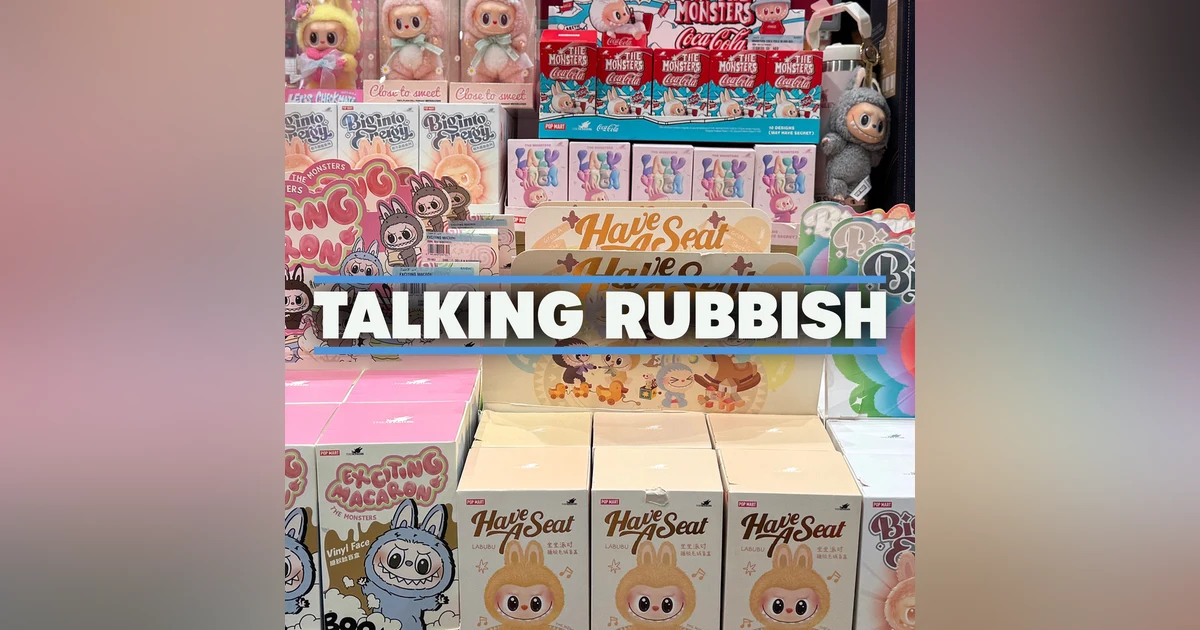
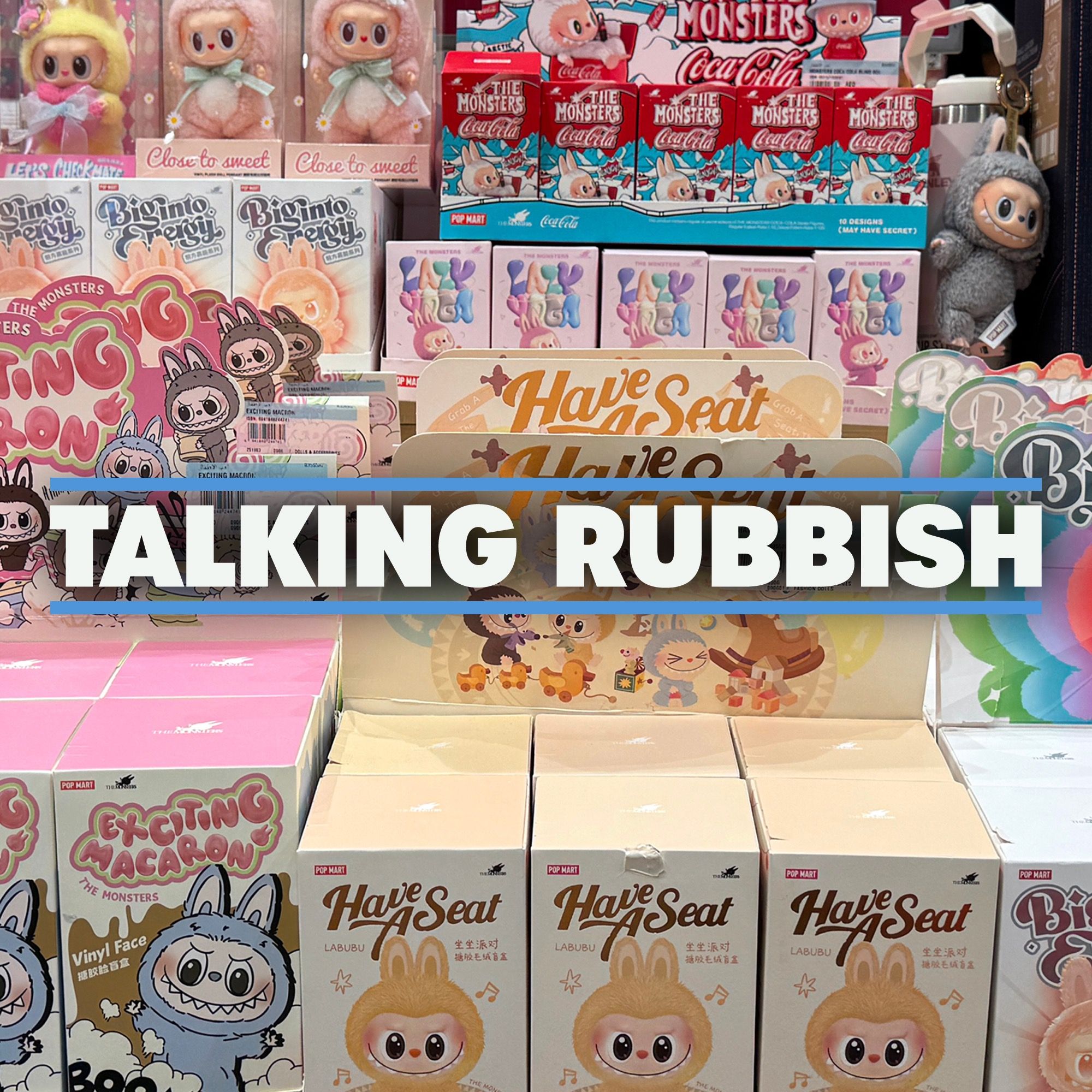
The blind box market is booming, valued at more than $15 billion, with over 10 million Labubu dolls sold each month. But behind the thrill of surprise lies something darker, a system fuelled by FOMO and overconsumption. In this episode, we unbox the packaging to uncover the hidden psychology of blind boxes. Plus, are yoghurt pots rubbish or not, can wet cardboard be recycled, and is Robbie a secret video game model?

 Apple Podcasts
 Spotify
 YouTube
 Amazon Music
 Castbox
 Podcast Addict
 PocketCasts
 The blind box market is booming, valued at more than $15 billion, with over 10 million Labubu dolls sold each month. But behind the thrill of surprise lies something darker, a system fuelled by FOMO and overconsumption. In this episode, we unbox the packaging to uncover the hidden psychology of blind boxes. Plus, are yoghurt pots rubbish or not, can wet cardboard be recycled, and is Robbie a secret video game model?
Join hosts James Piper and Robbie Staniforth as they delve into the world of recycling, hopefully having fun along the way. One thing is for sure, they will talk absolute rubbish from start to finish.
Sign our very first pootition: https://you.38degrees.org.uk/p/poo
We would love you to join our community on Discord
Special thanks to our sponsor, Ecosurety
To get exclusive videos and clips, follow us on Instagram, TikTok, X, Threads or Facebook; @rubbishpodcast or YouTube: @talkingrubbishpodcast
Or you can contact James and Robbie with questions or just general rubbish musings using the email address talkingrubbishpodcast@gmail.com or by texting them via WhatsApp
Relevant links and reports mentioned in the programme can be found on the Talking Rubbish Linktr.ee
Transcripts and episodes can be found on the Talking Rubbish website
Timestamps:
The rise and risks of blind box packaging - 02:25
Additions and corrections - 30:54
Rubbish or Not: yoghurt pots - 37:15
Rubbish News - 42:04
Can wet cardboard be recycled? - 47:42
Residual Rubbish - 50:58
Music licence ID: 6WPY8Q4O2RPFIOTL
Hello, welcome to Talking Rubbish, a weekly podcast delving deep into the world of recycling and discussing the truth behind snappy headlines and one-sided stories. In this episode, we will discuss the rise and risks of blind box packaging. Are yogurt pots rubbish or not? And I have a question about how wet cardboard might affect recycling. I'm Jose Piper, author of the rubbish book, and I'm joined by Robbie Stanforth, my far from rubbish friend. Good morning, Robbie. Hi, James. Happy Recycle Week.
SPEAKER_01Oh yes, it's recycle week. Gosh, it's come run quicker every year.
SPEAKER_00Yes, it's run between the 22nd and 28th of September. I think this episode's going out on the 25th. So what a nice way to celebrate. Getting to do a bit of talking rubbish. Uh-oh, great. And what's this year's theme then? The theme this year is Rescue Me, exclamation mark. Recycle. Rescue me, recycle. Absolutely. And it's an extension of last year's theme. They had some real success last year where they picked a few items that could be recycled, but people often forgot to put it in the right bin. So they've sort of extended that, picked a few more items. I think this year they're focusing on yogurt pots, toilet rolls, aerosol cans, toothpaste tubes, shampoo bottles, perfume bottles, spray bottles. It's a lot of bottles, and foil. God, that's a lot of stuff.
SPEAKER_01Sounds like a lot of stuff out of the bathroom. You know, people just don't quite realise it's not just recycling your kitchen and in your lounge, it's also upstairs in the bathroom too.
SPEAKER_00Absolutely. Originally I was going to do our rubbish or not as toothpaste tubes, and then I started doing the research and I was like, actually, this deserves its own trash talk. So I think very soon.
SPEAKER_01Oh. Deep dive into toothpaste.
SPEAKER_00Yeah, are you up for that next week? I think that could be quite good.
SPEAKER_01That'd be great. And jumps ahead of the long sighted toilet roll episode that we're going to do.
SPEAKER_00Keep the influencers on edge, you know. I think will it ever come? It will come. The toilet roll episode is inevitable. Alongside the terror cycle episode, the long muted. What else have we said might come in the future? Anyway. I've picked yogurt pots today as I'll rubbish on up because I just think that's equally interesting. But toothpaste tubes super fascinating because it's a whole industry that has sort of worked together to try and get something recycled. So it's a great case study for us to go through. So yeah, leapfrog toilet rolls. Trash tour. So our trash talk today is about blind box packaging. Robbie, if I say beanie babies, furbies, tamagotchis, cabbage patch dolls, what are you thinking? Um fads, trends.
SPEAKER_01The most popular Christmas toy, maybe.
SPEAKER_00Oh yes, possibly. I suspect they all were the most popular Christmas toy, but yes, definitely fads and trends. And we have a new one on the scene, La Boo-Boo. And when I say laboo-boo, what do you think of?
SPEAKER_01I know all about the laboo-boo, actually, much more so than those beanie babies and the furbies.
SPEAKER_00Did wonder, you know, you have a daughter. I did wonder if you'd know this.
SPEAKER_01Yeah, this one's right up my alley because I had to learn about it just over the recently past summer holidays. She acquired one. I'm not sure which relative was the culprit because they're very interesting looking things, shall we just say. But actually, it wasn't a laboo-boo, it was the knockoff version, the lefufu. So I've actually been educated by my daughter over the past couple of weeks around what the difference between a laboo boo and a lefufu is. And the labu-boo's apparently got posable arms and its head turns, I think. Whereas the lefufu is fixed and it's kind of like a counterfeit or knockoff version. I love that lefufu.
SPEAKER_00That's yeah, there's been lots of news recently about counterfeits. I guess we're we could talk about that today, but probably not as relevant as the box that it comes in. For those who don't know, it's a little monster dull. And I guess there's a big difference between a laboo-boo and the products that I referred to at the beginning, because with a laboo-boo, we are entering the mysterious and literally hidden world of the blind box.
SPEAKER_01Yeah, and I tell you what, it's very, very, very hard to know what's inside it. That was one thing that I did check when my daughter was, come on, there's gotta be a way, but absolutely not. There's a picture on the front, but that picture may not be the character you're about to get.
SPEAKER_00Oh yeah, we'll come on to this because I've got a really good example of this with Lego. But let's just start by saying we are not experts. You are actually more of an expert than I appreciated with your the foo foo knowledge. But we are very good at packaging, and really that's what we're talking about today, the box that's on the outside of the item and how that might affect how people buy, whether they buy more because they don't know what they're getting. So we are literally talking about a box here that looks identical on the outside with a different product on the inside. And this has been going for ages, you know, panini stickers, Pokemon cards, all these kind of things that were in wraps, you didn't know what you were getting, some were rarer than others. It's been around for a long time. I think there is a slight concern with this one. First of all, it's loads more packaging. It's not just a few cards wrapped in plastic, it's a massive cardboard box. But also, it's just got huge appeal and the quantity that are getting sold are insane. And there's some things that I want to touch on with this that I think are really interesting. Actually, I've had this in my notes for ages, like let's do something on blind boxes, and then it came up on an episode of South Park I was watching just the other day, where the whole concept of the episode was one of the characters called Butters, if you haven't seen South Park, had been asked by another character to get a specific laboo-boo. And so she said, Oh, you know, if you like me, you would get me this laboooboo. So he went to the shop to get one and he opened it. It was like $85 because of tariffs and all sorts of things. He opened it and he goes, Well, this isn't the one I wanted. Can I get the one I wanted? And the guy goes, You need to buy another one. And so the episode became him just constantly trying to get $85 to get the right one that this girl wanted. And I guess that's the point of this episode. It's like, how much more do you buy if you don't know what you're buying?
SPEAKER_01Yeah, it's crazy.
SPEAKER_00Yeah, and that kind of randomness of it, I guess, creates the value. So if you get a particularly rare, I mean this is obvious, right? If you get a particularly rare item, it's worth more than something that isn't rare. But I do think this is what Labo has done really well, because what they've done, and when I say well, I don't mean I like it. I just mean this is how they're selling loads. It's a successful business model. What they have done is they release a series, and let's say the series has 12 characters in it, they will make one character super rare. So they will release 13 characters, 12 of which are super easy to get, one in twelve chance, they're all the same quantity, and then there will be one character that has a one in 72 or 1 in 144 chance of coming up. It depends on the series, and they call those characters secret characters. So, like with Pokemon cards, you had like a Charizard, which was like a special shiny, right?
SPEAKER_01Whoa, okay, you know your Pokemon there, James. I'm very impressed.
SPEAKER_00I mean, Pokemon was my thing. When I was a kid, I didn't have Laboo Boo, I definitely had Pokemon. But you know, it's the same principle where those rarer cards are going to be worth a lot more. And I think I was looking, and you know, some of these secret characters are going for as high as like £500.
SPEAKER_01So Okay, on a like resale market. Exactly. Because people are thinking, actually, how many of these blind boxes will I have to buy to have a chance of getting one? Oh, I can just sell it secondhand and and realise some value out of it.
SPEAKER_00I guess the point here is it's actually not loads of characters that are, it's just one in a series. So you know what you're looking for. Okay. So the concept of a blind box, just before because I think we'll come on to Laboo Boo towards the end. I think let's just talk about blind box market in general. The concept originated in Japan, and the blind box market, believe it or not, is now valued over $15 billion.
SPEAKER_01Whoa, okay. Across the globe, but originating in Japan, I presume.
SPEAKER_00Yeah, correct. And there's lots of companies who make toys in blind boxes Funky, Kid Robot, Mini, so all names I'm sure I'll get familiar with as my son gets older. But Popmart who make laboo-boo, I think, are the ones who have really catapulted the market.
SPEAKER_01Yeah, Popmart's the one my daughter's telling me, it's gotta be from Popmart. That's when you know it's a real labu-boo.
SPEAKER_00This is great that you've done this research, thank you. But I guess the important thing here is blind boxes, and I don't want to sound too drastic, but blind boxes is gambling. And this is gambling that is directed at children. I mean, your daughter is nine, she knows all about labu-boo, she knows all about this stuff, and it is a form of gambling. Blind boxes are gambling.
SPEAKER_01So is that what you're gonna put out as the uh trail for the episode? How companies are getting children into gambling with big shock horror headlines around it. It could be a good title for the episode, definitely, yeah.
SPEAKER_00And there is one major thing that comes with gambling, as all of us know, and that's overconsumption. And there's so many studies on this. A 2025 study from Wuhan University showed that a combination of loss aversion, FOMO, so fear of missing out, and the ziegenic effect, which is a super fascinating thing I'll talk about in a second, cause people more likely to make additional purchases with blind boxes. So you've got, just to go through those, loss aversion, I missed out, I need to do something different, you know, I've I've lost something. Fear of missing out is fairly obvious. The ziegenick effect is something we all have, which is we are more likely to remember an unfinished task. So if we complete a task, our brain just sort of forgets it. It goes, You did that, we don't need to think about it anymore. But there is an effect for if we don't finish a task where we we can't get it out of our mind. And brands use this, particularly with blind boxes and collectibles. They use this because they know that if you start collecting something, finishing that collection will be at the forefront of your mind for a long time. Okay.
SPEAKER_01Wow, that's like a very clever. Well, the realities of the psychology behind why anyone would want to collect anything, isn't it? And definitely in terms of those three, the fear of missing out is absolutely the one with just trends in general, regardless of the blind box. And then it's amplified, isn't it? You know, children and things thinking, all my friends have a laboo-boo, I need to get a laboo boo. Then when they get that one, it's not quite the right labu-boo. So I need to get another one, and it goes bounces from uh birthday present to Christmas present to the next birthday until they get the one that they want.
SPEAKER_00Absolutely. And there is a strange paradox with blind boxes, right? Because normally if you're dissatisfied with a company or a product, you buy less. So if you open it and you go, I'm disappointed, you would normally buy less. But with blind boxes, you end up buying more.
SPEAKER_01That is a weird paradox, isn't it? That is so clever when you think about it.
SPEAKER_00You don't blame the company for making your life harder and making you spend more money. It's very, very weird.
SPEAKER_01You sort of knew the rules of engagement and you just think about it as, well, gambling, just a rotten luck. I'm gonna try my luck again.
SPEAKER_00Exactly. And a survey conducted by iResearch in 2022 found that over 40% of Chinese consumers who purchased blind boxes reported that they made additional purchases due to a desire to complete the collection or avoid missing out. And the same study found that 60% of purchasers were motivated by the thrill of discovering rare items. And perhaps unsurprisingly, as you got closer to completion, you were likely to buy more. So this is a curve. You know, if you start collecting and you're like, oh, I've got half of them, you are way more likely to continue.
SPEAKER_01Okay, so the whole thing just escalates as you get more and more into it. And that really sounds so similar to gambling, doesn't it?
SPEAKER_00I could replace some of the words in that sentence, and you would think I was talking about gambling in a slot machine.
SPEAKER_01Yeah, that's absolutely mad.
SPEAKER_00Yeah. And China actually realized this, and Beijing has called for tighter regulations around selling blind boxes to children under the age of eight, and China do consider it a form of gambling, and they are looking at how they can regulate this.
SPEAKER_01Eight's too young. I need twelve at least. Yeah.
unknownYeah.
SPEAKER_00Your daughter's gonna be listening to this going, great, I'm past it. That's cool. I'm old enough to gamble though, Dad, apparently. So let me give you this Lego example I talked about at the beginning, because I think it's a really good example, A, of consumers fighting back against a blind market and B, companies then trying to adjust to beat what the consumer's doing. I don't think we'd mentioned it on the podcast, my love of Lego, which is shocking. We're at episode 61. How's it not come up?
SPEAKER_01Crazy. You are a big Lego guy. That's one thing I do know about you. It's a safe birthday or Christmas present, I would say.
SPEAKER_00That's the one thing you know about me. That's right.
SPEAKER_01Yeah, that's it. That's all I've got.
SPEAKER_00I'm thinking for Christmas this year we might do like a Lego special because there's loads we could talk about, and I can talk about all my Christmas presents that will inevitably be Lego. Anyway, it is my shame the uh amount of plastic I have in my house linked to that particular product. It's a market I understand. And Lego, a long time ago. I I'm trying to think actually, I didn't check the date, maybe 15 years ago, started selling collectible minifigs.
SPEAKER_01Oh yes, in the sort of plastic foil-looking lined packet, yeah.
SPEAKER_00Yeah, now series one, and I know this from experience, came with a unique barcode for each figure. So what they had were bags, foil bags that were blind, but they had barcodes on the back, and the barcode was unique for the figure. So very quickly there were websites popping up saying, print out this list of barcodes, compare them, and you'll know what you're getting.
SPEAKER_01Hack the system. I like it, James. I can see you being well into that.
SPEAKER_00I actually do not collect these minifigures because I I probably should have said at the top, I have an addictive personality, and I know I should not be buying Leblu boos. Because I am exactly the kind of person who's like, I've got to complete this now I've started. So I do avoid a lot of this stuff. And in this particular example, I do not buy these Lego figures. But it started in a bag with a unique barcode. Then Lego realized that was too easy for everyone to find. So the unique barcode just became a generic barcode for all of them because that you know they weren't selling as many. I'm not sure Lego would ever say this, but surely it's that they weren't selling as many because people were getting the right ones, the ones they wanted. So then suddenly you had these guides come out of how to feel through the bag, you know, what to feel for. So each character would have like a unique this character's got a shield or this character's got a sword, and it would point out which were the easiest to feel for. Whoa. And you would walk into shops, I mean, people will have seen this, and grown adults are just picking up bags and feeling them to try and find whatever is in there that they've identified as the key thing. So Lego solved their problem with the barcodes, but created a whole new market of this is what to feel for.
SPEAKER_01Okay.
SPEAKER_00So then, knowing that was happening, they then moved to a cardboard box. So rather than being in a plastic bag, they are now in a cardboard box. So then what the consumers did was they went, Well, to solve that, every single figure weighs a different thing. So we will just start weighing them. Oh my gosh. They started publishing these are the weights of each of the figures. And I would go into Lego stores where they had a little set of coffee scales like my scales, and you would put the box on and it would weigh it, and it would go, That's this character. And so without having to open it, all the Lego stores could sort out all the different characters.
SPEAKER_01Okay, but the Lego stores are sort of like they're leaning into it, they're not trying to make- I think they know, yeah, they know that adults just want to get the right. Okay, and they know that someone's gonna bring in their own scales anyway. Someone like you, perhaps, James, who takes scales around with them. And so they thought, well, we'll just put the scales in the store and shortcut the whole thing.
SPEAKER_00Exactly. And so now they have a QR code, someone's been able to hack this QR code that's on it, and someone's actually created an app where you can scan the QR code on the box and it will tell you what's inside. So it's just a really good example of like how a company has tried to go, we're gonna make this harder and harder and harder because actually we want to sell more, we want this to be blind, and consumers have gone, no, we're fighting back because we don't want to buy duplicates, so we're gonna find ways of doing this.
SPEAKER_01Wow. So that's like four different ways. Originally the barcode, then this feel guide, then the weight of the box, and now the QR code. That's amazing how it's evolved.
SPEAKER_00Yeah, so over the last 15 years or whatever it's been 10 years, I have watched that evolution. I probably own one, but I don't buy don't buy this specific range. Don't do it to yourself. Let's come off Lego. Let's talk, we'll save Lego for Christmas. Let's talk about Leboo-Boo. Created by Kai Zing Lung, an artist from Hong Kong, who grew up in the Netherlands and so was surrounded by fables and European fairy stories, which is where they think these kind of monsters came from. They started to become a hit around COVID. So around 2022 in China, so just as we were coming out of COVID, people started seeing them appear. And I think they were pretty driven by celebrities. So I think David Beckham's got some, and I think Rihanna had some. I can't quite remember. There were load loads of celebrities. Really? Yeah.
SPEAKER_01That's crazy. It was just like a sort of trendy fad or something, and probably quite expensive.
SPEAKER_00I can't stress enough how much this is growing. Popmart, which makes labu boo, last year grew its sales by 550% in North America. Whoa. And it now has stores across the country. So they sell an unbelievable 10 million labu boo dolls a month.
SPEAKER_01Really? Wow. Okay. So that strikes me that there's got to be some absolute fanatical buyers out there who are definitely trying to buy up the series. And it isn't just one in every child's household and who knows what they end up with.
SPEAKER_00Oh yeah, and research to this, again, I ended up on Reddit as I so often do, and you had people going, How many have you got? And people would respond again, I've got twenty, I've got ten, I've got fifteen, you know. There's been a few series, over 300 figures to collect now. Not all of them are in blind boxes. And as I said, the thing they did that I think has made them really popular is made everything quite even in terms of being able to get except one character per series. So obviously everyone's looking for that one character. CNN ran a really interesting simulation of 10,000 people to see how much you would have to spend on average to get that secret figure. So it just ran a computer programme saying, take 10,000 people, give them average luck, how much would you have to spend? And it recognised obviously that some people are gonna get it early, someone's gonna pick it out of that 10,000, a few people are gonna get it in their first box, and some people are gonna get it in their last box. The average was actually $2,000 that you'd have to spend per series to get a secret doll. That's at a retail price of $27.99. The price keeps changing because of tariffs. And the most a consumer had to pay in the simulation was actually nearly $23,000.
SPEAKER_01Whoa gosh, feel sorry for that person, although it's a simulator, but there might be someone in real life who's 20k down and still not got the secret figure they want.
SPEAKER_00Like Beanie Babies before them, scarcity is super important and companies know that they release drops of characters. You know, there's raffle tickets to be able to buy one. You know, they deliberately keep some characters back, they hold back product, they don't make enough to meet demand. The videos I saw of queues of people trying to get one is unbelievable. I think Marina Hyde on Restors Entertainment once mentioned that she queued with 400 people for one in a queue that was three and a half hours for her daughter. Oh my gosh. It's mad. So, Robbie, I didn't queue that long, mainly because I spent far too much on this, and you don't know this, but I have bought a laboooboo. It's the Coca-Cola one. I thought that was like relevant to our packaging world. So they've done a little partnership with Coca-Cola. And interestingly, this Coca-Cola one actually is a series of two. So if you look on the side here, I know this is really boring as a podcast, I'll try and put this on social. There's actually two that you can collect, and then there's the one secret, which is one in 72. So if you were collecting this series, you would end up with a lot of duplicates.
SPEAKER_01Okay, so it tells you that it's a one in 72 chance on the back of the box, though, there.
SPEAKER_00Yes, it does.
SPEAKER_01Yeah, so you know what you're getting into. You're like, for the secret one, I might have to buy tens of these things to have a chance of getting it.
SPEAKER_00But look at the size of this box. It's unbelievable. It's massive. And looking at the box, here we go. So on the back of it it says ages 15 plus. Can you believe that?
SPEAKER_02Whoa.
SPEAKER_00And I think that's because of the gambling aspect of it. I think that's a China regulation that they have to say it's for over fifteen year olds.
SPEAKER_01Okay. That there is no law that's gonna stop a fifteen year old buying that, is there, in the UK, as I understand it. No, I don't think so. They're just sold in the average Shop.
SPEAKER_00Oh, and they're sold primarily if you want to get a hold of one. They seem to be sold in like shoe shops. You know those shoe shops you go in where the shoes are wrapped in plastic and they're super expensive. And you know, those shops, that's what I walked into to buy this one.
SPEAKER_01Okay, the high-end sneaker shops.
SPEAKER_00It was absolutely hilarious because I walked in in flip-flops. And the guy behind the counter was like, You're not here for shoes, are you? I was like, no, I'm looking for a laboo-boo. We do a podcast on recycling and I want to talk about the packaging. And his response was, Yeah, they obviously produce a lot of waste. You know, we sell lots and they have lots of waste. So I was like, Great, thanks for that. You'll be in the podcast. And I said to him, You have a lot of these, you know, because he had loads of laboo-boos. And he explained that he had a Python bot that could, and I quote, get things that others couldn't. So I almost walked out there and then I was like, I don't really want to support this guy's bot empire, but I decided actually for the podcast I would buy it. But I am pretty annoyed I bought from him in hindsight. Wow.
SPEAKER_01Okay, fine. That's interesting.
SPEAKER_00This is just what you always hear, isn't it? You know, with these products that are hard to get. People have a bot that just goes and buys loads of them quicker than kids can. Okay. And then they sell them for ridiculous prices. I'd rather not tell you what I spent on this, needless to say. It was more than I should have done. It was not the RRP. I'm unboxing it now and potentially making some people very sad because I am just ripping this open. Uh maybe I'm meant to be using a knife or something, but let's let's unbox this and see what it looks like. So we've got cardboard. There's a cardboard box. And then when I take it out, okay, so I haven't got the secret, I can already tell that. I've got a a laboo-boo holding a Coca-Cola can. There we go. Okay. So that's in plastic, what would you call that? Like a quite a lot of plastic. Hard plastic sort of casing. Here's my laboo-boo for social media holding a little coconut. There is a huge amount of environmental diatom, which I think is they're like silicon beads. Oh, okay. Yeah. We'll talk about those in a second. So I'm not surprised I didn't get a sucrose. I would have to buy on average 71 more of these to get it, which means I'm going to end up with like 35 duplicates of the two that you could collect in this series, which is just ridiculous. If you go to the Popmart website, even for this one, the choices of sale, and by the way, I can't buy this, it's sold out on Popmart's website. I've had to buy this through the shoe shop because they are massively overpricing it. Because of his bot. Yeah, because of his bot, and then they're massively overpricing it. So you can't buy it on the Popmart website. And if I could, the two options for sale are buy one or buy six. So if I bought six, I'd end up with at least three duplicates of each because there's a one in two chance.
SPEAKER_01Oh my gosh. So you would literally have a collection of very similar looking things in your home.
SPEAKER_00Yeah. And that's the problem, right? How much does it create over consumption? So, well, I can tell you because I've weighed, I know the packaging around this. I had a look at it and I've weighed some of it. And there were 53 grams of cardboard, 45 grams of plastic, and 108 grams of the bag of beads. So that environmental diatom.
SPEAKER_01Yeah, okay. So that then that's to keep it dry, is it that stuff?
SPEAKER_00The toys have a plastic face. And I did find a blog that said the beads were also there to remove the smell of formaldehyde from the plastic faces. So that's depressing. Yeah, that sounds like something you would want, a odorless toy. It doesn't smell of formaldehyde. Anyway, so that's 206 grams of non-toy packaging per figure. And if you had average luck and therefore needed to buy 72 laboooboos to get the secret one, you would have the packaging which weighs about the same as a microwave. So if you just were looking for the secret one and had average luck, you would have a microwave's worth of packaging. So just think about how heavy that is.
SPEAKER_01That's pretty heavy a microwave.
SPEAKER_00If you were the unlucky person that had to spend $23,000 in the CNN model, you have just bought the amount of packaging that is the equivalent of an adult male reindeer.
SPEAKER_01Oh my gosh, that's that's not very Christmassy.
SPEAKER_00And that's the problem, right? You make things rare. Kids are definitely going to overbuy it. They're going to go, oh, I've got duplicates. I might trade my duplicates. I might not. I can't tell you how many duplicate Pokemon cards I had as a kid that just sit in a box somewhere now. But you think about the packaging around those. Well, Laboo-Boo is that on a giant scale. 206 grams of packaging per doll that isn't anything to do with the doll. I mean, the doll itself is plastic and has bits of plastic all over it. And once the fad is dead, we'll probably sit in an attic or something doing nothing or end up at a dump or incineration. This is crazy that this market has taken off so much, and we're in a position where we've got a toy company that's like, hey, to complete this collection, you have to buy at least 72 of our products when we've only got 12. So you're going to end up with six sets of duplicates and not much you can do with them.
SPEAKER_01Yeah, it's definitely one of those things that's like, I don't want to be a party pooper, but it's a bit like the worst of humanity, isn't it? Like really playing on people's sort of need to uh be satiated or whatever, all this fear of missing out, it really leans into it, doesn't it?
SPEAKER_00It does. And the the link to gambling is extremely strong. And I'm gonna end this on a bit of a rubbish note. I'm gonna say, look, there's a bit of a trigger warning here because I'm gonna just talk about suicide for a second. And I know we haven't really this is really down, but it's true. When I started looking at blind boxes, I found a few studies that talked about the increased suicide risk in adolescents and teens from blind boxes. And it is so depressing. And I'm sorry to leave on this note, but it is worth me sharing these studies. This is gambling. However you look at it, it is gambling. It comes with all of the mental health issues that gambling can bring and potential financial issues that gambling can bring because kids will feel a huge amount of pressure to buy these things. As you said, Robbie, in the schoolyard, they will feel they've got to be part of it. And then there's that depression that comes from opening something, thinking you're going to get the secret, ending up getting a duplicate. You do that enough times and you start increasing risks of things that come with gambling. And I found a study in Melancet from 2022 that demonstrated a link between blind box over-engagement and suicide risk among adolescents and young adults. And the study found that people who overbought blind boxes were almost twice as likely to be a suicide risk. There will be underlying factors here, so addiction, financial issues, mental health issues. It's not just obviously blind boxes. These link could be a cause and effect, or it could just be a result of where you're more likely to engage with blind boxes if you've got a personality that's more likely to gamble.
SPEAKER_01Yeah, it could be an indicator rather than a cause or whatever. But either way, there is a link.
SPEAKER_00I'm not saying packaging causes suicide. What I am saying is people can become addicted to the rush of buying a product like this. This can worsen financial pressures, it can worsen mental health and therefore increase the risk. They identified the same trend actually with people using virtual video game loot boxes. You know, sometimes in video games you get these boxes that you pay for and they give you random loot items. The same sort of thing occurs here. And I guess it's just worth noting, this is where the world has gone. Companies have realized they can make more money if they create random purchases. They've realized that that is good in terms of getting people to queue up and buy product. And it's working in both the video game virtual market and it's working in the real market with blind boxes. And I guess I am really sorry to leave on this downer, but I do think it's important for us all to understand that blind box packaging is a form of gambling. There are lots of studies that say that. And I think increasingly countries will realize that this kind of purchase can increase anxiety and depression beyond that immediate dopamine of the box opening. And I think countries will start to legislate it. And as parents, I mean, my son's nine months old, I haven't had to worry about this yet. But as parents and as a parent, I am going to be really conscious of kind of getting into this space and trying to help people understand what this kind of market does.
SPEAKER_01Yeah, no, totally agreed that actually this is something that requires some careful marshalling. It's one thing for adults to be doing it, but yeah, to be getting kids into it before they've fully developed and understand some of the consequences is definitely a huge risk.
SPEAKER_00Robbie, this week, friend of the podcast, Roger from Biffa, who we've mentioned a few times because he writes in a lot and we ask him lots of questions, was all over my news feed. Okay. And this is to follow up our discussion of vapes on episode 17, because Roger has been out in the news saying actually they, Biffa, are seeing more vapes in the waste system than ever before. Really? Even after the disposable vape van. Oh, so why is that? Well, I think we spotted, didn't we, that the reusable version is just as cheap as the single-use version. And you can't actually refill the liquid. So you can recharge it with the USB slot, but in a lot of cases you can't refill the liquid. So they've just put a USB slot in to get past the ban and kept a product that is just as single use as it ever was.
SPEAKER_02Oh gosh.
SPEAKER_00Now I should note, a spokesman for the vape industry said the ban, not a job I want, I should say. A spokesman for the vape industry said the ban had been a success.
SPEAKER_02Really?
SPEAKER_00No idea what metric they were using or what qualified them to say that. Because Biffa was saying that vapes are actually up 3% since the start of the ban. And their data suggests that over a million vapes a month are being thrown away. So just a reminder, they can start fires at recycling plants. In June alone, Biffa had to deal with 60 fires caused by vapes and electricals. So please, if you vape, find a dedicated collection point in a shop or take it to your local recycling centre, which we also call a tip on this podcast. I don't like the word tip. I just want to make it clear. If I say tip or dump, I don't like it. But I also don't think any of us really know what local recycling centre means. I am very relieved because tidy happy calm, which was the username on Discord, finally got in contact to confirm that tidy happy calm was not their what three words.
SPEAKER_01Oh great. Gosh, we were nervous that we were giving out personal information, weren't we?
SPEAKER_00It was like ages ago for people who haven't listened, it was like episode 53. We had someone writing called Tidy Happy Calm. We joked, maybe it's their what three words. We then announced their address live on the podcast. And I've been panicking ever since. They might have gone into hiding, you know, because everyone's knocking on their door. So luckily, Kate contacted me, both on WhatsApp and on Spotify Commons, just to let everyone else know who was listening, but it's not a moment to panic. So thank you, Kate. She was just catching up and she confirmed that Tidy Happy Calm is actually her business name, and she's based in the UK. Kate is a sustainable decluttering coach. Oh, very cool. So few and thank you, Kate, for contacting us. We also, just in terms of naming, now I'm gonna get in trouble here. So a few episodes ago, I said, cover your ears, youngest listeners, Danny and Emily. Devil's arse. I said I wouldn't say it again, but I have to to explain this situation. This was on a cup that was found in a churchyard, and I said it might be the name of the beer without doing any Googling. Oh yes, yep. And John, who found the cup, said, No, it's not the beer, it's the name of one of the caves in Castleton.
SPEAKER_01Okay.
SPEAKER_00So this is a very important correction. Whoa. And according to Wikipedia, the name may have arisen because of the flatulent sounding noises from inside the cave when flood water is draining away.
SPEAKER_01Really? That's amazing.
SPEAKER_00Danny and Emily will have loved that. Flatulent noises from the cave. That's brilliant. So thank you so much, Kate and John, for those very, very important corrections. And as always, we'd like to take a moment to thank our sponsor, EcoSurety, who are on a mission to rid the world of unnecessary packaging. They help brands navigate the tricky world of extended producer responsibility, but that is not all. They also collaborate on some incredible recycling projects and consumer awareness campaigns for those tough to recycle materials. If you're an organization looking to make smarter packaging choices, check them out at ecosurety.com. And remember to share talking rubbish with all your friends and family. That would be super helpful for us. And also leave us a review, it's the best way to help us grow. And if you leave us a review, you could be Robbie's review of the week.
SPEAKER_01This one's a great one. I sort of understand what it means, but maybe you can enlighten me, James. This one starts a podcast not to fall asleep to. Five stars. And it's from SafSky on Apple. After becoming frustrated at listening in chunks at bedtime and having to revisit where I left off, this is now my one and only daytime podcast in VerdCommerce. So interesting and useful for anyone holding a piece of rubbish or not in their hands, hovering over bins, wondering where it goes. I don't want to miss a minute of Robbie and James and thoroughly recommend as a daytime podcast Big Smiley Face.
SPEAKER_00I love this. There's so many audiobooks, TV shows, podcasts that I fall asleep to. Okay. Yeah, I'm like this. I fall asleep to stuff all the time. Sometimes TV episodes take me like six days to watch because I watch about four minutes at a time and then I fall asleep. It's really bad. I shouldn't do it. I completely get this, and I am honored that we are your only daytime podcast.
SPEAKER_01Very much so. Waking up frustrated that she hasn't got to the end of the episode has really got them thinking, This has got to be my one and only daytime one.
SPEAKER_00Thank you so much. So we'll say good morning or good afternoon, but we won't say good evening because you'll be listening to us during the day. Absolutely. Thank you. So you can follow us at rubbishpodcast, you can email talkingrubbishpodcast at gmail.com, or you can WhatsApp us. Also join our Discord. It's the easiest way to engage with us and listeners of the show. And the link to all those things is in the show notes, as is the link to our petition, which is about banning the word compostable on dog poo bags, which can't be composted. Please take a second to go and sign it. I feel like I'm gonna do something with this petition soon. I've got a plan. So we'll talk about that in the next few weeks, like what my plan is. Oh, okay. I'm gonna need some extra signatures to enact my plan. So if you're listening to this and thinking, oh, I haven't taken time to sign it, I'd be really grateful if you could do it over the next couple of weeks. Because I've got a good plan, trust me, sign the petition. Thank you. Rubbish or not. Today's rubbish or not is Yogurt Pots in honor of Recycle Week, because that's one of the items they have said should be recycled that people often aren't quite sure about. So Robbie, I may have spoiled it by saying it's in recycle weeks. Should be recycled, but Robbie, uh Yogurt Pots, rubbish or not.
SPEAKER_01These are absolutely not rubbish. They can be recycled. And the reason I know this is actually from many, many years ago, like before I was even doing my current role, I went to a plant that was recycling yogurt pots, and they were explaining, and so this must have been like 15 plus years ago, and they were explaining why they needed to get industry to all use the same material for yogurt pots, because that was going to make it much easier for them.
SPEAKER_00Yes. Yogurt pots has been really interesting because they started off as polystyrene, and we often I think we talked about this before. We think of polystyrene as like the expanded polystyrene that you get with like your TV. That's quite hard to recycle only because it's just full of air, so it's hard to transport, and it's as easy to recycle as any other plastic, but difficult to transport. But you also get polystyrene in a rigid form, and that's what our yogurt pots used to be made of. But now they've moved away from polystyrene and they're more likely to use either polypropylene or PET, which are widely recycled. So yogurt pots can definitely be recycled. I went to the shops last night to have a look at some yogurt pots, and I couldn't see the resin codes because of the cardboard outage.
SPEAKER_01Oh, yes, okay, fine. And that's what all the information is printed on, and the plastic inside is kind of unprinted.
SPEAKER_00Yeah, exactly. And I was shocked how many yogurts have actually moved to cardboard. I I haven't bought a yogurt in a while. You know those ones that come with like a bit of granola in the top that you mix in with the yogurt?
SPEAKER_01Oh, yeah.
SPEAKER_00Those are all like cardboard yogurt pots now. And they'll have like a plastic inside, but a lot of the yogurts on the shelf felt like cardboard.
SPEAKER_01Okay, so it looks and feels like cardboard, but it's got a plastic inside.
SPEAKER_00Yes. So because I wanted to see the plastic resin code, I actually bought some yogurts for us to eat last night and some guests over, so I thought I'll buy a pack of four yogurts.
SPEAKER_01Okay, nice Greek style, healthy, low-fat Greek style yogurt then, James.
SPEAKER_00Yeah, that's my way. But um this created the biggest debate because I brought back four Rolo yogurts. Ah, okay. The opposite of what I thought. Nice healthy Rolo yogurt. Such a guilty pleasure. And that was decreed by Ellie and my guests that these were not yogurt pots, these were moose pots.
SPEAKER_01I'm with Ellie and the guests. Absolutely, that's not a yogurt, is it? What is it? It's uh I don't even know what it is.
SPEAKER_00It's delicious, that's what it is, Robert. Anyway, once the cardboard was off so I could actually see the plastic pot, there was still no resin code. So I just enjoyed the Relo yogurt instead. But I know most of these are PP. I'm confident that the yogurts that I ate last night were this, particularly because they had the OPRL recycle label, which I don't think you would have if they were polystyrene. So just back to the shops, just thinking about it. I actually had a look at all the large pots as well. And a lot of the large pots, like the Greek yogurt you're talking about. Oh, the healthy stuff, which we also have in our fridge, they were made of PET. So I think what happens is like the larger yogurt pots are PET, smaller ones are PP. But they are such a great example of industry moving away from a difficult to recycle material, polystyrene, to a widely recycled material in PP. So my advice is look for the recycle label, check your local authority collects pots, tubs, and trays, and then recycle it. It's either going to be PP or PET, and that would be fine. Fantastic. Having said all of that, I did actually find a really interesting article in Packaging Europe from January this year where Ineos Styro Solution had actually mechanically recycled collected polystyrene into yogurt pots, and these were heading onto shelves of Lidl. I'm assuming in the continent, because I just don't think we would have polystyrene in this country in our yogurt pots. I I could be wrong. I'm gonna have to go to Liddle to check now and addition and correct this. It is interesting because it shows that they could use recycled polystyrene for food grade, and that is something that is usually reserved for PET. So they'd taken recycled polystyrene and managed to turn it back into food grade plastic, which is very unusual for polystyrene.
SPEAKER_01Yeah, interesting, but let's not get the UK manufacturers to go back to the old polystyrene and make it more complicated. The more standardization of these pots, the better.
SPEAKER_00Rubbish news. So my rubbish news today is that Chichester are stopping the collection of coffee pods due to low uptake. And as with any news about coffee pods, I'm very keen to learn a bit more. So I read the news story which said that fewer than 4% of households were making use of the service. This made me quite curious because I've always thought the curbside for podback was going quite well. So I reached out to the CEO of Podback, Rick, to get some more info. And the long and short of it is it is going well, but what is going better is collections back at supermarkets.
SPEAKER_01Oh, really?
SPEAKER_00Yeah, it's a bit unusual this because normally our supermarket collections migrate to curbside. Very unusual for it to go the other way. So things like flexibles, yes, they're collected at supermarkets at the moment, but we all want it to be collected at curbside. I would have thought that podback was also going in the same direction, but that appears to not be the case. So Rick was telling me that the volumes that have been collected in Morrison's have been very substantial, and that has now been rolled out to all stores. Asda introduced podback in February as like a parcel return in 600 stores. They found household waste recycling centres, or tips and dumps to you and me, working really well. And I think Rig said there were 250 to 300 locations that you could take them back to in terms of household waste recycling centres. They've got Costa and Tesco. So there isn't really any excuses, there's loads of places you can take pods back to. And using these methods, they are now getting more back, and they're quite keen to encourage people to bring pods back to supermarkets.
SPEAKER_01And I suppose that's because it's a really specific consumer behaviour. They're putting the coffee pod in the machine. People know to keep it separate from everything else. It's not just like flexibles, which could be a bread bag, a crisp packet, chocolate wrapper. It's like pods are a very specific habit that people have once or twice a day and that they Can put it somewhere separate and think when they go to buy their next pods, I'll take those with me.
SPEAKER_00Exactly. And it takes a while to fill a bag, right? And there's just it's just one of those things that you probably get into a routine of bringing it back to stores. Now, I think the reason stores are performing better than curbside is because to make curbside work for pods, what you really need is to actually put it just in your metal recycling bin. If you could say pods just go in the metal recycling bin and then we will sort them, I think that would be better than bringing it back to store. And currently podback are undergoing tests to see whether they can get these sorted in these newer Smurfs, you know, like the ones we've talked about recently, Sherborne recycling, these ones that could potentially pick out pods. They're doing tests to see whether it's possible to get them collected at curbside. And that is the ultimate ambition that it just goes in your metal recycling bin or your plastic recycling bin, depending on the pod. I guess the only thing to note here is the news was a bit misleading because it said four percent of households were making use of a service. But in certain local authorities, Rick was telling me that only about 15% of people have a pod machine. So this actually could be a third of people utilising that podback service.
SPEAKER_01So my news this week is some international news, and it's the fact that there's been a ban brought in place for soya sauce bottles in Australia. Do you know the ones, James? The sort of the fish, the iconic little fish-shaped bottle.
SPEAKER_00I do know them, yes. The yeah, I can picture them exactly. Yeah, and we've got them in the UK, these little fish-shaped containers. I don't see them often here, do you? They are massive in Australia. I remember when we were travelling and going around Australia, every time you wanted any soy sauce, it was in a fish shape.
SPEAKER_01Okay, there's one or two I've got them at home, you know, saved when we've got takeout and then used our own container or whatever. And you know, they're cute little things, so my nine-year-old daughter also likes those little things. They look cool. Anyway.
SPEAKER_00Much better to collect. They're not a blind box. You can have as many fish as you want.
SPEAKER_01Well, you can't anymore because they've been banned. So there's basically a ban on these very, very small under 30 millilitre containers with a cap and a lid. So this is great news that they're taking action on a difficult to recycle item because basically it's just too small, and it comes as part of other legislations and bans that are going on in South Australia too. So great news. Unfortunately, they're not banning all containers. So the reality is While they are hoping, the government there is hoping that people will switch to refillable bottles or large portion bottles where they just pour a little bit out into their takeaway sushi or whatever it is. Actually, they'll probably just be flexible plastic sachets. Those have not been banned out there. So from my side, it's like good that there is some action and I've seen lots of the news headlines around it. It will reduce litter of that specific type of item and and hopefully uh reduce waste there. But actually, going back to our episodes on sachets recently, it's just probably gonna proliferate the problem of sachets itself.
SPEAKER_00Yeah, it's mad to ban something that I think should be banned, it's completely unnecessary, and not ban sachets at the same time.
SPEAKER_01Yeah.
SPEAKER_00But I did joke to you that we would call this section no such thing as a fish. But I feel that might be confusing in the world of podcasting.
SPEAKER_01Yeah, copyright infringement there, mate.
SPEAKER_00No such thing as a sawyer fish. I think we'll go anywhere. Rubbish question. We had an email from Emma. Thank you very much, Emma, who said, hey guys, love the podcast. Just found it recently when it was mentioned on Nicole Whittle Sustainability Substack. Side note, thank you, Nicole, whose Substack I've now been reading through and who has kindly mentioned Talking Rubbish a couple of times now. Anyway, I haven't yet listened to every episode, so apologies if this has already been answered, but a lot of my council's messaging about recycling is that it has to be dry, especially paper and cardboard. But when it rains, loads get soggy. Does this affect the recycling? I could go out of my way to source a cover, but they don't provide them, and I doubt the majority would go through that effort unless supplied with a container that solves this issue. So I just wanted to acknowledge that we have definitely talked about this during the rubbish process of cardboard all those episodes ago. And we talked about that Insta video where the person was hosing down their cardboard to get more in the bin. Yeah, they were squashing it down. Stop doing that. Yeah, I've seen a few of that online now just to wind me up. However, I am enjoying revisiting some of these topics like we did with the incineration versus landfill a couple of weeks ago because it just gives us a chance to rethink it, but also it means this question appears properly on our directory. So if anyone wants to find the answer, they can find it much easier than just a random comment we made a few episodes ago. So hopefully this is okay just to do a bit of repetition.
SPEAKER_01Look at all these resources we're preparing for you, influencers.
SPEAKER_00So the annual recycling process, just as a reminder, uses a lot of water. And I think episode 39, our paperization episode, we talked about water use. But recycl want water at the right time. They do not want you to introduce water. They would like to introduce water at the right time.
SPEAKER_01I'm helping them out by just soaking all my cardboard boxes. Oh gosh, so badly thought out.
SPEAKER_00Look, sorting wet cardboard is an absolute nightmare. It becomes claggy, it breaks easily, it makes it far harder to sort things correctly. Remember, with cardboard, air jets are often used to sort paper and cardboard. So making it heavier with water is very likely to cause issues.
SPEAKER_01Yeah, and we've also got that thing of you want to try keep it flat so it can be blown and light and not, you know, clump it all together with the say toilet rolls being pushed inside another roll. So it's another example of you just want to try and keep it dry and flat.
SPEAKER_00Yeah, so the best thing to do is to put your recycling out as close to collection as possible, particularly if it's raining overnight, to use a lid if you can. And if it gets wet, you could leave it somewhere to dry and put it out the week after. Ooh. I've never done that, but I think maybe I should. Sometimes you do put your cardboard out and it rains overnight, and you think, oh, I'm just going to leave it. They'll take it. I mean, with Bristol it's a bit different because it's curbside swords, so it's less likely to go for sorting. But I think if you have mixed recycling, it is worth considering whether you can try that stuff out.
SPEAKER_01And then note to all of those local authorities out there who are providing bins for people for their recycling that providing a cover too is very helpful.
SPEAKER_00Yes. And finally, wet cardboard can be great for compost. So you could shred it into smaller pieces and add it to your compost bin. So something that has happened to us this week that has made us feel like an emoji. And I visited Noah's Ark Zoo Farm in Bristol, which I'd never been to before. It's quite enjoyable. Uh very expensive. Top tip. If you go in the last hour, it's a far cheaper ticket. So I was turning up quite towards the end of the day, and I was like, I just want to have a quick run-round because I've never been before. I just want to see what it's like. But this is very expensive for like an hour and a half. And they do a cheaper ticket if you go towards the end of the day. Oh. There you go. Top tip. Yep. Money saving expert here. Um and I did a bit of bin spotting as I do alongside the animal spotting. And there were a couple of bins next to the food area, like the cafe. And it was just fascinating to look at them kind of together. Because basically there was one bit that had a green wheelie bin and a black wheelie bin. The sign on the green said dry recycling, and had a picture of a sandwich pack, a bottle, and a can. Yeah. So far, so good. That all looks good to me. Sign on the black one said Gemral and had a picture of a crisp packet, a sandwich bag, you know, like the freezer bags. Okay, yeah. And a pack of wipes. So those pictures were very good. That was fine. A small note that there was a big error underneath the can on the recycling one because the wording underneath said non-recyclables. So they'd obviously just put the wrong word on. So actually the wording didn't match the pictures just on this bin alone, anyway. Go around the corner, you get another set of bins, another set of green and black bins. But this time on the general bin, there is a picture of the sandwich box that was on the green bin just 50 metres away. So literally you have two sets of bins, black and green, 50 metres apart, one which has the sandwich box, same picture, on the green bin, and one which has them on the black bin.
SPEAKER_01Oh gosh. So now you're like, for one bin you can recycle it, in the other bin, you can't recycle it. Exactly.
SPEAKER_00So depending on which direction you walked, you would have a completely different recycling message for the same product. And I just thought, I've never really seen that too much before. That's I've seen bad bin messaging, but it's normally consistent throughout a location. Seeing bad bin messaging on two bins that are next door to each other was quite interesting.
SPEAKER_01Tut tut. And for my residual rubbish this week, I suppose the emotion it stirred up was maybe embarrassment, flattered. It's probably the like embarrassed emoji with the crying, laughing one next to it is the best way to describe this. Because a colleague said that they were looking through a whole host of new games to buy for their games console and came across the Recycling Centre simulator. Uh, it's available on Xbox, PlayStation, Steam, and also the Nintendo Switch, which is the one that my daughter has. So I might well get this game. Anyway, the person on the front of this box has a passing resemblance to myself. Probably not quite so many white hairs in their beard, and maybe a bit more of a glow-up, better looking version, possibly, with a hard hat on and a high Viz vest and stuff. So I could not believe that there is a game where you can control a recycling centre, and I bet our binfluers are going to be all over this. The sales are going to be skyrocketing after me talking about it. But just to be clear, that is not me on the front of the box. They have not paid me for my image-likeness, even though I was flattened by my colleague pointing it out. I have absolutely nothing to do with the development of this game.
SPEAKER_00This is definitely going on social media so everyone can see. So if you're thinking, Oh, I want to see that, in the next week, I will put a clip up on social media of this because it's so funny. And it does look a lot like you. And we used to do this, didn't we? Everywhere we went, we'd see things that look like you, Robbie. Yeah, I know. I've just got one of those faces. Do you remember we went to Frankie and Benny's like years ago? We were on a work trip, we went to Frankie and Benny's and they had a colouring, like kids' colouring impad.
SPEAKER_02Yes.
SPEAKER_00And the character on this kid's colouring impad was literally the spit of Robbie. And again, I'll put that on social media because it's yeah, that's it. It's great. It's so good. Robbie's just pulled the same pills that the character had. So funny. I'll try and dig out that photo because it's hilarious. I actually bought Recycling Centre a simulator after your LinkedIn post that I saw on this. Oh, great. Have you played it? It's great fun. You get to go the conveyor belts going, you put the items in the right bin, you earn enough money to then buy more conveyor belts. Oh, that's amazing. It's going to teach us a lot that we can bring back to this podcast. Wonderful. As always, thank you all for listening. Thank you for the reviews and engagement. We absolutely love getting the chance to do this every week. Join our Discord, follow us on social media at rubbishpodcast. You can email talkingrubbishpodcast at gmail.com or you can WhatsApp us. All of those things can be found in our show notes. And everything we discussed today can also be found on our link tree, which is also in the show notes. So thank you so much for listening. Robbie, what's your key takeaway from today that people should share?
SPEAKER_01Well, if people have got friends and kids and stuff looking at these blind boxes, clearly they're not great things. So please tell all of your friends where you heard about these blind boxes and their effect on the environment, but also kids too, and tell your friends about the podcast.
SPEAKER_00So all that's left for me to do is to say see you next bindow. Bye. Bye.