55. How brands got us hooked on plastic, with Saabira Chaudhuri
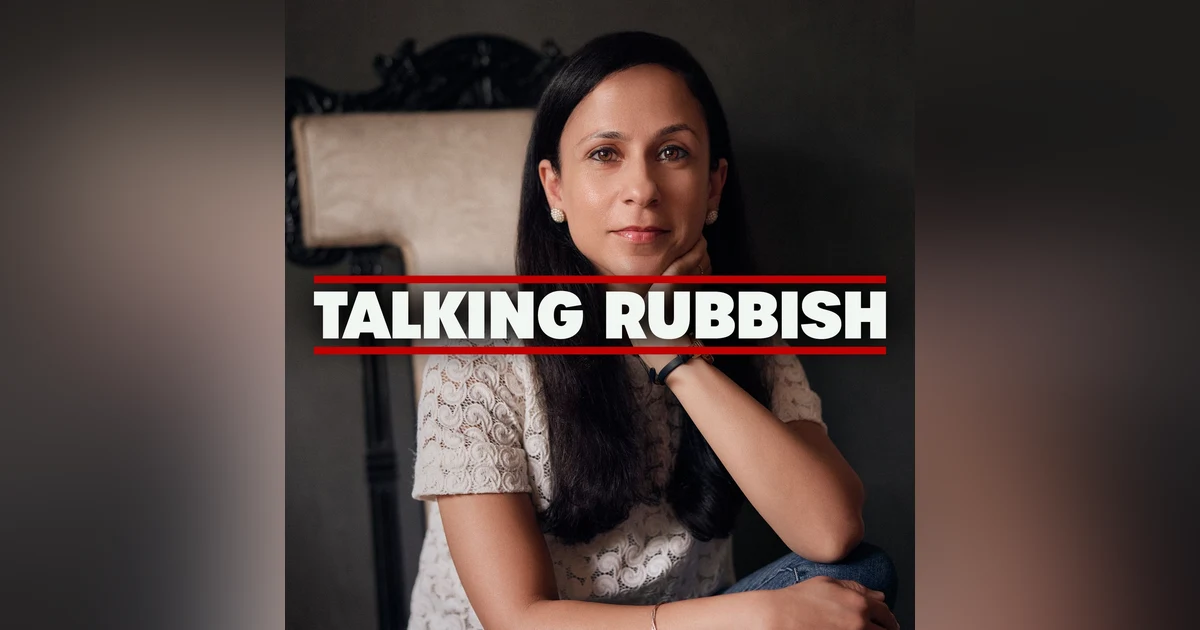
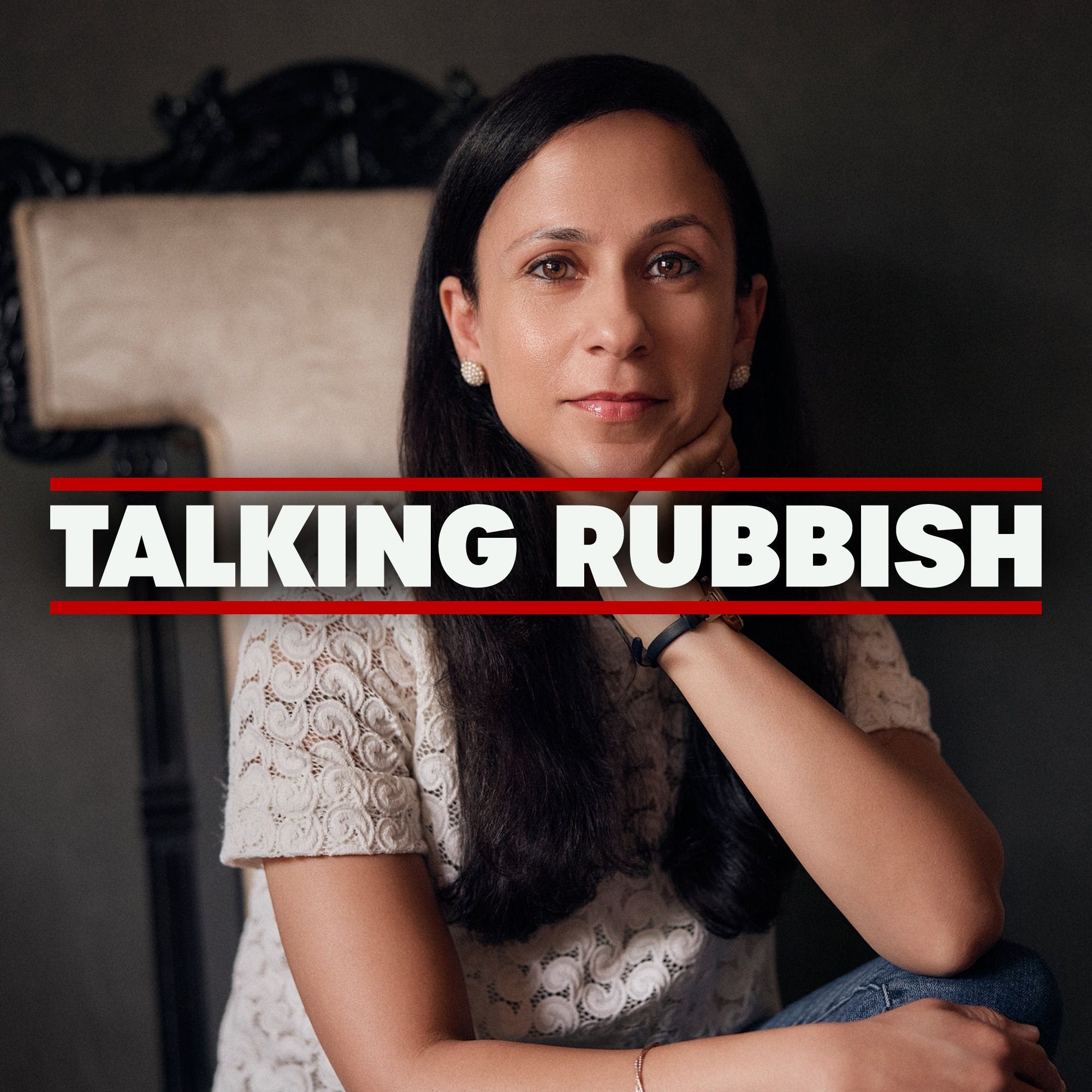
This week’s guest, Saabira Chaudhuri, author of Consumed: How Big Brands Got Us Hooked on Plastic, takes us on a fascinating journey through the meteoric rise of plastic. From the quirks of history that propelled it past every rival material, to the boardroom decisions that sealed its fate, we uncover how plastic became the world’s go-to choice, and what we might do differently if we could start again.

 Apple Podcasts
 Spotify
 YouTube
 Amazon Music
 Castbox
 Podcast Addict
 PocketCasts
 This week’s guest, Saabira Chaudhuri, author of Consumed: How Big Brands Got Us Hooked on Plastic, takes us on a fascinating journey through the meteoric rise of plastic. From the quirks of history that propelled it past every rival material, to the boardroom decisions that sealed its fate, we uncover how plastic became the world’s go-to choice, and what we might do differently if we could start again.
Join hosts James Piper and Robbie Staniforth as they delve into the world of recycling, hopefully having fun along the way. One thing is for sure, they will talk absolute rubbish from start to finish.
Sign our very first pootition: https://you.38degrees.org.uk/p/poo
We would love you to join our community on Discord
Special thanks to our sponsor, Ecosurety
To get exclusive videos and clips, follow us on Instagram, TikTok, X, Threads or Facebook; @rubbishpodcast or YouTube: @talkingrubbishpodcast
Or you can contact James and Robbie with questions or just general rubbish musings using the email address talkingrubbishpodcast@gmail.com or by texting them via WhatsApp
Relevant links and reports mentioned in the programme can be found on the Talking Rubbish Linktr.ee
Transcripts and episodes can be found on the Talking Rubbish website
Music licence ID: 6WPY8Q4O2RPFIOTL
Hello, welcome to Talking Rubbish, a weekly podcast delving deep into the world of recycling and discussing the truth behind snappy headlines and one-sided stories. I'm James Piper, author of the Rubbish Book, and I'm joined by Robbie Stanaforth, my far from rubbish friend. And we are joined today by Sabra Chowdry, our far from rubbish guest. Good morning, Robbie. Hey James. How are you doing today?
SPEAKER_00Yeah, really good, thank you. Looking forward to another great interview.
SPEAKER_01Yeah, good. I think we may have new listeners. You know, following the Mike Berners-Lee episode, and can I just say as well? So that was what, episode 50? Yeah. I had so many messages saying that was my favourite episode. I loved that.
SPEAKER_00Really? Okay, what? Less of Robbie, more of Mike Berners-Lee. You're looking for a new co-host again, are you?
SPEAKER_01This was my observation. We talked about what, five percent of that episode? People were like, that's my absolute favourite. Get rid of these two numpties. So luckily we have Sabra Chowdry today who can just talk for 95% of the podcast and appease everyone.
SPEAKER_00This could be a new favourite coming up.
SPEAKER_01But for our new listeners, because we will have new listeners, we do an interview every five episodes. So you have four episodes of Robbie and I talking loads. Sorry about that. And then you get one really good episode where experts come on and talk about all sorts of amazing things. And I'm really delighted today that we're joined by Sabra and we'll talk all about her book and the work that she does in a second, once we've done a quick intro to things we've seen this week. Robbie, in episode 52, we talked about sandwich packaging, didn't we? You've been talking about sandwiches for the last two months, I feel like. I know, I'm a bit obsessed. We've had the meal deal, we talked about this red diamond strawberry sandwich, the MS sandwich, and that caused us to talk about sandwich packages. And there's something that I noticed about that MS strawberry sandwich.
SPEAKER_00Oh yeah?
SPEAKER_01Yeah. Specifically this item. It has a really short shelf life. It has a shelf life of like two to three days, which I guess probably is quite normal for a sandwich. The difference is people definitely go in and get a sandwich for lunch, don't they? So the the supermarkets now are really good at going, this is how many sandwiches we need. Stock the shelves, they're gone by the end of lunchtime.
SPEAKER_00They know how many chicken clubs get purchased per day because they've been looking at those sales for tens of years. Whereas the uh the strawberry sandwich, they probably don't quite know how many are going to get bought.
SPEAKER_01Exactly. It's a bit harder when it's a dessert. And this was my observation that I went into an MS the other day and the whole shelf of red diamond strawberry sandwiches was reduced. The whole shelf, like 30 sandwiches just reduced in price.
SPEAKER_00Oh wow. And so this doesn't end with you buying 30 sandwich, does it, James? It doesn't.
SPEAKER_01But there is an interesting observation here around what happens when you have a product that is trending and everyone gets really excited by it, and the shop then goes, Oh my god, this is massive. Look how much media coverage we're getting. Let's make loads of them. Yeah. Increase production quickly. Two weeks later, the fad is dead, no one's buying it, and now you've got a load of sandwiches that are going off in two days' time that you've got to reduce. I wonder how much that increases food waste when you have these kind of products that people get very excited by, and then very quickly that sort of dies down, and you've gone from not being able to get one to being able to get 30 reduced in literally the space of a week.
SPEAKER_00Yeah, no, it's crazy. And I I think that's why these food waste charities exist, like fair share, etc., isn't it? Because it's these miscalculations that mean there are sandwiches left on the shelf at the end of the week.
SPEAKER_01Also in episode 52, we talked about landfills and we had Paul on Discord commenting on the episode very, very helpfully. So thank you, Paul. I think Paul has become you know, we've got like paper experts, glass experts, metal experts. Paul is now my landfill expert. If ever we're doing anything on landfill, I'm gonna make sure I talk to Paul first.
SPEAKER_00We've definitely surfaced an expert on uh Discord here.
SPEAKER_01Yeah, he mentioned he started his career in 1995 and was in charge of monitoring landfill, specifically leachate levels, landfill gas, all those sorts of things. And he mentioned that he got used to the smells, flies and seagulls, which, you know, I think would take me probably from 1995, I suspect.
SPEAKER_00Not the most pleasant.
SPEAKER_01Yeah, and an anecdote he mentioned that I just loved was one of the things he had to deal with with was thousands of litres of off-spec perfume. And he said this really made a difference to odor management. So when they were trying to work out how to balance the odour of the landfill, suddenly you got loads of off-spec perfume.
SPEAKER_00It's like quick, break glass, smash another bottle.
SPEAKER_01So inevitably from Paul, we have some corrections, you know, completely understandable. I use the word soil alongside plastic liner, so I said, you know, typically you would align a landfill with plastic liner and soil, and Paul felt that the more correct term is engineering clay.
SPEAKER_00Oh, yes, I take exception to that also, James. I think it's engineering clay too.
SPEAKER_01Yes. You didn't say anything at the time though, Robbie. I was thinking it, I didn't want to call you out at the time. Very kind of you. And it certainly does give a different picture, doesn't it? Engineering clay. It's a bit more focused than soil, I would agree with that. So I am very happy to adjust the wording. It sounds much thicker, which is probably a safer thing. And one thing we didn't say that we probably should is actually lining a landfill is quite a new innovation. That's relatively new. People used to think that leechate going into the ground would dilute really quickly and be okay to get into groundwater and things like that, because hey, by the time it gets to us, it's really, really diluted. I'm pretty glad that landfills have started being lined because that sounds horrendous.
SPEAKER_00Yeah, rubbish juice just being allowed to go into nature doesn't quite sound like a wise move, does it?
SPEAKER_01No, absolutely. And we talked a little bit about landfill gas. We talked about it being flared off or used to export for electricity. And I think to quote Paul, this might have been one of our wild speculations. He was he was fuming about this. I think we said they were more likely to be creating electricity because why would you want to flare off landfill gas? Well, he said actually, what you have to remember is landfills are quite far away from infrastructure. We mentioned that in the episode. And actually, it's not that easy to export electricity because you've got a long way to go. And so it is actually more likely in this country to be flared off. So that's a good catch there. I think we said maybe it would be more likely to generate electricity, but I don't think that's true because of the distance that the landfills are away from infrastructure.
SPEAKER_00Okay. Well, maybe they should be looking to generate this electricity and charge their electric vehicles that are working on the landfill site. What about that? You can have that idea for free there, Paul.
SPEAKER_01There you go. How'd you solve this one, though? Because his final point was that gas generation reduces over time and becomes sporadic. So it's actually quite hard to generate reliable electricity. So you'd be charging up your tractor, what, like going, oh god, it's four days instead of half a day.
SPEAKER_00Yeah, well, just invite us to the landfill site because we'll be talking a lot of gas. Very nice.
SPEAKER_01And we'd like to take a moment to thank our sponsor, EcoSurety, who are on a mission to rid the world of unnecessary packaging. They help brands navigate the tricky world of extended producer responsibility, but that is not all. They also collaborate on some incredible recycling projects and consumer awareness campaigns for those tough to recycle materials. If you're an organization looking to make smarter packaging choices, check them out at ecosurity.com. And as always, the best thing you can do to help us grow is to leave us a review. We love reading them, we really appreciate them. So if you get a second, please leave us one. If you're on Apple, you can leave words and you might form Robbie's review of the week. Robbie, have you got a review for us this week?
SPEAKER_00Oh yeah. This is a very good one, very straightforward and a simple one from Inverbud. So thank you very much, Inverbud. Title Addictive, and of course it's a five star. Wait impatiently for a Thursday to come round. Love the info. Keep up the great work. Very nice. Thank you so much, Inverbud. That's all we need, isn't it? Thank you, Inverbud.
SPEAKER_01And you can follow us at rubbishpodcast. You can email talkingrubbishpodcast at gmail.com or you can WhatsApp us. Also, please join our Discord. It's the easiest way to engage with us and listeners of the show. And the link to all of those things is in the show notes, as is the link to our petition, which is about banning the word compostable on dog poo bags, which can't be composted. So if you have a second, please go and sign that.
SPEAKER_00Yeah, and my endorsement for Discord is that's where you hear Paul digging out Piper for what he said on the episode. So that's really, you know, this is really good stuff. Thank you so much, Paul.
SPEAKER_01Today we are joined by Sabra Chowdry. Welcome, Sabra. Welcome to Talking Rubbish.
SPEAKER_02Thanks for having me.
SPEAKER_01Someone who has listened to this podcast. I know that for certain, because that's how we met.
SPEAKER_02Yes, for a long time now. I'm trying to remember. I think maybe your third or fourth episode is when I found you. I follow a lot of the same people on socials that that listen to you guys, so somewhere along the way somebody mentioned it. And yeah, I've been pretty hooked ever since. I I don't think I've missed an episode yet.
SPEAKER_01Lovely. And like so many people, your first email into the show was to correct Robbie.
SPEAKER_00No, darn it. I I was just thinking I like the sound of Sabra here.
SPEAKER_01You joined that long list of people in that club. I think you were um you were commenting about chemical recycling and the fact that that's been around for a long time. Robbie had said it was a modern innovation. So uh just fashionable, not new. We love a correction, so thank you so much for doing that. And you are well placed to correct us because you were a Wall Street journalist.
SPEAKER_02Yeah, so I I wrote for the Wall Street Journal for about 12 years, and I just left at the end of May. So I'm sort of a few weeks out, and most of that time was covering big consumer goods companies, so people like Unilever, Nestle, Diagio. Um, and generally most of those companies make a lot of packaging, particularly plastic packaging. So I think the chemical recycling stuff came from a story I did for the journal about how lots of these companies were investing in chemical recycling, but it turns out it is not a new technology. You know, it's been around since the 50s and it hasn't actually scaled since the 50s because it's expensive and very energy intensive. So I think that is my first first contact with you guys.
SPEAKER_01Sabra Chowdhury has written a book called Consumed. The subtitle is How Big Brands Got Us Hooked on Plastic, and I really enjoy getting the opportunity to read it before it was launched and having the opportunity to review it. So thank you for that. And I guess I would just urge people to actually take some time to read it because it is a fascinating history on the world of plastic. It's fascinating to see how brands kind of saw this opportunity to use plastic as a packaging, which then allowed them to grow faster, and it's almost like natural selection. You know, the companies that grow faster do the best and then they use more plastic. And actually, it's a big question mark on consumerism in the world and and how we buy, why we buy the way that we do. It's way deeper than just we shouldn't use plastic, it's a very balanced approach to the topic. So if you haven't had a chance to read it yet, I would I would urge you to get a copy because it is really, really good. I find that Wall Street Journal reporters seem to write absolutely fascinating books. So I've personally read a couple of them. I've read Bad Blood, which I think is by John Carrieroo. That was the Thoranos story, and The Cult of We by Elliot Brown, which is the We Work story. Both books written by Wall Street Journal reporters who did those. I think they did the initial investigations on those companies, didn't they? So I get I guess the question is, you're the third one I've read. What prompted you to write that book?
SPEAKER_02Yeah, so it was interesting. I think I had been writing about how consumer goods companies were grappling with this backlash against single-use plastics, and I had been writing about that for a few years, maybe five years, when I started to feel like I really needed to do a book. And and the first thing was the promises I was seeing from companies today about how they were going to deal with plastic waste turned out to be very similar to the promises I was seeing these companies had made in the early 1990s. And I had gone back and done all this historical research for a story I was writing about bottled water. And I if you sort of squeezed your eyes and sort of just blurred the datelines on those stories, they could really have been written today. It was almost exactly the same stuff, just being cycled through all over again. And so I wondered, you know, what is really going on here? It can't just be that these companies are deceiving us or lying to us. There has to be something more fundamental going on here. So that kind of sparked my interest, I think, in this issue as being sort of a a much more long-term and bigger one than just writing a few stories for the Wall Street Journal. The second thing was the more I wrote about this, the more I felt like you can't really understand what's going on with single-use plastics if you don't understand what's going on with paper, with the composting infrastructure, with so-called biodegradable plastics, with the overall concept of disposability, with climate change and emissions. So it it felt to me like writing these discrete stories was not of that much service to my readers because ultimately I wasn't able to connect the dots and give them the entire picture the way that I increasingly felt like I wanted to. And the third and final reason is I sort of feel like the conversation about plastic is very it's very high level. There's a lot of stuff about, you know, the waste trade, this murky world of oil companies, chemical companies, there's the recycling, there's the microplastics, the health impacts. And it's what I wanted to do was make this really tangible and accessible for a regular person. Because we all use plastic every day. And I think most people feel very disempowered around it because it just feels so overwhelming. And so I wanted to try and draw a box around the issue and really put a face on it. And that involved saying, well, who are the companies who really choose to sell us products in plastic? Who are the companies who, you know, put these these products on our supermarket shelves and bring them into our homes every single day? And the consumer goods companies, which I had been covering at that point for several years, I covered them for ten years overall for the journal. They were the perfect actors, characters through which to tell this story. So I I ended up going back in time to sort of the period around World War II, which is when the plastics industry first really boomed, and charting the history of how these consumer goods companies first started using plastic, why they first started using plastic, and then ultimately how this material really spiraled out of their control. So that we've arrived at the situation we're in now where nobody seems to be able to get a handle on plastic waste and and the conversation is no longer just about waste, it's about climate, biodiversity, the health impacts from microplastics and nanoplastics. It's a much bigger issue just than just the sort of aesthetic problems of of waste or you know worries about landfills filling up.
SPEAKER_01Just as you were talking there, and just the subtitle of the book, you use the word plastic a lot. You said how big brands got us hooked on plastic. And as you know, having listened to our show a lot, one of our frustrations is we tend to have this big focus on plastic. We're naturally compostable, biodegradable, paper, aluminium, glass, they all have their own issues, and people tend not to focus on those issues. Just a couple of days ago, we had this report from the BBC that was saying, is aluminium the new super packaging? And you're just like, there's no mention in that of kind of it compared to other materials. It's just an article about aluminium. And when you see an article about glass, it's just an article about glass. No one goes, and let's compare it to the others. Whereas with plastic, I think every article is, why aren't we using these other materials? And there's always that direct comparison. And so we're going to do that next week, just in case anyone's wondering. Next week we're going to do an episode on aluminium packaging, because I think it is really quite topical at the moment. But I'm interested in why you chose to use the word plastic and why a lot of the themes in your book were specifically around plastic, when actually what we're talking about here is increased consumerism, whatever the material.
SPEAKER_02It's a great question. And I think so. The simple answer is I believe that single-use plastics have rewired our everyday behavior in a way that none of these other materials can or ever will. I think it's brought about convenience portability at a low cost. It's it's brought about mobility. It's sort of allowed companies to take these their products, build entirely new markets from scratch. And I think it's a fascinating material because it has such incredibly high functionality. The flip side, of course, is it's the damage it can cause. I think goes far beyond that of many of these other materials you've touched upon, in that it is not just an issue about plastics being very difficult to recycle, because in fact there are dozens, if not hundreds, of sort of different types and subtypes. It's not just one material, the way we talk about glass and aluminum. It's not just the fact that you have these 16,000 chemicals that have now been implicated in the, you know, the use and the making of plastics. It's not just the fact that plastics fragment into microplastics, which can then be carried very far and wide. But I think overall plastics as as a concept, you know, they they've just sort of literally changed the way that we live as human beings. So one of my favorite examples is the coffee cup. So the the the disposable paper cup existed from the the turn of last century, early 1900s. It was developed to sort of curb diseases at drinking fountains. And until the plastic liner was was added to the coffee cup, coffee was largely a stationary drink, one you had maybe sitting at home or sitting at your desk at work. But a company called Lily Tulip introduced a plastic lining, and all of a sudden you were able to put hot beverages into this paper cup that you couldn't otherwise. And that simple innovation turned coffee into the largest selling drink in America in the 1950s. Similarly, something like the disposable diaper or nappy as we call it in the UK. You know, it is so fundamentally sort of dependent on plastic. Without the plastic, you wouldn't really have the product. You look at bottled water, you had glass bottles of water available previously. It is the plastic, it's its sort of lightness, its robustness, its mobility, its affordability that allowed this industry to become an everyday item. Similarly, with soft drinks, the aluminum can was great. The plastic bottle allowed Coke and Pepsi to sell people much larger quantities of soft drinks, you know, in reclosable containers that could be taken everywhere. And I think my book is filled with examples of products that are sometimes the first in a disposable iteration. They may not always be the first, but it's always they have turbocharged the market, sort of made us consume differently in more places, in larger quantity. And I think just that level of of change is what I find absolutely fascinating, and I think isn't talked about enough because we talk about plastic as a waste issue or a health issue or a climate issue. But we rarely sort of stop to think about how it is such a fundamental driver of our everyday consumption. And I don't talk about fast fashion in the book because I'm focused very much on FMCG, fast moving consumer goods. But fast fashion is an industry that has basically been built on the back of plastic that's kind of pretty much disposable. You wear it a few times, it's cheap enough, you sort of throw it away. And that industry wouldn't exist if it weren't for synthetic materials, i.e. plastic. So I think it's it's just sort of overhauled so many different areas of our lives. And and each chapter of the book, I have a chapter on McDonald's, on hefty trash bags, Unilever, Coca-Cola. Each chapter of the book, Proctor and Gamble and the disposable diaper, you know, plastic is really the it it is the the main material that I focus on. And each of those stories, plastic is sort of weaved through every twist and turn.
SPEAKER_01A word of warning if you do read the book, because I talked on this podcast a lot about how I wanted to move to reusable nappies. You know, I'd said it on many, many episodes, and Ellie will attest to this. I was sat one evening just reading your book. I was sat on the sofa reading this uh the printout that I had of your book, and I'd just finished the nappy chapter, and I put the book down and went, that's it. I'm going out to buy reusable nappies. It was so horrendous. It was so visceral, this kind of like, you know, oh my goodness, how many very, very complex bits of paper, plastic, fibre, absorbent material. Like the complexity of that makeup, and I'm getting through how many a day, and I'm putting them in landfill, and or they're getting incinerated, and what a waste. And so there were there are a couple of chapters of your book where I went, right, I'm doing something different. And I think I came onto the podcast that week and said, right, we've started using reusable nappies, and it genuinely it was that chapter on nappies was so fascinating.
SPEAKER_02The thing that I found the most striking from that chapter, from doing the research from it, was this statistic I unearthed about how back in the 1950s, 92% of American children were potty trained by the age of 18 months. And then fast forward three decades later, when disposable diapers, you know, had covered every bottom, baby bottom in America, that rate had dropped to, it had essentially flipped. So you had something like 92% of American children were not potty trained by the age of 18 months. And I think the most striking thing about the disposable. Diaper is it has fundamentally pushed up the age at which we potty train our children. And the two reasons for this is one, it's very convenient for parents. You know, when you're actually washing the cloth and drying it, you are motivated to try and um toilet train your child earlier. But two, and more crucially, it's very comfortable for a child to sit in these disposable diapers for hours on end. They don't feel wet. It's not uncomfortable the way that sitting on cloth is. And so it fundamentally lessens the incentive for a child to want to make that inevitably slightly traumatic switch away from diapers into being toilet trained. And I have personally struggled with this. I have a two-year-old and a four-year-old. I've personally really struggled with this. So I think that was my biggest takeaway from having done the research from that chapter, which is, you know, it's not so much about cloth versus disposables, it's about what this shift to disposables has done to our everyday behaviour.
SPEAKER_01So what you're saying is I need to find the most uncomfortable nappy. That's the trick.
SPEAKER_02I think you should work on toilet training your baby as early as possible.
SPEAKER_01Oh, we've started. I mean, uh look, this kid is like seven months old and Ellie's already like hovering him over a potty in the morning. We are very much on that journey because uh we recognise that actually the nappy is a small part of well, it's a big part of the conversation, but the biggest part is how quickly can you potty drive?
SPEAKER_02Exactly. Reduce over reuse is the mantra.
SPEAKER_00I don't envy you there, James. I'm I'm well past that stage, thankfully. But you picked up there, Sabra, about the you know, this continual plastic really just made so many different things convenient through history. And executives in all these different types of companies, different applications for plastic itself, seem to just get excited about it over and over again, but were not thinking about end of life or at what cost, so to speak. In your research, how cognizant do you think these executives were about the issues they were creating as well as the solutions they were presenting to the average person?
SPEAKER_02Yeah, not at all cognizant is the short answer to your question. So I think I'd write in the book about how the plastics industry really, you know, it boomed after World War II, because that's when the industry massively expanded capacity. And when the war wound down, all the plastics industry executives turned to targeting the housewife. And so at that time, the thrust was just how could we sell more? How can we increase volumes? How can we get into as many applications as possible? And plastics was really this technological marvel. And there was a concerted shift made by the industry in the late 1950s to say, let's move from durable plastics to single-use plastics, because a product sold, you know, a thousand times is so much better than a product sold just once. So they made that shift. And at the time, nobody was really thinking about landfill capacity, they weren't really thinking about incineration, nobody was thinking about, well, what does the future hold? It was just let's double down on consumption. Um and consumption was seen as very patriotic after World War II. So it was something that was actually encouraged by the government, uh, companies, you know, encouraged their consumers, everyone was quite happy. I think once it started to become apparent that plastics could not be recycled, when incinerated they produced these harmful toxins, they were being widely littered and they were appearing in the ocean in particular and were very hard to sort of pull back. The plastics industry's go-to solution was incineration. The reason they couldn't really get that through was there was this huge kind of public relations backlash. Nobody wanted incinerators in their communities. And so I write in the book about how plastics recycling, which came about in the late 1980s, was really born out of a crisis. They were facing a big backlash against plastics. And the prologue of my book explains why, in a nutshell, there was a giant garbage barge carrying 3,000 tons of waste that was meant to be taking this waste from Long Island in New York to North Carolina. But when it got to North Carolina, they said, um, we don't want this. We don't want New York waste. Take it somewhere else. And so this barge spent months sort of sailing around the coast of the US and further afield trying to find somewhere to drop off this waste. It couldn't. And um, American media, the nightly headlines began to be America is running out of space for the amount of trash we're producing. And in that moment, it was really plastics that took the most heat because technically, at least you could recycle paper, glass, aluminum, you could compost food waste. What were you going to do with plastics? A material that was never created to be recycled, and as I've said, was not one material. And so I interviewed, I found people, and several people I interviewed actually passed away during the course of my doing the reporting for this book. So I feel quite lucky to have, you know, been able to sort of chronicle their stories and br and give them to other people. But they did say plastics recycling was really born as a band-aid solution to buy the industry time until we figured out something more viable, something better. And unfortunately, you know, fast forward four decades, that band-aid solution has become the solution that the industry is pushing. And back then it was just PET and HTP, so the plastics used for drinks, bottles, and milk containers largely, that was it was economically viable to recycle those two rigid plastics. It's exactly the same situation today. You know, in most parts of the world, those are the only two plastics that are being recycled at scale. So really very little has changed. We're using much more of the other types of plastics, the flexible plastics, the multi-layer plastics, the sashes, which you guys talked about a lot in last week's episode, and I have a whole chapter on. And it's unlocked these amazing new markets for companies. It's allowed them to take products very cheaply to the furthest corners of the globe, brought immense profits. But of course, the fallout has been just this tidal wave of waste that has been unleashed by these products, which were never ever designed to be recycled.
SPEAKER_01It's interesting doing your interview just after doing Mike's interview, because you sort of have similar themes, which are, you know, we need to just stop buying as much, we need to stop this consumerist mindset. And I just keep coming back to this feeling. Because I felt the same as I came off Mike's episode and as I listened back to it, I thought, so what do we do? What do we want history to look like? How could we have fixed this? Because the companies would argue, but growth is good, you know, GDP is good, and obviously the rest of us are saying, well, it's not good for the planet. It uh you know, it's good for pension funds and individual wealth and all those kind of things. But there is a huge amount of uh inequality across the the globe, as we know, and and a lot of these companies growing have helped create that. I guess I'm interested in what you would have done differently. If you were in those boardrooms, you know, 50 years ago, would you have said, guys, let's stop growing? How how would we have stopped that? How would we have prevented that from happening?
SPEAKER_02Yeah, it's interesting. I think there's two ways to look at this. So one is to look at it from today and look backwards and say, you know, is there a way we could have stopped this genie escaping from the bottle? If we had stopped, if we had never launched these single-use plastics products, what would our future have looked like? And I think inevitably there was always a drive towards convenience, to some extent towards disposability. But I'm not sure things would ever have gotten as out of hand and as unsustainable as they are today, because I think if you look at where we are now, entire supply chains are built around this idea of single use. So we talk a lot about reuse today. And one of the fundamental reasons that reuse has struggled so much is it's usually more expensive and it's more inconvenient. And you need legislation in place to make it less expensive, and there are many companies working on making it more convenient. But ultimately, I think we have got to a point today where I think you need regulation and regulators to sort of step in and say, things have gone too far. We don't want to take people back to the 1930s, but we need to find a way to sort of balance, you know, give people some of the conveniences that they're used to, but not in this single use format where you buy something, you use it for a few seconds, you throw it away. It essentially lasts forever in some form, whether that's in the form of emissions, whether it's that it's in the form of the product itself, which gets mummified in a landfill, it is not a sensible use of our resources. And so I think in my book, I'm not somebody who says let's abandon plastics entirely, because I don't believe it's possible. I also don't believe it's necessarily needed or sensible. And I think whenever you talk to people about reusables, they say, uh, well, you know, we we'll figure out what material we make these out of. Maybe we could use stainless steel, maybe we can use ceramic. But ultimately, the reuse industry will be predicated on using durable plastic. It functionally seems like the best material in many ways to drive these systems forward. Um so I think, and similarly with with medicine, you'll probably always need some amount of single-use plastics. So I I guess um, and I think Mike Berners-Lee maybe used this um a comparison when you spoke to him a few weeks ago about using it like a fine whiskey. You know, you bring it out every once in a while. And I thought it was it was spot on um because I feel that way as well. Nobody's saying get rid of plastic completely, but let's really sort of think about when we use it, how we use it. And one of the big things I push for towards the end of the book is standardization. So today we have, you know, every coffee cup, every takeaway container, every shampoo bottle, every drinks bottle is a different form, a different material, different pigments, different chemicals. It's totally out of control, it's insane, it makes recycling impossible, it makes reuse very difficult. If we could start to standardize and we're saying you can still have your products, you can still have your convenience, but we're gonna give you a much smaller subset of approved materials. We've looked at all the chemicals, we've tested them, we know they're largely safe. It's tricky because I'm not suggesting we go back to some kind of like socialist communist era where nobody can differentiate themselves at all. But I think if you are going to differentiate yourself, maybe you have a paper skin, a very thin thing that you put around kind of the container itself that can then be taken off, comes off with the washing process, is possibly recyclable. You pay a little bit extra for the privilege of being able to do that. But I think ultimately we have to find a way to sort of wrap our arms around this just gargantuan array of materials and just pull everything back in and say, what do we really need? What can we get away with? And what is it that we absolutely do not need? And I would argue that having tens of thousands of different shampoo containers and tens of thousands of different coffee cup types is it's unacceptable and it should it should not be happening.
SPEAKER_00So James has asked a big question about where we should be moving as a society. I'm gonna ask the reductive one. You mentioned there about the coffee cups, the shampoo bottles, and we talked about the the sachets last week and we referenced your your chapter in your book. What in your mind is the most problematic packaging or product we could buy? And and what are the quick wins? You mentioned the coffee cups and standardization, shampoos and standardization. Are there any other quick wins we could be looking at?
SPEAKER_02Yeah, I think the most problematic material depends on where in the world you live. So I am from India, which is why I did the chapter on sachets. I saw how India was transformed from a reuse economy into a single-use economy largely on the back of these single-use multilayer sachets. I think in a country like India where there is so much dumping, littering, illicit burning, you know, the sachets have been very problematic. I would call out the plastic bag actually as a global problem because you see it in every single market. You know, it's light, it it sort of is littered, it floats away, it escapes. And I think it's problematic as well because it's so unnecessary. Like we have a proven alternative. Bring a bag, bring a cardboard box, carry your stuff home. Like we do not need plastic bags. They should have been banned a long time ago. And so, yeah, I guess if I were to pick one product, I would point at the plastic bag. And then on the the easy wins, whenever I walk my dog in in the woods, I see kind of drink bottle labels, plastic drink bottle labels just scattered everywhere. I think we've made progress with the bottle tops being attached, which is great. I think the drink bottle labels should be made of paper if they need to be made, or if they could be printed on the plastic directly, even better. But it's sort of those things that I think of as like they're so unnecessary, they're so widely littered, they're cosmetic, we don't really need them. You know, those are the things that companies could sort of sit down, have an have an itemization of where their plastic is going, what is not core and fundamental to the product, and just find a way to get rid of that. I mean, similarly, the the coloured bottles. I know Coke has already moved to get rid of green PET for its Sprite bottles. That's another easy win. Just make things easier to recycle, make them out of clear plastic, don't make them out of coloured plastic. So I guess if I had to pick like two, those seem like very low-hanging fruit to me, things that could be implemented straight off the bat.
SPEAKER_01I think Sprite also ditched the label, didn't they, at one point? Weren't Coke trialing, I think they only trialled it in some markets. They did like an embossing directly on the bottle.
SPEAKER_02But it didn't scale.
SPEAKER_01I suspect it's a lot more expensive than printing a label. Very interesting examples. You're not going to find two people who disagree with you here. We both feel, you know, plastic bags particularly are a big frustration, and obviously people who have listened to episode four, I think, will know my views on carrier bags that actually the bag for life has not solved the problem in the way that the government saved it solved the problem. And we're talking a lot about history here and a theme in your book, which I was fascinated by. This is like something I didn't know about. I was born in 1987, so when you were giving examples of the 1980s, I was like, oh my goodness, I did not know this happened. You were saying history is basically repeating itself. There were plastic backlashes in the 1980s. And I was like, what happened? Why did they die out? Why did plastic continue in the way that it did if there was a backlash? And are we in that space again now? I I'm starting to feel like we are. I'm starting to feel like, yes, there's lots of talk about material, but actually most people were like, actually, we'll just put up with plastic. It's okay. We'll read the news stories and be angry about them, but it it's fine, and that's why our use keeps going up.
SPEAKER_02Yeah, I think the the um the tricky thing is so what happened in the 1980s was I mentioned that the garbage badge and this huge kind of burst of publicity across the US where everybody thought they were running out of landfill space. Turns out they were not running out of landfill space, which they discovered a few years later. But the reason that backlash really fizzled is twofold. One is the companies very successfully greenwashed their way out of it. They put forth solutions saying, you know, we are making our products recyclable, we are making them biodegradable, we are upping recycling rates overall. I have a chapter about how McDonald's switched from using the styrofoam clamshell container to using a single-use paper fast food container that was plastic lined. It wasn't recyclable, but it was hailed largely as a win because they had moved away from the plastic to paper, essentially, and people thought that was okay. And so, yeah, I guess one of the caveats throughout this book is when I say let's sort of look to try and change the system fundamentally, that does not mean switching from one disposable material to another. Because I genuinely do believe, even though I have called out plastic, you know, all of these materials have huge impacts. If we wholesale switch from plastic to another, there'd be, you know, deforestation, biodiversity, climate impacts, all of this stuff all over again. But to come back to your question, I think a big reason why that backlash fizzled was there was a financial crisis in the US once again, sort of in the in the 90s, and costs rose. There was a cost of living crisis, very similar to what we've seen here today over the last couple of years. And politicians, you know, who had said we will regulate plastics, we will kind of clamp down. They're elected representatives. They wanted to be re-elected, and they were scared off from implementing the things that they said they would implement. And you see that happening sort of over and over again. And it is disappointing. But I think the thing that could change that is is we as consumers understanding this issue holistically, understanding that this is not just a waste issue, it is a climate issue, a health issue. And I think the health angle in particular, which has emerged for plastics only quite recently in a big way over the last few years, I think that could potentially sort of swing the scales on this. Um we saw it during COVID. People were really motivated to make big changes to their behavior because they were afraid for their health. And I think similarly with plastics, perhaps people will support more stringent regulation on the industry and these products if it is seen as something that is harmful to their own health or the health of their children. So I do have some hope. I think our understanding of this issue is fuller, it's broader, but we obviously need to move much faster and be much less complacent. Um, and so it almost seems like we need a big scare to come our way, or we need sort of a big issue to really coalesce the public's attention away from all of the many kind of things that there are out there to sing this is an issue that we need to move on now. We can't sort of just wait another 20 years until things get worse.
SPEAKER_01And I'm always interested in, particularly when someone releases a book, how that book is then received and and the discussion it has, because it tells us quite a lot about the zeitgeist in any particular country, right? So you're releasing this book and I've noticed quite a lot of traction in India from what I can see. You're getting a lot of reviews from India, and I suspect you know that topic around sachets is probably quite prevalent there. It's quite an interesting topic for them to think through and discuss. You're obviously having good traction within the UK, but when we met before, I think the US was a difficult market to crack, and particularly with a book like this. I'm intrigued as to what that tells us about the mindset within the US and how that's been going in the last few months since you launched, whether there's any learnings from that.
SPEAKER_02Yeah, so it's interesting. So the book launches in the US in September. It hasn't launched there yet. But where I kind of got stuck in the US was I initially wanted an American publisher. I'm a Wall Street Journal reporter. I lived in New York for 10 years before I moved to London. All of my reporting for the journal has been pretty focused on the US, and that's reflected in the book. I would say, you know, 12 out of the 13 chapters are kind of the stories of very iconic American brands and the battles that they fought in the US to keep these products on shelves. And so I thought that publishers in the US would sort of snap up a book like this, and I was very surprised at the type of feedback I got, which is, well, you know, we're not very sure Americans want to read a whole book about plastics. It's depressing, it's already in the news. And this was four years ago, sort of just as COVID was winding down. So I eventually went with a Europe-based publisher who was much more supportive. And as you say, the book has been doing well in the UK, it's been doing very well in India. What has been heartening though is I have been doing some outreach for the book ahead of the September launch, and I'm getting some very good responses from some of the big, top sort of mainstream publications in the US. And I think this links back to what we were talking about a few minutes ago, where I was saying plastics is increasingly a health issue rather than just a waste issue. And that seems to be resonating across both sides of the political aisle. And so this whole Maha movement, you know, they are very big on sort of chemicals. Is the the the birth rate that's declining? Could that be linked to sort of some of these endocrine disrupting chemicals, many of which are found in everyday plastics? So I think there is some political momentum to deal with plastics from a health side. It's much harder when it comes to the actual production of plastics itself, which becomes more about the climate issue. I know the US is not participating or is not expected to sign the Global Plastics Treaty. It'll be interesting to see how the book actually does in the US when it launches in September, how consumers respond to it. But I've been quite heartened by media interest in it so far. And I'd like to think that in the last couple of years, between the time that the publisher has said no and now, the environment has changed to be more receptive to the idea of a book about consumer goods companies really selling us plastic to make these immense profits for themselves.
SPEAKER_00Yeah, I'd I'd have to agree with you, Sabra, because while at a sort of federal level, national and global level, the US isn't leading on plastic. Uh, you mentioned the plastics treaty, but there is extended producer responsibility coming in at state level. And and that's new. You know, that's really only come in since you were looking for a publisher for your book. So I wonder if it's just slightly starting to shift in a slightly more grassroots fashion, as opposed to being centrally kind of mandated by the Fed.
SPEAKER_02And that's always how change in the US works. It never sort of comes from the top right away. It will usually be California will move and then maybe New York will move and a few other places will move. And once you have five or six states, you have enough of sort of a coalition that you might have a federal law that eventually comes through. So yeah, I think there is hope, but I don't think the US will lead on this. I think we will probably see Europe lead on this. And the US will follow suit. And that's what's quite nice about writing about big multinational companies is, you know, when they make a change somewhere in the world, quite often they are motivated to just make that change globally because it's more cost effective for them to do it that way rather than to make different products for different markets. So if you're making something for Canada and Mexico, why not just do it for all of North America? So I like to think that the US does not have to call the shots on this one and that some of these things about extended producer responsibility, minimum recycle content, container deposit laws, the standardization that I talked about that could help reuse. You know, some of these ideas I think could sort of just trickle down anyway, is my hope.
SPEAKER_01Thank you so much for joining us today, Sabra. Before we get to the final question, we always like to ask a guest to offer a gift to our listeners. So something that's helpful or they believe is helpful to environmental causes. Congratulations to Josie, who won the books from Mike Bernersley. I kept getting feedback that no one knew who won the previous. So I think I'm gonna start this like when I ask the guest for the gift, I'll say congratulations to whoever won the last one. Because I I think people think I'm just hoarding these gifts.
SPEAKER_00I'm definitely not getting them. So I hope they're going actually.
SPEAKER_01I promise you they're going. So congratulations to Josie who won the books from Mike Berners-Lee. Um Sabra, did you have something that you wanted to offer to our listeners?
SPEAKER_02Yeah, well, I my book's still very new, which makes means it's still quite expensive. It's in hardback only. And so I am gonna offer people a copy of my book. If you haven't read it, now is now's a good time. And I think, James, as you said, it's changed a couple of your behaviors. I've heard that from a lot of other people. So I think it's a nice kind of um motivator to get people to think about how they're consuming on an everyday basis. So I'd like to think there's a gift that extends beyond the book that could be applicable into daily life. But yeah, happy to send a book if if somebody wants one and wins.
SPEAKER_00Brilliant. And will it help James stop talking about sandwiches so much?
SPEAKER_02Maybe actually. It it might, yeah. I have this whole chapter on on how plastic wrap brought about the modern supermarket. And I I sort of talk about how ultra-processed food actually came from, you know, our our embrace of plastic wrap. You wouldn't have an ultra-processed foods industry if you did not have plastic wrap. So I guess it depends on how fresh James's sandwiches are and how reliant on plastic they are, but it might stop him talking about sandwiches or even eating sandwiches.
SPEAKER_01I think the follow-up, which will also be titled Consumed, which will just be about what James eats.
SPEAKER_02A live stream.
SPEAKER_01Just to confirm, is that a signed copy of the book, Sabra?
SPEAKER_02Yes, I will sign it.
SPEAKER_01That's great. Thank you so much. So if you want a chance to win that, just follow us on Instagram at rubbishpodcast and like the post that will have Sabra's episode announcement on it. And you know, because you've listened to us, we ask every guest one final question, which is if you had an environmental superpower, what would it be and how would you use it?
SPEAKER_02So when I first thought about this, I I thought my environmental superpower would be having everybody who buys something have a tiny flash of where that product will go, where it'll end up once you're done with it. But then I thought that was so depressing that nobody would ever buy anything again. So I was trying to think of something more uplifting. And I thought about just like a giant sort of almost vacuum cleaner that could suck up like all of the plastic and the microplastics and the nanoplastic waste and just sort of clean everything up so that we're starting entirely from scratch. I don't know whether I would be the vacuum cleaner myself or whether I would just kind of be in charge of it. But I think that would be quite nice as a just a fantastical superpower to be able to like take us back to ground zero and start afresh.
SPEAKER_01You'd want one of those like robot vacuum cleaners, would you like a what is it, a room bar? You'd like your cat sits on occasionally, you'd want a giant one that had like you know, a few hundred cats sat on it, just going round the country, just hitting the edge, you know, instead of the edge of your living room, it's cormal and it's just sort of going round.
SPEAKER_02It might have to be heavily supervised so it's not accidentally hovering up cats and dogs. Yes.
SPEAKER_01Where would you put the docking station? Because of course one of the key things that they have to empty and be docked. Do you have a place in the country that you'd like to put that?
SPEAKER_02I I might skip the answer to that question because I think it might get me into serious trouble, but I'll I will fill in the details privately.
SPEAKER_01One of these corporations' headquarters would be the docking station.
SPEAKER_02I will not say which one.
SPEAKER_01Sabra, thank you so much for joining us today. Very, very insightful, and I'm hoping lots of people will now go out and read your book because it really is a fascinating read. Only read it if you're prepared to move to reusable nappies because that chapter's gonna stress you out.
SPEAKER_02Or just toiletry and early.
SPEAKER_01Yeah, I'm trying to do both. I mean, I will keep people posted on my adventures with nappies, but um it's a whole different podcast.
SPEAKER_02Well, thanks for having me.
SPEAKER_01Thank you so much for your time today. If you want to get in contact with us, email talkingrubbishpodcast at gmail.com. You can follow us on social media at rubbishpodcast, you can WhatsApp us, join our Discord, all of those sorts of things. And you can find all of that information in our show notes. So if you're interested in how to do any of that, just have a look in the notes for this episode. So, bro, all that's left for me to say is thank you so much for joining us. And to everyone else, I will see you next bin day. Bye. Bye.
SPEAKER_02Bye.

Author and Journalist
Saabira Chaudhuri is a journalist and the author of Consumed: How Big Brands Got Us Hooked on Plastic, a narrative nonfiction investigation into our global addiction to single-use plastic, and why corporate solutions have largely failed.
Saabira spent the past 12 years at The Wall Street Journal in New York and London, covering consumer goods companies and their sustainability struggles. Now a freelance journalist, researcher, and speaker, she focuses on the role big business plays in helping, or hindering, our transition to a more sustainable future.
Originally from Bangalore, India, Saabira traces her fascination with waste and consumption back to her early years in a country that has rapidly embraced plastic--and big brands--over the past three decades.