75. Sustainability around the world, with Ellie Piper
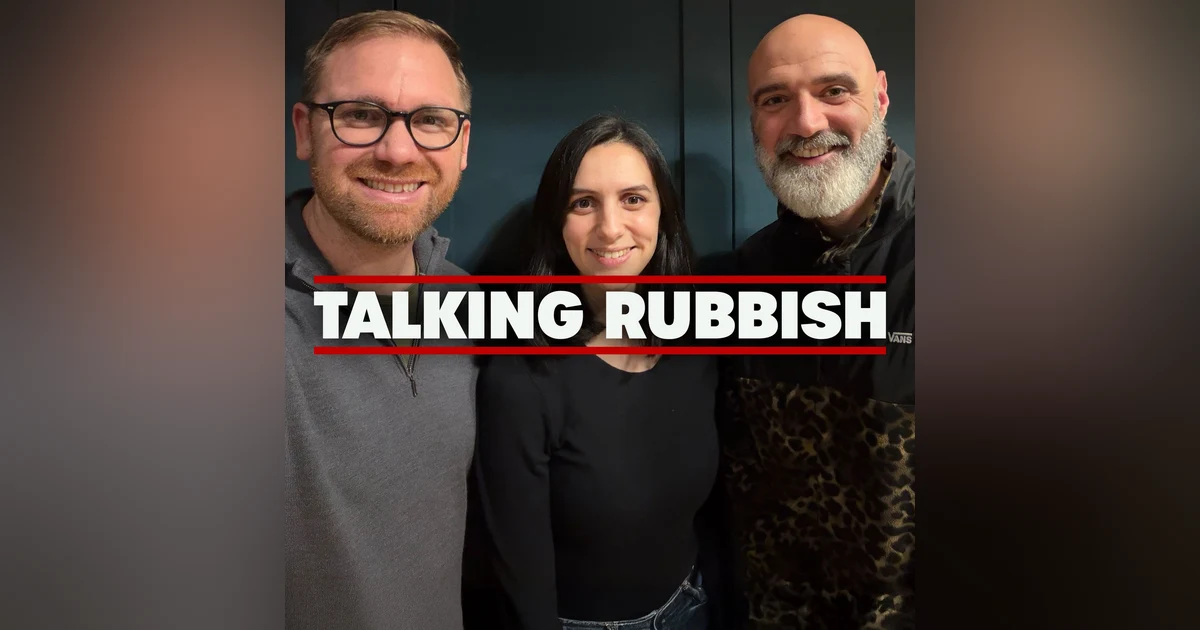
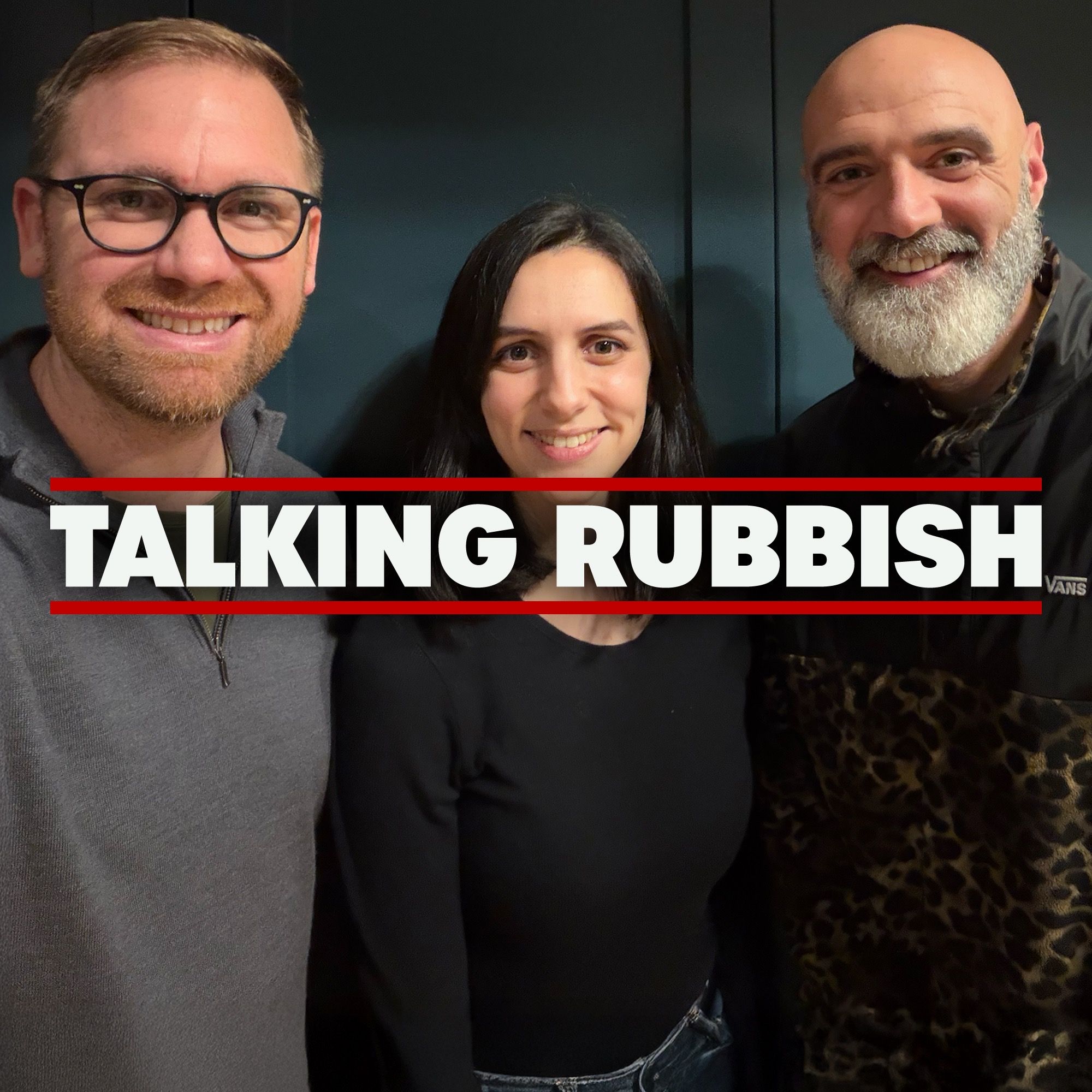
In 2021, Ellie and James left their jobs and spent 15 months travelling around the world. Along the way, they paid close attention to how sustainability showed up in practice; what worked, what didn’t, and what felt worth questioning. In this New Year’s episode, Ellie joins Robbie and James to reflect on the trip. They revisit it continent by continent, each sharing one idea or observation that stuck with them. The conversation covers travel, perspective, and what they took away from the experience.

 Apple Podcasts
 Spotify
 YouTube
 Amazon Music
 Castbox
 Podcast Addict
 PocketCasts
 In 2021, Ellie and James left their jobs and spent 15 months travelling around the world. Along the way, they paid close attention to how sustainability showed up in practice; what worked, what didn’t, and what felt worth questioning. In this New Year’s episode, Ellie joins Robbie and James to reflect on the trip. They revisit it continent by continent, each sharing one idea or observation that stuck with them. The conversation covers travel, perspective, and what they took away from the experience.
Join hosts James Piper and Robbie Staniforth as they delve into the world of recycling, hopefully having fun along the way. One thing is for sure, they will talk absolute rubbish from start to finish.
Sign our very first pootition: https://you.38degrees.org.uk/p/poo
We would love you to join our community on Discord
Special thanks to our sponsor, Ecosurety
To get exclusive videos and clips, follow us on Instagram, TikTok, X, Threads or Facebook; @rubbishpodcast or YouTube: @talkingrubbishpodcast
Or you can contact James and Robbie with questions or just general rubbish musings using the email address talkingrubbishpodcast@gmail.com or by texting them via WhatsApp, our number is 07356 069 232
Relevant links and reports mentioned in the programme can be found on the Talking Rubbish Linktr.ee
Transcripts and episodes can be found on the Talking Rubbish website
Music licence ID: 6WPY8Q4O2RPFIOTL
Hello, welcome to Talking Rubbish, a weekly podcast delving deep into the world of recycling and discussing the truth behind snappy headlines and one-sided stories. I'm James Piper, author The Rubbish Book, and I'm joined by Robbie Stanforth, my Far from Rubbish friend. We are joined today by Ellie Piper, my Far From Rubbish wife. Wow. Happy New Year, everyone. This is quite the turn-up for the books. What a way to start the new year. Here we go. Who's let her on?
SPEAKER_01Absolutely. How have you managed to convince her to come on is sure?
SPEAKER_00I'm sure that is what she will be saying when she comes in. But Robbie, it's New Year, January 1st. We thought following our fun Lego episode of Christmas Day, we need an equally fun New Year episode. And what what what more fun can I have than bringing my wife to work? What a way to start 2026. Very much New Year old me. Nothing's changed. So what are we going to talk about today? Ellie is actually a lawyer, but we thought that might be too boring for Happy New Year. That's not very fair, James. But I think she'd be the first to say it. But what we did do is travel around the world for a bit for 15 months, and we've had a few listeners write in over the month say we'd love to hear more about your travels. And I thought, hey, it'd be a good opportunity to do that. And we even had one personal Discord say, I'd love to hear more from Ellie. You know, following me telling everyone that she was almost our co-host for a bit. Or my co-host. Switch to Ellie. Before we bring Ellie on, let's do some additions and corrections. So we had Roger message us following our uh quite a few of these actually are about the battery fire episode. That lots of people feeding back into that. So that's great. Thank you so much, everyone. And I'd made a statement in there that this was actually a proactive addition and correction. Because I'd made a statement that I thought battery fires were like the larger battery fires were more likely to come from larger batteries.
SPEAKER_01What bigger explosion or something because it's a bigger battery? That was the logic.
SPEAKER_00And I kept reading the news and I was like, is that true? Because everyone keeps talking about vapes. So if everyone's talking about vapes, they're obviously worried about vapes. If they're worried about vapes, that must be because they cause the fires. So I did proactively reach out to Roger before the episode went out to say, have I just got this completely wrong? And he responded to say, it is true that larger devices can cause more damage, but they are more easily detected and removed. So if you have an e-scooter battery, it's pretty easy for people to see that it's in amongst the rubbish. Whereas things like vapes are really hard to detect. And there's just so much more in a pile of waste. You know, you might get thousands in a mountain of waste compared to a couple of e-scooters. So it all comes down to a numbers game. Either way, you're basically putting a battery that could cause fire in a load of kindling. Obviously, we're talking about what, like 1,300 fires a year compared to millions of things thrown in the bin incorrectly. So it's just a numbers game and trying to avoid any opportunity for a fire to start. And the thing you probably don't want is the thing you can't find in the rubbish.
SPEAKER_01Exactly. So big or small folks, don't be putting your vapes and small batteries in the wrong place. They could have a massive impact too.
SPEAKER_00Yeah, our point still stands, absolutely. It was just I said that line and then I started doubting myself when I was coming to DV Edit. And after the episode went out, we had Paul on Discord, because one of the things we'd talked about in the episode is me finding that book in Tenerife. Oh, yes. And we'd said, Oh, if anyone's found anything interesting in a bin, let us know. And Paul, who I think works for a local authority, said he used to run waste collection in a very affluent area. Oh, okay. And the biggest bin find, unfortunately, he can't tell us about, but it relates to something found in a very famous ex-premiership footballer's bin. Really? Oh my god, I want to know.
SPEAKER_01Yeah, definitely. Minds racing now. What is it? Jewelry. Why can't he tell us? No, it can't just be something as simple as jewellery, can it?
SPEAKER_00Very interesting. He did go on to say that in Greater Manchester they have a world-famous renew network where trash is turned into treasure and they turn rubbish into about 50 to 60 grand per month in income. People are throwing away some real, real treasures here. Absolutely. So one man's trash is another man's treasure is definitely the phrase I should have used instead of where there's muck, there's brass, which I think is the one I did use with the Tenerife, but Ellie told me off straight after that. So everyone's about to get a lot of insight into, you know, we're gonna have 50 minutes of Ellie telling me off here. Yeah, she's about to get her own back. Yeah, I think looking forward to it. And finally, one thing I noticed this morning actually was Bristol Waste had put up on social media saying that over the festive period they might be doing some co-mingle collections. Ooh. Did you see this? Really? What this is emergency measures here. Usually it's all curbside separated. Exactly. Normally they're curbside sorting into trucks that have different compartments for waste. However, over Christmas, because our waste increases by about 30%, they're going to be borrowing some of the normal bin lorries, the ones that are normally used for general waste, to do some of the recycling collections. And so Bristol's going to have a bit of mixed recycling. They said, don't be alarmed if you see us putting your recycling into what looks like a normal bin, it's because we are dealing with an increase in waste.
SPEAKER_01Okay, so when that inevitably, that post inevitably pops up on my community WhatsApp group, I'll direct them to social media to say, do not fear, it's going to a recycling facility and it will get sorted out at a later date. Absolutely.
SPEAKER_00We'd like to take a moment to thank our sponsor, EcoSurety, who are on a mission to rid the world of unnecessary packaging. They help brands navigate the tricky world of extended producer responsibility, but that is not all. They also collaborate on some incredible recycling projects and consumer awareness campaigns for those tough to recycle materials. If you're an organization looking to make smarter packaging choices, check them out at ecosurity.com. And the best thing you can do is share our show with your friends and family. Just recommend talking rubbish to them or leave us a review. And if you leave us a review, you can be Robbie's review of the week.
SPEAKER_01Absolutely. And as established last week, it definitely is my review of the week. This one comes in from iSteven87. I should say, iSteven87.
SPEAKER_00You've got to not then act like it's the first time you've ever seen this. I've never seen it before in my life. If you're gonna get a cocky, Robbie, you've got to be ready with me. And I've read this before. Anyway, the one I picked this week is iSteven87. And it was a five-star on Apple. Uh, what's Apple?
SPEAKER_02I've not heard of that one before, James.
SPEAKER_01Um anyway, this is a pretty succinct one for the new year, but I like it all the same. Excellent.
SPEAKER_00See above. It's a classic talking rubbish review. This is two of these we've had now. A lovely heading of excellent or words to about effect, and then content. See above. See above. I love it. Keep them coming. And you can follow us on social media at rubbishpodcast. You can email talkingrubbishpodcast at gmail.com or you can WhatsApp us. Also join our Discord. It's the easiest way to engage with us and listeners of the show. And the link to all of those things is in the show notes. The time has come to bring Ellie on for the first time ever, and possibly only time, because I don't think she'll ever agree to do this again, onto Talking Rubbish. Hi, Ellie. Hello. This is weird, isn't it? Maybe we should have let Robbie do the hi Ellie.
SPEAKER_01Hang on. Go, Robbie. Hello, Ellie. Because I'm actually seeing you for the first time today, so I don't need to pretend.
SPEAKER_03Hi Robbie, my favourite co-host of Talking Rubbish.
SPEAKER_00That's exactly what I wanted to hear from it. It starts. It starts. What a sad new year this has already turned out to be.
SPEAKER_05Am I going to start by making my own edition slash correction?
SPEAKER_00Please do. Absolutely. Yes.
SPEAKER_05I've regularly been slated on the podcast for telling you off, James. And um I don't like to be portrayed as a nagging wife.
SPEAKER_03Um I did not have a go at you or tell you off for saying the muck brass thing. It's just that I never heard that saying before. I thought one man's fashion is another man's treasure. It's a far more well-known a phrase than what was it again?
SPEAKER_00But there's muck, there's muck.
SPEAKER_03There's muck there's brass. Have you ever heard that before?
SPEAKER_01I haven't heard it, but I'm in the industry. So this is not a representative song.
SPEAKER_05It's a rubbish thing. Okay.
SPEAKER_01Yeah, yeah, yeah, yeah. But anyway, the more important thing, Ellie, is how much toilet paper does James use? I'm out.
SPEAKER_03I'm cutting the statistic that came up on the podcast was the average, and I think James was one of the ones who was well above the average, calling the average down, whereas I'm one of the ones well below the average. And you know, it meets in the middle. Um, yeah. I'm not gonna answer that question.
SPEAKER_00I've derailed this already. It's amazing how many of our chats of an evening now are toilet paper related.
SPEAKER_04Well, yeah. Sad turn of events now, household.
SPEAKER_00Okay, let's crack on. God, I didn't expect us to put me to be picked apart so early on. So let's I'll say some things here to set us up. But over 439 days between 2021 and 2022, Ellie and I packed our bags and visited 26 countries across all seven continents, travelling 78,270 miles. And just in case you're wondering, if my habit of data gathering is reserved just for recycling, we took 156 vehicles, did 47 laundry loads, 16 cinema trips, had to take 14 COVID tests each, and I had eight haircuts. So I kept data on everything.
SPEAKER_01And how many haircuts did you have, Ellie?
SPEAKER_05I think I just had one. But I think well, I go for a lot longer between haircuts than juice does anyway, mostly because I don't really enjoy having my haircut. But um, it felt a lot riskier to try and trust somebody where there might have been a language barrier with their haircut.
SPEAKER_03Whereas I think that guy's hair is Yeah, short back and sides. Exactly.
SPEAKER_01I did once have short back and sides, by the way. I do remember it's a few decades ago now, but well yours is yours is far lower maintenance now, probably, which is probably easier to sort out when you're abroad.
SPEAKER_05But um, yeah, I did I wasn't confident, shall we say, of being sure what I was gonna leave the you know hairdressing salon with. So I went as long as possible and I think I only had one. But by the time we came home, I was in dire need of another one.
SPEAKER_00So it was you know long overdue. And one thing we did was we took loads and loads and loads of photos, which was great. So I took, I worked it out 48,173 photos over the 15 months. And I reckon, Robbie, 10,000 of them were bins. You'd be proud of me.
SPEAKER_01You've got a collection of uh global bin photos. I am genuinely jealous.
SPEAKER_00So as it's New Year's Day, we're relaxing back into the swing of talking rubbish. We just thought we'd have a bit of fun. When we were talking about maybe we should do this episode, we were reflecting back on those seven continents and thinking actually, there's an interesting sustainability angle in all of them. You know, there were lots and lots of stories as as we told over the course of this podcast, but I think there's interesting sustainability angles that we want to kind of focus on on each of the continents.
SPEAKER_01And so I think the best way to do this is to go in order, continent by continent, and I hope I've got this order right. I've got this order right, not James, obviously, because I've scripted all of this, is to go through the order in which you visited them, and I'll be asking the questions. So I believe you started in South America. I suppose the first question is why did you choose to start there?
SPEAKER_05Yeah, very good question. Uh, it wasn't originally our plan to start in South America. We were gonna start in Europe. But as the departure date for our trip fell uh still in COVID, we were coming out of COVID, or at least the sort of initial phase of COVID, I guess. Um, but it the world hadn't fully opened up yet, so travel was still quite tricky in certain areas. So we decided to sort of flip our trip around. And the first uh country that we decided to visit was in South America because uh the restrictions on travel to South America were a little um more relaxed than other places in the world, um, particularly if you left from or flew to South America from somewhere other than England. Lots of the South American countries were still on what was the red list at the time for um prohibited travel, but that was only a problem if you were returning to the UK, in which case you would need to quarantine coming from those countries. We managed to get a flight from France to Colombia in South America and um started our trip that way and didn't need to worry too much about the quarantine side of things, partly because a lot of the countries in South America had no quarantine uh requirements in place at the time, and partly because we weren't coming back to the UK anytime soon. We were just heading up for our travels and then carrying on. Um, so yeah, we decided to start in South America um and that was uh instead of going into Europe and then going across sort of uh we were gonna go across Russia actually on Trans Siberian Express. Um so yeah, South America became our starting point.
SPEAKER_00I think it's fair to say we just didn't want to spend 10 days in a hotel. We didn't want to land in a hotel, then COVID test us and go, you're locked in for 10 days. We just couldn't imagine anything worse. So it was go to a country that that is not going to happen in.
SPEAKER_01And what was the first sort of thing that you noticed from a sustainability perspective?
SPEAKER_05So we started in Colombia. What I remember most about that time was just being a bit deer in the headlights. We sort of hadn't travelled for a while because of COVID, and then suddenly you're thrown into this uh completely different environment and completely different country. All I remember about Bogota was how just how vast it was. I don't remember anything specific actually about the recycling side of things, although you guys did talk recently on the podcast about it was one of the Earthshop prize winners, wasn't it? Um, for increasing its sustainability since then. So it actually would be a very interesting experiment to do to kind of go back now and see how it compared. Um but I remember thinking, God, this place is vast. And so well, you'd hope recycling infrastructure has improved and kind of um developed in the time since we were there. But I don't remember it being particularly bad, but I I'm not sure if it was necessarily the thing I was focusing on most because it was very new right at the outset, and I realised just how much my GCSE Spanish was not going to get me through uh several months in South America, which was not great.
SPEAKER_00You had that damn owl, that duolingo owl just giving you your daily skills.
SPEAKER_04Still tripping me into yeah, tripping me into doing more tuolingo, which was sort of helping with the yeah, with the folk app, but not much else.
SPEAKER_00We were lucky, really, because COVID is an absolute nightmare for so many reasons and it was horrible for tourism. These countries were decimated essentially, they'd lost tourists for such a long time. What it meant for us was we left the UK and people were saying we're having to cancel trips. So, you know, we'd booked a trip to walk the Inca Trail or do Torres del Paine in in Chile and and go to the Amazon and all these things got cancelled. And it was because the UK operators that we'd booked with had said we've got to send out a UK person to supervise, and we can't do that because they're all on the red list. So, but then as soon as we landed in the country, people were like, Oh, you want to go the Inca Trail? Yeah, great, come on, we'll go tomorrow. Yeah, desperate for work, I assume. And things that normally had like a one, two-year wait list that you'd have to really think through and plan in advance were just things we could rock up to and do, which was amazing, really, but also quite sad to watch because you just saw the excitement that people were like, oh my god, a tourist has turned up.
SPEAKER_05Yeah, that did go some way to assuaging my guilt, actually, which we'll come on to later. But um, yeah, the sustainability or lack thereof of travelling the world um was quite tough to swallow. But knowing that the time at which we were doing it was actually contributing back into these local economies and all these people who had actually really struggled during COVID because their economy was so based on tourism, that just completely fell off a cliff in in COVID and the restrictions on travel. It did, yeah. Those some way to make you feel slightly better about travelling to be there, um, and um therefore being able to support them in their usual um sort of business, keeping their business going.
SPEAKER_01Yeah, absolutely. Making a contribution to the local economy, as they would say. Um, but then so from a sustainability perspective, what are the sort of interesting standout things from South America more broadly?
SPEAKER_05Yeah, that's a really good question. Um, so we went to uh the Atacama Desert in Chile, north northern Chile, um, which was in the news a lot uh before we left and probably still uh since then, as being a place renowned for fashion dumping, basically. So these vast illegal dumps of uh fast fashion that had been not used very much, not worn very much, and then discarded, ending up in these patches. Um the I think one video called it the great fashion garbage patch. So uh you guys have spoken about the ocean garbage patches before. This was a desert-based one. Um yeah, all this imported waste that isn't from Chile, but it gets imported probably from uh countries like our own. And so when we went there, we were very alive to that kind of story and we were on the lookout, I suppose, for those things. Um, we didn't actually see any specific ones. And granted, we didn't go out of our way to find them, but we were definitely kind of assuming because of the way these stories have been written, we were assuming that it would be quite easy to find them, we would see them quite easily. And that didn't really happen. That being said, there was still a lot of rubbish and waste collecting on the sides of roads, just on basically on the verge, on the edge of the desert and the sand. Um, and it was such a windy place that you could kind of understand that wherever there was inhabited areas, the wind would just pick out where waste wasn't necessarily being captured and dealt with appropriately. It was just being blown in the wind and it would just end up uh collecting in on these verges on the side of the road. Um and you know, we get that a bit in the UK. And I just did the other day as we were driving down the motorway, um, and you see quite a lot of whatever it is, plastic bags in branches and trees and things like that. But this was on a on a different scale. It was it was quite sad, actually.
SPEAKER_01Well, I'm glad to hear that James didn't drag you to all of these uh fashion garbage patches, but it sounds like it was pretty unavoidable just seeing waste being mismanaged.
SPEAKER_05Yeah, absolutely. Yeah, and I'm glad it wasn't um, you know, uh pivotal part of our trip was not journeys to recycling centres uh around the world. But um, yeah, as you say, it was um it was very hard to ignore.
SPEAKER_00And I guess the other thing worth mentioning in South America, aside from just uh, as you say, rubbish, and particularly uh in places like the Atacama Desert, where there was lots of inhabited towns and then big places for rubbish to collect in. The other thing is just the quantity of meat eating, it was unbelievable. Like every meal we had would be so meat-led, and then they'd say, Oh, and two veg. And you'd be like, Oh, great, what are the veg? Rice and potatoes. And we did get to this point where it was like, I'm really keen to have some something green, you know, but it was a lot of meat. And I'll always remember when we um we were going to do a tour across the salt flats in Bolivia, which is super interesting, and we'll definitely do an episode in those at some point because um the lithium coming out of them is really interesting for battery generation. But they texted me the night before to say, you know, we're setting up your tour, and their words were are you vegetarian or are you normal? And I loved it. I loved it. And what that wasn't a mistranslation, that was just literally how they would describe it. Very much. You're normal if you're a meat eater, you're weird if you're vegetarian. And that sort of feeling happened throughout South America. That wasn't one country. And I had a quick look at it actually. According to World Population Review, Argentina does eat the most beef out of all countries in the world, and they're at 49 kilos per person per year. So to put that in perspective, the UK is at about 17. So it's about three times the amount of beef um that an average Argentinian would eat. And if we say a steak weighs on average 250 grams, it means the average Argentinian is eating 196 steaks a year. So basically a steak every other day. And when you look at the stats on this, you know, beef is seven times worse than chicken or pork, roughly, according to our worlding data. So you could see how that could start becoming a real problem, that difference. I think food for us as we went continent to continent food became a really interesting thing that we were observing around sustainability, how how meat-led a diet was versus you know, veggie-led.
SPEAKER_05Absolutely. I think the other thing about it is um obviously the ri rich culture of uh cattle farming and beef eating, especially in Argentina. But um, we know that one of the biggest sort of threats to the Amazon is uh deforestation. And I was looking into it actually for the purposes of our chat today, and it I think the WWF estimates that about 80% of deforestation in the Amazon is due to or driven by um cattle farming and clearing the way for more cattle to be reared for more beef for consumption around the world. So um, although we did visit the Amazon on our trip, we did our best to do it sustainably and it was in Ecuador, we stayed in like an eco-lodge and tried to limit our impact, I guess, as much as possible and learn about it and see as much wildlife as possible, which kind of increases your passion for protecting it. But elsewhere, you know that it's just been kind of destroyed and really sadly taken over by um deforestation for cattle farming.
SPEAKER_01And so next up, uh after South America is somewhere that's literally a far out there destination. A place with very little cattle farming. Very very little opportunity for cattle farming and the production of beef. So, Antarctica, what possessed you to go there and how did that suddenly come up as uh somewhere top of your list? And were you surprised what you found there?
SPEAKER_00You know, I imagine it to be pretty desolate, is that right? I'm not sure Antarctica was ever not going to be on my list. That was like the one when when I decided as a kid I wanted to travel the world, yeah, it was I just need to see Antarctica. Okay, wow. What was the fascination? Oh, I mean, so many things. You know, my obsession with wildlife nature, David Attenborough as a kid. It was just so I it was a place that was so far away from my day-to-day life, and I and I wanted to experience it. And the challenge of that, of course, is that I get extremely seasick. To get there, to get there, you have to go across the famous Drake's Passage, and Drake's Passage is the is the joining of two fairly major currents that can create very, very extreme swells. So I did spend a couple of days in bed on the way over to Antarctica, I think, Ellie. Is that fair?
SPEAKER_05I think yeah, the I think they said the swells can get up to 12 metres. And when we went, they were about three or four. And I didn't really get seasick, which is I'm very lucky in that way. But um, James definitely does. So we were, you know, on the boat and you'd met other people that we were doing the trip with. I think it probably took out about 70, 60 to 70 percent of the um people on board, because I went to the dining area for lunch and James just absolutely couldn't face any food. So I just went on my own and there were just empty seats everywhere from all the people who were in the same situation as him just laid out in bed, not wanting to move at all because it was too rocky to sort of stand up if you're feeling sick. It was it was pretty bad.
SPEAKER_01Yeah, and I how long was the passage then? How long is Strake's passage? I've got no idea.
SPEAKER_05Again, depends on the conditions, I think. We did it in a day and a half, I think. James? I can't remember. Yeah, a day and a half to two days, I think.
SPEAKER_00Yeah, I think it was two days. Yeah.
SPEAKER_05Two days, maybe. Okay, two days. Um, and it can take much longer if the conditions are rougher. Um, so yeah, we were lucky, albeit yeah, still felt still felt very unwell during that time.
SPEAKER_01And and then what are the environmental challenges you found on the way or when you got there?
SPEAKER_00When I was kind of looking at this, one of the things that's most interesting is how many people now go to Antarctica. You know, visitors in the 1990s were like 8,000 people. And in 2024, this had risen to 124,000. So the quantity of people visiting Antarctica is huge and and so different to where we were 20, 30 years ago. We didn't see it very much actually because of COVID, they cancelled so many of the boats going over. But they had warned us that on a normal trip you would see lots of other boats.
SPEAKER_05But as we spoke about earlier, a lot of the things that we were doing were quite low on numbers of visitors because there weren't that many tourists um there at that time, and that was true of this trip as well. So we were on a boat with other people, but the boat was probably half capacity, I think, uh, of tourists, but we're still able to run, which we felt really lucky um to be involved when it was still able to go. One thing we didn't realise was until we got there anyway, was um the size of the boat is really important. So if the boat going to the Antarctic has less than 100 passengers, all the passengers can get off the boat at one time, go onto the ice and and explore, see what it's all about. If it's between 100 and 500, those people will have to rotate, um, and only a certain number could up to 100 off at a time. Um if you have more than 500 in the vessel itself, no one is allowed to get off at all. And I think about 570 boats or trips for ecotourism go each year, about two-thirds are allowed off the boat. So about a third don't set foot on the continent at all. And we did have a discussion about that saying, oh god, we're really lucky we're on a boat that's small enough that we can get off it. What is the point of going if you're not gonna get off?
SPEAKER_00I can't imagine being stuck in bed for two days with this extreme seasickness to then be like, oh no, get a lovely view out the window.
SPEAKER_01Just open the curtains for half an hour, drink it in, and then have another two hours of seasickness.
SPEAKER_05Yeah, sort of bringing a new meaning to cabin fever, I think. But um, you know, at the same time, there are people who are probably really used to doing cruises for really long stretches of time, they're really happy in that environment, and actually being able to see the, you know, the land of Antarctica, the icebergs, the brilliant blue water, all of that kind of stuff from where they are is a bit different to just seeing blank open ocean, which you would obviously be used to on a on a really long cruise. So, you know, maybe it suits some people more than others, but um, and there's obviously the cost to consider as well, because it's not uh it's not a cheap trip to do. But yeah, we we counted ourselves really lucky that we were on a boat that we could disembark from. Um and we also decided to join the snorkeling group, snorkeling team. So we were sort of suited and booted in uh in dry suits to get off the boat every time, and that allowed us to go walking on the ice and also to get in the water. So um yeah, we were we were really lucky.
SPEAKER_01Oh wow, that's cool. And so what did you find? Like what are some of the issues that you found there? I mean, I imagine it to be an absolute pristine wilderness. Is that true?
SPEAKER_00What we found is a very strict boat. You know, they were very, very clear that you couldn't really take anything onto the ice and you'd have to have your boots washed leaving and getting on. They'd have to stay in a room that that was clean. You would basically be hoovered and your clothes would be hoovered to make sure that you weren't bringing microbes or bacteria or anything like that out onto the snow and out onto the ice. And that was so it was so important, it was drilled into us that this was not a place where litter could ever enter. Just watching a group of a hundred people on a boat become so self-aware of the impact they could have and be in this kind of sterile environment where you were taking it so seriously, it was it it definitely was quite inspiring in terms of how we could maybe think of the rest of the planet as we walk around it. But uh, we don't really think too much like that.
SPEAKER_01And then so do you literally mean like you can't drop wrappers because you're not allowed to take the packaging wrappers onto the island? Is that how it works?
SPEAKER_05That's exactly yeah. And I'm not saying we were getting, you know, full patted down before we before we disembarked to make sure that we didn't have anything in our pockets, but it was, yeah, very much the messaging was um was to leave everything on the boat. You didn't need it. You weren't on the, I say it's so cold that you're not going out there for any significant length of time. So nobody needs a snack while they're going. They have, you know, they feed you really well on these trips because obviously everyone's very cold. Um, so you don't need to really take anything with you except, you know, your camera or phone or whatever it is. And so it became the norm to just leave everything behind and then, you know, off you go. Um and that reduces the risk of dropping anything inadvertently or on purpose. And then the other thing that was really drilled into us was about the wildlife we were encountering. So um keeping this a distance, wildlife disturbance was something to really be avoided. So keeping minimum distances and uh limiting our time on the ice as well. So yes, we could disembark, but we weren't going to be spending hours on end there because you know it's not fair to the animals and wildlife that live there who are so not used to humans to come in and disturb their habitats. That wasn't what we were there to do at all, avoiding damage as well. So there are old sort of um research base stations there and things like that. So those were you we weren't going inside them or anything like that. I could see them from a distance. Um, we obviously, as you go out onto the ice, you're compacting the snow that's there just by walking on it. So had to be very careful where you walked, particularly staying clear of penguin highways. So when we went to see penguin colonies, um, they have uh created paths through them, which are the path of least resistance. So evolutionarily, they're there to try and get their way up to the colony and down to the water as easily as possible. They don't want to be expending energy and that they, you know, obviously you need to keep them alive on making this route. So they'll all try and find the path of least resistance, and then everyone will follow it. If we go in and we trample all over it with our heavy boots and our, you know, um much, much more significant body mass than them, we're making their lives harder because we're making that journey less smooth. So it was all about keeping away from them, letting them do their thing and you know, follow follow their roots and not disturbing those routes as we sort of observed their behaviour, um, not getting in in their way. And the other place we observed them was underwater, but that was a lot easier because you're obviously not no match for a penguin underwater. So they were zooming past us really, really fast, and we were just trying to try to keep up with them.
SPEAKER_01Yeah, trying to even just track or catch sight of one not moving at a million miles an hour is probably pretty tough.
SPEAKER_00I guess it's worth saying we are conscious and were conscious of the CO2 of this whole trip, and we'll come on to it at the end. But particularly in Antarctica, I had a quick look. And our average trip there generates around five tons of CO2 equivalent per person, which about half an average UK citizen will create in a year. But that's just on the one trip. This is like ten days. And a lot of that'll be the flight there, which obviously we'd sort of rolled into our own trip, so it's not like we made a special flight to get to South America to get out to Antarctica. But that five tons is significant. There is another thing, um, because of the amount of cruise ships that are going down, things like black carbon are coming out of the engines. So soot basically is coming out of the engines. It darkens the snow, which accelerates the melting. And I did read a horrific study, as in to prepare for this episode, that said one tourist could be responsible for melting 83 tons of snow. Now, if I'd read that before I went, I think that would have put me off because that is so significant. You know, nearly a hundred tons of snow melted just because you wanted to go to Antarctica. Being completely honest, it was so such a non-negotiable at the start because it was something that somewhere I really wanted to experience. And it's only now I reflect on it, particularly because we're doing this podcast, that we're like, ah, maybe, maybe we shouldn't have gone. It is significant. But I think we learned so much and we took part in citizen science and we, you know, counted birds and wildlife, and we tried to do something positive while we were down there. So we always have that, but there is a bit of guilt definitely behind it.
SPEAKER_01Yeah, well, let's hope things get better with kind of electrification of those ships and banning of heavy fuel oil and those kind of things. But the next stop from there, continental Europe, it's pretty similar to the UK. Or were there some actually quite big differences in the way that they treat sustainability and rubbish and your observations that you had?
SPEAKER_05Yeah, I obviously it's very similar to the UK, and I think uh their recycling infrastructure is really good in mainline Europe. So everything we were seeing in terms of bins and sourcing and all that kind of stuff was um very familiar, if not better, um I think out in public spaces in Europe. You've already covered uh in quite a lot of detail DRS deposit return schemes um in on this podcast. So maybe we won't repeat you here, but we encountered them um along the way quite a lot. It wasn't very easy for us as tourists to use them very frequently, but they you know, we noticed them a lot. And we spent a while in in Europe, and the way we decided to get around again, trying to avoid the flights, was interrading. So by this point, COVID had eased a little bit and um it was possible to do cross-border travel over land rather than flying. So um that reduced our flights, which made me very happy. Um we decided to interrading trips sort of through uh we started in Denmark, home of Lego, which James was very, very pleased about. So we visited the Lego HQ in Villand.
SPEAKER_01How long did you have to spend there though, Ellie? Like a week in Legoland.
SPEAKER_05Hours and days and months in my life. No, uh, thankfully, it was very interesting for me as well. So uh God, but how long were we there for? We didn't go to Legoland, did we? We just did the um the kind of HQ, the Lego house, which was very, very cool actually. Um uh so did a couple of days in Veland, and then we went up uh north up Sweden and then south through Norway. And when we were up in Sweden, we uh visited the or we decided to visit the ice hotel, which the place you go to to reach the ice hotel is somewhere called Karuna. And um there was a a sort of board outside the train station explaining what they were doing with Karuna, which was baffling to us at the time. We were completely thought it was completely bizarre. But essentially what they were doing was moving the town or moving part of the town, um, picking it up, moving it three kilometres down the road, and sort of re-establishing it a little bit further away.
SPEAKER_00Um and the reason for that was all to do with mining, I think, just yeah, Karuna massive on iron mining, and so cracks have started appearing in the hospital and the school. I think I read that they Karuna produces 80% of the EU's supply of iron ore. It was it's just this one town where loads and loads of mining had happened and people had realized, oh no, we need to move the town now. I think it starts in 2017 and it's going to be completed in 2035. It's costing them two and a half billion euros. And yeah, it's 6,000 people being moved, 3,200 homes, 750 hotel rooms, a thousand office jobs. It's it was unbelievable.
SPEAKER_01That's crazy. And that's just they're not moving the ice hotel, though. That was actually something like that. That's outside of Karina, yeah.
SPEAKER_00That's quite a drive out. Yeah, that's right. And we actually interrailed across Europe, so this was the start of it, and then we sort of went all the way down because we'd met a couple on the Antarctic boat who invited us to their wedding in Portugal. Oh, we're like, yeah, we can do that. Why not? We'll make it up as we go along. So we ended up interrailing all the way down to Lisbon to make it in time for this wedding. And of course, I don't know how many months had passed between Antarctica and their wedding a few months. And for us, we'd just been traveling the whole time. So it was like we hadn't left them, you know, it was just one big holiday, really.
SPEAKER_01And was it heartening, you know, the fact that there is this rail network across Europe and you can travel easily around, or is it quite expensive and actually you were doing the right thing, but it actually costs a bomb to get around the place?
SPEAKER_05No, it was actually quite efficient, um, both sort of uh time and and budget. Um, I think we kind of get used to having really expensive trains in the UK and that puts us off a little bit, but we found the interrail pass really, really worked well for us. It's uh just under 180 euros, 179 euros for a five-day pass um over the course of a month. So that's not, you know, you have to do all your travel in five days. It means you can travel on five days in that month, and that's as much travel as you can fit into that day, basically. You pick the date, you tell them what day it's going to be, and then you can take as many sort of interrail trains as as possible within that time. So that worked really well for us. So if you want to spend a bit of time and a stop and then do a big long journey to get down to your next destination and do the same thing, five journeys actually across Europe can get you quite a long way. Um, and that's exactly how we did it. Um, to get down from sort of top of Sweden all the way down to uh to Portugal.
SPEAKER_01Oh, so come on then, James. Surely you know the overall distance travelled and your CO2 savings being a stat man that you are.
SPEAKER_00I should know the exact, it was like 3,950 something kilometres, so nearly 4,000 kilometres. But yes, the Interrail app was really cool because you put in where you were going and what you were doing, and it popped up saying, here's your CO2 saving compared to flying. So ours was 90%. So we were 90% better taking the train than flying, which was great. One thing we hadn't quite anticipated was the seat reservation system. So there are some countries, there's some countries where you can just jump on a train. Say I've got the interrail bus, they scan it. There's some countries where you have to buy essentially a seat. All the ticket is doing is getting you the journey, but you have to tell them which train you're getting on which seat. And because we were very last minute on this, you know, this was just this was live for us. At the point this happened, we were in Mannheim in Germany, trying to get to Paris, and we suddenly realized that France had this seat reservation system. They said, but look, all those trains have been booked for months. We need to get on one.
SPEAKER_05Hadn't quite reckoned on uh COVID easing, meant that obviously everyone else was starting to travel as well, and that meant that Interrail places were really getting booked up and we just hadn't quite put two and two together.
SPEAKER_00Which is exactly why we ended up on a four in the morning train going out of Mannheim into Paris and had a very, very early start on that particular day.
SPEAKER_01Shame. Okay, well, lesson learned, and hopefully the BIFluencers out there won't make the same mistake. So, off from there to another familiar continent to me, Africa. Although I only really know the southern countries, and I think you were in some of the northern countries, so I don't think we're going to cross over much here. But I can imagine things were very different there. What parts did you visit and what did you see?
SPEAKER_05Yeah, they were very different there. So from uh Portugal, it was a hop, skip, and a jump over the med to um to Morocco was our first first stop. We decided our sort of African, the African leg of architect just stayed essentially in the north, north of Africa, so Morocco and Egypt. And the reason for that was kind of primarily because of our um reluctance to fly and wanting to always be moving forwards, I guess, in our journey, always wanting to be heading in the same direction rather than doubling back on ourselves and sort of having the additional carbon cost, I guess, at that. So we thought the African Legomar journey would be sort of down into the South, South Africa, or you know, other other kind of um countries where we might be able to do a safari or things like that. And I think actually a lot of people were quite surprised when we came back and said, we've been to Africa, but we didn't do any of the sort of traditional, I guess, touristy things that you would expect on a African trip. Um, so we had this rule, no flying backwards, and realized during again COVID um restrictions and sort of changes to flight patterns had meant that loads of flights were being routed through um Addis Ababa and onwards from there. And in order to get down to, let's say, South Africa or or wherever else we might want to go, it meant going in there as sort of a hub and then flying out again, and then returning there and then making our own journey. So we decided it was just too many flights and um wouldn't uh been justifiable, I suppose. So instead, what we did was we stayed in Morocco um for a while. We did a road trip around Morocco, which was really good fun, um, and then moved over to um Egypt after that for a few weeks. Um and that was sort of the extent of our African, the African leg of our trip. And it was quite funny because every time we were there, we would say, in our minds, we'd got to Africa. This was great, this was the African Legabarly. And everyone we spoke to who uh was local and was part of the sort of tourism industry, maybe doing a tour for us, would say, Oh, so you're going to Africa after this? And they considered themselves Arabic, sort of North Arabic country, North African, but Arabic countries chiefly. Um and so to them, we weren't we weren't really yet setting foot in Africa, and we sort of felt a bit short-changed because we were like, no, we are, we are in Africa. What do you mean? Why are we going to Africa after this?
SPEAKER_00I've got to tick off these seven continents.
SPEAKER_05This can't Yeah, that was exactly it. We sort of said it counts as Africa, it has to count because we are managing to take in all seven at one one trip.
SPEAKER_00I mean, my lasting memory of Egypt. Have you been to Egypt, Robbie? No, I haven't. No, none of those North African countries. So we took a train down from Cairo to Aswan, and then we got a Nile cruise from Aswan to Luxor. And this is such a short distance, you know, Aswan to Luxor, but they really eke it out. You book out this Nile cruise for like three days, and then they just go really slow and stop loads of places for you to do tourist activities, which was great. Like, really enjoyed it and saw amazing things, you know, these very, very historic ancient sites that are just beautiful, and and we're so glad we saw it. But this has become so touristy. So I I had a quick look, there's about 300 large boats at any one time that are doing this run forwards and backs between Luxor and Aswan. And it's fair to say it caused more congestion than than anticipated. So my lasting memory is us parking up to go um to go and see a site and a number of other boats also parking up. But because the parking space is just one boat, all the boats park up alongside each other, and we had to walk through seven boats to get off. So you're like leaving your boat, getting onto another boat, walking through their lobby, crossing onto another boat, walking through their lobby, and it's like this weird, you know, like inception where you just see loads of rooms all in one go. It was like that, and then suddenly you're off and you're off to now. It was just a really interesting place. And because it was more touristy than I'd imagined, particularly that Nile trip, you just sympathized so much with the locals because there was huge amounts of noise coming from the running engines. They needed power all the time, so they'd be running even if the boats weren't moving. Um, very high levels of pollution going into the river because there's just so many boats. And it, you know, things like drinking out of plastic bottles and you just see them in the river shortly after. It's just it all feels very disheartening.
SPEAKER_01So you finished up there, and next across to Asia, I mean, it's been years since I've been, decades probably since I was last on that continent. But my experience in Bali was definitely quite similar to the stories of informal waste management that one of our previous guests, Esther, talked about in episode 65. Did you share similar experiences to what she was talking about in that episode, uh, Ellie? Or was it or was your perspective a bit different from the countries you visited?
SPEAKER_05Yeah, absolutely. A lot of uh what Esther had to say in her interview resonated with us and our experience. Um, she obviously had a lot more hands-on personal experience, I think, of kind of like trying to come up with uh mechanisms for dealing with waste that were not going to impinge on sort of uh local traditions and things like that. Um but yeah, we arrived into the Philippines and then headed over to Borneo, and um, that's obviously a huge island, the world's the third, third largest island in the world and um full of biodiversity. Um, but to get there, our journey wasn't quite as sort of idyllic, I guess, as um we we expected going to such a sort of haven of biodiversity. Um we ended up in Sandikan on the north of the island, and this is the first place we kind of noticed extreme rubbish, I think, on the beaches and kind of being washed into like the harbours, a little bit like in the Atacama Desert, where it all kind of gathered on the sides of the road. It was just coming in in waves on the tide. And it was really sad to see, to be honest. It felt like no one was really taking responsibility for it and it really would have needed a huge concerted effort to kind of clear it up and and start again. Um, and I can only imagine that they just don't have the infrastructure in place in quite a remote area to collect and then deal with all of that before it gets either blown into the sea or or brought in on the tide. Um, but yet it was all sort of just gathered there in in clumps, which was quite sad to see when we kind of had this expectation in our minds of crystal blue waters and you know, everyone being really conscious about taking care of the sea, the coral, the biodiversity, and uh yeah, that just wasn't what we were seeing.
SPEAKER_00It's a good example of and we had this quite a lot on our trip where you would go to the Instagram friendly place or the place that's a nature reserve or protected or whatever. But your journey to get to that place was the exact opposite. So everything you did up till that point where you were taking your photo was the opposite. And it was really important for us to share all the negative stuff. That's kind of what we wanted to do, you know, the the difficult stuff. And this is a great example, Sandican, which was a hub for so many places, the you know, these forests and Turtle Island that we went to to help with release some turtles into the into the ocean. Um, we actually have a friend Josh who's a keen diver, and I I reached out to him because I remembered he told us this story. Uh he was heading out to Sippadan, uh, which is one of the world's best dive sites, just off the coast of Borneo. But to get out to Sipadan, you've got to get a boat from Semporna. And I remember Him telling us he'd never experienced anything like it. And the juxtaposition of going to this dive site that is pristine, protected area, and then the hub, that hub in Sempona that you have to get to. I mean, just if you have a sensitive disposition, just fast forward ten seconds, so I'll just say this bit. He arrived to literally seeing dead dogs on fire, um, dead dogs down wells. Uh they went to get on the boat and there was an old man drinking out of a bottle of water, stood next to a bin, literally stood next to a bin, and he just threw it straight in the water. And then Josh like looks down at the waves coming in and it's all litter. And so it's very hard because that's not the bit that people post on Instagram, obviously. And actually that's the bit that's worth talking about, in my view.
SPEAKER_01And you touched a little bit upon diving there. So from Asia, you next went across to Australasia and the Great Barrier Reef. Surely you must have done some diving there.
SPEAKER_05We did, yeah, we did indeed do some diving there. We got a liverboard on the Great Barrier Reef. So we were on board a boat uh for about a week, I think it was, just shy of a week, um, to do some diving in the Great Barrier Reef. And although, you know, very uh different experience, I guess, um, that we didn't see any rubbish and there there wasn't a load of um sort of waste collecting in the water there. It's obviously world-renowned spot for diversity and it's very well protected by law and taken care of. We did still have some reservations about our trip there, partly because our liverboard trip involved uh a shark feeding dive. So all dive down, took a sort of perch on a, I guess, a natural uh coral amphit, not coral, but uh a natural rock amphitheatre under the water. And uh there was uh yeah, planned shark feeding session. And this was something that um the company that we decided to go with do once a fortnight, and there to us felt quite lacking in authenticity, I suppose. You know, if you're going out to feed the animals, that doesn't feel like a very uh genuine wildlife encounter. And and generally speaking, you think that's gonna affect the patterns and behavior of these animals. So we weren't too sure about it, to be honest. But the way it was sold to us, or I guess the way it was justified, was this was one way of making sharks more valuable alive than they were dead. So obviously uh there is a global trade in um shark hunting and and uh using shark body parts for for various purposes, legitimate or otherwise. And in order to kind of make them a more economically viable animal alive rather than dead, this was one way of doing it, increasing tourism to go and see them alive. And to do that, feeding them is the best way of attracting them to ensure that people can see them. And so we did do it. Yeah, we sort of saw this feeding take place, but it did feel a bit like it was hard to justify that their behaviour patterns were never going to change because as soon as we were down in the water, they knew exactly what was happening. There were sharks circling everywhere, and presumably could already smell the uh tuna heads, leftover tuna heads that they were about to be be fed. So yeah, it was a it was an experience of two parts. It was incredible in one way, and it was fantastic to know that doing experiences like that could help sort of keep these sharks alive. But on the other hand, yeah, it definitely felt like it was going to be affecting their behaviour patterns and they knew exactly where to come and and what was gonna be on offer when they were there.
SPEAKER_00So after Australia, then across to New Zealand, did you have similar experiences then? Yeah, I think New Zealand was fascinating for us because I think it's probably, I would say it's the country Ellie and I were most excited to visit. I think that's fair to say, and it's somewhere we've talked about living in our in our future, and I'm not sure we've come away from it feeling that that is likely because actually there were so many really interesting challenges, probably more than I realised. You see the scenery and the beauty of New Zealand, and that all exists, but the political challenges were really interesting while we were there, and I think we were most surprised by the divide between the South and North Island. Um, we went out, you know, big fans of Jacinda Ardenne, as as lots of people are, and you know, think she's absolutely amazing. We actually she walked past us in their houses of parliament, so we both had our fan moments.
SPEAKER_03Um while she was prime minister, I should say. It was quite a big deal. She was prime minister at the time.
SPEAKER_00It was massive, it was great. But for the first month, we didn't meet anyone on the South Island who was a fan of her, who even liked her, who liked her at all. You know, they really did not want her to be a prime minister. It was just fascinating. At the time, she was trying to put through a big piece of legislation known as Three Waters, which I think has been repealed now. I don't think it lasted. Um, it was a government reform to shift water responsibility basically from local councils to large publicly owned water entities. I think local farmers were getting annoyed at that perceived loss of control that everything was getting centralized. And so, because on the South Island, so many people are farmers and you know value that local connection, particularly to their services, there was just so much anger going on. Like real, real anger. And you were coming out of COVID, where the New Zealand government had been quite strong, I think, it's fair to say, on their COVID rules. Having said all of that, we got to camper van around two incredible islands for two months. It was absolutely awesome. And we got to do these amazing hikes, amazing walks, we got to see some friends out there. I think, and it felt uh I had a quick look at whether camper vanning is a sustainable way of travelling, and most people do feel it is environmentally good because you're reducing hotel stays. So if you're on holiday, um, particularly if you can get like a hybrid or an electric van. The trick for us was making sure that we used managed sites, because I think one of the issues New Zealand had is so much free camping, created a lot of litter, created a lot of dump sites, particularly with toilet waste. So, you know, there were places for us to deal with our waste and water all over the island, which was really, really impressive. There were loads and loads of campsites for us to stay in. So it was a bit more expensive than I expected. It wasn't just, oh, we're rocking up to a side of the road and sleeping here tonight, because that didn't really exist as much as I think it used to in New Zealand. And it was much more sophisticated and well managed, but it was just such an incredible way to see the two islands for two months.
SPEAKER_05I think that gave us confidence as well. Like that in other countries we maybe didn't really know where our waste was going or if it was actually being, you know, recycled, you don't know if the infrastructure's there. Uh, this this felt like we could be quite confident actually that if we were responsible for ensuring, you know, we kept hold of everything until we got to the campsite, we could be quite confident that that was being dealt with kind of in an appropriate way when we got there. So in terms of reducing our own impact while we traveled. I don't know about you, James, but I had I felt more confident knowing that we were sort of uh in control a little bit more than in other places that we've been.
SPEAKER_01And so your final stop on the trip is a continent that we've all met up together in very recently. The three of us were in Boston having a meal out together. So North America. Uh I mean, did you feel similar in terms of uh appropriate waste management as how you were just mentioning about New Zealand? You know, waste is managed more formally than certainly other parts of the world.
SPEAKER_05I think so, yeah. We we didn't spend very long there. So uh I'm actually wrapping my brains to think um about whether it kind of had a huge impact on us, but I think probably just by virtue of being in a semi-familiar place in to the extent that it's Western and they speak English, I probably did have a bit more of that confidence there um that it was all being handled a a bit better, particularly off the back of our trip to Boston. And with this time, we were on the West Coast and we decided to uh finish our trip out in Disney because we'd actually started our trip in Disney as well, Disneyland Paris, finished it in Disney uh in LA.
SPEAKER_00Yeah, and one of my favourite facts about Disney is that they created a colour called go away green. Have you heard of this, Robbie? Yeah. No. Disney have a special colour, it's actually a series of greens, um, and it's like military camouflage, and they use them to make objects blend into the background so you don't ruin the magic. And they do use it on their bins, so they paint their bins go away green. So as you're walking around, you don't really notice the bins.
SPEAKER_05Well, the parks are still pristine, so it's not like they let any rubbish get scattered elsewhere, but I think it they just don't want the bins to stand out, albeit it looks like they might have changed that a little bit, James, since we we visited, because it looks like in some of the kingdoms and the worlds and stuff, they've incorporated the bins with a bit more design to be to be a feature, to be part of the the world that they they sit within. It was very, very clean, wasn't it?
SPEAKER_01Okay, so it's a whistle stop tour of seven continents, very impressive, but surely it's the travel and the carbon. It it already through the discussion I can see it weighs a bit heavy on you. So, what was the carbon impact?
SPEAKER_00Did you manage to work it out? Of course. I spent the whole trip mapping out what we were using, and so I could carbon offset it, you know, and I think for us that was really important because we were, and we've kind of alluded to, so frustrated at the quantity of flights because we'd sort of mapped out this round-the-world trip and thought, hey, we could do this with like five flights. And then COVID hits, and every single country says, no, to get into our country, you have to fly, and we're not doing any buses, we're not doing any road travel. And our date was fixed, you know, the date had been fixed for a long, long time. We'd both put our careers on pause, we'd both said we've got to go uh October 2021. We had to go and we had to work it out. And uh the only way I could justify it was then having an offset plan. So yeah, I calculated the travel carbon, so the flying and and traveling round at 14.64 tonnes each. So 12 is about the average for a British person in a year. So we were a bit more than that, and that's just the travel. So on top of that, we will have had our food, hotels, just life in general. So when I came to do our carbon offsetting, what I did was I said, well, we've got roughly 15 tonnes each in the actual travelling round. And then I've got to add on top of that 12 tons, which is like our normal life. I mean, typically that 12 tons for a Brit will include a holiday and, you know, a few things that we just weren't doing. Travel, you know, driving your car around. We just weren't doing any of that. So I basically thought, well, actually, 27 tons is representative of how much we've spent each uh over this trip each. So we then got to 54 tons as a total. And when I came to carbon offset that, I turned to ecology to fund a premium nature-based carbon avoidance initiative, uh, which is some di from what I could see, deforestation prevention in Brazil, which felt uh right and and looked like it was quite a good scheme. Uh, it was something like 16 pounds fifty a ton. So across 54 tons, I think I spent it was nearly a thousand pounds for us to offset the trip and hopefully give something back for all of the carbon that we'd used.
SPEAKER_05Yeah, it's obviously not cheap. We feel very privileged to be in a position to be able to even do that because so many people who do go traveling will be doing it on a shoestring or at least on a budget to try and get as much out of it as they can. And so, you know, we we appreciate that no one would be in a position to do this. And we also appreciate having you you guys have covered it on the podcast before. Carbon offsetting is not a perfect solution. It doesn't completely negate every, you know, the impact of everything that we did while we were traveling, but we feel it's better than nothing in terms of um trying to mitigate the carbon impact of this trip. We were really lucky to be able to do it, but we just want to do what we can to try and yeah, offset it and kind of prevent a little bit of uh what we saw going on in terms of you know, we've spoke earlier about the deforestation in the Amazon. So hopefully it's going somewhere to doing some good.
SPEAKER_00And I guess for us it was part of the budget. We were like, if we're gonna do this trip, here's the cost of the trip. And we're going to take the carbon footprint into account before we even go.
SPEAKER_05It was a it was a prerequisite of the trip before we even knew how many flights we were going to need to take as soon as those flights skyrocketed. Pardon the pun. Um we we knew it was gonna be even more important. Um, so it was gonna be more expensive, but it was gonna be even more important. Um so yeah, there was no way we were gonna be able to do the trip without doing a carbon offsetting as well. So we just had to factor it.
SPEAKER_00And Ellie, you are a guest on our podcast. This is this is an interview. You don't get away with it. So you get the two questions everyone gets. So we're going to offer a listener a gift. I was wondering if you had something in mind.
SPEAKER_05I did have something in mind. As we've mentioned, uh and as covered in our trip in Denmark, Lego is a big part of our lives and our house. Um, James is a big fan of Lego, as you would have heard in recent episodes. Um, I am a somewhat reluctant. Well, I call myself a waffle, which is the wife of an adult fan of Lego, James is the apple. I'm a waffle. Um every every year on New Year's Day, uh Lego release new sets. And uh used to be the case that we would make a trip and go and go and buy new set for you.
SPEAKER_00So um used to be the case. We're doing that today. We're at time listening to this.
SPEAKER_05You're not ordering it, you're getting it. Sorry, sorry. Um, and so we'll be making our annual New Year's Day trip to to Lego to uh get our hands on that. Um so it felt only right that the gift was Lego based for this. And thankfully, Lego have played right into our hands because they've released a recycling truck today. So that will be the gift for um this episode.
SPEAKER_00I will be in the store right now as this is going, picking up this Lego truck. Purchasing said Lego set for somebody who's listening. So if you want the opportunity to win that, head on over to our Instagram, follow at rubbish podcast, and like the episode picture which announces Ellie's episode, which I suspect if I can organise that over Christmas, will be a picture of the three of us. Oh yes. Robbie, you're gonna come and we'll get a photo together?
SPEAKER_01Yeah, that'd be great.
SPEAKER_05And save it from just being my face on the grid, that'd be good.
SPEAKER_01I can see James breathing a sigh of relief that you're not re-gifting one of his own sets.
SPEAKER_05Oh, I didn't even know that that was an option. Thank you, Robbie. No, it's not worth my marriage, Robbie.
SPEAKER_00Moving swiftly on from that suggestion. If you had an environmental superpower, what would it be and how would you use it?
SPEAKER_05Oh, this one's a little bit of a cop-out. Um, because I think it could probably be considered a generic superpower and not just a uh eco-friendly one. But uh, based on everything that we've discussed, um, I think I'd have to opt for teleportation, just being able to zing yourself uh to wherever you want to be and avoid all the carbon associated with uh travel, as is the case in our modern world. Before this trip, I was like adamant that I didn't want to fly or I wanted to reduce flights as much as possible. And we had the frustration, as we've already talked about, of ending up on planes far more regularly than we would have liked. Um and I got so frustrated, I found myself wishing for the ability to, you know, operate Harry Potter style to the next destination with all our luggage, not have to pathround, not have to worry about airports, not have to worry about any of that stuff. Um, and how great a power that would be. And if everybody had that power, you know, the impact it would have on our climate and you know, not a single flight taken, all of the emissions associated with that would be just gone in an instant. So, although it's not specifically an eco-friendly one, I do think the eco-friendly impact of that would be huge. So uh it's gonna have to be, yeah, teleportation.
SPEAKER_01Wow, carbon-free teleportation. Very good.
SPEAKER_00Ellie, thank you so much for coming on to Talking Rubbish. We are delighted to have you on.
SPEAKER_04Thank you for having me.
SPEAKER_00As always, thank you all for listening. Thank you for the reviews and engagement. We love getting the opportunity to do this podcast. Join our Discord, follow us on social media at rubbishpodcast. You can email talkingrubbishpodcast at gmail.com or you can WhatsApp us, and everything we've discussed today can be found on our link tree. And the details to all those things can be found in our show notes. There is nothing left for me to say other than see you next bin day. Bye. Bye. Bye.