70. Behind the scenes of sustainable TV production, with Stephanie Shires

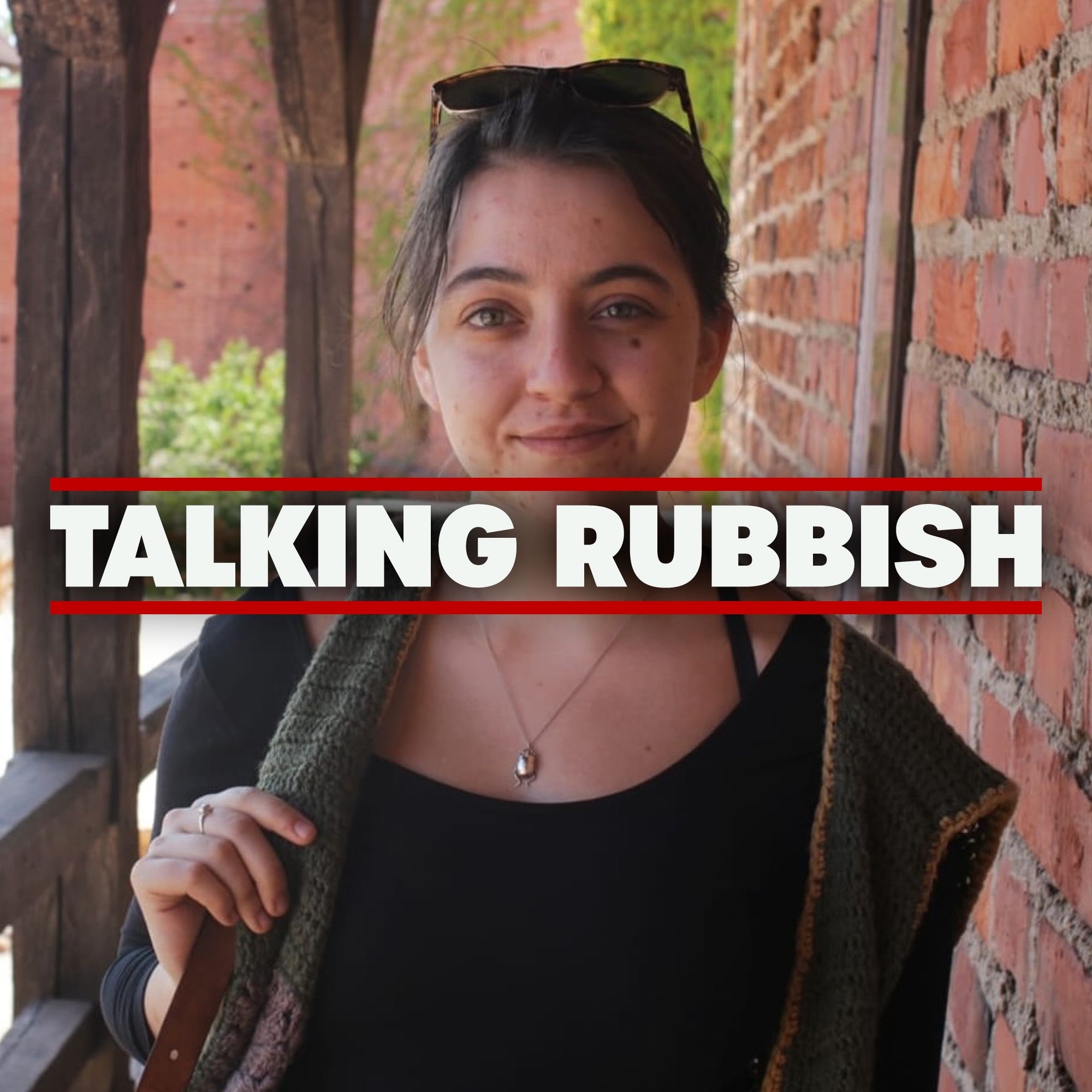
With nearly 200,000 tonnes of direct carbon emissions linked to the UK TV and film industry in 2024, sustainability is quickly becoming an urgent priority. This week’s guest, Stephanie Shires, has helped deliver major carbon-reduction initiatives on some of the biggest shows currently on television. She offers a behind-the-scenes look at how environmental impact is managed on set, from food and transport, to accommodation and daily logistics. Steph breaks down the practical decisions she faces each day, revealing what it really takes to make modern productions more sustainable.

 Apple Podcasts
 Spotify
 YouTube
 Amazon Music
 Castbox
 Podcast Addict
 PocketCasts
 With nearly 200,000 tonnes of direct carbon emissions linked to the UK TV and film industry in 2024, sustainability is quickly becoming an urgent priority. This week’s guest, Stephanie Shires, has helped deliver major carbon-reduction initiatives on some of the biggest shows currently on television. She offers a behind-the-scenes look at how environmental impact is managed on set, from food and transport, to accommodation and daily logistics. Steph breaks down the practical decisions she faces each day, revealing what it really takes to make modern productions more sustainable.
Join hosts James Piper and Robbie Staniforth as they delve into the world of recycling, hopefully having fun along the way. One thing is for sure, they will talk absolute rubbish from start to finish.
Sign our very first pootition: https://you.38degrees.org.uk/p/poo
We would love you to join our community on Discord
Special thanks to our sponsor, Ecosurety
To get exclusive videos and clips, follow us on Instagram, TikTok, X, Threads or Facebook; @rubbishpodcast or YouTube: @talkingrubbishpodcast
Or you can contact James and Robbie with questions or just general rubbish musings using the email address talkingrubbishpodcast@gmail.com or by texting them via WhatsApp, our number is 07356 069 232
Relevant links and reports mentioned in the programme can be found on the Talking Rubbish Linktr.ee
Transcripts and episodes can be found on the Talking Rubbish website
Music licence ID: 6WPY8Q4O2RPFIOTL
Hello, welcome to Talking Rubbish, a weekly podcast delving deep into the world of recycling and discussing the truth behind snappy headlines and one-sided stories. I'm James Piper, author of the Rubbish Book, and I'm joined by Robbie Staniforth, my Far From Rubbish friend. And we are joined today by Stephanie Shires, our Far From Rubbish guest. Hi Robbie. Hey James. How are you doing today? Yeah, very good. Looking forward to another interview. This is going to be really interesting after last week. I really enjoyed last week. Like covering the carbon of TV, something I've never thought about was super interesting, and I'm excited that we've got Steph who can give us a lot of the detail. The behind the scenes, as it were. Literally. So if you didn't listen to last week, you need to go back and listen to it. You need the background. But if you didn't, this week we are interviewing Steph, who's a sustainability manager for various TV shows and has worked on Rivals, Hijack, and more recently down Cemetery Road for Apple TV. And so we will introduce her very shortly, but first let's discuss what we've noticed this week. Loads of people, Robbie, sent me a thread this week from Hans Molman. Okay, not the real name, not the Simpsons character, but someone with the username Hans Molman, which was a screenshot saying a radio programme like the shipping forecast, but it's called bin day, and it just reads out every single council in the country's bin schedule. That's brilliant. And this is a real thing. No. No, we need to do it. We need a new. We take the shipping forecast and we create what someone has referred to as the skipping forecast, where we discuss every council's bin days. What a great idea. Lovely content. Charlotte shared it with me on Instagram and she said a comment that said they should get famous YouTube bin experts to do it every week. Binfluencers. Robbie, I found the job for us. When we migrate out of podcasting. Welcome to the Skipping Forecast in Cheshire. There are black bins on a Wednesday. It could be really good. Are you in?
SPEAKER_00That's absolutely amazing. Uh I'm not sure I've got the pattern for it.
SPEAKER_01I think that's got you all over it, James. And Adam sent me a WhatsApp about a new fly tipping fine. I can't believe, in the words of a famous Bristolian, not another one. How is there another fly tipping fine?
SPEAKER_00There seems to be one every week. You've like willed it into existence here, James, I think. This is your doing. This is your doing. You've popularized it too much.
SPEAKER_01It is unbelievable. There must be something in the water. Not coffee, obviously, Robbie. We don't allow coffee and water. But this one is a little bit different to the others. It's a lady called Loretta who found her communal bins full. So I'm assuming she lives in a flat. Her communal bins were full. And this is what she says happened. I'm not going to question her. She decided to put her cardboard, like envelope is like an Amazon cardboard thing with her address on on top of the pile of cardboard. And then the council, Houndslow Council, have fined her a thousand pounds. It sort of does look like the entire fly tip is hers. She sort of basically labelled a pile of cardboard with her address on top. She's incriminated herself. Oh no. And this is the problem. She's saying, well, all I did was I saw a pile of cardboard and I added to it because my bin was full. But the council don't know if you're responsible for the whole pile. So, you know, our warning here is only use bins. Don't use on-street bins with things your address on, as per our previous case. And please, please, please, don't add to a fly tip.
SPEAKER_00Yeah, so it's don't add to a fly tip, not don't put your name on a fly tip. Just to be clear.
SPEAKER_01Yeah, don't add to a fly tip with anything. And certainly don't add to a flight tip with your name that says, oh, this is my fly tip. Conveniently, how do you address some postcode too? And over on Discord, we had Eats Runs leave us a message, which I found fascinating. And it's one of these things I'm going to introduce now as a thought, as something we need to go away and do some work on. And then we're going to ask some questions of boots and the people who manage medicine takeback schemes. So Eats Runs is one of our influencers who's been very engaged with the blister pack recycling over on Discord, and we've discussed it a lot about what you could bring back, how much you could bring back, how the aperture on the bins in boots is quite hard to get lots of blister packs in. So this is your medication packaging, your pill packaging. And Eads Run said they were changing medication and put all of their historic blister packs in the bin on boots on Saturday. The new medication is a bit more complicated. So they were talking to the company that are delivering the medication, and the person said they come in a tamper-proof blister pack. Sounded very complicated, they said, and to put it in the general waste when they're finished. And obviously, this is someone who's engaged with us a lot about blister pack recycling either on Discord, so did not want to put it in their general waste. The per the people delivering the medication said the pills are cytotoxic, and as they're just a compressed powder, some of it may get left in the packaging. So it'd be quite hazardous to take it back to Boots. I've never heard this before. That's news to me. Well, we have contacts at Boots, so we are going to do some research for each ones and we will come back to you all. But yeah, I've never really thought about the difference in pills, the difference in medication, and whether that would prevent you from recycling. We'll find out. And we'd like to take a moment to thank our sponsor, EcoSurety, who are on a mission to rid the world of unnecessary packaging. They help brands navigate the tricky world of extended produce responsibility, but that is not all. They also collaborate on some incredible recycling projects and consumer awareness campaigns for those tough to recycle materials. If you're an organisation looking to make smarter packaging choices, check them out at ecosurety.com. And the best thing you can do to help Bob Podcast grow is to share us with your friends and family. It's going to be quite amusing when you hear the review of the week. Share with friends and family, and to leave us a review. And if you leave us a review, you can be Robbie's review of the week.
SPEAKER_00And this week we've got a great review from Corky5, and that was over on Apple. The headline, which is just great. Exactly what we're trying to do here, James. Engaging, informative, and surprisingly fun. I think I think we are surprisingly fun, James. And so the long line, and here's the meat on the bones, so to speak. I started listening to this podcast after following clips on social media, but the full episodes are on another level. James, you all know who this is. Do you know who it is, James? Pause. We will come on to that. Ah, okay. Uh I'll continue. The mix of recycling facts, witty humour, and natural conversation makes it incredibly engaging. I've binged six episodes, even backwards. What, they've played us backwards. Does that make more sense than playing us forwards? And now I look forward to each new one. It's made my gym workouts fly by and genuinely brightens my day. I must listen for anyone who wants to learn and laugh at the same time. Okay, so who is it, James?
SPEAKER_01Who is it? This is a good question. I wasn't 100%. I actually found out last night. So this starts with me going to a family event a few weeks ago. And my family turning to me and going, Oh, we love your podcast. We listened to it on TikTok. And I was thinking, you can't listen to our podcast on TikTok. And my entire extended family thought our podcast was us getting together, talking for 30 seconds, and me uploading it to TikTok. It has stunned my extended family that we talk for an hour. And so the line I started listening to this podcast after following clips on social media helped me to realise it was one of my family. And I had to whittle it down. And luckily, I got a text from one of them last night to say, Oh, I've left you a review. I'm genuinely enjoying this podcast that I thought was just 30-second clips on social media. And I know Steph will be laughing at this because the reason I actually know Steph is because she is my cousin's girlfriend. So this is our kind of shared extended family, as it were. And Steph, I know you will enjoy that review of the week. So it's a good episode. It's a very family-centric episode this week, I think. Thank you very much to my uncle who left that very, very kind review. And you can follow us at rubbishpodcast on all social media. You can email talkingrubbishpodcast at gmail.com or you can WhatsApp us. Also join our Discord. It's the easiest way to engage with us and listeners of the show. And the link to all those things can be found in the show notes.
SPEAKER_00Okay, so what you're telling us, James, is you should follow us on social media, but you should also listen to our actual podcasts.
SPEAKER_01Yeah, and if you have any friends who think the podcast is me and Robbie setting up these mics, setting up this camera, doing all this work for 30-second clips, please clarify to them. And I mean, I think it's reassuring, isn't it? That clearly I haven't told my family to listen because they had no clue. Hi Steph, welcome to Talking Rubbish. It is awesome to have you on, and we really appreciate you giving us so much of your knowledge, not only this week, but last week. You really helped me out with the episode. So thank you for that. I am fascinated to know how you got into the world of TV sustainability.
SPEAKER_02Yeah. Um, first of all, thank you for having me. Favourite podcast. So I feel like I'm living my best life right now, living the dream. Um, and yeah, I I think like most people, didn't really have a straightforward path into where I am now. Um, so I always wanted to be um kind of involved in film and TV. I wanted to be an executive producer, but I had no idea what that meant. I just thought it sounded cool. And at the same time, always really loved the environment, always really loved nature, but I didn't know they could be a thing in the same world. So I went to university, started studying, realized, you know, our industry has a big impact. And when I eventually joined the industry, I think it was my second job where I was a production assistant and I kind of took on the mantle of the Albert Reporting. And from then it just grew and grew and grew. So my background is in production, but always doing sustainability as part of that role. And then eventually I decided, you know what, this is too big. It can't be part of a role, it's its own thing. So I kind of started pivoting towards that, and I'm now full-time with an amazing sustainability agency called Leverage Point and working on all these amazing productions.
SPEAKER_01And I think probably a good place for us to start is a question we I think we ended last week's trash talk with, which was I guess the risk with all this stuff is that when you have an accreditation like Albert, there is a tendency for it to become a bit of a checklist. And you, as the sustainability manager or the person sort of driving everyone along, saying, Come on, you have to do it this way. And people on the chute might be getting frustrated with you because actually they don't want to do it that way. And we gave that wonderful example you gave of trying to get people to go veggie and then finding them ordering deliveries, which is just such a great example of how it doesn't work. Do you find that actually having things like Albert is a bit more of a checklist, or do you think there is a genuine cultural change happening in the world of TV?
SPEAKER_02I think there's definitely a big cultural shift at the moment. Definitely like, you know, I've done productions in the distant past where, you know, it's felt like, you know, people maybe didn't care so much and it was a bit of an afterthought, but I very much am not finding that now. I think the vast majority of production companies and broadcasters and studios, they all actually really care and they want to do the right thing. And Albert's quite a good tool for providing a structure and a framework for that because a lot of times people don't know where to start. So it's it's a good way to get people in through the door. And I think people's attitudes in general are changing, becoming more aware and kind of more kind of empowered to make make change.
SPEAKER_00And so when it comes to those uh dining options and things, as the example James talked about, how does that come into being? You know, the reality that you've got to sort of talk to these probably megastars, I assume, and say, uh, yeah, it's just a vegan breckie this morning. How does that actually work when it comes down to it? What's your role in it?
SPEAKER_02So I think, first of all, a lot of people don't realize how big catering is in our industry. So we work very long, very long hours. Um, and kind of as a standard, you get two hot catered meals a day, um, just for free from the production. My experience is primarily in what we call high-end TV, so like big budget drama production in the UK. And it's a little bit different on smaller productions, but most of the time you have these two big meals. You can have anywhere from three to five choices on the menu. So it's like not a little menu, it's quite a lot of options. Um, and then in addition to that, you also get something we call late break, which is like sandwiches and snacks, and then there's also a craft truck in a lot of productions. So then you've got your coffee van. So there's a lot to think about. Um, catering is, yeah, it's not just uh some sandwiches from like a meal deal, it's quite a big thing. So we will kind of start engaging with the caterers and the production company early, like kind of early in pre-production, about how they want to approach this. And one of the most common ways, and I know you mentioned this last week, is by having like either beef free or no red meat on a production, and that drastically cuts your footprint, or you can have a veggie day. So one of the recent productions we did, we had a veggie Wednesday. Um, another one had a veggie Monday. We we thought people might be unhappier with it on a Monday, so we shifted it later in the week. And it is so interesting. It's you would never think it would be such a big challenge, but I think it's such a personal thing. People's food is so personal, and to kind of try and change that for them, especially when they're working such long hours and they might be in the middle of the nowhere and it's rainy and they're all grumpy, to try and change their meals is really difficult.
SPEAKER_01And this is a lot of single-use packaging, isn't it? You know, we've talked uh you and I have talked about this about how it's disposable cups and it's disposable packaging plates, cutlery, things like that.
SPEAKER_02Yeah, so we before COVID, there was mostly reusables. It was mostly plates and knives and forks and your standard dinner wear. And then COVID saw everybody shift to kind of like you know, typically vegware compostable packaging. Um so everything's kind of in the clamshell, boxes, that kind of kind of stuff, and cups tend to be single use for the other craft. Um in terms of kind of trying to get away from that and what we're doing to try and implement reusables, we've tried, you know, reusable lunchboxes for people. We've, you know, going back to plates is quite difficult because we often have running lunches and it's kind of difficult to work and eat at the same time uh if you're trying to operate a camera. So, you know, things like lunchboxes, how we can implement that. Um, we also on our last uh one one of the last productions we did, we implemented a no cup, no coffee scheme. So that was quite a big moment for us.
SPEAKER_00Okay, what's this all about? No, you're talking our language, Steph. You've really seized my interest.
SPEAKER_01Sounds controversial. No cup, no coffee.
SPEAKER_02Oh, yeah. Very hard line. We had some angry people in the morning turning up and realizing they didn't have a cup, so just couldn't get a drink. Um, yeah, we kind of started that one because people were holding out their hands going, I'll risk it.
SPEAKER_01How hot's the water?
SPEAKER_00I'm just putting my mouth straight under the tap. Yeah.
SPEAKER_02We we did have some people turning up with bowls and things like that right at the start, trying to like get around it, being like, Can I have my coffee and a bowl, please? It was um very interesting. Brilliant. But kind of why we started doing that was because initially we wanted to do like a returnables scheme um where you know we'd give people reusables that they could use, clean them out, kind of have that system going, which I know you guys have spoken about before. However, it was really difficult and the amount of losses we had was just incredible. I think within like a month we'd lost pretty much all the cups. And obviously, we don't want to keep buying more, you know, reusables. So yeah, we ended up just saying, you know what, let's have a hard line on this. Just bring your own cups. And after a little bit of an adjustment period, everyone actually was quite on board.
SPEAKER_01That's really good. And if you're um so you mentioned vegware earlier, I've just got this vision of you guys filming in the middle of nowhere in a forest with your vegware. How does that work? Are you providing special bins for composting? I only asked the question. I just went to a university and they were saying, Oh, all our cups are compostable. I was going, great. Where's the bin where I put it? Oh, you just put it in the general bin. Okay, so none of this is getting composted. It's a complete waste of carbon. It's going to be way higher than just having a PE lined cup. So are you guys providing that full infrastructure if you're if you're using things at Vegware?
SPEAKER_02Yeah, we do. So we always make sure we've got compostable bins on set and food waste bins as well, specifically. That's quite an important one for us. And we can kind of run that no matter where we are. Um, there's various different ways. There's a great um location facilities company uh called Location One, and they have something called an EcoPod, which is like a trailer with all these separated areas where you can put different waste types in different bags, different areas, and then they can really easily sort it at the other end. So that's a really great tool that we we use quite a lot. There are still some productions that maybe don't have compostable waste, and some productions still don't even have recycling on set. Um, but it's very few now. I think most people realize that this is kind of, you know, the way forward, you know, we need to be recycling things. We can't just be shoving it all in one bin and hoping for the best.
SPEAKER_00We've got to do a field trip to see one of these trailers, James, don't we? Ideally, when you're working with some of the absolute megastars. So we can get to meet them as a sort of happy coincidence, but we're really there for the trailer, and that's the truth of it. Um when it comes to so you're sorting out and you've got these like bin provisions and things. What about the food waste itself? You know, that presumably, you know, you're putting on these two hot meals a day, and you've also got the sort of craft area too. But I presume it doesn't all get consumed, and it's quite hard to manage, you know, you don't want to run out of food. I can imagine that would be very unpopular on a set where people are working long hours. So I'm assuming you sort of have to over-cater to some degree. What happens to all of the food generally? What's best practice there?
SPEAKER_02So again, it varies by production and based on what production's policies are. So for us, we really kind of prioritize and not letting any food go to waste. So we collect the food, we package it up into individual containers, and then we redistribute that to kind of local charities or within the local community. Um, services like Oleo are really brilliant for that. They actually have a specific kind of way of using the app for film and TV sets. So we can work with them to bring volunteers onto set, they can sign all the NDAs, everything, and then redistribute the food, which is great. But historically, that's not always been the case. And I actually got a call from a friend of mine who is based Manchester, I think. Um, and they were on a production where they just saw the caterers literally with a big gastro tray of like macaroni cheese, just shoving it into a bin, not even a food bin, just a bin.
SPEAKER_00Oh no, sacrilege.
SPEAKER_02Definitely. So we try and avoid that.
SPEAKER_01And aside from food, fuel was another massive issue that we discussed last week and and clearly very impactful. So moving away from my favourite topic of food, how do you manage transport and accommodation on a complex chute?
SPEAKER_02Yeah, it's it's it's very hard. This is like probably our biggest area of focus. The thing we start with right from day one on a production. So obviously it varies hugely. You might have a production that moves every single day, and you might have a production that is very studio-based and only goes out to location occasionally. So it's quite tricky how we approach it. We kind of start with the schedule and we try and minimize travel by grouping locations together. So we're not having to go from one location in London one day up to Scotland the next and then back down, you know, it just doesn't make sense. So starting on a really fundamental level will do that. But then we kind of look at the smaller things too. So when it comes to well, we call them unit cars and like a unit fleet, and they're the cars that we have on set that drive the cast between locations, between unit base location, between their accommodation. And the mileage for those is incredible. And I did a recent production where we worked it out at the end, we totaled up all the mileage, and I think it was about 14 trips around the equator just on one production.
SPEAKER_00Unbelievable. Yeah. So it's like a short taxi journey, basically, just going from A to B to get people between accommodation and the next. Shoot. It's not sending them the other side of the world because there's a scene where you need a certain backdrop type stuff. It's just in the locale getting them around back and forth.
SPEAKER_02Pretty much. There might be some longer trips. Like if someone's like, you know, I need to go home, can someone drive me? And it's a bit further. But for the most part, it's just a lot of shorter journeys. They just really add up. Because we have a whole fleet of vehicles on a big production. It's like, you know, you'll have directors' cars, you'll have minibuses for the crew, you'll have so much. So we work a lot to electrify as much as possible. But then again, that raises the issue of, you know, if we're in the middle of nowhere, you know, the practicalities of having an EV fleet, especially if it's an EV-only fleet, can be quite tricky. So we've got to work out, you know, what are our provisions? You know, can we have a portable EV charger that we can plug into the power at base so we can always have some charging facility? But yeah, it's it's a bit of a logistical nightmare, to be honest. And hotels is the exact same.
SPEAKER_00So when it comes to the actual shooting, you're grouping these locations, because those are the big journeys where you've got to move the whole production. I imagine that's really expensive. Uh just for other reasons, not just carbon expenditure, but also financial. And so presumably you've got these actors who are filming out of sequence then. That like blows my mind. Because when I'm watching a TV production, I'm assuming that the whole thing has been shot in sequence. You're going to tell me that I'm very naive and don't know anything about TV, aren't you?
SPEAKER_02Maybe a little bit. But I used to think the same. So I can't judge.
SPEAKER_01I think you can see it, and isn't it Harry Potter and the Chamber of Secrets, where Harry's voice breaks and then unbreaks and then breaks again? I'm sure this is true. It's like back in my mind. We'll have edited it out if it's not true. But I'm sure during Chamber of Secrets, like the kids' voices break and unbreak kind of throughout the film because it's just been filmed in a random order.
SPEAKER_02I mean, I've I've not worked on Harry Potter, so I I don't know. And I'm also I I've I've got to be honest, and some people will be very angry at me for this, but considering I work in film and TV, there's a lot of films I haven't seen that I probably should have.
SPEAKER_01And Harry Potter being one of them.
SPEAKER_02Yeah, I've definitely not seen all of them. I've also not seen Star Wars or Titanic, and I feel like they're quite big ones.
SPEAKER_01Wow.
SPEAKER_02Yeah.
SPEAKER_01People will be angry. Yeah. I mean, that is we're gonna have people writing in.
SPEAKER_02Yeah, you might have to cut that bit out.
SPEAKER_01Never. We're open and transparent on this podcast, if nothing else. We talked last week about the subtleties and kind of the subconscious of TV and its duty to kind of tell a story about us realising it's telling a story around sustainability. And since last week's episode went out, I've sort of reflected on that traitors discussion we had and around these black Land Rover defenders that they're driving all over the set, you know, all over the roads. Every celebrity or normal contestant arrives in a black Land Rover defender, they're driven around in them, all the conversations happen in them, and I was just thinking, what a missed opportunity to have something electric, to have that subtle point. And you can sort of understand it, you're in the Highlands in Scotland, gravel roads, it fits the brief, right? But do you think that will have been a conversation? Do you think there's a team and in the traitors going, do we want to move to electric here? Should we be telling that story? Is that 2025 story, or is the aesthetic of the traitors more important?
SPEAKER_02I think that would definitely have been a discussion. Um, because they have the kind of question in their Albert Carbon Action Plan, which I know you spoke about on last week's episode, that kind of asks, you know, are you including sustainability on screen? So they would have had to have those conversations about how they're integrating it and if they are. Like it's really important, like you say. And I think also it's nice that you picked up on that because one of the things I often have to tell people is when we talk about climate content and planet placement and this idea of including the environment in our storytelling, it's not always that the entire story has to be about saving the world from climate change. It can be really subtle things like, you know, characters just recycling properly instead of chucking stuff, you know, in the general waste bin. And it could be characters, you often see it now, most characters in shows will just have like a reusable cut. And that's kind of driven by this idea. It doesn't have to be the whole narrative, it's just a small part.
SPEAKER_01I like the idea that the villain is really bad at recycling. Yeah. It's like, you know, every that's how you spot the villain. Like we discussed it earlier in a really early episode, didn't we, Robbie, about how we thought Apple might not let a villain have an Apple product on screen. Maybe we could do the same here. It's like you can work out who the villain is by whether they're recycling or not.
SPEAKER_00He's just fly tip, that he's definitely the killer.
SPEAKER_01He's the baddie, yeah.
SPEAKER_02No, that's one of the things we actually chat to people about as well. Because we do um alongside all our like actual onset climate in the bins, you know, hands-on stuff, we also work with production companies and development teams, I suppose, and we look at scripts and we do kind of a script breakdown from a sustainability perspective. So we kind of look at script stage before they go into production, hopefully. And we'll kind of say, like, this could be a big carbon emitting scene, you know, can we reduce some of these aspects before we even start producing it? But we'll also kind of say, like, oh, you've got this character that does this thing, can we swap it for this? And that's something that we we often pick up on. If they have a kind of negative character, we try and weave in some bad environmental habits.
SPEAKER_00Amazing. That's correct. We always think of like subliminal messaging as just always blanket being a sort of bad thing and like nefarious. It's so strange to hear that subliminal kind of messages uh that you embed on sustainability, on uh climate change and things can actually be good. So, what we're saying is for the next series of traitors, they need to get like the Kia EV 4x4, or I think Mercedes do a four by four that's electric as well, don't they? And if we see those pop up, cram them in a Nissan leaf, that's what I say. I think that's possibly going a step too far, James. Love to see that driving around the highlands.
SPEAKER_01So that's transport, but accommodation is equally worth us discussing. This is something you and I have talked about a lot because I know you occasionally have had a production in Bristol and gone, where am I going to put all these celebrities? You know, I've got to give them somewhere to sleep. And you're trying to find houses. Because people, this is what people do. People rent out their houses, right? For production companies, because you've kept telling me I should do it while I was traveling. Um I'm intrigued by it. I uh it's a it's like a whole new world to me, this.
SPEAKER_02Yeah, the accommodation is vast. So when I was mentioning earlier that I used to do production with sustainability as part of one role, I actually used to be a travel and accommodation coordinator. So I know this area very, very well. And the accommodation demands are just crazy on some big productions. And similar to how we worked out the mileage, we put in kind of all in a row all the nights we'd stayed in hotels, and it was 10 years on one production of accommodation.
SPEAKER_01Unbelievable.
SPEAKER_02It's people don't think you know that that would be at that scale, and that was on a big production, but then you think about Is that across our whole sorry, is that across our whole series? So yeah, that was across the whole series.
SPEAKER_01Okay. So next time but uh but like a short series, six episodes or something, or yeah. Yeah, so next time I'm watching a six episode series, I need to remember that in the background there's 14 trips around the world in taxis and 10 years in hotels. Oh yeah. And if it's rubbish and it's got like an IMDB score of three, which obviously none of your productions do, but if it's rubbish, I've got to think, what a waste that was.
SPEAKER_02It's honestly, and it does vary by budget, I have to say. So if you've got a lower budget production, you know, then probably not gonna be doing as much travel and spending so much on accommodation. But certainly these kind of big blockbuster type TV series and films as well, like the more higher quality we're now expecting as audiences of these productions, the more that that takes behind the scenes in terms of carbon and money to produce. So there's so much going on.
SPEAKER_00In terms of like processing power and just computers being utilized in bringing TV series uh to the fore or um TV productions, like how big an impact is the the editing, the potential use of AI, the servers needed to run all of that? Not to do with the streaming service, more to do with actually bringing it to its final edit before it gets released. How big an impact is that, say, compared to what you've talked on with uh food, waste, travel, accommodation?
SPEAKER_02Yeah, so I love the fact you've actually asked this because I'm currently researching this exact topic. So at the moment, and I know you kind of briefly touched on it last episode, but Albert only calculate post-production in terms of the amount of time you've spent in an edit suite and therefore estimated energy consumption. However, they're not really looking at data storage, and AI at the moment is such a new area that we've never really researched it before. Um, there is actually a great study that somebody did looking at kind of CGI assets and digital assets compared to physical assets. So they did a kind of life cycle analysis of it, was the R2D2. So again, I've not seen Star Wars, so I don't really know what this refers to. But it's surely you know who R2D2 is. I think it's the cute robot that kind of beeps a lot.
SPEAKER_00But very good. Okay, good. Everybody's favorite.
SPEAKER_02So they kind of analyzed the physical R2D2 that they built for, I believe it was the original Star Wars film in the 70s, and then they analyzed the CGI R2D2 that they built in one of the more recent films, I believe it was 2002, and they found that the carbon impact of what they studied was that the digital one was actually much higher. And it was absolutely incredible. It blew my mind because I'd never thought about that so much. So people are starting to kind of move into looking into this more, but it's very, very new. All we know is there is a big impact, but the quantity of that impact is somewhat unknown right now.
SPEAKER_00And so it's something we'll presumably see more on. And I mean, thanks so much for our answering the question because when I said AI, I think I actually meant CGI.
SPEAKER_02Nice, nice.
SPEAKER_01But I like that you've asked us to cut earlier when you said you haven't seen those films, but now you've referenced it in a really good answer. So you can't cut. Everyone's gonna know you haven't seen Titanic and Star Wars.
SPEAKER_02No, I've made a rookie error.
SPEAKER_01You've talked a lot about working on high-end TV dramas. Now these are gonna have massive crews, massive cars. What's the biggest challenge you face when working on a large-scale production with so many people?
SPEAKER_02So I think what we do is still relatively new. So obviously the concept of sustainability people are quite aware of, and everybody knows, you know, it's an issue that has to be addressed. But in our industry, it is not naturally embedded into how we work. You know, we're coming, we're building these amazing sets, and then we're tearing them all down a few months later, and you know, it's it's not really a long-term industry, it's very kind of project to project. So I think that's a real issue, trying to kind of embed it in the the fibre of our industry, so to say. Um, I think most people are kind of getting to be very aware, and you know, the challenges are becoming less, I would say. But we've definitely had a lot of kind of fear-driven issues. I think that's predominantly what we come up against. It's not that people don't want to do it, it's just that they're scared of what might go wrong. So typically with power and fuel, we find this when we're talking about introducing, you know, battery technologies or hybridized, you know, generators plus a battery or even things like hydrogen and solar power, people are very hesitant to give up their old stage three diesel generators because that's what they know and they trust it. And we're kind of ripping their comfort blanket away somewhat. And I think that's probably the biggest challenge. And again, the nature of our industry being so short-term and very freelance, you know, if something really goes wrong and we have some tech that then causes the power to go out, that is a lot of money for people to lose. And they obviously worry that they will not get hired onto another job. So there's a lot of baggage, I would say, around us.
SPEAKER_01And it only has to go wrong once. You know, your generator goes down once and suddenly everyone goes, oh, that's because it was battery powered, we'll never do that again. And now you've set up a whole team.
SPEAKER_02But I would also like to point out the only ever times we have lost power on set, in my experience, it has been a traditional generator that's gone faulty, none of our technology.
SPEAKER_01So there you go. That's good to know. Yeah, it's interesting, isn't it? We have the I guess we have the same thing with electric cars, where the headline news, actually, because it's rare, is this battery's exploded or this car's on fire, or whatever it is. And of course the headline will start with Tesla. Tesla car on fire on M5. And if a petrol car's on fire on the M5, it will never say the brand. Ever. Um, it will just say car on fire on the M5. And and you have the same sort of thing in all these industries where people focus on the negatives when something goes wrong rather than being excited by the positives that it's working 90% of the time.
SPEAKER_02Exactly. Um, you know, we worked on a production where we had, you know, one of the locations team had a lot of these same fears that I'm talking about. You know, what if something goes wrong? You know, I don't want to be responsible for that and potentially lose my job or not get a future contract. And it was really difficult to convince them to like, you know, run with us. Like, let's let's test this, let's try it, let's break new ground, I suppose, and like do something new. And it took a lot of work, but by the end of the production, it was amazing because now they've gone on to other jobs and have said, like, actually, let's use this technology because they have used it, had a positive experience, and then have been like, great, let's let's use this again. And I am now not there with them, and they're still doing all this cool stuff, which is really, really nice.
SPEAKER_01And uh are you able to I just as you were talking there, I was thinking we focus quite a lot on the UK here, but actually you might be on a production that's going to other countries. Are you able to take the thing that you're doing in the UK to other countries, or or do you find it harder actually when you get out to a different country and they do it in a different way? Do you find it harder to bring in some of these initiatives? How does it work? Would you transport all your kit out, or are you looking for the same sort of kit somewhere else?
SPEAKER_02Again, this is so everything is really production dependent. Um, so at leverage point, we actually work not just in the UK, but we do work in Central Eastern Europe, but we have our marketing manager who's in South Africa as well. So we work in a lot of different areas. And one thing we see is that there are huge challenges depending what area you're in, and they're very different in different places. So typically, if a production is based in the UK and they're going for, say, a splinter shoot or they're doing some additional photography or anything like that in another country, or perhaps a whole portion of the shoot is just in another country, they will fly over the core crew, definitely. Potentially most of the crew, it's up to the production. And in terms of kit, again, the camera operator might want to just stick with their camera and their lenses rather than trying to hire them locally. And depending on what region you're in, the access to equipment is very different. So we're currently working on a very exciting production that I can't talk about, but that is not being filmed in the UK. And we are finding it so hard to find certain technologies, which in the UK are commonplace. But that being said, we can kind of counteract that because there it's just so culturally normal for people to not drive cars to work and just use public transport. So it's it's swings and roundabouts.
SPEAKER_00Yeah, so it sounds like what you're doing here is like most people working in the world of sustainability, whatever their particular sort of flavour is, and that's like behaviour change stuff. It's trying to change people who've been doing it a certain way for so long and get them to do it a different way, and take them on that change journey, and hopefully you get some of the early adopters. Who are those kind of early adopters and w what are they doing to kind of promote uh more green production?
SPEAKER_02Well, kind of how we spoke about um kind of climate content and on-screen stuff. There's actually a really amazing movement um called the Green Rider. And it's run by an amazing team, and basically the focus of the Green Rider, I know you touched on it in last week's episode, is to engage kind of cast who are these you know big stars who everybody sees and you know respects and listens to, engage them in sustainable practice in production. So instead of them demanding all the you know things that you might typically think an actor would demand on a production, they use that power to leverage sustainable change. So it's a really interesting concept. We're kind of flipping on its head what, you know, in the past it's been the actors who've wanted private jets everywhere. It's like flipping that and being like, instead of demanding a private jet, why don't we work with you to bring in sustainability? And then obviously, audiences see that and get very excited. So this cast members, it's you know, you can look it up and you can see who's signed up to this.
SPEAKER_00Um, give us some name, Steph. That's what we want. Give us some good guys.
SPEAKER_02I think some of the ones I can remember off the top of my head, we've got Benedict Cumberbatch, I know is on there. Um, obviously Sherlock fame. We all we all love him. I have seen Sherlock, so that's a good one.
SPEAKER_01Um about Doctor Strange? Have you seen him in any Marvel film? No, no, I thought this much.
SPEAKER_02I'm too busy making films to watch them. What can I say?
SPEAKER_01Do you say you've watched them if you made one? Um, you make it, but you don't actually watch it. And you say, well, I I did watch it. I what I saw all of it.
SPEAKER_02I do watch things I work on, but I haven't seen obviously recently did Down Cemetery Road. I haven't seen it yet. Um, but I'm kind of thinking I'm free from spoilers because I've read the script, so I'm I'm safe in that regard.
SPEAKER_01Yeah. Sorry, I interrupted you. Benedict Kampavac, yeah.
SPEAKER_02Another one is Bella Ramsey, who I know was in The Last of Us, and they've done some amazing stuff online, speaking about it quite vocally, about the impact that kind of, you know, cast can have on climate change and on the movement in the industry. And then the one that I'm probably most excited about, a little bit biased because I've worked with them, is Feinty Balogun, who is an amazing actor and also one of the founders of the Green Rider. So doing absolutely amazing work in that space. Um, and also just a super lovely human being. He's done some amazing talks online, so you can look those up if you are so inclined.
SPEAKER_00We're not gonna mention any of the bad guys, so to speak. We're not gonna be that unkind for you to dig them out. But my impression is that most sort of uh TV and film stars want to be sort of right on and do the right thing. You're gonna tell me that that's not universally the case, aren't you? And that some of cast members just you can't get them to change. Is that true?
SPEAKER_02Yeah, sadly it is. But I think, you know, that could be said for the general population as well. There are always people in every group that are gonna want to stick with their guns. Um, you know, we've had people, you know, previously who, you know, wouldn't drink out of, we were talking about the kind of no cup, no coffee and like the reusable systems we were doing. We've had people who don't want to drink out of those because they think it's unsanitary. Don't know what they do at home if they're not using reusables.
SPEAKER_01Whenever anyone says this to me, I say, there's two things I say when people say reusables are unsanitary. Have you ever seen how they wash a pint glass in a pub? And I guarantee they have pints in a pub and don't say, oh, this is unsanitary. And have you ever seen how they store single-use cups? You know, they just get put in the back of a shop, get dust on them. You know, it's there's nothing, it's not like they're sterilized up to the point they put your coffee in. So in most cases, I think reusables are more sanitary, but I do think that does require a bit of education because I have heard this time and time again.
SPEAKER_00Well, I can't wait to find out about the bad guys after we finish recording Steph, so make sure you stay on.
SPEAKER_01And Steph, we had a couple of things just to wrap up from last week that I wanted to make sure we took some time to talk to you about. So, reusing sets was a question we had. I think um we were talking about like the traitors, where, for example, I know the UK and US and possibly others use the same sets for their two productions. How would that be calculated in a carbon book? 'Cause I guess Harry Potter's the same thing where they're building the Harry Potter sets now for the T V series, but obviously they're building them for I know you know, and they did this with the um films as well, they're building them to be more long lasting because they're saying, Oh, we know there's seven T V series or we know there's eight films and so now they have the studio tour because everything is more rigid than a traditional show. So would they divide that across those productions or would they say actually each production essentially has a new set, as it were?
SPEAKER_02It's really interesting. I think returning shows, like you say, what they tend to do is they'll build something on the first, you know, series. They will then have that kind of carbon calculation for that construction embedded into that first series. And then for following series, what they'll be doing is just taking that out of storage and using it again. So they're not necessarily gonna recalculate that figure because it's a pre-existing item. I don't know if you know, if a production was so inclined, I suppose they could, but in my experience, nobody ever has. It would be the carbon of the initial production who actually did the construction and bought the materials in the first place.
SPEAKER_01Okay, so the carbon on subsequent Harry Potter series, for example, could be lower than series one because series one has all the builds.
SPEAKER_02Exactly. So subsequent series tend to have much lower footprints, and also, you know, it's not just that, the costumes, you know, they'll be saving and reusing those, so you won't have the additional footprint of that. And everything tends to run a little smoother on subsequent series, so they'll have travel in place and the accommodation, they'll know what they're doing already. So yeah, emissions generally drop after the first big stint.
SPEAKER_01But Albert doesn't take that into account. It'd be really nice to see Albert say, whatever series one is, series two has to be 80% or less of series one, for example. That would be a really nice metric for them to calculate, but that isn't in any of the calculations, is it, or any of the thought process.
SPEAKER_02No, not currently. Um, another thing is like at the moment, when you read the Albert report, and at the time we're recording this, it was actually a couple of days ago, they've just released their new one. So very exciting.
SPEAKER_01Yeah. Um which is such a pain because I wish I'd delayed this by a few weeks and then I could have had the latest reports. But there we are.
SPEAKER_02Oh well, it's fine.
SPEAKER_01Everyone can go off and read that. That's enjoyable.
SPEAKER_02Yeah, it's a good bit of uh daytime reading there. But yeah, another thing is like kind of I mentioned about how budget is so intrinsic to the kind of carbon output of a production. So I know they try to gather budget data, but it's something that people don't always want to share. But that would be very interesting to be able to see broken down by what we refer to as the bands in production, and see, like, you know, for a production that's eight million plus an episode, what's that carbon compared to something that is a smaller budget of two million an episode and actually break down the impact of that? Because at the moment we don't have that data, which is a little bit sad.
SPEAKER_01And it was a surprise to me last week when you told me that carbon offsetting is not mandatory. And I know we said we'd find out why that was. Do you have a view on that? So this was Albert asking you, are you going to carbon offset? And my understanding is that used to be mandatory and now it's not. But when we looked at it, it was like for a million pound production, it'd be 400 pounds to carbon offset. So it's a shame they don't make that mandatory.
SPEAKER_02Yeah, um, a couple of things for this one. So obviously, I'm not part of the Albert team, so I can't say exactly why it changed, but I do know that a lot of companies and broadcasters now encourage productions to use the money that would have initially been earmarked for offsetting for kind of on the ground initiatives. So instead of saving money to, you know, do the offsetting at the end, actually use that to make tangible change and reduce the carbon of the production at source. Um, but the second thing I would say is that when it comes to kind of the estimations on carbon, they're quite because of this thing I mentioned about we us not knowing, you know, what's tied to what budget, they're often quite skewed because obviously there's less really big budget stuff and it's an average of the emissions across the whole budget range. So I would lean towards always thinking the emissions are going to be way higher on those big budgets than the averages may suggest.
SPEAKER_01That's great. Thank you. And Steph, thank you so much for coming in. I've got a couple of final questions for you. So every time we have a guest on, we ask them to recommend something that is helping them on the sustainability journey that we could offer to a listener. So, do you have a gift in mind that we could offer out?
SPEAKER_02So, this is a bit of a left field suggestion.
SPEAKER_01Um, we like, we like okay.
SPEAKER_02So, in our industry, we have rap gifts. So, they're very, very common. At the end of every production, all the crew members and all the cast members get a gift from the production team to say thank you for all your work. Um, usually it's like a coat or a bottle or something. And over time, you end up with millions of these bottles, millions of these coats, and we're trying to change that. So, one thing we're doing now is opting into gifts, or the production instead put the money towards planting trees of the equivalent value. So, I think my suggestion would be instead of a physical gift, having a tree planted is kind of a symbolic gesture.
SPEAKER_01Very nice, that's really good. Yeah, very similar to I think our last interview um was Esther, and she said we should plant a coral reef for one of our listeners. And uh I had lots of messages saying, I love that it's not a physical gift, so that'll be nice. We're gonna get a lot of messages saying that's good. So I don't know how much planting a tree is, but what episode number is this? It's just 70, so maybe 70 trees. How much is a tree to plant? I need to find out. Going big James. I need to find out before I commit to this. But um, once I found out the cost of planting a tree, we'll either plant one tree or seven.
SPEAKER_02I I'm going for a talking rubbish forest. I think that's what I want to see here.
SPEAKER_01Seventy acorns will be planted. If you want the chance to win one tree or 70 trees planted, depending on cost and what I'm able to afford, uh just follow us over on social media, which is at rubbish podcast, and like the post that announces Steps episode, and you will enter into a draw for that. Thank you very much, Steph. And the question we ask every guest to wrap up: if you had an environmental superpower, what would it be and how would you use it?
SPEAKER_02So if I could have any environmental superpower or any superpower in general, I think it would be to be able to talk to animals, be like a little snow white. And then when we go filming on location, instead of only asking the location owners or the teams, you know, about the impact we're having, we could actually go up to all the like the bats and the owls and all the animals and be like, Are you guys okay? Are we annoying you? Like, what can we do? Um, and also very selfishly, it would mean I can also communicate with my cat who is currently asleep over there. So that would be very, very nice.
SPEAKER_01That's very good. We've had some building work in this building. This is a bit too behind the scenes, but we've had quite a lot of building work in this building while we've been recording this podcast on various episodes now. And I always have to message the builders and say, look, we're just going to record for an hour. Can we stop the building work? It's the equivalent. You'll have animals going, if you could just not do it for the next hour, that would be great because my son's trying to sleep.
SPEAKER_02Exactly. We've not even touched on it. It's such a rabbit hole, but the biodiversity impact of our industry.
SPEAKER_01A rabbit hole? Is this who you're talking about? Going down the rabbit hole, chat to the rabbit.
SPEAKER_02Exactly. Check that they're all right with our SFX work that we're doing.
SPEAKER_01But yes, biodiversity is a big issue and and something we will have to cover in other episodes as well. Biodiversity of construction is is a really, really interesting um point to raise. So thank you so much for that, Steph. Thank you for joining us and and being so professional. I think you're the first guest we've ever had who's had a professional microphone. We can tell you work within television. So you've made our edit so much easier. So thank you for that. As always, thank you all for listening. Thank you for the reviews and engagement. We absolutely love getting the opportunity to do this podcast. Don't forget to join our Discord, follow us on social media at rubbishpodcast, and you can email talkingrubbishpodcast at gmail.com. Or you can WhatsApp us, and all the details of those things are in the show notes, as is the link to our link tree, which has all of the links to anything we've discussed in today's episode. There is nothing left for me to say other than to say, see you next wind day. Bye. Bye.
SPEAKER_02Bye.

Sustainability Manager
Stephanie is a Project and Sustainability Manager at Leverage Point Entertainment, providing hands-on sustainability support for Film and TV productions across the UK and beyond.
With experience working on productions for the likes of the BBC, Disney, Apple, Channel 4 and ITV, Stephanie combines her passion for storytelling and the screen, with a deep love of science, climate, and nature.
Whether she is decarbonising power systems or helping to build low impact sets, she strives to empower creatives to tell impactful stories, with lighter footprints.