68. Sustainable toilet paper - getting to the bottom of it
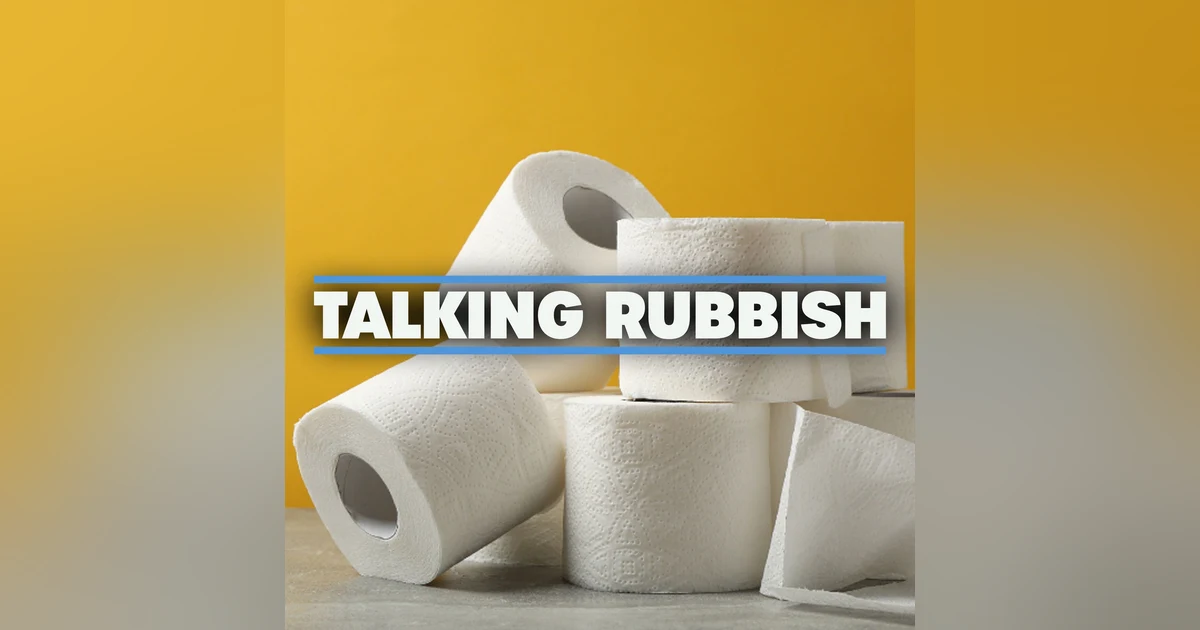
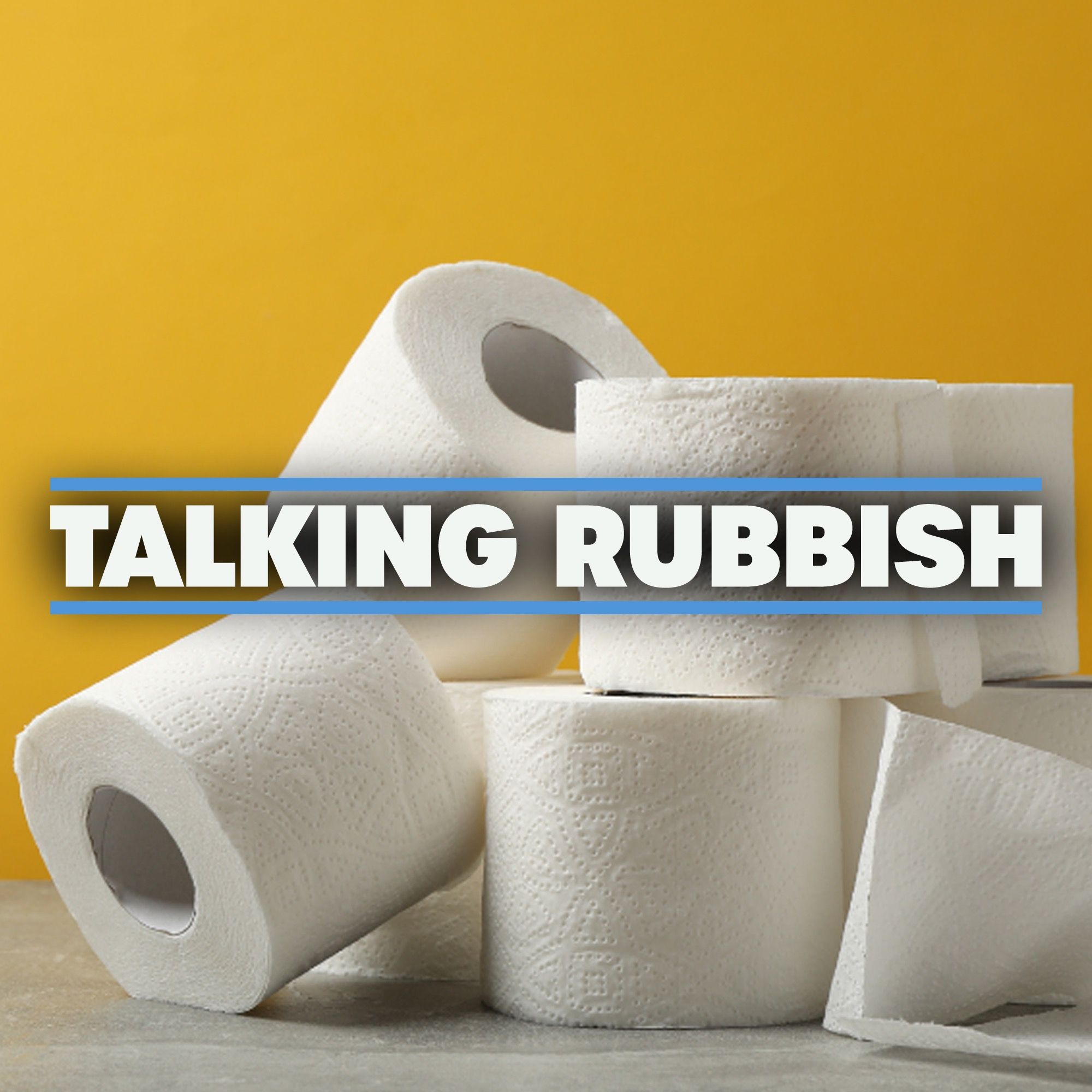
In recent years, toilet rolls wrapped in paper instead of plastic have been hailed as the eco-friendly choice. But in most industries, individually wrapping products is seen as wasteful, so why does toilet paper get a free pass? In this episode, we unravel the surprisingly complicated world of “sustainable” loo roll. From eco brands to supermarket staples, we’ll find out which options really wipe the floor with the rest. Plus, are Carex refill pouches rubbish or not, should we flush or bin snotty toilet paper, and why is "bangers and cash" a great title for a future episode.

 Apple Podcasts
 Spotify
 YouTube
 Amazon Music
 Castbox
 Podcast Addict
 PocketCasts
 In recent years, toilet rolls wrapped in paper instead of plastic have been hailed as the eco-friendly choice. But in most industries, individually wrapping products is seen as wasteful, so why does toilet paper get a free pass? In this episode, we unravel the surprisingly complicated world of “sustainable” loo roll. From eco brands to supermarket staples, we’ll find out which options really wipe the floor with the rest. Plus, are Carex refill pouches rubbish or not, should we flush or bin snotty toilet paper, and why is "bangers and cash" a great title for a future episode.
Join hosts James Piper and Robbie Staniforth as they delve into the world of recycling, hopefully having fun along the way. One thing is for sure, they will talk absolute rubbish from start to finish.
We would love you to join our community on Discord
Special thanks to our sponsor, Ecosurety
To get exclusive videos and clips, follow us on Instagram, TikTok, X, Threads or Facebook; @rubbishpodcast or YouTube: @talkingrubbishpodcast
Or you can contact James and Robbie with questions or just general rubbish musings using the email address talkingrubbishpodcast@gmail.com or by texting them via WhatsApp on 07356 069 232
Relevant links and reports mentioned in the programme can be found on the Talking Rubbish Linktr.ee
Transcripts and episodes can be found on the Talking Rubbish website
Timestamps:
What toilet paper should you buy? - 01:45
Additions and corrections - 32:07
Rubbish or Not: Carex refill pouch - 40:02
Rubbish News - 44:03
Should we flush or bin snotty toilet paper? - 47:24
Residual Rubbish - 51:34
Music licence ID: 6WPY8Q4O2RPFIOTL
Hello, welcome to Talking Rubbish, a weekly podcast delving deep into the world of recycling and discussing the truth behind snappy headlines and one-sided stories. In this episode, we will discuss what toilet paper to buy. Here's the Carex refill, rubbish or not, and I have a question about what to do with nasal toilet paper. I'm James Piper, author of the rubbish book, and I'm joined by Robbie Standerforth, my far from rubbish friend. Good morning, Robbie. Hey James. Just struggling to distinguish normal toilet paper from nasal toilet paper. It's the same thing. Or a tissue. Nasal tissue. It's a really good rubbish question, so hang in there, guys. You'll like that one. It's amazing. The time has finally come to cover off toilet roll. It's uh been in the pipeline for some time. I don't want let's not have many puns because the fish thing was ridiculous last week.
SPEAKER_00Yeah, I probably went a little overboard on that one.
SPEAKER_01We did a live event this week, didn't we? And I said to someone the amount of fish puns you got in was just unreal. And then someone messaged me afterwards and went, I bet they're off the scale. That's better than any of our fish puns. Better than anything we did. Considerably better, yeah. So thank you for that, Andy. And last week, Robbie, if you remember, I changed my residual rubbish in the on the walk-in, so that it was about car parking tickets, and I mentioned that what I was moving was a toilet I had found in a toy shop. Well, this has fit perfectly with the toilet roll episode. The entire episode is now 67% toilet adjacent.
SPEAKER_00Okay, so the binfluencers are really gonna be getting in the bathroom and trying to make sure they're doing the right things.
SPEAKER_01So the question today is which toilet paper should you buy? And I guess we're gonna say get ready for far too much information for me and Robbie as we spend half an hour discussing our toilet habits.
SPEAKER_00Yeah, this is gonna be uncomfortable, I think, in points.
SPEAKER_01Toilet roll was invented in 1857. So the question is, what was used before? Probably I can tell you one thing that was used. From 1818, people used the farmer's almanac. What the heck is that? What's an almanac? Yeah, the farmer's almanac. Am I supposed to know what that is? Uh only I just think Back to the Future 2. Don't they talk about an almanac a lot in Back to the Future 2? Isn't that what Biff is trying to get hold of? Yeah, what is it? It's like a review of the year or something. It's basically a calendar of things that are coming up, and for farmers, that's looking at long-range weather, things like that. And it's just a calendar of stuff. Well, the farmers used to get that delivered every year, and when it was delivered, they realized, hey, this is great. It's it's something that could be used as toilet roll, because once you've passed the date, presumably you don't need the long-range weather forecast. So they started nailing a hole in the corner to hang it in the outhouse. So they would hang it up with a nail, read it, and then use it, and then put it back on the nail. 101 years after this, so this is 1818, people started doing that. In 1919, the company just started putting the holes in for them. If you can't beat them, join them. They just put the hole in the almanac. This is how we sell copies. We lean in. Yes. And that hole is still there today.
SPEAKER_02Oh.
SPEAKER_01So they still print it with the hole in, and it's purely because it was used as loo roll. And is it really soft? I don't think people are using it. But it's still got the hole as a bit of a reminder of how it developed. And over the course of history, as you can imagine, lots has been used in place of toilet paper. Things like moss, hay, leaves, snow could be used to create water, grass, corn cob, sheep's wool. I found all these things that could be used. Corn cobs! Yeah, corn cob. Not great. Um, and eventually, as I say, newspapers, magazines, and pages of books. And I it's just worth noting that toilet paper of 1857, you know, when it was truly developed, was quite posh. It had aloe infused sheets of hemp. And the question is, why would people pay for it when they were getting the Sears catalogue through the post? And so people shunned original toilet paper because they were like, it's so expensive. And I'm getting the Sears catalogue through. So I'm going to use that as my toilet roll. And that's what was happening for a long, long time. Yeah, so early forms of reuse then. Exactly. It was moving up the waste hierarchy. What's the equivalent for today, like the Argos catalogue or something? Is that still around? Yeah, probably. Yeah. And the role that we all know and love was developed in 1890. I don't know if this does seem weird to us now, but it was actually quite hard to sell toilet paper to people because back in the day they were embarrassed by bodily functions. I mean, I would argue we're still there, right?
SPEAKER_00That's probably still exactly the same. Yeah. We've got that Victorian sort of prude about going to the toilet. I reckon that still exists in the UK.
SPEAKER_01Yeah, I did say in a previous episode, you can't just go in a shop and just buy Lou Roll, can you? You have to buy something else so it doesn't look like you just literally went, Oh my god, I've run out.
SPEAKER_00Yeah, chewing gum is the minimum requirement.
SPEAKER_01Yes, on top. Yes. So I think this still happens, but toilet paper was a visual representation of bodily function. So people didn't like buying it, and so they were more likely to use magazines, newspapers, things like that. And um Haeckel, I think that's how you pronounce it, which was a German brand in the 1930s, actually used the tagline, ask for a roll of Haekel, and you don't have to ask for toilet paper. So they lent into that and said in their marketing, okay, well, we'll make it more about the brand and the words toilet paper.
SPEAKER_00So it's more discreet because you're saying Haekel. Oh, like that. That's very good, good early marketing there.
SPEAKER_01And as indoor plumbing developed, toilet paper was accepted more and more. And I guess it's just worth noting because we're going to go quite UK focused on this and think about toilet paper in the way that we use it in the UK. But one thing I quickly realized from traveling around the world is lots of countries don't use it in the same way. And according to Naked Paper, around 70% of the world doesn't use it like we do. It's used to dry after using a b-day, a sprayer, a jug, things like that in many parts of Asia, Middle East, South America, and Southern Europe. Theplumber.com, yes, that is a website, had some fun and horrendously disgusting stats. Would you like to hear them, Robbie?
SPEAKER_00Not really, no.
SPEAKER_01But you're gonna say them anyway. So if you're having breakfast, just skip forward 15 seconds. The average tear, this bit isn't disgusting. The average tear is 5.9 sheets of toilet paper. 44% wipe from front to back, 60% look at the paper after they wipe, 42% fold, 33% crumple, and 8% do both a fold and a crumple, and 6% wrap it around their hands. Side note, we were at an event yesterday, and someone did say we should do the sustainability of the fold versus the crumple, but um we don't have time to go through that today. 50% say they have wiped with leaves in the past, 8% have wiped with their hands, and 2% have wiped with money.
SPEAKER_00Money. Whoa. That must be in some far-flung country where a note doesn't.
SPEAKER_01Yeah, where the inflation has affected it. Yeah. It's horrendous, isn't it? Anyway, this is not a history, geography, or whatever that was lesson. Uh, this is about today's loo roll and whose we think we should buy. It probably won't come as much of a surprise because we have mentioned them a few times over the months that I want to focus on who gives a crap to start with, because I just think they're a sustainability oddity. And I think it's worth going into detail. And then towards the end, we'll give you advice on what toilet roll we think you should buy. So, who gives a crap?
SPEAKER_00Robbie, when did you first come across them? I did use them when they first came out, so it must have been maybe five years ago, four years ago or something. Like sort of 2020, 2021, somewhere around then. I was using them for maybe six months or so.
SPEAKER_01Great. I suspect that's fairly typical because they just exploded during the pandemic. And I guess a toilet roll is like the panic by staple, isn't it? It's yeah. And online delivery became such a necessity that an online toilet roll company was going to do very well during the pandemic.
SPEAKER_00So what you're saying is I was on trend at the time.
SPEAKER_01On trend, great. Yes.
SPEAKER_00As always.
SPEAKER_01I must admit there was a point early pandemic where I panicked, and because I refused to panic by, I don't want to contribute to that problem. And we were on our last roll, and I think I ended up in about 10 shops before I found some. And there was some real fear going on. That was the one occasion where I probably would just buy Lero and not some chewing gum because everyone was panicking. Have you heard the story of Johnny Carson?
SPEAKER_00No. Well, that's the uh show host, talk show host, isn't it?
SPEAKER_01Yeah, in America. He was doing the Tonight Show on NBC, and this was in 1973. He decided, for some reason, I'm not entirely sure why, to do a joke about shops running out of toilet paper. The joke caused a shortage of toilet paper in America for three weeks, and this was despite yeah, and toilet paper companies were post were sharing videos going, look, we are in full production. Everything's okay. This is just a joke that the shortage just created itself.
SPEAKER_00Oh, wow. Okay. Unbelievable. It shows how uh yeah, you can spread fake news pretty quickly, even back in the 70s.
SPEAKER_01Who gives a crap off of two types of toilet roll, bamboo or recycled paper? Bamboo's an interesting one. I think we're gonna have to do an episode on bamboo because when I was researching this, I just casually put bamboo grows fast, reasonably sustainable. And then actually this morning, I was looking through Reddit and I'm obviously following a lot of these recycling things, and someone had posted the question what's a form of greenwashing that everyone thinks is sustainable? And lots of people were commenting about bamboo fibre, and they were saying actually the way it's processed is not very good. So I need to do some more research into that. I'm not going to say bamboo is sustainable, but only because this morning I read something differently, and I'm not entirely sure. Recycled paper, their other type of toilet paper, is definitely going to get a lot of support from us. We're we're big fans of using recycled paper as toilet roll. I think based on the review quantities on the website, bamboo has 40,000 reviews and recycled paper has 20,000 reviews. So I think we can surmise that bamboo is outselling recycled paper two to one. But I think they started with recycled paper, so I actually think it's probably a bigger gap than that because they will have got a lot of reviews for recycled paper before they started selling bamboo. And every review website, blog, newspaper article I found about them says they are an eco-friendly toilet paper company. And I have actually really struggled to find anyone who is critical of them until now. Here we go.
SPEAKER_00I'm a bit nervous. Until you appointed yourself.
SPEAKER_01No, I am a bit nervous about this because I don't like you know saying companies about there's no companies that are bad. It's not black and white. It's not like, oh, these guys are bad, these guys are good. Talked about it before. Coca-Cola use 100% RPET in the UK. Whatever you think about the drink, that is a very impressive achievement from a recycling perspective. Everything is a bit murky and grey. I think it's a personal choice what toilet paper you buy. Obviously, you could there's loads of companies out there all doing quite similar things, and some of them are better than others. But I think in this instance, because so many people think this is a sustainable brand, a really, really eco-friendly, eco-driven brand, it is worth exploring what causes that. And I'm not sure I have the answer, by the way. I'm I'm just intrigued for us to discuss it. So this is not meant to be a slight on them and as an organization. And just to counter it, I think let's do some positives first of all. They are an incredibly open company. You spend five minutes on their website, you're like, wow, this is amazing. They write blogs and stories that are really in-depth in terms of the background to their business. They compare themselves to other Lou roll companies and and positively and negatively. They're just super open. Uh the first blog I came across on their website was actually about them making redundancies, and they published the letter that they'd sent out to employees so that everyone knew what was happening, even their customers. Oh, really? Wow, that is pretty transparent. That's amazing. Yeah, and they're very open about their carbon impact, and they don't shy away from some of their issues, and they say, look, we've made decisions that we think are right that others may think are wrong. And I think that is that is super impressive. They're a B Corp and Robbie. We both have been through the accreditation process for B Corp. We know how difficult that is, and we know that's quite hard to pretend that you're not ethical and sustainable and all those things. You wouldn't be a B Corp. So there's definitely some good things there, and definitely internally they will have lots and lots of positives, I'm sure, in order to achieve that accreditation. But the big thing, the big positive, is they donate 50% of their profits and they donate it to charities that provide clean water and toileting, and they believe everyone in the world should have access to clean water and a toilet, and we agree with that, of course. Now, 50% of your profits is a huge, capital huge commitment. And they have donated almost 10 million pounds so far.
SPEAKER_00I think that's one of the biggest stories of why people choose this brand over and above potentially some of the what's the actual paper like. It's the it's the brand of the company that does the kind of things that you've described, such as donate half of their profits to charity. That is quite rare in a commercial for-profit organization.
SPEAKER_01Big kudos for them for all of that. That's the great stuff. Um, I love everything they do outside of toilet roll. They're tissues, kitchen roll, bin bags, dog poo bags. They're all made of 100% recycled materials. So that's what we like to see. Don't introduce compostable, biodegradable. You don't need to in those materials. Keep it focused on recycled materials. They're doing all the right stuff in terms of the products they sell. I can't criticize it. I think it's really good. Now, something I feel I need to say as we move into the negatives, is we are just talking about sustainability and not the quality of the toilet roll. I have not yet used the almost 100 loo rolls I bought to prepare for this episode. So I cannot tell you if they're good or not. I have no idea. And I've never actually bought recycled paper toilet rolls. This is a big shift for me. I am, just to be open and transparent, I am changing as a result of this episode. Historically, I have just bought whatever loo rolls cheapest in a supermarket. I'm not going to lie and pretend I've been amazing. I have also been searching for what the right Lou roll is as I've been researching this. I must admit, as I unwrapped different Lou rolls last night, I was like, wow, these who gives a crap ones feel really high quality. And some of the supermarket ones maybe don't. They're not as thick. They will be a different level of quality. So I'm not really talking about that. I'm talking more. You're gonna have to find another podcast for which is the nicest feel on the Maybe in like three months, once I've used the 100, I can come back and give them a score out of 10 or something as an addition and correction. I'd be happy to do that. Okay, let's move into the negative. So their main markets, who this is who gives a crap, their main markets are the UK and Australia. And they shared a blog, as I said, on their website about redundancies, and that appeared to be moving 20% of their team away from global positions and back to Australia. So their focus does feel, from what I can see on their website, their focus does feel on Australia. Most of their product comes from China. And China to Australia is a fairly common trade route. Obviously, China to UK is as well, but you can see why it's China if your biggest markets are Australia and the UK. And are they an Australian company or a UK company originally?
SPEAKER_00Do you know?
SPEAKER_01No, I think their founder, his name's Simon Griffiths. I think they are from Australia. Oh, okay. They were struggling actually. It was interesting because what they said on the website is we're making these redundancies because we're struggling with time zones, and time zones are causing our operational costs to increase, which means we're giving less money to charity. So the beauty of giving 50% of your profits to charity is you can make redundancies and dress it up as a problem for the charities, which is nice. That's what a lot of the letter said. I obviously that's true. The more profitable you are, the more money you can give to charity, but also the more profitable you are. So it's a bit tricky that one. They do have an FAQ on their website around why they source from China, and I will share that on our link tree. Uh basically, they talk about the supply chains around bamboo and recycle paper being good, and it means they don't import raw materials. Uh they get a higher sheet count, and China was the country that would allow them to wrap individual roles in paper. We will come on to that, of course. And China allowed them to scale quickly. I think what they found is other countries were not prepared to take the risk and scale as they needed to. There are lots of, you know, good reasons for using China, but what they have said in their carbon footprint work is 20% of their carbon footprint comes from transport. And I actually think that's quite misleading because the fact that they wrap their roles individually, and we're going to talk about this in a second, but every single toilet role is wrapped in paper means their carbon footprint will be significantly higher than another toilet paper company that doesn't do that. So when they say 20% of our carbon footprint is transport, that's taking into account that they already have a much higher carbon footprint than a normal toilet paper company. So actually, if they weren't to wrap all their roles individually in paper, that transport carbon footprint would would be way higher. But it looks low because they're already doing stuff that increases their carbon footprint elsewhere in their business. Does that make sense?
SPEAKER_00Yeah, no, it's strange that actually percentages of your own carbon footprint really what matters is what's the overall carbon footprint, isn't it? And how do you decrease the overall amount?
SPEAKER_01Let's talk about this paper wrap. I'm going to be quite strong here. I apologise in advance because it feels harsh, but it is true that I absolutely hate it. Like you hate BuzzBools, Robbie. I hate.
SPEAKER_00Whoa, okay. That's really that's a real dislike.
SPEAKER_01I've never understood it. In any other market, this would be an environmental no-no. So just to be clear, the wrap around every toilet roll is heavily printed with colours. They use biodegradable ink, but they're using ink. Heavily, heavily printed, and it's virgin paper.
SPEAKER_00Oh, really? It's not even recycled paper. Wow, I didn't know that. I just assumed that it would be recycled paper. Not that that necessarily makes it okay, but that was an assumption I had.
SPEAKER_01It is unbelievable. And there's definitely a trend, isn't there, towards who gives a crap. If you go into a cafe or restaurant that's focused on sustainability, they are more like I can guarantee if I go in their toilet, they will have a stack of who gives a crap. Guarantee.
SPEAKER_00You're absolutely spot on. I visit these kinds of places all the time and often note they're using who gives a crap. Although, to be fair, it is more noticeable. So if you go to other places, you just see white toilet paper, wouldn't you, and not really uh notice it. So it's definitely like a badge of honour, though. You're right, in these kind of restaurants, cafes, uh outward-bound places that are really looking after nature, things like that.
SPEAKER_01And it's impossible to break. I have been to holiday lets where they've had who gives a crap. I've explained these issues, I've explained why I think that's not best. And I go back a year later and they're still using it. Because people perceive it as sustainable, sustainability venues want to show it off. And if you have a toilet roll that has nothing wrapped around it, nobody knows what it is, where it's from, they don't know the story. Whereas you have a stack of these individually wrapped toilet rolls, and because people perceive it as sustainable, it is telling your story.
SPEAKER_00Yeah, it definitely is. Yeah, it's a good proxy, isn't it? But I can see why you think this is just unnecessary. I think back to all of the trouble Lucasaid got in for just shrink wrapping their plastic bottle. It's like, take that wrap off your bottle. And, you know, people getting really annoyed with LucasAid and their sustainability credentials for wrapping PET bottles. Yet the exact opposite narrative exists for this wrapped toilet paper.
SPEAKER_01And it I guess it's such a brilliant case study, isn't it? For all those reports I read that stated that paper is seen as greener. And if you go back to episode 39, you will hear about the energy and water required to create and manufacture paper and why it is not greener, and particularly in examples where you don't need it. You know, if I started wrapping bananas tomorrow in paper and saying, hey, these are eco-friendly, buy my bunch of bananas, everyone would just shun me and say, This is ridiculous. Why would you wrap them in paper? Why don't we have the same criteria for toilet roll that definitely doesn't need to be individually wrapped? And they do acknowledge on their website that they could use a plastic wrap to cover up to 48 rolls at once. So from a a regulation perspective, they could use a plastic wrap to cover up 48 rolls at once.
SPEAKER_00Which is pretty standard. Yeah, 48 is quite like that's what everyone else is doing, isn't it?
SPEAKER_01Yeah, absolutely. You go into a supermarket, that's what people do. But they state on their website, we don't want plastic in our supply chain. And here we are. You know, the anti-plastic movement has led to, in my opinion, an absolutely mind-boggling product. And from a sustainability perspective, especially mind-boggling. And if we talk about the truth behind it, I found a really interesting article with The Guardian, where Simon, the co-founder, was interviewed and he admitted that the success of the business is down to the coloured paper wraps on its loot rolls because people like to show them off in their bathrooms. And he said the company would only be a fifth of the size it is today if they didn't individually wrap their toilet rolls.
SPEAKER_00Wow. Okay. So it's as clear as that. It's just a marketing thing. And did they have anything on their website about like why we wrap our toilet rolls and a message around why that was particularly important? Or not really?
SPEAKER_01No, they did. Everything can be countered by the plastic wrap thing. So what they were saying was that it's a health and hygiene thing. Because the blue rolls are coming from China, they have to keep them hygienic. And because they want to sell bigger boxes, you know, twenty four, forty eight rolls rather than six, if they're shipping from China, they decide. That they needed to wrap them for health and hygiene reasons. Because if they didn't wrap them, they would have to use a thicker carbo box. And when they did the calculations, they were like, actually, it's the same amount of paper. So once you've decided you're not going to use plastic, I can see how you get to this individually wrapping loo rolls. Once you've decided plastic is not going to happen, you need to use a lot of paper to keep everything hygienic. I'm not questioning that. I'm just saying it would be way better just to put a bit of shrink film around it. Way better. So much better for the planet, carbon, particularly now we've got supermarket take back schemes. And I think we need to come on to the weight. I got the coffee scales out, Robbie.
SPEAKER_00Oh, great. They've been out again. Good.
SPEAKER_01They've been out. I thought I would never buy who gives a crap. It's never been something that I felt I needed to buy. But of course, for the influencers, I will make an exception to work out how much of each material is actually used. Of course, this does mean I'm very pandemic ready with my a hundred rolls in my house.
SPEAKER_00So if I'm ever caught short, I can knock your door and be pretty guaranteed that I can use your hands.
SPEAKER_01We live close enough to each other that, although if you do knock on my door and say, Can I have a loo roll? I'll be like, oh no. Didn't even ask for chewing gun. So the wrapping around who gives a crap weighs 4.3 grams. That's around each individual roll, 4.3 grams of paper. The box weighs 190.3 grams. I had a pack of six, which I'd bought from Waitros, because Waitros do actually sell who gives a crap. And so not including the core, which I've sort of discounted because every loo roll has that, that gives us 36 grams of paper per roll. Each company varies its roll size, they have different sheet quantities. So I'm just doing everything per 100 sheets. So for who gives a crap, it's 13 grams of paper per 100 sheets. The alternative for the weighing exercise is I went to go and buy the weight rose recycled paper rolls, which is a pack of nine, and the plastic around those weighed 10.5 grams, which gave a total of 1.2 grams per roll or 0.48 grams per 100 sheets. So you can now completely forget those numbers, and I can just give you a summary, which is the difference between those two products is 13 grams of paper per 100 sheets compared to 0.48 grams of plastic. More than 26 times more packaging around who gives a crap.
SPEAKER_00Wow. So if you're just looking at weight-based metrics because of the extra carbon you have to use to transport it, it's way off the scale in terms of more than 10 times uh more weight around in the packaging.
SPEAKER_01Exactly. And I can make matters a lot worse because paper has a higher carbon footprint than plastic. The paper that who gives a crap are using is virgin, whereas the plastic around the weight rose recycled roll contained at least 50% recycled content and should come from the UK because the roles are manufactured in the UK. I couldn't verify that, but I suspect the plastic is from the UK. So the carbon footprint of paper is already higher. Then you've got the fact that it's virgin compared to recycled plastic. Then you've got the fact that one came from China and one came from the UK. I mean, I would not be surprised if we did the calc and that 26 turned into that paper's 50 times worse than that plastic. Don't point me like 50 times. I've just made that up. But it's going to be, you know, it's going to be a factor above, definitely, because you've got so many things working against it. So it's just worth saying, even if Who Gives a Crap was all made in the UK, I would not buy it. The quantity of paper is unbelievable and in my view, a real consequence of the anti-plastic movement.
SPEAKER_00Yeah, and the and just paperization continues. We've talked about it lots on the podcast, all the way back to episodes last year around Christmas when we talked about the chocolate selection tubs changing from plastic to paper.
SPEAKER_01Oh, yeah, more of those are around. I'm sure we'll talk about that soon. So, what would I buy? So I would buy for I'm going to go through my categories and then we because there's no perfect toilet roll. It's like there's no perfect packaging. There's always something that's a little bit wrong with them. So here comes James's TP advice. Yes. And and what I've moved to. So as I said at the start, I have not done this, and now I'm moving to this based on this research. So I am now going to buy recycled toilet paper. So uh there were some stats here. So I think all these stats came from naked paper, but recycled toilet paper has a carbon footprint a third that of virgin wood paper. So just by saying you're going to use recycled toilet paper, no matter what it's packaged in, you're already a third less than virgin paper. My next category is it really should come from the UK. And there is a 95% carbon saving from sourcing your paper locally.
SPEAKER_00So you're advocating to buy locally?
SPEAKER_01Buy locally, exactly. So you've got a third saving from using recycled paper and 95% carbon saving from local. And the companies that I found that claimed, and I haven't verified it, but claimed to make recycled paper toilet rolls in the UK included Sirious Tissues, Chimney Sweep, and Nova Tissues. You can order all of those online. Interestingly, most supermarkets sell it online. If you go to their websites, they will say they have recycled toilet paper. So to prep for this, I visited Tesco, Asda, Sainsbury's, Waitrose, Morrison's, and MS. Oh, very good. Wow, you really got out there. Had a fun day yesterday. And only Asda and Waitros had it available in store. And Asda, it was sort of like a small part of the section. They only sold it in packs of four. They didn't have bigger versions. I would say Waitros was the only supermarket that I found that in-store had it comparable to the rest of their toilet roll. It was in packs of nine, and it was, you know, within all the other toilet rolls, so it was an obvious choice, and there was as much of it as any other type. That was not true in Azta, and none of the other supermarkets I went into had it in store. It was all on their online websites.
SPEAKER_00So it's just not that common to find UK-based recycled toilet paper. I don't think anyone is prioritizing recycled toilet paper.
SPEAKER_01Okay, so we've got recycled toilet paper we've got from the UK. I would buy it wrapped in plastic. So plastic wrapped with recycled content. The plastic is lightweight, it could go back into flexible bins, it's valuable, it's like a clear LDPE, and it's going to have a significantly lower carbon footprint than a cardboard box. The truth is, even if that plastic is incinerated, even if you just put it in your general bin, it will be better for the planet than a cardboard box because manufacturing recycling uses so much water and energy. There is one thing that would make me move away from a plastic wrap, and that is naked paper, who I've mentioned a couple of times. They specialise in unbleached toilet rolls. So they are the guys who do brown toilet rolls. They do come in a cobbled box, but that lack of bleach is quite an interesting USP. And I'm quite intrigued as to whether using fewer chemicals and bleach actually is that much better for the planet. So I haven't got an answer on that. It's just an observation that that's probably the only time I would go away from plastic wrapping. They also don't meet my criteria as they source the material for their rolls from Spain, which is where their factory is. Um, but they do use the train to transport the rolls, avoiding 85% of the transport emissions. So they're pretty close to a sustainable toilet roll. Uh, small side note on Couchell, who we mentioned before, uh they have developed a rollless toilet paper, so where it's wrapped so tight that it doesn't have a toilet roll. I think others are starting to do this. I know I saw a comment from Naked Paper saying they were looking at it. I would not pick a roll-ess toilet paper over recycled because the carbon savings on using recycled toilet paper are much better than the cost of the roll. So it's interesting. I think we need recycled toilet paper, guys, to start going rolless. I wouldn't advise buying that over just a recycled paper recycled paper version. So for me personally, to summarise, it is between Naked Paper and a supermarket recycled owned brand that's made in the UK, as that will be wrapped in plastic with a high recycle content. As I say, the one I found readily is Waitros, but if you online shop, most of them will stock it. So I think we just need to cover off this charity donation thing, because that is the big differentiator for who gives a crap. 50% of profits going to charity. If you want to give to charity as part of your toilet paper purchasing, then they might be the right solution for you. Having said that, I can counter it just a little bit because the waitrose recycled paper was 26.6 pence per 100 sheets, the naked paper was 33 pence per 100 sheets, and who gives a crap was 29 pence per 100 sheets. I checked, and Who Gives a Crap's profits are 6%. This is roughly 1.7 pence per 100 sheets they sell. The Waitrose own brand is 3.6p cheaper per 100 sheets. So I genuinely think the best thing to do is to buy recycle UK-made toilet paper. Donate the 3.6 pence saving you have made per 100 sheets to charity yourself, and the charity would get more and you would have a toilet paper that's better for the planet. Oh, very good. I guess just to wrap up this section, it's worth us noting that sometimes I find brands have a tendency to do something marketing-led that is sort of dressed up as sustainability. And I think Who Gives a Crap possibly gave me the best example of this. On their website, they said we've managed to get solar panels on our roof, which was really good. You know, really, really good. They were talking about how difficult it was to get the landlord to agree to solar panels, and they were giving advice on how others could do it. So no problem with them doing that. But they decided with the solar panels to spell out the words we give a crack with two exclamation marks. I guess my observation is they could have got a lot more solar panels on the roof if they hadn't decided to spell out those words. Yeah, that's very true. It's exactly the kind of thing that on the face of it looks like sustainability. You dig a little bit deeper, and it feels like actually it's a marketing effort. And I think that probably summarizes this section nicely. Additions and corrections. So to add to our EPR woes, the UK brands are still coming out in full force about EPR. And there was an article in The Guardian about adding three pence on a pack of sausages. This was according to the brand Heck. And I need to give massive credit to Roger from Biffa, who put on LinkedIn this story with the title Bangers and Cash. That's very good. We've stolen it, Roger. Sorry. I did um say to Roger maybe he could help us name episodes because that is top class punage. The truth is that EPR costs are actually 0.4 pence for the plastic tray, 0.4 pence for the card sleeve, and 0.08 pence for the top film. So if you actually work out the EPR cost for a pack of sausages, it's less than a penny. And I did notice another packaging expert, Shane. Thank you, Shane. He re calculated it at 0.87 pence. So I have no idea where the Guardian got three pence from.
SPEAKER_00Literally no idea. We can't track it back. It's just gone out there in a headline. And it was three P per pack of sausages, not per sausage, per individual sausage.
SPEAKER_01I think, if I was to guess, they've worked out their total EPR bill and divided it by the packs of sausages they sell. But they I'm wondering if maybe there's they sell things other than sausages.
SPEAKER_00Okay, fine. In different packaging, more heavy or something.
SPEAKER_01I'm not sure. I have no idea, but somehow they've got to three pence. And just to be clear, I do feel for HEC here. I had a look at their accounts, and their latest profit for the last year was 64 grand, and their EPR bills 153 grand, according to The Guardian. So it's a nightmare. You know, I am sure this is a nightmare. But as we discussed before, they've all said they're going to pass it on to the consumer. And HEC have said they're going to pass it on to the consumer. So it shouldn't hit their profits. So I get that it's hard. I really do. But that is the point that you pass it on to the consumer, and that should encourage good packaging and penalize bad, because there should be a difference between the two. So HEC use a very, very large cardboard sleeve to put their sausages in. You know, it takes up like three quarters of the pack, right?
SPEAKER_00And this is about branding in a link to who gives a crap. It's about how they get their brand out there, yeah.
SPEAKER_01That's their choice. But that is half their EPR bill, that cardboard sleeve. So if they decided to go for a smaller cardboard sleeve or print on the plastic like others do, they would save half their EPR bill. And I think customers should see someone using less packaging and it costs less, and someone using more packaging and it costs more. That's a good outcome for EPR. So I know why they're frustrated and I support that frustration. I I get it. And at a time of high inflation with national insurance going up, it's not ideal to have this new legislation coming in that's costing more. But first of all, let's get our numbers right. Second of all, let's not pretend we're not passing it to the consumer. And actually, that is the point of EPR. So you and I are gonna pay it, Robbie, not heck. Um, and I final note on this media, come on, like the numbers are public. The calculation, you put they put them in the Guardian article. They said this is how much per ton. People on LinkedIn are just calculating this for you very, very quickly. Reach out to these people before you publish and check these numbers. Don't just take a press release from the brand and republish it. Let's get the numbers accurate because it is not helping anyone putting this news story out there.
SPEAKER_00And I've got a small correction, not quite as serious, heavy hitting an issue as yours, James. Uh, it's way back from the Labooo Boo episode. My daughter was listening uh in the car the other day, and she had some corrections, which, to be honest, have very little to do with the rubbish created. But in the interests of making sure we get to the truth behind the Staffi headlines, there's two small corrections from her. The first one is that I got the difference between the laboo-boo and the lefufu, which is the imitation one, wrong. It's the real one, the laboo-boo that has fixed hands and head, and it's the lefufu that has the posable joints. I think I said it the other way around. So she was like, gave me the side eye, like, dad, you've totally misremembered it, which is a definitely a dad maneuver. And the second thing was you talked about, I think David Beckham and maybe Rihanna, in terms of who was, you know, fueling the trend. She was very, very insistent, and I checked this on Wikipedia, that it was Lisa, who is a K-pop band member, uh, Blackpink is the band, and she had one on her bag in early 2024, which apparently sparked the whole trend, and then it led to all of the other celebs doing it. So she wanted to make sure that Lisa from Blackpink was credited. So there we go. I've done two absolutely critical corrections.
SPEAKER_01And I had to go back to an old episode actually, Robbie, because my son has enjoyed grabbing the glasses off my face.
SPEAKER_00Ah, yes, that's classic baby behaviour.
SPEAKER_01Yes. For those who are observant and watching us on social media, I am wearing different glasses today because yesterday he managed to break my glasses. And so I couldn't remember how to recycle them. So I had to go back, and episode 29, we discussed whether glasses were rubbish or not. I got to use our own content ruby, which was great. And they were not fixable. I mean, they are snapped in half. It is not just a screws come out, it really is broken.
SPEAKER_00Oh, well, there you go. You're helping your own life by putting these podcasts out there. Thank you, James.
SPEAKER_01From James. We'd like to take a moment to thank our sponsor, EcoSurety, who are on a mission to rid the world of unnecessary packaging. They help brands navigate the tricky world of extended producer responsibility, but that is not all. They also collaborate on some incredible recycling projects and consumer awareness campaigns for those tough to recycle materials. If you're an organization looking to make smarter packaging choices, check them out at ecosurety.com. And the best thing you can do to help us grow is to share us with your friends and family and to leave us a review.
SPEAKER_00And if you leave us a review, you can be Robbie's review of the week. And this one came in from Binfluencer with a couple of R's and spelt slightly strangely, but I think it is Binfluencer. Uh What a Rubbish Podcast is the title. Recycle and Reuse, a very rubbish podcast that makes my Thursday night a rubbish experience. Keep up the rubbish act. P.S. This podcast needs to be five-star, not four point nine. I have no idea what they mean at the end there. But well done for getting so many rubbish into the uh description.
SPEAKER_01Yeah, we are 4.9 on Apple because I think we have four one-star reviews alongside our 177 five-star reviews. And um that brings us down slightly to a 4.9. I like it. I like it because the trouble with having five stars. People think it's just your mum leaving a review. I don't actually know if she's actually left us a review. But um having a 4.9 means there's definitely some strangers in there. It's frustrating though, because the one-star reviews, they never leave a they never leave a review. I have no there's no constructive criticism there. And just as a reminder, people think Ethel's review is a one-star review. That was four stars. She likes the podcast. Well, that brought the average down a bit, didn't it, as well? Yes, thank you, Ethel. Uh, you can follow us at rubbishpodcast. You can email talkingrubbishpodcast at gmail.com or you can WhatsApp us. All of those things are in our show notes. Also, you can join our Discord, which the link of which is also in the show notes. It's the easiest way to engage with us and listeners of the show. Rubbish or not. Today's rubbish or not is the Carex Refills. We had an email in from Allison, and I thought this was a good rubbish or not, as we are bathroom adjacent, next of a toilet. And the Carex Refills pouches, uh, Carex say they reduce plastic by 85% versus the bottles. The question is, Robbie, are they rubbish or not?
SPEAKER_00So this is like a pouch, is it, with a sort of spout at the top just before I totally get this wrong?
SPEAKER_01That's it, yeah, to refill the bottles with.
SPEAKER_00I mean, they can be recycled if you get them back to the right place in terms of the material, but I'm worried about that hard cap. I'm gonna say rubbish because of the cap being a different material.
SPEAKER_01Okay, and Kerx have got around that. Because you're right, you know, if you leave the cap on, that would be quite hard to recycle. KerX have got around that by branding up their website, their recycling website, SNP to recycle. I think it was a couple a couple of weeks ago I said don't cut your recycling, but again, this is the exception that proves the rule. So on the pouch it does say snip to recycle, because as you say, you need to cut off that rigid plastic spout.
SPEAKER_00Wow, so they're actively saying cut it off and then put the rest of the pouch in your soft plastic recycling bin, take it back to a store, soon it will be collected from your homes anyway.
SPEAKER_01Exactly. And I think the spout would just go in the general bin because it's probably too small to recycle. I think it's made of HTPE, possibly put it in something. So this is part rubbish, part or not. This could be a first. Yeah. Half and half? Oh, surely we've had that before. I don't I can't think. You know, maybe not. Pizza boxes, I guess, are half and half. Anyway, Karex are very keen to spread this message as the website is literally carex.co.uk forward slash snip to recycle. And you go there and there's some information, and at the bottom they have a recycling locator. And this is where Alison's email comes in because this is where she got a bit stuck. Because the recycling bin locator does not make it obvious what you need to search for or do. And so her email said, Kerex boldly claims recycle in selected supermarkets on the front of the pack. I followed the web links on the back, which took me to a list of stores which mainly took coffee cups and batteries. Audi took 26 materials and listed lots of packaging, but not hand wash refills. I looked on Sainsbury's website as bought from them online, but still don't know where I can actually take this. Can you help? What was happening here is the recycling locator on the CareX website is run by RAP as part of the Recycle Now program. So Recycle Now is a website that is basically lots and lots of rubbish or knots, and they keep a map of what you can take back where. A lot of brands embed that recycling locator in their websites and say search to see if something's recycled. But you have to know what to look for. So Allison was searching hand wash refills, and that is not what RAP would call it. So when you get to the bank locator, it says what do you want to recycle? And if you're typing in hand wash refills, nothing's going to come up. And so what you need to do is know what to search for, unfortunately. And so with CareX, there's two options that you could use. One that's called cleaning pouches, which I guess is probably the closest to what we're looking for here. So if you just searched pouch, you could see that there was household cleaning pouches. You could also class this as flexible plastic, but RAP don't call flexible plastic flexible plastic. They call it plastic bags and wrapping. So when you get to a recycling bank locator, if you've got flexible plastic, you need to search plastic bags and wrapping. And if you've got a hand wash like this, it's probably better to search for cleaning pouches. But it is quite hard to know that because it there's not really this long list. You just have to search what you're looking to recycle.
SPEAKER_00Yeah, it is a bit confusing and a seemingly unnecessary extra step having to search what. To recycle to search how to recycle it.
SPEAKER_01Rubbish News. So on the 5th of November last week, the earth shot ceremony took place. In episode 66, Robbie predicted his winners, and two of four came in. Congratulations, Robbie. Was it two of four? I thought it was five. I knew you were going to say that. I say four because there was one I made you pick. You didn't have a choice. That's true. You might not have picked Matter.
SPEAKER_00Oh yeah. If if only I could uh I could hide behind that excuse. I think I probably would have picked a Bristol company anyway, wouldn't you?
SPEAKER_01Okay, well, two of five came in. The winners were Re-Green, who um it was interesting actually. I went back over some of my notes the other day and I was looking at the carbon offsetting episode, and we'd actually mentioned Re-Green, because they were one of the organizations that were helping Microsoft with their carbon offsetting. And I hadn't connected the two, I hadn't connected our Earthshore episode to our carbon. No had I. So they'd come up before. So Re-Green won their category. They're the AI and drone forest planters, uh, the City of Bogota for their work improving air pollution, the High Seas Treaty, who are protecting international waters, Lagos Fashion Week for proving fashion can be sustainable, and Friendship for helping communities in Bangladesh build long-term climate resilience. And it's those last two that you've got, right, Robbie? And you were absolutely spot on with Lagos Fashion Week. That was the one I questioned because I felt absolutely I think it was AT Renew. I felt their work on electronics refurb might be bigger, but you were absolutely right to challenge me on that.
SPEAKER_00Yeah, I just went for that one because I really want to get an invite out to the next one. And for my rubbish news, I saw that a lady called Hayley Slack has authored a book made from coffee cups. This was on a breakfast TV show where she was talking about her childhood love of books. And she's actually got a career in waste management for Biffa, and she's made a book out of coffee cup waste. I think 13 to be precise as I remember it. And it's I've not read the book, so this isn't an endorsement. This was just news to me, hence why I'm bringing it up here. The Little Coffee Cup and the Big Surprise is what it's called. And I just thought that was really cool. What a great use for old coffee cups, given we've done so many episodes on the subject.
SPEAKER_01And Haley is one of our influencers. So hello, Haley. I'm sure you're listening to this. And I have read the book and I have read it to my son. So it's amazing. Yeah. So I saw this. Uh I can't remember how I saw this. I think Haley may have reached out to us. Oh, okay. Hello, Haley. Sorry, I had no idea she was one of our influencers. So I ordered a copy and she posted it to me, and we were having a chat about it. And yeah, I think it's with James Cropper. So I think it's there, you know, we interviewed Rob uh back in episode, gosh, what episode would that have been? 35. And he was uh talking about how they recycle coffee cups and turn it into really high quality paper. And I can tell you, this book it does feel high quality. The pages are amazing, and they actually are pretty good at withstanding rips and tears because it's quite thick. Um, and it is really, really high quality. So, yeah, well done to Haley, well done to James Cropper, well done to Biffery, whoever's been involved with it. You've you guys have done a amazing work on this project. Now I have been saving this question for the toilet roll episode. This is not a coincidence, but on Reddit, someone was asking. I'm in the bathroom, I blow my nose on some toilet paper. Which is the most environmentally friendly? Tossing it in the bin or flushing it down the toilet?
SPEAKER_00Oh, and you posed this question to me earlier in the week, and I've been thinking, you know, I this has really been thinking about all the different factors, it's been bugging me this one. So I'm looking forward to what you what the actual truth is. Because my gut feel my gut feel is that it's better to flush it down the toilet. That's based on absolutely no research whatsoever, and just what would I do thinking that that was the best way for it to go off and be treated and the lowest impact. You're gonna tell me I'm wrong, aren't you?
SPEAKER_01Not necessarily. Uh let's explore the two routes. So if it goes in the bin, it's going to get incinerated. We know that in the UK. Possibly landfill, but way more likely to be incinerated. If it goes in the toilet, it biodegrades quite quickly in water, and then it will be filtered out in the wastewater treatment and converted into something. So it's converted into biogas or composting sludge. So that's typically what happens to our loo roll when they when they take it out. Well, that's a positive start. It is a positive start. Yes, you're looking good so far, Robbie. So incineration does have some positives though. It will recover some energy, of course, and it avoids the water from the flush. However, toilet paper is very lightweight, and so it has minimal value to an incinerator compared to other waste. From a flushing perspective, its positives are that it does biodegrade quickly, and it is obviously part of our process. You know, we're putting toilet paper down our toilet all the time. So well, maybe not all the time, it depends. If you've got 100 Lou Rolls in your house all the time, but it does use energy and chemicals to process, you know, it's it's not like it just disappears. There's there's work that needs to be done to process it. I spoke to someone yesterday who has done some volunteering because I I've just been asking everyone this question this week. And they've seen the overflows, you know, that often make the news, and they their in immediate gut feel was no, no, it's got to go in the bin. You know, I'm fed up with seeing sewage overflowing into rivers and and seawater. And obviously that's a big and live issue in the UK. So that is probably the area we would say it's better to go in the bin if those overflows were continuing to get worse and it was just continually getting dumped. I can understand that. However, there's a big believe it or not on this one, which I think is really interesting.
SPEAKER_00Believe it or not, a new section.
SPEAKER_01Believe it or not. Do you believe it? Believe it or not, putting snotty tissues down the toilet is important as they can use it to track pandemics. So it is actually a useful habit to have. When COVID was happening, I know. When COVID was happening, they were tracking it by looking at 302 sewage treatment works three times a week and 197 sewer networks, so manhole covers, four times a week. That's how they were tracking it. They were testing the water for evidence of this of COVID. So if you weren't putting it in the toilet, it would look like COVID wasn't very um wasn't everywhere. So it's actually quite a good habit for us to have. I think on balance, I have decided I personally will put it in the toilet and continue to do it. That's what I do. You're on my side. I am on your side. But with one crucial caveat, that you do not flush just that tissue. You wait till you have something more substantial. Is that the polite breakfast-friendly way of saying? You wait till you have something more substantial to flush before flushing that loo roll down the toilet.
SPEAKER_00Uh, that's the way you get over an extra water use of a flush. You just wait until the next time you need to go. Okay, I I'm I'm with you.
SPEAKER_01Residual rubbish. So, this is something that has happened to us this week that has made us feel like an emoji. And as I said at the beginning and last week, I mentioned that I had to pop into the toy shop for research. And as I was walking out, my eye was drawn to a toy called Skibbity Toilet. This is a 35-pound plastic toilet toy. Let me read this description for you, Robbie. Skibbity Toilet is the record-setting animated YouTube series that catapulted from viral sensation to cultural phenomenon. The sci-fi series chronicles the chaotic adventures of an alliance of humanoids with TVs, cameras, and speakers for heads in their fight against Skibbity toilets. Toilets that aren't just sanitary fixtures, but living scheming entities with ambitions of their own. I think I said last week, I've never felt so old, and this is a whole new world.
SPEAKER_00Have you looked at this series yet? Have you gone onto YouTube and seen what the heck they're going on about?
SPEAKER_01I haven't. I can't bring myself to do it. So this is a plastic toilet toy with collectible surprises. This is a laboo-boo, but in toilet form. The toilet features a spring-loaded head that pops out when you open it and a flushing sound. And in the toilet, in the one I saw, the £35 one, are two minifigures, a lanyard, and four stickers. And they're all blind, you know, your toilet is your blind box. So it's wrapped in plastic, you unwrap the plastic film that's around the toilet, you open it up, and inside a collectibles randomly out of the way. You see what you get. Oh my word. If you don't want the mystery product option, which I would advise against buying, there is also a remote controlled toilet you can buy for £50 where you can move your toilet around the living room. It's it's bonkers. It's what is going on in this world? Yeah, so this was a bit of a just it's amazing actually, because obviously my son is only 10 months old now. So we haven't ventured into this world of like toys beyond some wooden blocks and the sustainable toys that I've been looking for. You spend 15 minutes at a toy shop and it's just what has happened to the world? Maybe it was like this in my day, but I don't you know. I guess we had a lot of plastic toys, didn't we? Like Power Rangers and stuff back when I was younger. But I don't think we ever had a mystery toilet box.
SPEAKER_00So despair was my emoji this week. And mine is definitely emoji that happened to us, both of us, because we were both there when this happened.
SPEAKER_01Don't make me take the blame for this. This was all you.
SPEAKER_00I was there, but it was you. Well, this made you laugh and me embarrassed, basically. So we both felt an emoji from it. We went into a coffee chain to go grab ourselves a quick uh mug-a-joe, as they say, and I had my reusable cup, which is a foldable reusable cup, a very nice one. However, I'd had a coffee earlier in the day, so there was still some residue in it, and I went to get my coffee cup out, uh unscrewed the lid, and as I sort of unfurled the concertina of the cup, basically the residue just splashed everywhere, including onto the uh the terminal for payment, which I then had to promptly go and find a tissue to wipe up. And I just handed it over to this lady and said, Um, you might need to give it a quick rinse. So I was very embarrassed about coffee residue exploding into the air. Uh she chuckled. Uh not as much as you though, James. You absolutely laughing so much. I was laughing so much.
SPEAKER_01Just went everywhere. But um I was pleased they rinsed it out for you. When we were in Boston, I had a I had a single-use coffee cup, right? On one of the days. And I asked, I basically was at a drive-thru for another coffee where I had my reusable cup, and I was giving them a single use cup back, and I said, But oh, would you mind throwing this away? And they said, Oh, sorry, health and safety, we can't touch it. You know what? They can't take your cup for the colour. I was like, Well, you don't recycle these cups because in the UK you could take back an old coffee cup and it they would recycle it for you. But in America, they wouldn't even take back the old paper cup because of health and safety. So I I I'm not sure, but I can almost guarantee in America they would not wash the reusable cup for you.
SPEAKER_00Okay. Well, in that case, I will name them in not the lady, but the chain. It was Starbucks. So well done, Starbucks, for taking my reusable cup, rinsing it out so I could use it again.
SPEAKER_01As always, thank you all for listening. Thank you for the reviews and engagement. We love getting the opportunity to do this podcast. Join our Discord, follow us on social media at rubbishpodcasts. You can email talkingrubbishpodcast at gmail.com or you can WhatsApp us. Robbie, thoughts from today's episode?
SPEAKER_00Yeah, it's gotta be buy local recycle content toilet paper. I think that was pretty conclusive uh from your extensive research, James. And tell your friends to do the same and tell them where you found out and to listen to talking rubbish.
SPEAKER_01And everything we have discussed today can be found on our link tree. The details of all of those things can be found in our show notes. There's nothing left for me to say other than see you next bin day. Bye. Bye.