1. Why are bottle caps suddenly attached?
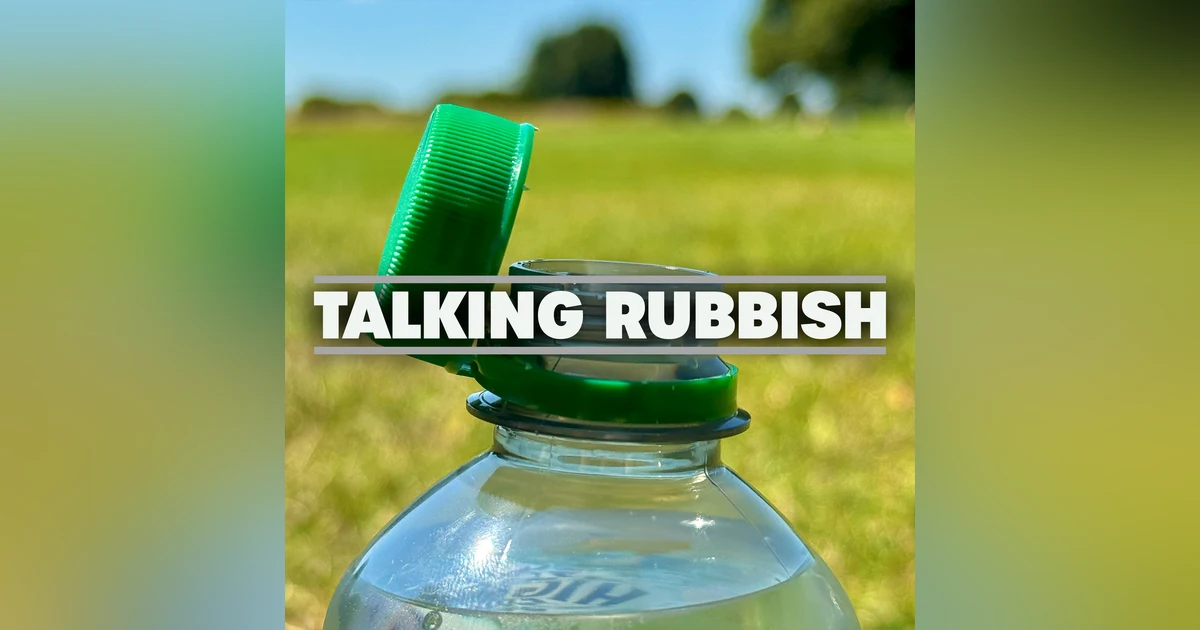

Discover why bottle caps are suddenly tethered to drinks bottles and how this can help with their recycling. Plus, how is waste actually collected, can pizza boxes be recycled and why does council guidance not always align to national messaging?

 Apple Podcasts
 Spotify
 YouTube
 Amazon Music
 Castbox
 Podcast Addict
 PocketCasts
Hello, welcome to Talking Rubbish, a weekly podcast delving deep into the world of recycling and revealing the truth behind snappy headlines and one-sided stories. I'm James Piper, author of the Rubbish Book, and I'm joined by Robbie Staninforth, a far from rubbish friend. Hi Robbie. Hi James. Hello. I have well and truly roped you into this. I apologize, but I am so excited to have you on board. I've wanted to do a podcast for years, and here we are. Why don't you take a moment just to tell us about yourself?
SPEAKER_00Well, I'm uh been in the world of rubbish and recycling for a couple of decades now. I've described myself as a recycling fanatic. I've advised government on various policies around the world of recycling, uh, mostly in the UK, but also policy from around the world. So my big challenge is going to be not to nerd and geek out and bore you uh with lots of the legislated text. And how about you?
SPEAKER_01Well, I like to call myself the rubbish geek, so I can't promise no geeking out. Um yeah, I uh my name's James. I'm the author of the rubbish book, as I said, a book I wrote back in well, during COVID actually. It was a bit of a COVID project, and my wife illustrated. And really, it was something that I wrote to educate the public on how recycling works. And I always promised to keep it up to date, and I've struggled to do that with the limited time that I have. So I thought, hey, you and I can get together once a week and try our best to talk through all the latest initiatives that are happening in the world of waste and recycling. We're actually recording this bright and early in Bristol, and uh it was a joy to come in today because there were hot air balloons flying all over the city. It was just so nice to be part of. So we love Bristol, we're really pleased to be here recording, and hopefully, you guys find this podcast really useful. We thought we'd start by talking through the rubbish process. Each week we're going to go through a different part of how the recycling industry actually works, and really we want to focus on collection, sorting, recycling. I don't know how many weeks we've got in us. I've sort of mapped out about 30, I think, but I'm sure we can keep coming up with different parts of the process that are worth talking about. But I think it's worth starting at the beginning, is that right, Robbie?
SPEAKER_00Yeah, for sure. So our first topic's gonna be very simple. How is waste collected? Something that hopefully everyone can engage with because we all get rubbish collected from our homes, usually on a weekly basis. Why don't you start, James, by telling us about uh the various different types of collection?
SPEAKER_01Yeah, it's funny, isn't it? Because we always just get used to our own collection. So whatever our method is is what we know. We forget sometimes that there are other there are other ways of collecting waste. I tend not to forget because my mother-in-law likes to bring me plastic at Christmas to recycle. I do have a lot of uh recognition of different uh different collection streams around the country because, as I say, people like to bring me waste. So the first one that's worth talking about is probably multi-stream collection. This is where we separate materials into lots and lots of bins. So this is kind of that horror story that we've heard on the news a lot recently about people having seven bins, and I certainly got a lot of calls from journalists at the time saying, are we really all going to have seven bins in Bristol or around the country? And the reality is probably not because there's different things that you can mix. Um but the main aim when we're collecting any type of waste is to keep liquid away from paper and cardboard. That's our that's mainly what we're trying to do because the second you get liquid on paper and cardboard, you've damaged the ability for that material to be recycled. So this first one is multi-stream collection, separating materials into lots of bins. Um, really, this is where Wales has done so well because they focus so much on the resident doing a lot of the sorting for them, and certainly every time I've gone on holiday to Wales, um I've had to use lots and lots of bins, and that's the reality of how to do good recycling because you educate the consumer or the resident. And Wales has actually just been crowned the second best recycler in the world after Austria, so clearly that's working for them. I know we'll talk about more of them and their success in the in a future episode and delve a bit deeper into that, but certainly that clearly is working for them, that multi-stream collection, so where they have lots of bins and residents know what they're doing.
SPEAKER_00Yeah, well, I was chatting to someone from Welsh Government just yesterday, and they were saying that out of all of their councils, there's only a couple that aren't doing this multi-stream collection. And uh the government there in Wales, they're trying to incentivize all the councils to do it in a very similar way, so that as a Welsh citizen, you you don't have your in-laws visiting with different types of plastic um that they can't recycle uh in their sort of local area. And uh I think, yeah, I'm right in saying that there's just two or three councils that are yet to change over to this new system. My favourite is definitely those uh I think they call them trolley boxes, and I I think that's like the the the term for them. And it's uh almost like a a a trolley that has stackable boxes on top of it. I think it does what it says on the tin. The one I'm used to most uh here in Bristol is a curbside sort, uh, as it's called, which is where a truck rolls up to your house, and literally the refuse operatives they pick up the boxes, the various boxes that I'll go through in a second, and they put the uh rubbish into the different compartments. So what we have is uh a couple of different boxes. We've got a blue bag for cardboard, and so uh the refuse operative will pick that up and put the cardboard into a sort of cardboard silo uh in the back of their van. Uh then we've got a green box which has lots of different types together, but very importantly paper separated, coming back to your point about the uh keeping moisture and and water content away from paper. So that's things like aluminium uh and plastic. Then in a different coloured box, a black box, that's where you see glass collected with just paper. So the cardboard is separate from the paper in Bristol, and that's a little bit different to um some other areas. And then finally, in terms of recycling, there's the brown bin, which is where all of the food waste uh is collected. I know there's also a green bin for garden waste, but I don't use that one. I've only got a tiny little yard in the middle of Bristol. Um, and also, of course, the big black bin where we're trying to keep all of the uh recyclable stuff out of because ultimately that's destined for either to be incinerated or end up in a landfill.
SPEAKER_01I mean, as you said it, it sounds like we have about seven bins. So maybe I should talk to those journalists again. Um But yeah, I mean we do I guess in Bristol we do have lots of bins, but it's a really efficient system. What I like most about our system is that the general bin is collected once a fortnight and the recycling is collected once a week, including the food waste. And that makes a huge difference in terms of the quality of material collected and how well we do in recycling. Because if my general bin's only collected once every fortnight, I can only fill it with a certain amount of stuff. So I have to really think about recycling, and because that's happening weekly, it's easier for me to recycle than it is to put it in the black bin. All right, thank you, Robbie. That's a great intro into Bristol, and that's basically curbside sort is just a part of multi-stream collection. It's just putting a bit less on the resident and saying, hey, mix some stuff up in boxes, and we will do the sorting for you as we put it onto the trucks, which is a nice system, a nice mix of the two. The next system that's worth talking about is two-stream collection. And as I said, our main aim here is to reduce liquid getting into cardboard and paper. So two-stream collection will typically split out paper and cardboard and split it out from everything else. And this just avoids leaking out of cans, bottles, things like that onto cardboard and paper. So it's a really, again, nice system, nice and easy for residents to remember they've just got two bins. Uh but again, you would have separate to that things like food waste, garden waste that you you've already talked about, Robbie. Paper used to be a massive waste stream for us in this country because we used to read a lot of newspapers, and obviously over time we read less newspapers. So paper certainly has become a less important part of the recycling stream, and cardboard has overtaken it as we order more from Amazon or online retailers. So certainly we've seen a massive change in recycling over the last 20-30 years. Where paper was a very big part of our recycling stream, it's now very small. And where cardboard was relatively minor with just food packaging, now it's much bigger with home deliveries. So the final method, so we talked about multi-stream collection, which is separate materials into lots of bins, and then we've talked about two streams, so we're just getting smaller and smaller. It should be fairly obvious that the last one is just chuck everything in a bin. And you've got a general bin and a recycling bin. And certainly I've experienced this across different counties, but it's quite a difficult system to get a high-quality recycling app. Would you would you agree with that, Robbie?
SPEAKER_00Yeah, sure. I think when you put mix everything into one bin, it's really easy for the resident, isn't it? So it's so tempting for local councillors to say, look, don't you worry, we're not going to put any onus on you, just bung it all in one bin. But at the other end, you can imagine that there's a massive amount that needs to happen to get all of that stuff separated. Because newsflash, glass, and plastic are recycled very differently.
SPEAKER_01Yeah, so that material goes on to something called a MERF, and we'll talk about that over the coming weeks, what a Murph actually is. But it stands for material recovery facility. Although, interestingly, I saw a debate on LinkedIn the other day because some people call it a material recycling facility, and two people who operated Murphs were calling it different things. So I'm I'm not 100% sure what it is. I know when I was researching the book, I decided to call it a material recovery facility after lots of research, but hearing a MERF operator call it a material recycling facility makes me think maybe I should be doing that. But who who knows? So we j we all just call it MERF.
SPEAKER_00There's so many of these um different three-letter acronyms within the world of waste, and I'm sure there is in most industries. I I think our job as part of this podcast is to try and avoid them wherever we possibly can, but explain obviously the really important ones that people might hear uh here and there.
SPEAKER_01Yeah, the trouble we have is Murph is so nice to say. So we just you know we're not really gonna say material recovery facility, are we?
SPEAKER_00It's because we're thinking about Smurf.
SPEAKER_01It's very true.
SPEAKER_00Very true. With a beard like this, I could pass for one, I imagine. Um anyway, uh in terms of um uh though those different types of collection from people's households, the legislation around this is changing. So I feel it's my duty as the policy guy uh to come in and say that uh certainly the English government is looking to follow the Welsh lead, not exactly, but to try and standardize at least all of the different types of material that you can expect to be recycled from your home. So at the moment, you know, there's widespread collection from people's homes of things like uh paper, cardboard, uh plastic, aluminium. Uh, there's a little bit of variability on glass. Most homes all have glass collections now, I think, but but there could be the odd uh area where they're still using uh glass banks and you've got to take your bottles to a to a bank. Um but also other materials like flexible plastics, I'm sure we'll talk about at another time, uh, those being collected from people's homes, hopefully by 2027. And then similar, the like liquid carton board uh stuff that you see your uh posh milk alternatives in. Um so hopefully the government with new legislation, and there is a new government in place now uh that will be following through, will be trying to standardize it across England uh just like they've done across Wales to just make things more easy uh for the average person.
SPEAKER_01No, flexible plastic by 2027 is really what people want. And I was on a train yesterday um with someone and all other I mean, literally we talked for an hour and a half about flexible plastic. I mean, everyone around us must have thought we were so boring, but here we are. Um you've tuned into a podcast all about rubber, so maybe you're into that. But um, it was just ridiculous. And we talked about flexible plastic, and it was so obvious that the key is to get it recycled at curbside, and it's so exciting to see that come down my track. Let's really hope this new government uh take forward that that mantle and really and really push for that. Okay, well, that is our first part of the rubbish process. So that's the first week we've talked about how waste is collected. In future, we'll start talking about how waste gets sorted, but and maybe we'll have a bit more on collection. But I think it's hopefully useful just to do 10 minutes each week just to explain the actual process. Because I as I was kind of thinking, what are we going to talk about in this podcast? I realised if you don't go through the process, then it makes actually it really hard to talk about the other stuff because you've got to spend a bit of time explaining how it all works. So hopefully this will be useful for certainly the 30 weeks that I've got mapped out. Let's move on to our next bit, which really is I'd quite like to talk about a big topic each week, something that's relevant and interesting, and maybe people only hear one side of in the news. Um, you know, our main aim here is really to spend time delving into those snappy headlines that you read that that maybe aren't that clear because someone's just taken a very uh biased view towards it. And so what we really want to do is show two sides to a problem and talk it through and try and try and bring back some real critical thinking into the world of recycling, which um which we don't see that often. I mean, if I talk through why I ended up writing the book in the first place, it was actually back in 2018 there was a BBC news article about a shipwreck, and they'd found some plastic on a shipwreck. Um I think it was called the HMS Invincible. You can still look up this news article, October 2018. And they'd found some plastic on the shipwreck. The headline was plastic found on shipwreck, and then they'd put a picture up, and you look at the picture, and there's um I can't remember the exact numbers, but something like nine plastic bottles and 37 aluminium cans. And you just think, this headline didn't say packaging found on shipwreck or mostly metal, some plastic. It was just plastic found on shipwreck. And I just thought, this is so annoying because if you just read the headline, you'd have a view on what was happening in the world, and you know, the reality is it's way more nuanced than that, way more complicated, and those cans have been there just as long as plastic. But what we've seen is that over time that demonization of plastic has led people to think that aluminium is a good material, which in lots of ways it is, but I think we just have to question why are we using packaging in the first place? And so we thought we'd spend a bit of time each week going through a topic that we find particularly interesting. And I would say this first one that we've picked really is a bit of a heavy hitter. It's something that we've seen a lot about recently, and I just looking up, doing a bit of research for this, I can tell that it, for example, it has been described as the worst thing to happen to humanity. Um, and it's really got debate going with TikTokers and Instagram squashing noses. The Daily Mail have described people as furious, but I guess they always do. Robbie, it must be the arrival of the tethered bottle cap. And I did say to you I might have a joke prepared and I've debated whether I'm gonna do it or not, but I think I am because I think, you know, this will be a forgiving listener. Um Robbie, are you at the end of your tether?
SPEAKER_00Very good. Yeah, no, I I also read those uh headlines, and it was amazing to see uh well comments as well as headlines to see what people said. My favorite was this is the worst thing to happen to humanity since losing the audio jack, you know, from your phone. And I was like, actually, isn't it good to like have fewer cables and wireless headphones and things like that? He says, wearing wired headphones.
SPEAKER_01I was gonna say podcasting has changed the game. I thought I'd gone wireless too, and suddenly everything's plugged in.
SPEAKER_00Absolutely. But certainly it's something we've got used to not having the headphone jack, or at least I have, with sort of wireless connectivity and things. And it does make me think, well, if it's only uh as bad as that, then surely it's not too bad. Now, the tethered cap is something that really brings to life an environmental issue. So it's actually great that there's outrage about these things, because the reason is quite simple as to why there's um a tethered cap, and that's because it reduces littering. The fact is that these bottle caps, before they um became tethered, were found littered all over the place, detached from the bottle. Now the bottle's quite easy to pick up and spot on litter picks and all those kinds of things, God forbid that people do put it in the wrong place. But the cap itself, uh, that's much more difficult. So trying to keep the two items together under this principle of just having a much larger overall item makes it more likely that it won't be littered, and it also makes it more likely that it will end up um being recycled with the bottle itself um rather than uh just sort of end up in a in a general waste bin or littered, as I mentioned before.
SPEAKER_01I saw a tweet or an X or whatever it's called now, um and it was from Lord Sugar, you know. I'm a big fan of The Apprentice, and I was really interested to hear his views on this, which I must admit were not particularly positive. And he was asking whether it was an EU or a government law or rule. Uh Robbie, as our self-confessed policy guy, uh what is the legislation actually behind this? And and clearly it's n I don't think it's something that drinks companies particularly want to do, considering the backlash on social media.
SPEAKER_00Yeah, sure. And um I think uh lots of drinks companies are all taking a slightly different approach, and it's like, do you go for the don't shoot the messenger? We're only doing this because there's a law uh that's making us um from the brands. But really the reason um that this tethered cap has uh become such a phenomenon uh here in the UK is because of uh an EU law which was proposed in 2018 and passed in 2019 under what they call the single use plastics directive, where the the goal is really to ensure that more plastic uh is recycled by 2030 and to prevent littering, to prevent um if single use plastic items are being used to make sure that more of them are recycled. So this tethered cap became mandatory in July 2024. So you've seen it sort of proliferate over the last year or so as brands, soft drinks makers, bottled water companies, they're all trying to get prepared for this uh impending uh piece of legislation. So that's why we're seeing them in the UK, because we live in a global world now where if product packaging design changes uh for the EU, which is a much bigger market as a whole than the UK, then it moves across to the UK. And in fact, it's probably going to happen that globally you see more of these tethered caps as many of these global brands operate in other markets. North America, South America, Africa, other continents will be affected uh by this piece of legislation. So it's not binding in the UK. Uh so if you see them and and there's an untethered cap, God forbid, um, that's okay. Um, it's not a UK law. No one's doing anything illegal there. But most companies, as I say, sell across multiple countries, and so they'll be implementing this cap just to simplify their manufacturing process.
SPEAKER_01Yeah, that's interesting. I was actually in MS last weekend and I bought a bottle of sparkling water and I noted the tap wasn't tethered. Oh, tap wasn't covered. Uh the cap wasn't tethered. It's too early. Um I noticed the cap wasn't tethered. And I was it was very unusual to me. I've got very used to it already, and I kind of wondered why that was. So it sounds like that's because they mostly sell in the UK, so they haven't had to necessarily change their processes for Europe. I I would guess that's the the answer to that.
SPEAKER_00Yeah, sure. So uh effectively it's maybe just a product that's uh only sold in the UK, or maybe it's a line that's coming towards the end of its life anyway, and slowly over time they will change it to a tethered cap, but there's no rush to do so in the UK, maybe using the last of their plastic bottles with untethered caps um while while they make the switch. But I think the really important thing to think about is the recycling process that's impacted by the fact that the cap is on the bottle. And so what are your thoughts what do you know about the recycling process uh from your research in the book and et cetera?
SPEAKER_01Well, I think it's mostly about the sorting. It's a really good question. I think it's mostly about the sorting. And when I wrote the book, actually, I did lots of interviews and everyone became a bit obsessed with this one. Line that I kept rolling out because it was it is really interesting and people don't realise. When we talk about something going to a a Murph, that's not I almost called it a Smurf. When we set me off now, when we um send something to a MERF, it's going to go through loads of conveyor belts, it's going to go through lots of sorting, and basically recyclers and uh Murph operators are trying to get the highest quality material out. So they're trying to separate the paper, the glass, the metals, the plastic. And to do that, they put things over loads of conveyor belts. And one thing that is high risk is small items going through those conveyor belts because they are more likely to fall off. That doesn't mean they definitely will, but they're more likely to fall off, they're more likely to get lost in the process. Um, and what we're trying to do when we recycle is create things that are big enough to go through that process. And so the general rule that I discussed with someone and put out there uh through the book is if something is smaller than a tennis ball, it is more likely to get lost in that process. That doesn't mean it will, it doesn't mean the Murph won't be able to find it, all of those things. It's just the best chance of something getting recycled is if it's bigger than a tennis ball. So if we have a bit of aluminium foil, for example, and we are thinking of recycling and it's just a little piece, I would just wait and keep building it up like a snowball till it's bigger than a tennis ball. Maybe I should have said snowball. But um, but a lid is a classic, you know, like a coffee pod, which we might talk about next week. It's a classic um small item that could get lost. So putting it back on the bottle is key to the sorting process. And if we think about like glass bottles, we should be putting our metal caps back on. Anything small, lids on jars, all that kind of stuff, just put it back on. Because the reality is these recyclers are really good at smashing stuff up, shredding stuff up, and separating materials where they need to. But if we lose them in the process, then they can't be recycled. So that's the key with lids. We've always advocated just putting them back on bottles, and this is just a way of making sure that happens, um, except for that minority that are now so annoyed that they're tethered that they're ripping them off intentionally.
SPEAKER_00Yeah, sure. I've seen some of those pictures of like, look how naughty I'm being. I've managed to rip off the top of this lid. It was quite amusing, actually. Um, the the other question that I had for you was about I saw a piece of research, I think it was um a European soft drinks trade association, that said that the that tethering these caps was going to increase the plastic use from like 50,000 tonnes to I think 200,000 tonnes. And and basically saying you need a heavier cap and the unintended consequence of this legislation is more plastic gets used. Uh but then obviously you're offsetting that against it being recycled. So is there any truth to that in terms of more like heavier lids that are worse for the environment, increased plastic use?
SPEAKER_01Yeah, that's uh really interesting. I guess time will tell. We'll we'll certainly, as part of this podcast, I think, get into the data and see whether that proves to be true. But I my gut feel is no. The reality is that's a an association that was coming out before the legislation was implemented who didn't particularly want the legislation. So they are probably um thinking, how can we get out of this? Well, let's talk about it potentially increasing the amount of plastic, because that's what we're all trying to avoid. I saw a news article last week from Innocent, and in fact I contributed to one for the Times where Innocent were quoted, I believe, where um they were saying they've managed to lightweight their lids. And we've always said on this podcast we would try and call out companies doing really good stuff. And I think if Innocent have managed to keep it tethered and use that tether as an opportunity to make that lid lighter, then that's amazing. And I think that would suggest that we're in a good place going forwards for other companies to do the same. And actually, we may see less plastic used because the reality is once it's tethered, you can change some of the plastic materials that are in those lids, and in theory, you should be able to go lighter.
SPEAKER_00Yeah, and and there's also like different types of plastics on different types of bottles. So drinks bottles, people will be familiar with. They're they're slightly clearer in the UK and often have coloured lids and things. Uh, and then you also have the milk bottle, so they're all different types of plastic. So there's that that kind of milk comes in strangely a milky-coloured plastic, um, which is uh uh just totally different, and I assume requires a different recycling process to the clear soft drinks bottles. Is that the case?
SPEAKER_01Yeah, but they will they will go through different processes. I mean, I think we're gonna talk about different types of plastics in the future, because that's a whole topic in itself, and we definitely should. There's there's seven types of plastic. Typically, milk bottles will be made with HDPE, which stands for high density polyethylene. I mean, the trouble we have with this podcast is do we go for the acronym of a long word? I mean, I think we'd rather do a mix of the two. So milk bottles are typically HDPE, and a soft drink bottle will typically be P E T. Uh, they use different on a soft drinks bottle, they will use different lids. So they will typically use HDPE lids on a PET bottle. And the reason for that is you need a different type of plastic. There's a number of reasons, but one of them is just to get that strength between the two different types. And if you think about a milk bottle, that lid is actually quite precarious and you need that bit of film on there to stop the milk leaking before you buy it. But because it just sits in your fridge, you can just put the lid back on. And so that's the reason milk has just an HTT bottle and lid, because it just sits in our fridge, it doesn't need to be a strong uh secure cap, whereas a PET bottle with an HTTP lid does. Now, the trouble is because you've got two different types of plastic, when you then come to recycle that, you've got to separate those because we don't recycle uh different plastics together. Um, again, we'll come on to why that is in a future episode, but just as a principle, you don't mix HTTE and PET, so you need to sort those two out. And the way that they do that is they'll take a bottle that has a lid in it, so it's been tethered, it's been put back on, they'll put that lid back on, and then they'll put it through a shredding process where they literally just shred it up like you would in a paper shredder. Um, and what that's doing is separating all the different types of plastic out. So if you think about it, even though you've put the lid back on, once you shred it, it's obviously all gonna get separated. And then once they've got that kind of pile of shredding, they can put that literally into a tank of water, and the bottles are gonna sink and the lids are gonna float, and you just push it through that tank of water and you skim off the top where you've got your HTTP lids, and you uh go through the bottom where you've got your PET bottles, and that's how you would separate a bottle from its lid.
SPEAKER_00It's amazingly simple, isn't it, when you put it like that. You think of all these technological processes um for certainly for plastics, and we'll talk about flexible plastic and films where there's much more higher tech solutions to to granulating them, but something so simple as the different float densities of a plastic uh being utilized to separate things is really um perfect.
SPEAKER_01What a what an amazing first topic, Robbie. We've covered so much. I mean, I can't believe how long we've spoken about uh tethered bottle caps. So I think uh that's our plan for each week, really, to talk through really interesting topics. Um we've started with tethered bottle caps. I think next week let's try to talk about coffee pods because that's something that I'm very passionate about, and uh then we can move into other materials and other things. So if you hopefully you'll find that interesting, getting a bit more into the detail, hopefully more detail than you would just read in a in a newspaper or on the news. So, overriding message is put your caps back on. Um, I know that there was a council that ran a campaign called Leave Your Cap On around the time of Full Monty. So, you know, clearly we could all just remember that. Um, it being tethered is probably a good thing. It will reduce litter, that's obvious. You know, people where people may litter a bottle cap suddenly that's gonna be much harder to do. So it will reduce it. It makes the recycling and sorting so much easier. So if you're having your drink and your nose is getting squashed, best thing to do is probably to rotate the bottle 90 degrees and try and avoid it. Um, and this is a great opportunity, I think, for me to promote our socials. I'm gonna film a little video later. I've discovered a hack for how to get that lid out of the way while keeping it tethered. And I'm gonna film it later on, and I'm gonna put it up on our socials. So what a promo for subscribing to us. Um, so if you follow at rubbishpodcast, we're on X, Instagram, Facebook, TikTok, everything. Um, I'm gonna put our video up on there a bit later on. So if you're listening to this and you're thinking, what is that hack? I need to know how to move the lid out of the way of my nose. Um, just subscribe to us on those various channels and I'll put it up there. Wow, okay, that was that was really interesting. So um we've covered the process, we've covered how recycling actually happens. We've taken a bit of a deep dive into one specific topic. Um I think we should move on to our next section, which is can it be recycled? So every week we want to introduce a different item, and I've already got some in my head that I'm thinking are gonna be really interesting. The one I've thought about uh today, actually, which we're not gonna talk about today, but we will talk about soon because I'm interested in it, was photographs. I was walking in and I saw some photographs and I thought, can those be recycled? So we're gonna go and we'll go and have a look and we'll see if we can work it out for you. Robbie, do you want to let everyone know what our first topic is?
SPEAKER_00Yeah, so the first one we're gonna tackle is pizza boxes. Um, a subject very close to my heart. Um, and my maybe I'm divulging a bit too much there, but love a cheesy pizza. And the the problem with pizza boxes um uh when I'm talking to paper recyclers is about the grease. So it's really the grease that gets involved. The grease gets everywhere, is kind of how the recyclers um would describe it, I think. Um and so can a pizza box be recycled, James? What are your thoughts?
SPEAKER_01So grease gets everywhere with us, and it also gets everywhere in the recycling process. You put a bit of grease into cardboard and suddenly you've got speckles on what you're creating. So recyclers hate it and they want to avoid it and they want to make sure it doesn't enter the waste stream. Now, the reality is: look, I would rather you recycled a pizza box that had a tiny bit of grease on than not recycle at all. That's gonna be better. Um, how however, it's always best to avoid it. So, what I tend to do is just rip up the box. I will literally go, here's a bit patch of grease, I'm gonna just cut that out with scissors or I'm gonna rip it off, and then I'm gonna I'm gonna recycle the rest. And really, if you don't have the time or energy to do that, I guess just remember that the lid typically doesn't have much grease on, and these boxes are normally perforated. So the least you can do is rip the lid off and get that in the recycling bin. If that's the one thing you do, that'd be great. But I think for me, it's like look, a bit of grease is gonna be okay. It's sort of better to recycle than not to recycle. But if you have the time, I would rip around it, I would avoid it completely, and I would get those greasy bits into the normal general bin.
SPEAKER_00And what about the uh what are your thoughts on the sacrificial grease-proof paper? So if it's got the greaseproof paper, presumably, you can just put the grease-proof paper in the normal general waste. Unfortunately, that's destined to be uh to be burnt for energy. But then hopefully you've got a cardboard box uh that's just ready to recycle because there's no grease on it. Uh so uh that probably opens a whole other debate that we're not going to go into about whether sacrificial pieces of packaging are actually quite good because it protects the rest of it.
SPEAKER_01Yeah, I mean, there's a but let's do a deep dive on that. There's loads of uh loads of things we I'm sure we could think about. And in fact, I've got some just top of my head right now where it's like, is it better, you know, is it better to have this piece of packaging rather than sacrifice the item? We talk a lot about that, don't we, when we talk about food waste. So when we talk about, I mean, the typical plastic around a cucumber, it's like, is it better to have plastic around a cucumber or lose the cucumber as part of food waste? And we say I'm I'm a hundred percent confident we will have a cucumber episode somewhere somewhere in our future. But um the mandate. It's a it's a great question. Is it you is it good to use packaging to stop other packaging um getting uh not getting recycled?
SPEAKER_00Yeah, sure. Well, so that's pizza boxes. Um every week we're gonna do a different one, James. So keep an eye out when you're in the house this week. And uh between the two of us, I'm sure we'll pick another one uh for next week. Uh however, if people are sat at home wondering um can something be recycled, you can always message us on our socials uh where we can hopefully answer your questions. So that's at rubbishpodcast or email talkingrubbishpodcast.gmail.com. We'd love to feature listener queries. Uh we hopefully can find some answers for you. We've solved pizza boxes, we think. Let's try solve the next one.
SPEAKER_01You can tell Robbie didn't set up our socials or email because I think he just referred to our email address as talkingrubbishpodcast.gmail.com. So just to clarify that, it's talking rubbishpodcasts at gmail.com. I don't think we'll edit that out. I think that'll be I should write this stuff down for you, shouldn't I? Schoolboy. You did say to me, do I need to join social media for this? I said, well, maybe not, but you know, I'm starting to think you might need to. Now on to our next section, which is question and answers. We every week we just want to grab a question from someone who's listening in. So if you're listening there and you're thinking, Oh, I've got a burning question, just send us an email. I'll get Robbie to do the email address again at the end because that'll be funny. We'll see if he gets it right. Obviously, Robbie, we just started, so no one's written in, which is, you know, not completely unexpected. But um, I think were you asking someone in a coffee shop today, or have you found a question?
SPEAKER_00Yes, no, I have found a question for us. Um, and so this isn't just the simple can it be recycled question. This could be any question about any item uh and and the fact that it might turn up rubbish as rubbish. I was asked by my local barista just the other day, why do some councils want you to put the lids on and some want you to take them off? And so this is a topical question because we were talking about this in the tethered caps section.
SPEAKER_01All this tells me as you're talking to your local baristas about tethered caps.
SPEAKER_00Well, that's the thing. As soon as they pull out the milk and they ask me, do I want the uh oat milk or soy milk or regular milk, I straight away am saying, I'll have regular milk, please. But also then somehow, I don't know how, I just geek out and start talking about the mandatory collection of soy milk cartons in 2026.
SPEAKER_01I mean, the only reason we've started this podcast is so that we can vent and talk to people without doing that as we walk around the street. So this is great. Um so I need to remember the question, I've already forgotten it. So why do some councils say that uh you should put lids back on and some say you shouldn't? Which is crazy. Now we're talking about tethered bottle caps and uh we're talking about the fact that lids really need to get put back on because there are councils that say don't do it, which is so weird. And the reality is what has happened is councils have signed contracts a long time ago, you know, 20, 25 years ago, some of them, with a Smurf that uh we can't call it Smurf, uh, with a MERV that has in it stipulated in that contract, please don't send us lids. And because that was done 15, 20 years ago, no one's updated it with what's actually happening in the real world. So then bottle companies are saying, well, we need to tether because the EU's saying we need to tether, and therefore you as a consumer need to put the lid back on. And the council haven't updated their guidance because they're sticking with their contract from 20 years ago. And we see this a lot of the time where government guidance, um, there's an amazing website called Recycle Now, which goes through all the different things you can recycle. Their national guidance doesn't necessarily link with individual council behaviour. And what I would urge, if there's any councils listening, I'd urge them just to keep that up to date, keep those that advice and sites up to date with what's happening in the real world so people don't get confused. And equally, I would always say national guidance trumps council messaging, because the reality is that council messaging is out of date. So if we're saying something on this podcast, or if you hear something somewhere else and we're saying, hey, this is national guidance, we should be doing it, then you know, in this instance, I would listen to us and then the council will deal with it. I'm confident of that. The council will be fine with that kind of material, even if they say they're not on their website.
SPEAKER_00Yeah, sure. I think the uh overriding take-home point is uh keep those lids on.
SPEAKER_01Thank you, Robbie, for that. Again, we would love you to write in with any questions you have, anything, any burning issue to do with recycling, rubbish. Uh we probably won't stretch as far as climate change and major global issues, but you know, recycling and rubbish, that's our that's our main aim. Um what's that email again, Robbie?
SPEAKER_00Talking rubbishpodcast at gmail.com.
SPEAKER_01That's great. Or you can get us on our social channels at rubbishpodcast. If you like listening to us talk absolute rubbish, we would be really grateful if you could follow us on those social media platforms, subscribe wherever you get your podcasts, and leave us a review. Unless you thought it was actually rubbish, in which case, just let us know, but don't leave us a review. We're just starting.
SPEAKER_00Uh so what we're gonna talk about next week, then, James? Have you what you got mapped out for us?
SPEAKER_01That's a great question. I think I've well, I've sort of committed to coffee pods now. So I think we should do a deep dive into coffee pods as our interesting topic. I think we're gonna start getting into um different types of sorting. I think that'd be quite useful. And really we'll wait and see whether people write in about can it be recycled and question and answers, and and we'll respond live to that. So again, if you write in, we'll then we'll be able to talk about it. So we would really appreciate that.
SPEAKER_00Great. Well, I enjoyed that. Finally got one in the can. Is that what they say for podcasts?
SPEAKER_01I know. I've been talking about this for years. I'm so excited that we have. I know I was yeah, I was having that. I was writing, I was thinking about what I was gonna say, and I was gonna say tune in, and I was like, Do you do you tune into a podcast? That feels like the radio. So uh stream, stream a podcast, that's what you do.
SPEAKER_00Streaming now, the rubbish podcast. Yeah, that's it.
SPEAKER_01So I am so glad we've we're finally doing this. I'm so glad we're gonna get to meet every week, Robbie, because um we don't work together as much directly every day, so it'd be really nice just to get together and talk through all the different things we've heard each week. And uh thank you, thank you for your time. Thank you to everyone who's listening. We really appreciate it and look forward to continuing to talk rubbish.
SPEAKER_00I can vouch that you are one of the world's best at talking rubbish.
SPEAKER_01Bye.
SPEAKER_00Bye.