63. Waste on a plane - how airlines manage recycling
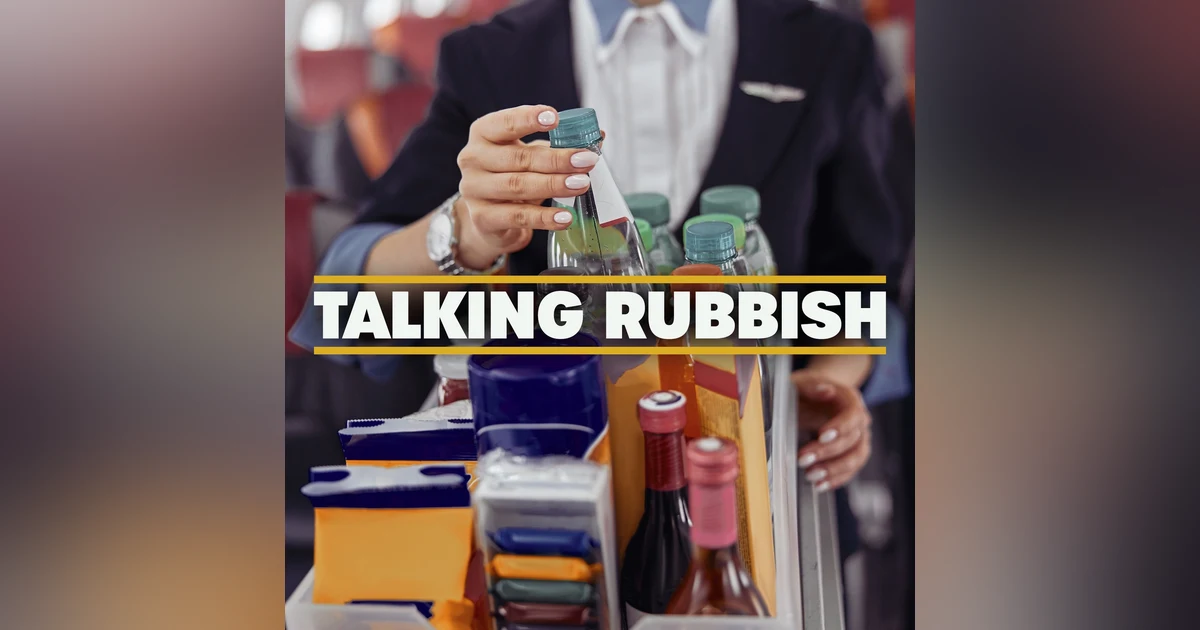
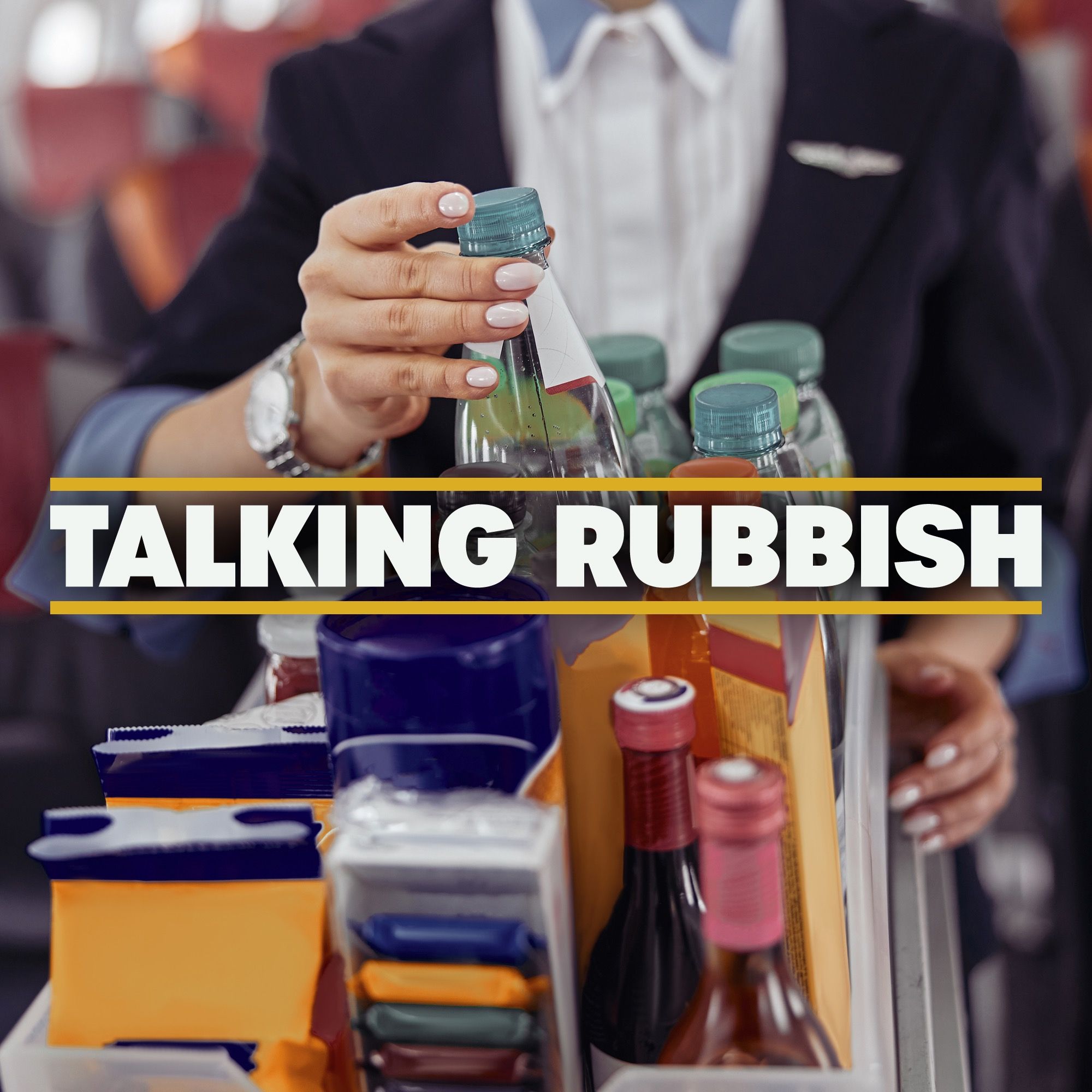
Each year, airlines generate more than 5.7 million tonnes of cabin waste, much of it disappearing “out of sight, out of mind.” But behind those discarded coffee cups and meal trays lies a tangle of international regulations and border controls that make recycling very challenging. In this episode, we unpack the complex world of in-flight waste, explore why even recyclable materials are often treated as high-risk, and reveal the surprising barriers preventing airlines from improving. Plus, are balloons rubbish or not, how would we counter NGOs saying recycling is pointless, and are sundried tomatoes making us too niche?

 Apple Podcasts
 Spotify
 YouTube
 Amazon Music
 Castbox
 Podcast Addict
 PocketCasts
 Each year, airlines generate more than 5.7 million tonnes of cabin waste, much of it disappearing “out of sight, out of mind.” But behind those discarded coffee cups and meal trays lies a tangle of international regulations and border controls that make recycling very challenging. In this episode, we unpack the complex world of in-flight waste, explore why even recyclable materials are often treated as high-risk, and reveal the surprising barriers preventing airlines from improving. Plus, are balloons rubbish or not, how would we counter NGOs saying recycling is pointless, and are sundried tomatoes making us too niche?
Join hosts James Piper and Robbie Staniforth as they delve into the world of recycling, hopefully having fun along the way. One thing is for sure, they will talk absolute rubbish from start to finish.
Sign our very first pootition: https://you.38degrees.org.uk/p/poo
We would love you to join our community on Discord
Special thanks to our sponsor, Ecosurety
To get exclusive videos and clips, follow us on Instagram, TikTok, X, Threads or Facebook; @rubbishpodcast or YouTube: @talkingrubbishpodcast
Or you can contact James and Robbie with questions or just general rubbish musings using the email address talkingrubbishpodcast@gmail.com or by texting them via WhatsApp
Relevant links and reports mentioned in the programme can be found on the Talking Rubbish Linktr.ee
Transcripts and episodes can be found on the Talking Rubbish website
Timestamps:
How airlines manage recycling - 02:34
Additions and corrections - 31:01
Rubbish or Not: balloons - 38:12
Rubbish News - 42:39
How would we counter NGOs saying recycling is pointless? - 47:21
Residual Rubbish - 52:42
Music licence ID: 6WPY8Q4O2RPFIOTL
Hello, welcome to Talking Rubbish, a weekly podcast delving deep into the world of recycling and discussing the truth behind snappy headlines and one-sided stories. In this episode, we will discuss the waste generated on aeroplanes and who actually owns it. Are balloons rubbish or not? And I have a question about why NGOs don't like recycling. I'm James Piper, author of the rubbish book, and I'm joined by Robbie Stanforth, my far from rubbish friend. Good morning, Robbie. Hey James. It's good morning for me. It's good afternoon for you this week.
SPEAKER_00Good afternoon, yeah. It's after three. It's definitely afternoon.
SPEAKER_02Because I'm in uh I'm in Boston. Yeah, we're gonna do some podcasting next week, aren't we? To the sustainable packaging coalition event, which is over in Boston, which we're super excited about. And I thought I'd come out a bit early uh to have a bit of a holiday, and you're coming out tomorrow, I think.
SPEAKER_00Yeah, can't wait. Flying out tomorrow, and I'm gonna stay a little bit late. I don't want the bimfluencers to think, how come James gets a holiday, but Robbie doesn't? Well, mine's gonna take place afterwards.
SPEAKER_02And Robbie, it's finally happened. Now, this thing, I this thing that has happened, I didn't think would ever happen to us. They talk about it on the rest of politics occasionally, they say this happens to them, but I didn't think we'd ever get it. Someone came up to me whilst listening to an episode. How cool is that? That is very cool. And then asked for a selfie so that their wife would believe that they'd met me, which was just so weird. We're little niche waste management people, it's ridiculous. But it's so nice that people have enjoyed listening and so nice that people come up and tell us. We love that. That is an absolute dream when we started this podcast. In terms of my talking rubbish bucket list, my unofficial talking rubbish bucket list, we've ticked off quite a few things. We've had what have we talked about before? Someone recognizing us for our voices. We've had that.
SPEAKER_00Oh, yes, definitely had that.
SPEAKER_02A live event. We've done three of those now, and we've got another five booked in including next week. We had a random mention on Reddit when someone was asking for some podcast recommendations. That was up there on my bucket list. And with a person now coming up to us whilst listening to the podcast, we're almost there. I think the only thing I'm missing is someone doing that bit in another country.
SPEAKER_00Okay, recognizing our podcast from another country. Okay, so we've got to look out for that. Maybe in Boston we've got a chance, have we?
SPEAKER_02I don't think Boston's gonna count because people know we're there to do the podcast.
SPEAKER_00It has to be like random completely. Okay, fine. Maybe when I spend a weekend in New York, if someone comes up to me there and says it. Don't think it's gonna happen, but that would count.
SPEAKER_02Trash talk. As I said, I'm recording this from Boston, and Robbie, you're on your way to Boston tomorrow. And it was as I was coming over to Boston, I thought, what could we do our trash talk about? And I realized I was sat on an aeroplane and there would be loads of things we could talk about.
SPEAKER_00Oh gosh, loads of single-use items in there that end up being waste. So perfect. Lots of trash on that airplane.
SPEAKER_02Yes, and I guess the thing I was immediately thinking was who owns this? So we'll come on to that because that's a big question, right? What you've taken off in the UK, you've landed in the US. Whose waste is it? Is it an export or an import?
SPEAKER_00Oh gosh, very good question. Am I gonna be pondering all of these things when I'm on the plane tomorrow?
SPEAKER_02Well, I'll give you the answers now so that you can think about them with your partner on the fly takeover. And then and then I'm gonna ask you to addition next week if you notice anything extra that I've missed.
SPEAKER_00Okay, right. So I'll keep my eyes peeled for a change. I'm usually pretty bad on the additions and corrections, but I'll have some fodder for us next time.
SPEAKER_02Great. So let's start as I always like to, Robbie, with some stats. In 2017, it was estimated that the airline industry produces 5.7 million tons of cabin waste, which costs nearly 1 billion US dollars to deal with. Wow.
SPEAKER_00Okay, so it's huge. I mean, I'm not surprised by that, because I think all of our influencers listening will be thinking, yeah, there's quite a lot of rubbish that they come up and collect on a plane at the end uh of the flight.
SPEAKER_02Yeah, and this was back in 2017, and passenger growth since then, I think it's been around 5% a year if you don't include COVID. Uh, because obviously there was a bit of a freeze on those numbers during COVID, but they are increasing five percent a year. So this waste data will be increasing massively. They don't seem to do waste audits very often, is the truth in the uh in the old airline industry.
SPEAKER_00Uh okay, they don't want to know the answer possibly because it's probably not good.
SPEAKER_02And we're gonna talk a lot about, and I'm not sure how to say it, it's the International Air Transport Association, which I'm calling IATA. Is that what we would say, that aggregate IATA?
SPEAKER_00I think it is IATA, so therefore an acronym rather than IATA, which would be the initialism.
SPEAKER_02Okay, so we're gonna go with IATA because they're gonna come up a lot. But according to them, 20% of packaging in the cabin is plastic. Now, interestingly, only 2% of the waste is PET bottles. And that's quite interesting because that's different to our day-to-day life. Like day-to-day, we get through a lot of PET bottles. It's the most recycled item in terms of plastic, um, it's the most recycled material, and we have a lot of PET bottles in our system. But if you think about on a plane, typically when you're ordering a drink, if you're ordering wine or um a soft drink, it's gonna come in a glass bottle or a can. Um, sometimes they're using plastic bottles, that's where you're gonna get some of that PET, like with wine and things like that. But um, but it is only 2% of the weight, and that's quite different to kind of our normal day-to-day activities, I would say.
SPEAKER_00Yeah, no, that's definitely a lot different. I mean, I'm surprised that it's as low as 20% of the packaging being plastic in the cabin. I would have thought there was plastic everywhere, but that's maybe that's just because the senses are heightened to plastic, aren't they?
SPEAKER_02Yeah, and partly it's because a further 20% of cabin waste is actually untouched food and drink. So this is going to be us wasting stuff, over-preparing meals. You know, I think we need to get to a point where all airlines are asking in advance what meal you want because there's a lot of wastage from going, how many chicken meals, how many veggie meals? And really, we should all be saying in advance, and then they would have the right amount for everyone, and there wouldn't be any food wastage. Um, I did find a really interesting article actually, which was saying that KLM had wasted 60% less food by using AI to predict what passengers would ask for based on historical data.
SPEAKER_00Oh gosh, this is a difficult one, isn't it? Because I got the email from American Airlines last week to say, what food do you want on the plane? And I was immediately thinking, they'll have food. I don't need to choose in advance, do I? But now you're saying actually that could be really helpful with them negating food waste. And on the other hand, I've definitely been on flights where they've not had my preferred option. You know, they they have been saying to everyone coming down the plane, uh, chicken, beef or veggie, and they're just saying beef or veggie by the time they get to you. As you can tell, my preference is usually always chicken. So um interesting that maybe this would not only allow them to decrease the food waste, but probably allow passengers to get the choice that they actually want rather than maybe be disappointed if you've got the cheap seats at the back of the plane, like I usually have.
SPEAKER_02Yeah, now I didn't have premium seats, but I did have these comfort seats, which are the ones at the front. That's because we were traveling with our nine-month-old son, which was a whole different trash talk. And what I found was I panic ordered. Cabin crew came up to me and said, What do you want, the chicken or the veg? Um, and it was like, I can't remember what it was, tomato nokie or um chicken and potato. And I just panicked and ordered whichever, and then Ellie ordered the other one, and I just had food envy the entire time. And I thought, God, if I'd if I'd pre-ordered this, I would have been able to kind of think which one am I likely to want and not have this panic. And so I did this last night. We had Virgin uh message us last night saying, Do you want to pre-order your meals? I thought, I'm not making this mistake again. I'm gonna spend a bit of time thinking about one so that I don't get jealous of whatever Ellie orders.
SPEAKER_00Yeah, and I think the other thing is me and my partner definitely hate food waste. So quite often we're on the plane struggling through things that we don't actually want to eat because we can't, in good conscience, sit there and let them pick up the sort of slightly hard bread roll or the maybe not so tasty option uh or dessert or something that we've ordered. And so there's been quite a few instances. Hopefully, this isn't going to happen tomorrow, where we've just soldiered on eating something we really don't actually want.
SPEAKER_02I mean, the reason food waste is super relevant alongside packaging is because airlines get caught up in a huge range of regulatory issues. And so, linked to this, Robbie, let me ask you the question we asked at the top: which country owns the waste on an airline? Is it export or import? So if I'm flying from the UK to the US, is it the UK who manufactured the product or is it the US where the destination country?
SPEAKER_00Okay, well, I've had five minutes to think about this since you posed it earlier. And in terms of extended producer responsibility, you would think it was the host country because they're the ones sort of placing the packaging, in this case, onto a global market. But I think the logic stands up more when you say, actually, where does it become rubbish? And who is the country that's going to have to actually empty the plane and deal with it? It's probably them who owns it from the moment the flight takes off, I think.
SPEAKER_02Yeah, so that's right. It's the destination country. I guess that's fairly as you've explained it there, it's fairly obvious. But it's something I would argue 99.999% of people don't think about.
SPEAKER_00Absolutely. I've never thought about it myself.
SPEAKER_02We're only thinking about it because I'm walking around thinking, what's our podcast going to be on next week? Scratching. So you're right. So you're right. When I landed in the USA, the waste produced on my flight is now a US problem. And if we then extrapolate that because it starts getting really interesting, so when I went through customs, the border police asked, Did you have any meat, vegetables, fruit, etc. etc.? And we didn't, so we said, No, we don't. But now that plane is full of that stuff, and stuff that the plane might not have originated, because I might have brought onto the plane some fruit as we did for my son, you know. So there's fruit that the plane didn't have control over, it could have come from anywhere, but it's now in their bins. And so loads of regulations kick in around importing food, even in the form of waste.
SPEAKER_00Wow. And now you're gonna meticulously take us through all of those rules and regulations.
SPEAKER_02Yep, for every country settling, everyone. We're starting with what's it gonna be, Albania? There's probably an A before Albania. Apologies to the listeners in whatever comes before Albania alphabetically. No, for this I got stuck into the UK regulations because let's face it, 80% of our listeners are from the UK, but other countries will have similar frameworks. So the UK calls the waste that could be contaminated international catering waste. And they everyone acronyms that to ICW. So international catering waste. The early line in the UK's guidance on this is it is important to separate recyclables from international catering waste because any items that have contact with international catering waste cannot be recycled. So if your PET bottle or aluminium can comes in contact with some fruit or meat or veg from your meal, it cannot be recycled legally.
SPEAKER_00Okay. So if it's co-collected all together, they can't just send it to a mirth, separate it all out, and recycle stuff. They have to assume it all needs to go for incineration. Is that what you're saying?
SPEAKER_02Correct. In these countries that have very strict rules, so the US, the UK, Australia, New Zealand, etc., etc., they are likely to have these kind of rules in place with their waste as well. And so international catering waste, or ICW, is a in the UK, is classed as a high-risk animal byproduct and goes off for specialist incineration. You know, this is the equivalent of like the stuff that comes out of an abattoir, basically. That's how they treat this aeroplane.
SPEAKER_00Okay. Wow, I didn't realize they had to treat it so carefully. So when they're coming along with the two bags, it's absolutely vital that you choose the right bag and put the recyclables in the recyclable bag. Otherwise, there's no backstop, there's no chance of incinerator bottom ash for the aluminium recycling or whatever. It's gonna all go and get incinerated.
SPEAKER_02And the reverse is true. If you put non-recyclables in the recycling bin, so if you put some fruit rind or something in the recycling bin, that entire recycling bin now needs to be incinerated.
SPEAKER_00Wow, there's a lot on the line with getting your recycling right here.
SPEAKER_02So I found a quote from Iata which said current ICW rules based on animal health concerns undermine the ability of the aviation sector to make a positive contribution to the circular economy through cabin waste prevention, reuse, and recycling initiatives. So they're basically saying these rules are too stringent and stopping us being able to contribute to a circular economy.
SPEAKER_00Okay, and this is this is sort of a similar story to what we've had with like food contact recycling and including recycle content that you actually need a high bar for food contact in that instance, which prevents recycling in the circular economy. In this example, they have to treat it like the lowest common denominator for fear that something could uh infect us because uh it's it's got plant or animal-based material on it.
SPEAKER_02Exactly. And the examples the UK gives us things that definitely will not be recycled are napkins, food packaging, disposable cutlery, milk and butter sachets, and tea and coffee cups. Those things are all treated as high-risk packaging that will definitely get incinerated. In some cases, they do bury it, but again, like landfill reducing, I think in most cases it's just going to get incinerated.
SPEAKER_00Okay, fine. So all that disposable cutlery, no matter what they're making it out of and what the environmental claim may or may not be on it, that's getting incinerated. It's seen as high risk.
SPEAKER_02Exactly. So to be clear, this is any flight coming into the UK from another country, because this is the UK regulations. The US will have their own version of this that will be very similar, and that will have applied for my flight into the US from the UK. Things that the UK government lists as recyclables, so the opposite of the unrecyclables, are plastic bottles, drink cans, magazines and newspapers, cardboard packaging that wasn't from food. So if you're buying products or toys, unused drinks cups, so unused ones, but it does say we don't really know how to recycle drinks cups. You know, they need to be collected separately. Your waste management contractor might not be able to deal with it, etc. etc. So it goes back to those coffee cup episodes. So all of those things need to be collected separately from anything that could have come into food contact. And as that guidance says, if a recycling bag is contaminated with any amount of ICW, anything, the whole bag must be treated as ICW and therefore will be incinerated. To make that happen, they mentioned that recycling bags have to be transparent so that the contents can be assessed on landing. And there is a whole process when a plane lands where people have to assess those bags and sign off that what's in the recycling bag is recyclable and there's nothing that's contaminated it. There's no food contact packaging.
SPEAKER_00Yeah, so it sounds like they're trying to do the right thing, keep everybody safe, but the more barriers you put up to recycling, the more likely that it doesn't get recycled. And someone says, look, on balance, it isn't worth me meticulously checking all these bags to see that it is genuine recycling. If in doubt, let's just burn it all. It's it seems likely that practically that's what's happening.
SPEAKER_02Yeah, and the waste then gets removed from the aircraft, transferred to the waste handler, and then it just carries on this whole journey. The waste handler has to keep inspecting the bags, ensuring the recyclables are kept separate from ICW en route. We've been getting lots of messages from people recently talking about like waste contractors turning up and mixing bags together. You know, we you often see that you'll have a recycling bin general bin and they just mix them together, and people asking us our thoughts on that. My view is there's a lot of potential for this to happen here. People just go, Oh, I can't be bothered to take this bag that's got a few cans. I'll just mix it in with the ICW and no one will know, and I'll get it sent for incineration. So I really hope that's not happening because obviously incineration is more expensive than the recycling route. But there are no reliable recycling figures for this industry. And I think for consumers, this is a very out-of-site waste stream. We don't think about it. But it is not insignificant. What did I say at the start? 5.7 million tonnes um of cabin waste per year. This is not insignificant.
SPEAKER_00No, and I think IATA probably need to go the step further, don't they, and say, here are our recommendations for how this ICW stuff needs to be treated in a more pragmatic manner and actually be solution focused to how do you actually increase this given that there's such stringent laws. What what can we abide by in terms of uh loosening up the legislation while still keeping the country safe?
SPEAKER_02And they have done some really good reports, to be fair. They've done reports on reducing single-use plastics that are quite interesting, but it's not I haven't seen anything in those reports that's made me go, wow, this is a real innovation. It's all a bit like where you can use a can rather than a bottle. And you're just thinking, but plastic is only 20% of this waste stream. Why are we why are you not writing reports saying how do we reduce packaging in a cabin? Why are you writing reports saying how do we reduce single-use plastics? And that is such a classic thing that we are seeing everywhere that people focus on plastic and not the other stuff.
SPEAKER_00Yeah, and if they're just incinerating as the lowest common denominator, that presumably makes reusable packaging on a flight a total pipe dream, does it, in terms of washing them and uh getting reusable packaging rather than so much single use?
SPEAKER_02Well, reusable packaging is definitely possible. I mean, I don't know, I'm assuming you're not flying to Boston first or business class, Robbie. But if you were if you were, I've already made you jealous with my comfort seat. Slightly more leg room. If you were flying first or business, then you would probably be served proper cutlery and glassware, and that's all being washed. But the problem with reusables is one of weight. When it comes to airlines, weight is the biggest issue. And when you get when you get to reusables, you start having to make things sturdier, and that makes them heavier. Now, there is an argument to say actually that that might be offset by having like bigger bottles of stuff that you're pouring into glassware, that might be better. But weight is a significant issue, and there is a very famous story that in 1987 American Airlines removed a single olive from every in-flight salad, and that saved them forty thousand dollars a year, which is about a hundred thousand dollars in today's money.
SPEAKER_00Okay, fuel of the plane being that much lighter.
SPEAKER_02Correct.
SPEAKER_00One olive olive salad.
SPEAKER_02And they did that because they'd done some research, and most people didn't eat the olives, so they were like the people who eat the olives aren't going to mind one less, and the people who don't eat them will prefer to have one less. And so, yeah, it's an unbelievable story, but it really puts into perspective actually how great conscious they have to be and why plastics have proliferated, because plastics, as we know, is the lightest option for packaging. Um, aluminium and plastic are quite comparable, but you know, it is it is lighter. And but I agree with you that you know closed environments should have reuse, and I think this is worth looking into. How do you make a lightweight reusable that would address that balance of okay, we're not having to bring on you know five cans per person, we can do it with one big bottle and a cup, and we don't need everyone to have their own single-use coffee cup, we can just give the same cup over and over again. But I think if you started doing experiments on that, you could quite quickly balance out the weight because you're reusing packaging, so you don't need to bring as much onto the plane in the first place. But I don't think airlines are gonna go for glass anytime soon.
SPEAKER_00No, that's true. But there there must be a way in terms of getting over the safety concerns of bringing in products that have touched, you know, animal products and things. There must be a way of having a washing facility with the waste, water and stuff to make sure that they capture any food or things that would usually make a single-use item need to be sent to incineration. It feels like having like a closed system to wash it is viable and then it can be repacked and go out on the next flight.
SPEAKER_02And I actually have no idea, but I assume that's what they do with first and business. It must go off. Must come off the plane to get washed properly and then come back onto the plane. It must only be economics that's stopping them. But they would save a lot of fuel if first and business didn't have glassware. That is it is funny that they continue to do that because that that is a lot of money, that single olive. So where are we? Around 40 airlines have implemented plans for single use today, so for single use reduction of plastic or replacement. Some of those commitments started in 2018, but a lot were reversed when the pandemic collapsed the airline industry. And some commitments are now coming back. But it's fair to say that I think people are more focused on how they get their business running properly than how do we reduce loads of plastics. Now, IATA did some interesting passenger surveys here, which showed that three quarters of passengers would feel better about flying if it did not involve single-use plastics. Oh my gosh. Don't you just love the irony of that? You're flying around the world. You're flying around the world contributed to climate change, but oh my goodness, I'd feel a lot, I'd do a lot more of it if you could remove the single-use plastics. It's like give them more single-use plastics. We want people to fly less, right? Give a lot more single-use plastic. Make people feel really guilty. We often say, don't we, one of the biggest things you can do in terms of climate change is to reduce the flights that you take. And it is funny that they're doing surveys saying, How do we get passengers to be more excited about flying? Oh, we'll get we'll cut out plastic. It's like, oh my goodness, that's the exact opposite of what we should want. I'm not going to talk about this today, but there's so much hidden plastics from the airline industry. I've sort of just been focusing on cabin waste, but I'm not ignoring the other stuff. So, you know, when we uh go to the loo on the plane, or what do we call it here? A restroom. I should be very American because that's where I am. When you go to the restroom on the plane, you know, the airplane. Exactly. If you were to put wipes in the toilet, which you shouldn't do, we always say don't flush wipes, but if that did happen, that's obviously something they have to deal with. And that definitely does happen. So please don't flush your wipes anywhere, especially on an aeroplane toilet. Um, tires we've talked about before is a major source of microplastics. We're going to do a whole tire episode. But interestingly, aeroplane tyres could be around 2% of all tire-borne microplastics, which doesn't sound like a lot, but when you think about how few aeroplanes there are compared to cars, 2% is enormous in terms of the tire wear coming from planes. But we will come back to that. And I was trying to find some good case studies of like airlines that have dunked things, but I must admit, none of them got me excited. I I was just frustrated at this sole focus on plastic, you know, replace a plastic bottle for an aluminium can. That is not the answer. At RWM Robbie, which we've just done, they were so proud of giving me water in aluminium cans, right? For as a speaker. And I was just like, oh, you know, it's not that simple. Just give me a glass of tap water. We're at a venue that could very easily give me a glass of tap water.
SPEAKER_00Yeah, it's funny that even at the resource waste management exhibition in the UK, that that is a thing that's sort of kind of misunderstood.
SPEAKER_02Yeah, so we've focused on the cabin waste. We'll cover other stuff in the future. And I and there was no there were no examples that I thought, oh, that's worth bringing up on the podcast because it's all stuff you're gonna expect, replacing our plastic for something else that's got carbon emissions, and not really thinking about how you actually reduce it, how you reduce people taking packaging on a flight or buying or getting given packaging on a flight. And I think the airport's really interesting as well. We're gonna have to have an episode on airport waste in the future. This is we're boosting episode numbers here. I've got airport, train, ferry, like every mode of transport is gonna get its own little episode.
SPEAKER_00We'll never run out of content. And also the fact that I've got all these additions and corrections from my flight coming tomorrow.
SPEAKER_02Exactly. That's exciting. But when we talk about an airport, I found a stat that in UK airports, around 5,000 tons of plastic waste is thrown away at security each year. So people trying to like get in their water bottle through and thinking, oh, I've forgotten it or I'm gonna try and get it through. That all gets taken away. I'm not sure if it gets recycled. I suspect it comes under this uh contaminated waste system again because you're not sure where it's come from. But that's 5,000 tons of plastic waste just in the UK from stuff that has gone through security.
SPEAKER_00And here's a confession on that one because I had this last year. I had some plastic waste taken away from me at the airport. This was actually going to the airport to fly out from Bristol, and that was two water pistols, plastic water pistols that I had in my carry-on, and obviously they're a toy, but they are a gun.
SPEAKER_02Can we pause the podcast? What are you talking about? You took a plastic gun through security of an airport and thought surely no one's gonna flag me up on this. They were ever.
SPEAKER_00There was no liquid in them.
SPEAKER_02I think liquid's the problem, Robin. You're taking through something that on security looks like a gun.
SPEAKER_00So I had taken these very guns abroad before, but they had gone in my hand uh in my sorry uh hold luggage. So they'd gone under the hold, and they'd been absolutely fine because they can see it's like a plastic gun, and it's obviously I don't know whether their scanners are better or what, but the idea that you could pull out a plastic gun on a plane from your carry-on luggage was beyond the pale. And your indignation was absolutely mirrored by the security officer who flagged the bag, opened it up and said, Sir, you're trying to take a gun on a plane.
SPEAKER_02Robbie, there is no influencer listening to this thinking, oh yeah, he should that should be fine, shouldn't it? Like everyone is sitting in it, does not Robbie. That is mad. You might as well have taken, like, you know, those fake sticks of dynamite, you know, the acne ones, like just TNT written on the side. Like oh my god, I can't believe it.
SPEAKER_00I didn't think about it. But anyway, that was some of the 5,000 tons of plastic waste that was thrown away from UK airport last year.
SPEAKER_02There's no way those security guards took that home to play with. There's no way that went into waste. I'll tell you the thing that really wound me up now we talk about cabin waste. You know, they walk around at the start, don't they? Because you've all got screens, you're on a seven-hour flight, everyone's got screens. Who needs headphones? Who needs headphones? You know, and everyone's taking these headphones. And I was really excited because I was going to use them to record today. I was like, I'm just gonna, I'm gonna prove you can reuse them and I'm gonna use them as my headphones for today. The quality was so bad. I ran a little test recording of myself. I couldn't, it was so bad I couldn't even use it. I was like, I won't be able to hear Robbie. And so they're giving me a headphone that I can't even reuse. I will take them to reuse them on the plane home. But I found that so depressing. That single-use waste electricals that are being given out, absolutely depressing.
SPEAKER_00And you weren't to know this when you wrote your notes, but in my bag of tricks here, where I keep my podcasting headphones, I have a pair of headphones from a previous flight. You can see the sort of twin, the twin cord on it. Uh, you know, that the the two pin. So I always take those wherever I go. And I can go a step further than that, even because I like to have high quality audio. I also have the adapter so that you can take any regular pair of headphones onto a plane and not even need to use those single-use ones. So, yeah, I'm definitely wound up by exactly that, James.
SPEAKER_02And people will be annoyed at me because they'll be thinking, hang on, you took your podcast stuff to Boston. Why don't you just use your headphones?
SPEAKER_00Well, you need to get one of these little adapters. Well, I put them in my hold luggage. Ah, okay. One of these adapters. I'd gonna put my headphones in my bag and I'll be using it. This is great, thank you, Robbie.
SPEAKER_02Um, to summarise what we can do, obviously bring your own headphones. That's gonna be topic one. Well done, Robbie. Don't bring liquids through security, that just gets confiscated and adds to the waste problem. I just can't believe there's 5,000 tons just in the UK alone. Don't bring guns either. Don't I can't just never gonna enter my notes because I just thought we would be that stupid. But here we are. If you don't make it to Boston, bear in mind I need you to make it to Boston because we're podcasting. And if you don't make it to Boston because you brought guns to an airport, I'll be human. Absolutely human. That would be a hell of an addition next week. He didn't make it, and he's in prison. My search for new co-hosts will become more serious.
SPEAKER_00Oh, there's a queue around the block. I'm sure you'll be able to fill my spot.
SPEAKER_02The other thing you can do is pre-order food, that's always helpful because it allows them to reduce food waste. And I think it's worth bringing your own reusable bottle, filling it up in the airport. They've all got water stations now. We were filling our refillables up. I think that's worth doing, and then just refusing stuff from the trolley if you can, because then they're gonna start putting less on the trolley, and you'll just have your one reusable bottle that you can just refill at either end of the airport. If it's a long haul flight, obviously you can ask them to fill it up for you. But that would help them start to produce packaging because they'd think, oh, we don't need this money, this many cups, because everyone's bringing their own refills now. Additions and corrections. It's the news you have all been waiting for. Bristol Waste did take my toothpaste tube. They did collect it. Wow, so it is recyclable. Yeah, it is recyclable. And that's really big, hasn't it? And if I'd really thought about this, I would have moved our toothpaste episode forward a week because that was big news during Recycle Week.
SPEAKER_00It was huge, it was one of the biggest. All of the uh big toothpaste companies coming out and saying, Yeah, we've done it, we've got this single material recyclable tubes uh that are going out there. Come on, everybody, the great British public, uh put them in your recycling. And you did. You're a trailblazer, James.
SPEAKER_02We could worked. It was amazing. Thank you, Bristol Waste. Robbie, sometimes I spend a long time thinking about our social media posts, and sometimes I'm off to Boston and in a rush. And we're in the latter at the moment, where I'm just like having to get social media posts up because I'm trying to do three a week. I do them all, I put them together, and this one was rushed through. And then they go a little bit viral. And I'm like, what? I spent no time on that. It should not go viral. And in my view, there is this graph of less time I spend thinking about it, the more people are likely to comment on it. Oh, well, there we go.
SPEAKER_00Yeah. Don't think too hard about these posts.
SPEAKER_02I've learnt a lot here. Yeah. I posted our clip of us discussing the Morrison sun-dried tomato paste, which I genuinely thought would just get comments saying this belongs to Dole Men's Club. Why is this here? Who cares about the label on the back of a sun-dried tomato paste? Small side note, one comment did say that. But other than that, it currently has nearly 60,000 views as we're recording this. Oh, wow. Which is mad, and loads of people commenting and liking it, which is great. Thank you all. But I also put it on LinkedIn. So on LinkedIn, we've set up our talking rubbish page. You can follow that. We've got uh like 500 people following us over on LinkedIn. And I was delighted to see Natasha, who is in charge of packaging at Morrison's, she commented within minutes of the clip going up. You know, I put it up on LinkedIn, she immediately commented, going, uh quoting to one of her team saying, Can you help amend this artwork, please? The APRL is incorrect. So I'm uh speculated that we might achieve real action here. And then I saw it happen literally through our social media. So I can't wait to see this change. It is such a small thing. Just have a little glass jar that says don't recycle, but should say recycle. But like the Oxford Services signage, it makes me feel like we're doing things in the real world, and that is just so cool. So thank you to all our influencers for writing in with all this stuff because it really is working. And thank you to Natasha for jumping on that. And hopefully we'll see the change shortly in a Morrison's near us.
SPEAKER_00And another addition to that, my dad sent me a photo, he turned around his Morrison's container glass jar to say in his local Morrisons, it did have the recycle label on. So I'm wondering now, was it just a stray batch?
SPEAKER_02What, the sun-dried tomato paste?
SPEAKER_00Well, I think so. I'm looking at it here, I can't quite make out whether it's the sun-dried tomato paste.
SPEAKER_02Can you show me?
SPEAKER_00Or whether it's the red pesto. No, that's the wrong one. Oh, so my dad's got it wrong. We don't care about the red and green pesto. We always knew they were recyclable.
SPEAKER_02Sorry, David. That is not the correct I can't I can't even tell what that is, but I can tell you it's not the Morrison sun-dried tomato paste. I think it's red pesto, that one. Sometimes I just wonder, are we too niche? Like they say, do a niche podcast. They say, do a niche podcast. Lots of listeners, people love it. The more niche the better. And then you just spend three episodes talking about Morrison's sun-dried tomato paste. Or not even the paste itself. Similar products. What has life become, Robbie? But hey, we're out in Boston getting to talk about it. And that, you know, I never expected that when we started.
SPEAKER_00So absolutely, yeah. Someone must care.
SPEAKER_02As always, we'd like to take a moment to thank our sponsor, EcoSurety, who are on a mission to rid the world of unnecessary packaging. They help brands navigate the tricky world of extended producer responsibility, but that is not all. They also collaborate on some incredible recycling projects and consumer awareness campaigns for those tough to recycle materials. If you're an organization looking to make smarter packaging choices, check them out at ecosurety.com. And one of the things you can do to help us grow, or two things you can do to help us grow, is share us with your friends and family. I'm sure they'll be interested in aeroplane waste, right? And they'll be interested in the off on their holidays. This is the perfect episode to listen to on your way on holidays. So let's start recommending that to our friends and family as they're off. And also you can leave us a review. And if you leave us a review, you could be Robbie's review of the week. A few weeks ago, I mentioned that Chloe had hacked the system by managing to leave us a review on Spotify through the comment section. Well, that's starting to open the floodgates, and Becky did exactly the same thing. So thank you so much, Becky.
SPEAKER_00Oh, okay. So Chloe started a trend. So this one through the Spotify comments is I love this podcast so much. James and Robbie and guest experts are answering all the questions I had about recycling and more besides. I have more confidence about what I should be doing with different pieces of rubbish, as well as things I can do to help the recycling process in brackets, like removing tape from cardboard. Thank you so much for making this UK centric podcast, and I really look forward to bin day now. My bin day is also Thursday.
SPEAKER_02That's great. If everyone could end their reviews with what day their bin day is, that would be brilliant. Brilliant. We'll just check, because everyone seems to be.
SPEAKER_00Yeah, you would have thought that it would only be one in five, a 20% chance, but there is a lot of Thursdays.
SPEAKER_02It is there is this correlation or causation? You know, what's going on here? Yeah. Is it that you're more likely to listen to talking rubbish if recycling forms a big part of your weekend and you are thinking about it on a Thursday or a Friday?
SPEAKER_00These guys are just like me, they also recycle on a Thursday.
unknownYeah.
SPEAKER_02What would have happened is people started, you know, listening to us, realize bin day was on a Thursday, and they were like, well, mine's on a Monday, so I can't listen to them now. I'm not part of the club. We welcome everyone, regardless of bin day. We should say that. And you can follow us at rubbishpodcast across all social media. You can email talkingrubbishpodcast at gmail.com or you can WhatsApp us. Also join our Discord. It's the easiest way to engage with us and listeners of the show. And the link to all of those things is in the show notes, as is the link to our petition, which is about banning the word composable on dog poo bags, which can't be composted. I keep promising that I'm going to explain what I'm thinking about with this petition. And I'm sort of waiting for us to get to an episode, Robbie, where we have a bit of time when we get to this point in the recording. Will that ever? We haven't had them. Yeah, and I'm looking at my clock now and I'm thinking now's not the time. But I'm sure soon we will have a trash talk that's a bit shorter, and I can get okay. I've got a few minutes here to explain. Rubbish or not. This is a rubbish or not that has come up quite a lot over the months. So I'm sorry if I've missed, I've probably missed loads of people who have requested it on WhatsApp and Discord, but the most recent person to request it was AJ Lewis on Discord, so thank you for this. And that is balloons. So Robbie, what do you reckon? Balloons, rubbish or not?
SPEAKER_00I think instinctively I say rubbish, because they just they don't seem like they could go in any of the other bins at home. So definitely rubbish from home. But then I'm wondering if this is going to be another hot water bottle job, being that they're made from some sort of rubber. And are you going to take it to your local waste recycling facility and drop it in the uh the recycling with the tyres and your hot water bottle?
SPEAKER_02I will forever regret that hot water bottle rubbish or not. We'll redefine them as rubbish, and I suspect balloons are the same. So you've got two types of balloons, really. You've got latex balloons. Um, we'll come on to those in a second, and you've got those kind of aluminium-y foil ones.
SPEAKER_00Oh, yeah, hate those. Those are definitely a problem. Like the metallized film ones.
SPEAKER_02Let's talk about those ones first. So that strength is really important in those balloons. They're typically, they're not always round. You know, there's all sorts of different shapes of balloons that you can get. And so you need quite a lot of strength. And so, what they do is put lots of layers to that. And I found some videos that were saying typical round one might have a couple of layers of like polyester and polyethylene with potentially an aluminium coating. If you had one that was a complex shape, it could be up to five layers. So they are just a nightmare to recycle. No supermarket's gonna want them, just pop them, pun intended, in the general bin. Um pop them in the general bin.
unknownYes.
SPEAKER_02Now back to those latex balloons. In 1989, a study actually claimed that latex balloons would burst into small pieces and decompose as fast as an oak leaf. Oh my gosh. This study was funded by the balloon industry. Big balloon. Don't that balloons are composting that quickly. Definitely not true. First of all, they're dangerous if left in the wild, they are a choking hazard to animals. They there's just no reason for you not to put a balloon in the bin, and recycling them is going to be almost impossible. And this is no matter what the packaging says, because there are increasingly some eco-friendly balloons that talk about being compostable and biodegradable. It just doesn't really exist. There is a chance that any natural balloon will compost, you know, a latex balloon, because it is essentially a natural material. But by the time it gets to us, it's got additives, plasticizers, dyes, these are all going to reduce that ability to compost. So our view is the safest and probably best thing to do is just put them in the bin. You could, if you wanted to, try composting them, but I'm not sure they're gonna add much to your compost. And actually, I think in the main they're gonna stick around for a lot longer than you would want them to. So to be honest, I think it's just something that goes in a bin.
SPEAKER_00And this question originally came from I was looking through this on Discord from AJ Lewis, and he was saying that he was a party pooper basically saying, Why have we got balloons at this party? And I must say, I've been a bit like that in the past. And I remember reading something that said early balloons were made from dried animal bladders. I'm not sure we really want to go back to those, potentially uh compostable, but I'm not sure that would be too much fun for a kid's party. No, absolutely.
SPEAKER_02And this got me thinking, how could you reuse a balloon? Like, is there a way of not tying a knot in it? Because that would I mean that that would be great if you could reuse it. And I managed to find online uh balloon clips. So if you just search online, I'll put it in our link tree as well, balloon clips. What these are is little plastic clips that you can use instead of knotting it. And I guess that would allow you to reuse the balloon. So if you really wanted to, the best thing you can do is move up the hierarchy, reuse them, get a little clip, reuse the clip. You've solved you've solved your waste issue with balloons. Rubbish news. My news this week is a bit of a sad story, unfortunately. Robbie, I notice you've got good news, so hopefully you'll bring us up at the end of this. But um Yeah, we can offset each other. Yes, this story was shared with us a few times, and it was about deaths at recycling centres in Turkey. Uh, it was reported initially by Ens report, um, and it was about Afghan refugees that have been exploited basically by recycling factory owners working in conditions that were class as modern-day slavery. And reach researchers found that two people were dying each month, basically in recycling machinery, and that's more than 200 people in the last 10 years. And in the reporting, there was a boss quoted as saying they needed this cheap labour for the industry to survive, and that these business businesses actually budget for compensation to families in the event that someone dies. We do occasionally get deaths at UK recycling facilities, but they are few and far between and typically will come with a lot of kind of health and safety um cases that come after that, fines, prosecutions, things like that. It is a very visible is issue in the UK. Um if you're in the industry, it is clearly not a visible issue in Turkey. It took these investigators to go out and do some research to find out about it. And back in episode 27, which was our episode about exports, we actually talked about Turkey being the largest destination for our waste in 2023. That isn't just plastic, no matter what this reporting will have you believe, the reporting is very much this is because of plastic. It's because we mismanage our waste, full stop, whatever it's made of. And quite a lot of paper, lots of other materials get exported. And more than 140,000 tons goes to Turkey. So this is a truly shocking investigation, demonstrates the need for us to manage our waste correctly. And as more domestic recyclers shut down, as we discussed in the last few weeks, we should all be concerned by this. You know, UK recyclers are needed so that we've got these stringent checks and balances before our waste leaves our shores. We should not be relying on sending it to countries that aren't taking the same care and attention and are potentially exploiting people to recycle this waste. There is a podcast on this called Boy Wasted. If you want to know more about it, it's a three-part series, really, really interesting about the investigation for all of this, but obviously very difficult to listen to. So sharing that with a slight warning around the content.
SPEAKER_00Um, but important to highlight all the same. But what I found in the change of tone was good news about UK recycling rates improving, um, which could potentially be a good thing and hopeful for better working conditions in the UK for sure around these recycling plants. Now, this is actually about collections that are taking place in Cornwall. So well done, Cornwall. I spotted this one in the Falmouth packet uh came up on my newsfeed recently. And they say that in the last two years, recycling rates have risen from 31%. So they did start at a pretty low base, it must be said, to 51%. So I'm sure when we look at the uh how are all the local authorities doing in our annual review, James, we've done one before, I'm sure we'll revisit it at some point, we'll see that Cornwall have absolutely shot up from 31% to 51%. And so I dug in to find out what was such good news about this, and what they found was they were introducing new food waste collections with them collected weekly rather than it all going into the black bag. Um the black bag waste or general waste is collected fortnightly along with recycling, but that food waste is being collected every week, so people um can put it out for collection. They've been humble enough to say that there's still more work to do in Cornwall because 45% of that general waste still could have been recycled, which is just an amazing statistic to say nearly half of the bin is still full of things that would commonly be recycled. And they also cite the fact that food and drink cartons and soft plastics will soon be introduced as new services. Obviously, some of that is mandated by the government, so they'll have to do that, just like every other local authority uh in England, but they might well start those collections ahead of time. So, overall, a really good news story for local authorities improving their waste systems and seeing almost immediate results in the amount recycled.
SPEAKER_02Today's reverse question. Now, this is a big, really big topic. It's going to be a trash talk, but I think because it came in as an email and because we've had a few messages about this sort of theme recently, I thought it was worth us doing a quick summary. So this was an email from Owen who said, I often hear an argument from some environmental advocates that they say recycling is not something that should be promoted as it placates people into thinking they are doing something good for the environment, which has no real impact on big issues like climate change. In other words, when people recycle, they feel they have done their part for the environment and can continue to ignore the bigger issues. I do not agree with this view. How would you counter this argument?
SPEAKER_00Oh gosh, interesting given that survey on the aeroplane that said people wanted less packaging that needed to be recycled, even though they were going to be taking more flights as a consequence. While flying around the world, yes.
SPEAKER_02I would like to feel good about that, please. So um, and then uh linked about I've also had a WhatsApp which was like a screenshot of a Greenpeace post, which I've seen before many times uh when it basically saying recycling is pointless. Um, I'm not gonna read the whole thing out. But what that led to is someone messaging me saying this is a reason a good friend of mine does not recycle. Why would Greenpeace do that? And so if you spend a lot of time encouraging recycling and saying this is the solution, people forget the bigger stuff. I agree with that. But if you do it too much, people don't recycle because they say, Well, what's the point? And we've got this with our Morrison Sun-Dried Tomato chart. The amount of people who commented going, I'm just gonna put it in the black bag anyway, there's nothing you can do about it. It's like God, you know, it's just social media is is overrun by people who think that recycling is a complete waste of time, and we put out content that says we don't think it's a complete waste of time, and obviously that encourages people who do to comment back to us, and that is a really interesting survey for us. Every uh three times a week, I get a little bit of data from how much the public care about recycling. And based on what I see, it's 50-50. Lots of people really care, lots of people don't. And that's why this is a complicated question, particularly around the Greenpeace issue. I think there's a lot to say on Greenpeace. I don't know if any of our influencers have read Confessions of a Greenpeace Dropout by Patrick Moore. Super interesting book about how Greenpeace operates and how they run campaigns that sort of was a bit of an eye-opener to this stuff. We'll do a trash talk on that topic um soon, rather than getting into it into his questions. But I can summarize my views on recycling as follows. Just uh, you know, and I want people to remember this is our view no matter how much we promote it. Recycling is not a silver bullet, it is part of a system, it is not pointless, no matter what people say, it's definitely not pointless, but it is not the answer to our problems. What recycling does do is create a culture of responsibility. Um, a lot of comments we get is that it's the company's fault for putting this product on the market, they should deal with it. That's why it should go in my general bin. But my view is we choose what to buy, and taking environmental responsibility is probably not a bad thing.
SPEAKER_00Yeah, it's not an either-all. It's not a I'm going to fly everywhere and not recycle, or I recycle so I'm now enabled to fly everywhere. It's a both. It's a and it's a I can recycle and decrease the amount of packaging that I'm buying and try and limit the amount of flights I take in a year, and and and look for more sustainable transport options rather than driving my car every day. It's I I think it's over, it's reductive to say that recycling makes everybody think they don't need to make any other changes.
SPEAKER_02And as we have seen in recent episodes, recycling relies on economics, policy, and behaviour change. If we all believe it's pointless, governments don't prioritize it and therefore it won't happen. We need the government to be prioritizing recycling because they think it's important to us as consumers. I'm gonna get off my soapbox now. That was a bit soapboxy that answer. But I think it, you know, sometimes it is worth us reflecting because we do a recycling podcast. And I guess we're in this really nice position, aren't we, Robbie? It's something I said at RWM that's worth reflecting on here, which is trust. I think podcasting has a unique platform to build trust. And the podcasts I listen to, I choose to listen to, I recognize the people I'm listening to as authorities on a topic. And you and I take that responsibility very seriously, and we feel we have to earn that trust. And I hope over 60 odd episodes that we now have earned that, and you know, people might just be tuning in and saying, Hey, you haven't earned it yet. So I recognise how delicate this is, um, but we will always strive to produce the best and most informative content we can. And I just want to be clear, you know, we have EcoSurety a supporter because they support our production efforts, they but we don't make any money from this, we do this voluntarily, and we have no interest in saying one material is better than the other. You know, genuinely, if someone comes along with a compostable material that changes the world, we will be the first people screaming about it and saying it's the best thing ever. But we do feel it's really important to always tell the truth because I really don't want to break that trust. Residual rubbish. Something that has happened to us this week that has made us feel like an emoji. Robbie, you are in for a treat when you get to Boston. Oh my god. Oh yeah. Ellie and yeah, Ellie and I have discovered this salad bar called Sweet Greens, recommended by lots of our friends. Okay. Um, it's an amazing chain. They do absolutely delicious salads, which you need when you're in America, because everywhere else does delicious wings and burgers. Sure, and the portion size ain't small. You gotta balance this all out. Yeah, we'll talk next week more about our American experience because we're both going to be recording from Boston. So we'll do a USA special next week, and we'll talk all about the food and drink that we've experienced over the week. But in this specific bar, sweet greens, what I or in this specific salad bar, what I was really interested in is everything except the bottles and cans is compostable. So the napkins, the utensils, the bowls, and the cups, all compostable. So all the bins are compostable bins, bar a few recycling ones for your bottles and cans. It's a great example of where compostable packaging works. You've got food contaminated items with a dedicated compost bin, and it's easy for the consumer to understand. I can only hope they actually go off for composting. That's the bit I'm not sure. I'm gonna have to ask them. But what I really loved, and the reason it's made me smile, the reason it's my residual rubbish, is the shape of the bowl is a hexagon. So the dish is like a hexagon, and it's really distinctive, and the whole, the aperture in the bin is the same shape, it's also a hexagon. Oh wow, that's satisfying. So it's no square peg round hole job. It's like my son's toys, you know, where he's trying to put the blocks into the holes area. But it's so cool because the aperture of the bin is telling the story as much as the packaging. You know, it's really cool. The only downside to all of this is loads of office workers go to sweet greens at lunch, and then you see them walking around the city with their packaging, and I bet they're taking it to offices that don't have compostable bins. So that's the only frustration. But if you're dining in, it's great. And I just thought the shape was so interesting and unique, and the fact that they've copied that with the bin is so nice that I just wanted to give them a shout out.
SPEAKER_00Oh, cool. I'll look out for that one. And my emoji this week was the confused one, where I suppose I didn't quite know what to make of this. And I'm hoping that you, as our in-house gaming expert, because I famously have never owned a console, so I don't know a first thing about gaming, can try and help shed some light on this. We talked about blind boxes recently and how they're tantamount to gambling. Well, what about this item of packaging I've come across with actually nothing inside it? It's a box for a Nintendo Switch game. Ah, yes. But inside it, there's no disc or cartridge, it's just a download code. So it's still in a hard plastic case, just like you would if you got like this disc inside it um with with old games cartridges, but there's no physical game. And it just made me think, why do we need this packaging when there actually isn't anything inside of it? How long has this been going on and why am I only just finding out about it this week?
SPEAKER_02It's a very good question. It's news to me, actually. I um Okay. I only ever, if I'm downloading a game, I'll just download it. I won't go to the shop to buy a code. That's very weird. It's weird, yeah. And so what and just doesn't I mean, to me, is an essential requirements complaint waiting to happen.
SPEAKER_00Yeah, to trading standards. We need to write to them and say, this is an overpackaged good. Yeah, how is this allowed? That's unbelievable. So this is called a code in a box, and you've literally just getting a code inside this box. So it's just a piece, a bit of writing, I assume. I haven't received this item yet, so I don't quite know, but maybe I'll report back. And apparently they're created for market visibility, shelf presence, and physical gifting. And so it's similar to people who say wouldn't like to send an electronic and e-gift card or uh an e-card itself because they like to send a physical card. And it's sort of similar to that, I think. But I literally just came across it this week and thought, gosh, I've got to talk about this. My daughter's into this Nintendo Switch. I think I'll be taking your lead, James, and just buying the thing online so that there's no need for a box.
SPEAKER_02I think we've got to get over this. I think we've got to be happy receiving gift cards.
SPEAKER_00A digital gift is as good as a physical one.
SPEAKER_02As always, thank you all for listening. Thank you for the reviews and engagement. We absolutely love getting the opportunity to do this podcast wherever we are in the world. Join our Discord, follow us on social media at rubbishpodcast. You can email talkingrubbishpodcast at gmail.com or you can WhatsApp us. Everything we've discussed today can be found on our link tree, and the details of all those things can be found in our show notes. Robbie, what was the main thing you learned today?
SPEAKER_00Think about whether you need those single-use throwaway headphones on an aeroplane. And if you do take them, think about storing them somewhere safe with your travel items, your essential travel items, and reuse them and tell your friends that you find out about it on talking rubbish and get them to listen to.
SPEAKER_01So there's nothing left for me to do other than to say, see you next winday. Bye.
SPEAKER_00Bye.