60. FlexCollect - closing the loop on flexible plastic, with Gareth Morton from Ecosurety
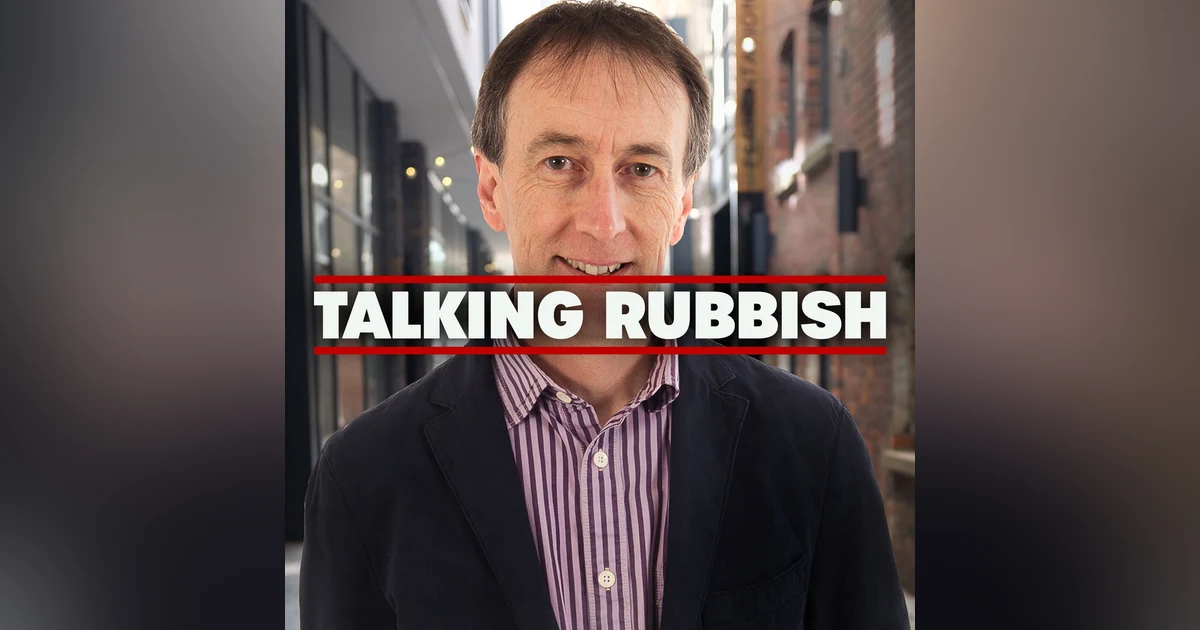

Over 160,000 households across 10 local authorities have been trialling flexible plastic collections. The early results are promising: strong participation, positive resident feedback, and low contamination rates. But while 400 tonnes have been collected so far, that figure pales in comparison to the estimated 150,000 tonnes expected once all councils are required to collect this material from 2027. Gareth Morton from Ecosurety joins us to explain how the system will scale to meet this surge, and what lessons we can take from the pilots already underway.

 Apple Podcasts
 Spotify
 YouTube
 Amazon Music
 Castbox
 Podcast Addict
 PocketCasts
 Over 160,000 households across 10 local authorities have been trialling flexible plastic collections. The early results are promising: strong participation, positive resident feedback, and low contamination rates. But while 400 tonnes have been collected so far, that figure pales in comparison to the estimated 150,000 tonnes expected once all councils are required to collect this material from 2027. Gareth Morton from Ecosurety joins us to explain how the system will scale to meet this surge, and what lessons we can take from the pilots already underway.
Join hosts James Piper and Robbie Staniforth as they delve into the world of recycling, hopefully having fun along the way. One thing is for sure, they will talk absolute rubbish from start to finish.
Sign our very first pootition: https://you.38degrees.org.uk/p/poo
We would love you to join our community on Discord
Special thanks to our sponsor, Ecosurety
To get exclusive videos and clips, follow us on Instagram, TikTok, X, Threads or Facebook; @rubbishpodcast or YouTube: @talkingrubbishpodcast
Or you can contact James and Robbie with questions or just general rubbish musings using the email address talkingrubbishpodcast@gmail.com or by texting them via WhatsApp
Relevant links and reports mentioned in the programme can be found on the Talking Rubbish Linktr.ee
Transcripts and episodes can be found on the Talking Rubbish website
Music licence ID: 6WPY8Q4O2RPFIOTL
Hello, welcome to Talking Rubbish, a weekly podcast delving deep into the world of recycling and discussing the truth behind snappy headlines and one-sided stories. I'm James Piper, author of the Rubbish Book, and I'm joined by Robbie Staniforth, my far-from rubbish friend. And we are joined today by Gareth Morton, our far from rubbish guest. Good morning, Robbie. Hey James. This is exciting.
SPEAKER_00Yeah, very exciting. We're gonna grill him, aren't we?
SPEAKER_03Yeah, so Gareth, Gareth works for EcoSurety. We know him better than anyone we've interviewed so far, I suspect. Before we do that though, we have to do our intro. So just a reminder for anyone who's new or people who have tuned in just to hear Gareth, we definitely don't blame you for that. Um we always do this little intro and we do an interview every five episodes. So the rest of the time you just hear me and Robbie talk about stuff, and every five episodes we bring in actual experts. This week, Robbie, I've been getting listeners for us. Really? Are you pleased?
SPEAKER_00Thousands, tens of thousands.
SPEAKER_03One I'm always looking for new listeners, and uh this week I was walking past a thatched cottage. Okay. And it was beautiful, it was the most beautiful cottage, middle of nowhere, and they had a podback uh bag outside in that outside their house.
SPEAKER_00Ah, so they're recycling coffee pods.
SPEAKER_03They're recycling coffee pods. So it's so funny because we're walking past and Ellie's like, Look at that gorgeous thatched house. And I'm like, look at that gorgeous podback bag.
SPEAKER_00Oh gosh, you really are that sad, James.
SPEAKER_03Absolutely. Anyway, this lady came home, the owner came home, she just parked up and came home, and she walked past us and she could see us staring at our you know respective things we were both looking at, and she said, Oh, hello. And uh she said, What do you think of the house? I said, It's lovely, but I love I love these pod bags more, which I think took her a bit by surprise. And I started to talk about it. I said, Look, you know, I just uh coffee pod recycling is something I help bring about, and I really am always excited to see it, and I'm so excited that you can get the recycling all the way out here, we're in the middle of nowhere. Um, meanwhile, Ellie was talking to her about the Thatch and all sorts of you know, the important stuff. Um, anyway, I did, as you would expect, happen to mention the podcast and she said she would take a listen. So if you're listening, Thatch Cottage Podback Lady, I'm sorry, I don't know your name. That's uh those are all the details I have. Uh, welcome to the podcast. Get in touch, it would be great to know that you're listening. I mentioned last week that we had had a influencer who had been at the plastics treaty. And I trailed a little bit that I had some info coming from the inside. So uh I thought I'd just go through the voice note that I received. Oh, juicy stuff coming, great. So thank you so much, Liz, for the absurdly long voice note that you left me. She will be laughing at that because I saw Liz the other day, and the first thing she said was, I'm so sorry that my voice note was so long. But look, we love detail. It's like my I said to her, it's like she was podcasting to me. I just got to sit down and listen to her views on the plastic treaty. So she felt that our discussion around the oil-producing countries was pretty accurate, but she had an anecdote that she wanted to share that I think just brings it to life a bit more than we did, because obviously we went there. So on the first day, the US apparently stood up and said, So let's just reiterate, we're at a plastics treaty, okay? Let's just start with that in mind. We're at a plastics treaty. The US stood up and said, This treaty is not about plastics.
SPEAKER_00Oh my god.
SPEAKER_03Apparently, that is what happened. The whole room just then started laughing. Oh, really? Yeah, and because obviously she was in like a room with all the presumably the activists and the people who would have just been like, What the hell are you talking about? Of course this is about plastics. Anyway, Saudi Arabia then added a bit of context and said, This is about plastic waste and mismanaged plastic, not plastic production. So, you know, it's that same thing we said in our episode. It's like, what are you talking about? Of course it's about production. Anyway, this is day one. I mean, surely at this point you're packing up and going home. She said that look, no one could agree on anything because they couldn't agree even agree on the scope. Like, and Liz felt this was such a derailer.
SPEAKER_00So that was the first point that so they had just unpicked the whole thing from the jump, basically.
SPEAKER_03Yeah, opening line: this treaty is not about plastics. Um, she she gave me a couple of other points which I thought were really interesting. So there was this interesting point around design. We talked a little bit about the fact that the plastics treaty was looking at how to make design of packaging standardized, and we've you know we've covered this over the last few episodes. We think standardization around packaging is really important. However, this treaty, which I hadn't quite appreciated, this treaty would have affected every industry. So laptops, chairs, photo frames, you name it, if you start putting restrictions around the design of things made of plastic, it's not just packaging, it's everything.
SPEAKER_00Gosh, that's an awful lot of stuff, isn't it? This plastic's everywhere, not just packaging.
SPEAKER_03Yeah, and so I think there's kind of again, it overpowered people, it's too much work to get through in that time frame to think how are we going to solve for every single use case of plastic. And her final point, which I which was so interesting on the politics of this, and I'm sorry to anyone in the US, because I'm not an expert on US politics, I am increasingly becoming an expert on US politics, as we all do are, but um but you know, it's not really in terms of how this all works, it's not really as clear to me as the UK. What people were saying outside of the treaty is maybe when Trump is out of office we have a chance of getting something like a plastics treaty free. But she was saying, well, this isn't true. Because if you have a Democrat in charge, like Biden was, actually what might happen is the Republicans might block it because they're not going to be fans of plastic production. Whereas if you have a Republican government in place when the plastic treaty happens, Democrats are more likely to vote it through. So there was this feeling in the room that actually to get a plastics treaty through, you sort of need to do it when there's a Republican government in place.
SPEAKER_00Oh, very interesting. But potentially not a Trump Republican government by the sounds of it. I think that's probably fair.
SPEAKER_03Yes. We also had a WhatsApp from John. Now, this one has really stumped me. Sometimes we get things in and I just think, I can't think of any good reason why this has happened. So over the over many episodes, we've talked about the OPRL label. So this is the label on your packaging that says recycle or don't recycle. And John sent me a WhatsApp with a picture of a Morrison sun-dried tomato paste, which is in a glass jar. Okay, so just like a little glass jar you can imagine a sun-dried tomato paste. It has the OPRL label do not recycle.
SPEAKER_00On this very normal-looking glass jar. There's no like uh anything added to the outside of the glass jar that you can see, or there's a big label on it.
SPEAKER_03We'll talk about that in a second. John actually asked Morrisons why this was the case. They didn't give an answer, but they did send him £20 worth of points. So, you know. Anyway, I couldn't understand it. A glass jar in this form, in my opinion, should be marked recycle. I reached out to Alice at OPRL, and as I said, this jar does have quite a large label, and Alice and I were discussing the fact that there was a version of the RAM where a label covering more than 60% of the jar would make it red. And so we weren't sure if like Morrisons were preempting that, but I mean that would be that's not what's happened. That would be a sustainability team moving very far ahead.
SPEAKER_00Yeah.
SPEAKER_03You know, and you don't react to the RAM in that way and change your labelling. So I went to Morrisons to see this myself because I thought maybe it's a production error, so I'll just go to a random Morrison's.
SPEAKER_00Oh, your investigative journalism knows no ends, James. Very good.
SPEAKER_03I know, and it was true. This jar was still marked as do not recycle in the in the Morrisons I went into. And John and I live very far away because he sent me his rough location, so I know that I'm in a completely different Morrison's. And it's worth noting that things next to it, like the pestos, which are also in a glass jar, slightly taller jar, but still in a glass jar, were all marked recycle. So I think this is a mistake.
SPEAKER_00With the same sort of size label and stuff, so it must be a mistake.
SPEAKER_03I think it's a mistake. So we're trying to get it changed. So, you know, this is another thing that Talking Rubbish may achieve. Maybe we'll get a recycle label on the Morrison Sun-Dried Tomato paste and increase glass recycling by like, I don't know, what, a few kilos?
SPEAKER_00It's really big stuff, James. This very good. And if people want to listen to the Bimfluencers out there, want to catch up on that episode with Alice from OPRL, that's episode 45.
SPEAKER_03So BIMFluencers, let us know if you see anything else in the wild that's weird, because we will investigate everything. Even if it's a tiny little jar, we will investigate it. So let us know what you spot because it's great fun trying to find out why things are mislabelled. As always, we'd like to take a moment to thank our sponsor, EcoSurety, who are on a mission to rid the world of unnecessary packaging. They help brands navigate the tricky world of extended producer responsibility, but that is not all. They also collaborate on some incredible recycling projects and consumer awareness campaigns for those tough to recycle materials. If you're an organisation looking to make smarter packaging choices, check them out at EcoSurety.com.
SPEAKER_00And if you've ever wondered what all that spiel means, we're about to find out with Gareth in a moment.
SPEAKER_03Yeah, let's not ask him about his various bosses at EcoSurety, two of whom present a podcast called Talking Rubbish.
SPEAKER_00We'll we'll we'll gloss over that.
SPEAKER_03Oh God. I'm nervous. I have the power to cut.
SPEAKER_00I can the editorial power, yeah.
SPEAKER_03It's gonna be great, isn't it? People will be listening back and they'll hear, so Gareth, what do you think of your bosses at EcoSurety? And then it would just go, next question. It would just skip over this. You'll just hear this like AI version of they're great. Anyway, if you want if you want to help the podcast to grow, the best thing to do is to leave us a review. And if you leave us a review, you might make it to Robbie's Review of the Week.
SPEAKER_00And this week we've got a review from who I think is Chloe. It's C H L O 3, so I'm gonna assume it's Chloe. Thanks very much for this. Very brief review, it must be said, but it's straight to the point. Don't waste your time with other podcasts. This one is anything but rubbish. I mean, it couldn't get any clearer than that, James.
SPEAKER_03Absolutely not, thank you very much, Chloe. And there is no star rating on this because Chloe has broken the system. Oh, really? Ingeniously. That's why you know this is worth sharing this review. Because we have been asking for ratings on Spotify and Apple, but you actually can't leave words on Spotify, you can only leave them on Apple. So whenever we read them out, normally we're reading an Apple review.
SPEAKER_00Okay, so when you're rating it, the bit to type is only on Apple after rating it. Yeah.
SPEAKER_03Yeah, and Podcast Addict and these other places we get reviews from. But what Chloe did was because Spotify allows you to leave a comment, she left a comment. So thank you for doing that, Chloe. I do spot the comments, I do respond to all the comments on Spotify. So um if you want to leave a review in that way, it's very helpful. It really helps the algorithm. God, don't you just hate helps the algorithm.
SPEAKER_00That is the world we live in, isn't it? I know, yeah, sad stuff. But thanks very much for the comment, Chloe. Please leave us comments in Spotify.
SPEAKER_03And you can follow us at rubbishpodcast on all social media. You can email talkinrubbishpodcast at gmail.com or you can WhatsApp us. Also join our Discord, it's the easiest way to engage with us and listeners of the show. The link to all those things is in the show notes, as is the link to our petition, which is about banning the word compostable on dog poo bags which can't be composted. Please take a second to go and sign it. Right, Robbie, you ready to find out how good we are as bosses? Not really, no. Today we're joined by Gareth Morton from EcoSurety. Gareth has been looking after the Flex Collect project as it became. So last week we covered the Flexible Plastic Fund and how that started. It transformed into Flex Collect, which is using the money that we created and what we talked about last week to collect flexible plastic from Curbside. And we have just launched an incredible report about how this has all happened and what what we've learned and all that kind of stuff. And so we get the opportunity today to talk to Gareth about that report. Hi Gareth, welcome to Talking Rubbish. Good morning, gentlemen. How are you? Very good, thank you. Um I'm a bit nervous about this because you're the first person we've brought in from EcoSurety, and in EcoSurety I'm known as what men then as Piper or Pipes. So I think people influencers are going to get a bit of insight into what people call me, and I'm gonna stop getting emails saying hi, James, and start getting emails saying hi pipes.
SPEAKER_02Yes, I remember probably on about day two when I uh joining at EcoSurity in lockdown, it's a bit weird. Oh yeah. Didn't see any of you for another year, but I remember asking you, James, what do I actually call you? Because I'd heard James, Piper, Pipes. Yeah.
SPEAKER_03You know. And Gareth, I have to tell you, but I've noticed on your LinkedIn you're calling yourself a flexbert, which I just love.
SPEAKER_02Yeah, I quite I quite lit that one. Having had a career in behaviour change for many, many, many years, now I find myself as this uh yeah, being dubbed an expert in flexible plastic recycling. So, hey, flexbert, why not?
SPEAKER_03It's great. And can you give us a bit of a like potted, you know, one-minute history then? You've talked about being a behaviour change expert. Let's have a quick where have you come from before you joined EK Surety?
SPEAKER_02Back in the early days of the late 80s, early 90s, I started when I was still a student meddling about with recycling communications. I then joined a not-for-profit called Save Waste and Prosper. Did that for 15 years, then went into mainstream PR, still on environmental and recycling communications, then over to the dark side of mainstream environmental consultancy for about another 15 years, and then came back out into the light and joined EKSurity and I kind of found I finally found my niche. It's my job's great because I don't have anything to do with the the business side of the business, the the EPR compliance and PRNs and all that. I get to do really, really good stuff, really exciting stuff that makes a difference. It's like right back in my not-for-profit kind of NGO days at Save Waste and Prosper, doing good stuff. And that's I get a real kick out of it.
SPEAKER_00And so now you're working on the Flexible Plastic Fund. So can you just talk us through what actually is this Flex Collect project uh that you've been working so hard on over the last few years?
SPEAKER_02Yeah, oh boy, uh it's been all consuming over the last couple of years. Uh so rewind two, three, possibly even four years ago, probably about 2021. Uh, we set up the Flexible Plastics Fund, which was started off looking at what's going on with retailers, how can we support the recycling of the material being collected, the all the plastic bags and wrapping that retailers were collecting. But longer term, we knew that simpler recycling, as it's called now, it wasn't then, uh, was coming, and the UK was gonna move to curbside collections. So we always knew that that was the long-term aim. The the retail stuff was only uh transitory, it was gonna t move and move across to collecting it at curbside at scale. Big question was that nobody knew at that time, well, how? How are we gonna do this? And more importantly, where's it gonna go? Who's gonna recycle it? What into? And the really crucial question was well, how much is it gonna cost? Particularly for the brands we we work with in the Flexible Plastics Fund, who were gonna be paying into it, you know, how much will were they gonna pay in for for this? Nobody knew. Um, so the project kind of was formed from that. How are we going to do it? Uh, add flexibles to all those current Kerbside uh collections from people's homes, which are many and varied, as both of you know very well, and I'm sure you've discussed on on the podcast. Um, different bins, different sizes, different colours, where the where is the flexible where are the flexibles gonna go? What do they do with it once they've got it on a vehicle? How are they gonna separate the flexibles from all the other stuff that it's c collected with? And then when you've got your pile or compacted bale of flexible recycled plastic bags and wrapping, where's it gonna go? How is it gonna be recycled? What is it gonna be recycled into? And the other sort of ultimate question for the brands is they want to go full circular, i.e., they want to get this this stuff, the post-consumer, flexible plastic packaging, all those plastic bags and wrapping, they want to get it collected and get it recycled back into food contact packaging, back into the bread bags, the sweet wrappers, the crisp packets that we we all buy. And we didn't know how was that possible. Long term it it will be, but four, four, five years ago, quite a big question to ask. And ultimately, that is the ambition for the Flexible Plastic Fund and the members, it's to achieve circularity and get this stuff back into food contact packaging. So very ambitious, lots of huge questions uh that we set out to try and answer.
SPEAKER_03Perfect summary, Gareth. And we had, you know, recyclers five years ago, the three of us were talking to them saying, Can we make a crisp a crisp packet? And they were all saying, No way, it can't happen. And I love trying to prove people wrong. I love trying to trying to get stuff together and say, actually, I think we can achieve this. And let's walk through the whole process. So we start with the collection, because people may not be familiar with Flex Collect. I mean, the three of us have literally just got back from the House of Parliament where we've launched this report. Absolutely amazing achievement over the last few years, and the results are so interesting, and I think it's worth us just going through those results, sort of exploring areas that we think are good and areas that need improvement. So just to talk through the collection, we have ended up with ten local authorities collecting flexible plastic. I will just name them so that because a lot of them have come up on the podcast over the previous episodes, because we do often talk when people bring out flexible plastic. So the ten local authorities are Cheltenham, South Gloucestershire, Molden, Newcastle, Somerset, Reading, North and East Hertfordshire, North West Leicestershire, Bracknell Forest, and Warwick. And between them, those ten local authorities, we have been collecting from over a hundred and sixty thousand households.
SPEAKER_02So why those ten local authorities well the the key thing about the trial was we wanted to a work out how to do it, but also prove to the rest of the industry and government that you could do this at scale. And we needed data, we needed information for all the other local authorities. Uh across certainly across England at first, where simpler recycling was being introduced from April 1st, 2027. But eventually Wales, Scotland, Northern Northern Ireland, Ireland. So they had to be representative so that the data would work. Any local authority, whether it's Northumberland to Cornwall, could actually look at the data we generated, the types of collection schemes we we worked across, rural, suburban, inner city, you name it, we had to have a real cross-section so that you could drill down into the data and find information that matched your area, your collection system, your particular kind of uh material recycling facility, the MERF layout, all that sort of stuff. That's why it's such a big, big trial. 10 local authorities, 160,000 households. You know, you look at the collection schemes alone. We had four that are source segregated. So that's where all the different recyclables, uh, householders sort them out into different containers at home. They are put on different compartments in a collection vehicle and then taken taken to it to a depot. To twin stream, where you basically have two containers, some type of wheelie bin, and you generally put paper and card, maybe plastic in one, and then cans and glass, usually or glass separately in in any other one. Two containers for your recycling, different combinations, but that's why it's twin stream. And then commingled, everything goes in one container. Now, those are wildly kind of different. And how are you going to integrate flexibles? Lots of you know, it can be big pieces of plastic, it can be tiny pieces of plastic. Into those different systems. How's it going to work when there's only a certain amount of space, A, in the container itself in the household, B on the collection vehicle that's that's picking it up, and then when you get back to uh a MERF or a depot, you've got to separate the flexibles from all the other stuff. Otherwise, what what's the point? So we needed to run those trials across all those those different kinds of services in order to then understand how it was going to work.
SPEAKER_00So, interestingly enough, from what we see from the report, is that bags are really important. I think there were, were they blue bags, purple bags? What did you find with these survival bags, as you're calling them?
SPEAKER_02We had the idea of survival bags right from the start because for the research purposes and the data gathering, we needed to contain the flexibles that we collected in order to analyse it, quantify it, all the rest of it. But actually, we very quickly worked out that I shall stop. Piper's got his hand up.
SPEAKER_03No, sorry. Where have you got your hand up then? Sorry, I raised my hand. I don't know why I raised my hand. We'll keep this in the podcast because it's great. I don't know why I raised my hand. I just I need someone to define survival bag. Right, we've said survival. And I'm like, I don't know what look, you and you and Robbie, you've been working on this too long. You know what survival bag means. What's um survival bag, Gareth? Right, okay.
SPEAKER_02Well it makes it like a podback bag. It's the bag in which you put whatever it is you want to collect. It will then go on the back of a vehicle, get rummaged around in the back there, it will go through a murph, and it will survive that process being bashed about, squashed, hit, crushed, scratched, all the rest of it. The contents will survive, they will be protected, and you will get the material that you want that you've collected at curbside out at the other end. That's why it's a survival bag. It enables whatever you're collecting to survive the collection process.
SPEAKER_00It's a glorified bin bag, James.
SPEAKER_02Yeah, thank you so much. Now, where was I before I say rudely?
SPEAKER_03Back to your answer.
SPEAKER_02So we started off with bags because we needed to isolate the material for the research aspects of the project. But we quickly realized that actually this is really good because it makes the whole separation process a lot easier. You you imagine you two have been to MERFs, and I think quite a few of your listeners will have been to a Murph. There, there's a big huge conveyor belt. Usually there's uh an operative, a person who will be manually picking to try to identify sometimes contamination, in our case, the flexible plastic. Two choices. You're either faced with 20, 30, 40, 50,000 pieces of individual plastic wrap wrapping, bread bags, sweet wrappers, you name it, coming down this this conveyor belt at you, or a few thousand big, bobbly, bright uh plastic bags, which is easier to pick, which is easier to isolate, a big bag full of plastic rather than that sea of stuff. And the other thing, because we started off with clear bags, we thought we'll just use clear bags. Within the first couple of collections, we realised that's not gonna work because it it disappears into the wash of all the other material, you know, it's trend we have a trend translucent bag. They're really hard to spot. So we we started. I mean, we've used blue bags, we've used purple bags, I think. Any bright colour will do. They stand out like a sort of sore thumb. You know, I've been into uh Murph's in up in Newcastle and Reading, huge bays full of hundreds of tons of recyclables that's been collected and and tipped. These blue bags, you know, this pile is 20 feet high, 50 feet across. Blue bags, you could spot them a mile off. They're dead easy to spot, and that makes it so much easier to separate the the material. And that that was key.
SPEAKER_03I guess as we put the report live, you know, we've had some comments on LinkedIn around this because giving people plastic to collect plastic feels a bit counterproductive. It's sort of I liken it to food waste, you know. You've got to put your food waste in a caddy in a liner because otherwise it can't be collected. It's the same sort of thing. Interestingly, in the report you talk about this, I did read the report. Um the 191 pages. Um it is.
SPEAKER_00And of course, Gareth also listened to the podcast. So you read the report, Gareth listened to the podcast. Am I right, Gareth?
SPEAKER_02You are absolutely wrong, Robbie. And you know this very well.
SPEAKER_03And did do you do you know why? I think this will be quite reassuring for listeners to know that we do not force eco-surety employees to listen to the podcast. I think I think people will be thinking, well, they've got like a hundred listeners just by forcing eco-surety to listen. But I can promise you there is nobody in EcoSurety listening to this right now.
SPEAKER_02No.
SPEAKER_03They don't need to hear me and Robbie talk.
SPEAKER_00No, they've got enough of it.
SPEAKER_02Yeah, I mean, I mean, just anyone listening to the podcast. This is my day job, but I have to work with certainly Robbie, and I've worked with Piper before. My boss and my ex-boss, I get enough of you during the day. I don't need to listen to you out outside of hours.
SPEAKER_03That's true. Gareth knows all of our opinions. Um, anyway, my comment here was looking through the report, the bags only made up seven percent of the weight of material that was collected, and they are also recycled, they're flexible.
SPEAKER_02Absolutely.
SPEAKER_03So it is just worth reflecting on the fact that you're yes, you're adding seven percent weight of plastic, but you are drastically increasing the recycling rate way beyond seven percent. Yeah. So it's a necessary evil to give people these plastics. I mean, I would like to see in the future people using their own plastic bags, using a bread bag or whatever to contain flexible plastics. I I can see that happening, but that is, as you and I and Robbie know, that's a massive behavioural change piece that's going to take years for people to get used to. So in the meantime, you have to give them something to put the plastic into.
SPEAKER_02Indeed. Now, there's two things I want to say at this point. One is people using their own bags, two is the Sherborne Recycling Murph in Coventry.
SPEAKER_03Which we still need to go to, I'm very keen. You do. I'm very keen to get it.
SPEAKER_02Yeah, I've not been either.
SPEAKER_03If they're listening, we want to go there.
SPEAKER_02I'm sure they'll they'll welcome you with open arms. So, using your own bags. We tried this in South Gloucestershire. Uh, we we thought we'd we'd give it a go, see how it compared to giving people their own bags. Uh three main issues, I think. One, people weren't as keen, they didn't participate as much, so we got less less material. Two, uh they could use any bag, fine, but there was a lot of people you using, I would say, inappropriate bags, even things like bin bags, which are no good, you can't tell whether it well, is this rubbish or is this full of recyclables? So lots of it inappropriate bags, or un unsuitable is a is a better word, because some of those bags were unsuitable, they weren't tied. Now, the the tying of bags is something we emerged as the project went on. The first couple of trials we did, people were very well behaved, put their stuff in in the bag, tied the bag up, put it in, hunky dory. As time went on and we expanded the the trials, people were not picking up or not realizing, and I think this is a function of people putting stuff into a a co-mingle bin, i.e. a big wheedy bin, they didn't see the need to tie the bags up as much. And if the bag's not tied, you can imagine what it's like, it gets tumbled about in in the back of a collection vehicle, or when it gets to a MERF, you'll lose the material, the material will shed. So we we realised that you've got to tie the bags, and that became a key focus of some of the messaging about halfway through the project. Uh, very important, tie the bags, make sure the bag is full, make best use of that bag, and tie it up so we don't lose the material. And the other point about going back to South Gloucestershire, so unsuitable bags, bags not being being tied, losing material. When we did a survey of participants in that that area, they said, Oh, this is such a pain. Can you give us a bag, please? They actively wanted a bag because it was easier. And the last point kind of is about bags in general, but the bags we provide have messaging on them, telling you what to put in it, reminding you to fill it up and tie it. So the bags are a very important communications tool, as well as being the physical means for people to participate. And you know, the participation rates are very good and much higher than if you if you ask people to use their own bags. So that's own bags. The Sherbourne Recycling Murph and the the collections in Warwick they didn't follow the bagged uh model because the Shearborn Murph is brand spanking you. I think it was commissioned in 2024, back into 2023, I think. So we were able, and it and it collects fully loose. So people just put their plastic bags and wrapping into their wheelie bin alongside everything else. Totally loose, no, no, no survivor bags, nothing.
SPEAKER_00So it's commingled with all the other recycling, cans and glass jars, and everything all goes in one bin, including these soft flexible plastics.
SPEAKER_02All loose, gets the Murph, and the Murph is so advanced, so new, it's got artificial intelligence in there, it's got robot pickers, it's got infrared scanners, it can sort out all those thousands, hundreds of thousands, probably, of individual pieces of of plastic. Well, a heck of a lot of them anyway. Um and that was great because we could compare performance of loose collections versus bags. Now, the huge issue for the UK is a lot of our MIRFs are old generation. And even before that, you know, they they they were not designed to separate loose flexibles. They can be adapted, I mean we're getting into the whole lamb's next uh issue here, but they can be adapted quite easily to deal with large, bobbly, light survival bags, but a lot of them are gonna really struggle to deal with all those hundred thousand loose pieces of plastic coming down then com converter belts. So, survival bags, if you're collecting a source segregated system, perhaps the essential, you can't collect loose plastic film, windy day, it's gonna blow all over the street, and that's a non-starter. So you've got to have a survival bag for any source segregated scheme. If you're collecting twin stream commingled, I think most places certainly for a period of time, a number of years, are gonna have to use a survival bag in order to separate the flexibles from everything else they're collected with, you know, in a in a in a easy and effective and relatively cheap m manner. You know, the the modifications that the Murphs did on uh a capitalist schemes, you know, the weren't weren't that that big, weren't that disruptive, quite easy to do, um and they they worked. But you for the if they'd had to deal with loose, they'd probably had to build a whole new Murph, costing m millions, tens of millions of pounds. In order to to cope with the material efficiently enough.
SPEAKER_03Garav, you really amazingly brought us into sorting there. So just to let's imagine we're a customer, this is the journey we're going on. So we buy some flexibles, you buy a crisp packet, you eat your crisps, you put it in one of these bags, this if you're taking part in the trial area, you're putting it in a survival bag when your survival bag is full or when your collection is, you're tying the bag up, you're putting it out with your recycling. You've really helpfully started telling the story of sorting. Where and if I could summarise that, what you're basically saying is old Murphs can take the material, old Smurfs can take the material as long as old Murphs. Uh I knew we get him. You can tell Gareth has never listened to the podcast, because we always call Murphs Smurfs, but it's okay. Um sad. Old Old Smurfs can take the material. This is the unfiltered review. Gareth Morton, so sad, one star. Um Old Smurfs can take the material as long as it's in a survival bag. Newer Smurfs might be able to do something with it, but in the main, we're going to be using bags to collect up this material in the near near to medium term. So that's the sorting, and and as long as you do it in a bag, you don't really need any additional tech. You can use your existing Smurf. There's no there's not much investment that's needed. But you might have to do something.
SPEAKER_02The all Smurfs are different. We've got him on it. He's in, bro. He's in.
SPEAKER_01And because it's YouTube.
SPEAKER_02Yeah, I mean, they're they're all different. Everyone that we worked with had to work out its own way, the best way for it to intercept the material. A lot of them, it'll just be a case of putting an extra person on a shift who's literally standing there picking the bags off. Others. So that's not much of an adaptation, is it? No, it's not. For others, um you might have to do something more. So for one of them, we actually fitted a vacuum extraction system. Basically, it's a big tube connected to a uh a big kind of wind machine that it's still got a picker. He picks it off, drops it in the the the chute, it gets sucked through a pipe and empties into a skip because that's the only way they could fit it into the the Murph.
SPEAKER_00There was just no space. Yeah, exactly. For someone to directly pick it and throw it into a chute uh or throw it directly into a bin or skip. It had to use this sort of suction thing to get it to the right place in the skip.
SPEAKER_02It actually went out out through a hole in the in in the wall and the skip was out outside. That's how for space it were. Another one, they built, they just built the little extension on the existing gantry, which was um a pre-sought gantry where they've taken out lots of contamination and you know, all sorts of junk that makes into people's recycling bins, unfortunately. I think that's a topic for a future um podcast, by the way, contamination.
SPEAKER_03You wouldn't know if we've covered it, wouldn't it?
SPEAKER_02I have no idea. I bet you haven't though. Have you?
SPEAKER_03Have you? We always talk about contamination. We haven't done a specific not specific.
SPEAKER_02Okay, okay. It will be there. I'll I'll I'll send you I'll send you the the the article that that that has highlighted it as an issue, an ongoing issue. It's been an issue for years. But anyway. Um I'm I'm off topic. Yeah, so they built a gantry um that enables them to separate the bags before it even goes into the MERF proper. They're just doing a little bit of a a pre-sort the material, make sure there's you know, not an engine block in there or something like that.
SPEAKER_00Oh, so it's right at the first step in this.
SPEAKER_02Literally, yeah. Literally. Every every other one, they've had to work out where in the system they can they can intercept the material. But for most of them, it's not it's not a huge cost, not a huge uh investment in new kit at all.
SPEAKER_03And what I've been most impressed with, if we move past the sorting to the recycling, the report talks about 82% target material. So of what what people were putting in the bags, 82% of it is what you're looking for.
SPEAKER_02The quality of the material surprised everyone. We had uh hard-bitten waste management operatives from Suez working on the project, and they were expecting this material to be pretty grotty. It wasn't. It was really clean, really good, which really shows that the great British public really want to recycle this stuff. You know, there I I think some of the early because we we actually went and analyse all some of the material that was collected. I mean it looked like some of this stuff had been washed and steam pressed before before it had put out for the collection. But yeah, the quality, the amount of on-target material, and the cleanliness were really, really good. Yes, some people thought, oh, it's plastic, we'll put my my margarine tub in there. Well, yeah, it's kind of it's plastic, but it's not the same, is it? But then yes, you you do get some people putting some strange things it in there.
SPEAKER_03Do you think you're getting some false results there because people who are likely to take part of the trial are also likely to steam press their flexibles? Or do you think actually you've got a good mix of the public that were part of the trials?
SPEAKER_02Yeah, good question. And that's why the trials are so big. That's why we did lots of different areas with lots of different types of people in order to understand. You know, it it is true to say people living in leafy suburbs recycle better than people living in high-rise flats, high-density urban areas. It's just a lot like that. Um, so we deliberately had all sorts of collections from all sorts of in environments, and we could test it. And to be honest, the participation curve and the quality curve of this took a certain amount of people, really, really good. Lots of people in the middle do okay, pretty well, not perfect, and some at the bottom who either don't participate at all or don't do very well. That kind of matches the existing recycling profile of the UK population. And that was something important to establish.
SPEAKER_00So you're just dealing with the same problem as you've dealt with the plastic bottles and aluminium cans and cardboard boxes for years. Absolutely.
SPEAKER_02There's no difference. But I think the amount and the enthusiasm that we we found from people was quite encouraging. You know, it is the probably the biggest single potentially recyclable component left in people's rubbish bins.
SPEAKER_01So a lot of people are like, great, we can recycle this stuff finally! I don't have to take it to the retailer, I can do it at home. Fantastic.
SPEAKER_00That's exactly what people are like, Gareth. Great impression. That's what I'm like. So moving on to where's it all gonna go, really? That that's the one of the key questions, isn't it? You know, so it's good material, people participate, they're desperate to get it out of their general waste and the stuff being incinerated at the moment. You know, how many more facilities do we need? Is it inevitable that we're gonna export this stuff, or and can it go back into actual uh flexible film applications, or is it gonna go into furniture and things like that?
SPEAKER_02I think it'll be a mix of all those things. Yes, you could put it into park benches and fence posts and stuff like that. There's a lot of quite valuable uses in in that market. But and I've been reflecting on on this recently in some of the conversations I had on Monday at the House of Parliament. What you actually need is a driver for that market. You know, if you can recycle 100% of this stuff into plastic timber uses, why can't government policy say you've got to use a certain amount of or replace a certain amount of timber products in your car park fencing or whatever it is with plastic timber replacement products, which will drive expansion of that that market that would help? So plastic timber, it can go back into being made into making refuse sacks and long-nosh shopping bags, as one of the the companies involved in the trials do. It could, and I'd I'd like to see this, it could actually be recycled back into collection bags. That'll be really neat. So the collection bag you get has already been around the system once, and it will go back around the system again. That'll be really, really cool. Ideally, as I said right at the start, for circularity, we want to get this back into food contact applications. That's still a challenge, which the Flexible Plastic Fund is going to be looking at next. The big question next is okay, we know how to collect it, we know how to separate it from the other stuff, we've actually got to recycle it. Ideally, we've got to recycle it in the UK, and ultimate aim, ambition kind of dreams is we get it back in. Into crisp packets, uh snack wrappers, bread bags, you name it, back into to what it was.
SPEAKER_03And because of the material, getting it back into food grade is likely chemical recycling. You're gonna basically take it back to its building blocks and rebuild it? Is that is that the thinking?
SPEAKER_02At the moment, yeah, that's that's gonna be the only um realistic route. I mean, there's the new technologies happening. There's a company we know of that's do developing something called dissolution technology, uh, which is a great promise, but they are a few years away from building a plant for flexibles. So, and we we started exploring um the near-European market. So, what is there in in places like uh well the the Netherlands? What potential capacity have they got to take take some of this m material and recycle it? So we we've actually still uh finishing off a couple of the the trials at the moment. We're doing one looking at turning it into um material suitable for extrusion moulding, uh, and we are working with a Dutch company who's going to be sorting and reprocessing it and looking at the material as a potential source for various markets. So I think there's a lot of opportunity, a lot of reasons to be hopeful, but there's still a lot of work to be done on that. Uh, and exactly what the UK's got to do in order to get to flexible plastic recycling nirvana, which is circularity. Um that's the next piece of work that the flexible plastic fund members are going to look at. What do we need? How do we need to do it? How many sorting plants, how many washing plants, how many reprocessing plants, what sort of reprocessing plants? Those are the next big questions for our journey.
SPEAKER_03And I guess we need to be careful not to dress this up too much. It is an amazing trial, it's fascinating insight, you've got so much data, and it's going back to government to educate them on kind of what to do next, how to cost this up, how to make it work. But the report talks about the fact that when this goes live in 2027 and we're collecting flexibles from household, it could be 150,000 tonnes just in that first year. And this trial has done 400 tons. So, you know, uh uh if we if we talk about reality, it is an amazing thing, and collecting 400 tons of flexibles is huge. And we've got to remember, like a bag of these flexibles, the average bag you were collecting is the weight of three PET bottles. Three Coke bottles. You know, this is lightweight stuff, it's really quite hard to collect and recycle efficiently. That's what makes it the most amazing material because it's getting us product in a really lightweight way. So if we can recycle it, there's a huge opportunity. But this trial is 400 tonnes, massive amount of plastic, but we're comparing it to that future of 150,000 tonnes. And so what are the what do we think is gonna happen to that 150,000 tonnes of waste? How much recycling do we think can happen in that first year when it actually goes live in 2027? And are we just talking about a journey of many years before we're recycling all of this material?
SPEAKER_02You're asking me the sixty-four million dollar question. Is that how much it's gonna cost? No, no, no, no, I don't know. I th I I think the answer to that is nobody quite knows yet. We we know roughly what capacity we've got at the moment. We know roughly what we need, or at least we we think we know. But there's a a scarcity of actually accurate data about how much material is actually out there. Uh we're basing it on what we've collected. Now, a great British public could go wild for this. You know, on some estimates, there's anything up to four or five hundred thousand tons of of flexible plastic packaging out there coming onto the market into people's homes. We're not quite in the UK. We're not actually sure. Yeah. So we need to quantify that. Add it to our flex collect data will get us a better handle on well, how much are we actually going to end up in the recycling stream and the recycling system? Then we can start to look at, okay, how are we going to process that? So yeah, we we reckon that there's probably capacity for to recycle about 100,000 tons of that material. So there's a gap. If we're collecting about 150,000, 50,000 tons, uh, we're not sure about yet. But we know from from looking at what's going on in in Europe, that material can be sent to Europe, can be re-reprocessed. So the expectation is almost all this material could definitely be recycled. That's what we think.
SPEAKER_00And we've been talking in recent weeks, not that you'd know Gareth, about uh recyclers closing down. And so this is potentially the opportunity that look, there's gonna be all this material coming at you from 2027, it's gonna increase over time, over the next five to ten years. There's gonna be more and more of this material available. So it's potentially an opportunity for investment for these recyclers to turn it into something useful.
SPEAKER_02Only if there's value in the material that they're actually reprocessing. And this is where it's really important, it comes back into government policy. There's got to be drivers to bring that material back into circulation, into use. And this is where things like the plastics tax, good as it is, uh, needs to be tweaked in order to make it more effective and and more of a useful tool in driving demand or stimulating demand. The other thing hovering on the horizon is the PPWR, which for the life of me, I can't remember what it stands for. Plastic packaging waste regulations. Anyway, European directive that will impact that the UK in the all plastic packaging has got to get have a minimum 10% recycled content. That's huge, that's absolutely huge, gonna be a huge driver, even for the UK. Outside of Europe, it doesn't matter. A lot of our companies making packaging products exporting to Europe, they're gonna have to comply. But we need more of that, we need more market stimulation to push the demand because the the the truth is virgin plastic is cheaper than recycled contents. If you're in a big business working on low margins, times are tight.
SPEAKER_00It's a tough choice, it's a really tough choice. You're really talking James's language now when you're getting into the economics of it, isn't he, James?
SPEAKER_03Yeah, please, Gareth, feel free to listen to episode 58 where we cover this. And uh and um just in case any influencers are confused, you mentioned 10% there. We talked in the episode about PET, which has a 25% minimum recycle content, but you're right, all plastic is 10%. Right, let's quickly talk about economics, because you you calculated the cost in this report, and it came out at £6.56 per household per year. So that is what this will cost in order to collect. I think around £3 of that is the bag. I can see you looking for your notepad, you're just gonna have to take my word for this. Throws up hands in despair. Yeah, go on, James. I think about three pounds of it is the bag. So I guess if we get people used to using their own bag or we solve that, or we make it out of recycled content so we get it cheaper, there's a big saving in terms of the bag, because half of the cost is that.
SPEAKER_02Or we collect loose because there are some nice, fancy new high-tech MERFs being built.
SPEAKER_03More MERFs come in. Yeah, exactly. But when it comes down to it, what you calculated was that the cost of collection, sorting, and recycling flexibles worked out at about £1,600 per ton. And if you work that out on a per item basis, it's 0.12p per item. So just to put that in perspective for listeners, that is what we're talking about. A tenth of a penny per item you buy wrapped in flexible plastic. And I guess we as consumers just have to decide if that is a price that we're willing to pay. I mean, to me, it sounds like not a lot of money at all.
SPEAKER_02Yeah, I I think there's two things there. I think one, it it's actually the costs are less than everyone thought. That's that's important because it we found it was it was easier than everyone imagined to do. It costs less. Uh which is good. Uh still it's a cost. But I think you've got to temper that against what price the planet and and for me it's you've got to do this. Um I I live up in in Leeds in Yorkshire. We've had one of the biggest wildfires in the North York Moors, I think, ever, this summer. It's still smouldering. Wildfires now, because of changing climate, wildfires never had had wildfires like one never had wildfires when I when I was young. Now it seems to be the new normal. If we're gonna have a planet to live on, we need to do this stuff. And if it costs, it costs, because the consequences of not doing it are unthinkable. And this is what makes me get up in the morning, go to work, and work with a pair of lunatics like you two to make a difference.
SPEAKER_03Lovely. Look, there's loads we could go into. We're massively running out of time because we all love to talk, and so this is a dangerous thing for us all to get on a podcast. But um, Gareth, I think that is the perfect way for us to get into our final couple of questions. So thank you for leaving us with that. I knew in advance that you hadn't listened to the podcast because I sent you a framework of what we were gonna discuss, and I sent and I just wrote gift, you know, because obviously I say to the guests, do you want to, you know, offer a gift to our listeners? But because I think they've listened, I just write the word gift. You asked for a lovely gift that you thought you were gonna receive for appearing on this podcast.
SPEAKER_02Why not? Giving it my valuable time. So answering name questions from you two.
SPEAKER_00So what is the gift then, Gareth?
SPEAKER_02It has to be a litter picker. So this is the thing. So you're I think your lace listeners need to know that I am an obsessive litter picker.
SPEAKER_03Uh you actually came up before Gareth on Alice Rackley's episode.
SPEAKER_02I did, yes. Yes. She said you were an inspiration. I I litter pick from sea to summit. I when I go to the house. Basically, anywhere I go walking, and you two know I walk a lot. I'm a qualified mountain leader. Go heading off into the hills is my thing. I always take a litter picker with me and a bag, and I pick litter because it's important. It really, really is.
SPEAKER_03You actually had a meeting the other day and you decided to have a litter picking meeting where you you did your meeting while litter picking round Bristol. It's a great idea. I've got to do that more often.
SPEAKER_02Yeah.
SPEAKER_03Yeah.
SPEAKER_02You know, it it it it's kind of it's kind of bit trite, but it is life-changing because every walk you do outside going just going around the block to have five minutes at the lunchtime of exercise, you make a difference. So I gift everyone in the entire world a litter picker and a bag. They've got to have a bag to put the litter in. What litter picker are we actually providing?
SPEAKER_03Can you describe it?
SPEAKER_02It has to be one from Waterhall who make them from recycled ocean plastic, plastic they've picked off beaches and and ghost gear, which is abandoned and washed up fishing gear. That's what you want.
SPEAKER_03If you're listening to this and you want to enter the drawer to win, please head over to our Instagram where you will find an image to launch this episode. It'll be a picture of Gareth. With a litter picker. With a litter picker, yeah. Like that post, follow us, and you can be in the chance of winning whatever this amazing litter picker is that we'll go and we'll go and find offline. And the question we ask every guest, not that you'll know, but the question we ask every guest, if if you had an environmental superpower, what would it be and how would you use it?
SPEAKER_02Right. I want to have the Eco Warrior equivalent of the Paddington Stare.
SPEAKER_00Oh yeah. Okay.
SPEAKER_02This is good.
SPEAKER_03Okay, so I can turn on my gimlet gaze. You're gonna do this to camera now so we can put it on social media? Oh. Oh, it's quite scary, yes. Right.
SPEAKER_02Turn on my gimlet gaze on people when they are uh doing something environmentally unfriendly, dropping litter, driving a huge oversized car, flying in a private jet, making some environmentally unfriendly piece of legislation, whatever it is, I just stare at them and they realise the error of their ways, immediately change their behaviour and become an eco-warrior for the rest of their days.
SPEAKER_03Amazing.
SPEAKER_02I would just haunt the halls of Westminster and and stare at every single M MP.
SPEAKER_03I love it. It's a great superpower. Thank you, Gareth. And um, final question, a bonus one for you. What do we like to work with? As always, thank you all for listening. Thank you for the reviews and engagement. We love getting the opportunity to see this podcast. Join our Discord, follow us on social media at rubbishpodcast. You can email talkingrubbishpodcast at gmail.com or you can WhatsApp us. Everything we have discussed today can be found in our link tree, and the details of all those things can be found in our show notes. Gareth, thank you so much for joining us today, and all that's left for me to say is see you next bin day. Bye. Bye. Just say bye. Bye.
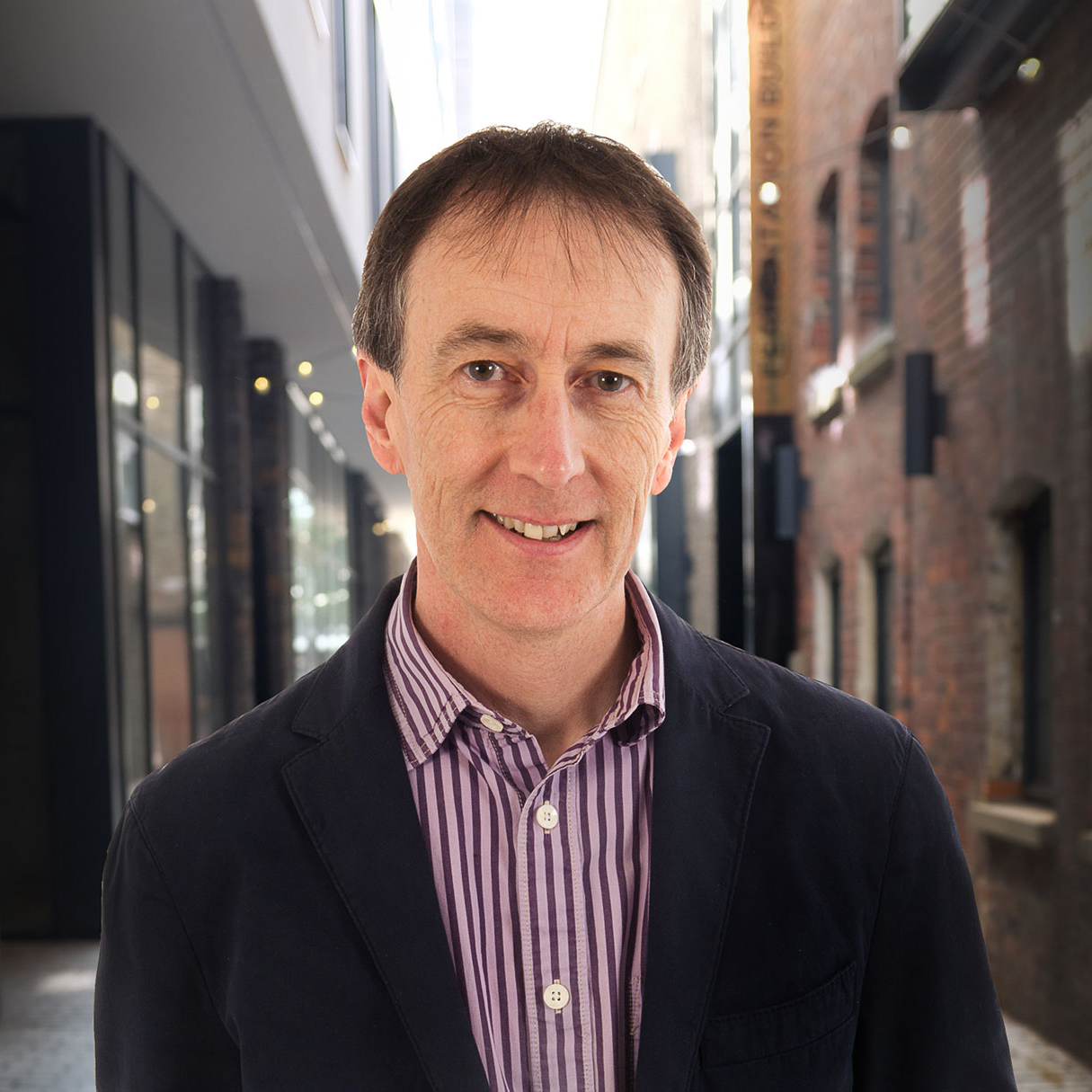
Discovery Manager
Gareth manages a portfolio of innovative projects as part of Ecosurety's mission to improve recycling in the UK. He’s passionate about recycling, having been in the industry since the early 1990s and has been involved in many game-changing initiatives.
Gareth currently runs the Flexible Plastic Fund and leads the FPF FlexCollect project which is helping the UK prepare for the introduction of Simpler Recycling. He’s become an international expert on the collection and recycling of flexible plastic packaging, advising similar initiatives around the world.