65. Recycling realities in the Global South, with Esther Carter from Delterra
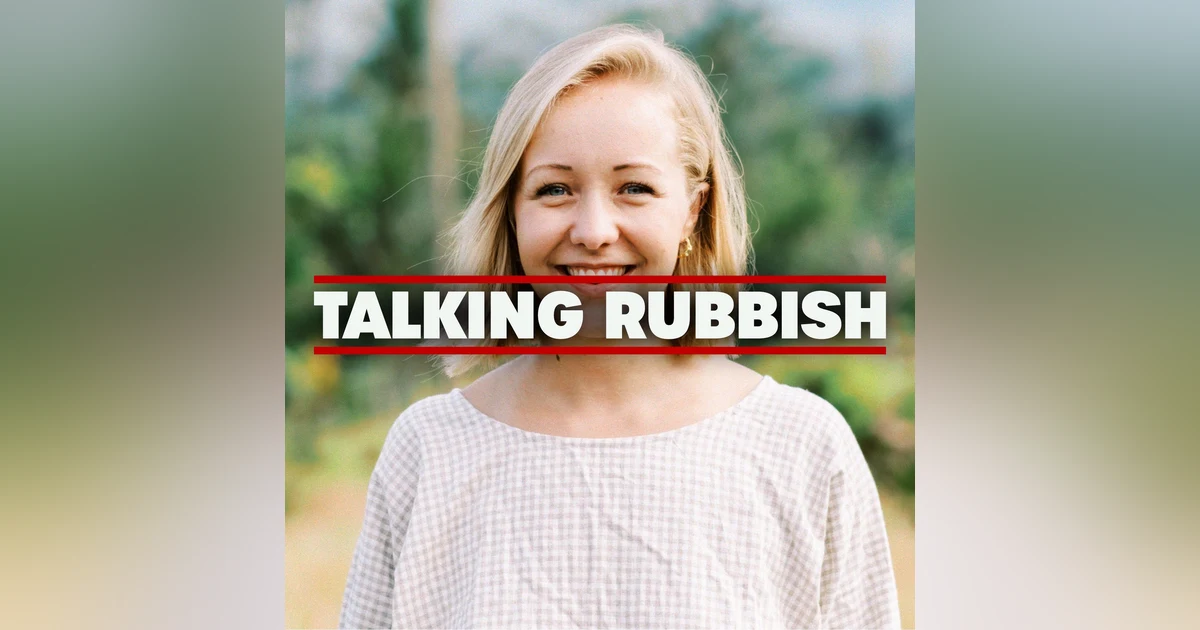

With over 17,000 islands, 34,000 miles of coastline, and limited formal waste management, Indonesia faces an immense waste challenge, one that’s compounded by imports of foreign waste from countries like the UK. This week’s guest, Esther Carter (recently named #1 on the Resource Hot 100), shares insights from her time living and working in Indonesia, offering a first-hand perspective on how the crisis unfolds on the ground. In this wide-ranging conversation, we dig into the realities of waste management across the archipelago, the social and environmental impacts of global waste trade, and explore what meaningful solutions could look like for Indonesia’s future.

 Apple Podcasts
 Spotify
 YouTube
 Amazon Music
 Castbox
 Podcast Addict
 PocketCasts
 With over 17,000 islands, 34,000 miles of coastline, and limited formal waste management, Indonesia faces an immense waste challenge, one that’s compounded by imports of foreign waste from countries like the UK. This week’s guest, Esther Carter (recently named #1 on the Resource Hot 100), shares insights from her time living and working in Indonesia, offering a first-hand perspective on how the crisis unfolds on the ground. In this wide-ranging conversation, we dig into the realities of waste management across the archipelago, the social and environmental impacts of global waste trade, and explore what meaningful solutions could look like for Indonesia’s future.
Join hosts James Piper and Robbie Staniforth as they delve into the world of recycling, hopefully having fun along the way. One thing is for sure, they will talk absolute rubbish from start to finish.
Sign our very first pootition: https://you.38degrees.org.uk/p/poo
We would love you to join our community on Discord
Special thanks to our sponsor, Ecosurety
To get exclusive videos and clips, follow us on Instagram, TikTok, X, Threads or Facebook; @rubbishpodcast or YouTube: @talkingrubbishpodcast
Or you can contact James and Robbie with questions or just general rubbish musings using the email address talkingrubbishpodcast@gmail.com or by texting them via WhatsApp, our number is 07356 069 232
Relevant links and reports mentioned in the programme can be found on the Talking Rubbish Linktr.ee
Transcripts and episodes can be found on the Talking Rubbish website
Music licence ID: 6WPY8Q4O2RPFIOTL
Hello, welcome to Talking Rubbish, a weekly podcast delving deep into the world of recycling and discussing the truth behind snappy headlines and one-sided stories. I'm James Piper, author of the Rubbish Book, and I'm joined by Robbie Stanaforth, my Far from Rubbish friend. And we are joined today by Esther Carter, our Far from Rubbish guest. Morning Robbie. Morning, James. Now, this is a big coincidence because we made a big deal out of Resource Hot 100, right? For sure. Mistakenly, on my part. Okay, so we made a big deal. I came second, you came fifth. The person who came first is only our interview today. What a great timing. It is genuinely a complete coincidence. She joined PacQK as their chief strategy officer. So this is Esther Carter. And unfortunately, that meant she had to do an interview a while back with us because once she was joining government, it's a little bit harder to kind of interview and not talk about some of the government things. So it's much easier just to go, look, we'll just interview before you start your job. Then there's a very clear line in the sand.
SPEAKER_02But little did we know that a month or two later she would be number one in the resource hot 100. That was brilliant, brilliant casting for the podcast, James.
SPEAKER_01So we're looking forward to chatting to her. Before we do that, let's just cover off some of the things we've noticed this week. We've had a lot of interaction with our listeners. I think the toothpaste episode got everyone very excited. Oh yeah. That was definitely so many things to talk about on the back of the toothpaste episode. I have some additions on the Morrison Sun-Dried Tomato paste, which doesn't seem to go away. But all of Anne's gonna have to wait till the next couple of weeks because my flight home from Boston provided so many additions. Oh, really? Yeah. Well, it was totally different to what we said. It was a little bit different. There were a few things that supported what we said. So I got to the airport and I'm in security and I'm thinking has anyone done what my co-host once did and brought toy guns to the airport? So this is the like this is the question. Go through security. What do I see removed from someone's bag? A massive snow globe. Like huge. What is it? It's an offensive weapon. Definitely over the 100 mil liquid limit.
SPEAKER_02Oh yes.
SPEAKER_01Of course it would be. I mean, it also would put a dent, I think.
SPEAKER_02I mean it's they were struck out on two counts offensive weapon and over that 100 mils going onto the plane.
SPEAKER_01So funny. And they put, I guess, because they don't really know what's in the snow globe liquid-wise, because they can't test it. It ended up in a super hazardous cupboard. You know, the getting sent off for incineration, super hazardous. So just a reminder 5,000 tons of waste just in the UK is disposed of because people tried to get it through security. Here's the PSA: don't bring your snow globes through airport security. Or toy guns. I was flying with Virgin, right? So uh we flew Delta out, Virgin back. I think they're owned by the same company, so I think that's why that happened. But slightly different experience. And I received my meal, yeah, and I could not believe it. The salad that came with my meal had a reusable salad pot. What? It was not paper, it was not cobbled, it was rigid plastic. Oh wow, that's amazing. So those go back and get cleaned out, obviously. Uh yeah, I think so. I did ask, I said, oh, are you going to reuse this? And they just very non-committally went, yeah. But it was like, can I have some more info? No. Because I know they may know what happens to them. But you know, they definitely are not getting disposed of. They're rigid plastic. I had a look on the bottom, it's it had a number seven, which is the other category of plastic, covers everything on the big ones. And it had the acronym SAN, which stands for styrene acrylonitrile, which I think is similar to rigid polystyrene. The difference is that it's got a bit more thermal variance, it can it can take heat better. And it's very, very good for this kind of application because it's actually food stain resistant. So it's the kind of plastic you would get in like a mixing bowl in your kitchen. You know that. Yeah, yeah. Imagine that plastic feel. Basically, what I got. Wow. Interestingly, at a single use lid. Now, this is something we've been doing a lot of research on because one of the things you don't want to do is give people reusables that they then they then take home. And one of the ways of doing that is to provide reusable packaging and then some component of it being single use that makes it less useful at home.
SPEAKER_02Oh, really?
SPEAKER_01So people won't think of it as a tupperware that they can use again themselves at home. Exactly. So so when we and I doubt Virgin of really thinking about this is probably just it was easy to source the bowl, not the lid. But when we've looked at coffee cups, for example, using a reusable coffee cup, but then having a single-use lid makes it less valuable, less less useful at home. So it's quite a clever way of reducing kind of people taking them home and increasing return rates.
SPEAKER_02Okay, so you owe Virgin Atlantic an apology for saying that they had so much single-use packaging, do you, on a previous episode?
SPEAKER_01Considering I couldn't find very many examples of people getting out of plastic, I was I was like, whoa, okay, here's a company actually doing reusable. So yeah, well done to them. So they already were in my good books. Then they got in my best books because I went towards the end of the flight, I decided to turn on my media console. I'd kind of avoided it because I just was a bit depressed about the headphones. And I was knee-deep in a good book, to be honest. So I was like, I don't need the media thing. But I had half a la half an hour left on the flight. I thought I'll just watch one episode of something because that'll pass the time. Loaded it up, put it on, and I noticed a little Bluetooth icon in the top right. Really connecting my AirPods to it.
SPEAKER_02Wow, okay. So you don't need to take any earphones if you're on that particular plane with Virgin. You can just connect your standard Bluetooth headphones that pretty much everybody in the world has got these days.
SPEAKER_01I guess what's interesting is they're still walking around giving them out the single use headphones, so everyone takes one because they're like, I need one. What if they stood up and said first, we have Bluetooth on our media. So if you have Bluetooth headphones, you can use those. If you don't have Bluetooth headphones, we will provide them. I bet that would make such a difference in terms of people taking headphones and and knowing they can use it.
SPEAKER_02So I mean, it just shows that aeroplanes are thinking about, you know, what's the next thing that they can do to make the user experience better, because everyone prefers their own headphones, don't they, rather than those single-use ones that are quite cheap and not that nice in your ears. Uh, but also obviously the waste element to it and and not having to keep providing all these headphones.
SPEAKER_01Yeah, so well done, Virgin. You've you've made me correct quite a lot of our our episode about um about planes, which was episode 63, for those who haven't listened.
SPEAKER_02And I've got one very specific correction because I was talking about the waste on flights. We were talking about this ICW stuff. Do you remember, James? And how it had to go for incineration if there was any doubt as to whether it had been food contaminated. And I said, we really need to get recycling right because it'll end up getting burnt if we don't, and there's no chance of having incinerator bottom ash and things like that. But of course, if it goes to the right incinerator, there will be chance that some of the aluminium's harvested through the incinerator bottom ash. So I think I slightly misspoke there. I meant there'd be no chance of getting anything out of a MERF to recycle because it would go straight to recycling. Of course, I know that incinerator bottom ash comes at the end of the incineration process. So sorry for all you aluminium advocates out there who picked me up on that one.
SPEAKER_01Although I don't know, we should check, shouldn't we? Because these are going to specialist incinerators, incinerators, not normal incinerators. Ah, that's a good point. Which are which are treating more hazardous stuff. So I wonder if they do take I'd be surprised if they do actually take the IBA and turn it back into packaging. Okay. We can have another correction next episode. Yeah, so what's this? So you've you think you've made a mistake, you've apologized for that mistake. I don't think you've made a mistake. So now what we're correcting your apology. Let's correct the correction. So this could just go on forever, Robbie. This is what we're thinking. Yeah, absolutely. We'd like to take a moment to thank our sponsor, EcoSurety, who are on a mission to rid the world of unnecessary packaging. They help brands navigate the tricky world of extended producer responsibility, but that is not all. They also collaborate on some incredible recycling projects and consumer awareness campaigns for those tough to recycle materials. If you're an organization looking to make smarter packaging choices, check them out at ecosurity.com. And remember to share the podcast. It's been really helpful in the last few months having people share us with friends and family. We are growing significantly. So we thank you for that. And the other thing you can do is leave us a review. And if you do that, you can be Robbie's review of the week.
SPEAKER_02And this is a great review that comes in from Richard on Spotify. The only in capitals negative to this podcast is that it only covers two days of commuting when I have traditionally worked three days in the office and two from home. Having no James and Robbie on the day three commute incentivized me to change my working pattern. So I now work three days from home with the additional bonus of reducing CO2 emissions through less miles commuting. Win-win. Oh my word.
SPEAKER_01We loved this review yesterday when we read it. It's an amazing review. We potentially have a solution for Richard here, which is if we started recording an hour and a half episodes would be, we'd cover we'd cover Richard's third day. So the question is, does his company want him in the office three days a week? Is he is he saying, actually, I'm in trouble for staying home? In which case, Richard, for you, we'll start recording an hour and a half.
SPEAKER_02We might have to go up to an hour and a half just for Richard. But but if he is enjoying reducing his CO2 emissions, which he appears to be, I think, from the review, and going back to three days at home now and two from the office, maybe we just keep going. That limited hour means he's got just the excuse he needs to stay home.
SPEAKER_01Or we go down to 30 minutes and then Richard only has to go in the office one day a week. So uh Richard, let us know what you want. We'll uh we'll adjust the entire podcast. Thank you so much for that. Honestly, it just made us smile so much yesterday. And anyone else who wants to leave us a review, please do so because we just have so much fun reading them and we it makes us so happy to know that the podcast is working for people. And you can follow us at rubbish podcast on all social media. You can email talkingrubbishpodcast at gmail.com or you can WhatsApp us. Also join our Discord, it's the easiest way to engage with us and listeners of the show. And the link to all those things is in the show notes, as is the link to our petition, which is about banning the word compossible on dog poo bags which can't be composted. Please take a second to go and sign it. Now, I genuinely thought this week was the week I was going to explain the plan, what I was going to do with this petition. I thought we've built it up enough. I'm worried that we built up too much, people are going to be too excited. And then I got this WhatsApp from Joe a few days ago. Okay. Thank you so much for this, Joe. But explaining your WhatsApp takes up the time that I was going to use to explain the petition. So, but I feel we have to cover this because it's you're here, Robbie. It's really important. Um, I do wonder how long I can keep this going. I feel like when I eventually explain what I'm going to do with this petition, everyone will be sharing that Titanic meme. You know, it's been 84 years. Anyway, she said, so Joe said, I wonder if your spoken word on the petition is misleading. You say to remove the word compostable on poo bags that can't be composted. This suggests to me that some of them can be composted, which is not true, unless you live in Canada, but that's a whole different conversation because they do do some dog poo composting in Canada. But in the UK, where this petition is based, it is correct that none of them could be composted. So Joe felt actually we should say, rather than on poo bags that can't be composted, we should say on poo bags, none of which can be composted. I see. She then went on to say, P. S. I think this might be too pedantic, but based on your podcast, I'm not sure it is.
SPEAKER_02Yeah, I think she's absolutely spot on. It's that kind of pedantry that we really enjoy on this podcast. Yeah, you've read the room so well. We we love this. This is great. So, um And this means you can eke it out for another 84 episodes.
SPEAKER_01So yes. So the link to our petition is in the show notes, and it is about banning the word compostable on dog poo bags, none of which can be composted. Please take a second to go and sign it. And look, we're reserving time next week, Robbie. We're doing it. Next week, we'll explain. But for now, thank you, Joe. Hi, Esther. Thank you so much for coming on to Talking Rubbish. It's great to have you on.
SPEAKER_00Thank you for having me. I can't tell you how excited I am. I'm a big mega fan of Talking Rubbish, as I think you both know. So to actually be here, it is awesome.
SPEAKER_01Oh, that's great. And I knew we'd we'd have to get you on because you've got a huge amount of experience in the global south and the plastic that's going on in places like Indonesia. And we knew that would be just amazing to have on the podcast. There is this slight elephant in the room that you have also been offered the position of chief strategy officer within PAC UK, um, which I feel we should probably cover off because once you're in PAC UK, you're sort of into a government position, and then recording podcasts becomes a bit harder. Is that right?
SPEAKER_00That's what I've been told. Yeah. So I'm I'm somewhat in between roles at the moment. Uh, I think this will be released once I'm in role. Um, so I should be a little bit careful with what I say, but we should be good.
SPEAKER_01Okay, so we're not gonna ask you about EPR, we're gonna keep that really well, we'll we'll save that for when we have DEFRA officially on the podcast, officially speaking on it. We're way more interested in the experience that you've built to date around plastics in the global south. And so we want to talk about that. But I just wanted to cover that because we're gonna have listeners who are like, oh, they've got the chief strategy officer of Pike UK. I can't wait to hear her thoughts. But uh, we are recording this before you've taken that position. So we can't even interrogate you, even if we wanted to. Can you give us a bit of info about your background as to how you've got to where you've got to today and and what's really excited you over that time?
SPEAKER_00Yeah, sure. Uh so I uh was working as a consultant in the UK, focused on sustainability, um, and had an opportunity to work uh for an environmental nonprofit uh called Del Terra that works in the global south focused on waste management systems. Um so I left the UK uh during lockdown and moved across to Indonesia. Um and Del Terra is working across all different parts of the value stream uh to figure out how to set up and improve waste systems in places where, frankly, they often don't exist. Um, and everything that you've talked about on some of the episodes in Talking Rubbish before uh looks and feels and also smells uh very different. Um, and that is where I've been focused uh for the last few years and some of what we'll get into today.
SPEAKER_01I guess it's a really good observation that Robbie and I exist in a bubble, and we've sort of come out of that bubble a couple of times.
SPEAKER_02Speak for yourself, James.
SPEAKER_01Robbie, I know you're in my bubble. I'm trying to get out of it.
SPEAKER_02Someone let me out of this darn bubble.
SPEAKER_01So we're in a bubble, and you know, we have this kind of very this view on recycling that is skewed by our experience in the UK. And occasionally we do come out of it, and you know, episode 41, Robbie talks about South Africa, and that was really good. And I know we'll come on to things like the informal sector, which I know Robbie, you'll have some views on, but I guess it's a great observation that we can get a bit stuck in this. How do we, you know, is a stapler rubbish or not? Or we've never done stapler. We've done staples, our staples rubbish or not, or play-doh rubbish or not, we can get stuck in this really specific niche products, and then someone from Indonesia is listening, and we do have listeners in Indonesia going, What? I can't even think about that because I haven't got the basics. And so getting waste collected from curbside is just not something that's been happening in the areas you work in. Is that is that basically what you're saying?
SPEAKER_00Yeah, exactly. I mean, I think it's a good reminder that almost half of the population on this planet have no access to proper waste management systems. Um and Indonesia that is very much the case. I also work across Argentina and Brazil. Those estimates vary slightly, but somewhere between two and 3.5 billion uh people don't have that access. And so it's such a reminder when something that you take for granted, living in the UK or Europe, and you know, might even complain about, right? It is actually such a privilege to have that service, to have someone able to collect your waste, let alone what happens to that next. And I think it's a really important to consider um when we see these videos and and and photos of perhaps waste being put in in rivers and and waterways or or not disposed of responsibly. It's actually when there is a real lack of alternative provided, what would you do um in that situation? So I think uh yeah, Indonesia is a perfect example of some of the challenges of setting up a system um when uh the government support or the funding um doesn't exist in the first place.
SPEAKER_01I say you could divide my LinkedIn in two. It's very black and white. It's either people who are very anti-plastic and like, you know, we need to get rid of it, and there's people who are very pro-plastic and they're like, oh, it's only half a percent of our material use, so why are we even worrying about it? And the latter will often talk about, you know, the issues with rivers and seas is actually waste management, and there's not much of it anyway. And you could you have to, whatever it is, go around the world before you see a plastic bag in the ocean, you know, because they're taking statistics and they haven't actually been out into these places and seen it and lived it and breathed it. And I guess I'm quite interested in hearing from you, someone who for many years has lived there and experienced it and seen it. What would you say to people who are like, look, this isn't a massive issue, it's just half a percent of material. Why are we worried about it?
SPEAKER_00Yeah, I think absolutely right, Judge. When you see it, when you swim in it, uh when you accidentally swallow it, you know, it becomes a very different feeling to it being such a kind of abstract concept that it is such a challenge. I know you've talked in previous episodes about ocean-bound plastic and your hatred of the term. I mean, Indonesia, as a reminder, is uh 17,000 islands, of which 6,000 of them are inhabited. And so the opportunity for lychee into the environment is absolutely huge and much more significant than a lot of the places that uh we often are talking about. And so I do think because the uh challenges around both the collection and end-to-end market for plastics, particularly the flexibles, which are already a challenge. I know you've spoken about in the UK and Europe, but when there really is no um off take or solution for that, uh, then it does it does end up in the environment and you see the impact of that every day um when you're living out there. And and even islands as populous and popular as places like Bali, um, which has so many tourists coming to it every year, um, I think it becomes an increasing problem um when you just don't have that infrastructure uh to deal with it.
SPEAKER_02And so in terms of what you found, I mean, I've been to Indonesia once, like two or three of the islands. Uh gosh, that was probably in 2008. So I'm not sure I've got any particularly uh recent relevant experience, but I I I definitely do remember just litter in general being a problem. And I would more describe it as sort of litter because at the time I wasn't really thinking about waste management systems and recycling, etc. Like what what's going on today? You know, what's the reality on the ground of how the average person on one of these Indonesian islands is dealing with waste in general, plastic and otherwise?
SPEAKER_00Sure. So it does vary because there are so many different islands and every system is very decentralized. But as a generalization, less than a quarter of the population of Indonesia have formal waste collection systems. So those households are probably paying an optional fee. Um, it is not something that is mandated or covered by government, but if they want to have their waste collected, they can pay what might seem quite nominal, but sort of a dollar, US dollar a month to have their waste collected. But uh about 60% of the waste that is generated is what I would term mismanaged. And mismanaged in this context, in Indonesia, generally, that's um most of that is open burning. So burning it in small scale outside your house and your garden. You might have seen that, Robbie, James, when you're in Indonesia.
SPEAKER_02Yes, no, absolutely did see that. And and I suppose at the time, because it's so prevalent, it was sort of a bit normalized. If I'm honest, I wasn't like shocked by that at the time because it was just, oh, that's what they do. I wasn't really sort of cognizant of the fact as I would be now, thinking, oh gosh, this really is a necessity type activity.
SPEAKER_00Yeah, I mean, there's so much research about the negative uh uh social impacts of that burning, particularly when it is plastic and the toxins of that. Um, but then the alternatives, as I say, are sort of also open dumping, perhaps burying it in your garden was something we came up um quite a few times, or then also dumping into the water. Ways. So yeah, it is very obvious when you go and visit, even today, and I don't think much has changed in many ways from when you would have been there last, Robbie. And James, I know that you were there recently a few years ago. It is still very much the case. Again, variable by island, depending on what they've done. Bali is a little bit more at the forefront of trying to put um stringent rules in place to limit the challenges. But very much what you would see, particularly in the rural and more remote communities, that is where the challenge is probably the greatest.
SPEAKER_01I wonder how much it affects uh tourism. I was thinking about this because um when we went, so I I went to Komodo and uh we went scuba diving and we were on a diving boat and like you know, this remade traditional boat, it was beautiful. And we're going through these incredible, you know, island systems, incredibly blue blue water. And unfortunately, one of the bedrooms on the boat got a cockroach. Okay, so these poor uh poor um uh friends of ours who who were diving with us, they just suddenly found they had a cockroach in their bed. And they asked the um guys working on the boat to come and help them and to remove the cockroach. And it was a really interesting thing because uh uh the guy turned up, he grabbed a plastic cup from the from the cat uh the canteen. They have plastic cups in the canteen, that's the first observation on a boat. They then go into the bedroom, they put the co they put the over the cockroach. My friend said uh they didn't have um anything to kind of catch it. You know, like you want a piece of card or something to slide under the cup. He hadn't brought any card with him, he just had a at this point, cockroach on bed, cup on cockroach. That's where we've got to no plan.
SPEAKER_00Perfect solution.
SPEAKER_01Yeah. So my friend handed over her brand new, she hadn't read it yet, magazine. Um, which was on the side of her bed, and they use that to slide under the cup, and they've put, you know, they had the cockroach. So now you've got a situation where you've got a magazine, cockroach, cup. They take it to the side of the boat, and of course, all of us just expecting the guy to throw the cockroach over as she would. Overwent the magazine and the cup along with the cockroach straight in the ocean. Oh no. It was a really bizarre moment because you're in Komodo, you know, a national but a protected, very protected environment that you've had to pay a tourist fee to come into, that they've spent a long time talking about how clean they keep everything. What is a very simple solution? Throw the cockroach overboard. Just the flip, the classic flick out of the cup. Yes. Unfortunately, it all went, and my friend hadn't read her magazine, she was fuming. But as a group of tourists, it's all we could talk about. And I tell that story so often, I'm telling it now on this podcast. I tell that story so often, and I think, well, that puts someone off going. And I have maybe a hundred stories like that, not just from Indonesia, from all over the world, where I thought that's a very odd thing because and it just stems from this kind of if your day-to-day life doesn't have waste management and doesn't think about recycling in the way that I think about recycling, then you don't think about packaging the materials in the same way. They're not going out saying, I'm gonna pollute the planet. They're just not thinking about packaging in the same way.
SPEAKER_00Yeah. And the impact on tourism is real. I mean, uh, it might be anecdotal, but I even remember when I first started um making plans to move out there, everyone said, Oh no, you like you don't want to go there. It's uh the the waste on the beaches is horrible. Where I was like, well, I kind of know that because otherwise I wouldn't be going out there. That's sort of the reason that I'm going. But no, though the the waste on the beaches, you know, in these fancy hotels, it all gets cleaned up before the tourists are awake often and and they are living in kind of quite um cultivated environments, but actually you go there half an hour before, and particularly in stormy season, particularly when the kind of rip currents are uh are particularly bad and they're bringing in it in from the ocean. I I mean some of the footage and and my personal experience of just walking, you know, in through knee-deep plastic um on a on a what should be a beautiful beach is is really devastating.
SPEAKER_02Wow, it's crazy to hear like just the magnitude of the issues. Although, if there is anyone listening and they've got a job where uh the waste management is all working really well on some nice sunny beach, um, I'll leave my contact details at the end of the podcast. I'd love to take on that role. Talk us through like how the charity sector then gets involved. Is it in uh solutions like technology, or is it, you know, how does it actually manifest itself on the ground to actually, you know, genuinely make a difference?
SPEAKER_00Yeah, it's a bit of a challenge, right? Because you're trying to not plug the gap that has been left because there is no public service and create a system as then as dependent on continued giving and charities existing. But equally, you are trying to make sure that decisions and sort of the things that need to be tested and refined are being built in such a way that then can be owned and continued by uh political bodies. And so the government has invested in some local waste facilities, often the infrastructure. So you kind of these big open-sided metal-topped um structures, but there's no kind of consideration to what capabilities would need to exist, how are the collection systems run? How will we educate households to separate their waste into different streams, or even to put their waste outside in a bin where they previously have burnt it or dropped it in the ocean? I mean, those are all things that take a lot of time that, you know, in the UK we've demonstrated over decades how we've incrementally improved recycling rates. Um and the nonprofits, both Del Terra that I worked for and then others in the space, are trying to figure out how do you make all those different parts of the system work to demonstrate what can be done and what it would cost in its most efficient and effective form. And actually, what we have seen now, which is really positive, is really promising statements from people like the governor of Bali, who are now saying, we've seen what works. Now it's our chance to actually replicate this. And we are going to mandate from the top that all households, all businesses separate their waste. And that is a really promising endorsement, still yet to be done, right? There's still a lot of work to be to happen, but that shows that the influence of what has been done by nonprofits and charities does work because it creates that attention, that awareness, that political pressure that means that their voters essentially are calling them to account on providing a service that they know they need.
SPEAKER_01And do you think it will come from an island like Bali, whereas they will say, you know, we're going to separate all our waste and then it will proliferate? Because obviously you start a bit by saying there's 17,000 islands. That is a huge challenge. Um how do you I mean, uh I guess not all of them are as populated as Bali, but how do you how do you deal with that? How uh do you think that will spread, that kind of messaging, or do you think it will always focus on the tourist areas?
SPEAKER_00I think it will need to be a combination of of bottom-up examples from places like Bali and then top-down support. Um, so Indonesia, for example, is actively discussing what their EPR policy will look like and how that will be phased in. Um, they have required all producers uh to uh submit waste management roadmaps to reduce their volume of plastic being incorporated into products by 2029. They are putting a lot of those kind of national policy levers in place that then mean that there is also more funding that then can be directed into these sorts of programs. But I think it is difficult when Bali is a very wealthy island by comparison to think that exactly what works on Bali will work in other places as well. Um and there's just such diversity of culture. It's really interesting thinking about the, for example, in in Bali, you have a Balinese Hindu uh religion. Um, they are offer making offerings several times a day and putting them out onto the streets. That doesn't exist in the same way in most other islands, which are Islamic, which is the national religion. And so again, what works in one culture won't necessarily work in a in a different culture. So it's gonna need to be a little bit more of a tailored approach.
SPEAKER_01And I I saw so many of those offer offerings as I traveled in various countries. It was a it was a fascinating kind of thing I hadn't experienced before, you know, and quite interesting to talk to people about and try and understand. And and but some of the stuff people were putting out was like was basically stuff we're talking about on talking rubbish, right? It was a bit yeah. Do you want to talk about that a bit more? About what you learned from that?
SPEAKER_00It's a difficult one to be sensitive around because on the one hand, they are beautiful and an important part of the culture. So for listeners who haven't seen what we're talking about, we're talking about maybe something that is the size of both my hands put together, um, that is typically made from bamboo leaves that might originally have had flowers and other organic material put out as a tribute, maybe burnt with some incense sticks outside someone's household or on a pavement. But as you say, James, what has transitioned in the last decade is that there's now single-use plastic, like individually wrapped mentos, those are the ones that break me, you know, being put out. No one's obviously going to eat them. You see single-use coffee cups, all of the offerings which I find interesting are tailored to the spirits that are believed to occupy that particular part of the land. So you can tell if it's an older spirit, then there might be a cigarette. Um, and and these are just left out. Um, it is disrespectful to touch them, to walk over them. Um, and what was previously weaved together with you know, bamboo now has, you mentioned staples earlier, metal staples in them. That material, which could have gone into an organic processing unit to a shedding made into nice compost, is going to immediately get jammed up in the machine when you've got metal staples uh putting this whole thing together, requires way more source separation, all of those sorts of things, which again, you don't really think about and talking rubbish as problems that we have to solve in the UK, but actually is a huge part of some of the examples of why that cultural context is so important to finding um solutions. And and just one other example, because James, I think you might like this. Um uh nappies, uh a global problem everywhere when it comes to waste, right? But in in Bali, it is considered very superstitious around the burning of a baby's nappy. And we said that burning is what happens to the majority of the waste that is mismanaged because it's linked to negative spiritual consequences of the baby's soul. Um, and so nappies are disproportionately dumped in water waste because again, if there is not an alternative, what do you do with them? So there's all these kind of examples, and I could sit here for hours and talk about lots of others, which you have to think about. How do you tailor the system to account for that?
SPEAKER_01As I go through the weaning phase, I can't imagine it'd be bad luck for me to burn nappies too.
SPEAKER_02I'm not sure your neighbours would thank you there. It's not going to bring anyone any joy. No, absolutely not. Oh gosh. But but so when it comes to we talked, we touched in the intro a little bit, Esther, on the informal sector. And like, so so if there isn't formalized waste management, give us a flavour of of the plethora of different services that that that an informal sector might give to the average person or the average business who's sort of sat there scratching their head thinking, what am I supposed to do with all this rubbish?
SPEAKER_00Yeah. Yeah. An informal sector is such a broad turn. So I think it's a great question, Robbie. So and you you've experienced it from your trip in in South Africa, where you might have sort of waste pickers on the landfill trying to find material that is high value enough that they can sell. But that also extends through to what I can only really describe as entrepreneurs, business people who have recognized a need that the customers in some cases are willing to pay for. And so they will buy a truck. And their uh response to that is to pick up often mixed waste from the households, buy a truck, charge them a dollar, drive it to the landfill. The tipping fee in the landfill uh is probably around bearing around inflation and exchange rate, sort of still less than a dollar for an entire truck. So there is no real cost attached to it for them. The biggest cost is obviously the upfront investment for the truck. And then maybe because it's getting so overflowing, it's probably like a four or five hour wait at the landfill for the trucks to drop off their waste. But aside from that, anyone can do it. Buy a truck, start finding some customers, off you go, dump it in the landfill, money to be made. And so in a single village, which maybe has 2,000 people in it, you'll have 40, 50 different collectors. Some of them are only serving 20 households. And so the fragmentation then of getting all of those collectors to provide a consistent service, separated waste management. Um, they are also benefiting from picking as they collect. So you'll see them on standing on top of the trucks, pretty unsafe stuff, and there's a lot of accidents that happen. Um, but that's that's a reality because it's a way for them to make money, and where waste has value, there's money to be made.
SPEAKER_01So just but if I get my head around this correctly, what you're basically saying is I think you said earlier households could pay like a dollar a month and have waste collected from their house, and then a full truck might cost a dollar to take to landfill. So there's no in so that in for that formal waste management that you're talking about, as in someone paying a dollar to get it collected from their house, it is quite cost effective to just take that to the landfill, not recycle it, not separate it.
SPEAKER_00Exactly. And that's the challenge with the economics.
SPEAKER_01So what people are paying for in their house might just be collecting for landfill, not collecting for recycling.
SPEAKER_00Correct. That is more often the case than not. And as I say, the the high value will normally have been sorted by the time they arrive in landfill. And so actually, as the system becomes more formalised, one of the challenges is actually the people that are working on the landfill have access to much poorer quality of material. Um and typically it's only the really the flexibles that are sort of left by that point. Um, but yeah, until the tipping fee at landfill is is raised, it's very difficult to make there truly an economic case to recycle.
SPEAKER_02So just to get in the mindset of like how this service is being sold or marketed or or whatever, it is it that the education is getting through that you shouldn't be burning your rubbish and that people are starting to have that little sort of pinprick of of I shouldn't be burning it, and someone's coming in and saying, I'll take the problem away. Don't you worry about what we do with that problem. It's just it's not your problem anymore. I'll go and sort it out. Is that sort of oversimplifying it?
SPEAKER_00I think it's a reasonable oversimplification. I mean, of course, there's going to be nuance in it, but I think what we did learn quite early on is that we'd often want to have a really strong environmental argument as to why someone would want to do something. And thinking about the environmental argument of doing something is almost a privilege, right? I uh actually, if I'm a consumer, I just I don't want it to be my problem anymore. And I want someone else to solve it. What happens after that is a secondary concern. And I think particularly in again, using Bali as an example, 90% of the economy is tourism. Um, during lockdown, quite recently, yeah, that was the entire economy crash. So if I can't afford to put food on my table or to send my kids to school, like, am I going to prioritize paying that amount for waste to be collected or am I going to prioritize food? So uh across all of the regions in Indonesia, most regions allocate less than 2% of their budget to solid waste management. The guidance is that in order to have an economically sustainable system, they need to be allocating at least 10, probably closer to 20% of their budget to waste management. They have discretion over how that budget is allocated. And so there is a trade-off between them allocating it to healthcare or uh schools or social care or waste. It's not my place to say what is wrong or right, but the net result of it is very little is is being allocated into waste.
SPEAKER_01What was happening to your waste? So in your house, did you were you paying that $1 a month? Did you watch it as it was taken away? What was, you know, what were you experiencing as someone who actually lived there?
SPEAKER_00I intentionally chose a house that was within Del Terra's catchment area where we were running a number of pilots. So fortunately, uh I was able to have three separate waste bins, uh, organics, recyclables, and and residue that were collected on a on a really regular basis. Um but I did, you know, driving around, you can see the difference of what the sort of normal setup uh does look like. And you also see the the sort of uh what call Pemulan, um, who are the waste pickers that will go through the streets um with kind of carts. Again, you might have seen something similar when you're traveling um and collecting that sort of waste. And and that actually leads to um one other complication of this system is actually quite how orchestrated some of that informality is. Um, there are a few very powerful aggregators, collectors at the sort of the top of the pyramid of this system. Um and they are controlling a lot of that informality. Um, and so workers often that you will see kind of walking the streets with those carts will be required to have picked up a certain volume of material of a certain quality over a certain time period in order to be quote unquote rewarded uh with um accommodation, which will look um like a slump, um, you know, very, very rough accommodation and maybe some kind of very basic um health care. Um but the challenge is, and this is essentially indebted servitude, um, where these people cannot keep up with the volumes that they are required to collect, particularly as more formalized systems get introduced, and so then they become pretty stuck. Um, I mean, it's a sort of modern-day slavery, not a particularly cheery topic. Um, but it's one of the challenges when you're talking about formalizing the informal sector, is actually how do you work alongside a dynamic which can potentially be dangerous.
SPEAKER_01And um, I should know this. What is Indonesia's recycling rate? Do you know that?
SPEAKER_00It is highly disputed. So the government official figures will be much higher. So I probably shouldn't say what I think they are from the data I've seen, but it's in a couple of it's single figures, let's put it diplomatically.
SPEAKER_01We've talked a little bit on this podcast about Indonesia being quite a high importer of plastic waste and bringing plastic waste in from other countries. I'm intrigued as to what that does to the market as well and and what that looks and feels like because it I'm always there's always this horrible correlation between countries that can't manage their own waste and then they tend to be high importers of waste. And you just think, why are we doing this? Why isn't it, you know, as I've always said, why can't we just ban export of any country's plastic so that every country has to manage what they create and then they're only allowed to export pellets or you know, stuff that's been melted into a sensible point so that it's got value, so that when it boards the ship, it's very unlikely to get thrown off the ship or end up in the ocean because it's got value. And and so, you know, for me, I would be saying every country has to manage its own waste and get it to a point where it is at its most valuable before you send it somewhere for manufacture. Obviously, we're not there, that's my dream scenario. I don't understand why countries that have very low waste management and low recycling rates tend to import lots of waste. What's your what's your insight on this?
SPEAKER_00Yeah, so uh Indonesia, as you say, is a net importer of plastic waste. Um that's from 2018 when China closed its market. I think it is now, based on the latest figures, the third largest plastic waste importer globally.
SPEAKER_02Um Wow, really? There's such a disconnect, isn't it, between the story up until this point and then the reality that they're saying, give us your plastic. Like who are these people and how how is that possible?
SPEAKER_00Well, so plastic in a lot of instances in Indonesia is being used as a as a fuel for a lot of that industry. Um, so more than half of that waste that is coming in is is being mismanaged. Again, that's the official number. I would suggest it is likely to be a lot higher than that, um, depending on the definition of mismanaged. Um but there are countless examples, and you can find these on online of, for example, tofu is a big staple food in Indonesia, requires huge burning of energy to produce. They used to use firewood, they now use plastic to literally produce the food that then the humans are eating in that same, and this isn't some official factory where, you know, there are right environmental controls in place. It is cheaper because that plastic is often given away for free because it is the low-value stuff that has no market, and so it is just being burnt. There is legislation that does allow Indonesia to refuse uh shipments. There was actually a case, uh, the the latest one that I'm aware of is actually quite a few years old, 2019. You probably remember, where Indonesia received waste from the UK uh and they said, no thanks. Uh, what was claimed to be uh paper uh as imported by a paper manufacturing company actually had a load of other plastic waste, general waste, and actually most dangerously the hazardous toxin, toxic stuff. Uh and they sent that back, violated the import rules. Um, but generally speaking, there is still a demand and an economic um benefit for Indonesia to continue importing. However, I think this is good news on balance is that they are currently in discussions about how to phase that out. Um that started in January of this year. So it is yet to sort of really be seen, certainly in the data of how that has translated into what actually happens. And you know, nearby countries like Thailand and Vietnam have also announced the same. So I would expect the proportion of waste that goes to Indonesia in the future to decrease. But sadly, that just is similar to when China closed its borders will have on knock-on implications for places like Malaysia and other countries nearby, which are trailing behind. And why, James, to your opening point, I think, particularly with the global plastic treaty negotiations happening at the moment, the opportunity to create stricter regulation around the global plastic trade is a huge opportunity to create this ridiculous system that we find ourselves in.
SPEAKER_02And then when it comes just circling back to local policy, is extended producer responsibility like the silver bullet, the home run? I'm thinking about all these big brands who sell in Indonesia just as much as they do into Europe and the UK and the US now having lots of states introducing extended producer responsibility. You mentioned it. Is it a case of sort of easier said than done to make those kind of polluters finance a new waste management system?
SPEAKER_00Yeah, I mean I think EPR has a huge opportunity to create funding that can then be channeled to improve the system. But I definitely don't think it's the silver bullet because the complexity of actually operationalizing any of those changes is so complex, particularly because it's such a decentralized governance model. Sort of what is decided in Jakarta is very difficult to then replicate across, as we said, these 6,000 inhabited islands. And so I also worry that there hasn't been enough thought or diligence at this stage around how do you build the capabilities around the system. So I think there's a lot more thinking as to kind of who and how do you make sure that that money that is raised is channelled effectively into where it can have the greatest impact.
SPEAKER_01Annester, you are an expert in Indonesia, so I have to ask you about one of our favourite topics, which is ocean-bound plastics. Could have been anything there. Could have been the supermarket meal deal, receipts, dog food bags. We've got a lot of favourites actually. It's funny over the over the months how we built up these little favourites. Definitely could have been sachets, couldn't it?
SPEAKER_02Oh, sure, that's something. Yes. But anyway.
SPEAKER_01Sachets, we could definitely do it. But we did talk about Bali, didn't we, in our Sachets episode? But um I'm intrigued as to your view, because a lot of ocean-bound plastic seems to come from Indonesia. I actually was sent a press release yesterday, or uh I can't remember what it was, an ad, actually, I think it was on um LinkedIn. Someone sent it to me saying, and it was funny how it interchanged between ocean plastic and ocean-bound plastic. You know, the title was Buy This to Save Ocean Plastic. And then you read on it, it starts adding the word bound halfway through. Um, but of course, lots of plastic in Indonesia is ocean-bound because it has to be within 50 kilometres of a coastline, and as we've identified, Indonesia is just lots and lots of islands, so lots of the plastic will be within 50 kilometres of a coastline. But is that good for Indonesia to have these kind of marketing things coming from bottle companies? Is it, you know, because I'm I'm so skeptical about it, and I think it's just a complete waste of time from a marketing perspective. But I'm looking at that within this UK bubble that Robbie and I exist in, whether he wants to get out or not. I'm sort of intrigued as to whether it's actually good for people in Indonesia to have these kind of markets or whether it just completely distracts from what we should be focusing on.
SPEAKER_00So I remember listening to your podcast, uh I don't remember what episode it is, I'm sure you will on this inside topic, and and Googling what proportion of Indonesia is 50 kilometers, uh, what proportion of Indonesia's population is 50 kilometers uh from the coast. Uh, I didn't get a conclusive answer, which is a shame, because that would have been a nice statistic to add in here. What I can say is that there's about 80,000 kilometers of coastline in Indonesia. Um so that is like four times the the USA for uh sort of context. Um and I have spoken to a number, a growing number of organizations uh who are using that marketing as a way of channeling funding into programs in Indonesia, which in some ways is a good thing. What I struggle with is the the amount of that plastic material that then is shipped back to Europe, I just find really challenging from a sort of global trade perspective as to whether that's the most effective way of dealing with things, because that is where you get the market that are willing to pay typically that bigger premium for having something that makes people feel good. So I see it less, I agree with you. I think there is a real risk around greenwashing. I see the benefits of the investment that that can bring and the interest and the awareness that that can build. Um, I think my bigger challenge is then where does that material end up? And do we really want to be shipping that all the way back to the UK, to the US? Um, is that the right thing to do from an overall economics, but also more from an environmental angle?
SPEAKER_01Yeah, I guess the skeptic in me is just take an island that's 50 kilometers diameter, what would it be like Malta or something, and let's all just put a recycling plant in the middle of Malta, let's import all the world's plastic into it, and hey, now we can say everything that comes out of that recycling plant is ocean-bound, and it's that's the challenge, isn't it? It's if the marketing leads the story, then it increases the value of that plastic to the point where it's worth building a recycling plant. But that by default, that recycling plant, because you've increased the value of it, means it was never ocean-bound. So all you're doing is taking a geography, a convenient geographical situation, which is we've got lots of islands and lots of coastline, and turning that into a marketing story that then completely skews the truth that actually it can't be ocean-bound if you've suddenly made it valuable. It's a really it's a really interesting problem. Great. Okay, that's a what a is that a positive note to end on? I think we let's try and bring it up, shall we? With uh it'd be well every time we have an interview with someone, we like them to recommend a gift. And uh I just was wondering whether you had any ideas on what you might want to offer to one of our listeners.
SPEAKER_00Yeah, so I did see this one coming, having listened to all of your episodes. I thought long the hand about it. There's been a lot of books recently, so I was trying to veer into something that was a little bit different, but equally wanted something that was linked to to Indonesia. So actually, when I left Daltaro, my Indonesia team uh gave me a baby coral as part of a restoration project that is uh run locally. Um, and given we talked about uh a lot of waste ending up in oceans, whilst it's not directly related, uh it does speak to my experience uh in the ocean and my love for the ocean. Um and so I thought we why not give away uh the opportunity for someone else to own a baby coral. Uh so this is run by a local nonprofit who work with youth and and community members called uh Biorock. And for those who don't know, coral reef are vital for climate regulation and they use a sort of low voltage electricity. I don't know if you've seen it to sort of simulate the growth so that they can uh grow uh much quicker and create that biodiversity that our planet needs, particularly given the level of destruction of them that has happened in that area.
SPEAKER_01Great. So just to be clear, we're not actually sending someone coral in the post.
SPEAKER_00Oh, that's a good clarification. I will say uh they will be sent a photo of their coral being planted and a little certificate that uh has their name on it. Isn't that nice?
SPEAKER_01That's great. And they could they could technically go and see it. If they get into scuba diving, they could they could actually go and see their coral.
SPEAKER_00Yeah, when we give them the exact location, and should they want to visit Indonesia and be able to do so, then they absolutely can.
SPEAKER_01If you want the opportunity to win your own baby coral, which won't get posted to you, you'll just get a certificate saying where your baby coral is. Um, please just follow us at rubbish podcast on Instagram and like the post that comes with the announcement of Esther's episode, and then we will randomly select someone to win that. The question we ask every guest is if you had an environmental superpower, what would it be and how would you use it?
SPEAKER_00So I can't remember who uh said this one because I've listened to so many episodes. Uh, but there was someone who said about the idea of being able to see how things get recycled and the new products that they get recycled into.
SPEAKER_01So yes, I think we had Sabra talk about um in the in an episode, uh episode 55. She talked about when you buy something, you get a flash of what it became.
SPEAKER_00So I guess I was thinking more from an Indonesia version, and this was often my experience when I, you know, with with the amount of tourists uh that come to the area, is being able to see where the where the waste ends up. So not that it gets recycled, but actually that every tourist were able to see what the landfill looks like in a place like Bali, what it would look like when it is dumped illegally uh in in some of the local uh mangroves, what it looks like when it ends up in the ocean and it's burnt. So I don't know exactly how that appears or manifests itself. Um, but I think that would have such a huge impact on how people behave and the responsibility that they take. Because I love the idea that you can see what new product it gets turned into. But as I said earlier, the reality is in for a lot of these places it is not getting into turned into a new product, it is ending up in the environment. And if people realise that, then I think there is uh a huge impact that that would have on their behavior.
SPEAKER_02So we're thinking of it as sort of like a sped-up time-lapse vision that they have of the future. Yeah, okay, great. Exactly that. And I think that's uh that would definitely inspire some people to potentially take a slightly different action with what they're doing with their waste, maybe.
SPEAKER_00I'd like to think so, Robbie.
SPEAKER_01I'm just intrigued when people go on holiday, do you think they are less considerate or more considerate? So you mentioned tourists, and I'm just intrigued as to you go on holiday, you think I'm visiting somewhere I need to be very considerate, or I'm visiting somewhere I don't need to think about it. What do you think tourists typically land on when they go to these sorts of places?
SPEAKER_00I think if you're able to be more responsible, and particularly in a country like Indonesia, you'd likely would be. But I think the challenge is if you stay in a hotel, and I've had it myself, where because you don't have drinking water, you just have these little capsules of water, and I'm desperate, like at the end of the day, I do need a drink, so I'll go out of my way to create these, get this 10-litre gallon to then get a dispenser to be able to fill up my reusable water bottle. That does take a lot of extra steps. And so I think where it is possible and easy for people to be more responsible, they are. But often that is very hard to do. Um, because again, the system doesn't exist. So I don't know, what do you think?
SPEAKER_01Yeah, I uh we'll ask the questions, thank you. I can see James worrying it. The reason I paused is because I was trying to think of my own behavior when I traveled, and I found it really hard. I think you're right. I found it really hard. But take a DRS system, for example. I was going into countries that were like, we've got these amazing deposit return schemes, and I really, really struggled to engage with it. Um, really struggled. And I think as a tourist, those are not as simple as people think they are. I think for locals it's easy, they can engage with those things. Um, but as a tourist, I found it very difficult. And actually, I only managed, as far as I know, I managed one proper deposit return scheme in um in Norway. And I I put my bottle in and it said, Do you want a refund or do you want to enter the prize draw? And I pressed, oh, I'll I'll go for the prize drawer. And I won. I won like 50 times my deposit just there and them to use in the shop. And I was like, Oh my goodness, maybe I should have engaged with this more. This was towards the end of my European adventure. So um, but but I kept what I did use is those on the bins, they had like donate the deposit, and they'd have those little places for you to put the bottle, and I would engage with that. So I'm sure someone claimed those deposits. But as a tourist, I found that very hard. Um, and I've already indicated, you know, places like Indonesia and the global south that we visited, I found um just very different to what I expect waste management to look like. And whether that's positive or negative, in some ways there was good stuff. And some of this informal sector is really fascinating, but I think in the main people seemed because the infrastructure wasn't there, it was harder to engage with, definitely. Yeah, I think it's a really good answer. Thank you so much, Esther, for coming on to Talking Rubbish. I know you've been listening for a long time and we've been wanting to get you on. And I am wishing you all the best with your new role in Pac UK, which by the time this goes out, you will have been in for a month or two. So I hope it's going well, future Esther. I'm sure it is, and I look forward to hearing more about it. And hopefully at some point we could get someone from Pac UK onto the show uh more formally to talk about EPR. But I think for now it's just been great to get your experience uh before you take on that role and find it harder to come on things like podcasts. So thank you so much for giving us your time today and for sharing all of your knowledge. And remember, if you want to get a hold of us, you can follow us at rubbishpodcast across all social media. You can email talkinrubbishpodcast at gmail.com, you can WhatsApp us. There's loads and loads of ways of getting in contact. The best way, and the one that Robbie engages with, is our Discord. And you can find the link for our Discord in our show notes. And everything I just mentioned is also in the show notes. So just click through on the episode if you want to find any way of contacting us. All that's left for me to say is see you next bin day. Bye. Bye.
SPEAKER_00Thank you, bye.

Chief Strategy Officer
Esther is a sustainability leader with expertise in driving systems change across the packaging, recycling, and consumer goods sectors. She is currently serving as Chief Strategy Officer for PackUK, working with DEFRA and across the UK 4 nations to deliver an impactful Extended Producer Responsibility scheme, to increase the circularity of packaging and reduce waste.
Prior to this role, Esther served as Global Director at environmental non-profit Delterra, leading their flagship “Rethinking Recycling” programme in Latin America and South East Asia. In this role, she led global, multi-disciplinary teams and worked in close partnership with governments, local authorities, multinational brands and intergovernmental organizations to build more effective and inclusive waste systems.
She was previously a Senior Manager at McKinsey & Company and also held analytical roles at Tesco and with P&G, giving her a strong foundation in data-driven decision-making, and first-hand experience inside the retail and FMCG value chain.
Esther is a qualified Leadership Coach and holds a degree in Geography and Environmental Sciences from the University of Oxford. She lives in the South West of the UK with her husband and in her spare time enjoys being active and exploring the outdoors.