58. Why plastic recycling isn't working
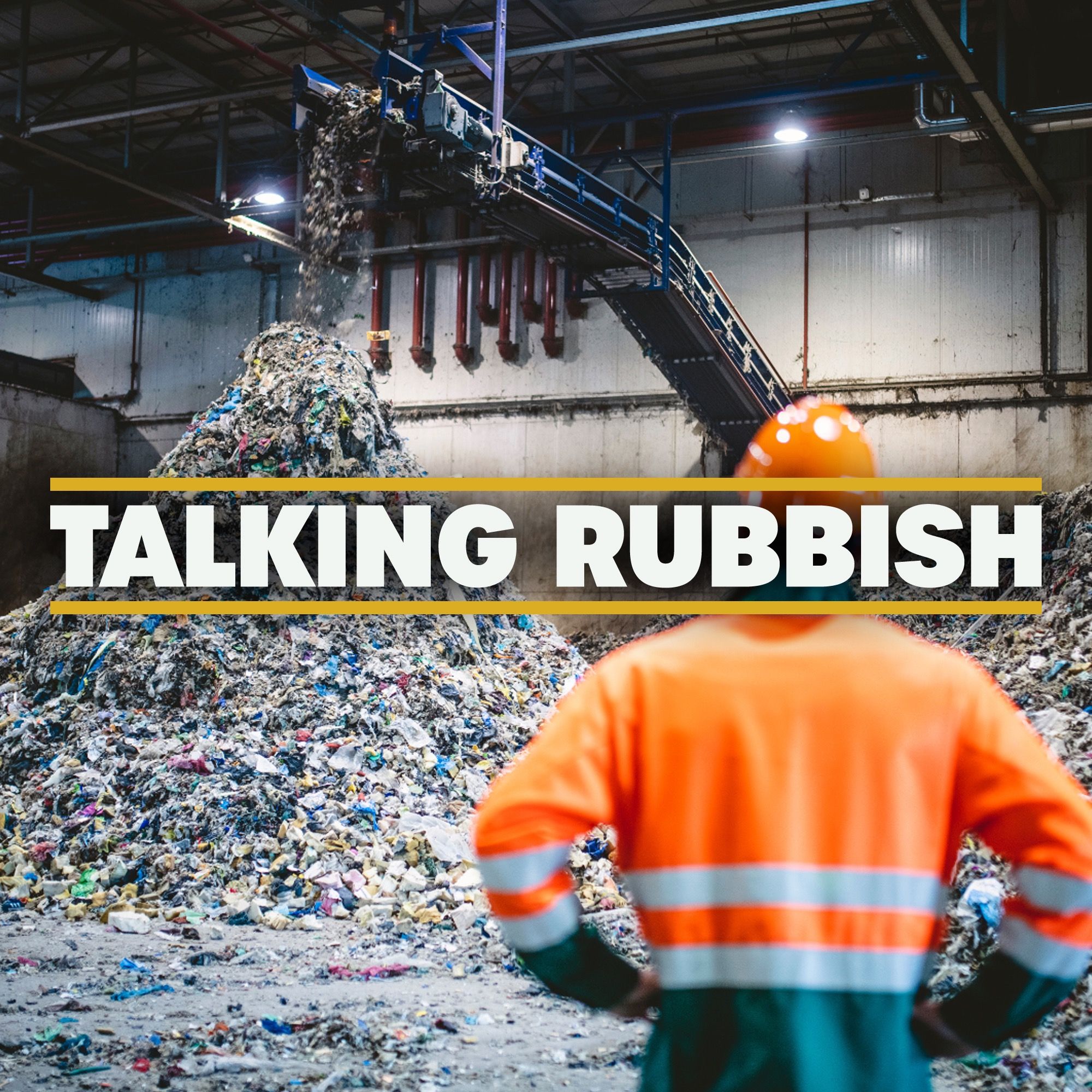
Plastic recycling is facing breaking point. Financial models aren’t adding up, legislation has stalled, and major brands are dialling back their commitments. With recyclers shutting their doors, we explore why the system is faltering, how the crisis could reshape the industry, and what it all means for the future of plastic. Plus, are water filters rubbish or not, what happens to the print on aluminium, and why are we not able to visit wet wipe island anymore?

 Apple Podcasts
 Spotify
 YouTube
 Amazon Music
 Castbox
 Podcast Addict
 PocketCasts
 Plastic recycling is facing breaking point. Financial models aren’t adding up, legislation has stalled, and major brands are dialling back their commitments. With recyclers shutting their doors, we explore why the system is faltering, how the crisis could reshape the industry, and what it all means for the future of plastic. Plus, are water filters rubbish or not, what happens to the print on aluminium, and why are we not able to visit wet wipe island anymore?
Join hosts James Piper and Robbie Staniforth as they delve into the world of recycling, hopefully having fun along the way. One thing is for sure, they will talk absolute rubbish from start to finish.
Sign our very first pootition: https://you.38degrees.org.uk/p/poo
We would love you to join our community on Discord
Special thanks to our sponsor, Ecosurety
To get exclusive videos and clips, follow us on Instagram, TikTok, X, Threads or Facebook; @rubbishpodcast or YouTube: @talkingrubbishpodcast
Or you can contact James and Robbie with questions or just general rubbish musings using the email address talkingrubbishpodcast@gmail.com or by texting them via WhatsApp
Relevant links and reports mentioned in the programme can be found on the Talking Rubbish Linktr.ee
Transcripts and episodes can be found on the Talking Rubbish website
Timestamps:
Is plastic recycling in crisis? - 01:49
Additions and corrections - 34:51
Rubbish or Not: water filters - 42:34
Rubbish News - 48:16
What happens to the print on aluminium foil? - 50:48
Residual Rubbish - 52:47
Music licence ID: 6WPY8Q4O2RPFIOTL
Hello, welcome to Talk in Rubbish, a weekly podcast delving deep into the world of recycling and discussing the truth behind snappy headlines and one-sided stories. In this episode, we will explore whether plastic recycling is in crisis, our water filters rubbish or not, and I have a question about what we should do with metal yogurt lids. I'm James Piper, author of the rubbish book, and I'm joined by Robbie Stanford, my far from rubbish friend. Good morning, Robbie.
SPEAKER_01Morning, James.
SPEAKER_00How are you doing?
SPEAKER_01Yeah, very good, thank you.
SPEAKER_00We're both back from holiday.
SPEAKER_01I know, yeah. Both sunned ourselves in uh the southwest of the UK.
SPEAKER_00It was Well, the weather wasn't. I was laughing because I thought, no way do we get sun in the UK, but actually it's been lovely, hasn't it? Yeah, I went to Cornwall and you went to Devon. Yeah. So we weren't on the just to clarify, we weren't on the same holiday.
SPEAKER_01We don't holiday together as well as podcasting together.
SPEAKER_00Although I I do like the idea of a talking rubbish holiday. Maybe you know, we're just you and me walking around a city looking at bins.
SPEAKER_01I mean, that does sound good actually. We both enjoy that more than we care to admit.
SPEAKER_00I was back in that place where I talked about probably a year ago, you know, where they had the oxo degradable bags before.
SPEAKER_01Oh yes. Okay. What are the bags?
SPEAKER_00No, they're gone. The oxo degradable are gone. They still got Who Gives a Crap Toilet Roll, which spoiler, we haven't done the toilet roll episode yet, but I'm not the biggest fan of.
SPEAKER_01The toilet roll episode has been trailed for quite a while now. When are we gonna get to it?
SPEAKER_00Today. I'm sort of I just feels like I'm making up the plan as I go along, but it's going quite well so far. I keep thinking, oh, next week we'll do toilet roll, and then something else comes in, and yeah. Nobody's noticed. Maybe we're topical, who knows? Trash talk. So our question today is is plastic recycling in crisis? Which is quite depressing. We've done I feel like we've done quite a few depressing episodes recently. Sorry everyone.
SPEAKER_01Is this the end for X? Is Y in crisis?
SPEAKER_00Microplastics and glass bottle, illegal packaging, sachets. But you know, we always seem to make it maybe we'll make this funny too, but I think it is harder.
SPEAKER_01This is gonna be tough to make funny.
SPEAKER_00I think it is harder. And the reason we're talking about this is because there has recently been a bit of a spate of plastic recyclers closing. So just to go through some of the key headlines, on the 4th of November 2024, we talked about this at the time. Virador closed their £100 million Avon Mouth site after just two years of operations, which was 80,000 tonne capacity. On the 31st of July 2025, Biffa closed its £7 million Sunderland plant after four years, which was 39,000 tonnes of capacity. And on the 1st of August, just a day after the Biffa plant, Virador closed its 12.5 million pounds Rochester site after 10 years, which was 75,000 tonnes. We talked a little bit about this, I think, in rubbish news that Virador won. But just to combine it all together, that is nearly 200,000 tonnes of UK recycling that has just disappeared.
SPEAKER_01Yeah, that's I mean, when you put it all together like that, the answer seems to be quite straightforward to the exam question, doesn't it? It does seem like a bit of a crisis.
SPEAKER_00Definitely. And it's not just the UK. So on the 8th of August 2025, Veolia announced they were closing the Bernberg plant in Germany, which was 70,000 tonnes. So I agree, Robbie. I think this is a disaster. You know, genuinely a disaster. 200,000 tonnes of UK recycling gone. Just to put this in perspective, in the world, over 400 million tonnes of plastic is created each year. And in the UK, we do about 2.5 million tonnes a year as packaging, just in the UK. So about 10% of our plastic use that was getting recycled has been closed in the last couple of months. So 200,000 tons compared to 2.5 million. But because we export about 50% of our plastic recycling, this is actually about 20% of our UK capacity disappearing in the last few months.
SPEAKER_01Absolutely crazy when you put it in perspective like that. And where is the plastic gonna go, really, is gonna be the question, isn't it?
SPEAKER_00Yeah, and I guess that for me the question is why are plastic recyclers shutting down at the very moment we need them most? We've got EPR coming on, we've got DRS, we've got this legislation that should in theory increase recycling. What is making these plastic recyclers shut down and not hold on until that legislation comes in? Now there is so much we could talk about here. I've sort of distilled it down into three areas that I think are probably the most important. So those three areas that we want to talk about today are money, which is always the most important when we talk about recycling, regulation and brand commitment. So those are the three areas I think that are worth us focusing on. If we start with money, I think we just have to remind people, we've talked about it so much on this podcast, but I do think people forget, recycling is an economic activity. Recyclers need to make money, it is a profit-driven method of dealing with our waste.
SPEAKER_01Yeah, and I I think lots of people think because recycling is good for the planet, so to speak, the average person thinks that this is just uh can be funded through public taxes, it's an activity that the government just funds all the way through the whole process, uh, the total cost of waste management, and likewise that you know there will be charities involved in doing the right thing for recycling, etc. But those are quite niche activities that not-for-profits and charities get involved in. The vast majority, as you say, is people are recycling stuff because it is a profitable business venture.
SPEAKER_00Yeah, although I guess this is changing a little bit with EPR because that is consumers paying for recycling to happen. Again, you can go back over our EPR episodes if you want to know more about that. What we also have to remember alongside making money is that recycling is a global activity. We are importing material either as a product and packaging or as a raw material. And so we're not just saying, okay, all our stuff's managed in the UK, all our recycling happens here, all our manufacturing happens here. So what will happen when you're dealing with any global activity is things will shift to cheaper labour countries, things will shift to countries where the economics stack up better, and then we are more likely to import it. So again, the reason you might see UK recyclers close down is because they're not competitive with a cheaper market.
SPEAKER_01Yeah, and and when it comes to things like recycle content, the demand has increased massively uh over the last few years because of the plastic packaging tax. We'll get to that in a second. But really, it's driven up the demand for food grade recycled plastic in the UK, whether that be imported as a raw material or whether it be packaging being imported with recycled content contained in it already.
SPEAKER_00Plastic has a different problem to the other materials. So if we think about aluminium, which we talked about in episode 56, because aluminium is so hard to get out of the ground and process, there's so many stages to that processing compared to just melting aluminium that you've already got. It is cheaper to recycle aluminium than it is to get its raw material. That is not true of plastic. Plastic is a product of the oil industry, and we are at a moment in time where virgin plastic is cheaper than recycled. And this is what's causing the biggest issue in the market. To get some food grade RPET, so PET, which is a type of plastic that's used to make bottles, food grade recycled PET is about £550 per tonne more expensive than virgin.
SPEAKER_01Wow, geez, that just that's crazy.
SPEAKER_00And then when you layer in the plastic packaging tax, if you don't use recycled content, the plastic packaging tax is £223.69. So it is cheaper for a brand to say, I'm going to put a plastic bottle on the market completely made out of virgin plastic and pay the tax. That is cheaper than putting a product on the market that's got recycled PET in it.
SPEAKER_01Okay, so we're starting to get a picture now of why recycling plants might be closing. It's basically hard to compete against their sort of virgin plastic equivalent. And all these policies that are going on aren't quite addressing the balance so that the economics stack up.
SPEAKER_00Yeah, the financials just are not working. And and this is not always the case. Sometimes RPET is cheaper than virgin, and then you see what you'll notice is when RPET's cheaper than Virgin, you'll suddenly see lots of news articles for brands saying, Oh, we're moving to more recycled content, and they'll be very excited about it. What you see when Virgin is cheaper than RPET is very few news stories because people slowly reduce the amount of recycled content in their product because it's cheaper to not have it in there, and they won't put out a news story saying they're using less recycled content. But just to be clear, this is not always the case. What we are seeing today is a combination of low oil prices, subsidies in some countries, and obviously that then allows us to import their plastic, and just the scale of global production with plastic. You know, it we're just increasing the production of plastic all the time as a world, as globally, and therefore there is a glut of virgin plastic entering the market, and it's being created in countries where labour is a lot cheaper, and so that plastic is a lot cheaper than a recycled product in your own country. So that sort of summarizes the money thing. The main thing to remember on money is right now recycled plastic is more expensive than virgin plastic. When we talk about regulation, so the second of the three things that I think are having a big impact, we've mentioned the plastic packaging tax. So that came in on the 1st of April 2022. It started at £200 a ton, so it has risen £23 in the three years it's been active to £223.69. And as I've said, it is not keeping up with market dynamics. And when we compare it to the EU, the so the UK has this tax. And just to be clear how this tax works, you will pay the tax if you use less than 30% recycle content. So if you make a bottle and you have less than 30% recycled content in it, you will pay £223.69 for that product per tonne. In the EU, they have gone for a mandatory 25% recycle content in PET bottles. So if you put a PET bottle in the market in the EU, it has to have 25% recycle content. It's not a tax, it's not voluntary, you have to do it. And my comment here and thought, Robbie, for you is if recycled PET is expensive and more expensive than virgin, I would suggest that companies will focus their efforts on countries that require you to do it, so like the EU, where you're legally required to have recycled content, and delay it in countries where there is a tax or a voluntary initiative like the UK.
SPEAKER_01Yeah, no, I think that's a astute analysis. Taxes are complicated things because uh, as we mentioned earlier, it's all about how the economics work. And it's very difficult with a shifting market, oil prices moving all the time, recycled content prices moving all the time, uh, it's a globally traded commodity, as you mentioned. It's quite hard to set the tax point to have the effect that you wanted. So, really, what's happened is the government have collected about as much tax from the from the plastic packaging tax as they thought they would. So, what they're doing is they're not pushing harder on it so that they collect less tax ergo, there is more recycled content going into packaging. Whereas something like a mandatory requirement just says, look, it's technically possible, you can't put these types of packaged products on the market in our territory unless you've got this much recycled content in. So there's a whole host of applications where that's really difficult and tricky, such as food contact applications for soft plastics and things. But for many, many plastics, it's actually very straightforward in terms of how you get recycled content into the product itself. It's just that they're quite simply that the the regulation isn't enforcing it, and certainly the economics aren't stacking up.
SPEAKER_00I guess one of the challenges with all this legislative stuff is enforcement, and this is continually a problem. If people aren't enforcing these pieces of legislation, then companies will get away with things as long as they can, and then when they start seeing enforcement happening, they'll make changes. And certainly, I think in the UK we need to do a separate episode on the plastic packaging tax, but you are seeing a lot of material come into the country that says, Oh, I've got 30% recycle content. That really the burden of proof is not being met, in my opinion, that that 30% recycled content is genuine. They're just getting a certificate that said it has from another country, and people are relying on that. Equally, the EU is not currently enforcing the 25% mandatory recycle content. So, brands, some brands are waiting for enforcement before making changes, and we just need to bear that in mind because a lot of these recyclers have gone into these investments and building them recycling plants like, hey, we're gonna have all these amazing pieces of legislation that force people to recycle more. But if they're not enforced, then brands won't make the change.
SPEAKER_01And I think that's the uh the big issue with enforcement is that chain of custody. Again, it goes back to the fact that this is global. How do you have uh enforcement powers to go visit plants in other countries to enforce your domestic legislation? It's just very tricky to do. And I suppose when we look to other policy measures, such as extended producer responsibility that we've talked about many times, and deposit return schemes for beverage containers, there's been massive delays in the UK over the last several years. It was back way back in 2018 that DEFRA, the UK government, declared their intention to change the system. We're all the way now seven years later, and it's only just starting to come in. It was originally planned for 2022, 2023, then they realized that that wasn't possible. They delayed it a further year, they realized that wasn't possible, so they just brought in some reporting, but not any of the actual monetary flows that would support recycling, especially plastics recyclers. And now it's coming in uh for this year, and the first invoices will be sent in the next few months, and finally there will be money in the system. The problem is that a lot of that money will just go to maintaining the status quo that currently is from taxes, council tax, etc. And so it's not actually necessarily in the first year or two gonna make a sudden huge impact on uh UK recyclers, and it's worth mentioning on the deposit return scheme side that actually it's about collection. The whole system is around collection. The recycling, they hope, will take care of itself because you'll have such a uh good uh source of recycled material, but that doesn't necessarily mean that that material will stay in the UK, it might well be exported. I can imagine in a few years' time, brilliant UK quality plastics that have been collected just going off to Europe to be recycled and to go into meeting those 25% recycled content targets uh that they've got over there.
SPEAKER_00There is one other thing that supports the recycling industry, and that is the PRN value. And if you want background to PRNs and how they work, listen to episode eight, which I think is called Who's Really Paying for Your Recycling. Essentially, they are a subsidy paid by brands to recyclers.
SPEAKER_01Trevor Burrus And the clue's in the title: packaging recovery note. And now it's a packaging recycling note, only recycling codes.
SPEAKER_00So how the PRM works is you get a brand who says I put a thousand tons of glass onto the market, and then someone goes to a recycler and says, Can you recycle a thousand tons of glass? and they generate a certificate to say they recycled a thousand tons of glass, and then the brand pays for that. So it's just a subsidy type system. But there is a key flaw in the PRN system that is talked about a lot, because in the UK, the way you calculate whether you recycled something is on what you actually recycled. So these plants that have shut down when they were generating PRNs, it would have been if they'd taken a thousand tonnes in and some of it was contaminated, or some of it wasn't what they were looking for, they had some material losses through the process, and that a thousand tonnes turned into eight hundred tons, they might only be able to generate a certificate that says 800 tonnes. When you export, and this is oversimplifying it, but when you export, you're basically doing it on the waste that you exported. So you would get more. I'm not going to say all the PRNs because that's not really how it works, but you certainly get more evidence if you export compared to if you're in the UK. So the same a thousand tons of waste might generate 800 tons of PRNs in the UK because of contamination and losses, and it might generate 900 tons of PRNs in the export because it's calculated differently. So we are in a very strange situation where exporters have a massive advantage. If if they are shipping similar material, they will be able to make more money from it, which is a very, very unusual flaw in our system.
SPEAKER_01Yeah, and particularly because, as you say, 50% domestic, 50% uh being shipped abroad, that kind of means that it's a big thing exporting plastic, and therefore it amplifies the issue because there isn't enough domestic reprocessing capacity uh to mean that there's a sort of buoyant and big UK market, and now there's what was it, 200,000 tonnes less uh in the UK uh following those closures of the last few months.
SPEAKER_00Yeah, now I get a little bit frustrated with this because I have for years have tried to give UK recyclers a premium for those PRNs. I've had many conversations with UK recyclers where I've said, look, I'll give you more. But they like playing the game. Recyclers like playing the PRN game and making as much money as they possibly can. And I have often struggled to get kind of a premium price in because it they're treating it more like a stock and share, where they're like, no, I'll just sell it when the market's at its peak. And it doesn't really work like that. And typically I have seen many times recyclers say, no, I'm waiting for the market to hit, let's say, £300 a ton, when it's at £100 and I'm offering £150. You know, so market's at £100, I'm offering £150, they're saying I'll sell it all when it gets to £300. They're just playing the game like everyone else. And the market never gets to, never goes above £100 for the year. And so you end up with this, okay, I'll buy it on the last day for £100, because that's its value now, and you just lost £50 a ton. So I do think, again, hypothetically, this is all really simple stuff to talk about. It's like, oh, well, why don't they just get a premium? Trust me, recyclers also like to play the game and hold on to their evidence until the price is where they want it to be, and then find it doesn't ever get to that price.
SPEAKER_01And quite often they've got a big investment that they're trying to pay down or a loan that they're trying to pay off to have built the plant in the first place. So they're trying to pay it off as quickly as possible, and that involves this should we call it higher appetite for risk than maybe uh I I would have.
SPEAKER_00I remember talking to a recycler, PRM price was at £400 a ton, and they were building their recycling plant. So just if you haven't listened to episode eight, the PRM price fluctuates, right? We're sort of indicating that with what we're saying, but it does fluctuate. The price was at a at a historic high of £400 a ton. They were building an investment case for their recycling plant, and they said, Yeah, we've put £400 a ton into our 10 year plan. And I'm there going, well, it's been £400 for four days. And and it's never been £400 before, and you've now built that into a ten year plan?
unknownYeah.
SPEAKER_00And today, what plastic I don't actually know, but I think it's about And fifty pounds a ton or something for plastic. So somewhere in their 10-year plan, this recycler had £400 a ton for all of their PRNs in a fluctuating market. And so the modelling doesn't work. If you build your recycling plant based on aspirations or based on historic highs, which does happen a lot in the recycling industry, then you're going to fail. You're definitely going to fail.
SPEAKER_01Yeah. So you've had a go at the recyclers. What about the brands?
SPEAKER_00Let's talk about the brands, yeah. The third point. I love recyclers. I'm not having a go at recyclers. Trying to help them maybe make better investment cases. Anyway, so uh from the brand's perspective, I think it's fair to say, as I said earlier, brands talk a good game when times are good. And when recycling prices are lower than virgin, suddenly you see this massive ramp up on recycled content, and it's driven from a sustainability angle. We are in a cost of living crisis where the cost of products matter more than ever. And I would argue that the majority of the public, not these podcast listeners, but the majority of the public don't really understand what recycle content is. And I would possibly say probably don't care. I think the general public at large care way more as to whether their product is recyclable or not. So yeah, is the bottle I'm buying likely to be recycled? If you say to them, oh, this bottle's made of 50% recycle content, does that kind of get the average member of the public excited? I don't think so.
SPEAKER_01It's like sort of too intangible. Like what actually ends up happening to it doesn't really matter as long as it goes off and is recycled.
SPEAKER_00Yeah, so what I think we will see and are seeing is brands slowly reducing commitments and taking advantage of cheaper virgin plastic. And I think this will happen more and more over the coming months and years. The single-use plastic directive will help, uh, which is the thing that's requiring brands to use 25% recycle content in plastic bottles. That will help because, as we've often said, things that happen in the in the EU also happen in the UK. So, you know, we are likely to continue to see brands, I think, hovering at the 25 to 30% recycle content mark to avoid taxes and to make sure they're compliant with EU law. But I don't think we will see lots of brands moving towards the kind of Coca-Cola model, which is our 500ml bottles are all 100% recycle content. I don't think we're going to see many brands moving to that.
SPEAKER_01No, I agree. And and I think what we often end up doing when we talk about plastic packaging is spending most of the time talking about bottles, whether they be PET or HDPE, like the sort of milk bottles you get in the UK. And those we know it's very easy to put recycled content into them. It's been happening for decades. It's in the other uh use cases for plastic packaging, where there's technical challenges and also just it's just too expensive, as we talked about earlier, where we're just not seeing anywhere near enough brand endeavour to include recycle content.
SPEAKER_00And I was briefly very positive about Coca-Cola, so let me balance that. Coca-Cola are also a great example of a brand weakening its commitments. They had previously said they wanted 50% to recycle content by 2030. I think this is globally. And at the end of last year, they announced this has been downgraded to 30 to 35% for recycle plastic. So they were originally committing to 50% recycle content, they are now at 30 to 35%. So bringing them in line with the taxes and laws that we talked about a second ago. And they are not alone. Unilever, PepsiCo, Colgate have all downgraded recycling targets alongside many, many other companies. So the reality is the market is not good at the moment. Virgin plastic is so cheap that brands will continue to reduce their commitments on recycled plastic. We've sort of talked about three things then: money, regulation, and brands. I kind of wanted to think about how that might play out. So let me just imagine the journey that we're going to go on in the next few years. Cheap virgin plastic is currently flooding the market. So from all over the world, virgin plastic is entering the UK and other countries and flooding the market, and it's cheap. Just to put it in perspective, I think it's about like a thousand pounds, something like that per ton, and then recycled is about £1,600 a tonne, something like that. So just if you're wondering what plastic is worth for recycled RPET versus virgin PET, that's the sort of price difference. I mean, it changes all the time, so don't hold me to those numbers. This so cheap virgin plastic flooding the market means that plastic recycling is suddenly not economical, which causes recyclers to close. And this is where we are now. What happens then? Well, the brands suddenly don't have access to recycle content or true recycle content, provable recycle content, because they're getting it from places that maybe don't have the same uh rules and regs as the UK or the EU. So now we have the NGOs and anti-plastic organizations saying, and crucially they can prove that recycling doesn't work. What does this do? This destroys consumer confidence and trust, and consumers stop recycling because they go, hey, there's no point. This isn't getting recycled. So that means recycled content would then disappear from our packaging, other than where it legally needs to be, like the EU, and all brands just start using the minimum recycle content. Because brands are now using the minimum recycle content, and because people are saying recycling isn't happening, brands start moving away from plastic and move to other materials like aluminium and glass, and the companies producing virgin plastic suddenly sell less plastic. And I think this is a cycle that we are about to go through where the market is destroying itself. These virgin plastic guys who are trying to sell as much as they possibly can are slowly destroying the plastic market.
SPEAKER_01Okay, so you you you can see a future, it's fairly dystopian, some of that, James, by the way, where uh where actually it it doesn't benefit the virgin plastic, it actually ruins their marketplace because other materials jump in, uh like aluminium glass, and of course paper too, you know.
SPEAKER_00I think so, because consumers aren't going to believe that recycling is actually the recycling of plastic is actually happening. And I guess this sounds good, right? Less plastic. Lots of people might listen to this podcast and say, oh, that's great, that's exactly what I want to happen. But as we've said on many occasions, we need to be careful here because what is more likely is less plastic production in countries that are doing that have stringent checks, more likely to be imports and exports of plastics to countries that are that don't have the ability to control that plastic, that are taking in too much waste and not producing it in the correct way. So we end up with more and more health stories, more and more disasters. So my view is there will be less real recycling happening and less proper production of plastic, not necessarily a change in quantity, just it will move to other countries. And what, in my opinion, as I've said before, and I will say again, the UK needs to process all its waste to a final form, so to take it to pellets for plastic and then send it off for remanufacture. I can imagine this world where we have enough facilities in the UK to deal with our two and a half million tonnes of plastic packaging and turn it all into pellets and send it off for remanufacture, that could be really good because then we could prove everything happens and we're increasing its value before it leaves our shores, which reduces the chance of it ending up in the ocean, reduces the risk of spillages, reduces it going to countries that aren't going to turn it back into something because you've already pelletised it. So for me, this is the key to solving the plastic recycling crisis. It's for us to step up and convert more of our plastic waste in this country. It's not all dystopian. There are also some green shoots. In July 2025, Veolia announced a 70 million investment into a new plot in Shrewsbury that could handle 80,000 tonnes a year. So things are coming back, but it is a bit of a crisis moment, I think, in terms of losing that 200,000 tonnes.
SPEAKER_01Yeah, no, I agree. And that, you know, 80,000 tonnes offsetting against the 200, you have to wonder at how the Veolia business case was put together. That's quite close to where uh I grew up and went to college, Shrewsby. So I was very excited to see that announcement.
SPEAKER_00I think it's worth just reading out a bit of Virador's statement from when they closed the Avonmouth plant just to check we have covered off everything they've mentioned. So I'll just read this directly. Virador UK's mechanical recycling operations have been negatively impacted by persistently and increasingly challenging market conditions and the absence of planned legislation to increase rates of plastic recycling in the UK. Policies announced and planned under the previous government to increase UK recycling as set out in the 2018 resources and waste strategy have been repeatedly delayed and have not to date been implemented. The global virgin polymer market is suffering from overcapacity due to significant growth in production in lower-cost markets outside Europe, leading to significantly reduced demand and prices for recycled plastic. At the same time, imported recycled plastics from low-cost countries has increasingly flowed into Europe, displacing domestic supply. Feels like we've covered all that up.
SPEAKER_01Yeah, that is pretty bleak, but so seemingly true from what we observe too.
SPEAKER_00So to summarise, I guess we should ask the question: what would we do if we were in charge? So I've just noted down some things that I think are quite important here. I think the UK should move to a minimum recycled content position, not a tax. I think we should say, look, rather than a tax at 30%, everything should have a minimum of 25% recycled content. That would stimulate recycling and make sure it happened because it was mandatory and there'd be fines and prosecutions if you didn't hit that. I think we should drive forward with market supporting regulation like DRS, EPR, simpler recycling. Do not delay these pieces of legislation. If you're listening to this from the government, get them in place because we are losing recyclers rapidly because there is not confidence in the system. To be honest, if I was in charge, and we often say it's good I'm not in charge, I think I would subsidise the recycling industry, or in my bolder imagination, I guess bring it under public ownership. Why should recycling packaging be subject to market conditions? It should be a requirement of all packaging on the market to have a second life. I think we should be, and I think we talked about this with Sabra's episode. I think we should be putting regulation in place and funding to make sure that our packaging can be reused or recycled. And we should stop this kind of linear economy, single-use packaging. I don't think it's needed. And so I would be supporting that rather than going, oh, the market's working against it, so recycling's not happening anymore. And we touched on it banning the export of waste that isn't pelletized. I guess the question is what can we do as consumers? Because those are all kind of big, bold, if I was in charge of the government kind of thing. I think there's two things I would do as a consumer, just to wrap this up. I try and support brands that use high recycle content. And what I'm looking for here is greater than 30%. So I'm looking for bags that are made of 100% recycled plastic. If I'm using coffee pods, which I don't anymore, but if I did, the aluminium espresso pods contain 80% recycled aluminium. So you're looking for things that are higher than 30% because that means that they are going above and beyond what the taxes require. If someone is using 30%, it's because they are seeing it as a tax exercise rather than a sustainability exercise. If they're going above that, if they've got 40%, 50%, 60%, they are doing that because they want to do the right thing. So look for companies that use high recycle content and also look for organizations committed to UK recycling. So if I just take like soft plastic recycling as an example, which we've talked about a lot, I always take mine back to a co-op because I know that co-op have a partnership with JPLAS, and therefore it is more likely that that soft plastic is going to be recycled in the UK. So you can make decisions about where you take your recycling or where you buy from to support UK recycling. Additions and corrections. Linked to this, I had been messaging HUK, who represent the carton industry, and they told me they invested and supported a plant in Halifax, which is taking the cartons for recycling. So remember, cartons like Tetrapack and things like that are fairly horrible because they've got plastic liners in, some of them have aluminium, they're just very similar to like a coffee cup, so they need to be separated and recycled differently. The difference to a coffee cup is they're generally collected at the household because of the volume that we have in our homes. We don't have many coffee cups in our homes, we do have lots of cartons. So 69% of councils now collect them, and we're moving to a world where everyone's going to need to collect them from next year. And ACUK had mentioned that at full capacity they could recycle 40% of cartons placed on the UK market. So my observation was even if every council was collecting them and everyone was recycling them, we could still only recycle 40% in the UK, so they'd be likely to be exported or incinerated. Interestingly, I received a message this week from I'm gonna say anonymous person, because they didn't want to be named.
SPEAKER_01Okay.
SPEAKER_00I had a we're getting increasingly the anonymous person because we get a bit more tough in our views. We had someone from industry who messaged who'd actually toured that facility in Halifax and confirmed that about 8% were recycled.
SPEAKER_01Okay.
SPEAKER_00Even though 69% of councils collect cartons, and I'm sure lots of us recycle them, only 8% are recycled. I'm sorry if that number's out of date. I'm sorry if it's not correct. Feel free to get in contact. Facility in Halifax if it's wrong. This is what I've been told by someone who recently toured the facility. As we've said, cartons are going to get their own episode in the future, but it is a good moment to remind people that collected does not mean recycled. There are also other many, many examples of this. But when we read things like flexible plastic as collected at supermarkets but not recycled, it is true of lots of things that could replace flexible plastic as well. If the economics don't stack up, see our trash talk today, recycling does not happen. We've also on Discord had a bit of a flood of reusable cups. I think because people have been going to summer events, and summer events have a tendency to use reusable cups, and they seem to all be quite local summer events, you know.
SPEAKER_01Oh, lovely. This is an uplifter, finally, James.
SPEAKER_00Yes, although my favourite example so far has to be someone who sent a picture of a cup that had devil's arse written on it, which I assume was the beer that was being served. Ah, okay. But they found it in a churchyard.
SPEAKER_01Oh, that's amazing.
SPEAKER_00Thank you, John, for sharing that. Do you think finding devil's arse in a churchyard is impressive? The thing that has alarmed me beyond devil's ass, the thing that has alarmed me is the amount of events that seem to charge a pound for a cup, which can be used through the event, but then they don't offer any route to return.
SPEAKER_01Okay, so they're just selling a one pound cup?
SPEAKER_00They're selling a one pound cup, yeah. So you lose a pound, but you gain a cup. But you didn't want or need the cup. You didn't. So what happens to it? And that's basically what a lot of people on Discord have been asking. You know, do most people really dishwash that cup and keep it? And you know, these aren't like nice glass souvenir cups, they're just plastic cups. Can it be recycled? Was a question that kept coming up. So just to confirm, I believe it can be recycled. It's just a rigid PP, polypropylene. So if you wanted to, you could put that in your recycling. But I do just generally I'm against kind of reuse if you haven't got a plan to then take the thing back and wash it. If you're relying on customers to take it home and wash it, I'm not sure you're really doing reuse. I don't know. What do you think?
SPEAKER_01Yeah, I think so. I mean, it's just a one or two steps further, like well-intentioned, these local events, but just a little bit more thought, and the system could be much, much better.
SPEAKER_00And finally, Robbie, I posted a social clip of your itsu ice cube tray. Oh, yes. Remember to follow us at rubbish podcast if you want to see our clips. And we had a comment on YouTube from someone who said they'd made an ice cube tray out of their 30-year-old toolbox.
SPEAKER_01What?
SPEAKER_00And they liked it because every cube is a different shape and size because of all the dividers and sections. You know, if you think about like a fishing box where you've got all the different dividers.
SPEAKER_01One of the like inserts or something inside it.
SPEAKER_00I'm not look. I don't want to be health and safety please. But a 30-year-old toolbox, I don't think, is going to meet the food grade standards required. I mean, I was already skeptical of your itsu tray, but this is too much.
SPEAKER_01There you are. Okay, well, fair play though. Be interested to see a picture of all the different shapes and size cubes that come out of it. That sounds quite fun.
SPEAKER_00The rusty toolbox that we now get set.
SPEAKER_01It's got to be plastic, this thing, surely. I don't know.
SPEAKER_00As always, we'd like to take a moment to thank our sponsor, EcoSurity, who are on a mission to rid the world of unnecessary packaging. They help brands navigate the tricky world of extended producer responsibility, but that is not all. They also collaborate on some incredible recycling projects and consumer awareness campaigns for those tough to recycle materials. If you're an organization looking to make smarter packaging choices, check them out at EcoSurety.com. And please don't forget to tell your friends about Talking Rubbish and review us. If you leave us a review, you might end up as Robbie's review of the week.
SPEAKER_01Yeah, and this week my review comes from Rebecca. Just straightforward, easy name to pronounce. So I'm very happy about that, Rebecca. Thank you. Uh it's a five-star review. And uh the strap line is it's Thursday. Hello. On holiday, only keeping track of which day of the week it is, so I know when a new episode of Talking Rubbish has dropped. Great podcast, guys. Keep up the great work. That's so good. People are tracking their days of the week just so that they can listen to this.
SPEAKER_00Thank you so much, Rebecca. Rebecca's actually from Belgium.
SPEAKER_01Oh, okay. The review came from Belgium, did it?
SPEAKER_00Yeah, she's added another. Yeah, and I don't think that's because she was on holiday from Belgi. I think she is Belgian. I don't know where she was on holiday. So that adds another country to our review list. I think that's the tenth country that we've had a review from.
SPEAKER_01Okay, so what percentage is that? How many countries are listening?
SPEAKER_00Uh it's fifteen. No, hang on. I can't work it out. Why are you making me do this this end of the morning? It's six point three percent.
SPEAKER_01Six point three percent.
SPEAKER_00We have a hundred and fifty-nine countries listening. So just a hundred and forty-nine to go.
SPEAKER_01A hundred and fifty-nine? Okay, fine. We've only got ten so far. Come on, you other hundred and forty-nine. Leave us a review.
SPEAKER_00Great. And you can follow us at rubbishpodcast across all socials. You can email talkingrubbishpodcast at gmail.com or you can WhatsApp us. Also join our Discord. It's the easiest way to engage with us and listeners of the show. The link to all those things is in our show notes, as there's a link to our petition, which is about banning the word compostable on dog poo bags, which can't be composted. So please take a second to go and sign it. Rubbish or knot. Today our rubbish or knot is from Discord from Emily. Thank you very much, Emily. And she was asking about water filters. She was specifically asking about Britta filters, but I've had to, you know, I've broadened it out just to narrow it back in because I'm mostly going to talk about Britta filters here.
SPEAKER_01Other filters are available.
SPEAKER_00A filter, a single filter, can save the equivalent of nearly a thousand plastic bottles. I must admit, we had one of the we had like a life straw, so it was like a bottle with a filter. The straw was the filter. So you sort of like suck the water and it came through the straw. We use that a lot while travelling, and we did use that in every country.
SPEAKER_01Yeah, sure. And the only one that I've ever used is just the lump of charcoal that you put into a glass jar of water in the fridge. And at the end of it, what do I do? Probably burn it or something, wouldn't I? Start a fire with it.
SPEAKER_00Wow, this is the section to decide, Robbie. What do we do with water filters, rubbish or not?
SPEAKER_01They've got to be rubbish, haven't they? We're talking about these plastic cased ones that go in one of those jugs in the fridge. I I just can't see how they're recycling those. I'm gonna say rubbish.
SPEAKER_00You're half right. I think in general, water filters do have no route to recycling as uh as a default, as in standard route to recycling. They cannot be cut. Selected at curbsides, and I don't think there's anywhere for them at the tip or dump. So, yes, I think in the main we don't have a route for them to be recycled. However, and it is a however, there are brand focused routes. And as I say most weeks, I hate brand focused routes to recycling. So bick with pens, baby bells with cheesewax, etc. etc. I can't, I just do not like brands who say, oh well, we'll set up recycling for our product, but no one else's, because either you're serious about recycling your product category and therefore you should should accept all brands, or it's a marketing activity, in which case, don't pretend it's sustainability. And so we've loosely touched on Britta filters there. They actually have a really good section of their website, and I will briefly apologize to Britta for saying about the brand thing because actually they started their recycling program in 1992.
SPEAKER_01Whoa, early.
SPEAKER_00Which is so early, I think they deserve credit for that. That is that is crazy.
SPEAKER_01I mean, they only deserve credit though if more than say 70 or 80% of them are being returned, which I imagine is not the case.
SPEAKER_00Uh yeah, definitely not. Although I actually don't know. They didn't have any data on their website for returns, but it it will not be that high. So they have a map on their website, I'll put the link in the link tree. And when I put Bristol into that, I got Robert Diaz, Sainsbury's, The Range, Tesco, and Waitros that I could take Britta filters back to. So it was actually a pretty good selection. I mean, for people not in the UK, is Robert Diaz going to mean anything? Probably not. Hardware shop? Yeah, hardware shop. The range. They sell everything, don't make the range.
SPEAKER_01They do have a good range.
SPEAKER_00So the water filter countries are separated in Brita's own facility, I think, they separate them. So they take the plastic casing, they shred that. That's then sent off for cleaning and separating, and they grind that into granules. So normal plastic recycling, it's just melting and shredding into granules. There's activated carbon, which is basically the coal you're describing, it's just carbon. And it has the reason the word activated just means it's got lots of little holes in it, lots of pores.
SPEAKER_01Oh, okay, to help it release the they just give it a massive surface area.
SPEAKER_00So it's sort of like a sp it's sort of like a sponge and it sponges everything up. A carbon sponge.
SPEAKER_01Very nice.
SPEAKER_00Exactly. And that's for mercury and chlorine. They return that to the suppliers who reuse it for various filter processes. So they will reuse that activated carbon, for example, in wastewater treatment. And then the final bit of a filter is ion exchanger, which captures copper, zinc, and cadmium. And they regenerate those ion exchangers and they add them to new filter cartridges. So they're reusing those, they just get regenerated. And uh you know, it's pretty impressive. They they say nearly a hundred percent of a Britta filter can be recycled if it's returned. So I definitely think if I use them, which I don't, but if I did use them, I would be taking them back to those various stores that I could take them back to. If you use one of their competitors, so an Aqua Optima water filter, that specific brand has a Terracycle scheme, so you could use that. Slightly less well, very less widespread. So the map of Bristol took me to one council facility or one school, so a bit harder to use than the supermarkets that it that you can use with Britta.
SPEAKER_01So what we're saying then is if you want the convenience of these Britta filters or other filters, then you're probably gonna have to put up with the downside, which is the slight inconvenience of having to go take them back to the store when you're buying new ones. It's not that much of an inconvenience though, is it, at the end of the day? You you are still going to the store to buy new ones.
SPEAKER_00Yeah, absolutely. And I definitely think there's enough in that Britta filter that can be reused, so the activated carbon and the ion exchanger, that it is worth doing. This is not just a lump of plastic that's going to get recycled, they're actually reusing their stuff. So it's definitely worth that extra supermarket, or not even extra supermarket trip, it's definitely worth taking it to the supermarket when you go. Rubbish news. So, Wet Wipe Island in the River Thames. First of all, the grim bit is that it exists, but the good news is that it is being cleaned up, and it just sounds horrific. It's 180 tons of congealed wet wipes, or if we're going to get London specific, it's the weight of 15 double-decker buses across the size of two tennis courts. And for decades, volunteers have been kind of going through this, cleaning it up, picking up wipes. But the City of London has stepped in and is conducting what they're calling the rake and shake method, which is basically where they have a big piece of machinery that's got like gaps in it, like a digger, and they're picking up clumps of soil, shaking it, and the soil is falling through while the wipes stay on the digger. It's just a really good time to remind everyone that it does not matter if your wipes say flushable, they are not flushable. Please don't put them down the toilet. These specific wet wipes will have been flushed through the system and at some point ended up going out into the river at overflow points. They've collected near Hammersmith Bridge because there's a bend in the river there, and that is how you create Wet Wipe Island. So the good news is as this episode goes out, they will have just finished the cleanup operation. So well done, City of London, for that. But please, everyone, don't flush wet wipes.
SPEAKER_01So I've got some very local news this week, which comes from the Wiltshire Times, and that's that a resident has been fined £600. So this is a resident in Melcham, who they've not named. Um they had been informed by the council that they had placed non-recyclable items in the wrong bin, presumably the recycling bin, so they refused to take the bin. So to resolve the error, this resident decided to pay £10 to a passing tipper van to remove the waste. And guess what? They didn't treat the waste properly. It was these rubbish bags were found later dumped in a hedge less than half a mile away from the house. And this is like a sage reminder that you can be fined if someone else stumps your waste. It's your waste, it's your responsibility to make sure that they have a waste carrier's license. So this poor resident has learnt a valuable lesson, a 600-pound lesson, I may add, that really, if you're trying to get someone to take away your waste, you need to make sure they're doing the right thing with it.
SPEAKER_00Rubbish question. We had DJ Blagg. I think we mentioned DJ Black before. They've come up with the notorious DJ Blagg. Yes. Very, very active on Discord. So we're gonna have a few things from DJ Blagg, I suspect. Sharing a picture of a yogurt lid, which was metal, so it was a goat's milk natural yogurt, and it was just one of those metal lids, you know, like you get on, you got like a plastic tub, and then you have a metal lid. And I think we mentioned this very picture in episode 56 when we were talking about aluminium. So, first up, they were wondering what to do with it. Same advice we give any foil, scrunch it up with other aluminium foil, make it into a ball bigger than a tennis ball. That's always our advice with foil, just make it bigger than a tennis ball. However, I didn't want to leave it there because Robbie, you mentioned the print might make things a bit more complicated in episode 56. And this was a specific question from DJ Blagg. What will happen to the printed colours in the recycling process? So on one side of this metal lid is basically a metal unprinted, that's the bit that is under food contact. And on the other side, how would I describe it? There's a picture of a goat and uh St. Helen's farm, and it's blue and white, you know, but kind of a blue background with white writing that says goat's milk natural yogurt. So that's quite a lot of print. What's going to happen to that when it's recycled?
SPEAKER_01Yeah, well, this one's quite straightforward because it'll simply just get burnt off in the process and become uh part of what goes up the chimney basically when the aluminium gets smelted. When it comes to other print, it gets a lot more complicated, but we'll maybe save that for another day. Uh plastics, card, etc. All those inks have to be removed in a slightly different way. But for an aluminium foil lid, it'll just get burnt as part of the process. So hopefully that answers your question, DJ Black.
SPEAKER_00Residual rubbish. The final part of the show where we talk about something that has made us feel like an emoji. And seeing as we've both been on holiday, I've noticed that we've both got holiday-related residual rubbish.
SPEAKER_01Holidays in the air.
SPEAKER_00Yes, so as I mentioned earlier, I was in Cornwall last week for a very short holiday, and one of our group visited a shop called Unika. U-N-E-E-K-A. New one on me. And their tagline, I really like their tagline, it was a lifestyle made fair. So they sell basically ethical lifestyle products for the house. And we were out in town, we were obviously on holiday. My friend who was making the purchase did not have a carrier bag with them. Wrong shop not to have a carrier bag. Though, was it? Because they provided a carrier bag and it was a newspaper bag. What? Okay, it was a literally newspaper, like lots and lots of different editions of newspaper, folded together with some adhesive. That's my downside, the adhesive. Okay, yeah. We'll talk about that in a second. Yeah. Bit of adhesive with some string handles. So I dug through the bag and managed to find a newspaper written in English. Well, you know, a small page written in English that was uh the Times of India, I think, which said it was the biggest English-speaking newspaper in India. And that was dated the end of 2022. So I believe this bag was made in December 2022. It comes from a place called the India Shop, which support an organisation that was started in 2004. And according to the bag, because it had a little note on the bag to say where it came from, this organisation has been created by grown-up street children, so children who lived on the streets. They've grown up and set up this organization, and they have a mission to help children living on the streets. So they've so far helped 50 children with counselling, education, food, and shelter, and they also create employment for 60 families who make the bags over in India. It's amazing. It's really, really good. I had a look on their website, they sell each bag for about 60p. It can get a bit cheaper if you buy volume, so they're not cheap, but obviously you know that you're supporting other families. And it was surprisingly strong, like really strong. So I will reuse this bag many, many times. It's way stronger than a normal paper bag because it's loads of layers of newspaper. So I was really impressed with it. Their website showed one that had Sudoku on it. I didn't, I wasn't lucky enough to get any puzzles, puzzles on mine. But yeah, would I recycle this? I think I would. I'm gonna reuse it for a bit because it's really strong, but then I'd take the string off and recycle the newspaper. It's a bit of adhesive in it, but I don't think it's gonna cause any issues, so I'll put that in my paper bin. Very, very cool.
SPEAKER_01Well, very cool. New one on me. Well, mine also comes from holiday. So I was, as we clarified at the beginning, on a separate holiday from James, uh, in a shepherd's hut in Devon, and it had one of those very cool wood-fired hot tubs. It was brilliant, like in a secluded location with a really epic view from this hot tub, and such a lovely place that I'm not gonna publicly call out this uh small little company because of the problems with lighting this uh wood-fired hot tub. So it said in the instructions, don't use paper, because the ash can be a problem, like the ash sort of gets everywhere uh in the heating chamber and stuff. So they supplied fire lighters, but it wasn't those uh natural fire lighters, you know, made of the sort of uh look sort of like wire wool but with uh with wood or whatever. It was a bit of solid white fuel wrapped in plastic. I don't know, maybe these things are really common, but it's basically a sachet linked back to what we've been talking about in recent weeks, with some fuel inside it, and it just felt wrong to light plastic, and it got me thinking, you know, lots of plastic is incinerated, frankly, because many of it much of it can't be recycled for the various reasons we talked about earlier on this episode, but it just felt strange. And why do you reckon that is, James? I thought maybe the smell or something. Why is it weird to light plastic?
SPEAKER_00Oh, it I mean it is weird to light plastic, I agree with you. I also had a wood-burning hot tub at my accommodation, and they used the wooden twine that you're talking about. So you definitely can use that. So I agree with them, paper isn't going to be the best. Now, funnily enough, we actually arrived at our villa and the guy said, Oh, have you noticed the new wood around the hot tub? I said, Yeah. He said, That's because the previous guest to you set fire to the wood-burning hot tub. Oh gosh. So ash definitely is a problem. Okay, but you can definitely use just the wood, uh you know, wooden twiny stuff.
SPEAKER_01Yeah, so it just felt really strange lighting this plastic and a sachet. So I think I think maybe shock and slightly just like grossed out is the emoji. What's the grossed out emoji? Uh the the thought of lighting a piece of plastic.
SPEAKER_00And did you give them this feedback?
SPEAKER_01I will be giving them the feedback. I haven't yet left my review, but that'll have to be one-to-one. Because I genuinely it was a great spot and a very small thing, but it would have made a difference.
SPEAKER_00Yes, nice. Every time I'm leaving a review for a place now, I just think about Ethel. I think how can I turn this into a not for everyone, but some of us will love it. As always, thank you all for listening. Thank you for the reviews and engagement. We love getting the chance to do this podcast. Join our Discord, follow us on social media at rubbishpodcast. You can email talkingrubbishpodcast at gmail.com or you can WhatsApp us. Everything we have discussed today can be found in our link tree. The details of all those things can be found in our show notes. Nothing left for me to say other than see you next bin day. Bye.
SPEAKER_01Bye.