3. Do the Olympics fuel packaging use?
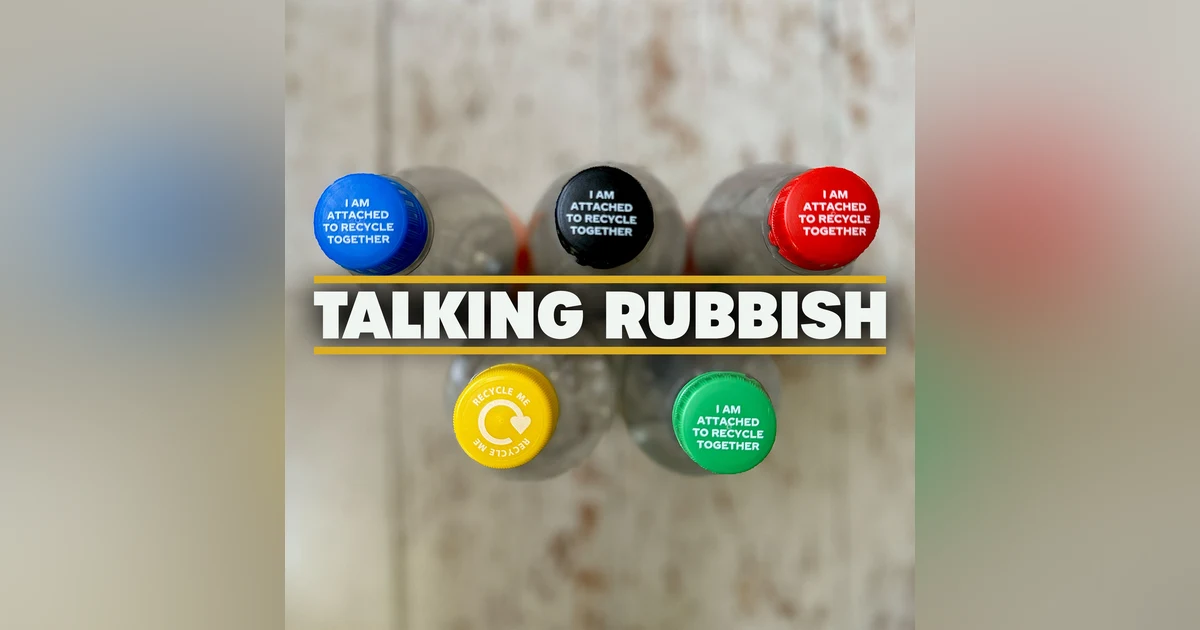

Do we all use more packaging when major sporting events are on? Plus, how are cardboard and paper recycled, can cork be recycled and should you use a plastic bottle to store flexible plastic before recycling?

 Apple Podcasts
 Spotify
 YouTube
 Amazon Music
 Castbox
 Podcast Addict
 PocketCasts
Hello and welcome to Talking Rubbish, a weekly podcast delving deep into the world of recycling and discussing the truth behind snappy headlines and one-sided stories. I'm James Piper, author of the rubbish book, and I'm joined by Robbie Staniffel, my far from rubbish friend. Hi James. Hi Robbie. You okay? Yeah, good. Excited. Great. We're on episode three. Did you think we'd get this far?
SPEAKER_00Uh I think three. I think we've definitely uh growing into it. So I I think maybe uh at the start I was like, where's this gonna lead? But we've had such good feedback and to be honest, I'm just enjoying it loads. So yeah, I did think we'd get this far.
SPEAKER_01And no plan to end. I mean, we're just gonna keep going. We've got so many ideas for topics. Really excited to see how far how far we can go with this. But you know, we'll have to think of something to do for like episode 100. I reckon that's the first, that's the first exciting episode in terms of anniversary. Sorry, they're all exciting, but that's the anniversary episode. That's a great target to set.
SPEAKER_00Can't wait to get to number 100.
SPEAKER_01So uh we've been reflecting on what our role is, haven't we? Uh it's interesting talking about coffee pods last week and bottle caps first week, because we're like, are we making recommendations on what people should do? Are we trying to be kind of the voice for the recycling industry? Is that what we're trying to do, or are we just trying to give more info to people so that people can make educated decisions? And I think that it came about because lots of people have got in contact with me saying, you know, I'd love to be on the podcast, I'd love to be part of it. And and you then talk to them and you think, well, you would bring a certain sphere to this which would be really interesting, but maybe not what we're trying to achieve. And I guess what what do you think we're actually doing here, Robbie? What do we what are we bringing to the table?
SPEAKER_00Yeah, well, I think first and foremost, it's to just shine a light on this subject matter. I think any light being shone on stuff that people interact with every day. They're s people are recycling stuff every single day, and I have uh no doubt about it, and there's so few people in the world who are just literally uh putting all the rubbish in exactly the same bin and just thinking it's gonna magically disappear. So so many people are engaged with the topic. I think the first thing is to just shine a light on it. Secondly, like I think we should try our best to be well researched and give uh well-informed advice, but I think it's setting too high a bar to say that we are going to be exactly right all the time on all of these recycling issues. I think we just need to give ourselves a bit of a break and say if there's something where we've been marginally misinformed or we've got something just slightly wrong, then we can just correct it. I think we don't need to set ourselves uh uh such a high standard uh that we put ourselves under pressure because I know I would certainly enjoy this a lot less.
SPEAKER_01And honestly, if you're listening to us thinking that sounds like Robbie just doesn't want to do any research, then you are 100% correct. You understand how I feel. Anyway, over to our research. Um so I'm more of an opinions guy, you know. That's great. That's great. That's it's just just the kind of attitude we need leading our government legislation. Um so I think uh one of the things I found really interesting was setting up this podcast, actually. I kind of want to I'm so intri I'm I'm a bit of a tech guy anyway, and I'm so intrigued by the process of setting up a podcast. I sort of want to give like a bit of a behind the scenes to how it works because I just love it. Yeah. And uh we really wanted audio to be good from day one. You know, we bought uh mics to make that happen. There were there they are if you're on social media and I'll share this video. And um we want to uh just provide the best content that we can and and make it really digestible, really easy for people to listen to. So those kind of things were easy, but setting it up on Apple and Spotify was a nightmare because they make you say what category your podcast is in. Yes, and there are no sustainability or environmental options.
SPEAKER_00Yeah, absolute nightmare when we were looking through those categories and you just think this podcast doesn't fit anywhere. And I know you posted or mentioned, I can't remember whether it was in person or no, you posted to say this is like when I'm trying to get car insurance and I can't work out what my industry and job is. It's exactly the same for the podcast. Why is it not categorized correctly? This is a huge uh industry, but maybe those categories got set a decade or two decades ago when this was niche and novel.
SPEAKER_01Yeah, so true. And and write in if your job also doesn't appear in car insurance websites, because that is my goodness, that that is really hard. We're like environmental consultants, I would say. That's probably what I'd put us down as, but that never exists. I tend to have to go with like I'm sure you go with like legal system because I am involved in policy. It's ridiculous. Yeah. Anyway, we should move on. Um, it's actually my bin day today. Um, I was just reflecting on the fact that we seem to be recording this podcast every day. It's my bin day. So uh happy bin day for those who celebrate, including me. Okay, on to the rubbish process. So we're into our third week now. You guys know the drill. We're trying to go through the process of recycling from collection sorting all the way through to recycling. First week we did collection, last week we did how is cardboard sorted, and this week we want to take that cardboard to the next stage and talk about how it's recycled. So when we talk about recycling cardboard, the first thing we have to do is actually shred up the paper and or the cardboard. And we're shredding that and putting it into a mix of water and chemicals, which is gonna break down the fibers that hold the paper and cardboard together. And this basically is creating something that resembles porridge. So if you think about porridge mixed in with milk, that is what it's gonna look like when you've got shredded up paper and cardboard and you're mixing it with water and chemicals.
SPEAKER_00Yeah, like soupy stuff. But it's better for them to be shredding it uh at the paper mill rather than be shredding it at home. You want to keep uh, as we mentioned in the sourcing podcast, keep the sheets of paper and cardboard uh solid and whole and as big as you can. Um, this porridgey stuff, uh I'm getting very hungry now. We're recording in the morning, so and I haven't had breakfast yet, so I'm not sure we're mentioning porridge was that wise. But this is then blended with virgin wood pulp uh to keep the recycled fibre strong. So actually, you do need some sort of virgin material to kind of offset uh against those recycled fibres. It's then filtered uh to remove any of those things that are still in the process uh and still attached to the card and paper uh potentially and in this uh this porridge that you don't want because it's these recycling facilities, sorting facilities aren't always going to remove the tape, the staples, the glue, etc. So there is certainly some filtering of the porridge, if you like, if that's what we're calling it, um to make sure that um there's none of those contaminants in it.
SPEAKER_01Can we can we bear that as a formal name? Paper porridge. It's quite nice. Piper's paper porridge. Piper's paper porridge.
SPEAKER_00Oh, very good. Uh the inks are removed um with chemicals. So there will be various kind of inks and things, and people are often ask me, often ask me, I've probably once been asked this question. Um what happens uh with the inks? Uh, because you know, recycling a blank sheet of paper versus which obviously you shouldn't be doing, you should be using your blank sheet of AFOL paper versus something that's been printed on, uh, how do they get rid of the inks? Well it's removed with chemicals through the process, and then it's spread out to dry, and the water's pressed out to create solid sheets. Think it's as simple as that, and then you get rolled out solid sheets that can be used again uh for a multitude of purposes.
SPEAKER_01Yeah, and one of the interesting things about paper is we often think of it as something that can be recycled over and over, but potentially infinitely, and that just isn't isn't true, actually. You know, the only things that can be recycled infinitely are uh glass and uh and your metals, where they're just melting them down, they're not going to lose anything as part of that process. Um, plastic certainly degrades, and we will definitely talk about that, but paper also degrades, and the fibers that make it up get shorter each time. If you think of you've basically got, let's say you've got a uh you know, a fibre as long as your finger. Finger's a horrible analogy, actually, because I'm about to chop a bit off. That's um uh I can't think of a better one. Anyway, you're gonna chop a bit off, and then next time round, a bit more gets chopped off, a bit more, a bit more, a bit more, till those fibers are so weak that actually they can't hold the paper together. And they're basically dust then.
SPEAKER_00Is that what we're sort of saying? They go to like a tiny little product.
SPEAKER_01Well, they they get washed out of the process. Once they get so small, they're just washed out. Um and different um product types, so like newspaper, will have shorter fibres compared to office paper. So where we talk about different qualities of paper, often that is just the length of the fibre that's in it. Um now, interestingly, lots of studies, and and if you ask lots of people in the waste industry, they'll tell you that paper can be recycled about five to seven times. I've read some recent research actually that says that could be as high as 25 times. So again, that research comes from the paper industry that is promoting paper. So again, pinch of salt, but I think it's fair to say somewhere between five and twenty-five times is probably the truth.
SPEAKER_00I think it's one of those things where people don't understand that the majority of paper is actually exported. Um so when I was looking through some of the statistics, um, for the quarter one of this year, so that's January to March in 2024, if people are listening to this in the future, um, that's 70% um uh of paper has been exported to be recycled. So lots of the paper mills who are taking in this material uh to recycle it actually aren't UK based. And I think that's one of the things that people don't quite understand how global recycling and the markets for recycling has become, because production of paper-based goods is global.
SPEAKER_01Yeah, and we often think about plastic. When we talk about exporting waste, I think most people have plastic in their mind and they think about you know a roadside in Turkey that's got loads of plastic on it. Paper is actually the one that is exported the most. At 70%, it's the highest export compared to any other material. Uh plastic runs at about 50 50%. So uh again, it's just resetting and making sure we understand what's happening out there in the market. And and that paper export does fluctuate significantly. It can be anywhere between 55 and 70, but it is typically the material the highest export.
SPEAKER_00And then if we dive more into uh percentages, uh the recycling rate for paper and cardboard packaging is 83% at the moment in the UK. So 83% of the paper and cardboard uh packaging that you have put on the market uh gets recycled. And in future, the government is always looking to set incrementally slightly higher targets. And the reason for that is to try and grow the industry and motivate uh all of these recyclers and reprocessors to do all the hard work to get the paper away from the rest of the rubbish that can't be recycled to try and increasingly have more recycled paper products going around uh the economy.
SPEAKER_01And that is a very high recycling rate.
SPEAKER_00Yeah.
SPEAKER_01That is is it the highest recycling rate of all the materials? So while it's got the highest export, it's also got the highest recycling rate. So that I mean that does make it a good material, really.
SPEAKER_00It's important to say that it's an extremely mature industry. Making paper products has been going on for a long time, a lot longer than plastic, as you can imagine, which was only invented in midway through the last century. And so what that means is the mills have had a long time to work out how they are going to source their primary material. Obviously, cutting down trees is one of those processes. But if the tree's already cut and it's already at our home in a cardboard box form, then that is a potential feedstock that's been going around and recycling's been increasing uh dramatically over the last kind of 50 years. It's been widely recycled for a very long time.
SPEAKER_01Um so that's the sorting and recycling of cardboard. We did sorting last week, recycling this week. I think we'll move into a new material next week and we'll do sorting of that material. I think we'll probably do glass next week, so look out for that. On to our rubbish topic, which this week we thought we'd go Olympics. You know, I think the Olympics, when this airs, um, we'll have just finished. Um, but that is because I committed myself to coffee pods. Had I not committed myself to coffee pods, I may have thought that through a bit more. But you know, I think even though the Olympics are finished, it's definitely worth us talking about, and hopefully they're still a big uh thing in the news, and people are talking about maybe the end of the Olympics, which actually is more interesting to us in terms of waste, what's going to happen to the facilities and arenas after the Olympics is finished.
SPEAKER_00And I think we're gonna be talking mostly around the waste that's created. It's so difficult for us to talk about the Olympics and all the environmental impacts, life cycle analysis, greenhouse gas emissions. But when we just look through the the lens of recycling and the waste that's created, um it it becomes much more easy and tangible to talk about. I think the purpose of or the motto of this Olympics, correct me if I'm wrong, I've written it down. I did do a little bit of research, actually, I think you wrote this down. Uh do more with less, do better, and leave a useful legacy is a great way and a great motto. If you were looking uh uh in the news around when the Olympics launched um uh a week or two ago now, that there was lots of information around abandoned Olympic buildings and basically the fact that the Olympics uh as part of the setup and as part of hosting is you'll build lots of different types of sporting arenas and then they become white elephants, or eventually some of them I know that I saw pictures from Atlanta, they just get demolished almost immediately after the games, and you think, oh my god, we've gone through all this process of building something to only smash it up as soon as the event's done.
SPEAKER_01And this is what Paris, I think, has done so well, because um, from what I can tell, they've only actually built one permanent venue, which is the aquatic centre, and the uh green information around that was incredible. They were using um uh renewable energy and and loads and loads of things to make that aquatic centre as as environmentally friendly as possible. Everything else is temporary, was already there, and I did see a stat that said 95% of uh venues are already in existence in the Paris Olympics, which is a big transformation compared to previous Olympics, and they've committed to halving the carbon emissions compared to previous games. So London, I think London 2012 ran at about 3.3 million tonnes of carbon. Rio was at about 3.6. So we could expect that Paris will be running at like 1.2 to 1.5 million tonnes. Um, and before the games even started, it had hit 500,000 tons. So uh up till 2023. Okay. Interestingly, I uh tried to compare that with something, uh the 1.2 to 1.5 million tonnes, and found it was almost identical to Bristol's household consumption in a year. So, in one whole year, all of our houses in Bristol uh will use about 1.5 million tonnes of carbon. So um that is almost identical to one Paris Olympic Games.
SPEAKER_00Oh, well done. You've got another shout out to Bristol. We're doing really well with promoting Bristol on this podcast. Um and so you were saying that the um that there was only that one uh permanent venue, so that sounds good. But what about why we couldn't just host the Olympics at one place permanently?
SPEAKER_01Yeah, it's a big bugbear of mine. Just have the infrastructure in one place and that's where people go to. I think there's an even better solution actually. So that that would be our reuse option, you know, if we're working through our waste hierarchy. Let's go to reduce, which is actually why couldn't you have individual countries hosting individual events? So you said, France, you are now swimming. They had the best swimming pools and they only sold tickets to people in France, so other than the obviously the athletes, so that you end up with this like, okay, now we haven't got transport because transport and accommodation actually make up 50% of emissions from an Olympic Games. So if we could reduce that, that's really where the power would be. So if we were likening it to our at the moment, we've got sort of recycling, they're building stuff and hoping to kind of use it, but not really use it. Um, then you've got reuse, which is a potential of just saying, let's just have one venue, one country that runs it. But there is a reduce option, which is actually just pick a sport per country and just do it that way. And that would be so much better. I it is crazy that we have an event that runs every four years that essentially uses as much carbon as the whole of Bristol, and bear in mind this is the environmentally green one, uses as much carbon as the whole of Bristol does in a year. It it's I just think that is not a great thing. Interestingly, the least carbon-intensive um Olympics, do you know which one it was? I don't know, one like years ago or something in the 80s. It was actually Tokyo, the last one, and that's because of COVID. It stopped us all traveling there, and once you take out that those travel emissions, it makes a big difference.
SPEAKER_00Yeah, well, I was watching the Simone Biles documentary the other day, The Gymnast, and I saw, you know, it was talking about the Tokyo Olympics and the empty stadiums, and it was a weird sort of flashback to wow, I can't believe those games actually went ahead and took place. Um, but certainly obviously it would be much lower emissions because there were just no people there or a lot fewer people.
SPEAKER_01Really, we haven't talked about what we wanted to talk about, which is data. So let's move on to that. I think that's a great summary of how green are the Olympics actually, and what are our thoughts on that? But really, it was data that we wanted to talk about because I'm intrigued, or I was intrigued, um, as to whether the Olympics actually increase waste. So when we have Olympics or Euros or just big sporting events, do we all use more waste? And the reason I particularly love data is because I'm a bit obsessed with more or less, um, which is a BBC podcast and radio show about data. And I just think if we get data into our podcast, there's a real chance that more or less will just interrogate it and and uh you know tell us off for using the wrong data. So I quite like that.
SPEAKER_00But um you have a presenter, James.
SPEAKER_01I love it, absolutely love it. Um, Tim, if you're listening. Anyway, so uh let uh I thought this would be a great opportunity just to introduce what data we actually have. You know, what waste data exists. And there's two that we use primarily. So we get placed on the market data, which is basically how much has been sold, how much have we bought as consumers, and we get waste data, which is how much has been recycled.
SPEAKER_00This is a proxy for consumption, isn't it, across all of the different types of products? Because we're only talking about packaging here rather than about uh all the other goods that might be purchased for the Olympics.
SPEAKER_01Exactly. We're only talking about packaging, and we actually get this from the national packaging waste database, which is publicly available should you wish to visit that website and drown in data. And the put on market data is historic, so we get like now we're working through 2024's data, which is actually based on what we bought in 2023, and the waste data comes in quarterly. So that's sort of the how we how we look at it. So the waste data is pretty live, um, it's useful, but it it has huge flaws in it, um, because it is a reflection of what has been recycled based on what has been reported into that national packaging waste database. And it is fair to say that some of that could be uh manipulated. I think manipulated is probably too strong a word, although it might be a word I would choose to use. But um, I'm trying to do this as light as possible because it's quite a complex topic that needs probably its own half hour. And in the interest of us trying to keep this podcast under half an hour, let's do a very light touch on this. Recycling has a value, and obviously, the higher that value, the more recycling takes place. Because and and recyclers might choose to hold back material until such time as that value reaches a certain level. And so that data is not a true representation of what's happening to us as consumers, because what might happen is a recycler might collect up some rubbish and then store it in a yard until such time as the value reaches the threshold that they need it to get to.
SPEAKER_00I think it's one of those things where you've got one of the data sets is reported annually and sort of retrospectively, and the other that's almost live, as you said. Um I think there's uh it's great that we do. Have data on this though, and it really does help us with our main question that we wanted to answer, James, which is how does Olympics affect uh the world of recycling packaging?
SPEAKER_01Yeah, and that's because we can drill down well, we can drill down material types. So we've got cardboard, glass, aluminium, steel, plastic, and wood. And we can also drill down into quarters because the data is released quarterly. So we can look back over the years and say, okay, in 2016 we had Rio, what happened to glass in Q3 of 2016? Did we all drink more beer out of glass bottles, for example? And what the data tells us actually is not that interesting. It's useful for us to introduce data, but it's not particularly interesting. The data is remarkably consistent. So the both the put-on-market data, um, what we buy, and the recycling data just tend to increase over time, you know, which you would expect in a society that's increasing in population, increasing in consumption, you would expect that data just to keep increasing. And that is typically what happens. And the average increase uh by material since 2007, which is where how far the data goes back, is about 3%.
SPEAKER_00So what you're saying is that consumption doesn't particularly spike as a consequence of us all watching the Olympics in the UK.
SPEAKER_01Not from what I can see. There is one significant exception, which is 2012. Now, 2012 was a very big year for the UK. We had the Queen's Diamond Jubilee, we had an extra bank holiday, which I think is actually the thing that drives beer sales with an extra bank holiday, and it was also the Olympics. So 2012 for the UK was a massive year, and I look back on it fondly. I decided not to watch the Paris opening ceremony, uh, but decided to watch the UK one instead because I just love it. And um it was just really nice to reminisce about that. And 2012 was such a big year for us in the UK, and I suspect that sentiment and that real uh feeling we had of unity that we had back in 2012 manifests itself in how much beer are we drinking, how many barbecues are we having?
SPEAKER_00Okay, fine, and that spikes the consumption. So you're buying more products from supermarkets, etc., and those are all packaged goods, so more packaging gets bought and therefore more packaging is placed onto the market. But that's only are you saying that's only because in 2012 because there was a domestic thing happening rather than international events that we're all tuning in to watch on the telly?
SPEAKER_01That is my assumption. Obviously, we can't actually see that from the data, but what we can see is as I said, the average material increases since 2007 is about 3% a year. In 2012, there was a 6% increase in glass and a 16% increase in plastic, which is so different to all the other years that we can guess that something was happening with the fact that we were all um excited, we were having a great time, we were enjoying more beer, we were enjoying more um more food, and so we're using more packaging. And so that's why you would see that kind of increase of six percent for glass and sixteen percent of plastic.
SPEAKER_00So peaks in how much we were buying and peaks, therefore, in how much got recycled.
SPEAKER_01Exactly. And the reality is sporting events tend not to spike the data, and my working theory on why that is is because we probably spend most of our time in the pub. And if I reflect on my time enjoying Euro 2024, um you know, I spent more time in the in the pub than I did at home, and in the pub you're getting served in a pint glass, and that pint glass is not packaging.
SPEAKER_00So no packaging, yeah, because it's coming out of a keg, so you're not got like glass beer bottles at home and aluminium cans, etc. Okay, well, you had a slightly different experience of Euro 2024, but then you don't have an eight-year-old at home.
SPEAKER_01There we go. That's the that is the big difference. And I've got a pub, you know, 12 seconds walk from my house, which is also very helpful. My conclusion is that domestic events are likely to cause an increase in weight in waste, things where we have things at home. Um, and and we will talk about it another time. I know we keep saying that, but I I I hopefully that makes that helps people realize that we're in it for the long haul and we've got lots of things to say. Um, but certainly the only other time we've seen the waste data cause a spike is actually COVID. And we will talk about COVID separately because that is a big topic, and we will talk about what it did to the waste data because it is significantly different. And COVID did change how we all got packaging delivered. Other than that, everything's pretty average and standard except for 2012. So my belief is that domestic events will cause us to increase consumption and recycling. External events, so events happening in other countries, are way more likely to not change that data because the reality is if it's a big event like Euros or World Cups, then we're more likely to be in a pub. And if we're in a pub, we're not really having packaging. That remains to be seen. We will get the Q3 data for this year, and obviously we'll have a look and see whether Euro 2024 and the Olympics did have a difference this year. And the other thing to add that I I think we forget is that things like the weather do also have an impact on recycling. And if we have very strong summers and much hotter summers, then we are more likely to use more packaging because we're more likely to be out and about and and uh eating or drinking outside of the home, so we're going to use more packaging.
SPEAKER_00Uh barbecues in the garden, etc., buy a 24-pack of beers, get your mates right stuff. Yeah, that's it. That's that's what you're doing, James. That's I'm not speaking from personal experience.
SPEAKER_01It's our section. That is its official name until someone gives me a better a better name for it, but rubbish or not. And this week we wanted to talk about cork. This was actually a uh an item that my friend Ryan asked about, so I thought, great, we're gonna chuck it in the in the podcast. Um he asked if he can be on every week and could the feature be called Ricycling. So uh Ryan would quite like a feature called Ricycling, and I told him we'd think about it. So, you know, maybe we'll just get Ryan to give us the rubbish or not, and we'll change this to recycle. I can't even do it. Change this to Ricycling.
SPEAKER_00Um I'm not sure that's got legs. Anyway, I'll let him know. Let's talk about a city in the Republic of Ireland.
SPEAKER_01So can Robbie, can cork be recycled? He did specifically ask me to add in, he said, once I pop, I don't know where to drop.
SPEAKER_00Oh my god. He's I could tell this is like somebody you know for sure. This is where all my puns come from. So corks, in terms of uh where where does cork come from? They do still exist. You still get them, they're declining a little bit, I think is fair to say, and you sometimes uh more often than not get the screw top bottle if I'm specifically thinking about wine. Uh, but a cork tree can be harvested multiple times through its lifetime. Um, one study that I looked at said around 16, um, and it doesn't need to be chopped down. So that's the important thing about uh compared to say uh we were talking about been talking about cardboard and paper a lot in the last few episodes. That's chopping down a whole tree, using it to make card and paper products. This actually can be harvested multiple times to make multiple corks over lots of different um uh years, so 16 times or so. Corks can be put in your home compost bin if you have one, or it can be used to um uh to uh as mulch on plants, so it can be chopped into small pieces. So the really important thing to say about cork is that it is a natural product, it is cork. Now, you've got to check it's not one of those synthetic y ones, because those are something different. Um hopefully you'll know uh they look a bit more foamier um uh when they're cut, if you like, the uh the cork, the cork ones. Um, but you can also chop it up, as well as chopping it up to use as mulch, you can chop it up for quicker composting too. Um and the whole thing should only take around sort of a few years to compost.
SPEAKER_01And I found a cork recycling scheme actually called Recorked UK. Uh they resell corks and they donate a percentage of those profits to nominated charities. So if you've got cork and you're thinking, hey, actually, I could build up quite a lot of this. I'd I guess you have to drink lots of wine for it to be viable because uh I know they don't have preposts, so you're gonna have to pay for the postage. But if you can build up some corks, then you could send it to Recorked UK and they will donate those profits to charity. Again, as we always say, if you've got an item that you're wondering whether it can be recycled or not, just message us. Our social media accounts are at rubbishpodcast, and our email, Robbie, is talking rubbishpodcast at gmail.com. Very good. I'm gonna just keep getting you to do it. It's great.
SPEAKER_00It's getting slick now.
SPEAKER_01Okay, now on to our rubbish question, which comes from a member of the public. And for this question, I actually asked uh on Reddit this time. I'm kind of going, I'm all over the place. I'm just like asking everyone for questions about recycling, and I've been given loads. But on this one I asked Reddit, and I got a response from someone called Steampunk Samurai Steampunk Samurai. So thank you.
SPEAKER_00Sounds like a person.
SPEAKER_01Yeah, thank you, steampunk samurai, for this question. And they asked, are soft plastics recyclable if you stuff them in a plastic bottle?
SPEAKER_00Wow. Okay. I do not think that is a good idea. Um it's definitely well, it's highly likely that they're two totally different types of material. All plastics aren't the same. I know we're not going to talk about it now, but in future episodes, we're definitely going to go into a drill down into the different types of plastic. But it's very likely that the soft plastics will be uh low density polyethylene, um, and that the plastic bottle you're putting it into is uh is a totally different type of plastic. And so you're gonna make life really hard for the recycler if you stuff your soft plastics into that plastic bottle because they definitely cannot be recycled together with the technology that exists at the moment in the UK.
SPEAKER_01Yeah, and last week we obviously talked, oh sorry, the first week, even a first episode, we talked about putting the lid back on the bottle because those plastics can be separated. So it's interesting just to note the difference here, which is that you're talking about uh flexible plastic, soft plastic. So these are things like crisp packets, chocolate wrappers, um, all that kind of stuff where you've got a plastic that you can scrunch up and bend. If we put those in a bottle, you can't use the same methodology because they are not as easy to sort as like a lid and a bottle. A lid and a bottle are both rigid plastics. So where we sort them with sink float technology, where we split them with water, you're not going to be able to do that when it's flexible. So that's a very specific reason why we shouldn't do this, why we why we shouldn't fill plastic bottles in this example with soft plastics. And I'm pleased, Robbie, that you've given us that overview because that is what was responded on Reddit by a user called Calm Client7 who said, please don't stuff material in another material. And uh they seem to be someone who sells on the material or certainly works for a recycler based on their answers. So that was really good. I actually a few years ago spent some time with a bread manufacturer. I'm still acting like the BBC, I won't say their name, but and I suggested that they could do a recycling campaign where people used bread bags to hold the soft plastic, and we had lots of discussions about it. They did take some of it forward, but I think the reality is I'll use this podcast as an opportunity to talk about it. A lot of us have a loaf of bread each week, a lot of us have a bread bag each week. Use that as your holder for flexible plastic. Flexible plastic can be taken back to supermarkets. Don't use a plastic bottle, use something like a bread bag where you have literally a free bin each week that you can use and you can tie it up at the end and chuck that in a supermarket collection point, and that's going to be a really great use for that low-density polyethylene.
SPEAKER_00And if you're living in the UK, you can expect plastic, uh soft plastic recycling from your household coming very soon. At the moment, in England, that's cited for 2027. So taking them back to your supermarket for now, but fingers crossed, we've got a new government in place. Hopefully, they uh push through with the reforms, and in a couple of years' time uh you'll be able to recycle them at home just like all the other uh types of plastic. That's my policy bit done.
SPEAKER_01Nice. And of course, I'm gonna make you do this podcast till 2027 so you can announce it live on this podcast.
SPEAKER_00Ah, exciting. Yeah, really leaving some breadcrumbs for the future there. So uh just wanted to let you know, folks, we're coming to the end of this episode, and you can catch us on our socials, which is at rubbishpodcast. Uh, which platforms are we on, James? We are on X, Facebook.
SPEAKER_01Uh I almost said Twitter. That can't be right. That's X. Um X, Facebook, Instagram, and TikTok.
SPEAKER_00And you can also email any question you like at talkingrubbishpodcast at gmail.com.
SPEAKER_01Perfect. Thank you so much, Robbie, and perfect reproduction of the email address. I've enjoyed this episode. It's been really nice just to catch up in the chat and looking forward to seeing you again next week. Bye. Bye.