73. Battery fires - the growing problem within recycling
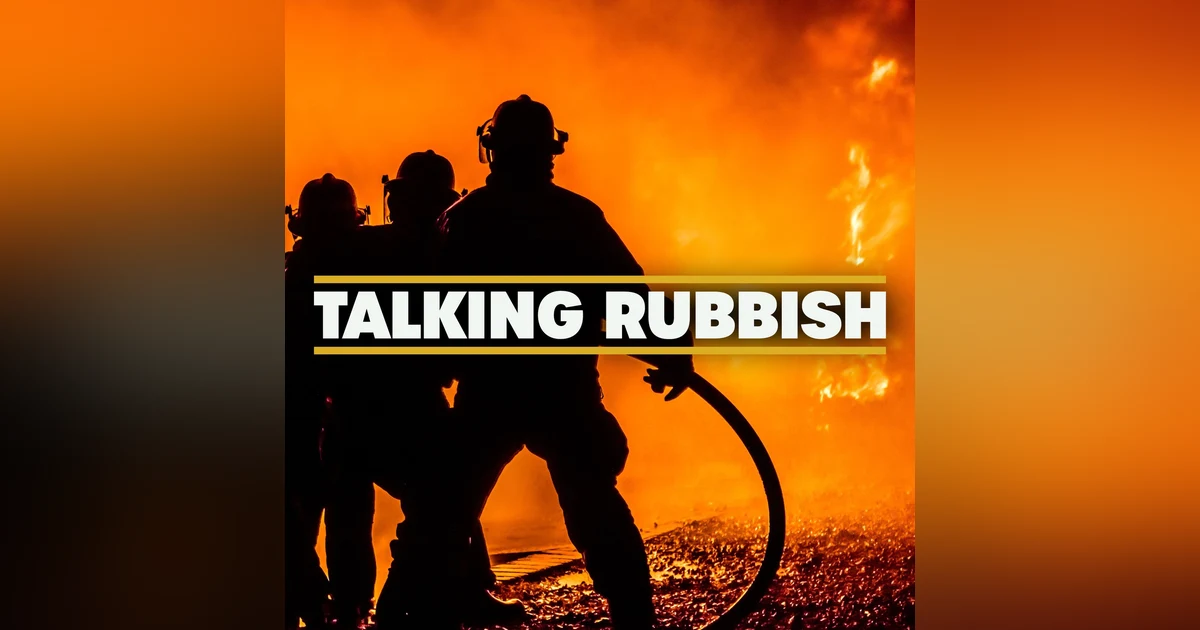
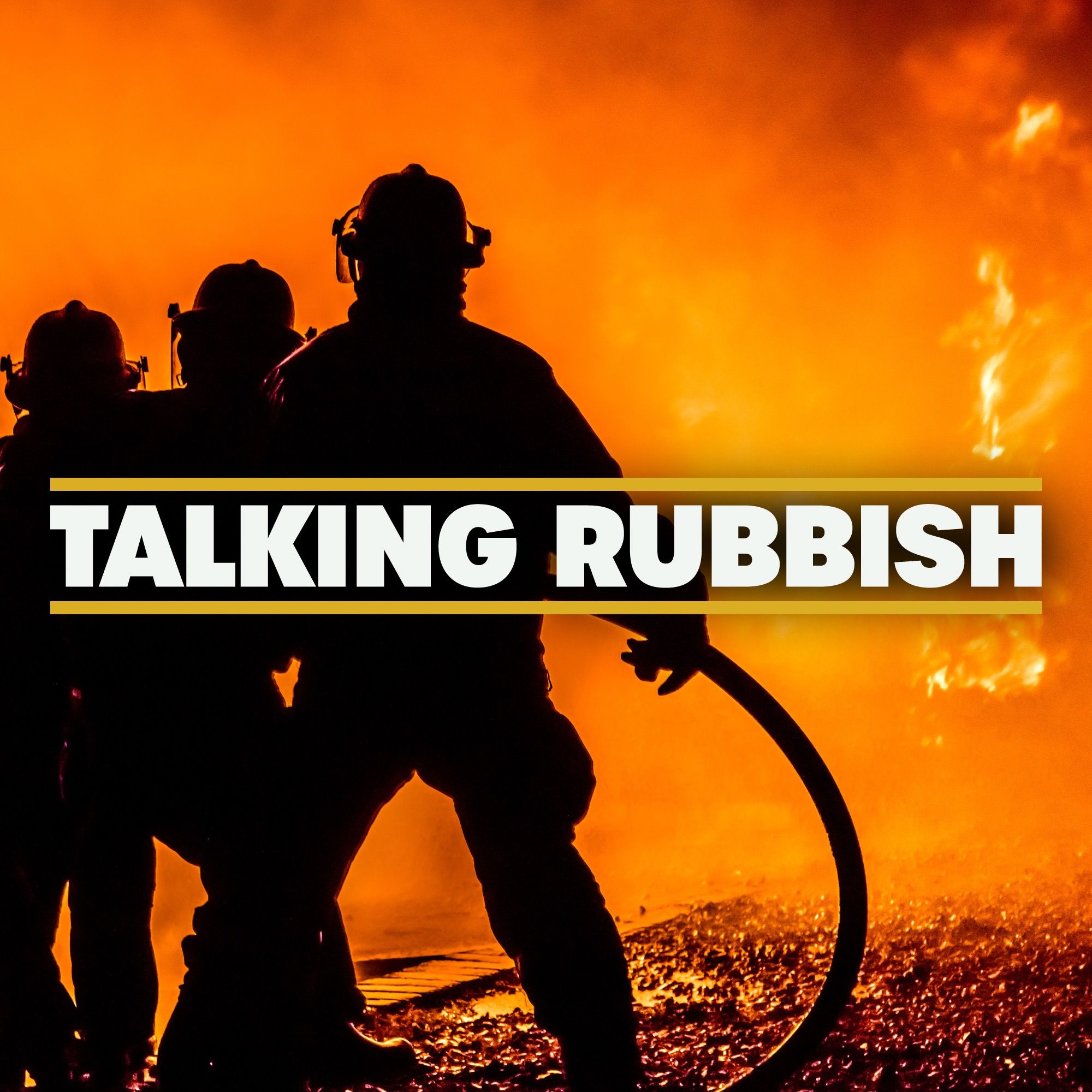
Imagine accidentally starting a fire that caused £30 million in damage and destroyed 60,000 tonnes of UK recycling, and never even knowing you did it. This is the hidden danger of battery fires, and unfortunately a true story. In recent years, the number of fires caused by batteries have more than doubled as batteries become more powerful and increasingly hazardous. Nowhere is this risk greater than in the waste and recycling industry, where a single misplaced battery can ignite during collection or processing. In this episode, we uncover how our current recycling systems are fuelling these fires and, crucially, what simple steps we can all take to make sure we’re not the ones who start the next one. Plus, are nitrous oxide canisters rubbish or not, can you recycle brittle bottles, and why has James been rummaging through a bin store in Tenerife?

 Apple Podcasts
 Spotify
 YouTube
 Amazon Music
 Castbox
 Podcast Addict
 PocketCasts
 Imagine accidentally starting a fire that caused £30 million in damage and destroyed 60,000 tonnes of UK recycling, and never even knowing you did it. This is the hidden danger of battery fires, and unfortunately a true story. In recent years, the number of fires caused by batteries have more than doubled as batteries become more powerful and increasingly hazardous. Nowhere is this risk greater than in the waste and recycling industry, where a single misplaced battery can ignite during collection or processing. In this episode, we uncover how our current recycling systems are fuelling these fires and, crucially, what simple steps we can all take to make sure we’re not the ones who start the next one. Plus, are nitrous oxide canisters rubbish or not, can you recycle brittle bottles, and why has James been rummaging through a bin store in Tenerife?
Join hosts James Piper and Robbie Staniforth as they delve into the world of recycling, hopefully having fun along the way. One thing is for sure, they will talk absolute rubbish from start to finish.
We would love you to join our community on Discord
Special thanks to our sponsor, Ecosurety
To get exclusive videos and clips, follow us on Instagram, TikTok, X, Threads or Facebook; @rubbishpodcast or YouTube: @talkingrubbishpodcast
Or you can contact James and Robbie with questions or just general rubbish musings using the email address talkingrubbishpodcast@gmail.com or by texting them via WhatsApp on 07356 069 232
Relevant links and reports mentioned in the programme can be found on the Talking Rubbish Linktr.ee
Transcripts and episodes can be found on the Talking Rubbish website
Timestamps:
Battery fires - 04:23
Additions and corrections - 28:08
Rubbish or Not: nitrous oxide canisters - 35:47
Rubbish News - 41:56
Can you recycle brittle bottles? - 47:18
Residual Rubbish - 50:07
Music licence ID: 6WPY8Q4O2RPFIOTL
Hello, welcome to Talking Rubbish, a week podcast delving deep into the world of recycling and discussing the truth behind snappy headlines and one-sided stories. In this episode, we will discuss battery fires. Are nitrous oxide canisters rubbish or not? And I have a question about whether degraded plastic can actually be recycled. I'm James Piper, author of the rubbish book, and I'm joined by Robbie Stanifort. My father from Rubbish friend. Good morning, Robbie. Hey James. And good morning, Bibluencers. Welcome to another episode. Robbie, a couple of weeks ago, Spotify did their annual Spotify Rapped.
SPEAKER_01Ah, yes, I know this thing, yeah. I don't use Spotify though, so I haven't got one this year.
SPEAKER_00It's my first year in a while where I haven't got this. Let me tell you what the parents out there will understand this. I thought the happy song was going to be my number one song. It's basically a song that's been scientifically proven to stop children crying. So I have played it hundreds of times this year, and it didn't even appear in my top ten. I think it's a conspiracy theory. I've got a note out with my NCT class to find out why it's on none of our number one lists because it doesn't make any sense. It's all I've listened to this year. Didn't even make the top ten. So I'm skeptical about the data. But where I'm not sceptical about the data is for our listeners, because we get loads of really interesting information as a podcaster. So I just thought I'd share some of this because you know I love data. Oh yeah, for sure. Okay. So first of all, Spotify's actually relatively small for us. It's about 21% of our listenership. Most of our listeners are through Apple. But this is growing rapidly. Spotify is growing faster than Apple. So it'd be interesting to see how that changes over the years. So if I just rattle through your stats, we've had 38,500 plays. So first thing is this is 1st of January to the 15th of November. That's how they calculate Spotify wrapped. So 16th of November to 31st of December is missing. So 38,500 plays, 2.7,000 people listening, 762,000 minutes of listening, which is 529 days. I tried to do a Google search to find something interesting about 529 days. The only thing that came up was a miniature dash and that went missing called Valerie. Went missing in the wilderness in Australia for 529 days. Not sure that's relevant. No, but that's nice, isn't it? We have been listened to as much as Valerie, the miniature dash and was missing in Australia. We were a top 10 show for 1,300 of you, a top five show for a thousand, and a top show for 359 people. So that's just amazing. And we got three awards a marathon show, which meant we were in the top 3% for the amount of content people listened to, a talked-about show, which was about the number of comments, and a most shared show, which was how much was shared. And both of those we were in the top 1% of all podcasts.
SPEAKER_01Oh wow. So influencers out there are doing us a real solid by sharing it with friends.
SPEAKER_00And leaving comments. Yeah, please continue to do both those things. Interestingly, as I said, the data is calculated from the 1st of Jan to the 15th of November. So I had a look at the episodes we released in that period, and they totaled 2,552 minutes of content. So if you were a loyal listener and listened to every episode released in that time period, 2552 would have been your number. However, if you'd listened to 2552, you would have only been a top 3% fan because Spotify, I guess, value latecomers. Because if you just found out about us now and then listen to all our episodes, as long as you weren't doing it between the 16th of November and 31st of December, then you'd be in the top 1% or 2% because you actually have to listen to more than we've released. So to get in the top 1%, I think you needed about 4,000 minutes of listening. And to get in the top 2%, it was about 3.5,000. And I'll tell you someone who was very confused that they were in the top 4%, because they've listened to all of our episodes, and that's Esther, our interview from episode 65. She was like, I've listened to every episode. Why am I in the top four percent? She did then confess to me she hasn't listened to her own episode. Okay, well that's why. Had she done that, she would have been in the top 3%. But I think my favourite message has to be from Georgina, who worked out that in the time she spent listening to us, and based on the typical output rate of a smurf, she could have processed and recycled a hundred tons of waste. Crashed org. Okay everyone, picture the scene. On the 8th of July 2022, Suez had a blaze at their Aberdeen Recycling Centre. A hundred firefighters were called to fight the fire, but unfortunately it was too late and the facility was destroyed. This fire took out 60,000 tons of recycling. The site reopened this year, so three years later, at a total cost of 30 million pounds. The cause of this blaze was likely a lithium-ion battery. What is amazing about this is there is someone in Scotland, just a single person in Scotland, who put a battery in the bin without thinking about it and caused 30 million pounds worth of damage and removed 60,000 tons of UK reprocessor for three years. And it's just bizarre to me that they don't even know they've done it. They are sat at home now going, I'm a good person, I do my recycling. And they have destroyed a 30 million pound facility. I mean, it is unbelievable. And what we want to talk about today is the impact our bins can have if we put waste in the wrong place. Really, I sort of landed on this question of is there anything else in the world where this can happen, where you can cause that kind of damage, that kind of cost just from your humble bin at home?
SPEAKER_01Yeah, it's that butterfly effect, isn't it? Where like the little flap of the wing, so to speak, was someone just absent-mindedly putting a lithium-ion battery. We don't even know what type of lithium-ion battery it was, could have been in a vape, could have been in some sort of electronic device, could have been a separate cell battery, uh, you know, like an AA, they do lithium-ion versions of those these days that you can recharge. And that tiny little flap of wings caused this huge tornado of 30 million pounds worth of damage in a whole facility taken offline, people put it being put out of work, frankly, for three years who were working in that facility. I really can't think of another example of where something so small and kind of just absent-minded and non-nefarious that can have such a massive, massive, massive impact on people.
SPEAKER_00And unaccountable. We will never know who that person was. And they will never know they did it.
SPEAKER_01So this isn't a who-done it. The way you opened, I thought you were gonna get to the end and tell us It was Dave Clark.
SPEAKER_00No, I uh I have not tracked this person down.
SPEAKER_01Your powers of investigative journalism don't stretch that far.
SPEAKER_00No, but what I would like to do is stop it happening in the future. So let's talk about it, Robbie. How many battery fires are we talking about? I think it is just worth us starting with the fact that battery fires are rapidly, rapidly increasing. Last year, the National Fire Chiefs Council announced there had been over 1,200 battery fires in bin lorries and waste sites in 2024. And I think this year it's going to be higher. I think we're already getting over 1300. So to put this in perspective, in 2022, so just two years before, it was 700. So it's nearly doubled in two years. And it will continue to increase. We're people are buying more things with lithium-ion batteries in, things like electric scooters, vapes, we know are a big problem, e-bikes, all these things have very, very powerful batteries in them. People are buying, they are tending towards maybe a cheaper alternative that maybe doesn't have the same rules and regulations, causing fires in houses as they charge. If it doesn't cause a fire in your house and it breaks and you put it in the recycling or you put it in your general bin, then it's just going to cause a fire there. So this is around three fires a day in the UK. It's crazy.
SPEAKER_01And this Phil Clark, who was speaking on behalf of the council, said, and I think he's spot on here, fires involving the incorrect disposal of lithium-ion batteries are a disaster waiting to happen. Fire services are seeing an increase in the number of incidents, but they are preventable by correctly and carefully disposing of electricals. And I spoke with a friend who's a fireman uh in advance of this to just get his kind of on the ground feeling about it.
SPEAKER_00Can I just make a comment that I'm I'm surprised actually I didn't mention it at the time. But you know, we did our toilet roll episode, and then a week later you were like. So I spoke to my partner who actually sells toilet roll. And I was like, and I'm amazed I didn't clock at it at the time and say, Robbie, this is demonstrating the most basic lack of research. That you couldn't, you know you were doing a toilet roll episode. You have a partner who's works for a company that sells toilet rolls, and at no point did you turn to her and say, Can I get some input? But for this one, you've gone to a fireman. Great, thank you. I appreciate it.
SPEAKER_01Maybe it was the guilt from not putting any effort into those toilet rolls that forced me to reach out to my friend in the fire service. But anyway, he was saying it's so frustrating for them that just as other fire risks are declining, things like fires in people's homes, the fact that there's lots of now home fire detection so that they can get to things earlier and actually make the job of the emergency job of putting out the massive blaze a lot easier, just as those are that's happening and tailing down a bit. Suddenly this is on the massive, as you say, twofold rise in just a couple of years, and they're having to go out and treat something that's far more difficult. How many was it you said? Over a hundred firefighters were called to that blaze up in Scotland in uh Aberdeen. So these are serious by in terms of order of magnitude, and he's one of the guys who has to run the actual run the whole site. He's quite senior. So he turns up and trying to manage things like uh a house fire is on a totally different small scale compared to these things. They're extremely dangerous, and the risk to life of sending in those firefighters to try and wrestle the blaze is massive.
SPEAKER_00And it's really spread across waste management companies. I mean, you could go to any waste management company and they will have their stat about fires. So it is something that is countrywide across lots and lots of organizations. I was just getting some stats like Suez, who had the Scottish incident, they've had 339 fires, I think, so far this year. Biffa are at 180, June to October. So again, they're gonna be at about 400 a year. So, you know, our big waste management companies in the UK, your Suez, Biffa, Veolia, they're all gonna have three to four hundred fires that they're having to deal with. And they're all gonna be different sizes, different scales, depending on the battery or the gas canister that's getting disposed of. Literally every day in recycling news, so on Let's Recycle or somewhere equivalent, I read about a fire in a truck or a recycling facility. And most weeks I will read about a site that is reopening from a fire from the past. So, why do they happen? We are focusing today on battery fires. Gas canisters, as I've briefly mentioned earlier, are also potentially dangerous, but we're going to come on to that in our rubbish or not today. We talk about nitrous oxide. So when we say battery fires, as we've mentioned, it's not just any battery. We are typically talking about lithium ion batteries, as they are the most likely to start fires. And the easiest way to identify a lithium-ion battery is it's typically a battery that charges when it's plugged in. And it's normally built in. So your phone, laptops, vapes, electric cars, e-scooters, all those kinds of things, they will typically be lithium-ion batteries.
SPEAKER_01Yeah, and I think what we're finding from the anecdotal discussions with the waste management companies is that it's someone generally putting an electronic device in the wrong place. It's not that people have detached the lithium-ion battery, gone inside the phone, taken it out, uh, unplugged the vape, taken the battery out, and just bunged it in a recycling bin or a general waste bin. It's the fact that people are sort of hovering over a bin with an electronic device going, I don't know where to put this. I'm just going to put it in my black bin and hope it goes away. And then all of a sudden, it leads to this serious consequence of events.
SPEAKER_00Yeah, the Environmental Services Association, which is the ESA, estimated that every household incorrectly discards, so this is on average, incorrectly discards around six kilograms of waste electricals, most of which will contain a battery. And just to put that in perspective, it's the equivalent of 35 iPhone 15s. So it's a lot. And and collectively we throw away 1.6 billion batteries a year, which is about 3,000 a minute. This is in the UK. Most of which are hidden in electricals. From memory, I think it was of the 1.6 billion, a billion of them were hidden in our waste electricals.
SPEAKER_01Yeah. And so when people are thinking about, you know, we're talking about batteries today, yes, lithium-ion batteries, but you need to just think about it as any battery-powered device, because the two things are intrinsically linked these days. Often when you say the word battery, people are thinking about AA's and AAAs. Those are probably not the ones causing the biggest problem. It's the hidden batteries that people don't really think about in their day-to-day life. The fact that they're plugging and unplugging something, it becomes such a normal thing that you don't see the battery as separate from the device.
SPEAKER_00It's just part of the function of it. Vapes are taking a lot of blame at the moment. And and rightly so, you know, we discussed in episode 17. The quantity of them, I think it's eight million vapes binned each week that could have been recycled. It also produces sexier headlines, I think, than laptops and phones. I think people love to say the disposable vape bands are not working. Look at all these fires. It's a bit more boring to say an Apple MacBook exploded. I think what's happening is we're pinning a lot of the blame on vapes where batteries are hidden, and they are definitely an issue. But they are relatively small batteries. They should definitely be disposed of in the correct way. I suspect these bigger fires are probably larger batteries.
SPEAKER_01Yeah, I think they're the tip of the iceberg, aren't they? They're the like bastion of disposable culture. And I think that's the reason why people point to them. We have all sorts of mobile devices now for all sorts of things that you would have thought are necessary 10, 15 years ago. Even things like electric toothbrushes. You know, there's all sorts of devices out there that we just didn't need mobile previously, that now, because of the technology and the convenience and consumer culture, and really vape is at the top of that pyramid of convenience, and that's why it often gets uh a lot of the blame.
SPEAKER_00So, why do lithium-ion batteries cause fires? Because at the end of the day, we collect vapes and batteries up at supermarkets, and we don't often see fires there. We'll talk about that in a second. So it has to be something that causes the fire. And lithium-ion batteries have a lot of energy in a very, very small space, and that means that if they're punctured or crushed, the energy can very quickly release, and that energy can turn into heat. And then inside the battery is a liquid, the electrolyte, that is very flammable. So if you've created the heat from puncturing and crushing it and you've released that energy, that liquid electrolyte can very quickly burn. And that chain reaction is called a thermal runway. So something causes the battery to heat up, heat triggers chemical reactions that then produce more heat, the temperature rises uncontrollably, and the electrolyte catches fire or the battery explodes. It's called a thermal runway because it just gets worse. It's a self-propelling issue. And if we remember, like, do you remember the Samsung galaxies that were causing all sorts of issues? Oh yes, you can't take them on a plane or something, wasn't it? It was in 2016. That was due to the batteries overheating when they were being charged. And again, that heat was causing so they weren't being punctured or crushed. What was happening is there appeared to be a design flaw that caused them to get really hot. And that heat caused that chain reaction that caused a thermal runway that eventually led to fires. That is what is happening. It's the puncturing and crushing of a battery in the recycling world that could cause it to go up in flames.
SPEAKER_01And thermal runway is going to be the title of our first album, is it? It's a great, great phrase, thermal runway.
SPEAKER_00Thermal runway, yeah. And I guess it just as I mentioned, batteries don't normally catch on fire. I mean, bad batteries, if you're buying a product that doesn't meet our regulations and standards off an online marketplace that maybe isn't as well regulated, when you're charging it, it could cause a fire. Typically, batteries you buy from a supermarket or a store or within your electronic products that you're buying from a mainstream retailer shouldn't catch fire. Obviously, for Samsung was a significant issue. Robbie, you and I have been responsible for collecting thousands of tons of batteries. I think I mentioned on this podcast before, my first job was designing battery collection points for the supermarket. So when you go into supermarkets and you see that bin, I my job was to design some of those bins. As far as I know, we've never had a fire in a battery collection point in a supermarket. It's also certainly one that you know I'm aware of.
SPEAKER_01Yeah, no, so there there were tubs that we were responsible for in Liddall for years that were getting filled up and uh emptied on a sort of monthly or quarterly basis, depending on how busy their site was. And yeah, you're exactly right. There were definitely not fires um inside those. And I remember there was lots of concern about it at the time. How big a risk is fire? You know, it's huge then. I imagine that that's increased. Since 2009, supermarkets and shops they've been required to collect these batteries if they sell a pack of four AAs a week. So they equate it to that so you can roughly understand. It's quite a small quantity that you need to sell in order to have to have one of these batteries collection containers. And that proliferated those battery tubs being in all of those supermarkets. And I'm sure AB influencers will be very familiar with seeing them in local supermarkets and WH Smiths and places like that. And we discussed that a little bit in episode 24. But the supermarkets, as you say, they would not collect the batteries if they thought it was a big risk, would they? Like they they would just say, look, the law is an ass. I'm not having it in my shop if it's gonna, you know, be such a high risk and my insurance premiums are gonna be as high as those in waste management companies because the whole thing's gonna be set ablaze.
SPEAKER_00Exactly. And the reason they didn't have fires is because everyone knew they were collecting batteries. And that's the key here. You need the person doing the collection to know they're collecting a battery. Then they go, okay, I won't crush or puncture it. If they don't know they're collecting a battery because it's hidden in other waste, it's likely to be crushed or punctured and start a fire. If we as householders are disposing of batteries incorrectly, there's two ways of us doing it wrong. So we could put it in our general bin, go, I can't be bothered to take this back to a supermarket, or I can't be bothered to engage with my local authority collection, and we'll come on at the end to what you should be doing. But I'm just going to put it in my general bin, it won't cause any harm. So that's one option. Or you could put it in your recycling bin. So let's say you put it in your metal bin. Both of those are incorrect, and both of them have created a situation where the person doing the collection doesn't know they're collecting a battery. And that is the key thing here. So the reason batteries are collected outside of our other waste is so that the collector knows what they're picking up. Let's imagine both of those routes. So the general waste is going to go into a truck that is likely to be compacting our waste. You will have seen that. You know, when a general truck comes around, it's just crushing the waste. That crushing is what can cause the fire. It's because someone has put a battery in their general waste. With recycling, I guess it's more likely to head off to a Murph and maybe be crushed on the truck, but sometimes not. Like if I think about Bristol, they're curbside sorting, so it's going straight on the truck as it is. When it gets the Murph, they eventually it will get into a shredding part, and it's that shredding that can cause the fire. And both of those processes can be the start. So whether you put it in your general bin or your recycling bin, you could start a fire. The Murph ones are a bit of a disaster because if you think about it, that fire typically will happen while it's on a rubber conveyor belt. And what's happening now? That fire is getting transported around the MERF, setting fire to everything it touches, the rubber conveyor belts going up in flames. So typically a Murph fire will cost a lot more to sort and will be way more damaging. Although I should, as demonstrated by that 30 million example, although I should say trucks are not cheap and a burnt-out truck will cost anywhere between 200 grand and half a million pounds. So what local authorities have been trained to do now, what truck drivers have been trained to do, is if they see a fire on their truck, tip the waste, get it on the ground, get it out of the truck because they don't want to damage the truck.
SPEAKER_01Oh, I didn't know that. And presumably it's easier to fight the fire if it's in a loose pile on the ground or something as well. I imagine they must have checked with the fire service that that was the right thing to do.
SPEAKER_00So that's what you're doing in a truck. You're ditching your waste as fast as you can if you see a fire. In a Murph, what you're trying to do is identify the fire fast. And it's hard because it's within the rubbish. So they have a few ways of identifying fires. Um so they will Murphs will increasingly use thermal cameras, so infrared tech, to identify hot spots. So if they see, if they have a pile of rubbish and they see a big heat thing in the middle. It, then they could uh suggest that that was a fire. Uh they have complex smoke detectors that are sort of drawing it the air and constantly looking for smoke. Um, so they're constantly pulling the air through rather than our smoke detectors, which are just like sat there detecting your smoke over your oven. This one instead is drawing the air in and filtering it to look for smoke. And then they'll have all sorts of systems to suppress fires, so water curtains, sprinkler systems, automated water canners, firefighting turbines, everything has got a very exciting name. Basically, you're just trying to chuck something at the fire to put it out before it becomes a bigger problem. When we went to Suez the other day, Robbie, we were chatting to them about this, and I'm sure they told us something quite interesting about their trucks. Um, do you remember? I I was trying to recall this anecdote.
SPEAKER_01Yeah, they've got like a chamber before it goes into the main body of the truck to get crushed. But I can't remember how they analyse the waste, but they're basically scanning for what is it before they go for the compaction.
SPEAKER_00Yeah, I think it must be thermal cameras, I think. Because they're also, he was saying I think they were looking for bodies as well, because there's obviously been quite sad stories of um people falling asleep in bins and then ending up in the truck. So one of the things you want to be doing is sort of scanning it first to make sure that everything in there is rubbish. So I think there's a good reason to invest in that technical. It was really interesting actually hearing him talk about that. Uh so unfortunately, we are at a time where fires are increasing and the severity of fires are increasing because our batteries are getting larger and more powerful. And I guess what we're not talking about here is really industrial and automotive batteries because they all have a route back, you know, your old electric car, and very unlikely when my Tesla dies to rip out the battery and put it in my wheelie bin, you know, it's going to get sent off to a solar farm and be used for batter for energy storage. So we're talking here about ones we have direct responsibility for, not automotive or industrial batteries. But as fires become more likely and the severity becomes bigger, there is an emerging problem around insurance because insurance companies do not want to take the risk of insuring a mirth. I actually struggled to find some examples of this because it's an emerging problem. But I did find an interesting case study from Malta. So there was a company called WayServe who had had a number of fires at their facility. They then decided to move to a larger site, which meant that they needed new insurance coverage. But because their old site had had so many fires, no one on the island would insure them. And when they were looking for overseas insurance, it wasn't possible because they were deemed to be too small for overseas insurance. I'm not sure this has been resolved, but you've basically got a waste management company in Malta that presumably is uninsured right now. And if they go under or if they have a fire that's so damaging that they can't survive it, they'll go into administration and ultimately the taxpayer will pick up the costs. And this actually happened in 2021 in the UK with a company called Greenway Polymers. So they had a fire and then they went into administration and there was no valid insurance because there was no company for the insurance to be attached to because they'd gone into administration. So local taxpayers had to cover the bill for the demolition, cleanup, and firefighting of the Greenway Polymers site.
SPEAKER_01Yeah, I mean, with it being on the rise, as we said at the statistics at the top, this is only going to get a bigger and a bigger problem trying to find insurers and also economical insurance, because there is a certain point where you would just go uninsured because the premiums are so high it's not worth it.
SPEAKER_00Let's wrap up with some practical advice. What do we need to do? Our first thing is never put a battery either in an electronic item or separate in your general little recycling bin. Hopefully, we've explained why. Use dedicated bins. So there's a lot of vape bins around now, and there's a lot of battery bins. As Robbie said, batteries, it is a legal requirement for any store selling more than four batteries to have a bin. So you will always be able to find one. Vapes, I think, is more voluntary, isn't it? There's no requirement for take back at the moment, or is there?
SPEAKER_01Yeah, they're increasing. Uh and there is requirements for electronic take back, but it's quite technical. You you do start to see them next to the battery bin in most supermarkets. Saw one in a Sainsbury's just earlier this week.
SPEAKER_00Great. Okay, so vapes back to a vape bin. Batteries to a battery bin. It is definitely worth checking with your local authority. Only about a quarter of local authorities offer curbside collection of batteries and small electricals. And actually, just a side note here, there was a really interesting report from UNOMIA, which is a consultancy based in Bristol, that was calling for the universal collection of batteries and electricals from curbside. And they estimated the saving from fires alone over the next decade would be six billion pounds. So I do think the government should be saying, actually, councils, you have to collect batteries and small electricals in the same way that they're forcing councils to collect food waste. And I'm sure that will come in the future with reforms of batteries legislation and waste electrical legislation. I personally would rush that through a bit faster because I think this is one of the biggest issues in the waste industry at the moment.
SPEAKER_01Yeah, and this is something that we trialled in Bristol, didn't we? Some years back, the collection of batteries from people's homes, which has now become widespread. So in Bristol, you can put them in a clear bag in the black box and uh they'll be put in a separate compartment on the truck, which obviously, you know, uh mitigates the risk of fires.
SPEAKER_00And outside of vapes and batteries, so electricals in general, again, check with your local authority, they might collect up small electricals. But remember, when you buy a new electrical item, normally the retailer will have to take back an equivalent item. So if you buy a toaster and you bring back your old toaster, they have to take it back. Some places do opt out and sponsor their household waste recycling centre, so you do need to check that. But yes, in and finally, in all instances, you can take your electricals or batteries back to your household waste recycling centre and they will have dedicated bins for them. So if in doubt, I mean there's so many options. The one thing you can do without checking is go to your household waste recycling centre. Then if you want to check, you can check whether you've got a battery bin or a vape bin near you. The one thing we would love you to do is to not put batteries or electronics in your general or normal recycling. Trust me, you do not want to be the person starting a 30 million pound fire. Additions and corrections. So speaking of local authorities, we had an email from Dave about water pistols. Water pistols. I'm really worried that we've encouraged Binfluencers to do something that maybe they shouldn't be doing. Do you think if they take out his bag, he just goes, look, I'm part of the talking rubbish crew. I've got a testing. I'm testing. Anyway, water pistols. Back in episode 66, Dave, the same Dave who's emailed now, actually asked whether water pistols were rubbish or not. And we gave an answer that we would take broken plastic toys to our household waste recycling centre. And I had checked Bristol, who do indeed list hard plastic toys on their website. So Dave, the same Dave who asked the rubbish or not, then wrote to me again to say I listened to your answer. But unfortunately, my contact of the council also listens to talking rubbish. Oh. And they replied to Dave to say water pistols cannot generally be recycled, so they would need to go to a household recycling centre and be placed in a non-recyclable container and be sent for energy recovery. I looked at their council website and indeed they do not collect broken toys. I'm sort of raising this as it's a great opportunity to remind people that we cannot give advice to cover the whole country. Like it's just, it would be the most boring podcast if we went through all 400 local authorities and their various rules. So if in doubt, you should always check with your local authority. We will always aim to tell you what we would do and what we have found locally. And you might need to go and do the same. And you know, that's just the nature of this podcast. I think we said in an early episode, I think it was like episode two actually, we will always call out something we felt was a universal truth, like and I'll get in trouble for this because some people don't consider it a universal truth, but tethered bottle caps remaining on the bottle. Um, everything else is worth checking. So yeah, we'll always try and mention if something is like, okay, we think this applies to the whole country, but we don't do that very often. And I think we've only done it once in 73 episodes. What a get out of jail card that is, hey, Robbie.
SPEAKER_01We're trying our best, guys. It's not gonna work for all local authorities. I'm amazed they don't have a rigid plastics, general rigid plastic.
SPEAKER_00Yeah, they don't collect toys. Crazy. Yeah, yeah, definitely come on, guys. Uh we also had Paul on Discord adding to my plastic criteria, which was very helpful. So uh remember we were talking about whether we would replace uh plastic with paper or vice versa. And could we come up with some rules as to when we thought replacing plastic was a good thing, or when we thought replacing paper was a good thing? And we'd come up with three things that we were looking for if we were going to recommend plastic over paper. So was it recyclable, did it contain recycled content, and was it lightweight? And Paul added that actually we should have a criteria of is the packaging actually needed in the first place? Oh, very good catch. Yeah. It's a great shout. Because then even if Who Gives a Crap was lighter, you'd still go, but it doesn't need to be individually wrapped. Yeah, that's good. No, that is good. Or does it? I have heard back from Who Gives a Crap. Oh, okay. About why they have a limit of wrapping the six rolls. Yes, I've heard back from a human. So if you cast your mind back to a couple of episodes ago, I talked about the fact that I was fighting with their AI chatbot and a human has come back to me. And this was because on their website they have very vague wording about why they need to individually wrap their toilet rolls. They sort of allude to the fact that it might be for health reasons, and I just haven't been able to find any reason why you would need to wrap toilet rolls in paper that are already in a cardboard box. The human came back to me. The human I wish I'd written down my name. The human came back to me with three reasons that they wrap toilet roll in paper. So the first one was about why can't you just wrap 48? You know, why does it have to be up to six? And that was because it's less cost efficient and more work on the part of production to wrap more roles. So that's exactly what I thought. When they say limit on their website, they are just referring to a supplier restriction, not some weird health legislation that it sort of alludes to. Well, it's too much hassle, they're basically saying. Yes, and possibly cost, yeah. So wrapping more roles together as one means it can be less hygienic, since once the packaging is open, chances are all rolls will be exposed. I mean, what? It's toilet paper, it's not it's not something that's going to go out of date.
SPEAKER_01I'd love to see the science around that. What we're all getting ill because we're buying 24-pack rolls from the supermarket.
SPEAKER_00I mean, both these last points were a bit weird. So there's that, and then the more rolls packed in a single wrapping paper could also make it vulnerable to damage. I don't think those individual wrappings are stopping it getting damage. So yeah, I think look, we're we're gonna end the who gives a crap discussion over the last few episodes because I just think We will never talk about it again. I don't want to keep Well, I don't want to make them feel like we're picking on them, but we're not. They are a really interesting case study, as I said at the time, for sort of making you feel like they have to individually wrap them for health reasons. I think after some digging, we've realized that is not true. And as we suspect, it is a marketing thing to get people to share their toilet rolls on social media. Nothing wrong with that, absolutely nothing wrong with it. And the fact that they give 50% of their profit to charity is incredible. But as a sustainability podcast and not a marketing podcast, I think we should be saying, look, there's something wrong with it. If we were a marketing podcast, I'd be thinking this is genius. They sell five times more toilet roll because of their individual wrapping. But uh we're not called talking marketing, we are talking rubbish. So, yeah, thank you to the Who Gives a Crap team for coming back to me. I do genuinely appreciate it, and I'm glad you've not blocked me, which was a bit of a fear. Uh, we're all learning, and I'm really hoping you do take the time to listen to our podcast and hopefully understand why we're challenging in the way that we do. And genuinely, if you want to get in contact, maybe we'll bring up Who Gives a Crap one more time if you want to come on the show and talk about it a bit more. We'd like to take a moment to thank our sponsor, EcoSurety, who are on a mission to rid the world of unnecessary packaging. They help brands navigate the tricky world of extended producer responsibility, but that is not all. They also collaborate on some incredible recycling projects and consumer awareness campaigns for those tough to recycle materials. If you're an organization looking to make smarter packaging choices, check them out at ecosurity.com. And the best thing you can do to help us grow is to share our podcast with your friends and family or to leave us a review. And if you do that, you could be Robbie's review of the week.
SPEAKER_01So we've got a great one here from DJ Shoes, which was on Apple. It's a five-star review. Headline, one of the best. A consistently excellent podcast about rubbish, recycling, and sustainability with a great balance of industry insights and practical advice for the average person wishing to make informed choices and do their bit from home. It's a lovely review. Thank you so much, DJ Shoes.
SPEAKER_00One of the best. I love that. One of the best. That's what Spotify say, anyway. We did get a lot of people saying, You're my number one podcast, but you are the only podcast I listen to. I'll take it. I'm happy with that. That's almost better. You we are your only podcast. That's pretty cool. We've got you into a whole new media format. Yeah, that's pretty cool, isn't it? That is cool. You can follow us at rubbishpodcast on social media. You can email talkingrubbishpodcast at gmail.com or you can WhatsApp us, also join our Discord. It's the easiest way to engage with us and listeners of the show. And the link to all of those things can be found in the show notes. Rubbish or not. We are talking in today's rubbish or not about nitrous oxide canisters or NOS canisters. And this was requested by Adrias42 on Discord, who I think was using them for five-litre beer canisters. They were quite keen to explain that it was a legitimate loot use and not recreational. Not party time. It's party time either way. Yeah, you've just taken an extra step. So just to explain what these are, if people don't know, I'm sure everyone does, you know, we're talking about those little silver things that you used to see on the street all the time. I see less of them now, but certainly they used to be everywhere, didn't they? And people would, if they were so inclined, potentially fill a balloon with the gas and use them recreationally, uh, which is not a good thing to do and has now been outlawed. But we will come on to that. Robbie, the first question is: are the canisters rubbish or not?
SPEAKER_01Well, you can't recycle these at home, I don't think, because they've got gas inside them. It's similar. We've had gas canisters recently. I'm gonna say they are not recyclable from home, but are if you take them to your local recycling centre. So I'm gonna call them or not.
SPEAKER_00We do seem to sway on the older recyclable at home. Sorry, not recyclable at home, but recyclable at household waste recycling centre. We have that come up quite a lot, and you do seem to alternate between rubbish and whether that makes it rubbish or not. I quite like it. There's no consistency whatsoever.
SPEAKER_01Well, the the main thing it made me think about when I saw this uh question come up is a guy who was turning those old canisters, the very small ones that have been outlawed, into knives. He was using them to make handles for knives. Uh, we'll put the link in the description to this guy. It's a blacksmith, basically.
SPEAKER_00Oh wow, okay.
SPEAKER_01So you're cutting the end off or something and then putting a knife onto the Yeah, I i uh whether he's smelting them all down and recasting a knife or something, I'm not exactly sure the process, but I remember reading it in one of the mainstream press like sort of three or four years ago. I checked his website just to see because I thought I'd have a good or not story. He's not doing these anymore. He's making the handles from like ocean plastic, other things, and that's presumably because you don't see so many of these little NOS canisters lying around the place anymore. Well, let's talk about it.
SPEAKER_00So, yeah, there's one thing waste management companies hate as much as batteries, and that's gas canisters. So, this is the right episode to do this on. Basically, for the same reason you punch or crush them and you have the potential to cause explosions and fires. And on the 8th of November 2023, the government banned the sale of NOS canisters for recreational use in the UK, and it is now a class C drug. So I guess the question is why can't it be banned outright? That's because it is used as a whipped cream propellant. And certainly from my days working at pubs, I remember this. I would have to put whipped cream on the coffee and uh we'd have to add a little gas canister into it to make that work to turn the cream into whipped cream. But also hobbyists use it in activities such as like motorsport drag racing and model rocketry. So little models they were used to go fast by using these gas canisters. I believe it was actually banned from retail sale from 2016, I think. So you could still get it, but recreationally you couldn't buy it uh from a retail shop. I mean, you never could, but it was explicitly banned in 2016. I'll always remember my local fireworks shop going, we sell fireworks and whipped cream supplies. And you just think believing this it's not an obvious pairing. Gosh, these 17-year-olds are really into whipped cream. They're the bakers. I think what we could say for certain is the November 2023 ban on the public sale of these canisters has not really worked. It's sort of like the disposable vape ban. I just had a look yesterday. It's so easy to buy these things online. I'm not saying anyone should, by the way. I it sort of sounds like I'm recommending this. I'm not. Please don't do it. It's really bad for your health. And you know, you're buying, let's say you buy some online, who is honestly going to knock on your door and go, can I just see you whipping some cream, please? Like, it's just made it a bit more hidden. And what the ban has done definitely is pushed usage from the smaller canisters to the larger ones. And it's those, as like with batteries, it's the bigger canisters that are likely to cause more damage. What do we do with them? As you said, Robbie, my vice is if you find them or you use them legitimately like ADS42 does, they need to go back to the household waste recycling centre primarily. They're made of steel. And then there's two things you can do with them, really. So they can't go in your curbside bin, they have to go back to the household waste recycling centre. You need to make sure they're empty. If they are the small canisters, then they could be recycled just in the metal recycling container because they're just so small, they're not going to cause an issue. If they're larger canisters, and I hope you know what we mean by small, you know, the little metal ones that you sometimes see out and about. Uh, if there are larger canisters, the best thing to do is to tell site staff when you get there, and then they will direct you to the gas bottle cage where they can be safely stored. So this is sort of similar to uh, what was our rubbish knot a few weeks ago, fire extinguishers, where they had a specific cage for it. And while I was doing some research for this, actually, I came across a post from Stuart at Suez. So thank you for this, Stuart. Um, who talked about the fact that after Notting Hill Carnival, they collected six tons of gas canisters from the streets, just the Suez UK street cleaning crews. Wow. Now, one of two things is true. The people attending Notting Hill Carnival loved whipped cream, which is possible. But I think I'm going to take a guess that some of that six tons of waste might have been for recreational use. So, guys, just to be clear, it's an illegal drug. We would never ever suggest anyone should buy any online or use them in any way. But if you do come across them or you do need to recycle them, you now know what to do. Rubbish news. This week I came across a story about reuse and refill helping eliminate plastic waste entering the environment over the course of 15 years. This is good news, another nice story. Um, so it's a report called Breaking the Plastic Wave, which was written by the Pew Charitable Trusts, working with Imperial College London and Oxford University. They reported that 66 million tonnes of plastic pollution enters the environment each year. However, they felt that using a mixture of deposit return schemes, bans on certain types of plastic, material substitution, and reusable packaging, this figure could be cut by 97%. And two-thirds of the removal, so two-thirds of that 97%, was entirely reuse and return systems. Now, there's a lot to like in this report. I went through it in some detail. There is also a lot not to like in this report. It's very, very anti-plastic. Um and in my opinion, blinkered is not looking at the whole system. So for example, point four in the executive summary says if we continue down this road of plastic growth, greenhouse gas emissions will surge. And this so that's the heading, and then below the heading it says, unless the plastic system is transformed by 2040, annual greenhouse gas emissions from the global plastic system will increase by 58%. Now that that putting the word plastic in global plastic system is doing a lot of heavy lifting because what they're suggesting in that wording is that, hey, if we come out of plastic and move to paper, glass, metal, we can stop greenhouse gas emissions surging. But as most of our influencers will know, if you listen to us for a long time, plastic is the lowest material in terms of greenhouse gas emissions. So moving to glass, metal, and paper would create us a bigger surge in greenhouse gas emissions. But they don't say that. And the reason they don't say that is because what they do is they go, but if we moved into glass, it would be entirely a reuse system. So we could massively reduce the greenhouse gases. Now, this is really nice. It's like a world I would love to live in. Where all of our all of our drinks are bought in glass bottles that are all going around a system that are getting washed and reused. That is not the system today. And I think it is disingenuous to write a report saying if plastic continues to grow, here's the problem. Oh, and we can solve it by doing all these things over here that are just quite far away from where we are today, that would create a really nice picture, particularly in terms of greenhouse gas emissions. And it's great to paint that picture. But what the media do is they grab that and they go, we need to get out of plastic because there's a big issue in plastic. And I think that's the danger of writing a report in this way. You're much better to show the phasing. So to say we want to come out of plastic and move into glass, for example. And that will be single-use glass because it will take a while for us to set up the reuse systems, and there will be a big surge in greenhouse gas emissions, but that's okay because we're on a journey to reuse. You know, that bit in the middle is missing from this report. And therefore, you're not comparing apples with apples, and you're complaining about a current system, transforming it beyond any recognition to justify a material that, in my view, could be worse.
SPEAKER_01And topically, in my rubbish news, I'm talking about glass too and not reusable glass. Actually, I'm going to be mentioning it in a second in my residual rubbish as well. We've got a real good thread going through on glass. Glass recycling, you can now do it from your curbside in Bedford. And I bet the BIF influencers are thinking, is this news? I mean, surely you can recycle glass most places in the country. And yes, that is true. Most people have been uh having their glass containers, uh bottles, jars, etc., collected from the curbside for many years now. But Bedford is one of the few remaining councils that weren't doing it. So this is the impact of government legislation, simpler recycling in England that we've been talking about uh on the podcast for over a year now. And what's happened is in advance of those changes taking place in April next year, 2026, Bedford is getting ready by allowing their residents to put the glass containers in with the paper and card, the sort of liquid carton board, metals, rigid plastics in their orange lidded bin. So they have all of their waste collected, co-mingled, and then taken to a MIRF and sorted out. And now you can put glass in too. It's a small thing, but it's sure to drive better behaviour and higher glass recycling rates before we get to a world where glass is reused. And if you're listening and you don't get glass collected at your home, write in and let us know. Because I thought no one was going to be left. Surely this is the last of the last to switch and move away from glass bottle bank take back systems to being collected by the curbside. But if you're sat there listening to this thinking, no, I still can't recycle my glass at home, write in and let us know.
SPEAKER_00My understanding is it was an issue. Typically, these things are an issue with the Murph. So if the Murph is old, the glass will damage its equipment because it doesn't sort the glass out first. So it puts it through the Murph and then it's it's so solid that it starts damaging the equipment. And certainly that was the case in Leeds. I think they didn't collect glass up until quite recently. Um, and I'm pretty confident that was the contract with the Murph. So again, that will drastically change as Murphs get upgraded, but also from simpler recycling. So this was a question over on Reddit about degraded plastic. And this was someone who was saying they litter pick and sometimes come across clear plastic bottles that have been outside long enough that they are very brittle. Is it okay to recycle these or should they be binned? Robbie, what do you think?
SPEAKER_01Wow, okay. So this isn't quite a rubbish or not. This is a rubbish question. I see what they're saying. I don't know. It's probably still got some structural integrity, hasn't it? I suppose it depends how degraded they are. Uh I I think you're probably gonna have to make a judgment call on this. I think in theory, yes, though, isn't it?
SPEAKER_00Yeah. Let's try. Shall we try and make the judgment call for the listeners rather than No, let's let's leave them to decide. Okay, so that's the end of every question. Um Good luck, everyone. So my view on this is like with plastic line paper, so like coffee cups, recycling plastic is all a percentage game. So when we put plastic into our paper mills, they can take a certain amount of plastic line paper, they don't want too much. Sort of the same thing here. Plastic recyclers can take brittle plastic, but they don't want too much. And they will be adding virgin plastic into the mix if it's not 100% recycle content, like maybe your Coke bottle is, they will add virgin plastic into the mix. And I think brittle bottles are rare enough. They're not going to affect the percentage. I wanted to check this, so I reached out to Roger at Biffer, who said that they would expect a small fraction of old litter-picked bottles to already be in the waste stream, and there's never been an issue. PET would take many years in the sun to degrade, past the point of no return, or in the presence of very harsh chemicals, it might degrade. Roger actually felt it might be quite rare to pick up a bottle that is obviously brittle. So I turned to our litter picker extraordinaire Gareth, who was our interview for episode 60, and asked him how often he finds brittle plastic or bottles. He said he does find it. Uh, not always bottles, but definitely plastic containers can become quite brittle. So that might not be PET. I think PET is less likely to degrade, maybe that's what we're we're saying here. So sometimes he finds things like old bags, you know, carrier bags. They're going to degrade quite fast normally because they're a thinner plastic. Um he'll find them somewhere in the countryside or roadside where it's been lying around for a few years and had that time to degrade. His view is it's an absolute pain to pick because they're usually embedded in the soil or entangled in vegetation and they fall apart as soon as you apply any pressure to them. And by the time you've got to it, it's in so many pieces that it will be too small to get recycled or be heavily contaminated, so it's not worth recycling. So I think yes, you can recycle them, particularly if you found like a bottle. Biffer certainly don't see an issue with that. Likelihood is by the time you start picking it up, it's probably fallen apart and it's just going straight in the bin. Residual rubbish. So this is something that has happened to us this week that's just made us feel like an emoji. And this week I was the shocked emoji. I think it's fair to say that Ellie and I felt we hadn't really used Ellie's maternity very well and we hadn't really had a holiday. We'd had a lot of staycations and we'd obviously gone to Boston to record the podcast, but we hadn't had any sun, you know, dedicated sun. So we decided in the last week we would just we would go to Tenerife. That was like the shortest flight we could do that would give us some sun. So we we went over to Tenerife, which was lovely, and we got an Airbnb and we had a lovely time. As I was checking out of the Airbnb, it was my job to do the bins, of course, and do the recycling, which I enjoyed. And I went into the bin store, right? So I'm in Tenerife. I go into the bin store, and it's like a cupboard with maybe seven large bins, and there's a little corner where people have put books. And obviously, I guess lots of people on holiday in the area and they've read a book, and they're like, I don't want to take it home. So there were maybe seven books in the corner. I love a book, so I went over to have a look at what was there. There was a pristine copy of Stage Door, which is a book entirely dedicated to the Bristol Hippodrome.
SPEAKER_01Really? Wow. Go all the way to Spain. I mean, it's almost North Africa by the time you get down there as well. And you see a book about Bristol.
SPEAKER_00No, it's basically stories from 100 years at the Bristol Hippodrome. And I mean, we are, what are we, like 50 footsteps away from the Bristol Hippodrome as we're recording this right now? I could not believe it. I mean, Tenerev, it was so bizarre. Retail price of the book, £12.50. It came out in 2014. It's not available anymore. So I had to look at the uh sale prices on eBay, and one sold in October this year for £70. Really? Whoa. You know, well, there's muck, there's brass, that's the saying, isn't it? And guys, you've got to check eBay prices before you start throwing your stuff at. So, anyway, I brought this book home. I'm not gonna sell it, I'm gonna read it. I'm really interested in it. It's sat on my coffee table right now. So um so this is a challenge back to the binfluencers. I want your best bin finds. What have you found in a bin that was worth saving? And maybe it's something valuable, maybe it's something you treasure. It would be great to get some examples so we can bring them up on the podcast.
SPEAKER_01And my emotion this week was kind of happy, sad, I suppose, upside-downside for my world of bulk buy and refill. So, first of all, on the downside, I've got a friend who has a family olive grove in Greece. And every year they go picking the olives, they make the oil, and they decided this year that they would sell some of the oil to friends, uh, you know, bring it back in a bulk container, sell uh bottles to friends and family to raise some money for the Coexist Kitchen, which is a not-for-profit cookery school in Bristol. Uh great idea. Of course, there was then discussion about how they would get it to us from this bulk container. And could we bring containers to fill them up? We don't want single-use containers, etc. Unfortunately, it just got too complicated to distribute this oil amongst 30 odd friends, and they basically just went out and bought PET bottles to put the two liters of oil into. And this was so interesting because it was a real live example of if you were to go to, say, IKEA or other department stores and buy those glass reusable pop-top bottles, it would have been something between between 10 and 20 times the price of buying these clear brand new PET bottles. So that was a bit of a fail, unfortunately, this week in the world of bulk buy and refill. But just to bring everyone back up, I mentioned about the SodaStream Company, and I'd found a local source of gas for my SodaStream, big fan of sparkling water. The lady dropped off the first bottle just in this last week, and she told me that basically what she does is she buys a bulk buy of this uh CO2, just like what gets delivered to pub sellers around Bristol. She gets delivered to her home, and then she's got a piece of equipment that allows her to fill up these domestic use soda stream bottles, and uh there's there's other types of brands of CO2 as well. And then she drops it off. So she's absolutely not failing on the bulk buy and refill. And I must point my uh olive oil friends in her direction for the next batch after the harvest next year.
SPEAKER_00As always, thank you all for listening. Thank you for the reviews and engagement, and we absolutely love getting to the opportunity to see this podcast as we say each week. Join our Discord, follow us on social media at rubbishpodcast. You can email talkingrubbishpodcast at gmail.com or you can WhatsApp us. And everything we have discussed today can be found on our link tree. And the details to all of those things are in the show notes. So there is nothing left for me to say other than see you next window. Bye. Bye.