38. Who is the best recycler in England?
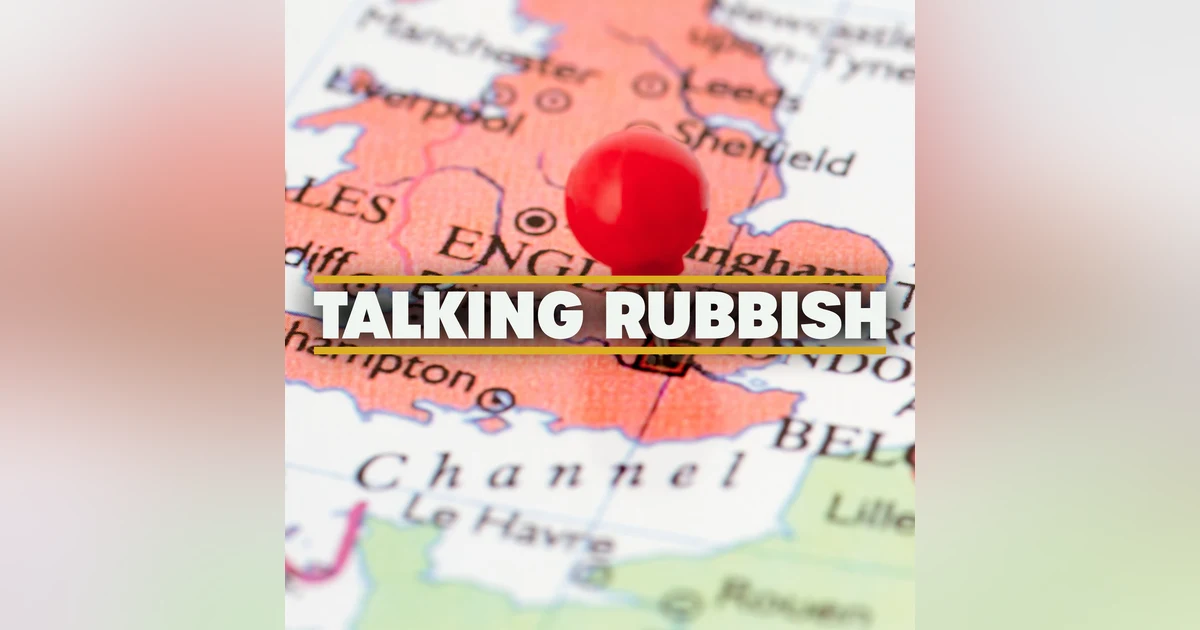

The recycling league tables are in! Recycling rates are on the rise, but there is a twist; the actual amount of packaging being recycled is going down. Confused? So were we. In this episode, we unpack this surprising contradiction and dive into the data. Which regions in England are leading the charge, and which are falling behind? And more importantly, why? Plus, we explore the sorting of textiles, are Calpol syringes rubbish or not and can you recycle broken glass?

 Apple Podcasts
 Spotify
 YouTube
 Amazon Music
 Castbox
 Podcast Addict
 PocketCasts
 The recycling league tables are in! Recycling rates are on the rise, but there is a twist; the actual amount of packaging being recycled is going down. Confused? So were we. In this episode, we unpack this surprising contradiction and dive into the data. Which regions in England are leading the charge, and which are falling behind? And more importantly, why? Plus, we explore the sorting of textiles, are Calpol syringes rubbish or not and can you recycle broken glass?
Join hosts James Piper and Robbie Staniforth as they delve into the world of recycling, hopefully having fun along the way. One thing is for sure, they will talk absolute rubbish from start to finish.
We would love you to join our community on Discord
Special thanks to our sponsor, Ecosurety
To get exclusive videos and clips, follow us on Instagram, TikTok, X, Threads or Facebook; @rubbishpodcast or YouTube: @talkingrubbishpodcast
Or you can contact James and Robbie with questions or just general rubbish musings using the email address talkingrubbishpodcast@gmail.com or by texting them via WhatsApp
Relevant links and reports mentioned in the programme can be found on the Talking Rubbish Linktr.ee
Transcripts and episodes can be found on the Talking Rubbish website
Timestamps:
How are textiles sorted? - 11:23
Who is the best recycler in England - 18:11
Rubbish or Not: Calpol syringes - 42:02
Can you recycle broken glass? - 46:04
Music licence ID: 6WPY8Q4O2RPFIOTL
Hello, welcome to Talking Rubbish, a weekly podcast delving deep into the world of recycling and discussing the truth behind snappy headlines and one-sided stories. In this episode, we will discuss how textiles are sorted. Who is the best recycler in England? Are cowpole syringes rubbish or not? And I have a question about broken glass. I'm James Piper, author of the rubbish book, and I'm joined by Robbie Stanenforth, my far from rubbish friend. Good morning, Robbie. Morning, James. I stopped in and got a coffee on the way in today. Oh yes. So I stopped into Black Sheep Coffee, which has just opened. Black Sheep Coffee's big in London, I think, and they've opened one in Bristol. And I popped in and they had a sign up, and it was actually a really nice sign, as in they had very clear pictures of what goes in each bin, and it was specific to their products. So it was like black sheep coffee paper and black sheep coffee cups. So it was like really cool that it was their own.
SPEAKER_00Yeah, it's all the stuff that's going to be created in their store, basically.
SPEAKER_01Exactly. So much easier to work out what bin things go in. But what was really interesting is they had a little note saying, due to new legislation, we now have to collect food waste. Hello, simpler recycling. Oh. They didn't mention simpler recycling, they just said due to new legislation. And they said we don't have a food waste bin, so if you have any food waste, please hand it over to the barista.
SPEAKER_00And what's the barista going to do with it? Like eat it or something?
SPEAKER_01Presumably the barista has a food waste bin somewhere. But I thought, you know, people often say, Oh, you can't introduce new legislation that requires more sorting because we don't have the space for bins. It's like, here you go, here's a solution.
SPEAKER_00Just hand it back to us. Okay, yeah, so they must have a bin behind the counter or back in the kitchen somewhere or something. Yeah, very good.
SPEAKER_01And I also was tagged in a story. I think it was on Instagram. I think it was a story. I'm sorry if I've got that wrong. It sort of disappeared after 24 hours, and I stupidly haven't screenshot it. So I think it was a story, and I think Lizzie sent it to me. So thank you, Lizzie. This was about the bins on the Elizabeth line. Now we both love the Elizabeth Line everyone. The Lizzie line. Very helpful for us because we get into Paddington from Bristol and then we can get anywhere on the Elizabeth Line, so we really like it. It's the latest tube line for those who aren't in England or London, opened in 2022. Now, you would expect, because it's the latest, it might have some good bins.
SPEAKER_00Yeah, I would think so. I mean the services on the platform are pretty amazing, to be honest, the signage and all the rest of it.
SPEAKER_01Yeah, but the Instagram story was someone saying I spend way too much time trying to work out what goes in the Lisbon Blind bins. Oh yeah. Because basically there's a I I how am I going to describe this? Obviously, they're clear plastic because you've got safety issues. So all most train stations, tube stations have clear plastic bags. And then there's like a black bin hanging off the wall, like a black rim for the plastic bag, and in front of that black rim is a blue rim.
unknownOkay.
SPEAKER_01And the observation from this Instagram story was well, the blue rim is so much smaller than the black rim. So you would expect in 2025, you would expect the black bin to be recycling because it's larger.
SPEAKER_00Oh, okay. The bigger one should be the one that's taking all of the PET bottles and newspapers and things that will be recyclable.
SPEAKER_01I think so, but that's obviously not what's happening in this instance. So the blue bin is actually much smaller, the black bin's much bigger, and I suspect the blue bin is recycling because it would be a bit weird to have it any other way around. Anyway, it doesn't matter. They were both full of rubbish and there was no signage. So you might as well not have it. Could just have one bin. And because I couldn't find this bin, I looked on Google for more information because this story had disappeared, and I ended up on a blog called The Case of the Disappearing Litterbins, which was literally a blog someone had written about the Elizabeth line bins, and it turns out they keep falling off the wall and not getting replaced.
SPEAKER_00Oh, okay. So that's the one downside. We finally found something we don't like about the Lizzie line. Everything else is brilliant.
SPEAKER_01Yes.
SPEAKER_00Are you allowed to call it the Lizzie line? It's named after the Queen. No comment. I saw something in the news this last week that was the British Plastics Federation. They've got a group that's looking at expanded polystyrene. That's stuff that's quite difficult to recycle. You can't recycle at the curb side. But it actually is very possible to recycle if only you could collect it all up. Very lightweight, hard to transport. And I noticed that they had launched this new mapping tool so that you could search and find out where your local collection point was. Which is great news on the one hand, good that consumers have more access to information, etc. But on the other hand, it's like it spreads out where one has to go to find out where to put their recycling. And so there is recyclenow.com operated by RAP for many years, and that's really the centralized resource of what to do and where to find your local recycling bin. Having these locators on separate websites, in this case the British Plastics Federation, I know there's also one that we've mentioned before on the podcast, recycle your electricals. Let's have it all in one place. Maybe one day AI will mean they will centralize all of this information and you can just type a query into Google or something. But in the intervening time, it would be great if they could all just work together and get it in one place, don't you think?
SPEAKER_01Yeah, I completely agree. We need to reduce confusion, definitely. Additions and corrections. I felt it was about time for me to give a personal update. Oh, okay. We've done so much over the months, haven't we? We're look- what are we on? Episode 38. We've done so much where we've talked about all the things that I might do, and I thought I haven't done an update in a while. Okay, yeah, go on. Then how's your life changed? So these are the things I've managed to do over the last few months from our podcast, Robbie. So we are starting to use reusable nappies.
SPEAKER_00Oh, okay. Well done. Well done, you something I never managed to make stick.
SPEAKER_01My wife has gone on a bit of a spree because every time we go into a boot, they seem to have some discounted. I'm slightly concerned that's because they're not selling very well. But um I've picked up a few now and we're using them and they're working really well. And we ordered a load, we did a little survey online, it told us which ones to order. Can't remember which ones I've gone for. I will do a proper update and write down the actual brands we've gone with. But yeah, they're working. We sort of use them when he's at home, it's a bit easier for us to use, but I'm enjoying that mix between the two. I am spending a lot more time at my zero waste shop.
SPEAKER_00Oh, okay. Wow, great. So what buying stuff unpackaged or whatever, taking in your own.
SPEAKER_01Buying stuff unpackaged. And the thing that I have really enjoyed doing recently is I've started making my own bread. Oh wow, have you?
SPEAKER_00I didn't know.
SPEAKER_01Getting rid of that flexible bag around a bread baker. I'm loving it. I've bought a bread machine. Okay. And every few days now I bake a little loaf and it's great.
SPEAKER_00When are you gonna bring in a sourdough for me?
SPEAKER_01Yeah, I'll bring it in. I'm currently doing like a French white loaf, which is delicious. So yeah, I'll love it. Okay. Oh, great. I'll bring you in a loaf, yeah. I'm loving it. Oh, I love it. I mentioned in the reusable coffee episode that I've got my Yeti coffee cup.
unknownReally?
SPEAKER_00Yeah, great cups.
SPEAKER_01And I've managed to get hold of some oxo-biodegradable plastic, which I'm ready to try and compost and try and see how it breaks down, what it breaks down into. I think we discussed this on episode 28. So if you need an update on oxo-biodegradable plastic, that's the one to look back on. Interestingly, this week or in the last couple of weeks, University College of London have actually published a study. In 2020, the British Standards Institution published a standard designed to ensure that pro-oxidant additive containing plastic, or PAC, as it's called, tested under a specific set of protocols would successfully biodegrading the environment. So there was a standard that said, will oxo-biodegradable plastics break down? They have put some cups out for 24 months and they compared the outcomes of lab tests that they carried out according to the standard with the field test that they did in an open, unmanaged environment over two years. They basically reported that after two years, the oxo biodegradable cups did not undergo any significant degradation or biodegradation. So here's the problem: it's exactly what we said on our episode that you can do these kind of in-lab tests and say, hey, look, under these conditions it breaks down. In the real world, we never meet those lab conditions. And things don't break down in the way that these companies say that they do. So they conclude if a standard does not predict real-world behaviour of biodegradable oxo-biodegradable plastics. So we're going to test this, I've got some, I'm going to put it in my garden. And I I kind of wish I'd mentioned this in the episode, but there was a really cool news story about a guy called Richard Thompson, a professor of marine biology at Plymouth University. Oh, yes, I've met that guy, yeah, he's great.
SPEAKER_00Have you? Yes. Yeah, yeah. A conference a few years ago. Yeah.
SPEAKER_01Oh wow, okay. So he buried some oxo plastic and suspended some in the sea. After two years, he felt it was still strong enough to carry his shopping home.
SPEAKER_00Yes. Yeah.
SPEAKER_01I asked the companies about this and they dismissed this as bad science, and they told me that he wasn't a polymer scientist. And I did actually make the point that I'm not a polymer scientist at my book. And I'm not 100% sure that you should have to be a polymer scientist for a bag to break down that you've said will break down. I asked ChatGPT how many polymer scientists there were in the UK, and it estimated at 5,000. So that means that only 0.007% of the UK apparently is qualified to actually break down this plastic. Anyway, can't wait to see what happens with mine. We'd like to take a moment to thank our sponsor, EcoSurety, who are on a mission to rid the world of unnecessary packaging. They help brands navigate the tricky world of extended producer responsibility, but that is not all. They also collaborate on some incredible recycling projects and consumer awareness campaigns, which is why they are helping us with our podcast. So thank you so much to EcoSurety. If you're an organization looking to make smarter packaging choices, check them out at ecosurety.com. And if you want to get a hold of us, the best way to do that is on our Discord, which you can find in our show notes. So there's a link in there. Super easy to join. You just click it and it says, James has invited you to join the Discord. You then put in some details and then you're in. You can chat to us as much as you want. And we're really enjoying the community of people that has gathered on Discord. So please take some time to do so.
SPEAKER_00That's so easy. Even I'm using it.
SPEAKER_01That's become your catchphrase. If you get a second as well, we really appreciate reviews. They really help us to grow and really help people find us. So if you get a second, you're listening to this on like Spotify or Apple, those are probably the two biggest in terms of review platforms. We'd really appreciate you taking a second just to leave us a quick review. You can get us on social media at rubbishpodcast. That's across all social platforms. You can email talkingrubbishpodcast at gmail.com. And all the reports of things we talk about are in our link tree. Again, the link can be found in our show notes. So Robbie, you felt textiles was big enough that it might need three episodes. It needs like a collection sorting and recycling.
SPEAKER_00Yeah, no, I thought so because you know, recycling is the outcome for lots of different textiles, but there's other outcomes too, and the sorting process or stage, I should say, is the vital bit in defining whether it gets reused or recycled. So I thought we'd just quickly take people through how that works. Great. So how are textiles sorted? So there's the first thing to say is there's lots of different fabrics. Once you've put them, we talked about it in a previous episode, once you put them in the containers, they've gone off to a central uh sorting warehouse usually. There's lots of different fabrics, there's fixtures on them, there's accessories like buttons and zips, and they contain a variety of raw materials. So that's like combinations of natural fibers, synthetic fibers, some of these are plastics, there's also metals when it comes to buttons and zips and things. So it makes disposing of this material quite complicated. And the first thing that happens is most of this stuff gets sorted by hand. So in the UK and in many countries, when you donate your textiles, what will happen is they'll go through a process of sorting them, which they would call grading. So they grade them into categories. Now, different organizations have different grades, and there can be multiple grades of resale or reuse. But for the purposes of this, I'm just going to talk about essentially the sort of five different common categories that these textiles get graded into. The first is resale. So that's clothes in good condition with no marks or stains, and it's these are often sent to charity shops for resale. So the kind of thing, James, that you'd be picking up in a charity shop down the road. Should you be uh going and looking for a new shirt, perhaps, or new pair of trousers? Do you ever shop in a charity shop?
SPEAKER_01I love a charity shop. We have lots in my village.
SPEAKER_00Yeah, loads of different options for where you might get that shirt then. Um and then the second category after that resale in UK-based charity shops, I was really interested to see, was the grade B resale for overseas, which I thought so it's not good enough for people in the UK, but it is good enough for people overseas. I was already starting to worry about some ethical concerns. So these are clothes that are wearable, but they have minor issues like marks, bobbling, fading, potentially some small tears, and they're usually sent overseas for use by people in need, predominantly. Which is good and honourable, but sort of a little bit of a kind of question mark as to what's classified as people in need. So those are the two resale grades. Then after that, you would get a grade that's called rags. So these are clothes that are not suitable for resale or reuse. They can be sent for recycling into rags that will be used for cleaning or industrial purposes. And then of those, you'll also get those sent for fibre. So these are natural fibres from recycled clothes that then will get further sorted by colour and material, and they'll get shredded and spun into yarn for reuse. This is a very small proportion of the amount of clothes that get recycled or get sorted, but there will be that those natural fibers. And then finally, there's the waste, clothes that are just not suitable for reuse or recycling, and these will be sent for incineration. And the statistics that we'll get into in the next episode, you will be shocked at how little is recycled. Lots can be reused, whether it be domestically or or for people in need overseas, and lots is sent for incineration or landfill. Very little, due to the complexity, is actually recycled.
SPEAKER_01And do you think that's on an upward trend? I guess we'll talk about it next week, but is that changing, or do you think actually it's always going to be hard?
SPEAKER_00There's definitely been a bigger focus on it. Things like design for recycling, which we've also had in packaging formats too, making clothes simpler to recycle. There's trends to move towards more natural fibres as well, which means there's less complicated plastic in our clothes to recycle. So it's headed in the right direction, but there is still quite a lack of policy that would drive greater recycling of textiles. And so it's that complexity that I talked about at the top that makes it really difficult to actually classify these and recycle them. There's different materials, different colours, you've got plastics versus natural fibres, and those things need to be separated in order for it to be recycled. So reuse and resale and longevity of clothes is definitely right at the top of that waste hierarchy, as we would say, and the thing we should be doing. Just finally, before we finish, a shout out to Tomra, who are well known for creating uh recycling and sorting equipment. They have a textile sorting system that they use near infrared and visual spectrometry sensors to try and separate these materials by colour and by type. And so effectively what they can do is try using machines and in an automated fashion, try and do some of this sorting, but it is still really niche. Most of the sorting and grading of clothes is literally done in big warehouses by people using their eyes and their hands to decide which pile to put it in.
SPEAKER_01And I guess the good news is before you get to recycling, the higher up that thing is, the more money you're gonna make. So, you know, if it's grade A, you're gonna make more money than grade B, and if it's grade B, then you're gonna make more money than the rags that then go off to recycling. The challenge is when recycling and incineration are competing, actually it may cost you just as much to send it to incineration as it does to sort it for recycling. And that is often the problem with sorting. You need to then make the bits that are lower down the waist hierarchy just as cost effective.
SPEAKER_00Yeah, you're exactly right.
SPEAKER_01Trash talk. Who is the best recycler in England? And it's Kerry Thompson from Liverpool. Congratulations, Kerry.
SPEAKER_00Who's Kerry Thompson?
SPEAKER_01No idea. There will, there might be a Kerry Thompson in Liverpool listening who's like, oh my, am I? You never know. You've literally just made that up up. You plucked it out of the sky. Yeah. So England's recycling. Sorry. If you are Kerry Thompson from Liverpool, you you might have to like pause us for a minute to get over the shock of being named the best recycler in England. No, this is because the England recycling tables have been released. This is as exciting as the FA Couple Six Nations, right, Robbie? This is like big news.
SPEAKER_00I mean it is big news, but cards on the table, I haven't looked at them at all, so I've got no idea what's about to come up.
SPEAKER_01Great. So this happens once a year when the recycling data is released. And I sort of feel like we should always do an episode on it. Just review what's going well, what's not going well. So every year we'd just do a bit of a review at the recycling league tables. Yeah, great idea. Don't worry, everyone, it doesn't literally name you individually. So don't worry, Kerry Thompson from Liverpool and whoever else might be listening, who fears they might get a name check. Yeah, I thought it would be worth us just going through the different councils, what we think works, what we think doesn't work. It's a bit of a follow-up to our last Council Data episode, which was like ten episodes ago, episode 29. I uh time is flying. Absolutely, yeah. It feels like yesterday we were talking about Bristol. We always talk about Bristol. But it feels like yesterday we were talking about Bristol in the context of four weekly collections. I mean, this is going to shock you because you haven't done any research, but I genuinely think there's some interesting stuff in here. And it sounds like it might be a little bit boring, but I promise you we'll make it as exciting as Six Nations. I promise. So the official waste from household recycling rate was 44% in this new data. Now that is actually an increase on last year. Last year was 43.4%. So, first thing is we'll start at the top, what's our overall recycling rate? Now I should just be very clear, this is England, because England data is released at a certain time, and then we get other data released for the other nation. So I'm only talking about England here because that's the data that was released. Now, this increase is good news because actually we've had a decline over the last couple of years. So the recycling rate has jumped from 43.4% to 44%. However, there is a bit of a fly in the ointment here. There is one thing that's causing that. So there you go. Told you it'd be exciting.
SPEAKER_00There's one thing that's causing that, and I've got to be able to do that. Yeah, but I'll tell you what it is. I'll tell you later in the episode. Oh, keep listening. I mean, I'm gonna keep listening because I've got to, but yeah.
SPEAKER_01Not allowed to walk away. Is that a good hook, Robbie? Oh yeah, very good hook. I mean, I'm hooked in, yeah. Okay, so let's break it down. So, first off, this increasing recycling rate is just bringing us closer to the peak from 2019. So in 2019, we had a recycling rate of 45.5%. COVID ruined that. COVID took it down to 44%, and last year was a further decrease of 43.4%. We're always a little bit out in this data, so we're actually talking about like 2023 here. So you have to go back a little bit in your mind as to what was happening back then. But as I said, we're now back up at 44%. The reason COVID ruined recycling rates is because suddenly we had loads and loads of packaging coming to our house. We had more cardboard coming to our house. We were drinking more in our homes rather than going to a pub. So we just had more waste to deal with. And when you have more waste to deal with it, obviously it skews. If people aren't dealing with that correctly, it can skew in a negative way to those recycling rates. So That's really what happened during COVID, and we're still coming out of that. As I say, this is 2023 data, so we're still a little bit in the past here. Around the rest of the country, so as I said, this is English data, but around the rest of the country, let me just explain what their percentages were in the last set, just to put that 44% into context. So Northern Ireland was at 49%.
SPEAKER_00Yeah, very good.
SPEAKER_01So very good, yeah. Scotland was at 42, so not as good. But Scotland do a lot of really great things. We talked about the Latte Levy a couple of episodes ago. They do lots of really good stuff. Scotland, in terms of pushing for recycling, I know they have reduced general waste collections at lots and lots of their councils.
SPEAKER_00Yeah. They've also got it's complicated, isn't it? Because it's so diverse in terms of landscape and all the islands and things. It's quite complicated when it's a lot of people.
SPEAKER_01It's always going to be quite hard, I think, to get a high recycling rate. Yeah, and then Wales, which we've said before, is the second best recycler in the world, are at 57%. So that's what we're shooting for. Knocking it out of the park, those guys, aren't they? Yeah, it's amazing. So when we say Wales is best, I mean, which we have a lot on this podcast, the numbers do demonstrate this. So recycling rates overall 44% in England. We're increasing recycling, right? That can only be a good thing. So let's focus in on this data. Now the truth is, what is actually happening when you get into the data, is we've had a decrease in dry recycling. What? I know. So dry recycling is your cardboards, your metals, glass, plastic. That's all called dry recycling.
SPEAKER_00Okay, the stuff that's separately sort of collected. Sometimes you'll have it co-mingled in the same bin, sometimes you'll have multiple different bins, but it's all the sort of standardly quite easy to recycle stuff at home.
SPEAKER_01So yes, dry mixed recycling is down to 25% of our bins when it was 26%. So we were at 26% of our waste was recyclable, and now we're down to 25%. So we are putting less recycling out. Wow, okay. Okay, so how are we increasing our recycling rate?
SPEAKER_00Still none the wiser. Still leave that hook over.
SPEAKER_01You're still teasing us. And then we've got the incinerator bottom ash, which we talked about before. So that's the ash that's left at the bottom after incineration, and it will contain metal, and then they process that metal, and that counts as recycling. Because even though you're incinerating it, the incinerator doesn't get rid of the metal, so the metal can then be reprocessed. Well, incinerator bottom ash is down 2.8%, and it makes up 1% of our recycling. So it is really important for us to capture, but that's also down 2.8%.
SPEAKER_00Okay, right. So everything's down so far, James.
SPEAKER_01Yep. So cardboard, glass, metals have been decreasing. Now, this is as a percentage of what's in our bin. So it could be that we're buying less. It could be that actually compared to 2022, in 2023, we were buying less cardboard and glass and buying as a total proportion. So that could be what's happened. I suspect we're seeing some residual from COVID here. We're talking about 2023 compared to 2022, whereas I said, we got cardboard deliveries to our home, we were drinking more at home than in the pub. Speak for yourself. So we may have, I will. So we may have seen an increased percentage in 2022 of those materials, and therefore that decrease is expected in 2023. But plastic is up, so there is more plastic in our recycling bin as a percentage than there was in 2022.
SPEAKER_00And that's recyclable plastic. That's in terms of plastic that was separated for recycling plastic.
SPEAKER_01Now, we often talk about plastic, right, as a big issue, and it is a big issue. But just to frame this, in our houses we actually use twice the weight of glass and four times the weight of cardboard compared to plastic.
SPEAKER_00Okay.
SPEAKER_01So if you think about what's in your bin, if you had a typical bin, you would have plastic, and then two times that weight would be glass, and then four times that weight would be cardboard. I sort of think about that. When I do my recycling, that's sort of is how I would say that's my portion.
SPEAKER_00Yeah, I reckon I'm a bit lighter on the cardboard. Maybe I need to start buying more cardboard to be more like the average citizen.
SPEAKER_01So in this data, actually, plastic and waste electricals were the only waste streams that had increased recycling composition. So that's good news for waste electricals. That'll be more councils offering waste electrical services. Right. And that's really good, that's happened. Now it's worth noting that simpler recycling will improve all this. So when simpler recycling comes in 2026, that will force councils to collect paper and cardboard, then glass, aluminium, steel, and plastic, all in so two separate bins for those things, and then food waste separately and general waste. And so that should increase recycling percentages because it's forcing all councils to do the same thing.
SPEAKER_00Yeah, so at the moment, black sheep coffee that you mentioned earlier, they're having to do it in 2025 because simpler recyclings come in for businesses, but it only comes in for households next year. That's true.
SPEAKER_01So do you want to guess, Robbie, how the recycling rate can be up, but everything I've talked about so far is down. Except plastic and waste electricals. I'm guessing food waste. I thought it might be food waste as well. It's actually I don't think it is. I don't think it is. You are right. Food is up, and separate food collections were up 0.5%. But other organics, which will include things like garden waste, was up 10.8%. Oh wow, that's huge garden waste increase. It's a big garden waste increase. And in the report, they said this was a result of a return to a more normal growing conditions compared to the dry weather which limited plant growth in 2022.
SPEAKER_00Really? Wow.
SPEAKER_01That is the truth behind the data.
SPEAKER_02Okay.
SPEAKER_01People will put out a news report saying, hey, recycling's up, this is great news. We've gone from 43.4 to 44%. We're getting closer to we're nowhere near Wales. We're getting closer to Northern Ireland. Yeah. Hey, it's just actually that more plants grew, so we had to cut them back more, and we had to put them out in our garden waste more. Okay.
SPEAKER_00I suppose good that people are interacting with those garden waste services, though, and that it's not being just sent to landfill or getting incineration in people's black bins. But yeah, it's not quite the same as interacting with recycling in the home of all those dry-mixed recyclables.
SPEAKER_01That's right. So our overall household waste is actually up compared to last year. We're up 0.2%. So we put 0.2% more stuff out in the bins, but this is still significantly lower than a peak in 2021. And again, that will be COVID-related, that we all had more waste coming into our houses. It's actually 21.7 million tonnes in total, which is 377 kilos per person. And I thought we'll try and put that into some numbers for you, Robbie. So that's the equivalent of four adult giant panders, 308 MacBook Airs, or 83 bowling balls.
SPEAKER_00Aren't bowling balls all different sizes and weights? I don't know. That's not an empirical measurement, James.
SPEAKER_01Let's go back to the four adult giant panders.
SPEAKER_00Yeah, I can envisage that, and it seems a lot of waste.
SPEAKER_01So that's kind of our overall picture. We've increased recycling rates, but largely down to garden waste, I think. So not what we're doing in our houses with our plastic, paper, glass, aluminium, steel. So this podcast is still necessary. We'll keep going until we get to at least 50% recycling rate, Robbie.
SPEAKER_00Absolutely, yeah.
SPEAKER_01So let's go over to who is the best recycler in England. Landfill has had a big decrease, which is great. So landfill has decreased by 22%. Oh wow, that's massive. We landfill about 5.5% of our waste. Gosh.
SPEAKER_00From household bins and the general waste collections in black bins and things, it's only 5.5%.
SPEAKER_01Yes. And before we talk about recycling, let's talk about incineration. So the biggest route for our waste is incineration. 50.2% of our waste goes for incineration, and this is a 4.4% increase. And you can go back to episode 16 if you want our views on incineration.
SPEAKER_00So it's as simple as that. Half of our waste just gets burnt.
SPEAKER_01Yes. Now there is a big divide between regions. So for example, London sent nearly 66% of its waste to incineration. But the eastern region, so just next door to London, sent 34%. Okay. Why was it so low if it's next door? If I'm completely honest, Eastern was low because they sent so much to landfill. So Eastern the Eastern region was our biggest landfill generator. They sent 19.3% of their waste to landfill. Okay. Way higher than the average 5.5%. Now I found an ENS report that said that Essex sent 95% of their unrecyclable waste to landfill. Wow, really? That's crazy. And it's because, and this goes back to our incineration episodes, they will have signed a contract many years ago, a long-term contract, that said we will send our waste to landfill and they can't get out of it. Oh my gosh. And so they have said by the first of October this year, so 2025, they will move away from landfill and they are currently in the process of locking in new contracts that will allow that waste to go for incineration. Now, as I said on the incineration episode, the waste incinerators network get very angry with me when I say that incineration is better than landfill. So I'm not going to say that. And I'm just going to let everyone else be the judge based on episode 16. But I do think it's probably quite a good thing for Essex not to send 95% of its non-recyclable waste to landfill. And I agree with you. So that's incineration, that's landfill. 5.5% to landfill, 50% to incineration. The numbers don't quite add up because of the rounding, but then 44% for recycling. Now the range is huge, as it was when we talked about it in episode 29.
SPEAKER_00What the recycling range, as in how much gets recycled per like region in the country. Exactly.
SPEAKER_01So the lowest was Tower Hamlets in London at 15.8%. So 15.15.8% of Tower Hamlets waste was recycled. And drumroll please, the answer to the episode of who is the best recycler in England is actually didn't I discover I could do sound effects on this? Yeah, here we go. And drum roll please. South Oxfordshire.
SPEAKER_00And the funniest thing about that is I didn't hear the drum roll. Really? Yeah. I was just watching your face and it looked like a man listening to a drum roll.
SPEAKER_01That's great. I heard a really good drum roll. Okay, cool. South Oxfordshire. So South Oxfordshire achieved 62.9%. So that is the difference. 15.8% for the lowest, 62.9% for the highest. Imagine if we all got to 62.9%. It would just be a good thing. Be more like South Oxfordshire. If only we could. Yeah, now the sad thing about that low about Tower Hamlets is that low is lower than the low from last year.
SPEAKER_00Oh, okay.
SPEAKER_01So they're getting worse. And the high is higher. So they're getting better. So maybe they're cancelling each other out. If you remember what I said on episode 29, Tower Hamlets was frustrating because when I went to go and check their recycling website, their website didn't work. So I think there it is now working. I checked again. But I do think there's some obvious like quick fixes. And we know that Tower Hamlets has a lot of flats, and that will be an issue. And we need to talk about that soon, Rob, because we have had quite a few people write in saying, can we talk about flat recycling? And we think that's coming. So more on that very shortly, because we might have an announcement link to that, which we'll probably do next week or the week after. So 74% of councils saw an increase in recycling rates. And I want to do a big shout out to Milton Keynes, North Warwickshire, North Northamptonshire, and North East Derbyshire. I'm really sorry if you're not based in the UK and you're having to listen to this.
SPEAKER_00For us, this is genuinely interesting. You don't think people in the US are interested in recycling rates in North Northamptonshire?
SPEAKER_01I think. I mean, maybe they are. They might have a north Northamptonshire, to be fair, somewhere in the US, and they might think we're talking about that. Anyway, those four councils, Milton Keynes, North Warwickshire, North Northamptonshire, and North East Derbyshire, all increased recycling by over five percent. Now that is a big achievement. So in one year they've jumped five per cent. And Milton Keynes achieved an astonishing 12.1%.
SPEAKER_00That's amazing, but they're the only one without North in their borough title. So they've bucked the trend by being across the entirety of the compass. Yes, absolutely.
SPEAKER_01So let's look at why they've done so well. So Milton Keynes, and I had to dig back through some old news articles here, because we're talking about 2023, right? So Milton Keynes, back then, around end of 2022, beginning of 2023, they had been collecting recycling and general waste in single-use bags. And they were getting through 11 million a year. So I'm assuming, I mean, I don't live in Milton Keats, I'm assuming, please write in if you're from Milton Keats, that the council provided these single-use bags that were like colour-coded, and you would just use those to put your waste out. And they moved to colour-coded wheelie bins.
SPEAKER_00Okay, so it's drove engagement, etc. I used to have those single-use bags when I was lived in Monmouthshire about five or six years ago. And I must say they were nowhere near as good as the other systems of bins, etc., for for your general recycling.
SPEAKER_01Yeah, that's good insight. And those wheelie bins, I think the key here is the wheelie bins had clear signage on them. So when I I found a video with them introducing this, and the wheelie bins had very clear pictures of like this is what goes in this wheelie bin, and you just don't really get that with single-use bags, it crumples up. If they do have signage on, you can't really see it. You're not it's not front and centre. So I think that makes a big difference. They also rolled out little like battery caddies that you could hang off the wheelie bin. So it was just a really nice advancement in their recycling, I would say. And if you couldn't fit a wheelie bin like you lived in a flat or in a place that didn't have the garden, they would give you boxes instead of wheelie bins. So again, everything was reusable, much easier to communicate to the consumer. And as I say, they saw a jump of 12.1% in their recycling. That's amazing. Well done, Milton. We know it works.
SPEAKER_00Yeah.
SPEAKER_01North Warwickshire. So what did North Warwickshire do? They had a new regional MIRF, which uh is called Sherborne, I think. Sherbourne Recycling. Oh yes, that's huge. 60 mil or something that cost to build. It was massive, and it would have covered this area, so that would provide better sorting of waste. It used very advanced AI, it's a brand new MERF. I think we should visit it, Robert.
SPEAKER_00Yeah, I've not visited yet. Colleagues have though, and they say it's absolutely amazing. Let's try and do an episode from there. That'd be fun.
SPEAKER_01I wasn't sure though, because that seemed to accept waste from October 2023, which I suspect would have been too late to be meaningful in terms of a jump of five percent.
SPEAKER_00But it's definitely possible in the last three months of the year, they might have or maybe they stored it up or something, ready to put it all through when it opened its doors. Not sure, but possibly, yeah.
SPEAKER_01Yes, nice thought. Uh now North Northamptonshire might be a statistical blip because they're actually a new county that was formed in 2021. So 2023 would have been their second year. Whoa.
SPEAKER_00So they broke away from the south, did they?
SPEAKER_01Don't ask me which counties came together to form North Northamptonshire. But um they're gonna get some weird results because they're in their first couple of years. I actually would have expected their recycling rates to drop because they actually started charging for garden waste. What had happened is they joined together lots of districts or councils, I'm not sure, into one that was North Northamptonshire. Some in North Northamptonshire had free garden waste and some were charged for it, so they brought it all together into chargeable. So I would have thought you'd see a drop because anyone who was getting it free might have gone, don't want to pay for it. So yeah, really, I don't I don't know why I suspect that's a statistical blip.
SPEAKER_00Okay, and if you're listening from North Northamptonshire, get straight across onto Discord and let us know what's going on there.
SPEAKER_01Yes, thank you very much. Now, shockingly, if 74% of councils saw an increase in recycling rate, that means that 26% had a decrease in recycling rates. So let's talk about my bad list. So there are three local authorities who decrease more than five per cent. Big backward step. We've got three that decrease more than five per cent. And these are Bradford City, Cauderdale, and Brent. Okay. And I suspect next year Basildon will be on this list. Because as I mentioned a couple of weeks ago, they're moving from Fortnightly General to Weekly, which they themselves admitted would affect recycling rates. And I bet it affects them more than five percent in one year.
SPEAKER_00But we're doing it anyway. Crazy.
SPEAKER_01It's really difficult to know why those have dropped so much. It's gonna be more likely that they've applied a larger charge for garden waste, so people have switched away from that. Or it's difficult to know why a council would drop more than five percent, and I couldn't really find anything meaningful. So if anyone's from Bradford City, Cauderdale, or Brent and wants to let us know if something's happened that we've missed, that would be great. We'll add it to our additions and corrections. Yeah, other than that, I mean it it's stat heavy, Robbie, isn't it?
SPEAKER_00Yeah. I mean, so overall, what's the take-home point that some are doing better, which is really great, but some are doing worse. It feels like there's less standardization of how we all recycle across England and more disparity between areas where people are enabled to do a really great job recycling at home, and then other areas where they're headed backwards and recycling less than in previous years. Hopefully, with legislation changes and people listening to this podcast, amongst other things, there'll be greater uniformity and everyone improves together in terms of the amount that they recycle.
SPEAKER_01Yeah, I think it's fair to say in a couple of years this will be really interesting because we'll have simpler recycling in. Then 2026 data will be super interesting. You will see lots of councils jump more than five percent.
SPEAKER_00And also this podcast will have been running for a few years, and the effects of it across the total population of uh certainly England will really have a massive effect on driving these rates. Yeah, we'll take what, half the credit? Yeah, three quarters.
unknownThree quarters.
SPEAKER_01Yes. So just to summarize that, and we can sort of build in some of our thinking from episode 29 as well. You know, to summarize this, I think we know it's really important that councils offer food waste services. We know it's really important that councils reduce general waste as much as they can, so reduce the collections of general waste. And really, when we see improved recycling rates, we've got to get into the data because in this instance that is not what is happening. What we are seeing is an increase in garden waste due to growing conditions, not an increase in recycling, even though the overall picture looks better. So, what we now need to do is focus on recycling better, but also when simpler recycling comes in, we need to engage with that and make sure we're putting things in the correct bin. Rubbish or not. Very personal is cowpol syringes.
SPEAKER_00Oh, I know those things. Yeah, the little uh the sort of tube things, yeah.
SPEAKER_01Yeah, fatherhood continues to be enjoyable and involves cow pole. That's what I've discovered. I mean, I remember as a kid loving cowpol, it's like the purple cowpole. It's only as I've got older I realised it actually contains things that you probably shouldn't drink a lot of. But you know, as a kid, purple cowpole was the better. The orange one was rubbish. Purple all the way. I must admit, the worst bit about Fatherhood has been him getting his jabs, right? That's pretty brutal. Yeah. Anyone who's gone through the that knows that. And they told us to get some cowpole to prepare.
unknownYep.
SPEAKER_01And cow pole comes with a plastic syringe. It's crazy. So it's just a yeah, like a little plastic tube that you can suck up the cowpole with and then you can just deliver it to them. Completely essential, because obviously they don't drink from the bottle, but each bottle has one. And just as I was thinking of doing this, because I'd got my first bottle and I was thinking about it, I noticed someone called John. I don't actually know John, so John, if you listen, thank you so much. Sharing the exact same thing on LinkedIn. I tried to count, his picture was at least 33 cowpol syringes. Oh gosh. I don't want to suggest John's overdosing, but it sounds like he's enjoying the cowpol too. 33 bottles. I don't think I'm gonna get through that by the time he's 18.
SPEAKER_00Well, yeah, a bottle or two a year, maybe. Oh gosh, yeah, no, that does seem a lot. I suppose maybe he's got multiple children though, isn't it? So maybe, okay.
SPEAKER_01So I didn't know what to do with a syringe and I had a little look, and CowPole have actually partnered with Tesco to take back syringes and blister packs. Really? I didn't know that.
SPEAKER_00Okay.
SPEAKER_01Now, the issue is it's in just seven stores. That's the bad news. The good news is one of them is right next to me. Oh wow, okay. I've got one in North Bristol that I can take mine back to. I know, I always get a little bit lucky on this. So I'm I can use it, but only there's only seven stores that can. So if you're not near one, I actually found on Calpol's website you can actually post them back for free. And I'll put the link on our link tree with the um address you send it to. Now they require you to have five just from a carbon footprint. Well, their excuses, a carbon footprint perspective, which we agree with. You know, you shouldn't post back just one or two. Okay, so this is a bit complicated, but I think CalPole was owned by Johnson ⁇ Johnson. I think it spun off into Kenview, or there's a link between Kenview and Johnson and Johnson. I'm not sure. But anyway, they've put these bins in store and they were obviously focusing on their own brands. So in the bins you could put CalPol, Benadryl, Benalin, and Immodium.
SPEAKER_00Okay, fine. So it's just their own brands they're after.
SPEAKER_01Yeah, and I think uh Pringles did the same thing back in the day, didn't they? They did the Pringles bin. It's like, we just can't do this. I mean, how many brands are in the Tesco supermarket? Again, I got ChatGPT out to guess, alongside my polymer scientist question. And ChatGPT seemed to guess that the low end Tesco might have 5,000 brands. So let's say each of these bins collect four, that's 1,250 bins lined up in your Tesco as you walk in.
SPEAKER_00Yeah, it doesn't really work. That's a fair point. And just looking at the sort of medicines and things, there's own brand stuff that Tesco's will sell that logically should be able to go in the same bin. Absolutely.
SPEAKER_01Chat GPT started getting really sassy with me, by the way. Oh really? Yeah. It literally ended this question. Because obviously I've been asking loads of questions like this since we started this podcast. It ended going, if you want a more precise number, you'd probably have to walk into a Tesco Etra and start counting. With a little laffy emoji at the end. Really? Yeah. Challenge accepted AI. Little does it know that I love to walk into a Tesco and count things.
SPEAKER_00Okay, so what do we think? Is it rubbish or not?
SPEAKER_01Not if you post it back to them. Not if you take it to one of these seven Tesco's. Yes. If you don't do either of those things, it should just go with your rubbish bin. Rubbish question. So we had a question from Liz, and Liz was asking about glass. And I thought this was just a good build on our discussions about glass. She was asking, is all glass recyclable? So if she had a broken wine glass or picture frame, could she put it in the recycling bin? Is it safe for the refuse operators slash collection process?
SPEAKER_00This is kind of similar, isn't it, to the uh the candle holder that we had, didn't we? I I think the recommendation, isn't it, to put it in paper and put it in your normal general waste bin?
SPEAKER_01Yes, although I'm gonna say it depends on this one. So you are right. So in Bristol we have a specific issue because we have curbside sort, and so the operators take from our bins and and put the metal into the metal bin and the glass into the glass bin. So of course what that means is they're having to manually handle it.
SPEAKER_00Yeah, literally by hand with big thick gloves on, but they're still grabbing into your bin.
SPEAKER_01Yeah, this is the thing. I wasn't sure about it because I thought, well, they've got gloves on, and those gloves will protect them, and I'd reached out to Rap who had said the same thing. So I couldn't quite understand why Bristol do this. So I reached out to Bristol Waste, and again, thank you so much, Jack, from Bristol Waste, who's my new contact for all these things. And she made a really good point, which is that the bins are at floor level. So when we put our bins out on a Wednesday, well, for me on a Wednesday night, when we put our bins out, they're just put on the ground. And so anyone, animals, children, anyone could walk past that and potentially cut themselves. So they actually don't do it for the refuse operators, they do it more for people walking past. So we don't have wheelie bins, we have open boxes. So I'm gonna say with this one, it depends how your waste is being collected. If it's co-mingled in a wheelie bin, as in you're mixing all your waste together in a wheelie bin, I think you could probably put broken glass in it. And if it's in an open box, I wouldn't be putting broken glass in it. And Bristol Waste asks you to wrap that in paper and to label it actually so that they know what it is. Now, one thing you could do, which you could definitely do, is take broken glass to your civil community site. So your local I'm gonna say dump. They hate the word dump, but that's what everyone calls it, right? Tip or dump. Or you could put it in a bottle bank. So bottle banks definitely can take broken glass. I mean they get smashed when you put them in there, so they should do. Yeah, absolutely. So if you've got any broken bottles, any broken jars, that's the route that I would do. If it's a wheelie bin co-mingled, I'd just put it out with your wheelie bin. If it's curbside sore or just going in an open box, I would definitely take it back to the civic community site or put it into a bottle bank. And remember that not all glasses created equal, and we are talking about bottles and jars here. Things like drinking glasses, toughened glass, so pyrex, anything like that, cannot be recycled and should be put in your general waste bit.
SPEAKER_00Yeah, and that was the sort of that was the original question, wasn't it? It was like a wine glass, a picture frame. Like what should you do with those? I think ultimately those things can become like hardcore or rubble. They won't be re-melted into glass, basically. So if you're taking them to your local recycling center, you can just put them in with all the other like building materials that get basically used for road aggregate. Thanks for the call out there.
SPEAKER_01I definitely focused on the broken bit of the question and not the wine glass and picture frame bit of the question. There you go. A two for one, Liz. Right, I've done the broken bit. And then Robbie, thank you for making sure we covered the broken wine glass or picture frame bit. So that could go into the rubble, uh hardcore and rubble bin at your local civil community site or your general bin, correct. But if it's a drinking glass or jar, you can definitely recycle broken glass. You just need to think about how it's being collected. Okay, that's the end of another episode. I hope people are okay with these stat-heavy ones. Occasionally people say, Wow, you just said loads of percentages. I don't know how many times I said the word percentage in that episode, but it's gonna be huge.
SPEAKER_00Hey, it's interesting stuff. I mean, uh so interesting that these recycling percentages, when you dig behind them, the data says that actually we just collected a whole load of garden waste. Yes. It's the truth behind the stats that's the interesting bit.
SPEAKER_01Maybe we should set up like talking rubbish bingo. Percentage. Uh, what else would be in there? The word recycling, that'll be in the middle. Robbie laughing. This is good. Maybe we'll put this on Discord. Request for a talking rubbish bingo, and then as people listen each week, they can scratch them off. Anyway. Thank you all so much for listening. We really, as always, we really enjoy these opportunities to come together and chat about all things recycling. Make sure you take the opportunity to leave us a review, particularly if you're listening on Spotify or Apple. It really helps us to grow. But you can do it wherever you can leave your reviews. We're always grateful for them. And follow us on social media at rubbishpodcast, email us talkingrubbishpodcast at gmail.com or join us on Discord. The link is in our show notes. Any reports we've talked about in this episode, you can find on our link tree. Again, the link is in the show notes. And other than that, we will see you next week.
SPEAKER_02Bye.
SPEAKER_01Bye.