18. The true cost of deals - Black Friday’s environmental impact
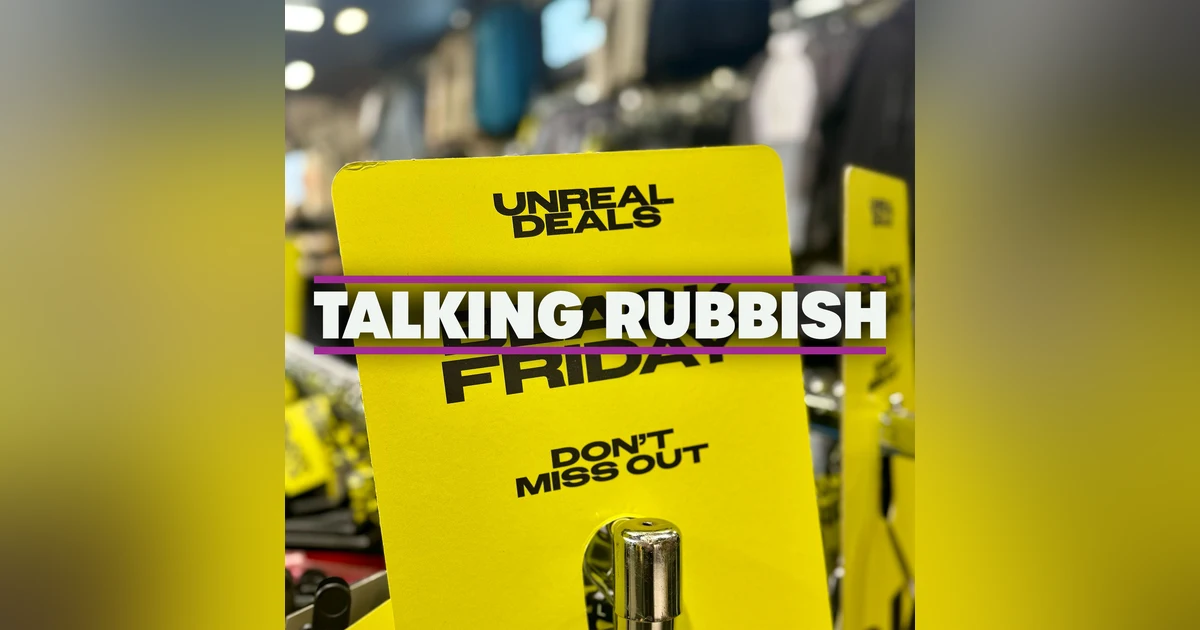

It's that time of year again, Black Friday. Where did this manic sales season come from and how sustainable is it? In this episode, we discuss the growth of Black Friday and what the rise in online deliveries might be doing to our carbon emissions. Plus, we explore the history of pallets, are duvets and pillows rubbish or not, and we have a question about whether we ruined our recycling by turning it into Halloween decorations.

 Apple Podcasts
 Spotify
 YouTube
 Amazon Music
 Castbox
 Podcast Addict
 PocketCasts
 It's that time of year again, Black Friday. Where did this manic sales season come from and how sustainable is it? In this episode, we discuss the growth of Black Friday and what the rise in online deliveries might be doing to our carbon emissions. Plus, we explore the history of pallets, are duvets and pillows rubbish or not, and we have a question about whether we ruined our recycling by turning it into Halloween decorations.
Join hosts James Piper and Robbie Staniforth as they delve into the world of recycling, hopefully having fun along the way. One thing is for sure, they will talk absolute rubbish from start to finish.
To get exclusive videos and clips, follow them on Instagram, TikTok, X, Threads or Facebook; @rubbishpodcast or YouTube: @talkingrubbishpodcast
Or you can contact James and Robbie with questions or just general rubbish musings using the email address talkingrubbishpodcast@gmail.com or by texting them via WhatsApp
Relevant links and reports mentioned in the programme can be found on the Talking Rubbish Linktr.ee
Transcripts and episodes can be found on the Talking Rubbish website
Music licence ID: 6WPY8Q4O2RPFIOTL
Hello, welcome to Talking Rubbish, a weekly podcast delving deep into the world of recycling and discussing the truth behind snappy headlines and one-sided stories. In this episode, we will explore the wonderful world of palettes. Is Black Friday really that bad for the environment? Spoiler, yes. Can you recycle bedding? And did we destroy our recycling by turning it into Halloween decorations? I'm James Piper, author of the Rubbish Book, and I'm joined by Robbie Stanerforth, my Far from Rubbish Friend. Hi Robbie. Hey James. I've had a I've had a busy week. You've had a busy week, actually. I noticed you've been at loads of conferences. You've been in Amsterdam, all over the place.
SPEAKER_00Yeah, Amsterdam, London, but back in Bristol now, back in the homelands.
SPEAKER_02Very good. I went to a meeting on Monday in London where we're helping to do some work around a reusable cup scheme. And I have the most atrocious confession to make. Oh yeah? Yeah. I uh attended a meeting about reusable cups and I forgot my reusable cup. Now I feel I feel I have an element of defense here because I was going to the meeting and I was like, well, they're going to provide coffee, so I don't need a reusable cup, right? They must be providing coffee.
SPEAKER_00Yeah, like China mugs, you mean or Yeah, exactly.
SPEAKER_02It turns out they'd run out of flasks. Um, so they didn't actually provide coffee and and so they said at the break, they said, right, if you could just go across the courtyard, there's a cafe. And of course, I'm there with all of these major coffee suppliers and you know, people in the industry who have all brought a reusable cup because they're at a reusable cup meeting and they're not like they're not idiots like me. And I just had to go over and buy this paper cup. Oh no. I felt awful. And then the whole meeting was just I just constantly was worried about this paper cup. The good thing is, just outside the meeting room was a paper cup recycling point. So as soon as I'd finished the coffee, because I needed the caffeine, I couldn't avoid getting the coffee. As soon as I'd finished the coffee, I ran out of the meeting room and chucked it in the paper cup recycling point.
SPEAKER_00Was it acknowledged in the meeting? Or was it called the colour? Of course it was acknowledged.
SPEAKER_02Of course it was everyone was like, oh my goodness, I can't believe. Anyway, yeah, I'm sure you styled it out. This is the start of Piper's Confessions. Um all the things I've done wrong in the world of waste. It was actually in the same meeting. It was funny. I was sat next to someone from uh a big, big coffee chain, and um halfway through the meeting, she leaned over to me and just went, Do you do a podcast? I was like, Yes. She said, Oh, I recognise your voice. I was I was like, This is unbelievable. And this is the second time it's happened to me now where someone has said, Oh, I know you from your podcast, but they don't actually know me, they just recognise my voice.
SPEAKER_00I know it's strange. I was at a conference yesterday in London, and it I it's only happened once, and that was the first time yesterday, that I was just in conversation with two or three people talking about packaging, recycling, etc. And someone tapped me on the shoulder and said, Excuse me, do you do a podcast? Like, I wasn't even in conversation with this person, and uh I turned around and was like, uh yeah, I do actually. It's talking rubbish. You should give it a look or whatever. And she was like, Yeah, no, I know, because I recognize just overhearing your conversation, I could recognise your voice. And it's like, it's strange to be recognized uh from a picture or something, or someone has heard about you, or um, your name's come up, but to actually recognise your voice is like, well, weird.
SPEAKER_02Yeah, very odd. So thank you to everyone who's recognising our voice. That's very nice. I noticed a big story this week with Virador. I don't know if you spotted this. Yeah, I saw that one. Yeah, very odd. So they have an Avon Mouth recycling plant, which has kind of been heralded as an amazing plastic recycling plant. We've often talked about it uh outside this podcast as um a big investment in the industry. And it only opened in 2022 this plastic recycling plant, and uh and they've closed it.
SPEAKER_00I know, it's crazy to think that they're just it's not economically stacking up for them.
SPEAKER_02I spotted the next day Virador saying that they were in the process or just about to complete financing a new energy from waste plant. So it just shows us, doesn't it, that the priorities are completely wrong if we can't get the economics of plastic recycling right and people are instead choosing to open incinerators and just that callback to that episode, you know, I just I can't believe we're in this situation.
SPEAKER_00No, that's crazy. I saw that the plant was closing and was it sad news, obviously. Hopefully someone will buy up the equipment and and run it in the future, fingers crossed. But no, I totally missed that one about them also opening a new incinerator. That's crazy.
SPEAKER_02Yeah, I think we're gonna need to prioritise an episode on the economics of plastic. I think we should do that quite soon because clearly we need to talk about why these things may not work out and why incineration might be best. Because as in financially not best environmentally. Should we move on to brighter topics? Actually, I'm not sure they are brighter. I'm just looking got some other criticisms. Um, okay. Additions and corrections. We've had a few emails in. We had an email from Gabrielle, which I wanted to pick up on, and she was saying, look, you guys have been mentioning e-cover positively, which we have. Yeah. Um, but actually she wanted to share a negative experience, and I think that's completely fair. I think we should have the opportunity to say, you know, where brands aren't quite doing things right and where there's an opportunity to improve. Um she was talking about the fact that she buys their washing up liquid. And in the supermarket, from what I understand, she's saying she can get the um Ecova washing up liquid for 40p per 100 millilitres. Okay. But if she goes to the local refilling stations, they cost 45p per 100 millilitres. This is a bit of a callback to our refill episodes. You know, we discussed the importance of actually having refill the same price or cheaper than just buying it normally. Um yeah, so good to quit good to call that out.
SPEAKER_00Yeah, doing the right thing shouldn't be a price premium. It's it's hard to know though, isn't it? You know, it depends what part of the country she's in. Um I know in Bristol there's quite a lot of demand for refill stations and and possibly the price per hundred mil has come down because they're all competing against each other. But yeah, no, it it will forever remain a niche activity if it's more expensive than just buying a sil single-use uh bottle off the shelf.
SPEAKER_02Weren't you saying some of the retailers you'd worked with in the past, they made sure that the refill was the same price.
SPEAKER_00Yes, that's right. Actually, yeah, when I went to see Aldi, who were doing some of their cereals in containers, they made a price promise that it would um always uh never be more expensive. I can't remember the exact phrasing on it, but it would never be more expensive uh to use a refill container.
SPEAKER_02We also had an email in this week from Sabira. So Sabira said, or just wanted to call out the fact that you had said this is you, unfortunately. Oh you had said chemical recycling was a new uh process, and that's why it's called advanced recycling and all those kind of things. She wanted to just mention the fact that actually chemical recycling is not new. Um, it's been around since the 1950s, but just hasn't been scaled in the past. So it's really important because uh she wanted to mention that the you know the industry likes to call this stuff advanced recycling to make it sound really high-tech. But the reality is it's not particularly high-tech, it's just something that's failed a lot over the years. And so I guess now we're in a position where plastic recycling and getting those recycling rates high is so important that it might succeed, sure. But we should come up with that sceptical lens.
SPEAKER_00No, no, no. Uh in fairness, she's absolutely right. Um, it is it it isn't new. What's new, I suppose, is possibly the economic conditions that make it viable in the UK. That's that's the new thing rather than uh the technology, which has probably got a few more bells and whistles than it had in the 50s, but uh yeah, it's not is not as uh brand new as might be made out.
SPEAKER_02And uh if you want to email us or contact us, you can find us on social media where we're at rubbishpodcast. You can email talkingrubbishpodcast at gmail.com, you can WhatsApp us by finding our WhatsApp on our Facebook or Instagram, and we also have a link tree with all the links to the reports. So the link tree is in our show notes if you want to find any of the reports that we talk about. And this week, actually, Robby, I launched a survey. We've been going for about three months. I thought it was important to get some feedback from our listeners. So we launched a survey. So if you want to find that survey and you haven't had a chance to fill it in yet, uh, if you just go to our website, which is talkingrubbishpodcast.com, uh, you'll see there's a banner there at the top that says complete our 2024 listener survey. So just click that and that'll take you through to some questions. We are getting some amazing feedback, I've loved it, and like really incredible thoughts that I've haven't really had that we can do. So one of the things that has come up, just sort of thinking back to that Avon Mouth recycling plant piece, one of the things that I think we're missing is this kind of news because the challenge we have with this podcast is we're always recording a couple of weeks before we go out, so we just don't have that opportunity to go, oh, this week this happened, and in recycling that's happening all the time. And I feel like in the next few weeks, in the next maybe what did I say, I had 30 weeks worth of rubbish processes. Yeah, so once we get to the end of the rubbish process and we've sort of gone through all of that, I think it might be worth us replacing that with rubbish news.
SPEAKER_00Ah. And so I'm just was that an idea that came through the survey? Came through the survey. Oh, very good.
SPEAKER_02So I'm just finding out from our editor whether we can do that. But I think once we get to the end of rubbish process, it would be quite cool to just have rubbish news and actually talk about things that have happened that week to keep everyone really up to date. So we're just working out whether we can do that. But I I think that's a really good suggestion.
SPEAKER_01Yeah, great.
SPEAKER_02The other one that I absolutely love is could we could we get behind a campaign? You know, we've got loads and loads of listeners. We've got a bit of a voice for the industry here, and there's loads of things we want to do.
SPEAKER_00Yeah.
SPEAKER_02And it would be really cool to get behind some some really exciting things. So, like immediately, my mind goes to like bam the sash campaigns. You know, why do we have sashays in in dining or um Pierce the Pouch? Yeah, Pierce the Pouch. I don't think that's is that a campaign. That's going the other way. Yeah, we don't want plastic straws. Um so I think it would be really cool to get a talking rubbish campaign going that we can all get behind like a petition we can sign and we can take to government and we could actually get our listeners behind some really cool initiatives. Um, I've got loads of ideas for how we can make that happen. Now, the reality is here's the bit of a plug. To make that work, we need a few more listeners because we've got to get like a hundred thousand signatures on a petition for anything to get in front of government. If you're listening to this now, one of the best things you can do to help us out, other than leaving us a review, which is super helpful, is to tell people about the podcast. And Robbie and I set ourselves a really stretch, stretching goal of how many listeners we wanted, and we're basically a fifth of a way there, which is unbelievable because we've done that in such a short space of time. But what that means is if you're listening to this, if you could tell five of your friends about the podcast, then we'll we'll hit it. We'll hit it in a week. Yeah. And then from there we'll be able to start these really cool things where we kind of get a big audience behind a certain campaign or get a big audience behind different things. So if you're listening to this and you think, hey, this is good, and I've got some friends who would enjoy it, uh, just let them know about the podcast, and that would really help us out and get them to subscribe and follow us. Yeah, super helpful. Thank you. Rubbish process. So last week when we did rubbish process, we'd moved off plastic and off the other materials and into wood, and we did just a general overview of wood, and we recognize that one of the biggest waste streams in wood is pallets, and we promised that we would cover pallets in more detail this week. So let's talk about it. I mean, I think it's possibly the biggest packaging stream we don't really see. Yeah. And possibly, I don't know what you think, Robbie, but possibly the best example of reuse.
SPEAKER_00Yeah, no, these things are going round and around the economy every day. Um, pallets getting reused in warehouses, delivered to building sites, etc. Um, so yeah, no, it's um some great examples of reuse. And it and it's been longstanding too, for years and years and years, these things have been going around.
SPEAKER_02Yeah, and to understand why they're in reuse, uh you actually need to go back to its history. So just to put this in context, there's five billion pallets or an estimated five billion pallets made each year. And I think last week we said around 250 million of them are in circulation just in the UK. So this is a huge waste stream. Basically, the when pallets first started, there was a thing called a skid, which was just like a wooden plank essentially. That can actually be traced back to like ancient Egypt. Oh, okay. Well, so like we're literally talking about like a plank that then reduces.
SPEAKER_00Got dragged along the ground or something kind of. Exactly. Okay. It's skidded along the ground, no doubt.
SPEAKER_02And so it's called a skid, that's it. And then the modern palette, which was designed because of forklifts. So forklifts were created around 1915, I believe, was the first forklift. And the earliest patent for a pallet is about 1924. Oh, yeah. But originally, I don't know, can everyone picture a pallet as kind of two layers of wood with some blocks either side? And originally, the way a pallet worked is it didn't have openings on all four sides, it just had it on two sides, so the forklifts had to go on either side. Okay, so that was how it started. And then around World War II, when they wanted to move around lots of weaponry and lots of machinery and all that kind of stuff, a company developed a four-way pallet. So a pallet that a forklift could approach from any side and pick up. And that's like the big innovation in pallets, right? Sure.
SPEAKER_00And that's the one we see today, isn't it?
SPEAKER_02You can still pick it up from four sides, basically. Exactly. That's the one we see today. So it was a company called CHEP that developed this, C-H-E-P. And CHEP stands for Commonwealth Handling Equipment Pool.
SPEAKER_00Gosh, I didn't know that. No, I've used the word CHEP for pallets uh for years and years and years. Commonwealth handling what?
SPEAKER_02Commonwealth handling equipment pool. Equipment pool. Okay, wow. It just screams reuse. It's got the word pool in it. Pool in it. Yeah, pooling, yeah, nice. So four-way palette that they developed. The trouble was what had happened is they had to use more material to make this pallet. And so their pallets were twice the price of everyone else's. Okay, so because of because it literally used double the material because it was allowing the forklift to lift it from all sides, they were twice the price. And they couldn't sell them. People were like, why would we pay twice for something that we can just move our forklift around to the right side? And so out of World War II, when they needed to start selling these properly, Chet went, Well, let's just not sell them. Let's just rent them so that nobody ever owns them. And that's our way of combat combating the fact that we're twice the price. So what Chepp did was, and I I saw some Czech palettes, um, a picture of them actually uh while I was looking for this, and uh it said it they had stamped on it, CHEP never sells, which is just really interesting. It's just a rental scheme. And so basically, if you want a Czech palette, you tell them that you want one, they'll charge you a small fee, they'll give one to you, and then they keep a log of where all the pallets are. So if you decided to move that pallet to another company, you would tell CHEP, and CHEP would update their systems to say, okay, it's moved from company A to company B, and at all times they know where their pallets are. I say at all times, I'm sure there's some they've lost track of. And I know we're talking a lot about CHEP, but that's because they do a huge quantity of palettes, and it's just really interesting to talk about reuse and refill in this way. And they are the palettes that are painted blue. So anytime you see a blue palette, that is a check palette. So if you ever see a check palette, like or sorry, a blue palette on the roadside or somewhere where it isn't meant to be, you know that that is a check palette that has somehow escaped that system of reuse and refill.
SPEAKER_00Okay, and you don't often see them like where they shouldn't be. I see the odd, like sort of uh normal wood, natural wood-coloured palette uh discarded, but not those blue ones that you usually see them sort of stacked up uh outside warehouses when you're um cycling along or whatever past past warehouses.
SPEAKER_02Yeah, it's a very, very incredible system that they've created. And they definitely have not a monopoly, because as you say, you see natural wood pallets, but they definitely have a big section of the market. And so a lot of pallets that you you'll notice it now as you drive past warehouses or you drive past sites, um, you'll notice blue pallets, and now you know those are checking.
SPEAKER_00And I know like big organizations who maybe don't use those pallets, they have the natural coloured ones, they'll be doing all that they can to send it between distribution centre and retailer and then back again rather than having to put the wooden pallets into their skip out the back because obviously the wood recycling uh is nowhere near as valuable as the actual palette being in circulation.
SPEAKER_02And a wooden pallet has an average lifespan of about three years, and so some pallets now are made of plastic. Um and that will and I think CHEP do plastic pallets as well. Um it increases strength, durability, water resistance, all those things when it's not made of wood. And plastic pallets actually could last twice to twice as long as the wooden ones. Um so they could last up to about six years. But yeah, I mean, I just think pallets are amazing because they're just we all interact with them daily even though we don't realise it. That's how all of our product gets shipped to us. Um at some point it's been on a pallet, and uh it's probably the best example of reuse that's out there.
SPEAKER_00Yeah, and it's one of those things where you don't want to encourage lots of recycling, you want to motivate lots of reuse, really. So you don't want to make the uh economics stack up so that they these things get scrapped and recycled. You want them people repairing them, putting another nail in so that it uh keeps going around.
SPEAKER_02Trash talk. So I believe this episode is going out on the 28th of November, and the 29th of November is officially Black Friday. So Robbie and I realised this at exactly the same time because I'd put in our notes, oh, let's do a Black Friday episode, just as Robbie texts me saying, Should we do a Black Friday episode?
SPEAKER_00Yeah, clearly it's uh been going around environmental circles. What are we gonna do about Black Friday?
SPEAKER_02If you're listening to this on release day, Black Friday is tomorrow, which means it's Thanksgiving. So happy Thanksgiving to our American listeners. That should be today. Oh, okay. If I've got my dates correct. Happy Thanksgiving. We do have lots of American listeners. I know, yeah. Maybe we just massively increased our American listenership. They're like, oh, I will tell five friends now. They've said happy Thanksgiving. Okay, let me give you some key stats, Robbie, some Black Friday key stats. So in 2023, 70.9 billion pounds was spent. I think that's worldwide. Yeah. The UK was about 13 billion, I think, according to The Guardian. Um, so about 71 billion worldwide, and that's up 8% from 2022. So we're seeing increases year on year. Okay, the trend's up. Exactly. And I was actually texting a friend yesterday who works in retail, and he said the industry expectation for this Black Friday is about a five to seven percent increase compared to last year. Um, so definitely more and more people are becoming aware. Well, I I don't even know if it's becoming aware of Black Friday, probably becoming aware of the deals that can be had, and therefore um more and more people are getting involved. And I just I couldn't believe some of these stats. So 43% of people last year made online purchases, and that's up from 41.7% in 2021.
SPEAKER_00Yeah, wow, that's a lot of people going online, seeing these deals that you receive by email or pop-up banners when you're looking at something else and clicking through and seeing what deals uh can be had.
SPEAKER_02Yeah, so we have a bit of a confession. Do you are you ever attracted by the uh Black Friday deals?
SPEAKER_00I must say the only one that that ever gets me, and I haven't been I haven't actually gone through and made the purchase is Google do some very good ones. You know, the upgrade um I have a Google phone and they seem to hit you every Black Friday with this is the best time to upgrade your phone and get a better handset. I've not done it for two or three years, but every time I see that email pop up, I think, oh yeah, that is a good deal, and you do get tempted in. What about you?
SPEAKER_02I we moved house last year in May, and I must admit, I decided I was gonna make some aspects of our house quite smart. You know, we talked about my love of tech, and I was gonna get some like echoes, some Amazon echoes. Oh, yeah. And I did deliberately wait until Black Friday to buy some. I guess my thought process was, well, I'm definitely going to buy these.
SPEAKER_00Yeah, sure.
SPEAKER_02That's I just would I would rather get them cheaper.
SPEAKER_00Yeah, that's less of an impulse buy, isn't it? I I wonder how many people are moving to being savvy about waiting versus um just the impulse buys.
SPEAKER_02Yeah, I I can honestly say I don't think I've ever I said that with some confidence. I can honestly say that was confident, and then I don't think I've ever is less confident. I'm pretty confident that I have never um yeah, I have never bought an impulse Black Friday bike. Yeah I think that's true. I don't think I've ever gone, oh, I never thought I was gonna buy that.
SPEAKER_00Wow, I'll just but it's such a great deal, I'll just get that. Yeah, yeah.
SPEAKER_02I don't think that's ever happened. I've always thought this is something I was gonna buy anyway. And just to put this in context, the retail sector actually contributes about twenty five percent of the world's carbon emissions each year. So retail's huge. You know, a quarter of our carbon emissions um come from that sector.
SPEAKER_01Yeah.
SPEAKER_02So let's just give some history to Black Friday, just uh in case people aren't aware of it or you know, it hasn't quite um This is all gonna be news to me, James.
SPEAKER_00When you say people, okay, here we go.
SPEAKER_02So this is just for Robbie. So the name dates the name dates back to the 1950s. It was actually used by police in Philadelphia to describe uh basically they used to have Thanksgiving, obviously, and then the day after Thanksgiving would be the sales. And in Philadelphia, specifically, they had lots of people come um to Philadelphia to get sales and get deals. And the police used to describe that chaos as Black Friday. Oh, yeah. The day after Thanksgiving specifically. And this is the 1950s.
SPEAKER_00What? Because they were doing like crowd control. So they were like, everybody, get out there. There's people everywhere. There's chaos. Exactly, yeah. Oh my gosh. Roads clogged up and people arguing over deals.
SPEAKER_02And late in the 1980s it became popular in America as a shopping day. And obviously now, I mean we have Cyber Monday, which is the Monday afterwards, and the small business Saturday, I think, which definitely gets less traction.
SPEAKER_00Small business Saturday. That's a new one to me. Although that sounds like something I'd quite support. Exactly.
SPEAKER_02And it's sad, I think, that for me as well, the one I would support, I don't really know about. Whereas I know about Black Friday and Cyber Monday.
SPEAKER_00It's true.
SPEAKER_02Power of marketing. Yeah. And for the UK, we used to, you know, Boxing Day used to be our biggest sale day. Um then in the early 2010s, we started getting Black Friday. And I uh 2014 is sort of the first year that I noticed it. And that was a bad year, I think. That was the year where we first had significant crowd issues, assaults, traffic, all sorts of things. And I know the police came out in 2014 and said, look, this is getting ridiculous. Um which actually led a lot of UK retailers to kind of spread it over a month or two, so rather than just rather than just on a single day.
SPEAKER_00Oh, okay. So it's so Black Friday sort of merged into a couple of days or a week for some retailers.
SPEAKER_02Yeah, and I I mean I'm gonna I'll just tell a personal anecdote here because basically recently I had to buy a new TV. Um this has been a long time in the planning. This is not an impulse purchase, but um I wanted it to in preparation for uh family coming over for Christmas and I went to Richer Sounds to buy this TV shop in Bristol.
SPEAKER_00Yeah, great.
SPEAKER_02And I deliberately was going to avoid Black Friday, I was gonna avoid all these things. I was just like, look, I just I just don't want to kind of engage in this.
SPEAKER_01Yeah.
SPEAKER_02And I went in to buy the TV and they said, well, if you buy it now, if the price changes between now and the 2nd of December will refund the difference. I couldn't decide if this was better or worse. Because if it's to still down to one day, I guess that's horrific. And we have lots of people buying in one day, but you're sort of limiting the impact. Whereas if you give people a month to think about things, those impulse purchases, you'll make a hell of a lot more of them over the course of a month.
SPEAKER_00Yeah. Yeah. So there's a bigger window. It it's not like blinking you missed it. Oh well, wait for next year. It's like, oh no, it's still going. Yeah, you can still and you can talk to your friends and say, I just got this great deal, and a week later your friend gets that same deal. I sort of see the logic, yeah.
SPEAKER_02So I really like the like fact that if the price comes down, I can get that discount without having to think about it. And it's not um, you know, it's not this mad rush which I'll just never take part in. But at the same time, I've now engaged with Black Friday even though I hadn't intended to.
SPEAKER_00Yeah, I see. You were trying to avoid it by using a local retailer or whatever, yeah.
SPEAKER_02Yeah, very odd. This year, Amazon Black Friday is 21st of November to 2nd of December. So this is not this is not a day anymore. There's a couple of Fridays in there, aren't there?
unknownYeah.
SPEAKER_02This is not a day. Okay and the trouble we have with this, um, slightly, and I'll come on to it in a second, is most people tend to lump Christmas into this period as well. Um, but just to give a start on this, so the period Thanksgiving to New Year, so that would include Christmas, um, Americans actually produce 25% more waste than usual. It's actually an additional one million tonnes going to landfill. Okay, well. Just in that period Thanksgiving to New Year.
SPEAKER_00Gosh. It just shows, doesn't it? It actually that the waste created. I mean, I'm assuming you're not getting rid of a TV with this new one that's coming in, James. It's actually a TV that you need.
SPEAKER_02Yes, that's correct. Oh, that's made me feel better.
SPEAKER_00I wasn't. And the relief on my face when I was asking that question is like, what's the answer gonna be?
SPEAKER_02Yeah, this is a long time coming. This isn't an upgrade. This is just a lender TV. Yeah, okay. Um I wish you'd said that earlier, just in case we lost some listeners in that two-minute window. Just bought a new TV, I'm off. You hang up, and then you come in with that lovely bit of gold to make me sound better. Is James promoting Black Friday on this podcast? Not at all, just being honest.
SPEAKER_01Yeah.
SPEAKER_02Um so, yes, as we've said, the problem is in-store and online discounts promote impulse buying, um, and we buy items we don't need, we didn't know that we wanted, because they seem like a good deal. And as I said, I like to think I haven't been guilty of this. I've tried to avoid that impulse part of it. Yeah.
SPEAKER_00But um But it's one of those things I can understand it. You'll you'll only know through education and realizing, like being a bit more conscious of what that what the retailers and the brands are trying to do. You know, they're trying to increase consumption, um, uh take up of their goods. I imagine, you know, before I came into environmentalism and and started a career in it, say, you know, 20 years ago, I definitely wouldn't have been conscious about this. I would have at 20, I would have just thought, what a great deal. I haven't got much money. This is amazing. I can get all these cool things for much cheaper on this one day. So, you know, you can see how people can get entrapped by it or or charmed by it, I should say.
SPEAKER_02Yeah, definitely. And I came across a study, I mean, this is the depressing bit. And people listening to his podcast, I mean, I suspect the majority are are listening because they care about the environment and are listening because they want to be better recyclers. And so, you know, to people on this podcast, this stat may seem quite distant. But this is this is what money.co.uk found. Um, they found that 85% of UK consumers plan to shop for deals during Black Friday. So 85% of shoppers plan to have a look for the deals in Black Friday. Wow. And only one in ten considered the environmental impact of the shopping.
SPEAKER_00Okay.
SPEAKER_02You know, whereas 72% said they would look favourably on a retailer offering free delivery.
SPEAKER_00So free delivery is more important than environmental impact.
SPEAKER_02One in three in this survey, one in three were looking for next day delivery. And we'll talk about that very quickly. But that is obviously the least green because for next day delivery to work, they're not mapping out a really optimized route and they're potentially sending out vans that aren't full.
SPEAKER_00Oh, that's interesting. I didn't know that. Yeah, I'd never really thought about next day delivery. It's just someone sh shooting out with a with a you know, maybe half full van of parcels to make sure it happens that day. Is that what you're kind of saying?
SPEAKER_02Yeah, exactly. Now I uh yeah, I've definitely been guilty of that, you know. Yeah. You need it now next day delivery. Yeah.
SPEAKER_00Yeah. But then with these Black Friday deals, it's so far in advance of Christmas that you wonder why next day delivery is so popular. Because aren't you gonna like wrap it up and give it as a gi, you know, you've got a whole month until it needs to go under the Christmas tree. Or do you think it's divorced from Christmas?
SPEAKER_02Yeah, I think it is. It's interesting you say that. So um I again uh I found that m I found more than half of shoppers buy electrical goods and a third are buying clothes. And you know, we will do future episodes on electronics and clothes, but I guess that made me think actually this isn't Christmas presents. This is tech for the home, it's TVs, mobile phones, those sorts of things are the big other big items that people are buying. Yeah. Or clothes, you know, which are are going to be very personal. So I actually think this is quite divorced from Christmas.
SPEAKER_00Okay, so there might be the odd games console for a kid in there, but actually it's upgrade your phone, get your personal Christmas outfit or whatever. Um Okay. I didn't quite realise that. Yeah, no, it makes sense now you say it.
SPEAKER_02Yeah, and the average shopper spends £313 on this. So, you know, again, I suspect we will see a big increase. And this is what my friend in retail was saying yesterday. Um he works for a company that is expecting a massive increase in sales in the November period. Okay. Partly because October is a bit of a rubbish month and people wait till November. So that definitely happens. But also just we're in a cost of living crisis, and so companies that are offering discounts and sales are going to see a massive uplift in sales because people have held off those purchases. And so we concentrate it in this very short period of time, like Black Friday and Christmas, we concentrate a lot of our purchases, and you know, that uh creates a whole set of problems that we'll start coming on to. But there was a point in my research that I got extremely frustrated, particularly around data, because what was happening was people were taking reports on recycling and all sorts of things that kind of aren't Black Friday focused, and then trying to fit them into Black Friday. Oh, I see. And that was extremely frustrating. So the Green Alliance had written this amazing report. Um, and Libby Peake, actually, who we both know was one of the authors. I think we've got to get Libby on the show, haven't we? It'd be great if we could get her, yeah, for sure. Do you think she'd be keen? I uh maybe so. I'll speak to her.
SPEAKER_00Yeah, that'd be brilliant.
SPEAKER_02Okay, yeah, Libby would be amazing. So we'll try and get Libby onto a future interview because she is she just writes these absolutely incredible reports and is super knowledgeable in terms of like consumer behaviour and recycling. Um they released a report called Building a Circular Economy, and in this report they said basically 80% of plastics, textiles, and electronic goods couldn't end up in landfill incineration or low-quality recycling. Okay, so they'd done an assign they'd done this assessment and said of those three categories plastics, textiles, and electronic goods, 80% of them are likely to end up in landfill incineration or low-quality recycling. Then when I was researching Black Friday, I ended up on the University of Leeds website, which had an article about Black Friday. So the article was called the headline was most Black Friday purchases soon end up as waste. So I thought, whoa, okay, this is big. This is what I need for the report. For sorry, for this section. Read it, and they'd just taken Libby's report, which was not about Black Friday, it was just what happens to electronics, textiles, and plastic, and they'd applied it to Black Friday and decided that what that meant was because we were buying electronics, textiles, and plastics in Black Friday, they were all just going straight in the bin, we weren't even using them.
SPEAKER_00Yeah, you know, and it's and I just think it's a bit misleading, isn't it?
SPEAKER_02It's a real stretch. I think people are buying TVs, mobiles, big electronic, big ticket items in Black Friday. And the reality is I suspect they last quite a long time. You know, my TV is gonna last me 15, 20 years now. To lum that in with electronics like disposable vapes that we talked about last week, which is more what the Green Alliance report is referring to, those kind of quick electronic items, I think is a bit of a stretch.
SPEAKER_00Oh no. University of Leeds as well, that's where uh I'm alumni. So Darren? Yeah, we go calling my guys out. But the thing is, there is a headline in there, isn't there, that's not too dissimilar. You know, most Black Friday purchases soon end up as waste. Where it's like there's something in there about waste is created because you're replacing something that you don't need to. You know, like it's true there is a lot of waste, but they're just looking at the wrong thing to sort of suggest that you buy something, then immediately dump it in the bin. I think often the problem is that you're upgrading something that you don't necessarily need to, possibly.
SPEAKER_02Yeah, and that is a great call out because that's exactly what's happening. You know, people deciding actually this TV could have lasted me another five years, but hey, I want a new one and it's super cheap. Yeah. Like so, and that is correct. But that's not, I mean, that's not what this report was saying, that's not what they were referencing. So online deliveries, I guess, have changed the game. We've got to talk about this. There's loads more packaging. You've got things like, you know, the number of times I get Amazon sending me like a bubble wrap envelope that's difficult to recycle or some plastic wrapping that's really hard to recycle.
SPEAKER_00I I saw interestingly, earlier in the week when I was in Amsterdam, I saw someone from Amazon speaking about an all-paper alternative to that bubble wrap, you know, the Jiffy bag. I don't know, other brands are available.
SPEAKER_02I saw that, I think it won an award this week, didn't it? Oh, did it? Oh, okay, I didn't realise that. I think it won the award in the evening, yeah. Oh, okay, cool.
SPEAKER_00Yeah, no, and and that looked really interesting because for us at home, that's going to make things so much simpler to recycle, isn't it? If it's all just one material.
SPEAKER_02Yeah. So let's talk about online deliveries. So in-store purchases decreased from 33.7% in 2021 to 25% in 2023. Okay, so we were 33% of us were doing our Black Friday shopping in-store, and that's now 25%. What does that mean? Well, we're seeing an increase in Black Friday, so that means we're just buying more online. Sure. Um, and according to ASOS, each medium-sized parcel delivery generated 3.68 kilos of carbon. So that's difficult to put in perspective. So we'll I think we'll just multiply that up to countrywide. So um I found this amazing report called Dirty Delivery. Um obviously from that title, they're not promoting uh online deliveries. Uh so dirty delivery, which looked at the environmental credentials of delivery firms, they looked at the top 12 parcel delivery companies. This report, Dirty Delivery, estimated that online shopping, just on Black Friday, just on Black Friday, could produce 429,000 tonnes of carbon. And just to put that in perspective, because that's quite hard to sound like a lot of carbon. Yeah, it's the same as 435 return flights between London and New York. And I believe this is just the UK, 429,000 tons of carbon. In one day. Because in episode 16 we said we should do everything in yogurt pots. That's the equipment it's the equivalent of I worked it out, it's the equivalent of 17 billion yogurt pots. There's a lot of yogurt for a lot of people.
SPEAKER_00Yeah.
SPEAKER_02Are we are we actually just gonna keep we'll just keep moving everything back to yogurt pots, are we?
SPEAKER_00We're doing great things for yogurt sales around the world here. Or yogurt for our American listeners.
SPEAKER_02Oh yeah. What's your favourite yogurt?
SPEAKER_00Oh, what's your favourite? I I just love the plain, but it's got to be Greek, not imitation Greek. Plain Greek yogurt with then granola and honey in it.
SPEAKER_02Oh, nice.
SPEAKER_00Yeah, see, I love that too, but I have such a sweet tooth.
SPEAKER_02I love the Rolo yogurt. Oh wow. Oh my goodness, that is that's naughty. That is delicious. I do not have it very often, but what a treat. Um anyway, back to Black Friday away from yogurt. Uh no notable brands that avoid Black Friday. It's worth just calling out some brands that we've noticed who avoid it. So Patagonia, not a massive surprise. Patagonia are obviously extremely environmentally focused. They are they encourage repair on Black Friday. Interestingly, I'm wearing a jumper actually from Finister, and Finister are like the our our local version of Patagonia, aren't they?
SPEAKER_00Are they based in Cornwall, Finister? I think they're UK, yeah, for sure.
SPEAKER_02They don't do Black Friday either. They look at doing uh using the weekend to give back to the ocean. So every year they match an order placed with a donation um and they use it to connect people with the ocean, which is really nice. So I really like these examples of companies that are doing great stuff. So Patagonia, Finister. Um I saw Lush this year was doing a bath bomb, a special bath bomb, where a hundred percent of the sales price goes to people versus big tech, which is an organization um trying to help people challenge big tech's rule. I ended up in an article because I was trying to find companies that done good things. I ended up in an article about Curries actually, who in 2023 launched Green Friday.
SPEAKER_01Okay.
SPEAKER_02And what I could find about Green Friday was they were uniting sustainability with immense deals. Okay. So Chin itself sounds a bit Black Friday-ish.
SPEAKER_00Yeah, but I think immense deals, yeah.
SPEAKER_02Yeah, so I think what they were trying to do was they were saying we're going to offer discounts on products that are to do with sustainability for Green Friday. So this is last year, so I thought, amazing, I wonder how that went. Search Green Friday, the website's broken, and they're definitely not doing it for 2024. And when I searched news, Green Friday uh curries, um, I now, at top of that, get a green curry cod recipe.
SPEAKER_00And have you cooked it? Sounds quite tasty to me. No.
SPEAKER_02But like it just I don't know. It annoyed me so much. It was like this amazing initiative that sounded great. Does sound cool. Yeah. It's a good mix of the two. It's like, hey, we'll offer you discounts, which means people are gonna buy stuff, but we don't want sustainable.
SPEAKER_00Like energy saving devices and solar little lights or things like that, maybe.
SPEAKER_02But yeah, I'm just checking. It wasn't my internet last night. Green Friday curries, click Green Friday. And it says Yeah, nothing. Nothing. It's just timed out. Nothing. Look, we appreciate that we've got a podcast with lots of listeners, and statistically, there will be quite a few of you listening who will want to get Black Friday deals. So let's try and put out some sustainability advice on how to make Black Friday as sustainable as you possibly can if you want to participate in it. So here's my top tips make a list of what you want in advance. Very good. Okay, and one of the things um Ellie and I talked about last night, actually, was just add things to your basket now. So that it's there, it's ready to go, you can keep an eye on the price. Okay. But the biggest problem is that you might buy something you don't need or didn't want to buy. So your list should be made now. These are the things I want to get. And that's that would really be helpful in terms of avoiding that impulse purchasing and don't go away from that list. I found a really scary stat that um last year AI-powered personalized recommendations increased sales by 14%. So literally, as you're buying something, AI is going, ooh, this is what we should offer this person, and it increased the sales by 14%. This is gonna keep going up. We're gonna keep getting our AI sending us stuff we want. We're gonna keep getting our AI working out the best deals. My advice is get the list together now and don't deviate from that list.
SPEAKER_00Yeah, targeted ads. Gosh, they really they know what they're doing, don't they?
SPEAKER_02And one of the big news stories around Black Friday is that you might not actually be getting a deal, something maybe just as cheap as it was, you know, six months ago. So obviously the next thing is to set a budget, check prices now so you know if it's a real deal. And I found websites like Pricerunner, where you can set up alerts and you can check historic prices within a website called Alerter. Uh so that's alert and then an R. And that will allow you just to check that what you're actually getting is a deal. If you then do buy online, obviously we would encourage buying in store, but we appreciate that less people are doing that, or fewer people are doing that, and more people are buying online. Personally, I would be picking a place that I can pick, click, and collect. So to reduce the carbon emissions of or cycle. Exactly. To reduce the carbon I couldn't have carried this TV home to be to reduce, but I've got an electric car, so that's okay. Um to reduce the carbon emissions of home deliveries, which really are where we get some significantly increased carbon emissions. That kind of last mile to your house is the bit where that really screws everything up. If everyone pick click and collect, then we're all able to walk, cycle, take our electric cars to do that last bit. Um, and that would be really, really good, particularly if you're buying small items and you can do that. I didn't know that.
SPEAKER_00That's I I've learned something there. Click and collect is actually the more sustainable option. Yeah.
SPEAKER_02Yeah, or a local collection point. Yeah. And obviously, next day delivery is the thing that really affects carbon emissions because, as I say, the trucks aren't then optimized. They're not planning routes based on the best time to deliver. Um, so if you must buy online and get delivered, personally, I would be avoiding that next day delivery if it was a non-urgent item. I would like to think this event could focus on sustainability and mindful consumption, but honestly, I ended up on lots of websites with like advertisers going, guys, this is a great time to advertise. You're going to increase your sales by X hundred percent. And I was like, this is so depressing. There are so many organizations out there that make so much money that I just do not think this is going to become a sustainable event. No. And while I would like to see it disappear, I suspect this podcast does not have the power to do that. Maybe this is our first campaign.
SPEAKER_00Absolutely, yeah. Wisings people up about Black Friday, you're sure.
SPEAKER_02What I found just to end this is in Welsh it is known as silly spending Friday. And I thought that's probably a better name for it. Rubbish or not? So, Robbie, I said we've been getting lots of WhatsApp voice notes, and I thought, let's pick one of those as our rubbish or not. So I had a WhatsApp voice note from Sally who was asking about duvets and pillows, whether they can be recycled or not. Interestingly, obviously we'd plan this, and then my uncle texted me last night going, How often should I wash my duvets and pillows? Because obviously that's not really I really wish you'd uh you'd messaged me this before. I could have thought about it. And he wasn't actually asking a Question to talking rubbish. So I think we're gonna have to add into the future, like in the next few episodes, we'll have to do a rubbish question of how often should we wash our duvets and pillows. But um let's not do that now because I haven't got the answer. Unless you've got a view.
SPEAKER_00So uh he he's talking about the inside, the the actual duvet or the the outside.
SPEAKER_02No, I think he's talking about the pillowcases.
SPEAKER_00Oh, the the cover okay. Every uh at least monthly, I would say. Monthly, okay. Yeah, three to four weeks is what I do. I mean, I we have why am I giving this advice? I've got no idea, but I do it every three to four weeks.
SPEAKER_02Unfiltered, unplanned advice. That's nice. So duvets and pillows, Robbie. What do you reckon? Rubbish or not?
SPEAKER_00Well, I mean, if clean uh uh and can be cleaned, obviously uh a great option is to donate them. So it's always best to check with your local charity shop whether they can take them or not, though, because I know it's one of those where some do and some don't.
SPEAKER_02And yeah, I came across the Bristol Big Give, which I think was like a call for for items, and they said we can't accept duvos and pillows because of um for health reasons, and uh they couldn't take secondhand ones. But then you go on to like some of these charity shop websites and they're like secondhand duvets and pillows. So I think it's just a case of check with individual charities what their policies are.
SPEAKER_00Yeah, and I know uh Dun Elm, the retailer, they offer a take back scheme that's in partnership with the Salvation Army, and they definitely take uh duvets and pillows that I found, and also um uh and other textiles too, you know, the big textiles retailer. And some of those uh could be resold or or re-rehoused, if you like, um uh through the Salvation Army. But if not, it can be shredded and recycled. So so that's a good point.
SPEAKER_02Yeah, so if it's not reusable, local tip, shredded, recycled.
SPEAKER_00Yeah.
SPEAKER_02Um and then I came across some recommendations around uh maybe using it as pet bedding or stuffing for new pillows. You know, if you're making some new pillows, you could take the stuffing out of the duvets and pillows and and use it to make new ones. Yeah. Or just if your pet's not fussy, or and maybe this is very luxury actually. I think Luna, my cat, would love a feather-down bed. I could, you know. And with that in mind, you can also donate them to things like local animal shelters, animal rescue charities, um, maybe charities for the homeless again, depending on uh quality, they're always looking for things like bedding and clothing. So um again, a case of looking at different charity options, different places you could send it to.
SPEAKER_00It feels like one of those that definitely is a or not. It's not the kind of thing that you should feel forced to put in your black general waste bin at home. There's definitely uses for an old duvet or pillow.
SPEAKER_02Yeah, I agree. Rubbish question. So, Robbie, do you know what? I love the questions we get. I literally love these questions. They're questions I could never think about myself. And I honestly wish I'd had this podcast around when I was writing the book because it would have been a much longer book because they're just such amazing questions. So while I am glad this podcast gets some things that aren't in the book, you know, I just love the way people think, and some of the stuff we're getting is just incredible. And this one um was a comment on Instagram, actually. So um I think it was an account called Sustainable Swapping. Apologies if I've got that wrong. I haven't I haven't got it in front of me. I think that's right. And uh, we'd obviously put up a picture of our Halloween decorations. So for Halloween, we said we were gonna make sustainable decorations. I was making bats out of toilet tubes and a ghost out of kitchen roll. Yeah, and for both of those, I used a sharpie um to draw eyes on the toilet roll and the kitchen roll. And you made a pumpkin out of a balloon and some string and things like that. And so there was a question about whether the things we have added to our recycling, so in my case, a sharpie, have I suddenly made that toilet roll unrecyclable? Oh. And I just didn't know how much contamination and well, how toxic and all those kind of things. So I had already thrown my bats in the recycling.
SPEAKER_00Yeah, because just assuming it's yeah, yeah, cardboard toilet tube straight in the recycling. It got taken, you know.
SPEAKER_02And then I panicked. I thought, what if I've destroyed that contaminated load? So I'm turning to you now to check. Did drawing on my toilet tubes make them unrecyclable? Obviously, the kitchen roll was going in the general bin anyway, because they don't accept that in Bristol. Uh we talked about that before. But the toilet tubes went in my recycling, they had Sharpie on. Did I ruin that recycling load?
SPEAKER_00No, you didn't, James.
SPEAKER_01Yes, I'm saying.
SPEAKER_00Uh yeah, so I reached out to my friend John O at um DS Smith.
SPEAKER_02Why did you have to pause for so long?
SPEAKER_00I was thinking about going the other way and making it sound like you had. Uh, but I decided the pause for dramatic effect would be better. Yeah, friend at uh DS Smith, uh, who's a paper manufacturer and recycler, um, and he said that he's 100% sure that it would still be fine to recycle and put in your recycling. That's how confident he was. The inks wouldn't be considered hazardous, like in the uh recycling process, and it would constitute such a tiny amount that it would make zero difference the overall recycling process. Um, they recycle up to a million tons a year in their Kemsley plant, uh he mentioned. So, you know, little bits of uh Sharpie really don't make a massive difference. You'd have to in his words, you'd have to draw on a hell of a lot of toilet roll cores to cause any problems. Um and so basically he was saying their uh process removes all manner of different inks, varnishes, adhesives, and they can um effectively manage all of those in the wastewater treatment because it will eventually be kind of washed out and and um and uh treated before the the water's released. So you can breathe a sigh of relief. And another great thing, I had to message him on my only social media, which was LinkedIn. That was my only contact with him. And at the bottom I said, you gotta give me your phone number so I can just have you on speed dial via WhatsApp or something. And so now I've got his phone number too. So any of these paper and cardboard questions, keep them coming because I got a got a guy on the inside. Oh, that's great. You're building your database. Excellent.
SPEAKER_02People you can text at 7:30 when you don't know the answer. Thank you very much, John over Dear Smith, and thank you for the question. That's the end of our episode. So thank you so much, Robbie. I've really enjoyed chatting to you about Black Friday. That's something I didn't think we were going to do when we started this podcast.
SPEAKER_00Well, hopefully it gets everyone primed for tomorrow. Amazon primed. Amazon primed, very good. Make that shopping list in advance if you're going on there. Very good.
SPEAKER_02And um, as a reminder, we have our survey on our website. Please take some time to fill that out. Honestly, it really helps us make the podcast better. I'm reading every single response and I'm just thinking through how we're going to improve. Um, we will look at some of the things you've already suggested, like rubbish news and campaigns and all sorts of things to make the podcast better and more relevant and hopefully useful for everyone. So just keep feeding into that. And obviously, as I said, if you do get an opportunity to leave us a review, that's super helpful. And if you do get an opportunity to tell five friends to listen, that would help us achieve our goals. So thank you so much to everyone for listening, so much to everyone for engaging with the podcast. As a reminder, you can get hold of us on social media at rubbishpodcast. You can email talkingrubbishpodcast at gmail.com, you can WhatsApp us using the link in our link tree or Instagram or Facebook, and our link tree can be found in the show notes.
SPEAKER_00Oh, brilliant, James. And the most important thing, just talk about us to five of your friends. Come on, you must know some people who would enjoy this.
SPEAKER_02Thank you, Robbie. Thank you, everyone, for listening as always, and we will see you next week. Bye. Bye.