78. Birmingham bin strike - what happens when waste piles up?
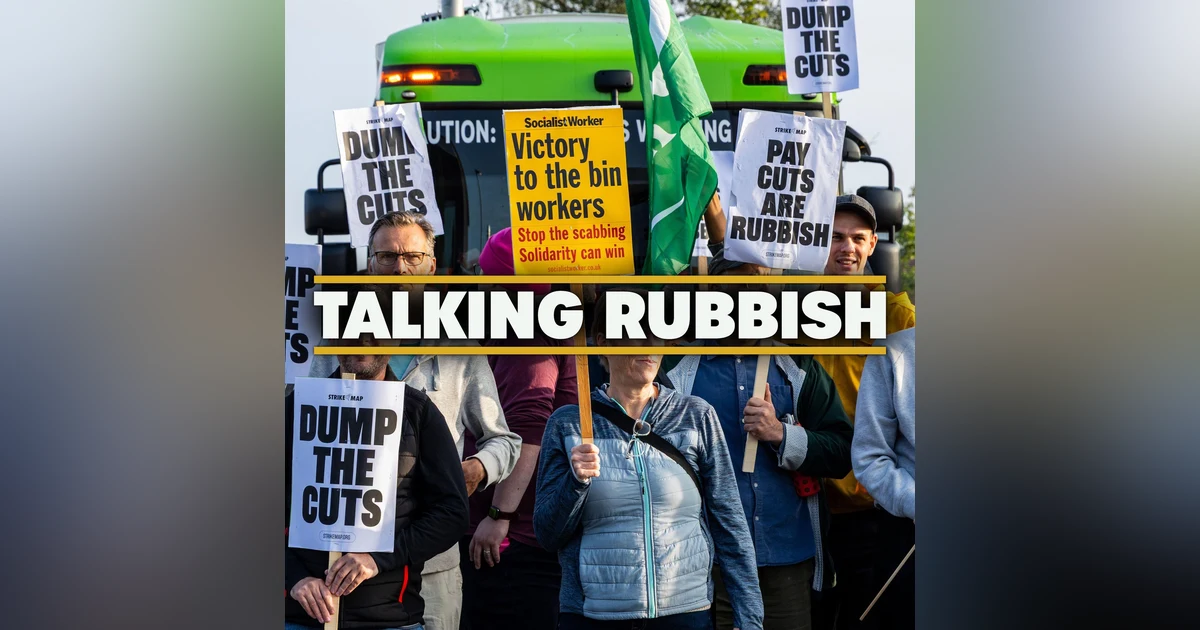
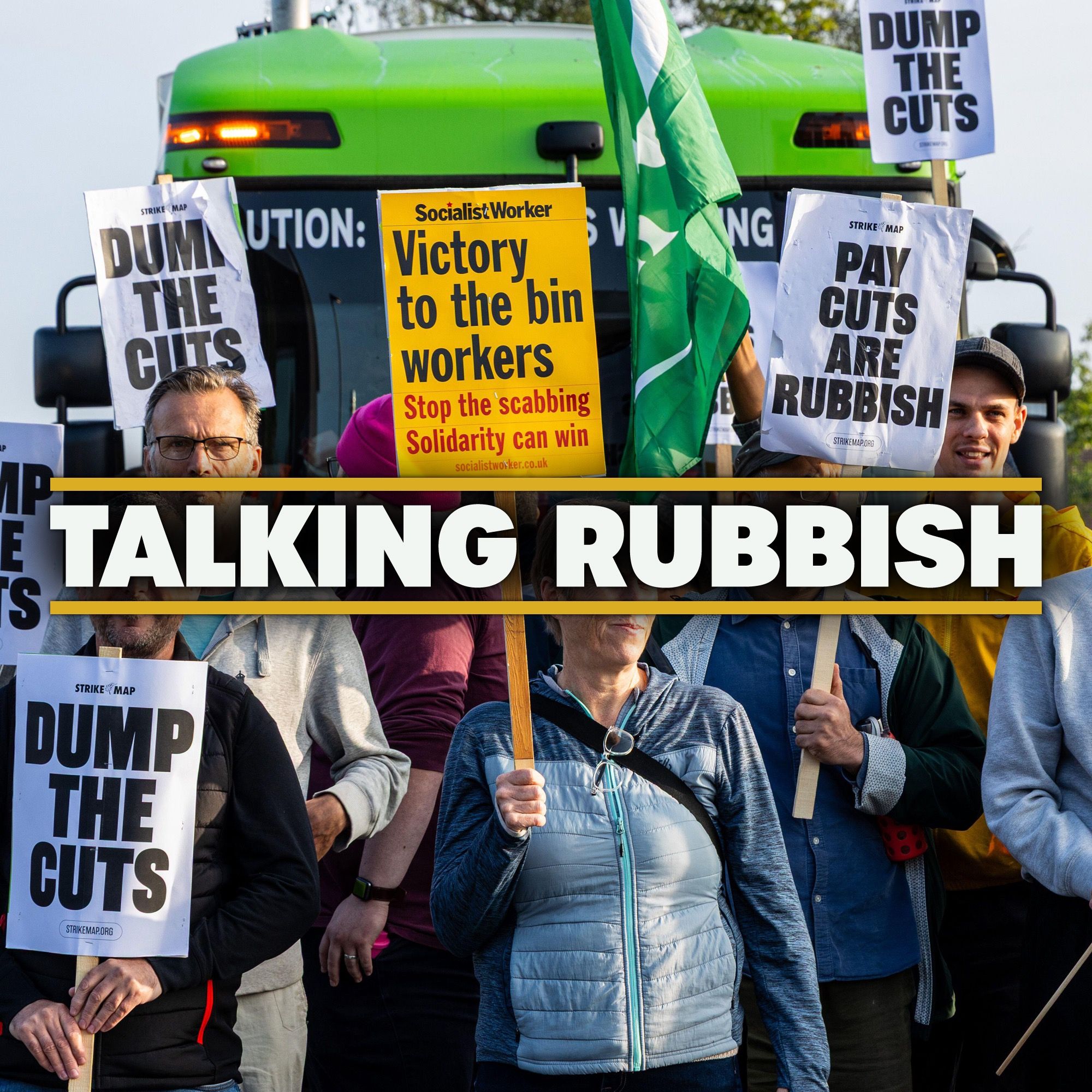
A year ago, Birmingham’s bin workers walked out, and the city began to fill with rubbish. What started as a dispute over changes to job progression escalated into industrial action that left up to 17,000 tonnes of waste piling up on the streets. One year on, we revisit the strike to ask what’s changed, what hasn’t, and who has paid the price. How has the dispute shaped public trust, city services, and the future of waste collection? And with major recycling legislation on the horizon, is it time for the standoff to finally end, or is the dispute far from over? Plus, are lighters rubbish or not, why is compostable packaging not compostable in California, and why was James interviewed for the wrong segment on BBC Radio 4?

 Apple Podcasts
 Spotify
 YouTube
 Amazon Music
 Castbox
 Podcast Addict
 PocketCasts
 A year ago, Birmingham’s bin workers walked out, and the city began to fill with rubbish. What started as a dispute over changes to job progression escalated into industrial action that left up to 17,000 tonnes of waste piling up on the streets. One year on, we revisit the strike to ask what’s changed, what hasn’t, and who has paid the price. How has the dispute shaped public trust, city services, and the future of waste collection? And with major recycling legislation on the horizon, is it time for the standoff to finally end, or is the dispute far from over? Plus, are lighters rubbish or not, why is compostable packaging not compostable in California, and why was James interviewed for the wrong segment on BBC Radio 4?
Join hosts James Piper and Robbie Staniforth as they delve into the world of recycling, hopefully having fun along the way. One thing is for sure, they will talk absolute rubbish from start to finish.
We would love you to join our community on Discord
Special thanks to our sponsor, Ecosurety
To get exclusive videos and clips, follow us on Instagram, TikTok, X, Threads or Facebook; @rubbishpodcast or YouTube: @talkingrubbishpodcast
Or you can contact James and Robbie with questions or just general rubbish musings using the email address talkingrubbishpodcast@gmail.com or by texting them via WhatsApp on 07356 069 232
Relevant links and reports mentioned in the programme can be found on the Talking Rubbish Linktr.ee
Transcripts and episodes can be found on the Talking Rubbish website
Timestamps:
Birmingham bin strike - 02:54
Additions and corrections - 34:49
Rubbish or Not: lighter - 43:03
Rubbish News - 46:23
Why is compostable plastic not compostable in California? - 50:52
Residual Rubbish - 54:04
Music licence ID: 6WPY8Q4O2RPFIOTL
Hello, welcome to Talking Rubbish, a weekly podcast delving deep into the world of recycling and discussing the truth behind snappy headlines and one-sided stories. In this episode, we will discuss the Birmingham bin strikes. Are lighters rubbish or not? And I have a question about composable packaging in California. I'm James Piper, author of the rubbish book, and I'm joined by Robbie Staniffel, my far from rubbish friend. Good morning, Robbie.
SPEAKER_00Hey James. Hello, how are you today? Yeah, very good, thank you. Looking forward to another app. Talk about strikes.
SPEAKER_01Exciting.
SPEAKER_00Yeah.
SPEAKER_01Last year, our first live show was at Packaging Innovations in Birmingham. That year has flown. That is unbelievable.
SPEAKER_00Can't believe it's been a whole year. Yeah. So many different topics we've discussed in the intervening year. Can't wait for the next one, though.
SPEAKER_01Since then, we have done six live events. Uh we were very busy. And I'm pleased to say we're back at packaging innovations this year. This is just a shout out to Binfluencers. If you want to come and see a live show, we're on on the 11th of February at 2.45 at the NEC in Birmingham. Uh, this event's actually free. So if you live local to Birmingham, come and say hello. We'd love to see you there.
SPEAKER_00And if you live local to Birmingham, you're probably listening to this episode because of the Birmingham bin strikes. Do you know?
SPEAKER_01Do you know? Sometimes I don't join topics up. This is very much one of those times. Thank you for pointing that out, Robbie. Oh my god. Right, so we're living in Birmingham, so this episode is gonna have a lot of Birmingham listeners. Come and see us. This is great. And it's free too. No reason not to. Bring your waste. Robbie will recycle it for you. Do not bring your recycling with you. Yeah, we have an absolute, honestly, an awesome trash talk planned. I was literally just before we recorded talking to Robbie about what we're going to cover because um I've seen something that I think is going to be really interesting. But basically, it's asking the question: can collaboration around sustainability and recycling ever be a problem? And I mean that in a legal sense. Does it ever cross over into kind of antitrust laws? And this has come from some Republican states in America who have been writing to some of these collaborations saying, look, what you're doing isn't legal. We're probably going to get a little bit into politics, dare I say it. And it's going to be a little bit kind of interesting just to get our different views on this. And I'm really looking forward to it. So if you want to hear that trash talk first, so the idea is recycling collaboration illegal. If you want to hear that trash talk first, come and see us at Packaging Innovations. But do not fear, if you don't live near Birmingham, we are going to record it as a proper episode as well. So you will hear it a few weeks after. But if you want to come and see it first, if you want to ask us a live rubbish question or rubbish or not, come along. So today we're asking the question: what happens when our bin collections stop? The answer isn't very pleasant. No, in Birmingham, unfortunately, the answer has been rats, maggots, fly tipping, and suspended recycling. And over 17,000 tons of rubbish which has been left rotting on the streets.
SPEAKER_00Not a pretty picture at all. It's one of those things where only when these vital services stop does society suddenly sit up and realize just how important they are and why they were introduced in the first place. Because that does sound like something from the even pre-Victorian era to be having rats, maggots, and fly tipping in the street.
SPEAKER_01So the reason we're covering this is because we've just had the anniversary of the bin strike. It started in early January 2025. I think it was the 6th of January. Bin collectors started striking in Birmingham. I think it's fair to say national attention has turned away from it. And you would be absolutely forgiven for thinking the strikes were over. Thank you for forgiving me, James.
SPEAKER_00Because until you mentioned this to me a week or so ago, I was like, is that still going on? I can't believe it.
SPEAKER_01They're not over, they're far from over. I think it's the longest strike. And just to show how long it has been since we last talked about it, we talked about it in episode 39, which was all the way back in April 2025. So it wasn't a particularly live rubbish news then? It was quite no, it was live because was it even my rubbish news or was it just an update? I can't remember. But if it was the rubbish news, it was live because even though it had started in January, the full-scale walkout was in March. Ah, yes, okay. There were people doing kind of day strikes in January and going, we're off for a day, but the full walkout, the full we're not coming back to work till this is resolved, was in March 2025. Sometimes you just have the smallest thing that starts these kind of actions. And this one is the removal of a role called the waste recycling and collection officer. My understanding of this is basically it's taking away the route to progression. So people working collecting bins had different levels of progression that they could hit. And waste recycling and collection officer was basically a promotion. The council argued, well, no other council has this position, so we're removing it. But of course, for people who were collecting our bins, that meant they had less route for pay rises and for responsibilities increasing. And there was a real dispute into how many people were affected by this. The union, which is called Unite, and we're going to talk about Unite a lot, the union that represents the workers said 170 people were affected and could lose £8,000 per year as a result. And the council said actually the max loss was £6,000 because it was capped on into pay bandings. And instead of £170 people, it only affected 17 people. Now the council had a much lower number because they were offering new roles or retraining to the people affected. So I think it's probably true that lots of people were affected. But the council was saying, yeah, but we're offering them jobs with similar pay bandings, or we're retraining them into something else, so we don't count them as being affected. I mean, whatever the truth, the Union Unite voted for the workers to strike, which halted bin collections in Birmingham. And as I say, on the 11th of March 2025, 400 workers walked out indefinitely and have continued to walk out.
SPEAKER_00So you can see why it caused such a pile up of rubbish, like 400 people. And we see every day on the streets of the UK how hard those refuse operatives work rushing around trying to get all of the recycling and general rubbish collections done in time. They don't hang about, uh, shall we say, is my experience of them, certainly in Bristol.
SPEAKER_01And just for international listeners who may not know what Birmingham is, it is the second largest city in England with a population in the city itself, the main city, population of over a million people. So this is a huge problem that that many people suddenly have their bins not being collected. And almost immediately rubbish began piling up across the cities. Wheelie bins were overflowed, streets were lined with black bin bags, there were increasing complaints of rats and maggots.
SPEAKER_00I remember in April I had a meeting in Birmingham. So I went into the central city station, um, and there were a few blocks of flats on my walk between there and where I was um going for the meeting, and literally it was like a dystopian scene with wheelie bins overflowing, and then you know, like the old school black bin bags just piled up in a corner, and um it was that stereotypical what happens when your bin gets missed, and sometimes they do get missed from one week to the next, don't they? But this was what happens if they just never get collected for a few weeks, and that was literally only a couple of weeks in by the signs of it.
SPEAKER_01Birmingham City Council actually had to declare a major incident, which Well, just because I was so aghast. That's brilliant. Yeah, they saw they saw you, they went, Robbie's here. That's the major incident. Nothing to do with the pins. Kicked you out, got the army in. Uh and uh just again for international listeners, a major incident basically is something a city could, I mean, it's something lots of people could do if there's, and it's normally reserved for medical emergencies or terrorist attacks, things like that. But in this instance, what it allows you to do is bring in outside help basically. The government steps in to get more involved, provide more funding, provide more people. And that they did this because the contingency plan wasn't working. They had a contingency plan, which was we're going to use temporary agency staff to collect waste once a week. So we're going to replace the 400 workers who are striking with 400 temporary staff. But what was happening is the 400 workers that were striking were not letting the agency staff through. The picket. So they were blocking the trucks coming through. And the council were actually saying only one vehicle could get out per hour. So they weren't able to do the collections once a week. And this is what led to that peak of 17,000 tons of waste uncollected.
SPEAKER_00Okay, so basically it's them chaining themselves arm to arm together and barricading the exit of the station where all the trucks are parked up. It's literally as simple as that.
SPEAKER_01I think so. I'm not entirely sure how they did it, but I've got that in my mind that you were linking arms and blocking it. That's crazy. Yeah. Yeah. So turning it into a major incident allowed them to get an extra 30 vibe vehicles and some extra crew. So that started to just give more opportunities for trucks to be out there collecting. But it continued to be a problem. People continued to block the trucks. The people who were striking, it's worth noting that this is unlawful. You know, if you strike, you're not then allowed to stop the operations uh of what you're striking if they choose to get replacement staff. So in May, the council were actually granted a high court injunction to ensure that the protesting behaviour improved and that stopped the vehicles being blocked. So at this peak of 17,000 tons of waste lying around because the trucks weren't able to get out and get back in. And in May, that eased and that allowed them to go and start collecting up the 17,000 tons that had been had been building.
SPEAKER_00Okay, so it was a couple of month period where basically this direct action did actually halt any meaningful collections for most residents in Birmingham.
SPEAKER_01And I think it did continue because they had that high court interjection, but I did read that I think in July the council took Unite to court to say you're still blocking the trucks. But it certainly eased off, and I I think that is still ongoing, actually, that case. I guess importantly, for us and our podcast, our recycling podcast, the contingency plan meant not collecting any recycling. And they suspended all recycling, garden waste, bulky waste, and paused the introduction of food waste collections. And that has been ongoing since February 2025. It has been a case of there's 17,000 tons lying around, just get that cleared. Don't worry about recycling.
SPEAKER_00I cannot believe that that is the backup plan. It's like recycling is not that important when push comes to shove. We'll just stop doing it if it becomes. And I uh admit that it is very difficult to continue services when you've got 400 people uh unwilling to take part and that need to be temporarily replaced. But to have that as the contingency plan just seems incredible in this day and age.
SPEAKER_01See, I can believe it. Because what are you gonna do? You can't have multiple trucks going round going, oh, we're collecting the paper, the glass, the plastic, and then the next truck's doing general. It just doesn't work, does it? It'll be really interesting to look at the data because when we come to look at the 2025 recycling data, I think Birmingham are gonna be bottom of the list. There's gonna be a nice promotion for Tower Hamlets there. Second to last. I think um and it it is actually a bit close. Birmingham might actually still beat Tower Hamlets, even having paused all their recycling. Can you believe that? Get out of time. I think it's gonna be close. So basically, Tower Hamlets, I think, had a recycling rate of just over 15%. And Birmingham at the moment is on track for a recycling rate of about 13%. And the reason for that is because people can still take their waste to one of the five local household waste recycling centres or tips or dumps or whatever you want to call it, and people can put it in the correct bin at the household waste recycling centre. And it is thought that they will achieve a recycling rate of about 13% for the year 2025. If Birmingham has a higher recycling rate in Tower Hamlets and they've switched off all their recycling for a year, I think we need to get more listeners in Tower Hamlets.
SPEAKER_00Yeah, I mean the fact that voluntarily another city can beat the recycling rate would be quite incredible. But I imagine the BIM fluencers out there, that's exactly what they're doing. They're bundling up their recycling, they're still doing it regardless, and they're taking it to one of these five local recycling banks. Uh, I think they set up some temporary banks as well. We'll come on to those in a sec, to actually say, look, I'm not willing to stop doing my bit as a citizen and as a householder uh in Birmingham.
SPEAKER_01Now, having said all that, to be honest, Birmingham actually had one of the lowest recycling rates anyway at 22.9%. So it's like they've gone from 23% to about 13%, they've dropped 10%. And I guess this matters just to remind people because recycling performance is a key legal and political metric for councils. Birmingham was already struggling.
SPEAKER_00But this is the big problem that citizen confidence in recycling in a place that already only had 22.9% anyway, is going to be through the floor, unbelievably low as a consequence of all these strikes, because they'll just be saying, Well, the council doesn't really care. Why should I care? Nobody cares. We just pause the collections when the going gets tough. And the going has got very tough. I want to reinforce that. But still, if you're the average person expecting these local council services to continue uninterrupted and you do your bit, etc., etc., it's very easy for that narrative of why should I bother recycling, thinking back to our episode of uh whether recycling is all a lie anyway, it just feeds into that same narrative.
SPEAKER_01And you mentioned there a minute ago about the mobile collection centers. So this was essentially two trucks that were moving to different locations each day, and people could come and bring their waste to these trucks. I don't think they recycled any of that. I was looking at some leaflets saying here's what to bring to the mobile recycling truck. So basically, don't bring fridges, freezers, sofas. But it also said don't bring your recyclables. So I'm pretty confident that if you wanted recycling, the only way to do it was to go through the household waste recycling centre.
SPEAKER_00Okay, so it was a sling your black bim bag in the back of this truck type affair, we think. Basically, yes.
SPEAKER_01Over the spring and summer, just to continue our year, talks between the union and Birmingham City Council continued, uh, but deals continued to be rejected by workers and the union. And Unite, who were the union involved, accused the council of not negotiating. Seriously. And during the summer, the council said, look, we have reached our absolute limit of what we can offer. We're not negotiating anymore. And so the local authority walked away from the negotiations. And that's sort of why it feels like it doesn't have an end. I don't know what's going to happen. Total deadlock. Yeah. The local authority aren't offering anymore, and Unite aren't accepting the max offer. And that's from the summer. And we're now the strikes have been extended to at least March this year. So yeah, it's just going to keep going. And these workers, what are they doing? They how are they supporting their families? Yes, I've got a view on how this could end. So that is a great question. So are they being paid? was a question I had. And no, they're not. I mean, the striking workers are not being paid. But there was an ITV report I found that said Unite was giving £80 per day to each striking worker to ensure they were not forced back to work by not having enough money. So the union is compensating the striking workers £80 a day, but uh they're not being paid by the local authority.
SPEAKER_00Okay, so that's being taken from the reserves of the union from their member membership fees and subscription fees and their reserves that they build up, obviously. Okay. I don't know a lot about unions, by the way, so this is all learning.
SPEAKER_01A union is just someone representing workers' rights, right? And they decide or they vote en masse about whether to do things like industrial action like this, and they will have a membership fee or a subscription fee to be part of the union. And basically, you're not a lone voice then. If you've if you're negotiating pay increases or something like that, you're not on your own, you're doing it en masse with all your colleagues. So it's a very historical thing for the UK, isn't it? Unions. Very historical. And we get less of it now, much less of it. But in in industries like this, I think you still see unions, things like the post office. There will be there will be lots of kind of these historical establishments that still are unionized.
SPEAKER_00Yeah, and I think definitely lots of the public uh bodies are much more so unionized. So my only experiences of teachers' strikes um that have happened at my my daughter's school in the last year, um, there's been an actual walk out of some of the support staff and things. And it's for similar reasons around paying conditions, isn't it? So £80 per day, though, so that they're not forced back to work, it's not like they're living the life of Riley, is it? You know, frankly, that's below minimum wage.
SPEAKER_01And that is why I guess there's an interesting note here that a lot of the workers, or some of the workers, have stopped striking, but they haven't gone back to work, they've taken other jobs. So there is an interesting note here that all the originally affected workers, as in the people who were going to not uh lose out from this, you know, the council said it was 17, United said it was 170, they have all taken alternative employment with the same pay grade or voluntary redundancy. So there is nobody on the picket line who actually was affected by the changing salaries and losing of jobs.
SPEAKER_00Okay, so it's their futures that have been affected because they don't have this route to career progression and there's no obvious next job, they're just kind of stuck in the same role, and that's the reason. It's that for their future that they continue to be.
SPEAKER_01Exactly. The people who were already in that job or uh who were perceived to be losing, they have taken other roles. So I think that's over a hundred staff so far. I think the picket line is down to about 275 from 400 at the start. So that is the obvious end to this, that you just keep going till there's nobody left on the picket line and everyone's taken a different job. And the temporary agency staff become your full-time staff. That might be the end. You know, you just you just keep offering jobs to the picket line until they disappear, which is crazy. But it does feel like that's where this is heading because there's no agreement inside.
SPEAKER_00And I suppose the council are thinking, look, we haven't got that good a recycling rate anyway. So we're just about managing and waste is no longer sort of piling up to the same degree as it was initially. We'll just wait this one out.
SPEAKER_01Yeah, in November the story took a genuinely strange turn, speaking of the agency staff, because some of the agency staff who had been brought in to replace the striking workers themselves decided to strike. Unfortunately, this is because they cited unsustainable workloads, which I guess you can imagine with the amount of work that you're having to pick up, but also a bullying culture. It's obviously a very serious thing, but basically they were saying at the site there was a lot of bullying going along, a lot of intimidation. And so the council have denied this, but from an agency worker perspective, basically it just compounded the problem because you've got striking workers replaced by agency staff who themselves are now striking.
SPEAKER_00Yeah, well, I mean, I can totally imagine that that is not a great job to go into having to just in emergency measures or whatever, you know, uh an emergency has literally been declared, you're the person going in to have to try and sort out the mess. I can totally see why that's unsustainable as a job.
SPEAKER_01Absolutely. And there were 22 agency workers who were part of Unite, and 18 of them decided to strike. So of the 22 that are part of a union, 18 decided to join the picket line. Now, around the time that was happening, so in November last year, the council said they were collecting 1,330 tons of curbside waste a day. Now, ironically, that's more than the city was collecting before the strikes. I guess that's not surprising when you've got a huge amount of waste built up. It's a huge volume, over a thousand tons a day. And in the six months prior to November, they had collected over a hundred thousand tons. So this is a huge amount of waste where they're clearing. This wasn't the end of it though, it continues because waste criminals have absolutely jumped on it. They've seen an opportunity to fly tip and sort of get away with it because the city's already full of rubbish. And so there was fly tipping in quite a few of the roads. And I found a story from a company called FH Warden Limited, which is a steel company that said they were unable to take deliveries because fly tipped waste was actually blocking the road to their business. So they were losing thousands of pounds because they couldn't get deliveries to their site.
SPEAKER_00Yeah, so basically these are either waste criminals or individuals going and dumping their waste in various quiet corners. It's gotta go somewhere. You can't just pile it up at your home, and people are obviously taking the opportunity to either make a quick buck or do or simply do something illegal themselves.
SPEAKER_01So just to summarise where we are now, we've got a strike that doesn't appear to have an end, that is definitely going till at least March this year and probably will be extended beyond that. It's a real stalemate, and so temporary workers will continue to fill the gap. But we're at a time where legislation is significantly moving in the UK, and in April this year, we have simpler recycling coming in. And just to remind what simpler recycling is, and we need to do a dedicated episode on it, probably, because we keep talking about it. And we haven't actually done a like let's do an overview of simpler recycling, but just to we'll do that near April. Just to explain what it is is simply councils from April 2026 have to provide residents with four bins, one for paper and cardboard, one for glass, metals, and plastic, one for food waste, and one for general. And we are in a situation here where we have a city that is striking where they're not even doing the bare minimum recycling, and they are going to have to comply with that law. So that is really complicated. And I guess I wanted to find out before we come to you, Robbie, because I wanted to find out what would happen if they didn't comply with the law. We sort of talked about it a couple of episodes ago with Wokingham, who weren't collecting glass or aren't in aren't expecting to collect glass until 2027. Birmingham have come out to say they are going to implement simpler recycling. Really? Yeah. So come on, Wokingham. If a striking council can do it, you can do it. Absolutely. It's unbelievable. So yes, they're making so they're moving their general collections. So they've been weekly while they collect the backlog. They're going to move that to Fortnightly. They are going to be a bit late on Simpler Recycling, we should say. I think they're introducing in this all in June. So they're going to be a little bit late. Um, but they're moving general collections to Fortnightly. They are reintroducing recycling bins, and they're bringing in weekly food waste collections. I mean, fair play to them. There's a lot going on. I'm amazed they've managed to get that through. Now they have said they expect the recycling rate to increase to 30% initially. Not, I mean, come on. You could do better than that. But I'll uh I'll uh in this instance, I will allow 30% in like the first year because there's a lot going on. But I'm hoping that's just a starting point. It can ramp up quite significantly because 30% is still very, very low. It's very good for the second largest city in the country. You know, it's such a big city that you are going to have a low recycling rate. But I do think we should be looking at more like 50% when you've introduced complete recycling and food waste into a city of this size.
SPEAKER_00Yeah, well, I suppose it's heartening to hear that the council are still planning behind the scenes, despite the on the ground operational challenges, they're not letting that consume their entire short, medium, long-term planning around recycling services. So, in a way, that is, even if it is only 30% initially, it is heartening that these hardworking individuals who are trying to oversee the waste management services of an entire city are really seeing the bigger picture.
SPEAKER_01Well, and they get to put out press release saying we more than doubled our recycling. Because they've had this massive dip. So maybe everyone before they implement simpler recycling is just take a massive dip so that they get a nice press release and they're increased. Yeah, I had a little look at the approval that had gone through uh the council for the plan, and they have agreed that if industrial action, so if striking continues, then they will put in place a separate workforce just for the food waste collections. So they sort of have a plan to basically spend their way out of this to go, okay, we've got a collection that's going to do general and recycling and a collection team that's going to do food waste. So they do have a plan for if the strike continues. But it does seem that they are quite adamant on introducing this by June 2026.
SPEAKER_00Well, I mean, great to hear that they've got a better contingency than what they originally had, to be honest. I'm really glad to hear it.
SPEAKER_01So, Robbie, the question is we're moving into a world where the legal requirement is the way you collect and materials you collect, and that makes it much stronger than what we've had in the past. What would happen if a council decided not to follow this law?
SPEAKER_00Yeah, it's such a complicated thing because you've got one section of government, central government uh of the UK that governs kind of waste around England, setting up rules and laws that then need to be executed by these local authorities. So it's government against government. Like, why aren't you doing the things that we said? But you've got to think of them as totally separate organizations and not just the government, it's all one amorphous thing, as the average citizen might be forgiven for thinking of the government in that way. And so there's nothing that specific on penalties, on how they can bring the local authorities uh into compliance with the legislation in simpler recycling itself. So, because of that, the default is somebody taking that local authority that hasn't implemented simpler recycling correctly or quickly enough to it the process of judicial review. And judicial review in the UK is a procedure basically where you can go through the courts to take administrative action on a public body, you know, and to secure a declaration, an order, an award to to basically bring an area, a public body to account, not just the central government, but any public body. And that I think is one of the reasons why we haven't seen anything move quickly in Birmingham in terms of the strikes, because who's going to bring the judicial review against Birmingham City Council? How long is that process actually going to end up taking through the courts? And what will it actually lead to in terms of resumption of the services? Is it going to help any? Because, as you can imagine, the council are working as hard as they can to try and resume the services, but they're in this deadlock and a judicial review isn't suddenly going to magic up a whole set of new workers that are willing to collect the bins in Birmingham. So you you've got to think that if switching to just local authorities like Wokingham, who are saying they're going to be late with simpler recycling, what would happen to them? Well, it would take someone requesting a judicial review and going through that legal process. Is it likely that central government will do that? Probably not, because it makes them look a little bit weak, if we're honest, that they can't implement their own law that they've created. But alternative organizations might do that. So trade associations of producers who are funding these collections through the extended producer responsibility system might say, look, we're the ones who are going to go after this local authority and say, you're not doing what the law says you should, and we're going to take this public body to court.
SPEAKER_01Very interesting. And I had a similar question about EPR funding. Because I was thinking, just following our episode a couple of episodes ago where we talked about EPR, is Birmingham getting their full EPR funding? Because they're not recycling. What are they getting funding for? If you're not collecting recycling, that's what EPR funding is about, right? And so I reached out to Pac UK to find out. And I spoke to Esther, who was our interview for episode 65, who is part of the Pac UK team, and she said, yeah, they will get their EPR funding. There is nothing to stop a council reactively getting the funding. Nothing in the legislation that allows that to happen. What they do have is if the council then doesn't recycle, doesn't collect properly, and doesn't show that they are being efficient and effective with their recycling collections, then PACUK have the opportunity to lower the funding in future years. So I guess that is what will drive Birmingham to introduce simply recycling. Because if they don't, when they come to us for funding in year two, it is likely that PAC UK will say, well, hang on a sec, you haven't recycled anything, so we're going to lower your funding. So it's in their interest to introduce these recycling collections back into the system to show that they are efficient and effective and running properly, which will then mean they continue to get funding. So it's super interesting. I had no idea that you could be a council not recycling anything really, other than what's coming out of your household waste recycling centre, which doesn't have the collection cost attributed because the public are bringing it to you. I was very surprised that you will still get that EPR funding. And I guess it's important to recognize that the funding drops in the future, not now.
SPEAKER_00Yeah, and let's hope that PAC UK kind of hold the line on making sure that local authorities genuinely are efficient and effective. Yes, that they're fair and they give them an opportunity to improve their services, but actually that's really the only stick in the system. It's mostly carrot in terms of funding being doled out for these services. There does need to be that stick so that local authorities have themselves, as individual workers within a local authority, have the motivation and that kind of genuine cliff edge or burning platform to go inside the council to say we must do better with our recycling services, otherwise, we're going to have a huge hole in our budget, and PAC UK aren't going to pay us as much as they did in the prior year.
SPEAKER_01So just to wrap us up, there have been a few bing collection strikes over the years, and every time I find it astounding how quickly waste can build up. And this one with over 17,000 tons at its peak is quite astonishing. And I guess what sets Birmingham apart from the others that have happened in recent times is that duration over a year and the scale of it, because this is England's second largest city. I guess Robbie, do we have a view? So having gone through all of this, I guess we have to ask the question do we agree with the strikes? How are you feeling about this action in the first place and whether it's the right thing to do or not?
SPEAKER_00Yeah, well, I can totally see why the workers have decided that this is a role that in the future I want to get, but it's quite hard to see now that the council have acted in the way that they have, and all of those people who originally were directly affected have now sort of dissipated for whatever reason, taken other roles, etc. It's quite hard to see why and how it's justified to continue, which even when I'm saying those words is very, very difficult because you totally understand why people want to have career progression and things, but it's one of those things where the deadlock needs to stop at some point very, very soon. And my thoughts are much more so with those workers to make sure that when it does end, they are satisfied with the conclusion and it doesn't just end up with a whole new workforce and all of them doing something else because the job that they had done up until the point of striking, collecting people's waste day in, day out for many years, I'm sure, is such an important one and something that they should be proud of.
SPEAKER_01Yeah, and I think from my perspective, it's really complicated. And I I agree with you that it is really helpful in this country that we have routes for workers to have power. And whatever that is, we have doctor strikes, teacher strikes. It is useful for people to have something they can turn to if their organizations are not working for them. But I think it just goes on too long and you get to a point where you can't negotiate any further, as the council have said in the summer, and then you have to make a decision. Am I in this job because actually that's the most money I'm going to get, or do I need to go and get a different job and we'll recruit people who understand what they're signing up to. I think workplace changes are really complicated, and like here where they're taking away a role, that's really hard for people. But you can't just have a strike going on for years and years and years. You have to get to a point where you've got a resolution or you need to say, okay, well, this isn't the job I signed up to, so I'm going to go and get a different job. And maybe that's easier said than done, but I I think it doesn't help anyone, you know, having these extreme costs. And a council was already struggling, we should say. We haven't really talked about that, but the council effectively went bankrupt a couple of years ago. So a council that's already struggling that has to make changes for its citizens, you're at a point now where it's potentially gone on too long and there's not much more you can do other than just let it run out until the picket line reduces to zero. I guess what Birmingham does show us is how fragile essential services really are and how quickly everyday systems we take for granted can collapse. Additions and corrections. I was on You and Yours on Radio 4 recently, Robbie. Oh, very nice. Nice to be invited. Yes, I think this is my fifth or sixth time. I should keep count, really, but yes, I I really enjoy going on you and yours. But you the new co-host as well. Just I'm their recycling guy. They go, oh, we've got something that we've got recycling to talk about. Oh Joe, I know a guy. And we were discussing paperization, which is very relevant. Uh but it was kind of just coming out of Christmas. I think one of the producers had noticed how much cardboard and wrapping paper and all that stuff was floating around their house. And I got to tell my Parmazan story, you know, how I bought Parmazan wrapped in paper, opened it, and it was just a normal plastic wrapped cheese. Oh, yes, I remember that. So I get dialed in, you know, 10 minutes before I go on. This is typically how it works. They ring your phone. Um in this particular instance, I actually completely messed up and accidentally pressed the FaceTime video because they FaceTime audio me. I accidentally pressed FaceTime video, so they just saw my face. You know, the producers would have just seen my face appear on their computer. So I hung up, but that meant I hung up the whole call. So they had to call me back. Luckily, I wasn't on at this point. So they called me back and I get dialed in 10 minutes early, and I get to listen to the show. You know, that's all I can hear on my phone is the show. And I had no idea what they were going to talk about this day I was on. He he hadn't given me anything.
SPEAKER_00What the other topics you mean before the recycling?
SPEAKER_01Yeah. No idea what they were going to talk about. And I'm listening in, and all I hear is the opener to this section, which says adults are buying children's toys for their own use, and it's fueling toy sales growth. We went to a cafe in Levington Spa where adults play with Lego. Literally, you could have heard my notes just get shredded as I went. Right, we're just going to talk about Lego paper bags then. Oh, great. The whole section before me was about Lego and about how adults are now playing with children's toys. And I was like, uh, I'm ready. Any of our influencers who were listening over Christmas will know that's the topic for me. I should have been delved into that one. And let's have an update on the Oxfordshire fly tip. So this is the very large fly tip we talked about in episode 71. And following the Environment Agency insisting they would not be the ones cleaning up the waste. They are in fact cleaning up the waste.
SPEAKER_00Oh no, gosh. Oh, it's horrible when you have to row back like that on public statements.
SPEAKER_01In a move that has shocked absolutely no one, the environment agency has now authorized the clearance of the site. And they authorized it in December 2025. They said there was a risk from combustible and decomposing waste. I'm pretty angry about this for lots of reasons. First of all, the length of time this has taken. Okay, so let's just remind influencers. The environment agency discover the site in July. They officially close it in October in a process that should have taken a couple of days. It took many months. Between July and October, more waste arrived to the site. So between the environment agency discovering it and them closing it, more waste arrived. They then say, well, we're not going to clean it, we're going to find the criminals, leaving it two more months, or three more months, technically seven months from them actually discovering the site, but three months from closing it, they now announce they're going to clean it. Because they have to. But now we've got a situation where taxpayers are paying for the cleanup of a site that has got bigger under the supervision of the environment agency. It is so frustrating and a complete waste of time. And you know, at the time they were saying we're going to make those responsible pay for the cleanup. This is not going to happen. When they find the people responsible, and I'm sure they will, they will discover that the law steps in and says, you can only find them what they can afford. And they will have small amounts in their bank accounts, and that is what's going to happen. The taxpayer was always going to pay for this cleanup. And it annoys me that waste is sat there for seven months. And but and by the way, just to make it even worse, the cleanup isn't even starting till February. And they've said it's going to take six to nine months. So we're talking about like the end of 2026 when this will be complete. And you could have started it in July 2025 and it would have been a smaller site to clean up, and you would have finished it by now. You know, so instead of starting it when you found it, instead of closing it a couple of days after finding it, and then, you know, cleaning it up, what you've done is delayed it by six months, and you're and another two months, and then you're it's going to take nine months because the site got bigger than when you started when you first found it. So I'm pretty frustrated by this. And Callum Miller, who's an MP, told Parliament in this case it is clear that the EA prioritised invest investigating the crime over protecting the site by containing the waste on it. And I think in this instance, I agree with that. And a couple of episodes ago we talked about EPR and we said we weren't 100% sure when money was going to start flowing to local authorities. Pac UK were listening, and they confirmed that before Christmas they'd actually already paid local authorities £700 million.
SPEAKER_00Whoa, okay, the money's making its way. Great to hear.
SPEAKER_01Fantastic. Yeah, thank you so much for updating us on that and really pleased to hear that the money's flowing. And apparently, local authorities are already doing good stuff with it. So I'm looking forward to reporting on what that money is actually used for as we get more transparency. We'd like to take a moment to thank our sponsor, EcoSurety, who are on a mission to rid the world of unnecessary packaging. They help brands navigate the tricky world of extended producer responsibility, but that is not all. They also collaborate on some incredible recycling projects and consumer awareness campaigns for those tough to recycle materials. If you're an organization looking to make smarter packaging choices, check them out at ecosurety.com. And the best thing you can do to help our podcast grow is to let your friends and family know about it and tell them to talk rubbish with us. And the other thing you can change it every week. And the other thing you can do is leave us a review. And if you do that, you will be Robbie's review of the week.
SPEAKER_00And this is a very neatly written review. I really like it a lot. It came through on Apple, as many of them do, uh, with five stars. The artful badger wrote in with this one. So the headline is glittering with positivity. Obviously, it is a nod towards the fact that we hate glitter, but I like it all the same. This podcast reduces my stress levels. I can reuse all the episodes and recycle the info to anyone who will listen. And I'm also pretty sure James and Robbie are compostable. It's very good. Well done. Managed managed to fit all those key terms into just one or two sentences.
SPEAKER_01I absolutely love that last line because it reminds me of a friendly debate I was having on LinkedIn with someone. I was you know, we were doing our dog poo bag thing. And uh Which continues. I have no update on the dog poo bag. We need to get these companies changing their ways. Anyway, it's a whole different thing. I was saying those dog poo bags shouldn't have the word compostable on them as they aren't composted. And someone responded saying the word means the bag is compostable and basically has no relevance to its end of life. More on that in our rubbish question today. We'll find out if that's true. So I responded saying the word means compostable, but that does not mean the word should be on everything compostable. There should be thought given to the application of a material and not to encourage the impossible. Technically, I am compostable, but I'm not planning on wearing a t-shirt to suggest people should chuck me in a pile of leaves. So I'm pretty sure we're compostable too, Robbie.
SPEAKER_00Yeah, I know we definitely are. I I think whoever wrote this review probably read that comment. Or maybe maybe it was the person who was saying that it had no relevance to its end of life.
SPEAKER_01Unlikely, I don't think they're going to give us five stars. Maybe you've converted them, James. Very, very, very unlikely. You can follow us at rubbishpodcast on social media. You can email talkingrubbishpodcast at gmail.com or you can WhatsApp us. Also join our Discord. It's the easiest way to engage with us and listeners of the show. And the link to all of those things is in our show notes. Rubbish or not? So this was Louise on Discord. She had her first litter picking excursion with her daughter, who actually wanted to do it to look after the planet and was complaining that people don't pick up after themselves. So well done to Louise and her daughter. After an hour and a half, they'd collected two bags of waste. They were estimating that half of it was flexible plastics, 30% was recyclable packaging, and they found 24 vapes. I mean, that tells us everything about the vape issue, right? They also found a rubber ball. Which was fine. I think I don't know if they've kept it, they just said it was a bit dirty. I would have washed that and kept that. They also found a lighter, and they were asking what to do with lighters. So I'm presuming this is a disposable lighter, but Robbie, what do you reckon? Rubber short dot?
SPEAKER_00Oh, I think a very difficult to recycle a lighter. So I would say if it's a disposable one and one of those kind of plasticky ones, it's rubbish. However, most lighters even cheap ones, you can refill with butane. You know, if you get the just provided you get the right nozzle and that the flint is working, I wouldn't really know how to replace the flint on it. Then you can use them at home to be lighting the campfire in the summertime, maybe, or the barbecue. But yeah, on a on a cheaper model, if the flint's gone and there's no gas in it, this is the kind of thing that is rubbish. However, it definitely does need to be completely empty of fuel for safety reasons. It needs obviously ignition, but it also needs fuel to start a fire. And if it's got fuel in it, don't be putting it in any recycling bin. You either need to empty out the fuel or take it to a hazardous waste recycling facility at your local council. They will have a place. It'll be next to all of the gas containers that we've talked about, gas canisters and things we've talked about in previous episodes. However, if you're someone listening into this using lighters, why not get yourself one of those lovely zippos? One of those metal ones. They can be recycled at the end of their life in a steel bin and they can be used for years and years and years and years. That's like the metal one. Or just use matches.
SPEAKER_01We should do a rubber's question, shouldn't we? Which is better, zippo or matches? That's a good question.
SPEAKER_00Yes, that is a good question.
SPEAKER_01Just have a think about that. So, yes, uh, just to summarise, I completely agree. If they are not refillable, then it's just the general bin. And if they are refillable, please refill them. And if they're broken and it's a zippo, it can just go into the steel bin at your household waste recycling centre. I felt that I should throw another one into the mix in terms of a USB lighter. You can buy now lighters that are powered by USBs, they just create like a little spark, like a I don't know what they call it, like a plasma thing. Really? I've not heard of this at all. It's not a flame, but you would use it to light a candle or something like that. They will start a flame. I'm not sure how good they would be for lighting your like No, they probably work on your fire as well. I mean, I'm gonna have to get one. I haven't got one, so I haven't tested this. Okay. So maybe I'll buy one and then we can do an additions and corrections. And then because my house is pretty much entirely powered by solar, I can plug the USB one in it. That's gonna be better than matches and Zippo, I think. Rubbish news. My news this week is about encouraging builders and plumbers to recycle things, which can be very challenging. Oh gosh, yeah. When you've got people working in your house, they're collecting up things like old packaging, damaged products, offcuts. And it can be a challenge. I suspect a lot of builders and plumbers have a van full of rubbish that is built up over time.
SPEAKER_00Mixed stuff, lots of different things.
SPEAKER_01And so Plum Centre, which is part of the Wolseley group, has launched an initiative with Polypipe, who I think make products, and they are offering a reward if you bring back recycling. So in the UK there are 400 plum centre shops, I think over 400. And if plumbers or builders bring their waste back, then the first time they bring waste to the store, they can get a five-pound Greg's voucher.
SPEAKER_00Wow, that's fantastic. To try and sort of ingrain that habit of dropping it off at your local plum centre when you're done.
SPEAKER_01I think so. It does say more rewards are available the more you participate, but it was not clear what those might be. I have a similar thing with um, there's a restaurant near my house that's just launched a reward scheme, and they've got lots of sites and they've launched a passport where you stamp.
SPEAKER_00Which sites you go to, which restaurants you've eaten in.
SPEAKER_01And each site gets an individual stamp. And they've sort of done the rewards up to about 35 sites, and then afterwards it's like, ask. Ask what the what the reward is because they must be a bit nervous as to how many people are going to visit 35, 50, 100, 150. You will be one of those people, James. I've already planned my pub crawl. So in the passport, it doesn't actually say what the rewards are, it says, you know, reward on asking. It's sort of a similar thing here where I don't think Plum Centre have entirely thought through what the rewards are for future. But you know, they'll come up with it, I'm sure. But it is a really nice way of starting to get people to go, oh, I can bring my waste back to Plum Centre. I didn't know that. I can empty my van now. That's great.
SPEAKER_00I'm all for exclusive rewards for recycling for sure. So my story uh this week that I caught in the news is the news that 500 tyres have been collected from the Plymouth Sound seabed. So for those who don't know, Plymouth Sound, very famous in the world of sort of sailing and not just sort of uh racing sailing, but also shipping and voyages, discovery. There's Drake's Island, I think, is in Plymouth Sound. But this is a project called the Thousand Tires Project that started in 2020, and they are basically removing marine litter from Plymouth Sound in Devon. And this particular project is like a side project to diving at the sea wrecks that they've been doing for many years and just finding increasing amounts of sea litter. And so what they're doing is they're identifying the litter and they're recording the location. This is done by like unpaid volunteers that are recovering these tires, or sometimes some commercial diving contractors for the bigger jobs when they go down uh to look at these shipwrecks. And so there's a map that shows where all of these tires have been found. And literally, it's not just one big dump in one corner of Plymouth Sound, they are dotted around all over the place. And so this is basically celebrating the fact that they've got to halfway, they've got to 500 of the thousand tires that they pledged or they estimated they could collect. And it's taken them five years, so it literally is a long-term project to try and clean up the marine litter. Now, they don't specify who their recycling partner is on their website when I sort of did further research following the news uh this week, but they have confirmed that they are recycled. So this is run by the Ships Project, which is like a not-for-profit community interest uh social enterprise. And yeah, 500 tires pulled out of one small cove, I suppose, in the UK, just goes to show how big a problem tires remains.
SPEAKER_01Very interesting. I think I'm gonna have to reach out to them because this is exactly I could bring my scuba diving kit down to Plymouth. Shall I go and get a tire and then report back?
SPEAKER_00Absolutely. Yeah. Not quite as glamorous, maybe, as some of the other diving trips you've been on, but very worthy all the same.
SPEAKER_01The last place I dived was actually Plymouth last year. I went down and I didn't know about this. I went down and did some diving.
SPEAKER_00And you didn't bring a tire up, Jesus James. What have you been doing?
SPEAKER_01No, I did. Rubbish question. Now this is niche. This is really niche. But I spotted this on Reddit and it was about compostable packaging in America. And if you look, if you go over to America and you look at compostable packaging, a lot of it is now labelled very oddly and it says compostable, except in California. And the question is why?
SPEAKER_00Wow, compostable. So as in universally compostable across the whole of the US, but not in California. Yes. What do you reckon? Different compost in California, Robbie? What's stopping that?
SPEAKER_01It's the high temperatures. It must be the high temperatures. Of course. No, what we are talking about here is labelling laws, because California has state labelling laws, which are all about preventing greenwashing and contamination. And the California Department of Resources Recycling Recovery, which is known as cow recycle, who we saw talk in Boston, didn't we? Yes. They have basically enacted a law that requires compostable packaging to actually compost. And it has to compost to certified standards, sort of similar to the UK in that we have our certifications, but crucially it has to be accepted by composting facilities that serve Californians. And in 2023, Cal Recycle asked the 34 composting facilities who could take compostable plastic, would you accept it? 24 responded, and 20 of them said that compostable plastic would be seen as a contaminant. And the four that said they would accept it, I think restricted it just to compostable plastic bags.
SPEAKER_00Yeah, like the caddy liner type material. Exactly.
SPEAKER_01So this particular image on Reddit was a paper plate with like a plastic machine on it, and that's what that's what was seen. So it's it's that plastic layer that will not be compostable. And so California have these strict labelling laws where they say you cannot claim something is compostable unless it is able to be composted, both physically and operationally. The way companies have got around that is by writing on their compostable packaging, compostable except in California.
SPEAKER_00That's amazing. It's so weird. It's like saying the subtext is this is not compostable, also true in California. But they're not writing that.
SPEAKER_01Yeah, I mean, because products are sold nationally, it's such a bizarre label. And it's so easy to misinterpret, isn't it? As a consumer who doesn't really understand compostability, you would just go, oh, there's something funny going on in California. But the truth is actually the opposite. You know, California are the only people telling the truth. So this is the frustration of compostability, isn't it? It's uh the truth is it's not compostable anywhere, but California are forcing companies to actually put that in writing.
SPEAKER_00It is compostable, but it's not going to be composted. And I think that's the bit that's so hard to actually communicate, and which is part of the reason why we started the dog poo bag petition in the first place.
SPEAKER_01Yeah. Just like me, compostable, but does not want to be composted just yet. Residual rubbish, something that has happened to us this week that has made us feel like an emoji. We're having a sofa delivered this week, Robbie. Oh, very nice. Yeah. It's being delivered by Wynne Canton. When I was booking, I noticed some of the delivery slots had a leaf, and that included the nearest delivery date. So I was booking it sort of beginning of January, and then the next delivery date had a leaf. And I was trying to work out what this leaf meant. And what it means is that it is an eco slot. And the way they described it is an eco slot is where we have a vehicle travelling in your area, which means we can reduce the carbon footprint needed to get to you.
SPEAKER_00Amazing. How cool is that? So the delivery is going to be cheaper for them and they market it as eco. Lovely. That's great. That's where we can have capitalism and cost cutting perfectly dovetailing in with the environment.
SPEAKER_01I really liked it. I'd love to know, because they they just didn't have anything on their website about this. It's only when you book a delivery. You there is nothing on their website about eco slots. They don't write about it. I would love to know how many people ignore, let's say your first delivery slot wasn't eco, but the second one was. How many people pick the second one? I would love to know that. Um and that data just isn't anywhere. We talked about it a little bit on our Black Friday episode, didn't we? About how next day delivery really ups the carbon footprint. And it's like the last mile. So if you can, the best thing to do, if you can wait for your product, the best thing to do is to get it delivered to a locker on a time frame that suits the company. They will automatically link it up with other deliveries. And because it's going to a locker, it will be linked in with lots of other deliveries. So that's the best thing you can do. The second best thing you can do is not pick next day. And then if you need to pick next day, that's you know, in terms of carbon footprint, that's probably the worst thing you can do.
SPEAKER_00Yeah. And because of your advice, James, I have just over the Christmas period uh weeks ago now, discovered where my local lockers are and had things delivered into there for the first time. And also dropping things off there to then be collected too. So yeah, now I know all about these lockers. So this week I was, I don't know whether there's an emoji for it, but incredulous. I'm not quite sure what that would be, but that's definitely how I felt. Because my partner had been delivered a whole host of free stuff with something that she ordered online. So it was one of those like wellness drinks, you know, you get it in kind of powdered form, you add it to water, you mix it up. It's like a daily kind of wellness supplement, I suppose dietary supplement you would call it. But on the website, they're trying to sell you add-ons. And so by default, without her quite understanding or realizing, there's all these extra things that they pile into the delivery that you don't need. Maybe you have technically asked for, you haven't sort of said, no, I don't want these things, take them off my delivery. But it's like a passive, here's some extra things for you to try because they're obviously trying to get you hooked on some of their other products. So they sent not one but two big packs of multivitamins. There must be like 50 of the tablets within each of these packs. Um, they sent an extra tin to keep the powder in itself, very nice-looking tin, by the way, but obviously that isn't necessarily something you want. You can just use the bag for the powder. They sent two metal straws. By the way, they were also very nice-looking metal straws, and at least they weren't disposable ones, and a milk frother to take the powder, this supplement in milk and kind of froth it up and make it nice or whatever. So I was sort of just looking at this stuff, and when you open the box, you know, I spoke to my partner, she said, I ordered some powder, and then you look at what turned up in this huge cardboard box. It's like a hamper of stuff that you just don't need. So I ended up thinking, yes, I was very incredulous and sad about the world that this is what companies are now doing. They're just saying, have this stuff, try this stuff, buy more stuff that we don't actually need.
SPEAKER_01We talked about it, didn't we? The frustration is if you keep getting sent. It's like nice the first time. And then if you keep getting straws that are reusable, how many do you need? Yeah, absolutely. We are going to talk about this soon because I've got all sorts of things about refill culture where people are doing designer refills. You know, it's mad. Oh, I need the latest Christmas designed refill. As always, thank you all for listening. Thank you for the reviews and engagements. We love getting the opportunity to do this podcast. Join our Discord, follow us on social media at rubbishpodcast. You can email talkingrubbishpodcast at gmail.com or you can WhatsApp us. And everything we have discussed today can be found on our link tree, and the details to all of those things can be found in our show notes. There is nothing left for me to say other than see you next binding. Bye. Bye.