42. Do we really only recycle 9% of plastic?
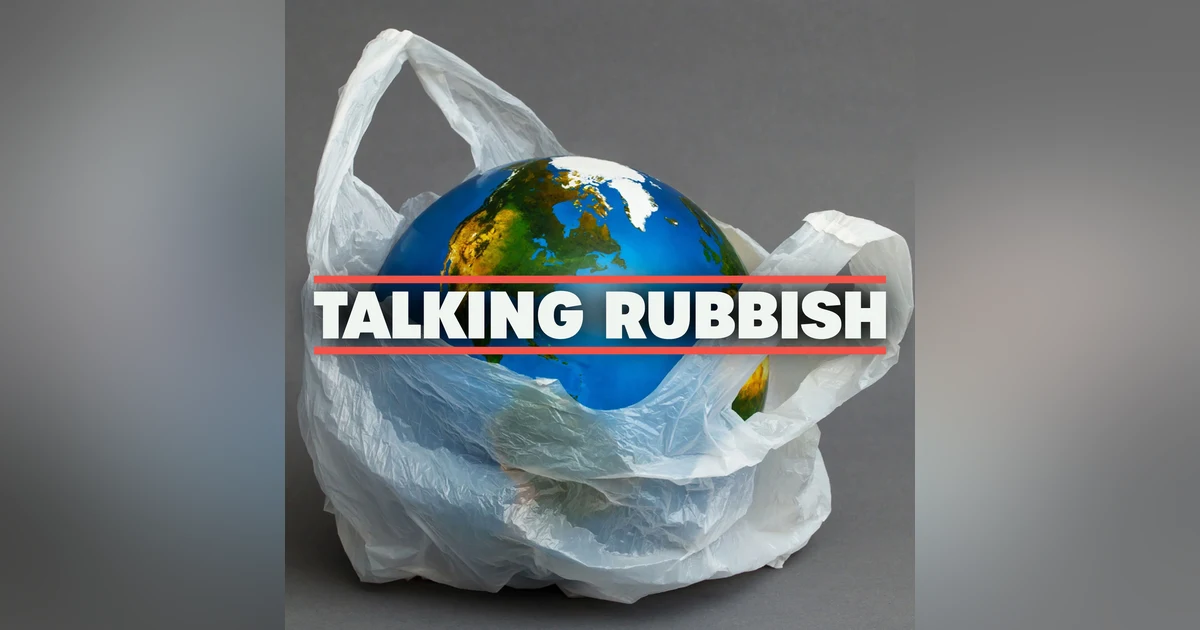

The widely cited statistic that just 9% of plastic is recycled has become a common talking point, but how accurate is it? In this episode, we unpack the truth behind the number and explore the complex world of plastic recycling. From the recycling-friendly plastic bottle to the problematic flexible films, not all plastics are created equal, and neither are the recycling efforts of countries around the world. Plus, how are ink cartridges recycled, are stickers rubbish or not and do laundry pods break down into microplastics?

 Apple Podcasts
 Spotify
 YouTube
 Amazon Music
 Castbox
 Podcast Addict
 PocketCasts
 The widely cited statistic that just 9% of plastic is recycled has become a common talking point, but how accurate is it? In this episode, we unpack the truth behind the number and explore the complex world of plastic recycling. From the recycling-friendly plastic bottle to the problematic flexible films, not all plastics are created equal, and neither are the recycling efforts of countries around the world. Plus, how are ink cartridges recycled, are stickers rubbish or not and do laundry pods break down into microplastics?
Join hosts James Piper and Robbie Staniforth as they delve into the world of recycling, hopefully having fun along the way. One thing is for sure, they will talk absolute rubbish from start to finish.
We would love you to join our community on Discord
Special thanks to our sponsor, Ecosurety
To get exclusive videos and clips, follow us on Instagram , TikTok , X , Threads or Facebook ; @rubbishpodcast or YouTube : @talkingrubbishpodcast
Or you can contact James and Robbie with questions or just general rubbish musings using the email address talkingrubbishpodcast@gmail.com or by texting them via WhatsApp
Relevant links and reports mentioned in the programme can be found on the Talking Rubbish Linktr.ee
Transcripts and episodes can be found on the Talking Rubbish website
Timestamps:
How are ink cartridges recycled? - 13:16
Do we really only recycle 9% of plastic? - 21:27
Rubbish or Not: stickers - 50:03
Do laundry pods break down into microplastics? - 53:15
Music licence ID: 6WPY8Q4O2RPFIOTL
Hello, welcome to Talking Rubbish, a weekly podcast delving deep into the world of recycling and discussing the truth behind snappy headlines and one-sided stories. In this episode, we will discuss ink cartridge recycling. Do we really only recycle 9% of plastic? Are stickers rubbish or not? And I have a question about dissolvable plastic laundry pods. I'm James Pipo, author of the rubbish book, and I'm joined by Robbie Stanforth, my far from rubbish friend. Morning Robbie. Hey James. I've been looking at a study that I thought was quite interesting. It was every can counts. They did a survey of 2,000 Brits. And I love this. They found that, and I'm gonna ask you some personal questions on the back of this. Oh, okay. They found that 15% of couples frequently argue about recycling. What do we reckon? Do you get in trouble?
SPEAKER_00I don't get in trouble, no. I am the law when it comes to my household.
SPEAKER_01Oh my goodness. But so do you cause the arguments then?
SPEAKER_00No, my word is final. There's no arguing takes place. That's it.
SPEAKER_01Wow, we're getting some real insight into probably here.
SPEAKER_00We definitely have some conversations about it, but I wouldn't say uh I wouldn't say arguments. I think mostly it's just I take charge of the recycling, because that's a fairly obvious thing to happen in in our household.
SPEAKER_01And the same. I put the bins out, it's my you know my job, but I enjoy it. In my continuing quest to be the influencer of my street. And of the 15% of couples that frequently argue about recycling, a third admitted that it happens every week.
SPEAKER_00Oh wow, they j uh unresolved arguments. Just constant.
SPEAKER_01Probably the same thing. Why is this not washed out? And a quarter of those said it led to a full-blown argument where they stopped speaking for a whole day or more following a recycling round. These are this is serious stuff.
SPEAKER_00Wow, this is serious stuff. I thought it was just a bit of petty squabbling, and I thought, well, 15% isn't that high a percentage, but if they stop it speaking to each other for a whole day.
SPEAKER_01Yeah, so now what we're saying is our podcast is not just recycling, it's a marriage saver. Ah providing the advice that the country needs to stop these arguments. Can you guess what the top three things were that the couples were fighting about?
SPEAKER_00Well, surely it's rubbish or not type questions. Okay. Is it is it recycling or not? Yeah. Uh what else might they be discussing? It's not like paper products that have got lots of plastic on them and you're not sure whether there's too much plastic or not, maybe. Basically a rubbish or not.
SPEAKER_01It sort of is, isn't it? Yeah, I'll put you out of your misery. So, yes, you've got the first one, which is putting things in the wrong bin. I would say that's your rubbish or not.
SPEAKER_00Yeah.
SPEAKER_01Leaving empty toilet rolls in the bathroom, number two.
SPEAKER_00What as in uh putting them in the general waste bin rather than put taking them downstairs into the cardboard recycling?
SPEAKER_01Yeah, possibly just leaving them lying around, I think, is more likely. You know, you take them off, you put a new one on, the old one just sits on the side. Now that is a fight I have found myself in the case.
SPEAKER_00I'm getting some insight here, James, into your life.
SPEAKER_01And then finally, not washing things out properly.
SPEAKER_00Ah, okay. Yeah, so some people are fastidious uh washers of their recycling so that the bin doesn't smell and so that less washing needs to play take place when it gets to the recycling facility. Others are just like, well, they'll wash it further down the process. Yeah, is this the argument? Exactly.
SPEAKER_01They actually published a top ten things, but it would just take me ages to go through them. And so I will put a link to this survey in our link tree, and we can and you can have a look at the top ten if you're interested to know.
SPEAKER_00You can do an audit of which of the ten you suffer from.
SPEAKER_01Yeah, go around your house going, I have four out of ten of these I am a sufferer of additions and corrections. So, Robbie, I noticed the brands were getting pretty vocal about EPR this week. Oh, we got it. There was a lot of news stories. I think there was a news story in the eye that I picked up on, and there were a few others that I that I noticed. And we I just wanted to say like a few things have happened with EPR. We've got some revisions on the RAM, haven't we? Which is the like, is something how recyclable is something? We've got some revisions on that. Yeah, that's right. We're not ignoring that. I think our next interview is gonna actually be with OPRL. So the people we've talked about before who do the recycling labels on packaging, they're gonna be great to talk to about the RAM. So we might try and do an episode around then, you know, rather than doing it now. So because of that, I'm I just wanted to say we're not ignoring the changes that have happened, but it I guess I just wanted to flag that brands are starting to get pretty vocal about the cost of EPR, and particularly to the public. And so this article in the eye, the headline said new recycling tax set to drive up use of dot dot plastic, which is you know potentially true. This is a you know, a weight-based packaging tax, essentially. So where you've got glass, it's very expensive. We've talked about this before. Where you've got plastic, it's very light, so it's cheaper. You've also got the fact that with DRS and with deposit return schemes, plastic bottles and aluminium cans are coming out of EPR and into deposit return, so they're not paying into EPR. So what they said in this article that I took Umbridge with, which I had issues with, was they said according to British Glass, the design of the scheme will mean glass bottles will incur a levy of 6.4 pence per 330 millilitre container, while plastic bottles and aluminium cans will attract no additional cost. So they didn't mention DRS, they didn't mention deposit return schemes, they just said aluminium and plastic don't have any cost, we have loads of costs.
SPEAKER_00Yeah, that's being slightly convenient with the truth, I suppose. They don't have any extra cost. This is aluminium and plastic bottles in the extended producer responsibility tax, uh, but they do as part of setting up the deposit return scheme. So it's you're not comparing apples with apples, I don't think.
SPEAKER_01Yes, and having just written that line that said plastic bottles won't have any cost. So bear in mind you've just read that line if you're reading the I article, you've just read plastic bottles don't have any cost, and you've read that it might drive the use of plastic. Well, the next line is estimates by the British Retail Consortium put the cost of the green levies on plastic packaging at around two billion a year. Why have they used the word plastic? Let me fix that for them. Estimates by the British Retail Consortium put the cost of green levies on packaging at around two billion a year. Why have they said on plastic packaging? It's so emotive. It doesn't make sense. It doesn't make any sense. It's so emotive. It's deliberately trying to make us go, Oh, this is plastic. It's all plastic, plastic, everything's plastic. And actually, in one line they've said plastic isn't even included, in the next line they've said this whole thing is a plastic packaging tax.
SPEAKER_00Oh my gosh, okay.
SPEAKER_01Anyway, there you go. Frustrations with the media. Should that become like a weekly weekly feature?
SPEAKER_00I think the central point is though that this new scheme's coming in. Uh it is going to be a form of tax on businesses. It probably is going to get passed on to consumers in the form of probably relatively small price rises, uh, if we're honest. Uh, and that it could be better. And hopefully uh it will get better over time.
SPEAKER_01Perfect.
SPEAKER_00And moving on from the eye to the guardian. Oh, yeah, okay. We're staying with the news media, are we?
SPEAKER_01Yeah, and this is the feature. James's media updates. So we've said before that we think we have a listener from The Guardian, because coincidentally, every time we do an episode, a week or two later, there's a Guardian article about the same thing.
SPEAKER_00And we said spooky stuff, wasn't there? Was it black plastic or something?
SPEAKER_01Yeah, there was a black plastic one back in January, in February, there was an export one. We said, look, it's not we're not going to be convinced until we've got three articles. Okay. Well, we've had three episodes. Really? Yeah. 10th of April, we put out episode 37, our pet episode. And on the 29th of April, a couple of weeks later, the Guardian wrote an article about dog poo and what to do.
SPEAKER_00Oh wow. And dog poo was the thing that was most talked about in that episode we recorded as well, wasn't it? Yeah.
SPEAKER_01And so anyway, that's actually not what I want to talk about. I want to talk about a far more interesting article which is in The Guardian, which was on coffee pods. Lots of people sent this to me, including Mr. Stanaforth, whose message just read, your WhatsApp message about this just read Podfoder for the Podder. So we roll. Bit behind the scenes.
SPEAKER_00I enjoyed writing that message, as you can imagine.
SPEAKER_01Lovely. So here's that pod fodder for the podder. The advertising standards authority has ruled that descriptions on coffee pods, such as compostable eco-capsules, were misleading as they could not be composted at home. So these were two ads from Lovatsa and Jewelet. And episode 19 is our first episode on compostables. If you want to go back and have a listen to the difference between home composting and industrial composting, but basically, Lovatsa and Jewelit were making two products that were made of PLA, I think. They were compostable packaging, but industrially compostable. And their ads basically said this is compostable, it's an eco-capsule, but there's no route for that to be recycled in the UK. So it those ads have been banned.
SPEAKER_00Okay, and what the advertising standards agency basically said, people are gonna think they can just like put this in their compost at home or whatever, or you know, chuck it on the ground and it will just degrade when actually it won't.
SPEAKER_01Exactly. Their official line was we believe that people would understand from the claimed compostable that in the context of a consumer product for use in the home, these products could be composted at home. As this wasn't the case, we found the ads were misleading, and so we've banned them. Yeah, it's just interesting that both companies sort of came out with the same sort of line, which was basically compostable would be understood as meaning a product was made of compostable material and not necessarily that it was compostable. And it's like I can tell you I can tell you from doing the talking rubbish social media, that is not true. There is this huge belief that if compostable plastic or compostable packaging is named, then it should just break down in the open environment. And that is not what happens. So again, go back to episode 19 if you want to hear more, but just thought I'd update on a recent ban in terms of communications. We'd like to take a moment to thank our sponsor, EcoSurety, who are on a mission to rid the world of unnecessary packaging. They help brands navigate the tricky world of extended producer responsibility, but that is not all. They also collaborate on some incredible recycling projects and consumer awareness campaigns for those tough to recycle materials. If you're an organization looking to make smarter packaging choices, check them out at EcoSurety.com. And just a reminder, we absolutely love getting reviews. So if you're on a platform that is able to leave a review, we would just really appreciate that. So please take some time to leave us a review.
SPEAKER_00Yeah, and I've had an idea about these reviews. Have you? Yeah. That I should read one out every week. Oh, this is nice.
SPEAKER_01Yeah. So Robbie's Review of the Week.
SPEAKER_00Robbie's Review of the Week. Okay. I once again I didn't come up with a title for it, but there you go, James. That's your department. So I got one here from Dagmar. Thanks very much, Dagmar, for writing this uh on I think it was on Apple. Informative and fun. It's what BBC Radio 4's, You're Dead to Me is for history, but for rubbish and recycling. Thank you. And actually, no, thank you for listening and leaving a review. And if anyone wants to have their review uh read out, then you just gotta head over to either Spotify or Apple and leave us a review and you're in with a chance of me reading it out.
SPEAKER_01It's like when you were a kid on C BBC and they'd like read out It's Mike's birthday today. Happy eighth birthday, Mike. It's like that, isn't it? I mean, that's what I was going for, yeah. If you want the chance to have your birthday, uh sorry, review read out on our podcast. Lovely, I quite like it. Well, that is great. I mean, what a kind of review. You're Dead to Me is an amazing podcast. To be in the same, you know, category, the same breath is just so kind. So thank you very much, Dagmar, for that. And as always, we'd love you to join our community on Discord. There's a link in the show notes. All of our social media is at rubbishpodcast, so you can follow us on any of the channels. You can email talkingrubbishpodcast at gmail.com or you can WhatsApp us. And again, the links to all those things are in our show notes. So just have a look there if you want to get hold of us. Rubbish process. So we are today. Last week, I think I spoke a bit about how ink cartridges are collected. And Robbie, you are going to cover how are ink cartridges then recycled.
SPEAKER_00Yeah, and this one is potentially not as straightforward as I thought. So you've given me a right old hospital pass here, James. You did the easy bit of collections, the how they're recycled or potentially refilled, is a lot more tricky.
SPEAKER_01Is it? I had no idea. What uh what do you think is quite controversial?
SPEAKER_00I think it is quite controversial because the original equipment manufacturers, so some of these big branded uh uh names like HP, Canon, Epson, Brother, Kodak, they actually quite often are paying to take some of these things off the market and recycle them, which is good on one hand, but it kind of prevents the reuse and refilling market, which isn't necessarily as well established and big commercial global brands, from reusing these cartridges. So it's a bit of a tricky one in terms of uh promoting recycling of these cartridges. And the reason for that is that they can theoretically be reused several times over. So they can be refilled and reused a lot of these inkjet, the classic inkjet cartridge that people will have on their printers at home. And it basically depends on the damage to the chip of the actual inkjet cartridge as to whether it can go back around and be refilled and reused. Obviously, once the d the chip is kind of damaged beyond repair, they don't go in and replace the chip, etc. etc. It is just only good for recycling. So there is uh I chatted with the Ink bin, which is sadly closed now, but it was an organization that was trying to collect and recycle uh these about some of the issues around collections, refill, recycling, and it was really insightful to see that lots of the major brands are trying to do it for a mix of reasons. It's not just so that they're ethical and sustainable in terms of taking responsibility for their products. That is part of the reason, but another part of the reason is actually so that you buy more inkjet cartridges because they don't get refilled.
SPEAKER_01So I guess none of that's a surprise to us in that this whole model is built on cheap printers, expensive ink. That's exactly right. Isn't there that stat the printer ink like on a per milliliter, assuming you melted down gold, it's something like printer ink is more expensive than gold? I think it's one of the most expensive materials on earth. Oh wow, really? I've not heard that one before. Such a small amount of liquid in an ink cartridge, but it's costs so much money. So yeah, there's definitely something uh back of my mind, I I d I'm kind of doing this from memory, back of my mind, there's something about printer ink being one of the most expensive materials on earth.
SPEAKER_00Yeah, and I think that that's clearly where the money's being made in this model. You know, the average student can just go and buy a printer for £30 and they'll be spending their lifetime paying for the ink, not for the actual printer itself. Although Epson, quick call out for them, they do have a uh machine where you can put the ink straight into it. You can like just buy a bottle of ink, you don't need these little plasticky devices with a chip on them, like the the usual inkjet ones. But the problem is then the printer is £300 itself. So, in order to move to a model where you're just buying the ink and not buying these single-use cartridges, you would have to spend a lot of money up front. So there is some options there. But anyway, back to the second life of these cartridges. Really, the ink tanks, so the much bigger, wider devices that you see in kind of commercial printers and things, those are rarely refilled. It's the little inkjet ones that are very easy to refill, the kind of Canon HP ones. And there are lots of organizations out there, such as DCI in Lincolnshire, who are genuinely in the UK, if they they get cartridges sent back to them, they're refilling them with ink, uh, and you can use them again. But what is also true is that if you are buying these inkjet cartridges and you're not using an original equipment manufacturer, you're using a compatible, cheaper one that they often just don't work in the first place. You know, if they're being manufactured to a lower spec, sometimes you get sent them and a brand new one doesn't work at all, and they are so low quality in terms of the inferior material that they're made from that they definitely can't be refilled. So the one good thing about these original equipment manufacturer uh inkjet cartridges is that they can genuinely be refilled several times until these chips stop working.
SPEAKER_01And so it's worth saying, I mean, I found lots of kits online to refill at home. Like you don't have to send them off for refill, you can refill them at home.
SPEAKER_00Oh, okay. I didn't actually see any of those.
SPEAKER_01Yeah, so there's these kits where it's almost got like a little syringe and there's a little hole in the ink cartridge, and you can you can refill them with ink.
SPEAKER_00Yeah, and that definitely would mess with the the model of those huge brands in in printers because you could get the ink from anywhere.
SPEAKER_01Well, yeah, and they calculate it was something like you save up to 70% of money. And I was doing a bit of research into this because often the printer companies, it's like my uh coffee pods, often the printer companies say, Oh, you'll void the warranty if that if that happens. Now, if you're in America, there is a specific act, a specific piece of legislation, I can't remember the name of it, but I found it, that actually means your warranty can't be voided because of something like that. And I did find one of the refill websites said that according to European and UK law, the use of a refilled print cartridge is does not affect the warranty unless the failure or damage is attributable to it. So it's a really important point that you are allowed to refill ink cartridges, and as long as the ink cartridge works as an ink cartridge and just prints on paper, then you're not doing anything to damage the printer, and so the printer warranty is still valid. If you refill the ink cartridge, it causes the ink to explode and you know damages the inside of the printer, that's slightly different. But no printer company can say, Oh, you refilled an ink cartridge, therefore we're not going to fix your printer. They're not allowed to say that, as long as the ink cartridge didn't cause the damage.
SPEAKER_00Oh, well, that's great news that that actually and so if you've tuned in hoping to find out what the process is for recycling uh angel cartridges, it's actually we're spending all of our time saying don't do it. There are options to try and reuse and refill it, and if you're not already doing it, it's definitely something to explore that you can either do yourself or you can do these post back schemes if you're not willing to go that far, and someone else can do it in the background, DCI in Lincolnshire.
SPEAKER_01Okay, Robbie, but we are a recycling podcast, so how do you recycle them?
SPEAKER_00Yeah, but the problem is when I looked into the process of it, it's just really, really boring.
SPEAKER_01Ah, well, let's let's ignore it then.
SPEAKER_00No point. It's like any other electronic device that's got a bit of electricals in it and a bit of plastic. It gets basically shredded up, the plastic goes off in one direction to hopefully be recycled and reused, the metal componentry goes off in another direction to go and be smelted down, etc. It's literally as simple as kind of shredding and sending it off to secondary facilities who do the plastics recycling or the metals reprocessing. So that's why we spent all of our time saying uh refill them rather than uh on on a very simple process of how they're actually recycled.
SPEAKER_01Trash talk. So today's trash talk is do we really recycle just nine percent of plastic? You might be sat there thinking, I didn't know that was a fact, but it is a fact. I am okay. But this is something that comes up a lot. So often when you're reading a report or an NGO's talking or someone's talking about the damage of plastic, often people will say we only recycle nine percent of plastic. It's a massive question. Question. And to be honest, the answer is yes, we do only recycle 9% of plastic.
SPEAKER_00Wow, that was the quickest trash talk we've ever done. Don't you worry, Robbie. I got a lot more to say on this.
SPEAKER_01So, where does this stat come from? The stat comes from the OECD, which is the Organization for Economic Cooperation and Development. Very good. And they wrote a global plastics outlook report, which was published in 2022. This report was actually designed, it wasn't really talking about, I mean, it was a bit about the state of player today, but it was mostly about what is plastic use going to look like in 2060 and how much are we going to recycle. And the stat has been echoed in so many places. As I said, lots of NGOs talk about it. United Nations talks about it. You see it in lots of ads. We're going to talk about that at the end. But really, the key findings of the report, in terms of what could happen, what has happened. So the key findings of the report that I thought were worth highlighting were that plastic consumption has quadrupled over the past 30 years and accounts for th over 3% of global greenhouse gas emissions today. And this one was really interesting. Nearly two-thirds of plastic waste comes from plastics with lifetimes under five years. And 40% of that is packaging. So often we talk about plastic and bit and defenders of the industry come out and say, Yeah, but it's used in pipes and wiring and things that are here forever. And yeah, I mean, think about how much plastic I'm surrounded by now. You know, I'm in a booth that's got plastic all over the place, and you know, that will be there for a long, long time. But two-thirds of our plastic has a lifetime of under five years. So even if that's the case, it's still only a third the stuff that's all, you know, the stuff that's fixed into our infrastructure. And what they found was that 15% of plastic is collected for recycling, and nine percent recycled. So we've got a 40% loss. Now that will be to do with contamination and residues and all sorts of things. So 15% of plastic globally is collected for recycling, and 9% is recycled. And I've just used a word there that's super important. We are talking globally.
SPEAKER_00Yes, exactly, yeah. And this this is the context, isn't it? That in developed countries you sort of think, oh no, plastic recycling is somewhere around 50 odd percent or something. But actually, in in terms of global consumption, it's very, very small.
SPEAKER_01Yes, although it's not just developing countries. Don't worry, USA, you're gonna get a special shout out in this section. So, yes, 15% of plastic collected for recycling, nine percent actually recycled, nineteen percent globally is sent for incineration, fifty percent is sent to landfill, and twenty-two percent is mismanaged.
SPEAKER_00Oh, what are we saying? Like littered in the oceans?
SPEAKER_01Just yeah, just basically not entering a formal waste stream.
SPEAKER_00Okay.
SPEAKER_01Two times the amount of plastic is mismanaged compared to recycled. So in the UK we're 50% incineration and 5% landfill, but globally 50% is in landfill. So way more going into landfill each year. Now, I think the reason I can be quite certain that this 9% could be correct is because actually there was another study published last month, so April 2025, which was called The Complexities of the Global Plastic Supply Chain, revealed in a trade-linked material flow analysis, and this also said 9%.
SPEAKER_00Okay, using different data, different types of analysis, they also came to the conclusion that it's about nine percent.
SPEAKER_01Yes. Now, this latest report, bear in mind it's published like three years later, did feel that landfill was decreasing. So that had landfill coming down from 50% to 40%, and that incineration was increasing rapidly. So incineration had gone from 19 to 34. And again, that sort of matches where England has been and is heading to.
SPEAKER_00Yeah, yeah, it follows the trends of Europe, basically, where more and more is getting incinerated.
SPEAKER_01Yeah, now this is where in my research I got a bit confused because I ended up on the British Plastics Federation website. Now, it is worth saying the British Plastics Federation are pretty supportive of plastic and the plastic industry. So, you know, I'm always interested in going there to see what they say because that's kind of the other side of the story, and then you can sort of interrogate their views. But they have an FAQ on their website and they do actually have the question: is only 9% of plastic recycled? And their answer was currently much more than 9% of plastic gets recycled. Oh, okay. This recycling statistic relates to all plastic ever made from before the technology to recycle plastic even exists, and they reference a study from 2017 which was called The Production, Use and Fate of All Plastics Ever Made. Now I looked into this study because I thought, oh my goodness, maybe this is wrong. Maybe maybe actually if that because if they're talking about all plastic ever made, then they're talking about, you know, the pipes that are in my house. And they're saying, well, those haven't been recycled yet. I looked at that study and coincidentally I think both numbers are true. So I think 9% of plastic that's ever been made has been recycled, and 9% of plastic waste annually is also recycled. Oh wow, okay. I just think the percentages are the same. Because what's happened is plastic use has increased so exponentially that actually both numbers can be true. You can have a 9% of all the waste, you know, created each year is recycled, and 9% of everything since beginning of time is recycled, because so you know, so much plastic is used today compared to the 1950s. So it is worth noting this particular study, which was referring to plastic up to 2015, which is why I think both can be true, because one is 2022, 2025, and the other is 2015. That suggests 9%, and as I said, will include all plastic, including long-term plastic, like the pipes, cable insulation, all the things we talked about. So I think that's what's happened. You've got one report that's going up to 2015 saying 9% of all plastic, and you've got more recent reports that are saying in this year, of all the plastic waste that was created, 9% was recycled, and it's a bit of a coincidence they're the same number. Yeah, no, it sounds it. So why are we not recycling more plastic? Why is it stuck at 9%? And the UN had a really good article on this, which I'll put in the link tree, where they highlighted three things. So they said contamination, which we talk a lot about, you've got to make sure that your plastic is first of all what they expect, so PET, PP, PE, whatever the whatever your local authority collects, and it's got minimal food and all those things. Harmful chemicals, so there are some re some plastics that are very difficult to recycle, like PVC that contains chlorine, so potentially having harmful chemicals in them, and profitability. And for me, that last one is definitely the most important. We've talked about this a lot.
SPEAKER_00Yeah, and I was talking about this just yesterday at a conference about plastics, and the realities are uh of why aren't we recycling more, uh, why aren't we using more recycled content in new products? Is always it comes back to the economics, and that has not changed in a decade or more of going to those kinds of conferences.
SPEAKER_01Yeah, and right now we have very low oil prices, so virgin plastic is cheap, and this makes recycled plastic much harder to financially work. You know, to make this work, we need to have policies that disconnect recycled content from oil prices. Um, we need to disconnect putting recycled content into products from a fluctuating oil price. I was actually trying to find because I seem to recall uh I I'll remember there was a point in time where the oil price was rising very drastically, you know, a few years ago, not long ago, and I remember brands ringing me going, right, I need recycled content now. Yes. But all my other competitors are taking all the recycled content. It's like you almost need to be doing it when the oil oil price is low because no one else is doing it. And so if you're a brand who needs to use recycled content, what you want to do is be securing long-term contracts in when the oil price is low, not scrambling when the oil price is high.
SPEAKER_00Yeah, and it's about trying to sow the seeds for the future because ultimately to build these recycling plants to get uh recycled pellets or recycled flake of plastic to put back into products and packaging is very, very expensive compared to uh drilling for oil uh for other reasons and then just s creaming off a bit of it for plastic.
SPEAKER_01Now, as I alluded to with the USA, not all countries are the same, and this is where it gets really important to get into the detail because it's very easy to say, oh, we only recycle 9% of plastic globally, but actually when you get to the UK, we have a plastic packaging, recycling target of 55%, which we hit, you know, every year, and it increases every year. It we're only talking about plastic packaging here though. So when we talk about that 55%, it's a bit misleading because that's just one part of our stream, right? So how much of our UK system is actually plastic packaging? Well, it's about two million tons. So every year we have about two million tons of plastic packaging, and it's out of about five million tons in total. Okay, so there's five million tons of plastic that are used in the UK in all sorts of applications, construction, demolition, where else are you going to use plastic retail, agriculture? Yeah, agriculture exactly, and then about two million of that, so what's that forty percent, is plastic packaging itself. And so of that plastic packaging, we recycle fifty-five percent of it. So we don't, as a country, recycle fifty-five percent of our plastic, but as householders, we do recycle fifty-five percent of our plastic packaging. And it's just worth putting this in context. Plastic makes up about one percent of material use in the UK. The largest material that the UK uses is concrete.
SPEAKER_00Ah, okay, by like volumetric tons or whatever.
SPEAKER_01By weight, yeah. Plastic is about one percent of what we use in the UK. So we always have to, you know, we're talking about a percentage of a percentage of a percentage. So we always have to kind of remind ourselves that, you know, we use a lot of material in the UK in construction, we use a lot of material in glass, aluminium, uh all those sorts of materials, and plastic is just one part of it.
SPEAKER_00And it feels like this is where a lot of concerted effort and focus should be put, because there is a lot of focus at home. Uh couples are arguing about where to put their recycling.
SPEAKER_01Or putting the toilet roll on the side of the toilet. That's the big argument.
SPEAKER_00But as pertains plastic, you know, I'm sure there that there are arguments around there for plastic packaging. No not many arguments out there about what to do with a plastic chair, for one, so non-packaging, and not many, as you say, around building waste, and and you just don't think about it in the same context. Everybody's more concerned with what they see in their bin rather than uh what else is going on out there, and often it is within industry, not in our homes.
SPEAKER_01Now, yes, that is definitely true. And just to put into context, because I mentioned at the start that when we look at that globally, 15% is collected, but only 9% is recycled, which I think is a 60% rate in terms of contamination. The UK has about a 70% rate. So what we put into recyclers, about 70% of it is then recycled at the other side.
SPEAKER_00Okay, because there's contamination. That other 30% is just not fit to be recycled and end up as granules of plastic to be used again.
SPEAKER_01Yeah, that's right. So let's compare our 55% of plastic packaging to the US. Well, the US recycles about 5% of their plastic. Oh my word. It's that low, is it? Yes. And that this is the problem. The 9% is a world view, and every country will have a different rate, different recycling ability, maybe way more landfill like the US, way more incineration. And it's based on so many factors that we can't really credibly say only 9% of plastic is recycled. What we need to be doing is talking about the country that we're in and say, well, this country's doing a really good job, this country's doing a rubbish job. How do we help this country get better at recycling so that everyone uplifts rather than just dismantling a material because actually some countries do it well and some country countries do it badly. And so overall it has a very low rate.
SPEAKER_00And if we think about it in terms of consumption, the US is probably the right place to start because you're going to get the biggest bang for your American buck.
SPEAKER_01The challenge they have, uh and the conversations I've had are around kind of differences in states. It's 50 mini countries, and they all handle recycling completely differently. You know, and when I was chatting to some people who do labelling out there, they were saying, you know, you've got some very progressive states who recycle everything, and you've got some states who recycle nothing. And even in the US, you've just got that kind of complexity of different states, different attitudes towards recycling. So this overall picture can even be skewed again, and that 5% won't be true of certain states, and it will be lower in other states.
SPEAKER_00Yeah, and when it comes to the recycling in the world of recycling, we should sort of think of the US more kind of like the EU, and the fact that each country needs to implement these laws slightly differently, and actually the the the US as a kind of federal government just oversees it like the EU does all of those nations where recycling is very different in Germany to Spain to Greece. Yeah, absolutely.
SPEAKER_01And when we um we'll I think we'll talk more about the US. We d we should cover well, we want to do international recycling, don't we? So we'll cover more on the US in the future. Just back to the UK. When we actually first started this podcast, I had someone messaging me saying we only recycle, I think it was 17% of our plastic. And I was thinking, that can't be true. Like I've looked, I've got all the data, I know I've been in this industry enough and bought enough evidence and and worked with brands and retailers enough to know that we are way higher than 17%. And I trace this back to uh the big plastic count and Greenpeace, who have a report that says only 17% of our waste is recycled. And that data is used in in certain brands' advertising, it's used to kind of promote other things. And I just couldn't I I've had to trace that right back. And again, I love the big plastic count. You know, we've talked about this before. Uh I know the guys, and you know, I'd like to get those guys on to talk about it, I think, at some point. I think it's a really important initiative to make us all aware of how much plastic we're using. So this isn't meant to be a criticism, but because they do the big plastic count, they do things by quantity, not tonnage. So what they do is they say, well, first of all, that 17% is only UK, 14% they say is export, but they don't call it recycling, they just call it export. So they are suggesting that anything that's exported isn't recycled, and I can tell you that is not true. There will be some mismanaged export waste, but a lot of the stuff we export is recycled. So, you know, let's say they're saying 31%. Well, it's still almost half of the truth. And as I said, they're using quantity, not weight. So if you had a crisp packet and a plastic bottle to a recycler, that might be 10% LDPE, the crisp packet weight, and 90% PET, the bottle weight. But to the big plastic cam, that's 50-50, it's one and one. And because they do things by quantity, you're going to skew those numbers. Whenever we see data that doesn't suggest that we're in decent recycling figures, around 50% for plastic, you just need to interrogate why that might be the case. Because, you know, that is what is happening. Now, whether all of that is then recycled, whether it all becomes new product, whether it gets downcycled, that's for a different episode. What I'm saying is we have recycling targets, we meet those recycling targets, that recycling is regulated, there will definitely be fraud in that, there will definitely be mismanagement in that, so the numbers will be lower than I'm suggesting. But it is not significant enough to drastically change our number. We're not going to suddenly find that only 5% of our plastics recycled, like in the US.
SPEAKER_00Yeah, sure. No. It maybe might be a little bit lower, but we can be relatively confident that the 55% that gets reported in the UK.
SPEAKER_01Yes. Now, that's not all countries are equal, but equally not all plastics are equal. And one of the challenges is that there's so many varieties of plastic. You've got LDPE, which is your flexible plastic, you've got HDPE, which is a more rigid plastic. Adam from Rapp will be losing his mind right now, going, no, no, you get rigids in LDPE and flexible in it. I know, I know. So I'm being generalist. You get PET, which is mostly used as plastic bottles, but can be used as trays, PP, which is going to be like your yogurt pot. So there's so many different types of plastic, whereas aluminium is just aluminium. Glass is just glass.
SPEAKER_00Yeah.
SPEAKER_01And so not all plastics are recycled to the same level. And I was looking through the pack flow reports, and they were saying that actually for in a UK household, 33% of our packaging is PET. So that'll be your bottles, some trays, things like that, punnets. 20% is HTPE, 17% is PP, and 15% is LDPE. So as an example, we often talk about the difficulties recycling PVC, so polyvinyl chloride, because it's got chlorine in it, but that makes up less than 1% of the plastic in our household.
SPEAKER_00Yeah, and that's probably decreased dramatically over time because producers of packaging know that PVC is a problem.
SPEAKER_01Exactly. Now when we look at that 55% plastic packaging recycling, in a household, pots, tubs, trays, and bottles are at a 63% recycling rate according to PackFlow. Films and flexibles are at 7%.
SPEAKER_00Ah, okay. Wow. So that's a huge difference. I mean, um it's not to be it's not unexpected, but it just shows how stark the differences can be.
SPEAKER_01Absolutely. And my frustration with DRS that we're focusing on the wrong thing. And then when we look at but on the flip side, so that's household. When we look at non-household, rigids are at 51%, so lower than households. So rigids are the equivalent to pot scrubs, trays, and bottles, but for commercial, they're at 51% instead of 63%. But films, rather than being at 7%, are actually reported in PactFlow at 124%.
SPEAKER_00Whoa, so these are like the shrink-wrap films that go around pallets for distribution and stuff.
SPEAKER_01Exactly. And this will be because in the how do you get to 124%? It'll be because in those loads that are sent off for recycling, there will be contamination, there will be pots tubs and trays, there will be PET, there will be things that don't class as film. So when they're weighed in, you end up with a higher percentage going into the recycler, and then the recycler will sort out what they want, and that percentage will come right down. But my point is that not all plastics are created equal, and it completely depends on the context of where those plastics are. In a household, you might have a very low film and flexible recycling rate, because only certain people take it back to the supermarkets, but in commercial, the film and flexible rate is extremely high, that percentage of recycled.
SPEAKER_00Sure. So w uh in the US, what does that mean? That means that some plastics are doing better than others to make up this 5%.
SPEAKER_01Exactly. And in the US, I found a report that said that 28% of PET bottles are being recycled. So even though 5% is the overall plastic recycling rate, actually 28% of PET bottles over there are recycled. Now that is still really low. You know, we're at like 70, we're at 70, 75%, and we don't have a deposit return scheme. So 28%, and some of those states will have deposit return schemes, is is very, very low.
SPEAKER_00Yeah. Long way to go.
SPEAKER_01So yes, it's as I said, plastic is used in so many things. It's really hard. Like, and this is this is why we do this podcast, because uh people will come out and just say 9% of plastic is recycled, ban it. And it's like, whoa, okay, this is way more complicated than that. Actually, 70, 75% of our plastic bottles are recycled, 7% of our films are recycled, so it's completely different. You might have to say, well, actually, we're gonna ban films and we're gonna turn those into paper, for example, and that would increase our recycling rate. But again, that's not the best thing to do. See paperization episode and and others that we've done on this. So, as I said, this OECD report is all about looking at 2060, so I feel it would be disingenuous for me not to just mention what they felt might.
SPEAKER_00Okay, yeah, future gazing here.
SPEAKER_01Yeah, so this is if we didn't have any policy intervention. And Robbie, I'm gonna ask you about their policy ideas in a second because they had three key policy ideas. But assuming there were no policy interventions, then the OECD felt plastic use would triple by 2060 to around 1.2 billion tonnes. Now at the same time, they were saying GDP is forecast to triple. So it's not that we're using more packaging per person, it's just that uh we're also tripling the size of the economy. So it's sort of expected that plastic would also triple alongside it. So we've always got to put it alongside that kind of yes, but we're also, you know, using more stuff. The report felt that 17% of plastic could be recycled at that t by that time, so that's one seven percent, which actually worked out at six times more plastic being collected for recycling than today, and five times more being recycled. So that is an improvement with no policy intervention. The system is tripling, but our recycling is actually going up five times. Okay, right. But 17% recycling would still be the smallest route of waste management behind incineration and landfill. So incineration would be at 18% in this new world and landfill would stay at 50%.
SPEAKER_00So this is trying to make the compelling argument for some sort of intervention, shouldn't it? Exactly, yes.
SPEAKER_01And and really the skewing growth in terms of growth in plastic was in developing an emerging market, so relative to GDP. Actually, most developed countries sat at around two times in terms of plastic growth. So the GDP was going up three times, plastic use is going up three times, but actually most developed countries like the US, the UK, all those countries were averaging at about two times the use of plastic. India was forecast to increase its plastic use by 5.5 times, and Africa was 6.5 times. So these emerging economies or developing economies were significantly increasing their use of plastic between now and 2060. I think we'll talk about that more in the future. We we definitely run out of time on this one, but uh I just wanted to flag that what 2060 could look like, and I think we'll cover that again in the future and we'll keep talking about where plastic might be heading. But Robbie, in terms of policy suggestions they made, do you have a view on that?
SPEAKER_00Yeah, so I think policy suggestions around uh restraining the demand and enhancing the circularity, but actually sort of saying, look, we need plastic taxes, we need design for recycling, design for repair, seems very sensible. Enhancing recycling, that's obviously something that needs to happen, like better waste management and building these facilities and having targets around including recycled content in plastic products, not just plastic packaging, actual plastic products, any technical application like the things we talked about pipes, uh, chairs, fixed installations, uh products that last uh several years, not just disposable packaging, and then also improved plastic waste collection and the litter issue. Uh but the one thing to call out which they will be very aware of is the Global Plastics Treaty, which is a UN-led, legally binding international agreement that's being negotiated. It started in 2022, it's actually due to be finalised by now, by the end of 2024, and they've actually applied a little extension because of political turmoil and and some countries getting together to frustrate the process because they don't want to put these legally binding uh agreements in place. But that's in terms of the global issue, that's the place to be looking over the coming months for what actually gets agreed between all these countries, and how can we turn that nine percent into a much better uh number in the future and certainly by 2060?
SPEAKER_01So I think to summarise this section, the nine percent stat is probably a realistic figure of plastic recycling globally. However, I am fed up with brands using it for localized marketing. Sara on Discord actually sent us an uh I and I love this brand by the way, this is Wild Deodorant, who have just been sold to Unilever, I think. So again, this isn't me criticising this brand, it's just a uh it's just a good example. So Sara on Discord shared a Facebook post that said uh where they'd said 90% of plastic isn't actually recycled. Sara asked them about it, I think they removed the stat. But my observation was because this product, this is why I'm calling them out because it's a product that's mostly sold in the UK, statements like that just are not helpful. It's a product sold in the UK and they're going 90% of plastic isn't recycled. It's like, well, yes, that is true. That's a factual statement. We can't really do anything about that, but it's going to put people off recycling because they're like, oh, what's the point in recycling? Well, in the UK, there's a huge point in recycling. We should definitely be doing it. And in countries where they don't feel like there's a point, like in the US, where Elon Musk is tweeting, recycling is pointless, improve your system. You know, there are countries, in particular in the EU, there are countries that are proving that recycling works. And if we just take this generalist view that it doesn't work because some countries haven't managed to make it work, or haven't invested in it, or are investing in it, so it hasn't quite come off yet, then we just wouldn't do anything. So as always, the waste hierarchy is super important. So this is where Wilde is very good, because obviously they make reusable deodorants. So hey, fully on board with that. The waste hierarchy is really important. We need to reduce waste, we need to reduce packaging that we're buying, we need to refill and reuse, and then after that, we need to recycle. But let's not ignore recycling just because some people want to shout about the fact that not a lot of recycling is happening globally. Let's make it better. Rubbish or not? So we had Emily over on Discord. Thank you, Emily. She was asking whether you could recycle kids' stickers, something that I'm sure will form a part of my future, whether I like it or not, and might be in your present, Robbie, I'm sure. She has three small kids and is inundated with stickers, and they get stuck to loads of things around the house, but mostly paper. And she was asking when they have when she has a piece of paper that's covered in stickers, are they recyclable? What do you think, Robbie?
SPEAKER_00Well, I think if they're a paper-based sticker, then yes, they're probably recyclable. It's made from paper.
SPEAKER_01Most stickers are like quite plasticky, aren't they? Or they're or they're foil or you know, most stickers have something. What do you think about those?
SPEAKER_00Oh, I wouldn't allow those in my household, James. Absolutely not. Well, you're very good, but what about others? Oh, uh those, I don't they're quite small. I don't think they're gonna necessarily contaminate the piece of A4 paper, perhaps, that gets put in the bin. I reckon they are recyclable, but I'm not totally sure. So or or not.
SPEAKER_01Yeah, I think this comes down to percentage. I think you're right. I actually reached out again to Roger at Biffer, thank you. He's my he's become my paper guy. So thank you, Roger. And this became relevant for us because actually we made some stickers for our podcast, didn't we? That I stuck on old train tickets. Oh yes. And lots of people were asking me if that was recyclable. I mean, little did we know the train ticket was actually the problem, not the sticker. See the episode where we talk about train tickets. Um so the stickers themselves are normally okay. And that's because they're just going to be a small part. So if they're stuck to a bit of paper, it's a very small amount of contamination. So I would I'm not sure I'd just be recycling a sticker, as in if I had a sticker and it hadn't been stuck to a bit of paper, it'd been stuck to something else, and then I was peeling it off and I went, I'll try and recycle that.
SPEAKER_00Yeah.
SPEAKER_01I wouldn't do that.
SPEAKER_00It seems quite impractical given how sticky it will be instead.
SPEAKER_01Yeah, then I'd just throw it in general. But if it's been stuck to a piece of paper, I definitely think that's recyclable. It will get through the Murph, it will then, you know, just be a small bit of contamination that a recycler can deal with. Now the backing paper is more complicated.
SPEAKER_00So yeah, that shiny stuff.
SPEAKER_01Exactly. That's normally silicon coated.
SPEAKER_00Okay.
SPEAKER_01Again, it would get through a Murph, possibly, because it sort of looks like paper. So they would probably recognise it as paper, but it's very unlikely to be recycled because that silicon coat coating causes a real problem. And so that's just going to get incinerated. Roger did tell me there are specialist mills that can recover the fibre, but they need to be segregated and sent directly, so it's just not a it's not really practical.
SPEAKER_00Yeah, so m so perhaps like businesses that are sticking for filling parcels or whatever and using loads and loads and loads of this backing paper, they might have a commercial solution to recycle it. But us at home don't put that silicon-coated backing paper for a sticker in the recycling bin. Put that in your rubbish. Exactly. But stickers themselves stuck to paper?
SPEAKER_01Definitely recyclable. Rubbish question. So we had Mark on LinkedIn. Now uh this it was like a trash talk for me in terms of research. I ended up reading so many research papers on this. Oh really? Oh my goodness, yes. And I've currently got an outstanding question with my friend who works in the water industry who has reached out to a lot of people. So if I get a further update, I'll put it in addition and correction. But this was a question about the plastic film that's like on dishwasher tablets or washing you know, when you get washing detergent and it's in like a little pod.
SPEAKER_00Yeah. So I've got some that are even like they're sort of liquid inside, so it's like the full-on casing. So it it's all those kind of stuff. Whether it's a liquid or like a the chalky solid tab inside, it's still the same stuff, that plasticky coating you're talking about.
SPEAKER_01That's it. So Mark on LinkedIn was asking whether dissolvable products such as those, whether they put microplastics in the water. Gosh.
SPEAKER_00Okay, so what did your research say? I I I hope not, because I've been using these things for years.
SPEAKER_01So the plastic is typically a PVA, that's not the glue, it's uh polyvinyl alcohol. I think the glue is polyv is it polyvinylacetate, I think the glue is. Yeah, I think so. So this plastic is polyvinyl alcohol. And there is actually a standard, there's a regulation that exists in the EU for washing machine capsules, which I didn't realise. So this is so that they don't dissolve when they're touched with like wet hands. And so that they resist compression. So if someone if like a kid squeeze them, they get so actually the plastic around these it's way more complicated than I appreciated. Sure, yeah. It has to be quite firm and it has to withstand all these things but still dissolve in water in a washing machine. There is then a big debate on what happens to the plastic. Oh, okay. So it's not straightforward? No. Now PVA will break down into non-toxic components, but it requires the correct microorganisms to be present. Okay. And that the conditions of wastewater treatment facilities are favourable. So this is why I've reached out to my friend in the water industry, because what's basically happening is the PVA will dissolve in our in our washing machine, it will then go out in our wastewater, and as long as the wastewater treatment facilities are using the correct microorganisms to treat the waste, yeah. Exactly. Then that will break down. Okay. But there is a concern that if the wastewater treatment doesn't have all of the correct conditions, then the plastic may persist and it could contribute to microplastic pollution. Okay. So according to the British Plastic Federation, who we mentioned earlier, who again were pretty pro-PVA, PVA breaks down into carbon dioxide and water when consumed by any of the 55 organisms found in municipal wastewater treatment. And in most w water-soluble applications, such as a laundry unit dose, it should be biodegradable. So again, basically I started off looking at where they end up, the wastewater treatment, and I'm still waiting for my friend to come back to me with her research that she's doing with her colleagues. What I then did was found a study that actually looked at water and it looked at whether there was PVA in sites around wastewater treatment facilities where they might have runoff. So it looked at papers where they'd sampled sites. In 10 sites in Italy, they found one instance of PVA, but this was industrial discharge, as in it hadn't gone through a wastewater treatment site.
SPEAKER_00Okay, yeah. So it wasn't to do with people's washing machine and the tabs in those.
SPEAKER_01Exactly. And another site in Belgium, they found some, but concluded that it was fishing lines, not anything to do with something that was coming from the household. So this study had concluded that based on looking at different sites that could contain PVA and not finding any, that the environmental literature did not indicate an association of PVA film from capsules with environmental microplastic. So I think looking at the two sides, the fact that wastewater treatment sites should have microorganisms that break down the plastic, the dissolvable plastic that might be in our washing tablets, and the fact that when they've looked at studies that have tried to find some of this PVA in the open environment and haven't found them, I think we can say with some confidence that when we're using plastic to hold our washing liquid, it does not break down to a microplastic.
SPEAKER_00Jeez, that rubbish question nearly was a trash talk. Very interesting. So we can keep using them, we think?
SPEAKER_01I think so, yeah, if you want to use them. Obviously that now there are organizations that use bioplastic to make them, and that's going to be better than using oil-based plastic. So again, you might choose to use something that's more environmentally friendly, but I think if you're using one of the major brands who use PVA, it's not going to be the worst thing you can do for the environment. Big episode.
SPEAKER_00Great episode.
SPEAKER_01Yeah, you enjoyed it? Yeah, it was good. Great. I hope the listeners feel the same. Now's a good time to ask for a review. That was a five-star episode. Feel free to give us a five-star review.
SPEAKER_00Yeah, it could be read out next week. Oh, Robbie's reviews. Here we go.
SPEAKER_01Thank you all so much for listening. Thank you for giving us your time. Honestly, we just love getting together, talking for an hour each week. Complete rubbish. We we just, it's the best thing we get to do. So we will continue to do it as long as people enjoy it. We'll only know if you're enjoying it if you leave us a review. So thank you so much for listening. Get in contact using our links in our show notes. Follow us on social media at rubbishpodcast. And as always, we will see you next week. Bye. Bye.